
Practical Life for Older Students At Home and At School

How to Disagree with Your Teen in an Empowering Way
To continue reading, you will need to choose a subscription plan.
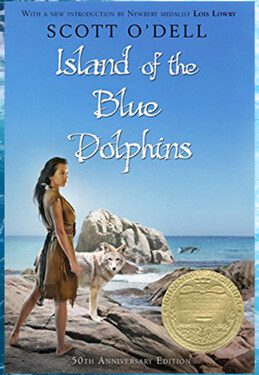
Book Review – Island of the Blue Dolphins

Island of the Blue Dolphins
By Scott O’Dell
The Island of the Blue Dolphins is a historical fiction novel, based on a true story about a girl named Karana, who was stuck living in isolation for 18 years. In the story, Karana lives on an island with her family, and the rest of the Ghalas-at people. They all live in peace until the Aleut people arrive and take their resources, and all the Ghalas-at people are forced to leave the island. They accidentally leave Karana behind, where she is to fend for herself.
The progression of this story’s plot was unlike many stories I’ve read before. It started as a simple story about a girl’s family and tribe life on San Nicolas Island and moved into a story about how a girl lived in isolation for so many years. Along with the progression of the plot came character development. Karana knew how to live her life with what she had, but this came into play when she was stranded.
I think that the Island of the Blue Dolphins is a great book because it portrays a way of life. It gives a new aspect to the reader about different lifestyles people have all around the world. Another reason I enjoyed this book was because of the plot twists; just when you thought something came to an end, it opened with a new beginning; it made this book all the more interesting to read and kept the reader hooked.
I would best recommend this book for ages 12+, and the reason for that is that the book has some themes, such as isolation and extreme perseverance. In the story, Karana goes through so much that I couldn’t imagine someone under 12 understanding. Another reason that I recommend this book to a 12+ audience is because of the style of writing. The way the book was worded might be hard for a younger audience to understand the concept.
Overall, I enjoyed the book and recommend it to anyone who likes to read true stories. This book will keep you reading. Between Karana’s adventures and how she keeps herself company, you won’t want to put the book down!
Reviewed by Danica Kovacevic, 8th grade, NewGate School, Sarasota, Florida

Rising Innovators in Class
RISING INNOVATORS IN CLASS
by Gillett Cole
As part of our microeconomics course, we partnered with Marc Seldin and Mark Tough to include a pilot of their college-level learning program called “Rising Innovators,“ for adolescents. Rising Innovators is an experiential course, providing students with an introductory blend of the hard and soft skills needed to begin their journey towards creating a new small business. The program included seven weeks of discussion, lecture, and the presentation of case studies, culminating in a team-based activity, focused on the creation of a business idea that was presented by teams at the final pitch competition, like “Shark Tank.” One of the judges on our panel coined it “Guppy Tank”.
The competition took place on Wednesday, February 23. There were six teams. The teams varied from a team of one to a team of five. The panel consisted of seven judges with a variety of experiences. Two of the judges were seniors in NewGate’s I.B. business program. One judge was a senior at the University of Tampa, and the other three judges had vast experiences owning and running successful small businesses.
The judges were handed a rubric to help score each team’s performance. Each team was evaluated on three components: a pitch deck (colored slides that discussed their big idea, target market, and market analysis); a one-sheet synopsis that captured their pitch deck’s main points (something they could leave behind for potential investors), and lastly, each team was evaluated on their overall presentation (style points, eye contact, and team coordination). After each pitch, the team was peppered with thoughtful (sometimes tough) questions by the judges. Team members had to quickly think on their feet, and some realized that they don’t have all the answers. They realized that when you don’t know the answer to something, sometimes the best response is, “That’s a great question; let me get back to you on that.” Most importantly, the question-and-answer session provided an amazing opportunity for the students to hear direct and honest feedback from the judges — valuable, honest feedback from adults who were not their teachers. As well, the judges were able to weave in bits of wisdom and common sense by providing constructive criticism for each team.
All six teams performed well. Their big ideas were truly innovative and varied. Some of the ideas were ways in which we could innovate the recycling of plastic grocery bags (building a hydro-powered generator that collects rainwater to power a home) and a shoe that grows with your feet. The students were well-poised and genuinely seemed excited to present their work. The winning team walked away with a cash prize and high-fives.
What lessons did the students receive from this course? By reading various case studies, the students realized that everyday folks, from young to old, were able to turn a big idea into a dream by taking initiative and working hard. They realized most ideas in our marketplace are not inventions, but rather, innovations. The idea that they can take something that is already out there and make it better, instead of trying to come up with something totally new was quite appealing to them. In this fashion, the task seemed more attainable. They began to understand that entrepreneurship requires a positive mental attitude, initiative, hard work, and followthrough — qualities we try to instill in our students at a young age. The students also realized that a fancy, well-designed pitch deck and one sheet are subordinate to their ability to tell a good story and maintain good eye contact with their audience. In fact, the most consistent feedback from the judges was whether or not the presenters made good eye contact. Students learned a valuable lesson — reading from a script does not earn you style points in public speaking. An important lesson for all. •
Gillett Cole is an AMI trained Montessori Guide who has been teaching for 13 years. He is currently teaching language arts, mathematics, and microeconomics to middle school students at the NewGate school in Sarasota, Florida. He and his family recently moved to Sarasota in August of 2021 from St. Paul, Minnesota. Gillett has two daughters, who both went to Montessori schools, and are now in college. Gillett loves the outdoors, swimming, sailing, and a good book.

50 Ways to Celebrate Summer Learning
50 Ways to Celebrate Summer Learning
by Cheryl Allen
Summer is a time of more daylight, warmer temperatures, and more time outdoors. We may think that, for children who are out of school in the summer, it is not a time of learning. Yet, it can be an incredible time of learning. Here are fifty ways to help your child learn and grow while not in school.
Explore
1. Let your child plan an activity for the day or some activities for the summer. They can use maps, stick to a budget, and do the research.
2. Go on a searching hike, in nature or an urban setting; look for objects in the shapes of the letters in your name, or in sets of your favorite number, or particular colors.
3. Learn about the plants and animals that are near you. What are those birds by your home? What are the names of the plants you see every day?
4. Walk at your child’s pace. Notice the smells of different plants, admire the bugs, follow your child’s lead.
5. Play board games.
6. Learn card or magic tricks.
7. Learn jokes and present a comedy show.
8. Play unplugged games, such as Hangman, your own version of Pictionary, I Spy, or other paper-and-pencil games.
9. Think of free or inexpensive ways you could help neighbors and act on them.
10. Create a scavenger hunt and follow the clues.
11. Try out new playgrounds nearby.
12. Go to a grocery store you do not usually go to, especially if it has a focus on an ethnicity different than your usual cooking.
13. Allow time for daydreaming.
14. Try outdoor science experiments.
15. Plan a dream vacation.
16. Find some art to admire, outside or in a museum. Discuss what each person likes about it.
17. Explore distances and make a map. How far are you from family members, favorite types of animals, friends, or any other thing that can be mapped?
Communicate
18. Make time for reading every day, or nearly every day.
19. Visit the library and allow your child to make choices of reading material on their own.
20. Encourage your child to tell a friend or a family member about a book they read; retelling helps develop understanding.
21. Write letters to friends and family.
22. Address the envelope for that letter. Writing the address correctly on an envelope takes practice.
23. Keep a summer journal or a travel journal. Write in it regularly and include printed photos, pressed flowers, or leaves, ticket stubs, maps, or any reasonably flat items that remind them of the events written about.
24. Have your child create lists for things to do, grocery lists, books read or books to read, movies to watch, anything that can be listed.
25. Write a letter to their future self and store it or use a site that will email you in a certain amount of time.
26. Create a kindness list; how many acts of kindness can be performed this summer?
27. Count cars, bikes, dogs, flowers, anything you see regularly in your travels.
28. Find letters of the alphabet or make up a silly sentence using letters or words on items in the grocery store. Only one word or letter per item!
Create
29. Build a design of your child’s own creation or follow the directions from a set, with Legos™, blocks, or other building materials.
30. Learn to build card houses.
31. Plan and build a birdhouse.
32. Make your own playdough and sculpt with it.
33. Water down paint, place paper outside, and use squirt guns filled with the watery paint for a creation.
34. Set up objects outside and trace their shadows onto paper.
35. Put on a show–write it, practice it, design costumes and props, and perform for others. Record the show to share it with family that cannot attend in person.
36. Use chalk to draw outside, then use water and a scrub brush to erase it.
37. Plan dinner for a night and help make it.
38. Make a salad. Make dressing to go with it for an extra skill-building opportunity.
39. Grow vegetables and harvest them for dinner.
40. Find a recipe and cook with a new-to-you food.
41. Shuck corn, peel potatoes, wash, and spin lettuce dry, participate in cooking preparation.
42. For older children, set a cooking challenge to use ingredients and make a meal.
43. Sketch or paint flowers at your home or a nearby location.
44. Draw self-portraits directly on the mirror using window markers.
45. Clean the mirror after drawing on it.
46. Wash windows (an adult may need to wash the top).
47. Water the garden or potted plants.
48. Organize an area of your home together, especially one that your child uses regularly.
49. Explore with cash, count coins, save for an item, buy something with cash and check the change received.
50. Make leaf or bark rubbings and label them with the type of tree or bush they came from. •
Cheryl Allen is the Associate Coordinator of the Montessori Family Alliance and is also a parenting educator and a Montessori consultant with the Montessori Foundation. Cheryl attended Montessori school as a child. After some time as a traditional Secondary teacher, she worked in Montessori classrooms, 3-6, 6-9, and 9-12, earning certifications from both AMS (3-6 and 6-9) and IMC (6-12). She is a teacher educator, workshop presenter, and member of IMC accreditation teams. Cheryl’s two children attended Montessori from age two through high school graduation.
A Sense of Place
Engendering Love of One’s Home with Adolescents
The NewGate School, Global Campus Students, Research Their Place on Earth and Weave a Story to Share
By Amy Kremer-Treibly and Elizabeth Hale
The NewGate School’s Global Campus is composed of students in seventh through twelfth grades who live in Canada, the US, the Caymans, and Tanzania. These students are the first cohort of the Global Campus, and they work together with a dedicated faculty for humanities, math, science, and Spanish academic courses, as well as working in their home communities on creativity, physical wellness, and service.
Adolescents seek answers to key questions: Who am I? Where am I? What’s happening?
In order to gain insights and impressions of where each student resides, they set out as investigators of their own backyard, town, city, and country, with special attention to who inhabited the land first, including animals, plants, and humans. Students have been sharing their stories as presentations to the community in Opening Meetings held each morning of the week. This project offers a rich opportunity for students to explore the question of where do I find myself living right now?
During this process, students access local historical societies and talk to family and neighbors about generational memories of the place. Some students highlight developments, such as industry and railroad access. Others brought names of indigenous tribes to our attention, as well as the plants and animals that have thrived in the past and either do or do not live now. Overwhelmingly, the students learn more about where they call home. In addition to acquiring knowledge of place, by pausing and giving attention to the land that supports our lives, the people who have come before, and the bounty that nourishes us, we all grow in our appreciation and gratitude for home.
It has been said that to love a place and show true care for it, one must spend time, look with earnestness for the hidden treasures to be revealed, and then we can fully celebrate our home. Indigenous wisdom embodies connection and relationship, and for that reason, we like to include the Haudenosaunee Thanksgiving Greeting, which we read aloud in turns during Council before Thanksgiving. •
REFERENCE
Smithsonian Museum Blog. https://tinyurl.com/mvvjxu4f
Amy Kremer-Treibly, M.A. earned her Bachelor’s Degree in Anthropology at Loyola University where she also enjoyed studying Spanish during a study abroad term in Quito, Ecuador, and learning about world religions as her minor. She began her teaching career in a refugee resettlement program teaching ESL to adult students from around the world followed by teaching Spanish at the elementary level. While teaching at a Great Books Foundation high school in Arizona, she earned her Master’s Degree in Experiential Education at Prescott College with a focus on building schools and learning experiences to promote engagement, eco-literacy, and stewardship.
Elizabeth Hale teaches Humanities and other courses with NewGate School’s Global campus. She spent the last 13 years developing Heartmoor Farm Education Centre in central Virginia teaching Literature, Humanities, and Mindfulness to adolescents while nurturing her connection with the natural world specifically through contemplative practices, the stewardship of plants, and formal study of Western Herbalism. With 24 years of teaching experience, in classroom environments from Oregon and Ohio to Virginia, she has worked with families through all stages of their children’s development.

An Online Montessori School for Teens
In the fall of 2020, the leadership of the Center for Guided Montessori Studies asked the question, “What would an authentic Montessori middle school look like if it were online?” This question was especially pertinent at the time, because we were all adjusting to “forced” online learning resulting from the COVID pandemic. The question that we asked ourselves was, “Can we build an adolescent Montessori program and community online?”
That winter, we decided to plan for a soft launch of what became the Bridgemont International School. We began with just one class of seventh- and eighth-grade students, all living within the time zones of the continental United States, led by certified and experienced Montessori Adolescent Guides.
Our plan is to add one grade a year, extending through high school over the next four years. We also plan to open additional cohorts in North America and other parts of the world as interest grows. As we have from the start, our goal is not to grow quickly, but rather with slow, careful steps to ensure that we establish programs that are excellent and sustainable.
The first question that we reexamined was, “What makes a Montessori adolescent (middle and high school) program authentically Montessori?” Even though we have been involved with Montessori programs at this level for years, there is (at this point) no one model for adolescent programs. Dr. Montessori died before she was able to define the “model” of what a secondary program looks like. Rather, there are a series of lectures and discussions that other Montessori educators have interpreted, leading to vastly different models of Secondary education.
Many are familiar with the farm-school model of Montessori Adolescent Education (Erdkinder), while others may be familiar with the curricular outlines of other Montessori Secondary training programs. While there are many different models, there are key components of Montessori for the student in the third plane.
Curriculum: Students need to learn! They should be culturally literate and develop the academic skills they will need if they decide to pursue post-secondary education. Even within this component, there are different definitions of what that means. I would suggest that students need to know basic information. What makes Montessori distinct at this level is the balance between helping students through the challenges of adolescence, while covering an excellent course of study. For us, a particular focus is helping teens to discover that what they learn in school is real, relevant, and interesting. We want to encourage their interests, help them to see the big picture, and think critically about what they study and how it relates to their own lives.
The core of our academic program is the Montessori educational syllabus, which consists of ‘integrated academic components’ in three overarching areas: self-expression; emotional development; and preparation for adult life.
Within these areas, Bridgemont offers rigorous coursework in a variety of academic subjects, experiential learning, and in-the-field experiences; a range of seminars and collaborative learning projects; training in organization and personal responsibility.
Even though our curriculum is highly integrated, courses have titles that are familiar to colleges and other schools including math, language arts, sciences, humanities, Spanish, health, arts, and electives.
Here is an example of a simple 7th- and 8thgrade science experiment that we did recently.
Is “earth-friendly” laundry detergent actually safe for the environment?
For this experiment, we planted radish seeds in potting soil. In Dish #1, we watered the seeds with a mixture of water and regular detergent. In Dish #2, we watered the seeds with a mixture of water and earth-friendly detergent. In Dish #3, we simply used regular tap water.
After 10 days, only one dish had germinated seeds. Can you guess which one???
The dish that used regular tap water was able to grow radish seeds. The other two dishes? Nothing.
In Dish #1, the regular detergent solution left a heavy film over the soil and seeds.
In Dish #2, the earth-friendly detergent solution did not leave as heavy a film; however, no seeds germinated.
Conclusion: “Earth-friendly” may not be all it is advertised to be; however, it certainly is “friendlier” in appearance.
Valorization: This is such a wonderful term that Dr. Montessori gave us. It is the key challenge of adolescence: the formation of a clear sense of identity, a moral compass, and feeling validated and valued for their contribution as an individual. As children transition from childhood through the teenage years, and then into the adult world, they need to feel a sense of responsibility and worth that leads them to confidence and independence. This can be accomplished in many ways; however, it is probably the single most important component of Montessori at this level.
Community: Community is, directly and indirectly, related to curriculum and valorization. Part of the work of adolescents is to discover their own strengths, style, and role in the community. This is done through deliberate and unexpected avenues. A most basic statement is that adolescents desire to be part of a community.
So, back to the question at hand; how does one create this from an online platform?
How can we deliver a rich curriculum that is more than mere memorization, create opportunities for students to feel valued and value in their work, and create a sense of community, when most of them have never actually met in person?
The students at Bridgemont spend approximately four hours a day in real-time engagement in a variety of activities, including (but not limited to) direct instruction, Socratic dialogue, independent and small-group work with peers, presentations, guest lecturers, working out, doing art, and the occasional Harry-Potter-themed “butter beer” parties.
So, can Montessori at this level be done from an online platform? YES!
A prepared environment at the Secondary level is much more about experiences rather than the materials and physical environments of the Early Childhood and Elementary levels. Can the Montessori guides create opportunities for authentic interaction, sharing, and developing a real sense of caring about one another? Can this be done while also helping students become culturally literate and explore their open passions? Again, YES!
Online learning gives students the space to comfortably participate and voice their opinions, which can ultimately help build confidence and positively reinforce their self-esteem.
At the half-year point, the discussion among the students and Montessori guides turned to gratitude. To our delight, what the students were most grateful for was the sense of community, greater than they had felt in their brick-and-mortar schools. What was our greatest concern, had become our greatest strength.
Community, in the case of the Bridgemont students, guides, and administrators, means kind, empathetic, interested young adults that are not just saying that they care, but honestly care about each other and are interested in the world in which they exist. While doing so, they are also being held to a high level of academic expectations that support each student’s progress and independence.
SOME ADDITIONAL INFORMATION:
Is Bridgemont accredited?
As Bridgemont International School is licensed in the state of Florida, it adheres to the graduation requirements of the State of Florida. (We teach the same courses; however, they are taught very differently.) The school plans to pursue accreditation by the International Montessori Council (IMC) and Cognia.
How does Bridgmeont address service learning, Erdkinder, etc.?
At Bridgemont, we recognize the importance of the “Montessori experience.” We intend to include each of these experiences; however, they will be different in that the students will have more responsibility in designing their experiences with the support of our Montessori guides. Rather than being provided with experiences, students will be actively involved in the design of the experiences that satisfy their requirements in their own communities.
Is it all online?
A goal for the near future is to have two live in-person experiences a year. The school year would start with a whole-school orientation, which would change from year to year and is meant to be a team-building and orientation program. The second experience is meant to be student-designed and will look different from year to year. This will be budgeted, designed, planned, and based on student feedback and student work. (COVID-19 has made this difficult, but it is a goal for the 2022-2023 school year, if possible).
How are time zones addressed?
Our courses and schedules are deliberately designed to meet the needs of students in the continental United States. With WIN (What I Need) hours scheduled on both sides of the “Core” curriculum, students from all parts of the United States can work together at times that are convenient and in line with best practices in adolescent psychology.
As the school grows, there will be timezone-specific cohorts. These will be times that are more specific to time zones and regions; however, there will be shared times with all available time zones to include students from other countries, continents, etc.
In summary, Bridgemont International School is an authentic Montessori School, where students from all over the United States and around the world have the opportunity to become what they are meant to be and have the fortitude, confidence, and support to go after it. •
If you are interested in learning more, please visit our website at www.bridgemontschool.com.

Robin Howe, Ed.D. is a Montessori kid, a Montessori certified teacher (at all levels except infants), and a Senior Consultant for the Montessori Foundation.

Looking Back on My Years in Montessori
A college essay by Douglas Delaney
I think my life will be a roller-coaster of emotion and experiences. I will never forget the beginning of my amazing ride at Beach Park, the Montessori school that I attended from preschool through eighth grade.
When I look back on those days, all I can think is that these are the moments that shaped me. They created the groundwork for who I am as a person. They also left me with stories that make others ask, “Did that really happen?” and all I can say back is, “yes, it did.” Many of my moments at my Montessori school shaped me, but what has shaped me the most is what the school practiced: Montessori.
I know that Montessori has a well-defined definition. Still, the only accurate way to describe how it affected me is to offer my own explanation. I think that Montessori allows for kids to grow into themselves. When I was in preschool, I chose my own work throughout the day and genuinely loved the work I was doing. Montessori allows students to learn what they love and have the resources to pursue it even at a young age. Through those experiences, I have discovered my love of mathematics. Montessori also allows students to grow at their own pace.
I remember in Lower Elementary, being allowed to choose my own daily work but still have specific things to accomplish by the end of the week. This gave us our own time and ability to decide what to do and when. It let each of us learn how to take charge and manage our own time. I remember when my sister first started college. She told my mom that almost no one around her knew how to self-plan without their parents, but she could come up with her own schedule and prepare her workload for that week. I genuinely believe that that skill came from her years in Montessori.
I had a special connection to the school and the people in it. I left Beach Park with only three other students, which was that year’s graduating class. Those three other people probably know more about me than any other people I know to this day. But it wasn’t just the students to whom I grew close; it was also my teachers and faculty. The school faculty were indeed the people who have had the most significant impact on me. Whether it be my eighth-grade teacher, Ms. Summer, who pushed me to my limits while preparing me for high school, my Upper Elementary teacher Mr. Greg who taught me the beginning of Algebra, or my PE teacher Ms. April whose son was one of my best friends; all of them have shaped me in ways that I cannot even begin to describe.
That tiny little school shaped me. Although those memories on the playground of Beach Park School are long behind me, I still look back on them fondly. The years that I spent in that small school prepared me in so many ways to take the next step into college. And even after finishing this wild ride through high school, I can’t help but look back to where it started, at a small school called Beach Park Montessori.
2020 NewGate School Seniors Interview

Bridgemont International School, An Innovative Approach to Montessori Secondary School
To continue reading, you will need to choose a subscription plan.
Practical Life for Grown-Ups
To continue reading, you will need to choose a subscription plan.

Grace & Courtesy: From Early Childhood to Beyond
To continue reading, you will need to choose a subscription plan.

Meditations On Parenting A High Schooler
To continue reading, you will need to choose a subscription plan.
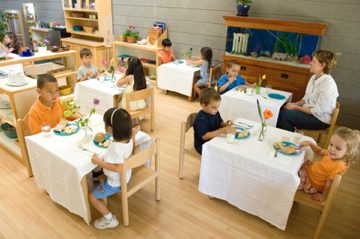
Towards best Practice: Lunch
To continue reading, you will need to choose a subscription plan.
Montessori Curriculum Theory Workshop
To continue reading, you will need to choose a subscription plan.
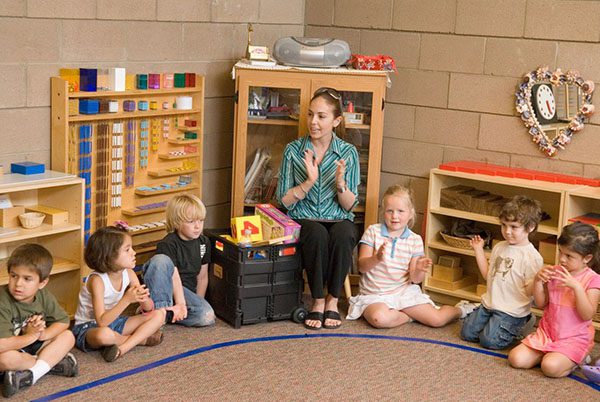
Peacemaking Circles
To continue reading, you will need to choose a subscription plan.
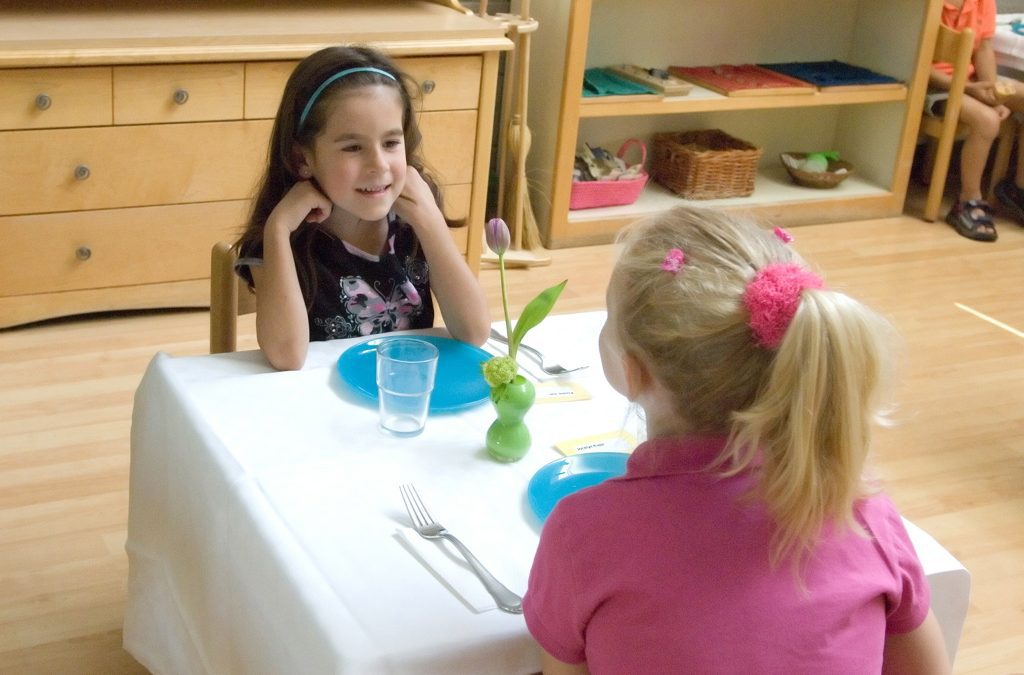
Toward Best Practice: The Exercises of Practical Life
To continue reading, you will need to choose a subscription plan.
Featured
-
 The Montessori Way, Revised and Expanded: An Education for Life; A Comprehensive Guide for Parents and Teachers
$25.00
The Montessori Way, Revised and Expanded: An Education for Life; A Comprehensive Guide for Parents and Teachers
$25.00
-
The Montessori Child: A Parent's Guide to Raising Capable Children with Creative Minds and Compassionate Hearts (The Parents' Guide to Montessori)
$20.00
-
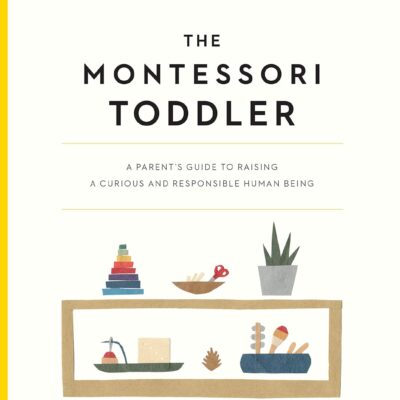
The Montessori Toddler: A Parent's Guide to Raising a Curious and Responsible Human Being (The Parents' Guide to Montessori)
$20.00
-
Montessori in Action: Building Resilient Montessori Schools 1st Edition
$29.95
-
Bulk Order, 30 Copies of Montessori for Every Family: A Practical Parenting Guide To Living, Loving, And Learning
Original price was: $600.00.$510.00Current price is: $510.00.
Products
-
The Montessori Way, Revised and Expanded: An Education for Life; A Comprehensive Guide for Parents and Teachers
$25.00
-
The Montessori Child: A Parent's Guide to Raising Capable Children with Creative Minds and Compassionate Hearts (The Parents' Guide to Montessori)
$20.00
-
The Montessori Toddler: A Parent's Guide to Raising a Curious and Responsible Human Being (The Parents' Guide to Montessori)
$20.00
-
Montessori in Action: Building Resilient Montessori Schools 1st Edition
$29.95
-
Bulk Order, 30 Copies of Montessori for Every Family: A Practical Parenting Guide To Living, Loving, And Learning
Original price was: $600.00.$510.00Current price is: $510.00.