
To access this page, you will need to log in or become a member.
Embracing the Future

Embracing the Future

woman with cat using computer

It is vital that educators prepare students not for the world we grew up in, nor even the world as it appears today; rather, we need to prepare for a world that does not yet exist and which we cannot possibly predict.


With that in mind, I’m sure I’m not the only one who has been thinking deeply about the long-term impacts of the emergence of several machine-learning platforms over the past few months. Especially recently, as news of one of the latest, ChatGPT, has gone “viral.”

At home, my software engineer (and digital native) husband has been exploring various machine learning platforms for several months as word has spread in his field about these latest developments. I observed as he used DALL-E, another digital platform, to generate uncanny, beautiful, and oddly specific images from written prompts. I listened as he shared his interactions with the conversational, entirely text based ChatGPT.

I admit, at first, I brushed off his conviction that these were the first signs of a pivotal moment in the history of humanity; but he’d planted the seed, and quickly, it grew.

Despite my open-minded stance and commitment as an educator, I was reticent. This kind of stuff is pretty far outside my knowledge base. To people like my husband, I’m considered a bit of a Luddite (aka technophobe), and I was sure that these things were too much for me to understand—too complicated for me to interact with meaningfully. Now, I don’t know about you, but the moment I could acknowledge that fear, I had to press pause and take a step back. I don’t want to fall into the trap of allowing unfamiliarity or uncertainty to create a barrier to entry when it comes to innovation.

It sounds like you’re trying to describe the digital divide that can occur between generations or groups that have varying levels of exposure and comfort with technology. Essentially, if one generation or group is slower to adapt to new technologies, they can become increasingly left behind as the world around them becomes more reliant on those technologies. This can lead to feelings of disconnection, confusion, and even frustration or anxiety for those who struggle to keep up with the pace of change. As technology continues to evolve and become more integrated into our daily lives, this divide can become even wider, making it even more challenging for those who are slow to adapt to catch up.

Well, that settles it. Now more than ever, it is vital for us, as Montessori parents and educators, to renew our commitment to lifelong learning and embracing innovation. For me, that means diving headfirst into a topic that scares me and trying to make sense of it all.

What even is ChatGPT?

To answer that question, I decided to go straight to the source and ask! Here’s what ChatGPT had to say about itself:

I am a computer program designed to understand natural language and generate responses that are relevant and helpful to people who ask me questions. Think of me as a digital assistant that you can ask anything, and I will try my best to provide you with the most accurate and informative answer based on my training and knowledge.

The question of how it works is a pretty big one, and somewhat mysterious even to the most informed, but after chatting with it (as well as doing my own research and listening to others more informed than myself), what I found helpful for my own understanding is this:

I was trained using a deep learning algorithm, specifically the transformer architecture. My training data consists of a large corpus of text from various sources, including books, articles, and websites. During training, I was presented with sequences of text and learned to predict the next word in the sequence based on the context provided by the previous words. This process was repeated millions of times over a period of several weeks, during which my neural network gradually became better at generating text that sounded natural and coherent. After training, I was fine-tuned on specific tasks and domains to improve my performance on those tasks.

Not sure where to begin?

Here’s a few ideas:

– Copy a document or article and ask ChatGPT to summarize the main idea for you (Want to get really fancy? Ask it to format the summary in bullet points.)

– Ask ChatGPT to rewrite a passage at a specific reading level.

– Share an assignment and learning goal with ChatGPT, and ask it to write.

It’s important to note that ChatGPT, the program that assisted me with this article, is not connected to the internet. The platform is accessible through OpenAI.com, the research organization responsible for its invention. It has access to the data it was trained on (which is vast) but otherwise is mainly limited to the context within each individual conversation it has. This makes it a different kind of tool than you may anticipate, and it should not be confused with its new cousin, the ChatGPTbased AI recently added to Microsoft’s search engine, Bing.com.

If you want to take a deeper look at ChatGPT’s language model, or any language model, I recommend “What is ChatGPT Doing and Why Does it Work?” by Stephen Wolfram.

ChatGPT as an Assistive Tool

So… what can it do? Plenty. Since its release in late November 2022, people have found countless applications for its assistive technologies. In the week that I’ve played with it, I’ve used it mostly as a sounding board for my ideas, to help me brainstorm solutions to problems, and even to outline this article (along with a few other topics of interest). It has helped me process information from complex texts, reformat notes, and adapt content for different age groups and targeted skills.

Of course, the nature of a tool like this is that there is some trial and error for each user to discover its strengths and weaknesses (and it does have weaknesses). ChatGPT can make mistakes! In its own words:

As an AI language model, I can make mistakes in understanding the context of the question, interpreting the intent of the question, and generating an accurate response. This can be due to limitations in my training data or biases in the language used in the question. For example, if a question contains a reference to a cultural event or phenomenon that I am not familiar with, I may not be able to provide a relevant response. Additionally, I may generate responses that are factually incorrect or inappropriate based on the context of the question.

I find myself thinking of the tool as an incredibly supportive friend—one who hears your ideas and will do what it can to help you further them. By letting it reduce my mental load (as one of my own supportive friends would put it), I have found new depths to my ideas that might otherwise never have had the chance to reach the surface. Let’s be honest: Doesn’t every teacher and parent wish there was just a little bit less on their plate? Maybe ChatGPT can help.

Playful Learning

Look, machine learning platforms like ChatGPT are only going to advance further. There’s no telling exactly how machine learning platforms like ChatGPT will influence our future, but we can rest assured that they will be deeply entwined in our children’s and student’s lives. Let’s not work against this, and let’s not fear working for this. Instead, let us work with these developments. To best support our students as the next generation of digital natives, we need to familiarize ourselves with each exciting innovation as it rolls out.

I urge you to consider this as part of your own spiritual preparation. If we agree that we must cultivate our commitment to ongoing personal growth and development, we must also model our commitment to lifelong learning and a willingness to embrace innovation. By showing our students that we are willing to explore new technologies and learn alongside them, we can inspire them to become lifelong learners and innovators themselves. We must be willing to take risks, make mistakes, and learn from our failures. This is how we can create a culture of innovation in our classrooms (and homes) and prepare our students for a future that is constantly evolving.

Maybe you’ll find use for ChatGPT as a planning tool, as a helpful processing partner, or as a tool for differentiated instruction. Maybe, like me, you’ll find a creative outlet. Maybe you’ll discover something entirely different! I’m not here to tell you exactly how to use ChatGPT, nor any other platform like it. I’m not suggesting you should use it in your classroom or home, have your child use it, or even that you must use it for prep work. If you are truly committed to lifelong learning, though, and want to embrace the innovation that Montessori is so renowned for inspiring, I recommend you take some time to just … play.

To check out ChatGPT for yourself, visit OpenAI.com/blog/ChatGPT

Want to hear a traditional English teacher’s take? Check out the New York Time’s Hard Fork podcast episode, “ChatGPT Transforms a Classroom and is ‘M3GAN’ Real?”

Our experience with ChatGPT

We gave ChatGPT a query,“Tell me about Montessori education,” and this is the answer we got:

Montessori education is an educational approach developed by Italian physician and educator Dr. Maria Montessori. It is based on the philosophy that children learn best when they are allowed to explore and discover things on their own in a carefully prepared environment. Montessori education emphasizes the development of the whole child, including their cognitive, social, emotional, and physical development.

In a Montessori classroom, children are encouraged to work independently and at their own pace, using specially designed materials and activities that are hands-on and interactive. The classroom is arranged into different areas, such as Practical Life, Sensorial, Language, Mathematics, and Cultural Studies. Each area is designed to help children develop specific skills and knowledge.

The role of the teacher in a Montessori classroom is to observe and guide children, rather than instructing or directing them. Teachers help children develop their own interests and strengths and encourage them to pursue their own learning goals. Montessori education is based on the belief that children are naturally curious and eager to learn, and that they learn best when they are given the freedom to explore and discover things on their own. It is designed to help children develop a lifelong love of learning and to prepare them for success in all areas of their lives.

We can help your students become true entrepreneurs  

We can help your students become true entrepreneurs  

We can help your students become true entreprenurs

risinginnovator

The Montessori Foundation is proud to be collaborating with the team at Rising Innovator to develop a range of Montessori-inspired economic and business education programs to mentor, inspire, and support young innovators and entrepreneurs.

As Montessori educators, we all want to help our students develop entrepreneurial skills.

Whether the adolescents you work with want to be athletes, bankers, or computer programmers, learning entrepreneurship will help them to shape their own futures!

We have created a unique curriculum that helps adolescents develop entrepreneurial skills.

We have three options:

  • you can download the free basic Business Innovation Journey Lite course
  • use the full and more robust Business Innovation Journey Hosted online course learning platform to teach your students yourself
  • or arrange for the Business Innovation Journey Course PRO, where one of our guides will teach the course for you live online during the day, after school, or even in the evening. 

In our Business Innovation Journey, your students will build actual businesses around their interests. Working in collaboration with other students around their own ages, they will be led through the processes that actual entrepreneurs use to identify opportunities and innovate.

risining innnovator students

This 15 week course teaches the following key competencies of entrepreneurship:

  • Creativity and Problem Solving, the creative skills and impulses to identify opportunities and solve them
  • Teamwork, a vital skill for success in any venture
  • Entrepreneurial Mindset, such as building character and perseverance
  • Leadership, including such skills as planning, organizing, self-analysis, management of self and others
  • Empathy and Ethics, including how understanding people can help turn their problems into sales
  • Market Analysis, including defining the market for a product or service and potential the competition
  • Marketing Strategy, learning how to best reach your customers
  • Finances, such as understanding profitability, cost/price, planning and management, and financial reports
  • Launching a Startup, we will teach the Lean Startup Method to help the children prototype and test their ideas
  • Presentation, success doesn’t just come from having a great idea, but also requires clear and effective communication for your content

Our course was developed by experienced Montessori educators, business educators, and curriculum designers working in partnership with multiple experienced entrepreneurs. 

Built atop the Montessori method of education, it is an experiential learning opportunity unlike any other.

The Business Innovation Journey course launched last year with school partnerships all over the US. We received rave reviews for being both fun and effective. Now we’ve expanded our offerings:

Course

Cost

Description

Business Innovation Journey Lite

Free

Downloadable materials for the complete 14 session course including power points, instructor notes, and handouts.

Business Innovation Journey Hosted

$200/student up to a maximum of $1500/classroom

Everything in the Lite course plus:

  • Hosted on our online learning management platform
  • Additional cases and resources
  • Additional class session
  • Includes our online accounting tool to help teens track their money


Business Innovation Journey PRO
$300/student up to a maximum of $2500/classroom

Everything in the Hosted course but led by one of our master/mentor teachers.

“As a Montessori instructor for 7th and 8th grade microeconomics, it made good sense to incorporate a curriculum that taught entrepreneurship. Rising Innovator’s was a natural fit! We are about half-way through the course and thus far the students are engaged with the material. They enjoy reading and discussing the case studies. The idea of being a member of a team in an ultimate pitch competition is especially appealing to them!”

– Gillett Cole,
Newgate School,
Sarasota, Florida

Quick facts about Business Innovation Journey™

  • For students aged 12 to 18
  • 15 weeks long (It can be completed in 8 weeks)
  • Online course meeting once a week in the evenings for 1 hour each session (Hosted and Pro only)
  • Team based, students will create small groups to pursue business ideas
  • Free downloadable materials, reasonable prices for hosted or taught options
  • Contact us now with further questions or to enroll!
rising innovator 2 students

Why did we create the Business Innovation Journey™?


The future belongs to people who can look at the world and figure out how to change it. An entrepreneur sees beyond a problem in the world into the opportunity that lurks beyond it. The skills that allowed Steve Jobs and Henry Ford to revolutionize society are the same that any activist or artist needs to thrive in our information driven age. We know the world belongs to young innovators. Changemakers. Trailblazers. Leaders. Those that come up with ideas that make our lives better, in ways both big and small.

 Research has shown that adolescents who learn about entrepreneurship benefit from:

  • Developing creativity and collaboration skills.
  • Identifying and recognizing problems and thus, adapting to changes.
  • Developing resilience and perseverance.

This 15-session course is structured to inspire, educate, mentor, and support young entrepreneurs with the tools and information designed to help them start and run a successful business.  Interested in learning more or enrolling? Email us now!

Rising Innovators in Class

Rising Innovators in Class

RISING INNOVATORS IN CLASS

by Gillett Cole

As part of our microeconomics course, we partnered with Marc Seldin and Mark Tough to include a pilot of their college-level learning program called “Rising Innovators,“ for adolescents. Rising Innovators is an experiential course, providing students with an introductory blend of the hard and soft skills needed to begin their journey towards creating a new small business. The program included seven weeks of discussion, lecture, and the presentation of case studies, culminating in a team-based activity, focused on the creation of a business idea that was presented by teams at the final pitch competition, like “Shark Tank.” One of the judges on our panel coined it “Guppy Tank”.

The competition took place on Wednesday, February 23. There were six teams. The teams varied from a team of one to a team of five. The panel consisted of seven judges with a variety of experiences. Two of the judges were seniors in NewGate’s I.B. business program. One judge was a senior at the University of Tampa, and the other three judges had vast experiences owning and running successful small businesses.

The judges were handed a rubric to help score each team’s performance. Each team was evaluated on three components: a pitch deck (colored slides that discussed their big idea, target market, and market analysis); a one-sheet synopsis that captured their pitch deck’s main points (something they could leave behind for potential investors), and lastly, each team was evaluated on their overall presentation (style points, eye contact, and team coordination). After each pitch, the team was peppered with thoughtful (sometimes tough) questions by the judges. Team members had to quickly think on their feet, and some realized that they don’t have all the answers. They realized that when you don’t know the answer to something, sometimes the best response is, “That’s a great question; let me get back to you on that.” Most importantly, the question-and-answer session provided an amazing opportunity for the students to hear direct and honest feedback from the judges — valuable, honest feedback from adults who were not their teachers. As well, the judges were able to weave in bits of wisdom and common sense by providing constructive criticism for each team.

All six teams performed well. Their big ideas were truly innovative and varied. Some of the ideas were ways in which we could innovate the recycling of plastic grocery bags (building a hydro-powered generator that collects rainwater to power a home) and a shoe that grows with your feet. The students were well-poised and genuinely seemed excited to present their work. The winning team walked away with a cash prize and high-fives.

What lessons did the students receive from this course? By reading various case studies, the students realized that everyday folks, from young to old, were able to turn a big idea into a dream by taking initiative and working hard. They realized most ideas in our marketplace are not inventions, but rather, innovations. The idea that they can take something that is already out there and make it better, instead of trying to come up with something totally new was quite appealing to them. In this fashion, the task seemed more attainable. They began to understand that entrepreneurship requires a positive mental attitude, initiative, hard work, and followthrough — qualities we try to instill in our students at a young age. The students also realized that a fancy, well-designed pitch deck and one sheet are subordinate to their ability to tell a good story and maintain good eye contact with their audience. In fact, the most consistent feedback from the judges was whether or not the presenters made good eye contact. Students learned a valuable lesson — reading from a script does not earn you style points in public speaking. An important lesson for all. •

Gillett Cole is an AMI trained Montessori Guide who has been teaching for 13 years. He is currently teaching language arts, mathematics, and microeconomics to middle school students at the NewGate school in Sarasota, Florida. He and his family recently moved to Sarasota in August of 2021 from St. Paul, Minnesota. Gillett has two daughters, who both went to Montessori schools, and are now in college. Gillett loves the outdoors, swimming, sailing, and a good book.

Book Reviews

Book Reviews

Some of My Favorite Books For Older Children

by Tim Seldin

Whatever Happened to Penny Candy?

A Fast, Clear, and Fun Explanation of the Economics You Need for Success in Your Career, Business, and Investments

Written by Richard J. Maybury Edited by Jane A. Williams

From Bluestocking Press

There is an entire series of interesting books in the Uncle Eric collection. I particularly enjoyed sharing this clearly written, award-winning book about economics. In it, the author offers a clear and easily grasped explanation of the origin of money, investment cycles, inflation, market cycles, recessions, and much more.

As another reviewer put it, “Maybury’s forte is explaining economics in an interesting, logical, and easy-to-understand manner. This is no small achievement in economics pedagogy. Equally important, the economics in Whatever Happened to Penny Candy makes such good sense. When government’s economic policies make us say ‘uncle,’ let’s hope it’s ‘Uncle Eric,’ Maybury’s letter writer and alter ego.” – John G. Murphy, Ph.D., President,

National Schools Committee for Economic Education

“This book is must reading for children of all ages. Its presentation of some of the fundamentals of economics is lucid, accurate, and above all highly readable.”— Michael A. Walker, Executive Director, The Fraser Institute, British Columbia, Canada

Pyramid

Written & Illustrated by David Macaulay

From HMH Books for Young Readers

This is another series of excellent books published in the 1980s that is still available and should be in every school and family library. David Macaulay is an award-winning author and illustrator, whose books have sold millions of copies in the United States, alone, and his work has been translated into a dozen languages. Our children and I loved every one of his books. The series explored how famous buildings and structures were built, from the Pyramids to modern skyscrapers. The illustrations and detailed descriptions are fascinating to children (and adults) of all ages, but especially from seven to fourteen.

Our Vanishing Landscape

Written & Illustrated by Eric Sloan

From Dover Books on Americana

Eric Sloan is absolutely one of my favorite authors. Over his long career, he produced many compelling books that celebrate the traditions of early America and remind us that history is all around us, if we take time to look and understand. His work is a celebration of America. Eric Sloane was a prolific artist, which make his books come alive. This particular volume is just one of many. He wrote of the traditional life of the American farm and countryside. Just a few include Once Upon a Time: The Way America Was, Diary of an Early American Boy: Noah Blake 1805, The Seasons of America Past, The Cracker Barrel, The Little Red Schoolhouse, and many more. These books will not immediately grab the attention of the average young reader. I suggest that you get ahold of a few, and try to go through them together with a child of nine or older. Reading the Diary of an Early American Boy aloud together and looking at the pen and ink drawings may be a great beginning. Once you and your children realize how the evidence of the past surrounds us, you may see the place where you live and the places that you visit with new eyes. I love these books!

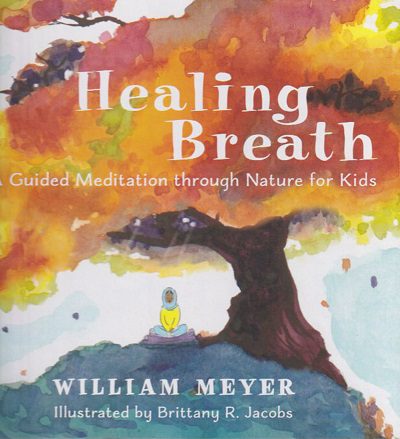
Healing Breath: A Guided Meditation through Nature for Kids

Written by William Meyer Illustrated by Brittany R. Jacobs

Mr. Meyer wrote this book to help children release anxiety in general and more specifically about the condition of the planet through meditation. The illustrations are colorful and calming and they bring the author’s words to life. I would suggest that this book be presented to children during the elementary years, as these are the years of great imagination. They will need to use their great imaginations to picture the ideas and places in the meditation. They will also need to have had enough life experiences to use as a basis for this imagining.

If I were going to present this meditation to students or to one of my own children, I would definitely start them off with a shorter meditation or with practicing the Silence Game that we often use in Montessori schools. Depending on their comfort and skill levels, I would read the book aloud with children or let them read it to me. Seeing the illustrations and hearing the words will help children imagine the scenes when they actually go to meditation, close their eyes, and visualize the scenes the author describes. I would also read the author’s words out loud, alone, before leading the meditation with children. Practicing this way will help me become familiar with the language, set my tone of voice, and determine the pace of reading.

This is a beautiful meditation and I think that elementary children will relax and enjoy this quieting practice.

Where Are You? A Child’s Book about Loss

Written by Laura Olivieri Illustrated by Kristin Elder

Where Are You? is written by a wife and mother of a three-year-old after her husband passed away. Her purpose in writing this book is to offer support for parents who may be struggling to answer their young child’s question about their missing parent. The author delicately describes how young children think and experience life and death in terms of ‘real’ things through their senses. After the child in this story experiences the loss of seeing, touching, and hearing his loved one, he begins to remember. He realizes that memories are held in the heart and that is where his parent is now. This book could be helpful for children ages three through eight years old, who are experiencing loss and searching for an answer to “where are you?”

Maria Montessori Speaks to Parents: A Selection of Articles

Written by Maria Montessori

Maria Montessori spent the vast majority of her professional life working with teachers, developing her innovative educational method. She devoted most of her energy to writing about the Method for teachers. However, she also spent some time during her courses and lectures to address parents. Within the pedagogical archives of Maria Montessori’s original work, several articles were found that have a style and content that was certainly written for parents. It is possible, and even likely, that these articles were written in 1931.

This book contains eleven short articles to help parents understand, in broad strokes, Montessori’s views on how children learn and the role that parents play in supporting their children’s development. It is an interesting collection of articles with clear and exact messages to parents. When I read each one, I had to put the book down and really contemplate her meaning and message. Maria Montessori’s style of writing is different from writers in the 21st century, but her message about children absolutely holds true today. This book is available through Amazon.

How to Change the World in 12 Easy Steps

Written by Peggy Porter Tierney Illustrated by Marie Letourneau

This delightful book was inspired by Eva Mozes Kor, a child survivor of Auschwitz. During her life, Eva encouraged children to make a positive difference in the world by doing everyday things that show kindness, acceptance, support, and care for the environment.

The author put ideas into simple terms on how we can all “be the change” we would like to see in our world; small things like tidying your room; giving your parents a hug and a kiss; picking up trash where you see it; inviting a new student to sit with you at lunch; getting an education; and being creative can make a huge difference. The illustrations are realistic, fun, and relatable.

At the end of the book, the author tells a brief story of Eva’s life after Auschwitz. You and your child (or students) can watch a documentary about Eva Mozes Kor by filmmaker Ted Green – Eva A-706. Great for children 4-8 years old. It can be purchased on amazon.com.

One Green Apple

Written by Eve Bunting Illustrated by Ted Lewin

Moving anywhere can be an adventure or a journey at any age but moving to a new country with unfamiliar customs and a language you don’t speak or understand can be very challenging for a child. In One Green Apple, Eve Bunting tells the story of a child from South Asia on her second day of school in the US, who goes on a class field trip to an apple orchard. Here, she learns the names of two new friends and adds her green apple to all the red apples to make a delicious cider. This is a story of acceptance, connection, and adjustment in new surroundings. The illustrations are realistic, sensitive, and beautifully done. I highly recommend this book for elementary age children.

A Warm Winter

Written by Feridun Oral

This is a story about friendship, sharing, and survival in a beautifully illustrated book that children will enjoy reading over and over for years to come. The author uses forest animals to tell the story of how a mouse struggles to provide the necessities of life for others in his family. Along the way, the mouse enlists the help of friends (a rabbit, a fox, and a bear) to move the fire starters to the mouse’s nest. This was quite an unlikely team to be sure, and maybe there’s a conversation to be had about that as you read the story. As luck would have it, a fierce winter snowstorm thwarted their efforts, and the very large bundle of twigs and pinecones came undone and scattered. They took shelter together until the blizzard passed. What do you think they decided to do with the twigs and pinecones that had scattered? When you read this book, you’ll find out how it turned out to be a warm winter after all. It will be most appealing to children from age four to seven.

Calling all teachers, parents, & children!


We would love to publish reviews of your favorite books. Send book reviews to Lorna at: lornamcgrath@montessori.org

Adolescents:Secondary Internship Program

Adolescents:Secondary Internship Program

Why Have An Internship Program?

Maria Montessori’s wisdom about the adolescent revolved around her observation of their need for meaningful work. She encouraged educators to get students outside the classroom and into appropriate adult experiences as much as possible during adolescence. As one way to put her wisdom into practice, all students in the Secondary Program at NewGate experience an internship for one week every year.

The faculty at NewGate School works to guide each student to choose a meaningful internship that presents him/her with an opportunity to take advantage of local community resources and a chance to work with positive role models and community experts. As a form of independent study, students enjoy the opportunity to engage in a learning experience that enhances classroom learning and extends beyond the traditional four walls of the classroom.

An internship is an excellent tool for testing out a career interest and giving students first-hand knowledge of a particular professional field. Adolescents gain real-world experience while learning how to conduct themselves in a professional workplace environment. They observe firsthand how skills related to decision-making, problem-solving, teamwork, and technology are employed on the job. Students report that an internship helps them to value themselves and their abilities, gain confidence, and reflect more on their future. Moreover, an internship experience can help when the time comes to:

Apply to colleges or technical school —students can detail their experiences in their application essays. select a college major—the opportunity to investigate a possible career choice permits more informed decisions.

Seek an interesting job—an internship can help one secure references for future jobs and may open up opportunities for stimulating summer work. By the time students graduate from NewGate, they have participated in six different internships. The internship experiences grow more sophisticated as a student matures from a young adolescent of 12 to a young adult of 18. Overall, the internship experience is a highlight and a hallmark of our Secondary Program.

What Is Involved In The Secondary Internship Program?

Pre-Internship Week:

Finding and Securing a Placement

NewGate provides students and their families with a list of area organizations that NewGate students have worked with successfully in past years, in addition to other organizations in the area that may take students for internships. Students and parents review the list to generate ideas for organizations that would be a good fit for them.

If a student has a desire to work somewhere that is not already on the list, he/she gets approval from the faculty to pursue placement at the given organization. Middle school students pursue their internships locally, while high school students who want to travel outside the city or state for their internships can develop a proposal in writing to gain faculty approval.

Students develop a list of their top choices for placement and detail why they are interested in the organization and what they hope to get out of the experience. The faculty, student, and parents then begin working to find a host for the student at the chosen organizations.

Preparation Workshops

Students continue to prepare for their placement by spending time in workshops with faculty and visiting professionals for resume writing, business letters, interviewing, thank-you letters, and professional etiquette while on the job.

During Internship Week:

Parents and/or student drivers are responsible for the transportation arrangements to and from the host organization.

Students complete all appropriate tasks as requested at the placement.

Students write a personal reflection about their work each day.

A NewGate faculty member visits each student at his/her host organization at least one time throughout the week.
Post-Internship Week

Students write and send thank-you cards to their host organizations.

Students write a review of their internship experiences for the Internship binder. These reviews are a resource for students the following year during the placement search.

Students prepare a portfolio of their internship experience that includes all the work from before, during, and after the internship experience: placement ideas; resume; interviewing notes; business letters; thank-you notes; daily reflections; pictures of the work experience; the review, etc.

Students share their experiences and new knowledge in oral presentations to the rest of the school community.

Tomorrow’s Child/ November 2017/ Pg 30