To access this page, you will need to log in or become a member.
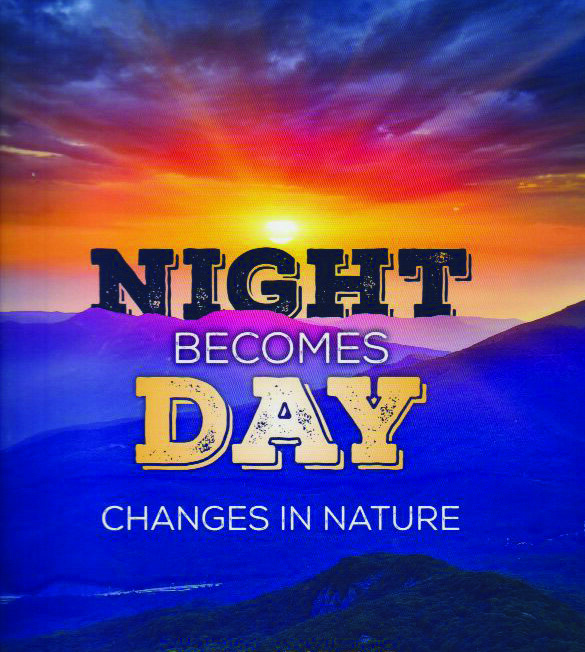
Night Becomes Day: Changes in Nature

Night Becomes Day: Changes in Nature

cover night becomes dayWritten by Cynthia Argentine

This is a truly gorgeous book for children! Cynthia’s words flow as you turn the pages, and she describes how the natural world is constantly transforming. The photographs superbly illustrate the transformations in nature. The message is about paying attention and to be in awe of all that is around us in the world and realizing how dynamic nature is. And watch for this – “What goes around, comes around.”

Cynthia includes three pages at the end of book for parents and teachers to share with children about different areas of science.

Beautifully written, beautifully illustrated, and a beautiful message for readers! Night Becomes Day would be a terrific addition to children’s (ages 3-8 years old) book collections at home, at school, or both.

Cynthia Argentine has been a guest on our Montessori Family Life Webinar Series. Join the Montessori Foundation Family Network at www.montessori.org to watch the broadcast, Science— An Open Door to Creativity: How

Science Connects Kids to Nature, Arts, Literature, and More with Cynthia Argentine. Visit her website www.cynthiaargentine.com to purchase this and other books she has written.


Seeing the World Through Your Child’s Eyes

Seeing the World Through Your Child’s Eyes

One of the keys to creating a calm and peaceful home is to learn how to see the world from your child’s perspective. Maria Montessori challenged us to ‘follow the child’. To do this, first we must have a sense of how your children think, feel, and react.

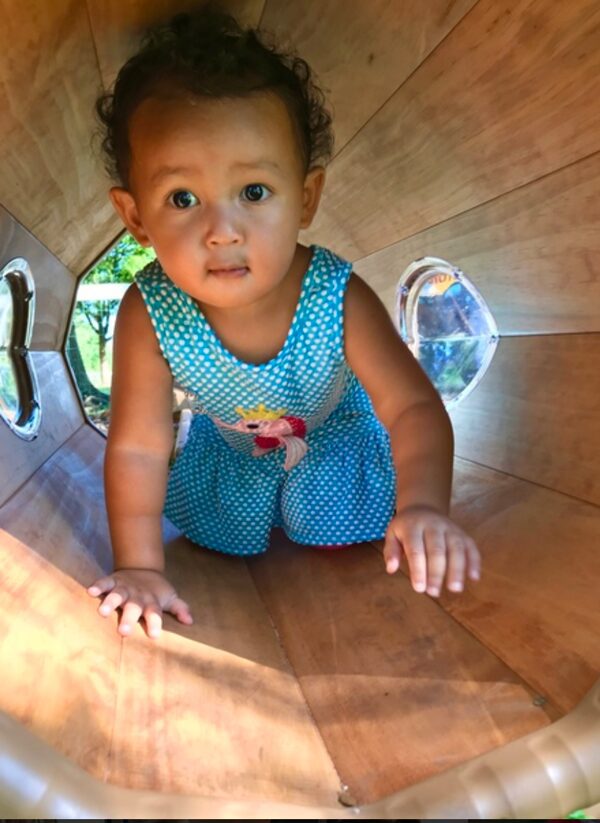
through the child's eyesFor example, take this child. He is looking up and you can tell that he is looking at someone or something really tall. He is probably looking up at an adult that he loves. Imagine how the world looks to him at two or three feet tall. It looks a lot different than it does to us. Let’s try to put ourselves into our children’s shoes and understand what it’s like to be so small. From this perspective adults seem to be giants. Because of their size and strength, they seem to be all powerful.

We invite you to do a little exercise. When your children are asleep, with your parenting partner, get down on the floor and use your smartphone to take a video of what the house looks like from your child’s height. This is particularly dramatic if your child is very young. You will notice how different the furniture, the stove and the kitchen cabinets look. It probably feels like living in a giant’s house? When children are small, they can feel overwhelmed, powerless, and without a voice.

As parents, you are not only taller and stronger than young children, you are the ones who meet their needs. You say yes or no. You pay attention or ignore them. As adults, we don’t always understand what our children are trying to tell us, and our children find ways to get our attention and communicate their desires by trial and error.

When they are young, children learn to recognize the needs of others as well as their own, to communicate with words, and gain skills that foster independence. In the beginning they don’t have words so they cry, smile, or coo. They don’t even truly recognize that they are separate beings from their primary caregivers.

When they are young, children learn to recognize the needs of others as well as their own, to communicate with words, and gain skills that foster independence. In the beginning they don’t have words so they cry, smile, or coo. They don’t even truly recognize that they are separate beings from their primary caregivers. As they grow, in addition to words, most young children communicate their needs with the adults in their lives through tears, smiles that make our hearts melt, tantrums, pouting, and other ways to make themselves heard. They begin to realize that they have their own unique voice. They are working to develop respectful communication, independence, and the ability to do things for themselves.

As children grow, during the elementary years, they become even better at communicating.  They are increasingly interested in their peers and their relationships. They are all about rules and fairness. They want to make up their own rules and try them out. They are beginning to feel their own independence and autonomy. As parents we start to feel more comfortable and confident in their ability to make decisions and handle certain situations on their own or with a little help from adults.

Adolescence is the middle ground between childhood and the world of adults. Teenagers are neither children nor adults. One minute they are one, next the other. Their bodies are growing and changing rapidly overnight. They want to know what their place is in the world and how they can make a difference. They become interested in sexuality—their own and others. They want to try out different ideas to discover their values and beliefs which may or may not be the same as their parents.

Every child is unique. No matter what age they are, some children seem to easily accept their parent’s guidance while others seem to test everything their parents say or do. Throughout their childhood it is their parents’ job to lift them up, listen and try to understand, help them gain confidence, and find their own identity.

Book Review | Right now, I Am Brave

Book Review | Right now, I Am Brave

by Dr. Daniela Owen
Illustrated by Gülce Baycik

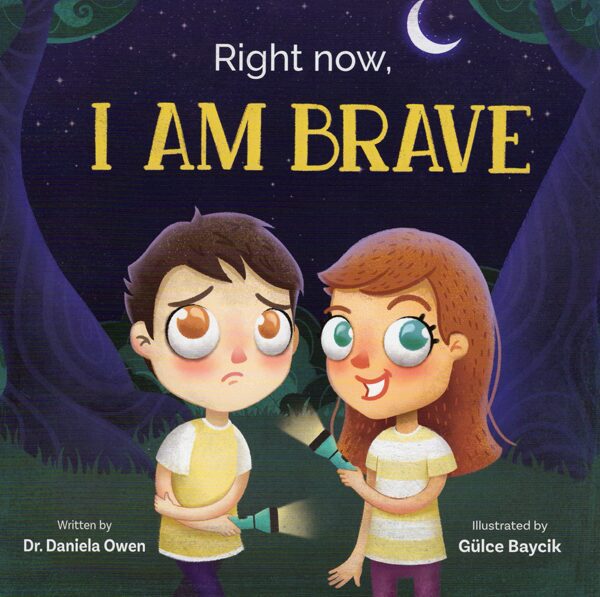
Right Now, I am BraveHere’s another good one from Dr. Owen. The first lesson—when things that we find scary are not actually dangerous, it’s time to be brave. She goes on to define what it means to be brave. She explains how our brains are not always right about what is truly scary. Being brave can be tough for grown ups as well as kids.

So trying new things, doing the right thing, or doing something hard are all sometimes scary. She goes on to give children ideas about how to encourage themselves and push forward when facing scary things.

As always in this series, the illustrations are colorful, inclusive, and full of emotion. It is definitely a good addition to your home library or for your school.

Book Review | Right Now, I Am Kind

Book Review | Right Now, I Am Kind

Written by Dr. Daniela Owen
Illustrated by Gülce Baycik

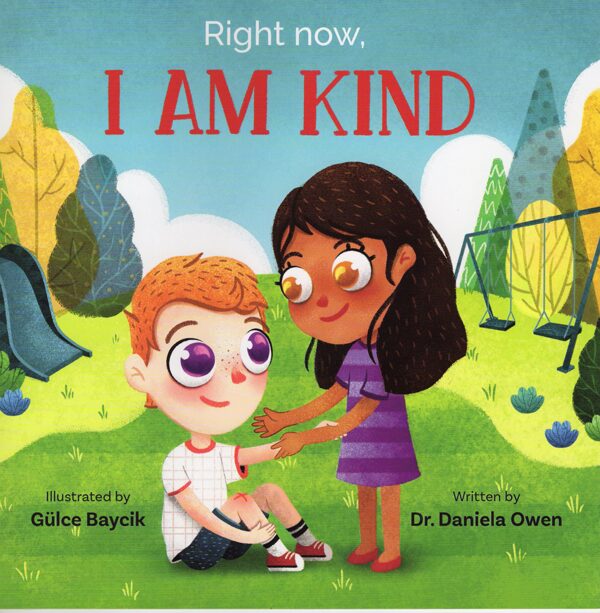
I am Kind BookIn this book Dr. Owen helps children think about what it is to be kind. She says we have to look outside of ourselves, outside of our wants, and think about others. She tells, in greater detail than in this review, that there are three basic ways to be kind. They are: be aware of others to see if you should change your actions based on others needs; ask people if they need help, and show people you care through random acts of kindness. The illustrations are colorful and inclusive. The message is appropriate for children who are just beginning to recognize the needs of others and a good review for children throughout the elementary years.

Parenting toward Antiracism | Montessori Family Life Webinar

Parenting toward Antiracism | Montessori Family Life Webinar

Dr. Valaida Wise was recently a guest on the Montessori Family Life Webinar series when she shared some of her ideas about how to raise children to be anti-racist. I will summarize a small part of that webinar here. If you would like to view the entire broadcast or any of our hundreds of weekly broadcasts, you can join the Montessori Family Alliance at montessori.org/mfa.

Or if you are already a member, you can view the webinar by clicking here.

antiracism montessoriSo many parents and teachers believe in this myth of racial innocence. They don’t want to burden their children with this rather adult idea of racism. They believe that children are born kind and innocent to race and that they don’t need this information. So they would rather raise them to be what we call ‘color blind.’ Many researchers would submit that, actually, the worst conversation to have with a child is no conversation at all about race. What is known is that, in reality, young children (as early as three months old) understand bias and difference based on research by Dr. Karen Wynn, Director of the Infant Cognition Center, and Dr. Bloomington, both at Yale University.

“Children become
like the things they love.”
–Dr. Maria Montessori

What researchers are thinking now is that humans may be born with this kind of bias. We have a bias towards something that looks scary or different. Research shows that these biases are not just ‘learned’ behaviors. They are actually inbred, instinctual behaviors that worked for our protection at one point. Left unchecked, without a parent’s guidance, the child cannot help but develop a bias.

Children see bias as early as 3-6 months old. So let’s scan forward. What happens in a family if the parent says, “Well, I don’t want to talk about race because my child is too young?” or “I want them to remain innocent from all of this.” Then the child will be raised in a color-blind mindset and, as research bears out, the child is less likely to point out or understand when discrimination happens.

This could happen very subtly. Let’s say you’re at a playground with your child. You see another child point to a child of color and you hear the pointing child say, “That child looks dirty. Why is that child dirty? Does it come off?” The parent of the pointing child cringes, turns, and walks away, shushing the child. The child’s interpretation is that this is not a good topic; they should not talk about this.

To conclude this summary of just a small segment of Dr. Wise’s broadcast, let’s remember that when we allow our biases (or our embarrassment) in situations stop us from guiding our children toward antiracism (especially the youngest children), they absorb it right away. Children are mirrors. They mirror us. It’s so very important that we check ourselves to see what our children are sensing in our attitudes, in our language, and in our thinking because they are taking it all in.

Build a Playground

Build a Playground

Tanya Ryskind examines the benefits of building a playground

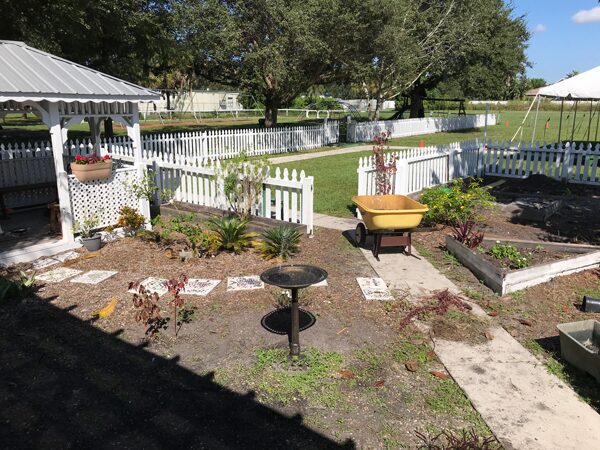
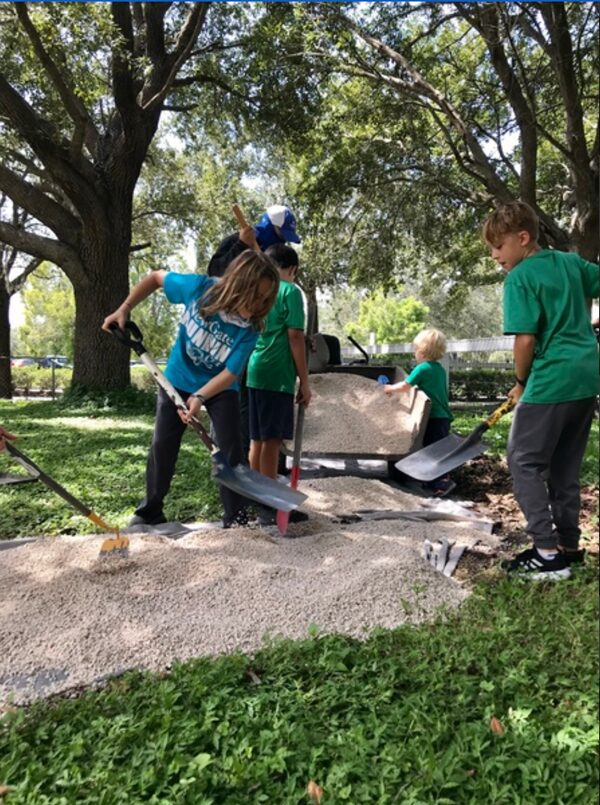
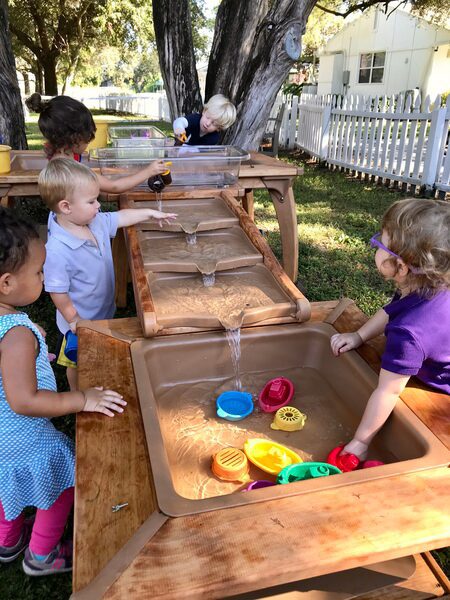
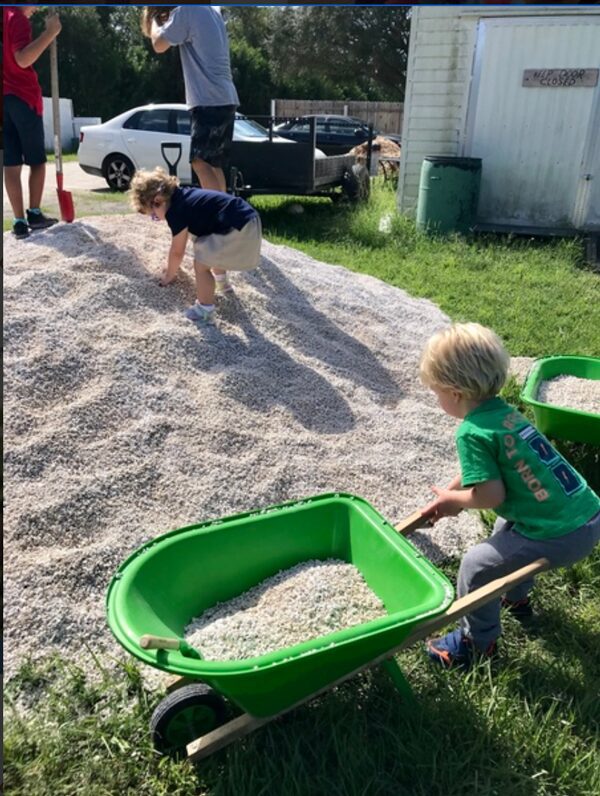
After several years as a Montessori parent, I changed careers to become a Montessori teacher. Today, I am the Head of NewGate School, the Lab School of the Montessori Foundation, and charged with establishing a COVID task force to guide our school’s policies and procedures to mitigate risk and open safely. Our local health departments told us that maintaining physical distance and working outside was one way to reduce exposure and transmission. This year with the stressors of COVID-19, social tensions, and the uncertainty of whether to send our children to school or keep them home, my husband and I started to reflect upon what kept our children in Montessori through high school. We also wondered how parents of young children and elementary school-aged students were handling the situation. Did they feel safe sending their children back to school? Did they live in a state that closed schools indefinitely? How would I respond to parents’ needs at NewGate? How does a family stay connected to their teachers, their children’s friends, and follow state and local guidelines? I found my husband’s words profound. I listened to him from my new perspective as a school leader. He said, “What your school needs to do is build a playground like we did.” Last year, the NewGate buildings and grounds committee helped transform the peace garden into a contemporary rock garden giving the heart of our campus an inspirational renovation. This year, however, we needed to do more, we needed more appropriate work environments for our students. At the toddler level, we needed to rethink and add to our playscapes. At the elementary level, we needed to do more gardening and botanical studies. Our secondary students needed more outdoor seating that protected them from the sun while adjusting for social distancing. In a comprehensive manual from Harvard T. H. Chan School of Public Health, “Schools for Health, Risk Reduction Strategies for Reopening Schools,” June 2020, the authors outline multiple essential strategies for reopening schools and mitigating health risks. To help envision the true potential of these outdoor spaces, I went backward in time. “You need to build a playground like we did,” is what my husband said. When our children were in the infant/toddler and early childhood classrooms, our Montessori school had to move the playground to accommodate a building project. Over several weekends, my husband and I would make the 30-minute commute to our school on the weekend to volunteer to move the playground. Relocating the play area included cutting the sod and carrying it to the new location. It was backbreaking work. Having the three-year-old and infant in tow, I spent time pouring water and hanging out with other parents who had children. Throughout these weekends, we bonded. We discussed the hopes and dreams we had for our children. The laborers kept their energy up by sharing jokes and talking about their jobs. Mostly we heard, “How did we get roped into this?” Twenty-four years later, a group of masked NewGate parents came together to shovel gravel in the heat of the Florida sunshine to create a bike track for toddlers. They trimmed hedges and cleared areas where beautiful wooden playscapes and a treehouse would sit. The adults laughed and shared their hopes and dreams for their children. They cracked jokes. When family isolating is the protocol, in the open air, six feet away, parents of young children were bonding. What I saw reminded me of our family’s experience at our Montessori school. My husband and I believed then and now that we were in partnership with our Montessori school; the teachers, administrators, and other parents. The image of NewGate parents on the toddler playground showed me the replicable nature of our schools. NewGate parents were working as a team for the betterment of their school. Remembering our playground days and watching NewGate’s playground days highlights how a Montessori education gives us an education that focuses on partnership, independence, mutual trust, and respect, on both individual achievement and collaboration. The Harvard public health manual’s healthy activities section specifically outlines five pertinent areas: provide recess; modify physical education, continue sports with enhanced controls, add structure to free time, and reimagine music and theater classes. My husband and I helped build a play area that included a labyrinth, a large area for an organic garden, wood stumps for hopping or running around, a small treehouse, and a spectacular maple tree that would come to be called the giving tree. Over the years, our children strengthened their large motor skills and learned to play fairly. As a young adolescent, our daughter had serious talks with friends about her next steps and what the future looked like. The “playground” we built continues to serve children and families as a safe place, now a safe place to breathe without facial coverings. <h3>Each of the five pertinent parts outlined in the Harvard manual has a bulleted list of suggested activities. These guidelines include:</h3>
  • Move outdoors.
  • Play outdoors as much as possible.
  • Do not limit children’s access to recess, the schoolyard, or fixed play equipment.
  • Hold physical education classes outdoors when possible.
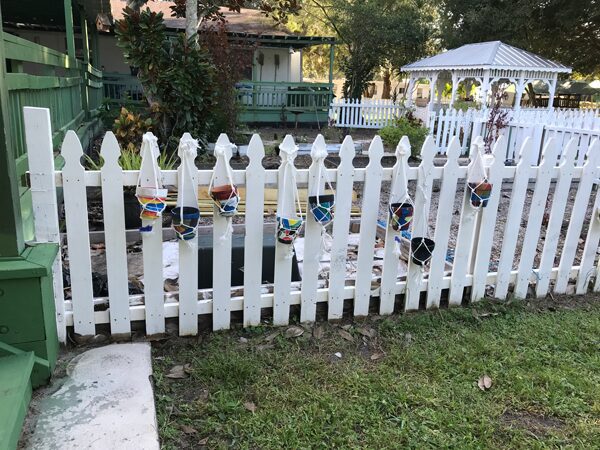
Now, when outdoor activities matter more than ever before, parents at our school started to rally and ask teachers about what they could do to support their children and their outdoor activities. Our school focused on gardening and, yes, the playground. But, this year, we needed to think of our playground spaces as outdoor learning environments. It needed to be a place where children could work without distraction from the weather. It needed to add value to their learning experience. When we realized how important it is to be outdoors, we unleashed an unmet need to give, volunteer, and to participate in efforts to keep everyone safe. Parents, who were no longer allowed on campus, could focus on something they knew was important and necessary. Children could go home and share developing plans for garden boxes and flowering plant containers. Plans included water elements, bird feeders, and butterfly plants. Energy and excitement grew around the need to spend more time outdoors. Families came together on virtual community meetings to share how they could donate and what they could do on our campuses while maintaining safety protocols. They bonded and connected either six feet away behind a facial covering or in a virtual community meeting. These bonds have nurtured friendships and created spaces for children to grow, play, and learn. We received, in abundance, donations of time, talent, and treasure. Contributions focused on a single goal—enhancement of our outdoor classroom spaces. We added to our toddler and early childhood playscapes things previously thought unattainable because of cost and labor. We doubled the number of raised garden beds on our campus. We partnered with a local master gardener organization. We quadrupled our outdoor seating capacity for our middle and high school students. And, we have begun to embrace the importance of walking with nature throughout our day. The silver-lining of COVID-19 is that we have been forced to make time for things that have always been put on the back burner. Parents, staff, and even children have committed to attending weekly virtual community meetings.  We have prioritized what is important to us, staying healthy, using our indoor and outdoor environments for learning, and building community. We honor the words of Maria Montessori by dedicating ourselves to our outdoor environments: “The child has a different relation to “their” environment from ours … the child absorbs it. The things they see are not just remembered; they form part of their soul. The child incarnates in themselves all in the world about them that their eyes see and their ears hear.” (adjusted to be gender neutral—The Absorbent Mind.) As parents, you have an opportunity to support your school through this unprecedented time by using your talents, treasure, or time to enhance your outdoor environments. Look around your school and offer ideas to support your teachers in using their outdoor spaces more effectively. I think you will be as surprised as I was that all you have to do is build a creative outdoor space for learning and call it a playground. Footnote: my husband continues to have conversations with the crew who helped “build the playground” 24 years ago. For us, “building the playground” has become a metaphor for lifelong learning and lifelong friendships.