

Do I Just Say Yes to Everything?
To continue reading, you will need to choose a subscription plan.

Diversity: A Lesson from Nature
To continue reading, you will need to choose a subscription plan.
A Montessori Approach to Clean-Up Time
A Montessori Approach to Clean-Up Time
by Carine Robin
We know that Montessori is all about order.
We know that children have a sense of order. The Montessori classroom is an orderly environment where every activity has its place.
Montessori teachers encourage children to use one activity at a time and to tidy up each activity after they have finished with it.
As parents, we expect that the Montessori philosophy will help our children to be tidy! In my experience as a teacher, it’s easier for children to tidy up in the classroom. The Montessori school is designed for children and leads naturally to order. There are clear rules and expectations, and children are more willing to clean up after themselves in the classroom.
What if I tell you that, despite being a Montessori teacher, my children’s bedrooms are not orderly? They don’t tidy up spontaneously. There are several reasons for that, and I have learned over the years what helps children to tidy up and to stay organized.
Three reasons why children don’t tidy up?
1. You might have heard of the sense of order? This is one of the ‘’sensitive periods’ observed by Maria Montessori. It is now described more as a tendency that all human beings must make sense of their environment. It’s not so much about “tidying up after themselves” or keeping their bedroom clean” as about routine, rhythm, and knowing what comes next.
They will express that sense of order about what matters for them. For example: sorting their little people; being obsessed about their collection of pebbles; sleeping with their special teddy is all about that sense of order!
“It seems to him, at this stage, a particularly vital matter that everything in his environment should be kept in its accustomed place; and that the actions of the day should be carried out in their accustomed routine.” – E.M. Standing, Maria Montessori: Her Life and Work, p. 123
Sense of order doesn’t equal being tidy!
2. Are you a tidy person? I’m very honest on this blog and on my social media about the fact that I am not a naturally tidy person. I used to have lots of clutter in my life.
I did a big work on myself to understand my hoarding tendencies and to learn to be more organized. So, if like 50 percent of the parents I work with, you tend to be “messy and disorganized,” you cannot expect that your children will be able to tidy up spontaneously. Children need role models. The more you clean and tidy in front of them, the more they will see it as being part of the routine.
3. They don’t see you cleaning and tidying! I have said it already but even the tidiest parent tends to “clean” when the children are not around. Have you ever sent your co-parent to the park with the children, to allow you to do a good clean-up session?
Do you tend to do everything when they nap? Or do you tend to tidy up all their toys at the end of the day when they are in bed? Stop now and do as much as you can in front of them. Montessori is about teaching life skills and independence, so taking care of the environment is something that I would advise you to focus on. Teach your child to fold the laundry, to do the dishes, empty the dishwasher, setting up the table, and cleaning the windows!
How to help children to tidy up?
• Work on yourself: if you are not naturally tidy, start with you! Do a big decluttering session, and try to understand why it’s hard for you to be orderly. Seek support if needed. Your children will thank you!
• Equally, if you are a very tidy person, lower your expectations; having a spotless house when we have children is just not possible. Review your definition of what is a tidy home.
• Be a role model: clean in front of your children. Even if you have a cleaner, try to do a task with them as a way to teach them. Involve them in the cleaning tasks: young toddlers, generally, love to clean! Give them child-size tools and don’t expect a brilliant result. Let them enjoy the process.
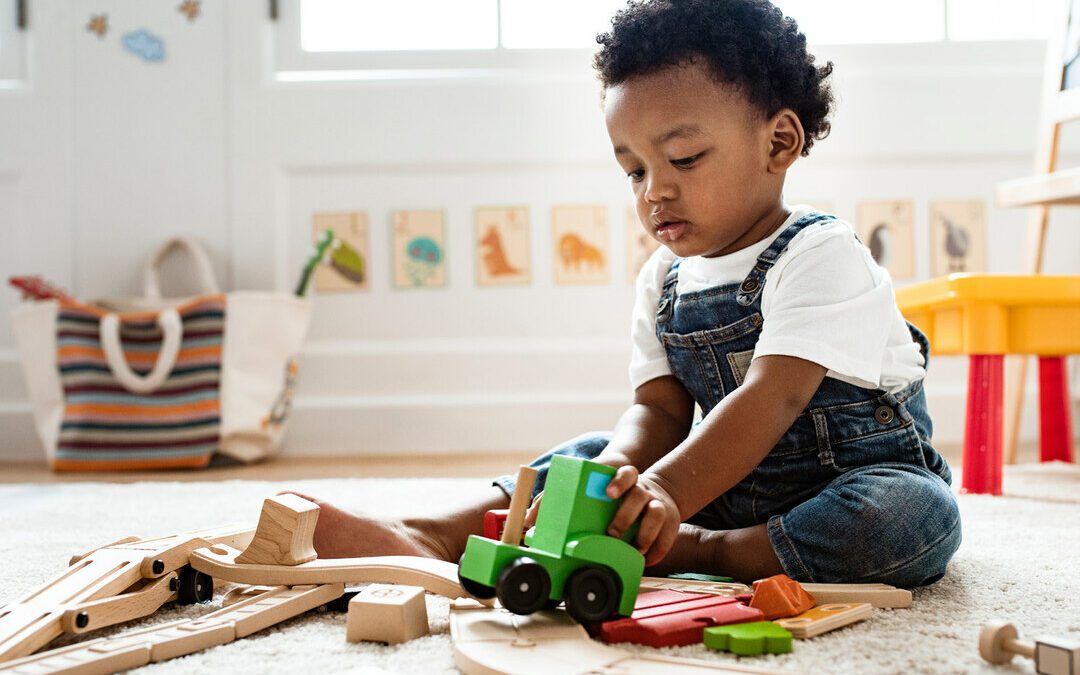
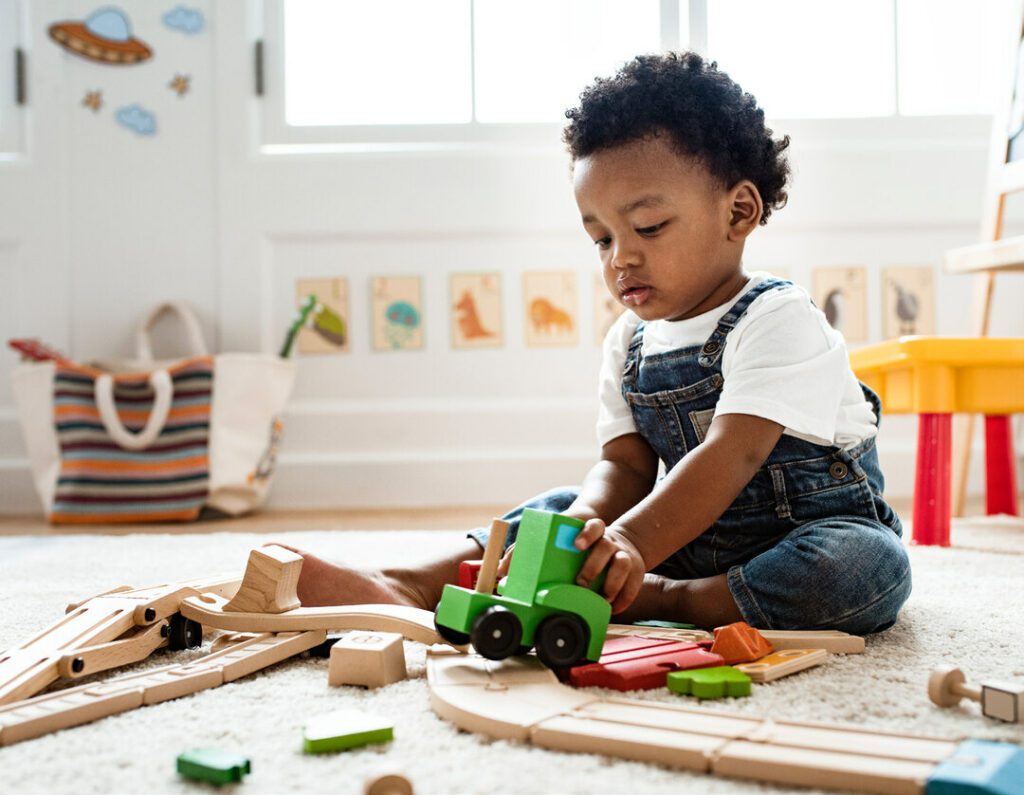
• Have fewer activities and toys available. The less there is to tidy, the easier it will be. Halve the amount of Legos™, blocks, train parts… Those sets tend to be difficult to tidy, and children get discouraged and stop cleaning up after themselves if they are overwhelmed by the task.
• Have a place for everything. Make sure you know the spot for each toy/activity. At the beginning of your Montessori journey, you might still move things around but try to limit a big overhaul, as it disturbs their sense of order and will prevent them from putting back what they have used.
• Make it playful: have a tidy-up song! or a silly dance. Have the animals go back to their basket, making sounds. Find what works for your child.
• Wait for when they are ready. When children are in a flow, playing intensely, it’s hard to know when it’s time to tidy up. It might be dinner time, but they might not be ready to stop playing. Wait for the moment they naturally seem to move onto a new activity to encourage them to put the previous one back on the shelf.
• Help them! It’s a skill, don’t expect them to do it consistently even if they have done it a few times. Like us, they are allowed cheat days.
What about older children?
Children in the second plane of development are messier than younger children. They are less interested in organizing the environment. They are less interested in practical life. They tend to spread out when they explore a topic. It’s because it’s an age when they make connections between concepts.
Their play area and toys might be in their bedroom. Their bedroom is their private area, and you might be less around when they play. Children in the second plane have access to toys that have small parts (Legos™ beads, …).
You can still rotate toys for that age group. You can have a rule that the Legos™ are stored in the living room, or the crafts are only accessible at the dining table. I recommend that you limit what they have access to in their bedroom. Make it part of the daily routine to tidy up for half an hour before dinner.
The bottom line: Mess is part of life but being tidier, as a family, will help everyone.
Having said that, let’s close with this quote: “Excuse the mess, the children are making memories!” •
Carine Robin has a master’s degree in psychology, specializing in child psychology. She worked for various social services in her home country of Belgium, before moving to Ireland in 2006.
It was there that she started working in a nursery and discovered Montessori education. After having her first child, her passion for the philosophy grew. She qualified as a Montessori teacher and managed a Montessori preschool.
Carine has been running Montessori-based parents and toddler groups and coaching families for 9 years. She now also runs an online group for over 20,000 parents, sharing her knowledge and passion with people from around the world.
In 2018, Carine realized families needed more support and launched her popular online parenting courses and monthly subscription boxes, full of personally designed Montessori materials.
Carine has also trained with Sarah Ockwell-Smith in BabyCalm and Toddler Calm, with Dr. Laura Markham on Peaceful Parenting, and most recently, at the prestigious Maria Montessori school in London, as an AMI Elementary and 0-3 assistant. She writes on a popular blog “the Montessori Family”. www.themontessorifamily.com Instagram: @montessorifamilyuk
The Dump Truck Story
The Dump Truck Story
What happens when we normalize ‘disaster’ thinking and accept the mess
by Alicia Diaz-David
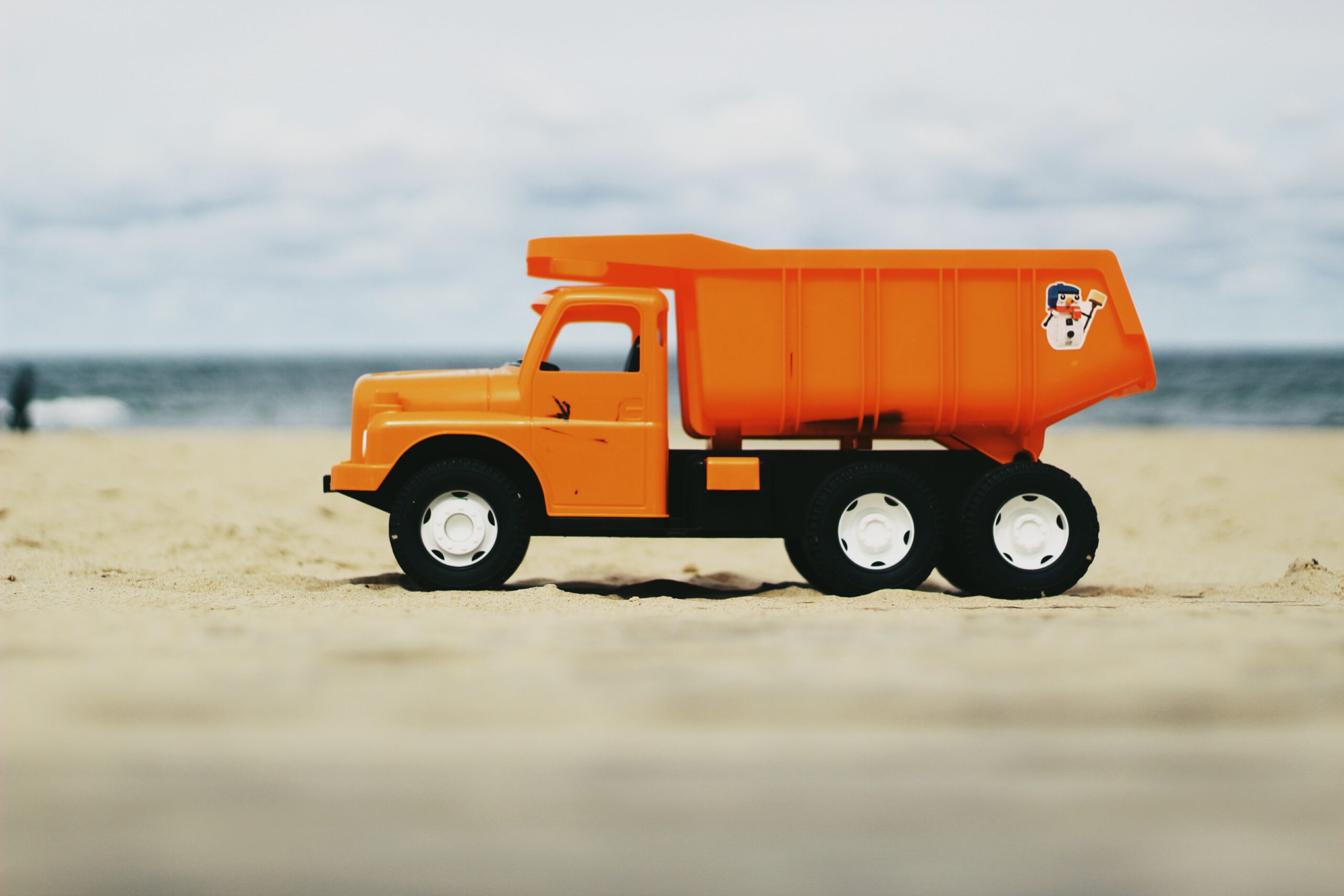
When my son was two years old, he scribbled on his dump truck with a brown marker and announced that he would wash it right there in the middle of our living room floor. My first reaction was to gasp when I noticed the brown scribbles. My second reaction was to see where his plan of action would take him.
So, I watched as he used the foaming soap dispenser to lather his hands and then rub the foam on the dump truck that was still on the living room floor. And I watched as he headed to the bathroom to fill his large bath-time cup with water to rinse off the foamy soap.
And that’s when I jumped in. Not stopping him but offering him another line of thinking by asking what would happen if he poured the water on the truck right there where it was. Thankfully, he responded that it would spill. I suggested we bring the dump truck outside to our front steps, where a giant water spill would not matter as much.
And the rest happened as you might imagine. My son happily poured water over the soapy brown marker and watched as it splashed on the cement pavers, instead of the living room floor. He went back inside the house to get a towel, which he smoothed over the water droplets on his beloved dump truck. And he smiled proudly at all that he had done.
If you are familiar with the principles of Montessori and the practice of following the child, this story may seem reasonable enough. It may seem as nothing more than a toddler exploring and experimenting with his dump truck and a mom observing and conscientiously guiding the learning moment that would unfold. However, when I submitted this story for a recent publication, it was changed. The edited version included the words, “This is going to be a disaster,” and I admit it stopped me in my tracks when I read it.
Not only was I impacted by the fact that a piece of original writing would be so altered, but also by the idea that our current thinking about children exploring and experimenting is so readily equated to things turning into a disaster.
The truth is, there is a great deal of learning in the so-called disaster. The mindful parent recognizes the learning potential when a child is following her own reasoning. The prepared adult is ever-present, jumping in to help only with the hard parts. That is the true meaning of Montessori parenting, as I’ve read in countless books, learned in Montessori training, and experienced personally with my own children at home.
So, I write today to challenge this thinking and normalize what we would otherwise consider a ‘disaster.’ When we let our children explore their ideas, when we observe this process, we realize that we are truly being given the gift of watching a genius at play.
Our job as adults is not to limit or edit this experience but to let it unfold and only redirect it when necessary. What I learned from my two-year-old son that day—what I witnessed—was a young toddler exhibiting complex executive-function skills, a little boy filled with resolute determination, a confident multi-cultural child ready and willing to solve problems in the world.
I hope that in the future, we don’t edit stories like this. These are moments to cherish for what they are … the awakening of life itself. •
Alicia Diaz-David is a parent and educator with over 15 years’ experience in education. She has followed the Montessori approach at home since her children were born and is a certified Montessori guide for ages 3-6. She is also the founder of TeachLearnMontessori.org, which is dedicated to helping parents better understand the Montessori philosophy and simplify the approach. You can learn more about supporting children’s growth and development using Montessori via the real-life stories she shares on Instagram @MontessoriwithAlicia or on her blog at TeachLearnMontessori.org.

Rising Innovators in Class
RISING INNOVATORS IN CLASS
by Gillett Cole
As part of our microeconomics course, we partnered with Marc Seldin and Mark Tough to include a pilot of their college-level learning program called “Rising Innovators,“ for adolescents. Rising Innovators is an experiential course, providing students with an introductory blend of the hard and soft skills needed to begin their journey towards creating a new small business. The program included seven weeks of discussion, lecture, and the presentation of case studies, culminating in a team-based activity, focused on the creation of a business idea that was presented by teams at the final pitch competition, like “Shark Tank.” One of the judges on our panel coined it “Guppy Tank”.
The competition took place on Wednesday, February 23. There were six teams. The teams varied from a team of one to a team of five. The panel consisted of seven judges with a variety of experiences. Two of the judges were seniors in NewGate’s I.B. business program. One judge was a senior at the University of Tampa, and the other three judges had vast experiences owning and running successful small businesses.
The judges were handed a rubric to help score each team’s performance. Each team was evaluated on three components: a pitch deck (colored slides that discussed their big idea, target market, and market analysis); a one-sheet synopsis that captured their pitch deck’s main points (something they could leave behind for potential investors), and lastly, each team was evaluated on their overall presentation (style points, eye contact, and team coordination). After each pitch, the team was peppered with thoughtful (sometimes tough) questions by the judges. Team members had to quickly think on their feet, and some realized that they don’t have all the answers. They realized that when you don’t know the answer to something, sometimes the best response is, “That’s a great question; let me get back to you on that.” Most importantly, the question-and-answer session provided an amazing opportunity for the students to hear direct and honest feedback from the judges — valuable, honest feedback from adults who were not their teachers. As well, the judges were able to weave in bits of wisdom and common sense by providing constructive criticism for each team.
All six teams performed well. Their big ideas were truly innovative and varied. Some of the ideas were ways in which we could innovate the recycling of plastic grocery bags (building a hydro-powered generator that collects rainwater to power a home) and a shoe that grows with your feet. The students were well-poised and genuinely seemed excited to present their work. The winning team walked away with a cash prize and high-fives.
What lessons did the students receive from this course? By reading various case studies, the students realized that everyday folks, from young to old, were able to turn a big idea into a dream by taking initiative and working hard. They realized most ideas in our marketplace are not inventions, but rather, innovations. The idea that they can take something that is already out there and make it better, instead of trying to come up with something totally new was quite appealing to them. In this fashion, the task seemed more attainable. They began to understand that entrepreneurship requires a positive mental attitude, initiative, hard work, and followthrough — qualities we try to instill in our students at a young age. The students also realized that a fancy, well-designed pitch deck and one sheet are subordinate to their ability to tell a good story and maintain good eye contact with their audience. In fact, the most consistent feedback from the judges was whether or not the presenters made good eye contact. Students learned a valuable lesson — reading from a script does not earn you style points in public speaking. An important lesson for all. •
Gillett Cole is an AMI trained Montessori Guide who has been teaching for 13 years. He is currently teaching language arts, mathematics, and microeconomics to middle school students at the NewGate school in Sarasota, Florida. He and his family recently moved to Sarasota in August of 2021 from St. Paul, Minnesota. Gillett has two daughters, who both went to Montessori schools, and are now in college. Gillett loves the outdoors, swimming, sailing, and a good book.
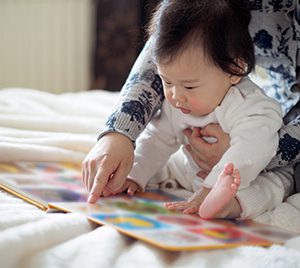
United Nations Convention on the Rights of the Child

Most of us are aware that the United Nations adopted a declaration on the universal rights of the child, but many of us have not read it. Here is the introduction and the link to the full text. We encourage you to revisit it from time to time and reflect on the vital message and vision within.
Convention on the Rights of the Child
ADOPTED
20 November 1989
BY
General Assembly of the United Nations
resolution 44/25
Entry into force: 2 September 1990, in accordance with article 49
Preamble
The States Parties to the present Convention,
Considering that, in accordance with the principles proclaimed in the Charter of the United Nations, recognition of the inherent dignity and of the equal and inalienable rights of all members of the human family is the foundation of freedom, justice and peace in the world,
Bearing in mind that the peoples of the United Nations have, in the Charter, reaffirmed their faith in fundamental human rights and in the dignity and worth of the human person, and have determined to promote social progress and better standards of life in larger freedom,
Recognizing that the United Nations has, in the Universal Declaration of Human Rights and in the International Covenants on Human Rights, proclaimed and agreed that everyone is entitled to all the rights and freedoms set forth therein, without distinction of any kind, such as race, colour, sex, language, religion, political or other opinion, national or social origin, property, birth or other status,
Recalling that, in the Universal Declaration of Human Rights, the United Nations has proclaimed that childhood is entitled to special care and assistance,
Convinced that the family, as the fundamental group of society and the natural environment for the growth and well-being of all its members and particularly children, should be afforded the necessary protection and assistance so that it can fully assume its responsibilities within the community,
Recognizing that the child, for the full and harmonious development of his or her personality, should grow up in a family environment, in an atmosphere of happiness, love and understanding,
Considering that the child should be fully prepared to live an individual life in society, and brought up in the spirit of the ideals proclaimed in the Charter of the United Nations, and in particular in the spirit of peace, dignity, tolerance, freedom, equality and solidarity,
Click the link below to read the full text:
https://www.ohchr.org/en/instruments-mechanisms/instruments/convention-rights-child

Making Lunch
One of the most challenging parts of having children in school is making lunches. With some guidance, children can make their own lunch. It then becomes a win/win situation. You do not need to make lunch daily, your child gets to practice practical life skills, and your children are more likely to eat their lunches. As with all new skills, it may take more time initially, yet the work and time will benefit both of you for years to come.
How can a young child prepare their lunch each day? Preparation of the environment, the necessary tools, and a lesson will all be necessary.
Preparing the Environment:
• Make appropriate food for lunches available at child height. This may mean reserving space on a low cabinet and low shelf in the refrigerator for lunch materials. At our house, we used colored baskets in the cabinet and refrigerator to quickly designate which items were for lunches.
• If needed, divide the food into servings before lunches are made. Your child can help you do this after school or over the weekend. If five baby carrots are an appropriate serving for your child, make a few bags with five carrots in each.
• Make sure your child can open and close any containers used and manage their lunch box.
• Consider when lunch should be prepared. If your child has trouble getting out of the house in the morning, make lunch the night before and store it in the refrigerator if needed. If your child is usually ready early, the morning is a great time for this job.
The Necessary Tools:
• Have utensils your child can use to make lunch, such as: a knife for spreading and cutting; a cutting board; containers that your children can open and close; and lunch boxes that allow them to pack easily.
• A list of ideas in written or picture form may be helpful for your child.
• Decide what you expect for lunch. What constitutes a main meal? What is a snack? Do you have a guideline of how many fruits or vegetables need to be included?
A Lesson or a few lessons):
• Discuss the plan with your child.
• Show where the tools and materials for making lunch are.
• Talk about what should be included in lunch and why, i.e., you need energy for growth and your day; these foods are not allowed at school for allergy or other health reasons; these items do not transport well. Share the reason for the guidelines.
• Work with your child the first few times and discuss what you are doing and checking: e.g., “I don’t see any fruit in here. Would you like to add a fruit or another vegetable?”
• Show your child how to clean out their lunch box at home before just adding to it.
Follow Up:
• Peek inside the lunches that are going to school. Do they meet nutritional needs as you expect?
• Discuss options and ideas with your child before grocery shopping.
• If you have leftovers from dinner, ask if your child would like some for lunch and plan together how to make that work.
• Let your child’s teacher know that your family is making this change. Your child may be pleased and possibly even distracted by the lunch they made at first, so letting the teacher know means they can help with these changes.
Enjoy the small break this gives you and the independence it gives your child.

Cheryl Allen is the Associate Coordinator of the Montessori Family Alliance and is also a parenting educator and a Montessori consultant with the Montessori Foundation. Cheryl attended Montessori school as a child. After sometime as a traditional Secondary teacher, she worked in Montessori classrooms, 3-6, 6-9,and 9-12, earning certifications from both AMS (3-6 and 6-9) and IMC (6-12). She is a teacher educator, workshop presenter, and member of IMC accreditation teams. Cheryl’s two children attended Montessori from age two through high school graduation.

A Sense of Place
Engendering Love of One’s Home with Adolescents
The NewGate School, Global Campus Students, Research Their Place on Earth and Weave a Story to Share
By Amy Kremer-Treibly and Elizabeth Hale
The NewGate School’s Global Campus is composed of students in seventh through twelfth grades who live in Canada, the US, the Caymans, and Tanzania. These students are the first cohort of the Global Campus, and they work together with a dedicated faculty for humanities, math, science, and Spanish academic courses, as well as working in their home communities on creativity, physical wellness, and service.
Adolescents seek answers to key questions: Who am I? Where am I? What’s happening?
In order to gain insights and impressions of where each student resides, they set out as investigators of their own backyard, town, city, and country, with special attention to who inhabited the land first, including animals, plants, and humans. Students have been sharing their stories as presentations to the community in Opening Meetings held each morning of the week. This project offers a rich opportunity for students to explore the question of where do I find myself living right now?
During this process, students access local historical societies and talk to family and neighbors about generational memories of the place. Some students highlight developments, such as industry and railroad access. Others brought names of indigenous tribes to our attention, as well as the plants and animals that have thrived in the past and either do or do not live now. Overwhelmingly, the students learn more about where they call home. In addition to acquiring knowledge of place, by pausing and giving attention to the land that supports our lives, the people who have come before, and the bounty that nourishes us, we all grow in our appreciation and gratitude for home.
It has been said that to love a place and show true care for it, one must spend time, look with earnestness for the hidden treasures to be revealed, and then we can fully celebrate our home. Indigenous wisdom embodies connection and relationship, and for that reason, we like to include the Haudenosaunee Thanksgiving Greeting, which we read aloud in turns during Council before Thanksgiving. •
REFERENCE
Smithsonian Museum Blog. https://tinyurl.com/mvvjxu4f
Amy Kremer-Treibly, M.A. earned her Bachelor’s Degree in Anthropology at Loyola University where she also enjoyed studying Spanish during a study abroad term in Quito, Ecuador, and learning about world religions as her minor. She began her teaching career in a refugee resettlement program teaching ESL to adult students from around the world followed by teaching Spanish at the elementary level. While teaching at a Great Books Foundation high school in Arizona, she earned her Master’s Degree in Experiential Education at Prescott College with a focus on building schools and learning experiences to promote engagement, eco-literacy, and stewardship.
Elizabeth Hale teaches Humanities and other courses with NewGate School’s Global campus. She spent the last 13 years developing Heartmoor Farm Education Centre in central Virginia teaching Literature, Humanities, and Mindfulness to adolescents while nurturing her connection with the natural world specifically through contemplative practices, the stewardship of plants, and formal study of Western Herbalism. With 24 years of teaching experience, in classroom environments from Oregon and Ohio to Virginia, she has worked with families through all stages of their children’s development.
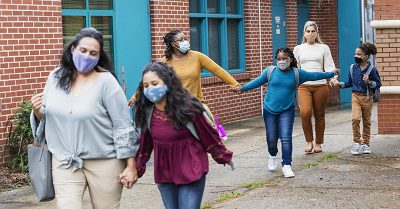
How can I get involved with my child’s school?

There are some things that even money can’t buy, and one of the most valuable contributions that families make to a school is the gift of their time and expertise. Parents, grandparents, and friends of the school are often found helping in the office, assisting in the classrooms, serving as field-trip drivers, offering a special class, planning the next special event, coaching, or serving on parents’ associations or school committees.
Parents play a crucial role in Montessori. Our schools are communities of parents and educators (many of whom will also have children enrolled at the school). Our ideas and input often help to shape the school. Montessori schools are normally very responsive to suggestions and concerns.
Most Montessori schools encourage families to participate in the broader life of the school through social and educational activities. Although many parents spend considerable amounts of time as volunteers, except for parent cooperative schools, there is normally no expectation for a set-time commitment.
Parents and grandparents, who give of their time and talent, share with their children special memories of experiences and friendships that endure well beyond their graduation.
A few ways in which you might be able to help your school:
• Volunteer a few hours a week to help in the office
• Lend your time and support to our fundraising efforts
• Help out in the library
• Volunteer to be an Ambassador Family to parents new to the school
• Serve on one of the school’s committees
• Help put together the school newsletter
• Help the teachers organize field trips or special lessons
• Join in at open houses to meet prospective families
• Help organize special events
• Volunteer your time to help the school prepare major mailings
• Teach a special course
• Help students work in the garden
• Share your talents and special interests, such as a musical instrument that you play, a second language that you speak, a craft that you enjoy, or a field that you’ve studied
• Volunteer your time to coach a team or after-school club
• Serve as a class parent
• Help to organize a reunion for former students and their families
Like all schools, Montessori schools blossom when parents are generous with the gift of time, talent, and expertise.

An Online Montessori School for Teens
In the fall of 2020, the leadership of the Center for Guided Montessori Studies asked the question, “What would an authentic Montessori middle school look like if it were online?” This question was especially pertinent at the time, because we were all adjusting to “forced” online learning resulting from the COVID pandemic. The question that we asked ourselves was, “Can we build an adolescent Montessori program and community online?”
That winter, we decided to plan for a soft launch of what became the Bridgemont International School. We began with just one class of seventh- and eighth-grade students, all living within the time zones of the continental United States, led by certified and experienced Montessori Adolescent Guides.
Our plan is to add one grade a year, extending through high school over the next four years. We also plan to open additional cohorts in North America and other parts of the world as interest grows. As we have from the start, our goal is not to grow quickly, but rather with slow, careful steps to ensure that we establish programs that are excellent and sustainable.
The first question that we reexamined was, “What makes a Montessori adolescent (middle and high school) program authentically Montessori?” Even though we have been involved with Montessori programs at this level for years, there is (at this point) no one model for adolescent programs. Dr. Montessori died before she was able to define the “model” of what a secondary program looks like. Rather, there are a series of lectures and discussions that other Montessori educators have interpreted, leading to vastly different models of Secondary education.
Many are familiar with the farm-school model of Montessori Adolescent Education (Erdkinder), while others may be familiar with the curricular outlines of other Montessori Secondary training programs. While there are many different models, there are key components of Montessori for the student in the third plane.
Curriculum: Students need to learn! They should be culturally literate and develop the academic skills they will need if they decide to pursue post-secondary education. Even within this component, there are different definitions of what that means. I would suggest that students need to know basic information. What makes Montessori distinct at this level is the balance between helping students through the challenges of adolescence, while covering an excellent course of study. For us, a particular focus is helping teens to discover that what they learn in school is real, relevant, and interesting. We want to encourage their interests, help them to see the big picture, and think critically about what they study and how it relates to their own lives.
The core of our academic program is the Montessori educational syllabus, which consists of ‘integrated academic components’ in three overarching areas: self-expression; emotional development; and preparation for adult life.
Within these areas, Bridgemont offers rigorous coursework in a variety of academic subjects, experiential learning, and in-the-field experiences; a range of seminars and collaborative learning projects; training in organization and personal responsibility.
Even though our curriculum is highly integrated, courses have titles that are familiar to colleges and other schools including math, language arts, sciences, humanities, Spanish, health, arts, and electives.
Here is an example of a simple 7th- and 8thgrade science experiment that we did recently.
Is “earth-friendly” laundry detergent actually safe for the environment?
For this experiment, we planted radish seeds in potting soil. In Dish #1, we watered the seeds with a mixture of water and regular detergent. In Dish #2, we watered the seeds with a mixture of water and earth-friendly detergent. In Dish #3, we simply used regular tap water.
After 10 days, only one dish had germinated seeds. Can you guess which one???
The dish that used regular tap water was able to grow radish seeds. The other two dishes? Nothing.
In Dish #1, the regular detergent solution left a heavy film over the soil and seeds.
In Dish #2, the earth-friendly detergent solution did not leave as heavy a film; however, no seeds germinated.
Conclusion: “Earth-friendly” may not be all it is advertised to be; however, it certainly is “friendlier” in appearance.
Valorization: This is such a wonderful term that Dr. Montessori gave us. It is the key challenge of adolescence: the formation of a clear sense of identity, a moral compass, and feeling validated and valued for their contribution as an individual. As children transition from childhood through the teenage years, and then into the adult world, they need to feel a sense of responsibility and worth that leads them to confidence and independence. This can be accomplished in many ways; however, it is probably the single most important component of Montessori at this level.
Community: Community is, directly and indirectly, related to curriculum and valorization. Part of the work of adolescents is to discover their own strengths, style, and role in the community. This is done through deliberate and unexpected avenues. A most basic statement is that adolescents desire to be part of a community.
So, back to the question at hand; how does one create this from an online platform?
How can we deliver a rich curriculum that is more than mere memorization, create opportunities for students to feel valued and value in their work, and create a sense of community, when most of them have never actually met in person?
The students at Bridgemont spend approximately four hours a day in real-time engagement in a variety of activities, including (but not limited to) direct instruction, Socratic dialogue, independent and small-group work with peers, presentations, guest lecturers, working out, doing art, and the occasional Harry-Potter-themed “butter beer” parties.
So, can Montessori at this level be done from an online platform? YES!
A prepared environment at the Secondary level is much more about experiences rather than the materials and physical environments of the Early Childhood and Elementary levels. Can the Montessori guides create opportunities for authentic interaction, sharing, and developing a real sense of caring about one another? Can this be done while also helping students become culturally literate and explore their open passions? Again, YES!
Online learning gives students the space to comfortably participate and voice their opinions, which can ultimately help build confidence and positively reinforce their self-esteem.
At the half-year point, the discussion among the students and Montessori guides turned to gratitude. To our delight, what the students were most grateful for was the sense of community, greater than they had felt in their brick-and-mortar schools. What was our greatest concern, had become our greatest strength.
Community, in the case of the Bridgemont students, guides, and administrators, means kind, empathetic, interested young adults that are not just saying that they care, but honestly care about each other and are interested in the world in which they exist. While doing so, they are also being held to a high level of academic expectations that support each student’s progress and independence.
SOME ADDITIONAL INFORMATION:
Is Bridgemont accredited?
As Bridgemont International School is licensed in the state of Florida, it adheres to the graduation requirements of the State of Florida. (We teach the same courses; however, they are taught very differently.) The school plans to pursue accreditation by the International Montessori Council (IMC) and Cognia.
How does Bridgmeont address service learning, Erdkinder, etc.?
At Bridgemont, we recognize the importance of the “Montessori experience.” We intend to include each of these experiences; however, they will be different in that the students will have more responsibility in designing their experiences with the support of our Montessori guides. Rather than being provided with experiences, students will be actively involved in the design of the experiences that satisfy their requirements in their own communities.
Is it all online?
A goal for the near future is to have two live in-person experiences a year. The school year would start with a whole-school orientation, which would change from year to year and is meant to be a team-building and orientation program. The second experience is meant to be student-designed and will look different from year to year. This will be budgeted, designed, planned, and based on student feedback and student work. (COVID-19 has made this difficult, but it is a goal for the 2022-2023 school year, if possible).
How are time zones addressed?
Our courses and schedules are deliberately designed to meet the needs of students in the continental United States. With WIN (What I Need) hours scheduled on both sides of the “Core” curriculum, students from all parts of the United States can work together at times that are convenient and in line with best practices in adolescent psychology.
As the school grows, there will be timezone-specific cohorts. These will be times that are more specific to time zones and regions; however, there will be shared times with all available time zones to include students from other countries, continents, etc.
In summary, Bridgemont International School is an authentic Montessori School, where students from all over the United States and around the world have the opportunity to become what they are meant to be and have the fortitude, confidence, and support to go after it. •
If you are interested in learning more, please visit our website at www.bridgemontschool.com.

Robin Howe, Ed.D. is a Montessori kid, a Montessori certified teacher (at all levels except infants), and a Senior Consultant for the Montessori Foundation.

Looking Back on My Years in Montessori
A college essay by Douglas Delaney
I think my life will be a roller-coaster of emotion and experiences. I will never forget the beginning of my amazing ride at Beach Park, the Montessori school that I attended from preschool through eighth grade.
When I look back on those days, all I can think is that these are the moments that shaped me. They created the groundwork for who I am as a person. They also left me with stories that make others ask, “Did that really happen?” and all I can say back is, “yes, it did.” Many of my moments at my Montessori school shaped me, but what has shaped me the most is what the school practiced: Montessori.
I know that Montessori has a well-defined definition. Still, the only accurate way to describe how it affected me is to offer my own explanation. I think that Montessori allows for kids to grow into themselves. When I was in preschool, I chose my own work throughout the day and genuinely loved the work I was doing. Montessori allows students to learn what they love and have the resources to pursue it even at a young age. Through those experiences, I have discovered my love of mathematics. Montessori also allows students to grow at their own pace.
I remember in Lower Elementary, being allowed to choose my own daily work but still have specific things to accomplish by the end of the week. This gave us our own time and ability to decide what to do and when. It let each of us learn how to take charge and manage our own time. I remember when my sister first started college. She told my mom that almost no one around her knew how to self-plan without their parents, but she could come up with her own schedule and prepare her workload for that week. I genuinely believe that that skill came from her years in Montessori.
I had a special connection to the school and the people in it. I left Beach Park with only three other students, which was that year’s graduating class. Those three other people probably know more about me than any other people I know to this day. But it wasn’t just the students to whom I grew close; it was also my teachers and faculty. The school faculty were indeed the people who have had the most significant impact on me. Whether it be my eighth-grade teacher, Ms. Summer, who pushed me to my limits while preparing me for high school, my Upper Elementary teacher Mr. Greg who taught me the beginning of Algebra, or my PE teacher Ms. April whose son was one of my best friends; all of them have shaped me in ways that I cannot even begin to describe.
That tiny little school shaped me. Although those memories on the playground of Beach Park School are long behind me, I still look back on them fondly. The years that I spent in that small school prepared me in so many ways to take the next step into college. And even after finishing this wild ride through high school, I can’t help but look back to where it started, at a small school called Beach Park Montessori.
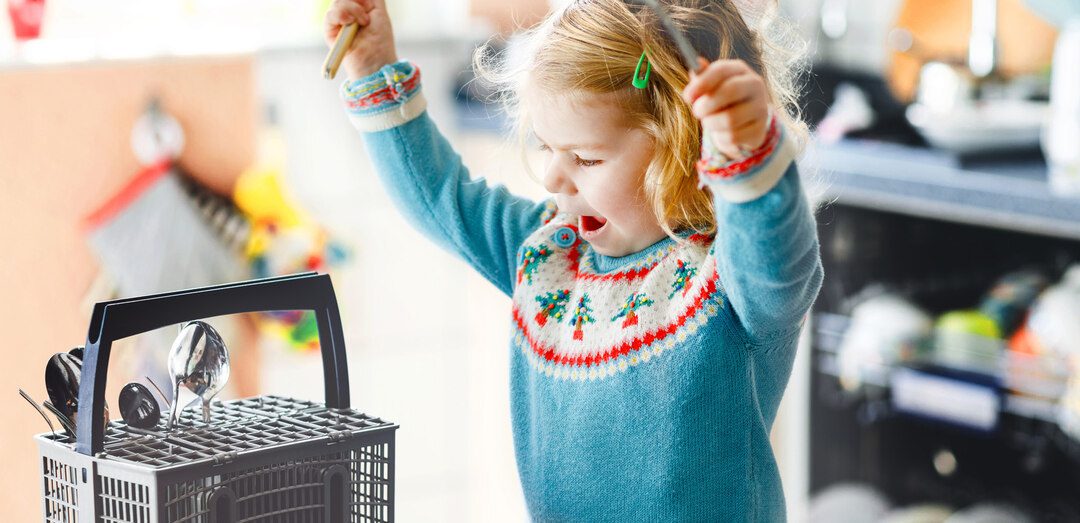
Raising Helpers
by Theresa of Montessoriinreallife.com
One of the most wonderful things about toddlers is how they so inherently want to help. They are eager to be involved, be near us, and participate in our day-to-day activities. What we deem “chores,” toddlers see as what they are: meaningful contributions to our family or community.
After toddlerhood, we often notice a shift. Children seem less intrinsically motivated to help and view helping more as a chore. This is a natural part of development: they are more independent and focused on their own work and play. They are discovering who they are and where their own interests lie, which is a beautiful thing. It also doesn’t mean it’s the end of helping!
How do we continue to foster this motivation and raise helpers beyond the toddler years? Here are a few tips that I’ve been keeping in mind in our own home lately. These can be incorporated in toddlerhood and well beyond!

Help Our Children
Our children learn how to help through us helping them. When we respond to their requests for help, they are more likely to do so in return. Helping doesn’t mean doing a task for them, but rather offering just enough help to get them through a tough spot.
Model It
Not only should we think about how we are offering help to our children, but how can we offer help to our partner, a friend, or our community? The more our children see us being helpers, the more likely they will want to be a helper too.
Talk About It
“In our family, we help each other.” This is a phrase that we repeat often at home. The more we say and hear this, the more ingrained it becomes and the more natural it feels to be a helper in the family. Importantly, this phrase is said in a gentle way, not as a command.
Make It Part Of The Routine
When we make helping a part of our daily rhythm, it becomes natural. In our family, certain tasks are the kids’ responsibility every day: putting shoes and coats away, setting the table, feeding the dog, wiping up spills, tidying toys, etc. These tasks aren’t rewarded but rather just part of the routine.
Don’t Force It
Inviting doesn’t guarantee our children will help. Even when these tasks are part of the daily (or weekly) routine, everyone has off days. We can offer grace and let it go. Often, the next day, or at a different time, they are ready to help again.
Offer Opportunities
Sometimes we move so quickly through our own chores, we forget that we could involve our children. As much as possible, I try to do chores in front of the children so that they have the opportunity to join in and help. Often, what we consider mundane tasks are satisfying for our children. Having cleaning tools that are appropriately sized for our children makes them feel especially capable.
Accept It As Is
When our children do help, we may find that they’re ‘help’ doesn’t lead to the outcome we desire. The dishes might not be as clean, or the laundry might not be folded in a neat stack. When this happens, we can thank them for helping and appreciate the effort that went into it. Rather than correct them at the moment, we can model again another time, and try to be patient, as every skill takes time.
How can your child help today? •

Theresa is a mom to two, a former Montessori guide, and the founder of the blog Montessori in Real Life(www.montessoriinreallife.com). Prior to momming and blogging, she went to graduate school for developmental psychology and earned her Montessori infant/toddler guide certification. Since transitioning from teaching to motherhood, Theresa found a new passion sharing her love of Montessori with parents,while continuing to implement the Montessori philosophy in her own home.
2020 NewGate School Seniors Interview
Adjusting to Life in 2020-2021: Empowering and Encouraging Healthy Practices at Home and at School
To continue reading, you will need to choose a subscription plan.

IB Is Something I Never Expected I Would End Up Doing
by Madison Dodd, NewGate Student
I have always pursued alternative education, whether that be through Montessori, Waldorf, or homeschool. Therefore, it was a shock to me to think that I would be involved in a program so widely recognized across all types of schools. I remember my first day touring NewGate School as a high school freshman. I met with Tim Seldin, who showed me around campus and encouraged me to give the IB Diploma Program a shot once my junior year came, to which I replied, “But I can’t do math!” (to which he replied, “Just do an IB Certificate!”).
I did not expect how much I was going to push myself over the course of these two years. I wasn’t aware of how much I was truly capable of. I remember the first day of our science (Biology HL) class, our teacher told us there was going to be a ‘learning curve’ and that we should prepare ourselves to not always get A’s on our test like we may be accustomed to. Although my classmates and I took in this information, it didn’t quite set in until we all studied for one of our first big tests We thought it was our best work yet, but then we realized that we all just scored in the ‘2-3 range’ … out of 7!
Suddenly, our teachers were no longer there to give us all the tools to get a good grade in the class, to make sure our homework was done on time, or to make sure we were present for the lessons. By IB’s design, the weight was now put on us, as the students, and it was time to get to work.
WHAT IS IB?
In a nutshell, IB is a two-year diploma or certificate program that is internationally recognized across universities to award college credit. That means that from junior to senior year, you will be in the same classes preparing for (depending on your course) between two to three final exams that will be scored from 1 to 7 in each subject. These courses will be three higher level (HL) courses and three standard level (SL) courses. The difference simply being that a HL course may have some extra requirements that SL students don’t have to complete.
Along with the end-of-year exams, there is the Internal Assessment that you must complete in each IB course. In Biology, that might look like a science experiment that you write a paper about. In Literature and Performance, you adapt a short story or poem into a play. The teachers grade it and then send it off to IB to be assessed by them.
I did not enter the program feeling that I was someone who was even remotely able to tackle all of these requirements. However, by putting in the work, learning how to manage my time, and not get in the way of myself, I’m able to positively reflect on it now.
In addition to your coursework, you must complete the Extended Essay (EE), which is a 4000-word research paper that is situated in one of your six IB courses. Then, there is the additional class you must take called “Theory of Knowledge” or “TOK.” This is essentially a philosophy class, and the only two requirements for it are that you complete:
• One TOK essay using one of IB’s supplied prompts
• A TOK presentation in which you develop your own research question and explore it using a real-world example
All of these go towards your final IB score, which can be up to 45 points. I promise this will all begin to make more sense once you are in the course.
Finally, at the heart of IB’s program, there is CAS (Creativity, Action, and Service). This is something you complete outside of school and, most of the time, you are already doing it. Do you play a sport or an instrument? If so, the action and creativity boxes are already checked off.
The only requirement for CAS is that you create a portfolio containing reflections about these activities throughout your two years (mine is in the form of a blog) and that you complete one CAS project, which can involve one or all of the CAS components, and is at least six weeks long. While this does not go towards your score, you will not receive your diploma if you do not complete it.
Overall, IB takes a global approach by looking at big ideas across disciplines. You will notice yourself finding connections between something you learned in science class with something you are talking about in Spanish. No matter what you’re studying, students dig deep into subjects and try to find answers.
WHAT IF YOU DON’T WANT TO COMMIT TOALL THAT EXTRA COURSEWORK?
For whatever reason, if a student does not want to do the full IB Diploma, they can take up to three IB courses; they only need to complete what is required in that course. That means no CAS, no EE, and no TOK. This represents the difference between the higher level and the standard level requirements in the courses. This is beneficial for a student who might have a tighter schedule and doesn’t have time for the full diploma or has a subject area they do not want to take at such an intensive level.
MY EXPERIENCE
IB is usually perceived as a big, scary, and difficult program that only those suited for ivy leagues can survive. However, through my experience, I have learned that it is not the skills that you enter the program with that matter; rather, it is the skills you will acquire throughout the program that will carry you to the exams.
I did not think, at the beginning of my junior year, that I would be leading a discussion in my social and cultural anthropology class about hegemony in marginalized groups in East Harlem. I also did not think I would ever receive a 90 percent on a math test, but it happened! For me, IB has been a journey full of self-discovery and lots and lots of struggling. However, my own academic struggles have taught me so much about who I am and what I am capable of.
I did not enter the program feeling that I was someone who was even remotely able to tackle all of these requirements. However, by putting in the work, learning how to manage my time, and not get in the way of myself, I’m able to positively reflect on it now. I can’t speak for every school, but at New- Gate the support system from the teachers and students is something I attribute to why I entered IB in the first place. Therefore, I encourage anyone considering the program to try it. Your name is not even registered as an IB student until late in your senior year, meaning you have time to see if the program works for you and adapt accordingly.
Looking back, all the stress tears I cried, the coffee I consumed, and nights I stayed up were all formative in enabling me to believe in myself. Even though I am not at the finish line, it is now in my line of sight, and I am sprinting towards it faster than I ever have before, with my teachers and family cheering me on until I arrive. •

Madison Dodd is a high school senior in the IB Diploma Program attending NewGate School. She lives in Sarasota, Florida with her parents and younger brother.
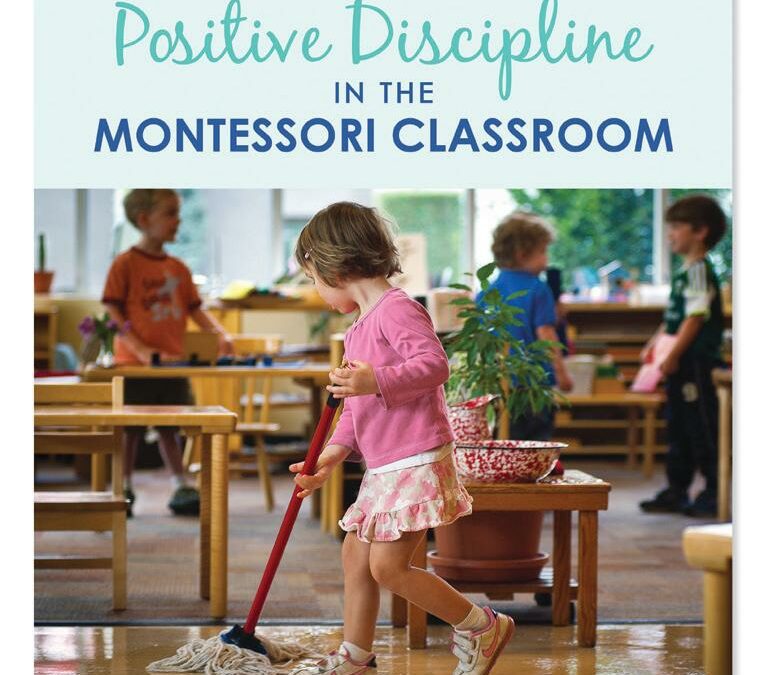
Why are Children so Different Today
by Jane Nelsen, EdD and Chip DeLorenzo, MEd
When working with Montessori teachers, we always start by asking them to list their current stressors. Inevitably, they share that children exhibit a high degree of disrespect, entitlement, and lack of self-regulation. Children don’t listen to adults. Teachers overwhelmingly agree that these behaviors are more frequent and blatant now than when they grew up or when they first started working with children. Teachers who’ve been in their profession for a while observe that schoolwide misbehavior seems more intense than in previous generations. They often ask: What happened to the good old days, when children respected adults? Where are all these behavioral issues coming from? Is it environmental? Is it parenting? Too much screen time?
The Culture Shift
Was there really such a thing as the good old days? We know that, since there have been children, there has been misbehavior; however, there have been some significant changes in society in the last fifty years that have impacted children. We believe that these changes provide an explanation for some of the differences that we are seeing in children’s behavior today; it can help us prepare the social-emotional environment in our classrooms to help compensate for outside factors beyond our control (e.g., video games, diet, materialism, entitlement, and child-centered homes where children decide what and where to eat, what to watch on TV, etc.). Fifty years ago, the world was rife with models of authoritarian leadership and submission. You could find examples at home, where dad’s word was final; in workplaces where the boss was the boss; and in schools where the teacher was considered a highly respected authority figure. In those good old days, there was cultural support for top-down (or vertical) leadership. Parents didn’t ‘advocate’ for their children. If a child was reprimanded at school or in his neighborhood, his parents were likely to take the adult’s word for what happened without much interest in what the child had to say. Neighbors could discipline each other’s children with the full blessing of the parents.
Through the rose-colored glasses of educators who grew up in an authoritarian culture, it may seem like authoritarian methods ‘worked,’ because children are remembered as being more compliant and obedient. On a tough day, compliant and obedient children might seem like water in the desert to a discouraged teacher. But what are the long-term results of demanding that children be compliant and obedient? Too often children become ‘approval junkies’ or ‘rebels without a cause, except when they need to prove, “You can’t make me!”
Montessori wrote, “No social problem is as universal as the oppression of the child.”1 And while it may have seemed easier to require children to comply in an authoritarian culture, the result was the oppression of the child’s spirit. Oppression was the very thing that human rights advocates have been fighting against for decades. It is oppression that Montessori felt was the root cause of war.
At the turn of the last century, educational and psychological pioneers, such as Maria Montessori and Alfred Adler, were writing and lecturing about a radical idea: equality even for children (including equal rights to dignity and respect). While this idea would not meet much resistance today, it was considered counterculture at the time.
Permissiveness
During the 1960s and 1970s, human rights movements gained momentum. The idea that all people were worthy of dignity and respect gained wider acceptance in western cultures; however, this was a messy and arduous process, especially for parents and educators.
The rules were being rewritten; yet, parents and teachers did not yet have cultural support and access to respectful discipline tools to replace the old authoritarian methods. As a result, like most countercultural movements, the pendulum swung the other way, and permissive parenting and teaching became more common. We are still reeling from this pendulum swing today.
Soon, alternative or experimental parenting models gained traction. Especially in the home, yelling was replaced with discussion, bargaining, and negotiating. Spankings were replaced with time-outs. Punishments were replaced with rewards. Children were given more freedom and more choices—but without limits or responsibility. The authoritarian top-down model of parenting and teaching was replaced with permissiveness.
The problem with permissiveness, though, is that it is still top-down. It’s just that the roles are reversed. In the permissive model, the child is on top and the adult is on the bottom. As Maria Montessori wrote, “To let the child do as he likes when he has not yet developed any powers of control is to betray the idea of freedom.”2
Indulgence
Children today are exposed to a myriad of stimuli that vie for their attention. Children have more things, more entertainment, more recreational experiences, more toys, more media, more ‘educational’ experiences that deliver information without true interaction, more activities, more everything. Children are the center of the universe. They often decide what kind of meals are prepared at home and where the family should go when eating out. On the other hand, they are often not taught many real-world skills. In our frenzy for progress, we have inadvertently stolen opportunities for true human connection, discovery, and exploration.
Fewer Opportunities for Real Responsibility
We do not need children the way that we did up to the early part of the twentieth century. Children, generally, are no longer needed to make the farm or the household run on a day-to-day basis or to bring income into the home.
(Chip) grew up in a farming community in upstate New York. It was not uncommon for some of my classmates to have been up since before daylight doing chores to help keep the family farm going. Most twelve-year-olds who lived on working farms had tractor licenses. They didn’t spend their weekends playing soccer, taking dance lessons, or having play-dates. Those of us who didn’t live on a farm had paper routes, mowed lawns, worked in small shops, and had responsibilities at home. It was real work. It was real responsibility.
Real responsibility gave young people the opportunity to develop some incredible life skills. They knew that they were needed and that they were capable. They had the opportunity to develop practical life skills and qualities, such as resilience, perseverance, self-discipline, responsibility, and a strong work ethic. Children were needed but not usually respected or treated as equal in value to adults.
( Jane) grew up in a city; however, children were still expected to do chores, including scrubbing toilets. Having homework was not an acceptable excuse. And my parents didn’t help with homework; that was considered my responsibility. There wasn’t any pressure to get good grades to get into a good college. Most girls got married right out of high school and were expected to be stay-at-home wives and mothers. Fortunately, a wise mentor advised me to take one college class a semester so I would have a degree by the time my children were grown. Eleven years and five children later, I received my BA.
As the movement to value children gained momentum, we provided them fewer opportunities to truly feel needed. Today, most children don’t make their own lunches for school, and many don’t have chores. In the name of love, they are given too much and required to do too little. They develop an attitude of entitlement. In an effort to give children ‘the best,’ adults have robbed them of the opportunity to develop strong characters and to experience the sense of belonging (unconditional love) and significance (capability and responsibility) that comes with making a meaningful contribution.
Many people are drawn to the concept of ‘positive discipline,’ because they are against punishment and authoritarian methods of discipline. However, some ‘positive discipline’ followers mistakenly perceive that the best way to avoid authoritarian methods is to simply provide love. This can lead to permissiveness, because these parents are kind (to provide love) but are not firm (which helps children experience significance through learning skills for responsibility and capability).
You can give children love, but they need to develop responsibility. When parents don’t understand the importance of helping children develop responsibility, children often fall into the trap of pampering, which often leads to development of an ‘entitlement’ mentality. When parents understand the difference between belonging and significance (along with the importance of balancing both), they can help children develop the characteristics and life skills they need for successful living.
The Montessori curriculum is designed for children to develop a sense of significance through responsibility and capability. As you will soon see, a sense of belonging is created through the basic ‘positive discipline’ concept of ‘connection before correction’ and the involvement in daily class meetings to give and receive compliments and to focus on solutions.

Fewer Siblings
Another dynamic to mention is that of family size and birth order. In addition to today’s busy lives, where children are given more and less is required of them, families are also having fewer children than at any other time in our recent history. Most families today have one or two children. Today it is not uncommon for a classroom to be populated with many only children. Recently, my (Chip’s) school had a classroom of twenty-two children, of which seventeen were only children and the rest younger siblings (no middle children). While the research on birth order is controversial, many teachers report noticeable anecdotal effects. With smaller families comes more adult help and intervention. There are fewer opportunities for children to develop responsibility and more opportunities for parents to do for children what they can do for themselves.
In today’s world, providing opportunities for children to contribute in meaningful ways and develop true responsibility takes intentionality. It’s hard work.
If you have ever had a small class size, you know how hard it can be to promote independence among the children and how intentional you need to be to do so. When I (Chip) was a young teacher, just learning the ropes, I thought I would prefer a smaller class size. It seemed more manageable in many ways (giving lessons, staying organized, managing behavior, etc.). However, it turned out to be a lot more work. While I was able to give the children more individualized attention, the more I gave them, the more they seemed to need, both socially and academically.
After a few years of experience, I was given a much larger class of thirty students. With more students, the children had to become more independent. Out of necessity I had to learn to trust the children, and as a result I found out how responsible, independent, and capable they could be. More importantly, they discovered their own capabilities. It was amazing to see them rise to the occasion, just as Montessori had said they would.

Other Factors
In addition to increased permissive parenting, fewer opportunities for true responsibility, and fewer siblings, we have other external factors that affect children’s behavior. Screen time now dominates the hours spent at home; children are over-scheduled; some children rarely see their parents because of busy work schedules; there are a variety of lifestyle choices and family structures; there are violent video games and cyberbullying.
The good news is, that while the modern factors that affect children are real and significant, misbehavior is not new. In The Secret of Childhood, a teacher writes to Montessori about her experience with “pampered children”:
An American teacher, Miss G., wrote to me as follows from Washington: “The children snatched the objects from each other’s hands. If I tried to show something to one of them, the others would drop what they had in their hands and gather noisily about me. When I finished explaining an object, they would all fight for it. The children showed no real interest in the various materials. They passed from one object to another without lingering over any of them. One child was so incapable of staying in one place that he could not remain seated long enough to run his hands over any of the objects given to him. In many instances movement of the children was aimless: they simply ran about the room heedless of the damage done. They ran into the table, upset chairs, and trampled upon the material provided for them. Sometimes they would begin to work in one spot, then run off, take another object, and abandon it for no reason whatsoever.” 3
Sound familiar? This is a wonderful reminder that we are not alone and that the good old days were not always easy. Today’s problems are not new problems, even if some behaviors are exacerbated by different factors. Maria Montessori, Alfred Adler, and Rudolf Dreikurs were brilliant thinkers. Their philosophies have survived and grown while many others have come and gone. And we have to admit that we are delighted that neuroscience now validates the effectiveness of these methods that have contributed so much to the world of happier parents, teachers, and children.
Excerpted from Positive Discipline in the Montessori Classroom: Preparing an Environment that Fosters Respect, Kindness & Responsibility. Originally
Jane Nelsen, EdD, is a California Licensed Marriage & Family Therapist and author or co-author of nearly 20 positive discipline books, including Positive Discipline Parenting Tools with her daughter, Mary, and her son, Brad; and numerous experiential training manuals for parents, teachers, couples, and businesses. She earned her doctorate in education from the University of San Francisco, but her formal training has been secondary to her hands-on training as the mother of seven, grandmother of twenty-two, and great-grandmother of eighteen. She now shares this wealth of knowledge and experience as a popular keynote speaker and workshop leader throughout the world. Learn more about Jane’s work at: www.positivediscipline.com
Chip DeLorenzo, MEd, is a school consultant and positive discipline trainer; he specializes in training staff and administration at schools worldwide in positive discipline methods and practices. Chip served as Head of School of the Damariscotta Montessori School, in Nobleboro, Maine, for twenty years. A veteran teacher and school administrator, he began his teaching career in 1995 after serving in the United States Air Force and working as a financial advisor. Chip is the father of four amazing Montessori children. Lean more about Chip’s work at: www.chipdelorenzo.com
3 Montessori, M. The Secret of Childhood (Delhi: Aakar Books, 2013), 143–144.
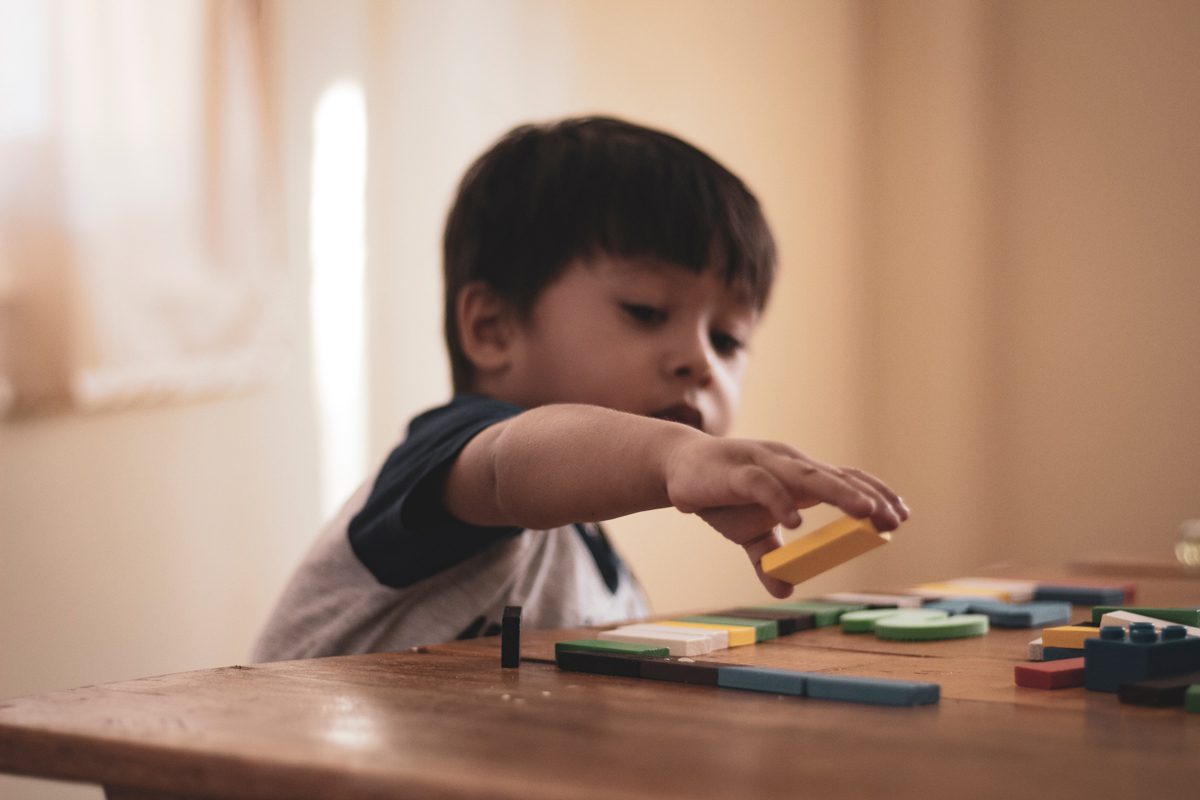
Encouraging Your Child’s Independence
To continue reading, you will need to choose a subscription plan.
Featured
-
 The Montessori Way, Revised and Expanded: An Education for Life; A Comprehensive Guide for Parents and Teachers
$25.00
The Montessori Way, Revised and Expanded: An Education for Life; A Comprehensive Guide for Parents and Teachers
$25.00
-
The Montessori Child: A Parent's Guide to Raising Capable Children with Creative Minds and Compassionate Hearts (The Parents' Guide to Montessori)
$20.00
-
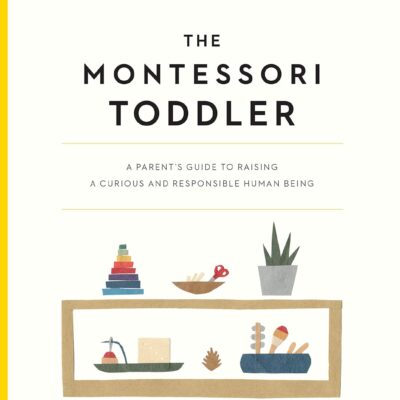
The Montessori Toddler: A Parent's Guide to Raising a Curious and Responsible Human Being (The Parents' Guide to Montessori)
$20.00
-
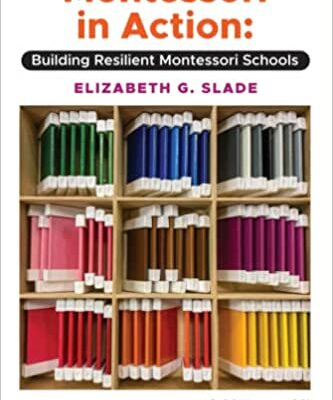
Montessori in Action: Building Resilient Montessori Schools 1st Edition
$29.95
-
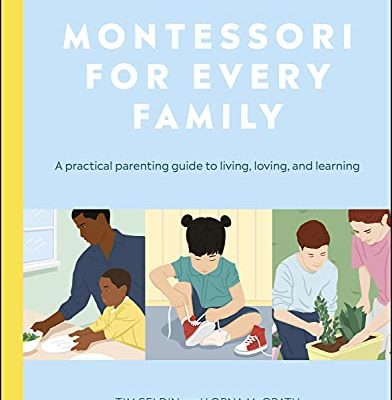
Bulk Order, 30 Copies of Montessori for Every Family: A Practical Parenting Guide To Living, Loving, And Learning
Original price was: $600.00.$510.00Current price is: $510.00.
Products
-
The Montessori Way, Revised and Expanded: An Education for Life; A Comprehensive Guide for Parents and Teachers
$25.00
-
The Montessori Child: A Parent's Guide to Raising Capable Children with Creative Minds and Compassionate Hearts (The Parents' Guide to Montessori)
$20.00
-
The Montessori Toddler: A Parent's Guide to Raising a Curious and Responsible Human Being (The Parents' Guide to Montessori)
$20.00
-
Montessori in Action: Building Resilient Montessori Schools 1st Edition
$29.95
-
Bulk Order, 30 Copies of Montessori for Every Family: A Practical Parenting Guide To Living, Loving, And Learning
Original price was: $600.00.$510.00Current price is: $510.00.