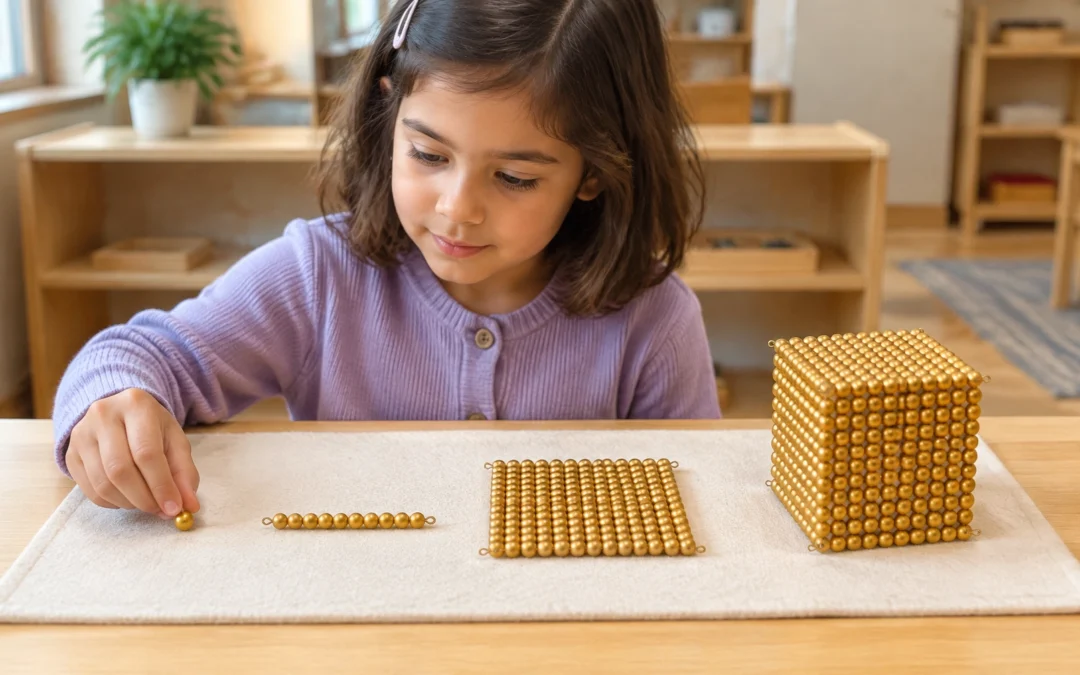
What makes a montessori school ‘Montessori?’

What makes a montessori school ‘Montessori?’

mixed ages


by Tim Seldin

If you’ve spent your career in independent schools or early childhood education, you’ve likely encountered Montessori—perhaps as a competitor, a curiosity, or simply another name in the landscape of educational options. I want to take a few minutes to explain what we do and why it matters to anyone who cares deeply about how children learn and grow.

I’ve spent four decades working with Montessori schools around the world. What I’ve learned is that, while our methods differ, many of our goals align closely with what thoughtful educators in any setting aim to accomplish: helping children become confident, capable, and curious human beings.

A Different Starting Point: How We View Children

The foundation of Montessori education stems from Dr. Maria Montessori’s discovery that children of different ages have distinct learning styles. Rather than viewing education primarily as delivering content, we see it as preparing an environment that draws out each child’s natural curiosity, deepens their concentration, and sustains their joy in learning.
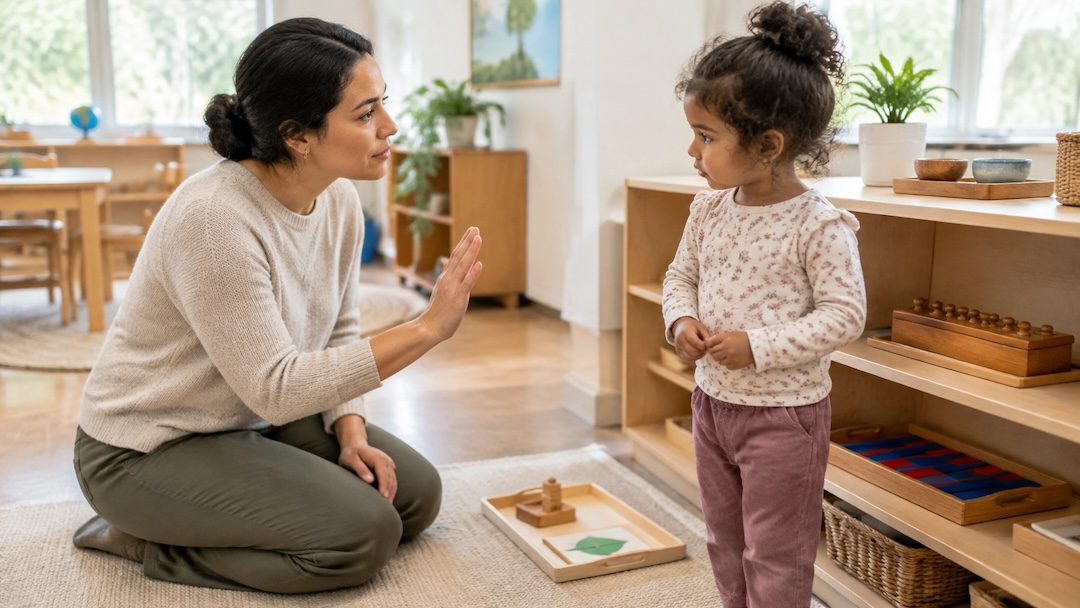
Dr. Steven Hughes, a pediatric neuroscientist, once described the difference this way: in traditional models, we push content and curriculum. In developmental models such as Montessori, we follow the learner and optimize brain development.

This doesn’t mean we abandon academics—far from it. Montessori students typically perform exceptionally well on standardized measures. But we believe that when you prepare a child’s mind and body for learning first, the academic content follows naturally and is retained more effectively.

If you’ve ever watched a child lose themselves in deep, focused work—the kind where time seems to disappear—you’ve seen what we’re cultivating. We aim to make that the norm rather than the exception.

The Prepared Environment: Freedom Within Structure

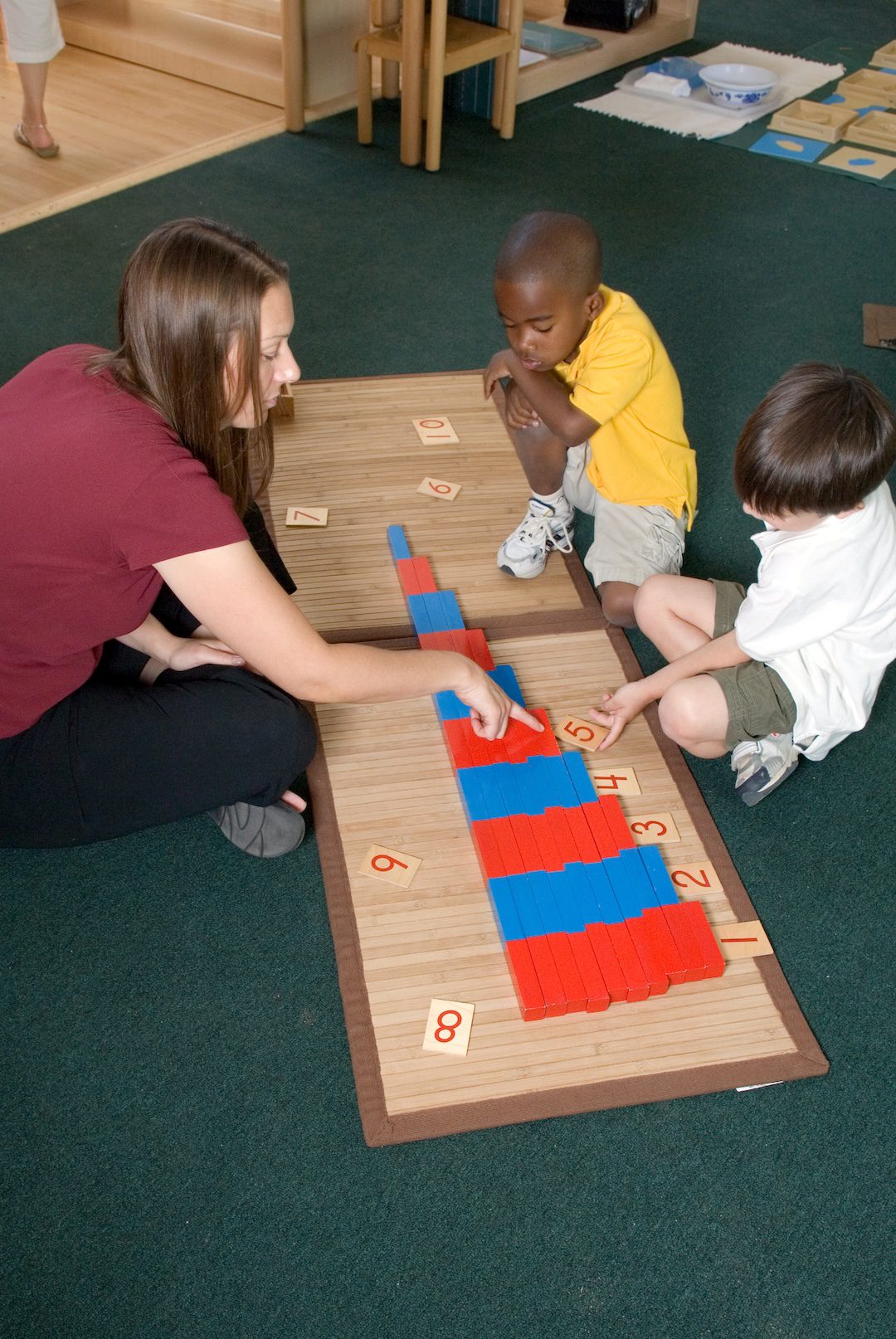
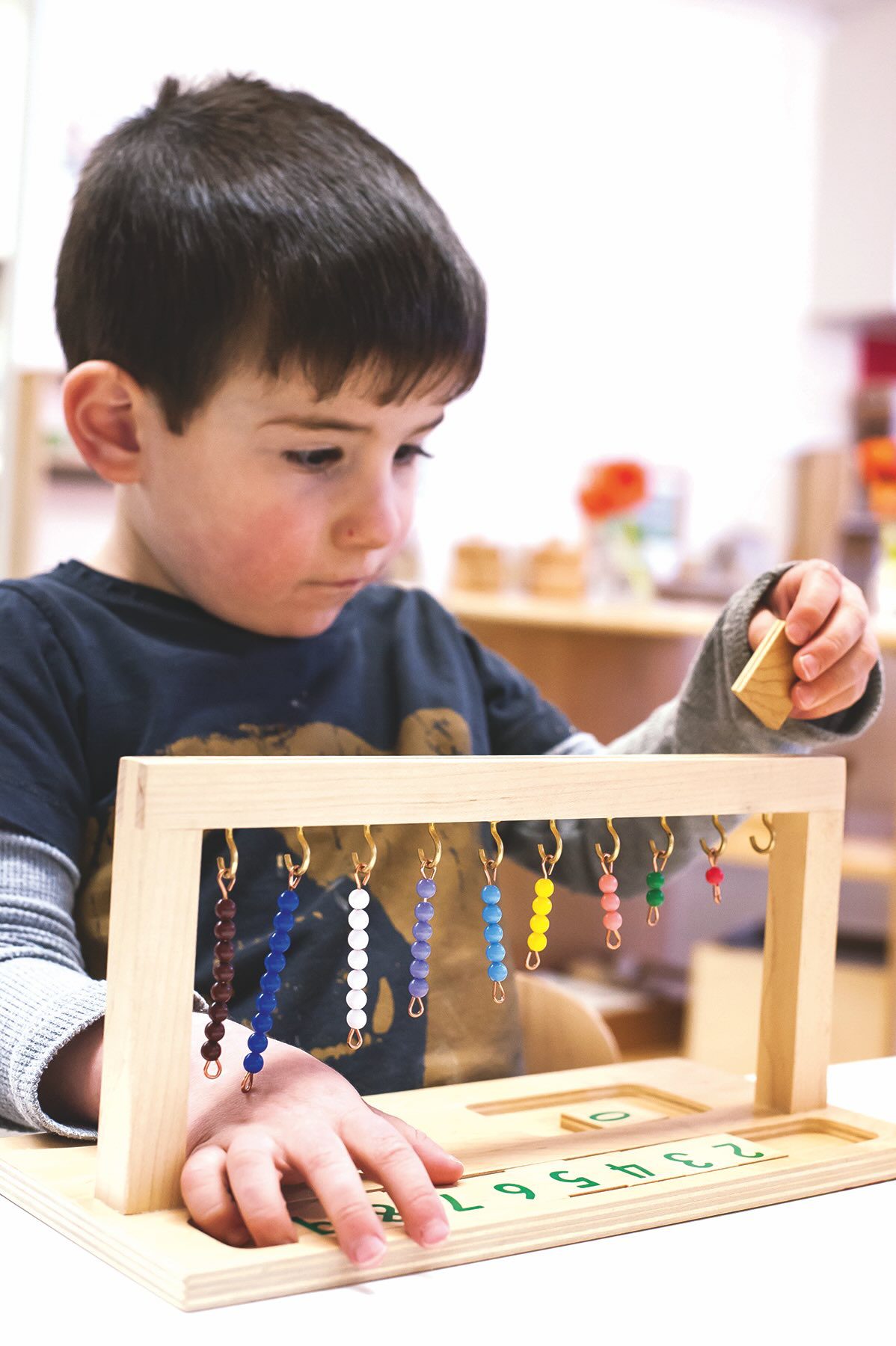
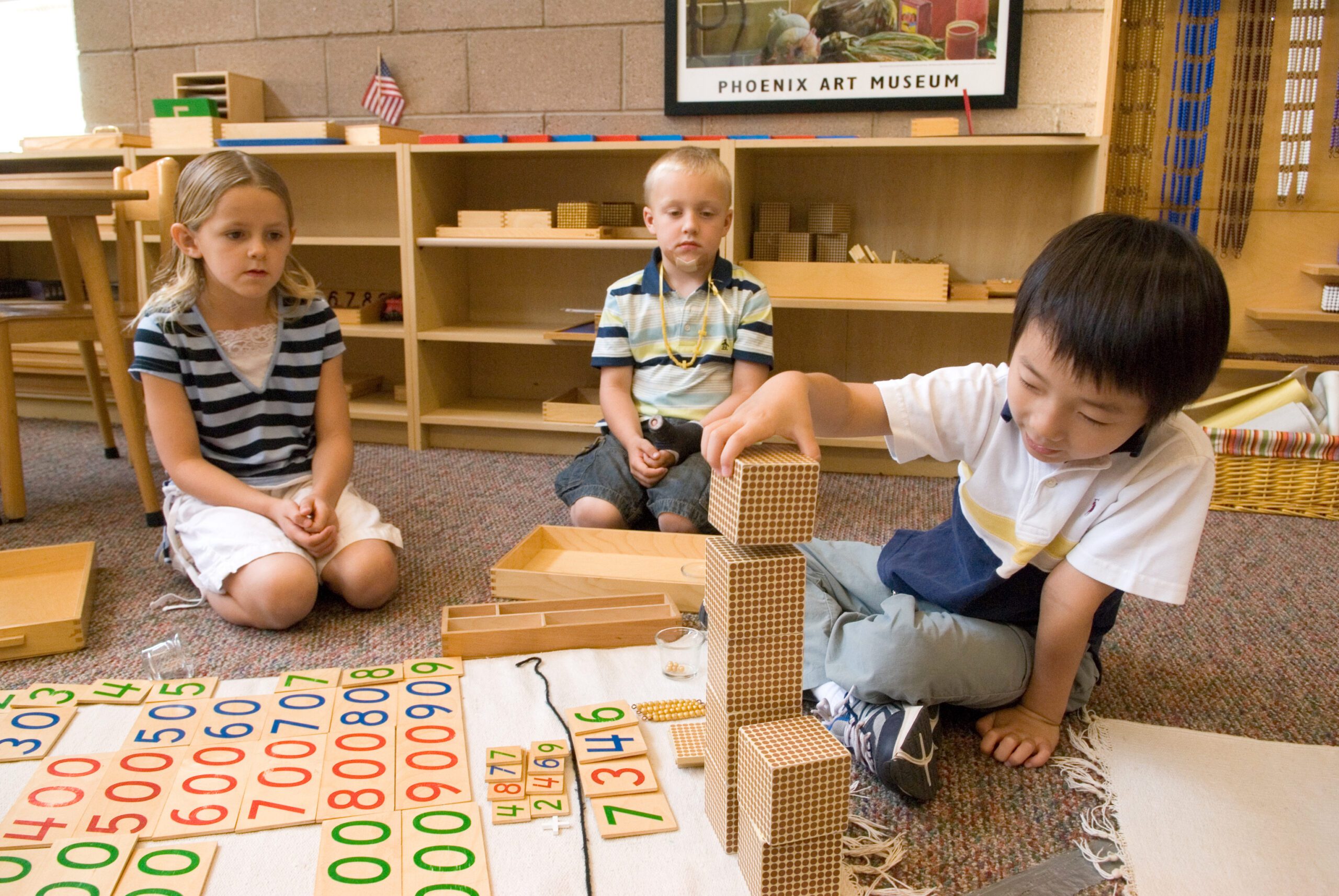
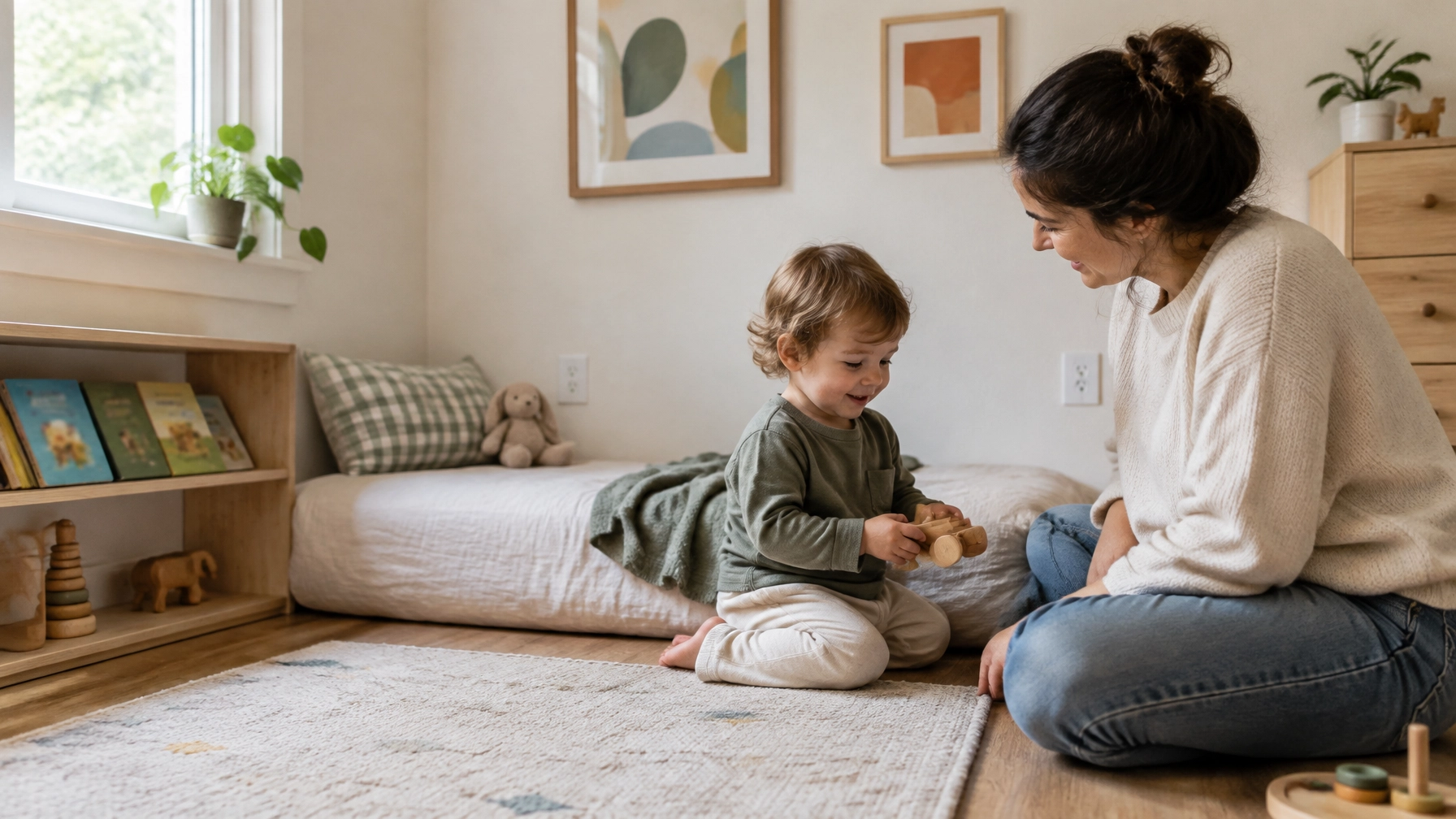
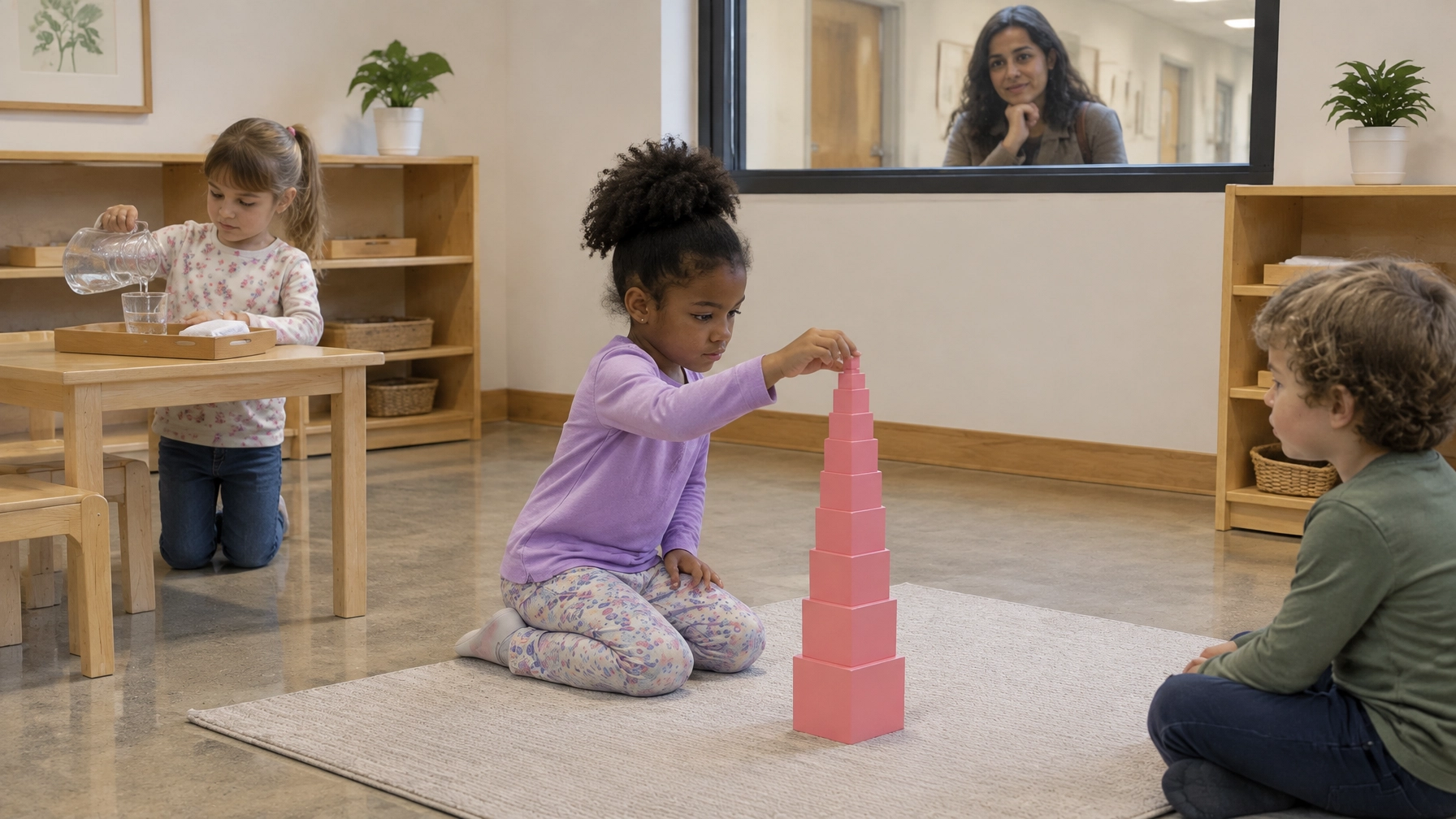
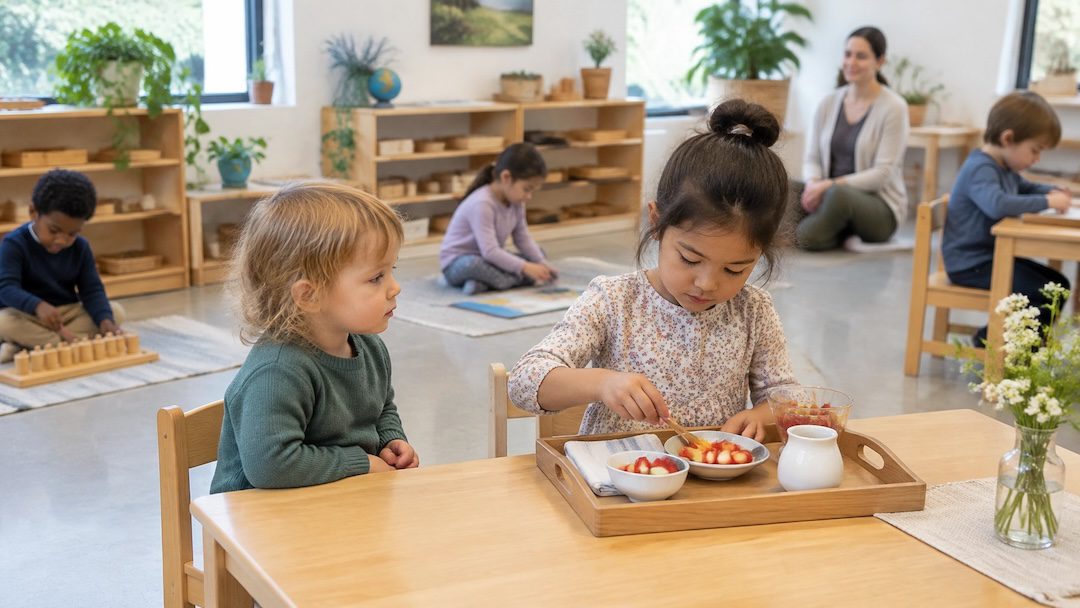
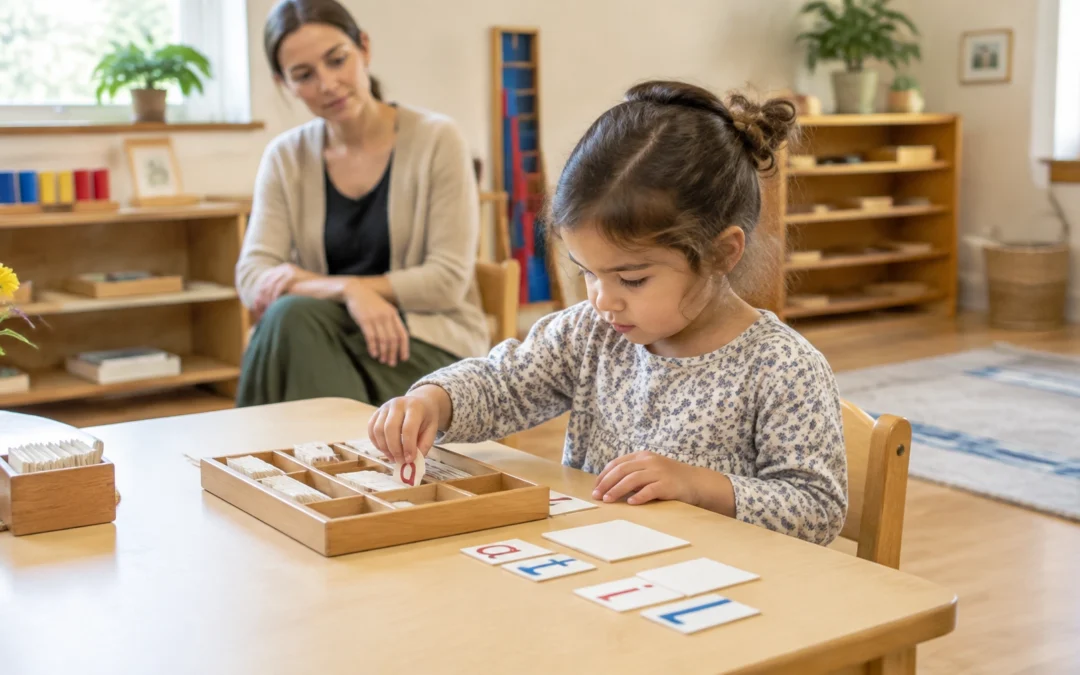
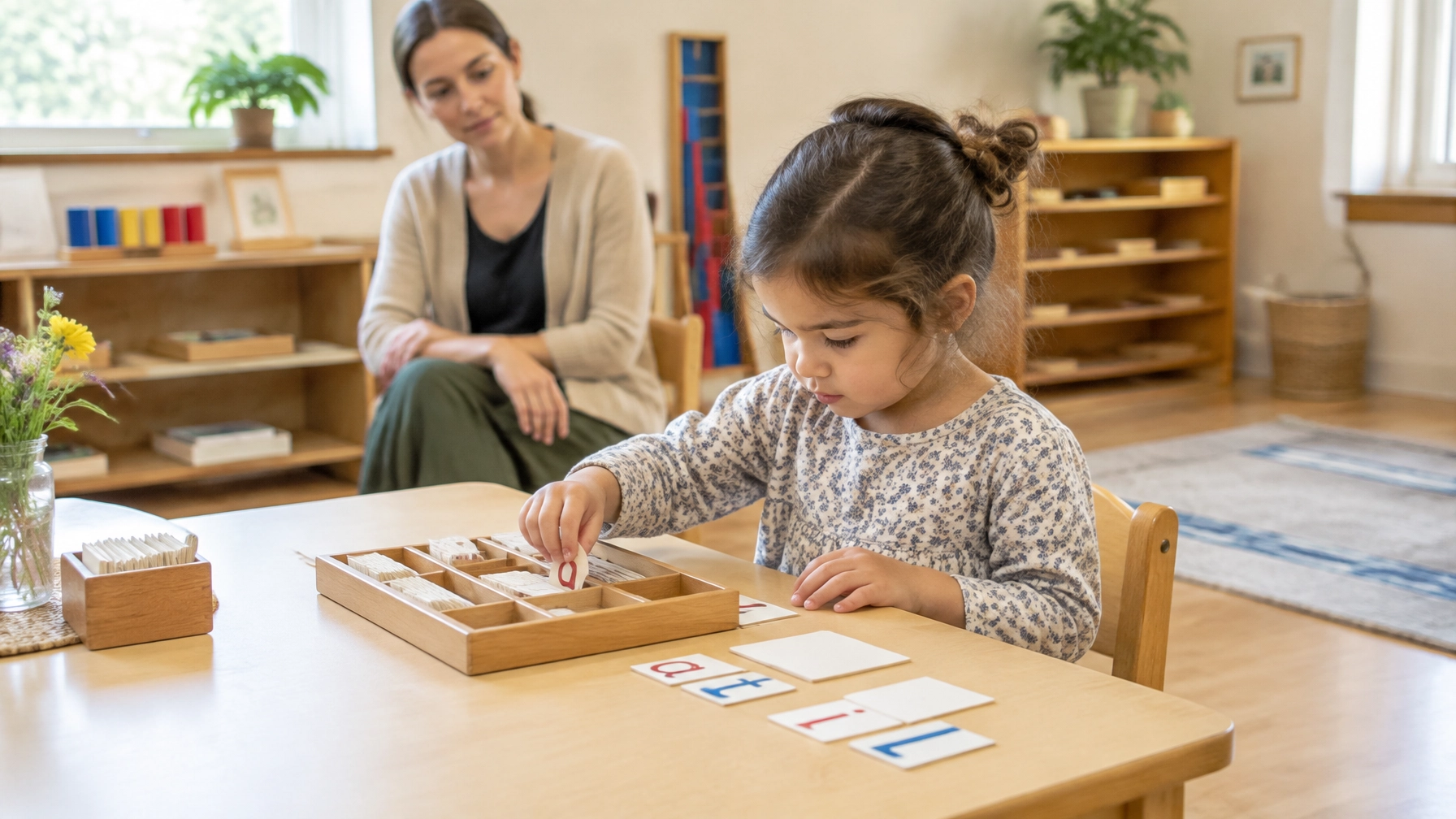
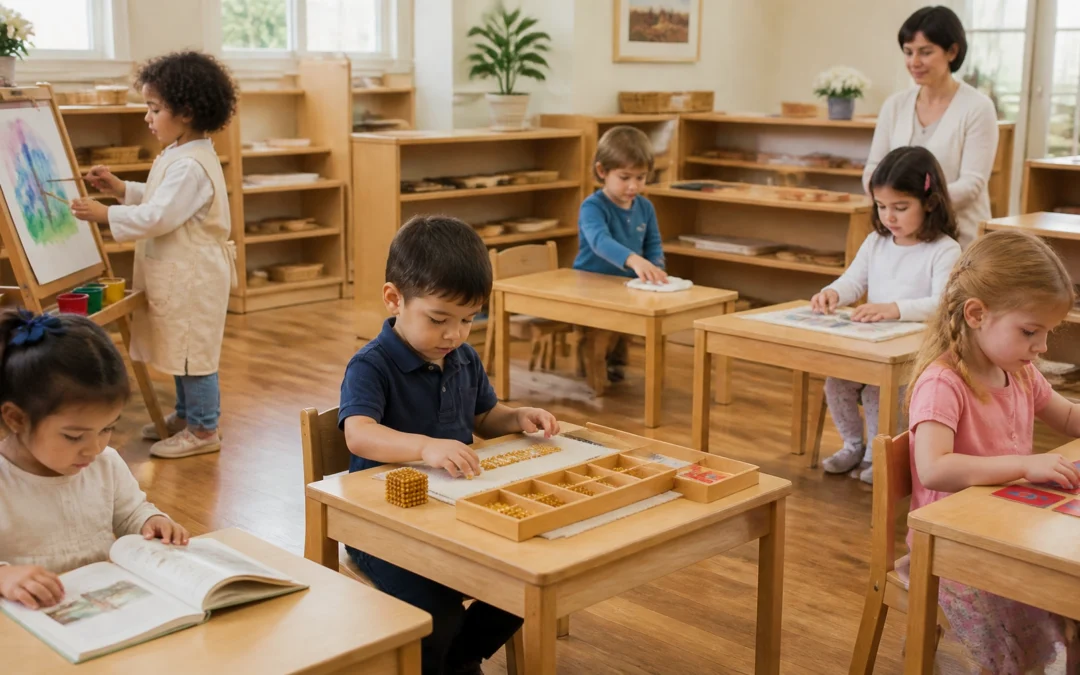
Walk into a Montessori classroom, and you’ll notice it looks different. Rather than desks in rows facing a teacher, you’ll see low shelves arranged around the perimeter, with materials displayed at child height. You’ll see children working on the floor, at tables, sometimes alone, sometimes in small groups. You might see a six-year-old helping a four-year-old, or a child who’s been working with the same material for forty-five minutes, completely absorbed.

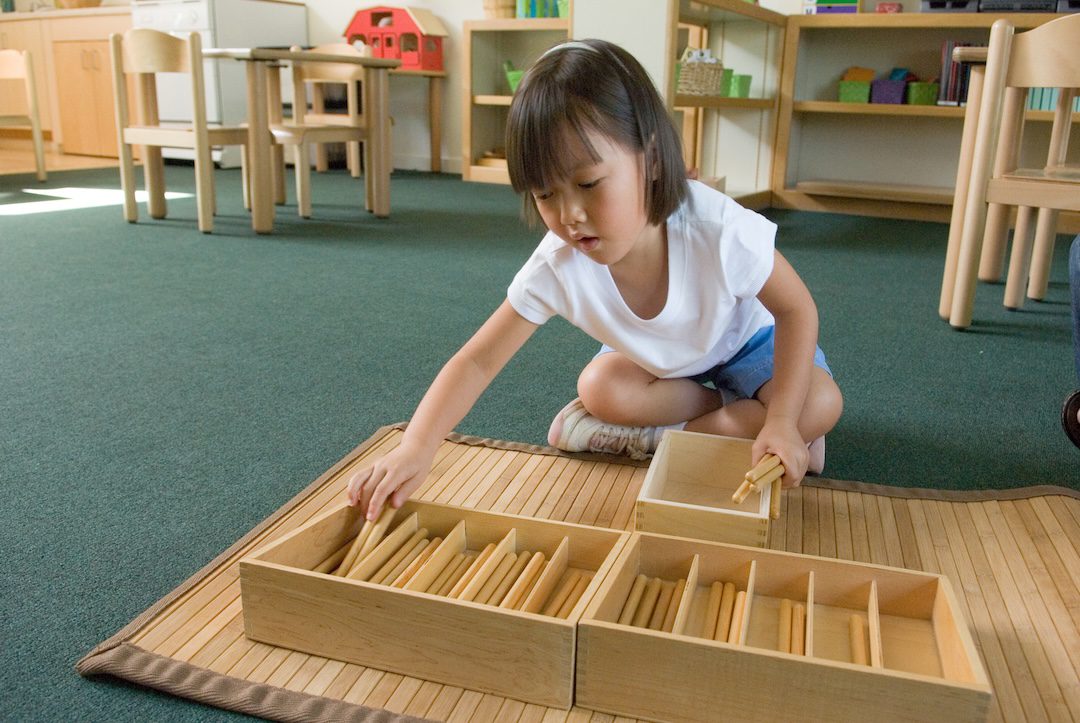
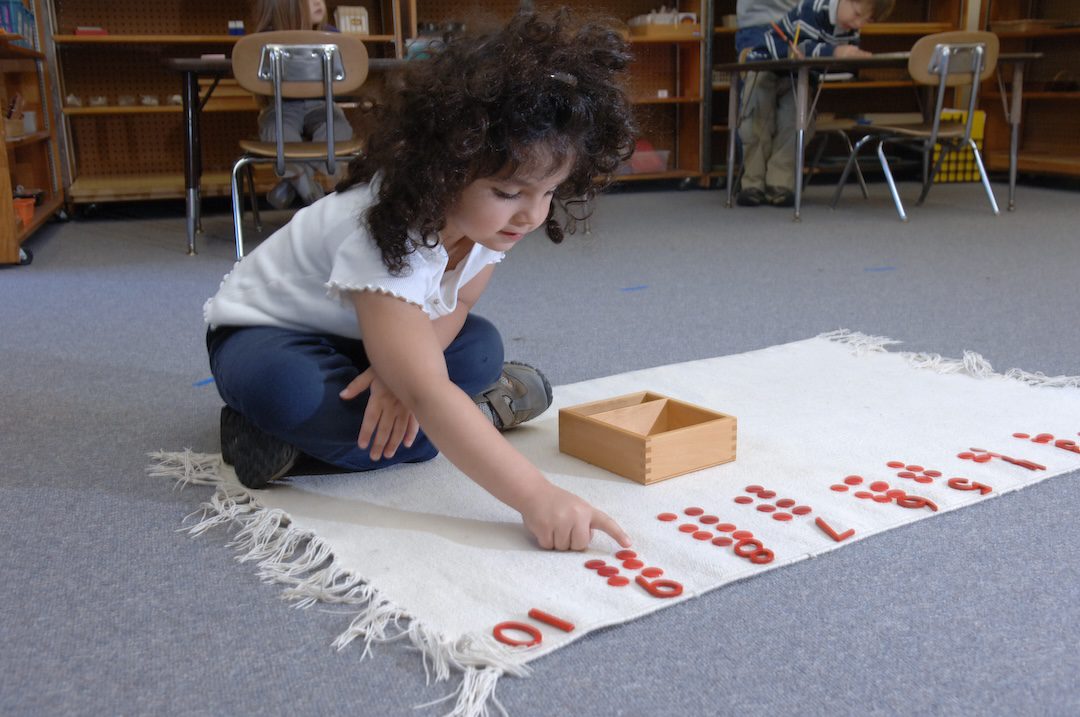
This is what we call the “prepared environment.” Every material in the room has been carefully selected to focus on a specific concept or skill. Unlike toys with multiple features, our materials focus on one thing at a time, allowing children to master it through repetition and self-correction. The materials often indicate when children’ve made an error, reducing their reliance on adult judgment.

The teacher has introduced these materials to each child individually or in small groups. Once introduced, children are free to choose what they work on, for how long, and whether to work alone or with others. This isn’t chaos—it’s disciplined freedom. And it requires something many educators find difficult: trusting that children, given the right environment and materials, will choose work that challenges them.

Time to Go Deep: The Uninterrupted Work Cycle

One of our most distinctive practices is the three-hour uninterrupted work period. This likely sounds impractical to many educators accustomed to 45-minute blocks and subject-switching bells.

But here’s what we’ve found: when children know they have extended time, they settle into deeper work. They’re not watching the clock. They’re not mentally preparing for the next transition. A child can start with a simple activity, warm up, and then move to a more challenging task. Or they can stay with one material for an hour, really mastering it.

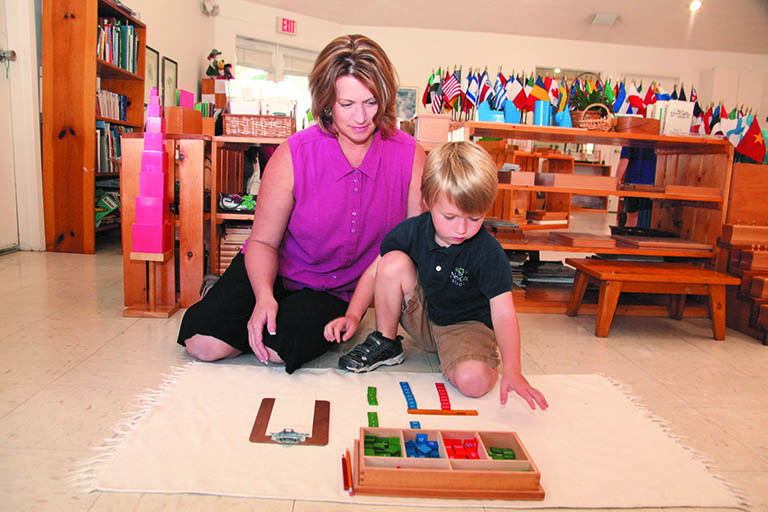
The teacher circulates, observing carefully, giving lessons to individuals or small groups, but most of the time belongs to the children themselves. This develops something we desperately need in our students: the capacity for sustained attention, self-direction, and deep work.

If you’re concerned about whether children can handle this much autonomy, I understand. Most of us didn’t experience it ourselves. But I’ve watched it work for thousands of children across cultures, socioeconomic levels, and learning profiles. It turns out children rise to the expectations we set and the trust we extend.

The Teacher as Guide: A Different Kind of Mastery

Montessori teachers undergo extensive specialized training—typically a full academic year beyond their bachelor’s degree. But what they learn is quite different from traditional teacher preparation.

Rather than lesson planning for whole-group instruction, they learn to observe individual children with scientific precision. Rather than lecturing, they learn to give concise, engaging presentations that spark interest and then step back. Their goal is not to be the center of attention but to make themselves gradually unnecessary.

We often say the Montessori teacher is “the guide on the side” rather than “the sage on the stage.” After introducing a concept or material, the teacher observes and reflects on the child’s understanding. What did they miss? What captures their interest? Based on these observations, the teacher decides when to re-present, when to introduce something new, and when to stay out of the way.

This doesn’t mean Montessori teachers are passive. It means they’ve developed a different kind of mastery—one that requires deep knowledge of child development, precise observation skills, and the wisdom to know when to intervene and when to trust.

And here’s something that might surprise you: we’re as interested in character development as academic achievement. We want avid scholars, yes, but we also want happy, emotionally healthy children who work well with others, show resilience, and develop genuine self-esteem grounded in real capability.

Why Multi-Age Classrooms Matter

If you’re accustomed to age-segregated grades, our multi-age classrooms might seem strange. We typically group children in three-year spans: 18 months to three years for toddlers, three to six for early childhood, six to nine for lower elementary, nine to twelve for upper elementary.

There are powerful reasons for this. Younger children learn by watching older ones. Older children solidify their own understanding by teaching younger ones. No child is permanently “the struggling one” or “the star”—everyone is both learner and teacher depending on the context. And critically, children aren’t competing with same-age peers for the teacher’s attention or comparing themselves to a narrow cohort.

But we also intentionally cultivate other kinds of diversity: different learning styles, different cultural and socioeconomic backgrounds, boys and girls together, typically developing children alongside those with learning differences.

Why? Because this mirrors the real world our students will enter. They won’t work in organizations sorted by age and ability. They’ll collaborate with people who think differently, learn differently, and come from different backgrounds. The Montessori classroom becomes a laboratory for learning how to work effectively across differences.

It’s worth noting that many successful innovators and entrepreneurs—Jeff Bezos, the founders of Google, and many others—credit their Montessori experience with teaching them to think independently, work collaboratively, and approach problems creatively. The skills developed in our diverse, mixed-age classrooms translate directly to adult success.

Three Core Values: Independence, Individuality, and Interdependence

Everything we do rests on three foundational values.

Independence. A young child once said to Dr. Montessori: “Help me to do it myself.” This captures our entire philosophy. We give children just enough support to become self-reliant—not so much that they remain dependent, but enough that they can master genuine skills.

From three-year-olds learning to pour their own water and button their own coats, to twelve-year-olds designing independent research projects, we’re constantly asking: how can this child do more for themselves? The goal isn’t independence for its own sake. It’s building the confidence and competence that comes from genuine capability.

Individuality. We’re not processing children through a standardized curriculum at a standardized pace. We’re helping each child discover and develop their unique capacities. Some children are drawn to mathematics, others to language or art or the natural sciences. Some learn quickly in bursts, others through patient, methodical repetition.

The Montessori approach allows us to honor these differences rather than fight them. Every child works at their own pace through a carefully sequenced curriculum, which means advanced learners aren’t held back and struggling learners aren’t left behind. This is differentiation built into the model, not something teachers have to engineer on top of everything else.

Interdependence. But we’re not just cultivating isolated individuals. We want children to understand that they’re part of something larger: their classroom community, the school, the natural world, society.

This is why we have children of different ages working together, why we emphasize care for the environment, why older children mentor younger ones, why we study our place in the cosmos and on the planet. We want students who are empowered and capable, yes—but who understand their responsibilities to others and the world they inhabit.

The Home-School Partnership: Parents as Partners

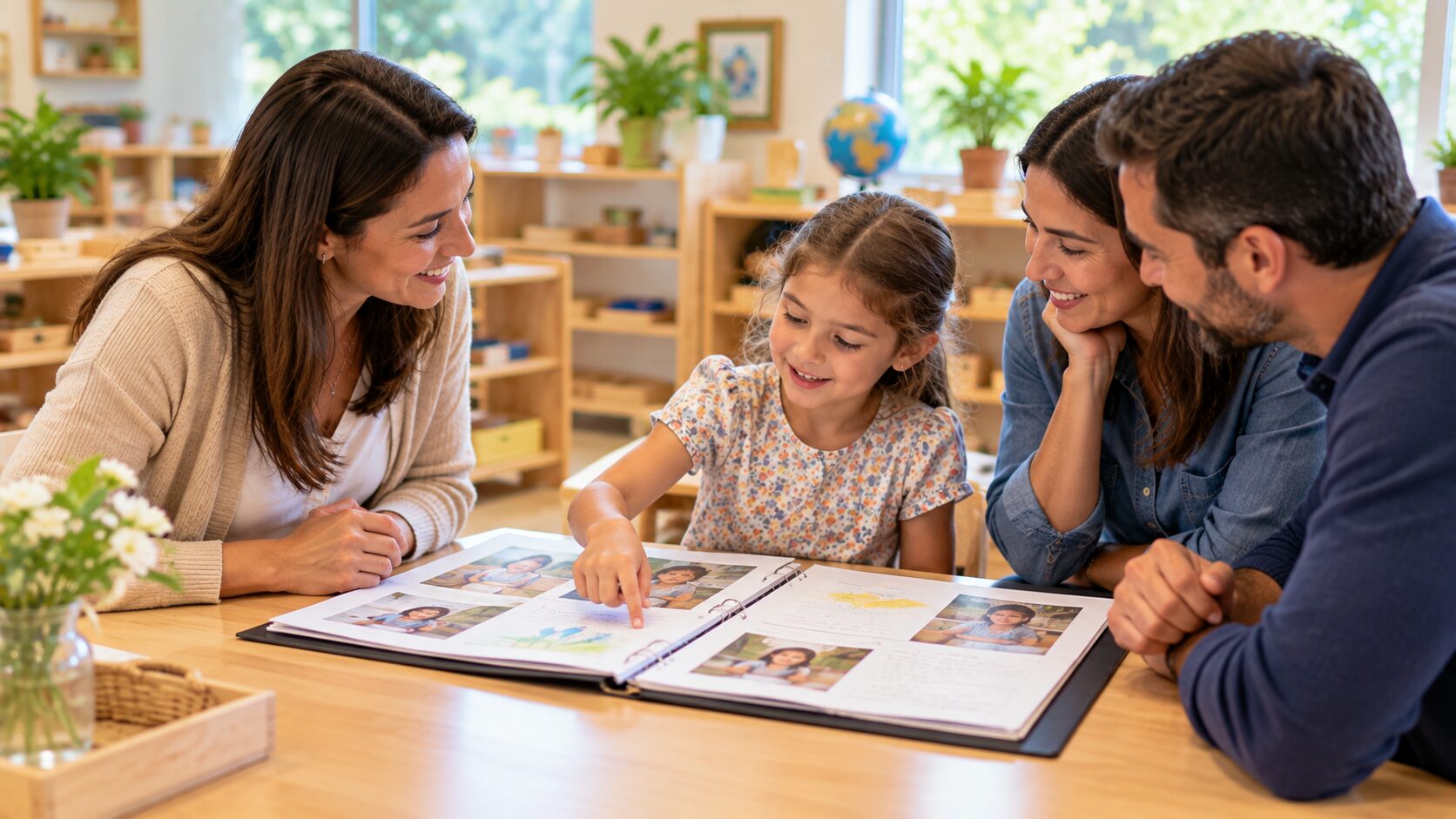
One final element that might interest you: we take parent partnership seriously in ways that go beyond typical parent communication.

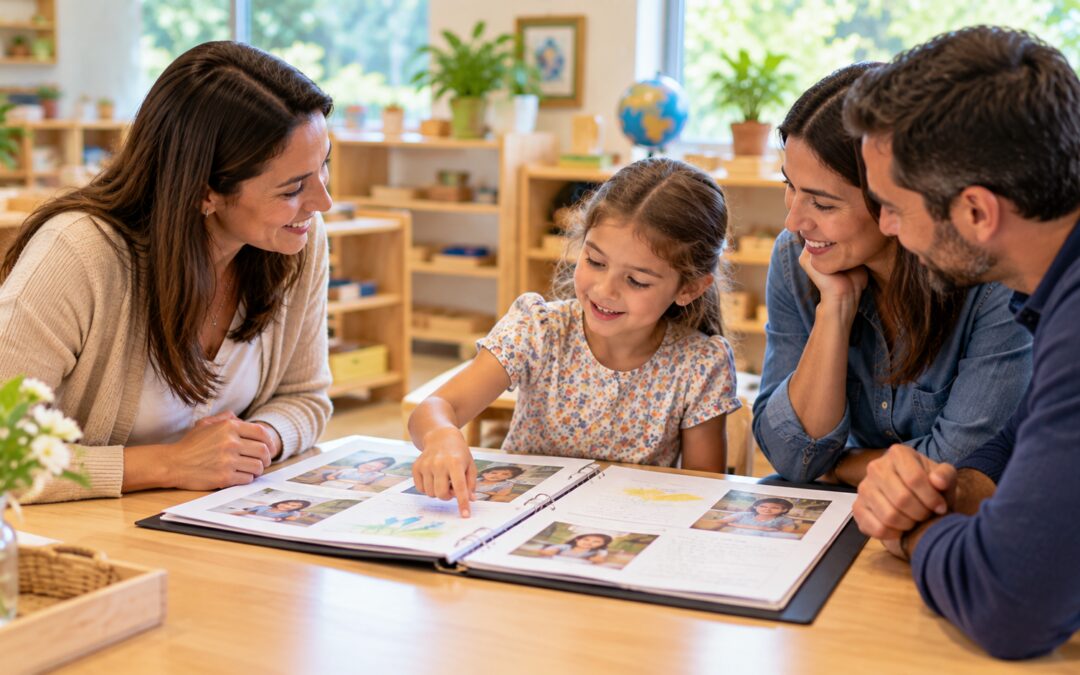
We don’t see parents as peripheral to the educational process. They have insights about their children that we need in order to understand the whole child. And we have observations and strategies that can help parents at home. This is a genuinely collaborative relationship, not a hierarchical one where the school is the expert and parents are clients.

In practice, this means regular, substantive communication; parent education events where we help parents understand child development and Montessori philosophy; and a culture where teachers and parents trust each other enough to have honest, productive conversations about children’s growth and challenges.

Many independent schools aspire to this kind of partnership. We’ve built it into our model from the beginning.

What This Means for Education

I’m not suggesting Montessori is the only way to educate children well. Many independent schools and early childhood programs achieve remarkable outcomes through different approaches. But I do think we offer something worth considering—particularly as education faces mounting pressure to serve diverse learners, prepare students for an unpredictable future, and honor childhood rather than simply rush through it.

If you’ve been in education long enough, you’ve probably noticed that many current reform movements are “discovering” things Montessori has done for over a century: personalized learning, hands-on engagement, mixed-age groupings, emphasis on executive function and self-regulation, project-based learning, and developmental appropriateness.

We don’t claim to have all the answers. But we do have a comprehensive, time-tested model that addresses many of the challenges educators are grappling with today. And perhaps most importantly, we have evidence that it works—not just academically, but in developing the kind of humans we want to send into the world: curious, capable, compassionate, and confident.

If you’re building or leading a school, I suggest that you look closely at what we do. You might not adopt the whole model, but you might find elements worth adapting. And if you’re a parent or educator exploring options, I’d invite you to visit a well-implemented Montessori school—not to convince you it’s the only way, but to see what’s possible when we truly follow the child.

The question I encourage every school founder and leader to ask is this: What kind of human beings are we trying to cultivate, and does every decision we make support that vision?

For us, that question has been central for more than a hundred years. And it continues to guide everything we build.

Infant Toddler Nutrition: Aiden Ate Cucumbers At Snack Time

Infant Toddler Nutrition: Aiden Ate Cucumbers At Snack Time

Aiden ate cucumbers at snack time with me today!

The cool crispiness, color, texture, who knows? Or was it because he helped peel them, cut them up, and then sat with me while I savored mine? Whatever this celebration is it’s certainly the next step in his food exploration and acceptance of a variety of foods. This little two-year-old boy, who still breastfeeds, began the school year in late August with little hope in his lunch box for a balanced nutritional transition into solid foods. In fact, as I recall, his initial packed lunches included a breakfast bar, a bag of sugary cereal, crackers, and a cookie. He would nibble a little bit on the crackers and cookies but truly basked his gustatory sense in the gritty, fruit filling of the breakfast bar. Further illustrated by the berry-coated film left on his teeth.

A young child joyfully exploring cucumber slices at a small Montessori table

Eating cucumbers at snack is a small celebration of food exploration and acceptance.

Several weeks into the school year, I noticed that the enamel on the bottom of Aiden’s front teeth was eroding, making them look jagged and irregular. I continued to observe this little guy who passed up a snack daily, nibbled only the sweet things in his lunchbox, yet (and the big asterisk goes here) continued to work in the classroom in a steadfast, joyful, well-organized, exceptionally focused manner.

An unfortunate turn of events served as a wake-up call that we all had to answer. Mark, who is Aiden’s father, brought him to school late one morning, holding him tightly against his body. Without his usual, “Good morning, Miss Jan,” he looked at me, carrying a great sadness and concern in his eyes. “We just came back from the dentist. Aiden won’t be in school on Monday, October 20th. He has eight cavities; needs porcelain veneers on his front teeth, and has to be put under anesthetic to do the work. He’s only twenty months old!” Mark shared the suggestions from his pediatric dentist with me. Stop breastfeeding (mom was admittedly a sugar aficionado), eliminate sodas, any sugary foods, and brush Aiden’s teeth after every meal. Mark asked me what the other children were bringing in their lunchboxes and what kinds of things he should be feeding Aiden.

A father and teacher talking warmly about a toddler's nutrition and well-being

A dentist’s visit for eight cavities at twenty months became a wake-up call for the whole classroom community.

Early childhood nutrition, as it applies to the child’s behavior, mood, and ability to learn, has been an interest of mine for years. Coincidentally, I was scheduled to give a presentation on nutrition at the Montessori Peace Academy in two months. As a partner in Aiden’s education and well-being, I felt compelled to dig deeper and find scientific, nutritional, and practical answers. I had never seen a child as focused as Aiden, who ate so poorly at school. There must be something in the breast milk that is sustaining him. At a critical juncture in the older weaning child’s life, when sensitive periods for exploring new foods, tastes, and textures had surely diminished, and windows of taste-bud opportunity were all but shut, how could we compete with the nutritional perfection of mom?

Day after day, Mark sent new things in Aiden’s lunchbox for him to try. On the first day, Mark removed the breakfast bar from the lunchbox. Aiden threw his lunch box on the floor in disgust, then flailed his body right next to it (first time I had ever seen Aiden throw a tantrum; a testament to the power of sugar)! I knew right then and there, this was NOT going to be easy. I decided it was time for me to educate myself so I could educate not only Aiden’s family but also all the parents of my students on the best practices for feeding their children.

I interviewed parents to find out the dietary habits of children who came to school emotionally balanced and ready to learn, and the diets of children who began kicking their friends within minutes after getting to school or walking around the classroom, verbissina (Yiddish for sourpuss face), in a fog, unable to focus on anything. My mind’s eye zeroed in on definite patterns of eating that benefited the very early learner and on patterns that created behavioral and learning stumbling blocks for some children. The following are characteristics of unlimited and limited little learners, followed by the core foods each category is being fed. The characteristics from both lists are interchangeable and can be modified, reduced, or enhanced through dietary changes.

Please note that the following characteristics can also be influenced by the child’s physical and emotional state.

A cheerful, calm child working joyfully in a Montessori classroom

Children who come to school nutritionally satiated are ready to separate happily, focus deeply, and engage with their work.

Characteristics of “unlimited” little learners:

happy separation from mom and dad when being dropped off at school in the morning (except for the occasional sick day or got up on the wrong side of the bed day)
cheerful mood
ability to gesture and verbally express needs, wants, and feelings in a composed manner
self-directed and eager to become engaged with an activity or greet a classmate or teacher when dropped off at school
works with the materials in a respectful, organized manner, comprehends the work cycle (choosing an activity, taking it to a table or work rug, and then returning it to the shelf) finds a new activity on the shelf immediately
joyfully takes direction and complies
pays close attention to detail and personal organization
asks for lessons, loves when the teacher offers instruction and will keep trying with support and encouragement
watches role-modeling with the greatest of interest and willingly resolves conflict using good eye contact and verbal communication
changes inappropriate behavior in response to logical explanation, sometimes redirection
displays physical impulse control
withstands life’s emotional and mental challenges with a minimum of emotional extremes (this does not include the young child’s innate, natural, emotional honesty)
embodies positive self concept, “I can do it!”
shows respect for other children’s feelings, belongings, and personal space
grasps reality and can focus at the task at hand but also exhibits great imagination and creativity
comes to school nutritionally satiated, demonstrates good manners (including many of the above characteristics) at snack time (will try new food items), mealtime (brings a balanced nutritional lunch to school), and naptime

The following list of “unlimited” little learner’s core foods is compiled from the parents of several of my students who began the school year demonstrating the above characteristics on a regular basis:

Breakfast: rice cereal, cooked oatmeal, honey, low sugar cereal and granola, oat bran cereal, whole grain bagels, bread, tortillas, cream cheese, peanut butter, butter, whole milk, soy milk, eggs, sausage, bacon, cheese, cottage cheese.

Lunch and dinner: cheese, tofu, whole milk yogurt, cottage cheese, cashews, walnuts, peanut butter (low sodium, low sugar) and jelly sandwiches, vegetarian soy products (butter, bacon, chicken nuggets, hot dogs), tuna fish salad sandwiches, egg salad sandwiches, ham and cheese sandwiches, whole grain bagels, tortillas, bread, salmon, sushi, mackerel cakes, chicken, turkey, meatloaf, steak, rice, couscous, risotto, mashed potatoes, noodles with butter, spaghetti with marinara sauce, pizza Hummus, squash, peas, green beans, edamame beans, olives, asparagus, Swiss chard, broccoli, carrot sticks, avocados, broccoli, tomatoes, cucumbers, jicama, pickles, salad Prunes, pears, apples, blueberries, raspberries, strawberries, grapes, oranges, melon, raisins, dried fruit, kiwi Snacks popcorn, stone ground crackers, cheese, low sugar peanut butter, tortillas, graham crackers, frozen juice popsicles, carrots, broccoli, raw veggies, dip, avocados apples, dried fruit, oranges water, milk, soy milk.

“Unlimited” little learner’s parental anecdotes:

“Sophie ate a lot at meals – more vegetables, too, until she was two years old. Now she eats a little bit every few hours, and I offer her cheese, yogurt, avocado, apples, healthy choices all day long; otherwise, she will ask for candy, cookies, and sugary things.”

“Wilson loves apples. He started eating them at nine months old. He eats at least one/half an apple every day. He does not drink much juice. He mostly drinks water and milk.”

“Ella (who is now 3) was breastfed until 28 months old. She did not eat food until she was 2 years old. Her first introduction to whole foods was smashed steamed vegetables (broccoli, carrots) and quinoa (a high-protein grain source). Next, she ate steamed asparagus with lots of butter. I really steamed it until it was tender. We fed her what we ate. She never had juice until after she was 2. She only drank water. Her juice is always diluted with water. When she was 28 months old, she started eating eggs and chicken from chickens fed flax seeds. Last night we went out to eat, and Ella tasted her dad’s salmon for the first time. She ate half of it! There are no foods in my house with trans fats, high fructose corn syrup, or modified corn starch, nothing heavily processed!”

“Since grandma and dad have a sweet tooth, Grace has ice cream, cake, or candy a few times a week. I do notice that if she eats candy or a Popsicle after 6:00 PM, she stays up later (10 PM) and whines right before she falls asleep. Without sugar, she is pleasant all evening and would go to bed by 9 pm and drift off while reading books.”

“From time to time, the children get bored with my routine meals and do not eat. This is when I realize I need to stop offering graham crackers, raisins, and peanut butter and jelly and get more creative. A trip to the farmer’s market, a different grocery store, or a health food store gives me new ideas. Trader Joe’s has many kid-friendly, quick snacks that I use as staples: dried fruit, frozen fruit, crackers, frozen edamame, mixed vegetables, pasta sauces, cheese sticks, turkey, organic cereals, organic fruits, etc.”

Characteristics of “limited” little learners:

unhappy separation from mom and dad when being dropped off at school in the morning, cheerless mood
inability to gesture and verbally express needs, wants, and feelings in a composed manner, may have delayed or garbled speech
upon arrival to school seems impervious to his surroundings, requiring others to incite his interest
works with the materials haphazardly (sometimes blending several works together) using poor organizational and planning skills, needs constant reminders to follow through with the work cycle
unaware of new works that have been placed on the shelf
has difficulty following directions, appears to be responsively delayed or highly over-stimulated, gets frustrated easily, can become defiant, or abandons the project completely
chooses activities or tasks that require limited fine motor capability, patience, or reasoning skills, prone to guessing at answers rather than deliberating
rejects teacher’s help in finding an activity, ignores presentations, will not join group lessons (with friends) when invited
has limited staying power watching role models, has difficulty maintaining eye contact or not physically grabbing the other child involved while resolving conflict verbally, frequently runs away from conflict
has difficulty changing inappropriate behavior without repetitive use of concise, firm, verbal limit setting, and finally removal from the situation
lacks physical impulse control, aggressive with other children (pushes, bites, body bangs), adults, the materials (throws or drops the work), or reckless with the environment (jumping on chairs, etc.)
demonstrates a low stress threshold, is easily frustrated, prone to temper tantrums, crying jags, and hopeless whining
lacks confidence, refuses to try, and often anticipates a negative outcome by whining “I can’t” even when successfully completing a task
often laughs at another child’s misfortune, runs away after hurting someone, grabs personal items that another child is wearing or using, disrupts the child who is concentrating by touching his activity, taking parts of it, or daunting him
has a difficult time staying in the moment, sequencing (connecting the dots), often drifts off into space or fantasy land, becoming a superhero, frequently disassociating from the task at hand
comes to school hungry (no breakfast at all, non-nutritional breakfast at home or on the run), eats unbalanced or very little at snack (just the sweet items), turns up his nose at new food experiences without trying them, brings a nutritionally unbalanced lunch to school
containing mostly simple sugar processed entrees and accompaniments
usually becomes disruptive at lunchtime
has difficulty falling asleep at naptime

The following list of “limited” little learner’s core foods is compiled from the parents of several of my students who began the school year demonstrating the above characteristics.

Breakfast: no breakfast at all, sugary cereal or instant sugary oatmeal, processed cereal, pancakes or waffles with syrup, breakfast bars, fruit bars, granola bars, iced popped tarts, sugary muffins, donuts, high sugar sweetened yogurt, graham crackers, bananas, grapes, undiluted juice, juice box, chocolate milk.

Lunch and dinner: high sugar sweetened yogurt, peanut butter and jelly, jam sandwiches, individual serving of high sugar peanut butter in a squeezable container, white bread and bagels, Lunchables (containing candy), fast food hamburgers, chicken and fish nuggets, hot dogs, turkey, chicken breast, Slim Jims (beef jerky), French fries, hash browns, cellophane wrapped peanut butter or cheese crackers, boxed macaroni and cheese, canned spaghetti, ravioli, baked beans corn on the cob, carrots, peas high fructose sweetened applesauce, pudding, bananas, raisins, pears, grapes, fruit roll-ups with high fructose corn syrup Snacks sugary cereals, crackers, gold fish, (chocolate) graham crackers, potato chips, corn chips, flavored popcorn, cheese crackers or puffs, cellophane wrapped peanut butter or cheese crackers, processed foods containing trans fats (hydrogenated vegetable oils such as cottonseed or soybean, containing no health benefit and actually interfering with healthy cell functioning), ice cream, candy, cookies, soda, Popsicles, undiluted juice and juice boxes.

“Limited” little learner’s parental anecdotes:

“He doesn’t eat salad or green vegetables!”

“I cooked a whole breakfast for him and he wouldn’t eat anything so I gave him something sweet just so he’d eat something..”

“There’s just no time in the morning so I grabbed a bag of cereal for him to eat in the car.”

“He never eats fish. I didn’t eat fish until I was an adult.”

“I suppose I should try sending different foods for lunch. I guess I just get lazy.”

“I gave him a Popsicle. It’s the only way I could get him in the car to come to school.”

“He found the candy bar on the back seat of the car and ate it on the way to school when I wasn’t looking..”

“He spent the weekend with grandma. They continually feed him sweets!”

“I received a call at work from Jack’s teacher because he was acting very aggressively towards the other students. I had only given him cornflakes for breakfast. The next morning Jack had a poached egg and a quarter of a bagel with cream cheese. Wow! He was focused, content, happy and loving. It is so evident to me that a balance of protein, fat, and complex carbohydrates attributes to a better demeanor in my child. What a difference a day makes. I’m convinced this nutritionally unbalanced way of feeding my child caused his behavioral problems, and impacted his overall ability to learn. We replaced most of the carbs in his diet with protein and fat. Now I only hear good things about my son. On the occasional lapse into his old eating patterns his teacher always noticed a difference. I’m convinced that changing my son’s diet really helped him in so many ways. Now I’m encouraged to change mine!”

The good news for teachers and parents – keep introducing new foods at meal and snack time. My experience has been that if I contact a parent and let them know what their child has eaten at school they will make it available at home. For example, about a week after Aiden ate the cucumber slices for the first time at school, he grabbed a whole cucumber off of the counter at home and started to eat it like a banana!

In order to find out for themselves whether a particular food, pattern of eating, or type of meal helps or hinders a child’s behavior, parents must become good observers and experimenters and follow these principles:

  1. Be sure the overall diet is nutritionally sound.
  2. Define the target behaviors.
  3. Record the behavior.
  4. Record a baseline (estimate the behavior over several days).
  5. Make a dietary change.
  6. Record the target behaviors for several days after the change.

Once a child with behavioral or learning difficulties makes dietary changes the results can be instantaneous and remarkable!

Essential fatty acids in the little learner’s diet

As I began to research the benefits of breastfeeding I realized that Mother Nature had done it again, provided the perfect nutritional elixir for infants and young children. AA (arachidonic acid, omega 6), and DHA (docosahexaenoic acid, omega 3) are naturally occurring fats in breast milk. They are extremely important for brain development and visual acuity in infants and young children.

No wonder Aiden is barely 2 and already exhibiting the characteristics of an “unlimited” little learner. He was one of the first children to master the fine motor skills needed to open and close his lunch box and food containers. Mother’s milk is a tough act to follow but with the right guidance from the experts in the field of human nutrition we can surely provide the little learner with the right stuff for ambling about the classroom and through life.

What the experts say:

“Vision and the brain first evolved in the sea, which provided a rich source of docosahexaenoic acid (DHA). This essential fatty acid was selectively involved in photoreception and neural systems throughout evolution. My studies in the 1960s and 70s showed that there was little DHA in the land food chain for large mammals, consistent with the universal collapse of relative brain size. Andrew Sinclair and I showed that for every molecule of DHA that reached the developing brain from dietary DHA, you needed 30 molecules of linolenic acid. Hence, we concluded in 1972 that DHA and indeed arachidonic acid were determinants of brain development and evolution. We then showed that deprivation of essential fatty acids in rats over three generations resulted in a loss of brain cell number and described severe behavioral pathology in young capuchin primates on an omega-3-deficient diet. A recent publication has described how omega-3 fatty acids regulate more than 107 genes in the brain. Hence, there is now a full biochemical mechanism on the requirement for DHA and the way in which a rich food resource could have fueled cerebral development in harmony as body size increased. There are now several thousand papers confirming the importance of the omega-3 fatty acids and DHA in particular to brain function.”

“Docosahexaenoic Acid and the Evolution of the Brain: a Message for the Future” Michael A. Crawford, PhD, CBiol, FIBiol, FRCPath. Institute of Brain Chemistry and Human Nutrition, London Metropolitan University, Lipid Technology, March 2004

“Breast-fed babies have more DHA in their brains and retinas than bottle-fed babies, and, years later, score higher on standardized tests of reading, visual interpretation, sentence completion, nonverbal skills, and math. The process of learning and remembering involves the transmission of various chemicals from one nerve ending to another. In a study of learning ability, rats were raised on either a diet deficient in omega-3 fatty acids or a nutritionally complete diet. Initially, both groups of rats had similar numbers of synaptic vesicles. After a month-long learning program, however, the omega-3-enriched rats had considerably more vesicles in their nerve endings and also performed markedly better on the tests. This study suggests a direct link between omega-3 fatty acid intake and learning ability. Blood tests show that children with attention deficit hyperactivity disorder, or ADHD, have abnormally low levels of omega-3 fatty acids. This is correlated with temper tantrums, impulsivity, sleep disturbance, and an inability to concentrate.”

The Omega Plan, Simopoulos, Dr. Artemis P., M.D., president of The Center for Genetics, Nutrition and Health in Washington, D.C., Robinson, Jo. Harper Collins 1998

Fats make up 60 percent of the brain and the nerves that run every system in the body. It stands to reason that the better the fat in the diet, the better the brain. The eye is a perfect example of the importance of getting the right kind of fat. The retina of the eye contains a high concentration of the fatty acid DHA, which the body forms from nutritious fats in the diet. The more nutritious the fat, the better the eyes can function. And since most people are visual learners, better eyes mean better brains. When the cells of the human body-and the human brain-are deprived of the omega-3 fatty acids they need to grow and function, they try to build replacement fatty acids that are similar but may actually be harmful. Higher blood levels of replacement fatty acids are associated with diets high in hydrogenated fats and those containing excessive amounts of omega-6 fatty acids. Elevated levels of replacement fatty acids have been found in persons suffering from attention deficit disorder or depression. Omega-3 fatty acids are flax seed, flax oil, canola oil, walnuts, soybeans, wheat germ, cold water fish such as salmon and tuna, fish oils such as cod liver, tuna, and salmon oil, and dark green leafy vegetables. Omega-6 fatty acids are found in safflower oil, sunflower, corn, and sesame seed oils.

The family nutrition book, Sears, William, M.D., Sears, Martha, R.N. Little, Brown, and Company 1999

“Early childhood is the time during which nutritional and taste habits that last a lifetime are learned. Because of the natural affinity of love that exists between mother and child, a conscientious mother imparts good food habits to her child with little effort. These habits which lasts the child’s lifetime, underscore both the power and awesome responsibility of motherhood!”

Fats that Heal, Fats that Kill, Udo, Erasmus, PhD Nutrition, Alive Books 1996

A classroom snack table with water pitchers and healthy foods including bagels, cheese, fruit, and cucumbers

A nutritionally balanced snack table changed the whole rhythm of the classroom — fewer distractions, deeper concentration.

Food balancing in the little learner’s diet

When I first began teaching little learners I stumbled upon the awareness that there is a profound correlation between nutrition and the child’s ability to focus. There was a self-serve snack area in the classroom where the children could help themselves to a food item and drink. Parents usually provided snack. It was not unusual to see items such as muffins, graham crackers, and of course, an array of canned fruit juice. (Do they even make canned fruit juice anymore?) I thought this is just what little children eat so I figured everything was a-ok.

Some children would eat a small snack and then go back into the classroom and continue working. Other children ate non-stop and continually filled their bottomless juice cups. We had to invite these children away from the snack table and back into the classroom. I noticed several of the children were unable to focus on an activity, became easily distracted, and disturbed the work of other children. A nutrition conscious parent took care of snack three days simultaneously. The results were astounding. I also made a bowl of garbanzo beans with sunflower seeds available when the children arrived at school.

Ninety percent of the children served themselves normal portions of bagels spread with cream cheese or low sugar peanut butter, cucumbers, mild cheese cubes, oranges, and apples. Instead of serving juice full strength, we mixed small amounts of fruit juice in big pitchers of water. Most of the children were eager to finish their snack so they could resume their work activities. It was if they had never lost their concentration, even while they were eating their snack! There were fewer outbreaks of aggression by certain children who were visibly aggressive the week before, waiting for a turn at the snack table.

What was going on here? I conferred with my personal trainer and expert nutritionist, Cheryl Rogers, and with Yvette Morelli-Giesman, a pediatric nutritionist. I learned of the glycemic response in different foods. Aha, what was missing at our snack table (and on the breakfast tables and in the lunch boxes of a few of my students) was nutritional balance.

A toddler helping prepare food or washing vegetables in a Montessori classroom

Hands-on food experiences at school often travel home — about a week after trying cucumbers, Aiden grabbed a whole one off the counter and ate it like a banana.

What the experts say:

“Foods that have a particularly high glycemic response cause a surge in blood sugar levels. Foods such as glucose (and all of those fruit juice drinks), rice cakes, graham crackers, refined cereals, carrots, watermelon, raisins, candy, and processed breads and muffins are very high on the glycemic index. These foods eaten alone can give you an immediate burst of energy, however they cannot sustain you for long periods of time. For some, the letdown can be debilitating. Complex carbohydrates, proteins and fats take a longer time to digest and break down in the system. This causes more consistent blood sugar levels for energy and attention. Breakfast should consist of a complete carbohydrate, a protein and a fat (include a balance of dairy, vegetable, and fruit allotments throughout the day as well). Things like whole milk, peanut butter or cheese on a bagel, oatmeal with melted butter, whole milk and raisins (raisins are a great source of iron and the glycemic index is minimized when mixed with other foods), cereal containing less than 5 grams of sugar and whole milk, bacon and eggs, sausage and cottage cheese. Fats are so important for toddlers. They should never be restricted as they promote the myelinization of nerves and healthy brain growth. Fats also cause satiety. They delay gastric emptying, so whatever you feed the child will go the extra mile.

Yvette Morelli-Gieseman, pediatric nutritionist, Good Samaritan Hospital, Phoenix, Arizona

“It is well known today (early 1900’s) that the diet must be adapted to the physical nature of the child. The nitrogenous diet for a child from two or three years of age ought to be constituted chiefly of milk and eggs, but after the second year broths are also to be recommended. After three years and a half meat can be given; or, in the case of poor children, vegetables. Fruits are also to be recommended for children. The growing organism of the child is very rich in water, and, hence, needs a constant supply of moisture. Among the beverages, the best, and indeed the only one, to be unreservedly advised is pure fresh spring water. Bread is an excellent food for the child. And is very rich in starches, but is lacking in fats and as the fundamental substances of diet are, as is well known, three in number, starches, fats and proteins, bread is not a complete food and it’s necessary to offer the bread to the child buttered.”

“Refection, the child’s diet from The Montessori Method, Maria Montessori, M.D. Shocken books Inc. 1964 (first translation from Italian into English 1912)

“A well-selected meal, with good distribution of protein, fat, and carbohydrates, can help your child regulate his food intake. Each of these nutrients has a role to play in inducing some of the many satiety factors that let your child know that he has had enough to eat and give him sustained energy between eating times. Given the support of regular and varied meals and snacks, he will eat the variety he needs to get a nutritionally adequate diet. If you serve a variety of food, over time he will learn to like a variety of food and will maintain the dietary variety he needs. Parents will often pass on their fussiness along to their children by not making foods they don’t like and by not giving their children experience with certain foods.

Child of Mine, Feeding With Love and Good Sense, Ellyn Satter, MS, RD, CICSW, BCD, Bull Publishing Company 2000.

“Food has profound effects on higher mental functions, even in well-nourished children eating ordinary foods in ordinary amounts. Foods can enhance problem-solving ability, optimize alertness, and improve mood and behavior in normal children. Contrarily, foods can also impair children, whose behavior and learning are already in trouble from other causes, hampering their efforts to concentrate and maintain self-control. Over an extended period, food affects basic intelligence through effects on brain growth and by altering the way the environments changes the developing brain. Children whose attention is already impaired, who have learning and impulse control problems, are even more likely to suffer from missing breakfast than normal; and they are especially vulnerable to impairment in attention following a pure carbohydrate meal.

Feeding the Brain, How foods Affect Children, C. Keith Conners, Ph.D., Plenum Press 1989.

Parents and teachers must become scientists themselves to some extent – observing their children’s behavior and mental functioning while systematically studying what happens when their diets change.

Conclusion

“In order to protect the child’s development, especially in neighborhoods where standards of child hygiene are not yet prevalent in the home, it would be well if a large part at least of the child’s diet could be entrusted to the school”

Maria Montessori, M.D., The Montessori Method, 1912

As parents, grandparents, administrators, educators, and health providers of very young children, we must take nutrition as seriously as we do any other aspect of their education, physical, and mental health. We must educate ourselves now, and rigorously move towards mandating specific nutritional curriculums, with the emphasis on macronutrients, for brain development in all early childhood teacher/training accredited schools and certification programs. Only when this is accomplished can we truly understand the fundamental dietary needs of man and form a society based on home/school partnerships that include not only resolutions and remedial plans for our children’s academic success, but conscious meal planning and snack planning road maps that insure the nutritional equilibrium for each child’s developing mind, body, and potential.

To look the other way is to deny him his future.

A child looking at a colorful sugary treat with a parent nearby reading about sugar and nutrition

Sugar and ultra-processed foods can be uniquely harmful for children — affecting not only health but behavior, emotion, and learning.

We also have cutting edge data and research on the addictive nature of sugar and ultra-processed, industrialized foods. In Sugarless, Dr. Nicole M. Avena, a pioneering neuroscientist on food addiction, spells out the substance’s detrimental effects on the brain and body. Many people blame sugar cravings on a lack of willpower rather than acknowledge that the substance is highly addictive, even more so than cocaine, nicotine, and alcohol.

Most of us know that sugar can wreak havoc on adult bodies, but few realize how uniquely harmful it can be for children. The damage can begin early in life, resulting in fatty liver disease, prediabetes, obesity, and elevated risk for eventual heart disease, not to mention behavioral, emotional, and learning problems.

This article is drawn from Little Learner’s Diet, Food balancing, Fats, and Focusing by Jan Katzen-Luchenta, CN, AMI Copyright 2004. For updated information and resources on food addiction, refer to Jan’s website below.

Jan is a former AMI Montessori educator, and currently, a certified nutritional researcher and specialist. She provides virtual consultations worldwide for all ages, from kids to seniors, creating individualized, nutrition plans.

Jan combined her passion for nutritional education with her Montessori background to create a book called Nutrition for Development and Learning: Guide and Workbook.

To contact Jan, and receive updates on her soon-to-be published children’s picture book, Hannah Has a Sweet Tooth, please email her at jan@nutritionforlearning.com or visit her website at www.nutritionforlearning.com

A Montessori educator or family cooking healthy food together

Jan combines decades of Montessori experience with nutritional research to support children, families, and schools worldwide.

Teacher Email Etiquette: How (and When) to Actually Reach Your Child’s montessori Guide

Teacher Email Etiquette: How (and When) to Actually Reach Your Child’s montessori Guide

teacher email

You have a question. It's week one. Every fiber of your being wants to fire off an email tonight. Before you do, a quick primer on getting an actual useful answer instead of a polite brush-off.

Montessori parent reviewing an email at home and considering Montessori discipline

Match the medium to the urgency. A quick logistics question ("is tomorrow a half day?") belongs to the front office, not the guide. A developmental question ("is this normal for a five-year-old?") belongs in an email, not a hallway ambush at drop-off. A real concern ("I'm worried about something at home affecting school") deserves a scheduled call or conference — not a novel sent at 9pm.

Give it 48 hours before you worry about silence. Your guide is managing twenty-plus children's individual work cycles all day. Email is the thing that happens during nap time or after dismissal, not between lessons. Radio silence for a day or two isn't a red flag — it's a full schedule.

Montessori guide checking email at a desk after class in a prepared environment

Lead with the actual question. Guides read a lot of email. "Just wanted to check in and see how things are going and also wondering about…" buries the ask. Try: "Quick question — is [child] eating lunch okay? He's mentioned it twice at home." One sentence, one answer, done.

Skip the diagnosis, share the observation. "I think he's anxious about math" is a conclusion. "He's been saying he doesn't want to go to school on math days" is a data point your guide can actually use. Guides are trained observers — give them raw material, not your theory.

Parent and Montessori guide meeting for a scheduled conference about a child's development

Say thank you occasionally, unprompted. Not every email needs to be a request. A one-line "he came home talking about the bean plant today, thank you for that" costs you nothing and does more for the relationship than you'd think.

Child eating lunch independently in a Montessori classroom as part of Montessori basics

The goal isn't fewer questions — it's getting real answers instead of rushed ones. A well-aimed email gets read carefully. A vague one at drop-off gets a smile and a "let's talk soon" that never quite happens.

Building Your Parent-Ambassador Muscle

Building Your Parent-Ambassador Muscle

parent ambassador

Routines have settled, the crying at drop-off has mostly stopped, and now that low hum of "I should probably get more involved" is starting up. Good instinct — but worth doing right. Getting involved as a Montessori parent isn't the same as generic school volunteering, and done well, it's genuinely a three-way win: for you, for your child, and for the school.

Parents volunteering at a Montessori school community event and learning more about Montessori philosophy

Start with why this is different from a bake sale sign-up sheet. Montessori schools run heavily on community — parent ambassadors, classroom support, event volunteers — partly out of necessity (many are independent or nonprofit) and partly out of philosophy: the school works best as an extension of a values-aligned community, not a drop-off service. Your involvement isn't extra credit. It's part of how the model is designed to function.

The win for the school is obvious — more hands, more advocacy, more families brought in the door by a parent who can speak to the philosophy with real conviction instead of a brochure. That part's easy to see.

Parent and child connecting at a Montessori school community gathering while exploring Montessori basics together

The win for your child is less obvious, but real. Kids notice when their parents are known and present in their school community — not hovering in the classroom, which Montessori environments generally protect against, but visible at events, familiar to other guides, engaged in the mission. It signals that this world your child spends six hours a day in matters to you too, without you ever having to say so directly.

Parents connecting and building community at a Montessori school event while discussing Montessori philosophy

The win for you is the one people skip. Parent ambassador work, open house tours, admissions events — these put you in a room regularly with other parents who've made the same somewhat unusual educational bet you have. That community is genuinely hard to find otherwise, and it tends to become one of the more durable friend groups parents build during these years.

Parent helping prepare Montessori classroom materials in a support role within an authentic Montessori environment

Where to actually start, without overcommitting:

  • Ask your guide or the front office what the single highest-need volunteer role is right now — don't guess
  • Offer a skill, not just time (photography, writing, event planning, translation) — specific offers get used faster than vague ones
  • Try one low-stakes event before committing to an ongoing ambassador role, so you know it's a fit before your name's on a list

The families who stay involved for years almost never started with a big role. They started with one small yes, discovered the community was worth it, and built from there.

Make the Car Line Your Family’s Best Five Minutes

Make the Car Line Your Family’s Best Five Minutes

car line<br />


The car line has a bad reputation. It’s the part of the day parents complain about at pickup, to the very people also standing in the car line complaining about it. But here’s the reframe: that stretch of pavement, or that ten-minute drive, is one of the only unscheduled, screen-free, side-by-side moments you’ll get with your child all day. Montessori parents in particular should love this — it’s basically a tiny, accidental prepared environment. Here’s how to actually use it.

Parent and child sitting side by side in a car, practicing Montessori philosophy through calm connection

Sit side by side, not face to face. There’s a reason therapists say some of the best conversations with kids happen in the car and not at the dinner table: no eye contact required. Kids will often say things staring out a windshield that they’d never say staring at your face. Don’t waste this.

Parent and child talking during a drive about the school day and Montessori basics

Retire “How was school?” It’s a closed door disguised as a question — the answer is always “fine,” “good,” or silence. Try instead: “What was something that made you laugh today?” or “Tell me one thing you built, fixed, or figured out.” Specific questions get specific answers, and specific answers are where the good stuff lives.

Child looking thoughtfully out a car window during a quiet Montessori philosophy transition

Let the silence happen. This one’s genuinely Montessori. Kids — especially after a long, focused morning of work — are often mentally full, not empty. A quiet car isn’t a failed conversation. It’s decompression. Resist the urge to fill it with a podcast, and just let your kid stare out the window for ninety seconds. They’re processing something, even if it looks like nothing.

Make a ritual out of the wait. If you’re actually parked in a line, waiting: a running “spot the [thing]” game, a rotating “question of the week” you both answer, a single piece of candy that only exists in the car — kids build enormous attachment to small, weird, repeated rituals. The car line is an excellent place to plant one.

Parent putting a phone down to greet a child at pickup, reflecting Montessori discipline and presence

Ban the phone — yours, specifically. Kids notice exactly when you’re half-present, and pickup is often the moment they’ve been saving something up to tell you. If you’re scrolling when they climb in, you’ve told them, without meaning to, that the thing on your screen outranked the thing they wanted to say. Five minutes of your full attention beats forty-five distracted ones.

The car line will never not be a little bit annoying, logistically. But it doesn’t have to be dead time. Treat it as the one meeting on your calendar with no agenda — just two people, briefly, with nowhere else to be.

How to support your child’s Montessori Guide and assistant

How to support your child’s Montessori Guide and assistant

Montessori guide and assistant working together in an authentic Montessori classroom

Every classroom has a lead guide, and every classroom also has an assistant—the person quietly retying shoes, wiping noses, refilling the water pitcher, and generally keeping the whole operation from tipping into chaos while the guide is deep in a three-part lesson with someone else's kid. If the guide is the pilot, the assistant is the entire ground crew, and they deserve about ten times the appreciation they currently get, which at most schools is approximately zero.

Here's how to actually help, instead of just meaning to.

Use the actual channel, not the hallway ambush. That two-minute drop-off window is not the moment for "quick question" about reading levels. Guides are mid-transition, tracking twenty children, and mentally three steps ahead. Email, a scheduled call, or the parent-teacher conference exists for a reason—use it, and you'll get a real answer instead of a distracted one.

Parent and Montessori teacher communicating during a conference about Montessori basics

Don't undo the prepared environment at home. If the classroom is teaching your four-year-old to pour their own water and hang up their own coat, and home is doing it for them "because it's faster," you're not saving time—you're quietly canceling months of work. Ask your guide what independence skills they're building right now, and mirror even a fraction of it at home.

Montessori assistant helping a child tie shoes while supporting independence and Montessori philosophy

Say the assistant's name. Genuinely. Most parents can name the lead guide within a week and never learn the assistant's name at all, despite the assistant being the one who's handed your kid a tissue, tied their shoe, and talked them off an emotional ledge daily since September. A card, a coffee gift card, or just correctly using their name at pickup goes further than you'd think.

Send supplies before you're asked. Tissues, wipes, snack items for material-making—classrooms run through this constantly and it typically comes out of the guide's own pocket. Check the supply list at the start of the year and just… restock without being chased down about it.

Orderly Montessori classroom supplies and prepared environment for finding an authentic Montessori school

Trust the silence. If your guide says "give it time" about a struggle your child is having, that is not a brush-off—it's often a deliberate choice. Montessori classrooms are built to let a child wrestle with a problem just long enough to earn the breakthrough themselves. Jumping in to "fix it" from the parent side can rob your child of that moment.

Child independently solving a problem with Montessori materials while developing concentration and self-discipline

The three-way win here is real: a supported guide teaches better, a supported assistant catches the things the guide can't, and your kid gets the benefit of two well-supported adults instead of two burned-out ones. That's not sentiment—that's just good classroom math.

The Great Regathering: Getting Your Household Back on Schedule

The Great Regathering: Getting Your Household Back on Schedule

Calm Montessori family morning routine with a prepared environment, montessori philosophy, montessori basics, and montessori discipline

Somewhere around week three of summer, your household's daily rhythm quietly died and nobody held a funeral for it. Breakfast happens whenever. Shoes are a concept, not a location. And now school is here, demanding that your child locate both shoes, eat a meal, and be a fully dressed human by a specific clock time—a request that, to a child who's spent ten weeks living on vibes, feels borderline unreasonable.

Child choosing clothes and preparing a backpack the night before through montessori basics and a prepared environment

Good news: rebuilding a routine doesn't require a military schedule taped to the fridge. It requires exactly one Montessori principle, deployed correctly: let the environment do the nagging, not you.

Set up success the night before, physically. Backpack in its spot, clothes chosen and laid out (by your child, not for them), lunch container within reach. This isn't about being organized for its own sake—it's about removing decisions from a groggy morning brain that doesn't have the bandwidth for choices yet. A child who has to think about where their shoes are at 7:40am is a child who is about to have a meltdown about socks.

Child placing shoes in a designated basket in an organized Montessori entryway, illustrating montessori philosophy and montessori discipline

Give your child a job, not a reminder. "Get your shoes" is a request that lives and dies by your memory. A designated shoe basket by the door that's simply always there is a system that doesn't need you at all. The whole Montessori bet is that kids rise to real independence faster than we expect—the trick is building an environment where independence is physically possible, not just verbally encouraged.

Child using a simple visual whiteboard checklist as part of a montessori morning routine and montessori basics

Bring back the visual schedule, even for older kids. Toddlers get picture charts; nobody tells you that a whiteboard checklist works nearly as well for a ten-year-old who's just as disoriented by the return to structure as the four-year-old is. Wake, dress, eat, teeth, shoes, bag, door. Let the list be the nag. You get to just be the person who says "check the list"—infinitely less exhausting than being the list yourself.

Child ready to leave for school independently in a calm prepared environment, reflecting Montessori philosophy and montessori discipline

Expect a rocky week, not a rocky month. Kids re-adapt to structure faster than adults assume, mostly because kids are wired to crave order—it's one of Montessori's core observations about the developing mind. The chaos of the first few days back is real, but it's short. Hold the routine steady even when the first three mornings are a disaster, and by week two you'll mostly be watching it run itself.

The goal isn't a perfectly scheduled household. It's a household where the structure carries the weight, so you're not the sole engine dragging four groggy people out the door every single morning. Build it once. Let it run.

Who’s Actually Teaching Your Kid (And No, They’re Not “Off All Summer”)

Who’s Actually Teaching Your Kid (And No, They’re Not “Off All Summer”)

Montessori guide observing children in an authentic Montessori classroom : Montessori philosophy and Montessori basics

Let’s clear up a rumor that’s been going around every school parking lot since roughly 1907: your child’s guide does not spend June through August at the beach reading novels and forgetting your child’s name exists.

Here’s what’s actually going on.

Montessori guide observing and supporting children during independent work in an authentic Montessori classroom

First, they’re called guides, not teachers — and that’s not just branding. In a Montessori classroom, the adult’s job isn’t to stand at the front and deliver information. It’s to observe closely, prepare the environment, and step in at exactly the right moment with exactly the right lesson. It is teaching with the ego surgically removed, which is a much harder skill than it sounds.

Montessori guide giving a one-to-one lesson to a child with hands-on materials : Montessori basics in practice

Getting certified is not a weekend workshop. Real Montessori credentialing — through AMI (Association Montessori Internationale) or AMS (American Montessori Society) — typically means a full academic year of coursework, hundreds of hours of supervised observation and practicum, and a level of material-making that borders on monastic. Trainees at the primary level often hand-craft many of their own teaching materials from scratch. Nobody does that for a job they don’t care about.

Montessori educator crafting and preparing wooden classroom materials : authentic Montessori philosophy in action

So about that “summer off.” Some of it is real rest, and guides have earned every second of it after a school year spent literally kneeling on the floor to a child’s eye level fifty times a day. But many guides spend part of their summer in additional training, workshops, or full certification courses for the next level up — because many pursue certification across multiple planes of development over the course of their careers. Add in weeks of deep cleaning and rebuilding the classroom environment before the fall, and “summer break” starts looking a lot more like off-season training camp.

Montessori guides participating in professional development training with hands-on materials : AMI and AMS Montessori credentialing

As for why anyone signs up for this in the first place — the honest answer is that it’s a strange, low-paid, high-devotion calling that mostly attracts people who genuinely find watching a child figure something out for the first time to be one of the best parts of being alive. It is not a fallback career. Nobody accidentally becomes a Montessori guide.

So the next time you see your child’s guide in September, tanned and suspiciously well-rested, resist the urge to be smug about it. They probably spent July elbow-deep in a materials cabinet, thinking about your kid.

Before the First Day: What School Leaders Can Do to Build a Culture of Trust with Families

Before the First Day: What School Leaders Can Do to Build a Culture of Trust with Families

Family

Teachers build trust with parents one relationship at a time. But whether that trust-building happens at all, and whether it happens consistently across every classroom in the building, depends on leadership.

A single warm, proactive teacher can transform one family’s experience of the school year. A head of school or program director who builds trust-building into the culture, the calendar, and the expectations of every adult in the building transforms the entire institution’s relationship with every family it serves.

This is the leadership opportunity hiding inside the ideas above. What one thoughtful teacher does instinctively, a thoughtful leader can make systematic.

The Leader’s Job Is to Make Trust-Building Ordinary, Not Exceptional

In most schools, the quality of a parent’s experience depends almost entirely on which teacher their child happens to be assigned. One teacher reaches out before the school year begins. Another waits until Back-to-School Night. One sends a warm note home in September simply because a child did something lovely. Another only calls when there is a problem.

Families notice. They compare notes with other parents in the carpool line, in group chats, at pickup. And whether they realize it consciously or not, they begin to form a private ranking of which teachers they got lucky with and which ones they didn’t.

This is not a teacher problem. It is a leadership problem.

When trust-building depends on the individual disposition of each teacher, the school has no system, only luck. The role of a school leader is to take what the best teachers already do naturally and make it the expectation for everyone. Culture is not what a school says it values. Culture is what makes it normal, trains for, and holds people accountable to.

Build the Practice Into the Calendar, Not Just the Culture

Good intentions rarely survive the first week of school without a plan. If a leader genuinely wants every family to hear from their child’s teacher before the year begins, that cannot simply be encouraged. It has to be built into the pre-opening calendar, with a date by which every teacher has made contact, and a simple way for the leader to know it happened.

The same is true of the practice of five weekly positive contacts. Left as a suggestion, it evaporates under the pressure of lesson planning and classroom management. Built into a simple tracking habit, perhaps a shared spreadsheet, a checklist, or even an honor-system log reviewed briefly in a staff meeting, it becomes part of how the school actually runs.

This is not about surveillance. It is about protecting a priority that everyone agrees matters but that nothing in the daily rhythm of school life naturally protects. Urgent tasks always crowd out important ones unless a structure exists to defend the important ones.

Train Teachers in the Skill, Not Just the Value

Most teachers were never taught how to build relationships with parents. Teacher preparation programs, including Montessori training, focus overwhelmingly on the child and the prepared environment. The parent relationship is often treated as something teachers will simply figure out.

But communicating with families is a skill, not an instinct, and skills can be taught. School leaders can offer brief, practical training on:

How to write a warm two-sentence welcome note.
How to phrase a concern so it invites partnership rather than triggering defensiveness.
How to recognize which families need more reassurance and which prefer to be left alone unless something is wrong.
How to handle the parent who wants to become an insider, and the parent who has quietly decided the school is not on their side.

New teachers especially need this modeling. A single hour of practical training, complete with example scripts and role-play, will do more to shape the family experience of that teacher’s classroom than almost anything else a school could invest in during opening week.

Address the Uncomfortable Dynamics Directly

The original piece touches on something many school leaders privately recognize but rarely name aloud: not every parent relationship is straightforward. Some parents are intimidated by teachers and quietly disengage. Others attach themselves too closely, seeking special treatment for their child and inadvertently creating resentment among other families. Left unmanaged, both patterns damage school culture.

This is where leadership matters most, because individual teachers are often the last people equipped to manage these dynamics on their own. A teacher who senses a parent maneuvering for special favor faces real professional risk in setting a boundary alone. A leader who names the pattern openly in staff training, and offers teachers language and support for handling it with grace, protects both the teacher and the wider parent community.

Similarly, when a parent seems distant or dismissive of a teacher’s professional judgment, leaders can help teachers see this through a more compassionate lens. It is rarely personal. It often reflects a parent’s own insecurity, unfamiliarity with the profession, or discomfort with a perceived power or status difference. Teachers who understand this are far less likely to take it personally, and far more likely to keep reaching out with warmth rather than withdrawing.

Extend the Practice Beyond the Classroom Teacher

The essay rightly notes that parents do not distinguish between the classroom teacher, the receptionist, the assistant, and the head of school. Every adult represents the school in a parent’s mind. This means the leader’s responsibility for trust-building extends well beyond training classroom teachers.

Front desk staff need the same orientation to warmth and attentiveness. Assistant teachers need to understand that a small, specific comment about a child at pickup can matter as much as anything said in a formal conference. Administrative staff answering the phone, drivers on the bus, staff supervising the playground: every one of them is, in a parent’s mind, simply “the school.”

Leaders who walk their own hallways and parking lots with this awareness, and who coach every employee, not just teaching staff, in the basics of warm, attentive interaction, build something that a single wonderful teacher cannot build alone: a school that feels consistently welcoming no matter which door a family walks through.

Connect Trust-Building to Retention, Not Just Goodwill

There is a temptation to treat all of this as simply good practice, admirable but soft, disconnected from the harder business of enrollment and finance. That is a mistake.

Families rarely leave a school, or fail to re-enroll, because of curriculum disagreements. They leave because they no longer feel confident that the school understands and cares about their child. That confidence is built, or eroded, through exactly the kind of small daily interactions described above. A parent who has received a genuine, specific positive message from a teacher in September is far less likely to interpret an October classroom challenge as evidence that the school does not know or value their child.

Seen this way, trust-building is not separate from enrollment strategy. It is enrollment strategy, practiced one family at a time, months before re-enrollment contracts are ever sent home. School leaders who understand this will find that investing in relationship-building infrastructure pays real, measurable dividends in retention, referrals, and the willingness of families to extend grace when things inevitably go wrong.

Model It Yourself

Finally, none of this will take root in a school culture unless the leader visibly practices it. If the head of school never reaches out personally to families, never sends an unprompted positive note, never greets parents by name in the parking lot, teachers will correctly read the real priorities of the institution regardless of what the staff handbook says.

Leaders set culture largely through what they themselves are seen doing. A head of school who personally writes a handful of warm notes to families each week, who is visible and attentive at arrival and dismissal, who follows up personally after a difficult conversation, teaches the entire staff more about the school’s real values than any policy document could.

The Larger Point

Individual teachers can create wonderful relationships with the families in their own classrooms. But only a school leader can make that experience universal, protected by structure, taught as a skill, extended to every adult in the building, and understood as central to the school’s long-term health rather than a pleasant extra.

The school year does not begin when children walk through the door. For families, it begins the moment they first hear from someone at the school. Whether that first moment happens consistently, in every classroom, for every family, every year, is not a matter of individual teacher goodwill. It is a matter of leadership.

Copyright 2026 The Montessori Foundation

The Montessori Map: From the Infant Room to Graduation

The Montessori Map: From the Infant Room to Graduation

Montessori basics: peaceful Nido infant care in a prepared environment

If you're new to this world, here's a secret nobody tells you at orientation: there is no such thing as "Montessori school." There are at least five of them, stacked on top of each other like a very calm, very beige layer cake, and your child is going to spend the next eighteen years working their way through all of it.

Here's your map, so you stop nodding politely when someone says "primary" and secretly wonder if they mean election season.

Nido (roughly 2 months–18 months). Latin for "nest," which is either a lovely metaphor for infant care or a very honest description of what the room smells like by 4pm. This is where babies who can't yet walk are gently encouraged to reach, grasp, and roll toward independence, one wobbly inch at a time.

Toddler Community (18 months–3 years). The toddler years are, developmentally speaking, a hostile takeover of the will. Montessori doesn't fight this—it channels it. Pouring, wiping, carrying real (breakable!) objects. Your two-year-old is not being "extra" here. They are, according to Dr. Montessori, doing their job.

Montessori basics: toddler practical life activity with pouring, wiping, and carrying

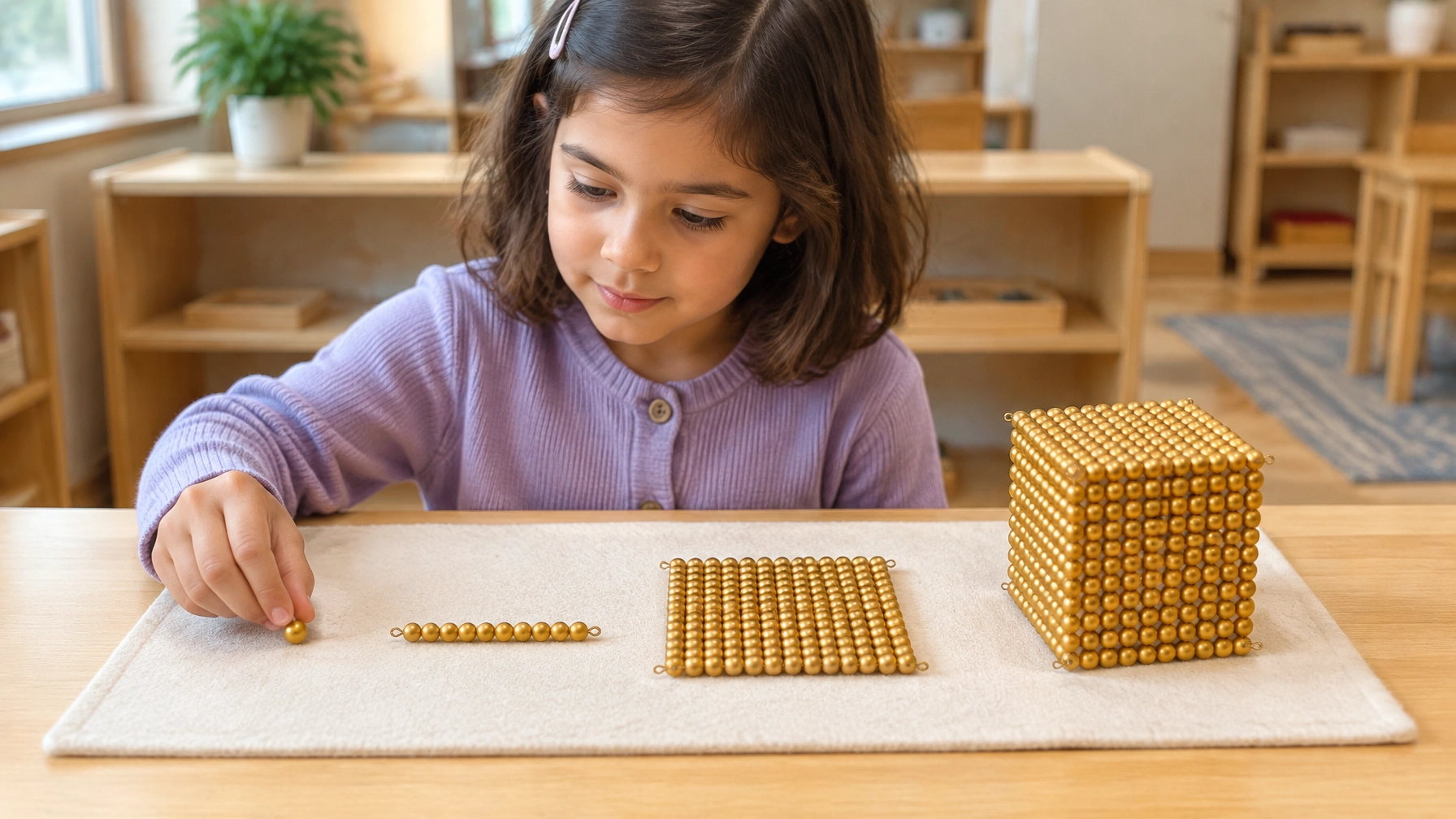
Casa dei Bambini / Children's House (3–6 years). This is the classic image people have of Montessori: small chairs, golden beads, a hush over the room that feels vaguely illegal for a room full of preschoolers. This is where math, language, and independence get built from the ground up using actual hands-on materials, not worksheets.

Montessori classroom and Montessori philosophy: Children's House student working with golden bead materials

Elementary—Lower (6–9) and Upper (9–12). The room gets louder, the questions get bigger ("but why is the sky blue"), and the curriculum swings wide open into what's called Cosmic Education—essentially, "here is the entire universe, please find your place in it." Kids at this age are obsessed with justice, group work, and telling you facts about volcanoes you did not ask for.

Montessori basics: elementary students exploring Cosmic Education with maps, books, and astronomy materials

Adolescent Programs / Erdkinder (12–18). German for "children of the earth," which sounds poetic until you learn it often literally means a farm. Dr. Montessori believed teenagers need real work and real responsibility, not just real algebra—so some Montessori high schools run micro-businesses, gardens, or land-based programs alongside academics.

Montessori philosophy: adolescent Erdkinder students engaged in meaningful outdoor land-based work

The through-line across all five stages is the same idea, scaled up each time: a prepared environment, mixed ages, long uninterrupted work periods, and the radical premise that children want to do meaningful work if you get out of their way. What changes isn't the philosophy—it's the size of the "meaningful work." At two, it's pouring water without a flood. At sixteen, it might be running a small farm stand.

So next time someone at pickup says "she's moving up to Upper El," you'll know: not a promotion, not a prize. Just the next room on a very long, very intentional map.

What makes a montessori school ‘Montessori?’

Montessori 101: What every parent should know as we begin the year

parents at home

Welcome to a community of children learning, growing, and working side by side.

Dear Parents,

Welcome — or welcome back — to another exciting year at our Montessori School! Whether you are just beginning your journey with us or returning with a child who has blossomed in our environment, we want to start the year by offering you a thorough, thoughtful introduction to Montessori education.

Understanding the Montessori approach will help you better appreciate what your child is experiencing in the classroom, and, perhaps more importantly, how you can support that growth at home. So let's explore the essence of Montessori and what every parent should know to make the most of these formative years.

Who Was Maria Montessori?

Maria Montessori in a respectful historical portrait from 1913

Dr. Maria Montessori, physician, scientist, and educator, whose careful observations of children became the foundation of Montessori education.

Before we discuss the method, it helps to know about the visionary behind it. Dr. Maria Montessori was an Italian physician, scientist, and educator, notably one of Italy's first female doctors. In the early 1900s, through her work with children from disadvantaged backgrounds, she observed that young children learned best when allowed to explore, manipulate materials, and learn independently.

These observations became the foundation of her revolutionary educational approach, which has now flourished worldwide for more than a century, and today serves children on every continent, in public and private schools, from infancy through adolescence.

The Core Principles of Montessori Education

At its heart, Montessori education is based on deep respect for the child as a capable, curious, and independent learner. Here are the foundational principles we follow, and how each one might look at home.

1. The Prepared Environment

Child-sized shelves with Montessori materials arranged neatly in a calm classroom

A prepared environment: everything within reach, everything with a place.

Montessori classrooms are carefully designed environments that invite exploration. Materials are arranged logically on open shelves, everything is child-sized, and spaces are organized to foster both independence and focus.

You will notice our classrooms are warm, orderly, and beautiful, a deliberate contrast to overstimulating or cluttered play spaces. Nothing is placed on a shelf by accident; each material has a purpose and a place, and children learn to return work when they are finished so the next child finds it ready to use.

2. Freedom Within Limits

A child choosing one Montessori work from a low open shelf

Freedom within limits: choosing meaningful work while respecting people, materials, and the environment.

In a Montessori classroom, children are free to choose their activities, but within the boundaries of respect for others and the environment. This balance cultivates decision-making, autonomy, and a natural sense of discipline that comes from within the child, rather than being imposed from outside.

3. Hands-On Learning with Concrete Materials

The Pink Tower arranged in graded order on a Montessori work rug

The Pink Tower: ten cubes, each a precise gradation in size, refining the eye and the hand.

Montessori materials are designed to teach abstract concepts through tangible experience. A child does not simply hear that ten is larger than one; she builds, carries, and compares the difference with her own hands, and the concept becomes her own.

Montessori Golden Beads showing units, tens, hundreds, and thousands

Golden Beads: units, tens, hundreds, and thousands, made visible and touchable.

The Golden Beads introduce the decimal system by letting children physically handle units, tens, hundreds, and thousands, long before they are asked to work with the abstract numeral alone.

A child tracing a textured Sandpaper Letter with two fingers

Sandpaper Letters: tracing the shape and sound of a letter with the fingertip, before ever holding a pencil.

Sandpaper Letters teach letter shapes and sounds through touch. A child traces the textured letter with two fingers while saying its sound, building a muscular memory of the shape that later supports both reading and handwriting.

Montessori Number Rods arranged from shortest to longest

Number Rods: alternating red and blue sections making quantity, length, and numerical relationships visible.

Other classic materials your child may bring home stories about include Number Rods, for understanding quantity and numerical relationships, and countless sensorial materials designed to refine sight, sound, and touch.

A child working with a Montessori Knobbed Cylinders block

Knobbed Cylinders: fitting each cylinder into its corresponding opening, refining visual discrimination, coordination, and concentration.

4. Mixed-Age Classrooms

An older child helping a younger child in an authentic Montessori classroom

A three-year age span means younger children learn by watching, and older children deepen their own understanding by teaching.

Our classrooms include children spanning three years, for example, three-to-six-year-olds together. This structure allows younger children to learn by observing older peers, older children to reinforce their own knowledge by teaching others, and every child to progress at an individual pace, without artificial grade levels holding anyone back or pushing anyone forward before they are ready.

As your child progresses through the three-year cycle, you will see growth not only in academic skills, but in leadership, patience, and social maturity, qualities that are difficult to teach directly, and that emerge naturally from this structure.

5. The Role of the Montessori Guide

A Montessori guide quietly observing a child at work

The guide observes closely, and steps in with a new lesson only when the child is ready for it.

Rather than a traditional teacher who lectures to the whole class, the Montessori guide carefully observes each child, introducing new lessons when the child shows readiness and interest. This personalized approach ensures that learning is child-driven, rather than dictated by an adult's timeline.

A Montessori guide giving a one-to-one lesson to an attentive child

A one-to-one lesson: the guide demonstrates with care, then steps back so the child can work with growing independence.

Your child's guide is constantly assessing not just academic progress, but emotional and social growth as well, often through quiet observation rather than testing. This is why you may not see traditional worksheets or graded quizzes come home; the record of your child's growth lives in the guide's careful, ongoing observation.

A child returning a completed work tray to its place on a low shelf

Returning work: completing the cycle by restoring the material so the next child finds it ready to use.

A Morning in the Work Cycle

A child deeply concentrating on Montessori work on a classroom rug

Deep concentration: the work cycle at its heart, uninterrupted and self-directed.

One of the great rhythms of a Montessori classroom is the three-hour work cycle. During this uninterrupted morning span, children choose work freely from the shelves, settle into it with growing focus, repeat it as often as needed, refine their movements and understanding, and then return the material to its proper place.

That cycle — choose, work, return — is the heartbeat of the classroom. It may look simple from the outside, but it is the foundation for independence, order, concentration, and self-mastery. When a child is allowed enough time to become absorbed, real work begins.

This is also why the guide protects concentration so carefully. We do not interrupt unnecessarily, even to praise, because deep engagement is precious. A child who is fully involved in meaningful work is building far more than an academic skill; that child is constructing attention, persistence, and inner discipline.

Grace and Courtesy

Two children greeting each other politely in a Montessori setting

Grace and courtesy: social skills taught not by lecture but by modeling, practice, and gentle guidance.

Parents are sometimes surprised to learn how deliberately Montessori classrooms teach social behavior. We do not assume children will simply absorb these skills by chance. We model them, practice them, and revisit them throughout the year.

How do we greet someone warmly? How do we interrupt politely when we truly need help? How do we offer assistance without taking over? How do we apologize, make amends, and begin again? These are all lessons, and they matter.

In many ways, grace and courtesy lessons are the social foundation of the classroom. They help children move through community life with respect, confidence, and increasing awareness of others. Dr. Montessori understood that peaceful classrooms are not accidental — they are built, patiently and deliberately, one interaction at a time.

How to Talk With Your Child About School

A parent and child talking warmly together

Better questions, better answers: specific and open invitations bring your child's school day to life at home.

When your child comes home, it is natural to ask, "How was your day?" The difficulty is that this often invites a one-word answer. Fine. Good. Okay. And the conversation ends before it has really begun.

I would suggest asking more specific, open questions instead. "What was something you made today?" "What work did you choose this morning?" "Did anyone show you something new?" "Was there something you did again and again?" Questions like these give your child something concrete to hold onto and make it much easier to share.

Why does this help so much? Because open, specific questions invite memory, reflection, and storytelling. They let your child revisit the day with you, and they help you see the classroom not as a mystery, but as a living part of your child's growing world.

Bringing Montessori Home

A child pouring water from a small pitcher in a Montessori-inspired home setting

Montessori at home: a low hook, a small pitcher, and a place for everything give independence a place to grow.

You do not need to turn your house into a school in order to bring Montessori home. In fact, the most meaningful changes are often the simplest ones. A low shelf with a few well-chosen activities, rather than too many options, can invite calm and purposeful engagement.

A small pitcher and cup allow a child to pour drinking water independently. A low hook for a coat and a basket for shoes say, in a very practical way, "You can do this yourself." Real child-sized tools for cooking, sweeping, washing, and polishing invite participation in family life rather than passive observation.

The key is not perfection. It is intention. When we prepare the home environment thoughtfully and limit choices instead of overwhelming the child, we make independence easier, concentration more likely, and family life more harmonious.

Common Questions Parents Ask

Isn't it too unstructured?

Not at all. Montessori offers freedom within carefully prepared limits. Children do choose their work, but they do so within a deliberately designed environment, with clear expectations, consistent routines, and respectful guidance from the adult.

Will my child be ready for the transition after Montessori — first grade, middle school?

Yes. Montessori children are practiced in concentration, self-direction, flexibility, and social confidence, all of which serve them well in new settings. Research and the experience of Montessori graduates over many decades consistently show that these transitions are typically smooth and successful.

What about homework?

In Montessori, authentic work happens during the school day through the work cycle, when children are fresh, focused, and fully engaged. Rather than relying heavily on worksheets, we invite families to extend learning at home through reading together, practical life, conversation, and real-world experiences.

How can I help at home?

Observe your child closely. Limit choices, protect concentration, invite your child into real family work, and create opportunities for growing independence. And perhaps most importantly, stay in conversation with your guide — you are your child's first and most important teacher.

A Note on This Guide

This is only a beginning. Over the course of the year, we will share more, about the work cycle, about grace and courtesy, about how to talk with your child about school, and about what to expect as your child moves through each stage of development. We are grateful to be walking this path together with you, and we look forward to a wonderful year.

Warm regards,

Your Montessori Faculty and Staff

How to Get Involved at School Without Becoming Unpaid Staff

How to Get Involved at School Without Becoming Unpaid Staff

parent volunteers

There’s a very specific trap that happens every Fall: you raise your hand to help with one small thing — folding a stack of practical life materials, maybe, or bringing in snack one Friday — and by October you’re somehow running the harvest festival, coordinating snack schedules for three classrooms, and fielding emails at 9 pm about napkins. Nobody meant for this to happen. It just expands, the way volunteer commitments often do.

Here’s the thing worth remembering before you say yes to anything: parent involvement in a Montessori community isn’t a favor you’re doing the school. It’s a genuine three-way benefit when it’s done sustainably — and understanding all three sides of that actually makes it easier to know what to say yes to.

For your child: Kids notice when their parents show up in their world, even briefly. A classroom visit, a shared skill, a familiar face at a school event — these moments tell a child, in a very concrete way, that the two most important parts of their life (home and school) are connected, not separate. It also models something core to the Montessori approach itself: contributing to a community isn’t optional or occasional; it’s just what people who belong to a place do.

For you: Involvement — the right amount of it — is one of the fastest ways to actually get to know the other families and teachers in your child’s daily world, instead of existing as a name on a class roster who only appears at drop-off and pickup. It turns “some school your kid goes to” into an actual community you’re part of, which tends to make the whole experience more meaningful and a lot less isolating.

For the school: Montessori schools, especially smaller or newer ones, often depend on real parent volunteers not as an afterthought, but as part of how the model works. Materials need maintenance events need hands, and classrooms benefit from outside skills and perspectives that teachers don’t have time to seek out on their own. A healthy volunteer base isn’t a nice extra. It’s often structurally necessary.

All of that is true — and none of it means you should say yes to everything. In fact, the version of you that’s stretched across five committees and burnt out by Thanksgiving isn’t actually delivering any of those three benefits well. A resentful volunteer isn’t modeling community for their kid. They’re modeling martyrdom.

Sustainable ways to show up:

  • Pick one thing per semester, not five. A committee, a classroom visit day, a single event — not all of them. One consistent commitment beats five half-hearted ones, both for your own sanity and for the school’s ability to actually count on you.
  • Ask what the school actually needs before volunteering for what sounds fun. The harvest festival is glamorous. The real gap might be someone who can quietly restock the practical life shelves every other week, or a parent who’s willing to do library reshelving during pickup chaos. Fun and needed aren’t always the same thing — ask before assuming.
  • Offer a specific skill instead of general availability. “I’m a nurse and happy to do a short health lesson” is a much easier yes for a school to plug in than “let me know if you need anything,” which usually just gets filed away and forgotten, or worse, remembered at the worst possible moment.
  • It’s okay to say “not this semester” without having to justify it. You don’t owe anyone a lengthy explanation for your bandwidth. A burned-out volunteer helps no one, especially not you, and definitely not the classroom, depending on a version of you that has anything left to give.
  • Set a boundary on communication, not just time. If snack coordination has turned into a nightly text thread, it’s fair to ask that it move to a weekly email or a shared sign-up sheet instead. Protecting your evenings is part of protecting your ability to keep showing up 

Being a present, engaged Montessori parent doesn’t mean being the only parent who shows up, or the one who shows up for everything. It means showing up consistently for the thing you actually chose — which, not coincidentally, is also the version of involvement your kid, you, and the school all actually benefit from.

What Your Montessori School Actually Wants to Know About Your Family

What Your Montessori School Actually Wants to Know About Your Family

family and teacher

Most schools send home a basic emergency contact form and call it a day. But a Montessori classroom works best when the teacher knows your family as people, not just names on a roster — and most schools genuinely want more of this information than parents think to offer.

Here’s what’s actually useful to share, and why it matters more than it might seem:

Who’s at home? Parents, grandparents, siblings, a co-parent in another household, a nanny who does pickup on Thursdays — teachers navigate a lot of daily handoffs and casual conversation, and knowing the full cast of characters helps them talk to your child (and to you) without guessing.

What parents do for work, and any skills or hobbies that could help the classroom. A parent who’s a nurse, a gardener, a musician, or fluent in another language is often a resource a Montessori classroom would love to tap into for a visit or a lesson. Teachers can’t ask about what they don’t know exists.

Family background and traditions. Where your family comes from, the holidays you observe, dietary practices, clothing considerations, and cultural traditions all help a teacher avoid awkward missteps and, more importantly, actively include your child’s background in the classroom rather than overlook it by accident.

Pets at home. Small detail, big payoff — kids talk about their pets constantly, and a teacher who already knows the dog’s name can turn a random comment into a real conversation.

How to pronounce everyone’s name — including yours. This one is so easy to overlook and so meaningful to get right, for your child and for you.

What’s changed since you last checked in? New sibling, a grandparent who moved in, a new hobby, learning to ride a bike, joining a swim team — these aren’t small talk. They shape what’s going on in your child’s inner world, and a teacher who knows about it can connect the dots when your child mentions it out of nowhere during class.

Anything on the horizon? A move, a new baby, a health issue, a parent traveling for work — advance notice lets a teacher watch for behavior changes with context rather than confusion, and respond with support rather than guesswork.

Your hopes for the new school term. Even a sentence or two — “we’d love to see her get more comfortable speaking up in group settings,” or “we’re hoping he settles into friendships more easily this year” — gives the teacher something concrete to watch for and support, instead of a full year of general good intentions.

None of this needs to be a formal document. A short email, a few notes on an intake form, or five minutes at drop-off can cover most of it. The teachers who know your family best are almost always the ones best equipped to actually see your child.

The Phone Is Not Part of the Family

The Phone Is Not Part of the Family

phone and child

There’s a specific look kids get when they’re talking to you, and you’re only half-listening — chin down, eyes flicking to a screen, one “mm-hm” that clearly wasn’t in response to anything they actually said. Kids notice. All of them, every time, even when we think we’re being subtle.

This one stings a little because it’s not really an intentional slight — it’s a text, an email, a “just checking one thing” that turns into five minutes. But from a young child’s perspective, there’s no context for “I’m just being efficient.” There’s only “I was talking, and I didn’t have your attention.”

Montessori philosophy places great emphasis on being fully present with a child during shared moments — not necessarily constant, hovering attention, but genuine presence when you are engaging with them. A child who’s consistently met with a distracted parent — in the car, in the store, at home during a conversation they initiated — starts to learn, quietly and without anyone meaning to teach it, that their thoughts are an interruption to something more important.

This isn’t about never using your phone around your kids. That’s not realistic, and it’s not the goal. It’s about noticing the moments that matter to them — when they’re telling you about a bug they found, or asking you a question they clearly rehearsed on the walk to the car — and giving those moments actual eye contact, even briefly.

A few practical shifts:

  • If you need to finish something on your phone, say so out loud: “Give me two minutes to finish this text, then I’m all yours” — this teaches patience and respects their bid for attention, instead of just ignoring it
  • Notice their “bids” — the small comments and questions kids use to check if you’re available — and try to catch more of them than you miss
  • Car rides and errands are prime bonding time for young kids precisely because there’s nothing else competing for either of your attention — protect a few of those windows on purpose

You don’t have to be endlessly available. You just have to be reachable often enough that your child doesn’t start editing themselves down to fit the gaps in your attention.

Why Being Late Is a Bigger Deal Than You Think (For Everyone)

Why Being Late Is a Bigger Deal Than You Think (For Everyone)

Late to school

Let’s start with an uncomfortable truth: that extra seven minutes you spent finding a matching shoe this morning didn’t just cost you seven minutes. It cost the classroom something too.

Montessori mornings are built around something called the “work cycle” — an uninterrupted stretch of time where children choose activities, settle into deep concentration, and build the kind of focus that doesn’t happen if the door keeps opening. Every late arrival is a small disruption to that rhythm — not just for your child, but for an entire room of children who were mid-thought when the door creaked open, and all eyes turned toward it.

Now put yourself in your child’s shoes, literally, walking in ten minutes after everyone else. The other kids are already settled into their work. The rug is full. Coats are already hung. Your child has to walk past a room of already-busy classmates, find a spot, and mentally catch up — all while feeling, on some level, like they missed something. For a young child, that’s not a minor inconvenience. That’s a small daily dose of “I’m behind before I even start,” and kids absorb that feeling more than we give them credit for.

Afternoon pickup has its own version of this. A child who’s consistently picked up last — after the room has cleared out, after the goodbye songs are over, after their friends are gone — can start to internalize that, too. Even if you’re only five or ten minutes behind the pack, young children don’t have a great sense of “just a few minutes.” They know “everyone left and I was still here.”

There’s also the very real, very unglamorous cost to teachers: a late pickup often means a staff member is now off their own schedule, sometimes past contracted hours, keeping an eye on one child while trying to close down a classroom. Multiply that by a few families doing it regularly, and you’ve got a burned-out staff — the same staff you’re relying on to be patient and present for your child every single day.

On the dawdling issue — because let’s be honest, this is the real obstacle for a lot of families:

If your child is the one adding 15 minutes to your morning by refusing to put on socks, staging a full sit-in over breakfast choices, or negotiating the terms of shoe-wearing like a tiny union rep — you’re not alone, and it’s not really a discipline problem. It’s usually a pacing problem. Young children move through routines on their own internal clock, and rushing them tends to backfire, leading to more resistance, not less.

What actually helps:

  • Build in a real buffer — not 5 minutes, but a genuine 15–20 minutes of “dawdle room” so their pace isn’t a crisis for your pace
  • Give choices within the routine instead of commands: “Do you want to put your shoes on before or after your jacket?” — same outcome, more cooperation
  • Use a visual routine chart for younger kids who don’t yet have a strong sense of time — pictures of each step in order can move things along better than verbal reminders ever will
  • Get as much ready the night before as humanly possible, so the morning is about executing, not deciding

Punctuality isn’t about rigid rule-following for its own sake. It’s a quiet form of respect — for your child’s sense of belonging in the room, for the teacher’s ability to run a calm classroom, and for the other families whose mornings also depend on a predictable start.

How to Nurture Leadership Skills in Your Child from an Early Age

How to Nurture Leadership Skills in Your Child from an Early Age

nurturing leadership in children


For busy parents of young children trying to raise kind, capable kids, the preschool years can feel like a daily tug-of-war between getting through the day and teaching bigger life skills. The challenge is that leadership can sound like something reserved for older kids, while real early childhood leadership development is already taking shape through child development milestones like independence, self-control, and social confidence. In these years, parental influence on leadership shows up in small moments: how choices are offered, how mistakes are handled, and what effort gets noticed. Fostering leadership skills in kids early on reinforces the importance of traits like initiative and responsibility before self-doubt has a chance to set in.

Teach Responsibility With Simple At-Home Leadership Jobs

Leadership starts looking a lot like everyday responsibility in the preschool years: small choices, simple follow-through, and plenty of chances to try again. These low-stakes “leadership jobs” help your child practice decision-making skills while you build confidence through choices.

  1. Make Them the “Snack Captain”: Give your child one leadership task that repeats daily or a few times a week: choose and prepare a simple snack. Offer two parent-approved options (“apple slices or yogurt?”) so decision-making stays safe and doable, then let them do age-appropriate steps like rinsing fruit, setting out napkins, or pouring water. This works because it blends independence with clear boundaries, exactly what young kids need to feel capable without getting overwhelmed.
  2. Create a “Morning Choice Board” With Two Acceptable Paths: Instead of negotiating every step, set up a small routine where they choose the order of two tasks: “Get dressed first, then brush teeth, or teeth first, then get dressed.” Keep it to two choices, and keep the options equally acceptable to you. You’re encouraging responsibility in children by letting them own the plan, while still reinforcing the preschool milestone of following simple sequences.
  3. Assign a “Family Supplies Checker” Role Once a Week: Pick one area, paper towels, pet food, lunchbox items, or bathroom soap, and make your child responsible for noticing when it’s running low. Give them a simple rule like, “If it’s under this line, tell me,” using a piece of tape on the container as a visual marker. This is an age-appropriate leadership task because it teaches awareness and communication, not perfection; it also builds the habit of speaking up before a problem becomes urgent.
  4. Let Them Run a Mini “Family Meeting” With a Script: Once a week (5 minutes), let your child lead a quick check-in using three prompts: “What went well?”, “What was hard?” and “What should we try next?” Offer two choices for the “try next” item, such as “quiet reading after dinner or a short walk,” and have them pick. This builds decision-making skills in kids by practicing reflection, planning, and respectful turn-taking—core leadership muscles that begin to form early.
  5. Use Positive Reinforcement That Targets Effort and Follow-Through: Skip “You’re so smart” and name the specific behavior you want repeated: “You remembered the napkins without a reminder; that’s responsible.” Add a simple reward structure that doesn’t require buying anything, like earning one “leadership point” for completing the job without arguing, with five points trading for choosing the family game. Specific praise + predictable rewards teach kids that their choices have an impact, and that builds real confidence.

When kids get regular chances to lead in small ways, they learn that growth comes from practice, not perfection. The same message lands even deeper when they also see you setting goals, learning new skills, and following through alongside them.

Model Lifelong Learning: Let Your Kids Watch You Grow

Once your child is practicing responsibility at home, the next powerful lesson is seeing you take responsibility for your own growth, too. When kids watch a parent actively earn a degree, they learn that leadership isn’t just “being in charge”, it’s taking initiative, leaning into challenges, and sticking with long-term personal development even when life is busy. 

The day-to-day persistence (showing up to class, studying after bedtime, and following through when motivation dips) quietly teaches a growth mindset: skills are built, not born. It also shows commitment in action, setting a meaningful goal and keeping it, step by step.

If nursing is part of your path, earning a master’s degree in nursing can open doors to nurse education, informatics, nurse administration, or advanced practice nursing options like a family nurse practitioner degree online. Online degree programs can make it easier to work while going to school at the same time, so your family routines stay steady while you keep moving forward.

Daily Habits That Grow Everyday Leadership

Leadership grows from what kids practice consistently, not occasional “big talks.” These habits create steady reps in communication, empathy, and follow-through, so your child builds confidence over time.

Two-Choice Leadership Questions
  • What it is: Offer two acceptable options and let your child choose the plan.
  • How often: Daily
  • Why it helps: It builds decision-making and ownership without turning everything into a debate.
Family Mini-Huddle
  • What it is: Do a five-minute check-in on schedules, needs, and one helpful request.
  • How often: 3 times weekly
  • Why it helps: Strong communication and collaboration improve how teams work together.
Feelings to Needs Script
  • What it is: Name the feeling, name the need, then ask what could help.
  • How often: Per conflict
  • Why it helps: Practicing empathy in leadership teaches kids to consider others before acting.
Follow-Through Notebook
  • What it is: Write one promise your child made and one next step.
  • How often: Weekly
  • Why it helps: It turns intentions into visible accountability and small wins.
Helpful-Hands Rotation
  • What it is: Assign one rotating “helper role” that supports the whole household.
  • How often: Weekly
  • Why it helps: It normalizes service, responsibility, and contribution to the group.

Common Questions Parents Ask About Kids’ Leadership

Q: What does “leadership” look like for a young child, not a mini adult?
A: It often shows up as small, everyday behaviors: suggesting a game, taking turns, helping a sibling, or sticking with a simple job. Look for progress in self-control, empathy, and follow-through, not speeches or bossiness. Using age expectations can help, since behaviors 75 percent or more of children can be expected to exhibit at a certain age give you a realistic baseline.

Q: How can I support a shy kid without forcing them into the spotlight?
A: Leadership can be quiet. Offer low-pressure roles like timekeeper, greeter, or “idea collector,” then celebrate effort, not volume. Practice short scripts at home such as one question they can ask or one helpful request they can make.

Q: Why does my child act “bossy” when I try to encourage leadership?
A: Many kids confuse leading with controlling because they are still learning perspective-taking. Coach the difference: leaders make space for others, use respectful words, and listen first. Try role-playing: “Ask, don’t order” and “Offer two options, not one demand.”

Q: What should I do if perfectionism makes my child quit or melt down?
A: Treat mistakes as data, not failure. Set tiny goals with a clear “good enough” finish line, then debrief one thing that worked and one thing for next time. Model your own imperfect attempts out loud so they learn that recovery is part of competence.

Q: Can too much screen time get in the way of leadership skills?
A: It can when screens replace practice with real conversation, conflict-solving, and responsibility. Many parents who are worried about screen time are really noticing fewer chances to build those skills. Create one daily screen-free window for a chore, a chat, or a short decision your child gets to own.

Practice One Leadership Skill Weekly to Build Confidence and Character

It’s easy to worry that your child is too shy, too young, or too resistant to show “leadership,” especially when progress looks uneven. The steadier path is to focus on leadership development as a set of everyday choices: responsibility, empathy, decision-making, and follow-through, shaped by calm expectations and warm support. Over time, that consistent practice helps children trust themselves, handle setbacks, and contribute confidently in their own style. Leadership grows when kids feel trusted, guided, and allowed to try again. 


Charlene Roth is the founder of Safetykid.info, a resource dedicated to helping parents and caregivers create safe, engaging, and skill-building environments for children. With a focus on practical advice and family-friendly projects, Charlene is passionate about fostering creativity and teamwork within the home while ensuring the well-being of every child.

Yes, You Can Get Your Class Normalized Early in the year

Yes, You Can Get Your Class Normalized Early in the year

normalized class


Every year, teachers ask the same question. How long is this supposed to take? Many people feel normalization is an impossible dream in today’s world. There are too many digital distractions. Poor parenting skills. Rising levels of neurodiverse children. Nobody says this is easy, but I suggest we simply follow time-tested strategies to help our children settle in. Will it be perfect? Probably not, but the process is within our reach and need not take most of the school year.

Most of a classroom’s normalization can happen within the first two to four weeks of school, not the first few months. What follows for the rest of the year is refinement, not construction. The foundation gets laid remarkably fast when the adult is deliberate about it.

But there is a foundation beneath the foundation, and it is easy to overlook in the rush to teach routines. Before a child can absorb procedure, concentrate, or handle materials with care, they need to feel safe. My friend Gavin McCormack puts this as plainly as anyone I know. Children need to feel, in their bodies and not just in their heads, that school is a safe place: no meanness, consistency they can count on, real choices, interesting things to do, freedom that lives inside firm, loving limits, and underneath all of it, a bond with the adults and the other children in the room.

Normalization is not really a sequence of procedures bolted onto a classroom. It is what happens naturally once a child feels safe, known, and connected enough to stop watching the exits and start engaging with the work in front of them. Everything below is built with that in mind.

Bring the Returning Children Back a Full Week Early

The work begins before a single new child walks in, and it deserves more than an afternoon.

If at all possible, bring your returning children back a full week before the official start of school for new students. This single decision sets the tone for the year more than almost anything else in this article, so it is worth protecting on the calendar, even if it takes some persuading with your administration.

Use that week to explicitly remind returning children of the room’s culture. Maria Montessori called the environment a Casa dei Bambini, a children’s house. Say that to them directly, in those words, on the very first morning back. This is a children’s house. We are the children who live in it. That means we are responsible for taking care of it and of each other, including the new friends who will be joining us next week.

Then let them act on it, all week long, not in a single rushed session. Have them wash the shelves, arrange the plants, fill the pitchers, restock every tray, and make sure every material is complete and beautiful, exactly as the room will look when everyone arrives. Let them re-familiarize themselves with materials they have not touched all summer, refresh their own skills, and rebuild their own concentration before they are asked to model it for anyone else. Children who spend a full week restoring the room to its full richness are not just cleaning. They are rehearsing ownership, and they will be the ones showing new children how each of those materials is used in the coming weeks.

Spend part of that week explicitly preparing them for their role. Talk with them directly about what it feels like to be new somewhere, and ask them to remember it. Practice, almost like a rehearsal, how to greet a new child at the door, how to show a routine without taking over, how to invite someone to sit at your table. If you already have enrollment information, assign buddy pairings before new children even arrive, so that on opening morning a returning child can walk up to a specific new child by name and say, I am so glad you are here. Let me show you where to put your things.

This week is also your best opportunity to rebuild the returning children’s own sense of community with each other and with you, before the complexity of new relationships is layered on top. Take walks together. Eat lunch together. Let them reconnect after a summer apart. A group of returning children who feel securely bonded to each other and to you by the time new children arrive will extend that same security outward far more naturally than a group that is still finding its own footing.

If your whole class is new, as it is in many primary classrooms with a full turnover of three-, four-, and five-year-olds, your first two weeks look different. I address that separately below.

Week One of New Students: Full Shelves and Older Children as Hosts

Put the whole environment out. A rich, fully prepared classroom is part of what makes Montessori work, and returning children need it every bit as much as new ones. Reducing it down to a fraction of the materials solves a problem you do not actually have, because you already have something far more powerful than a stripped-down room: children who spent last week refreshing their own skills and who are ready to show others.

By the time new children arrive, your returning class already knows they are the hosts this year. You spent the week before reminding them of it. Now give that role real structure on opening morning. Each new child should have an assigned buddy from the returning group waiting for them, someone whose job is to walk in with them, show them where things go, and sit near them at snack. Rotate who greets visitors at the door. Ask a different returning child each day to give the very short group lesson on one routine, with you standing beside them. A five-year-old teaching a four-year-old how to roll a mat carries an authority that your instruction, however patient, cannot match, and it does something for the older child too. Nothing builds a child’s sense of belonging in a community faster than being needed by that community.

Your job this week is to work the room constantly, giving individual lessons to new children on the fundamentals: how to choose work, how to carry it, how to return it, and how to ask for help, while your returning children model, welcome, and quietly absorb some of the load. This is not radical simplicity. It is radical delegation. The richness of the environment stays intact because you have a team of small, capable people helping you run it, people who spent the previous week specifically preparing for this job.

Learn every new child’s name cold this week, and use it constantly and warmly. Greet each child by name at the door every single morning, get down to their eye level, and mean it. A child who is greeted by name and welcomed personally every morning learns within days that this adult sees them, and that lesson does more for behavior than any rule you will post on the wall.

Keep your first whole group gatherings under five minutes. One song, one very short story, then release children to work. The group meeting is usually the part of the morning that unravels fastest with new children, so protect it by keeping it short rather than trying to make it more engaging.

Week Two: Extending the Work Cycle, and Naming Kindness Out Loud

By the second week, most new children are beginning to move around the full environment with some confidence, largely because they have had a week of real peer mentorship rather than a stripped-down room to grow into. Now you extend the uninterrupted work period itself.

Resist consolidating the group the moment everyone has arrived. Let arrival be staggered and quiet. A child who arrives and immediately settles into work while classmates are still saying goodbye to parents is exactly the kind of morning you want, and it only happens if you protect that flow rather than interrupting it with a full group circle at nine o’clock sharp.

Keep the buddy pairings alive this week, but start loosening them. A returning child who spent all of last week glued to one new friend should now be encouraged to circulate and share the same small lesson with a second or third child. Remind your returning children, again in the language of the children’s house, that taking care of each other is not a job that belonged to just opening week. It is what everyone in this room does all year, for every classmate, not only the newest ones.

Now is also the moment to be explicit, out loud, about what safety in this classroom means. Not as a lecture, but as a standing, repeated message. In this house, we do not laugh at each other’s mistakes. In this house, everyone gets a turn. In this house, if someone is sad, we notice. If you see unkindness begin, even something as small as two children excluding a third from a game, intervene immediately and calmly, every time, without exception. Children are constantly testing, mostly unconsciously, whether the rule against meanness actually holds. The moment they learn it holds every time, for everyone, something in the room relaxes. Your returning children, who already trust you, will often be the first to hold each other accountable to this standard once they see you hold it consistently.

Begin introducing Grace and Courtesy lessons daily, but keep each one tiny and immediately usable. How to walk around, not through, another child’s rug. How to wait for a turn without interrupting. How to offer help without taking over the material. Teach it, then watch for the real moment later that same morning when a child needs it, and quietly coach them through using what you just showed them. That immediate connection between lesson and lived moment is what makes the lesson stick.

Week Three: Widening the Circle of Choice

By now, most new children have a working sense of the room, thanks in large part to a full environment and a community of peers who showed them how it works, rather than a room that slowly revealed itself to them alone.

Turn your attention this week to genuine interest, not just procedure. Watch which children light up around water, which ones gravitate toward numbers, and which ones want to be outside constantly. A classroom that consistently offers work children find fascinating is a classroom where you rarely need to manage behavior, because engaged children are not looking for something else to do. Real choice, offered within a rich, fully prepared environment, is what makes children feel genuine ownership over their own days. That sense of agency is not a reward for good behavior. It is one of the conditions that produces good behavior in the first place.

Lean into real work and real responsibility for the whole community. Watering plants, caring for a classroom pet, delivering a message to another classroom, setting up snacks for classmates, repairing a material that has come apart. Return often to the language you started with a week before school even began. This is our house. Taking care of it is our job, all of us, together. Children this age are hungry to contribute to a real community, and this kind of purposeful work absorbs energy that might otherwise surface as wandering or minor disruption. It also does something quieter and just as important. Contributing to the group is one of the fastest ways a child can come to feel like they belong.

If you have children who seem to need more physical release than the classroom offers, build in deliberate heavy work this week. Carrying stacks of chairs, hauling a watering can, raking part of the garden, moving a crate of blocks from one shelf to another. Do not wait for a management problem to suggest this. Build it into the rhythm proactively for the children who need it.

Week Four and Beyond: Consistency, Not Novelty

By the fourth week, most of your class should be showing real signs of settling. Longer stretches of concentration. Quieter transitions. Children solve small problems, like sharing a popular material, with less adult intervention, sometimes because an older classmate steps in before you even notice the problem.

What changes from here is not your strategy but your consistency. The routines you taught in week one need to be held to the same standard in week twelve. The same is true of the emotional climate. A limit you enforced gently but firmly in September still needs to be enforced gently but firmly in February. Children do not experience firm limits as a lack of freedom when the limits are consistent and delivered with warmth. They experience inconsistency as a lack of safety. If a child begins sliding back into carelessly returning material to the shelf, that is not evidence that normalization failed. It is evidence that the routine needs a fresh, individual re-teaching, exactly as gently and specifically as it was taught the first time, and your returning children are often your best resource for that re-teaching, not just you. The same holds true if a child begins testing the kindness rule again. Re-teach it just as calmly as you did the first week, every time it is needed, for as long as it is needed.

Keep returning to the ownership language all year, not only in September. This is our house. We take care of each other. Said often enough, in real moments rather than as a slogan, it becomes simply how the class understands itself.

When Every Child Is New

If your classroom, as in many primary environments, starts the year with no returning children at all, extend the timeline modestly, perhaps by an extra week or two. You do not have peer hosts to lean on yet, so you are personally demonstrating every routine to each child individually, and you are carrying nearly the full weight of building bonds, both between yourself and each child and among the children themselves.

The environment should still be fully prepared, but plan for much more individual and small-group teaching time in the first weeks, since you are the only host in the room. Introduce the language of the children’s house from day one anyway. Even a class of new three-, four-, and five-year-olds can begin to understand, with enough repetition and enough lived example, that this room belongs to them and that caring for it and for one another is their shared job, not just a rule handed down by the teacher. By the second or third week, watch for your first natural helpers to emerge, the children who, without being asked, start showing a friend how something works, and begin deliberately building on that instinct exactly as you would with a returning class.

What Realistically Takes Longer

I want to be honest about the limits here. Full, mature normalization, the kind where a classroom hums quietly for an entire three-hour work cycle with minimal adult direction, usually takes a full term, sometimes longer for a particularly young or particularly large group. What you can realistically expect within three to four weeks is the scaffolding: children who know the routines, who can choose and return work independently, who are accustomed to a calm and consistent adult, who feel that this room is a safe and kind place, and who are beginning to experience real concentration in short stretches.

That scaffolding is not the finished building. But it is the part that, if skipped or rushed, causes problems all year. Teachers who invest deliberately in these first weeks, who bring returning children back early enough to genuinely prepare them, and who trust those children as real partners in building the culture rather than working around them, consistently tell me the rest of the year feels different, calmer, and more productive than years when they tried to do it all themselves and hoped community would simply accumulate over time.

It will not accumulate on its own. But built this deliberately, starting a full week before the doors open to new families, with the children themselves as co-owners of the house from the very first day, it arrives far sooner than most new teachers believe possible.


Rethinking the First Parent Meeting of the Year

Rethinking the First Parent Meeting of the Year

parent meeting


For many Montessori guides, the first parent meeting of the school year is one of the least enjoyable evenings. After spending weeks preparing the environment, getting to know the children, and helping everyone settle into a new routine, you now face another task: standing in front of a room full of parents to explain school policies, procedures, schedules, health requirements, communication systems, arrival and dismissal routines, birthdays, snacks, clothing, illness policies, conferences, volunteers, and dozens of other practical details.

You know it’s important. Parents need the information, and the school needs everyone to understand how things work. But after years of doing these meetings, it is worth asking a simple question: how well do they actually work?

Why We Hold These Meetings

The traditional parent orientation exists for good reasons. Schools need to communicate expectations clearly. Parents deserve to know how the classroom operates. Many questions can be answered before they become problems, families can meet one another and begin building a community, and, perhaps most importantly, the guide has the opportunity to establish trust.

None of these goals are wrong. The problem is that we often try to accomplish all of them in one evening.

Information Overload

Think about the parents sitting in front of you. Many are exhausted. Some have rushed from work. Others have younger children at home, and several are already overwhelmed by the beginning of the school year. Then we hand them twenty pages of policies while talking for ninety minutes. By the time we reach “please remember to label sweaters,” their brains have stopped processing information.

Educational psychology has taught us for decades that people cannot absorb that much new information at once. Parents leave feeling they attended a useful meeting, yet a week later, many cannot remember half of what was discussed. That’s not because they weren’t paying attention. It’s because they are human.

We Often Talk About the Wrong Things

Many parent meetings spend far more time discussing logistics than Montessori. Parents hear about parking, attendance, lunches, birthdays, clothing, permission slips, communication apps, emergency contacts, medication forms, and arrival procedures. All of those things matter, but they are not why families chose Montessori.

Most parents are quietly wondering something much deeper. Will my child be happy? Will my child make friends? How will you help when they struggle? Why don’t you use grades? Why is everyone doing different work? What should I expect over the coming months, and how can I support this at home? Unfortunately, we sometimes spend only fifteen minutes discussing the very questions parents care about most.

Why So Many Parents Don’t Become Engaged

One complaint heard in many schools is that only a small percentage of parents become actively involved. We often assume they simply aren’t interested. Usually, that isn’t true. Most parents care deeply; what they lack is confidence. They don’t know how they can contribute, and they aren’t sure whether they are welcome. Some assume volunteering is only for parents with flexible work schedules. Others fear they’ll do something wrong. Many simply never receive a personal invitation.

Engagement rarely grows because someone heard a presentation. It grows through relationships. People become involved because someone learns their name, welcomes them warmly, asks for their help, and makes them feel that they belong.

What Should the First Meeting Accomplish?

Instead of trying to tell parents everything, perhaps the first meeting should focus on just a few essential goals. Parents should leave understanding who you are as a guide, what makes Montessori different, and what their child will experience this year. They should understand how the school and family can work together, how communication will happen, and where to find practical information later. And above all, they should know that their questions are always welcome. Everything else can be provided in writing or shared over time.

Build Relationships Before Giving Information

Parents are much more likely to listen when they feel connected. Welcome them personally as they arrive. Introduce yourself and help parents meet one another. Share a story from the classroom, show photographs, display materials, and invite parents to handle some of the materials their children use every day. Let them experience Montessori rather than simply hearing about it. People remember experiences far longer than lectures.

Don’t Explain Every Policy

Parents do not need every detail on the first night. Provide a well-organized handbook. Create short videos explaining arrival routines or communication procedures, and send reminders when they actually become relevant. Instead of explaining holiday procedures in August, explain them shortly before the holidays. Instead of describing conference scheduling months in advance, communicate that information when conferences approach. Just-in-time communication is almost always more effective than just-in-case communication.

Make the Evening Interactive

Adults learn the same way children do. They learn by participating. Rather than speaking for an hour, invite discussion. Ask parents what they hope their child gains this year, what questions brought them to Montessori, and what concerns they have. These conversations help parents feel heard while giving you valuable insight into the families you serve.

Tell the Stories Only You Can Tell

Parents rarely remember policy number 7.3. They remember stories. Tell the story of the child who struggled to separate from a parent but eventually ran joyfully into the classroom each morning. Tell the story of the child who spent weeks pouring water before suddenly becoming fascinated with reading. Explain why repetition matters, and describe the quiet concentration that develops over time. Help parents begin seeing their children through Montessori eyes. Those stories become the framework through which parents interpret everything else that happens during the year.

Explain What Parents Will Probably Feel

This may be one of the most valuable parts of the evening. Tell parents that there will be moments when they wonder whether Montessori is working. There will be days when their child says they “played all day,” and weeks when progress seems invisible. There may be times when they compare their child to neighbors in more traditional schools. Assure them that these feelings are normal, and invite them to ask questions before worrying. A parent who understands the journey is far less likely to panic during the inevitable bumps along the way.

Think Beyond One Meeting

Perhaps the biggest mistake is believing that one orientation can accomplish everything. Parent education works best as an ongoing conversation: a short classroom newsletter, monthly parent coffees, brief videos, observation opportunities, evening workshops, individual conversations, classroom blogs, small discussion groups. Each builds understanding one piece at a time. Over the course of the year, parents become increasingly knowledgeable and confident, which is far more effective than trying to teach everything in a single evening.

The Meeting Is Only the Beginning

The first parent meeting should not be viewed as the finish line for parent education. It is the beginning of a relationship. Parents should leave feeling informed, certainly, but even more importantly, they should leave feeling welcomed. They should know that their questions are valued, feel excited about the year ahead, and trust that they have chosen adults who understand both children and parents.

If they leave with that confidence, the meeting has been a success — even if they forget what day library books are due. Because policies can always be looked up. Relationships are what make Montessori partnerships flourish.