

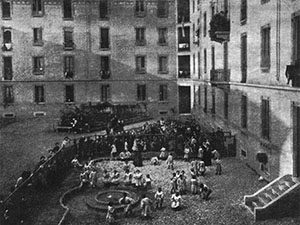
Maria Montessori: How It All Began
To continue reading, you will need to choose a subscription plan.
The Owl’s Nest
To continue reading, you will need to choose a subscription plan.
A Montessori School Is…
To continue reading, you will need to choose a subscription plan.

50 Ways to Celebrate Summer Learning
50 Ways to Celebrate Summer Learning
by Cheryl Allen
Summer is a time of more daylight, warmer temperatures, and more time outdoors. We may think that, for children who are out of school in the summer, it is not a time of learning. Yet, it can be an incredible time of learning. Here are fifty ways to help your child learn and grow while not in school.
Explore
1. Let your child plan an activity for the day or some activities for the summer. They can use maps, stick to a budget, and do the research.
2. Go on a searching hike, in nature or an urban setting; look for objects in the shapes of the letters in your name, or in sets of your favorite number, or particular colors.
3. Learn about the plants and animals that are near you. What are those birds by your home? What are the names of the plants you see every day?
4. Walk at your child’s pace. Notice the smells of different plants, admire the bugs, follow your child’s lead.
5. Play board games.
6. Learn card or magic tricks.
7. Learn jokes and present a comedy show.
8. Play unplugged games, such as Hangman, your own version of Pictionary, I Spy, or other paper-and-pencil games.
9. Think of free or inexpensive ways you could help neighbors and act on them.
10. Create a scavenger hunt and follow the clues.
11. Try out new playgrounds nearby.
12. Go to a grocery store you do not usually go to, especially if it has a focus on an ethnicity different than your usual cooking.
13. Allow time for daydreaming.
14. Try outdoor science experiments.
15. Plan a dream vacation.
16. Find some art to admire, outside or in a museum. Discuss what each person likes about it.
17. Explore distances and make a map. How far are you from family members, favorite types of animals, friends, or any other thing that can be mapped?
Communicate
18. Make time for reading every day, or nearly every day.
19. Visit the library and allow your child to make choices of reading material on their own.
20. Encourage your child to tell a friend or a family member about a book they read; retelling helps develop understanding.
21. Write letters to friends and family.
22. Address the envelope for that letter. Writing the address correctly on an envelope takes practice.
23. Keep a summer journal or a travel journal. Write in it regularly and include printed photos, pressed flowers, or leaves, ticket stubs, maps, or any reasonably flat items that remind them of the events written about.
24. Have your child create lists for things to do, grocery lists, books read or books to read, movies to watch, anything that can be listed.
25. Write a letter to their future self and store it or use a site that will email you in a certain amount of time.
26. Create a kindness list; how many acts of kindness can be performed this summer?
27. Count cars, bikes, dogs, flowers, anything you see regularly in your travels.
28. Find letters of the alphabet or make up a silly sentence using letters or words on items in the grocery store. Only one word or letter per item!
Create
29. Build a design of your child’s own creation or follow the directions from a set, with Legos™, blocks, or other building materials.
30. Learn to build card houses.
31. Plan and build a birdhouse.
32. Make your own playdough and sculpt with it.
33. Water down paint, place paper outside, and use squirt guns filled with the watery paint for a creation.
34. Set up objects outside and trace their shadows onto paper.
35. Put on a show–write it, practice it, design costumes and props, and perform for others. Record the show to share it with family that cannot attend in person.
36. Use chalk to draw outside, then use water and a scrub brush to erase it.
37. Plan dinner for a night and help make it.
38. Make a salad. Make dressing to go with it for an extra skill-building opportunity.
39. Grow vegetables and harvest them for dinner.
40. Find a recipe and cook with a new-to-you food.
41. Shuck corn, peel potatoes, wash, and spin lettuce dry, participate in cooking preparation.
42. For older children, set a cooking challenge to use ingredients and make a meal.
43. Sketch or paint flowers at your home or a nearby location.
44. Draw self-portraits directly on the mirror using window markers.
45. Clean the mirror after drawing on it.
46. Wash windows (an adult may need to wash the top).
47. Water the garden or potted plants.
48. Organize an area of your home together, especially one that your child uses regularly.
49. Explore with cash, count coins, save for an item, buy something with cash and check the change received.
50. Make leaf or bark rubbings and label them with the type of tree or bush they came from. •
Cheryl Allen is the Associate Coordinator of the Montessori Family Alliance and is also a parenting educator and a Montessori consultant with the Montessori Foundation. Cheryl attended Montessori school as a child. After some time as a traditional Secondary teacher, she worked in Montessori classrooms, 3-6, 6-9, and 9-12, earning certifications from both AMS (3-6 and 6-9) and IMC (6-12). She is a teacher educator, workshop presenter, and member of IMC accreditation teams. Cheryl’s two children attended Montessori from age two through high school graduation.
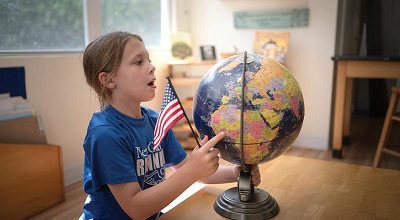
The Power of Hands-on Learning
The Power of Hands-on Learning
by Mary Ellen Maunz
“What the hand does, the mind remembers.” – Dr. Maria Montessori
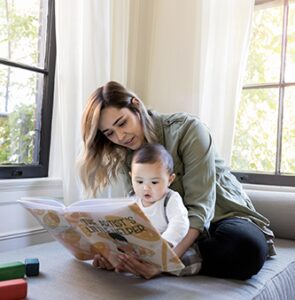
If a child is able to use their hands to discover, their discoveries become more meaningful to them. The concepts they learn are much more rooted than any rote memorization could be, because in using their hands, they experience their learning. They are an active participant.
Active Education
If you picture a traditional classroom, you would likely see a teacher standing at the front of the room near a black- or whiteboard, speaking to children who are lined up in desks, memorizing facts, or attentively looking at and listening to their instructor.
In recent years, concepts such as “table groups” and “flexible seating,” where children can sit in small groups, or choose where they sit, have allowed for some redesign throughout the classroom.
In addition to the arrangement of the environment itself, many teachers and administrators have also looked to hands-on or non-traditional classroom experiences like “project-based learning,” “design thinking,” “the maker movement,” and “the flipped classroom,” for ways to engage children in their learning.
These shifts in education are a reminder that schooling isn’t one-size-fits-all. Individual needs can be addressed when we take the time to step back, assess what we are doing, and make the decision to move forward with purpose. Need some guidance for change? Read on!
Making Changes
If you are unsure where to start, let me give you one powerful idea.
Start with the child’s hands. Sure. Easy. The child’s hands. What? Let me explain.
If you can make a change in learning, begin with just one simple step. Try this: begin by watching hands. Hands are smart. Really smart. Just like our heads. Often, however, this seems to be forgotten.
If you ever have the opportunity to observe someone learning a new skill, I would challenge you to watch their hands. It is through touching and manipulating that information is taken in through the hands and delivered to the brain.
Use Your Hands!
Adults seem to think that it is okay for younger children to work with their hands when they are learning. Think about it: sandboxes, water tables, Play-doh™! But somewhere along the way, these manipulatives got a bad rap for being “childish.” Why?
If you’ve ever seen someone participate in an activity they love, you’ve very likely seen them using their hands! You’ve likely witnessed someone building with tools, fixing up a vehicle, or playing an instrument. How about someone turning the page of a book, digging in the dirt while gardening, or making food?
Why should learning through math, science, history, or languages be any different? Utilize an abacus for addition, measure velocity when launching a marshmallow with a spoon, tea-dye a map, or handle pairs of objects that rhyme. Whether formal or informal education, using your hands helps!
In the Montessori Classroom
Dr. Maria Montessori was a scientist who spent time observing children. In doing so, she realized that children wanted real-world, hands-on application for learning. Not only did they want it, but they also experienced joy in using their hands.
Through experimentation and careful calculation, Montessori developed materials for children to use. These lessons intentionally foster self-discovery and serve learning goals. Over one hundred years later, the observations she made then still hold true. Regardless of subject matter, children enjoy, and benefit from, using their hands to learn.
In a Montessori classroom you will see hands-on learning EVERYWHERE! A child washing a table is learning care of their environment, while also preparing their hand muscles for similar movements in writing. Placing cubes on top of one another for the Pink Tower allows children to learn precision of movement, while also allowing their body to experience, physically, the difference in 1 cubic centimeter ten times over! Not only this, but it is also teaching the basics of the mathematics base ten system. Rarely is a lesson in a Montessori classroom taught for one purpose only, and usually, with time, the hands-on learning leads to multiple objectives.
A Personalized Journey
Learning is not a race with a finish line. It’s a constant stroll through a variety of experiences that all necessitate different paths and use different materials.
Whether Montessori is your muse, you want to improve learning for your students, or you just personally like to get your hands dirty, don’t wait! The world is waiting for you. Explore! Dig in! •
Mary Ellen Maunz is the Founder and Program Director of Age of Montessori. She has more than 50 years of experience inMontessori education for both teachers and parents. She collaborated for two decades with Dr. Elisabeth Caspari, student and personal friend of Maria Montessori. She is an international authority on Early Childhood and Elementary education and has lectured and taught students in seven countries on five continents. Internationally-renowned author and lecturer, Maunz is on a lifelong mission to help parents understand the underlying needs of the developing child. Find our blogs, webinars, professional development and MACTE certified teacher education courses at: ageofmontessori.org

Teacher Happiness
To continue reading, you will need to choose a subscription plan.
I think my child is ready to move up to the next class… a year early!
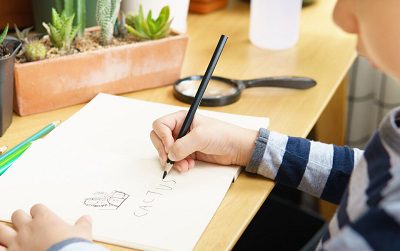
Over the years, it’s quite common for parents to come to us to say that, since their child is so advanced academically, they worry that the class they are in now is not sufficiently challenging. It is not unusual for parents to ask the school to move them up a year early next term.
There’s no one response that schools offer, but I think there are a few things to consider.
Typically, parental fear of their child being disadvantaged by being the most advanced in a Montessori classroom is based on a misperception.
Unlike traditional schools, where the pace of education is based upon the norm of the class, the Montessori curriculum follows an international model rather than what is commonly taught in American schools. In general, Montessori programs are more sophisticated and individualized in many ways.
In the United States, in the first three grades (kindergarten through second grade), it is fairly common to teach children number recognition and simple mathematical operations with one or two-digit quantities. Math can be very abstract, and some children memorize answers but may or may not understand what they’re doing.
Likewise, with reading, many children are asked to read from simplistic texts or workbooks that have more to do with spelling and vocabulary than with really giving them a love of the written word, no less a desire to express themselves in writing.
While there is a real concern about math education in the United States, many students are not culturally literate in history, geography, economics, science, civics, and our cultural heritage found in the arts and literature.
Like most schools that follow European tradition, Montessori places a huge emphasis on what some people call the ‘cultural subjects.’ These topics include, science; technology; history; geography; international studies; the foundations of industry and trade; architecture; engineering; and so much more. Montessori’s breadth of curriculum tends to produce young people who have far more knowledge of their country’s history, government, and heritage than most Americans.
So, we have three basic issues. The first is that in Montessori, children don’t learn at a preestablished pace. They are not only able to choose the things that most interest them but to learn in ways that they find most appealing. Children are different. Some learn best by listening to someone else talk; others learn by observing, and many need to directly experience to understand and remember. There are so many variations in the way children learn, and it’s challenging to know what’s right for an individual child.
The second issue is that no teacher can work with each child every moment of the day. That’s the beauty of Montessori’s prepared learning environment. It allows children to find meaningful work without having to depend on a teacher telling them what to do throughout the day.
Another consideration is that most of us learn best not by simply receiving a lesson; repeated experiences along with the opportunity to help (or teach) other children solidifies the skill or concept. The best teacher of the typical student is usually not the adult with a master’s degree in education; rather, it is often other students who have a grasp of the material and are willing to share their understanding with a fellow student.
The third point is that a child who remains in a Montessori multi-age class is surrounded by other students (younger and older) who have their own gifts and talents to share. They stimulate each other. The beauty of the Montessori experience is that the class is a community, not simply a group of children who are focused on the lesson that the teacher happens to be giving. This ongoing set of relationships builds a sense of safety and security for most children, both with their peers and with the adults in their lives. As parents, we need to understand how incredibly valuable that is.
So, the trade-off to having a child move up a year early is not so much that the child will get lessons that they couldn’t get in the younger class, as much as that they would be moving up into a class, where the age range is going to be three or four years beyond their current level.
Every child is different and there are times when moving a child up early actually is worth considering. In my experience, I never followed a hard and fast rule. We always try to explore with the family why they feel this is a good idea? Here are some points parents and educators should consider:
• Is it accurate that the current class really can’t meet the child’s intellectual and academic needs?
• Do the parents feel a strong urge to push their child ahead more quickly? If so, why? What do they hope to gain? What are the pros and cons?
• Or is it fear that their child will miss opportunities that they would have at the next level?
These are all legitimate questions, but we must weigh them against the advantage of stable, continuing relationships. Having been one of those students, who was moved up a year early at one point along my journey, I found it difficult to be a year younger than the youngest child in the classroom. So, if you ever come to the conclusion that, perhaps, your child might do well to move up, try to really think it through with the school and weigh the pros and the cons.

Montessori is based on the idea that each child follows her own pace and that education is a journey, not a race.
Montessori classes are not only about academics. The focus is social and emotional, as well. While a five-year-old may be reading like a six-year-old, this same child may socially and emotionally be better suited to remaining in a class with familiar children. Being among the oldest and most advanced creates the possibility of becoming a leader. Don’t undervalue how wonderful that experience can be.
Montessori is based on the idea that each child follows her own pace and that education is a journey, not a race.
Other than saving a year’s tuition if your child attends a private Montessori school, there are few (if any) benefits for a child who finishes high school early. Beginning university younger than the other students in their class may again present same social, emotional, and academic challenges, depending on the student.
Appreciating Montessori’s ability to meet children at their intellectual level is one of the greatest gifts of Montessori education. I always recommend that parents follow their hearts, but I do advise every parent to be thoughtful and careful before leaping to a decision.
Try to find the best path for your child, and always remember that it’s important to ask them what they really want to do. Listen carefully to their reasoning. Sometimes the reasoning makes perfect sense; sometimes it doesn’t make any sense at all. Weigh your conclusions and follow your parental instincts. That’s all any of us can do. •

An Online Montessori School for Teens
In the fall of 2020, the leadership of the Center for Guided Montessori Studies asked the question, “What would an authentic Montessori middle school look like if it were online?” This question was especially pertinent at the time, because we were all adjusting to “forced” online learning resulting from the COVID pandemic. The question that we asked ourselves was, “Can we build an adolescent Montessori program and community online?”
That winter, we decided to plan for a soft launch of what became the Bridgemont International School. We began with just one class of seventh- and eighth-grade students, all living within the time zones of the continental United States, led by certified and experienced Montessori Adolescent Guides.
Our plan is to add one grade a year, extending through high school over the next four years. We also plan to open additional cohorts in North America and other parts of the world as interest grows. As we have from the start, our goal is not to grow quickly, but rather with slow, careful steps to ensure that we establish programs that are excellent and sustainable.
The first question that we reexamined was, “What makes a Montessori adolescent (middle and high school) program authentically Montessori?” Even though we have been involved with Montessori programs at this level for years, there is (at this point) no one model for adolescent programs. Dr. Montessori died before she was able to define the “model” of what a secondary program looks like. Rather, there are a series of lectures and discussions that other Montessori educators have interpreted, leading to vastly different models of Secondary education.
Many are familiar with the farm-school model of Montessori Adolescent Education (Erdkinder), while others may be familiar with the curricular outlines of other Montessori Secondary training programs. While there are many different models, there are key components of Montessori for the student in the third plane.
Curriculum: Students need to learn! They should be culturally literate and develop the academic skills they will need if they decide to pursue post-secondary education. Even within this component, there are different definitions of what that means. I would suggest that students need to know basic information. What makes Montessori distinct at this level is the balance between helping students through the challenges of adolescence, while covering an excellent course of study. For us, a particular focus is helping teens to discover that what they learn in school is real, relevant, and interesting. We want to encourage their interests, help them to see the big picture, and think critically about what they study and how it relates to their own lives.
The core of our academic program is the Montessori educational syllabus, which consists of ‘integrated academic components’ in three overarching areas: self-expression; emotional development; and preparation for adult life.
Within these areas, Bridgemont offers rigorous coursework in a variety of academic subjects, experiential learning, and in-the-field experiences; a range of seminars and collaborative learning projects; training in organization and personal responsibility.
Even though our curriculum is highly integrated, courses have titles that are familiar to colleges and other schools including math, language arts, sciences, humanities, Spanish, health, arts, and electives.
Here is an example of a simple 7th- and 8thgrade science experiment that we did recently.
Is “earth-friendly” laundry detergent actually safe for the environment?
For this experiment, we planted radish seeds in potting soil. In Dish #1, we watered the seeds with a mixture of water and regular detergent. In Dish #2, we watered the seeds with a mixture of water and earth-friendly detergent. In Dish #3, we simply used regular tap water.
After 10 days, only one dish had germinated seeds. Can you guess which one???
The dish that used regular tap water was able to grow radish seeds. The other two dishes? Nothing.
In Dish #1, the regular detergent solution left a heavy film over the soil and seeds.
In Dish #2, the earth-friendly detergent solution did not leave as heavy a film; however, no seeds germinated.
Conclusion: “Earth-friendly” may not be all it is advertised to be; however, it certainly is “friendlier” in appearance.
Valorization: This is such a wonderful term that Dr. Montessori gave us. It is the key challenge of adolescence: the formation of a clear sense of identity, a moral compass, and feeling validated and valued for their contribution as an individual. As children transition from childhood through the teenage years, and then into the adult world, they need to feel a sense of responsibility and worth that leads them to confidence and independence. This can be accomplished in many ways; however, it is probably the single most important component of Montessori at this level.
Community: Community is, directly and indirectly, related to curriculum and valorization. Part of the work of adolescents is to discover their own strengths, style, and role in the community. This is done through deliberate and unexpected avenues. A most basic statement is that adolescents desire to be part of a community.
So, back to the question at hand; how does one create this from an online platform?
How can we deliver a rich curriculum that is more than mere memorization, create opportunities for students to feel valued and value in their work, and create a sense of community, when most of them have never actually met in person?
The students at Bridgemont spend approximately four hours a day in real-time engagement in a variety of activities, including (but not limited to) direct instruction, Socratic dialogue, independent and small-group work with peers, presentations, guest lecturers, working out, doing art, and the occasional Harry-Potter-themed “butter beer” parties.
So, can Montessori at this level be done from an online platform? YES!
A prepared environment at the Secondary level is much more about experiences rather than the materials and physical environments of the Early Childhood and Elementary levels. Can the Montessori guides create opportunities for authentic interaction, sharing, and developing a real sense of caring about one another? Can this be done while also helping students become culturally literate and explore their open passions? Again, YES!
Online learning gives students the space to comfortably participate and voice their opinions, which can ultimately help build confidence and positively reinforce their self-esteem.
At the half-year point, the discussion among the students and Montessori guides turned to gratitude. To our delight, what the students were most grateful for was the sense of community, greater than they had felt in their brick-and-mortar schools. What was our greatest concern, had become our greatest strength.
Community, in the case of the Bridgemont students, guides, and administrators, means kind, empathetic, interested young adults that are not just saying that they care, but honestly care about each other and are interested in the world in which they exist. While doing so, they are also being held to a high level of academic expectations that support each student’s progress and independence.
SOME ADDITIONAL INFORMATION:
Is Bridgemont accredited?
As Bridgemont International School is licensed in the state of Florida, it adheres to the graduation requirements of the State of Florida. (We teach the same courses; however, they are taught very differently.) The school plans to pursue accreditation by the International Montessori Council (IMC) and Cognia.
How does Bridgmeont address service learning, Erdkinder, etc.?
At Bridgemont, we recognize the importance of the “Montessori experience.” We intend to include each of these experiences; however, they will be different in that the students will have more responsibility in designing their experiences with the support of our Montessori guides. Rather than being provided with experiences, students will be actively involved in the design of the experiences that satisfy their requirements in their own communities.
Is it all online?
A goal for the near future is to have two live in-person experiences a year. The school year would start with a whole-school orientation, which would change from year to year and is meant to be a team-building and orientation program. The second experience is meant to be student-designed and will look different from year to year. This will be budgeted, designed, planned, and based on student feedback and student work. (COVID-19 has made this difficult, but it is a goal for the 2022-2023 school year, if possible).
How are time zones addressed?
Our courses and schedules are deliberately designed to meet the needs of students in the continental United States. With WIN (What I Need) hours scheduled on both sides of the “Core” curriculum, students from all parts of the United States can work together at times that are convenient and in line with best practices in adolescent psychology.
As the school grows, there will be timezone-specific cohorts. These will be times that are more specific to time zones and regions; however, there will be shared times with all available time zones to include students from other countries, continents, etc.
In summary, Bridgemont International School is an authentic Montessori School, where students from all over the United States and around the world have the opportunity to become what they are meant to be and have the fortitude, confidence, and support to go after it. •
If you are interested in learning more, please visit our website at www.bridgemontschool.com.

Robin Howe, Ed.D. is a Montessori kid, a Montessori certified teacher (at all levels except infants), and a Senior Consultant for the Montessori Foundation.
Messy Spaces for Art and Hobbies
by Tim Seldin and Lorna McGrath
An excerpt from Montessori For Every Family, published by DK Press, 2021
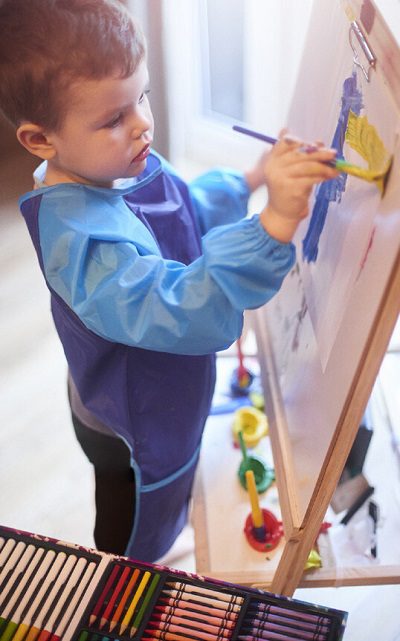
In most families, there are hobbies, interests, and activities that can be messy, need to be left in place to continue to work on later, or where special tools and supplies can be kept on hand and are easily found as needed. A messy space like this could be a spare room in your house, in the basement if you have one, or in your family garage.
It could be a craft and art studio for sculpting or making pottery or an area for woodworking with a workbench with tools arranged on shelves or hanging from a pegboard. It might be a room where you keep your paints and an easel, a photography or video studio with lighting and backdrops, or a space for tools to work on your cars or bicycles.
Keeping order in mind as you plan and organize the space is key to reducing frustration when you can’t find a tool you need or something you’ve just created gets knocked over. When there is clutter and disorder, accidents are more likely to happen and safety to be compromised. It also becomes more difficult to concentrate on the project at hand.
In a Montessori-inspired home, we want to think about what kind of space is needed for your interests or hobbies with all members of the family in mind. Your children are likely to want to be around you as much as possible, as well as needing a space where they can do the things that they prefer. So the idea is to think about the activities that your family members enjoy and consider which ones can be done in the same space.
Many families do not have a spare room, a basement, or even a garage that could be turned into a messy room. What are you to do then? Of course, everything depends on the ages and interests of your children, which may be very different from child to child, but the basic concepts remain the same. Our goal is to allow children to do activities that may be too messy to allow in their bedrooms, the kitchen, or the living room. When you live in a small apartment or home, you have to think outside of the box. You may make an exception to the general rule, and create a small area in the child’s bedroom where you lay down a protective heavy plastic covering on the floor and allow your child to paint, work with clay, glue models together, and other things using a washable covering to protect the surface of the kitchen table. The goal is to encourage children to feel that they can explore hobbies and interests while having your house (or backpack) become a mess.

Real-life story: When Jennie first went to school, she was fascinated with the art materials in her Montessori class. She loved to paint and draw with the beautiful beeswax crayons and colored pencils that were part of the classroom environment. When she would come home, she would often ask her mom if she could have an art studio. Jennie and her mom bought her a set of simple water paints and brushes, a small tabletop easel, and a stack of water-paint paper. They set up a little art studio with tile on the floor that could be easily cleaned if any paint spilled. Mom also bought some picture frames made from matte board so Jennie could hang her favorite paintings. As time went by, Jennie moved from water paints to charcoal and pastels and finally tempera and oil paints. but her interest in drawing and painting never faded away. Today, Jennie has grown up and has a career in science, but she still enjoys painting and loves going to art galleries.
Real-life story: I started noticing my son’s school backpack was full of what I considered trash. Broken rubber bands, the inner ring from a roll of tape, bits of string, etc… for and he just said that he needed them. Then, I started noticing items moving from the recycle bin to his bedroom. Egg cartons, milk jugs, cardboard boxes of all sizes…..it was looking like a recycling center in his room. I would ask him what they were. He kept saying he “needed” it all, so I walked out, took a deep breath, and went with it when what I really wanted to do was put it all back in the trash and have a clean house! Then, one day, he emerged from his room with a giant “smoothie shop” that served all types of smoothies (made out of cardboard and “trash”). This shop was so amazingly detailed and each bit of “trash” served a thought-out purpose. He used amazing grace and courtesy to take our orders and serve us smoothies. We all drank some delicious smoothies that day, and I silently thanked all of his Montessori teachers for teaching me to follow his interests… even when those interests looked like “trash!” —Tara, mother of John 9 years old
Lorna McGrath, M.Ed., is Director of IMC School Accreditation, Program Director of the Montessori Family Alliance, and Senior Consultant of The Montessori Foundation. Lorna has 41 years of experience in the field of education, teaching children from 18 months through 6 years old and from 12 through 18 years old in both public schools and independent Montessori schools. Lorna is a Montessori teacher educator, conference presenter, and school consultant. She can be reached at lornamcgrath@montessori.org.
Tim Seldin is President of the Montessori Foundation and Chair of the International Montessori Council. His more than40 years of experience in Montessori education includes 22years as Headmaster of the Barrie School in Silver Spring, Maryland, his alma mater from toddler through high school graduation. Tim was Co-Founder and Director of the Institute for Advanced Montessori Studies and the Center for Guided Montessori Studies. He earned a B.A. in History and Philosophy from Georgetown University, a M.Ed. in Educational Administration and Supervision from The American University, and his Montessori certification from the American Montessori Society. Tim Seldin is the author of several books on Montessori Education, including How to Raise An Amazing Child, The World in the Palm of Her Hand, and his new book, Montessori for Everyone, co-authored with Lorna McGrath.
Faces of Normalization
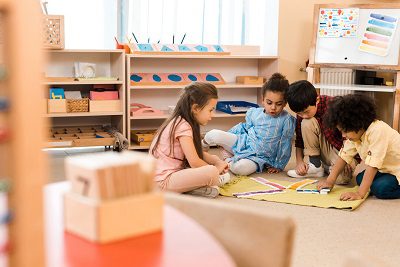
Normalization is a term that Montessori teachers exhaust at the beginning of each school year.
“The children are normalizing.”
“Normalization is a delicate process.”
“We’re almost normalized.”
But what is normalization?
Dr. Montessori described normalization in this way: “And in these qualities of the child, she sees man as he ought to be: the worker who never tires, because what drives him on is perennial enthusiasm. She sees one who seeks out the greatest efforts because his constant aspiration is to make himself superior to difficulties; he is a person who really tries to help the weak, because in his heart there is the true charity which knows what is meant by respect for others, and that respect for a person’s spiritual efforts is the water that nourishes the roots of his soul. In the possession of these characteristics, she will recognize the true child, who is father of the true man.” (p. 257).
These are some of the faces of ‘normalization.’ The children are demonstrating independence, perseverance, repetition, and concentration to the exclusion of all the sights, sounds, sensations, and activity around them, because they have a greater task at hand. The children are constructing their own learning; they are shaping their own personalities; and they are building the adults that they are yet to become.

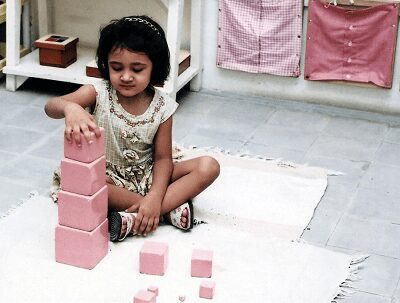
Anika places a large pink cube atop a small pink cube and the cubes fall. She removes the large cube and chooses another somewhat smaller cube. This cube also falls. She removes the small cube and replaces it with a larger cube. She places the smaller cube atop and, later, the smallest cube at the top of the tower. She sits back, observes her balanced tower, and her eyes sparkle as she smiles. one who seeks out the greatest efforts because his constant aspiration is to make himself superior to difficulties; he is a person who really tries to help the weak, because in his heart there is the true charity which knows what is meant by respect for others, and that respect for a person’s spiritual
To the onlooker, it appears that the children are cleaning, building, and working on skills. They appear to be manipulating letters, numbers, and tablets of color. They carry long red rods, stack pink cubes, and lug heavy brown pieces of wood to awaiting throw rugs. These observations are accurate; however, the process of normalization involves a great many skills, some that are visible and some that are less obvious. These children (and others like them) are learning, growing, and developing in a specially prepared environment that fosters the love of activity, concentration, self-discipline, and sociability. This process is facilitated by a sensitive adult, who has prepared the environment with order, consistency, warmth, and the removal of obstacles that could prevent this development.

Martin enters his classroom, says hello to a few friends, and walks directly to the shelf that contains the materials necessary for the parts of the tree puzzle. First he retrieves and unrolls his rug with attention to its position and smoothness. Then he gathers his puzzle and places it on the rug. He builds, disassembles and rebuilds his puzzle without fatigue, but with joyful energy.
Dr. Montessori’s discovery of the “secret of the child,” i.e., their hidden potential, had yet to be revealed and understood by adults. Dr. Montessori’s skills in observation and the circumstances that placed her in the company of children in need of a place to call their own (the slums of San Lorenzo, Rome) found a fertile place for the revelation to occur. She shared with her adult students at the second Indian Montessori training course, that the children came “undernourished, dirty, and uneducated.” “And these very small children, from three to six, did wonderful things. They had wonderful revelations. All these revelations of how to learn to write and to read by themselves at such a young age (and in the midst of joy) resulted in a transformation of their character.”

Liam is building the triangles with deep concentration. Somewhere in the room a tray falls, a child coughs, and an adult walks past. Outdoors a horn sounds and a truck rumbles past. Meanwhile, he continues the assembly of the triangles, the triangles that he has constructed many times before, without interruption.
Then and today, children enter Montessori settings with capabilities that suit them for the work and activity they will encounter. They bring bodies designed for purposeful movement, coordination, grace, and stamina. Their hands and senses serve them by allowing them to interact with and come to experience their environments. They are equipped with a mind that absorbs impressions from all around them; a mind that organizes, problem solves, adapts, remembers, is curious, is capable of long periods of attention and concentrates with little effort and without fatigue. When the body and the mind are satisfied, the true character of children is disclosed. They are peaceful, joyful, sociable, helpful, self-disciplined, satisfied, and their inquisitive and loving souls are made evident. ¢
REFERENCES
Association Montessori Internationale USA. (n.d.). “The first Casa dei Bambini: Montessori 150.” Retrieved December 2, 2021, from https:// montessori150.org/news/ first-casa-dei-bambini.
Montessori, M. and Claremont, C. A. (2019). The Absorbent Mind. Montessori-Pierson Publishing Company.
Dorothy Harman is an AMS Early Childhood credentialed Montessori guide. She holds a BA in Early Childhood Education and a M. Ed in Curriculum and Instruction with an Emphasis in Creative Arts. Dorothy Harman serves as a Montessori consultant and Adjunct Lecturer at the University of Nebraska- Kearney. She serves as a Field Consultant for the Center for Guided Montessori Studies and was a 2018 recipient of an AMS Peace Seed Grant. She is the author of Intentional Connections: A Practical Guide to Parent Engagement in Early Childhood and Lower Elementary Classrooms, published through Parent Child Press.
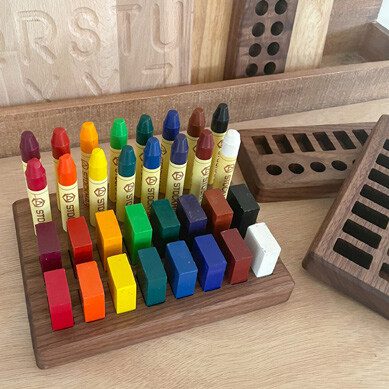
Some Of Our Favorite Supplies For An Art Area In Your Home
“As well as being part of our history and a way of understanding other people’s experiences, art is also a form of personal expression, like poetry, song, dance, and telling stories. It is a form of human connection that can evoke feelings, thoughts, and hopefully appreciation and understanding. Montessori encourages families to expose children to as many forms of art as possible. Encouraging your child’s interest in art and giving them room to be creative provides them with experiences that will endure.” — Excerpt from Montessori for Every Family by Lorna McGrath & Tim Seldin
The new book, Montessori For Every Family: A practical parenting guide to living, loving, and learning, by Lorna McGrath and Tim Seldin, shares some ways to encourage an enjoyment of art and to set up a space to create. We have searched out materials to help you set up an inviting art space in your home.
A child-sized wooden table can be your art area for years. Look for a sturdy table and chairs that fit under the table. If you do not have space for a separate art table, consider a coffee table with storage nearby.
Pictures by different artists can be chosen by you or your child if you visit an art museum, or ordered from art.com. Also consider a piece of wood with clips attached and a variety of postcards for a changing display.
You may want a paper roll so you can create different sized pieces of paper.
The MÅLA


Paper roll holder with storage is a good choice. It is available from several vendors, including Amazon. Here is a link to one from IKEA: tinyurl.com/ mrxfc27e
MÅLA Apron


Keeping clothes neat during art exploration is difficult for some of us, so a smock can be a beneficial part of any art set up. tinyurl.com/2zzsetah
Stockmar Beeswax Crayons


Beeswax crayons allow for layering of colors and draw smoothly. They also last longer than traditional crayons. tinyurl.com/289usjem
Eco Finger Paint


Changing out art materials for different ages can help keep their interest up. Young children enjoy the opportunity to finger paint; this finger paint is made with food-grade materials, so you do not need to worry too much when painty fingers go into mouths. ecokidsusa.com/ eco-finger-paint/
Watercolor Pencils


Older children may like the many different ways to draw with watercolor pencils. tinyurl.com/2p9a6d5n
Add a pad of watercolor paper. ecokidsusa.com/eco-art-pad-1

Watercolors


This all-natural, set of opaque watercolors has magnetic pots of color, so just a few can be used at a time. tinyurl.com/3ruhf9yu
Honeysticks


For younger children, who may even like to taste their paints, Honeysticks is a set made from food-grade ingredients. tinyurl.com/bdfjy9w9
Beeswax or Soft Dough


Younger children may find beeswax or soft dough easiest to use. Stockmar modeling beeswax warms up in your hands and smells delicious. tinyurl.com/mws8axc3


Soft play dough can be reused again and again. tinyurl.com/2p9zy89v
Include a container or two, to collect items for collage and sculpture making. Egg cartons, confetti, rubber bands, pom poms, whatever could be reused and is appropriate for their use, can go in the containers for building and creating. Be creative, and follow your child’s interests. Have fun with these ideas and supplies, and add your own art area in your home.
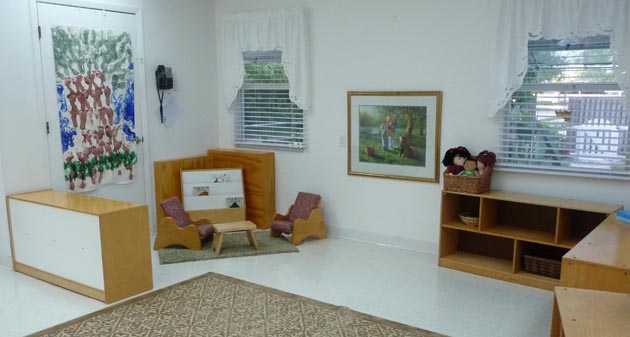
Preparing an Early Childhood Learning Environment
Editor’s Note: We know that the authors of this article really meant it to help teachers remember how important setting up children’s environments is to maximize the potential of each child at each stage during the early childhood years. However, because of how broadly they talk about the classroom environment, the principles can also be applied to the home environment. If you are a parent, there may be two “take-aways’’ for you. One might be that you have a better understanding of the many facets to be considered by Montessori teachers as they prepare their classrooms for your child. The second might be ideas for setting up a rich and supportive environment for your child at home. I found it helpful to change the word “materials” in this article to toys or activities as I read through it.
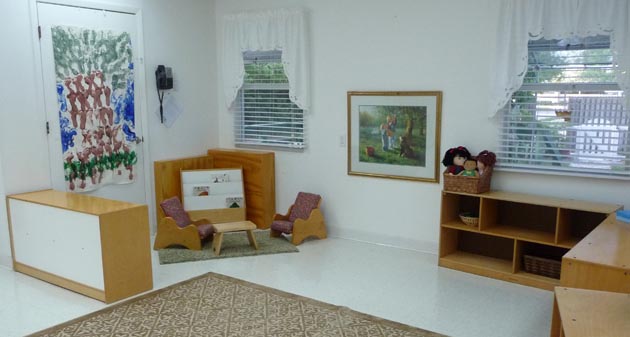 Early Childhood, the period between birth and age six, is the most critical period in postnatal human development and learning. During this time, basic movements are mastered, speech is developed, senses are consolidated, and bodies acclimate to sensory input. With this tremendous development taking place, the environment where children spend their days must reflect the constantly changing needs of childhood.
During their first months, children are in a state of unconscious absorption in which they learn from their environment spontaneously and effortlessly. This period of intense mental activity gradually leads to a state of conscious absorption, allowing for more purposefully chosen activities. At the same time, there is a tremendous quest toward both independence and a need for order. The optimal early childhood environment will have opportunities for children to gain the self-help skills they need in order to build confidence and realize self-liberation; providing order in the physical arrangement of the furnishings, the materials, and the activities offered.
The role of the caregiver, or educator, is to prepare the environment to meet the needs of the unique group of children in their care. There are several factors that need to be considered in order to provide a space that will enrich their experience in a developmentally appropriate manner:
MEETING THE NEED FOR MOVEMENT
As we learned from Dr. Maria Montessori (1870 – 1952), movement is intrinsically satisfying. It also affects psychic and spiritual energies; eventually, it helps children acquire abstract thinking by first enabling them to experience abstract concepts through concrete forms. Young children need to move! Knowing the ages, developmental levels, and needs of the children in your care will enable you to arrange the environment to provide the appropriate amount of physical activity.
Infants and Toddlers: If you are serving infants, who need to creep or crawl, provide open, obstacle-free spaces with warm flooring surfaces of varying textures that they can safely navigate and explore. Toddlers need space for independent exploration, as well as secure objects for grasping and pulling themselves into sitting and standing positions. Later. they will need apparatus for stretching and developing their arm and leg muscles, such as climbing triangles, dome climbers, and short sets of stairs. At this age children begin to learn when and where it is appropriate to run and climb and when it is safer to walk or keep feet on the ground. With guidance, toddlers will start to make the appropriate choices.
Preschoolers (ages 3—6): Preschoolers need spaces to: move back and forth between shelves, tables, and large open floor areas for unencumbered work; individual spaces, such as cozy reading corners, where they can settle, concentrate, and focus; and spaces to congregate in small and large groups. Long narrow openings tend to encourage running, which can be a safety hazard. Try to break up these long expanses with furniture or plants. A combination of child-sized tables and chairs (preferably adjustable to each child’s height); shelves and cubbies that they can comfortably reach; and open floor space will accommodate multiple types of activities.
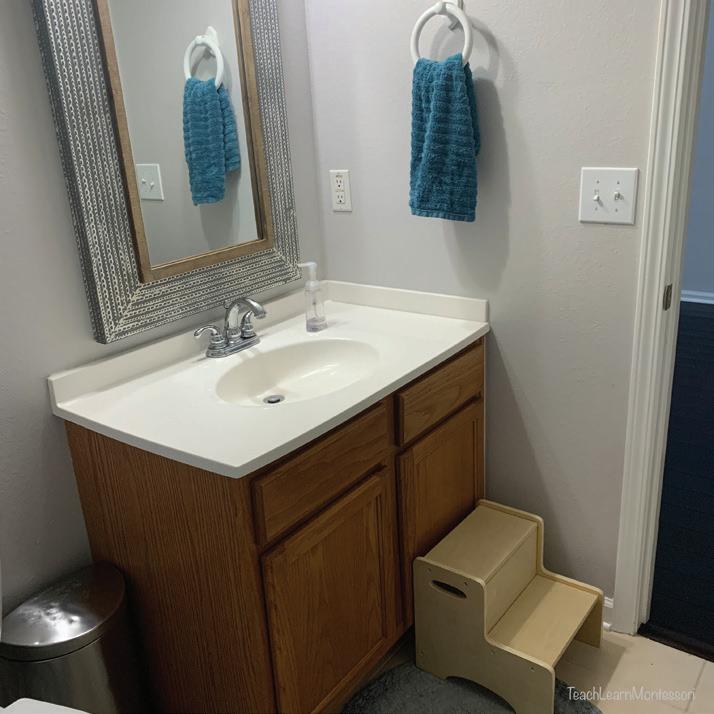
MEETING SENSORY NEEDS IN THE ENVIRONMENT
Visual Component: Because young children are constantly adjusting to the barrage of sensory impressions they receive, what children see plays an important role in environment preparation. We live in a world focused on extensive visual stimulation. Although there is a trend to provide eye-popping bright colors or bold primary colors in early childhood environments, a palette of neutral colors and/ or colors from nature can be more conducive to learning and to promoting a sense of calm. A subtler background allows the materials to stand out and attract the child’s interest. In addition, urged on by décor manufacturers, early childhood educators (and parents) often plaster their environments with posters and other materials. However, uncluttered walls can be comforting, soothing, and far less distracting. Be selective and discriminating in choosing what is displayed and hang thoughtfully chosen artwork at the child’s eye level.
Considering your lighting is also important. Lots of natural light is optimal in any setting. If artificial lighting is also necessary, using incandescent bulbs will lend a warmer glow to your environment than the cool blue of fluorescents. You might also want to explore energy-efficient LEDs. In any case, remember safety considerations with young children, ensuring stability, taking care with cords, hot bulbs, and shades.
Auditory Component: Have you considered the sounds the children can hear in your learning environment? Just as your classroom can be visually cluttered, noises such as side conversations, small-group lessons, musical instruments, the rustle of leaves, or even the whisper of wind can make the classroom feel cluttered auditorily. Determine which of these noises are appealing and conducive to learning and which are distracting. Try to adjust the ones you’d like to control or mitigate by using sound-absorbing materials such as rugs and carpeting. Add soft pillows and child-sized upholstered chairs to the reading nook. Hang fabric curtains at the windows or draped across ceilings. If your budget allows, you may also want to consider unobtrusive acoustic panels for walls and ceilings.
Tactile Component: Are the surfaces of your furniture smooth and free of dangerous or pointy edges? Do you provide a variety of materials that appeal to the sense of touch, such as soft woolens, smooth silks, warm wooden objects, and cool metals, which encourage the child to explore and discover the unique characteristics of each? For babies and toddlers still crawling and creeping, have you considered the different sensations they feel on their hands and knees as they make their way around on varying surfaces?
Olfactory Component: What smells greet the children? Whenever possible, avoid the use of harsh-smelling chemical cleaners. Allow fresh air to permeate the environment. Objects with appealing scents, such as a cinnamon bark box or a clove box, can be enjoyed by the children. Fragrant herb plants that are safely edible, such as sage, rosemary, and lavender, also make lovely additions. Allow children to use a mortar and pestle to crush them to release their enticing scents into the air.
Choosing Materials: Besides the physical attributes of your home, there are various considerations to take into account regarding learning and play materials:
- Quality: Are the materials constructed to last through use by many children?
- Are they safe and free of sharp edges and small parts not suitable for children under three? Are they attractive and inviting?
- Relevance: Do the materials embody and respect the personal identifiers that make up the diversity of your family and the wider community in which you live, such as race, ethnicity, and languages? Do they take into consideration the children’s interests, and inspire new ones?
- Developmental levels: Do the materials and activities provide appropriate learning experiences for all the ages and ability levels in the class?
- Language development: Does the variety of materials offered expose the children to the vast array of living and non-living things offered by our world and the rich vocabulary associated with them to expand their burgeoning language development? Are there opportunities for them to express themselves?
In Conclusion: Considering these various factors when creating living and learning environments for young children will help you provide spaces that benefit them by enriching their experience in a developmentally appropriate manner that contributes to their physical, cognitive, and social-emotional growth and learning.
REFERENCES:
Bagnoli, D. (2021) “Montessori by Design: School Spaces That Stay True to the Montessori Method.” Montessori Life. 33 (1). 26 – 35.Montessori, M. (1964). The Montessori Method. New York, NY: Schocken Books.
Photos in this article courtesy of Alicia Diaz-David.
Reprinted with permission from Community Playthings www.communityplaythings.com
Marie M. Conti, M.Ed. is head of The Wetherill School in Gladwyne, PA, and a former member of the American Montessori Society board of directors. She has more than 40 years of experience as a Montessori classroom teacher and administrator. Contact her at marie@wetherillschool.org.
Marcy K. Krever is a freelance writer and the former Senior Director of Communication & Community at the American Montessori Society. Contact her at marcykremer@gmail.com.
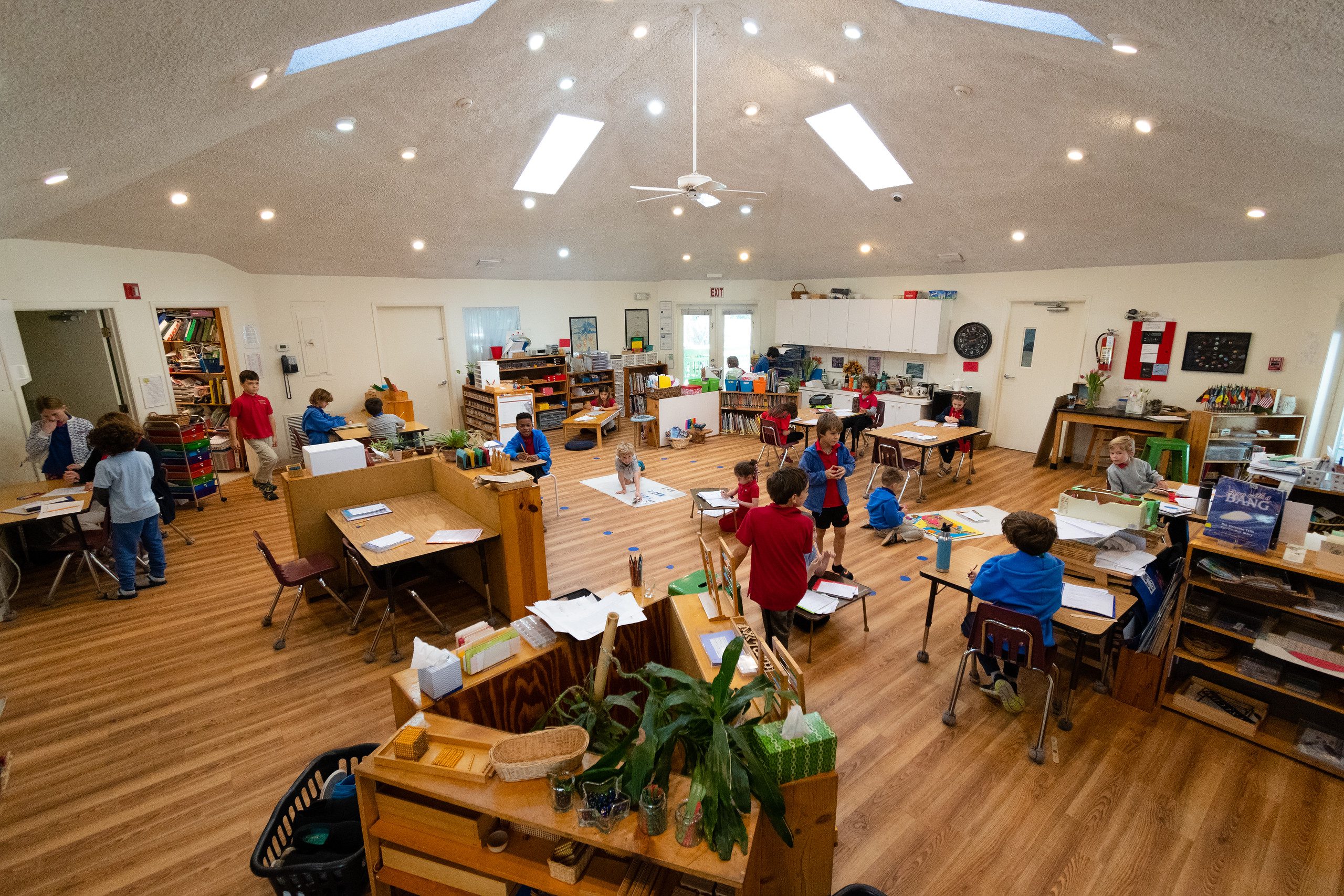
What You Will See In A Great Montessori School
To continue reading, you will need to choose a subscription plan.
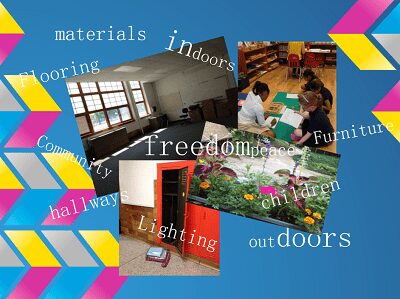
A Look at Environment by Tanya Ryskind
To continue reading, you will need to choose a subscription plan.
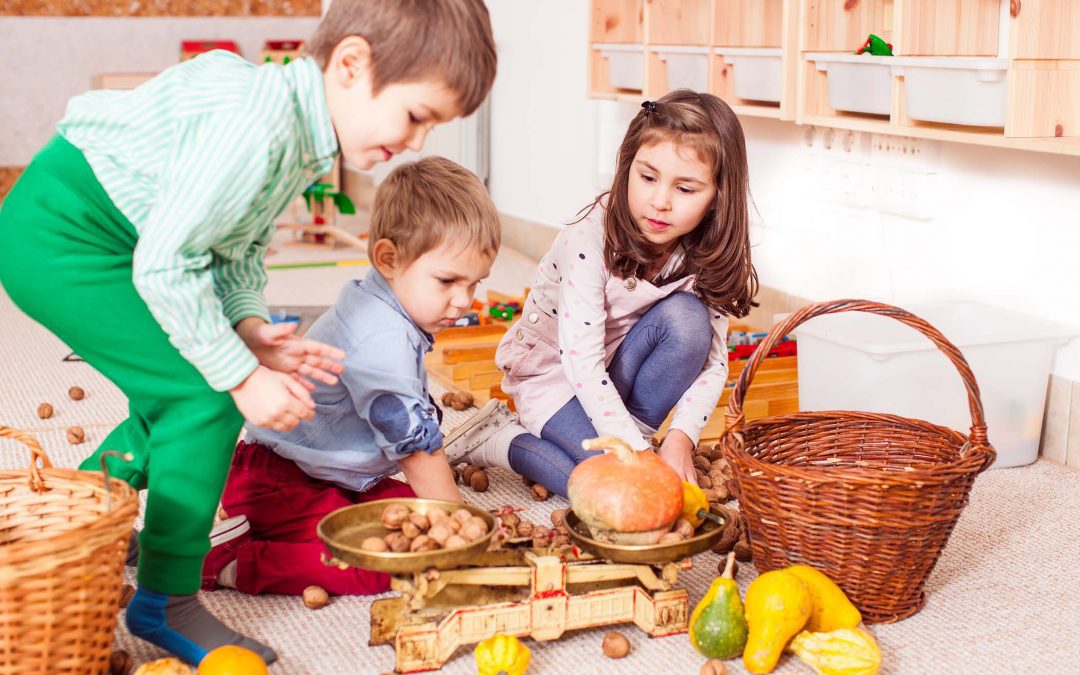
Why Have 5-year-olds Stay in Montessori?
To continue reading, you will need to choose a subscription plan.
10 Things Great Teachers Demonstrate
To continue reading, you will need to choose a subscription plan.
Montessori Education in a Time of Physical Distancing: Is the Use of Digital Technology Appropriate in the Context of Montessori Philosophy?
Maria Montessori, in an address in 1936 entitled “For Peace,” (2007) discussed how the technologies of her day had brought humankind together and had created a single “great nation” (pp. 24-26):
By becoming a single nation, we have finally realized the unconscious spiritual and religious aspiration of the human soul, and this we can proclaim to every corner of the earth. ‘Humanity as an organism’ has been born; the super-construction that has absorbed all man’s efforts from the beginning of history has now been completed. We are living this reality. We have proof of it in the almost miraculous powers that today are enabling man to rise above his natural condition. Man now flies higher and more confidently through the heavens than the eagle; he has mastered the invisible secrets of the energy of the universe; he can look up into the skies and the infinite; his voice can cross the world’s seas; he can hear the echoes of all the world’s music; he now possesses the secret powers of transforming matter. In a word, contemporary man has citizenship in the great nation of humanity.
While we contemplate how our physical interconnectedness and the technology that made that possible, we have also spread one of the most frightening challenges we have ever known. We also know that only our interconnectedness and our shared technology can help us to survive. We cannot simply submit to technological solutions, however, without heeding the wisdom of history, without also looking to the needs of our humanity. It seems that this global crisis is bringing out both the worst and the best in people. Kindness and true altruism are shining out in the most unexpected places. Compassion abounds, even as the hackers who undermine our trust (along with spreaders of false news) try to dominate our world. Human needs and tendencies, at the core of the Montessori approach to what makes us human, are the defining features of the great nation of humanity. Any true education of the children of humanity depends on a full recognition of what makes us human.
So, while we grapple with the questions of how to deal with the unknown; how to work from home while trying to educate our children; how to keep our schools going when we cannot possibly adhere to fundamental tenets that distinguish Montessori education from conventional schooling; when parents cannot pay their fees because they have lost their jobs; when we don’t know if we will be able to return to our physical environments; and, all the while, trying to keep our own lives together, perhaps we should pause … because we do have time to pause … and ask some important questions: questions we have been able to ignore or gloss over in the past, because we knew that we could trust in our prepared environments. Why change something that works well as it is? All of a sudden, we are faced with a situation that demands that we operate in an environment that we have avoided and even renounced: a digital environment that seems to be the antithesis of our concrete, prepared environment.
The attitude of Montessori schools and Montessori guides towards technology in the classrooms has traditionally been an area of disagreement and mixed messages. While many Montessori environments eschew “technology” (in reality this is taken to mean digital devices and media), others tolerate limited use. A small group of schools have embraced digital technology and incorporated it into their programs. This might include issuing children iPads™ with which to assign and track work or allowing computers in the classroom. The use to which the devices are put can vary from resources that differ little from print material: tightly controlled usage (such as typing tutor software, off-line encyclopedias, etc) to varying degrees of free access to the internet and various applications, such as word processing and presentation software. The message from the Montessori community to the general public has, however, been largely united on limiting the use of digital devices, media, and television viewing.
School closures due to COVID-19 have prompted a drastic revision of this policy, and schools are challenged to not only justify the use of digital technology to continue functioning but also to find ways that do not conflict with basic Montessori principles or undermine the pedagogical approaches that differentiate Montessori education from everything else that is available on the internet.
As with any material or method introduced into the conventional Montessori environment, it is best to begin with asking whether Montessori herself has any guidelines on the matter. Recently, AMI published a short article written by Maria Montessori herself on the issue of what she called “mechanical aids.” The context was somewhat different from ours. It appears that Montessori was introducing an article by another unnamed author, who was advocating the use of film and other aids as support for children in India. Probably written during her stay in India (1940–1947), it was suggested that the use of such supports would both facilitate the preparation of teachers and make “culture” more accessible to more children (Montessori, 2015, pp. 235-238). Further, insight into Montessori’s view of the use of technology can be gleaned from an earlier piece where she considered the use of film within her system, quoting extensively from Carl Renner (Renner, 1932, pp. 235-238).
In the interests of clarity, it is probably best to begin with some etymology:
Technology is as old as the world, at least one inhabited by human beings, certainly when we lean towards the definition of the word when it was originally used; the Oxford Dictionary gives as its etymology from Greek tekhnologia ‘systematic treatment’, from tekhnè, ‘art, craft’ + logia’, dating back to the 17th century.
Montessori certainly understood technology in this light. She was fascinated by technology and the way in which human beings have used technology to meet needs. Some animals use tools, e.g., apes use sticks to dig in termite mounds. But of all the animals, only humans utilize technology. Technology requires the use of the hand and of the brain. The very earliest tools of stone and bone are evidence of technology. It could be claimed that it was the use of technology that saved humankind from extinction 70,000 years ago. Technology is a feature of human culture and an integral component of what Maria Montessori called supranature. Technology and culture place humans above nature. Technology has always been a part of Montessori education to the extent that the Montessori materials are, in and of themselves, technological artifacts.
For the purposes of this article we understand technology in this sense. When referring specifically to computers, iPads, mobile phones and their related media we refer to “digital technology.”
A reading of the two brief articles make it very clear that Montessori did not discount the use of technology in her classrooms. What we cannot say without reservation is that she saw a place for digital technology in the education of young children (or even older children and adolescents), as this was not something she knew about. She supported the use of media that allowed the children to access knowledge beyond that which was presented in the classroom in print, which was presented directly by the adult in the room, and this would necessitate the presence of mechanical aids: machines that the children would be shown how to use and to which they would have free access. It also included means to access experts outside the classroom, such as radio broadcasts.
The opponents of the use of digital technology are able to cite research that point to its pitfalls and dangers. While the benefits have long been recognized by educators looking for ways to reach children beyond the classroom, Montessorians have generally avoided the exploration of the internet as a means to help children access information or, indeed, to give children independence from the guidance of the teacher. Now we find ourselves in a situation where students are at home, physically distanced from both the prepared adult and the prepared environment. In order to support children in a way that is in line with Montessori philosophy and Montessori’s educational aims, we should first examine Montessori’s own views and explore how those are applicable in our current context.
Although Some Observations on Technology was written for a different time and context, the ideas that Montessori expresses could have been typed on a Facebook™ post this morning, only to refer to digital as opposed to mechanical aids: “to promote the acquisition of culture by means of mechanical aids is most opportune at the present moment, when we can almost speak of an emergency.”
This article explores how, in this current emergency, we can remain true to Montessori’s intentions, while maintaining physical distance. It is also concerned with how what we learn now can impact, and even transform, education as distancing requirements are eased.
Montessori reminds us that many children going into elementary classes from Montessori preschools can already read and write and “possess many cultural notions;”
When, therefore, our children enter what is commonly called the elementary school, where compulsory education comes into force, the intelligence requires a much vaster culture than is ordinarily given in those schools.
In the early stages of the development of the program for the second plane of development, Montessori was acutely aware of the needs of the 6–12 year-old child for access to an expanded field of knowledge. Conventionally trained teachers were, in Montessori’s view, ill prepared to meet the needs of the child. Even teachers with subject specializations lack the general breadth of knowledge across disciplines to fully support a child in the second plane:
As with any material or method introduced into the conventional Montessori environment, it is best to begin with asking whether Montessori herself has any guidelines on the matter.
This awareness of the needs of the child and the limitations of the teacher, coupled with her passion for research and a fascination and admiration for technological development, opened to her the possibility of using various means for putting a vast array of content available to the child. The “mechanical aids” to which she refers are those which were commonly available in her day: gramophone records, lantern slides, film and wireless, She includes these in the aids that could be used in the service of the second plane child. Television was only beginning to find its way into the average household, and the personal computer was a long way off. The internet as a replacement for “wireless” (radio) was not even yet in the realm of fiction. Today’s equivalents would be audio recordings and video, which are available on the internet. Much excellent quality material is freely available, as is a plethora of material of dubious quality and provenance. Just as Montessori argued for the use of the technology of her day so, too, we could support the use of digital technologies with certain reservations:
There is no doubt that the schools applying my method, where the cultural development of the children is highly intensified, not on account of any pressure exercised by the teacher, but as a natural consequence of the opportunities given to their individual and social spontaneous activities, will have to avail themselves of these new aids.
Maria Montessori was able to envisage the potential of “material, discourses and visual representations … prepared by fascinating speakers and persons of a culture superior to that of the ordinary teacher.” Montessori foresaw many benefits accruing from this approach: firstly, that fewer teachers would be required and secondly, that materials could prepare for a “higher universal culture.” The preparation of materials would require a team of specialists to prepare and present materials.
If our approach is merely to find experts to prepare online content, or to prepare such resources ourselves, then we are late-comers to a party initiated and perfected by others. Kahn Academy was an earlier pioneer in the field, which offers excellent materials for free on the internet for different levels of learning on a myriad of topics. Many students know and use Kahn Academy already, including students in some Montessori schools. The website offers materials and tutorials for various subjects aimed at children from age four through to AP level. With over a decade of experience (and continuous improvement), this is a valuable resource for learning—particularly those subject areas where “mastery” learning is regarded as particularly valuable. There are many other resources, including YouTube™ channels, which offer sequential lessons of a high standard.
What would differentiate a lesson given by a Montessori trained guide, making it more effective than those offered by online teachers with at least a decade’s head start and accumulated experience in a medium to which we are mostly newcomers? How would we justify creating new materials and justifying their use in place of twelve years of accumulated content? What will make what we have to offer quintessentially Montessori? Do we have to reinvent the wheel to support Montessori students? Maria Montessori gives some direct guidance.
Referring to Renner (1932), Maria Montessori discussed “educational films” of her day, lamenting that they seemed confined to “the world of nature and the world of machines” and looked forward to a time when films dealing with “social and historical problems and the essential problems of culture” would be available. While she envisaged a place for varied visual and audio materials in her scheme of education, she regarded the quality as insufficient to meet the needs of children.
However, I don’t believe there is satisfaction of the real interest created by these films and their success. I believe instead that the little interest they offer to the viewer is due to their fragmented, incoherent character that rather makes them an entertainment show than a truly educational film. Film series coherently connected in a way to create a complete course covering a specific subject, would create a much livelier interest and would have, from an educational standpoint, a more rewarding result.
This deficit in coverage of disciplines has since been remedied, and digital resources offer both expert tuition and visually appealing experiences that cover all the disciplines.
Even well-constructed recent materials may reflect the shortfalls Montessori identified in the films of her day. The brief citation mentioned above, points to two areas that need to be considered. The first issue is that they do not satisfy “the real interest” that they provoke. Put another way—the films can and do create interest, but they do not satisfy the need of the child. They are entertaining rather than educational. This is because they lack the structure, or the inter-relatedness of the curriculum which she envisaged. Some resources, such as The Big History Project are structured in a way that matches the structure of the Montessori elementary curriculum, with many overlapping themes. The way the material is presented conforms to much of what Montessori hoped for in the presentation of the materials. Despite the high quality, logical structure, and interesting content, The Big History Project, and other similar programs, do not constitute Cosmic Education.
A reading of the two brief articles makes it very clear that Montessori did not discount the use of technology in her classrooms.
To properly unpack the thoughtful and planned design of curriculum and methodology that typifies the Montessori approach it is necessary to consider certain philosophical tenets of Montessori—that is the very nature of the educative proposition that is Cosmic Education, and the role of the child as the agent of his or her own education. It requires that we shift our orientation as regards discipline content (which can arguably be more effectively transferred by digital rather than print media) from content for its own sake (i.e., the child as recipient) towards content being the fuel for the child’s self-construction.
To make digital materials useful to children, it is necessary to look at what we know about the development of the child. In Cinema Educativo, Montessori discusses how verbal explanations might be suitable for adults, but that young children require a more concrete experience. She commented that films give “significant advantages.” Because teachers can produce films themselves, these could be geared to the needs of children.
What is needed, in Montessori’s view, is “a guide of a kind of syllabus directing their distribution” (Montessori, 2015, p. 5). The “syllabus” to which she refers had not yet been fully developed, but its guiding principles were already being incorporated in her lectures and eventually became known as the Cosmic Curriculum implemented in Montessori prepared environments for the second plane.
It is clear that Maria Montessori did not oppose the use of film (or in our modern terminology—video) as a means to deliver content to children. She proposed the development of centers for the production of such materials. If the appropriate technology were used, the production of Montessori-compliant media, potentially, has a far greater reach, and could truly transform the way education is understood in the post-COVID world:
These centers would gradually become the means to unify the cultural development of the children all over the world … They would be institutions in the world of the child comparable to the institutes of scientific research in the world of the adult and, as the latter, they would be not only of national, but of universal advantage (Montessori, 2015, p. 6).
There is, however, a critical aspect that requires further deliberation. This relates to how these materials are to be used by the children. I have already alluded to the centrality of the agency of the child as opposed to the centrality of content. Montessori ends her brief introduction:
I would like to point out that these mechanical aids are insufficient to bring about the totality of education. Children to do not learn and do not develop their character by merely listening and looking on.
The technological aids are “only partial aids.” She concludes:
The child learns by means of his own activity and if given an opportunity to learn actively he develops his character and personality too. The child perfects himself even more by means of his hand than by means of the senses. He can develop himself and the personal talents of his nature when given the opportunity and guidance to produce and to discover by himself. Modern methods of education, in fact, are not only visual, but above all active. (Montessori, 2015, p. 7).
A goal of Montessori education is that children are prepared to fully participate in their time and place. There is no doubt, just a few short months into the global crisis that our world is going to change, and that to function in this world one will have to be comfortable with new technology. Adaptability is human trait that has ensured our survival umpteen times in the past and will be key in the coming months and years. Montessori commented on schools that based their learning solely on mechanical devices, and compared these to schools that had a strictly academic focus:
Wherever possible mechanical contrivances are introduced for every detail of practical life, so that our children may be fitted to take part in a civilization which is entirely based on machines.
In their adoption of this part of our method, some modern schools, especially in the United States, have gone too far, so that children in this intellectual stage of growth are made to occupy themselves solely with these machines, devised as they are for developing intelligence. In such schools freedom too has entered with the machines, children being allowed to choose their work, which is good so far as it goes. But whatever cannot be learned in this way is barred out, as insignificant and negligible: mathematics and other abstract subjects are considered as beyond the child’s comprehension by free and spontaneous activity. These schools based on practical work are opposed to the so-called ‘old-fashioned’ schools where mainly abstract subjects are taught and facts memorized; but we oppose both alike (Montessori, 1989, p. 8).
It is clear that Maria Montessori had no aversion to the use of technological aids, that she envisaged the use of visual and audio technology to enrich the child’s experience of knowledge content. She insisted, however, the visual and audio materials must be structured to meet the developmental needs of the children for whom they are intended. Furthermore, adults prepared in the Montessori approach were the best people to plan and prepare such materials. These materials would be part of “the totality of education” that requires that all aspects of Montessori pedagogy are understood and applied.
This article has not touched on many critical components of the Prepared Environment and the role of the adult, including the place of the concrete materials and the potential use of the digital environment to facilitate social interaction while maintaining physical distance, and how to meet the needs of “Going Out” when going out is no longer safe (or indeed even in a post-COVID world, where the rich opportunities available in first-world cities are not accessible to children). We need to remember that our children may know this technology better than we do, but in many cases (such as the impoverished townships of South Africa), children do not have full access to the digital world, just as they do not have access to a truly educative concrete one. How do we deal with this? How do we understand the real child outside of our carefully prepared rooms? There is work that has been done on this. Looking at how children learn when given free access to digital technology (See for example the work of Sugata Mitra – https://www.ted.com/speakers/sugata_mitra) there is immense potential to reach children hitherto denied such access, but Montessori would require that we utilize Montessori methodologies to extend such experiences into a total education. Using digital technology to simply transmit teacher-talk and digitized worksheets and text books is not Montessori education. We are required to observe children and respond to what they reveal to us. How do we observe children in a digital environment?
As Montessori taught us—global human interconnectedness is immense and just possibly we have the provocation necessary to fully explore the potential of our digital technology to fully realize Cosmic Education and transform how the world sees education. If we want to get the right answers we have to start asking the right questions.
Sources:
Montessori, M. (1932). Cinema Educativo. Rivista Bimestrale Dell’Opera, pp. 235-238.
Montessori, M. (1989). To educate the human potential, ABC: CLIO
Montessori, M. (1989). Education and peace, ABC: CLIO
Montessori, M., Pierson (2007). Address European Congress for Peace in Brussels 1936
Featured
-
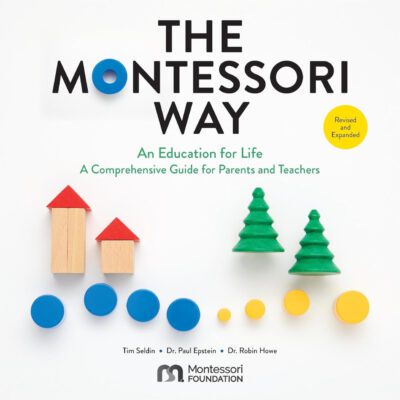
 The Montessori Way, Revised and Expanded: An Education for Life; A Comprehensive Guide for Parents and Teachers
$25.00
The Montessori Way, Revised and Expanded: An Education for Life; A Comprehensive Guide for Parents and Teachers
$25.00
-
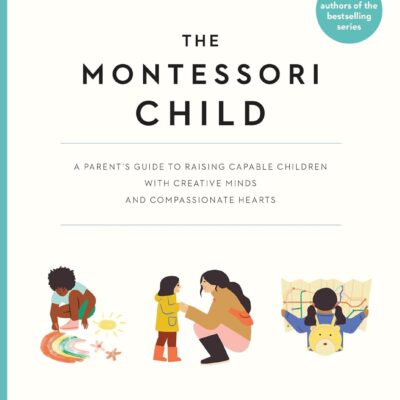
The Montessori Child: A Parent's Guide to Raising Capable Children with Creative Minds and Compassionate Hearts (The Parents' Guide to Montessori)
$20.00
-
The Montessori Toddler: A Parent's Guide to Raising a Curious and Responsible Human Being (The Parents' Guide to Montessori)
$20.00
-
Montessori in Action: Building Resilient Montessori Schools 1st Edition
$29.95
-
Bulk Order, 30 Copies of Montessori for Every Family: A Practical Parenting Guide To Living, Loving, And Learning
Original price was: $600.00.$510.00Current price is: $510.00.

Products
-
The Montessori Way, Revised and Expanded: An Education for Life; A Comprehensive Guide for Parents and Teachers
$25.00
-
The Montessori Child: A Parent's Guide to Raising Capable Children with Creative Minds and Compassionate Hearts (The Parents' Guide to Montessori)
$20.00
-
The Montessori Toddler: A Parent's Guide to Raising a Curious and Responsible Human Being (The Parents' Guide to Montessori)
$20.00
-
Montessori in Action: Building Resilient Montessori Schools 1st Edition
$29.95
-
Bulk Order, 30 Copies of Montessori for Every Family: A Practical Parenting Guide To Living, Loving, And Learning
Original price was: $600.00.$510.00Current price is: $510.00.