
Santa: Making the Invisible Visible
To continue reading, you will need to choose a subscription plan.
How can parents know if they’ve found a ‘real’ Montessori school?
Although most schools try to remain faithful to their understanding of Dr. Montessori’s insights and research, they have all too some degree been influenced by the evolution of our culture and technology.
Perhaps the a more relevant question in selecting a Montessori school is to consider how well it matches your sense of what you want for your child.
Before coming to the Montessori Foundation, I served for twenty-two years as the Headmaster of the Barrie School outside of Washington, DC. In that role, every year I met with hundreds of families who were interested in enrollment. I always began each open house by reminding these bright, eager, and sometimes overly anxious parents that no one educational approach can be right for every child. The wisest goal is to seek out the best fit, not only between the child and the school, but also between parents’ values and goals for their child’s education, and what a given school can realistically deliver. I believe that finding the right school for mom and dad is as important as finding the right school for the child.
In the end, the selection of a Montessori school comes down to a matter of personal style and preference. If you visit a school and find yourself in harmony with its ambiance and practice, it will represent at least one example of what you define to be a good school.
In determining which school is best, parents have to trust their eyes, ears, and gut instincts. Nothing beats personal observation. The school that one parent raves about, may be completely wrong for another’s child. Conversely, another parent may have decided that “Montessori doesn’t work”, while it clearly is working very, very well for your family. I suggest that parents rely on their own experience, not hearsay from other families.
There is probably no clear-cut answer. Often one sign of a school’s commitment to professional excellence is their membership in one of the professional Montessori societies, such as the Association Montessori Internationale, the American Montessori Society, and the International Montessori Council, which is affiliated with the Montessori Foundation. All three also offer schools the opportunity to become accredited as well. There are several dozen other smaller organizations, and many excellent schools choose not to affiliate with any national organization.
Finding an Authentic Montessori School

Because accreditation has traditionally applied to high schools and colleges, very few Montessori schools are accredited. More recently, parents have begun to hear about accreditation at the childcare level by an organization known as the National Association for the Education of Young Children (NAEYC), which represents a less comprehensive standard than traditional school accreditation. Again, while some Montessori schools might hold that recognition, it is not as applicable to schools as to childcare programs, and only a small percentage of Montessori schools have sought that recognition.
Normally, this is not a concern with Montessori schools. The term actually refers to the preparation of the teachers, and the specific Montessori designed school program that they implement. Most Montessori schools are excellent.
Dr. Montessori was a brilliant student of child development, and the approach that has evolved out of her research has stood the test of almost ninety years in tens of thousands of Montessori schools around the world.
The Montessori approach has two great qualities: it is replicable and can be translated successfully into all sorts of new situations, and it is sustainable – Montessori programs don’t tend to lose their identity and become something else after a few years, as have many other educational reforms. However, the only truly authentic Montessorian was Dr. Maria Montessori herself. The rest of us have been forced to interpret her ideas and methods through the filter of our personalities and experience.
While some Montessori schools try their best to remain faithful to what they perceive to be her method, in reality, even the most staunchly conservative has gradually been influenced by the evolution of our culture and technology. One would think that any two “Montessori” schools would be relatively similar in every respect. In reality, they can differ dramatically in size, facilities, programs, and emotional climate.
Saying that a school is “Montessori” can be like saying that they are Christian or Jewish. There is tremendous variation. Without getting into the question of those schools whose operations are so extraordinarily poor that they would be disavowed by liberal and conservative Montessorians alike, there is a great deal of variation within the name “Montessori.”
I know that the concept of the Montessori approach implies something like a brand-name (McDonald’s, Pizza Hut, Campbell’s soup), but the truth is that Montessori schools and Montessori teachers may share common values, but can also be significant variation. It is a shame that instead of accepting and celebrating that diversity, Montessori educations sometimes get caught up in judgmental behavior. It is no wonder that some people think Montessori might be a cult.
The selection of a Montessori school in the end comes down to a matter of personal style and preference. If you visit a school and find yourself in harmony with its ambiance and practice, it will represent at least one example of what you define to be a good school. I can only urge you to trust you eyes, ears, and gut instincts.
A Montessori Bibliography
To continue reading, you will need to choose a subscription plan.
Featured
-
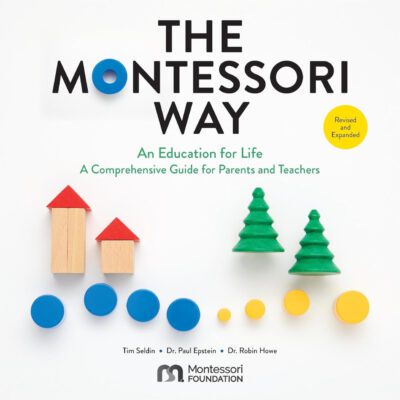
 The Montessori Way, Revised and Expanded: An Education for Life; A Comprehensive Guide for Parents and Teachers
$25.00
The Montessori Way, Revised and Expanded: An Education for Life; A Comprehensive Guide for Parents and Teachers
$25.00
-
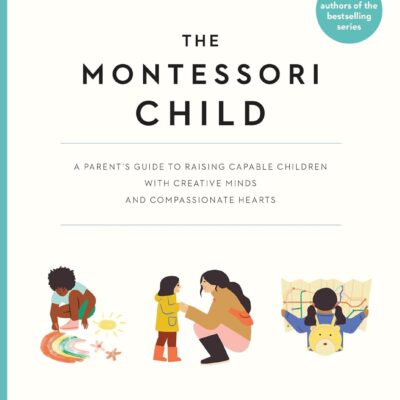
The Montessori Child: A Parent's Guide to Raising Capable Children with Creative Minds and Compassionate Hearts (The Parents' Guide to Montessori)
$20.00
-
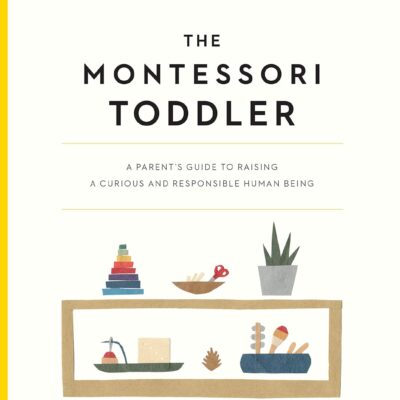
The Montessori Toddler: A Parent's Guide to Raising a Curious and Responsible Human Being (The Parents' Guide to Montessori)
$20.00
-
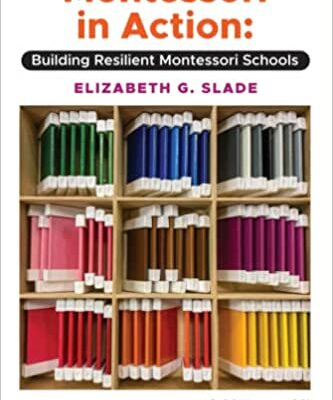
Montessori in Action: Building Resilient Montessori Schools 1st Edition
$29.95
-
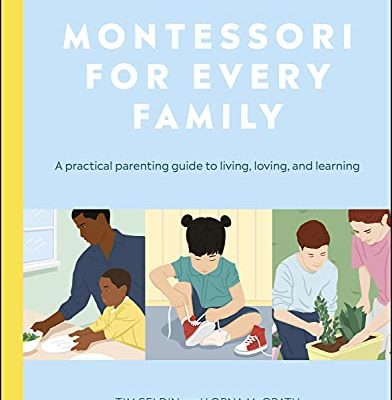
Bulk Order, 30 Copies of Montessori for Every Family: A Practical Parenting Guide To Living, Loving, And Learning
Original price was: $600.00.$510.00Current price is: $510.00.
Products
-
The Montessori Way, Revised and Expanded: An Education for Life; A Comprehensive Guide for Parents and Teachers
$25.00
-
The Montessori Child: A Parent's Guide to Raising Capable Children with Creative Minds and Compassionate Hearts (The Parents' Guide to Montessori)
$20.00
-
The Montessori Toddler: A Parent's Guide to Raising a Curious and Responsible Human Being (The Parents' Guide to Montessori)
$20.00
-
Montessori in Action: Building Resilient Montessori Schools 1st Edition
$29.95
-
Bulk Order, 30 Copies of Montessori for Every Family: A Practical Parenting Guide To Living, Loving, And Learning
Original price was: $600.00.$510.00Current price is: $510.00.