

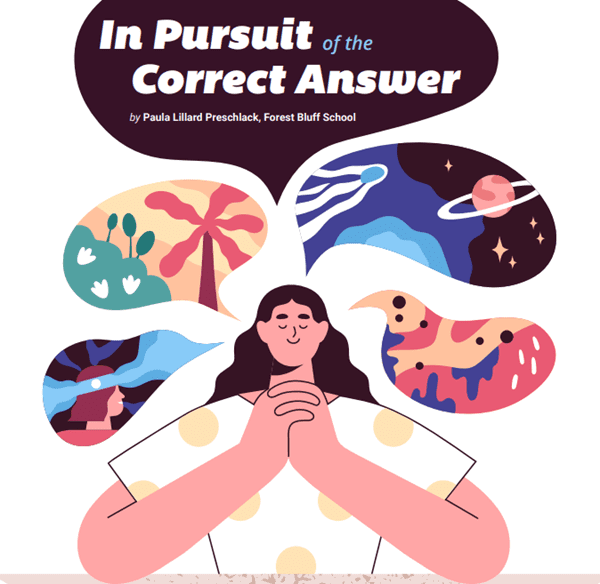
In Pursuit of the Correct Answer: The Role of Process and Discovery in Montessori

Changing our View of Education: A Positive Approach
The positive nature of the Montessori approach, with its emphasis on process and discovery, is central to why it works so well for children in their development. When Dr. Montessori lectured in London in 1946, she pointed out that conventional education focuses on mistakes.
Think of your own experiences and how your schooling was structured; you will probably remember that there was constant attention given to your errors. Avoiding errors was the thrust of the system. Even with a few enlightened, kind teachers here and there, who emphasized process and exploring bravely, the main message for how you were to learn things was by having your mistakes pointed out to you daily in the form of testing, performing in front of classmates, and reaching for the one “correct” answer to each question. This emphasis, by design, encourages children to lose confidence in their originality. And, yet, we know that developing unique perspectives is invaluable. Thus, the very thing that makes society prosper is being discouraged on a daily basis in our conventional school model.
You may be wondering how there could be another way to teach, when there are certain areas in life where there really is just one correct answer. Mathematics and science are not a matter of opinion, for instance. There are facts that children must learn in order to succeed in some areas. Which is more important: the process, which leaves room for originality, or the answer, which must be consistent with the truth? The answer is both, and Montessori’s approach allows for this interesting dynamic to play out in the classroom, as it does in real science laboratories and in sophisticated math discussions. Dr. Montessori discovered that there is an alternative way that children learn about exact answers.
Montessori’s view was that there is exactness in mathematics and science, which gives our universe balance and beautiful symmetry. Realizing this is truly awe-inspiring for children! But instead of having this phenomenon of exactitude dominate the whole educational approach (by trying to stuff answers into children’s minds), Montessori sought to awaken their wonder for exploration and to help children discover pathways of thinking that lead to correct answers. A prime example of this is the way elementary-aged children explore math through the specially designed materials that require several steps and attention to detail. The children ultimately arrive at the correct answer and are often quite satisfied with themselves after much effort; all the while, they are developing cognitive processes and character traits that contribute to future learning and problem solving.
…the very thing that makes society prosper is being discouraged on a daily basis in our conventional school model.
Discovery and Ownership
Through the materials and how they are presented by the trained teacher, Montessori children in an Elementary classroom search for the paths to find the true answers; when they get there, the results are their own discovery, just as if they were the first mathematicians to discover them. The result of this repeated experience makes children view mathematics as the wonderful puzzle that it is. The idea of being embarrassed at arriving at an incorrect answer is foreign to these children, for whom the taste of finding the right answer is so sweet that they want to explore other avenues and learn more. Mistakes are integral steps in every journey, and this reality becomes familiar and acceptable through repeated experience.
The Montessori materials guide children to find the ways that work, making the adult corrector obsolete in many cases. For instance, when two children do long division problems together with a material called Racks and Tubes, there are many places they might err. They could start off incorrectly by placing the tens board to the right of the units and work through the whole problem incorrectly, only to find at the end that their answer is incorrect (either by bringing it to an older friend who can do the problem longhand on paper, to the teacher who can check it, by using another math material to do the inverse problem and see if it matches, or by checking it themselves against a calculator).
They go back to their work—puzzled—and like two detectives, they re-examine how they set up the problem (which is often when they will identify this first mistake), or they employ a friend to see if they can identify where they may have lost the path. In my experience as a Montessori Elementary teacher, this is when the fun really begins if the adult supports an attitude of curiosity about finding the error.
Children will repeat a problem over and over, sometimes eliminating just one of several mistakes at a time in the same math equation or process. The important thing is for the teacher and community to support the quest to get to the end, so that the children do not fall into a habit of giving up too easily or repeat making the same mistake so many times that it gets ingrained! By keeping tabs on their progress, the teacher can see when to step in and point children in the right direction, perhaps making an observation and/or asking a question: “Oh! Wait, I see—look where your units board is. Do you remember where it belongs?” This is usually all that is needed to get an “Ah-ha!” and a delighted, re-energized effort to try the whole thing again. Children are remarkably resilient, especially when working with a friend and being allowed to own the whole process of the math equation. When they finally, leaning over the calculator with suspense, find that they have achieved the correct answer by their own efforts, it is an excited triumph that feeds the urge to tackle more and more problems.
Very rarely have I seen children want to get to the answer easily so they can quit. There are some who will be tempted to use a calculator to find the answer and just write it in, sometimes several times, to create the illusion that they have accomplished a lot of “work.” You may be surprised to hear that in a Montessori environment, that is the exception and not the norm. Teachers usually catch that pretty quickly, but even if they didn’t, and even if other children did not point to it and demand that the child work honestly and just as hard as them, the child who does this often abandons the practice after watching others glean the internal rewards of sustained efforts and true glory of finally getting that answer.
As children experience this quest again and again, they hone their skills each time. Eventually, the exercise becomes too easy for them, and they are ready to advance to another math process that brings them to their next level of challenge.

Developing Persistence
To describe all the ways children might error in the process of long division with Racks and Tubes would take too long here, but I’ll give you a sense: One child may write the problem down differently than their companion and, therefore, lay out some incorrect amounts when distributing the beads to be used (a mere flipping of two numbers, perhaps). This carelessness will eventually be discovered, and both children will realize the importance of double-checking with each other before they begin. They also might place the working number of beads in the wrong category or confuse the order of the categories (units, tens, hundreds, etc). Again, these are mistakes that reflect the need to double-check their layout before they begin the process.
Another place they may err is in physically dropping a bead or beads, losing them as they spring across the floor and losing count of how many were in the bowl to be distributed. This reminds them to slow down, be careful, and focus on their physical movements. They could also lose count or forget a step if they are interrupted by conversation or stop what they are doing to attend to something else in the middle of their process. This would illustrate the importance of sustaining their focus on the task at hand until finished. Finally, they might write the numbers down in the wrong order at the end, showing again a need for more careful, focused attention and awareness.
Montessori teachers tend to inspire a sense of wonder and nurture children’s curiosity and imagination.
Sometimes, two children have two different answers written down, and they’ll be perplexed about which one is correct, garnering more discussion and a backtracking of their steps. Watching all this is incredible; the amount of teamwork, social interaction, struggle, humor, fun, and agony that can accompany such a process as doing long division is positively brilliant in the sense of integrating all aspects of a child’s development as a person and a mathematician.
For a Montessori teacher, bearing witness to such self-discoveries is joyful. It is a special experience to spend one’s days in an Elementary Montessori classroom with children working with the Racks and Tubes! It can take more than an hour for children to complete a challenging problem (if you account for the self-correcting, they may need to do), but the learning that occurs is immeasurable. And the more children work with such processes, the faster they achieve success each time, fueling their desire to tackle more challenges all over the classroom.
This is just one example of how Montessori fuels the development of children’s resilience and perseverance in a very direct and effective way. And because a Montessori classroom is a vibrant community where everyone is working simultaneously on different things and seeing what others are doing, the practice of pushing oneself until achieving success is contagious. Children will stop and help each other, discuss, and share a conundrum, and sometimes get intrigued with each other’s experiences of learning. The learning is, therefore (in economic terms), a positive externality, meaning that the network of students spreads newfound information via witnessing and sharing experiences; this happens naturally in a Montessori Elementary classroom because of children’s gregarious social behavior at these ages. This is another example of where Dr. Montessori designed an approach that employs (rather than fights against) the developmental characteristics of children in this stage of life between ages six and twelve, specifically, their tendency to be very social and to always want to find out what their peers are doing.
In the above example, students may use the mantras they learned in their Primary years (ages five and six), such as “The units always go on the RIGHT” and “We always begin with the UNITS” (“except in division, when we begin with the highest category present”). Students love these little cues, and when the Primary teacher says them each time, she is with children in a math presentation, the children often chant along. There are just a few such mantras that carry over from Primary to Elementary, so children tend to remember these. We have found that children benefit from having such important points of interest brought to their attention regularly, so that they can commit them to memory.
When working on math and science, the children in a Montessori classroom don’t just value the exactness of a true answer; they love that there are answers to find, and they see each exact answer as a part that connects to a greater whole, creating a universal balance in which each component matters. With the Montessori approach (where the processes of discovery appeal to our children’s developmental characteristics at each age), finding correct answers is fun, sometimes eventful, and always intrinsically rewarding.

Paula Lillard Preschlack is a writer and a speaker. She has spent 25 years as a teacher and the head of school at Forest Bluff School. She just released her first book about Montessori education, The Montessori Potential. Paula Preschlack has given over 100 talks at Forest Buff School and at other Montessori schools, teacher training courses, and conferences. Her work focuses on the principles and successes of the Montessori approach, learned from over 25 years of teaching and observing children from birth to adulthood.
Paula is a graduate of Hampshire College and has a master’s degree in education from Loyola University, Baltimore, MD. She is AMI certified for all Montessori age levels: Assistants to Infancy, Primary, and Elementary, and she audited the NAMTA/AMI Orientation to Adolescent Studies in 2018.
Those Mysterious Montessori Materials: The Great Lessons
Many parents and schools focus on basic skills: reading, writing, and math. But the basics are truly keys that allow learners to get access to the real curriculum, which should be thought of as an interwoven tapestry of the sciences, technology, literature, society, and all of the things human beings have done throughout history.
If children are exposed to a rich curriculum in a way that feels inviting (and not stressful) they tend to become excited about learning how the world works. This is what makes children want to read and do research. It’s what helps them to understand how and why we use mathematics.
Whether it’s business economics, anthropology, archeology, the story of famous lives, architecture, engineering, invention, the true curriculum is endless.
Our goal is to sow seeds of wonder and to ignite children’s curiosity, interest, and imagination.
In Montessori, a key part of how we approach this is by helping children to see that we are all members of the human family. Our roots lie in the distant past, and history is the story of our common heritage.
Without a strong sense of history, we cannot begin to know who we are as individuals today. Our goal is to develop a global perspective, and the study of history and world cultures forms a key cornerstone of the Montessori curriculum.
We use many learning strategies to begin this journey, beginning with stories, but also using timelines, illustrations, and hands-on experiences to help children begin to imagine how the world as we know it came to be.
Montessori described this as a “Cosmic Curriculum,” which may sound odd at first, but is meant to imply a child coming away with a broad sense of the birth of the universe, earth science, the formation of life, and how human beings met their needs and developed societies and the cultures of the world.
These studies begin to simply weave together everything from astronomy, physics, chemistry, biology, anthropology, archeology, linguistics, mathematics, geometry, architecture, industry, trade, and civic life.
Montessori’s Cosmic Curriculum helps children to see the how everything is interconnected in the universe. It is a steppingstone to lifelong learning.
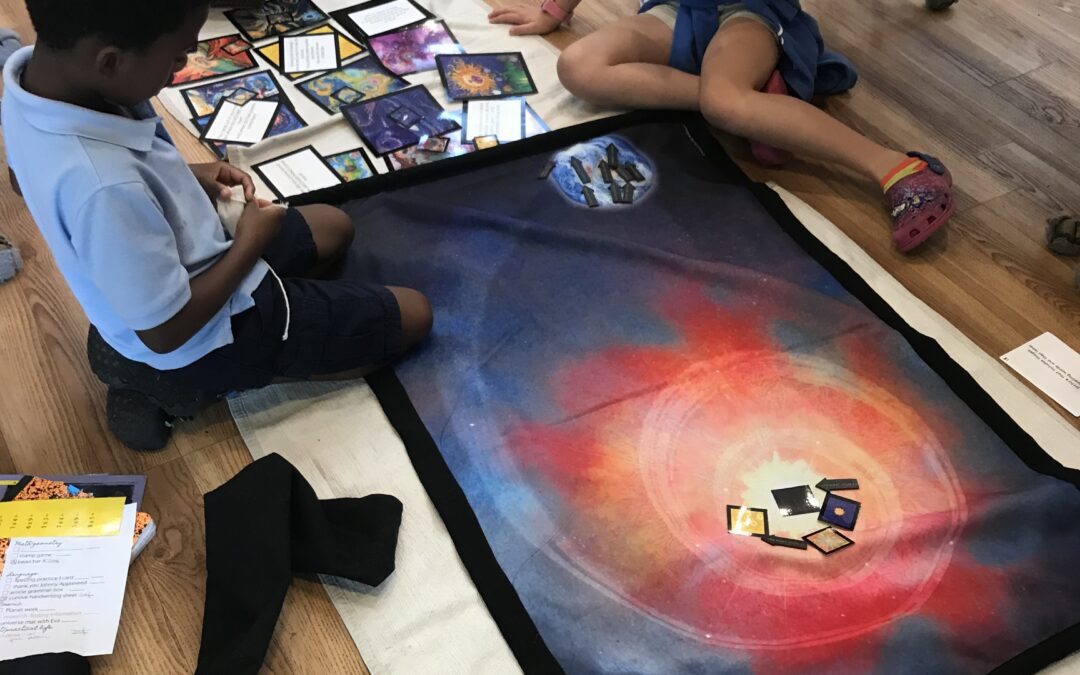
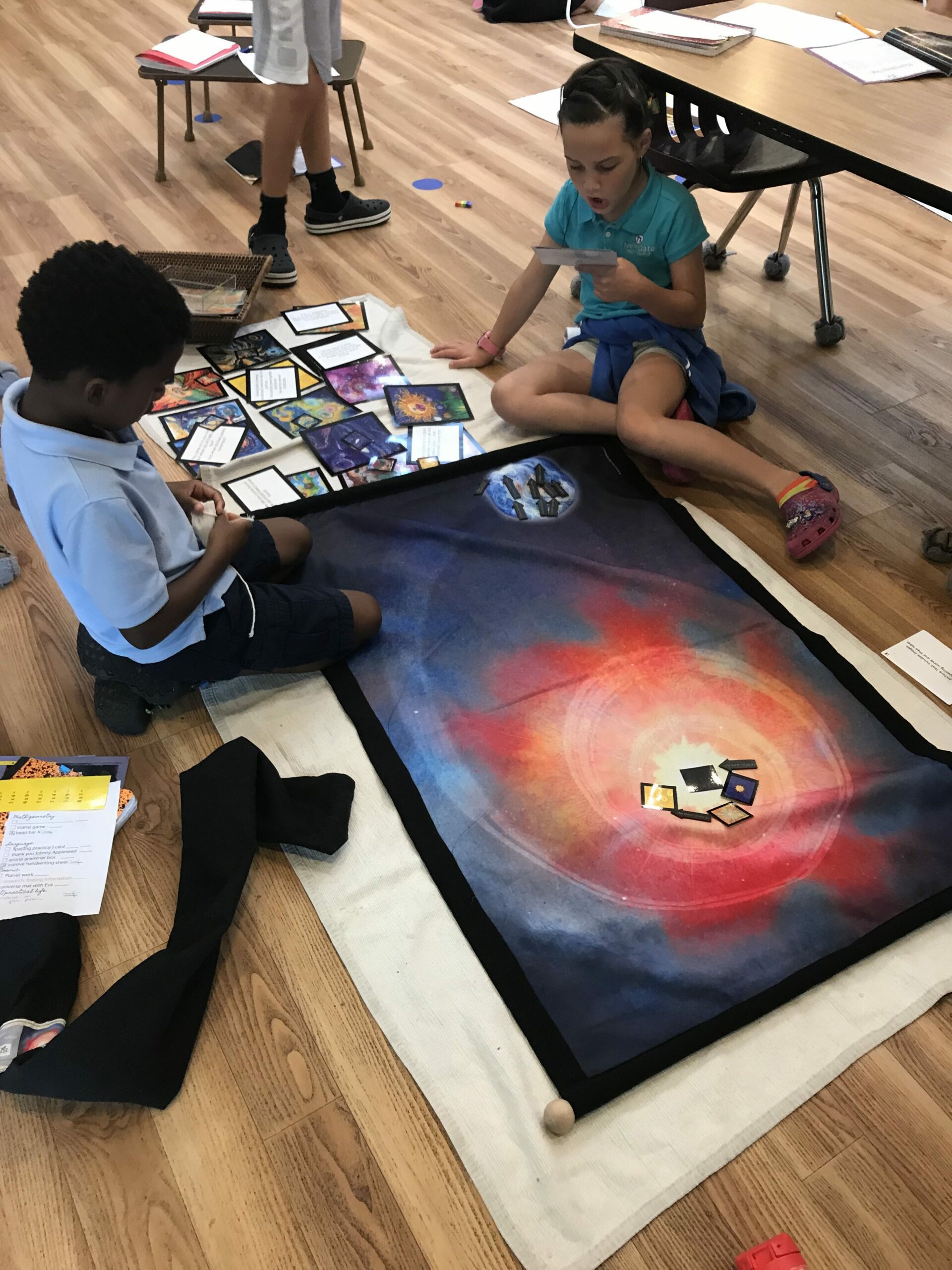
One of the key components of the Montessori cosmic curriculum is the use of what Montessori calls the “Great Lessons”. The Great Lessons are a classic element in the Montessori curriculum, especially during the elementary years, although we can introduce them even earlier and expand on them in the adolescent years.
Among other things, the Great Lessons are powerful and inspiring stories that are used to introduce children to the interconnectedness of all things in the universe. They are typically presented in a dramatic and engaging way, using storytelling, props, and hands-on science experiments and activities.
They are a set of five stories or lessons that are designed to ignite a child’s imagination and deeper interest in learning about the world around them. These lessons are an integral part of the Montessori curriculum and are typically introduced to children between the ages of six and twelve.
The five Great Lessons are:
1. The Story of the Universe: This lesson introduces children to the formation of the universe, the formation of the Earth and our solar system. This lesson and the follow up activities take a first look at the question of how the world began, different stories that people have told, and what scientists believe, in simple terms, about the Big Bang, formation of the stars, gallaxies, and solar systems, and how the Earth changed over the geologic eras setting the stage for life to emerge.
2. The Story of Life: This lesson explores the origins and evolution of life on Earth, including the characteristics of living organisms, the classification of living things, and the interdependence of all living things. Most children tend to be fascinated by dinosaurs. During the Second Great lesson, we helped them to understand how life evolved from simple organisms to the plants and animals that we see today. Learning about the fossil records, and the way animals changed over time and adapted to their environment is all part of this element of the overall curriculum. While the lesson is just the introduction, the ongoing study of biology continues throughout the curriculum in Montessori all the way through high school.
3. The Story of Human Beings: This lesson delves into the evolution of humans, including the development of language, culture, and civilization. Beginning with a broad overview of the evolution of modern people from our Neolithic ancestors, and how archaeologists have found evidence of the way people lived many years ago. Children are introduced to the fundamental needs that all human beings share, how we have met those needs in different parts of the world, early tools, and how civilization developed.
4. The Story of Writing: This lesson explores the history of writing, including the development of different writing systems and the role of writing in human communication.
5. The Story of Numbers: This lesson introduces children to the concept of numbers and their importance in human society, including the development of different number systems and the use of numbers in science, mathematics, and technology.
The Great Lessons are not simply stories that are told to children but are opportunities for children to engage in hands-on learning activities and explore their own interests and curiosity.
These lessons from the center of the elementary curriculum, with all areas of the classroom spiraling out from the Great Lessons. The Story of the Universe leads to science and geography. The Story of Life leads to the study of biology and zoology. The Story of Human Beings leads to cultures of the world. The Story of Writing leads to the language area. The Story of Numbers leads to mathematics and geometry. These five lessons lead to all the other materials and lessons throughout the six years of elementary and beyond.
By presenting these lessons in a way that is engaging and accessible to children, Montessori educators aim to inspire children to become lifelong learners who are passionate about exploring the world around them.
References
Sapiens: A Brief History of Humankind and 21 Lessons for the 21st Century by Yuval Noah Harari, Harper; Illustrated edition, 2015
The Deep Well of Time by Michael Dorer, Parent Child Press, 2016
Tomorrow’s Children: A Blueprint For Partnership Education In The 21st Century by Riane Eisler, Basic Books, 2001
Children of the Universe (An introduction to the Great Lessons), by Michael & D’Neil Duffy, Parent Child Press, 2016
The Wonder of Woodwork
To continue reading, you will need to choose a subscription plan.

Montessori, the Second Plane, and Imagination
To continue reading, you will need to choose a subscription plan.
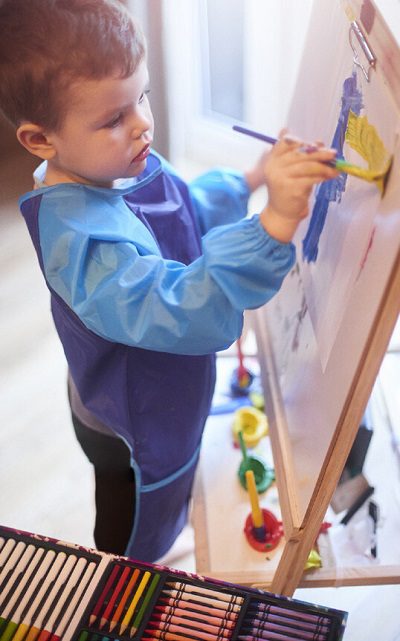
Messy Spaces for Art and Hobbies
by Tim Seldin and Lorna McGrath
An excerpt from Montessori For Every Family, published by DK Press, 2021
In most families, there are hobbies, interests, and activities that can be messy, need to be left in place to continue to work on later, or where special tools and supplies can be kept on hand and are easily found as needed. A messy space like this could be a spare room in your house, in the basement if you have one, or in your family garage.
It could be a craft and art studio for sculpting or making pottery or an area for woodworking with a workbench with tools arranged on shelves or hanging from a pegboard. It might be a room where you keep your paints and an easel, a photography or video studio with lighting and backdrops, or a space for tools to work on your cars or bicycles.
Keeping order in mind as you plan and organize the space is key to reducing frustration when you can’t find a tool you need or something you’ve just created gets knocked over. When there is clutter and disorder, accidents are more likely to happen and safety to be compromised. It also becomes more difficult to concentrate on the project at hand.
In a Montessori-inspired home, we want to think about what kind of space is needed for your interests or hobbies with all members of the family in mind. Your children are likely to want to be around you as much as possible, as well as needing a space where they can do the things that they prefer. So the idea is to think about the activities that your family members enjoy and consider which ones can be done in the same space.
Many families do not have a spare room, a basement, or even a garage that could be turned into a messy room. What are you to do then? Of course, everything depends on the ages and interests of your children, which may be very different from child to child, but the basic concepts remain the same. Our goal is to allow children to do activities that may be too messy to allow in their bedrooms, the kitchen, or the living room. When you live in a small apartment or home, you have to think outside of the box. You may make an exception to the general rule, and create a small area in the child’s bedroom where you lay down a protective heavy plastic covering on the floor and allow your child to paint, work with clay, glue models together, and other things using a washable covering to protect the surface of the kitchen table. The goal is to encourage children to feel that they can explore hobbies and interests while having your house (or backpack) become a mess.

Real-life story: When Jennie first went to school, she was fascinated with the art materials in her Montessori class. She loved to paint and draw with the beautiful beeswax crayons and colored pencils that were part of the classroom environment. When she would come home, she would often ask her mom if she could have an art studio. Jennie and her mom bought her a set of simple water paints and brushes, a small tabletop easel, and a stack of water-paint paper. They set up a little art studio with tile on the floor that could be easily cleaned if any paint spilled. Mom also bought some picture frames made from matte board so Jennie could hang her favorite paintings. As time went by, Jennie moved from water paints to charcoal and pastels and finally tempera and oil paints. but her interest in drawing and painting never faded away. Today, Jennie has grown up and has a career in science, but she still enjoys painting and loves going to art galleries.
Real-life story: I started noticing my son’s school backpack was full of what I considered trash. Broken rubber bands, the inner ring from a roll of tape, bits of string, etc… for and he just said that he needed them. Then, I started noticing items moving from the recycle bin to his bedroom. Egg cartons, milk jugs, cardboard boxes of all sizes…..it was looking like a recycling center in his room. I would ask him what they were. He kept saying he “needed” it all, so I walked out, took a deep breath, and went with it when what I really wanted to do was put it all back in the trash and have a clean house! Then, one day, he emerged from his room with a giant “smoothie shop” that served all types of smoothies (made out of cardboard and “trash”). This shop was so amazingly detailed and each bit of “trash” served a thought-out purpose. He used amazing grace and courtesy to take our orders and serve us smoothies. We all drank some delicious smoothies that day, and I silently thanked all of his Montessori teachers for teaching me to follow his interests… even when those interests looked like “trash!” —Tara, mother of John 9 years old
Lorna McGrath, M.Ed., is Director of IMC School Accreditation, Program Director of the Montessori Family Alliance, and Senior Consultant of The Montessori Foundation. Lorna has 41 years of experience in the field of education, teaching children from 18 months through 6 years old and from 12 through 18 years old in both public schools and independent Montessori schools. Lorna is a Montessori teacher educator, conference presenter, and school consultant. She can be reached at lornamcgrath@montessori.org.
Tim Seldin is President of the Montessori Foundation and Chair of the International Montessori Council. His more than40 years of experience in Montessori education includes 22years as Headmaster of the Barrie School in Silver Spring, Maryland, his alma mater from toddler through high school graduation. Tim was Co-Founder and Director of the Institute for Advanced Montessori Studies and the Center for Guided Montessori Studies. He earned a B.A. in History and Philosophy from Georgetown University, a M.Ed. in Educational Administration and Supervision from The American University, and his Montessori certification from the American Montessori Society. Tim Seldin is the author of several books on Montessori Education, including How to Raise An Amazing Child, The World in the Palm of Her Hand, and his new book, Montessori for Everyone, co-authored with Lorna McGrath.
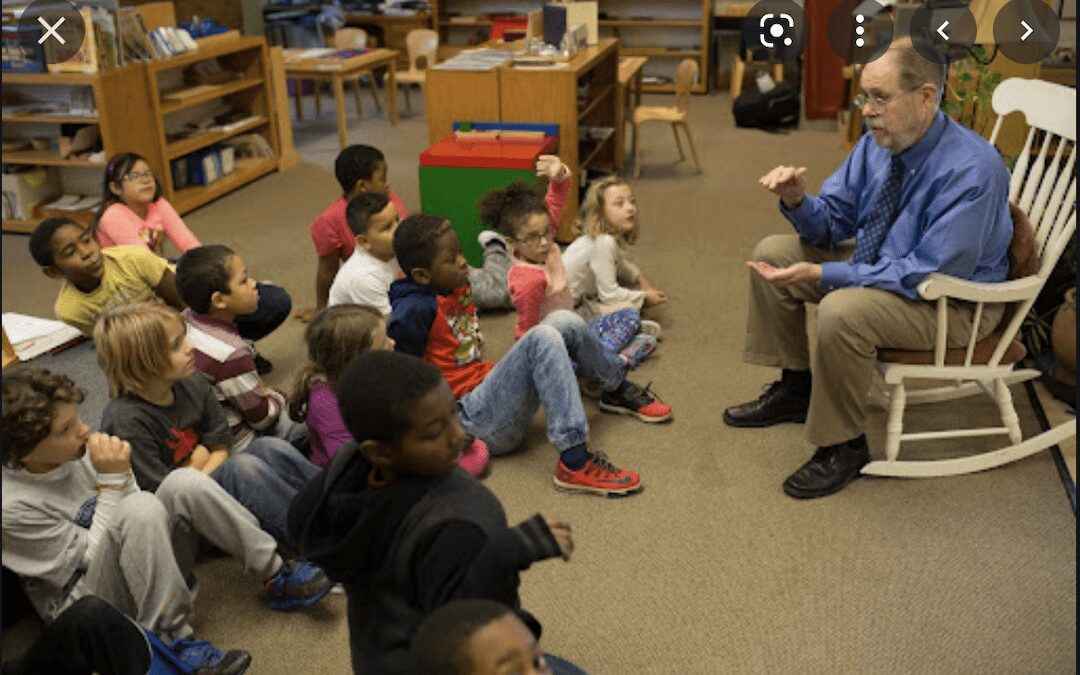
Storytelling and Emotional Intelligence
To continue reading, you will need to choose a subscription plan.

Cosmic Education Resource Page
Begun by Sharon Caldwell
NOTE TO THE READER: This page is a work in progress. I will continue to update it as I find more resources and information. Please email me at sharoncaldwell@montessori.org with suggestions and requests. Please also check out the Cosmic Education section in Links. Most of my favorite links are there and may not be duplicated in this article.
We must be careful not to fix the details of the Great Lessons so that they become so precisely accurate that they become mere catalogs of facts. The need to remain stories of inspiration. We as teachers need to be clear that these Lessons must set the children’s hearts and minds on fire. This is our first priority. As the children break off from the Great Lessons to do research, there they will find the facts. – Robyn – Montessori-L discussion Group
Theory of Cosmic Education:
The AMI elementary trainers are unanimous in saying that we should present all the Great Stories within the first 2 – 6 weeks of the school year and that there should be no follow-up work assigned. – John Snyder, Austin Montessori School. (in an email to Montessori-L discussion list).
If the children are not doing spontaneous follow-up work it means they aren’t inspired – the teacher must then work out why her lessons are not exciting the children. It is also OK if some children do not do follow-up work. They are hearing the stories and also hearing discussions that lead from them as the teacher continues to unpack the stories as the year progresses. The stories are not meant to “teach” factual knowledge but rather to evoke a sense of wonder and a deep appreciation of the interconnectedness of everything. They are intended to spark an understanding of the Cosmic Task of Man.
Cuevas, Eduardo J. G. Liberty: Spiritual Freedom and Moral Responsibility. 25th International Montessori Congress Papers.
Duffy, M & D. Cosmic Education in the Elementary Classroom, Parent Child Press, 2002.
Grazzini, Baiba Krumins, “The Role of the Disciplines for Cosmic Education”, Communications 2006/1, 64 – 74.
Hayes, Mary Montessori’s View of Cosmic Education, 25th International Montessori Congress Papers.
Hilson, Patricia. Laying the Foundations for Cosmic Education in the Child 3 – 6 Years.
Montessori, Maria. To Educate the Human Potential. – Especially important is the first essay: “The Six Year Old Confronted with the Cosmic Plan.”
ORIGIN OF THE UNIVERSE
Some Great Books to inspire extensions from First Great Lesson:
Wikipedia History of Earth is a good place to start looking for info.
The Authors, How To Create a Flawless Universe in Just Eight Days, Godfather Publications, No Location, 597b.
– Yes, this is a real book – but written with tongue firmly locked in cheek. 6 – 12s really enjoy it.
STORY OF LIFE
PHOTOSYNTHESIS
www.naturedetectives.org.uk – Why leaves change colour. Good explanation of photosynthesis.
For a more detailed explanation of photosynthesis
CLASSIFICATION OF LIVING THINGS
Parallel to the story of life you begin to explore Classifications/Taxonomy. Depending on the background of your students you can start off with simple “Who am I?” activities to extend exposure to the natural world – either using objects (shells, etc.) or model animals (must be realistic) or picture cards. With children who are reading, you can use “First Stories” which combine short descriptive paragraphs with names and pictures of plants and animals.
Bang, Molly and Chisholm, Penny. Living Sunlight: How Plants Bring the Earth to Life. Blue Sky Press. 2009. [Recommended by Priscilla Spears.]
THE STORY OF HUMANS
www.handprint.com – This is one of my favorite teacher resource sites, although older children enjoy it too. I love it especially because it highlights the hand-brain connection so integral to Dr. Montessori’s thinking.
Human Migration:
THE STORY OF WRITING
A simple version of the story with nice clear graphics that can be hand-drawn on a whiteboard while telling the story: http://www.moteaco.com/albums/greatlessons/story4.html
For more detailed lesson plans see Miss Barbara: www.missbarbara.net/thehistoryofwriting.html
Simple, uncluttered printable timeline: http://www.moteaco.com/albums/writing.html
Human History Timelines:
Christ as the center of human history – see www.montessoriforeveryone.com for a free download timeline. The instructions include some interesting information on dating. NOTE: This is a resource developed by Montessori educators of that faith. The same strategies can be used in many other ways

How Montessori educators use stories in the Montessori program
To continue reading, you will need to choose a subscription plan.
An Open Door to Creativity: How Science Connects Kids to Nature, Arts, Literature, and More
Do you often separate scientific topics from artistic or creative ones? Do you think of the study of science as different from the study of literature and art? Cynthia will guide us through a discussion of how scientific topics can relate to and inspire artistic and creative pursuits. She will include ideas for outdoor and indoor activities that bridge these connections, touching on observation, nature journaling, classification, and more. Cynthia will suggest creative writing activities and also recommend several exciting resource books.
Montessori: The Science — Part 8: Meaningful Contexts Assist Learning
Dr. Angeline Lillard presents Maria Montessori’s key insights about childhood education, the subsequent educational research that has validated her approach, and how these ideas are implemented in a modern Montessori classroom.
From Montessori: The Science Behind the Genius
For more information, visit: http://montessori-science.org
Reading Alive!
To continue reading, you will need to choose a subscription plan.

Webcast: Discovery Part 1
To continue reading, you will need to choose a subscription plan.
Woodworking 101 for Children 3-6 Yrs. Old
To continue reading, you will need to choose a subscription plan.
Montessori and STEAM Education
To continue reading, you will need to choose a subscription plan.
Value and Values of Montessori in the 21st Century
To continue reading, you will need to choose a subscription plan.

Book Review: The Hunger Games
To continue reading, you will need to choose a subscription plan.
STEM and Montessori
To continue reading, you will need to choose a subscription plan.
Featured
-
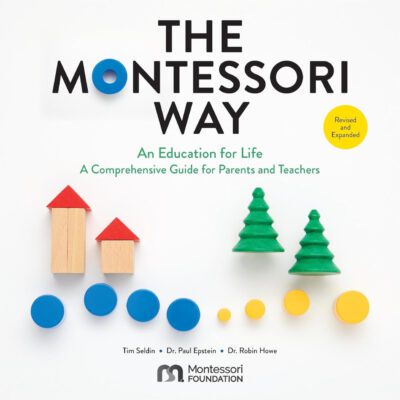
 The Montessori Way, Revised and Expanded: An Education for Life; A Comprehensive Guide for Parents and Teachers
$25.00
The Montessori Way, Revised and Expanded: An Education for Life; A Comprehensive Guide for Parents and Teachers
$25.00
-
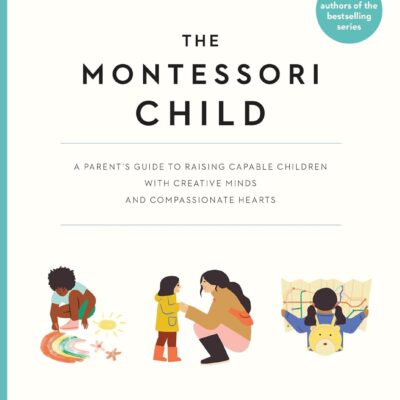
The Montessori Child: A Parent's Guide to Raising Capable Children with Creative Minds and Compassionate Hearts (The Parents' Guide to Montessori)
$20.00
-
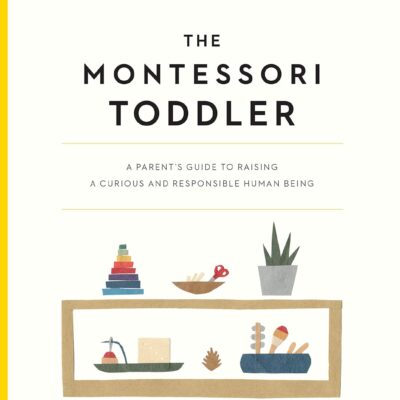
The Montessori Toddler: A Parent's Guide to Raising a Curious and Responsible Human Being (The Parents' Guide to Montessori)
$20.00
-
Montessori in Action: Building Resilient Montessori Schools 1st Edition
$29.95
-
Bulk Order, 30 Copies of Montessori for Every Family: A Practical Parenting Guide To Living, Loving, And Learning
Original price was: $600.00.$510.00Current price is: $510.00.

Products
-
The Montessori Way, Revised and Expanded: An Education for Life; A Comprehensive Guide for Parents and Teachers
$25.00
-
The Montessori Child: A Parent's Guide to Raising Capable Children with Creative Minds and Compassionate Hearts (The Parents' Guide to Montessori)
$20.00
-
The Montessori Toddler: A Parent's Guide to Raising a Curious and Responsible Human Being (The Parents' Guide to Montessori)
$20.00
-
Montessori in Action: Building Resilient Montessori Schools 1st Edition
$29.95
-
Bulk Order, 30 Copies of Montessori for Every Family: A Practical Parenting Guide To Living, Loving, And Learning
Original price was: $600.00.$510.00Current price is: $510.00.