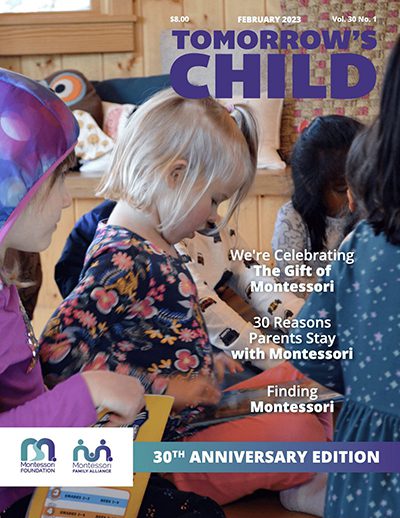
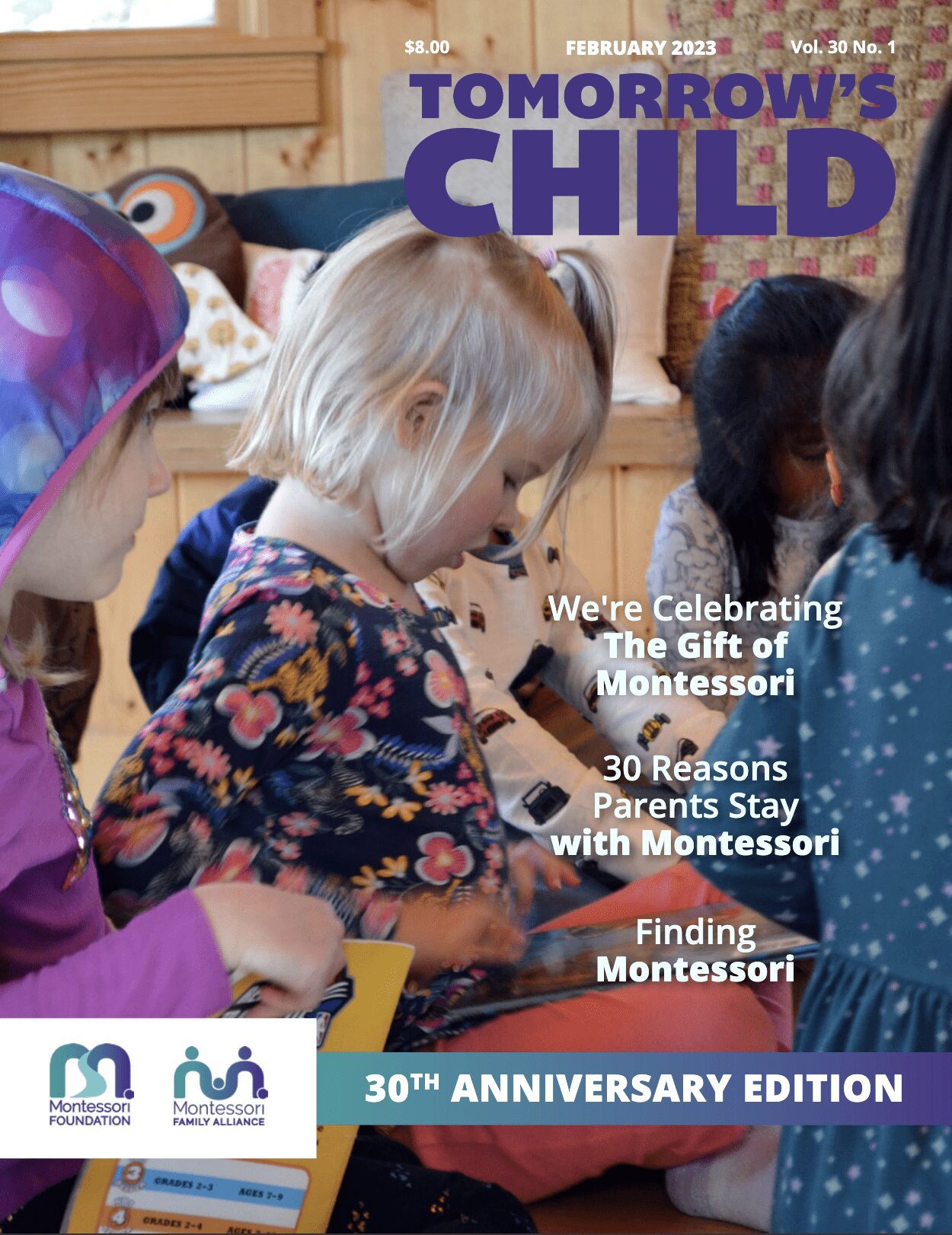
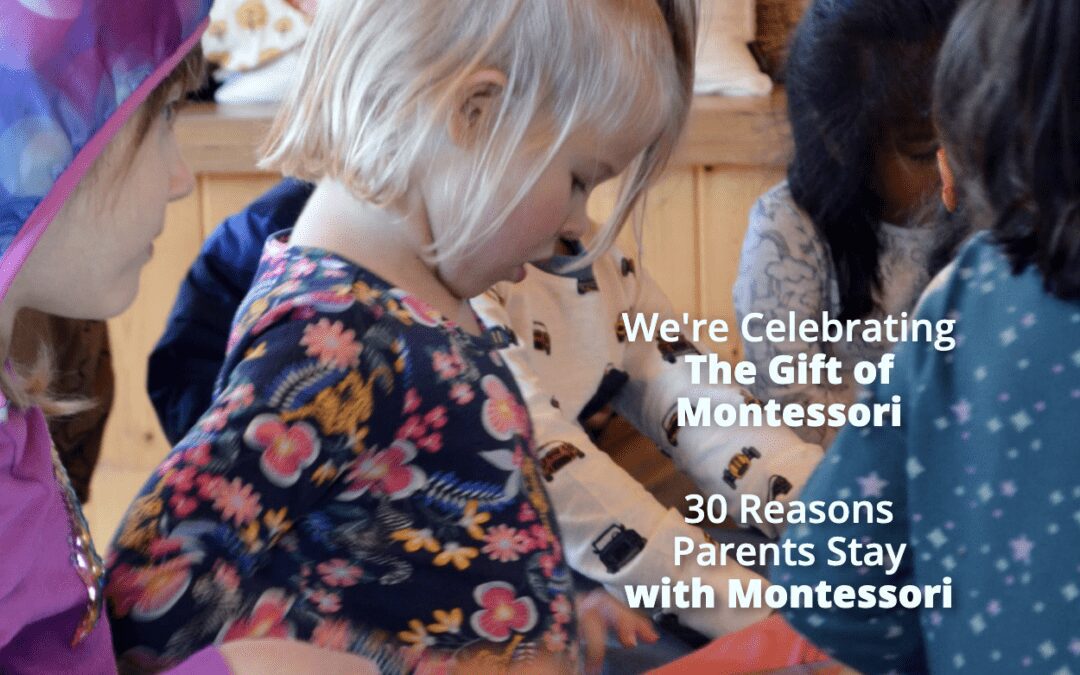
Tomorrow’s Child | Welcome | February 2023

Witten by Aspen Seeley, Fifth Grade Student Five Oaks Academy Simpsonville, SC
Montessori teaching is all about hands-on;
checkerboards and microscopes all to learn upon.
Montessori demonstrates peace and how to be fair,
as well as kindness, friendship, respect, and tender loving care.
The classroom is our place to roam, it’s almost like our second home.
We learn to manage time and to be respectful,
and not to be unthankful, unkind, mean, or neglectful.
We have to thank Maria Montessori for all of the above;
and for thinking up the education that we students know and love.



Most of us are aware that the United Nations adopted a declaration on the universal rights of the child, but many of us have not read it. Here is the introduction and the link to the full text. We encourage you to revisit it from time to time and reflect on the vital message and vision within.
ADOPTED
20 November 1989
BY
General Assembly of the United Nations
resolution 44/25
Entry into force: 2 September 1990, in accordance with article 49
The States Parties to the present Convention,
Considering that, in accordance with the principles proclaimed in the Charter of the United Nations, recognition of the inherent dignity and of the equal and inalienable rights of all members of the human family is the foundation of freedom, justice and peace in the world,
Bearing in mind that the peoples of the United Nations have, in the Charter, reaffirmed their faith in fundamental human rights and in the dignity and worth of the human person, and have determined to promote social progress and better standards of life in larger freedom,
Recognizing that the United Nations has, in the Universal Declaration of Human Rights and in the International Covenants on Human Rights, proclaimed and agreed that everyone is entitled to all the rights and freedoms set forth therein, without distinction of any kind, such as race, colour, sex, language, religion, political or other opinion, national or social origin, property, birth or other status,
Recalling that, in the Universal Declaration of Human Rights, the United Nations has proclaimed that childhood is entitled to special care and assistance,
Convinced that the family, as the fundamental group of society and the natural environment for the growth and well-being of all its members and particularly children, should be afforded the necessary protection and assistance so that it can fully assume its responsibilities within the community,
Recognizing that the child, for the full and harmonious development of his or her personality, should grow up in a family environment, in an atmosphere of happiness, love and understanding,
Considering that the child should be fully prepared to live an individual life in society, and brought up in the spirit of the ideals proclaimed in the Charter of the United Nations, and in particular in the spirit of peace, dignity, tolerance, freedom, equality and solidarity,
Click the link below to read the full text:
https://www.ohchr.org/en/instruments-mechanisms/instruments/convention-rights-child
The undersigned Montessori organizations challenge the national, state, and local legislative policies and laws that serve to regulate, limit, and intentionally omit what is taught about an honest history of the United States of America, the roles that all citizens played in its development, and exploration and discussion of racism and bias and its impact in our society. Beyond this, schools are implementing book bans and librarians and administrators are removing books from libraries (Natanson, 2022). Far too often, instead of an honest historical account, many educators offer an “inaccurate account of American history… [where non-European] …. [p]eople of other races are either pushed outside of the historical narrative, completely left out of the accounts, or their contributions are minimized because they are deemed inferior or different” (Takaki and Stefoff, 2012).
Over the last year, our nation has been immersed in discussions and legislative actions surrounding Critical Race Theory (CRT) or as some call it, “antiracist training and divisive concepts” (Stout and Wilburn, 2022). CRT is an advanced graduate school legal academic framework based on the notion that racism is not simply about individual prejudice, but it is prejudice embedded in our country’s laws, institutions, and policies (Levin, 2022). As a Montessori collective, we recognize that our independent and public schools operate within different legal contexts. We implore school leaders, teachers, and caregivers to educate themselves on the issues, understand local dynamics, and dig deep to help children develop an honest historical perspective and a moral compass that supports good judgement for the cultivation of more harmonious relationships in our society.
This statement serves as an urgent call to action for all educators to, as Maria Montessori did, advocate for the rights of children in all communities. This includes employing effective teaching approaches that emphasize the contributions of diverse cultures which exist in classrooms, schools, and communities, staying vigilant about policies state legislatures and local boards of education are doing, and making our voices heard if anti-CRT policies are proposed. This action affirms guides who are courageous enough to “teach with historical integrity” (Acker, 2021). With the knowledge of multiple perspectives, children may be able to think critically, ask questions, “cultivate positive identity formation, confront racial and ethnic injustice, and be more prepared to live and work together in a diverse world” (Learning for Justice, 2021). “When this transformation occurs, …we then become witnesses to the development of the human soul; the emergence of the New [Human], who will no longer be the victim of events but, thanks to his clarity of vision, will become able to direct and to [mold] the future of [humankind]” (Montessori, 1949/2019).
Click Here to access additional background information and resources about CRT and legislative restrictions on the freedom to read, learn, and teach.
Co-Signers
American Montessori Society (AMS)
Munir Shivji, Executive Director
Association Montessori International/USA (AMI/USA)
Ayize Sabater, Ed.D, Executive Director
International Montessori Council (IMC)
Kathy Leitch, Executive Director
Tim Seldin, Chair
Montessori Educational Programs International (MEPI)
John Moncure, President
Montessori Foundation
Tim Seldin, President
Montessori for Social Justice (MSJ)
Lindsey Pollack, Ed.D, Board of Directors/Finance Officer
Montessori Public Policy Initiative (MPPI)
Wendy Shenk-Evans, Executive Director
National Center for Montessori in the Public Sector (NCMPS)
Sara Suchman, Executive Director
Citations
Acker, C. (2021, August 19). Critical Race Theory. Retrieved from WPFW Radio Archives (August 19, 2021).
Lesson Plans. Learning for Justice Magazine. Retrieved from: https://www.learningforjustice.org/classroom-resources/learning-plans on 12/21/2021.
Montessori, M. (1949/2019). The Absorbent Mind (The Montessori Series). Amsterdam, The Netherlands: Montessori-Pierson Publishing Company.
Natanson, H. Schools nationwide are quietly removing books from their libraries (March 22, 2022).
The Washington Post. Retrieved from: https://www.washingtonpost.com/education/2022/03/22/school-librarian-book-bans-challenges/ on March 29, 2022
Takaki, R. and Stefoff, R. (2012) A Different Mirror for Young People: A History of Multicultural America (For Young People Series). New York, NY: Seven Stories Press
The racial awareness of children is often significantly underestimated. Studies have shown that by three months of age, infants can notice and express preference by race and by nine months of age, they can categorize people by race. There is strong evidence demonstrating racial bias in children as young as three years of age (Waxman, 2021, and Sullivan; Wilton, and Apfelbaum, 2020). Based on Maria Montessori’s description, children entering the second plane of development (roughly 6-7 years of age) develop ethical perspectives about life. “They have character, they have a great sense of honesty, they cannot see injustice without intervening …” (Montessori, 1971). Despite this knowledge, there seems to be a tremendous fear in our country about discussing race and racial issues with children.
History–the study of how the past has shaped our current existence–is the pillar of the Montessori educational approach for children 6-12 years of age known as “Cosmic Education.” The stories of people with different lived experiences and perspectives provide the tapestry within which students weave their own unique identities, shape their own futures, and develop empathy, dignity, and a sense of justice. Educators are tasked with skillfully guiding students to critically examine the narratives of history. This includes offering guidance about the concepts of race and justice and what those concepts mean in American society and culture today. “We must put everything before [them], the school, culture, religion, the world itself. We must help [them] to develop within [themselves] that which will make [them] capable of understanding. It is not merely words; it is a labor of education. This will be a preparation for peace – for peace cannot exist without justice and without [people] endowed with a strong personality and a strong conscience” (Montessori, 2019).
Contrary to this, many legislators around the country are actively working to pass what has come to be known as anti-CRT legislation. These “anti-divisive concept” laws are very calculated and direct in their efforts to misrepresent the definition and the intended application of CRT, resulting in legislation that will uphold structural racism and suppress the teaching of a more representative history. CRT has also been employed as a legal framework, or lens, through which scholars, and those who are professionals within the American legal system, examine how the laws of the United States have been impacted by the social construct that we refer to as race. CRT’s framework has remained consistent since it was originally penned, however, this work is now being willfully and actively misinterpreted and erroneously defined to serve as an umbrella term for any teaching about race in our country’s history, which ultimately prevents schools and educators from presenting students with truthful historical information.
Educators would do well to understand how the concept of CRT is being presented to parents, teachers, and school leaders by these policymakers. Many anti-CRT proponents are vilifying it, which “took shape starting with a concerted effort to mischaracterize it… Conflate it with terms that poll poorly (e.g., Antifa and wokeness). Redefine it as an assault on American values” (Civic Way, 2020). It is critical to understand that historically, and now, consequential decisions regarding civic and history education are being made and legally ‘baked’ into the very system that the CRT framework sought to examine and expose as problematic.
“Between January and September 2021, 24 legislatures across the United States introduced 54 separate bills. Forty-eight bills explicitly apply to teaching in some form in public schools” (Pardlo, 2021). “As of October 1, 2021, Oklahoma, Tennessee, Florida, Arkansas and Iowa have passed bills. Bills have also either passed or are being considered in Arizona, Georgia, Idaho, Kentucky, Louisiana, Michigan, Missouri, New Hampshire, North Carolina, Rhode Island, South Carolina, South Dakota, Texas, Utah, Virginia, and West Virginia. The Tennessee law stipulates that the state education commissioner must withhold state funds if a public school “knowingly violates” the ban on teaching 14 different concepts that range from discrimination to privilege to racial bias to the idea that “all Americans are not created equally” (Camera, 2021). “A parent in Williamson County, Tennessee, has already cited the law in a complaint that alleges that a teacher’s lesson on Ruby Bridges, the 6-year-old girl who became the first African American student to integrate a school in the South, made her child feel uncomfortable” (Penderharker, 2021).
As of February 2022, the effort to restrict curricula content regarding the contributions of specific racial or ethnic groups to U.S. history, or related topics is growing. “So far, at least 36 states have adopted or introduced laws or policies that restrict teaching about race and racism. With 2022 state legislative sessions underway, new legislation is in the pipeline” (Stout and Wilburn, T., 2022). The American culture debate has gotten so intense that former President Trump has informed Americans that, “Getting critical race theory out of our schools is not just a matter of values, it’s also a matter of national survival. We have no choice, the fate of any nation ultimately depends upon the willingness of its citizens to lay down and they must do this, lay down their very lives to defend their country” (Levin, 2022).
This campaign has instilled fear in school boards and incited frenzies and passionate public debates. Many of these frenzies are a part of a coordinated strategy to negatively affect funds for state-supported schools, including Montessori public schools, if the districts do not comply with these new laws. Many of these potential laws include clauses that will issue state-imposed fines on state educators teaching uncomfortable concepts. This can potentially reduce overall teacher retention rates. “The debate is between people who think children should not be burdened with the past, and those who want them to learn how the legacy of that past shapes American society today” (Waxman, 2021).
The issue is not whether educators of young children will teach graduate-level theoretical frameworks, such as CRT in PreK-12 classes, which is not happening in most schools across the land. The issue appears to be whether a more representative and uncomfortable history or if a more comfortable and “race-neutral” history will be taught. In this time and place, it is necessary that all educators “pledge to teach the truth” (Zinn, 2021) about the tapestry of cultures that have contributed well to this nation and to guide children to appreciate this history. This education does not emerge by osmosis. It is vital that educators assume responsibility to inform students and help them see the strengths they have as individuals to learn, change, and grow.
Camera, L. (June 23, 2021) Bills Banning Critical Race Theory Advance in States Despite Its Absence in Many Classrooms. US News and World Report. Retrieved from https://www.usnews.com/news/education-news/articles/2021-06-23/bills-banning-critical-race- theory-advance-in-states-despite-its-absence-in-many-classrooms
Civic Way. (2020) Critical Race Theory: Fact vs. Fiction Retrieved from:
https://www.civicway.org/saving-democracy/critical-race-theory-fact-versus-fiction/ on 02/15/2022
Levin, B. (2022, March 14) Trump Tells Supporters They Must Fight to the Death to Stop Schools from Teaching Kids About Systemic Racism. Vanity Fair. Retrieved from: https://www.vanityfair.com/news/2022/03/donald-trump-critical-race-theory-lay-down-lives
Montessori, M., ed. Montessori, Mario (1971). The Four Planes of Education. Distributed by Association of Montessori International/USA
Montessori, M. (2019). Citizens of the World. (The Montessori Series). Amsterdam, The Netherlands: Montessori-Pierson Publishing Company.
Pardlo, G. (November 8, 2021) Educational Gag Orders. PEN America Retrieved from: https://pen.org/report/educational-gag-orders/
Pendharkar, E. (September 13, 2021) He Taught About White Privilege and Got Fired: Now He’s Fighting to Get His Job Back. EducationWeek Digital Magazine. Retrieved from: https://www.edweek.org/teaching-learning/he-taught-about-white-privilege-and-got-fired-now- hes-fighting-to-get-his-job- back/2021/09?utm_source=nl&utm_medium=eml&utm_campaign=eu&M=63438668&U=&UU ID=47a77b8482195e24bcc18405b3ae79d7
Stout, C. and Wilburn, T. (2022, February 1) CRT Map: Efforts to restrict teaching racism and bias have multiplied across the US. Chalkbeat. Retrieved from: https://www.chalkbeat.org/22525983/map-critical-race-theory-legislation-teaching-racism on 03/14/2022.
Sullivan, J., Wilton, L., & Apfelbaum, E. P. (2020, August 6). Adults Delay Conversations About Race Because They Underestimate Children’s Processing of Race. Journal of Experimental Psychology: General. Advance online publication. http://dx.doi.org/10.1037/xge0000851
Waxman, OB. (July 2021). ‘Critical Race Theory Is Simply the Latest Bogeyman: Inside the Fight Over What Kids Learn About America’s History.’ Time Magazine. Retrieved from: https://time.com/6075193/critical-race-theory-debate/
Zinn Education Project: Teaching People’s History. “Pledge to Teach the Truth” Retrieved from: https://www.zinnedproject.org/news/pledge-to-teach-truth on 12/21/2021.
Delgado, R. and Stefancic, J. (2017) Critical Race Theory: An Introduction, Third Edition New York University Press, New, York, NY
Dillard, C. (January 23, 2019) Five Ways to Avoid Whitewashing the Civil Rights Movement.
Learning for Justice Magazine. Retrieved
from: https://www.learningforjustice.org/magazine/five-ways-to-avoid-whitewashing-the-civil- rights-movement
Lesson Plans. Learning for Justice Magazine. Retrieved from: https://www.learningforjustice.org/classroom-resources/learning-plans on 12/21/2021.
Takaki, R. and Stefoff, R. (2012) A Different Mirror for Young People: A History of Multicultural America (For Young People Series). New York, NY: Seven Stories Press
Zinn Education Project: Teaching People’s History. “Pledge to Teach the Truth” Retrieved from: https://www.zinnedproject.org/news/pledge-to-teach-truth on 12/21/2021.
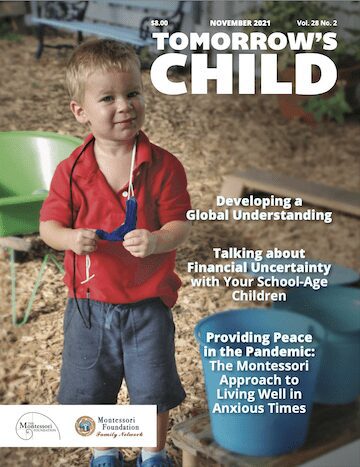
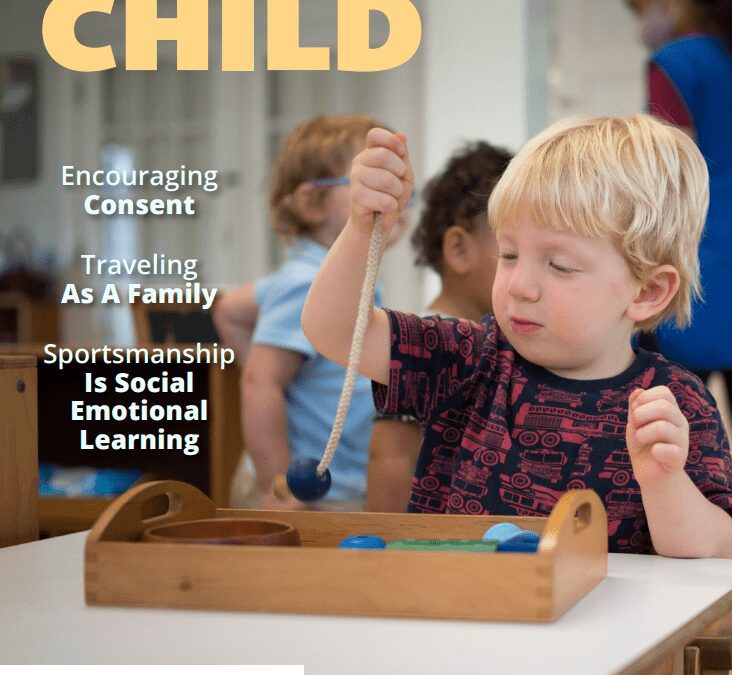
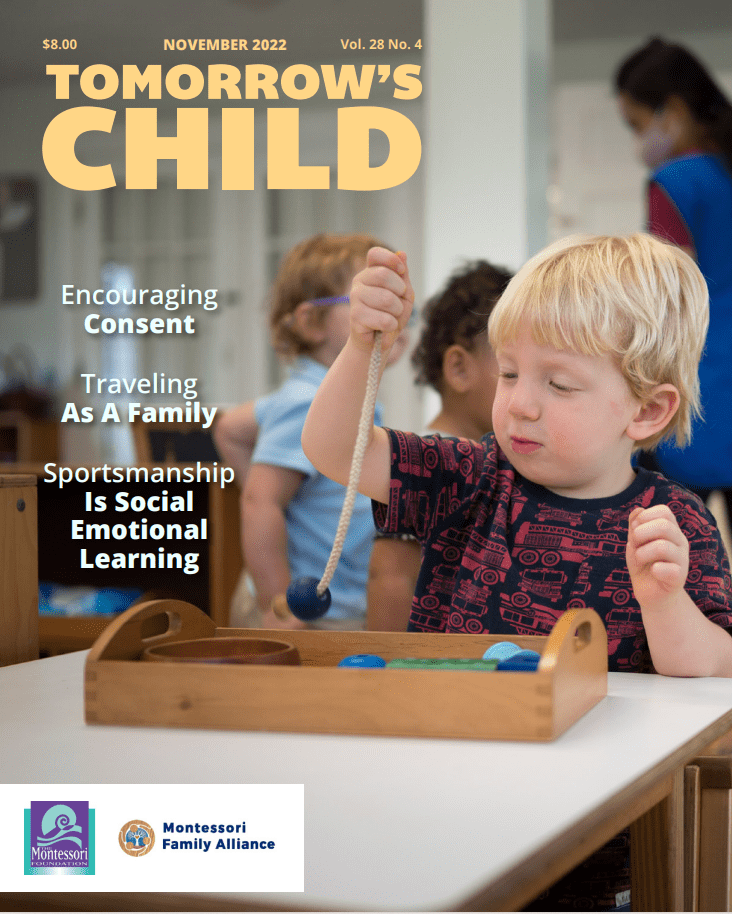
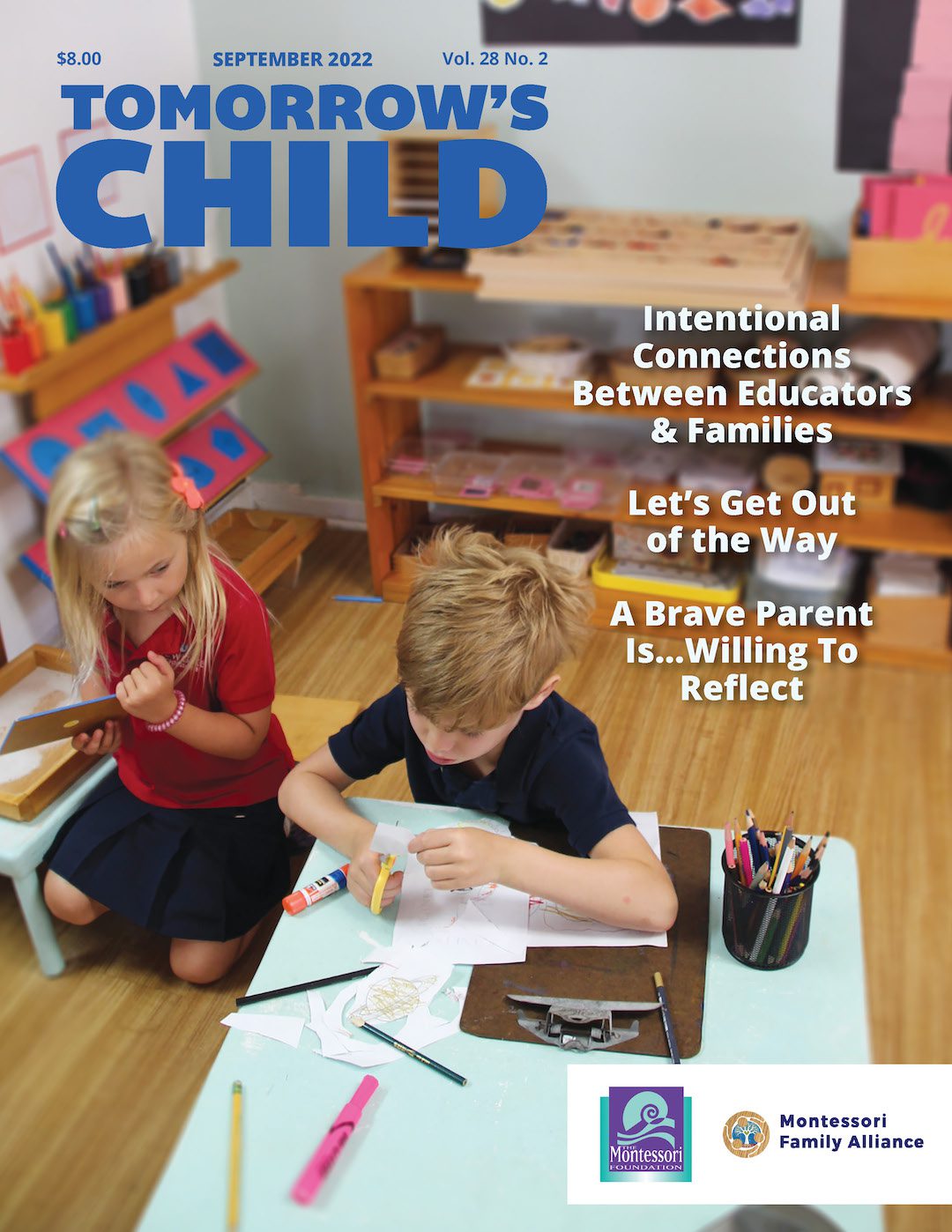
This issue of Tomorrow’s Child addresses how Montessori schools support children’s emotional well-being during a stressful time, teaching global understanding, how we prepare Montessori learning environments, sibling rivalry, the Montessori Silence Game, teaching music, showing gratitude, gift suggestions, book reviews, and much more.
Click here to see the complete issue as it appears in print.
Additionally, with our last issue, we launched a new mobile-friendly platform for viewing the digital edition. You can find that new platform here.
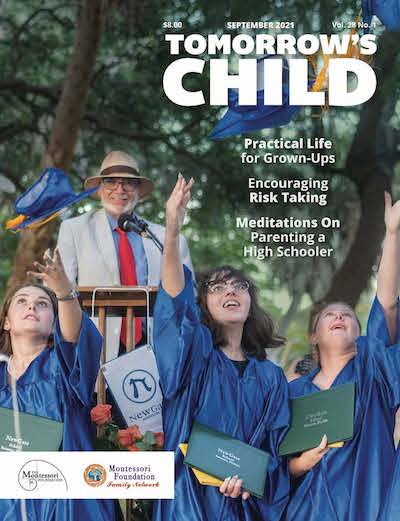
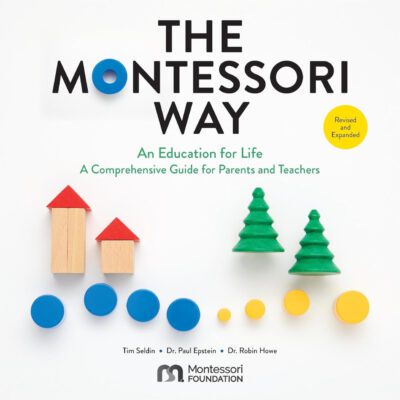 The Montessori Way, Revised and Expanded: An Education for Life; A Comprehensive Guide for Parents and Teachers
$25.00
The Montessori Way, Revised and Expanded: An Education for Life; A Comprehensive Guide for Parents and Teachers
$25.00
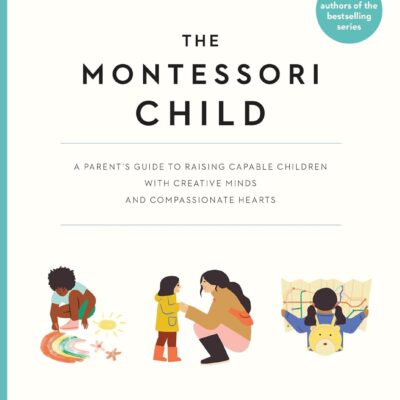 The Montessori Child: A Parent's Guide to Raising Capable Children with Creative Minds and Compassionate Hearts (The Parents' Guide to Montessori)
$20.00
The Montessori Child: A Parent's Guide to Raising Capable Children with Creative Minds and Compassionate Hearts (The Parents' Guide to Montessori)
$20.00
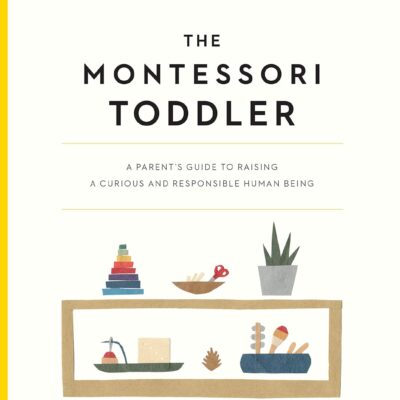 The Montessori Toddler: A Parent's Guide to Raising a Curious and Responsible Human Being (The Parents' Guide to Montessori)
$20.00
The Montessori Toddler: A Parent's Guide to Raising a Curious and Responsible Human Being (The Parents' Guide to Montessori)
$20.00
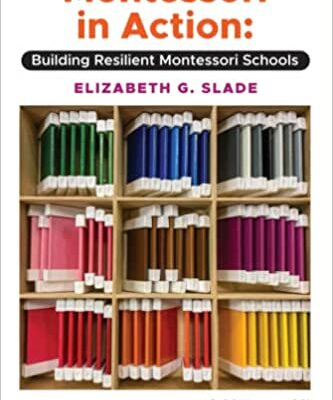 Montessori in Action: Building Resilient Montessori Schools 1st Edition
$29.95
Montessori in Action: Building Resilient Montessori Schools 1st Edition
$29.95
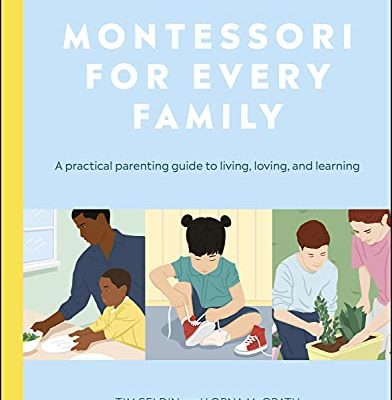 Bulk Order, 30 Copies of Montessori for Every Family: A Practical Parenting Guide To Living, Loving, And Learning
Original price was: $600.00.$510.00Current price is: $510.00.
Bulk Order, 30 Copies of Montessori for Every Family: A Practical Parenting Guide To Living, Loving, And Learning
Original price was: $600.00.$510.00Current price is: $510.00.
 The Montessori Way, Revised and Expanded: An Education for Life; A Comprehensive Guide for Parents and Teachers
$25.00
The Montessori Child: A Parent's Guide to Raising Capable Children with Creative Minds and Compassionate Hearts (The Parents' Guide to Montessori)
$20.00
The Montessori Toddler: A Parent's Guide to Raising a Curious and Responsible Human Being (The Parents' Guide to Montessori)
$20.00
Montessori in Action: Building Resilient Montessori Schools 1st Edition
$29.95
Bulk Order, 30 Copies of Montessori for Every Family: A Practical Parenting Guide To Living, Loving, And Learning
Original price was: $600.00.$510.00Current price is: $510.00.
The Montessori Way, Revised and Expanded: An Education for Life; A Comprehensive Guide for Parents and Teachers
$25.00
The Montessori Child: A Parent's Guide to Raising Capable Children with Creative Minds and Compassionate Hearts (The Parents' Guide to Montessori)
$20.00
The Montessori Toddler: A Parent's Guide to Raising a Curious and Responsible Human Being (The Parents' Guide to Montessori)
$20.00
Montessori in Action: Building Resilient Montessori Schools 1st Edition
$29.95
Bulk Order, 30 Copies of Montessori for Every Family: A Practical Parenting Guide To Living, Loving, And Learning
Original price was: $600.00.$510.00Current price is: $510.00.