The Great Lessons

by Robyn Zitnick

“The child should love everything that he learns, for his mental and emotional growths are linked. Whatever is presented to him must be made beautiful and clear, striking his imagination.

Since it has been seen to be necessary to give so much to the child, let us give him a vision of the whole universe. The universe is an imposing reality, and an answer to all questions.”

— Maria Montessori

Perhaps it happens on the first day of the elementary class or perhaps a few days later. A child, smiling broadly, arrives home to tell about the wonders of the day — the chart with the angels that carry the fire and the ice, the piece of terra cotta that is suddenly smashed, the paper that seems to defy gravity, and the volcano that really sparks and hisses and overflows with ash. And the story the teacher told!

That exciting and wonderful story about the coming of the universe and the earth! Montessori elementary has begun its new school year with the First Great Lesson, the story of the formation of the universe and the earth, and presented to the elementary child for his contemplation and study of the whole universe.

Dr. Montessori called upon a need to do “cosmic education.” To give the children the “whole” and the ability to see how the parts of the whole are interconnected was, in her view, the only approach that would truly satisfy the elementary child — the child who asks endless questions. Rather than force such a child to sit still and learn what has been chosen for him, she believed the child should be given everything to explore. The Great Lessons introduce everything that can be explored in one way or another. The Great Lessons inspire and activate the studies of the children and the work of the classroom.

The Five Great Lessons are not really lessons to be learned but are impressionistic stories to be told. “Impressionistic” means that these lessons are told as grand stories that will inspire and ignite the imagination, interest, and curiosity in the child rather than as a listing of facts. They are presented with drama, mystery, rich language, and awe. Dr. Montessori said that the Montessori elementary teacher must be a “storyteller of the truth.” She told her teachers to sow as many seeds of interest into the fertile minds of the children as are possible — some will germinate now; others will be held to do so later. When the child enters the elementary, he brings with him a reasoning mind, a mind capable of imagining the vastness of space and the march of time — so now we open the door to all of that through these Great Lessons of the elementary.

As well as possessing a powerful imagination, the child at this time is physically and intellectually strong. His need to know is as large as the universe and so that is what we lay before him. From this, he may eagerly choose his studies.

Generally, the children are told when a Great Lesson will be presented. Even for the children who have seen them each year, it is exciting to know one is coming. Every year they are a little different. Perhaps the teacher has brought some new artifacts to examine along with the story. Perhaps she adds some interesting facts that were not mentioned before.

Perhaps there are additional experiments. Perhaps the child hears some information that was missed in previous years. The children recognize elements of the stories ideas and facts that come from their own interests and independent studies. And then, there is always much that is new and fascinating and worthy of exploration. The Lesson is given; the discussion is opened; the exploratory work begins.

The First Great Lesson is the Coming of the Universe and the Earth. From nothing came into being the elemental universe. From that came our sun and its children, the planets. This lesson has many impressionistic charts and experiments that introduce geology, chemistry and more. From this lesson came earth science studies and the inspiration to appreciate an ordered and harmonious universe.

The Second Great Lesson is the Coming of Life. As a long, undated timeline is rolled out, the teacher points out the coming of the microorganisms, plants and animals that appeared on earth — each with a life to live and a contribution to make to the earth. When all was ready, at the very end of the timeline, we see human beings appearing. From this lesson came life-science studies and the inspiration to appreciate the service that all things do for each other and the great diversity of life.

The Third Great Lesson is the Coming of Human Beings. When human beings came, they came with three special gifts: a mind that could think and imagine, a hand that could work, and a heart that could love. And so it is today, as human beings, we must think, imagine, work and love. From this lesson some history, culture, and philosophy studies and the inspiration to appreciate what makes us fully human and the universal need to make a life for oneself in every place in every time.

The Fourth Great Lesson is Communication in Signs. We tell the story of the development of a written alphabet and the awesome ability we have to commit our thoughts to paper — thoughts that might endure for all time — using only 26 little, but very powerful, symbols. From this lesson came all language studies and the inspiration to appreciate the magnificent power of being able to read, understand, and write to communicate.

The Fifth Great Lesson is the Story of Numbers

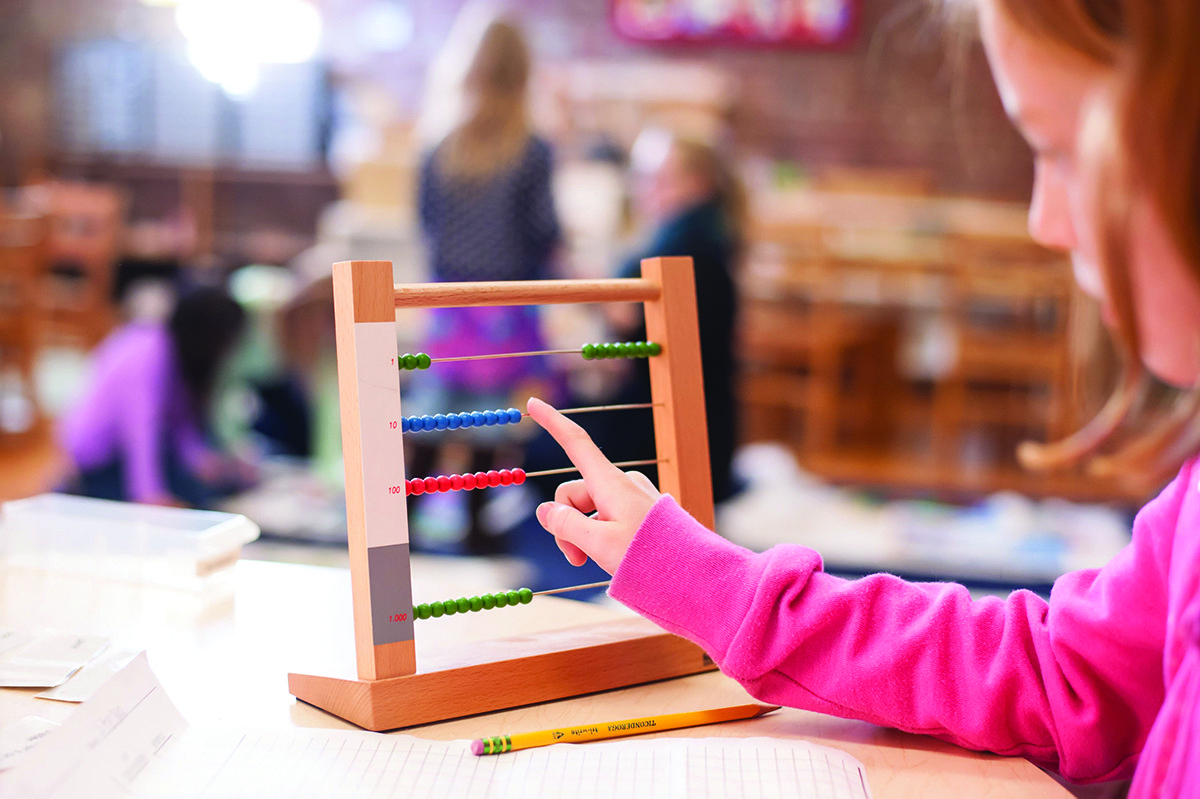
We tell the story of the development of our decimal system of numeration and the powerful language of science, music, and design — mathematics. With only ten symbols and the use of the right place, any number can be symbolized and easily manipulated — thus making it possible to calculate and express even what we cannot encompass in our minds. From this lesson come all math and geometry studies and the inspiration to appreciate the discovery of the secrets of the universe, invention, and our modern world.

More than mere stories, Dr. Montessori saw these stories as setting the stage for the children to feel gratitude and admiration. In the first three Lessons, gratitude to God. In the last two Lessons, gratitude to man — often the unknown man or woman whose labor and insight built the foundations of knowledge and craft that gave us what we enjoy today. The Great Lessons are the starting point from which all of the work of the classroom begins. They are referred to when new work is introduced. They are never a work unto themselves for the children but are a tool to aid the teacher to inspire the children’s work. The Great Lessons are the heart and soul of the elementary classroom.

This appeared in Tomorrow’s Child Magazine Spring 2001

Redirecting children’s behavior

Redirecting children’s behavior

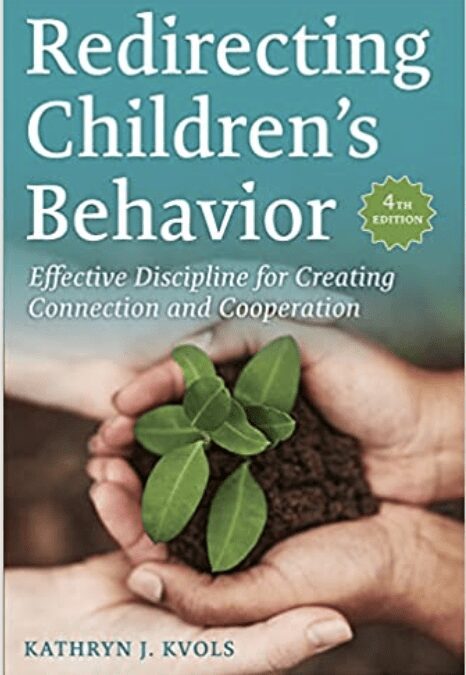
Redirecting Children’s Behavior: Effective Discipline for Creating Connection and Cooperation

Written by Kathryn J. Kvols

In early 1990, when our children were three and six years old, I met Kathryn Kvols. I was an experienced and skilled primary teacher in a Montessori classroom. I did exceedingly well at school with other people’s children. I listened to each child patiently and respectfully. I was kind, firm, and consistent. I cultivated a cooperative classroom community.

And yet, something disturbing happened when my children and I got into our car to go home. Suddenly, I became a very different person and did not treat my own children with the same respect and kindness I gave the children in my class. I was consistently in power struggles with my oldest child, and because that took up so much of my parenting time, my youngest became an attention-seeking child. My husband had no clue what to do with the children or me!

Without a doubt, we were struggling in our family life when I met Kathryn Kvols – a woman with a book, practices to cultivate connection and cooperation, and a belief in the goodness of humans.

I gladly took her course. I learned that the same principles I used in the classroom with other children also applied to my own children at home. What a novel idea! This woman, her book, and her practices transformed our home life.

I tell you this story because I am so excited that the 4th edition of Redirecting Children’s Behavior has been released this year. It has a new, more interesting look. The print and layout design is more inviting. It is loaded with real-life stories that illustrate the practices she espouses. Most important are the family-life-changing principles that she lays out in detail for her readers. They include cultivating growth mindsets within each family member, recognizing and managing emotions effectively, setting and keeping clear expectations, developing skills that eliminate the need to punish or reward, resolving conflicts peacefully, and so much more.

This book will help you align your family life with the principles and practices used in your child’s, grandchild’s, niece’s, or nephew’s Montessori classroom. It is a must-read for families.

SPORTSMANSHIP IS SOCIAL EMOTIONAL LEARNING

SPORTSMANSHIP IS SOCIAL EMOTIONAL LEARNING

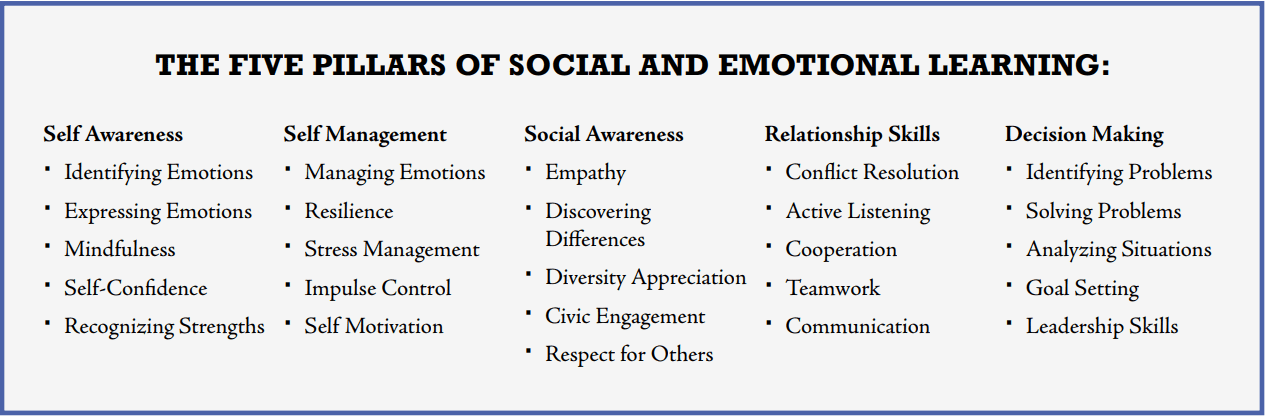
DECISION MAKING

The mantra “be fun to play with; be fun to play against” still works with upper elementary (9-12-year-olds), even though they are older and more mature. Their conflicts can be more complicated, and we need more than the mantra to solve some disagreements. A typical example is when one student criticizes another student who was distracted or not paying attention, causing a missed play or mistake. The criticizer wants them to pay attention and play better, which makes sense. A distracted teammate is not fun. However, the student being criticized usually does not like the criticism, and may not want to play anymore. The student criticizing a teammate is not being fun to play with either. Each point of view is valid, so how do we approach a topic like this?

Suppose the students cannot handle the disagreement in the moment and need a teacher mediator. In that case, I will ask a straightforward question to the student who is being portrayed as the aggressor.

“What was the intended outcome?”

Another way to ask this question is, “What did you want to happen?”

These questions get to the source of the conflict. The motivations and intentions of the students become apparent. We can have a logical conversation about the choices and consequences made, and emotions can be identified and expressed. Enhanced empathy allows both to reach a satisfactory compromise.

Let’s take a deeper look at the motivations of the criticizer. After I ask what they want to happen, they answer that they want the other student to pay attention.

Logically, this would probably improve the teammate’s performance, thereby improving the whole team’s performance. However, in this case, the criticism leads to the other player shutting down and not wanting to play anymore. They feel embarrassed and sad, so their performance suffers.

This is the opposite of what the criticizer wanted, but that is what commonly happens.

Additionally, the criticized student will have negative feelings toward their teammate, which may last far longer than that day.

This could lead to poor performance in the future or not wanting to play with this student at all (analyzing situations).

If we can help the criticizer understand the situation, we can help them to conclude that public criticism may not be the best course of action anymore.

It didn’t get the desired result; it worsened the situation. It hurt their teammate’s feelings, and hurt feelings take time to heal.

We can now explore alternate solutions with the criticizer, because we know criticism in this scenario didn’t work. We can ‘game plan’ with new solutions if this scenario happens again. For example, the student could privately remind the student to pay attention next time (goal setting).

BE FUN TO PLAY WITH; BE FUN TO PLAY AGAINST.

The student who wasn’t paying attention is not off the hook. We know that distracted teammates are not fun to play with, so we need to find out how (or why) they were distracted. Maybe it was a simple accident or mistake, so we know they will try harder next time, and it is as simple as that. Perhaps, they were talking to a friend and had been ignoring their responsibilities as a good teammate. Maybe this was not the first time this player has made a mistake in this game, and, they have made lots of errors due to an ongoing conversation with someone else. We need this context to analyze the situation truly.

There is a good chance that the criticizer did their best to manage their emotions, but after too many errors from the distracted player, they had had enough. It can be very frustrating when a teammate is not trying their best, especially when the other players put in maximum effort.

We expect everyone on our team to put forth the same effort we are, and when that expectation is not met, we can get upset. So, we need to remind the distracted player that to be a good teammate, they need to focus and put forth a good effort, which makes it fun to play with them.

We can only expect our teammates to do their best, knowing they will make mistakes. If the distracted student just made a simple mistake, we want to equip them with language that will help them acknowledge their mistake, and they will try harder next time.

This will build resilience and self-confidence because criticism in the future will be met with a plan of action, and they will not take it personally.

This communication with the teammate will prove they are actively listening and show that they are a good teammate.

With amped-up feelings and the game’s intensity, students are not ready to have this conversation immediately. We usually need time to have a mediation or peace talk.

However, if the behavior is not an isolated incident to those specific students, and it is something I am observing happening with several class members, I have no problem stopping the whole game and having this conversation with the entire class.

I need to fight my impulses to let things slide and continue the game to get maximum playing time at the expense of how the children are treating each other. We want the students to know that how they treat each other is as important as the game itself.

So, what do we do with our mature upper elementary and middle school students? Is there a way to promote sportsmanship past the definition they learned half a lifetime ago (be fun to play with, be fun to play against)? While it still applies, it’s simplistic, and we need something new to deal with the coming reality that they will be leaving the school soon.

They will be high schoolers, college students, and so on. They are at an age when they can truly perceive the future. We want them to be able to put things in perspective to guide their decisions. We must employ Social and Emotional Learning skills. For this age group, we have a new mantra: “Value the long term over the short term.”

From a strict sports perspective, we must strive for success in achieving the ultimate goal: a championship. We do this by creating smaller goals to achieve in practice and games, which serve to achieve the ultimate goal. For example, a team works on passing in practice sessions, which reduces turnovers in a game, and gives them a better chance of winning a championship because now they will turn the ball over less than their opponent.

Valuing the long term and the short term easily applies to life. The goal of each day is to make it better than yesterday in whatever you are trying to achieve. Continually achieving little goals accumulates into the achievement of a bigger goal. We want to achieve many big goals in our lifetime, but they happen through small incremental improvements.

What about luck? I have heard luck described as “when timing meets opportunity,” but there is an underlying fact that the person also needs to be capable. They made themselves capable through their work, whether they knew it or not. There was no way I could have predicted the combination of all the skills I would need to be where I am today. However, because I have those skills, through years of practice, I find myself in the position I am in, and I feel grateful for how things have turned out so far. When students ask, “Why do I have to learn this; I will never use it?” one of the answers is they might use it, but there is no way of us knowing for sure. As educators, we are trying to give them the potential for as many options as possible. There is no way we, or they, can predict how their life will unfold.

VALUE THE LONG TERM OVER THE SHORT TERM

Valuing the long term over the short term reminds me of a Swahili saying that my dad taught me. Before I get to that, if you are wondering, “Why does Nick’s dad know Swahili?” He was an associate professor of Swahili and African literature at Northwestern University

for over thirty years. I owe a lot of my analytic and critical thinking skills to his ability to let me ramble on and on as a child, and then he would ask key questions that forced me to reevaluate my position. My mother was a Montessori toddler teacher for over thirty years as well. The apple did not fall too far from the tree in that regard. Contrary to what many people assume about Montessori teachers of young children (they are all hippies), she showed me (and her students) a love of discipline. She also had intense powers of observation, and she consistently revealed character traits of a toddler that forecasted the adult they would become to their parents.

Let’s get back to the Swahili proverb. It is: haba na haba hujaza kibaba. The literal translation is, “little by little, the container gets filled.” This is a beautiful metaphor for how a long-term goal is accomplished.

When I talk to the students about valuing the long term over the short term in our Physical Education (PE) class, we talk about maintaining relationships (relationship skills). In PE, no one day or game is worth the cost of a friendship.

While winning a game is nice, that is not the goal. The point of physical education class is to learn through playing, practice sportsmanship, and get the exercise that facilitates gross and fine-motor movement patterns.

Some games have winners; others don’t, but winning is not, nor will it ever be the ultimate goal. Therefore, if someone values a game’s outcome more highly than a peer’s relationship, they are making a terrible mistake.

When we talk about valuing the long term over the short term regarding a team sport; maintaining relationships is still paramount, but the season’s outcome also bears some weight. It is possible to have a successful season and lose every game, but it takes a lot of subjective explanation to define the successes.

Winning a game, or especially winning a championship, is a more objective measure of the season’s success.

However, a winning season can be a failure if things were done to win a championship that ruins the players’ desire to continue playing in the future.

A coach can be successful on paper, but it can also be a failure of a coach on the human level if they break their players’ spirit and kill their motivation to play. Becoming the villain that your own team must overcome by banding together against you is a poor way to find success.

Winning a championship is the objective long-term success marker, and a game is a short-term goal.

Doing the little things in practice continues to add up, and our growth as players makes us more prepared for the game.

Playing game after game against different opponents teaches us more about ourselves than the opponent. It shows us what we must do to continue to get better, especially when the competition is close. As the team continues to improve, they put themselves in a better position to win a championship.

Not only do individual performances need to improve over the season, but also the team’s performance. Team performance is closely tied to how much trust the players have in each other and the coach.

Overly harsh words, resentment, envy, and other things that break trust erode the team’s fabric from the inside, and rarely does this team have long-term success.

An insult in practice bleeds over to the degraded performance in a game, and a lost game that was pivotal for the playoffs could be the difference in seeding for a championship run. Conversely, encouraging a player who failed in the moment shows that trust is still there, and that player feels secure that they can still contribute to the team in the future.

When we think of the Social and Emotional Learning toolbox, valuing the long term over the short term utilizes all the skills of decision making; identifying and solving problems; analyzing the situation; setting goals; and developing leadership skills. This is why team sports in school are held in such high esteem.

Whether adults realize it or not, the social and emotional skills that good team sports practice mimics how they will have to be used in real life.

As individuals, we are simultaneously the coach and the athlete of our own lives. We must strategize and make goals like a coach, and we must put those plans into action as players.

Another term that gets thrown around is “executive functioning,” which is something Montessori schools seem to be especially good at teaching. It is the ability to make plans and act on them.

We love sports because it is the idealized version of how life should be. Rules are fair, and they apply to everyone equally. The daily grind that produces results over time is a microcosm of what it takes to achieve greatness in life.

We celebrate those who are good at sports, but we especially value those who are also good at sportsmanship. Someone who is a good sport understands universal truths about being a good person. If sport is life, then sportsmanship is the way to live a good life. •

————————————————————————————-

Nicolas Lepine is the athletic director, physical education instructor, and sports coach for Rogers Park Montessori School in Chicago, IL. Before working as an athletic director and physical education teacher, he was in the Montessori upper elementary classroom for over a decade. He has a B.S.in exercise physiology from the University of Illinois and a Master’s in Montessori Education from St. Catherine’s University, where he completed his AMS Elementary One and Two certificates. This unique combination of skills allowed him to create Montessori Physical Education, which is a curriculum that integrates the Montessori classroom curriculum with physical education games. You can find his website at MontessoriPhysicalEducation.com, where you can learn more about how PE games can teach Montessori concepts, a free resources section, and links to the weekly blog and store.

Setting Limits

Setting Limits

Montessori Mom, Guide, & Entrepreneur

Montessori Mom, Guide, & Entrepreneur

My journey through the Montessori world has been full of serendipitous turns. At times, they have been surprising, at times difficult, even painful, but mostly they have been what I needed to find the path to a career I love and cherish. Starting as a Montessori mom with my oldest daughter (now thirteen), then choosing to become a Montessori guide myself, and ending with discovering I can contribute to this wonderful method with material I was able to create and develop from observing the amazing children in my classroom. It has been a fun ride, one that I feel deeply humbled to have the opportunity to share with you all.

I first walked into a Montessori classroom about seven years ago. I was looking for a school for my then five-year-old daughter, and, although I didn’t know much about Montessori at the time, I knew there was something special about the little Montessori school that had just opened close to our home. As a bilingual household, I wanted a place for my daughter where her bilingualism would be celebrated and admired, not seen as an impediment to her learning. To my delight, the Montessori Method, along with a wonderful and experienced teacher, did not disappoint. She was cherished and made to feel that being from a different culture and speaking a different language made her special.

Throughout her first year, I was fortunate to volunteer as a Spanish teacher, which led me to observe how things worked in a Montessori classroom. With the help of my daughter’s wonderful guide, who later became my mentor, I began to fall in love with the Method.

Two years later, my life took an unexpected turn, leading me to return to work. I looked into the possibility of becoming a Montessori guide. The owner of my daughter’s Montessori school recommended the Center for Guided Montessori Studies program. It was a rigorous 18-month program, and the prospect of returning to school after so many years was daunting, but I took the chance, got accepted, and started the program in October 2016.

It was a wonderful program that allowed me to prepare myself to start my new path as an early childhood Montessori guide. In August of 2018, I found myself as the lead guide of my classroom.

I know when I have prepared an art space for independence, children can flow in and out of creative moments without me having to facilitate each activity.

It was an amazing, terrifying, difficult, and beautiful year. I learned a lot about myself during this time, but most importantly, I knew very deep within me that I had found that I loved being in the classroom. I had found something I want to be a part of for many years to come.

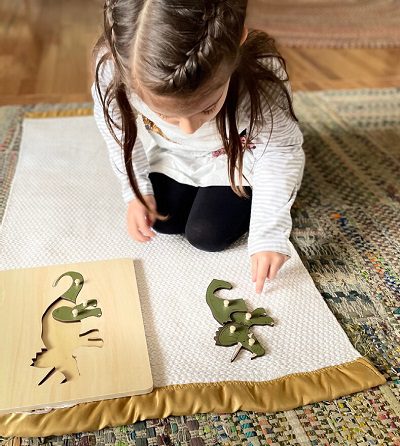
During my second year as a lead guide, I had a couple of children who were, for lack of a better word, obsessed with dinosaurs.

Most children love dinosaurs, but these two little ones lived and breathed dinosaurs! From memorizing all their names and facts to refusing to wear clothing that did not have some kind of dinosaur print, their love and energy for these ancient giant creatures were inspiring.

Naturally, I began to collect material to build a dinosaur unit to add to our cosmic area. However, there was one material that I wanted to include but could not find anywhere, at least not anything that satisfied my notion of what this material should be like to fit a Montessori classroom properly. That material was dinosaur puzzles.

I wanted to find puzzles that closely resembled the traditional Montessori animal puzzles found in the classroom. These puzzles commonly highlight the parts of a tree, flower, leaf, or the external body parts of a frog, bird, fish, or horse. These puzzles are normally found in the science area of a classroom.

However, I was looking for dinosaur puzzles, and there were very few options to choose from and even fewer that somewhat followed Montessori puzzles’ simple but brilliant design.

After many months of searching and not finding what I was looking for, I was inspired to see if I could create these puzzles myself.

With some fear of the unknown, but lots of determination, I enlisted the help of my dear and talented friend, Whitney Rader, who is an amazing artist and a former Montessori parent. We worked for a couple of months to develop the artwork that I thought would work best for the product.

After a final draft was done, I spent the best of a month looking for a manufacturer that could make the puzzles a reality and understood the Montessori Method. That turned out to make a world of a difference. Once I had found the right partner, we began the exciting but painstaking process of going through samples, trials, feedback, going back to the blackboard, more samples, more trials, and more feedback, time and time again, until we were able to come up with a product that would best serve a Montessori classroom as well as delight any dino-loving child.

During this time of trial and error, a six-yearold child in my classroom made a beautiful pin-poking work out of the Pink Tower. She carefully traced and created perforations along the lines by using a special pin to poke the paper for each square, then glued them all onto a large piece of white poster board. After she was done, she came up to me and said, “Ms. Faby, how do you write pink block?” She wrote ‘Pink Block’ next to each of the ten pink squares making sure she wrote the letter k in ‘pink’ on each of the ten pink squares. After she was done, she proudly showed me her beautiful work. I knew then that I had found the name for the online store I wanted to create for the dinosaur puzzles. And this was how Pink Block: Montessori Inspired Educational Materials was born.

The past six years have been an incredible journey, from becoming a Montessori parent to a Montessori guide to a small business owner.

Looking back, I am grateful for all those who have helped me in my endeavors. My children, who lovingly supported and encouraged me, the children in my classroom, who inspired and taught me every day, and my colleagues, family, and friends who were there to cheer me up and give me the feedback I needed to hear.

But most of all, I am grateful for a courageous woman who defied the stereotypes of her day and who, in her quest to heal and help others, learned to observe children, thus opening a window into a better way to go about the education of our children.

Thank you, Dr. Montessori! I encourage you all to pursue those things that seem impossible. Life has a way of serendipitously taking you where you need to be. Enjoy the ride! •

———————————————————————————–

Faby Denney has been a lead guide at Center Grove Montessori School over the past four years. She earned her Montessori Certificate from Center for Guided Montessori Studies in 2016.

Being a Montessori guide is more than a jobor even a career for her, it is a calling. Sheen joys music, reading and being with friends as well as finding new food to try. Besides her beautiful dinosaur puzzles she also workingon building a Spanish program for the elementary classroom at her school that will not only teach the language but expose the children to the many and varied cultures that speak it.

Faby currently lives in Indiana with her two daughters, who are both Montessori children. You can find more about her and her store at www.pinkblockmontessori.com. Or contact her at fabymooplus2@yahoo.com.

Preparing a Montessori Art Environment at Home

Preparing a Montessori Art Environment at Home

Whether your child attends a Montessori school, or you are starting to homeschool using Montessori education, one area you should consider teaching is visual arts.

Art is an often-overlooked aspect of Montessori education today. Even traditional Montessori classrooms struggle with providing art literacy.

Teaching art lessons has a ton of benefits that go beyond beautiful art. There are some other important reasons to create an art space in your home and give art lessons regularly. For example, art:

  • Supports problem-solving skills
  • Develops gross- and fine-motor skills
  • Supports implicit memory
  • Increases spatial awareness
  • Helps children regulate stress

Setting up an art environment might seem overwhelming if you don’t know how to teach art.

Have you dreamed of your child creating beautiful artwork but have no idea where to get started? As a first step, I recommend deciding on a place for your Montessori homeschool art space environment.

The secret to a good art environment is creating a space for working, uninterrupted. Additionally, you will want a space that offers children the freedom to explore and express ideas. After all, if you give them a space to make art, they will create!

Before we go into my art space tips, here’s a little perspective: If you don’t have a shelf filled with books, you won’t raise readers. You won’t raise a writer if you don’t have pens, papers, or a dictionary handy. So, guess what? You won’t raise an artist when you don’t have an art space filled with art supplies!

Art Environment Features

As an art studio designer, art teacher, and homeschooler, I’ve had many opportunities to design different Montessori art spaces.

Here are the essential components I recommend for every Montessori home art environment include:

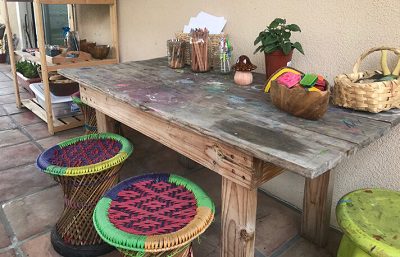
  • Table – All activities should take place on a flat surface.
  • Chair – Along with a sturdy table, children need a safe place to sit while working.
  • Floor covering – This saves your floors from spills!
  • Light source – For children to work with color, they need a good light source.
  • Storage – Art storage comes in many shapes and sizes, including baskets, jars, plastic bins, shelves, or an art closet.
  • Sink – The sink doesn’t need to be in the immediate art space, but it should be close and easily accessible. You might want to use a sink in a bathroom or kitchen; it’s needed to wash materials and hands.

Where should your family’s art space be?

Because an art space doesn’t need to be elaborate, you can set it up anywhere in your home. You can dedicate an entire room as an art space or choose a corner of your child’s bedroom, the family living room, the yard, the basement, or kitchen.

One of my dear homeschool-mom friends set up a simple desk for her children in her kitchen. I loved seeing what her daughter would create when I visited for tea!

My own children’s art spaces have transitioned throughout the years. They moved around to different spots in our home. Now, my daughter likes to draw and paint in her bedroom, alhough, when she was young, the kitchen table was where she liked to do art.

Before you unleash your little Picasso, be sure you and your child agree on the space where art will take place (the art environment). This is big! When I first started homeschooling, I was loose on this rule. Lots of messes spread around our home. Eventually, my children stained my nice couch with paint and markers. Soon after, I decided there was only one space where art making was allowed!

Planning a Montessori Homeschool Art Space Environment

Art space features to consider:

  • Where will the art space location stay?
  • Where will your child access their own art supplies?
  • Where will out-of-reach art supplies be stored?
  • Where will unfinished artworks be kept?
  • Where will artworks dry?
  • Which space will display current creations (home gallery)
  • Which sink will you allow your child to use to wash out paint, palettes, messy glue, and hands?

Designing an Art Space for Independence

You can support your child’s independence in the way the art space is prepared ahead of time. When planning this space, be sure it aligns with their level of fine-motor abilities.

Arrange and prepare art materials that are easy for your child to reach but not for any toddler siblings to reach.

Create a space with freedom of movement in mind. For children to become independent, there must be plenty of space to create freely.

Plan to demonstrate how the materials should be set up and put away.

Also, plan to show your child how the mediums work and how to use them respectfully.

I know when I have prepared an art space for independence, children can flow in and out of creative moments without me having to facilitate each activity.

For example, if I create a space for children to watercolor, I store materials in a handy way for them to gather, set up, and create. Eventually, they learn to set up and clean up without my assistance. Yes, I’m around for questions and new technique demonstrations, but my students feel like the space is an open, creative studio for creation when everything is initially set up for independence.

Art Materials and Supply Storage

Storage can get tricky, especially if your whole family is sharing a living space/workspace. Be sure you create a system to store art supplies children cannot access. Many art supplies can stain and be hazardous to younger siblings. It’s easy for little ones to grab paints and take them somewhere you don’t want stains. You can store smaller plastic bins in cabinets or larger bins in a garage.

Check out this free video on how to store art supplies. I give you my professional advice on my own storage system: bit.ly/3R6P8yC

I hope I have provided helpful tips and the information you need to set up your child’s athome art room space. •

————————————————————————————-

Spramani Elaun is an author and art curriculum developer from San Diego, California. She is a homeschooling mom and an art teacher with a science/art methodology. Her success is led by twenty years of observations and real-life practice of how children cognitively and sensorially process art. She is the founder of Nature of Art, an art school and art supply company, and the Art Teaching Blueprint Montessori Certification Training Program. Spramani holds degrees in graphic design, digital media design, visual communications, print media, and fine art. Learn more about homeschooling Montessori Art by reading her blogs, books and curriculum at Montessori-Art.com.

End the ”Good Job” Crisis with these 3 Secrets

End the ”Good Job” Crisis with these 3 Secrets

While I was having dinner at a local family restaurant the other night, I couldn’t help but observe two moms, clearly close friends, and their clan of five small children crammed into one booth. As the mothers sat and had a conversation, it was clear their attention was not on the children. One mom became frustrated when the three-year-old boy kept interrupting their conversation.

As I observed, I cringed at the words I heard, as if they were screeching nails on a chalkboard: “Girls, tell him he did a good job.”

When the girls did not respond to their mother’s request, she repeated it multiple times (screech, screech, screech!). The result was a frustrated mom, disinterested little girls, and possibly a “happy” three-year-old. Clearly, this was not the outcome the mother was hoping for, but, hey, at least he received a “good job,” and all was quiet again at the table. After all, that is what the mothers were seeking, right?

My mind started spinning with questions as I tried to enjoy my meal.

Why do we so often believe that children have to hear the phrase “good job?”

Why must we tell a child yearning for attention “good job” just to give him the instant gratification of hearing he did a good job when, in fact, maybe he didn’t do a good job?

What truly is a “good job?”Why does my opinion matter?

What is society coming to where children have to be praised just to shut them up?

We have a “Good Job Crisis!” So, what can we do to fix this problem? In my experience as a Montessori teacher, I have seen simple changes in language help children decide if they have done a good job intrinsically. These are the top three “secrets” that I put to use in my classroom and encourage both parents and other educators to do the same.

ASK QUESTIONS

“What do you think about your picture?” Find out how they feel about the art project, situation, or behavior. Adults so often shape children into what we think they should believe, when in reality, they truly are capable enough to decide for themselves if they feel successful. As parents, it may be tough to ignore the pestering child who wants instant gratification. Still, if we go back to the dinner disaster, a quick question could have easily enhanced the conversation, produced a more supportive outcome, and left the entire table less annoyed at being ordered around.

BE QUIET AND LET THEM EXPLAIN

Sometimes saying nothing can be crucial. This alternative can go in hand with asking a question and simply waiting for a response without passing judgment. Let the child explain. Whether it is their description of artwork or their reasoning behind a choice they made, let the child’s mind do the work and support their own success with a smile.

REPLACE “GOOD JOB” WITH OTHER WORDS

This won’t take on perfection the first time you try, or the second, or third for that matter. You must practice your language. Below are some examples of how to start changing your vocabulary today. Pay close attention to the verbiage and start applying them in your life.

REPLACE: “Great job cleaning your room today, Stella!”

WITH: “I like how you organized your shoes in your closet.”

OR: “I noticed you put your baby doll’s clothes back in the basket.”

REPLACE: “Good job mashing those potatoes; it must have been hard work.”

WITH: “Thank you for helping make dinner.”

OR: “I acknowledge you for making the mashed potatoes for dinner tonight.”

REPLACE: “You did a really good job on your science fair project!”

WITH: “What was your favorite part about your project?”

OR: “I see you put a lot of detail into your presentation board.”

If this all seems like a huge undertaking, you are right, it is! It’s not easy for many of us who have grown up as “praise junkies” to change our language to shape our children differently.

Now, I am not saying that all praise is bad because we are humans, and we all like to be recognized.

And while you practice these “secrets,” know that it won’t be easy, but it will be worth it! Children need to learn that they are doing it for themselves and not always for the gratification of others.

So, how are you going to put an end to the “Good Job Crisis?” I want to challenge you to start today with one simple phrase to replace “good job.” •

————————————————————————————-

 As the Director of Montessori Education and Development, Amanda Konopaska works with both the Area Superintendent and Academic Excellence Team for Choice Schools Associates. As an undergraduate, she earned her Bachelor of Science in Education from Wayne State University and a Masters in School Principalship with a concentration in Charter School Leadership from Central Michigan University. Additionally, she also holds an Elementary II Credential from the American Montessori Society and has had formal training for Elementary I. Amanda’s Montessori journey began in 2009, as an upper elementary classroom teacher and emerged into leadership where she took on both active and interim Principal roles fortwo Montessori academies. Currently, she is the program coordinator and trainer of our Montessori Experience for all new teacher sand works directly with instructional coaches at multiple academies. Amanda resides in Fowlerville, Michigan with her husband Carl and daughters, Stella, and Vivian.

Choosing Montessori-Friendly Books for Young Children

Choosing Montessori-Friendly Books for Young Children

—by Megan Gregorowski

Selecting books for a Montessori-inspired home environment can be somewhat daunting.

‘What makes a children’s book Montessori friendly?’ ‘How do we choose books that stay true to Montessori philosophy and engage our children in the real world?’

Here are some tips to follow when selecting Montessori-aligned books.

First, consider why having a home filled with books benefits even very young children’s development.

Books promote:

  • cognitive development
  • language skills
  • preparation for academic success
  • concentration
  • imagination
  • and creativity

Some tips on choosing Montessori-friendly children’s books:

Choose books based on reality. Montessori identified what she called the Absorbent Mind in the first plane of development, between birth to age six when children absorb information from the world around them. Children in this developmental phase benefit from learning about real things rather than fantasy. With a strong grounding in reality, knowledge and creativity flourish.

As Montessori said in her 1946 London Lectures, children “acquire knowledge through experience in the environment.”

It is only in the second plane of development, after the age of six, that children’s brains become capable of understanding fantasy.

So, select books showing the world around them: people, places, animals, and natural environments; the options are endless.

Choose books that are beautifully illustrated. Illustrations can ignite curiosity, enhance creativity, and provide opportunities for extended conversation-enhancing vocabulary and language development.

Illustrations should be realistic and based on the world. This does not mean illustrations have to be real. Drawings can be used, but ensure they are realistic. A fish should be shown with fins and not arms, for example.

Choose age-appropriate books. Books that are possibly too difficult or too easy may cause children to lose interest and discourage learning.

A book’s format is also important: does it have pull-out pages or flaps, and are they age-appropriate and practical? Ask yourself if your children can use them as intended.

And lastly, choose books that are related to your children’s interests. They are natural and curious learners with a great drive for independence.

By selecting books based on their interests, we honor our children by choosing books that support their learning and create interest and a deeper appreciation for the world around them.
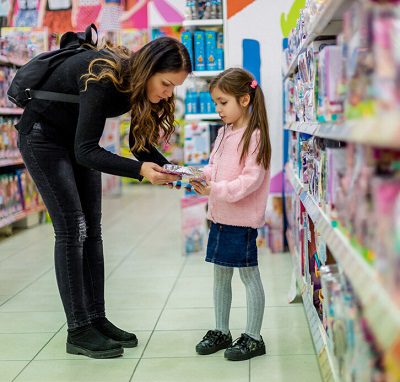
Happy book browsing!

———————————————————————————-

Megan Gregorowski is a Montessori 3-6 Directress(MCI)(MCSA) and a recent psychology graduate. She ispassionate about challenging stereotypes in educationand brings her Montessori and psychology knowledgetogether to inform her teaching practice as an education supportteacher in a special-needs setting.

A debut children’s book author, Megan was inspired to writechildren’s books about the Montessori philosophy and classroomenvironment with her first Montessori-inspired series beingreleased in January 2023.

Megan lives on the Wild Coast of South Africa and loves adventureand being creative, when she’s not teaching or writing, she enjoysbaking, painting, or exploring her local beach with her husband,son, and dogs.

Follow Megan on Instagram @meg_gregorowski_author

LET’S GET OUT OF THE WAY – DON’T OVER-PARENT; EMPOWER YOUR CHILDREN INSTEAD!

LET’S GET OUT OF THE WAY – DON’T OVER-PARENT; EMPOWER YOUR CHILDREN INSTEAD!

empower your children

By Paula Lillard Preschlack

Helicopter Interference

My college roommate visits me with her two teenage sons. She confides that she is worried that her 15-year-old isn’t working hard enough in school and “might be making poor choices about partying.” In our cabin kitchen, only moments later, I watch wide eyed while my friend takes the butter knife out of her son’s hand, pushes him aside, and says, “Here, let me make your sandwich. You have no idea what you’re doing.”

Have you ever seen this kind of interaction? Here’s a 15-year-old who isn’t allowed to make his own, albeit sub-par, sandwiches, but he’s expected to make responsible decisions about schoolwork and partying; and a parent, wanting nothing but the best for her son, who inserts herself into his attempt to make a sandwich, not seeing how doing so relates to his “poor choices.”

Many children are given the message — in small, seemingly benign ways — that they are not capable of making their own choices and developing independence. By not allowing children to try things and learn from their mistakes, we become obstacles to their growth. We become, according to the popular phrase, “helicopter parents.”

Helicopter parenting, a term coined by psychologists Jim Fay and Foster Cline in the 1990s, describes the too-common tendency to hover and interfere in children’s actions and decision making. As parents, we do this so regularly that most of us don’t even realize we’re doing it. Some may even feel as though something is amiss if we aren’t involved in our children’s business, because we see so many parents self-assuredly “hovering about.” For instance, a friend of mine recently dropped her daughter off at college and noticed that other parents set up their children’s bedrooms. She felt guilty driving away, even though her daughter told her she wanted to set up her own room. My friend had raised an independent young woman, but on that day, she wondered whether she was being a “neglectful” mother!

Collecting the Wisdom

In How to Raise an Adult: Break Free of the Overparenting Trap and Prepare Your Kid for Success, Julie Lythcott-Haims explains this phenomenon of unnecessary parental interference and ways to address it. While working as the dean of freshmen at Stanford University and raising her own children, Lythcott-Haims noticed the alarming “lack of purpose” many college-aged students reported feeling. She saw a causal link between overly involved parents, who made too many of their children’s decisions for them, and these college students, who were out of touch with their own desires, interests, and capabilities. Therefore, right when they should have been feeling the exhilaration of finally being out on their own, these young adults felt lost.

In The Gift of Failure, middle school teacher and parent Jessica Lahey shows how overprotective parents do everything in their power to keep their children from failing. Thus, they inadvertently take away their children’s opportunities to learn to solve their own problems. In her book, Lahey urges parents to allow their children’s little mistakes, such as forgetting homework or lunch money, to be the natural teaching moments that they are; when children are supported to think for themselves and adjust their behavior to improve their success, they learn that small failures are nothing to fear. In fact, this is how they naturally become independent.

In Grit: The Power of Passion and Perseverance, Angela Duckworth convinces us that when our children learn to get up again and again; after setbacks, they develop grit and determination. Duckworth’s anecdotes and research show that people succeed because of their perseverance and passion for their work, not because they were endowed with great gifts or had their paths smoothed over by hovering parents. It takes practice and experience to learn that hard work, struggle, and failures are all part of a successful journey. Therefore, it is important to allow our children to experience the natural ones that come their way.

Each of these authors agree that childhood is the time to practice making mistakes and solving small problems. The research is out there: Over-parenting cripple’s children, while supporting their independence leads to their success.

So if we have all this evidence and good advice, why is it so hard for us to follow it? We all want our children to grow up and become happily independent from us; no parent deliberately sabotages this process, and many are familiar with the messages in these books. But there may be a lack of practical advice on how to raise children to be independent, especially in this wave of helicoptering. Stepping aside to let our children learn from their experiences is counter to the parental mindset of our culture. We feel so responsible, we want to make sure our children succeed, and we care — though it’s hard to admit — what other people think. It isn’t easy to find the path to raising an independent child.

But the main issue, I believe, is that we approach parenting from an ingrained schooling model of “adult as teacher/director” and “child as learner/receiver.” This implies that helping children develop means directing them in their actions; however, the more an adult directs, the bigger an obstacle to a child’s independent thinking — and actions — he becomes. Therefore, another approach to education and parenting is both helpful and timely.

Finding an Approach that Works

As a parent and a teacher for more than twenty years, I’ve found the Montessori approach to be the most effective way to foster independence. This approach gives us both a framework for understanding child development and practical advice for supporting children from a very early age. Maria Montessori, who graduated from the University of Rome as a medical doctor in 1896, became accomplished in studies of anthropology, psychology, psychiatry, and philosophy. Montessori was a deep thinker; she studied the varied work of others and made astute observations of young children. Montessori noticed (with surprise) that children as young as three-years old were most attracted to learning the very skills that would serve them well, such as language and life skills. She found that when adults stood back — did not interfere or dominate — the children learned through their interactions with the environment, almost as if they were teaching themselves.

What made stepping aside possible for Montessori was her specially prepared school environment, which enabled children to learn through their own experiences. Her second ingredient was providing an adult who acted as a guide for the children rather than a lecturer or a director. Specifically, the teacher modeled how to work productively with Montessori-designed teaching materials within the boundaries of responsible behavior. As the students were supported to pursue their interests, they learned and became able to do far more than was expected, even by today’s standards. This happened repeatedly in Montessori’s observations and continues to happen in Montessori schools around the world today. The good news is parents can follow the basics of this approach at home by focusing on preparing the home environment for their children’s independence, showing them how to do things for themselves, and giving them freedom with boundaries of responsibility.

While working at Forest Bluff School in Lake Bluff, Illinois, I have been helping parents set up their homes to foster their children’s autonomy from infancy to adolescence. When I talk to parents about how to do this, I explain that it is a paradigm shift in our thinking. We need to shift our attention away from controlling and directing our children and onto preparing an environment that allows them to meet their own needs. This automatically changes the dynamics of the parent-child relationship. Children whose parents stay out of their way, wherever possible and appropriate, but who then model and provide the necessary boundaries and support, become far more confident and capable in every area of their lives.

Practical Advice: Start When They’re Young

To provide an environment that supports your children’s independence, begin by looking at the setup of your house. For example, let’s say you are the parent of a five-year-old and a three-year-old, wanting to start them on the path to making their own breakfasts. First, prepare a small pitcher of milk, roughly five inches tall, two bowls and spoons, and a small plastic container with two servings of cereal in it. Cut strawberries and leave them in a bowl with an adult-size spoon, which will act as a serving spoon to small hands. Set these items out on a low, child-sized table. Examine each item carefully to ensure that the children can manage them successfully; the table should come to their waist height, the plastic container should be soft enough to peel open easily, and everything should be sized to a child’s small hands.

The stage has been set. The low table is waiting for the children to come discover it, with all they need for breakfast. Your preparations say, “This action of getting breakfast can belong to you. You are allowed to do it. You can use these things and fulfill your own needs.” See what happens when your children enter the kitchen and find this little table prepared for them and, as necessary, help a little by showing them what to do. If you do this each morning, your children will get the hang of it and become increasingly independent.

Why does this work? Maria Montessori recognized that there is this innate spirit in very young children that makes them want (desperately) to do things, and this desire is what it means to be active, to feel useful, to be human. We are feeding that spirit when we prepare the environment and show children how to do things for themselves. The important point here is that our goal goes beyond cutting strawberries and getting breakfast. The development of a confident and thinking individual is the real goal. The activity of preparing one’s own breakfast is a means to reach that goal.

Children Grow by Their Own Efforts

Our children build and form themselves. It is not something that we do to them, but which they must do — and want to do — by their own efforts. This is the parenting mindset — the paradigm shift — that Montessori proposed with her approach. By getting ourselves out of the way, we encourage our children to have a direct relationship with the realities and consequences of their immediate surroundings. A natural process ensures that they learn through both the successes and mistakes they make along the way. Children raised with this approach learn to be responsible, make healthier choices for themselves, and are more confident, secure, and happy.

So, land your helicopters, parents, and put your energies into preparing the environment, modeling, and giving freedoms with responsible boundaries to your children. They can accomplish many things for themselves when we adults do our jobs and let them do theirs. Watch them take off! •

Paula Lillard Preschlack is a writer and a speaker. She has spent 25 years as a teacher and the head of school at Forest Bluff School. She is currently working on a book about Montessori education. Her work focuses on the principles and successes of the Montessori approach learned from over 25 years of teaching and observing children from birth to adulthood.

Paula is a graduate of Hampshire College and has a Master’s Degree in Education from Loyola University, Baltimore, MD. She is AMI certified for all Montessori age levels: Assistants to Infancy; Primary; and Elementary, and she audited the NAMTA/AMI Orientation to Adolescent Studies in 2018. Paula is married to Jim Preschlack and lives in Lake Forest with their son, Stanley (age 19), and daughter, Lillard (age 17).

Don’t Live in La-La land

Don’t Live in La-La land

Mom and child

Most of our fears as parents about protecting our children involve situations that rarely occur. Many of us, however, tend to spend a disproportionate amount of time worrying about circumstances that will never happen, or planning for perfectionism, either in ourselves or in our children. Our fears and our guilt hold us hostage in a land of fantasy, “La-La Land.” We need to create reasonable expectations for ourselves, our children, and our families.

By worrying about the wrong things, we do ourselves a disservice and create anxiety and risk aversion within our relationships. We need to think of ways that we can slow down and create routines to discover that less is more.

Expectations of time.

We all have just 24 hours in a day. For some of us, that 24 hours is full of work in and out of the home. Have a realistic view of what you can accomplish in a day and prioritize those activities that will make your family life slower and better. Perhaps that means your house will not be as pristine as you would like. Meals will be simple. Social and sports outings may be limited. Hire help if you can afford to, and delegate tasks to all family members. Take the time to train and teach your children to help with chores. Make sure you offer time for family and one-on-one activities that express love and caring.

Expectations with money.

As we look at reasonable expectations, we need to be realistic about our budget. Our children need to understand the difference between wants and needs. Some organizational experts say most families only use 25 percent of the toys, clothes, and other stuff in their homes. Get rid of the 75 percent that you don’t use. One of the tyrannical holds of La-La Land is thinking that we need all these odds and ends. Our possessions, in turn, take our time, our money and, too often, don’t add to our ability to express love and caring to our family members.

Our children need adults who love and care for them. They need adults who will teach them important life skills and give them moral guidance. Children need time alone to figure out who they are and who they can be.

We used to call this time without adults “play.” Play helps build resilience, social skills, leadership, and adaptability. Uninterrupted time alone, focused on self-selected activities, produces deep learning and problem-solving skills, as well as fosters a sense of well-being. Time spent on a self-paced agenda (versus an adult-created schedule) allows our children to think deeply and creatively construct their own person, as well as self-correct mistakes.

Every child is different and has unique needs. Every family is different, so one size could never fit all. Here is an example of one family’s changes.

Sylvia and Darren took a hard look at how they were choosing to spend their time and money and what those trade-offs meant to their personal well-being and their relationships with their children, Aiden (age 3) and Lily (age 4).

Sylvia and Darren looked at their costs for housing, transportation, childcare, extra lessons, restaurant outings, toys, and clothing and decided they could reduce their spending so that one of them could stay home or both could reduce their work hours, which seemed originally unthinkable to them during our current unstable economic time. Their visioning was long term and placed a priority on how to make life slower and better.

In their kitchen, Darren and Sylvia built activity shelves for Aiden and Lily to hold twenty projects, and put in a child-sized table.

With less money but more time, Sylvia and Darren were able to help their children learn valuable life skills of taking care of themselves, their home, and others. There was time to offer moral guidance, along with the time to let Aiden and Lily make their own mistakes instead of always trying to stay on schedule.

Sylvia and Darren found that their La-La Land of worry, guilt, and fear was replaced with understanding. •

Maren Schmidt, M. Ed. is anaward-winning teacher andauthor. She leverages her talentswriting newsletters, a blog, alongwith books. Since 2005, she has writtenthe Kids Talk Blog, and is the author of twobooks: Understanding Montessori: A Guide forParents and Building Cathedrals Not Walls.Montessori school communities enjoy herKids Talk Newsletters that are full of actionableadvice about children.

Maren is an elementary-trained Montessoriguide with AMI. She is the founder of aMontessori school, and her Montessori rolesinclude parent, teacher, and school administrator.Visit MarenSchmidt.com to sign up forher newsletters or read her Kids Talk Blog.

Beyond Bribes, Rewards, and Punishments

Beyond Bribes, Rewards, and Punishments


story from: Tomorrow's Child Magazine May 2022
A Montessori Approach to Clean…

Beyond Rewards, Bribes, & Punishment

A Montessori Approach to Building Intrinsic Motivation

42 ways that the Montessori approach builds intrinsic discipline in our children.

by Simone Davies

In my last article on a Montessori approach to discipline, I mentioned that we don’t use rewards, bribes, or punishment in a Montessori classroom. And there is not a teacher at the front telling everyone what they need to do. Yet, if you observe in a Montessori classroom, there is a gentle hum of conversation and movement and a lot of concentrated children who are motivated to work.

So, not surprisingly, I received many questions about a Montessori approach to building intrinsic motivation in the child. Intrinsic motivation is doing something because you have the inner drive to do it, not because of some external reason like a reward or threat.

I love a good list so here are 42 ways that the Montessori approach builds intrinsic discipline in our children.

Note: It’s a holistic approach where each part is intrinsically linked. So, while it may seem overwhelming to do all these things, rest assured they also naturally build on one another.

42 Ways to Build Intrinsic Motivation

1. Build an environment where they can have success; knowing where they can find things and having things at their level.

2. Create opportunities for them to build independence – they see themselves as capable.

3. Cultivate opportunities to work together, cooperate and care for others – they see their input matters; a 0-3 child is observing and beginning their social development in their family. With a care giver, and/or nursery; the 3-6 child is part of their family and their class; and the 6-12 child wants to work and be a part of a group.

4. Value process over product; there is more learning in the doing than in the result.

5. Use encouragement rather than praise. When they hear, “You worked hard to get your shirt on all by yourself ” rather than “good job,” they learn to look to themselves to understand what worked, rather than looking to us for praise.

6. Give them freedom to work on things they are interested in – rather than what the teacher/adult tells them – or a timeline.

7. Provide safe limits. Offer security and show that someone cares about them.

8. Allow them the freedom to choose what, where, and with whom they’d like to work.

9. Provide a clear rhythm to their day so that they know what to expect.

10. Help them learn respect for themselves, each other, and the environment – they feel truly accepted and learn to accept others.

11. Encourage those agreements are made together – they feel like a valued member of the community.

12. Let them know that it’s a safe place to practice boundaries – we can support them with words if needed, “I’d like to work by myself right now. It will be available soon.”

13. Honor who they are; each member is unique and valued – builds their sense of self.

14. Help them learn to look after themselves, others, and the environment – it’s empowering to be able to do this for themselves.

15. Show trust in them – by removing external rewards and punishments.

16. Help them to make amends when needed – they know that when they get it wrong, they will take responsibility and learn from the experience.

17. Value curiosity – learning is about finding out rather than memorizing facts

18. Allow them to have choices – they have ‘agency’ in their days

19. Provide honest, instructive feedback – we see what’s going well and how they can do better; give them gentle guidance to keep improving.

20. Offer different ways to learn; we all learn in different ways and on different days; the materials appeal to kinesthetic, visual, and aural learners, and they can choose how they’d like to present their work, from a booklet to a survey to a poster etc.

21. Be their guide – not their boss or servant

22. Help children build ‘scaffold skills’ – where each activity builds on the next to allow mastery.

23. Support them to develop their own routines/ rhythms, such as taking an activity to a table or mat and returning it when it’s done.

24. Help children develop their thinking skills – they are learning to learn through hands-on learning and making discoveries for themselves; they help younger children and consolidate their own learning; they reflect on what they have learned.

25. Keep it real; children are not learning just for the sake of learning. They are learning how it applies in the real world giving meaning to their work.

26. The absence of tests or punishments allows a natural love of learning, while maintaining their creativity and interest in learning

27. Model intrinsic motivation ourselves as adults; our actions are more powerful than our words.

28. Provide control-of-error activities, which will allow children to discover their errors and try again.

29. Offer challenges at the appropriate level. Children do not feel unmotivated, because they know that they can do hard things, and they do not want to give up.

30. Encourage service in the community. This allows children to see and appreciate the impact of their work.

31. Children can have a healthy relationship with failure: the guide and classmates are supportive; children are able to stay with something until they master it and are ready to move onto the next activity; and they learn to ask for help if needed.

32. Remove competition for sticker charts or praise; children do not need rewards from others. Help them look to themselves instead of someone else.

33. Allow time to help children build skills, e.g., planning skills, learning to dress themselves, how to make a report, etc.

34. Children are in charge of their own learning: they learn uniquely, have their unique interests; and are on their own unique timeline.

35. Adults can trust the Montessori process, without forcing their own agenda.

36. Help children support themselves as they become members of their society.

37. Be patient; learning happens at its own pace and isn’t forced.

38. Plant seeds of curiosity, enough to get them interested, and not too much to allow them to discover the rest for themselves.

39. Encourage the possibility for big work and big ideas that looks at the interdisciplinary nature of the universe.

40. Allow space for all voices; we want everyone in our community to feel valued, accepted, and safe.

41. Avoid criticism or correction; instead, observe where children are in their process, and offer another opportunity to teach it again.

42. Learn from others. We can see others learning and be inspired to learn that too.

It’s never too late to start applying these principles. We can even scaffold the skills with a child in Upper Elementary (9-12 years), first helping them plan, then letting them take over more and more steps themselves. •

Simone Davies is the author of The Montessori Toddler and co-author of The MontessoriBaby, comprehensive guides to raising toddlers and infants in a Montessori way. The books are based on her 15+ years’ experience working as an AMI Montessori teacher in Sydney and in Amsterdam. She also has a popular blog, Instagram, and podcast “The Montessori Notebook”.She is also mother to two young adults.Simone currently runs parent-childMontessori classes in Amsterdam at her school, Jacaranda Tree Montessori, and is working on another book with Junnifa Uzodike, The Montessori Child for children from 3-12 years.

With hundreds of practical ideas for every aspect of living with a toddler, here are five principles for feeding your child’s natural curiosity, from “Trust in the child” to “Fostering a sense of wonder.” Step-by step ways to cultivate daily routines with ease, like brushing teeth, toilet-training, and dealing with siblings

United Nations Convention on the Rights of the Child

United Nations Convention on the Rights of the Child

UN Logos


Most of us are aware that the United Nations adopted a declaration on the universal rights of the child, but many of us have not read it. Here is the introduction and the link to the full text. We encourage you to revisit it from time to time and reflect on the vital message and vision within.


Convention on the Rights of the Child

ADOPTED

20 November 1989

BY

General Assembly of the United Nations

resolution 44/25

Entry into force: 2 September 1990, in accordance with article 49

Preamble

The States Parties to the present Convention,

Considering that, in accordance with the principles proclaimed in the Charter of the United Nations, recognition of the inherent dignity and of the equal and inalienable rights of all members of the human family is the foundation of freedom, justice and peace in the world,

Bearing in mind that the peoples of the United Nations have, in the Charter, reaffirmed their faith in fundamental human rights and in the dignity and worth of the human person, and have determined to promote social progress and better standards of life in larger freedom,

Recognizing that the United Nations has, in the Universal Declaration of Human Rights and in the International Covenants on Human Rights, proclaimed and agreed that everyone is entitled to all the rights and freedoms set forth therein, without distinction of any kind, such as race, colour, sex, language, religion, political or other opinion, national or social origin, property, birth or other status,

Recalling that, in the Universal Declaration of Human Rights, the United Nations has proclaimed that childhood is entitled to special care and assistance,

Convinced that the family, as the fundamental group of society and the natural environment for the growth and well-being of all its members and particularly children, should be afforded the necessary protection and assistance so that it can fully assume its responsibilities within the community,

Recognizing that the child, for the full and harmonious development of his or her personality, should grow up in a family environment, in an atmosphere of happiness, love and understanding,

Considering that the child should be fully prepared to live an individual life in society, and brought up in the spirit of the ideals proclaimed in the Charter of the United Nations, and in particular in the spirit of peace, dignity, tolerance, freedom, equality and solidarity,


Click the link below to read the full text:

https://www.ohchr.org/en/instruments-mechanisms/instruments/convention-rights-child

An Online Montessori School for Teens

An Online Montessori School for Teens

In the fall of 2020, the leadership of the Center for Guided Montessori Studies asked the question, “What would an authentic Montessori middle school look like if it were online?” This question was especially pertinent at the time, because we were all adjusting to “forced” online learning resulting from the COVID pandemic. The question that we asked ourselves was, “Can we build an adolescent Montessori program and community online?”

That winter, we decided to plan for a soft launch of what became the Bridgemont International School. We began with just one class of seventh- and eighth-grade students, all living within the time zones of the continental United States, led by certified and experienced Montessori Adolescent Guides.

Our plan is to add one grade a year, extending through high school over the next four years. We also plan to open additional cohorts in North America and other parts of the world as interest grows. As we have from the start, our goal is not to grow quickly, but rather with slow, careful steps to ensure that we establish programs that are excellent and sustainable.

The first question that we reexamined was, “What makes a Montessori adolescent (middle and high school) program authentically Montessori?” Even though we have been involved with Montessori programs at this level for years, there is (at this point) no one model for adolescent programs. Dr. Montessori died before she was able to define the “model” of what a secondary program looks like. Rather, there are a series of lectures and discussions that other Montessori educators have interpreted, leading to vastly different models of Secondary education.

Many are familiar with the farm-school model of Montessori Adolescent Education (Erdkinder), while others may be familiar with the curricular outlines of other Montessori Secondary training programs. While there are many different models, there are key components of Montessori for the student in the third plane.

Curriculum: Students need to learn! They should be culturally literate and develop the academic skills they will need if they decide to pursue post-secondary education. Even within this component, there are different definitions of what that means. I would suggest that students need to know basic information. What makes Montessori distinct at this level is the balance between helping students through the challenges of adolescence, while covering an excellent course of study. For us, a particular focus is helping teens to discover that what they learn in school is real, relevant, and interesting. We want to encourage their interests, help them to see the big picture, and think critically about what they study and how it relates to their own lives.

The core of our academic program is the Montessori educational syllabus, which consists of ‘integrated academic components’ in three overarching areas: self-expression; emotional development; and preparation for adult life.

Within these areas, Bridgemont offers rigorous coursework in a variety of academic subjects, experiential learning, and in-the-field experiences; a range of seminars and collaborative learning projects; training in organization and personal responsibility.

Even though our curriculum is highly integrated, courses have titles that are familiar to colleges and other schools including math, language arts, sciences, humanities, Spanish, health, arts, and electives.

Here is an example of a simple 7th- and 8thgrade science experiment that we did recently.

Is “earth-friendly” laundry detergent actually safe for the environment?

For this experiment, we planted radish seeds in potting soil. In Dish #1, we watered the seeds with a mixture of water and regular detergent. In Dish #2, we watered the seeds with a mixture of water and earth-friendly detergent. In Dish #3, we simply used regular tap water.

After 10 days, only one dish had germinated seeds. Can you guess which one???

The dish that used regular tap water was able to grow radish seeds. The other two dishes? Nothing.

In Dish #1, the regular detergent solution left a heavy film over the soil and seeds.

In Dish #2, the earth-friendly detergent solution did not leave as heavy a film; however, no seeds germinated.

Conclusion: “Earth-friendly” may not be all it is advertised to be; however, it certainly is “friendlier” in appearance.

Valorization: This is such a wonderful term that Dr. Montessori gave us. It is the key challenge of adolescence: the formation of a clear sense of identity, a moral compass, and feeling validated and valued for their contribution as an individual. As children transition from childhood through the teenage years, and then into the adult world, they need to feel a sense of responsibility and worth that leads them to confidence and independence. This can be accomplished in many ways; however, it is probably the single most important component of Montessori at this level.

Community: Community is, directly and indirectly, related to curriculum and valorization. Part of the work of adolescents is to discover their own strengths, style, and role in the community. This is done through deliberate and unexpected avenues. A most basic statement is that adolescents desire to be part of a community.

So, back to the question at hand; how does one create this from an online platform?

How can we deliver a rich curriculum that is more than mere memorization, create opportunities for students to feel valued and value in their work, and create a sense of community, when most of them have never actually met in person?

The students at Bridgemont spend approximately four hours a day in real-time engagement in a variety of activities, including (but not limited to) direct instruction, Socratic dialogue, independent and small-group work with peers, presentations, guest lecturers, working out, doing art, and the occasional Harry-Potter-themed “butter beer” parties.

So, can Montessori at this level be done from an online platform? YES!

A prepared environment at the Secondary level is much more about experiences rather than the materials and physical environments of the Early Childhood and Elementary levels. Can the Montessori guides create opportunities for authentic interaction, sharing, and developing a real sense of caring about one another? Can this be done while also helping students become culturally literate and explore their open passions? Again, YES!

Online learning gives students the space to comfortably participate and voice their opinions, which can ultimately help build confidence and positively reinforce their self-esteem.

At the half-year point, the discussion among the students and Montessori guides turned to gratitude. To our delight, what the students were most grateful for was the sense of community, greater than they had felt in their brick-and-mortar schools. What was our greatest concern, had become our greatest strength.

Community, in the case of the Bridgemont students, guides, and administrators, means kind, empathetic, interested young adults that are not just saying that they care, but honestly care about each other and are interested in the world in which they exist. While doing so, they are also being held to a high level of academic expectations that support each student’s progress and independence.

SOME ADDITIONAL INFORMATION:

Is Bridgemont accredited?

As Bridgemont International School is licensed in the state of Florida, it adheres to the graduation requirements of the State of Florida. (We teach the same courses; however, they are taught very differently.) The school plans to pursue accreditation by the International Montessori Council (IMC) and Cognia.

How does Bridgmeont address service learning, Erdkinder, etc.?

At Bridgemont, we recognize the importance of the “Montessori experience.” We intend to include each of these experiences; however, they will be different in that the students will have more responsibility in designing their experiences with the support of our Montessori guides. Rather than being provided with experiences, students will be actively involved in the design of the experiences that satisfy their requirements in their own communities.

Is it all online?

A goal for the near future is to have two live in-person experiences a year. The school year would start with a whole-school orientation, which would change from year to year and is meant to be a team-building and orientation program. The second experience is meant to be student-designed and will look different from year to year. This will be budgeted, designed, planned, and based on student feedback and student work. (COVID-19 has made this difficult, but it is a goal for the 2022-2023 school year, if possible).

How are time zones addressed?

Our courses and schedules are deliberately designed to meet the needs of students in the continental United States. With WIN (What I Need) hours scheduled on both sides of the “Core” curriculum, students from all parts of the United States can work together at times that are convenient and in line with best practices in adolescent psychology.

As the school grows, there will be timezone-specific cohorts. These will be times that are more specific to time zones and regions; however, there will be shared times with all available time zones to include students from other countries, continents, etc.

In summary, Bridgemont International School is an authentic Montessori School, where students from all over the United States and around the world have the opportunity to become what they are meant to be and have the fortitude, confidence, and support to go after it. •

If you are interested in learning more, please visit our website at www.bridgemontschool.com.


Robin Howe, Ed.D. is a Montessori kid, a Montessori certified teacher (at all levels except infants), and a Senior Consultant for the Montessori Foundation.

The Montessori Philosophy

The Montessori Philosophy

Over the last century, Dr. Maria Montessori’s ideas have had a growing influence on education around the world. However, while individual elements of her program find their way into more classrooms every year, there is a cumulative impact when schools fully implement the entire Montessori model. When done well, something that is quite distinct for children is possible. Montessori schools are designed to help each student discover and fully develop her unique talents and possibilities. They treat each child as a unique individual, allowing her to learn optimally at her own pace and in the way that best suits her learning style. They strive to be flexible and creative in addressing each student’s needs.

Learning the right answers may get a child through school, but learning how to become a life-long, independent learner will take her any- where. Montessori teaches children to think, not simply to memorize, feedback, and forget.

Rather than presenting students with the right answers, Montessori educators lead students to ask their own questions and to discover how to find the answers for themselves. Older students are encouraged to do their own research, analyze what they have found, and come to their own conclusions. Teachers encourage children to think for themselves and become actively engaged in the learning process.

Intrinsic Motivation

One of Montessori’s key discoveries is the idea that children are intrinsically motivated. They are driven by their desire to become independent and competent beings in the world. They naturally learn and master new ideas and skills. For this reason, outside rewards are unnecessary. Outside rewards create a dependency on external motivation. Far too many children become dependent on others to define their self-image or obtain permission to follow their dreams. In the process of making independent choices and exploring concepts largely on their own, Montessori children construct knowledge, their own sense of individual identity, and their own understandings of moral right and wrong.

Montessori saw children as far more than students. In her view, each child is a full and complete human being, the mother or father of the adult man or woman he or she will become. Even when very young, they share humanity’s hopes, dreams, fears, emotions, and longings. From her perspective, this goes beyond mental health to the very core of one’s inner spiritual life. Montessori programs offer consciously designed experiences that cultivate the child’s sense of independence, self-respect, love of peace, passion for self-chosen work done well, and the ability to respect and celebrate the individual spirit within people of all ages and the value of all life.

Independence and Movement: Acquiring Self-Discipline

Montessori teachers share a conviction that success in school is directly tied to the degree to which children believe they are capable, independent human beings. Young children are shown how to pour liquids, write letters, and compute sums. Older children are shown research techniques, Internet search routines, and forms of expository writing. When children develop a meaningful degree of independence, they set a pattern for a lifetime of good work habits, self-discipline, and a sense of responsibility. 

Children readily take pride in doing things for themselves carefully and well. All children learn through movement. They must actively explore and examine the world around them. Montessori environments encourage children to move about freely, within reasonable limits of appropriate behavior. 

Much of the time they select work that captures their interest and attention, although teachers also help them choose activities that will present new challenges and new areas of inquiry. Montessori teachers also direct students to master the basic skills of their culture. 

Children learn by doing, and this requires movement and spontaneous investigation. Children touch and explore everything in their environment. The mind is handmade, because, through movement and touch, the child investigates, manipulates, and builds up a storehouse of impressions about the physical world around her. Children develop thinking through hands-on learning. 

Montessori children enjoy considerable freedom of movement and choice. Montessori children freely move about, work alone, or with others at will. However, their freedom always exists within carefully defined limits on the range of their behavior. Free to do anything appropriate within the ground rules of the community, children are consistently redirected promptly and firmly if they cross over the line. Children may select an activity and work with it as long as they wish, so long as they do not disturb anyone or damage anything. When finished, they are expected to put materials back where they belong. Becoming self-disciplined is a major goal of Montessori programs. Students are taught to manage their own community, and they develop strong leadership skills and independence. 

Respectful Communities of Mixed-Age Groups 

 Montessori schools are warm and supportive communities of students, teachers, and parents. As children grow older and more capable, they assume a greater role in helping to care for the environment and meet the needs of younger children in the class. The focus is less on the teachers and more on the entire community of children and adults, much as one finds in a real family. A child experiences courtesy and trust, two important aspects of optimal learning conditions.

The number of students in a Montessori class is determined by: the physical size of the classroom; regulations governing children-to-adult ratios; and the beliefs of the school community. Originally, Montessori enrolled more than forty-five children in a classroom. Her purpose for this was to ensure that her teachers would help children become capable, independent learners, children who would also turn to one another for lessons and guidance. 

Classrooms today are typically much smaller (usually there will be twenty-five to thirty-five children), bringing children together in multi-age groups, rather than classes comprised of just one grade level. Schools that place children together into small groups assume that the teacher is the source of instruction, a very limited resource. They reason that as the number of children decreases, the time that teachers have to spend with each child increases. Ideally, we would have a one-on-one tutorial situation. 

But the best teacher of a three-year-old is often another child who is just a little bit older and has mastered a skill. This process is good for both the tutor and the younger child. In this situation, the teacher is not the primary focus. Instead, a larger group size puts the focus less on the adult and encourages children to learn from each other. By having enough children in each age group, all students will find others at their developmental level. By consciously bringing children together in a group that is large enough to allow for two-thirds of the children to return every year, the school environment promotes continuity and the development of a very different level of relationship among children and their peers, as well as among children and their teachers. Classes tend to be stable communities, with only the oldest third moving on to the next level each year. 

A strong community develops as teachers and children create close and long-term relationships. Teachers know each child’s temperament, personality, and learning style. Ideally, there would be an equal number of girls and boys evenly divided among the three age levels. 

With the strong emphasis on international education, many Montessori schools attract a diverse student body representing many ethnic, religious, and international backgrounds. The curriculum is international in its heritage and focus and consciously seeks to promote a global perspective, promoting mutual respect. The intent is for children to regard diversity as a call for celebration and not a cause for fear. Older students learn to care about others through community service.  

The Montessori Peace Education curriculum supports this purpose. Montessori’s spiritual perspective leads Montessori schools to make a conscious effort to organize programs of community service, ranging from daily contributions to others within the class or school setting to community-outreach programs that allow children and adults to make a difference in the lives of others. The fundamental idea is one of stewardship. Students also develop a love for the natural world. Natural science and outdoor education are important elements of our children’s experience. 

The Prepared Environment: Curriculum and Materials 

Montessori classrooms tend to fascinate both children and their parents. They are normally bright, warm, and inviting, with an abundance of plants, animals, art, music, and books. Shelves are filled with intriguing learning materials, fascinating mathematical models, maps, charts, fossils, historical artifacts, computers, scientific apparatus, a natural-science collection, and animals that the children are raising. Montessori classrooms are commonly referred to as prepared environments. Each is a learning laboratory in which the children are allowed to explore, discover, and select their own work. The independence that the child gains is not only empowering on a social and emotional basis, but it is also intrinsically involved with helping the child become comfortable and confident in her ability to master the environment, ask questions, puzzle out answers, and learn continuously instead of waiting for adult direction. 

The Montessori goal is less to teach the child facts and concepts, but rather to help her fall in love with the process of focusing her complete attention on some challenge and solving its riddle with enthusiasm and joy. Work assigned by the adult rarely results in such enthusiasm and interest as does work that children freely choose for themselves. 

The classroom is organized into several curriculum areas, usually including language arts (reading, literature, grammar, creative writing, spelling, and handwriting); mathematics and geometry; everyday living skills; sensory- awareness exercises and puzzles; geography; history; science; art; music; and movement. Most rooms will include a classroom library. Each area is made up of one or more shelf units, cabinets, and work tables with a wide variety of materials on open display, ready for use as the children select them. 

Students are typically found scattered around the classroom, working alone or with one or two others. They tend to become so involved in their work that visitors are immediately struck by the peaceful atmosphere. It may take a moment to spot the teachers within the environment. They will be found working with one or two children at a time, advising, presenting a new lesson, or quietly observing the class at work. The focus of activity in the Montessori classroom is on children – who each one is, his or her interests, and styles of learning. The teacher is a guide, providing direct learning experiences whenever possible. 

A Montessori classroom is filled with vast arrays of sequenced learning activities known as the Montessori materials. The materials are displayed on open shelves sized for the height of the children. They are arranged to provide maximum eye appeal without clutter. Each object has a specific place on the shelves, arranged from the upper left-hand corner in sequence to the lower right. 

The materials are arranged in sequence from the most simple to the most complex, and from the most concrete to those that are more abstract. Because of the order with which they are arranged in the environment, children can find precisely what they need whenever they wish.

When children choose a material, they develop an array of personal traits such as independence, responsibility, and time management. While investigating and using the materials to sort, arrange, build connections, and problem-solve, they develop cognitive capabilities. Educational theorists now advocate learning through direct experience and the process of investigation and discovery. The child must be active and engaged, constructing her or his own knowledge. Most students do not retain or truly grasp much of what they “learn” through memorization. Instead, children need to manipulate and explore everything that catches their interest. Part of Montessori’s contribution was her discovery of what is now assumed. But, she went further. Montessori developed a series of sequenced learning materials designed with incredible precision. 

Each material is a concrete representation of an abstract idea. Depending upon the ages of the children, they will use the materials to explore and investigate ideas found in anthropology, art, astronomy, biology, botany, chemistry, earth science, geography, geology, geometry, history, language, m a t h e m a t i c s , music, physics, and sociology. Some materials isolate and teach one concept or skill at a time. Length, for example, is explored by three-year-olds arranging a set of ten rods. The first is 10 centimeters long; the second is twice this length. This progression continues until the tenth rod is in place with its length of 1 meter.  

Children from ages two to six are interested in sequencing and sorting objects. They are drawn to the sensory properties of objects within the classroom: size, shape, color, texture, weight, smell, sound, etc. Children of this age tend to repeat exercises. With repetition, their movements slow and become more precise. Their attention to detail increases; they discover small details in the objects and classroom as they observe and appreciate their environment. 

This is a key in helping children discover how to learn. Elementary and secondary students are interested in sequencing and sorting ideas. They are drawn to the interpretive meanings of literary works, social and historic events, scientific findings, and issues of moral justice. 

Elementary and secondary classrooms are designed to facilitate student discussion and stimulate collaborative learning. In group discussions, students readily propose and debate solutions to open-ended problems. A goal is to pursue topics in depth rather than to “cover the material.” 

At the secondary level, an integrated thematic approach is used to connect the otherwise separate disciplines of the curriculum into studies of the physical universe, the world of nature, and the human experience. Literature, the arts, history, social issues, political science, economics, science, and the study of technology all complement one another. 

The organization of the Montessori curriculum from early childhood through secondary programs could be thought of as a spiral of integrated studies rather than a traditional model in which the curriculum is compartmentalized into separate subjects, with given topics considered only once at a specific grade level. The Montessori curriculum is carefully structured and integrated to demonstrate the connections among the different subject areas. History lessons, for example, link architecture, the arts, science, and technology. 

 An especially important aspect of the materials is that they offer multiple levels of challenge and can be used repeatedly at different developmental levels. For example, the Trinomial Cube, which presents a complex and challenging twenty-seven-piece, a three-dimensional puzzle to the five-year-old, is used to introduce the older elementary and secondary child to the algebraic concept of the exponential powers of polynomials. 

The teacher presents the materials with precision and offers each child an initial exploratory procedure; the child is able to imitate what the teacher did. The teacher’s presentation also enables children to investigate and work independently. A goal is for the children to become self-disciplined, able to use the materials and manage the classroom without direct adult supervision. 

Children progress at their own pace, moving on to the next step in each area of learning as they are ready. Initial lessons are brief introductions, after which the children repeat the exercise over many days, weeks, or months until they attain mastery. Interest leads them to explore variations and extensions inherent within the design of the materials at many levels over the years. 

The Montessori learning materials are not the Method itself; they are simply tools used to guide children into logical thought and discovery. The Montessori materials are provocative and simple; each is carefully designed to appeal to children at a given level of development. 

 In developing these materials, Dr. Montessori carefully analyzed the skills and concepts involved in each subject and noted the sequence in which children most easily master them. She then studied how children seemed to be able to grasp abstract concepts most easily and designed each element to bring the abstract into a clear and concrete form. 
The Control of Error 

The design of many of the materials gives children immediate feedback. Called the Control of Error, this feature makes it possible for Montessori students to determine for themselves if they have done each exercise correctly. 
Children choose their learning activities within carefully defined limits as to the range of their behavior. Making mistakes is a vital part of the learning process. Discovery, investigation, and problem solving involve making wrong turns, getting stuck, and trying again. An important part of the learning experience is to recognize an error and learn how to make corrections.  

These experiences are part of the process of becoming self-disciplined. A young child takes ten cylinders out of a wooden case; the cylinders vary in height and diameter. The control of error lies in the construction of the objects: a cylinder can only fit into one place in the wooden case. Another child learns the names of African nations. In this case, the control of error is initially found with the teacher, who uses the “Three-Period Lesson” to teach and re-teach the correct names of nations. Once the child knows these names, the control of error becomes his own knowledge. 

Each repetition is not an exact copy of the previous use. Children continuously refine their work and learn more. The principle of control of error guides this process. In addition to the design of the materials, prior knowledge is also a control of error. 

Knowledge of colors, shapes, and size for younger children — knowledge of addition and multiplication for older children — results with self-corrected learning. The Three-Period Lesson Montessori teachers will use the Three-Period Lesson to help children develop a rich vocabulary in all areas of study. Children best learn the meaning for names when they can associate the name with an object. In the following example, a young child is taught the names of secondary colors. During the first period, the child is shown an orange-colored tablet. The teacher names the color: “This is orange.” The child is now shown a green-colored tablet. The teacher names this color: “This is green.” Finally, a purple-colored tablet is shown, and the teacher states, “This is purple.” During the second period, the child makes a link between the language and her own experience. The teacher gives the name, and the child finds the object. The teacher asks, “Show me orange.” The child points to the orange tablet. “Show me purple.” The child now points to the purple tablet. 

Considerable learning and teaching occur during the second period. If the child is asked, “Show me green,” but she points to the purple tablet, the teacher simply re-teaches. Returning to the first period, the teacher points to the purple tablet and restates, “This is purple.” The teacher again points to the green tablet and restates, “This is green.” In the final period, the teacher points to one of the tablets and asks, “What is this?” The child answers, “Orange.” If the child answers one of the other colors, the teacher will again re-teach the colors by renaming and reconfirming them using the first- and second-period lesson formats. Maria Montessori understood that learning occurs best when stress and apprehension are removed from the learning situation. 

The Three-Period Lesson format is based on readiness.  Complex vocabulary words are introduced when it is appropriate. Montessori educators believe that it is important for children to learn vocabulary, which is why so much emphasis is placed on nomenclature (enhanced vocabulary).  The three- and four-year-olds do not merely identify triangles; our teachers name triangles precisely: isosceles triangle or scalene right triangle. A rich vocabulary is also taught to lower elementary students; such as terms from botany as well as the various land and water forms that make up our planet’s surface. The more words children know, the more they actually see around them.