To access this page, you will need to log in or become a member.
SPORTSMANSHIP IS SOCIAL EMOTIONAL LEARNING

SPORTSMANSHIP IS SOCIAL EMOTIONAL LEARNING
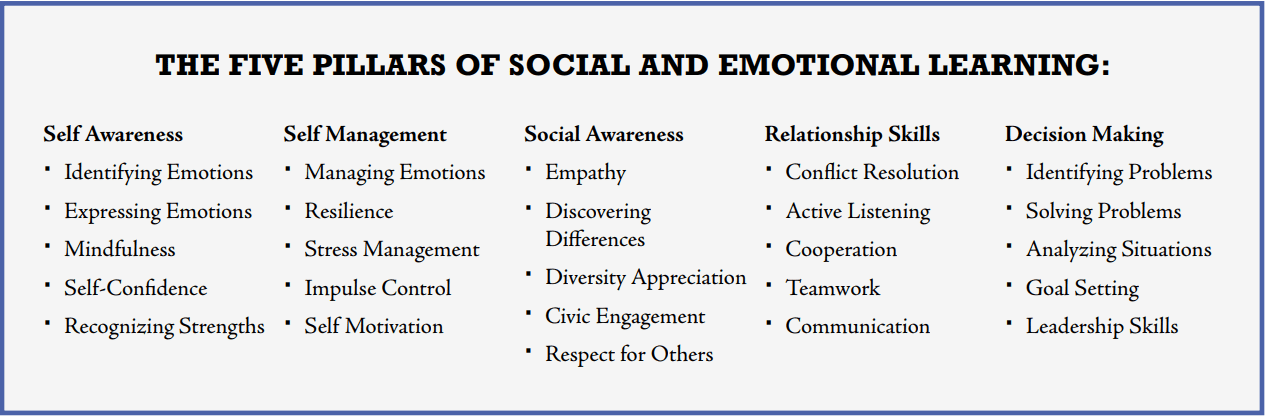
DECISION MAKING

The mantra “be fun to play with; be fun to play against” still works with upper elementary (9-12-year-olds), even though they are older and more mature. Their conflicts can be more complicated, and we need more than the mantra to solve some disagreements. A typical example is when one student criticizes another student who was distracted or not paying attention, causing a missed play or mistake. The criticizer wants them to pay attention and play better, which makes sense. A distracted teammate is not fun. However, the student being criticized usually does not like the criticism, and may not want to play anymore. The student criticizing a teammate is not being fun to play with either. Each point of view is valid, so how do we approach a topic like this?

Suppose the students cannot handle the disagreement in the moment and need a teacher mediator. In that case, I will ask a straightforward question to the student who is being portrayed as the aggressor.

“What was the intended outcome?”

Another way to ask this question is, “What did you want to happen?”

These questions get to the source of the conflict. The motivations and intentions of the students become apparent. We can have a logical conversation about the choices and consequences made, and emotions can be identified and expressed. Enhanced empathy allows both to reach a satisfactory compromise.

Let’s take a deeper look at the motivations of the criticizer. After I ask what they want to happen, they answer that they want the other student to pay attention.

Logically, this would probably improve the teammate’s performance, thereby improving the whole team’s performance. However, in this case, the criticism leads to the other player shutting down and not wanting to play anymore. They feel embarrassed and sad, so their performance suffers.

This is the opposite of what the criticizer wanted, but that is what commonly happens.

Additionally, the criticized student will have negative feelings toward their teammate, which may last far longer than that day.

This could lead to poor performance in the future or not wanting to play with this student at all (analyzing situations).

If we can help the criticizer understand the situation, we can help them to conclude that public criticism may not be the best course of action anymore.

It didn’t get the desired result; it worsened the situation. It hurt their teammate’s feelings, and hurt feelings take time to heal.

We can now explore alternate solutions with the criticizer, because we know criticism in this scenario didn’t work. We can ‘game plan’ with new solutions if this scenario happens again. For example, the student could privately remind the student to pay attention next time (goal setting).

BE FUN TO PLAY WITH; BE FUN TO PLAY AGAINST.

The student who wasn’t paying attention is not off the hook. We know that distracted teammates are not fun to play with, so we need to find out how (or why) they were distracted. Maybe it was a simple accident or mistake, so we know they will try harder next time, and it is as simple as that. Perhaps, they were talking to a friend and had been ignoring their responsibilities as a good teammate. Maybe this was not the first time this player has made a mistake in this game, and, they have made lots of errors due to an ongoing conversation with someone else. We need this context to analyze the situation truly.

There is a good chance that the criticizer did their best to manage their emotions, but after too many errors from the distracted player, they had had enough. It can be very frustrating when a teammate is not trying their best, especially when the other players put in maximum effort.

We expect everyone on our team to put forth the same effort we are, and when that expectation is not met, we can get upset. So, we need to remind the distracted player that to be a good teammate, they need to focus and put forth a good effort, which makes it fun to play with them.

We can only expect our teammates to do their best, knowing they will make mistakes. If the distracted student just made a simple mistake, we want to equip them with language that will help them acknowledge their mistake, and they will try harder next time.

This will build resilience and self-confidence because criticism in the future will be met with a plan of action, and they will not take it personally.

This communication with the teammate will prove they are actively listening and show that they are a good teammate.

With amped-up feelings and the game’s intensity, students are not ready to have this conversation immediately. We usually need time to have a mediation or peace talk.

However, if the behavior is not an isolated incident to those specific students, and it is something I am observing happening with several class members, I have no problem stopping the whole game and having this conversation with the entire class.

I need to fight my impulses to let things slide and continue the game to get maximum playing time at the expense of how the children are treating each other. We want the students to know that how they treat each other is as important as the game itself.

So, what do we do with our mature upper elementary and middle school students? Is there a way to promote sportsmanship past the definition they learned half a lifetime ago (be fun to play with, be fun to play against)? While it still applies, it’s simplistic, and we need something new to deal with the coming reality that they will be leaving the school soon.

They will be high schoolers, college students, and so on. They are at an age when they can truly perceive the future. We want them to be able to put things in perspective to guide their decisions. We must employ Social and Emotional Learning skills. For this age group, we have a new mantra: “Value the long term over the short term.”

From a strict sports perspective, we must strive for success in achieving the ultimate goal: a championship. We do this by creating smaller goals to achieve in practice and games, which serve to achieve the ultimate goal. For example, a team works on passing in practice sessions, which reduces turnovers in a game, and gives them a better chance of winning a championship because now they will turn the ball over less than their opponent.

Valuing the long term and the short term easily applies to life. The goal of each day is to make it better than yesterday in whatever you are trying to achieve. Continually achieving little goals accumulates into the achievement of a bigger goal. We want to achieve many big goals in our lifetime, but they happen through small incremental improvements.

What about luck? I have heard luck described as “when timing meets opportunity,” but there is an underlying fact that the person also needs to be capable. They made themselves capable through their work, whether they knew it or not. There was no way I could have predicted the combination of all the skills I would need to be where I am today. However, because I have those skills, through years of practice, I find myself in the position I am in, and I feel grateful for how things have turned out so far. When students ask, “Why do I have to learn this; I will never use it?” one of the answers is they might use it, but there is no way of us knowing for sure. As educators, we are trying to give them the potential for as many options as possible. There is no way we, or they, can predict how their life will unfold.

VALUE THE LONG TERM OVER THE SHORT TERM

Valuing the long term over the short term reminds me of a Swahili saying that my dad taught me. Before I get to that, if you are wondering, “Why does Nick’s dad know Swahili?” He was an associate professor of Swahili and African literature at Northwestern University

for over thirty years. I owe a lot of my analytic and critical thinking skills to his ability to let me ramble on and on as a child, and then he would ask key questions that forced me to reevaluate my position. My mother was a Montessori toddler teacher for over thirty years as well. The apple did not fall too far from the tree in that regard. Contrary to what many people assume about Montessori teachers of young children (they are all hippies), she showed me (and her students) a love of discipline. She also had intense powers of observation, and she consistently revealed character traits of a toddler that forecasted the adult they would become to their parents.

Let’s get back to the Swahili proverb. It is: haba na haba hujaza kibaba. The literal translation is, “little by little, the container gets filled.” This is a beautiful metaphor for how a long-term goal is accomplished.

When I talk to the students about valuing the long term over the short term in our Physical Education (PE) class, we talk about maintaining relationships (relationship skills). In PE, no one day or game is worth the cost of a friendship.

While winning a game is nice, that is not the goal. The point of physical education class is to learn through playing, practice sportsmanship, and get the exercise that facilitates gross and fine-motor movement patterns.

Some games have winners; others don’t, but winning is not, nor will it ever be the ultimate goal. Therefore, if someone values a game’s outcome more highly than a peer’s relationship, they are making a terrible mistake.

When we talk about valuing the long term over the short term regarding a team sport; maintaining relationships is still paramount, but the season’s outcome also bears some weight. It is possible to have a successful season and lose every game, but it takes a lot of subjective explanation to define the successes.

Winning a game, or especially winning a championship, is a more objective measure of the season’s success.

However, a winning season can be a failure if things were done to win a championship that ruins the players’ desire to continue playing in the future.

A coach can be successful on paper, but it can also be a failure of a coach on the human level if they break their players’ spirit and kill their motivation to play. Becoming the villain that your own team must overcome by banding together against you is a poor way to find success.

Winning a championship is the objective long-term success marker, and a game is a short-term goal.

Doing the little things in practice continues to add up, and our growth as players makes us more prepared for the game.

Playing game after game against different opponents teaches us more about ourselves than the opponent. It shows us what we must do to continue to get better, especially when the competition is close. As the team continues to improve, they put themselves in a better position to win a championship.

Not only do individual performances need to improve over the season, but also the team’s performance. Team performance is closely tied to how much trust the players have in each other and the coach.

Overly harsh words, resentment, envy, and other things that break trust erode the team’s fabric from the inside, and rarely does this team have long-term success.

An insult in practice bleeds over to the degraded performance in a game, and a lost game that was pivotal for the playoffs could be the difference in seeding for a championship run. Conversely, encouraging a player who failed in the moment shows that trust is still there, and that player feels secure that they can still contribute to the team in the future.

When we think of the Social and Emotional Learning toolbox, valuing the long term over the short term utilizes all the skills of decision making; identifying and solving problems; analyzing the situation; setting goals; and developing leadership skills. This is why team sports in school are held in such high esteem.

Whether adults realize it or not, the social and emotional skills that good team sports practice mimics how they will have to be used in real life.

As individuals, we are simultaneously the coach and the athlete of our own lives. We must strategize and make goals like a coach, and we must put those plans into action as players.

Another term that gets thrown around is “executive functioning,” which is something Montessori schools seem to be especially good at teaching. It is the ability to make plans and act on them.

We love sports because it is the idealized version of how life should be. Rules are fair, and they apply to everyone equally. The daily grind that produces results over time is a microcosm of what it takes to achieve greatness in life.

We celebrate those who are good at sports, but we especially value those who are also good at sportsmanship. Someone who is a good sport understands universal truths about being a good person. If sport is life, then sportsmanship is the way to live a good life. •

————————————————————————————-

Nicolas Lepine is the athletic director, physical education instructor, and sports coach for Rogers Park Montessori School in Chicago, IL. Before working as an athletic director and physical education teacher, he was in the Montessori upper elementary classroom for over a decade. He has a B.S.in exercise physiology from the University of Illinois and a Master’s in Montessori Education from St. Catherine’s University, where he completed his AMS Elementary One and Two certificates. This unique combination of skills allowed him to create Montessori Physical Education, which is a curriculum that integrates the Montessori classroom curriculum with physical education games. You can find his website at MontessoriPhysicalEducation.com, where you can learn more about how PE games can teach Montessori concepts, a free resources section, and links to the weekly blog and store.

Setting Limits

Setting Limits

Montessori Mom, Guide, & Entrepreneur

Montessori Mom, Guide, & Entrepreneur

My journey through the Montessori world has been full of serendipitous turns. At times, they have been surprising, at times difficult, even painful, but mostly they have been what I needed to find the path to a career I love and cherish. Starting as a Montessori mom with my oldest daughter (now thirteen), then choosing to become a Montessori guide myself, and ending with discovering I can contribute to this wonderful method with material I was able to create and develop from observing the amazing children in my classroom. It has been a fun ride, one that I feel deeply humbled to have the opportunity to share with you all.

I first walked into a Montessori classroom about seven years ago. I was looking for a school for my then five-year-old daughter, and, although I didn’t know much about Montessori at the time, I knew there was something special about the little Montessori school that had just opened close to our home. As a bilingual household, I wanted a place for my daughter where her bilingualism would be celebrated and admired, not seen as an impediment to her learning. To my delight, the Montessori Method, along with a wonderful and experienced teacher, did not disappoint. She was cherished and made to feel that being from a different culture and speaking a different language made her special.

Throughout her first year, I was fortunate to volunteer as a Spanish teacher, which led me to observe how things worked in a Montessori classroom. With the help of my daughter’s wonderful guide, who later became my mentor, I began to fall in love with the Method.

Two years later, my life took an unexpected turn, leading me to return to work. I looked into the possibility of becoming a Montessori guide. The owner of my daughter’s Montessori school recommended the Center for Guided Montessori Studies program. It was a rigorous 18-month program, and the prospect of returning to school after so many years was daunting, but I took the chance, got accepted, and started the program in October 2016.

It was a wonderful program that allowed me to prepare myself to start my new path as an early childhood Montessori guide. In August of 2018, I found myself as the lead guide of my classroom.

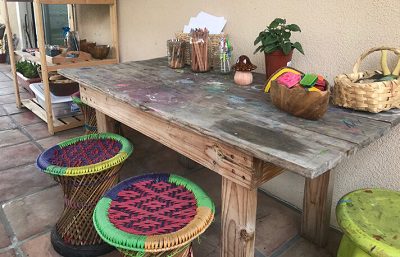
I know when I have prepared an art space for independence, children can flow in and out of creative moments without me having to facilitate each activity.

It was an amazing, terrifying, difficult, and beautiful year. I learned a lot about myself during this time, but most importantly, I knew very deep within me that I had found that I loved being in the classroom. I had found something I want to be a part of for many years to come.

During my second year as a lead guide, I had a couple of children who were, for lack of a better word, obsessed with dinosaurs.

Most children love dinosaurs, but these two little ones lived and breathed dinosaurs! From memorizing all their names and facts to refusing to wear clothing that did not have some kind of dinosaur print, their love and energy for these ancient giant creatures were inspiring.

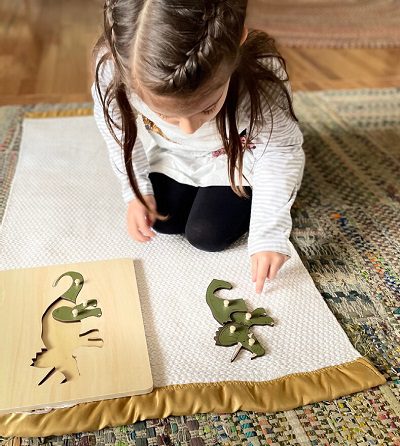
Naturally, I began to collect material to build a dinosaur unit to add to our cosmic area. However, there was one material that I wanted to include but could not find anywhere, at least not anything that satisfied my notion of what this material should be like to fit a Montessori classroom properly. That material was dinosaur puzzles.

I wanted to find puzzles that closely resembled the traditional Montessori animal puzzles found in the classroom. These puzzles commonly highlight the parts of a tree, flower, leaf, or the external body parts of a frog, bird, fish, or horse. These puzzles are normally found in the science area of a classroom.

However, I was looking for dinosaur puzzles, and there were very few options to choose from and even fewer that somewhat followed Montessori puzzles’ simple but brilliant design.

After many months of searching and not finding what I was looking for, I was inspired to see if I could create these puzzles myself.

With some fear of the unknown, but lots of determination, I enlisted the help of my dear and talented friend, Whitney Rader, who is an amazing artist and a former Montessori parent. We worked for a couple of months to develop the artwork that I thought would work best for the product.

After a final draft was done, I spent the best of a month looking for a manufacturer that could make the puzzles a reality and understood the Montessori Method. That turned out to make a world of a difference. Once I had found the right partner, we began the exciting but painstaking process of going through samples, trials, feedback, going back to the blackboard, more samples, more trials, and more feedback, time and time again, until we were able to come up with a product that would best serve a Montessori classroom as well as delight any dino-loving child.

During this time of trial and error, a six-yearold child in my classroom made a beautiful pin-poking work out of the Pink Tower. She carefully traced and created perforations along the lines by using a special pin to poke the paper for each square, then glued them all onto a large piece of white poster board. After she was done, she came up to me and said, “Ms. Faby, how do you write pink block?” She wrote ‘Pink Block’ next to each of the ten pink squares making sure she wrote the letter k in ‘pink’ on each of the ten pink squares. After she was done, she proudly showed me her beautiful work. I knew then that I had found the name for the online store I wanted to create for the dinosaur puzzles. And this was how Pink Block: Montessori Inspired Educational Materials was born.

The past six years have been an incredible journey, from becoming a Montessori parent to a Montessori guide to a small business owner.

Looking back, I am grateful for all those who have helped me in my endeavors. My children, who lovingly supported and encouraged me, the children in my classroom, who inspired and taught me every day, and my colleagues, family, and friends who were there to cheer me up and give me the feedback I needed to hear.

But most of all, I am grateful for a courageous woman who defied the stereotypes of her day and who, in her quest to heal and help others, learned to observe children, thus opening a window into a better way to go about the education of our children.

Thank you, Dr. Montessori! I encourage you all to pursue those things that seem impossible. Life has a way of serendipitously taking you where you need to be. Enjoy the ride! •

———————————————————————————–

Faby Denney has been a lead guide at Center Grove Montessori School over the past four years. She earned her Montessori Certificate from Center for Guided Montessori Studies in 2016.

Being a Montessori guide is more than a jobor even a career for her, it is a calling. Sheen joys music, reading and being with friends as well as finding new food to try. Besides her beautiful dinosaur puzzles she also workingon building a Spanish program for the elementary classroom at her school that will not only teach the language but expose the children to the many and varied cultures that speak it.

Faby currently lives in Indiana with her two daughters, who are both Montessori children. You can find more about her and her store at www.pinkblockmontessori.com. Or contact her at fabymooplus2@yahoo.com.

Traveling as a Family

Traveling as a Family

Over school holidays, many families choose to travel. They may visit family or to places that are new adventures for everyone.

Travelling can be stressful. Here are some tips to make any trip easier for the whole family.

First, Plan Together

– During a family meeting, discuss travel plans (the where, when, and how), the budget, and ask each person what they would like to do on your trip. Knowing your budget ahead of time can be helpful with what is planned and the expectations of the whole family.

– Plan for quality over quantity. Spending a whole vacation running from museum to museum can make everyone cranky and limit the memories of what was seen. Taking more time in one place can be more enjoyable for all.

– Make shared agreements before you go. Is it okay to be on screens while waiting for food to be brought to the table? When is it okay not to go out as a family, and what safety measures need to be taken? Discussing these as a family before you go can make things easier when you arrive.

Second, Consider Your Family Values and Trip Goals

– How do your family values affect this trip? Is your family excited to learn on this trip, or do you need a break in nature? How will your family stay true to your values and allow your values to help guide your trip?

– What are your goals for this trip? Are there places you want to see, or is spending time with the people more important than the sights? My son just made a trip to visit a friend from college before new work experiences took them thousands of miles apart. Although interesting sights were seen, spending time together was the most important, so walking his friend to the tram for work became a part of his visit.

– Consider what would make this trip feel complete for each person in your family. Maybe one person expects to do some shopping, and another expects to make cookies with Grandma. If they aren’t said aloud, they may not happen. Be sure to share requested ideas with all involved friends and family members. We like to consider our three top things to do. It is manageable for our family of four, and everyone feels their trip was worthwhile. Often our top three things to do overlap, and everything else feels extra.

Third, Plan for Safety

– Communication is key for safety in a new location. Make sure younger children know how to contact you if they get separated. With children who have their own phones, this is a perfect time for location sharing.

– Practice stop and freeze with younger children. We loved to play the freeze game when we were out. When there was a clear path, I would say “run,” and my children would run until I said, “stop.”

Our word choice was based on a game they played at school. Freeze, –, or any related word could be used. This game let them practice two things, running in appropriate places and connecting a pause with my voice. If something came up when they needed to stop and listen, it was not new and felt fun.

– Be clear about expected meeting spots when you are in a place you may get separated or choose to separate.

– Allow older children some safe time on their own. Can they stay in the train exhibit rather than going to the dress exhibit? Are they old enough to stay back while the adults go to a show, dinner, or an exhibit? A friend’s teens stayed back and watched Netflix while they went to the Renoir Museum. The teens were happy with the break from art museums, the adult was happy to explore the museum, and there was a plan that kept all safe and happy when they reconnected a few hours later. None would have been as happy if the teens had gone under duress, or the adult had skipped something they wanted to do (one of their top three choices).

Fourth, Keep Essentials in Mind

– Plan for downtime! Everyone needs some time to rest, and teens need time to reconnect with friends.

– Find some ways to have personal space. It may be as simple as not involving a reader in a conversation or allowing some time in nature. For introverts, especially, a little time apart helps the time together be more enjoyable.

– Realize that all the adults in your group are parenting partners and share your important parenting guidelines with them. This may be very difficult if you are visiting family. Try to have a gentle conversation about concerns before you go. “Mom, we are so excited to visit. Matt is feeling picky about eating right now, so we are encouraging a taste and leaving it at that. Sabrina loves the skirt you gave her and may wear it every day! We have decided just to make sure she is warm enough, and that is working out.” Sharing what is happening and how you manage can help you continue to address parenting issues consistently even as you travel.

– Maintain routines whenever possible. If your child usually goes to bed at 7:00 and you are sitting down in a restaurant at 7:00, your dinner, or your next day, may not be as calm as you like. Bedtimes, a type of snack, and a favorite toy can all encourage a feeling of safety and comfort, making all new opportunities more fun.

– Come prepared. Having a small firstaid kit (a blister can ruin a walking day), water, and an emergency snack can change the trajectory of your day.

– Communicate your family needs if you are traveling with or visiting other adults. Having the first grandchild can lead to adults who are used to later dinners and a child who wants to eat and go to bed. When Rebecca told all of the adults that her child needed to be sitting down at a restaurant by 6:15, she was able to encourage some afternoon quiet time, and dinners went smoothly, even if they were long.

Don’t forget to review your experience and share what everyone liked, thought was funny, or may not be comfortable trying again. These memories will be fun to share and make your next trip even better! •

Preparing a Montessori Art Environment at Home

Preparing a Montessori Art Environment at Home

Whether your child attends a Montessori school, or you are starting to homeschool using Montessori education, one area you should consider teaching is visual arts.

Art is an often-overlooked aspect of Montessori education today. Even traditional Montessori classrooms struggle with providing art literacy.

Teaching art lessons has a ton of benefits that go beyond beautiful art. There are some other important reasons to create an art space in your home and give art lessons regularly. For example, art:

  • Supports problem-solving skills
  • Develops gross- and fine-motor skills
  • Supports implicit memory
  • Increases spatial awareness
  • Helps children regulate stress

Setting up an art environment might seem overwhelming if you don’t know how to teach art.

Have you dreamed of your child creating beautiful artwork but have no idea where to get started? As a first step, I recommend deciding on a place for your Montessori homeschool art space environment.

The secret to a good art environment is creating a space for working, uninterrupted. Additionally, you will want a space that offers children the freedom to explore and express ideas. After all, if you give them a space to make art, they will create!

Before we go into my art space tips, here’s a little perspective: If you don’t have a shelf filled with books, you won’t raise readers. You won’t raise a writer if you don’t have pens, papers, or a dictionary handy. So, guess what? You won’t raise an artist when you don’t have an art space filled with art supplies!

Art Environment Features

As an art studio designer, art teacher, and homeschooler, I’ve had many opportunities to design different Montessori art spaces.

Here are the essential components I recommend for every Montessori home art environment include:

  • Table – All activities should take place on a flat surface.
  • Chair – Along with a sturdy table, children need a safe place to sit while working.
  • Floor covering – This saves your floors from spills!
  • Light source – For children to work with color, they need a good light source.
  • Storage – Art storage comes in many shapes and sizes, including baskets, jars, plastic bins, shelves, or an art closet.
  • Sink – The sink doesn’t need to be in the immediate art space, but it should be close and easily accessible. You might want to use a sink in a bathroom or kitchen; it’s needed to wash materials and hands.

Where should your family’s art space be?

Because an art space doesn’t need to be elaborate, you can set it up anywhere in your home. You can dedicate an entire room as an art space or choose a corner of your child’s bedroom, the family living room, the yard, the basement, or kitchen.

One of my dear homeschool-mom friends set up a simple desk for her children in her kitchen. I loved seeing what her daughter would create when I visited for tea!

My own children’s art spaces have transitioned throughout the years. They moved around to different spots in our home. Now, my daughter likes to draw and paint in her bedroom, alhough, when she was young, the kitchen table was where she liked to do art.

Before you unleash your little Picasso, be sure you and your child agree on the space where art will take place (the art environment). This is big! When I first started homeschooling, I was loose on this rule. Lots of messes spread around our home. Eventually, my children stained my nice couch with paint and markers. Soon after, I decided there was only one space where art making was allowed!

Planning a Montessori Homeschool Art Space Environment

Art space features to consider:

  • Where will the art space location stay?
  • Where will your child access their own art supplies?
  • Where will out-of-reach art supplies be stored?
  • Where will unfinished artworks be kept?
  • Where will artworks dry?
  • Which space will display current creations (home gallery)
  • Which sink will you allow your child to use to wash out paint, palettes, messy glue, and hands?

Designing an Art Space for Independence

You can support your child’s independence in the way the art space is prepared ahead of time. When planning this space, be sure it aligns with their level of fine-motor abilities.

Arrange and prepare art materials that are easy for your child to reach but not for any toddler siblings to reach.

Create a space with freedom of movement in mind. For children to become independent, there must be plenty of space to create freely.

Plan to demonstrate how the materials should be set up and put away.

Also, plan to show your child how the mediums work and how to use them respectfully.

I know when I have prepared an art space for independence, children can flow in and out of creative moments without me having to facilitate each activity.

For example, if I create a space for children to watercolor, I store materials in a handy way for them to gather, set up, and create. Eventually, they learn to set up and clean up without my assistance. Yes, I’m around for questions and new technique demonstrations, but my students feel like the space is an open, creative studio for creation when everything is initially set up for independence.

Art Materials and Supply Storage

Storage can get tricky, especially if your whole family is sharing a living space/workspace. Be sure you create a system to store art supplies children cannot access. Many art supplies can stain and be hazardous to younger siblings. It’s easy for little ones to grab paints and take them somewhere you don’t want stains. You can store smaller plastic bins in cabinets or larger bins in a garage.

Check out this free video on how to store art supplies. I give you my professional advice on my own storage system: bit.ly/3R6P8yC

I hope I have provided helpful tips and the information you need to set up your child’s athome art room space. •

————————————————————————————-

Spramani Elaun is an author and art curriculum developer from San Diego, California. She is a homeschooling mom and an art teacher with a science/art methodology. Her success is led by twenty years of observations and real-life practice of how children cognitively and sensorially process art. She is the founder of Nature of Art, an art school and art supply company, and the Art Teaching Blueprint Montessori Certification Training Program. Spramani holds degrees in graphic design, digital media design, visual communications, print media, and fine art. Learn more about homeschooling Montessori Art by reading her blogs, books and curriculum at Montessori-Art.com.

End the ”Good Job” Crisis with these 3 Secrets

End the ”Good Job” Crisis with these 3 Secrets

While I was having dinner at a local family restaurant the other night, I couldn’t help but observe two moms, clearly close friends, and their clan of five small children crammed into one booth. As the mothers sat and had a conversation, it was clear their attention was not on the children. One mom became frustrated when the three-year-old boy kept interrupting their conversation.

As I observed, I cringed at the words I heard, as if they were screeching nails on a chalkboard: “Girls, tell him he did a good job.”

When the girls did not respond to their mother’s request, she repeated it multiple times (screech, screech, screech!). The result was a frustrated mom, disinterested little girls, and possibly a “happy” three-year-old. Clearly, this was not the outcome the mother was hoping for, but, hey, at least he received a “good job,” and all was quiet again at the table. After all, that is what the mothers were seeking, right?

My mind started spinning with questions as I tried to enjoy my meal.

Why do we so often believe that children have to hear the phrase “good job?”

Why must we tell a child yearning for attention “good job” just to give him the instant gratification of hearing he did a good job when, in fact, maybe he didn’t do a good job?

What truly is a “good job?”Why does my opinion matter?

What is society coming to where children have to be praised just to shut them up?

We have a “Good Job Crisis!” So, what can we do to fix this problem? In my experience as a Montessori teacher, I have seen simple changes in language help children decide if they have done a good job intrinsically. These are the top three “secrets” that I put to use in my classroom and encourage both parents and other educators to do the same.

ASK QUESTIONS

“What do you think about your picture?” Find out how they feel about the art project, situation, or behavior. Adults so often shape children into what we think they should believe, when in reality, they truly are capable enough to decide for themselves if they feel successful. As parents, it may be tough to ignore the pestering child who wants instant gratification. Still, if we go back to the dinner disaster, a quick question could have easily enhanced the conversation, produced a more supportive outcome, and left the entire table less annoyed at being ordered around.

BE QUIET AND LET THEM EXPLAIN

Sometimes saying nothing can be crucial. This alternative can go in hand with asking a question and simply waiting for a response without passing judgment. Let the child explain. Whether it is their description of artwork or their reasoning behind a choice they made, let the child’s mind do the work and support their own success with a smile.

REPLACE “GOOD JOB” WITH OTHER WORDS

This won’t take on perfection the first time you try, or the second, or third for that matter. You must practice your language. Below are some examples of how to start changing your vocabulary today. Pay close attention to the verbiage and start applying them in your life.

REPLACE: “Great job cleaning your room today, Stella!”

WITH: “I like how you organized your shoes in your closet.”

OR: “I noticed you put your baby doll’s clothes back in the basket.”

REPLACE: “Good job mashing those potatoes; it must have been hard work.”

WITH: “Thank you for helping make dinner.”

OR: “I acknowledge you for making the mashed potatoes for dinner tonight.”

REPLACE: “You did a really good job on your science fair project!”

WITH: “What was your favorite part about your project?”

OR: “I see you put a lot of detail into your presentation board.”

If this all seems like a huge undertaking, you are right, it is! It’s not easy for many of us who have grown up as “praise junkies” to change our language to shape our children differently.

Now, I am not saying that all praise is bad because we are humans, and we all like to be recognized.

And while you practice these “secrets,” know that it won’t be easy, but it will be worth it! Children need to learn that they are doing it for themselves and not always for the gratification of others.

So, how are you going to put an end to the “Good Job Crisis?” I want to challenge you to start today with one simple phrase to replace “good job.” •

————————————————————————————-

 As the Director of Montessori Education and Development, Amanda Konopaska works with both the Area Superintendent and Academic Excellence Team for Choice Schools Associates. As an undergraduate, she earned her Bachelor of Science in Education from Wayne State University and a Masters in School Principalship with a concentration in Charter School Leadership from Central Michigan University. Additionally, she also holds an Elementary II Credential from the American Montessori Society and has had formal training for Elementary I. Amanda’s Montessori journey began in 2009, as an upper elementary classroom teacher and emerged into leadership where she took on both active and interim Principal roles fortwo Montessori academies. Currently, she is the program coordinator and trainer of our Montessori Experience for all new teacher sand works directly with instructional coaches at multiple academies. Amanda resides in Fowlerville, Michigan with her husband Carl and daughters, Stella, and Vivian.

Choosing Montessori-Friendly Books for Young Children

Choosing Montessori-Friendly Books for Young Children

—by Megan Gregorowski

Selecting books for a Montessori-inspired home environment can be somewhat daunting.

‘What makes a children’s book Montessori friendly?’ ‘How do we choose books that stay true to Montessori philosophy and engage our children in the real world?’

Here are some tips to follow when selecting Montessori-aligned books.

First, consider why having a home filled with books benefits even very young children’s development.

Books promote:

  • cognitive development
  • language skills
  • preparation for academic success
  • concentration
  • imagination
  • and creativity

Some tips on choosing Montessori-friendly children’s books:

Choose books based on reality. Montessori identified what she called the Absorbent Mind in the first plane of development, between birth to age six when children absorb information from the world around them. Children in this developmental phase benefit from learning about real things rather than fantasy. With a strong grounding in reality, knowledge and creativity flourish.

As Montessori said in her 1946 London Lectures, children “acquire knowledge through experience in the environment.”

It is only in the second plane of development, after the age of six, that children’s brains become capable of understanding fantasy.

So, select books showing the world around them: people, places, animals, and natural environments; the options are endless.

Choose books that are beautifully illustrated. Illustrations can ignite curiosity, enhance creativity, and provide opportunities for extended conversation-enhancing vocabulary and language development.

Illustrations should be realistic and based on the world. This does not mean illustrations have to be real. Drawings can be used, but ensure they are realistic. A fish should be shown with fins and not arms, for example.

Choose age-appropriate books. Books that are possibly too difficult or too easy may cause children to lose interest and discourage learning.

A book’s format is also important: does it have pull-out pages or flaps, and are they age-appropriate and practical? Ask yourself if your children can use them as intended.

And lastly, choose books that are related to your children’s interests. They are natural and curious learners with a great drive for independence.

By selecting books based on their interests, we honor our children by choosing books that support their learning and create interest and a deeper appreciation for the world around them.

Happy book browsing!

———————————————————————————-

Megan Gregorowski is a Montessori 3-6 Directress(MCI)(MCSA) and a recent psychology graduate. She ispassionate about challenging stereotypes in educationand brings her Montessori and psychology knowledgetogether to inform her teaching practice as an education supportteacher in a special-needs setting.

A debut children’s book author, Megan was inspired to writechildren’s books about the Montessori philosophy and classroomenvironment with her first Montessori-inspired series beingreleased in January 2023.

Megan lives on the Wild Coast of South Africa and loves adventureand being creative, when she’s not teaching or writing, she enjoysbaking, painting, or exploring her local beach with her husband,son, and dogs.

Follow Megan on Instagram @meg_gregorowski_author

BOOK REVIEWS: TC Nov 2022

BOOK REVIEWS: TC Nov 2022

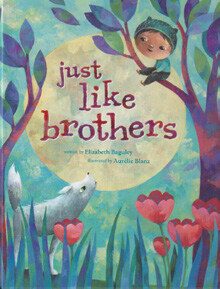
Just Like Brothers

Written by Elizabeth Baguley

Illustrated by Aurélie Blanz

This is a charming book with gorgeous illustrations and interesting descriptive and rhyming verses. The story is about how sometimes groups teach their children to guard themselves against other groups without knowing, interacting, or understanding. They fear and sometimes hate each other when in fact, they might be able to live like brothers.

The author uses a human child and a wolf cub as the characters that are influenced by their mothers’ warnings about the other. Although it can be a metaphor for developing care and kindness for each other, in reality, the adults in these species can be dangerous when confronted with each other. What happens to our childhood innocence when we grow in fear and protection? Maybe this is really a book for adults, not children.

I would recommend this book for elementary-age children because, to me, it is more than just a storybook. It is a conversation about figuring out the difference between real danger and simply lack of understanding.

Be Who You Were Meant To Be

Written by Lauren Grabois Fischer

Illustrated by Devin Hunt

This children’s book encourages children to feel their own feelings, think their own thoughts, self-reflect, know themselves, be courageous, and accept others for who they are. The overall belief is that humans inherently know who they were meant to be when left unjudged and unconditionally loved. Within this book, the story is written in English and then repeated in Spanish – two books in one. The illustrations are colorful and fun. They depict children from many backgrounds.

At the end of the book, there are several pages with notes to parents, caregivers, and teachers with discussion questions and activities. This book would be appealing to three- to eight year-old children. It can be purchased at amazon.com and other book outlets.

Everyone Feels…

Written by Dr. Daniela Owen

Illustrated by Gülce Baycik

This series is written by an author who we have heard from before. Dr. Owen also wrote a series called Right Now. Some of you may remember and have read those books. Everyone Feels is a new series that can help children identify feelings, such as anger, sadness, and anxiety and give them strategies to cope with them in appropriate, healthy ways. Strategies include deep breathing, changing their thoughts, physical exercise, etc. In the past, children were taught to “stuff” certain feelings and pretend they didn’t exist. Fortunately for all of us, we now know that “stuffing” only leads to eventual explosions that can negatively impact the person with the feeling and others around them.

This series is very helpful for young children as they learn how to self-regulate and express themselves in ways that keep them emotionally safe and healthy. It would be a good addition to any home or school library for children three to ten years old. The books can be purchased online or at a local bookstore.

I Think I Can

Written by Karen S. Robbins

Illustrated by Rachael Brunson

Well, I read this book several times, and I think this could be an introduction to reading together (an adult and a child) The aardvark shows confidence in its abilities and potential, and the mouse is delighted.

There are two characters – the aardvark, played by an adult, and the mouse by a child. The aardvark’s words are printed in blue, and the child’s in black. Many of the child’s words are the same as the aardvark’s and the child just repeats them, often only changing the nouns. It ends with a song that they sing together to the tune of “Row, Row, Row Your Boat.” The illustrations are simple, clear, and fun.

This book could introduce reading together as just fun for young children and adults. It can be purchased at amazon.com.

Our Table

Written by Peter Reynolds

Violet’s family has become distracted by technology and no longer comes together at their table. The table actually shrinks and disappears, with only Violet noticing. Violet asks the members of her family, one by one and, utilizing the technology they enjoy, to help her build a new table. The whole family remembers the power of coming together to share at the family table.

This story, beautifully illustrated by Peter Reynolds and using color to help enhance the story, is a great one for the holidays. It is a wonderful reminder of the power and joy of spending time together IRL (in real life).

I would recommend this book to all families. Young elementary-age children will enjoy the details in the illustrations, and everyone will enjoy the message. The book is available at all major book retailers, and autographed copies can be ordered from www.thedotcentral.com.

The Little Book of Bees

Written by Hilary Kearney

Illustrated by Amy Holliday

I had the pleasure not long ago of visiting a botanical garden known for its orchids, and generously filled with many other kinds of flowering plants, etc. Whenever I go to places like that, I always visit their gift shop and purchase a book or two for the school, my grandson, or others who are near and dear to me. As usual, I found this wonderful book.

This Little Book of Bees is huge! It is full of very informative content and gorgeous illustrations! You and your child will probably learn so much more than you ever knew about bees. The story of bees is fascinating. Maybe you and your child will be inspired to learn even more about bees and maybe even inspired to do some things – small or large – to help bees in your backyard, your local community, or around the world to survive and thrive.

I highly recommend this book as an addition to your home or school library. Children from four to twelve years old will be intrigued by the wonder of bees! It can be purchased at botanical gardens, nature preserves, bookstores, and from Amazon.

Redirecting Children’s Behavior Effective Discipline for Creating Connection and Cooperation

Written by Kathryn J. Kvols

In early 1990, when our children were three and six years old, I met Kathryn Kvols. I was an experienced and skilled primary teacher in a Montessori classroom. I did exceedingly well at school with other people’s children. I listened to each child patiently and respectfully. I was kind, firm, and consistent. I cultivated a cooperative classroom community.

And yet, something disturbing happened when my children and I got into our car to go home. Suddenly, I became a very different person and did not treat my own children with the same respect and kindness I gave the children in my class. I was consistently in power struggles with my oldest child, and because that took up so much of my parenting time, my youngest became an attentionseeking child. My husband had no clue what to do with the children or me!

Without a doubt, we were struggling in our family life when I met Kathryn Kvols – a woman with a book, practices to cultivate connection and cooperation, and a belief in the goodness of humans.

I gladly took her course. I learned that the same principles I used in the classroom with other children also applied to my own children at home. What a novel idea! This woman, her book, and her practices transformed our home life.

I tell you this story because I am so excited that the 4th edition of Redirecting Children’s Behavior has been released this year. It has a new, more interesting look. The print and layout design are more inviting. It is loaded with real-life stories that illustrate the practices she espouses. Most important are the family-life-changing principles that she lays out in detail for her readers. They include cultivating growth mindsets within each family member, recognizing and managing emotions effectively, setting and keeping

clear expectations, developing skills that eliminate the need to punish or reward, resolving conflicts peacefully, and so much more.
This book will help you align your family life with the principles and practices used in your child’s, grandchild’s, niece’s, or nephew’s Montessori classroom. It is a must-read for families.

Tales of a Traveling Nurse: Is This My Home?

Written by Sheri Sturniolo

Illustrated by Shay Larby

Children at the elementary level will probably enjoy this book as they look at a career that is new to them, as it was for me: Tales of a Traveling Nurse. They will be able to follow her stops in several different states in the United States as she travels in her work as a pediatric nurse and, as she says, “an explorer.” The illustrations are full of color and images of the many experiences that she describes. The author uses rhyming to add interest to the text. This book comes in paperback, hardcover, and board book versions, as well as on Kindle. It can be purchased at amazon.com and other bookstores.