
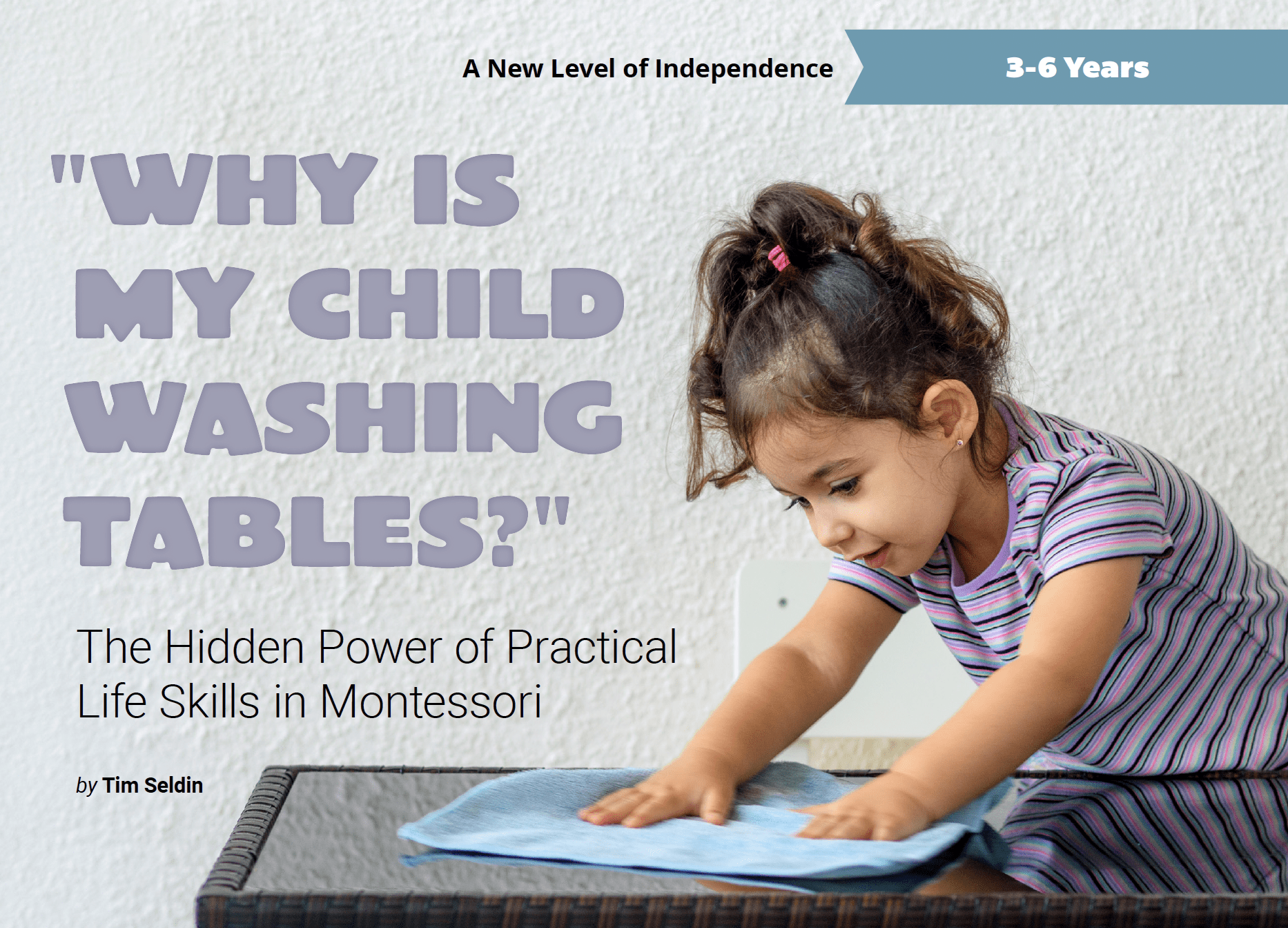
The Hidden Power of Practical Life Skills in Montessori
The Hidden Power of Practical Life Skills in Montessori
by Tim Seldin
“All activities connected with caring for oneself and the environment—like getting dressed, preparing food, setting the table, wiping floors, clearing dishes—these are tasks that adults often avoid. Yet, for children between one and four, these jobs are a source of joy, and they eagerly rise to the invitation to participate.” — Dr. Silvana Montanaro
“I love Montessori! I get to make snacks and serve them to my friends. It’s like being a real waiter.” — Phillip, age 5
This photograph from a century ago shows a young Montessori child ladling soup for her classmates at lunchtime. It’s easy to imagine her parents asking the same question many do today: “What does this have to do with learning to read or write?” In Montessori, Practical Life activities—such as washing tables, pouring water, polishing, sweeping, and dusting—are not just chores; they are foundational learning experiences.

Through these hands-on tasks, children develop an inner sense of order, focus, and independence. By caring for their environment, meeting their own needs, and helping others, Montessori students learn more than just skills—they learn how to learn.
Here’s a glimpse into a Montessori day that captures this philosophy:
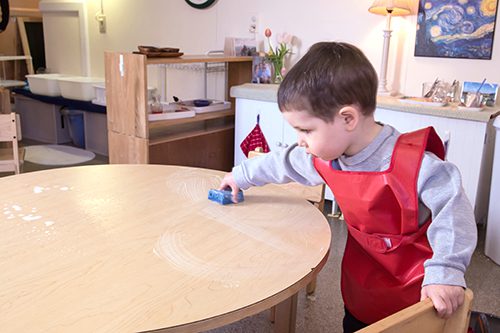
It’s 10 o’clock, and Amani is hungry. She heads over to the snack table and prepares celery sticks with peanut butter, pouring herself apple juice from a pitcher made for small hands. When she finishes, Amani carefully wipes her placemat. This inspires her to clean, so she gathers a small bucket, sponge, brush, towel, and soap, and she starts methodically washing a table.
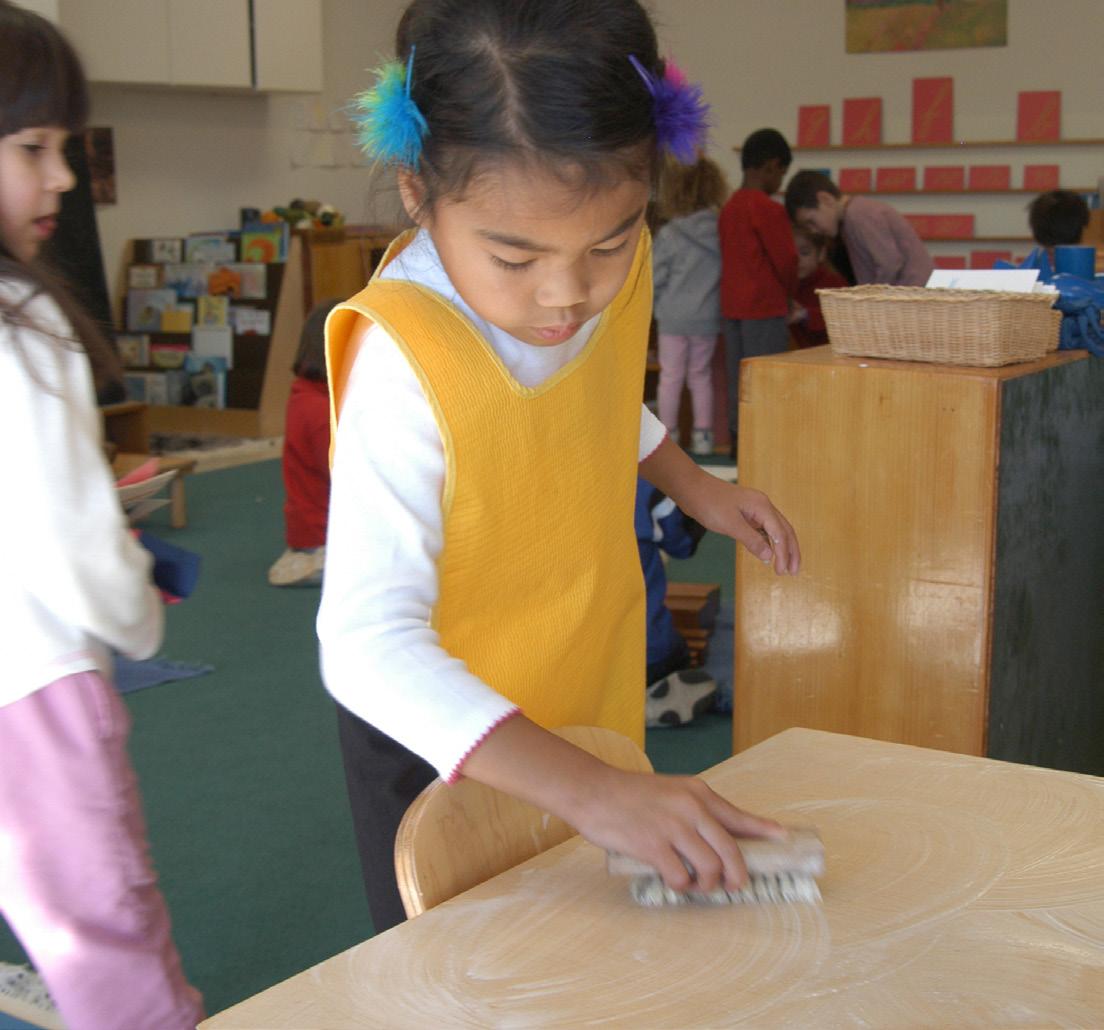
As she scrubs, she’s absorbed by the patterns of the soap suds. When she’s done, she tidies up, leaving the table somewhat clean—but that’s not the point. What Amani is truly learning is patience, independence, and the ability to concentrate on a sequence of steps.

Another child, Meredith, sees that the windows need to be cleaned. She gathers the window-washing kit and begins to spray a nontoxic solution on the glass. She uses a small squeegee and wipes it with a clean cloth. When done, she moves on, choosing activities that interest her.
In a Montessori classroom, children are genuinely responsible for their space. When hungry, they prepare snacks; when spills happen, they clean up. They practice self-care and community care—each action cultivating confidence and independence.
A Foundation Beyond Skills
Montessori isn’t just about teaching children to count or read; it’s about shaping the people they will become. We focus on developing self-discovery, resilience, and a joyful pursuit of knowledge. This isn’t merely an academic education but an education of the heart and mind. In this setting, children learn with patience, curiosity, and a sense of personal responsibility.
Montessori’s classroom for children between three and six years old is called a Children’s House—a true community of young children. Dr. Maria Montessori’s vision was not to create a more advanced kindergarten but an empowering environment where children are respected as individuals. Here, they develop social and emotional connections, form lasting friendships, and take pride in their shared responsibility for the space and each other.
As children thrive in this nurturing community, they begin to believe in themselves. In this atmosphere, they maintain their natural curiosity and willingness to explore. They learn that mistakes are not failures but stepping stones to growth. With this foundation, they grow to view learning as a journey rather than a destination.

Growing up this way
As a child, I attended the Barrie School in Washington, D.C. Barrie was founded by my mother in 1932. Later,
I returned to teach and eventually served as headmaster for 22 years.
As a child, I remember arriving at school on frosty mornings, stopping by the kitchen for a piece of toast or some cereal, and helping myself with a bit of guidance from older students. As we grew, so did our contributions to the school.
Barrie was a community of several hundred children ranging in age from two to eighteen. Our food was made in the school kitchen, and older students volunteered to help with preparation. I spent mornings peeling potatoes and stirring stew alongside our cook, Edith, and friends.
After meals, we carried dishes back to the kitchen, washed them by hand, swept sidewalks, watered gardens, fed animals, and tutored younger students.
These daily acts connected us with everyone on campus— from bus drivers to teachers. They taught us the importance of community, and to this day, I still enjoy washing dishes.
The Lifelong Value of Practical Life Skills
“In the special environment prepared for the child, they express an inner need: ‘Help me to do it by myself!’
In Montessori, the classroom itself is a “children’s house,” where children play an active role in caring for the space. They prepare snacks, clean tables, sweep floors, and organize shelves. Through these activities, they learn much more than basic tasks; they develop self-respect, resilience, and a love for learning.

Confidence grows when children feel capable and independent. Montessori classrooms are designed to foster this growth. Here, children’s actions say, “Help me learn to do it for myself!” By encouraging them to be self-sufficient and organized, we set the stage for a lifetime of strong work habits and a sense of responsibility.
Independence does not magically appear as children grow; it must be nurtured. In Montessori, children start young, learning to tie their shoes or pour their own milk. Small successes like these lead to a sense of confidence and pride.

As they mature, Montessori students learn Practical Life skills that prepare them for daily living, like cooking, sewing, managing money, gardening, and even simple home repairs. However, perhaps the most essential skill is learning how to work and play with others kindly. Kindness and respect are daily practices in the Montessori classroom, where children learn to be thoughtful and responsible toward their community. They learn to treat themselves and others with dignity.
Montessori schools aim to be close-knit communities where people learn together in an atmosphere of warmth, respect, and cooperation. Teachers are mentors and guides, helping children grow in understanding and compassion for each other’s unique backgrounds and interests.
Montessori Practical Life activities are the heart of Montessori education. They teach children to be confident, responsible, and independent human beings who find joy in learning and meaningful work.
Tim Seldin is President of the Montessori Foundation and Chair of the International Montessori Council. His more than 40 years of experience in Montessori education includes 22 years as Headmaster of the Barrie School in Silver Spring, Maryland, his alma mater from toddler through high school graduation. Tim was Co-Founder and Director of the Institute for Advanced Montessori Studies and the Center for Guided Montessori Studies. He earned a B.A. in History and Philosophy from Georgetown University, an M.Ed. in Educational Administration and Supervision from The American University, and his Montessori certification from the American Montessori Society.
Tim is the author of several books on Montessori Education, including How to Raise An Amazing Child, Montessori 101, The World in the Palm of Her Hand. and Montessori for Every Family, co-authored with Lorna McGrath. Look for The Montessori Way, coming out in May, 2025.


A POSITIVE APPROACH TO DISCIPLINE

Many parents believe that the word discipline means to punish. In reality, it means to teach.
Testing your limits
Every child will test the rules to some degree. In fact, most acts of testing parents are a normal part of a child’s process of growing up. When children test adults, it is often their way of expressing feelings that they don’t understand, and from our responses, they gradually learn how to handle their emotions appropriately. By testing the limits, they learn that we really care about certain ground rules of grace and courtesy in our relationships. In acting out, they are taking their first tentative steps towards independence, attempting to demonstrate that we don’t control them completely.

Family ground rules
Some families have far too many rules when all that is needed are some basic guidelines that underpin what we expect and hope from all members of the human race. There is no need to be creative and think up something to govern every aspect of your children’s lives. Agree on your family’s ground rules and get them written down and displayed so that both parents and caregivers can refer to them. Teach your child how to do the right thing rather than focusing on their mistakes. In the Montessori-inspired home, there are usually just a few basic rules.
• Treat everyone with respect.
• If you use something, put it back correctly when you are finished.
• If you break or spill something, clean it up.
• Tell the truth, and don’t be afraid to admit when you make a mistake.
You should be absolutely clear in your mind about your family’s ground rules. Explain them positively rather than as prohibitions. Instead of saying, “Don’t do that!” the rules should tell your child what to do. Teach them how to follow them as if you were teaching any lesson in everyday life skills. Model the same behaviors that you are trying to encourage in your child. Consciously try to catch your child doing something right and reinforce and acknowledge even the small steps they are taking in the right direction. Don’t wait until they have mastered a new skill; encourage them along the way.
When your child breaks a ground rule, you can do several things other than scold, threaten, or punish.
You can redirect them by suggesting a more appropriate choice. You can remind them of the ground rule and politely (but firmly) ask them to stop. If the situation is not emotionally charged (that is, if you are not personally aggravated), you can re-teach the basic lesson about how to handle such situations.
Be consistent. If you find that you cannot bring yourself to reinforce a rule, again and again, it should not be a ground rule. A few good rules are much better than dozens that are often ignored.
Teaching tidiness
Show your child how to put their toys away after they have finished playing with them.
Reducing Power Struggles
Sooner or later, every child will stubbornly say, “No, I don’t want to!” This is the power struggle that starts in the toddler years and often continues throughout childhood and adolescence. Many people call the toddler stage the “terrible twos,” but it doesn’t have to be—not with two-year-olds or with older children.
Power struggles start in situations where parents and children are determined to get their own way, and neither party is willing to back down. Underneath, each feels frustrated and threatened. Parents feel that their children are directly challenging their authority. Children in situations such as this are usually feeling powerless. They are attempting to assert their autonomy and establish more of a balance of power in their relationship with their parents.
Don’t punish, teach.
Threats and punishments are not good tools for getting children to behave. When children are angry or asserting their independence, they often misbehave and don’t care if they are punished.
Those children who do respond to threats and are shaken by punishments are anxious to please us and win back our love. Arguably, these children will respond just as well to other forms of discipline. While punishments tend to produce immediate results, they are rarely long-lasting.
Explaining ground rules positively
Teach your child how to handle certain situations rather than scold or punish them.
Strategies for minimizing power struggles
Here are some strategies to help reduce the number of power struggles and the use of the word “No!” you and your children can get most, if not all, of what you are after.
Power struggles can be minimized by giving your child meaningful levels of independence and responsibility in everyday life. This makes her feel powerful and grown up.
Reserve “no” for really important issues, such as an activity that might harm your child, others, or one that causes damage.

Give your children choices. Whenever you can, look for ways to let your children choose between two equally acceptable alternatives. “Would you like to have water or milk with your dinner?”
Teach your child to politely say “no”: “Mom, I really do not feel like doing that now.”
Teach your child to do things correctly and emphasize the positive rather than using anger. Above all else, try never to ask your child unanswerable questions, such as, “How many times do I have to tell you?” to which the response would be, “I don’t know, Dad! How many times do you have to tell me?”
Teaching Lessons In Grace And Courtesy At Home
Practicing games that teach good manners can help your child learn how to behave well in any company. Here are some more ideas for lessons in grace and courtesy:
Keep in mind Robert Heinlein’s golden rule of family life: “Kindness and courtesy are even more important between husbands and wives and parents and children than between total strangers.”
Don’t simply give in; look for ways that might allow you to back down gracefully. Often, through compromise, both
• Saying “please” and “thank you.”
• Using a kind tone when speaking to your child: no whining or yelling.


• Asking for a turn or if you can play too.
• Introducing yourself.
• Opening and closing doors.
• Coughing and sneezing in a way that protects others.
• Giving people compliments and encouragement.
• Allowing others to pass in front of you or to go first.

• Saying “excuse me” if you bump into someone.
• Responding politely when someone calls you or says your name.
• Walking around areas where other children are working or playing on the floor and not stepping over them.
• Learning how to wait.
• Not interrupting other people when they are talking.
• Answering the telephone politely.
Good Manners
In Montessori schools, the “lessons in grace and courtesy” (exercises that set a tone of respect and kindness) are taught alongside the more conventional subjects in the curriculum.
We show our children how to shake hands, greet a friend, and say goodbye. We demonstrate how to politely interrupt someone who is busy and how to tell someone, “no, thank you.” We teach children how to speak indoors and how to play nicely. We show them how to offer a sincere apology and how to resolve conflicts peacefully. We help children develop body control through balance and coordination lessons, which foster grace and courtesy.
We teach children grace, which is how to move thoughtfully. This allows them to navigate spaces without bumping into others or dropping items and to enter a room with awareness and composure.
As parents, we can teach our children socially appropriate behavior using similar Montessori strategies.
Simple Lessons
The first step is to explain a situation and demonstrate the right way to handle it. Then, have your child practice with you. Children enjoy these lessons if they are kept short, and if they are not embarrassed by making a mistake.
For example, if your children tend to yell at the top of their lungs inside the house, you need to show them how to keep the noise to a level that does not disturb other people. As it is happening, politely ask your child to speak softly. Then, choose a moment when neither of you is upset to give them a lesson on the right way to speak indoors.
Speak in simple language. You might say: “I want to talk to you about indoor voices. When we are outdoors, it’s so big, and sometimes we need to shout so we can hear each other. When we are outdoors, it doesn’t hurt our ears when someone talks loudly, so we can use our outdoor voices. But when we are indoors, it hurts our ears if we talk too loudly. When we are indoors, we need to use our indoor voices.”
Now, show your child what you mean. Talk very loudly and ask, “Was I using my indoor voice or my outdoor voice?” Talk normally. “What do you think? Was I using my indoor or my outdoor voice?”
You can teach all sorts of lessons this way, everything from saying “please” and “thank you” to closing doors quietly. Some families have the “manner of the week.” They introduce a new courtesy rule each week and practice it over meals and around the house.
Role Models
To teach children good manners, they need to see that their parents follow them consistently as well. The example that we set through our behavior is more powerful than anything we say. Children absorb everything they see us do, especially when they are very young, and soon, they begin to talk and act just like us. We are their role models.
Bearing in mind that your child will be influenced profoundly by the people around them, engage them in a discussion about the behavior of the children and adults with whom they spend their time—grandparents, cousins, family friends, playmates, etc. It is not your place to judge your extended family or other people’s families and how they behave, nor is this something you can control or avoid. Instead, be curious and ask questions that help your child navigate these differences.
Often, parents worry about the “negative influence” of others and seek to protect their children from these experiences. Still, exposure to different behaviors, value systems, cultures, and parenting styles can be seen as opportunities for your child to practice grace and courtesy, inclusion, tolerance, and your family values in different contexts.
Learning Kindness, Courtesy, and Manners in Practice
Children learn by example, but they can also be shown how to behave in a caring way through role play. Present these short exercises in calm moments rather than using them to point out a mistake.
Meet and greet: Teach your child the correct way to welcome visitors into their home.
Table manners: Show your child how to pull a chair out and put it back and how to sit down on it correctly.
Careful carrying: Teach your child how to bring something to you, carrying it using both hands and then to set it down correctly.
Care and compassion: Encourage your child to show concern for a friend who is upset.
Coordination and control: Have your child practice walking carefully along a line and watching where they are going to improve balance and coordination.
Saying goodbye: Your child starts to learn friendship skills when they are shown how to offer warm greetings and goodbyes.
This article is an excerpt from How to Raise an Amazing Child the Montessori Way (2nd Edition) by Tim Seldin, published by DK Press.
Scan to order your copy now!


Tomorrow’s Child | Welcome | December 2024

Recruiting great Families: Following Up

Building Strong Relationships Through Effective Follow-Ups
In the competitive landscape of private education, Montessori schools have a unique advantage: a foundation built on trust, relationships, and a genuine commitment to the growth of children and families. Yet, even the most mission-driven schools can need help with a critical piece of the admissions process: follow-ups. The challenge is clear—how do you nurture prospective families and move them from interest to enrollment in a way that reflects Montessori values? The answer lies in effective, thoughtful, and well-structured follow-ups.
The Importance of Relationships in Admissions
At its core, Montessori education is about relationships between teachers and students, parents and schools, and children and the broader community. Admissions should mirror this philosophy. Families aren’t looking for a hard sell; they seek warmth, authenticity, and evidence that your school is the right partner in their child’s journey.
Our goal is to be approachable, kind, and genuinely interested in the families we serve. It’s not about pushing for enrollment; it’s about building trust and offering value.
Follow-ups allow Montessori schools to showcase these qualities, positioning themselves as trusted advisors rather than salespeople.
Understanding the Family Journey
Data shows that most families don’t make enrollment decisions overnight. In fact, 60% of families take six months to two years to decide on a school, and nearly two-thirds consider three or more options before enrolling. This prolonged decision-making process highlights the need for ongoing engagement.
A well-designed follow-up system ensures your school remains at the top of their mind throughout this journey. It provides families with the information they need, answers their unspoken questions, and reassures them that they’re making the right choice.
Crafting a Montessori-Inspired Follow-Up System
Effective follow-ups are more than just emails—they’re a blend of strategy, authenticity, and content that resonates with your audience. Here’s how Montessori schools can build a follow-up system aligned with their values:
1. Automate Without Losing the Personal Touch
Tools like AIMS, Hubspot, or Mailchimp can help automate routine follow-ups, ensuring no family falls through the cracks. However, automation should complement, not replace, personal interaction. For families expressing immediate interest, a quick phone call or personalized email can make all the difference.
2. Deliver Meaningful, Montessori-Aligned Content
Families value content that answers their questions and addresses their concerns. Consider creating a series of follow-up emails that highlight different aspects of your school, such as:
- A welcome email that warmly introduces your school’s mission and values.
- Videos showcasing your classrooms and Montessori materials in action.
- Quick facts about your school’s programs, extracurricular activities, and alumni success.
- Testimonials from current families and students.
- Insights into what graduates achieve after leaving your school.
This sequence not only educates prospective families but also reinforces your credibility and expertise.
3. Engage Families Based on Their Needs
Every family is unique. Some may prioritize academic excellence, while others seek a nurturing environment or strong extracurricular programs. Use surveys or forms to understand their priorities and deliver customized follow-ups that address their specific interests.
For example, a family interested in athletics could receive content about your school’s sports programs, while a family exploring alternatives to public schools might appreciate insights into Montessori’s approach to personalized learning.
4. Leverage Technology to Stay Consistent
A robust follow-up system ensures consistency even during busy times. Platforms like Aims allow schools to create automated email sequences, track engagement, and adjust strategies based on what works. Tools like ChatGPT can also streamline content creation, helping you generate blog posts, emails, and social media updates quickly.
5. Incorporate Retargeting Ads
Beyond emails, retargeting ads on platforms like Facebook and Google help keep your school visible. These ads remind families of your school after they visit your website, encouraging them to re-engage.
Why Follow-Ups Matter
A robust follow-up system doesn’t just increase applications and tours—it builds trust, fosters relationships, and reflects the Montessori philosophy of respect and partnership. As Clint Losch, an admissions expert, explains, “Follow-ups are about keeping families engaged, answering their questions, and showing them you care. It’s one of the most important steps in admissions.”
Montessori school leaders must view follow-ups not as a task to check off but as an opportunity to connect with families on a deeper level. By implementing a thoughtful, well-structured follow-up process, your school can stand out in a crowded marketplace while staying true to its values.
Take Action
If your school doesn’t have a follow-up system in place, now is the time to act. Start small by creating a series of automated emails or setting up a retargeting campaign. Over time, build a library of content that addresses families’ needs and showcases the unique strengths of your Montessori school.
There’s no more important job than responding to inquiries with care and attention. A great follow-up system ensures that every family feels seen, heard, and valued.
With the right approach, follow-ups can transform your admissions process and strengthen your school community—one relationship at a time.
Which should I choose, AMS or AMI?
As Montessori school leaders and consultants, we are often asked about preferences in Montessori training or organizations.
It’s a common misconception to think of Montessori as being divided into two distinct “tribes,” such as AMI and AMS, each with rigidly defined philosophies.
In reality, Montessori is much broader and more nuanced. In North America, there are numerous Montessori organizations, with AMI, AMS, and IMC being the largest.
For teacher training programs in the U.S., the key credential to look for is accreditation by the Montessori Accreditation Council for Teacher Education (MACTE), which ensures a high standard of quality.
Philosophical and Practical Differences
- AMI (Association Montessori Internationale): Founded by Dr. Montessori herself, AMI emphasizes fidelity to her original principles, practices, and lessons. It tends to adhere closely to Montessori’s core methodologies and may emphasize certain materials or approaches with greater consistency.
- AMS (American Montessori Society): AMS embraces a broader and more inclusive interpretation of Montessori, allowing for differences in implementation and some incorporation of modern educational elements. AMS training often reflects a more diverse set of influences, including greater flexibility for adapting Montessori principles to different contexts.
- IMC (International Montessori Council): IMC generally aligns more closely with AMI in its emphasis on Montessori’s original philosophy but also incorporates a contemporary perspective that supports practical application in a wide range of schools and communities.
That said, all three organizations share more in common than what divides them. They are united by their commitment to fostering respect for children’s natural development and supporting the spiritual transformation of the adult—a cornerstone of the Montessori approach.
Choosing the Right Training Program
When deciding between AMI, AMS, or another MACTE-accredited program, consider the following factors:
- Training Center Rigor: The quality and rigor of individual training centers can vary within any organization. Research the reputation and approach of the specific center you’re considering.
- Budget: Training programs can differ significantly in cost. Make sure the program aligns with your financial resources.
- Personal Learning Style: Some training centers emphasize hands-on practice, while others may focus more on theoretical discussions or group learning. Choose a program that matches your preferred way of learning.
- Long-Term Goals: If you aim to work in a particular type of Montessori school (e.g., AMI-affiliated, AMS-accredited, or independently Montessori), align your training choice with their requirements or preferences.
Hiring and Faculty Development: An Administrative Perspective
From a school administrator’s perspective, the practical challenge often lies in finding and retaining qualified Montessori teachers. Most schools aim to hire the best-trained Montessori educators available. However, the availability of AMI, AMS, or IMC-trained teachers can vary depending on location, budget, and timing.
Many schools also sponsor non-Montessori-trained teachers through a Montessori teacher education program that best fits the school’s needs and the candidate’s availability and learning style.
This approach can result in a faculty with diverse Montessori backgrounds, training experiences, and interpretations of best practices. While this diversity can enrich the school, it also presents challenges in ensuring consistency and coherence across classrooms. Administrators play a critical role in helping teachers find common ground and align on how Montessori principles are implemented throughout the school.
Strategies for Building a Cohesive Faculty
To support a faculty with diverse Montessori training, administrators can take the following steps:
Establish Clear Guidelines for Montessori Best Practices: Create a shared vision and expectations for how Montessori principles are applied in the school. This will ensure consistency while respecting individual teaching styles.
Invest in Professional Development: Provide ongoing training and workshops to deepen teachers’ understanding of Montessori philosophy and methods. These can be opportunities to bridge gaps between different training backgrounds.
Facilitate Collaboration: Encourage faculty collaboration to share ideas, address challenges, and build a cohesive understanding of Montessori best practices. Cross-classroom observations and peer mentoring can be particularly effective.
Emphasize Community and Culture: Help teachers focus on the heart of Montessori—how they connect with children and families and conduct themselves in the presence of children. This shared commitment to the spiritual transformation of the adult can unify a diverse team.
Support Non-Trained Teachers in Training: For teachers in the process of earning their certification, provide mentorship and classroom support to ensure they can immediately begin applying Montessori principles in their work.
Evaluate Montessori Teacher Preparation Program Fit: When sponsoring teachers for training, consider the strengths and needs of the individual and the school. Align the choice of training program with the school’s philosophy, budget, and the teacher’s ability to attend in-person or online sessions.
Ultimately, whether hiring trained teachers or sponsoring new ones, Montessori school administrators must prioritize cultivating a strong, unified culture of Montessori practice. By supporting a diverse faculty to align on shared principles, schools can ensure a consistent and high-quality Montessori experience for all children and families.
The Heart of Montessori
Finally, remember that learning Montessori lessons and philosophy is only part of the journey. Montessori education is fundamentally about how we connect with children and families and how we conduct ourselves in their presence. This is often referred to as the spiritual transformation of the adult—the deep personal growth and humility required to truly guide and nurture children as they explore and discover their world.
Rather than focusing solely on organizational affiliations, look for a training program and community that resonate with your values, inspires you to grow, and prepares you to make a meaningful impact on children and families.
The Montessori Foundation Is Here To Help!
The Montessori Foundation is an international Montessori nonprofit organization that provides school consulting, mentorship, and professional development onsite and online to Montessori schools around the world. We’re here to help.
Info@montessori.org
Tomorrow’s Child – SEPTEMBER 2024 Digital Issue
The Great Lessons
by Robyn Zitnick
“The child should love everything that he learns, for his mental and emotional growths are linked. Whatever is presented to him must be made beautiful and clear, striking his imagination.
Since it has been seen to be necessary to give so much to the child, let us give him a vision of the whole universe. The universe is an imposing reality, and an answer to all questions.”
— Maria Montessori
Perhaps it happens on the first day of the elementary class or perhaps a few days later. A child, smiling broadly, arrives home to tell about the wonders of the day — the chart with the angels that carry the fire and the ice, the piece of terra cotta that is suddenly smashed, the paper that seems to defy gravity, and the volcano that really sparks and hisses and overflows with ash. And the story the teacher told!
That exciting and wonderful story about the coming of the universe and the earth! Montessori elementary has begun its new school year with the First Great Lesson, the story of the formation of the universe and the earth, and presented to the elementary child for his contemplation and study of the whole universe.
Dr. Montessori called upon a need to do “cosmic education.” To give the children the “whole” and the ability to see how the parts of the whole are interconnected was, in her view, the only approach that would truly satisfy the elementary child — the child who asks endless questions. Rather than force such a child to sit still and learn what has been chosen for him, she believed the child should be given everything to explore. The Great Lessons introduce everything that can be explored in one way or another. The Great Lessons inspire and activate the studies of the children and the work of the classroom.
The Five Great Lessons are not really lessons to be learned but are impressionistic stories to be told. “Impressionistic” means that these lessons are told as grand stories that will inspire and ignite the imagination, interest, and curiosity in the child rather than as a listing of facts. They are presented with drama, mystery, rich language, and awe. Dr. Montessori said that the Montessori elementary teacher must be a “storyteller of the truth.” She told her teachers to sow as many seeds of interest into the fertile minds of the children as are possible — some will germinate now; others will be held to do so later. When the child enters the elementary, he brings with him a reasoning mind, a mind capable of imagining the vastness of space and the march of time — so now we open the door to all of that through these Great Lessons of the elementary.
As well as possessing a powerful imagination, the child at this time is physically and intellectually strong. His need to know is as large as the universe and so that is what we lay before him. From this, he may eagerly choose his studies.
Generally, the children are told when a Great Lesson will be presented. Even for the children who have seen them each year, it is exciting to know one is coming. Every year they are a little different. Perhaps the teacher has brought some new artifacts to examine along with the story. Perhaps she adds some interesting facts that were not mentioned before.
Perhaps there are additional experiments. Perhaps the child hears some information that was missed in previous years. The children recognize elements of the stories ideas and facts that come from their own interests and independent studies. And then, there is always much that is new and fascinating and worthy of exploration. The Lesson is given; the discussion is opened; the exploratory work begins.
The First Great Lesson is the Coming of the Universe and the Earth. From nothing came into being the elemental universe. From that came our sun and its children, the planets. This lesson has many impressionistic charts and experiments that introduce geology, chemistry and more. From this lesson came earth science studies and the inspiration to appreciate an ordered and harmonious universe.
The Second Great Lesson is the Coming of Life. As a long, undated timeline is rolled out, the teacher points out the coming of the microorganisms, plants and animals that appeared on earth — each with a life to live and a contribution to make to the earth. When all was ready, at the very end of the timeline, we see human beings appearing. From this lesson came life-science studies and the inspiration to appreciate the service that all things do for each other and the great diversity of life.
The Third Great Lesson is the Coming of Human Beings. When human beings came, they came with three special gifts: a mind that could think and imagine, a hand that could work, and a heart that could love. And so it is today, as human beings, we must think, imagine, work and love. From this lesson some history, culture, and philosophy studies and the inspiration to appreciate what makes us fully human and the universal need to make a life for oneself in every place in every time.
The Fourth Great Lesson is Communication in Signs. We tell the story of the development of a written alphabet and the awesome ability we have to commit our thoughts to paper — thoughts that might endure for all time — using only 26 little, but very powerful, symbols. From this lesson came all language studies and the inspiration to appreciate the magnificent power of being able to read, understand, and write to communicate.
The Fifth Great Lesson is the Story of Numbers
We tell the story of the development of our decimal system of numeration and the powerful language of science, music, and design — mathematics. With only ten symbols and the use of the right place, any number can be symbolized and easily manipulated — thus making it possible to calculate and express even what we cannot encompass in our minds. From this lesson come all math and geometry studies and the inspiration to appreciate the discovery of the secrets of the universe, invention, and our modern world.
More than mere stories, Dr. Montessori saw these stories as setting the stage for the children to feel gratitude and admiration. In the first three Lessons, gratitude to God. In the last two Lessons, gratitude to man — often the unknown man or woman whose labor and insight built the foundations of knowledge and craft that gave us what we enjoy today. The Great Lessons are the starting point from which all of the work of the classroom begins. They are referred to when new work is introduced. They are never a work unto themselves for the children but are a tool to aid the teacher to inspire the children’s work. The Great Lessons are the heart and soul of the elementary classroom.
This appeared in Tomorrow’s Child Magazine Spring 2001

How to Build a Community

Life has changed for many families over the years, and today it is more important than ever for schools and families to work together to create a nurturing community that supports parents, teachers, and children. Schools can be much more than where children learn basic skills; they can become communities where people feel safe, connected, and welcomed.
In most Montessori schools, this is already the case. Their byline could be similar to this line from Yeats: “There are no strangers here. Only friends you have yet to meet.”
Montessori parents often describe their children’s schools as the center of their friendship circles.
Here are some of the many ways that great Montessori schools create community and partnership with their families, faculty, and staff.
Perhaps your child’s school already does many of them. If not, perhaps now is the time to gently and positively see if you can interest the school’s leadership, teachers, and other families into taking a first step.
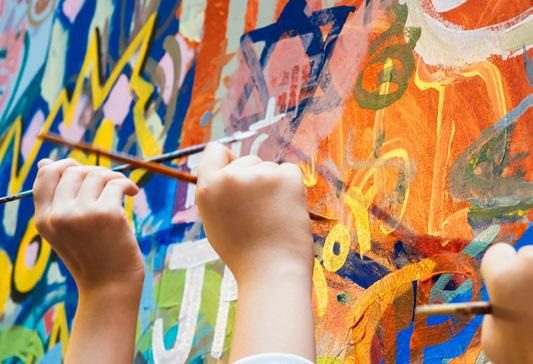
- People smile at everyone they meet and take pains to make them feel welcome. They carefully introduce new families and staff members into the school community.
- Teachers and staff greet people as they arrive to drop off and pick up their children.
- The school encourages the entire community to get to know one another.
- School leaders and teachers make it easy for parents and students to meet with them.
- Coffee and Conversation: At many schools, families are invited to gather once a month, often right after drop off, in a central area to drink coffee while engaging in lively discussions. This not only strengthens bonds among parents but also offers a relaxed setting for informal interactions with school leaders.
- Parents are encouraged to observe classrooms in action. This can be particularly enlightening for those new to Montessori, offering a window into their children’s daily learning environment. Of course, this requires careful scheduling between parents and classroom teachers.
- They respond to any family crisis with warmth and caring. They call, visit, send cards, and lend a helping hand.
- They encourage parents to volunteer in the classrooms and on committees. They do everything possible to ensure that they have a positive experience.
- They keep volunteer assignments short to allow them to get a sense of completion.
- They avoid long boring meetings, politics, or wrangling.
- The school helps parents feel confident that their children are getting a first-class education.
- The school always has name tags at parent gatherings.
- They hold at least two “Student Demonstration” events a year: a daytime or evening where children get to bring one or two people to school as their guests. The children teach their parents or friends how to do what they do in class.
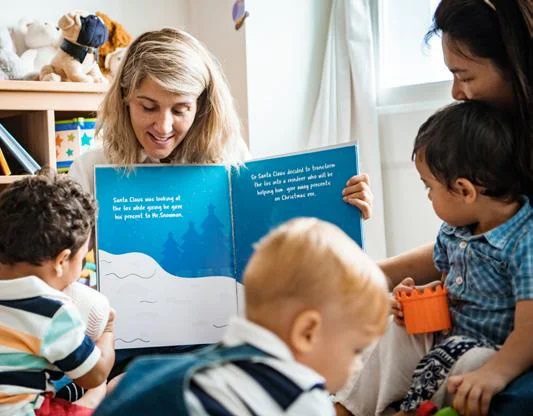
- Some schools organize a once-a-month social for all their Infant-Toddler families on Saturday afternoons. They provide an appropriate activity, such as art, music, or a sensory experience that can easily be recreated at home. Some schools hold a variation on this with “Parent-and-Me” session held at school.
- They create a tuition-funded financial-aid program with a goal that no child will have to leave school because of financial problems. They ensure that their financial-aid process is warm, friendly, and strictly confidential.
- Many Montessori schools coordinate a Parent Ambassadors program. Parent Ambassadors are a group of dedicated parents who play a crucial role in facilitating communication between the school and families. They use email and telephone/messaging chains, enabling them to efficiently remind families of upcoming events, answer queries, and recruit volunteers for various school activities. They also welcome new families into the school community.

-
Many Montessori schools hold monthly Community Meetings where parents, teachers, administrators, and interested students are invited to meet to explore issues of common interest in an open forum. Community Meetings often offer feedback and advice to the school’s leadership and Board. Parents and teachers who participate tend to gain a much deeper understanding of the school’s mission, strengths, and the issues that challenge it. Many appreciate the opportunity to have a voice in the life of the school.
-
At a Community Meeting or other event, someone will propose a toast to the school. People share memories and stories.
-
Many schools open and close the school year with special ceremonies.
-
They hold special social events for the community. A few examples might include a picnic, an old-fashioned square dance, a fall festival, a winter fest, a spring picnic, a theater party, a potluck dinner, or a family camp-out on the school grounds.
-
Childcare at evening parent meetings.
-
Montessori schools work hard to nurture every child’s artistic and musical potential. Every student aged five and above receives instrumental instruction, participates in ensemble performances, and studies art. These programs have led to remarkable displays of talent. The school stages musical theater and ensemble performances during the year.
-
Ideally, schools have a room on campus where parents can sit and read about Montessori or talk with other parents.
-
They keep a pot of coffee and/or tea going for parents who drop in.
-
The school phone is answered promptly with warmth.
-
There is a suggestion box for parents, teachers, and students.
-
They frequently ask families, teachers, and staff what they think.
-
They hold informal discussions to brainstorm and explore new ideas.
-
They defend your community against hostile or negative parents, children, and staff.
-
They take the time to explain things fully.
-
They publish an Annual Report on the state of the school.
-
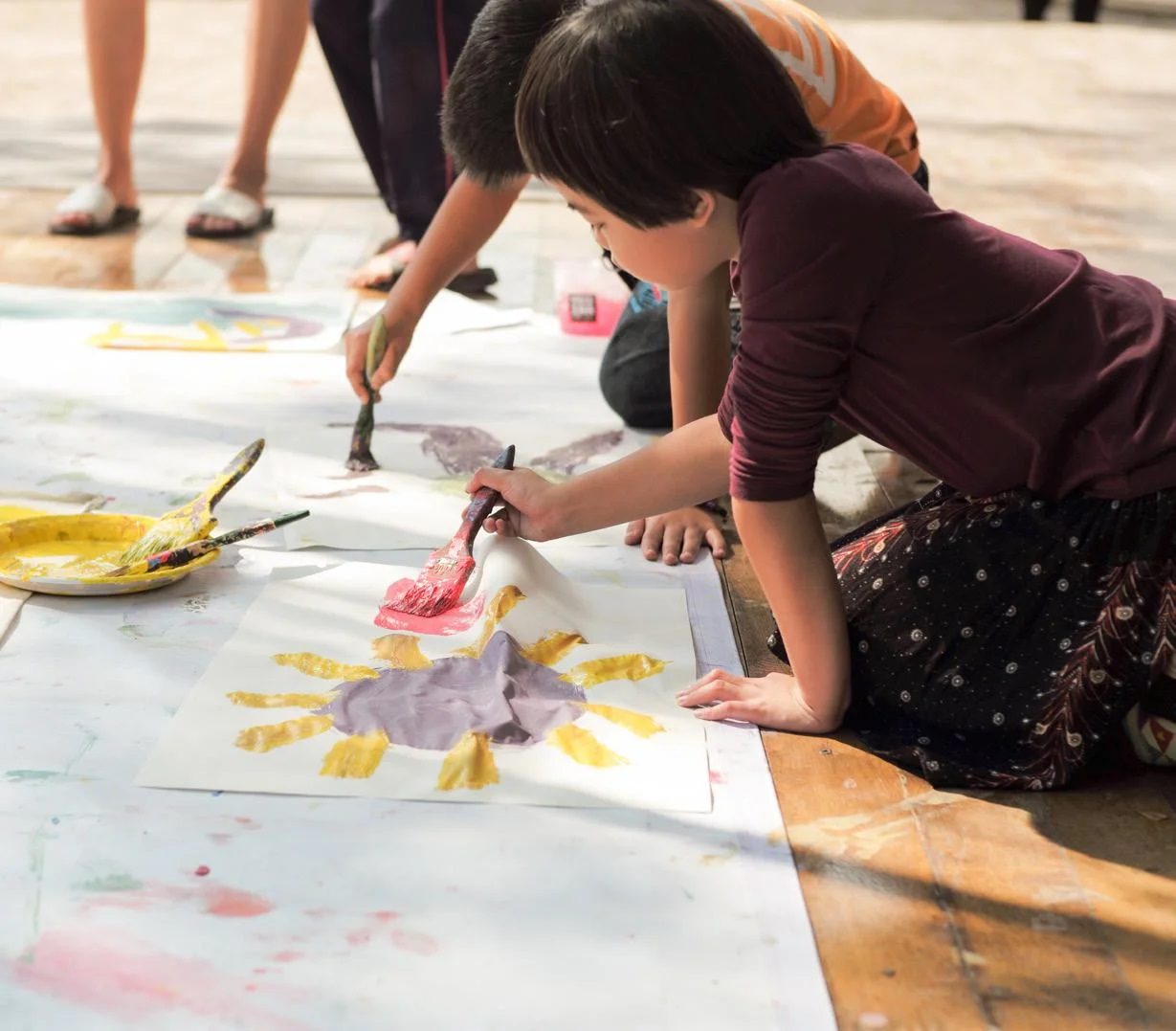
They hold school-wide talent shows or art exhibits where students of all ages can showcase their talents or artwork.
A Montessori byline could be similar to this line from Yeats:
There are no stranger here. Only friends you have yet to meet.
-
Older students mentor younger ones in various areas, such as academics, arts, or sports.
-
They make sure that no one ever feels threatened or blind-sided at a parent/teacher conference.
-
Many schools have student-led conferences during which students guide their parents through their learning journey. This can be especially empowering for older students, giving them a chance to showcase their progress and achievements.
-
They gather the children’s work, stories, and art into portfolios to give to their families.
-
They hold Parent Forums: open discussions in which parents explore an issue of broad interest among themselves.
-
They create an atmosphere of safety, cleanliness, and timeless beauty on their campus.
-
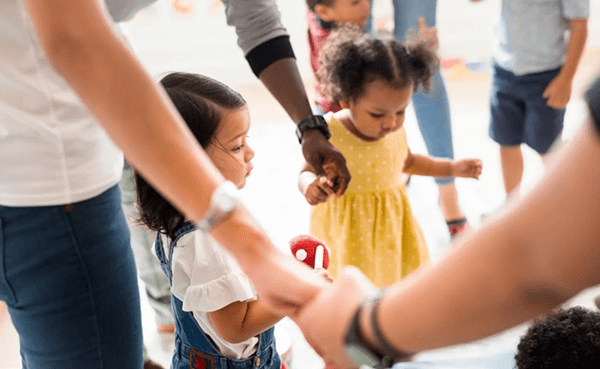
They celebrate cultural diversity within the school with festivals encouraging families to share their heritage and learn about others while fostering a rich, inclusive community.
-
They organize sports events or fun runs where families participate in activities or challenges.
-
To add a fun twist to community engagements, some Montessori schools have introduced innovative events such as the “Are-You-Smarter-Than-a-Montessori-Kid?” contest. This light-hearted game challenges parents to answer questions that children learn in their Montessori classes, such as recognizing European flags or solving complex puzzles. These events not only provide entertainment but also offer parents a glimpse into the depth and breadth of their children’s knowledge.
-
They make a commitment as a school community to an ongoing program of self-study and school improvement in which parents, teachers, older students, and staff can get involved.
-
They take the time as a community to develop and periodically review a “Blueprint of the School’s Educational Philosophy and Core Values.”
-
Teachers call parents regularly just to share good news or to touch base.
-
They make sure that new volunteers are carefully taught how to do the tasks that they’ve undertaken.
-
They publish an attractive school newsletter on a regular basis that contains articles that parents want to read and pictures of children doing interesting things.
-
They give each other lots of acknowledgement and a sense of pride.
-
They send out press releases of any and all newsworthy information to the media.
-
They create a special acknowledgment pin to recognize parents and teachers who have made an extraordinary contribution of service to the school.
-
They design a colorful window decal with the name and logo of the school and give them to parents and teachers to put in the car’s rear windows.
-
They create a terrific school t-shirt and include at least one in the price of tuition and “give” it to every child.
-
They develop a Montessori Speaker Series, inviting experts in Montessori education, child psychology, and related fields to speak to parents and local families.
-
They host a panel of older students, alumni, and parents who share the positive impact Montessori education has had on their lives. This can be particularly inspiring for new families.
-
They facilitate support groups for parents to discuss common challenges and share advice, particularly helpful for those adjusting to the Montessori system.
-
They involve parents and families in community service projects organized by the school, reflecting the Montessori values of social responsibility and community engagement.
-
They post a page on the school website to acknowledge the teachers, families, or special volunteers for their service to the school.
-
They organize book clubs for parents, focusing on literature related to Montessori education and child development. Discussions can be facilitated by teachers or knowledgeable parents, fostering a deeper understanding of the Montessori philosophy.
-
They encourage student-run cafés. Some provide a practical learning experience for students and a gathering spot for the community where parents, teachers, and students can interact informally, enhancing community ties.
-
The share meals at various events, underscoring the importance of coming together and bonding over food. This tradition is essential for building strong, lasting relationships within the school community.
Montessori schools tend to be vibrant communities. Their unique traditions, commitment to arts and culture, and dedication to creating a warm and inclusive environment exemplify the best of Montessori education.

Tim Seldin is President of the Montessori Foundation and Chair of the International Montessori Council. His more than 40 years of experience in Montessori education includes 22 years as Headmaster of the Barrie School in Silver Spring, Maryland, his alma mater from toddler through high school graduation. Tim was Co-Founder and Director of the Institute for Advanced Montessori Studies and the Center for Guided Montessori Studies. He earned a B.A. in History and Philosophy from Georgetown University, an M.Ed. in Educational Administration and Supervision from The American University, and his Montessori certification from the American Montessori Society. Tim Seldin is the author of several books on Montessori Education, including How to Raise An Amazing Child, and The World in the Palm of Her Hand Look for his new book, Montessori for Every Family, co-authored with Lorna McGrath.

Clarity: The Ability to Think Clearly and Not Be Confused
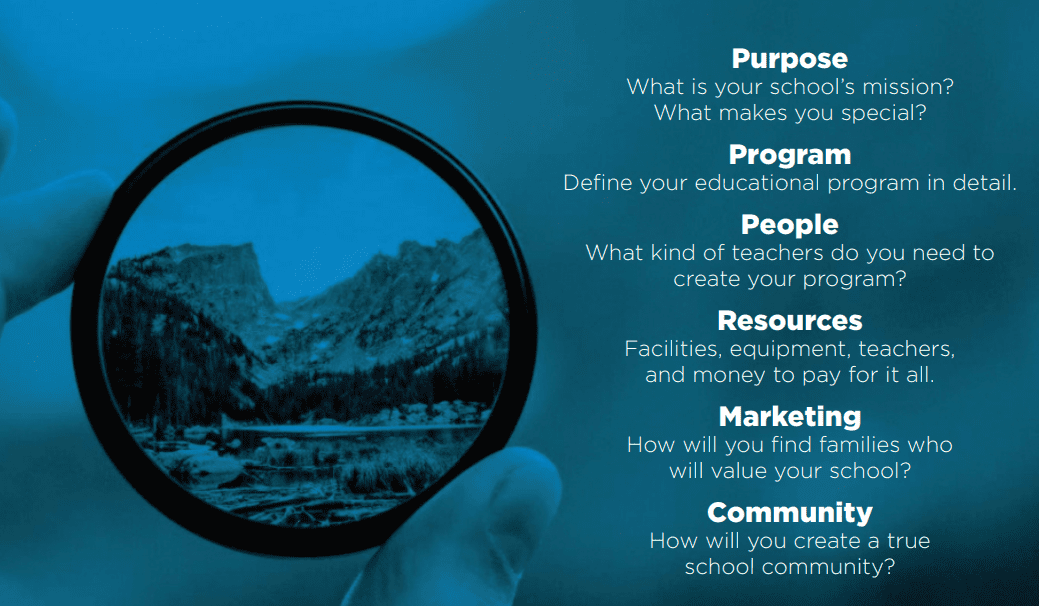
Clarity is the Key to Success. As a Montessori Leader or Head of School, one of the objectives is to help you and your team achieve the clarity needed to build a world-class Montessori School. If you already have clarity on some or all the aspects listed below, that’s great – keep it in mind when engaging with your community. Otherwise, now would be a good time to pause, think about it, and write down some thoughts below.
What you write should not be set in stone; it will grow and evolve as you progress through the material, but it will give you direction. Embarking on any journey, without a clearly defined direction is akin to setting sail without a rudder – you will be at the mercy of wherever the wind blows.
Clarity of vision is such an important topic; in the meantime, it would be beneficial if you start thinking through the following:
Tim Seldin is the President of the Montessori Foundation and Chair of the International Montessori Council. His more than 50 years of experience in Montessori education, includes 22 years as Head of the Barrie School in Silver Spring, MD. Tim was the co-founder of the Institute for Advanced Montessori Studies and the Center for Guided Montessori Studies. He currently serves as the co-Head of the New Gate School in Sarasota, FL. He earned a B.A. in History and Philosophy from Georgetown University; an M.Ed. in Educational Administration and Supervision from The American University; and his Montessori certification from the American Montessori Society. Tim is the author of several books on Montessori Education, including How to Raise An Amazing Child, The Montessori Way with Dr. Paul Epstein; Building a World-Class Montessori School; Finding the Perfect Match – Recruit and Retain Your Ideal Enrollment; Master Teachers – Model Programs; Starting a New Montessori School; Celebrations of Life; The World in the Palm of Her Hand and most recently Montessori for Every Family with Lorna McGrath.

IMC Leadership Series: The Montessori Board
by Tim Seldin & Renee DuChainey-Farkes
In the IMC Leadership Series, we explore different concepts, research, and philosophies of Leadership that would ensure a successful Montessori way.
This two-part series on the Montessori Board covers the concept, operational areas, success factors, and conflicts to avoid.

Part 1: Montessori Board: Concept, Creation & Constituents
What is a Montessori Board?
A Montessori school’s Board of Trustees is the governing body that is officially responsible for overseeing the school’s affairs, policies, and finances. The Board plans, sets major policy, approves the budget, and selects and works through a day-today professional educational leader who leads the school, following the Board’s vision and key decisions.
It governs while the Head of School leads and manages school operations. To govern is sometimes confused with managing.
We believe that Montessori Schools are best served by Montessori Boards that are fully committed to the Montessori Way.
Key Roles of the Board
The Board plays several key roles that are worth repeating. It defines the school’s mission, core values, and strategic priorities. It hires the Head of School, establishes policy, sets tuition, and approves the annual operating budget. Furthermore, it coaches, supports, and evaluates the Head of School and plays an essential role with the Head of School in assessing the school’s programs and operations.
Board members serve as ambassadors and cheerleaders for the school and the Head of School. Ultimately, the Board is responsible for ensuring the school’s long-term financial sustainability and success. The Board needs to be strategic and focused on the school’s future.
Montessori Board and Montessori Philosophy
A Montessori School should be governed by a Montessori Board
Montessori schools have a fundamentally different ethos from other schools, whether they are run on a non-profit or for-profit basis.
We believe that to be faithful to their mission. They should be governed and operated in a way consistent with the principles that are the foundation of Montessori educational practice and the philosophy of interpersonal and organizational life, similar to Montessori classrooms as learning communities.
Montessori Philosophy as it applies to Governance:
- Every voice can be heard. Kindness, respect, and inclusion exist for all voices on the Board.
- The Board is a circle of equals. There are no ‘in-groups’ and ‘out-groups.’
- The Board has a strong sense of community and an ongoing search for consensus.
- Non-confidential information is shared; confidential information is not.
- The School usually communicates to its stakeholders with high transparency except where confidentiality is essential. This openness and honesty earn a high level of trust.
- There is a culture within the Board where members feel safe and accepted.
- The school seeks a respectful resolution of disagreements.
- Board members are encouraged to explore their interests and think outside the box.
Types of Boards
There are primarily four main types of Boards seen in Schools:
- Board of Directors or an owner or ownership group in a school that is set up as a for-profit business
- Board of Trustees in a private and non-profit school
- Board of a public charter school
- Board of Advisors/Overseers, which is not a Board, as it has no governing authority. (We prefer to call them an Advisory Council for purposes of clarity.)
A Board of a private and non-profit school may call themselves a Board of Directors, but we prefer to call them a Board of Trustees because their purpose is to hold the school “in trust.”
An Advisory Council is a group of individuals that supplement the Board’s skills and abilities to help give input to the organization on issues and ideas. Usually, its members are selected by either the Head of School or the Board of Trustees. An Advisory Council provides input or recommendations to the Head and Board without voting authority.
Although a school that a sole proprietor owns usually doesn’t have a Board, we recommend having some sort of Board of Advisors or Council, so they have support, accountability, outside voices and thinking to support their leadership.

Creation Documents
All Not-for-profit schools are governed by a set of Bylaws for best practice and are guided by the original organizing document, its Articles of Incorporation.
The Articles are the original set of formal documents written and filed with a government body to legally document the creation of the school as a corporation under the laws of a state, provincial, or national government. These documents may also be known as Certificates of Incorporation or Corporate Charters.
They must be very carefully designed. They need to define:
- What kinds of programs can your school operate (if you might want to run a camp someday, include it, etc.).
- How many members do you have on your board?
- Qualifications for board members?
- Process for board members selection and election?
- Terms of office of a board member?
- Powers of the board.
- Whether or not a board member can be an employee of the school, or whether a board member can also do business with the school, and, if so, whether the board member is allowed to debate or vote on any decision that would affect him/her financially.
- Percentage of the board needed to carry a motion.
- How bylaws may be amended.
- What would happen to the school’s resources if it were to close its doors?
- Officers and standing committees of the board.
- Requirements for board meetings.
- How a trustee could be removed from office.
When writing it for the first time, remember that this is a legal document held perpetually by the government under which your for-profit or nonprofit corporation has been created. Whatever has been written in the Articles is the roadmap that the Board of Directors for a for-profit business or the Board of Trustees for a non-profit school must follow.
Constituting Montessori Board
How to Select the Right Board Trustees?
The process of selecting trustee candidates can be challenging and should be rigorous, formal, and systematic. It is not a popularity contest within a school community but rather a serious commitment. The right trustees will make for a successful Board.
The trustee selection process should be ongoing to continually identify and invite committed candidates to support the Board’s strategic needs.
Trustees do not serve on a board to represent a subgroup of current stakeholders, such as parents, members of the staff, or a particular program. Their responsibility is to remain as calm and open-minded as we can to the big picture. They should make decisions from the perspective of. “What will serve the entire school best over the coming months, years, and decades?”
Trustees’ responsibility is to serve as ambassadors, stewards, and, in some ways, additional spokespeople to the school community in support of the school as a whole and the school leadership.
How to Orient Board Trustees?
Once you have identified new trustees, attention needs to be given to the process of orienting them and overall Board/Trustee development.
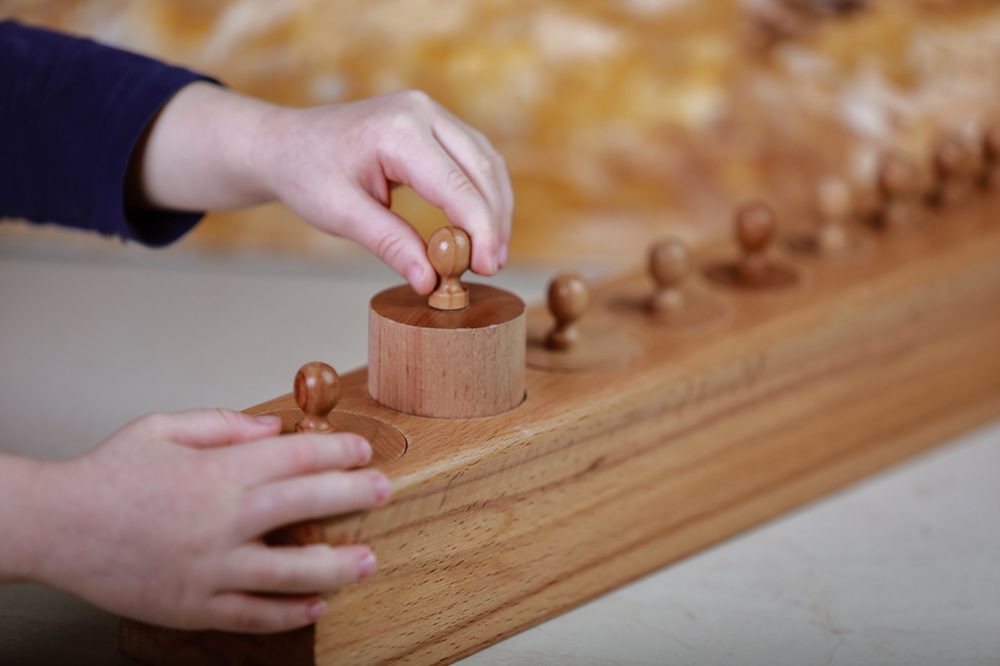
We often find that it is a “one-time” meeting at the start of the school year or in the summer. We believe this is often not enough and that most schools could improve and enhance the ongoing development of their entire Board.
As in a school, our teachers are expected to continue to grow and learn through their professional development plans. This holds true also for trustees as they need reinforcement for learning new materials and applying their learning to real-life situations on the Board.
And now, this can be done online as well as in person. We know that in most cases, the roles and responsibilities of new trustees are new for them, and one time is not enough.
How large should a Montessori School’s Board be?
A common mistake among Board members is confusing the Board’s work with the staff.
Generally, we recommend that Boards be made up of between five and seven trustees, serving for terms between three and five years.
More members do not necessarily lead to better decisions or a more effective Board. The work of the Board should be realistic and tied directly to the annual strategic priorities.
Should the Head of School Serve on the Board?
This answer depends on the situation. The Head of School is employed by and reports to the Board, and while they almost always sit on the Board as non-voting members, it might seem illogical to have someone who is an employee of the Board also serve as a full Board member.
On the other hand, many of the strongest schools enjoy a very different relationship with their Head of School.
Instead of the year-to-year employer-employee relationship found in most schools, the Head of School is considered a key employee, a partner, and even a more or less permanent fixture. There are many advantages that these schools share, including a strong sense of leadership, a clearly defined vision, and considerable stability.
In the case where the Head of School is truly a partner with the Board, it is not uncommon to find them serving on the Board as a full member.
At the very least, the Head of School should attend all meetings and be part of all committees except when the Board is discussing his or her effectiveness in confidence.
Should Teachers be Represented on the Board?
Many Boards seem to feel they need to give the faculty at least token representation. There are several problems with this practice. Because the Board is the Head of School’s employer, there is an inherent problem when one of the Head’s employees, a teacher, next simultaneously one of the Head’s superiors as a Trustee. It is often further complicated because trustees in Montessori schools are primarily parents of the school.
From time to time, the Board needs to discuss extremely controversial issues, some of which will affect the faculty or a faculty member. Can the teacher maintain the confidentiality necessary in such situations? Also, if the teacher truly acts as a trustee first and a faculty member second, how will it affect their relationship with the other teachers?
At the same time, we have known teachers who have served very effectively as Trustees, so there is no black-or-white answer. It does represent a conflict of roles and often does not work well.
Should Current Parents be Represented on the Board?
Most Montessori schools have a Board made up primarily of current parents.
We recommend against having current parents represented on the Board or that they are represented in a limited number. Why?
Every school will deal with difficult conversations, decisions, and conflicts within the school community from time to time, often making it very difficult to be a current parent and keep a long-term perspective, especially when these emotional and controversial issues arise, which they will!
Other potential conflicts for present parents include setting tuition and deciding the school’s curriculum or programs.
We recommend that schools look to former parents who were very positively involved, still care about the school, and bring institutional knowledge and experience.

Should Alums be Board Trustees?
If the school is old enough, former students (alums) may also make good members of the Board. The same things need to be considered: Did they contribute positively to the school, do they care enough about it today to invest the time and energy, and do they have the skills and knowledge to contribute to the Board?
In recruiting our Boards, we must give attention to diversity, equity, inclusion, and belonging” when we think about whom we are recruiting to our Boards. We want our Boards (and schools) to represent diverse racial and ethnic backgrounds. It is essential work for our Boards to develop their own Equity Vision.
In Summary
We have seen the context and critical nature of a Montessori Board, its responsibilities, and some answers regarding how to create a Board. In Part II of this article, we will see how the Montessori Board constructed works and the necessary conditions for it to be effective.
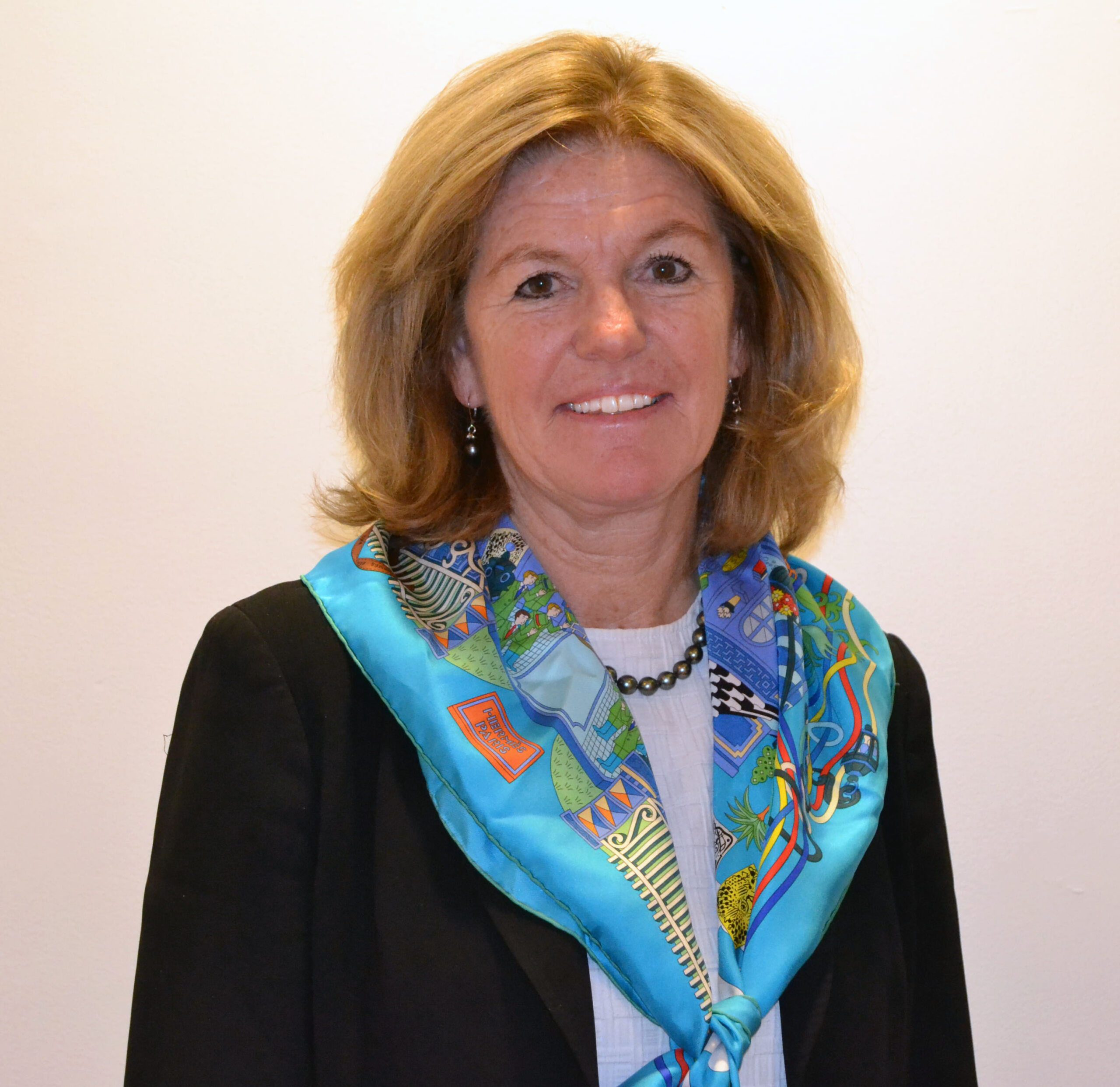
Renee DuChainey-Farkes has been a Montessori Head of School (HOS) and Education Leader for 30+ years. She served as founding HOS of Kingsley Montessori in Boston from 1998 until 2018 growing the school from a one room preschool to a 350 student community. In 2018, she devoted a sabbatical year to exploring “Parents as Partners” and visited 65 Montessori schools throughout the world. She is a dedicated advocate for, and driver of, excellence in the educational experience of students and parents.
Renee has served on the American Montessori Society for two terms, with a focus on “Chair of the Head of School” Section and is most comfortable working with Heads of School and their roles. She is a 20+ year Board member of the Montessori Schools of Massachusetts.
Tim Seldin is the President of the Montessori Foundation and Chair of the International Montessori Council. His more than 50 years of experience in Montessori education, includes 22 years as Head of the Barrie School in Silver Spring, MD. Tim was the co-founder of the Institute for Advanced Montessori Studies and the Center for Guided Montessori Studies. He currently serves as the co-Head of the New Gate School in Sarasota, FL. He earned a B.A. in History and Philosophy from Georgetown University; an M.Ed. in Educational Administration and Supervision from The American University; and his Montessori certification from the American Montessori Society. Tim is the author of several books on Montessori Education, including How to Raise An Amazing Child, The Montessori Way with Dr. Paul Epstein; Building a World-Class Montessori School; Finding the Perfect Match – Recruit and Retain Your Ideal Enrollment; Master Teachers – Model Programs; Starting a New Montessori School; Celebrations of Life; The World in the Palm of Her Hand and most recently Montessori for Every Family with Lorna McGrath.

Discover, Grow, Valorize: Montessori’s Journey for Adolescents
“Many have written or spoken of what school should look like from a developmental perspective, but nobody created the complete developmental package that Montessori did.
The underlying assumption in traditional education is that every child in a class can get through the same amount of material within a nine-month academic year, and, of course, this is absurd! Everyone who’s been in a classroom knows that not every child will proceed at the same pace.
The task of education must change. Schools should foster children’s growth and development from the earliest years. It must be, in the deepest sense, brain developmental.
In the Elementary years, it must be about problem-solving and social development, working with other people, and thinking.
In the later years, it really has to be about motivation, mission, and purpose. What are your unique capabilities? What are your unique interests? What are you going to bring to the world that makes you something special?
Traditional education can’t do that.”
Dr. Steve Hughes,
Speaking as part of the Inside Montessori documentary www.quietislandfilms.com/insidemontessori
Imagine a scene: It’s 8:30 p.m. on a Friday. Your 15-year-old daughter, attending a sleepover, rings you up. There’s a shaky edge to her voice. Her friends, experimenting with alcohol, have disappointed her. She’s taken a stand, voiced her discontent, and now she’s isolated. However, she has made a decision that reflects maturity, wisdom, and a robust moral compass.
As a parent, such scenarios might make your heart race. Yet, they underscore the inevitable truth that children grow up facing numerous crosswinds that challenge their convictions. These defining moments shape their identity and decision-making capabilities. As they transition into teenagers (and then adults), they grapple with crucial life choices: selecting careers; colleges; or even life partners.
The Montessori term valorization of the personality beautifully encapsulates this rollercoaster journey toward self-discovery and identity formation. To valorize means to recognize value. In the context of adolescent growth, it signifies recognizing one’s self-worth.
Understanding the Adolescent Transformation
When you look at your little ones, it might be hard to visualize them as angst-filled teenagers. However, adolescence is just around the corner, with its whirlwind of hormonal changes, emotional highs and lows, and thirst for independence. This period marks a gradual detachment from parental reliance, ushering in an era of peer influence and self-exploration.
Pause for a moment. Ponder over the values, traits, and ideals you envision for your child as they embark on their journey to higher education and adulthood. What are your aspirations for them? Jot them down. These reflections will serve as a guiding compass in your parenting journey.

The Montessori Edge in Adolescent Education
Traditional middle and high schools often miss the mark. Their vast size and standardized curriculums frequently alienate students, rendering them mere statistics rather than unique individuals with distinct needs and potentials.
Montessori offers a refreshing departure. Rooted in the philosophy of Dr. Maria Montessori, it recognizes the distinct developmental needs of teenagers. While academic excellence is pursued, Montessori places equal emphasis on socio-emotional growth, interpersonal skills, and character development.
When battling the internal chaos of their shifting identities, young teens often grapple with self-doubt and a yearning for respect. Montessori environments offer them a sanctuary where they’re not just students but adults-in-training, embarking on a voyage of self-discovery.
Valorizing the Young Mind
Every teenager seeks acceptance. Yet, societal constructs often leave them feeling undervalued and misunderstood. The Montessori framework fills this void. It is designed to support the process of valorization, helping them discern their unique strengths, passions, and worth. Montessori middle and high schools champion the adolescent’s quest for identity through a rich program of group activities, hands-on projects, and real-world problem solving.
Activities span beyond the traditional. Students are constantly nudged out of their comfort zones, from camping adventures to creative projects. These experiences bolster their self-confidence and hone their collaborative, communication, and conflict-resolution skills.
Montessori’s emphasis on valorization becomes the bedrock for nurturing resilient, self-aware, and compassionate adults. Fortified by their Montessori experiences, these young individuals are ready to face university life and equipped to navigate life’s intricate maze with confidence and grace.
As parents, our primary goal is to see our children flourish into responsible, empathetic, and confident adults. Montessori middle and high schools serve as catalysts in this transformative journey. By valorizing each student, they lay the foundation for lifelong success, ensuring our children are prepared for both the academic rigors of university and the broader challenges of life.
Tim Seldin is President of the Montessori Foundation and Chair of the International Montessori Council. His more than 40 years of experience in Montessori education includes 22 years as Headmaster of the Barrie School in Silver Spring, Maryland, his alma mater from toddler through high school graduation. Tim was Co-Founder and Director of the Institute for Advanced Montessori Studies and the Center for Guided Montessori Studies. He earned a B.A. in History and Philosophy from Georgetown University, an M.Ed. in Educational Administration and Supervision from The American University, and his Montessori certification from the American Montessori Society. Tim Seldin is the author of several books on Montessori Education, including How to Raise An Amazing Child, and The World in the Palm of Her Hand Look for his new book, Montessori for Every Family, co-authored with Lorna McGrath.

Preparing the Budget
Preparing the Budget
Since most of a school’s income comes from tuition, the development of the next year’s budget begins with preparing the best and hopefully most accurate projection of next year’s enrollment at each age level.
In this process, you should show enrollment for the year before, the current year, and the year for which you are planning the new budget.
Patterns of attrition can then be discussed more objectively. Enrollment takes into consideration feeder schools, increasing interest in the school, future marketing efforts, etc.
When preparing a budget, several assumptions are made and should be written on ~ a separate sheet of paper as an explanation of each line item so that the board and administration have a clear rationale for budget changes. Let us look at the budget line by line and list the assumptions which would explain the amount on each line.
Sample Budget
REVENUES
LINE ITEM AMOUNT – ASSUMPTION
Operational Income (Tuition and Fees)
Preschool – number of primary students x tuition
Elementary – number of elementary students x tuition
Junior High – number of junior high students x tuition
Extended Day – number of extended day students x tuition
After School Enrichment – number of after school enrichment fees
Application Fees – number of applications x fee
Annual Giving – number of families x average projected donation
Subtotal:
EXPENSES
LINE ITEM AMOUNT ASSUMPTION
Program Expenses
Salaries Increased Cost of Living Allowance + 3%
Payroll Taxes Total gross salaries x .085
Fringe Benefits # of participating staff x $ amount of benefits
Professional Development Number of Montessori staff x $500
Faculty Financial Assistance # of staff children in school * 1/2 tuition discount
Scholarships 3% of all tuition income
Books $500~$1,000 per classroom
Supplies Consumables—$200 per child
Services Subcontracted services, as milk
Administrative
Postage and printing $20 per family
Insurance increase by 10% over last year
Equipment repair and maintenance Per service contracts
Audit Per cost of audit
Miscellaneous
Facilities
Mortgage Per mortgage
Utilities Increase by ~10% annually
Maintenance and Supplies Cost of living adjustment + square footage increases
Building Repairs Cost of living adjustment + projected repairs
Property tax Per tax projection if applicable
Subtotal:
Capital Items:
Major Repairs Per projection + 20% contingency
New Furniture and Fixtures Per projection + 10% contingency;,
New Building (Expansion) Per capital drive goal
Vehicles Per projected need
Revenues Less
Expenses before Capital Items:
Capital Expenses:
Revenues over Expenses after Capital Additions:
Budget Cycle and Tuition Payments
Rough Cut—Administrator and Treasurer (December-January)
The Administrator originates the budget for the following school year and presents it to the treasurer. Tuition raises and staff raises are projected with high, medium and low level options with the corresponding impact on the budget shown. The board reviews the budget and confirms modifications and raises. Tuition is set for the following year. At this point the principal is able to issue contracts in late February. For most schools, the fiscal year corresponds to the academic year (July to June).
Intermediate Cut—Administrator and Teachers (June)
Usually, capital expenditures and repairs are analyzed and approved late in the year by staff. This could cause some change in the budget. Also, with the end of the year totals in June, budget totals for the following year can be adjusted based on the previous year’s final information. Hiring will also factor in new variables, depending on what staff is returning
Final Cut—Administrator, Treasurer, and Board (October)
With final enrollment confirmed for the current year, and with a sense of capital needs for the year established, a final budget can be approved.
Cash Forecasting and Budgeting
Accurate cash flow projections are critical to the success of a summer program. Just because a program is expected to be profitable does not mean enough cash will be on hand to pay creditors, employees and taxes when the need arises. ln fact, growing programs often consume more cash than they generate. This is because increasingly larger amounts of cash become tied up in inventory, equipment, facilities, payroll and accounts receivable. Other directors invest their entire savings to start a new program without a sufficient cushion of cash required to pay bills when due. In either case, it is useful to think in terms of monitoring and managing cash as well as profits. A worksheet — such as the one shown on the facing page — is useful for estimating cash flows.
If you are able to anticipate possible cash drains in advance of the occurrence, several steps may be taken to avoid cash crises. For example, to increase cash in the short term, you may be able to plan ways to:
- Accelerate payments from customers, e.g., offer discounts or other incentives to customers who pay early.
- Grant credit to fewer customers.
- Eliminate or postpone purchases from suppliers.
- Negotiate extended payment terms with creditors.
- Deplete inventories of raw materials and supplies before re-ordering.
- Re-order raw materials and supplies in smaller quantities.
- Arrange for a short-term line of credit from a local lending institution.
- Sell long-overdue accounts receivable to a collection agency.
- Negotiate on a quid pro quo basis with the school
HAPPINESS IS A POSITIVE CASH FLOW
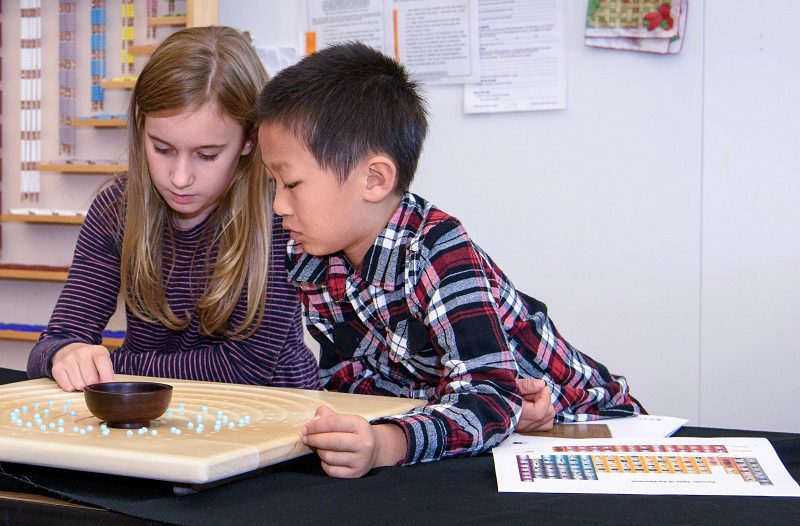
Joyful Learning: Montessori for the Elementary Years
After having your children in Montessori for the initial Early-Childhood (3-6) years, you’ve probably seen them grow into independent, confident, and curious learners who genuinely love school. And guess what? The six years of the Elementary program can unlock even more potential.
We have asked some veteran Montessori educators, a parent, and a sixth-grade student to share their views about the Elementary Montessori journey, which you may find valuable.
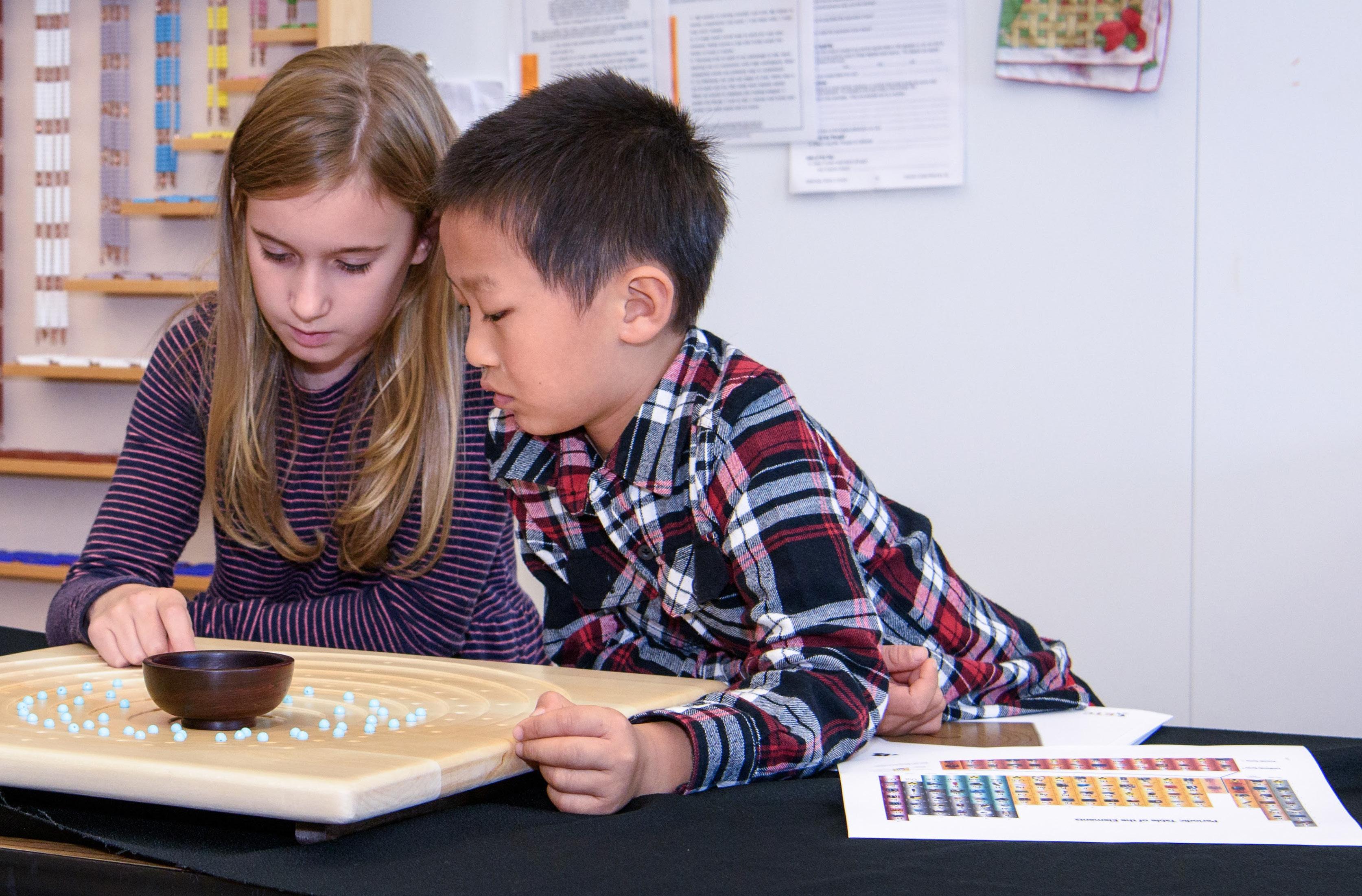
Let’s begin with Val, a Montessori educator.
She explains, “One of the things you see when you enter an Elementary classroom is joy, excitement, and enthusiasm. These are not children who are given papers and workbooks day after day. These children are allowed to take some opportunity to be engaged.
Montessori teachers are not simply teachers. They are mentors, friends, and guides. They are also storytellers. To introduce a lesson, they develop a whole story and draw the children in.”
Our Montessori student, Will, added:
“The best part about our teachers is they are not always using textbooks. We learn from first-hand experience. So we tend to learn things that we wouldn’t ordinarily learn from a book.”
Academics
The Elementary Montessori curriculum is engaging and sophisticated. It requires teachers to have a broad and thorough education of their own. The curriculum is divided into three core elements.
The first focuses on mastering fundamental skills and basic core knowledge. This includes studying mathematics, science, technology, literature, geography, history, economics, and anthropology. It also covers conventional curriculum basics, such as: math facts; spelling lessons; the study of vocabulary, grammar, sentence analysis, creative and expository writing; and library research skills.
The second crucial part of the Montessori curriculum are the Great Lessons. These are captivating stories, experiences, and research projects that explain how the world came to be: the development of life on Earth; humanity’s history; and the evolution of our language, writing, mathematics, and technology. The Great Lessons spark imagination, giving children a cosmic perspective of the Earth and humanity’s place in the universe.
Lastly, the Montessori curriculum encourages individually chosen research. This largely involves library research rather than textbooks, allowing children to gather information, prepare reports, teach their peers, and assemble portfolios. As they progress, their presentations and research reports become more sophisticated and complex.
Hands-On Learning with Montessori Materials
Learning continues to be a hands-on experience in Montessori Elementary classrooms. Children explore through discovery. At this level, the Montessori learning materials advance to more abstract concepts in mathematics, geometry, and pre-algebra.
Val explains, “The learning materials used in the Elementary program are really engaging. After hearing an exciting story about the universe from the teacher, the child can embark on various research projects at their own pace. This excitement and connection with the environment is where true learning happens – and that’s where Montessori really shines.”
Bill, a Montessori parent, adds, “What I loved about Montessori was how the teachers encouraged the kids to choose their daily focus areas. If the child showed special interest in a topic, teachers would support them even if that interest stretched over a week or two.”
One of the best things about Montessori is that it encourages children to think for themselves. It teaches them how to learn – to not simply memorize and forget. They learn that learning can and should be as natural as breathing.
An Integrated Curriculum
In Montessori, subjects are not separated into silos, such as geography, math, and science. Instead, they interweave into each other, providing an interconnected learning experience.
Marsha, another Montessori educator, explained how this works. “For example, when studying the history of our state, we look at how it evolved over time. But to truly understand this, we also explore the geography, the environmental resources, the geology of rock formations, and the local ecosystem. History and science are seamlessly linked—it’s all interconnected.”
Language Arts and Humanities, Mathematics, and History & Geography
Language Arts and the Humanities: The Elementary Montessori Language Arts program stresses developing strong composition and creative writing skills. Students are asked to write continuously, emphasizing, at first, the development and enjoyment of the writing process rather than the strict use of correct grammar and spelling.
However, formal grammar, spelling, and sentence analysis are taught systematically. The key to the Elementary Language Arts curriculum is the quality of literature the children read. They’re introduced early to great children’s books and fascinating works on science, history, geography, and the arts.
Mathematics: Mathematics in Montessori education is based on the European unified math model. This introduces Elementary students to the study of the fundamentals of algebra, geometry, logic, and statistics, along with the principles of advanced arithmetic beginning at the age of six or seven The Elementary math program includes all of the basics that a child needs in order develop further to the next level of algebra, geometry, trigonometry, and calculus.The computer is another key tool used in many Elementary classes for research and the development of compositions.
History and Geography: One of the key objectives of the Elementary Montessori program is to give children a global perspective and help them see their place in the history of humanity. One of the most wonderful things about this cultural area of our curriculum is that it weaves facts together, makes them come alive, and integrates all the studies. From the youngest Elementary grades, children are learning to look at a culture, past or present, from many perspectives. They study the environment, the climate, the look of the land, the food the people would have eaten, how their shelters and houses were built, and how they transported things around the countryside.
You might have a small group of students interested in Greek mythology who build a model of ancient Athens or make and decorate replicas of vases to illustrate a particular story, or they might prepare a diorama of a theme from mythology, or write and produce a play for the rest of the class.
Practical Economics is another important element in the Elementary Montessori curriculum. Students learn how to compare prices against value. They compute costs, maintain checkbooks, operate small school stores, and get introduced to the stock market.
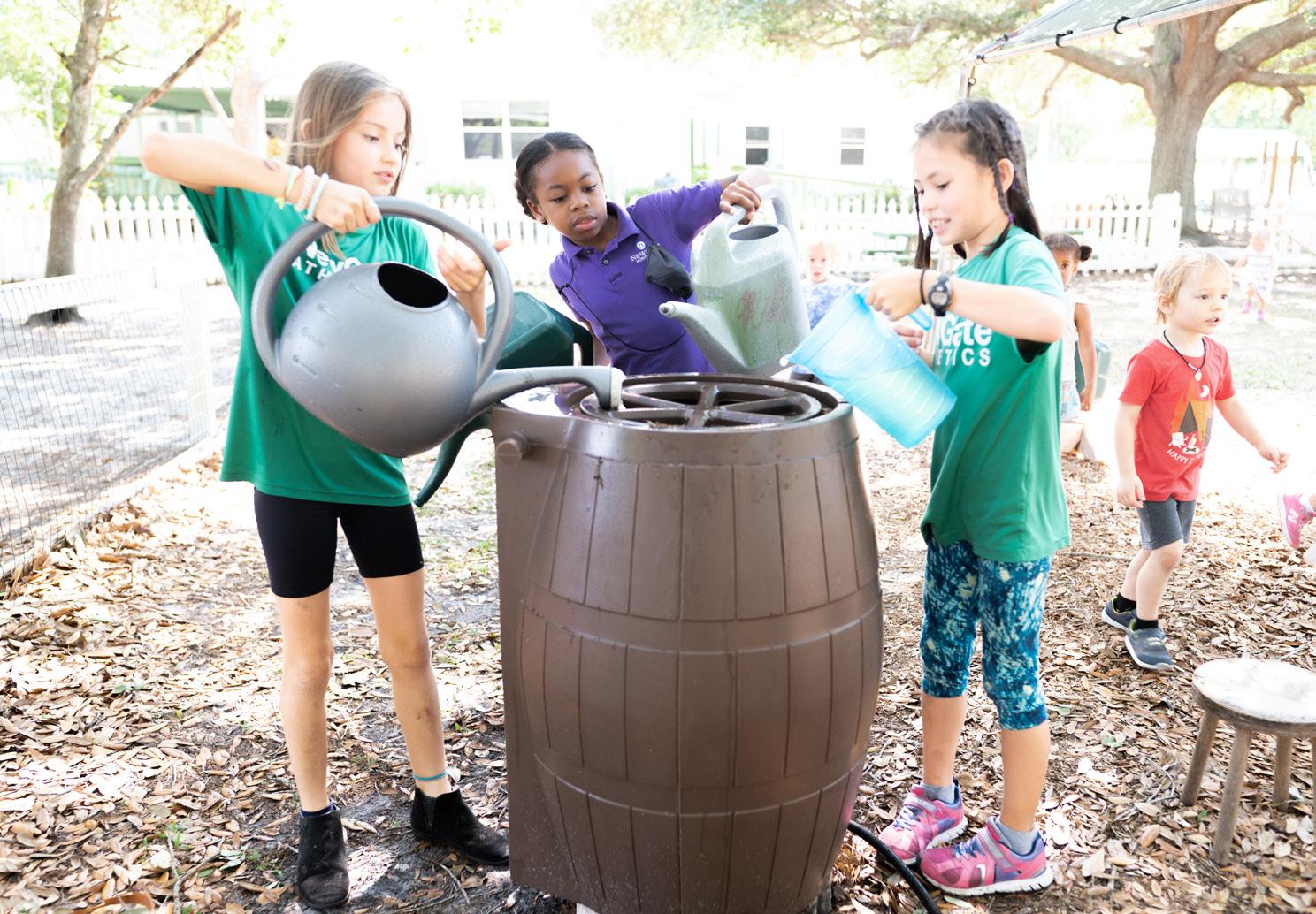
By focusing on the individual needs and interests of each child, Montessori prepares students for a lifelong love of learning, equipping them with the skills necessary to thrive in an interconnected world.
Citizenship: Students study the work of local, state, and federal governments and begin to follow current events. During election years, they might meet candidates and discuss the issues of the day, and sometimes they will even volunteer on the campaign of a local candidate of their choice.
Science: The Montessori science curriculum is focused on studying life, the laws and structure of the universe, and how humanity has sought, throughout history, to put our understanding to practical use.
Val wrote: “Montessori has a gift for science. Science is a participatory thing in Montessori. The child is not just told why things are the way they are; she’s allowed to explore why things are the way they are. She’s allowed to utilize chemicals and processes that maybe one of the first scientists used to reestablish how those things are brought about.”
Kenna (another Elementary Montessori educator) adds: “There are also many science experiment cards on the shelves and children can conduct step-by-step experiments. Students learn to observe and record what takes place during their experiments. The goal is to teach both the scientific method and techniques for safely working with scientific equipment.”
The Montessori Child
The Montessori Elementary classroom functions as a community where children learn social skills, courtesy, conflict resolution, and ethical behavior. It provides a platform for children to work together, acknowledge each other’s contributions, and develop a sense of justice and moral reasoning.
Students actively explore questions of social justice, human rights, aid to the needy, and global peacebuilding. They engage in community service projects, gaining a sense of responsibility and social consciousness. Montessori nurtures children into flexible, self-disciplined, independent learners and self-actualized adults.
Kenna: “We’re trying to develop children who can solve problems and find information on their own. They learn to address conflicts peacefully. That’s what we aim for in our Elementary program.”
Bill adds: “The respect level between the kids in Montessori is very different from what my daughter experienced in a traditional public school. Montessori always fosters a sense of community.”
Conclusion
Montessori’s Elementary program offers a unique educational experience that nurtures academic excellence, character development, global understanding, and community service. By focusing on the individual needs and interests of each child, Montessori prepares students for a lifelong love of learning, equipping them with the skills necessary to thrive in an interconnected world.
If you want your child to love learning, then you’re on the right track with Montessori.
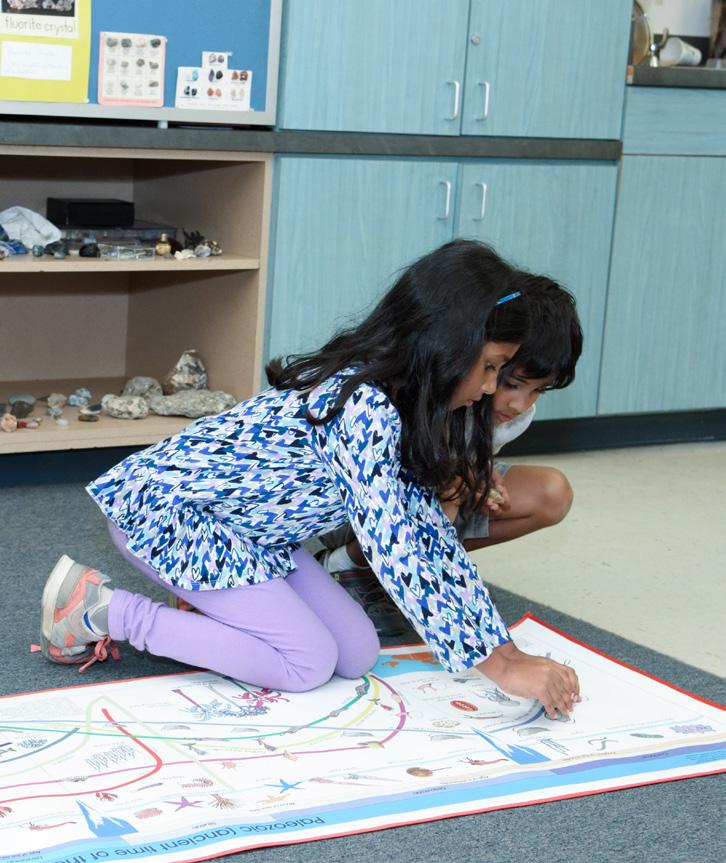

Tim Seldin is President of the Montessori Foundation and Chair of the International Montessori Council. His more than 40 years of experience in Montessori education includes 22 years as Headmaster of the Barrie School in Silver Spring, Maryland, his alma mater from toddler through high school graduation. Tim was Co-Founder and Director of the Institute for Advanced Montessori Studies and the Center for Guided Montessori Studies. He earned a B.A. in History and Philosophy from Georgetown University, an M.Ed. in Educational Administration and Supervision from The American University, and his Montessori certification from the American Montessori Society. Tim Seldin is the author of several books on Montessori Education, including How to Raise An Amazing Child and The World in the Palm of Her Hand. Look for his new book, Montessori for Everyone, co-authored with Lorna McGrath.

Curated From: Montessori in Your Home
by Tim Seldin and Lorna McGrath, an excerpt from Montessori For Every Family, published by DK Press, © 2021
The kitchen is often the hub of family life, a place where family members gather to prepare food, to talk, and to be close to one another. Young children, in particular, enjoy helping out in the kitchen and spending time with parents while they work there.
Easily accessible plates, cups, bowls, and eating utensils encourage independence in your young child.
Ages and Stages
18 months–6 years: Place items in reach so even very young children can help prep, independently get food for themselves, and clean up. As impulse control and coordination grow, use child-sized ceramic plates, glasses, and metal cutlery. (Use a butter knife until about the age of four.)
6–12 years: Your child can help with simple cooking tasks. Teach them about basic nutrition, cleaning surfaces and utensils, and safe food storage.
12–18 years: Teens can help with meal planning, grocery shopping, cooking, and cleaning.

Tips for Your Kitchen Home Environment
• Create an accessible space: Organize the kitchen to assist and encourage your child to develop the everyday skills that allow them to be helpful and become independent. When everything has a place and is accessible, you create a sense of order that helps your child navigate the kitchen calmly and confidently. Working together to prepare meals and clean up not only helps your child develop useful life skills, but also creates a family community. For young children, simple adjustments make it easy for them to help out.
• Set aside a low refrigerator shelf to store prepared drinks or a small jug of water, fruit, and ingredients for sandwiches and snacks. Allowing your child to help themselves to a snack or drink teaches them self-regulation.
• Use non-breakable containers for peanut butter, jams, and spreads so your child can successfully get out and put away ingredients while they are working on holding and carrying skills.
• If space allows, a child-sized table and chair allows young children to set up and eat their food independently.

• Put plates, cups, and napkins in a low cupboard or on a low shelf. Store cutlery in a low drawer or basket. Ideally, use child-sized metal cutlery, either custom-made or smaller items from your set. Using unbreakable plates and cups until 3 to 4 years of age helps children gain skills confidently and safely.
• Prepping and cleaning-up tools include a sturdy stool or a set of small, stable steps that allow a young child to help wash up or prep food at a counter. Show your child how to wipe the counter after use to instill this habit for life. A child-sized broom, dustpan, and mop will mean that, from a young age, your child can help clean the kitchen floor.

Lorna McGrath, MEd, is Director of IMC School
Accreditation, Program Director of the Montessori Family Alliance, and Senior Consultant of The Montessori Foundation. Lorna has 41 years of experience in the field of education, teaching children from 18 months through 6 years old and from 12 through 18 years old in both public schools and independent Montessori schools. Lorna is a Montessori teacher educator, conference presenter, and school consultant. She can be reached at lornamcgrath@montessori.org.

Tim Seldin is President of the Montessori Foundation and Chair of the International Montessori Council. His more than 40 years of experience in Montessori education includes 22 years as Headmaster of the Barrie School in Silver Spring, Maryland, his alma mater from toddler through high school graduation. Tim was Co-Founder and Director of the Institute for Advanced Montessori Studies and the Center for Guided Montessori Studies. He earned a B.A. in History and Philosophy from Georgetown University, an M.Ed. in Educational Administration and Supervision from The American University, and his Montessori certification from the American Montessori Society. Tim is the author of several books on Montessori Education, including How to Raise An Amazing Child, and The World in the Palm of Her Hand. Look for his new book, Montessori for Everyone, co-authored with Lorna McGrath.
Book Review: Maria Montessori Speaks to Parents
by Tim Seldin
Maria Montessori Speaks to Parents: A Selection of Articles

Written by Maria Montessori
Maria Montessori spent the vast majority of her professional life working with teachers, developing her innovative educational method. She devoted most of her energy to writing about the Method for teachers. However, she also spent some time during her courses and lectures to address parents. Within the pedagogical archives of Maria Montessori’s original work, several articles were found that have a style and content that was certainly written for parents. It is possible, and even likely, that these articles were written in 1931.
This book contains eleven short articles to help parents understand, in broad strokes, Montessori’s views on how children learn and the role that parents play in supporting their children’s development. It is an interesting collection of articles with clear and exact messages to parents. When I read each one, I had to put the book down and really contemplate her meaning and message. Maria Montessori’s style of writing is different from writers in the 21st century, but her message about children absolutely holds true today. This book is available through Amazon.
We would love to publish reviews of your favorite books. Send book reviews to Lorna at: lornamcgrath@montessori.org
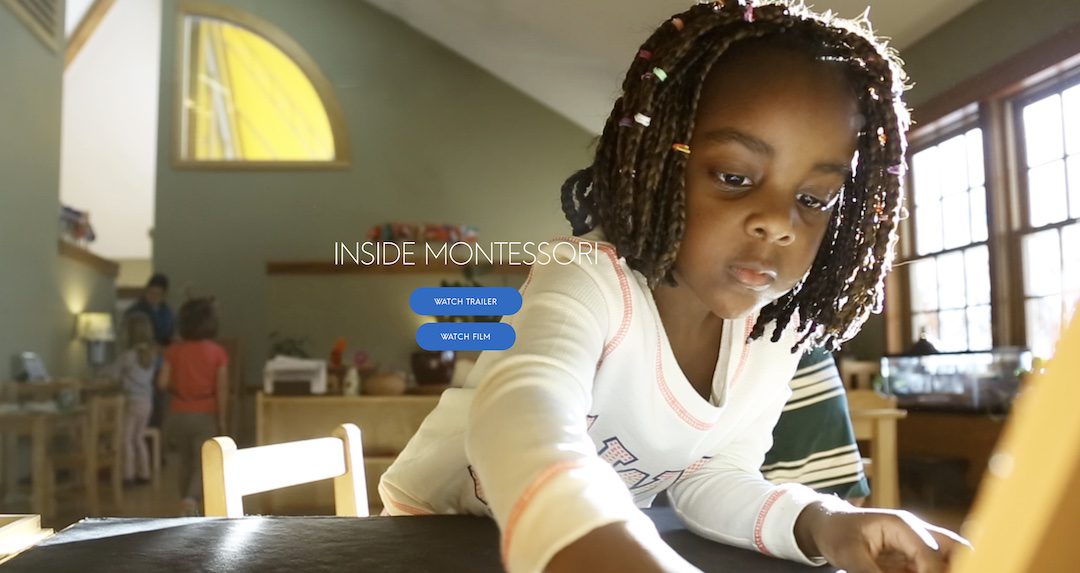
INSIDE Montessori: DOcumentary
INSIDE MONTESSORI: A DOCUMENTARY
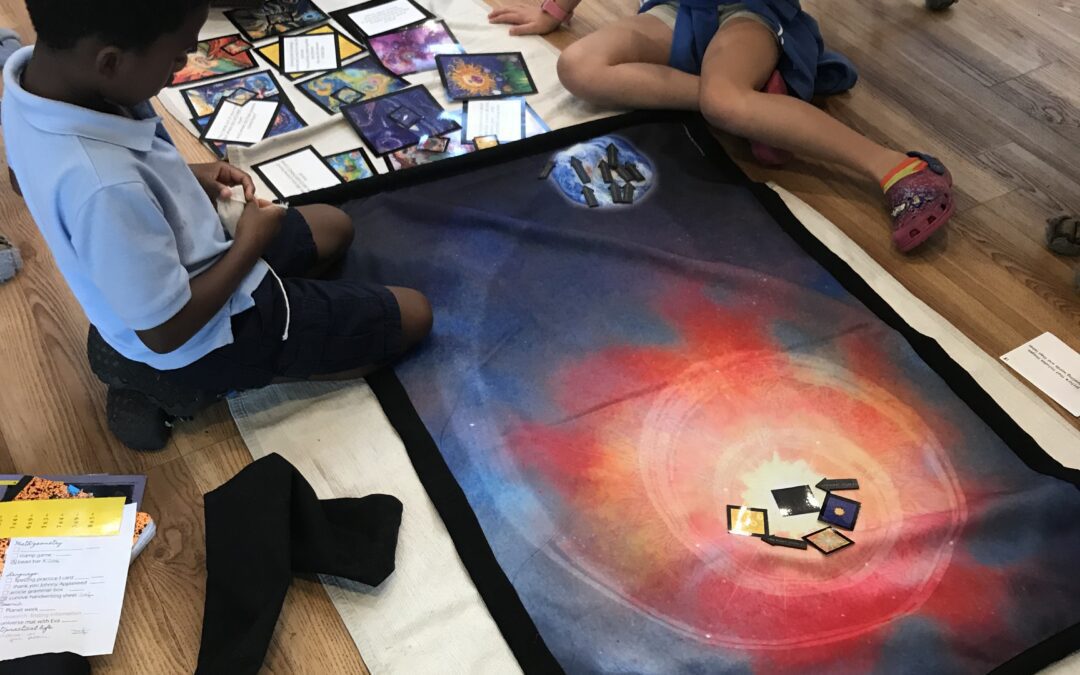
Those Mysterious Montessori Materials: The Great Lessons
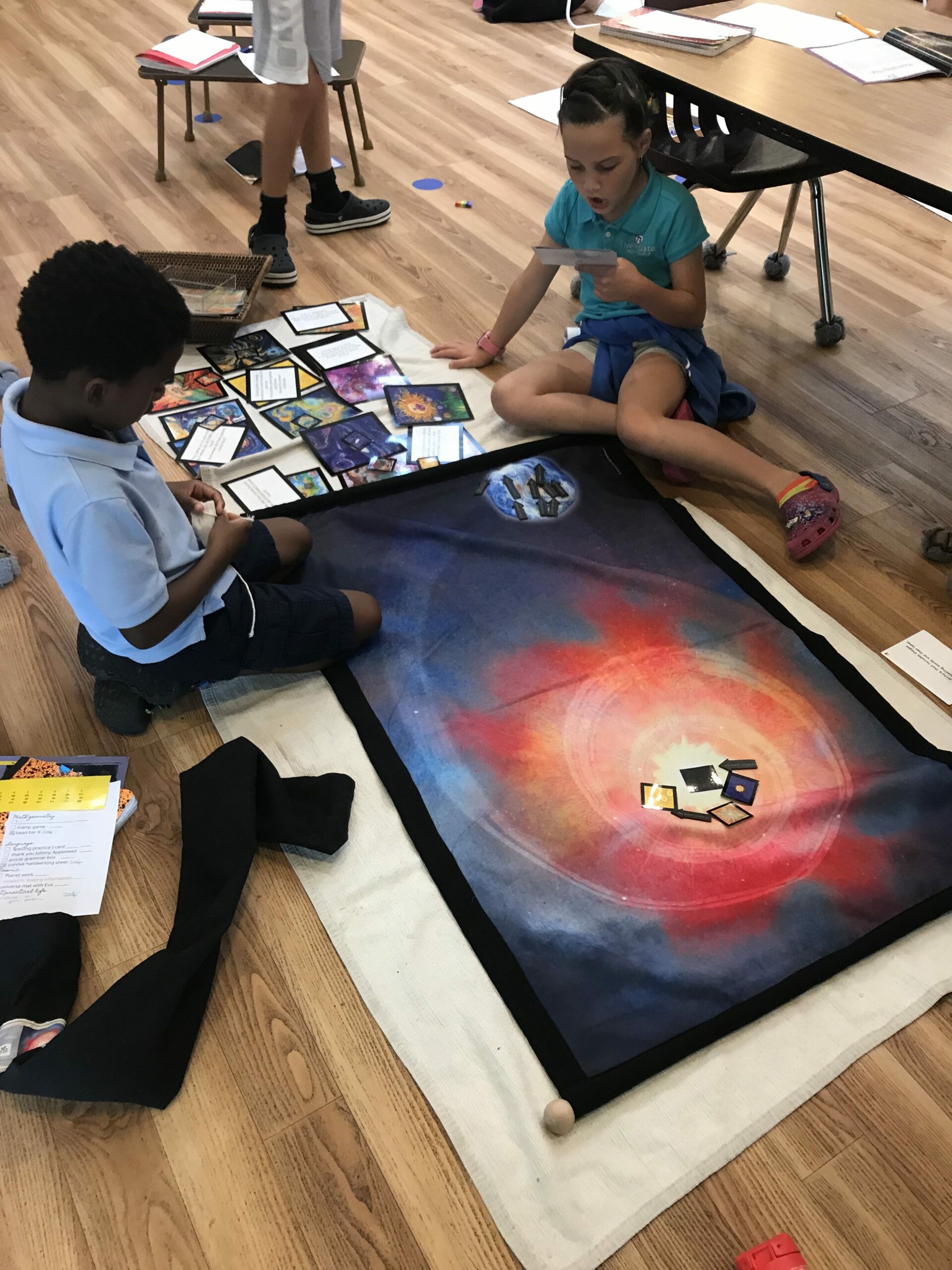
Many parents and schools focus on basic skills: reading, writing, and math. But the basics are truly keys that allow learners to get access to the real curriculum, which should be thought of as an interwoven tapestry of the sciences, technology, literature, society, and all of the things human beings have done throughout history.
If children are exposed to a rich curriculum in a way that feels inviting (and not stressful) they tend to become excited about learning how the world works. This is what makes children want to read and do research. It’s what helps them to understand how and why we use mathematics.
Whether it’s business economics, anthropology, archeology, the story of famous lives, architecture, engineering, invention, the true curriculum is endless.
Our goal is to sow seeds of wonder and to ignite children’s curiosity, interest, and imagination.
In Montessori, a key part of how we approach this is by helping children to see that we are all members of the human family. Our roots lie in the distant past, and history is the story of our common heritage.
Without a strong sense of history, we cannot begin to know who we are as individuals today. Our goal is to develop a global perspective, and the study of history and world cultures forms a key cornerstone of the Montessori curriculum.
We use many learning strategies to begin this journey, beginning with stories, but also using timelines, illustrations, and hands-on experiences to help children begin to imagine how the world as we know it came to be.
Montessori described this as a “Cosmic Curriculum,” which may sound odd at first, but is meant to imply a child coming away with a broad sense of the birth of the universe, earth science, the formation of life, and how human beings met their needs and developed societies and the cultures of the world.
These studies begin to simply weave together everything from astronomy, physics, chemistry, biology, anthropology, archeology, linguistics, mathematics, geometry, architecture, industry, trade, and civic life.
Montessori’s Cosmic Curriculum helps children to see the how everything is interconnected in the universe. It is a steppingstone to lifelong learning.
One of the key components of the Montessori cosmic curriculum is the use of what Montessori calls the “Great Lessons”. The Great Lessons are a classic element in the Montessori curriculum, especially during the elementary years, although we can introduce them even earlier and expand on them in the adolescent years.
Among other things, the Great Lessons are powerful and inspiring stories that are used to introduce children to the interconnectedness of all things in the universe. They are typically presented in a dramatic and engaging way, using storytelling, props, and hands-on science experiments and activities.
They are a set of five stories or lessons that are designed to ignite a child’s imagination and deeper interest in learning about the world around them. These lessons are an integral part of the Montessori curriculum and are typically introduced to children between the ages of six and twelve.
The five Great Lessons are:
1. The Story of the Universe: This lesson introduces children to the formation of the universe, the formation of the Earth and our solar system. This lesson and the follow up activities take a first look at the question of how the world began, different stories that people have told, and what scientists believe, in simple terms, about the Big Bang, formation of the stars, gallaxies, and solar systems, and how the Earth changed over the geologic eras setting the stage for life to emerge.
2. The Story of Life: This lesson explores the origins and evolution of life on Earth, including the characteristics of living organisms, the classification of living things, and the interdependence of all living things. Most children tend to be fascinated by dinosaurs. During the Second Great lesson, we helped them to understand how life evolved from simple organisms to the plants and animals that we see today. Learning about the fossil records, and the way animals changed over time and adapted to their environment is all part of this element of the overall curriculum. While the lesson is just the introduction, the ongoing study of biology continues throughout the curriculum in Montessori all the way through high school.
3. The Story of Human Beings: This lesson delves into the evolution of humans, including the development of language, culture, and civilization. Beginning with a broad overview of the evolution of modern people from our Neolithic ancestors, and how archaeologists have found evidence of the way people lived many years ago. Children are introduced to the fundamental needs that all human beings share, how we have met those needs in different parts of the world, early tools, and how civilization developed.
4. The Story of Writing: This lesson explores the history of writing, including the development of different writing systems and the role of writing in human communication.
5. The Story of Numbers: This lesson introduces children to the concept of numbers and their importance in human society, including the development of different number systems and the use of numbers in science, mathematics, and technology.
The Great Lessons are not simply stories that are told to children but are opportunities for children to engage in hands-on learning activities and explore their own interests and curiosity.
These lessons from the center of the elementary curriculum, with all areas of the classroom spiraling out from the Great Lessons. The Story of the Universe leads to science and geography. The Story of Life leads to the study of biology and zoology. The Story of Human Beings leads to cultures of the world. The Story of Writing leads to the language area. The Story of Numbers leads to mathematics and geometry. These five lessons lead to all the other materials and lessons throughout the six years of elementary and beyond.
By presenting these lessons in a way that is engaging and accessible to children, Montessori educators aim to inspire children to become lifelong learners who are passionate about exploring the world around them.
References
Sapiens: A Brief History of Humankind and 21 Lessons for the 21st Century by Yuval Noah Harari, Harper; Illustrated edition, 2015
The Deep Well of Time by Michael Dorer, Parent Child Press, 2016
Tomorrow’s Children: A Blueprint For Partnership Education In The 21st Century by Riane Eisler, Basic Books, 2001
Children of the Universe (An introduction to the Great Lessons), by Michael & D’Neil Duffy, Parent Child Press, 2016
Featured
-
 The Montessori Way, Revised and Expanded: An Education for Life; A Comprehensive Guide for Parents and Teachers
$25.00
-
The Montessori Child: A Parent's Guide to Raising Capable Children with Creative Minds and Compassionate Hearts (The Parents' Guide to Montessori)
$20.00
-
The Montessori Toddler: A Parent's Guide to Raising a Curious and Responsible Human Being (The Parents' Guide to Montessori)
$20.00
-
Montessori in Action: Building Resilient Montessori Schools 1st Edition
$29.95
-
Bulk Order, 30 Copies of Montessori for Every Family: A Practical Parenting Guide To Living, Loving, And Learning
Original price was: $600.00.$510.00Current price is: $510.00.

Products
-
The Montessori Way, Revised and Expanded: An Education for Life; A Comprehensive Guide for Parents and Teachers
$25.00
-
The Montessori Child: A Parent's Guide to Raising Capable Children with Creative Minds and Compassionate Hearts (The Parents' Guide to Montessori)
$20.00
-
The Montessori Toddler: A Parent's Guide to Raising a Curious and Responsible Human Being (The Parents' Guide to Montessori)
$20.00
-
Montessori in Action: Building Resilient Montessori Schools 1st Edition
$29.95
-
Bulk Order, 30 Copies of Montessori for Every Family: A Practical Parenting Guide To Living, Loving, And Learning
Original price was: $600.00.$510.00Current price is: $510.00.