To access this page, you will need to log in or become a member.
Neuromyths: Debunking False Ideas About the Brain Book review

Neuromyths: Debunking False Ideas About the Brain Book review

Pizza Day book cover

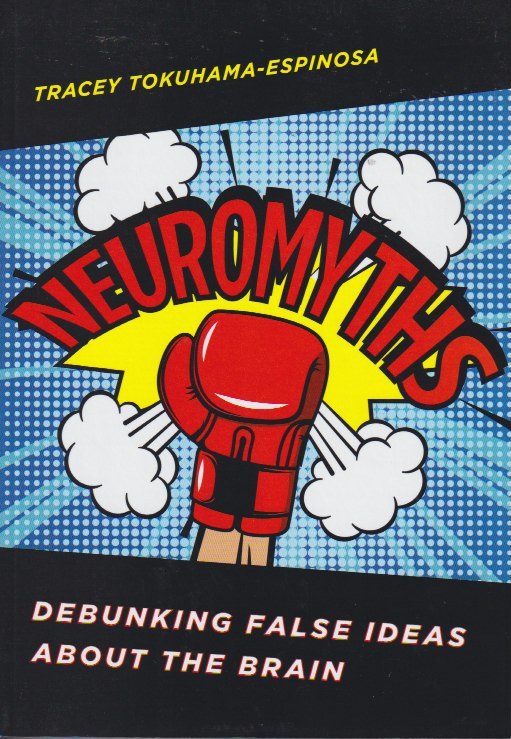
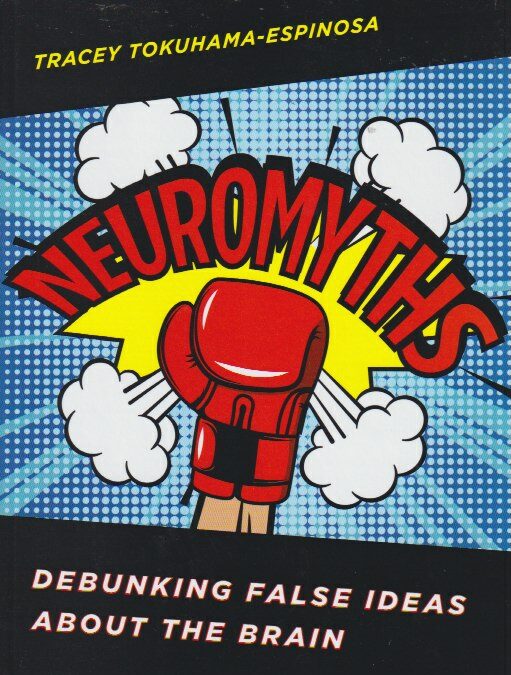
Neuromyths: Debunking False Ideas About the Brain

Written by Tracey Tokuhama-Espinosa

Have you ever explained behavior using information you have known for so long that it must be true? As parents and teachers, we may aim to learn about brain development and what is happening as our child grows, and we may share some information that is not correct. In this book, Tracey Takuhama-Espinosa leads us through some of the myths we may have learned about the brain and brain development and gives us updated information we can use on the same topics.

This book is easy to read. For each myth, she explains the myth, where the myth comes from, and what we know now. We are not all neuroscientists, and she explains what is known now with that in mind. At the end of each section is ‘Why This is Good News for Teaching.’ In most cases, the information contained in these short sections can be applied to a class or a home.

Although we do not all have time to become a neuroscientist, reading this book can help us apply updated neuroscience information in our interactions with the brains we come in contact with regularly, including our own! Did you know that you have not missed your window for learning another language? Or that the idea of multitasking is more than one myth?

The last chapter gives us steps to recognize neuromyths (you will start to hear them everywhere) and avoid applying misinformation to the brains nearest and dearest to us. The short reminders are ways for us to practice applying the growing neuroscience information to our own lives and our family or students.

I recommend this book for all adults that have a brain and interact with others with brains.

Grammar Tells a Story Book review

Grammar Tells a Story Book review

Pizza Day book cover
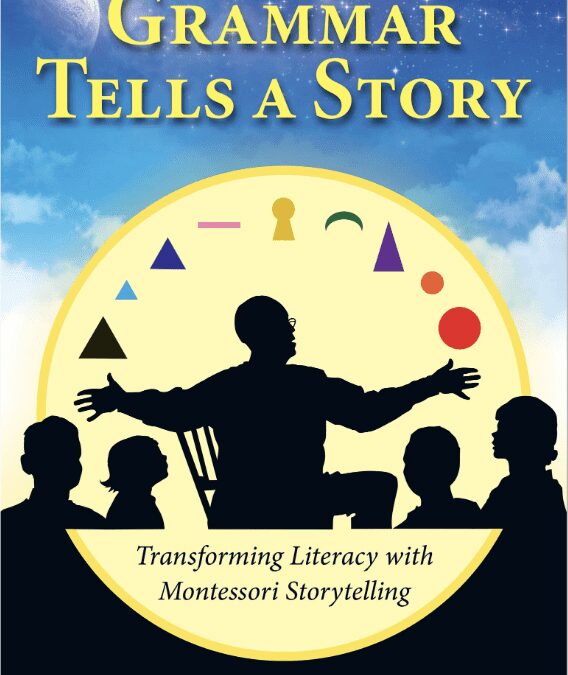
Grammar Tells a Story: Transforming Literacy with Montessori Storytelling

Written by Michael J. Dorer

Montessori grammar lessons formally begin in the 3-6 program. As they move through Elementary Montessori education, grammar lessons usually have at least one complete shelf. Sometimes that shelf stays dustier than it should. For many Montessori guides and parents, formal grammar instruction was not a part of our own education. In his book, Michael Dorer describes that it was presented to him as a threat. It is no wonder many adults have the desire to avoid grammar and are amazed at how excited children are to work with grammar.

In Grammar Tells a Story Michael Dorer has helped many parents and teachers by presenting the organization of the grammar work with explanations in the first section of the book and following this up with more details before each story. If you are teaching at home or want to understand the work your child demonstrates to you, this material is very helpful. For those who feel grammar could be used as a threat, or just don’t understand why we need to learn about it, he has explained it so kindly and with humor.

The stories themselves are entertaining. They are not meant to be read directly from the book, but to be made your own. Change the names and gender as it works for your group. Practice a few times and suddenly you can share stories that further develop grammar skills and often get a laugh. Stories are a fun and memorable way to strengthen learning and connection. When you add grammar information to the stories, you are developing all sorts of areas of literacy.

This book is great for any classroom and for those at home who feel grammar is a bit scary. The book is available through Montessori Services and other booksellers.

My City Speaks Book review

My City Speaks Book review

Pizza Day book cover

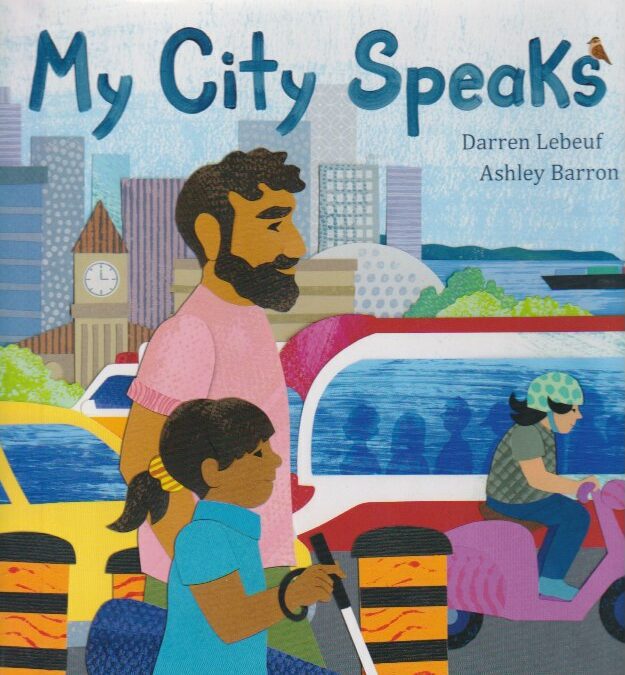
My City Speaks

Written by Darren Lebeuf

Illustrated by Ashley Barron

All of us use multiple senses as we go through our everyday lives. Many rarely think of how different, interesting, and beautiful life would be if one of those senses were impaired.

This is the story of a girl who experiences daily life more intensely through her sense of hearing than through her other senses. As she travels through the city to her violin recital, she offers us a glimpse into her world. The city is a place of many sights, sounds, and smells. But what if you had limited sight? Travel with her as she hears the city speak to her.

This richly illustrated book provides the reader with a moment to reflect on how we and others learn about and navigate the world we live in. It offers a refreshingly different perspective.

Yay, You! Book review

Yay, You! Book review

Pizza Day book cover

Yay, You! Moving Up and Moving On

Written by Sandra Boynton

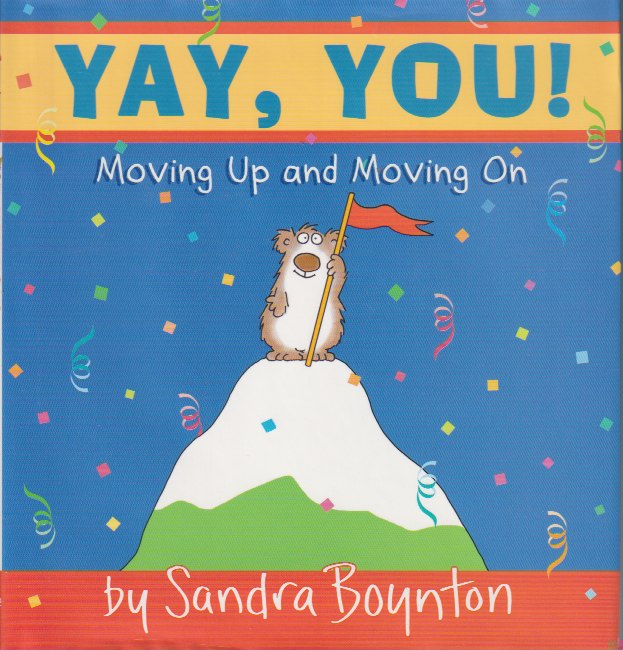
I got this book last year (just a little bit too late for the traditional graduation season) and kept hanging on to it until the season came again. Although, I suppose I could have written a review at any time of the year, as there’s no limit on when we can move up and move on.

I love this book because you can get it for a person at age six or twelve or eighteen or even fifty-six! Good, you finished something. What’s next? Yay, You! points out that there are lots of choices and plenty more to do. It’s filled with fun illustrations to let you know there’s plenty more to come. No pressure though. Just as there are all kinds of choices, there are all kinds of people, too. It asks the readers to explore who they are, what they want to do, how, and where they want to go as they continue their life’s journey.

I Am Thinking My Life book review

I Am Thinking My Life book review

Pizza Day book cover

I Am Thinking My Life

Written by Allysun Atwater

Illustrated by Stevie Lewis

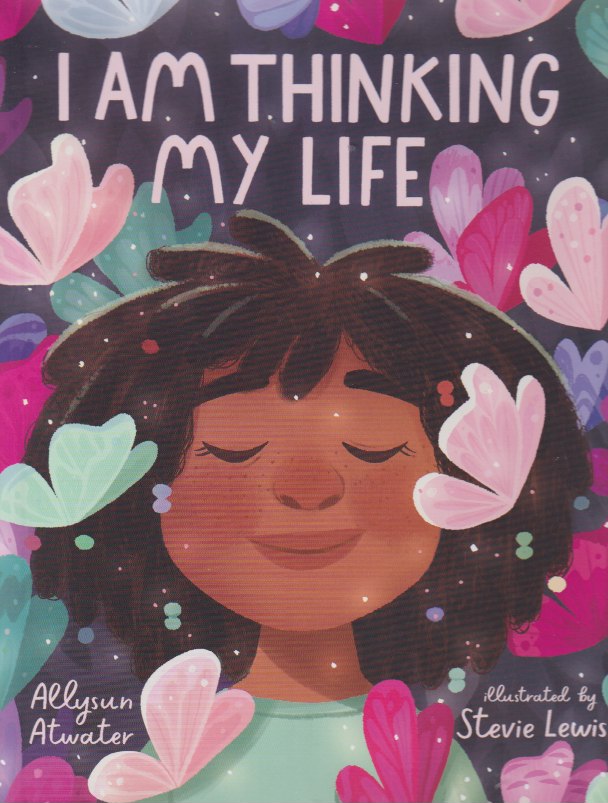
What powerful minds we have! We can create our lives as we want to with the power of thought. The ideas presented by the author are expressed lavishly through colorful, thoughtful, and full illustrations. Page after page excites the imagination and allows us to reflect on and absorb what it can mean to be able to make changes in our lives by the things we are thinking. Thought becomes action and reality, if we are aware of it and let it (for bad or for good). This is a book that shows us how hope and affirmations can guide us through storms as well as calms.

On Earth book review

On Earth book review

Pizza Day book cover


On Earth

Written by G. Brian Karas

Springtime always makes me think about new beginnings and new hope for our lives and our planet. That reminds me of a song by a greatly loved Montessorian, Sanford Jones… at the beginning is a good place to be. what will each day bring for you and me? New life, new hope, new things to see, at the beginning is a good place to be!

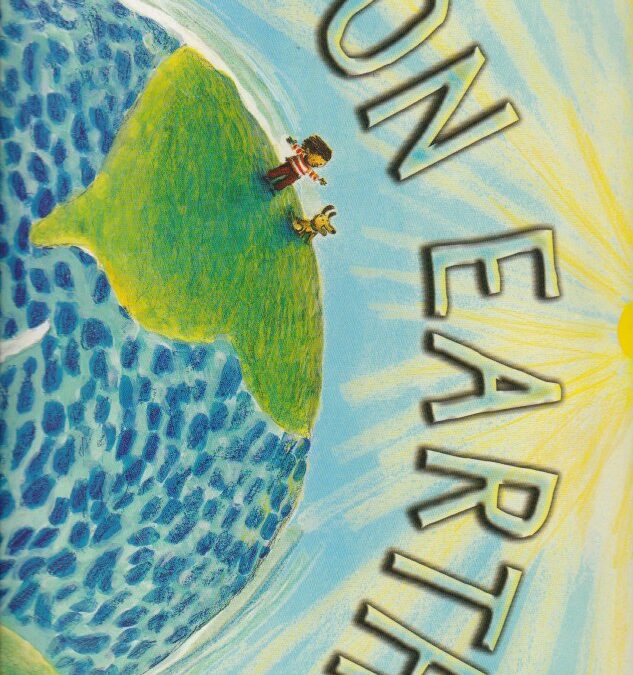
I digress. On Earth is a beautiful beginning to understanding about the Earth’s constant motion; how we measure it with calendars and candles; how we experience it with changes in the weather, and the amount of light in a day; how we made up points on the Earth like the equator and the north and south poles; what helps us stick to the Earth and not fall off. It’s filled with wonderful illustrations of all these things and begs us to do more with globes, flashlights, and imagination!

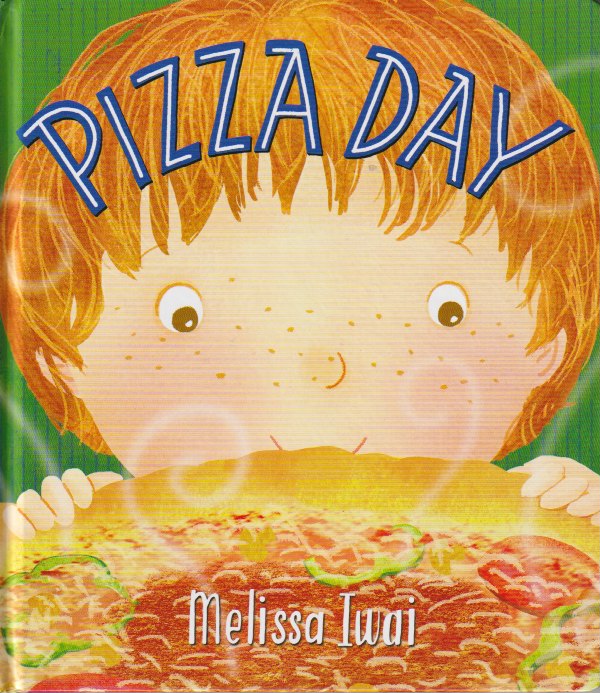
Pizza Day book review

Pizza Day book review

Pizza Day book cover


Pizza Day

Written by Melissa Iwai

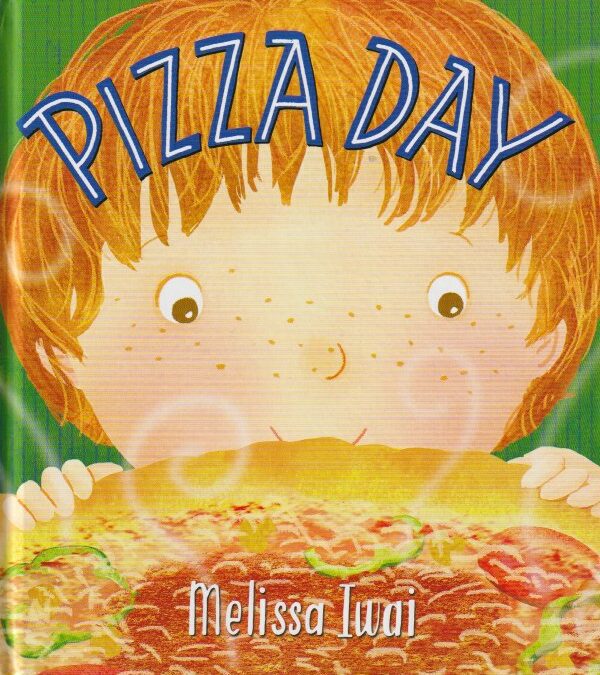
This is a wonderful hardcover book with sturdy, somewhat water-proof pages. The illustrations are richly colored and very realistic. The story is all about a boy and his dad spending time together while preparing for their delicious dinner. The author takes us back to planting the seeds for vegetables and herbs. Later, the boy harvests some of the fruits of the plants that are ripe and counts how many of each type they will need. The illustrations are there for your child to count as you read. Then the washing of the plants, the measuring, mixing, kneading, and rising of the dough. Meanwhile, the chopping takes place as the boy uses his senses to enjoy the smells of the fresh food. While the sauce is cooking and the dough is rising, dad, son, and family dog play outside and enjoy each other’s company.

It’s time for the dough to wake up. They punch it down and roll it out. The sauce is then awakened and blended. They are ready to put it all together and bake it in the oven. Wonderful, simple directions, and illustrations! As they wait for the pizza to bake, they play together some more, and mom makes a salad. When the pizza is done, the family enjoys the meal together! At the end of the book, there is a more detailed recipe for the sauce, the dough, and the “putting it together.” Think of all that this child has experienced — intellectually, emotionally, and sensorily — during the process of creating and sharing family time together at home.

Those Mysterious Montessori Materials: The Great Lessons

Those Mysterious Montessori Materials: The Great Lessons

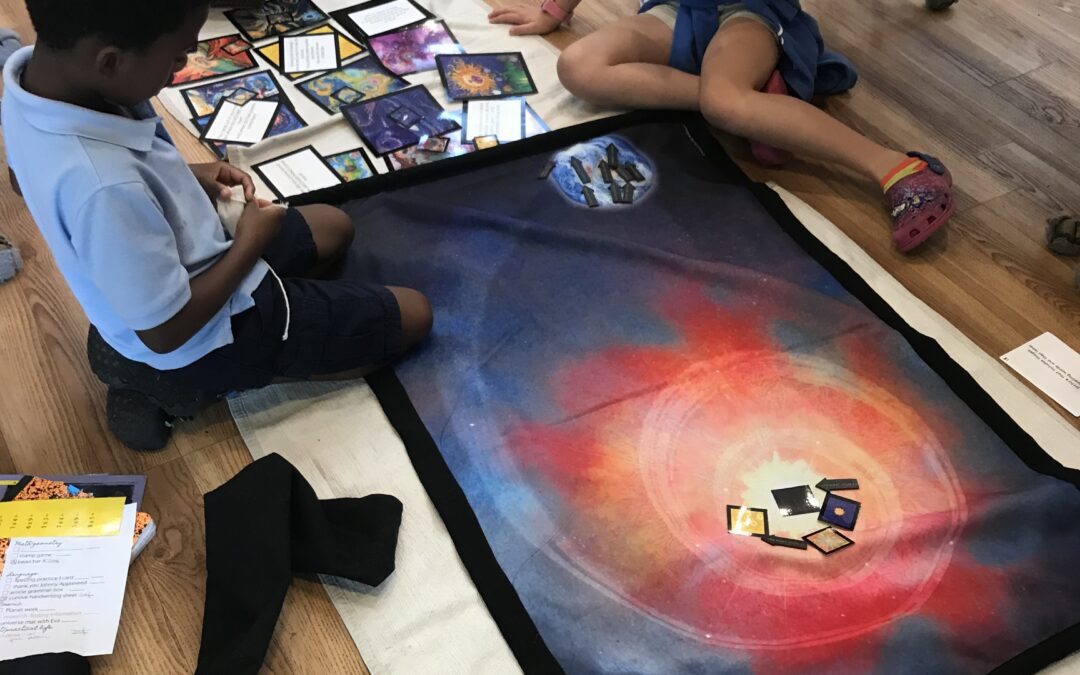
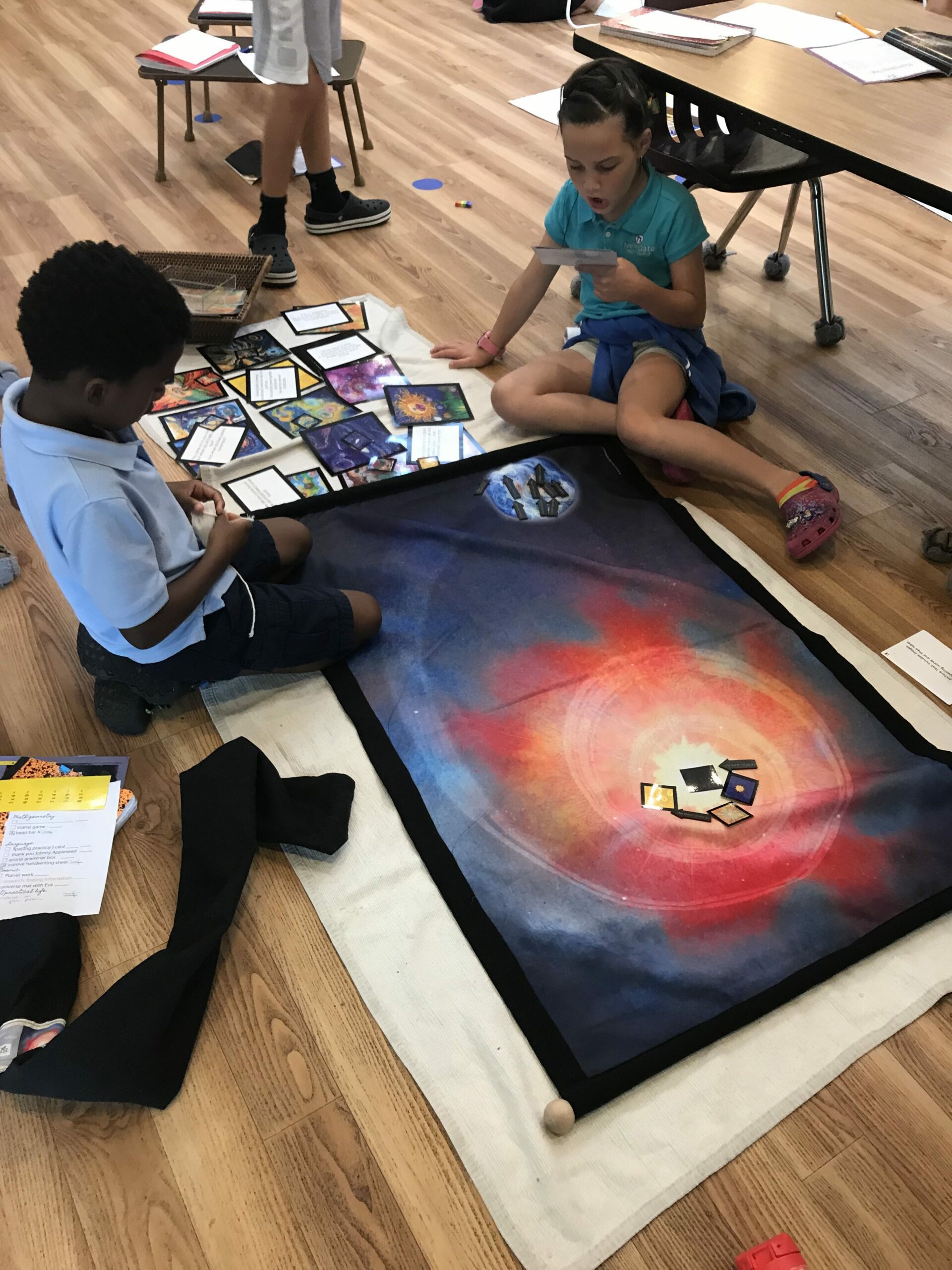
Using Cosmic Map

Many parents and schools focus on basic skills: reading, writing, and math. But the basics are truly keys that allow learners to get access to the real curriculum, which should be thought of as an interwoven tapestry of the sciences, technology, literature, society, and all of the things human beings have done throughout history.

If children are exposed to a rich curriculum in a way that feels inviting (and not stressful) they tend to become excited about learning how the world works. This is what makes children want to read and do research. It’s what helps them to understand how and why we use mathematics.

Whether it’s business economics, anthropology, archeology, the story of famous lives, architecture, engineering, invention, the true curriculum is endless.

Our goal is to sow seeds of wonder and to ignite children’s curiosity, interest, and imagination.

In Montessori, a key part of how we approach this is by helping children to see that we are all members of the human family. Our roots lie in the distant past, and history is the story of our common heritage.

Without a strong sense of history, we cannot begin to know who we are as individuals today. Our goal is to develop a global perspective, and the study of history and world cultures forms a key cornerstone of the Montessori curriculum.

We use many learning strategies to begin this journey, beginning with stories, but also using timelines, illustrations, and hands-on experiences to help children begin to imagine how the world as we know it came to be.

Montessori described this as a “Cosmic Curriculum,” which may sound odd at first, but is meant to imply a child coming away with a broad sense of the birth of the universe, earth science, the formation of life, and how human beings met their needs and developed societies and the cultures of the world.

These studies begin to simply weave together everything from astronomy, physics, chemistry, biology, anthropology, archeology, linguistics, mathematics, geometry, architecture, industry, trade, and civic life.

Montessori’s Cosmic Curriculum helps children to see the how everything is interconnected in the universe. It is a steppingstone to lifelong learning.

One of the key components of the Montessori cosmic curriculum is the use of what Montessori calls the “Great Lessons”. The Great Lessons are a classic element in the Montessori curriculum, especially during the elementary years, although we can introduce them even earlier and expand on them in the adolescent years.

Among other things, the Great Lessons are powerful and inspiring stories that are used to introduce children to the interconnectedness of all things in the universe. They are typically presented in a dramatic and engaging way, using storytelling, props, and hands-on science experiments and activities.

They are a set of five stories or lessons that are designed to ignite a child’s imagination and deeper interest in learning about the world around them. These lessons are an integral part of the Montessori curriculum and are typically introduced to children between the ages of six and twelve.

The five Great Lessons are:

1. The Story of the Universe: This lesson introduces children to the formation of the universe, the formation of the Earth and our solar system. This lesson and the follow up activities take a first look at the question of how the world began, different stories that people have told, and what scientists believe, in simple terms, about the Big Bang, formation of the stars, gallaxies, and solar systems, and how the Earth changed over the geologic eras setting the stage for life to emerge.

2. The Story of Life: This lesson explores the origins and evolution of life on Earth, including the characteristics of living organisms, the classification of living things, and the interdependence of all living things. Most children tend to be fascinated by dinosaurs. During the Second Great lesson, we helped them to understand how life evolved from simple organisms to the plants and animals that we see today. Learning about the fossil records, and the way animals changed over time and adapted to their environment is all part of this element of the overall curriculum. While the lesson is just the introduction, the ongoing study of biology continues throughout the curriculum in Montessori all the way through high school.

3. The Story of Human Beings: This lesson delves into the evolution of humans, including the development of language, culture, and civilization. Beginning with a broad overview of the evolution of modern people from our Neolithic ancestors, and how archaeologists have found evidence of the way people lived many years ago. Children are introduced to the fundamental needs that all human beings share, how we have met those needs in different parts of the world, early tools, and how civilization developed.

4. The Story of Writing: This lesson explores the history of writing, including the development of different writing systems and the role of writing in human communication.

5. The Story of Numbers: This lesson introduces children to the concept of numbers and their importance in human society, including the development of different number systems and the use of numbers in science, mathematics, and technology.

The Great Lessons are not simply stories that are told to children but are opportunities for children to engage in hands-on learning activities and explore their own interests and curiosity.

These lessons from the center of the elementary curriculum, with all areas of the classroom spiraling out from the Great Lessons. The Story of the Universe leads to science and geography. The Story of Life leads to the study of biology and zoology. The Story of Human Beings leads to cultures of the world. The Story of Writing leads to the language area. The Story of Numbers leads to mathematics and geometry. These five lessons lead to all the other materials and lessons throughout the six years of elementary and beyond.

By presenting these lessons in a way that is engaging and accessible to children, Montessori educators aim to inspire children to become lifelong learners who are passionate about exploring the world around them.

References

Sapiens: A Brief History of Humankind and 21 Lessons for the 21st Century by Yuval Noah Harari, Harper; Illustrated edition, 2015

The Deep Well of Time by Michael Dorer, Parent Child Press, 2016

Tomorrow’s Children: A Blueprint For Partnership Education In The 21st Century by Riane Eisler, Basic Books, 2001

Children of the Universe (An introduction to the Great Lessons), by Michael & D’Neil Duffy, Parent Child Press, 2016

Going Out: A Japanese Tea Ceremony

Going Out: A Japanese Tea Ceremony

Japanese Tea Ceremony

For Montessori elementary and adolescent students, the opportunity for learning outside the classroom is an important part of the curriculum. Students may plan a “going out” for a small group of students related to a project, such as going to the grocery store for ingredients for a cooking project. Or a larger trip for the whole group may be planned, usually related to work going on in the classroom.

These opportunities to learn outside the classroom allow students to have hands-on opportunities with the world and their community. In the first plane of development (ages 0-6), we try to bring the world to the classroom, but in the second plane of development, we want to bring the student to the world. Although we cannot take the students around the world, we can take advantage of local opportunities that introduce students to places and activities from around the world.

The tea ceremony and tea appreciation are part of our curriculum at NewGate School. Students are given the opportunity to partake in tea ceremonies at school, and students were able to go to The John and Mable Ringling Museum of Art to experience an afternoon of a traditional Japanese tea ceremony, hosted by Dr. Rebecca Corbett, author of Cultivating Femininity: Women and Tea Culture in Edo & Meiji Japan.

The Japanese tea ceremony (Sado) is rooted in a tradition of mindfulness, naturalist intrigue, and political stability; all of which served to unify, strengthen, and pacify an ancient culture. Tea brokered the deal. Tea welcomed the guest. Tea served as a reminder to pause and appreciate the ephemeral nature of impermanence in an increasingly complex and turbulent world. When we arrived, our host explained how the natural surroundings play an important role in setting the mood; the sounds of the wind blowing through the bamboo grove and cedar branches, the bird song, all contributed to the experience of calm and tranquility presented during the ceremony. As the audience sat with straight spines, attentive to the moment of peace, receptive to the myriad gifts of nature, we were quickly interrupted by the sounds of gasoline-powered golf carts, transporting people to and fro, and prop planes flying above the Gulf of Mexico. Our host joked and suggested that, today, we would have to replace the more traditional sounds of nature with those of mechanized equipment and vehicles, to which the crowd laughed and relaxed further into their seats awaiting the ancient spectacle to unfold.

The designated guest was invited to partake, the sweet was offered, and the tea was prepared. Each gesture of the tea master was carried out with profound precision, meaning, and purpose. As this quiet dance unfolded, the noise of human interference quickly dissipated into an inner abyss of luminous silence that was noticeably felt by all; the experience became palpable. For this brief moment, that felt like an eternity, we were all interconnected: students, teachers, guests, masters, all one. Before we knew it, the ceremony had come to a close, and our host opened up the floor for questions. NewGate students quickly raised their hands in unison! Though I am biased, naturally in a way a teacher would be toward their students, their questions were thoughtful, mature, and insightful. The audience was captivated by the interaction between young people and our host. The students asked questions such as, “What was the food item presented at the beginning of the ritual? What is the significance of the design on the belt (obi) of your kimono?” Our host was visibly pleased with the genuine sincerity and enthusiasm of our students. Eventually, their questions had to be capped off as another group prepared to receive the presentation; otherwise, their dialogue could have continued indefinitely.

This kind of interaction, unexpected by many adults, is typical of students who are expanding their knowledge and building on what they have already experienced. The opportunity to interact with specialists, whether a traditional host for a tea ceremony, or the stocker at the local grocery store, provides a living, hands-on opportunity to ask questions and fulfill curiosity.

The Ringling Museum (Sarasota, FL) also provided a tour of the traditional, yet modern, Japanese Tea House that was recently constructed on the grounds. The tea house is regularly available to view from the outside; there are large glass windows showing the craftsmanship of the interior and the equipment inside. However, today was different. We could actually walk inside, feel the tatami mats below our feet and smell the scent of grass, cedar, and pine. The students delighted in asking more questions and exploring the tea house. We learned that the tea house was designed by a student from the Ringling College of Art + Design. The design combines elements of a traditional tea house, fused with classical, modern Sarasota architecture.

Being able to go out and explore, whether exploring nature, the visual arts, or experiences such as a tea ceremony or live theater, provides a deeper understanding of lessons learned in the classroom. By becoming a part of the larger community, with family, a small group, the whole class, or even the whole school, bonds are strengthened, lessons are learned, and new interests are kindled. Taking the time to let students help plan and attend opportunities, especially those that are out of their regular experiences, both with school and with the family, is time well spent. Those memories of experiences will remain with them and be building blocks for continued learning.

There’s an App for That

There’s an App for That

woman with cat using computer


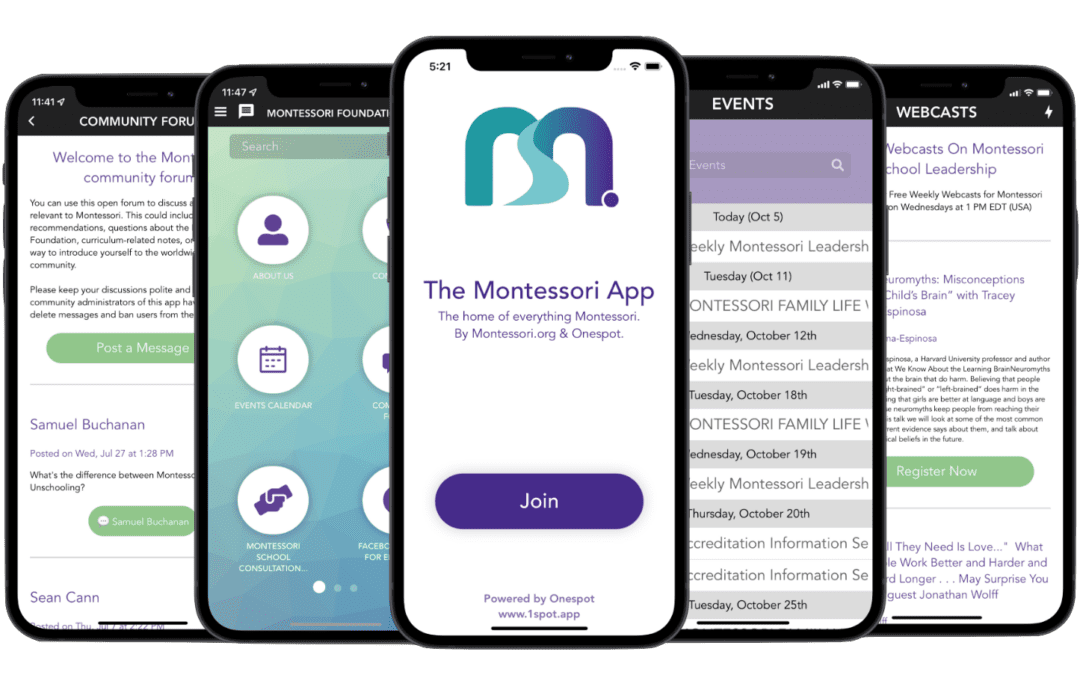
The home of everything Montessori is now only one click away.

Have you ever found yourself trying to schedule a doctor’s appointment and wondering when that field trip is scheduled so you don’t schedule them on the same day? Or trying to respond to a friend of a friend who wants to know, “What is Montessori anyway? Is it worth it?” You know that you can access both the school calendar, and an article you can share, but do you have time to gather all that information? What if there was one app for that?

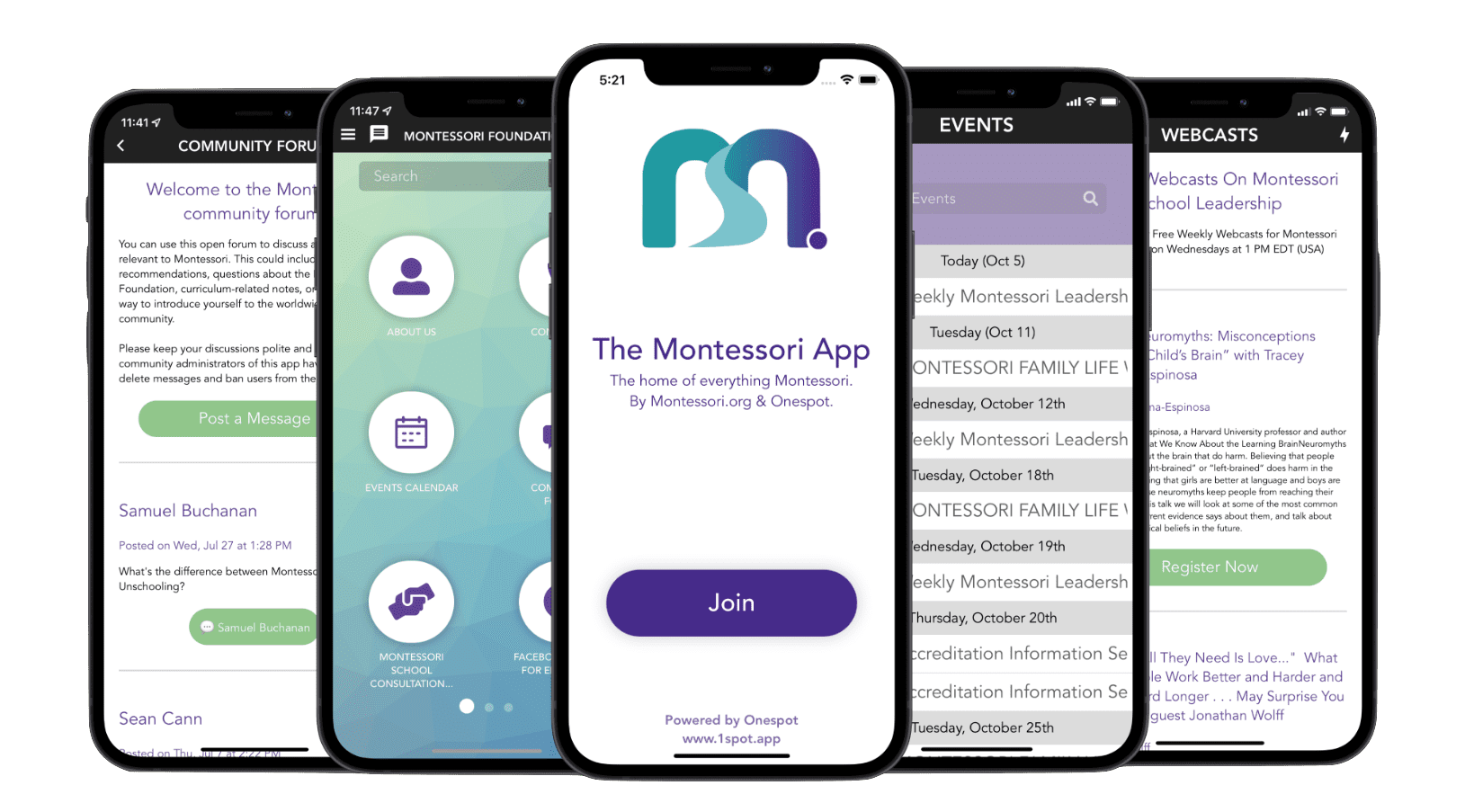
Montessori.org—home of the Montessori Foundation, the International Montessori Council, and the Montessori Family Alliance—officially released The Montessori App on the iOS and Android app stores. This new app organizes all Montessori.org resources into one central spot. In addition to Montessori.org resources, this partnership also allows any Montessori school to have its own school-specific app within The Montessori App, making it a true one-stop-shop for any Montessori school’s community. Anyone can install this new app for free by searching for montessori.org on the app store.

The Foundation’s new mobile app allows anyone in the Montessori community to easily access all of Montessori.org’s information in a user-friendly, personalized way. This new home for everything Montessori is helpful for parents, teachers, school administrators, and anyone else interested in learning more about what Montessori has to offer. Now anyone can join the app to discover upcoming events and webcasts, receive personalized messages about things happening in the Montessori community, and much more.

“It will be a very easy way for interested parents to put Montessori resources on their phone,” said Tim Seldin, founder and President of the Montessori Foundation and Chair of the IMC. “For no cost, they can get information about Montessori, they can check out Montessori schools, they can get many of their questions answered.” He emphasized that “amid the cacophony of noise about Montessori that’s out there,” one of the Montessori Foundation’s goals was to create a way to bring Montessori resources to parents through “something that they can use on a smartphone in those few minutes that the average parent has to sit still, without their child tugging on their shirt.”

The Montessori Foundation has been creating resources, starting with Tomorrow’s Child, the Montessori parenting magazine, for 30 years. In the last seven years, weekly webinars have been added and all are available on the website and on the app. If you have a question about cooking with your child, the lessons, or materials in the classroom, traveling with your child, or anything else pertaining to Montessori, you should be able to find an article or a webinar with ideas on the topic.

Building a mobile app wasn’t a new idea for Montessori.org. Seldin said that they had been very intrigued by the idea of having their own custom mobile app for montessori.org resources for some time. “The reason why we didn’t do it before — and we’ve really thought about this for a few years now — is the cost has been astronomical,” said Seldin. “I mean, we actually bought a do-it-yourself app maker, and it frankly never worked correctly. It was a giant pain in the neck.”

Seldin then met the founders of Onespot, a startup that empowers any school to have a custom, school-specific mobile app without needing to write a single line of code. Seldin said that when he started working with the Onespot founders, “We were able to get something up and running very quickly for the Montessori Foundation, the International Montessori Council, our Montessori Family Alliance, and our Montessori marketplace. That’s really complicated.” The Onespot platform was able to take that complicated system and make it simple.

The platform is like website builders, like Squarespace or Wix, but for mobile apps. Complex organizations (such as schools, businesses, non-profits, or even montessori. org) can use Onespot to make custom, easyto-use mobile apps. And because the platform was developed with scalable technology, the founders can keep the pricing incredibly af- fordable, while still providing top-notch customer service. “It was just obvious to me that they were on to something,” said Seldin.

As this is the first iOS and Android mobile app of its kind, The Montessori App is exciting for the whole Montessori community worldwide.

Montessori schools tend to use many online tools these days for communicating with parents about student progress or sharing other communications.

This new app brings everything together in one place, so parents don’t need to remember five or more different websites and download five or more different apps. This is the first app that deeply solves the community side of Montessori.

“It’s like a Montessori super app,” said Samuel Buchanan, one of Onespot’s founders. “It’s a new home for all Montessori resources, and Montessori schools around the world are starting to move in.”

One of those first schools to get their own custom app created within The Montessori App is the Montessori Children’s School in Key West, Florida. “I like it because it kind of ties us into a bigger picture, so people see it’s not just our little school down here; there’s a bigger entity out there,” said Amy O’Connor, the Executive Director of the school. She added that if parents “want to grow more with Montessori, there are all sorts of resources on montessori.org. I just think it gives more of a lift to substantiate what we’re doing here.”

Jessica Losardo, Director of Operations at the Montessori Children’s School, is also excited about the new app, saying that “should a parent consider Montessori, they can go to the Montessori Foundation’s website and actually research all the different schools to see how they compare to each other—what they’re doing similarly, what they’re doing differently—so that they get a very well-rounded idea of Montessori.”

Having their own app for their school within The Montessori App allows the Children’s School—as well as a growing number of other Montessori schools—to consolidate all their existing platforms and websites into one central spot on the device their community members use most: their phones.

According to a recent TechCrunch article, people around the world now spend an average of four to five hours per day using mobile apps, and that number continues to rise, accelerated by the COVID-19 pandemic.

Centralizing all their school-specific platforms has been tremendously helpful for the Children’s School. “I was starting to feel like we had a lot of places that we were asking parents to visit,” said O’Connor. “We use Montessori Compass, SchoolCues, and a program called Clockify for parents to document their volunteer hours. And it just seems like a lot of apps.”

And they’re not the only ones feeling overwhelmed by the growing number of different apps and platforms that a school community needs to keep track of. Seldin, who has worked with hundreds of Montessori schools over the years, echoed the same sentiment, saying that “parents find it very frustrating to remember how to access their child’s records or the school calendar, or you name it. Even though most schools provide answers on their websites, it’s not always easy to navigate on a smartphone.” He added, “As we end up with more and more online tools and more and more online ways of communicating, there’s really something to having one central place to collect it all.”

The Montessori Foundation launched The Montessori App to be exactly that—one spot for everything Montessori. And as Montessori schools around the world are continuing to join in with their own app inside The Montessori App, this unifying solution is spreading quickly to the whole Montessori community.

“All our work-related stuff is there. Or, for a parent, all their school-related stuff is right there”, said O’Connor. “I think it just makes life easier. And when it’s easier for the parents, or the staff, or whomever, then the school experiences more engagement.”

You can learn more about this collaboration between the Montessori Foundation & Onespot by downloading The Montessori App. See how your school can join the platform by visiting www.MontessoriMobileApps.com (www.seabirdapps.com/montessori-school)

Embracing the Future

Embracing the Future

woman with cat using computer

It is vital that educators prepare students not for the world we grew up in, nor even the world as it appears today; rather, we need to prepare for a world that does not yet exist and which we cannot possibly predict.


With that in mind, I’m sure I’m not the only one who has been thinking deeply about the long-term impacts of the emergence of several machine-learning platforms over the past few months. Especially recently, as news of one of the latest, ChatGPT, has gone “viral.”

At home, my software engineer (and digital native) husband has been exploring various machine learning platforms for several months as word has spread in his field about these latest developments. I observed as he used DALL-E, another digital platform, to generate uncanny, beautiful, and oddly specific images from written prompts. I listened as he shared his interactions with the conversational, entirely text based ChatGPT.

I admit, at first, I brushed off his conviction that these were the first signs of a pivotal moment in the history of humanity; but he’d planted the seed, and quickly, it grew.

Despite my open-minded stance and commitment as an educator, I was reticent. This kind of stuff is pretty far outside my knowledge base. To people like my husband, I’m considered a bit of a Luddite (aka technophobe), and I was sure that these things were too much for me to understand—too complicated for me to interact with meaningfully. Now, I don’t know about you, but the moment I could acknowledge that fear, I had to press pause and take a step back. I don’t want to fall into the trap of allowing unfamiliarity or uncertainty to create a barrier to entry when it comes to innovation.

It sounds like you’re trying to describe the digital divide that can occur between generations or groups that have varying levels of exposure and comfort with technology. Essentially, if one generation or group is slower to adapt to new technologies, they can become increasingly left behind as the world around them becomes more reliant on those technologies. This can lead to feelings of disconnection, confusion, and even frustration or anxiety for those who struggle to keep up with the pace of change. As technology continues to evolve and become more integrated into our daily lives, this divide can become even wider, making it even more challenging for those who are slow to adapt to catch up.

Well, that settles it. Now more than ever, it is vital for us, as Montessori parents and educators, to renew our commitment to lifelong learning and embracing innovation. For me, that means diving headfirst into a topic that scares me and trying to make sense of it all.

What even is ChatGPT?

To answer that question, I decided to go straight to the source and ask! Here’s what ChatGPT had to say about itself:

I am a computer program designed to understand natural language and generate responses that are relevant and helpful to people who ask me questions. Think of me as a digital assistant that you can ask anything, and I will try my best to provide you with the most accurate and informative answer based on my training and knowledge.

The question of how it works is a pretty big one, and somewhat mysterious even to the most informed, but after chatting with it (as well as doing my own research and listening to others more informed than myself), what I found helpful for my own understanding is this:

I was trained using a deep learning algorithm, specifically the transformer architecture. My training data consists of a large corpus of text from various sources, including books, articles, and websites. During training, I was presented with sequences of text and learned to predict the next word in the sequence based on the context provided by the previous words. This process was repeated millions of times over a period of several weeks, during which my neural network gradually became better at generating text that sounded natural and coherent. After training, I was fine-tuned on specific tasks and domains to improve my performance on those tasks.

Not sure where to begin?

Here’s a few ideas:

– Copy a document or article and ask ChatGPT to summarize the main idea for you (Want to get really fancy? Ask it to format the summary in bullet points.)

– Ask ChatGPT to rewrite a passage at a specific reading level.

– Share an assignment and learning goal with ChatGPT, and ask it to write.

It’s important to note that ChatGPT, the program that assisted me with this article, is not connected to the internet. The platform is accessible through OpenAI.com, the research organization responsible for its invention. It has access to the data it was trained on (which is vast) but otherwise is mainly limited to the context within each individual conversation it has. This makes it a different kind of tool than you may anticipate, and it should not be confused with its new cousin, the ChatGPTbased AI recently added to Microsoft’s search engine, Bing.com.

If you want to take a deeper look at ChatGPT’s language model, or any language model, I recommend “What is ChatGPT Doing and Why Does it Work?” by Stephen Wolfram.

ChatGPT as an Assistive Tool

So… what can it do? Plenty. Since its release in late November 2022, people have found countless applications for its assistive technologies. In the week that I’ve played with it, I’ve used it mostly as a sounding board for my ideas, to help me brainstorm solutions to problems, and even to outline this article (along with a few other topics of interest). It has helped me process information from complex texts, reformat notes, and adapt content for different age groups and targeted skills.

Of course, the nature of a tool like this is that there is some trial and error for each user to discover its strengths and weaknesses (and it does have weaknesses). ChatGPT can make mistakes! In its own words:

As an AI language model, I can make mistakes in understanding the context of the question, interpreting the intent of the question, and generating an accurate response. This can be due to limitations in my training data or biases in the language used in the question. For example, if a question contains a reference to a cultural event or phenomenon that I am not familiar with, I may not be able to provide a relevant response. Additionally, I may generate responses that are factually incorrect or inappropriate based on the context of the question.

I find myself thinking of the tool as an incredibly supportive friend—one who hears your ideas and will do what it can to help you further them. By letting it reduce my mental load (as one of my own supportive friends would put it), I have found new depths to my ideas that might otherwise never have had the chance to reach the surface. Let’s be honest: Doesn’t every teacher and parent wish there was just a little bit less on their plate? Maybe ChatGPT can help.

Playful Learning

Look, machine learning platforms like ChatGPT are only going to advance further. There’s no telling exactly how machine learning platforms like ChatGPT will influence our future, but we can rest assured that they will be deeply entwined in our children’s and student’s lives. Let’s not work against this, and let’s not fear working for this. Instead, let us work with these developments. To best support our students as the next generation of digital natives, we need to familiarize ourselves with each exciting innovation as it rolls out.

I urge you to consider this as part of your own spiritual preparation. If we agree that we must cultivate our commitment to ongoing personal growth and development, we must also model our commitment to lifelong learning and a willingness to embrace innovation. By showing our students that we are willing to explore new technologies and learn alongside them, we can inspire them to become lifelong learners and innovators themselves. We must be willing to take risks, make mistakes, and learn from our failures. This is how we can create a culture of innovation in our classrooms (and homes) and prepare our students for a future that is constantly evolving.

Maybe you’ll find use for ChatGPT as a planning tool, as a helpful processing partner, or as a tool for differentiated instruction. Maybe, like me, you’ll find a creative outlet. Maybe you’ll discover something entirely different! I’m not here to tell you exactly how to use ChatGPT, nor any other platform like it. I’m not suggesting you should use it in your classroom or home, have your child use it, or even that you must use it for prep work. If you are truly committed to lifelong learning, though, and want to embrace the innovation that Montessori is so renowned for inspiring, I recommend you take some time to just … play.

To check out ChatGPT for yourself, visit OpenAI.com/blog/ChatGPT

Want to hear a traditional English teacher’s take? Check out the New York Time’s Hard Fork podcast episode, “ChatGPT Transforms a Classroom and is ‘M3GAN’ Real?”

Our experience with ChatGPT

We gave ChatGPT a query,“Tell me about Montessori education,” and this is the answer we got:

Montessori education is an educational approach developed by Italian physician and educator Dr. Maria Montessori. It is based on the philosophy that children learn best when they are allowed to explore and discover things on their own in a carefully prepared environment. Montessori education emphasizes the development of the whole child, including their cognitive, social, emotional, and physical development.

In a Montessori classroom, children are encouraged to work independently and at their own pace, using specially designed materials and activities that are hands-on and interactive. The classroom is arranged into different areas, such as Practical Life, Sensorial, Language, Mathematics, and Cultural Studies. Each area is designed to help children develop specific skills and knowledge.

The role of the teacher in a Montessori classroom is to observe and guide children, rather than instructing or directing them. Teachers help children develop their own interests and strengths and encourage them to pursue their own learning goals. Montessori education is based on the belief that children are naturally curious and eager to learn, and that they learn best when they are given the freedom to explore and discover things on their own. It is designed to help children develop a lifelong love of learning and to prepare them for success in all areas of their lives.

Have We Forgotten How to Play?

Have We Forgotten How to Play?

children swinging

I remember climbing the mango tree that grew behind my building as a child. I lived in a large metropolitan city and would beg my grandma to let me play behind the building with my friend. With the slightest nod of her head, I would squeal with excitement and fly down the stairs to the fourth floor where my best friend lived. I would ring and knock until I could, once again, beg whoever answered to let her play with me. Again, with the slightest nod, we both arrived at the ground floor, barely touching a step on the way down.

I have the greatest memories of my childhood climbing that mango tree with just a salt shaker and my friend. We would sit and talk, play, and eat fresh mangos straight from the tree. Now, 30 years later, I can still recall and feel the pleasure of that time in the tree. I can still smell the sweet ripe fruit and recall unexplainable and seemingly unimportant details from those cherished experiences.

I know each of you has your own unique and special memories of playing as a child. You can recall an amazing time when you rode your bike on the street, rolled down a grassy hill, jumped into a pile of leaves, or built a sandcastle at the beach. I grew up in Caracas, Venezuela, and I spent countless hours and days playing with my friends in the street, climbing trees, and even walking every afternoon to the bakery with my grandma to buy bread for dinner. These memories are so precious to me, just as your unique childhood play experiences and memories are precious to you.

But we weren’t just playing, we were learning, and we were learning a lot!

There is something amazing about play. When you experience pleasure, you become more driven to repeat that activity. And the more we repeat it, the more opportunities we must master it. With mastery of anything, from the most basic skill to the most complex, we experience self-accomplishment and the pride and individual confidence that result from it. such as creativity, abstract thought, prosocial behavior, and expressive language”.

Playing is a critical part of our learning process. But play has to be fun. If something is not fun, it’s not play.

Let’s look at why play is so critical to learning and cognitive development. Play serves as a crucial mechanism that enables the brain to develop neurological systems that play a key role in cognitive awareness, improved learning, and physical, social, and emotional well-being. Gaskill and Perry (2014), in their article “The Neurobiological Power of Play,” said that “Developmental theorists generally have viewed play as an essential experiential element of social, emotional, physical, intellectual, and psychological development. The ‘somatosensory’ experiences in some play activities have been viewed as the neurological foundations for later advanced mental skills, such as creativity, abstract thought, prosocial behavior, and expressive language.”

Let’s dive just a bit deeper and investigate what is really happening in the brain when a child is playing. Bruce Perry is a psychiatrist and Founder of the Child Trauma Academy, and through his research, he explains how kids develop through play.

Human brains are super organized, so let’s imagine a staircase in your brain. Our brains start developing on the bottom stair and systematically progress up the staircase. The bottom stair is the BRAINSTEM, which is the basic building block of the brain.

According to Perry, the Brainstem establishes (body) state regulation and is responsible for controlling body temperature, blood pressure, heart rates, sleep, and fear.

To develop the Brainstem and this critical first stair, Perry recommends playing games, such as peekaboo and frequently introducing new and different tactile and taste sensations.

The second stair is the MIDBRAIN, this part of the brain is responsible for the regulation of movement (motor skills) and the sensory integration of our brain. Play that involves gross- and fine-motor skills and music is well suited to help develop the Midbrain.

The third step in the brain staircase is the LIMBIC. The Limbic area is all about our emotions. I know many of you are thinking, “Yes, EMOTIONS, tell me more!” It is the Limbic portion of the brain that processes emotions, such as tolerance, belonging, and empathy, as well as how we react to a situa- tion and regulate our feelings. It’s at this level of development that our brains start understanding and comprehending the complex dynamics of relationships and all those social-emotional skills that we need to live and function in society.

Once again, play is a critical component in the development of the brain’s Limbic system. Play that involves taking turns, sharing, winning, and losing will all work together to promote the development of this step in the brain staircase.

Our final level in the staircase is the CORTICAL area of the brain. As you might imagine, this is the most complex stage of development, where we see the child engaging in abstract thoughts, creativity, language, and morality. It’s at this stage that Perry notes that Cortical development is supported by playing complex games, humor, art, books, word games, etc.

So now we’ve reached the top of the brain staircase, and through play, our children have developed the ability to control their emotions and think in the abstract.

But what about executive functioning skills, and where do they come from?

Executive functioning is responsible for several skills that involve working memory, cognitive flexibility, and inhibitory control. Basically, these skills act like our own internal ‘boss’ and tell us what to do. The ‘boss’ should be able to help us pay attention, keep and recall information, organize, regulate our emotions and internal clock, and keep track of what we are doing.

The Center on the Developing Child at Harvard University says, “These skills are crucial for learning and development. They also enable positive behavior and allow us to make healthy choices for ourselves and our families.”

The important thing to remember is that we were not born with the ‘boss’; we must learn, practice, and develop these executive functioning skills throughout childhood.

These (executive function) boss’ skills live in the prefrontal cortex of the brain, and studies show that they begin to develop as early as age 3 and will normally continue to develop through the age of 21.

Perry and Baylor said in their research, “Curiosity, Pleasure, and Play: A Neurodevelopmental Perspective,” that “while enjoying their play, children can acquire a wide range of interpersonal/social skills, ranging from communication to cooperation. When children argue about who stepped ‘out of bounds’ and agree upon a ‘do-over,’ they are learning how to negotiate, compromise, and work together.”

All the play that we engage in as children, even as a toddler, contributes to the development of strong executive functioning skills— or a really good ‘boss.’

With play being so important for our children, what are we waiting for? Why are we so laser-focused on rigid academic regimes and structured activities? Have we forgotten how to play?

More play time could better serve the academic and social development of our precious tiny humans. Since we now know the importance of play, let’s ask ourselves, as parents and teachers: How can we use play to better promote and foster childhood development? How can we make things more fun? How can we add more play time to our schedule? How can we remember how to play?

As Montessori educators and parents, we know and recognize the importance of playing, but sometimes we forget that play is such a critical part of the learning process and developing effective executive functioning skills.

Maria Montessori said that “play is the work of the child,” and by giving the child the opportunity to play and explore, we help the brain to grow. “Only through freedom and environmental experience is it practically possible for human development to occur” (Montessori, 1967).

So, what have we learned, and what is our takeaway?

If play is so closely related to brain growth and development, and our prefrontal cortex (executive function) ‘boss’ skills are a result of all that playing, then we need to make sure our tiny humans are doing a lot more playing! It’s just that simple. Both in our education system and our own home, we need to implement and promote more playtime.

As Maria Montessori said, “Education is a natural process carried out by the child and is not acquired by listening to words but by experiences in the environment.” Let’s come together as parents and teachers and go out into the world to explore, be curious, and play more!

Reference

Center on the Developing Child (2012). Executive Function (InBrief). Retrieved from www.developingchild.harvard.edu.

Montessori, M. (2016, originally 1949). The absorbent mind. Amsterdam: Montessori-Pierson Publishing.

Perry, B., & Baylor, S. (200-). “Curiosity, Pleasure, and Play: a Neurodevelopmental Perspective.” HAAEYC Advocate, 9-12.

A Joyful Experience

A Joyful Experience

Victoria Kishoiyian

It was the Spring of 2007, and my husband, Bernard, and I were among the multitude of parents looking for a preschool for our eager learner, who was not quite three years yet.

I suspect that this was the year that the children in our city outnumbered the preschools. Lucky for me, I overheard a parent at the park recounting an amazing experience at a Montessori school in Sarasota, FL. I was determined to find this particular school and to explore what Montessori was.

On a beautiful morning in mid-May, our daughter Victoria, Bernard, and I had our first visit to the NewGate School. We met with its wonderful Director, Lorna McGrath. I believe at that time, they had two spots open in the Primary (age 3-6) classroom. We were chaperoned around the campus by one of the parents called an ambassador, who had raised all four of her children through the Montessori curriculum. The campus was small, but we felt it was the perfect size for our daughter.

Victoria and I spent the rest of the summer stopping by the school once a week to get a little preview in anticipation of our starting the new school year that fall.

August came around finally! Victoria’s assigned classroom teacher, affectionately known as Ms. Mini, came over to our home to visit and to get to know her before school commenced. I thought that was a nice process to break the ice, so to speak.

Then the first day arrived for Victoria to go to school! The students’ assigned start dates were staggered to allow for a better, less stressful, more peaceful transition. Victoria couldn’t wait; she was (and still is) a keen learner.

After a few weeks had gone by, we knew that we had made the right choice. Victoria was having a great experience. She would come home bathed in sand from head to toe and with an orange rind in her fingernails from cutting oranges for snack time. It was awesome. We knew that she was fully immersed in exploring and learning.

Over the time that we spent at the NewGate School during our daughter’s Elementary years, we saw her growth as an independent young lady; her ability to collaborate on projects as a team player; her insatiable curiosity to investigate and understand concepts; and her love of volunteering and contributing to her community.

While she left before middle school to attend a special program offered by the public schools, we were grateful for the Montessori formative learning that will continue to yield success throughout our daughter’s life. 

Advice from Montessori Family Alliance Friends

Advice from Montessori Family Alliance Friends

women talking

Reaching out to a friend who has children a bit older than yours can be a very comfortable way to get advice about your own parenting. When you are a part of the Montessori Family Alliance, the people to reach out to have very helpful pieces of advice.

Christine Lowry

The Montessori Foundation

Being a parent is both the most challenging and rewarding thing we can do. My advice is to respect your child’s sense of dignity. Children (especially young children) have a remarkable sense of self-worth, self-direction for their own growth, a sense of their value as people, and being worthy of honor and respect.

I had a sense of its importance as a parent but didn’t have the right language for it until I partnered with parents in my school. We often underestimate our children’s rich emotional life; their natural attunement to us, to their environment, and to the world; their need to explore, do it themselves; and struggle until they get it without our help. Their ‘inner guide’ is the motivation for everything they do. Sometimes, they ‘push back,’ and we feel that they are challenging us. Perhaps, if we could take just a moment to reflect on our child’s intense sense of dignity, we could more easily let go of our need now and see their need in a different light.

Cathie Perolman

Montessori Teacher Educator

If I had the chance to enhance my family, I would have created more family traditions during our younger years. We would have started with a weekly family pizza dinner and game night. This could have started with very simple frozen pizza and evolved into family-made pizza as the children got older and could cook. The games could have started out very short and simple and grown into more challenging games as the children grew. Initially, we could have included just our nuclear family, embracing their friends and other family members when they were tweens or teens. Perhaps this prediction would have carried over into their own families.

Other traditions might have included special breakfasts that we all helped plan, cook, and enjoyed on holidays, days off from school, snow days, etc. Remember, it only takes doing something twice for it to become a beloved family tradition. This could also have been true for something special after school on the last day of the school year or the first morning the family wakes up on summer vacation. I had a friend who said that weeks, months, and years needed to have “punctuation in the book of life.” Looking forward to doing things together helps a family want to spend time together, which is so important.

David Rotberg

Guide at Pines Montessori, Houston, TX

My wife gave birth to a beautiful baby girl and, instantly, we were parents. As a new parent, a new part of me seemed to come alive; a part of me that I didn’t know even existed.

As a young parent, I began to feel that I needed to ‘know’ how to raise a child ‘the right way.’ I read countless books about raising girls. We tried so many things, and yet none of it felt natural because it wasn’t us. We were just doing exactly what the books told us to do.

We spoke with friends and mentors who had older children (or were empty nesters) and asked for their advice/wisdom. Well, fast forward three more children (all boys), and we discovered there was not that one book, that one class, or that one person with all the answers. We eventually found what worked best for our family and what felt right for us. In addition, I also felt a responsibility to help our children live as themselves as much as possible.

By trying to fabricate experiences, read books, and schedule playdates, I tried to force their development too much and redirect their personalities. It didn’t happen at any moment in my parenting, but just gradually, over time, I realized that I had to trust what my wife and I were doing. Our children would be exactly who they were meant to be, and, to an extent, their personalities were hard-wired. I felt that I could breathe more and just trust my children’s growth. It took about five or six years and a few children to learn that, but hey, who’s counting?

Allowing children to make their own decisions and helping them to accept the natural consequences, positive or negative, of their decisions is my best parenting advice. As parents, we support our children by modeling decision making and helping them weigh the possible outcomes. Sometimes, allowing children to fail is what allows them to grow.

Lorna McGrath

The Montessori Foundation

When your child seems to be struggling with something, it can become an ongoing struggle, weighing them down or weakening their self-confidence. Talk to them. Help them with their self-talk and assure them that everyone struggles with something. Most things can be overcome with practice, time, support from others, and determination.

Be empathetic without trying to make it all better. They must do that. Don’t pity them; instead, be confident when they are not. Show them your strength, patience, and willingness to receive help from others. Let them know, “You/we got this!”

Margot Garfield-Anderson

The Montessori Foundation (retired)

My best advice to parents and grandparents is not to spoil anyone with things; instead, be invested and present when you have time with them. Bring them to places to show them there’s a world out there. Expose them to all the arts; take them on nature walks and teach them how to fix something when it’s broken or how to put something together. My favorite is to get them into the kitchen to cook— anything that helps them unplug from those devices. Help them learn to be of service in their communities.

I try to do this with my four granddaughters as well. We do art projects, listen to musicals, watch old movies, play board games, and do puzzles. We knit or crotchet, we paper mâché, we go to museums and science centers; we are going on a cave exploration this summer. I try to create times they will want to replicate and look back upon with the fondest of memories.

Dr. Nora Faris

Montessori Guide, NewGate School

One of the most revelatory experiences for me as a mom and as a person new to Montessori was just how wonderful the notion of Practical Life could be. As a new mom coming to Montessori twenty years ago, I was amazed as I observed what the children in the Primary classrooms could do by themselves. Not only did James (my husband) and I enroll the children in a Montessori school as fast as they would let us, but we left determined to see what else they could do for themselves at home, which turns out to be a lot! Adopting the motto “If you can do it for yourself, you should” has truly helped our children develop into the confident, capable young adults they have become.

As we get the occasional texts from our college-aged kids that read, “Thanks for teaching me how to do my laundry and cook,” or “Thanks for teaching me how to do hard things,” we are grateful for the lessons learned as new parents. Letting go of perfection-oftask thinking to make way for independenthuman-in-development activities was the best decision we made as parents. And, once we understood that anything could be broken into smaller steps towards a larger goal, we created a home environment that allowed our children to become confident and selfsufficient. This worked for driving practice, talk practice, form-completion practice, and more. As James and I look towards retirement, we wonder what practical-life lessons lay in store for us, too. We are eager to learn and set practical-life goals for ourselves as well.

Tammy Willen

Head of School, Bay Montessori School (Lexington Park, MD)

Through my time as a parent and a Montessori educator, I’ve learned many things I wish I could have put into practice when my children were young. As a child, I was a Montessori student, and as an adult, I became a Montessori educator. Therefore, I was very knowledgeable of the “Montessori Method” and did my best to parent along a similar path. Now that my kids are teenagers and I have life experience and more training, I’ve learned a few things I wish I’d done when my kids were young.

Many parents think we know what’s best for our children. Although my heart was in the right place, I often forgot to listen to my child, both through their words and through their actions. Most parents think a three-year-old still needs a nap and a four-year-old needs to eat at each meal. We think a seven-year-old should know how to read, and a ten-year-old should know how to speak kindly to a friend. We often spend a great amount of time trying to control our child’s behaviors. What I encourage others to do is to observe, model, follow, and guide.

If I could go back to my children’s preschool years, I’d throw my expectations (and everyone else’s) out the window and watch my child show me their full potential. In schools, I hear many parents say, “He should be…” or “I wish she could…” or “When she does ….” My advice to parents is to eliminate should from your vocabulary and let your child blossom at their own unique pace.

Cheryl Allen

The Montessori Foundation

Family meetings, held regularly, give every person in the family a chance to be a part of decisions and solutions. Knowing that your topic of concern or interest will be addressed goes a long way in helping to develop confidence. Having a voice in the family can make connections stronger and allow the family to work together.

Renee Duchainey-Farkes

The Montessori Foundation

I would advise parents to be focused on a partnership with the school and the teachers, because we are all working for a common purpose: the child. Parents should attend as many school events as possible, even those that are not focused specifically on their child; it helps build school community.

Share expectations and goals for your child with the teacher and get affirmation that these are the right ones for your child. Learn from your child’s teacher.

Share your family’s culture, values, and parenting practices with your child’s teacher. Attend PTA meetings and get involved, if you can, to support the school to be the best place for children. Actively help teachers and the school to recruit volunteer parents to help. 

10 Benefits of Montessori

10 Benefits of Montessori

child sorting

If no one has asked you how Montessori will benefit your child, or will Montessori benefit your child, they have probably thought of it. In fact, you may have asked yourself the very same question. Why choose an education that is an alternative to traditional education?

Let’s examine ten reasons we may choose Montessori for our family.

1. Learning is child-centered and individualized. A similar curriculum to traditional schools is taught, often in a different order, and children move through the curriculum at their own pace. Teachers observe and guide students as needed to develop mastery, rather than following a timeline for learning set by others.

2. With the freedom and support to question deeply, they learn to think critically and act boldly, developing the ability to lead with respect and consideration.
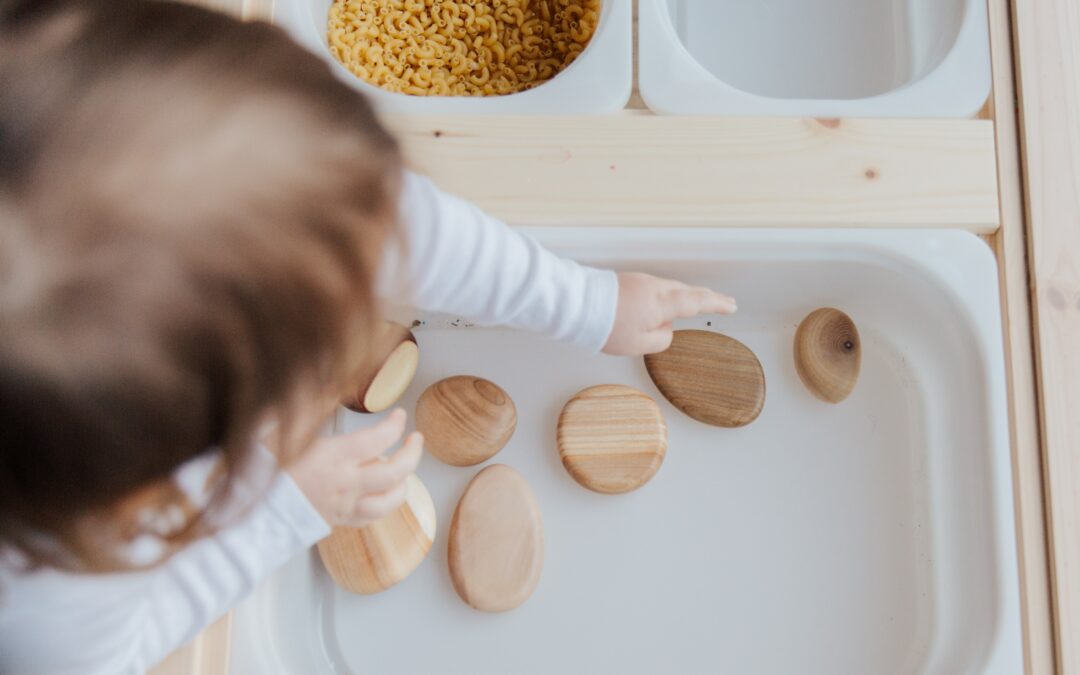
3. By giving students a choice of activities, they develop their executive function skills, making choices on their own, learning to wait and take turns, and developing self-discipline and motivation.

4. The guided independent approach to learning allows Montessori students to become confident, enthusiastic self-learners. Teachers observe, monitor, and guide children to make good choices to progress their learning.

5. There is limited standardized testing, and it is most often used as a way to observe as well as a practical life skill. Children are motivated by and measured against their own achievements, not those of others.

6. Free from predefined times for activities, Montessori children delve into subjects that inspire them and are able to feel the intrinsic reward of seeing a task through to completion, without being cut off because that class has ended.

7. As students are active contributors to the classroom and the teacher their guide, there are more opportunities for cooperation and collaborative working among students of all ages.

8. Montessori focuses on the whole child, with social and emotional development equal to the academic curriculum. Learning to work with others, take turns, lead with respect, speak up, and consider needs outside their own prepares children to be global citizens.

9. The focus is on the key developmental stages of the child, with learning activities and materials designed to further develop key milestones. Neither introducing subjects or skills their brain and body are not prepared for, nor requiring them to stay with information and skills they have already mastered, allows children to reach their own full potential.

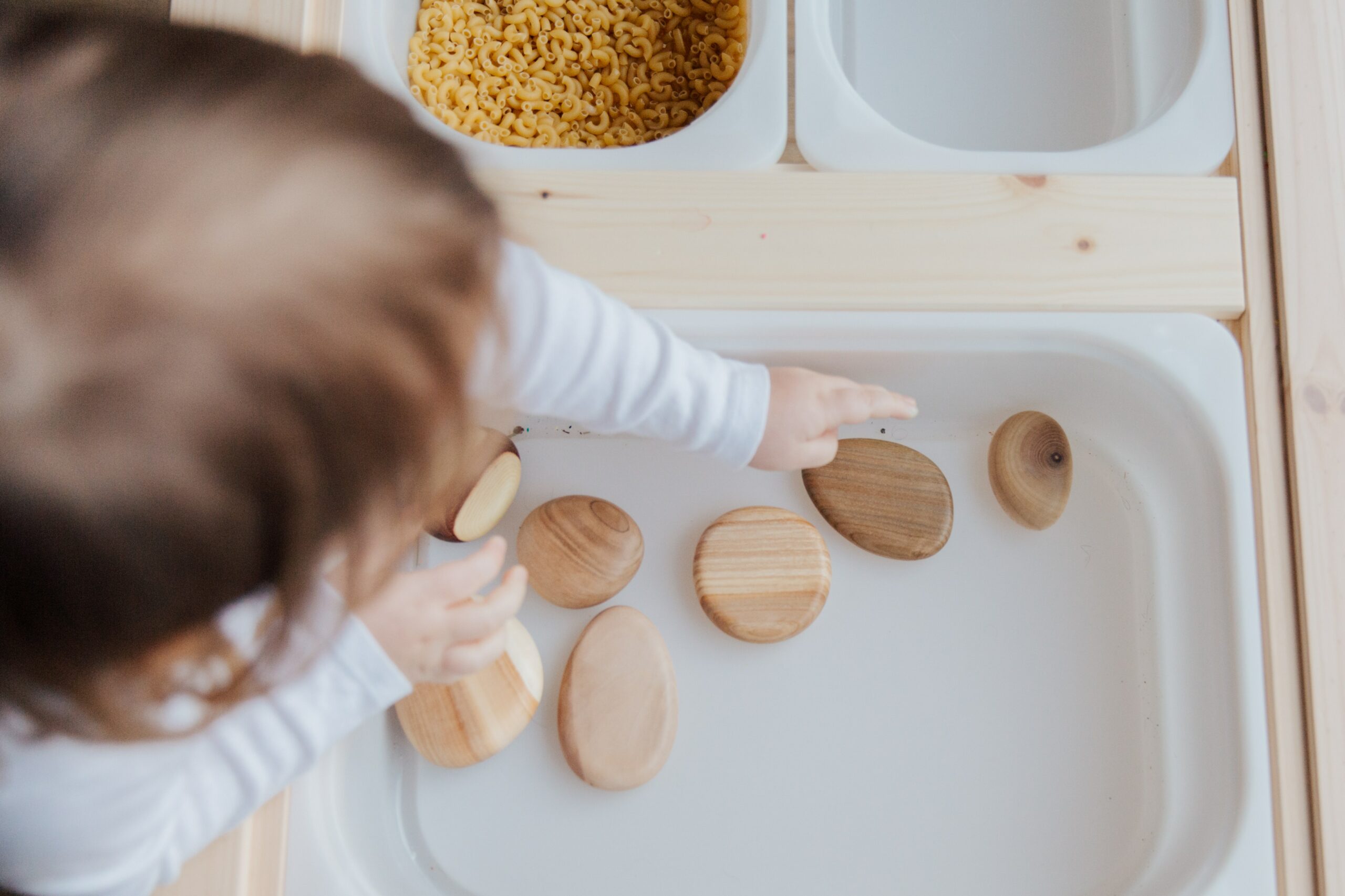
10. Montessori is hands-on learning with materials that enable self-correction and self-assessment. Auto-correcting materials (the largest cylinder does not fit in the smallest space) allow children to develop confidence in their own learning and become the developer of their own knowledge rather than go to an adult and drink from their fountain of knowledge.