


Honoring Boundaries: Helping Children Set Them and Respect Them
To continue reading, you will need to choose a subscription plan.

Traveling as a Family
Over school holidays, many families choose to travel. They may visit family or to places that are new adventures for everyone.
Travelling can be stressful. Here are some tips to make any trip easier for the whole family.
First, Plan Together
– During a family meeting, discuss travel plans (the where, when, and how), the budget, and ask each person what they would like to do on your trip. Knowing your budget ahead of time can be helpful with what is planned and the expectations of the whole family.
– Plan for quality over quantity. Spending a whole vacation running from museum to museum can make everyone cranky and limit the memories of what was seen. Taking more time in one place can be more enjoyable for all.
– Make shared agreements before you go. Is it okay to be on screens while waiting for food to be brought to the table? When is it okay not to go out as a family, and what safety measures need to be taken? Discussing these as a family before you go can make things easier when you arrive.
Second, Consider Your Family Values and Trip Goals
– How do your family values affect this trip? Is your family excited to learn on this trip, or do you need a break in nature? How will your family stay true to your values and allow your values to help guide your trip?
– What are your goals for this trip? Are there places you want to see, or is spending time with the people more important than the sights? My son just made a trip to visit a friend from college before new work experiences took them thousands of miles apart. Although interesting sights were seen, spending time together was the most important, so walking his friend to the tram for work became a part of his visit.
– Consider what would make this trip feel complete for each person in your family. Maybe one person expects to do some shopping, and another expects to make cookies with Grandma. If they aren’t said aloud, they may not happen. Be sure to share requested ideas with all involved friends and family members. We like to consider our three top things to do. It is manageable for our family of four, and everyone feels their trip was worthwhile. Often our top three things to do overlap, and everything else feels extra.
Third, Plan for Safety
– Communication is key for safety in a new location. Make sure younger children know how to contact you if they get separated. With children who have their own phones, this is a perfect time for location sharing.
– Practice stop and freeze with younger children. We loved to play the freeze game when we were out. When there was a clear path, I would say “run,” and my children would run until I said, “stop.”
Our word choice was based on a game they played at school. Freeze, –, or any related word could be used. This game let them practice two things, running in appropriate places and connecting a pause with my voice. If something came up when they needed to stop and listen, it was not new and felt fun.
– Be clear about expected meeting spots when you are in a place you may get separated or choose to separate.
– Allow older children some safe time on their own. Can they stay in the train exhibit rather than going to the dress exhibit? Are they old enough to stay back while the adults go to a show, dinner, or an exhibit? A friend’s teens stayed back and watched Netflix while they went to the Renoir Museum. The teens were happy with the break from art museums, the adult was happy to explore the museum, and there was a plan that kept all safe and happy when they reconnected a few hours later. None would have been as happy if the teens had gone under duress, or the adult had skipped something they wanted to do (one of their top three choices).

Fourth, Keep Essentials in Mind
– Plan for downtime! Everyone needs some time to rest, and teens need time to reconnect with friends.
– Find some ways to have personal space. It may be as simple as not involving a reader in a conversation or allowing some time in nature. For introverts, especially, a little time apart helps the time together be more enjoyable.
– Realize that all the adults in your group are parenting partners and share your important parenting guidelines with them. This may be very difficult if you are visiting family. Try to have a gentle conversation about concerns before you go. “Mom, we are so excited to visit. Matt is feeling picky about eating right now, so we are encouraging a taste and leaving it at that. Sabrina loves the skirt you gave her and may wear it every day! We have decided just to make sure she is warm enough, and that is working out.” Sharing what is happening and how you manage can help you continue to address parenting issues consistently even as you travel.

– Maintain routines whenever possible. If your child usually goes to bed at 7:00 and you are sitting down in a restaurant at 7:00, your dinner, or your next day, may not be as calm as you like. Bedtimes, a type of snack, and a favorite toy can all encourage a feeling of safety and comfort, making all new opportunities more fun.
– Come prepared. Having a small firstaid kit (a blister can ruin a walking day), water, and an emergency snack can change the trajectory of your day.
– Communicate your family needs if you are traveling with or visiting other adults. Having the first grandchild can lead to adults who are used to later dinners and a child who wants to eat and go to bed. When Rebecca told all of the adults that her child needed to be sitting down at a restaurant by 6:15, she was able to encourage some afternoon quiet time, and dinners went smoothly, even if they were long.
Don’t forget to review your experience and share what everyone liked, thought was funny, or may not be comfortable trying again. These memories will be fun to share and make your next trip even better! •
Encouraging Consent
To continue reading, you will need to choose a subscription plan.

Adult Well-being Through Montessori Education
When many of us enroll our children in a Montessori school, we are asked to share our goals for our child’s future. Many read something like this, “I want my child to be a happy, self-supporting, life-long learner.” Although the word may not often be used in writing these goals, what is really being hoped for is well-being. According to Dictionary. com, well-being is, “A good or satisfactory condition of existence; a state characterized by health, happiness, and prosperity.”
A recent study, “An Association Between Montessori Education in Childhood and Adult Well- Being”, concludes that at least two years of good quality Montessori education increases adult wellbeing (Lillard AS, Meyer MJ, Vasc D, and Fukuda E, 2021).
The authors focused on four factors: general well-being; engagement; social trust; and self-confidence. Attendance at a Montessori school seems to have a ripple effect for many former Montessori students, as they found that “the more years one attended Montessori, the higher one’s well-being as an adult.”
The authors felt that three features of Montessori education would affect general well-being are self-determination, meaningful activities, and social stability.
Choice of Work: Choosing their own work, the ability to opt-out of, or delay, planned lessons, and limited performance evaluations encourage students to oversee their own education, to be self-determined, to decide for themselves. Adults who feel self-determination are more likely to seek challenges and be engaged in their chosen activity. As adults, we may describe this as having balance, having our dream job, or work that really means something. In the Montessori classroom, we frequently see children choose work that offers some challenge for them, whether that is carrying a tray with a bowl of water doing long division with the racks and tubes, or writing poetry. Students will often push themselves to an area just beyond their comfort level when they are ready for that growth and are welcome to make that move in their own time.
Meaningful Activities in the Montessori Classroom: Folding a cloth leads to folding classroom laundry; a group outing requires adding and dividing to figure out the cost; cutting fruits and vegetables is a part of fixing snack; and all these academic and life skills are applied within the classroom. As students grow, they may do research work that is personally meaningful to them and apply this to the information the class is learning together. In fact, in an earlier study, Montessori middle school students reported feeling more engaged than the control group (Lewis AD, Huebner ES, Malone PS, and Valois RF, 2011). As adults, we want to feel engaged in our family, job, and community, and part of the way we feel this engagement is through meaningful activities and connections. Meaningful activities can be linked to general well-being and engagement throughout life.
The Three-Year Class Cycle: Staying with the same teacher and having a limited change of students over a three-year cycle provides social stability and encourages students to collaborate with classmates. Many studies have shown that staying with the same teacher and some of the same classmates supports positive relationships, self-confidence, and academic growth. Managing friendships, different work styles, and opinions is an important part of any Montessori classroom and is done with understanding and guidance. Developing grace and courtesy skills, beyond manners to acceptance and understanding, can strengthen relationships and a sense of community inside the classroom and out. As adults, these social skills help us in our family, community, and our job. We don’t need to make our best friends at work (or even in our local community), but it is more enjoyable to have friendly relationships, and being accepting of different personalities helps in all relationships. Developing a sense of community, friendship, and a sense of social stability has been shown to lead to a sense of well-being.
Montessori classrooms offer free choice, which leads to self-determination, meaningful activities which encourage engagement, and the social stability of multi-year classrooms which leads to social trust. The general goal of a happy, self-supporting, lifelong learner, or an adult with a sense of well-being, can be started by attending a Montessori school. The median attendance of survey respondents was eight years in the recent Lillard study, and a longer attendance was correlated to a higher level of well-being. It has been said that the longer a child attends a Montessori program, the more people are positively affected over that person’s lifetime. Possibly that is true because, as this study demonstrated, attendance in a Montessori program positively affects adult well-being.
REFERENCES
Lewis, A. D., Huebner, E. S., Malone, P. S., and Valois, R. F. (2011). Life satisfaction and student engagement in adolescents. J. Youth Adolescense. 40, 249–262. doi: 10.1007/ s10964-010-9517-6
Lillard AS, Meyer MJ, Vasc D and Fukunda E (2021). An association between Montessori education in childhood and adult wellbeing. Frontiers in Psychology. 12:721943. Doi: 10.3389/fpsyg.2021.721943
Cheryl Allen was a classroom Montessori guide for 18 years and is now Director of Parent Education with the Montessori Family Alliance. As a child, Cheryl attended a Montessori school from age 2 through the 3rd grade. She earned her BA in History from Georgetown University and her Master’s in Teaching from Simmons College in Boston. Cheryl is an AMS-certified Early Childhood and Elementary Montessori teacher, holds IMC certification in advanced elementary Montessori education, and is currently pursuing a Topics of Human Behavior Graduate Certificate from Harvard university.
Photo Essay: Adolescent Practical Life
To continue reading, you will need to choose a subscription plan.

Benefits of Fine-Motor Skills Development
When your child becomes a toddler, you may suddenly begin hearing about fine-motor skill development. There are many ways to develop fine-motor skills, and they are often discussed as if writing is the ultimate outcome. Yet, getting through a day without using your fine-motor skills would be very difficult. We use fine-motor skills, those small movements we make with our hands, fingers, and arms to manage buttons, zippers, and tying when we get dressed, to feed ourselves, turn pages of books or magazines, and keyboard, text, and use the remote, all of that before we have written anything!
New research from Georgetown University (Cortes et al., 2022) demonstrates that fine-motor skill development at 42 months of age correlates to visuospatial deductive reasoning in adolescence. Visuospatial refers to being able to compare two- and three-dimensional objects and deductive reasoning; in this case, it refers to being able to pick which object or drawing from given choices should come next in the series. Although brain imaging continues to improve and those improvements continue to provide more detailed information, brain imaging has shown that motor skills, reasoning, and spatial cognition share common areas in the brain (Cona & Scarpazza, 2019). The ability to make inferences is connected to visuospatial deductive reasoning. For example: Kim ran home. When she got there, she had to stop to catch her breath and wipe perspiration from her face and neck. Did Kim run home quickly or run slowly?
In a Montessori 3-6 classroom, students develop their fine-motor skills through many different materials. The Practical Life area of the classroom develops a variety of fine-motor skills, from the Dressing Frames to pouring and scooping. The materials in the Sensorial area also actively utilize fine-motor skills, such as the pincer grip with the Cylinder Blocks and careful carrying of the cubes of the Pink Tower, Red Rods, and Brown Stairs. The Metal Insets, a language work which creates the movements that form all the letters of the alphabet, also develop fine-motor skills. Using pencils and cutting with scissors also develop fine-motor skills in the hand.
How can fine-motor skills be developed at home? Allowing your child to perform daily tasks, even though it takes longer, is important. Feeding themselves to the best of their ability, wiping down their eating area, and dressing themselves are all opportunities for fine-motor skill development.
Other work options you can create at home:
Art opportunities: lacing beads or pasta on string; drawing in shaving cream; all coloring and painting; playdough or other moldable mixtures.
Water opportunities: using a turkey baster to move water from one container to another (or from a small bucket to a garden); making bubbles with a whisk, a squirt of liquid soap, and some water.
Other opportunities: opening and closing small jars or other containers; pushing uncooked spaghetti through the holes of a colander; scooping uncooked rice or beans from one container to another.
Seventy-six years ago, Dr. Montessori was leading us to the same conclusion as today’s research, using different means of observation. She reminded us, “The hands help the development of the intellect. When a child can use his hands, he can have a quantity of
experiences in the environment through using them. To develop his consciousness, then his intellect, and then his will, he must have exercises and experiences.” (Montessori, 2012, page 130) •
RESOURCES
Cona G. & Scarpazza, C. (2019). Where is the “where” in the brain? A meta-analysis of neuroimaging studies on spatial cognition. Human Brain Mapping, 40(6), 1867-1886.
Cortes, R. A., Green, A. E., Barr, R. F., & Ryan, R. M. (2022, March 31). Fine-motor skills during early childhood predict visuospatial deductive reasoning in adolescence. Developmental Psychology. Advance online publication.
Montessori, M. (2012). The 1946 London Lectures. Montessori-Pierson Publishing Company.
Cheryl Allen was a classroom Montessori guide for 18years and is now Director ofParent Education with the Montessori Family Alliance. As a child, Cheryl attendeda Montessori school from age 2 through the3rd grade. She earned her BA in History fromGeorgetown University and her Master’s inTeaching from Simmons College in Boston.Cheryl is an AMS-certified Early Childhoodand Elementary Montessori teacher, holdsIMC certification in advanced ElementaryMontessori education, and is currentlypursuing a Topics of Human BehaviorGraduate Certificate from Harvard University.
Encourage the Outdoors with Exciting Equipment
by Cheryl Allen
When summer comes, we often are able to spend more time outdoors. If you have the space for a garden, or even a single plant, inviting your child to grow items with you is a great way to encourage practical life at home. Time outside at your child’s pace and exploring their interests can be just a few minutes or, when there is time and interest, a few hours together. We have gathered some items to encourage exploration outside.
These products are aligned with the Montessori philosophy. When you buy through our links, we may earn a commission.
Primary Garden Tools
A set of tools for the youngest gardeners. The lighter weight and shorter handles make these tools easy for 3-5 years olds to use while gardening.

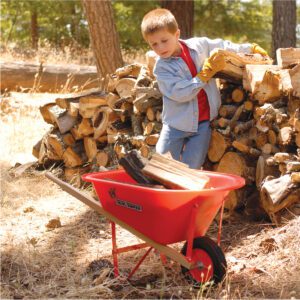
Lil’ True Temper Wheelbarrow
A child-sized wheelbarrow allows heavy work in the garden to involve the whole family.
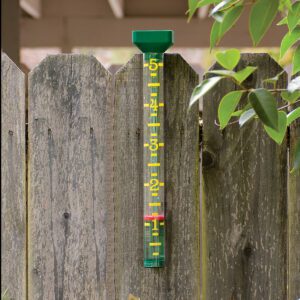
EZ Read Rain Gauge
How much has it rained? Keeping track of the rain on this easy-to-read gauge encourages exploration of measurement and record-keeping.
The Fruits We Eat and
The Vegetables We Eat
These books by Gail Gibbons share information about how fruits and vegetables grow, where they grow, and what we eat from the plants.

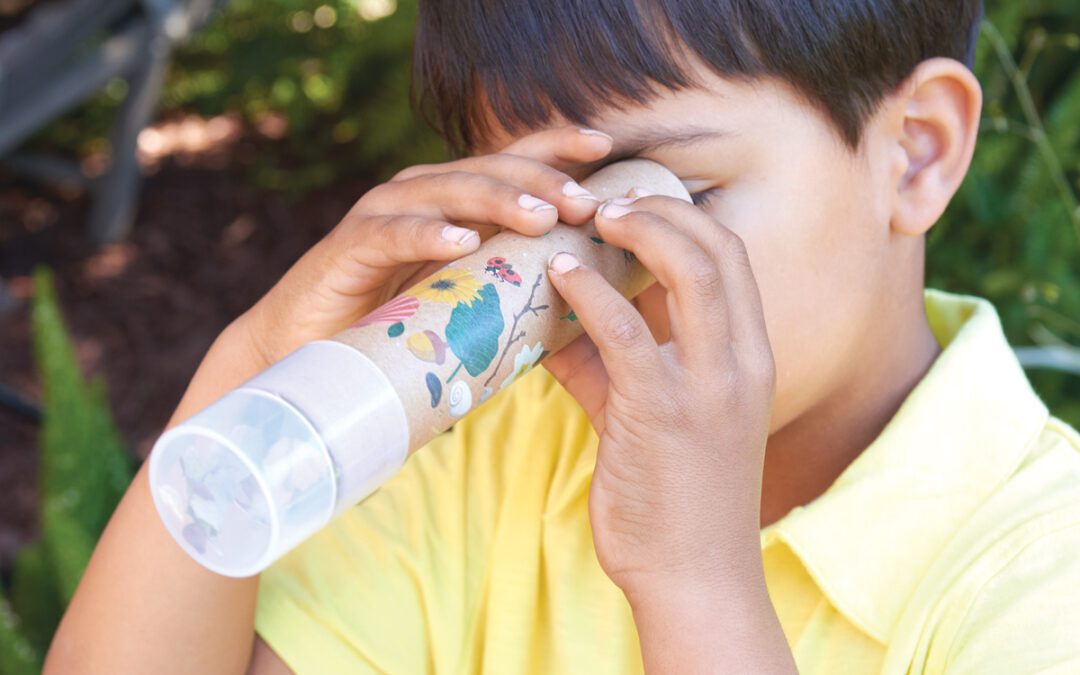
Nature Kaleidoscope
Place small items in the specially designed cup of this kaleidoscope and view the art you create.

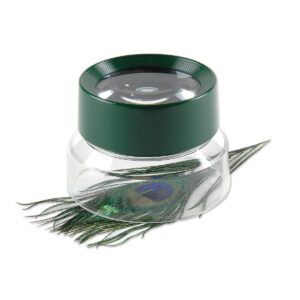
BugLoupe
Get a close-up look at bugs (or plants or rocks) without touching them. This magnifier is easy for even young children to use.
Sunprint Kit
Arrange objects on this specially treated paper, set it in the sun, rinse, and you have a piece of art.

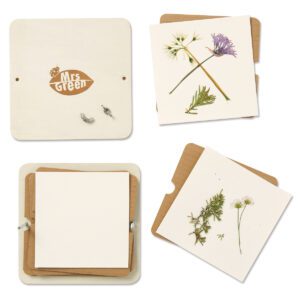
Leaf and Flower Press With Carrying Strap
This press can go on hikes with you to preserve pieces of nature you find along the way.
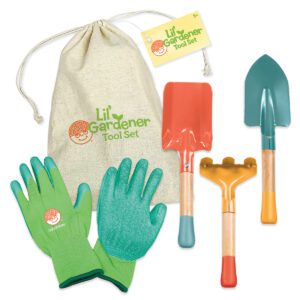
Lil’ Gardener Tool Kit
This kit includes child-sized gloves and three hand tools perfect for turning soil and digging holes.

Cheryl Allen is the Director of Parent Education for the Montessori Family Alliance and is also a parenting educator and a Montessori consultant with the Montessori Foundation. After some time as a traditional secondary teacher, she worked in Montessori classrooms, earning certifications from both AMS (3-6 and 6-9) and IMC (6-12). She is a teacher educator, workshop presenter, and member of IMC accreditation teams.

End of School Year Transitions
To continue reading, you will need to choose a subscription plan.

Part 2: Supporting Our Parenting Partners Differences in Parenting Approaches
To continue reading, you will need to choose a subscription plan.

Making Lunch
One of the most challenging parts of having children in school is making lunches. With some guidance, children can make their own lunch. It then becomes a win/win situation. You do not need to make lunch daily, your child gets to practice practical life skills, and your children are more likely to eat their lunches. As with all new skills, it may take more time initially, yet the work and time will benefit both of you for years to come.
How can a young child prepare their lunch each day? Preparation of the environment, the necessary tools, and a lesson will all be necessary.
Preparing the Environment:
• Make appropriate food for lunches available at child height. This may mean reserving space on a low cabinet and low shelf in the refrigerator for lunch materials. At our house, we used colored baskets in the cabinet and refrigerator to quickly designate which items were for lunches.
• If needed, divide the food into servings before lunches are made. Your child can help you do this after school or over the weekend. If five baby carrots are an appropriate serving for your child, make a few bags with five carrots in each.
• Make sure your child can open and close any containers used and manage their lunch box.
• Consider when lunch should be prepared. If your child has trouble getting out of the house in the morning, make lunch the night before and store it in the refrigerator if needed. If your child is usually ready early, the morning is a great time for this job.
The Necessary Tools:
• Have utensils your child can use to make lunch, such as: a knife for spreading and cutting; a cutting board; containers that your children can open and close; and lunch boxes that allow them to pack easily.
• A list of ideas in written or picture form may be helpful for your child.
• Decide what you expect for lunch. What constitutes a main meal? What is a snack? Do you have a guideline of how many fruits or vegetables need to be included?
A Lesson or a few lessons):
• Discuss the plan with your child.
• Show where the tools and materials for making lunch are.
• Talk about what should be included in lunch and why, i.e., you need energy for growth and your day; these foods are not allowed at school for allergy or other health reasons; these items do not transport well. Share the reason for the guidelines.
• Work with your child the first few times and discuss what you are doing and checking: e.g., “I don’t see any fruit in here. Would you like to add a fruit or another vegetable?”
• Show your child how to clean out their lunch box at home before just adding to it.
Follow Up:
• Peek inside the lunches that are going to school. Do they meet nutritional needs as you expect?
• Discuss options and ideas with your child before grocery shopping.
• If you have leftovers from dinner, ask if your child would like some for lunch and plan together how to make that work.
• Let your child’s teacher know that your family is making this change. Your child may be pleased and possibly even distracted by the lunch they made at first, so letting the teacher know means they can help with these changes.
Enjoy the small break this gives you and the independence it gives your child.

Cheryl Allen is the Associate Coordinator of the Montessori Family Alliance and is also a parenting educator and a Montessori consultant with the Montessori Foundation. Cheryl attended Montessori school as a child. After sometime as a traditional Secondary teacher, she worked in Montessori classrooms, 3-6, 6-9,and 9-12, earning certifications from both AMS (3-6 and 6-9) and IMC (6-12). She is a teacher educator, workshop presenter, and member of IMC accreditation teams. Cheryl’s two children attended Montessori from age two through high school graduation.
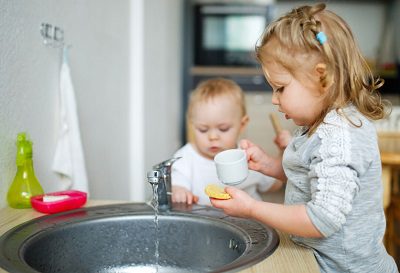
TENDING TO GRACE & COURTESY
),

Grace and courtesy is often used to mean either rules or manners, or mannerly following of the rules. There are many lists out there about the grace and courtesy lessons that should be presented in the beginning of the year, making it seem to be a “one and remind” lesson. Yet, with not much thought we can see that grace and courtesy lessons need to be given throughout the year, need to be role modeled always, are presented based on observation, and fall into different categories. Dr. Montessori reminded us that, “social grace, inner discipline, and joy. These are the birthright of the human being who has been allowed to develop essential human qualities.” The Secret of Childhood (1966, xvii).
To help our students and our children develop the inner-discipline Dr. Montessori spoke of, grace and courtesy lessons need to be given throughout the year and in a multitude of ways. We start the year with a list of basic lessons, which need to be presented so that we may function as a group, and we present them again when there is going to be a change. In the beginning of the year, we present how to knock on the door and wait for an answer if the bathroom door is closed; this helps the class or family function with greater comfort. If we are going to see a live performance, a series of lessons would be given on entering the performance area, showing respect during a performance, and how to show your appreciation of the performance. What is sometimes forgotten is that in between these events, we should be regularly presenting lessons that build upon those we previously presented.
When a child pulls a third chair up to a two-person table to work with one friend, and the third child complains, you have the perfect opportunity for a grace and courtesy lesson rather than a reminder. It is easy to say, “Chair Mover, do we move a new chair for a table in this class?” A new lesson involves working with the left-out child. Starting with an acknowledgement, “I see it bothers you that Chair Mover is working at the table. What is happening?” When the child tells you the others are talking too much, or taking up the workspace, or simply that the chair doesn’t belong there, you may help them figure out how to speak to the other students. Asking, “What could you say to them to let them know how you feel?” You can help the child figure out a courteous way to ask the other children to help solve the concern. Admittedly, this is the slow way it would be faster to remind Chair Mover that this is a two-person table. Pressing our own personal pause button can help us slow down and take the long view when opportunities to present grace and courtesy lessons occur. With a reminder, the table is back to two people with everyone having space for their work. With a grace and courtesy lesson and practice opportunity, a child has practiced a way to respectfully speak up about a perceived injustice, and two children have learned to work with another to solve a concern that one of the three people feels is important.
Grace and courtesy needs to be role modeled by the adults in the school or home for it to become important to all the people involved. Before I had children of my own, I had friends that were interviewing to enroll their son in the only Montessori school on the island we all lived on. They rode their bikes to the interview and a car came close to my friend’s bike, while his son was on the back of the bike. Obviously, he was scared and angry, and he shared this with the driver, calling him some choice names. They got to the interview, and you can guess what the child shared when the Montessorian asked him what he saw on the way to the school. She was just trying to engage the child; instead, she got to present a grace and courtesy lesson. She asked Dad if he had been scared and angry and hinted to him to apologize for his outburst. Dad did and the child learned that they could all learn from mistakes. Being a role model does mean that we consider not sitting on tables or walking around eating unless this is common practice for all in the room; more importantly, it means taking the time to acknowledge actions that we did not want to role model and to change that behavior.
GRACE AND COURTESY DO NOT END AT THE CLASSROOM, OR SCHOOL DOOR, IT SHOULD BE A PART OF OUR LIVES IN ALL AREAS.
All grace and courtesy lessons should be presented from observation. Sometimes it is developmental, such as our beginning the year whole class grace and courtesy lessons, sometimes they are based on “in-the-moment” needs, and they should also be based on whole-group observation. My teaching partner and I gave a couple of well-received individual grace and courtesy lessons around speaking in a way that respects classmates’ feelings. Yet, as we observed the class and discussed with each other, we noticed that teasing that one person thought was fun and acceptable, was happening regularly throughout the classroom. In more casual conversation with students, rather than formal lessons, we began to talk about the way we talk to others. In our weekly group team-building time, we played some games and did some projects that brought attention to the way our words could help or hurt another person, with or without us meaning the hurt. The multi-pronged approach helped us, as a class, find a balance between joking and inadvertent hurting; yet, without observation for grace and courtesy skills we would have been managing one person at a time, probably never reaching the same balance.

Grace and courtesy are so much more than a set of rules and the manners we demonstrate when we follow those guidelines. It is noticing and caring for the environment, which is one of the first places students can begin to see how their actions affect others. It is helping children become aware of how they are feeling, what is going on inside them and developing language to express these feelings. It is working to develop social awareness, thinking about how your actions affect others and the environment around you, and finding the willingness to give grace to others when their actions affect you negatively. It is using kind and respectful language to express your own feelings and needs to communicate with others. It is bringing the grace of physical action to awareness, how one’s actions affect themselves, others, and the environment. It is being aware of those who may need you to be an advocate or help them take action, in your immediate community and the community at large.
Grace and courtesy do not end at the classroom or school door; it should be a part of our lives in all areas. At home, my time has been allocated differently in the past couple of years. One thing I have been able to do is tend to the roses in my garden with more regularity. I do not trim them, water them, or fertilize them for a greater length of time than I did previously. I just have smaller amounts of time to spend on them more often. Grace and courtesy in the school, classroom, or home works the same way. You don’t need more time over the year, you just need to be more consistent with your time. My roses bloom much more often than they did a couple of years ago, there is nearly always at least one rose in bloom, which I love to see as I walk out the door. With regular attention to grace and courtesy, you will probably find at least one bloom of kindness and consideration every day, most likely a whole bouquet’s worth. •

Cheryl Allen is the Associate Coordinator of the Montessori Family Alliance and is also a parenting educator and a Montessori consultant with the Montessori Foundation. Cheryl attended Montessori school as a child. After some time as a traditional Secondary teacher, she worked in Montessori classrooms, 3-6, 6-9, and 9-12, earning certifications from both AMS (3-6 and 6-9) and IMC (6-12). She is a teacher educator, workshop presenter, and member of IMC accreditation teams. Cheryl’s two children attended Montessori from age two through high school graduation.

Advice: Tears At Pickup
Your day can be ruined when your child tells you that something upsetting happened at school. Maybe a friend wouldn’t play with your child, or a classmate called your child a name, or any number of possible scenarios. The first thing your gut tells you to do is immediately call and complain to someone. The first thing we should do is pause. This is a time to listen and ask questions, not to solve the problem.
First, ask your child to tell you more. “Tell me more about that”, is encouraging in so many situations and perfect when dealing with an upset. Ask about their feelings, then ask how they think the other child may be feeling. You may even want to ask them, what they would have liked to have happened. Pause before you reach out to other adults or try to solve the problem for your child.
Statements and Questions to find out more about an upset:
“Tell me more about that.”
“What was happening before (problem)?”
“How did it make you feel?”
“How do you think (other person) felt?”
“What do you think (other person) is saying about this?”
“If you could have a do-over, what would you do differently?”
If you do need to contact an adult at the school, begin with the guide who was in the space. Through the appropriate communication channels for your school, let the guide know that your child was upset and your child’s version of the event. Be open to the fact that you are hearing only one angle, and work in partnership with your school if you need to provide any assistance in finding a solution.
One time, my older child came to me and said, “T pushed me!” When we asked her about it, she said she did push him. When we began to work with her to think of another way she could have managed rather than pushing, she responded, “Tell him not to jump on my foot.” We realized we had not filled up on what happened before she pushed. So, we received honest but incomplete information from our son. The real help they needed was discussing a different concern that led to standing on a foot and pushing him off. I needed to ask, “Tell me more about that.” •
Cheryl Allen is the Associate Coordinator of the Montessori Family Alliance and is also a parenting educator and a Montessori consultant with the Montessori Foundation.
Cheryl attended Montessori school as a child. After some time as a traditional Secondary teacher, she worked in Montessori classrooms, 3-6, 6-9, and 9-12, earning certifications from both AMS (3-6 and 6-9) and IMC (6- 12). She is a teacher educator, workshop presenter, and member of IMC accreditation teams. Cheryl’s two children attended Montessori from age two through high school graduation.
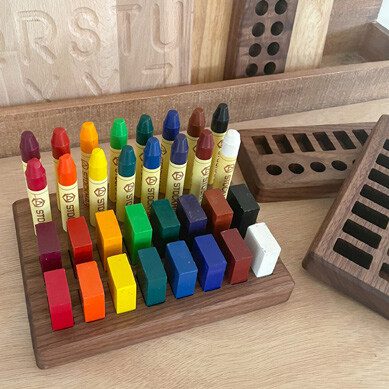
Some Of Our Favorite Supplies For An Art Area In Your Home
“As well as being part of our history and a way of understanding other people’s experiences, art is also a form of personal expression, like poetry, song, dance, and telling stories. It is a form of human connection that can evoke feelings, thoughts, and hopefully appreciation and understanding. Montessori encourages families to expose children to as many forms of art as possible. Encouraging your child’s interest in art and giving them room to be creative provides them with experiences that will endure.” — Excerpt from Montessori for Every Family by Lorna McGrath & Tim Seldin
The new book, Montessori For Every Family: A practical parenting guide to living, loving, and learning, by Lorna McGrath and Tim Seldin, shares some ways to encourage an enjoyment of art and to set up a space to create. We have searched out materials to help you set up an inviting art space in your home.
A child-sized wooden table can be your art area for years. Look for a sturdy table and chairs that fit under the table. If you do not have space for a separate art table, consider a coffee table with storage nearby.
Pictures by different artists can be chosen by you or your child if you visit an art museum, or ordered from art.com. Also consider a piece of wood with clips attached and a variety of postcards for a changing display.
You may want a paper roll so you can create different sized pieces of paper.
The MÅLA


Paper roll holder with storage is a good choice. It is available from several vendors, including Amazon. Here is a link to one from IKEA: tinyurl.com/ mrxfc27e
MÅLA Apron


Keeping clothes neat during art exploration is difficult for some of us, so a smock can be a beneficial part of any art set up. tinyurl.com/2zzsetah
Stockmar Beeswax Crayons


Beeswax crayons allow for layering of colors and draw smoothly. They also last longer than traditional crayons. tinyurl.com/289usjem
Eco Finger Paint


Changing out art materials for different ages can help keep their interest up. Young children enjoy the opportunity to finger paint; this finger paint is made with food-grade materials, so you do not need to worry too much when painty fingers go into mouths. ecokidsusa.com/ eco-finger-paint/
Watercolor Pencils


Older children may like the many different ways to draw with watercolor pencils. tinyurl.com/2p9a6d5n
Add a pad of watercolor paper. ecokidsusa.com/eco-art-pad-1

Watercolors


This all-natural, set of opaque watercolors has magnetic pots of color, so just a few can be used at a time. tinyurl.com/3ruhf9yu
Honeysticks


For younger children, who may even like to taste their paints, Honeysticks is a set made from food-grade ingredients. tinyurl.com/bdfjy9w9
Beeswax or Soft Dough


Younger children may find beeswax or soft dough easiest to use. Stockmar modeling beeswax warms up in your hands and smells delicious. tinyurl.com/mws8axc3


Soft play dough can be reused again and again. tinyurl.com/2p9zy89v
Include a container or two, to collect items for collage and sculpture making. Egg cartons, confetti, rubber bands, pom poms, whatever could be reused and is appropriate for their use, can go in the containers for building and creating. Be creative, and follow your child’s interests. Have fun with these ideas and supplies, and add your own art area in your home.

Parenting in the Digital Age
To continue reading, you will need to choose a subscription plan.

Travel With Teens
To continue reading, you will need to choose a subscription plan.
Practical Life in Elementary and Beyond!
To continue reading, you will need to choose a subscription plan.
Practical Life for Elementary and Beyond
To continue reading, you will need to choose a subscription plan.
Featured
-
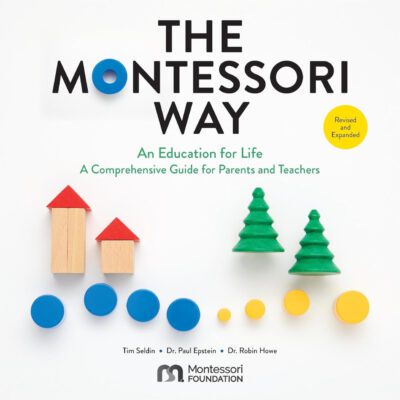
The Montessori Way, Revised and Expanded: An Education for Life; A Comprehensive Guide for Parents and Teachers
$25.00
-
The Montessori Child: A Parent's Guide to Raising Capable Children with Creative Minds and Compassionate Hearts (The Parents' Guide to Montessori)
$20.00
-
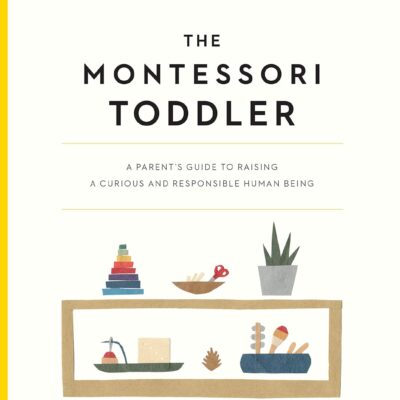
The Montessori Toddler: A Parent's Guide to Raising a Curious and Responsible Human Being (The Parents' Guide to Montessori)
$20.00
-
Montessori in Action: Building Resilient Montessori Schools 1st Edition
$29.95
-
Bulk Order, 30 Copies of Montessori for Every Family: A Practical Parenting Guide To Living, Loving, And Learning
Original price was: $600.00.$510.00Current price is: $510.00.


Products
-
The Montessori Way, Revised and Expanded: An Education for Life; A Comprehensive Guide for Parents and Teachers
$25.00
-
The Montessori Child: A Parent's Guide to Raising Capable Children with Creative Minds and Compassionate Hearts (The Parents' Guide to Montessori)
$20.00
-
The Montessori Toddler: A Parent's Guide to Raising a Curious and Responsible Human Being (The Parents' Guide to Montessori)
$20.00
-
Montessori in Action: Building Resilient Montessori Schools 1st Edition
$29.95
-
Bulk Order, 30 Copies of Montessori for Every Family: A Practical Parenting Guide To Living, Loving, And Learning
Original price was: $600.00.$510.00Current price is: $510.00.