WE ARE THINKING ABOUT THE UPCOMING HOLIDAYS AND HOW AND WHEN TO BRING OUR CHILD INTO OUR FAMILY’S TRADITIONS. SOMETIMES, IT FEELS TOTALLY OVERWHELMING, AND MAYBE IT IS JUST TOO SOON TO THINK ABOUT IT AT ALL. WHEN IS THE RIGHT TIME TO BEGIN, AND WHAT KINDS OF ACTIVITIES SHOULD WE BE THINKING ABOUT?
— A YOUNG FAMILY
Dear Young Family,
It is never too soon to begin creating intentional traditions or just living and sharing the seasons and the holidays and letting your repeated experiences grow into family traditions. The truth is, often, anything a family does twice is considered to be a tradition by children. As you enjoy celebrating the changing seasons or the holidays, it is natural to want to share that with your children and involve them in your joy. Your enthusiasm will be contagious, whether picking apples, carving pumpkins, planning Thanksgiving meals, putting out decorations, going to an Autumn fest, or walking in nature to appreciate the colorful leaves or flowers. Sharing them with young children sets the stage for future experiences — building memories extending into middle childhood, adolescence, and beyond. Shared experiences make strong families. And children will look forward to traditions.
Aim for yearly traditions spanning each season of the year. Traditions can revolve around nature, planting and harvesting, food and food preparation, and trips to the zoo, park, pumpkin patch, nature trails, or farmer’s market. They can also involve preparation of the home, such as decorating for a season, weeding out your clothes or toys as the children grow, or sharing sports experiences, either as spectators or as participants: skiing, snowboarding, skating, hiking, beach time, etc. Philanthropic projects can also be a part of holiday traditions that can grow with the family as the children’s ability to participate increases.
Any type or level of holiday tradition should be upbeat and fun; these activities will help build a strong family. Enjoy any holidays you may celebrate, especially the time you spend with each other.
Cathie Perolman is a reading specialist, Elementary educator, author, consultant, and creator of educational materials for Primary and Elementary students. Check out her new downloadable materials on her website cathieperolman.com.
For more than three decades, she has dedicated her energies to improving reading for all youngsters. She is the author of Practical Special Needs for the Montessori Method: A Handbook for 3-6 Teachers and Homeschoolers published by the Montessori Foundation (available through montessori.org.) She is a regular contributor to Tomorrow’s Child and Montessori Leadership magazines.
Cathie holds a BS in Early Childhood Education and a MEd in Elementary Education, with a concentration in reading. She is credentialed as a Montessori teacher. She is married and has two adult children and two adorable granddaughters.
Illustrated by Alishs Nicole Brumfield, Brenda Brambila, Esma Bošnjaković, Samantha Morales-Johnson, Sophia Marie Pappas, Tracy Nishimura Bishop, and Chie Ushio
During the years that I have been studying the Montessori Method and philosophy, I have read, literally, hundreds of books written by Montessorians, as well as many experts from others in the field of child and adolescent development. Most recently, my focus has been on supporting families, and many good books are out now for parents. This one gets a gold star from me!
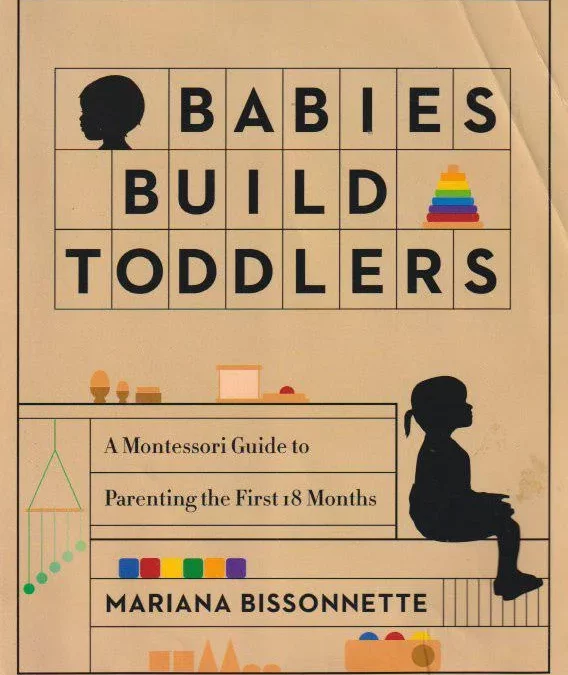
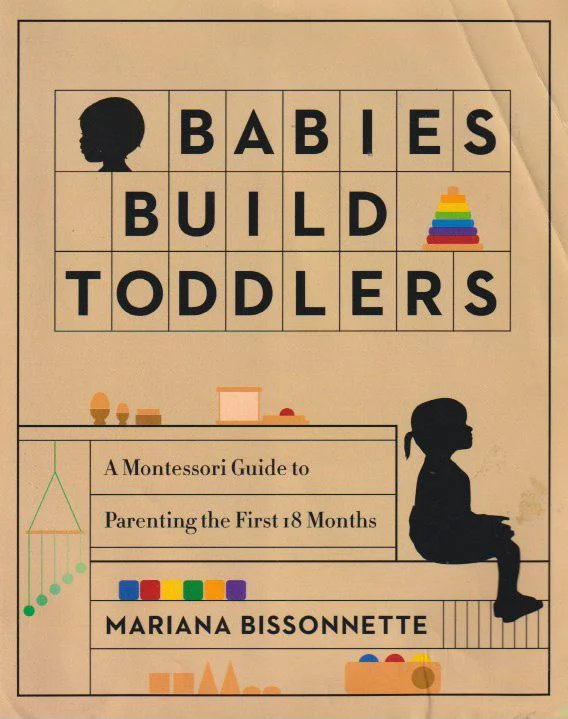
Babies Build Toddlers is written to support families of infants through 18 months old. Mariana Bissonnette brilliantly gives readers enough information about child development so that, when they are done, they actually feel secure in their knowledge of infant development and their capability to do the right things for their baby instead of being overwhelmed by too much and, frankly, too technical information.
The author uses a plant analogy to describe how the baby builds the toddler. It’s beautifully simple and sensible! And she has a wonderful sense of humor. You may notice that there is quite a list of illustrators for Bissonnette’s book. Nicely done! The illustrations are fun, colorful, multicultural, multiracial, and multigender. There is no one kind of family.
There are five parts:
The Plant (the toddler) This part explains who the toddler is.
The Roots (infant development) Here, the reader learns the critical areas of development for infants.
The Conditions (the physical and emotional environment) Now the reader learns what infants need to do in their home to develop to their full potential.
The Gardener (the adult’s role) Finally, the reader discovers how to best support their baby during these most important months of life.
The Full Chart (a timeline for your baby’s growth) The reader gets here, and they know they’re ready!
The author is a Montessorian. The values that we hold dear are all in here: respect; dignity; practice informed by observation; empathy; recognition of potential; independence; order; peaceful interactions; and more.
You can purchase this book (new or used) at most book distributors.
Just Ask … Be Different, Be Brave, Be You
Written by Sonia Sotomayor, US Supreme Court Justice
Illustrated by Rafael López
In this book, a group of children go together to a garden. They decide where to plant flowers, water trees, and enjoy the day together. As each child in the book introduces themselves, we learn that each child is “differently abled.” Some of them take medicine to keep healthy, and some use special tools to get around and learn or act differently than most children do.
The author suggests that, like only having one kind of plant, the world would be quite uninteresting, if all humans were the same. She also lets the readers know that it’s okay to ask about differences so we can better understand each other’s unique qualities and circumstances. The illustrations are done in lovely colors and give quite a realistic view of each of the children in the book.
Children 4-8 years old would enjoy this book.
Nell Plants A Tree
Written by Anne Wynter
Illustrated by Daniel Miyares
Wow! This one is a powerful, well-written, and beautifully illustrated book about a young girl named Nell who plants a seed. The steps from finding a seed to every step along the way to a fully grown tree producing its own pecans are laid out in a lovely and rhythmic story of then and now. It swings gently back and forth through time as the tree and the humans grow and change together over the years.
There is so much to explore about the growth and development of a tree in this story, especially the love, care, and attention it takes for it to thrive. How humans interact with this gift from nature becomes a truly heartwarming story. The memories that everyone makes in and around this tree will never be forgotten. Then, at the end, we come full circle as a new child finds a seed and asks Gramma Nell what to do with it. And, so, it starts again — the wonderful circle of life!
You Hold Me Up
Written by Monique Gray Smith and Danielle Daniel
This book demonstrates what it means to honor and support families, friends, and cultures using both text and illustrations. It is quite beautifully written as well as pictured. Though we cannot change horrific events that occurred in the past, we can change how we treat each other now. We can better understand each other, empathize with each other, and respectfully embrace each other.
Human history is not always a pretty sight; we need to study and learn from it honestly. Depending on the age and maturity of the child or children in your care, the material in this book can be simply read as a story of friends and family with a young audience. With a more mature audience, it could include the history that the author referred to in the back of the book. It can be presented in different ways to children from 3-10 years old.
The Colors of Us
Written by Karen Katz
This is a story about a mom helping her daughter, Lena, to develop an awareness of the many shades of colors that people have. Mom wants her daughter to recognize that skin color varies greatly. Then, when she paints people’s pictures, the colors will be uniquely theirs. They describe the colors by likening them to yummy things to eat, like honey or chocolate cupcakes, and to things found in nature, like autumn leaves or precious metals. At the end of the day, Lena realized that she needed to mix several colors together to create just the right one for each of her friends. The illustrations are bright and full of color, as you expect! Children from 4-8 years old would enjoy this book.
The Mighty Solar Panel — Because Nothing’s More Powerful than a Sunny Day!
Written by Daniel Jarrett
This is an interesting book published by an Australian solar company. The author tells the story of what solar panels are, how they collect energy, how excess energy is sent to storage plants, and the value of using solar power rather than fossil fuels.
The illustrations are colorful and lively. The Sun is the narrator and tells the boy the story. It would be interesting for children ages 5-9 years old.
The Shortest Day: Celebrating The Winter Solstice
Written by Wendy Pfeffer
Illustrated by Jesse Reisch
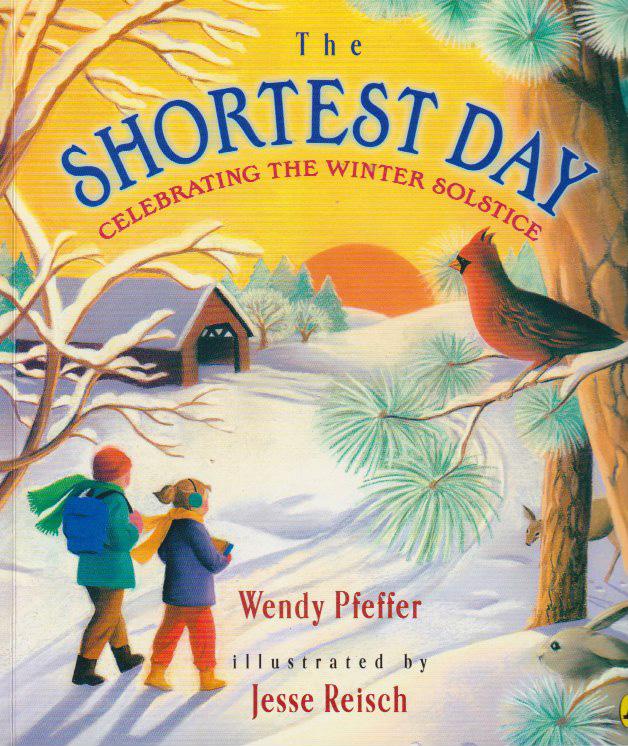
Gorgeous, realistic illustrations! This paperback book beautifully shows the changes that the planet and living creatures go through as they prepare for the change in season. It is based in the northern hemisphere. The author explains in a clear and uncomplicated way what happens as the Earth revolves around the Sun.
You can also show your child how this works with a flashlight and a globe. See the back of the book for details.
Then, the author tells the story of how people felt when the seasons changed and what they learned about the Earth, the Sun, and the seasons. She tells what humans began to do to celebrate these changes in the year. The celebrations became yearly traditions, differing from place to place and according to human beliefs.
There are several pages of information and activities at the end of the book: an illustration of the Earth’s rotation; a sunrise/sunset chart; measuring shadows; northern and southernmost points during the year; the tilt of the Earth activity; a cupcake recipe; and a guide for creating a pinecone feeder for the birds.
This book is done quite well for children 5-8 years old. It is beautiful, encourages wonder and awe, and provides activities for families to do together.
Calling all teachers, parents, & children! We would love to publish reviews of your favorite books. Send book reviews to Lorna at: lornamcgraph@montessori.org
“We shall walk together on this path of life, for all things are part of the universe and are connected with each other to form one whole unity.”
— Maria Montessori, To Educate the Human Potential
One of my first experiences in Montessori pre-school was following my lead teacher and classmate to learn a long and lyrically complex chant about the three bears. And I found it wondrous how much three- and four-year-olds can learn and remember. Songs blend language and math, tune ears to listen to and be able to repeat sounds and strengthen memory. Singing together joins the individual to a group, yet never loses one’s individuality.
I make up songs and have done so since I was ten or eleven. I ‘taught’ pre-school as a Montessori guide for 24 years. We sang the The Alphabet Song backward: z,y,x,w,v,u,t. We clapped our hands and feet, clicked claves*, and shook shakers we made from paper towel rolls affixed with jingle bells. We sang, “Please, please, push in your chairs. (Fish can’t do it, and neither will bears).” Chairs were pushed in, and it was fun.
*A clave is one of a pair of cylindrical hardwood sticks that are used as a percussion instrument.
Scan the code to learn more about Walking Man Music or Click here
Toys play an essential role in the developmental journey of children, particularly during the critical years between ages 1 and 2. These formative years are a period of rapid growth and exploration, where toys become tools for learning and discovery. Specifically designed to stimulate creativity, enhance cognitive abilities, and promote physical dexterity, toys for this age group are crucial in nurturing various developmental aspects. From timeless classics to innovative designs, the diverse selection of toys available for children aged 1 to 2 creates an enriching environment that fosters holistic growth and joyful exploration.
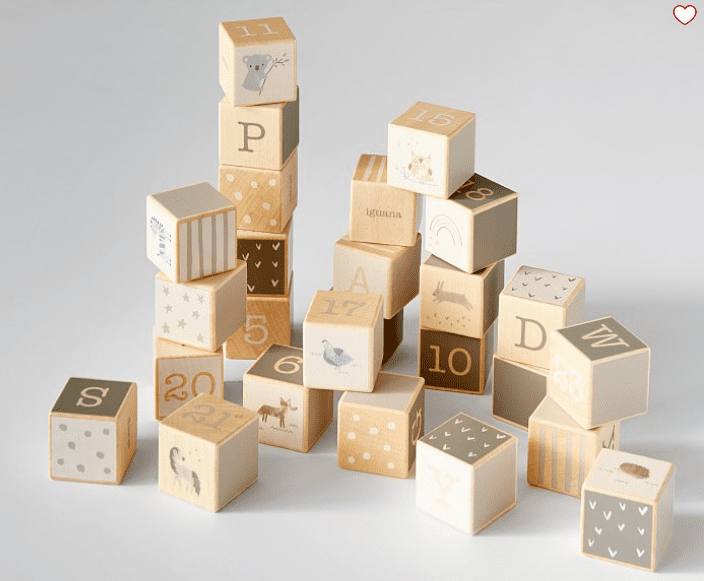
A timeless addition to any nursery, fostering endless creativity and imaginative play for little ones. These blocks in soothing neutral hues offer both entertainment and developmental benefits, encouraging cognitive skills and fine motor development through hours of engaging play.
This engaging toy features colorful balls that roll, drop, and slide, aiding in the development of coordination and motor skills. Recommended for ages 12 months and up, fostering interactive and safe play.
A delightful toy encouraging hand-eye coordination as children hammer balls into the box, delighting in the rolling fun. Plan Toys® pioneers sustainability, crafting toys from reclaimed rubberwood, offering a more eco-conscious approach to playtime. Enjoy interactive play and skill development while supporting a greener future with this innovative and entertaining toy.
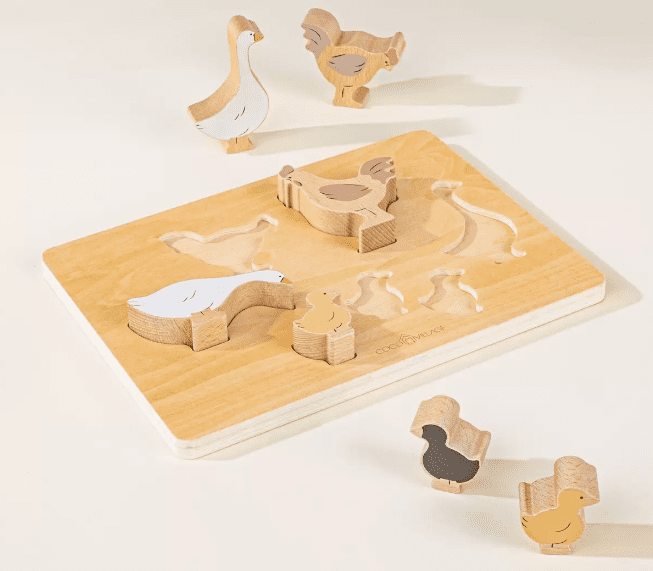
This toy fosters hand-eye coordination and gross motor skills. These easy-to-handle animals inspire imaginative adventures and are conveniently stored on a practical wooden plate after play.
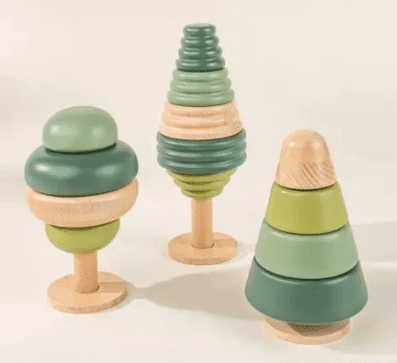
This is a delightful toy that encourages motor skills in children aged 18+ months. Crafted from wood and plywood with an exclusive design, it doubles as a charming room decor piece.
The Rocker Climber is a versatile playroom essential designed for children to explore their physical abilities and boundaries. Crafted from solid birch and birch plywood, it offers a non-slip surface, 11 grabbable bars, and 4 handles for easy mobility. This Climber Collection piece supports motor skills, encourages independent play, and promotes cognitive development, catering to various developmental stages and providing diverse play opportunities.
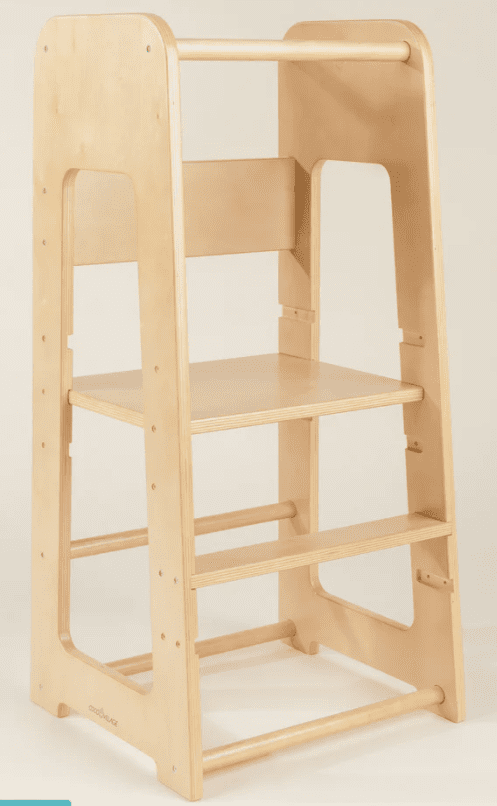
An Education Tower supports toddler independence in daily tasks with sturdy birch wood construction and adjustable features. It ensures safety and stability while promoting learning and motor skills development. This tower enables children to participate in various activities, granting parents more mobility and bonding moments during shared experiences.
Kim, along with her husband Dave, have been Montessori advocates and parents for the better part of 15 years now. Their oldest son went off to college this fall and they still have three sons at home. Communication is a key element in their family life for making things work. Join us as Kim shares some of the things she has learned over her years as the parent of four growing boys.
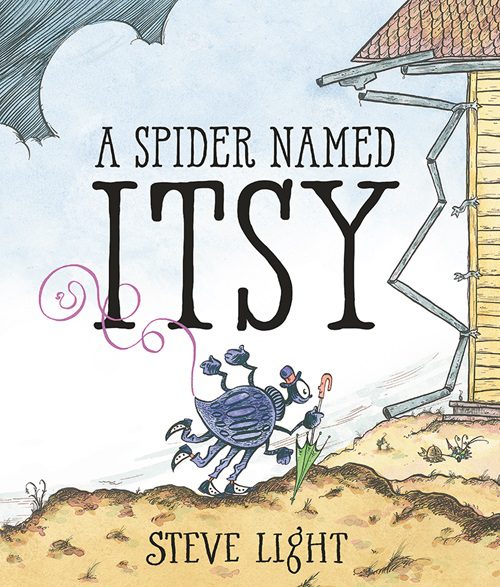
This book brings new light to the children’s song about an itsy-bitsy spider! The illustrations are action packed, the spider is persistent, and in the process Itsy not only builds a new house but makes new friends as well. The words to the song are written out at the end of the book. Fun to read, fun to sing, and fun to imagine! I would recommend this book for children 2 to 7 years old.
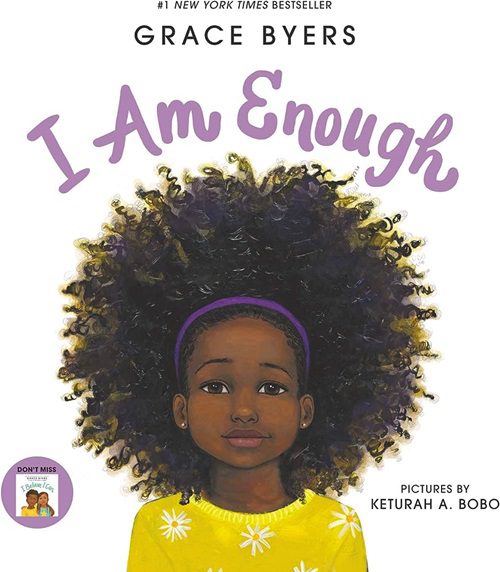
Written by Grace Byers, Illustrated by Keturah A. Bobo
I am enough. What does that mean? Enough what?
The author, Grace Byers, describes in rhyme what she means by the title. Young children love rhyming, and they will love the rhythm of the words in this book. It is beautifully illustrated with realistic drawings of girls of all kinds. Yet, it is a book for boys and girls that sends messages about loving oneself, respecting others, and being kind to one another. Highly recommended for children from 3 to 8 years old. It is available from most book sellers.