by Tim Seldin | Free Reads
Since its founding in 1998, the International Montessori Council (IMC) has grown and matured as an international community of Montessori schools, educators, and friends of Montessori. Dues have been consciously kept modest because the IMC is managed by the marvelous staff of the Montessori Foundation, and by conscious efforts to grow slowly and carefully. Today, we offer highly-responsive support to schools and their leaders, weekly professional development, warm and inviting Montessori conferences, cutting-edge Montessori teacher education, and very supportive and practical Montessori school accreditation. Many of us gathered together in 1998 to envision and establish the IMC, but I have widely been seen as its public face. In recognition of our expanding role and our commitment to our council’s future, the IMC Board and I are pleased to announce the appointment of Kathy Leitch as our new Executive Director. I will continue as Chair, and the Montessori Foundation and IMC will continue our work together, but Kathy’s appointment is an important milestone. We have done so much together already, but the best is yet to come.
—Tim Seldin, Chair of the IMC Board
Dear IMC Members,
I am honored to begin a new journey as Executive Director of the International Montessori Council (IMC). I believe my entire career in Montessori has led me to this exciting opportunity, my cosmic task. I have had the good fortune of serving the IMC for the past twenty years as a school member, board member, and accreditation commissioner. My experience as a toddler and primary guide, founding head of school, teacher trainer, school consultant, international presenter, and accreditation verifier has prepared me to accept this position with enthusiasm and provided me perspective, insight, understanding, and appreciation of this organization and our members. It is my firm belief that the calling of our work is rooted in the development of our individual and collective human potential.
With the Montessori community and its many diverse organizations coming together, collaborating, and finding common ground as never before, we are at a crossroads. This provides a call to action with unique opportunities to impact the quantity and quality of Montessori programs worldwide.
Those who know me well have called me a bridge builder and steadfast advocate for the respectful appreciation of diverse views and practices, a viewpoint I carry with me into this new position. As I look forward, I am ready to advance IMC’s contributions which include our Peace Academy, affordable and accessible leadership development, school accreditation, teacher training programs, a generous resource library, and our international chapters. I will be working closely with our board and membership to further the vision and mission: to nurture, connect, and inspire the global Montessori community.
My passion, experience, and diverse skills will support the board in setting the course for the future of the International Montessori Council. I intend to lead by listening to our members, engaging the Montessori community, and providing opportunities for meaningful service. These intentions will be realized by establishing monthly “virtual” community meetings, visiting schools and teacher training programs, and broadening our member-to-member support network.
During the next few weeks, I will be reaching out in multiple ways to garner your feedback as to how best to serve you and your organization. I look forward to hearing from you and working together for a bright and promising future for current and potential members, serving children, schools, and families.
Thank you for your support and trust.
Sincerely,
M. Kathleen Leitch, Executive Director, IMC
kathyleitch@montessori.org
www.montessori.org. (800) 632-4121
Montessori Leadership / January 2018 / P 19
by Maren Stark Schmidt | Free Reads
Each year, during the start of school, teachers and administrators try to explain to new parents the essence of the term Montessori. In this article, we’ll try to explain what Montessori is and is not, dispelling, we hope, a few misperceptions about Montessori education in the process.
In its simplest form, Montessori is the philosophy of child and human development as presented by Dr. Maria Montessori, an Italian physician who lived from 1870 to 1952.
In the early 1900s, Dr. Montessori built her work with mentally challenged children on the research and studies of Jean Itard (1774-1838), best known for his work with the “Wild Boy of Aveyron” and Edward Seguin (1821-1882), who expanded Itard’s work with deaf children. In 1907, Dr. Montessori began using her teaching materials with normal children in a Rome tenement and discovered what she called “the Secret of Childhood.”
The secret? Children love to be involved in self-directed purposeful activities. When given a prepared environment of meaningful projects, along with the time to do those tasks at his or her own pace, a child will choose to engage in activities that will create learning in personal and powerful ways.
Over the past one hundred years, Montessori classrooms all over the world have proven that, when correctly implemented, Dr. Montessori’s philosophy works for children of all socioeconomic circumstances and all levels of ability. In a properly prepared Montessori classroom, research shows that children learn faster and more easily than in traditional schools.
However, the implementation of Montessori philosophy is a school’s biggest challenge. There are many factors to consider when putting theory into practice: the individual children in the classroom, their ages and emotional well-being; parent support and understanding of Montessori philosophy; and the training and experience of teachers, assistants, and administrators. These are only a few of the elements that create a Montessori school.
Because of this, Montessori schools come in all shapes and sizes, including the small in-home class for a few children to schools with hundreds of students, from newborns through high school.
While schools come in many shapes and sizes, all successful Montessori classrooms require three key elements:
1. Well-trained adults;
2. Specially prepared environments; and
3. Children’s free choice of activity within a three-hour work cycle.
Finding the right school for your family – whether it’s Montessori, public, parochial, alternative, traditional, or home school – requires a bit of investigative work and an understanding of the needs and concerns you have for your family. Being clear about what Montessori education is and what it is not can help you make an informed decision.
In my thirty years in Montessori education – as a parent, school employee, volunteer, trainee, teacher, school founder, and school director – time after time, I’ve come to fresh and deeper understandings of Montessori philosophy and the process of human development and education.
My first encounter with Montessori was less than positive. As a college student, I frequently visited my family after my four younger siblings’ school day had ended. Our family tradition was to have a snack together after school. Friends and neighbors were always welcomed.
The neighbor girls (ages four, five and six) frequently joined the group. They would barge into my parents’ home and head straight for the refrigerator. No knock on the door, no hello. They inhaled huge amounts of food with neither manners nor thanks. Their lack of decorum appalled me.
The neighbor girls’ grandmother chatted with me about how wonderful the girls’ Montessori school was and how much the girls learned there. I attributed the girls’ little savage conduct to their Montessori school. If a school would put up with that kind of behavior, I figured it couldn’t be any good.
A few years passed, and I had children of my own. Our friends and co-workers recommended the local Montessori school to my husband and me. Because of my experiences with the neighbor’s children, I responded negatively to my friends’ suggestions. I began to notice, though, that our friends’ children were well mannered, articulate, and a joy to be around. Hum? So what was up with Montessori?
My mother helped clear up my misperceptions. The neighbor’s girls, even though they lived in an expensive home, were suffering the effects of a newly divorced and stressed mother attending law school. The girls were starved for food, attention, and adult guidance. Their behavior was a reflection, not of their Montessori schooling, but of the turmoil in their home.
This experience showed me that what we may think are the effects, negative or positive, of a Montessori school, may be something quite different.
Let me use my thirty years of Montessori experience to help dispel a few misconceptions about Montessori schools, some of which I’ve held myself.
Myth #1 – Montessori is just for rich kids.
Many Montessori schools in the United States are private schools, begun in the early to mid-1960s, a time when most public education didn’t offer kindergarten and only 5 percent of children went to preschool, compared with the 67 percent reported in the 2000 census.
When many Montessori schools were established, private preschools might have been an option only for those in urban well-to-do areas, thus giving the impression that only wealthy families could afford Montessori schools.The first schools that Montessori established were in the slums of Rome, for children left at home while parents were out working, and certainly not for rich kids.
Today, in the United States, there are over 500 publicly funded Montessori schools, along with thousands of private, not-for-profit Montessori programs that use charitable donations to offer low-cost tuition.
Montessori education, through these low-cost options, is available to families interested in quality education. Many private, high-dollar schools offer scholarships, and some states offer childcare credits and assistance to low-income families.
Myth #2 – Montessori is just for gifted kids.
Montessori is for all children. Since Montessori preschools begin working with three-year-olds in a prepared learning environment, Montessori students learn to read, write, and understand the world around them in ways that they can easily express. To the casual observer, Montessori students may appear advanced for their age, leading to the assumption that the schools cater to gifted children.
In reality, a Montessori school offers children of differing abilities ways to express their unique personalities, through activities using handson materials, language, numbers, art, music, movement, and more. Montessori schooling helps each child develop individuality in a way that accentuates his or her innate intelligence. Montessori schools can help make all kids ‘gifted’ kids.
Myth #3 – Montessori is for learning-disabled children.
It is true that Dr. Montessori began her work with children who were institutionalized, due to physical or mental impairments. When using her methods and materials with normal children, Montessori discovered that children learned more quickly using her teaching methods.
There are some Montessori schools and programs that cater specifically to children who have learning challenges. In many Montessori schools, however, children with special needs are included, when those requirements can be met with existing school resources.
Myth #4 – Montessori is affiliated with the Catholic Church.
Like many preschools, some Montessori programs may be sponsored by a church or synagogue, but most Montessori schools are established as independent entities. Conversely, a school might be housed in a church building and not have any religious affiliation. Since Montessori refers to a philosophy, and not an organization, schools are free to have relationships with other organizations, including churches.
Some of the first Montessori programs were sponsored by Catholic or other religious organizations. Dr. Montessori was Catholic and worked on developing religious, educational, hands-on learning experiences for young children. The Montessori movement, however, has no religious affiliations.
Montessori schools all over the world reflect the specific values and beliefs of the staff members and families that form each school community. Around the world, there are Montessori schools that are part of Christian, Muslim, Jewish, and other religious communities.
Myth # 5 In Montessori classrooms, children run around and do whatever they want.
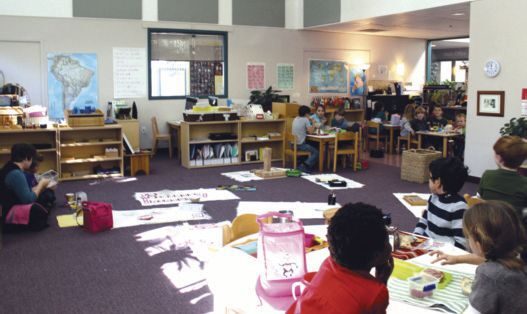
When looking at a Montessori classroom you may see twenty-five or more children involved in individual or small group activities. It is possible that each child will be doing something different. At first glance, a classroom can look like a hive of bumblebees.
If you take the time to follow the activities of two children over the course of a three-hour work period, you should observe a series of self-directed activities. The children aren’t running wild. They are each involved in selfselected work, designed to build concentration and support independent learning.
Choosing what you do is not the same as doing whatever you want. A wellknown anecdote about Montessori students doing what they like, comes from E.M. Standing’s book, Maria Montessori – Her Life and Work: “A rather captious and skeptical visitor to a Montessori class once buttonholed one of the children – a little girl of seven – and asked: ‘Is it true that in this school you are allowed to do anything you like?’ ‘I don’t know about that,’ replied the little maiden cautiously, ‘but I do know that we like what we do!’”
Myth #6 – Montessorians are a selective clique.
One definition of a clique is: an exclusive circle of people with a common purpose. Many Montessori teachers could be accused of this because of their intense desire to be of service in the life of a child, coupled with the teacher’s knowledge of child development. While many schools have tightknit communities, they are not exclusive. You should look for a school where you and your family feel welcomed.
For many years, Montessori training programs were only available in a few larger cities. Becoming certified required prospective teachers to be determined and dedicated, as relocating for a year of study was often required. Now, Montessori teacher training is mainstream and more accessible, with colleges and universities offering graduate programs in Montessori education in conjunction with Montessori training centers.
Dr. Montessori’s books, full of Italian scientific and psychological terminology, translated into the British English of the early 1990s, can be difficult for the modern reader to follow. To parents, the use of Montessori-specific terms and quotes may at times take on esoteric tones of an elusive inner circle.
The enthusiasm and dedication evident in the work of many Montessorians might be misinterpreted as excluding to uninitiated newcomers. My experience with Montessori teachers and administrators has been that they are eager to share their knowledge with others. Just ask!
Myth #7 – Montessori classrooms are too structured.
Parents sometimes see the Montessori concept of work as play as overly structured. The activities in the classroom are referred to as work, and the children are directed to choose their work. However, the children’s work is very satisfying to them, and they make no distinction between work and play. Children almost always find Montessori activities both interesting and fun.
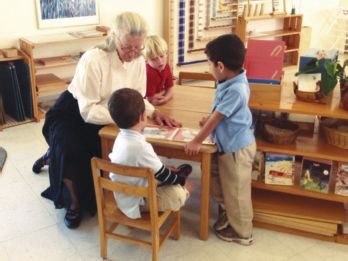
Each Montessori classroom is lined with low shelves filled with materials. The teacher, or guide, shows the children how to use the materials by giving individual lessons. The child is shown a specific way to use the materials but is allowed to explore them by using them in a variety of ways, with the only limitations being that materials may not be abused or used to harm others.
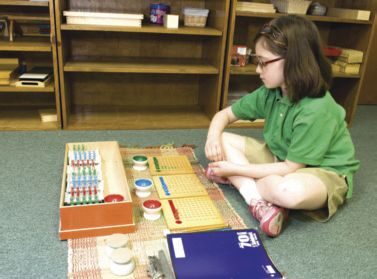
For example, the Red Rods, which are a set of ten painted wooden rods up to a meter long and about an inch thick, are designed to help the child learn to perceive length in 10 centimeter increments. The Red Rods aren’t to be used as Jedi light sabers. Obviously, sword fights with the Red Rods are a danger to other children, as well as damaging to the rods.
In cases where materials are being abused or used in a way that may hurt others, the child is stopped and gently and kindly redirected to other work. Unfortunately, some parents see this limitation on the use of the material as ‘too structured,’ since it may not allow for fantasy play.
Myth #8- A Montessori classroom is too unstructured for my child.
The Montessori classroom is very structured, but that structure is quite different from a traditional preschool. Montessori observed that children naturally tend to use self-selected, purposeful activities to develop themselves. The Montessori classroom, with its prepared activities and trained adults, is structured to promote this natural process of human development.
Students new to the Montessori classroom, who may or may not have been in a traditionally structured school, learn to select their own work and complete it with order, concentration, and attention to detail. Montessorians refer to children, who work in this independent, self-disciplined way as ‘normalized,’ or using the natural and normal tendencies of human development.
Many traditional preschools work on a schedule where the entire classroom is involved in an activity for 15 minutes, then moves on to the next activity. This structure is based on the belief that young children have a short attention span of less than 20 minutes per activity.
“The children of different ages in the school help one another. There is communication and harmony. Older ones become teachers and heroes to the younger children. The little ones sense that when they are bigger their turn will come.” – Maria Montessori
Myth #9 – Montessori schools don’t allow for play.
Montessorians refer to the child’s activities in the classroom as work. The children also refer to what they do in the classroom as their work. When your three-year-old comes home from school talking about the work he did today, he can sound way too serious for a kid you just picked up at preschool.
What adults often forget is that children have a deep desire to contribute meaningfully, which we deny when we regard everything they do as ‘just’ play. With our adult eyes, we can observe the child’s ‘joyful work’ and expressions of deep satisfaction as the child experiences ‘work as play.’
Consider this. You start a new job. You arrive on the first day, full of enthusiasm, and ready to contribute to the success of your work group. You’re met at the door by your new boss and told, “Go outside and play. We’ll let you know when it’s time for lunch and time to go home.” Ouch!
But that’s exactly what we do to our children when we dismiss their desires to contribute to their own well-being and to the common good of home or school. Montessori schools create environments, where children enjoy working on activities with grace and dignity. Montessori children often describe feelings of satisfaction and exhilaration upon completing tasks that we might have considered as only ‘play.’
Myth #10 – Montessori doesn’t allow for creativity.
Creativity means “to bring something into existence.” First we have an idea. Then we use our imagination, thoughts, and skills to bring these ideas into being. The Montessori classroom nourishes the creative skills of writing, drawing, painting, using scissors, modeling clay, gluing, etc. to enable children to express their thoughts and ideas in genuine and unique ways.
When I was in kindergarten, we were all given a coloring sheet of a caboose. I colored my caboose green. My teacher told me that cabooses were red. As I looked around, all the other children’s cabooses were red. My classmates laughed at my green caboose. I felt the tears in my chest.
Twenty-four years later, I saw another green caboose, attached to the end of a Burlington-Northern train. “Yes!” I wanted to shout back to my kindergarten class. “There are green cabooses.”
What does a green caboose have to do with creativity? I wasn’t trying to be creative with my green caboose. I was trying to express myself, because I had seen a green caboose.
Montessori classrooms allow for safe self-expression through art, music, movement, and manipulation of materials and can be one of the most creative and satisfying environments for a child to learn to experiment and express his or her inner-self.
Myth #11 – Kids can’t be kids in Montessori.
Somehow, our expectations as parents, having witnessed temper tantrums in restaurants and stores, create a view of children as naturally loud, prone to violent behavior, disrespectful of others, clumsy, and worse.
In a well-run Montessori classroom, though, one might be tempted to think that kids aren’t being kids. When you see twenty-five to thirty children acting purposefully, walking calmly, talking in low voices to each other, carrying glass objects, reading and working with numbers in the thousands, you might think the only way this behavior can occur is by children being regimented into it. I remember observing Dana (then fifteen-months-old), moving serenely around her infant Montessori classroom. She sure didn’t act that way at home.
As I observed Dana’s infant-toddler class in action, I saw the power of this child-friendly environment. As the children moved from activity to activity, day by day their skills and confidence grew. Lessons in grace and courtesy helped the children with social skills, as please, thank you, and would you please became some of these toddlers’ first words.
When Dana was three, one of her favorite activities was the green bean cutting lesson. After carefully washing her hands, she would take several green beans out of the refrigerator, wash them, cut them into bite-sized pieces with a small knife, and arrange them on a childsized tray. She carried the tray around the classroom, asking her classmates, “Would you like a green bean?” As they looked up from their work, the other children would reply: Yes, please, or No, thank you.
Dana, now an adult, still remembers that work with deep satisfaction. Children show us (when given a prepared environment, a knowledgeable adult, and a three-hour work cycle) that the natural state of the child is to be a happy, considerate, and contented person. A child is most like a child when he or she is engaged in the work of the Montessori classroom.
Myth #12 – If Montessori is so great, why aren’t former students better known?
Most of us associate our career success with our colleges. Not too many people come out and say, “When I was three years old I went to Hometown Montessori School, and that made all the difference.”
Here are a few well-known people who remember their Montessori school connections and consider their experiences there vital.
Julia Child, the cook and writer, who taught Americans to love, prepare and pronounce French dishes, attended Montessori school.
Peter Drucker, the business guru, who has been said to be one of the most important thinkers of the 20th century, was a Montessori student.
Alice Waters, the chef of Chéz Panisse fame and creator of The Edible Schoolyard project, was a Montessori teacher.
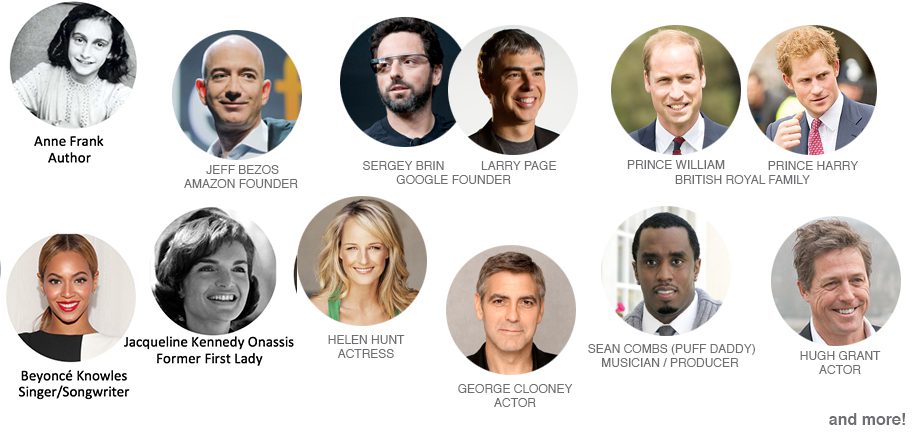
Anne Frank’s famous diary was a natural extension of Anne’s Montessori elementary school experience.
Annie Sullivan, Helen Keller’s teacher, corresponded with Maria Montessori about teaching methods.
Larry Page and Sergei Brin, founders of Google, Jeff Bezos founder of Amazon, and Steve Case of America Online all credit Montessori schooling to their creative success.
Montessori schools are focused on helping children become self-directed individuals, who can, and do, make a difference in their families, in their communities, and in their world – famous or not. And that’s not a myth.
Maren Stark-Schmidt, an award-winning teacher and writer, founded a Montessori school and holds a Masters of Education from Loyola College in Maryland. She has over 30 years experience working with young children and holds teaching credentials from the Association Montessori Internationale.
She currently writes a syndicated parenting column, available at http://www.KidsTalkNews.com and is the author of Understanding Montessori: A Guide For Parents, and Building Cathedrals Not Walls. Contact her at maren_schmidt@me.com and visit http://MarenSchmidt.com. Copyright 2012. Reprinted with permission.
by Punum Bhatia Ph.D | Free Reads, MFA, Montessori Administrators, School Resources
“Wouldn’t it be cool to have a school in a historic hangar?” I asked my friend. We had been driving around Lowry (the site of the former Air Force Base in Colorado) for well over an hour, looking for a suitable site to open a preschool. Five real estate agents had given us the very disappointing news that the market here was saturated and nothing was available. Not prepared to give up and determined to find something in this area, we decided to set out on our own! “Just call,” she said, pulling into the parking lot. I did, and the rest is as they say, history.
I believe everything happens for a reason. Reflecting back on my life, I can clearly see the steps that have brought me to this point. Today, as I sit in my office and hear the hum of the children busy at work, my heart fills with joy and gratitude. It has not been an easy journey. In fact, most of it has been very hard as I struggled against odds to keep Montessori in its purest form.
I was introduced to Montessori whilst pregnant with my first child. Since then it has been my philosophy for life, gently guiding me and keeping me anchored through all the storms that I have weathered. We have lived in several parts of the world and in each, I have carried my beliefs, fine tuning my understanding of Montessori and, spreading it only in it’s purest form.
Back in the USA, after a five-year stint in Indonesia where I had been running a Montessori teacher-training center, I opened one in the basement of our home. Within the first year of operation, our center received its non-profit status, accreditation from MACTE and, soon after, Title IV recognition. The students that I trained loved the atmosphere of being in a home, felt very nurtured and often called it “the womb”.
The problems began when they completed the academic portion of their training and went out to do their internship. None of the schools met the standards to which they had been trained and they often returned to me telling me about their frustrations. I always encouraged them to “work it out” and that every experience, no matter how negative, provided one with an opportunity to learn. However, I could see that I was failing them. For their training to be complete they needed to see and work in classrooms that followed the philosophy and methodology as they had been taught.
Eventually, I had to put my foot where my mouth had been all along and decided it was time to open a primary classroom alongside the teacher-training center. It was June and we were still driving around looking for space with the intention of opening the school in August! We received a lucky break when the administration from the Hangar called us back and fixed a time to see the place. They were not very sure if this was going to work for us and asked if we had peeked in through the windows to sort of get an idea of what the space was like. We had not and what lay ahead was a big surprise, to say the least!
We walked into a room that was dark with brick walls and concrete floors. The windows had been taped over and it did not seem that anyone had entered this place for many years. We were informed that Hangar 2 is a historic hangar from the time of the Second World War and where we were now standing were the administrative offices. In 1934, the US Army had sought a new training site for its growing Army Air Corps and chose Denver as the location for the new facility.
Named after 2nd Lt. Francis Lowry, whose plane was shot down during World War 1, Lowry Field was used to train thousands of incoming servicemen during World War II. After the war, Lowry Field became Lowry Air Force Base, and President Dwight D. Eisenhower even chose Lowry as the location of his Summer White House from 1952 to 1955. As a part of the national downsizing of the US armed forces in the early 1990s, Lowry Air Force Base was decommissioned and closed in 1994. Since then the historic Hangar No. 2 has been placed on the National Register of Historic Structures in recognition of its heritage.
Despite the looks of the place, I knew we were standing in history and could not help but feel butterflies in my stomach. I walked across the large room and could see a Primary classroom. The high ceilings were a definite advantage and the room had no obstacles such as a pillar down the center. I hoped the windows would provide enough light once the coverings had been removed. In any case, I had always said it did not matter where it was, I could create a pure Montessori classroom. Well, here was my chance and my challenge.
Little did I know of the challenges that lay ahead… this was a historic building and permits and permissions to redevelop it can have you holding your breath for a very long time. One of the earliest buildings in the country to be constructed with steel trusses, the structure has an interior span of more than three football fields in area. However, the building was unused since the base closure and bringing it up to modern safety standards was not only expensive but also difficult. Added to this was the even bigger challenge of meeting state licensing requirements for opening a center with preschool children.
My heart was set and no obstacle was too big to be overcome. Montessori was my inspiration and nothing had stopped her. I loved the idea of having my school surrounded by history. The landlords worked with me, encouraging me to draw up a plan with a needs and wants list. What more could I possibly ask for? I got to work and in no time at all, I could clearly see the classroom with all the different curriculum areas. It was not hard at all. I had lived and breathed Montessori for the past thirty years and had trained my teacher trainees to think about Montessori as a philosophy for life. I had always said it was not the Pink Tower or the Golden Beads that made a Montessori school. In fact, one should be able to open a Montessori school with none of the materials and only natural resources available. If one is trained correctly, one should be able to do Montessori anywhere!
Impulsively I chose yellow for the walls and a few years down the road realized why I had done so—it was the exact shade of yellow of the original Casa dei Bambini in San Lorenzo. We had to cover the concrete floors and I thought wooden floors would be beautiful. However, the budget had to be reckoned with and on a whim, I went to Lumber Liquidators and asked them if they would consider donating the floor to a school. No one was more surprised than I was when they agreed and all they wanted in return was to make a video on our school.
The playground was a whole different story! I had dreams of an all-natural playground that were obviously not coming to fruition. For all, we had to play with was this solid tarmac from the 1930s. We decided it was best not to try and break it but to work around it and we did the best we could with what we had.
In the end, the children loved it and that’s all that mattered. We used natural timber for a balance beam and stepping-stones and had big planters so we could have some greenery. We had natural musical instruments and even created a labyrinth and Zen garden.
A few months behind schedule, our school opened with four children and a teacher-training center. We were blessed to have David Elkind (author of The Hurried Child; The Power of Play, etc.) cut the ribbon and open the school with the very touching opening remarks:
“One small step for Punum, one great step for childhood.”
Tomorrow’s Child / November 2016 / p 34
by Susan Tracy | Brain Development, Family Resources, Free Reads, Infant-Toddler (0 to 3), MFA, Montessori Curriculum, Montessori Family Life, Montessori Parenting
Editor’s Note: Several years ago, a Montessori parent wrote to us with concerns about the right way to help toddlers learn to use the toilet. She was quite frustrated and so was her child. We turned to our dear friend and toddler expert Susan Tracy, and we are reprinting this article after I went searching for it to help with my two toddler grandchildren. —Joyce St. Giermaine, Editor
Toileting is accomplished most easily with preparation that begins far in advance of the time when the child is ready.
I believe that most Montessorians who work with very young children would recommend that parents put their infants in cloth diapers from birth on. In addition to the obvious environmental reasons, natural cotton fiber is kindest to the baby’s tender skin. Also, in preparation for later toileting, children can easily sense that they are wet and discover the cause and effect of their urination and the resulting feeling of wetness. This is the first step in helping infants prepare themselves for toileting when they are developmentally ready.
Around the age of twelve months, children often become quite interested in the bathroom. They want to explore, play with the water in the toilet and may persistently follow their parents when they go into the bathroom. These are early signs of the child’s first interest in toileting.
By the age of fifteen months, children often show interest in wearing underpants. Many become fascinated with the process of dressing and undressing and may undress when it would be least expected. It is not uncommon for children of this age to try on their older siblings’ or parents’ underpants. What may seem to be simply cute or attention-getting behavior is probably just another indication that they are becoming curious about toileting.
Between thirteen and fifteen months, many children will want to sit on the toilet or potty chair in imitation of their parents’ and siblings’ use of the toilet, even though they may not yet have learned to control their bladder or bowel. At this point, parents can easily begin to introduce young children to the entire toileting routine: pulling down their pants; sitting on the toilet correctly; wiping their bottoms; pulling their pants up; flushing; and washing their hands. Most children will easily master this routine, just as they learn so many practical life skills in the Montessori classroom.
Their toddlers’ fascination with the toilet leads some parents to put a latch on the bathroom door or secure the toilet lid for fear that their youngsters will play in the toilet, potentially falling in and drowning. This gives the child the message that the bathroom and toilet are forbidden territory. They may simply be attracted to the toilet as a source of water play. It would be better to give them access to water in some other way, such as a preschool water table, a shallow basin, or from a low sink.
Allow children to experiment with flushing the toilet and when you sense that they are curious, explain body functions to them. Respond to their questions with clear, honest answers appropriate to their level of understanding. “Everybody poops. It’s normal. It’s our body’s way of getting rid of that part of our food that it doesn’t need.”
Myelinization is a process in infancy through which the nerves become coated with a fatty substance, myelin, which facilitates transmission of nerve impulses from cell to cell. As the nervous system becomes refined, the growing toddler begins to gain better and better coordination of their movements. This process works from the head down. The developing infant gains control of their head, then arms and the trunk of their body, and eventually their legs and feet. From random movements of the head, arms, and feet, the baby gradually gains the ability to move with conscious intent and control.
This process of Myelinization, or integration of the nervous system, which proceeds on an external level from the head down, is also taking place with the infant’s body. As the nerve cells become Myelinated, just as they gain control of the other voluntary muscles of the body, Myelinization allows control of the sphincter muscles that control the bladder and bowel. Theoretically, these muscles have become Myelinated before the muscles of the legs according to this head down progression. This is confirmed by our observation of young children.
Around eighteen months, children enter a sensitive period in which they can most easily gain control of their now much more developed and integrated nervous system. At this stage, most children have both the physical ability and the interest to control bladder and bowel. If they are given the opportunity to spend as much time as possible in underpants, rather than diapers, they gain a greater awareness of these bodily functions. The absorbency of disposable diapers prevents toddlers from sensing when they have urinated.
During this sensitive period, if the child is in underpants most, if not all, of the time, he will quickly learn to sense when his bladder is full and he needs to go to the bathroom. And there we have it. The child has developed the neuromuscular ability to control his body, his interest in using the potty chair or toilet is activated, and he is well under way in mastering the specific steps involved in using the toilet.
Parents should be comfortable and prepared for this process. They need to be calm when the child has an accident. They need to be very patient and reassuring when a child has an accident. Perhaps they can have some old towels available that they and the child can use to wipe up an accident. Underpants should be stored on a low shelf, in a cubby, or in an easily accessible drawer so the child can get them for herself as needed. A hamper should be provided for wet underpants and towels used for clean up.
Most children who are put into underpants at this age can be using the toilet consistently within a few weeks or months. They learn this out of their desire to be independent. It is a self-motivated process. The parent can be encouraging and can prepare the environment to support the child when he is ready: using the cotton training pants; allowing access to the bathroom; providing an appropriate way for the child to explore both the use of the toilet and to play with water; their patient explanation of body functions; the provision of old towels for cleaning up accidents; and their gentle understanding when accidents do occur.
Toileting is not something facilitated through the parent’s efforts; thus, we avoid the term “toilet training.” It is, or rather should be, a natural process that grows out of the child’s interest, desire for independence and self-respect, and gradually evolving neurological development. “I did it myself!” Toileting is the child’s work, not his mom or dad’s. They play a secondary and supportive role. Rewards and punishment are both unnecessary and inappropriate!
This sensitive period, in my observation, ends at about 24 months. As the child gets older, toileting becomes more difficult, and becomes more of an issue between child and parent. It is best to give the child more independence, provide underpants and, ideally, eliminate diapers. The child can then gain this skill and independence for himself.
Tomorrow’s Child November 2016 / p 28
by Tim Seldin | Emotional Intelligence (EQ), Free Reads, Kindergarten, Lower Elementary (6-9), MFA, Mixed Ages, Montessori Administrators, Montessori Education, Montessori Parenting, Montessori students, Montessori Teachers, Parent Education, Primary (3-6), School Leadership, School Resources, The International Montessori Council
Having sent a child to Montessori for the first three years, by now you have probably got a young person who is very full of herself, very self-assured, independent, and who absolutely loves to go to school.
As your child approaches the end of her third year in the Children’s House, I know that you are giving careful thought as to whether or not to continue with Montessori. Having had the gift of this sort of education myself through high school, and having seen my five children blossom in Montessori at the elementary level and beyond, I want to encourage you to remember that an investment in a fine education pays the best dividends. In the elementary Montessori program at your school, your children will have the opportunity to learn absolutely amazing things!
One of the things that you will see when you enter their new elementary classroom is joy, excitement, and enthusiasm. These are not children who are given workbooks and simplistic assignments to do over and over again. These will normally become deeply engaged in work that they will find interesting, meaningful, and often intriguing.
You will find that the elementary Montessori curriculum is highly enriched and challenging.
It is organized into three streams:
The first stream is the Mastery of Fundamental Skills and the acquisition of Basic, or Core, Knowledge. During the elementary years, Montessori students study all the basics found in a traditional curriculum, such as the memorization of math facts, spelling lessons, and the study of vocabulary, grammar, sentence analysis, creative and expository writing, and library research skills. But there is so much more to Montessori than the? Basics?
Elementary Montessori students explore the realm of mathematics, science and technology, the world of myth, great literature, history, world geography, civics, economics, anthropology, and the basic organization of human societies.
In this second stream of the Montessori curriculum are found what we call? Great Lessons? These are key areas of interconnected studies that are traditionally presented to all elementary Montessori students. They include the story of how the world came to be, the development of life on the Earth, the story of humankind, the development of our language and writing, and the development of mathematics and technology. They are intended to give children a cosmic perspective of the Earth and humanity’s place within the cosmos.
The third stream of the Montessori curriculum is Individually Chosen Research. As their proficiency in reading and composition grows, elementary Montessori students are encouraged to explore ever topic that captures their imagination.Students rarely use textbooks.They do a great deal of independent reading and library research.They gather information, assemble reports and portfolios and handmade books of their own, and teach what they have learned to their friends.Their oral presentations and written research reports grow in sophistication and complexity over the years.
At the elementary level, learning continues to be a hands-on experience, as students learn by trial, error, and discovery.
The old familiar Montessori materials continue to become more sophisticated. For example, in mathematics, the advanced elementary Montessori materials move on to more complex and abstract concepts in mathematics, such as long multiplication and division, operations with simple and decimal fractions, geometry, and pre-algebra.
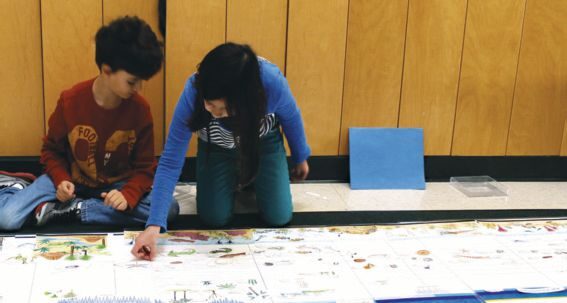
The learning materials with which students work in the elementary program are so exciting, starting with the great lessons. For example, the Timeline of Life tells the story of the history of the Earth beginning with the Big Bang and the formation of the stars, leading down the geological eras of Earth’s history and the emergence of life over the millennia. These Great Lessons engage children and then send them off to do all kinds of research, which they are allowed to do on their own rate and their own pace. When students are excited about something and feel connected to it in their environment, that’s where real learning takes place, and that’s where Montessori shines.
Montessori helps children to be flexible, self-disciplined, independent learners and self-actualized adults. We all want our children to be able to master or learn anything they wish. I can figure it out, I can find the information, I can learn it, I can apply it. That is essentially what we strive to nurture in the elementary program.
Think about your Montessori child as she has grown thus far as he or she nears the end of the third year in the Children’s House or Casa as you call it in Canada. Now think ahead. What would you like to see your son or daughter be like at age 18?
If your dreams include a young man or young woman who truly loves school, thinks outside the box, thinks about others, then you’ve certainly done the right thing by giving your child the gift of a Montessori education. You’ve laid the right foundation.
Like me, like my family, and like so many million others like us, you’ve taken the first step. And now the question is what’s next?
I invite you to join us and let your child reap the benefits of continuing her Montessori education. The best is yet to come.
by Joyce St. Giermaine | Early Adolescence (12-15), Free Reads, Infant-Toddler (0 to 3), Later Adolescence (15-18), Lower Elementary (6-9), MFA, Montessori Education
Isn’t Montessori elitist?
Montessori is an educational philosophy and approach that can be found in all sorts of settings, from the most humble to large, well equipped campuses. In general, Montessori schools consciously strive to create and maintain a diverse student body, welcoming families of every ethnic background and religion, and using scholarships and financial aid to keep their school accessible to deserving families. Montessori is also found in the public sector as magnet public-school programs, Head start centers, and as charter schools.
No. Dr. Montessori simply observed that competition is an ineffective tool to motivate children to learn and work hard in school.
Traditionally, schools challenge students to compete with each other for grades, class rankings, and special awards. For example, tests are graded on a curve developed from the performance of the students in that class. Students are constantly measured against their classmates, rather than considered for their individual progress.
In Montessori schools, students learn to collaborate with each other rather than mindlessly compete. Students discover their own innate abilities and develop a strong sense of independence, self-confidence, and self-discipline. In an atmosphere in which children learn at their own pace and compete only against themselves, they learn not to be afraid of making mistakes. They quickly find that few things in life come easily, and they can try again without fear of embarrassment.
Dr. Montessori argued that for an education to profoundly touch children’s hearts and minds, they must learn because they are curious and interested, not simply to earn the highest grade in the class. Montessori children compete with each other every day, both in class and on the playground. Dr. Montessori, herself an extraordinary student and a very high achiever, was never opposed to competition in principle. Her objection was to using competition to create an artificial motivation to get students to achieve. Montessori schools allow competition to evolve naturally among children, without adult interference unless the children begin to show poor sportsmanship. The key is the children’s voluntary decision to compete, rather than having it imposed on them by the school.
Is it true that Montessori children never play?
All children play. They explore new things playfully. They watch something of interest with a fresh, open mind. They enjoy the company of treasured adults and other children. They make up stories. They dream. They imagine. This impression stems from parents who don’t know what to make of the incredible concentration, order, and self-discipline that we commonly see among Montessori children. Montessori students also tend to take the things they do in school seriously. It is common for them to respond that “this is my work,” when adults ask what they are playing with. They work hard and expect their parents to treat them and their work with respect. But it is joyful, playful, and anything but drudgery.
All children play. They explore new things playfully. They watch something of interest with a fresh, open mind. They enjoy the company of treasured adults and other children. They make up stories. They dream. They imagine.
Is Montessori opposed to fantasy and creativity?
You will not generally find play kitchens, dress-up corners, or dolls in a Montessori class for children under age six, because children are using real tools and doing real things, instead of pretending. However, imagination and creativity are important aspects of a Montessori child’s experience.
Montessori classrooms incorporate art, music, dance, and creative drama throughout the curriculum. Imagination plays a central role as children explore how the natural world works, visualize other cultures and ancient civilizations, and search for creative solutions to real-life problems.
In Montessori schools, the arts are normally integrated into the rest of the curriculum. They are modes of exploring and expanding lessons that have been introduced in science, history,geography, language arts, and mathematics.
Art and music history and appreciation are woven throughout the history and geography curricula. Traditional folk arts are used to extend the curriculum as well. Students participate in music, dance, and creative movement with teachers and specialists. Students’ dramatic productions make other times and cultures come alive.
What if a child doesn’t feel like working?
While Montessori students are allowed considerable latitude to pursue topics that interest them, this freedom is not absolute. Within every society, there are cultural norms; expectations for what a student should know and be able to do by a certain age. Experienced Montessori teachers are conscious of these standards and provide as much structure and support as is necessary to ensure that students live up to them. If, for some reason, it appears that a child simply needs time and support until he or she is developmentally ready to catch up, Montessori teachers provide it non-judgmentally.
Is Montessori opposed to homework, tests, and grades?
Many parents have heard that Montessori schools do not believe in homework, grades, and tests. This is really a misunderstanding of Montessori’s insights.
Homework
Most Montessori schools do not assign homework at all below the elementary level. When it is assigned to older children, it rarely involves page after page of busywork; instead, it involves meaningful, interesting assignments that expand on the topics that the children are pursuing in class. Many assignments invite parents and children to work together.
Homework should never become a battleground between adult and child. One of our goals as parents and teachers should be to help the children learn how to get organized, budget time, and follow through until the work is completed. Ideally, home challenges will give parents and children a pleasant opportunity to work together on projects that give both parent and child a sense of accomplishment. They are intended to enrich and extend the curriculum.
Homework doesn’t need to be boring! Montessori challenges children to think, explore, and pursue tangible projects that give them a sense of satisfaction. Homework is intended to afford students the opportunity to practice and reinforce skills introduced in the classroom.
Moreover, there is a certain degree of self-discipline that can be developed within the growing child through the process of completing assignments independently.
Many elementary Montessori classes send home packets of At-Home Chal-lenges for each age group in the class. The children have an entire week to complete them. When the week is over, teachers will normally sit down with the children to review what worked, what they enjoyed, and what they found difficult or unappealing.
Depending on the child’s level, assignments usually involve some reading, research, writing, and something tangible to accomplish. They may be organized into three groups: 1) Things to be experienced, such as reading a book, visiting the museum, or going to see a play; 2) Things to learn, stated in terms of skills and knowledge, such as See if you can learn how to solve these problems well enough that you can teach the skill to a younger student; and 3) Things to be submitted, such as a play, essay, story, experiment, or model.
When possible, teachers will build in opportunities for children to choose among several alternative assignments. Sometimes, teachers will prepare individually negotiated weekly assignments with each student.
Tests
Montessori children usually don’t think of our assessment techniques as tests so much as challenges. Early childhood Montessori teachers observe their children at work or ask them to teach a lesson to another child to confirm their knowledge and skill.
Most elementary Montessori teachers will give their students informal,
individual oral exams or have the children demonstrate what they have learned by either teaching a lesson to another child or by giving a formal presentation. The children also take and prepare their own written tests to administer to their friends. Students are working toward mastery, rather than being graded using a standard letter grade scheme.
Standardized Tests
Very few Montessori schools test children younger than the first or second grade; however, most regularly give elementary students quizzes on the concepts and skills that they have been studying. Many schools ask their older students to take annual standardized tests.
While Montessori students tend to score very well, Montessori educators frequently argue that standardized testing is inaccurate, misleading, and stressful for children. The ultimate problem with standardized tests is that they have often been misused, misunderstood, and misinterpreted in other schools. Tests can be fairly useful when seen as a simple feedback loop, giving both parents and school a general sense of how students are progressing.
Although standardized tests may not offer a terribly accurate measure of a child’s basic skills and knowledge, in our culture, test-taking skills are just another practical life lesson that children need to master.
Reporting Student Progress
Because Montessori believes in individually paced academic progress, and encourages children to explore their interests rather than simply complete work assigned by their teachers, we don’t assign grades or rank students within each class according to their achievement.
At the elementary level, students will often prepare a monthly self-evaluation of the previous month’s school work. When completed, they will meet with the teachers, who will review it and add their comments and observations.
In many Montessori schools, children compile a collection of their work that is pulled together in a portfolio of the year’s work.
Most schools schedule family conferences two or three times a year to review their children’s portfolios and self-evaluations and go through the teachers’ assessment of their children’s progress.
Typically, once or twice a year, Montessori teachers will prepare a written narrative evaluation of the students’ work, social development, and mastery of fundamental skills.
What about children with special needs?
Every child has areas of special gifts, a unique learning style, and some areas that can be considered challenges. Each child is unique. Montessori is designed to allow for differences. It allows students to learn at their own pace, and is quite flexible in adapting for different learning styles. In many cases, children with mild physical handicaps or learning disabilities may do very well in a Montessori classroom setting. On the other hand, some children do much better in smaller, more structured classrooms. Each situation has to be carefully evaluated individually to ensure that the program can successfully meet a given child’s needs and learning style.
Is Montessori right for my child?
- Most Montessori educators would agree that Montessori is a good fit for most children — but it may not be the right match for their parents.
- Everything depends on what your family believes to be true about your children and important in their education.
- Do you believe that children should be treated with dignity and respect and be encouraged to be independent, self-confident, and self-disciplined?
- Do you believe that the best way to discipline is by being consistent, modeling the correct behavior, and by consciously teaching children how to do things correctly?
- Do you believe that education should be enchanting, intriguing, and delightful, rather than traditionally structured and highly competitive?
- If so, Montessori may be right for you.
But aren’t there some children who just won’t do well in Montessori?
The answer is both yes and no. Montessori schools are often successful with children, who would challenge any school, including the highly distractible and impulsive ones, for whom parents typically have the most concern. The reason why should be obvious: Montessori is designed to be flexible, adapting the program to meet the needs of each given child. It also allows children to move about, socialize independently (rather than work as part of a group), and progress at their own pace.
This doesn’t mean, though, that every class and every Montessori teacher can meet the needs of every child. This is especially true if a child is violent, destructive, or excessively disturbing of the peace and order of the classroom. Each decision has to be made on a case-by-case basis.
Why is there so much variation among Montessori schools?
Many people assume that all Montessori schools are essentially the same. In reality, Montessori schools can differ dramatically, in size, facilities, programs, and emotional climate. They share a common philosophy and basic approach, but there may be tremendous variation among schools that use the name Montessori. There are more than four thousand Montessori schools in North America, but every one is unique. Even within the same school, each class may look and feel quite different from the others, reflecting the interests and personalities of the teachers; however, certain characteristics will be found in all classes that are honestly following the Montessori approach.
Dr. Montessori was a brilliant student of child development, and the approach that has evolved out of her research has stood the test for more than one hundred years in Montessori schools around the world. The Montessori approach has three great qualities: the model is replicable; it can be adapted successfully into all sorts of new situations; and it is sustainable. (Montessori programs don’t tend to self-destruct after a few years, as do many other educational reforms.) However, the only ‘pure’ Montessori educator was Dr. Maria Montessori herself. The rest of us interpret and filter her ideas through our personalities and experience.m
Tomorrow’s Child/Sept 2010/p12
by Cathie Perolman | Free Reads, MFA, Montessori Education, Montessori Family Life
Dear Cathie
I am so pleased to hear that your child is flourishing in her Montessori classroom. And it is wonderful to hear about h
erpeaceful persona.
Growing peaceful children is an important topic in the Montessori classroom and one crucial to the success of our classrooms. I agree that some children are calmer and more peaceful than others by their very nature. Some move with a greater care, make slower and more deliberate choices, and may even choose their words more carefully before they speak. Others tend to be more physically and mentally active. They run whenever there is an opportunity and love to physically interact with others. Some tend to speak without a filter and may choose words or behaviors that appear unkind to others. Others make impulsive choices. Many children are in the middle in some or all of these areas. These temperaments are often evident soon after a child is born.
In the Montessori classroom, we make every effort to help each child reach his maximum potential. We encourage children to make the most of their time and experiences in the classroom. We show them how to move and work mindfully; being aware of the space and needs of others. In our classrooms, many activities are happening simultaneously. Children need to be able to work near others without disturbing them in order for our method to be successful. Thus, this awareness of others is critical in our Montessori classrooms as each classroom works to become a community. As in all communities, the members work to help and support each other.
While this becomes natural in an adult community, young children do not come to the classroom with the skills to be supportive to others; therefore, they are modeled and taught by the older children in the community and by the adults that guide the child. The culture of a Montessori classroom is a place where people treat each other with respect, kindness, care, compassion, and let others do their work without bothering them.
So how, exactly, do guides in Montessori classrooms accomplish that goal?
It begins with the environment itself.A Montessori classroom is set up to resemble a children’s house or home. The objects in it are beautiful and carefully chosen. The design of the room allows for the children to move around freely, but the space is designed so that they need to move carefully to negotiate their way around the furniture. This discourages quick, uncultivated movement and encourages children to move with care and grace.
Children (and adults) tend to become like those that they are around. Children learn their behavior patterns from their parents, caregivers, and teachers. Adults who work in Montessori schools are conscious of their choice of words, speed of movement, and interactions with others. They tend to model the kind of behavior that they want the children to emulate. They make a point to create a culture of mindfulness, where the adult has a single task on which she is focused and completing.
There is also a culture of gratitude and appreciation of others. “Thank you, Miles, for showing Maria where we keep the cotton balls.” This not only lets Miles feel proud of his contribution to the classroom community, but it lets all the other children who heard that comment know that we value the help of others and that it is appropriate to say the words “thank-you” to express that gratitude.
Soon those expressions of gratitude are heard from children as well. Kind words are modeled throughout the classroom and the school. In a Montessori classroom, a child has ample time to do what he needs to do. He is seldom hurried and never rushed. So, his school climate is a calm place, where he is free to do the things he needs and chooses to do at a speed that is reasonable for him. Being honest, there are many days or parts of days that are not totally peaceful in any classroom. In this instance, the guide works to help the children find the solutions to their challenges, fix their problems, and restore the peaceful nature of the classroom. This peaceful nature becomes the norm rather than the exception.
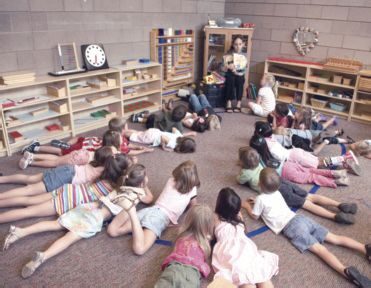
We do try to help children understand the concept of peace even at a very early age. We read books about peace and peaceful situations. We sing songs about peace, and we create experiences during which a child feels peace. This might be sitting silently looking into the flame of a candle or watching the glitter slowly settle to the bottom of a wand. We show children how to practice making themselves totally still and silent in an effort to quiet the wiggles of our body and the chatter in our minds. This is the basis of meditation in some faith communities. We encourage children to use those techniques to restore themselves to a calm state when they are feeling upset. Most classrooms have a Peace Corner, where this work is done.
As in so many other areas, the 3-6 Montessori classroom plants a seed for the things that will come after the children leave this level. It is our belief that children, who have begun to value peacefulness, can calm their own bodies and minds, and are valued and contributing members of their classroom communities are ready to take on even bigger challenges when they leave our classrooms at age six.
Have a wonderful start to the school year! — Cathie
Tomorrow’s Child/Sept 2012/p28

 Since its founding in 1998, the International Montessori Council (IMC) has grown and matured as an international community of Montessori schools, educators, and friends of Montessori. Dues have been consciously kept modest because the IMC is managed by the marvelous staff of the Montessori Foundation, and by conscious efforts to grow slowly and carefully. Today, we offer highly-responsive support to schools and their leaders, weekly professional development, warm and inviting Montessori conferences, cutting-edge Montessori teacher education, and very supportive and practical Montessori school accreditation. Many of us gathered together in 1998 to envision and establish the IMC, but I have widely been seen as its public face. In recognition of our expanding role and our commitment to our council’s future, the IMC Board and I are pleased to announce the appointment of Kathy Leitch as our new Executive Director. I will continue as Chair, and the Montessori Foundation and IMC will continue our work together, but Kathy’s appointment is an important milestone. We have done so much together already, but the best is yet to come.


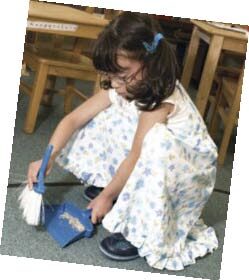



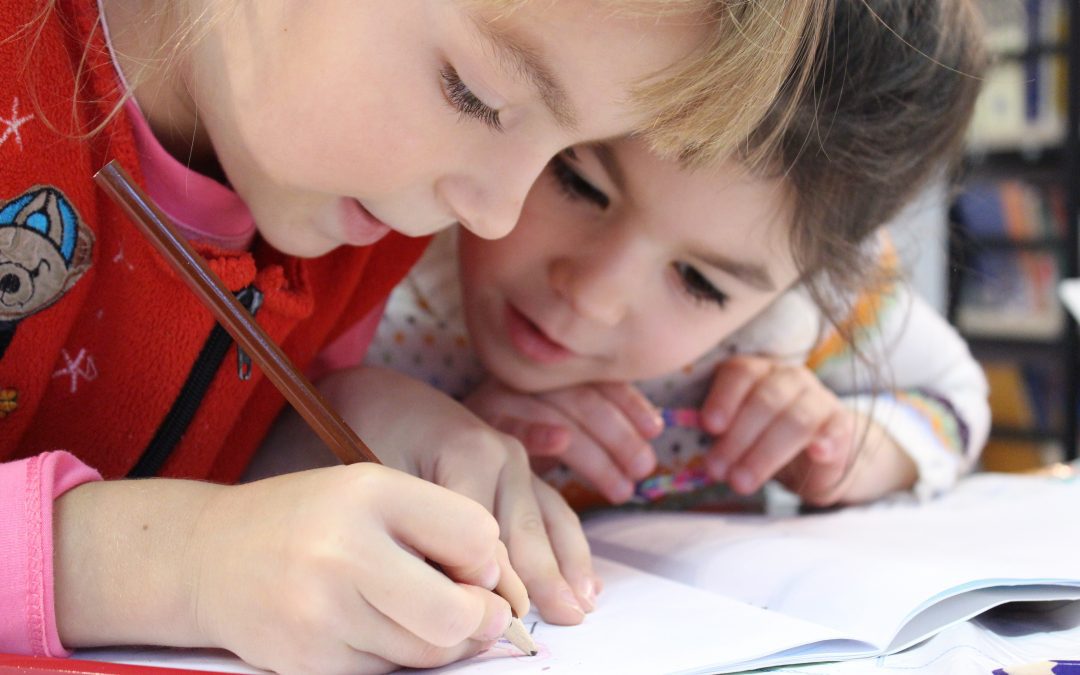

 Most Montessori educators would agree that Montessori is a good fit for most children — but it may not be the right match for their parents.