
To access this page, you will need to log in or become a member.
Advice from Montessori Family Alliance Friends

Advice from Montessori Family Alliance Friends

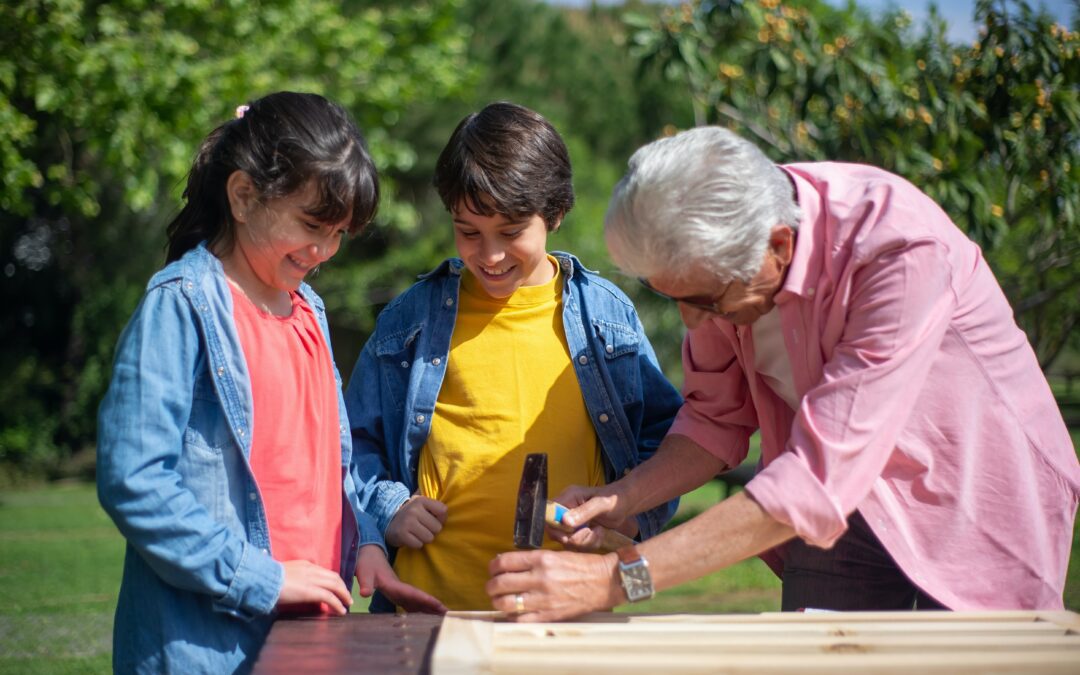
women talking

Reaching out to a friend who has children a bit older than yours can be a very comfortable way to get advice about your own parenting. When you are a part of the Montessori Family Alliance, the people to reach out to have very helpful pieces of advice.

Christine Lowry

The Montessori Foundation

Being a parent is both the most challenging and rewarding thing we can do. My advice is to respect your child’s sense of dignity. Children (especially young children) have a remarkable sense of self-worth, self-direction for their own growth, a sense of their value as people, and being worthy of honor and respect.

I had a sense of its importance as a parent but didn’t have the right language for it until I partnered with parents in my school. We often underestimate our children’s rich emotional life; their natural attunement to us, to their environment, and to the world; their need to explore, do it themselves; and struggle until they get it without our help. Their ‘inner guide’ is the motivation for everything they do. Sometimes, they ‘push back,’ and we feel that they are challenging us. Perhaps, if we could take just a moment to reflect on our child’s intense sense of dignity, we could more easily let go of our need now and see their need in a different light.

Cathie Perolman

Montessori Teacher Educator

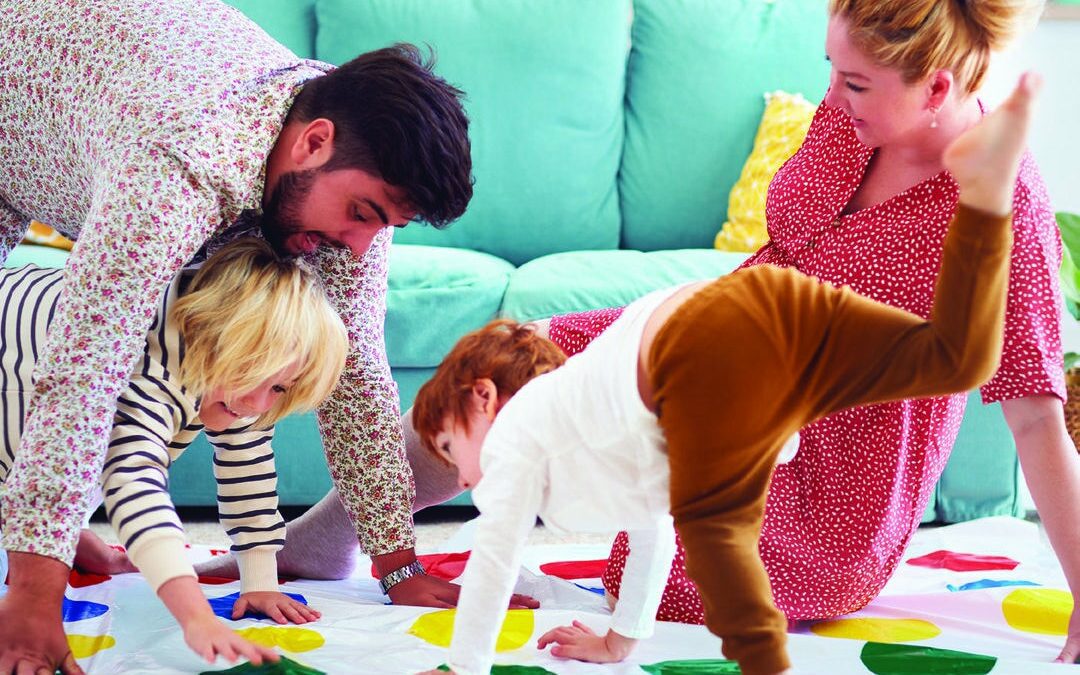
If I had the chance to enhance my family, I would have created more family traditions during our younger years. We would have started with a weekly family pizza dinner and game night. This could have started with very simple frozen pizza and evolved into family-made pizza as the children got older and could cook. The games could have started out very short and simple and grown into more challenging games as the children grew. Initially, we could have included just our nuclear family, embracing their friends and other family members when they were tweens or teens. Perhaps this prediction would have carried over into their own families.

Other traditions might have included special breakfasts that we all helped plan, cook, and enjoyed on holidays, days off from school, snow days, etc. Remember, it only takes doing something twice for it to become a beloved family tradition. This could also have been true for something special after school on the last day of the school year or the first morning the family wakes up on summer vacation. I had a friend who said that weeks, months, and years needed to have “punctuation in the book of life.” Looking forward to doing things together helps a family want to spend time together, which is so important.

David Rotberg

Guide at Pines Montessori, Houston, TX

My wife gave birth to a beautiful baby girl and, instantly, we were parents. As a new parent, a new part of me seemed to come alive; a part of me that I didn’t know even existed.

As a young parent, I began to feel that I needed to ‘know’ how to raise a child ‘the right way.’ I read countless books about raising girls. We tried so many things, and yet none of it felt natural because it wasn’t us. We were just doing exactly what the books told us to do.

We spoke with friends and mentors who had older children (or were empty nesters) and asked for their advice/wisdom. Well, fast forward three more children (all boys), and we discovered there was not that one book, that one class, or that one person with all the answers. We eventually found what worked best for our family and what felt right for us. In addition, I also felt a responsibility to help our children live as themselves as much as possible.

By trying to fabricate experiences, read books, and schedule playdates, I tried to force their development too much and redirect their personalities. It didn’t happen at any moment in my parenting, but just gradually, over time, I realized that I had to trust what my wife and I were doing. Our children would be exactly who they were meant to be, and, to an extent, their personalities were hard-wired. I felt that I could breathe more and just trust my children’s growth. It took about five or six years and a few children to learn that, but hey, who’s counting?

Allowing children to make their own decisions and helping them to accept the natural consequences, positive or negative, of their decisions is my best parenting advice. As parents, we support our children by modeling decision making and helping them weigh the possible outcomes. Sometimes, allowing children to fail is what allows them to grow.

Lorna McGrath

The Montessori Foundation

When your child seems to be struggling with something, it can become an ongoing struggle, weighing them down or weakening their self-confidence. Talk to them. Help them with their self-talk and assure them that everyone struggles with something. Most things can be overcome with practice, time, support from others, and determination.

Be empathetic without trying to make it all better. They must do that. Don’t pity them; instead, be confident when they are not. Show them your strength, patience, and willingness to receive help from others. Let them know, “You/we got this!”

Margot Garfield-Anderson

The Montessori Foundation (retired)

My best advice to parents and grandparents is not to spoil anyone with things; instead, be invested and present when you have time with them. Bring them to places to show them there’s a world out there. Expose them to all the arts; take them on nature walks and teach them how to fix something when it’s broken or how to put something together. My favorite is to get them into the kitchen to cook— anything that helps them unplug from those devices. Help them learn to be of service in their communities.

I try to do this with my four granddaughters as well. We do art projects, listen to musicals, watch old movies, play board games, and do puzzles. We knit or crotchet, we paper mâché, we go to museums and science centers; we are going on a cave exploration this summer. I try to create times they will want to replicate and look back upon with the fondest of memories.

Dr. Nora Faris

Montessori Guide, NewGate School

One of the most revelatory experiences for me as a mom and as a person new to Montessori was just how wonderful the notion of Practical Life could be. As a new mom coming to Montessori twenty years ago, I was amazed as I observed what the children in the Primary classrooms could do by themselves. Not only did James (my husband) and I enroll the children in a Montessori school as fast as they would let us, but we left determined to see what else they could do for themselves at home, which turns out to be a lot! Adopting the motto “If you can do it for yourself, you should” has truly helped our children develop into the confident, capable young adults they have become.

As we get the occasional texts from our college-aged kids that read, “Thanks for teaching me how to do my laundry and cook,” or “Thanks for teaching me how to do hard things,” we are grateful for the lessons learned as new parents. Letting go of perfection-oftask thinking to make way for independenthuman-in-development activities was the best decision we made as parents. And, once we understood that anything could be broken into smaller steps towards a larger goal, we created a home environment that allowed our children to become confident and selfsufficient. This worked for driving practice, talk practice, form-completion practice, and more. As James and I look towards retirement, we wonder what practical-life lessons lay in store for us, too. We are eager to learn and set practical-life goals for ourselves as well.

Tammy Willen

Head of School, Bay Montessori School (Lexington Park, MD)

Through my time as a parent and a Montessori educator, I’ve learned many things I wish I could have put into practice when my children were young. As a child, I was a Montessori student, and as an adult, I became a Montessori educator. Therefore, I was very knowledgeable of the “Montessori Method” and did my best to parent along a similar path. Now that my kids are teenagers and I have life experience and more training, I’ve learned a few things I wish I’d done when my kids were young.

Many parents think we know what’s best for our children. Although my heart was in the right place, I often forgot to listen to my child, both through their words and through their actions. Most parents think a three-year-old still needs a nap and a four-year-old needs to eat at each meal. We think a seven-year-old should know how to read, and a ten-year-old should know how to speak kindly to a friend. We often spend a great amount of time trying to control our child’s behaviors. What I encourage others to do is to observe, model, follow, and guide.

If I could go back to my children’s preschool years, I’d throw my expectations (and everyone else’s) out the window and watch my child show me their full potential. In schools, I hear many parents say, “He should be…” or “I wish she could…” or “When she does ….” My advice to parents is to eliminate should from your vocabulary and let your child blossom at their own unique pace.

Cheryl Allen

The Montessori Foundation

Family meetings, held regularly, give every person in the family a chance to be a part of decisions and solutions. Knowing that your topic of concern or interest will be addressed goes a long way in helping to develop confidence. Having a voice in the family can make connections stronger and allow the family to work together.

Renee Duchainey-Farkes

The Montessori Foundation

I would advise parents to be focused on a partnership with the school and the teachers, because we are all working for a common purpose: the child. Parents should attend as many school events as possible, even those that are not focused specifically on their child; it helps build school community.

Share expectations and goals for your child with the teacher and get affirmation that these are the right ones for your child. Learn from your child’s teacher.

Share your family’s culture, values, and parenting practices with your child’s teacher. Attend PTA meetings and get involved, if you can, to support the school to be the best place for children. Actively help teachers and the school to recruit volunteer parents to help. 
30 Gifts for 30 Years of Tomorrow’s Child

30 Gifts for 30 Years of Tomorrow’s Child

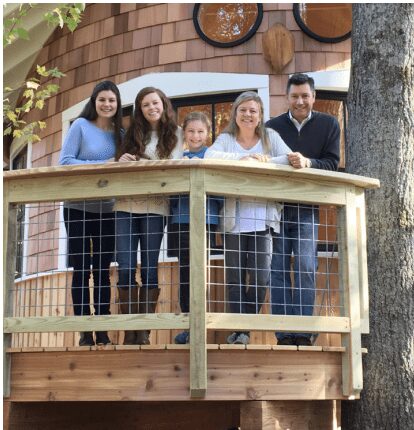
wrapped gifts


1. Goodnight Moon by Margaret Wise Brown

2. The Mitten by Jan Brett

3. The Very Hungry Caterpillar by Eric Carle

4. Barnyard Dance by Sandra Boynton

5. Legos™

6. Wooden Blocks

7. If You Give a Moose a Muffin by Laura Numeroff

8. Alexander and the Terrible, Horrible, No Good, Very Bad Day by Judith Viorst

9. The Lorax by Dr. Seuss

10. Kitchen Science Lab for Kids books: Outdoor, Edible Kitchen, Garden, STEAM

11. Cooking Class: Global Feast

12. The Complete Cookbook for Young Chefs

13. Window Washing Activity

14. Beeswax crayons

15. Play-Doh™

16. Hula hoop

17. Hugg A Plant Earth

18. Uno + Playing Cards Holder

19. Potholder Loom Kit

20. Kids’ Garden Hand Tools

21. Egg Shaker

22. Jump Rope

23. Classic Rainbow Skwish

24. Wooden Bird Shaker

25. Bolt Block

26. Dynamo Dominoes

27. Playing Cards + Card Games for Kids

28. Tangram Puzzle

29. The Klutz Book of Paper Airplanes

30. MontiKids

And an extra copy of Montessori For Every Family!

Why Montessori Elementary?

Why Montessori Elementary?

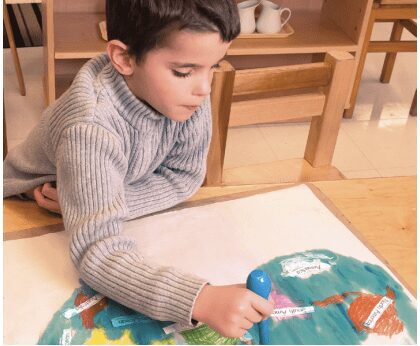
child labeling a map

Our kids are the most important people in our lives. Many of us strive for our children to have better lives than we had, even when we’ve led wonderful lives. Therefore, making a choice different from the norm can be challenging. Though Montessori education has been around for over one hundred years, most people don’t have a direct experience with it. Even those who pursue college degrees in education often hear no more than a basic explanation of Maria Montessori’s contributions to the field. When making such an important decision for your child, it helps to equip yourself with knowledge.

In the 116 years since the first Montessori school opened its doors, only a few changes have been made to the materials and approach. That is because it is rooted in core principles of child development. Montessori is based on an understanding of the human brain and the incredible capabilities of children. While traditional education has its buzzwords and seems to change its mind about the best way to teach every ten years or so, Montessori programs have remained consistent and effective. Why is this?

Maria Montessori was a scientist and physician before she was a teacher. She applied her knowledge of observation and psychology to her work with children. While observing the children in her care, Montessori developed theories about how they learn. She designed materials the children could use independently. She created a curriculum that followed the child’s natural development.

One of Montessori’s core ideas is “follow the child.” Many people unfamiliar with this philosophy misinterpret this to mean “allow the child to do whatever they want.” They may imagine a classroom where the children run amok, doing anything they please and ignoring the more challenging learning in favor of having fun.

In reality, “follow the child” means that we recognize the child as a fully capable human being and respect their ability to construct themselves.

This idea is supported by another of the key concepts: “freedom with responsibility.” Essentially, we teach children what so many adults still struggle with: “How do I do what needs to be done in a way that works for me?”

From an early age, we work to instill an understanding of balance, expectations, and self. With these components, a child can decide between working in the math or language areas, what work will be most appropriate, and how to engage with it to support their growth.

One child might opt for work in the math area because they’ve recently had a lesson on adding with the Stamp Game and want to practice it. Another child might be determined to memorize a series of sight words, so they invite a friend to quiz them. A third child might be in the library with a stack of books about snakes beside them, devouring one after the other. This sometimes leads parents to ask, “What if my child only wants to read nothing else but books about snakes?”

First, it must be said that this is a delightful “problem” to have. It is here that Montessori guides prove their worth.

A guide is trained to observe, just as Maria Montessori did. We watch the children and note trends, moments of discovery, and behaviors that indicate what type of guidance a child needs from us. In the example of a child who only wants to read, we ask ourselves questions, such as:

• How focused are the children on this task? Are they genuinely reading or using a book to look busy?

• Are they inviting others to read or be read to, or are they reading alone?

• Have they recently had a lesson that they are applying or a breakthrough in understanding?

• Are they avoiding other responsibilities? If so, why?

After observing and questioning, the guide will act accordingly. This might mean connecting the child’s interest in reading to an area they need to work in, conferencing with the child to give a mini-lesson on time management, or redirecting a child “looking busy” to a task with which they will genuinely engage. It could also mean that the child is left to read, trusting that they will move on when they’ve gotten what they need from it.

When choosing between a Montessori school and a traditional school, there are several key differences to keep in mind.

In a traditional school, all of the children of the same age learn the same content at the same time. They follow a schedule, such as working on math at 10 am; language at 11 am; and science or social studies at 1 pm. They follow this work schedule regardless of the child’s interests, needs, or internal urge to focus at length to reach a new understanding.

Imagine for a moment what this would look like as an adult. Let’s say that you’ve noticed your kitchen needs some work. You’ve gotten inspired from HGTV, have all the tools and materials you need, and even have time to work on it. Now imagine that you can only work on the kitchen project for half an hour daily. You’re told you must pay equal attention to the bathroom, the bedroom, and the living room. However, your bathroom is pristine; your living room is satisfactory; and you have no new ideas for your bedroom. You wind up with a demolished kitchen that you can’t stop thinking about, twiddling your thumbs in the bathroom, and bored or frustrated in the other two rooms. This isn’t how the real world works. Why should it be so for our children?

Let’s continue playing out the scenario. In the real world, does everyone need to remodel their kitchen at the same time? Not at all.

Does everyone need to regularly maintain their kitchen by cleaning, organizing, and stocking it? Absolutely.

In a Montessori classroom, students are expected to maintain growth in every area, but they may have a strong, specific focus on a particular subject. This will change as they do — as they satisfy their interest, learn what they want to learn, and become intrigued by something new.

If you’re interested in working on your kitchen, but your bathroom is ruined, you’d shift your priorities to that area. Children usually need support to understand when and how to do this, and the Montessori guide recognizes when this is the case and gives the child tools to notice it for themselves and take steps to address it. With an observant Montessori guide, parents don’t need to worry that their child will fall behind in one area because of their passion for another.

As adults, when we take on a big project like remodeling the kitchen, we can benefit from working with others and observing others (usually on YouTube) doing what we want. The elementary child is in a prime developmental stage to socialize and learn to work cooperatively with others. In a traditional setting, the child may be assigned to work in small groups or with a partner, or they may not. The child rarely has a choice in the matter.

In a Montessori classroom, they decide who to work with or if they want to work alone. They can watch others do the work or join lessons on topics of interest. They also have the freedom to decide when to work on the project, for how long, and in which way. Their responsibility is to do it; their freedom is how.

In a traditional school, children are sorted according to their age and are kept with others of the same age. There needs to be more mixing between grades. In a Montessori school, children are in multi-age classrooms of the same developmental stage. Consider for a moment: are the others you work with all the same age as you? Are all of your friends your age? The answer likely is no. You have groups based on other commonalities, such as: interest, experience, or location.

The Montessori multi-age classroom replicates real-world experiences and also creates a sibling dynamic. Even if your child is the eldest in your family, they will still experience what it feels like to be the youngest and middle child. Each child will know the struggle of being the newcomer, the comfort of being in the middle, and the confidence and leadership of being the eldest. They learn how to receive help and how to give it.

This also reduces and often eliminates competition and the stigma of learning differences. In a multi-age classroom, everyone is working on what they need, and it is less evident to the other children when someone is struggling. This greatly benefits all children, particularly those with learning differences, anxiety, or low confidence.

In traditional schools, the focus is almost exclusively on academic achievement. Since the days of “No Child Left Behind,” public schools have been bound by the scores their students produce on standardized tests. Those scores affect the school’s budget, the teacher’s evaluation, and the district’s reputation. Naturally, it follows that the school becomes singularly focused on improving those scores. They aren’t set up to educate and support your child — your entire child.

Your children may learn a lot in a traditional school. They may achieve high grades and hit specific academic targets. In a Montessori school, however, they’ll hit academic targets and have a say in how they do it. They’ll learn to read and how to manage their workload. They’ll memorize math facts and learn the basics of cooking, cleaning, and tending the garden. Their brain will grow, and their hearts and souls will, too. Which would you rather have for your child?

How to Have a Successful Parent-Teacher Conference

How to Have a Successful Parent-Teacher Conference

Every child deserves an environment conducive to learning, irrespective of their social status or learning difference. A quality environment exists only when there is effective collaboration with parents. Some parents may come to us with concerns regarding challenges they believe their child experiences. It is important for teachers to understand that these concerns are coming from a place of deep-rooted love, worry, and affection for their child. It is important to remember that, together, we are a team, and our goal is the best outcome for the child.

That being said, we will undoubtedly come across some ‘interesting’ situations during our school year. During such times, we need to remind ourselves to have an open mind and seek opportunities for learning. It is vital to make a conscious effort to check in with our reactions and find a time that is suitable for both parents and teachers to meet.

Parent-teacher conferences are a perfect way to work together for the betterment of children and set them up for success. This is the time to build stronger relations with each other. The first conference is always impactful and sets the tone for the rest of the school year.

At our school, the first parent-teacher conference is in October. You can find below some of the concerns and comments that were expressed during these conferences. Each conference is about 25 minutes long. Below, I have tried to compile the main points of our conversation. The children’s names have been changed for privacy reasons, but the concerns and scenarios are real.

Does Ziana still flip her letters? Is that normal? How can we help improve her penmanship?

Yes, it is a normal developmental process for preschoolers to reverse some of their letters and numbers. Children in their early childhood years are busy taking in information, and they are learning the correct orientation of letters and numbers. The letters and numbers most commonly observed to be reversed are b, d, p, q, and 2, 5, 9, 3. It is normal to see this reversal being carried on to Grade 1.

Some of the common reasons for reversals are directional confusion, lack of spatial-perceptual orientation, and, lagging visual discrimination skills. Many exercises from the Practical Life, Sensorial, and pre-Language shelves help children with visual perceptual skills, directionality, and orientation. As she continues working with these exercises we can certainly see improvement.

To improve penmanship, first, we need to make sure the child’s visual acuity is within the normal range. The next step is to observe how the child is holding the writing tool, and if she is seeing her own writing. We observed that Ziana is only partially seeing what she is writing, as her hand covers most of it.

We have shown her to keep her paper at a 45-degree angle. Ziana is practicing writing in this style, and we have already seen great improvement in her penmanship.

The teacher’s observation was that when Ying is building words with the Moveable Alphabet, she cannot process and discriminate between i and e sounds. She spells nit for net, rid for red. How can we, as parents, support her at home to improve her auditory discrimination skills?

Ying speaks Mandarin at home. When she started school last year she did not speak English. She has picked up a lot since, and by the end of the last school year, she was communicating in English. She had to pause and think for a word to complete a sentence. But since the beginning of this school year, Ying has been communicating confidently and fluently in English. She is also able to analyze and break down the sounds in a word and build phonetic words. We are extremely happy and proud to see her progress. Because of the Mandarin dialect, she stresses more on some vowels. We have advised parents to write down the vowels i and e and help Yin enunciate. We also asked parents to write three-letter words with i and e vowels and to have Yin stretch out the vowel as she blends and reads so that she is able to hear herself.

Language development in an early childhood classroom is a process of integration of senses. It is a step-by-step process that comes naturally to many children. When a child sounds out a word, the word is translated from the auditory message to the visual image of the letter system. Then she uses the motor system of the hand to build the words with the Moveable Alphabet or write them. It is a very complex process, and at any point, the child may mis-process resulting in incorrect spelling. Montessori Language exercises are designed specifically to provide this multi-sensory experience for children.

How to help the child be independent and intrinsically motivated to choose more challenging work?

Charlie seems to avoid challenging work and prefers to sit and observe his friends, unless prompted by a teacher. It is okay for children to observe in Montessori classrooms as they learn so much through observation. But since this is Charlie’s kindergarten year, we expect him to be choosing work that challenges him and take up leadership roles. After meeting with his parents, it has been noted that Charlie does a lot of worksheets at home and he is also enrolled in at least five extracurricular classes. Charlie is showing all the symptoms of work overload and fatigue. He is not motivated to do any work because of this exhaustion. We have advised his parents not to provide worksheets at home, as this is clearly confusing Charlie with some of the concrete work he is doing at school. We have also asked them to cut down some of the extracurricular activities.

How to help my son get over social anxiety? He comes home and says no one wants to play with him and the teachers are not helping him either. Help us understand the situation, please.

Before answering the question, here is a brief description of Adrian. Adrian is a 4 1/2 year-old boy. This is his very first experience in a school environment. Due to the pandemic, his parents opted to home-school him. His mom had expressed anxiety over Adrian removing his mask and eating lunch with his friends indoors and even requested if it was okay for him to sit outside the classroom to have lunch.

As a teacher, I sensed a noticeable amount of stress and anxiety in the mom. It is essential to acknowledge the parents’ feelings for their children. Once they understand that we are here for the children and want to provide a secure and safe environment for them, we start to gain their trust. Now, Adrian’s mom was open to suggestions.

We typically give 6 weeks for children to normalize and get accustomed to the new environment. During that period, Adrian preferred to sit next to teachers and talk while watching his friends play. We wanted Adrian to feel safe and trust the adults in charge of him and allowed him to be beside teachers. Once the 6 weeks period passed, we noticed Adrian still preferred to hang out with adults. Now it was time for us to encourage him to venture out and make friends. It was vital for us to see how he takes on this challenging task. While the adults were there to support him, it is an important life skill for him to master on his own. Even though at first it felt like no one was helping him, once he crossed the hurdle, he was able to make many friends and enjoy playground time. Today, Adrian is a happy boy who doesn’t shy away from making new friends.

My child wants to please all his friends and sometimes can take in some unpleasantries and smile through it, all the while hurting inside.

David is a sweet boy who has lots of energy to expend throughout the day. He was transferred from another class last year to our room. He made a smooth transition and has made lots of friends in his new environment. However, he has to be redirected throughout the day to make the right choices and use impulse control. Sometimes he can get himself involved in situations involving multiple children, where they tend to use his name upfront to get away from troubling situations (e.g., “David pushed me.”)

As a Positive Discipline Classroom Educator, I am extremely careful not to label children. I also understand why children tend to call out David’s name a lot due to his previous history of being labeled. I sat the boys down and talked to them about friendship, honesty, and integrity. While some are trying to seek attention (negatively) by placing their friend upfront for things he hasn’t done, it is vital for David to be emotionally strong and know that he doesn’t need to soak up everything his friends are pouring on him. He is made aware that he has a choice and it is up to him to exercise these choices. He is doing extremely well in the classroom’s structured environment. However, he needs reminders when he is with other groups to practice impulse control or in our very special words: “Listen to your peace light and let it shine brighter.”

When Emma is asked to redo work or make a challenging choice, she always insists that her mom wants her to do it that way. We want to know a little more about how you handle such situations at home.

while it is a beautiful sight to see Emma have a strong, secure attachment to her mom, we also want to ensure that she is not heading toward an insecure attachment or reflecting her mom’s emotions.

Emma is a diligent and hardworking student. She does her work very meticulously. However, when she is asked to redo work or re-write letters and follow the correct orientation, she is a bit hesitant.

It is important to introduce constructive criticism to children in their formative years. It is a means by which we learn from our mistakes and find strategies to determine ways to better ourselves. At the same time, it is also important for children to differentiate negative criticism from constructive criticism. With constructive criticism playing a vital role in childhood, it is important for children to learn to take positive feedback and deliver them graciously.

Emma has come a long way. She is open to correcting or redoing her work now at the same time confident enough to let us know if she wants to do it now or later. She knows that we give the freedom to choose between now and later as long as the work is taken care of independently. 

30 Reasons Parents Stay with Montessori

30 Reasons Parents Stay with Montessori

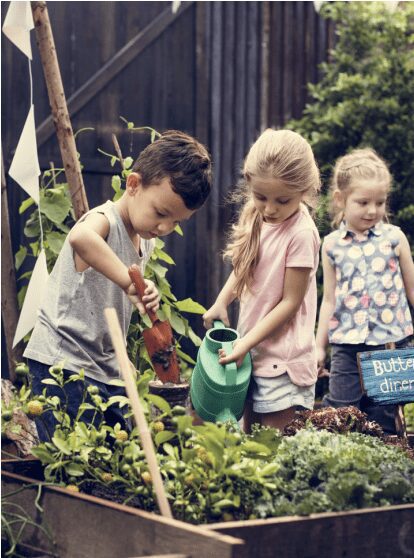
three children gardening
Encourage the Outdoors with Exciting Equipment

Encourage the Outdoors with Exciting Equipment

by Cheryl Allen

When summer comes, we often are able to spend more time outdoors. If you have the space for a garden, or even a single plant, inviting your child to grow items with you is a great way to encourage practical life at home. Time outside at your child’s pace and exploring their interests can be just a few minutes or, when there is time and interest, a few hours together. We have gathered some items to encourage exploration outside. 

These products are aligned with the Montessori philosophy. When you buy through our links, we may earn a commission.

Primary Garden Tools

A set of tools for the youngest gardeners. The lighter weight and shorter handles make these tools easy for 3-5 years olds to use while gardening.

http://shrsl.com/3eq4y

garden tools

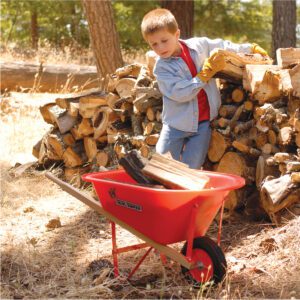
Lil’ True Temper Wheelbarrow

A child-sized wheelbarrow allows heavy work in the garden to involve the whole family.

http://shrsl.com/3eq4t

child and wheelbarrow

EZ Read Rain Gauge

How much has it rained? Keeping track of the rain on this easy-to-read gauge encourages exploration of measurement and record-keeping.

http://shrsl.com/3eq4q

The Fruits We Eat and

The Vegetables We Eat

These books by Gail Gibbons share information about how fruits and vegetables grow, where they grow, and what we eat from the plants. 

http://shrsl.com/3eq46

http://shrsl.com/3eq4k

Nature Kaleidoscope

Place small items in the specially designed cup of this kaleidoscope and view the art you create.

http://shrsl.com/3eq3u

child using a kaleidoscope

BugLoupe

Get a close-up look at bugs (or plants or rocks) without touching them. This magnifier is easy for even young children to use.

http://shrsl.com/3eq3n

bug loupe

Sunprint Kit

Arrange objects on this specially treated paper, set it in the sun, rinse, and you have a piece of art.

http://shrsl.com/3eq2z

sunprint kit

Leaf and Flower Press With Carrying Strap

This press can go on hikes with you to preserve pieces of nature you find along the way.

http://shrsl.com/3eq2q

leaf and flower press

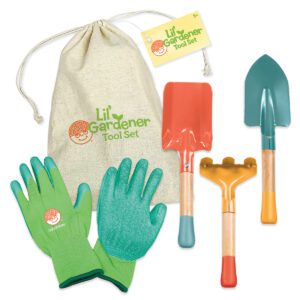
Lil’ Gardener Tool Kit

This kit includes child-sized gloves and three hand tools perfect for turning soil and digging holes.

https://shrsl.com/3eq2k

little garden kit


Cheryl Allen is the Director of Parent Education for the Montessori Family Alliance and is also a parenting educator and a Montessori consultant with the Montessori Foundation. After some time as a traditional secondary teacher, she worked in Montessori classrooms, earning certifications from both AMS (3-6 and 6-9) and IMC (6-12). She is a teacher educator, workshop presenter, and member of IMC accreditation teams.

Book Review – The Vegetarian Cookbook: More Than 50 Recipes for Young Cooks

Book Review – The Vegetarian Cookbook: More Than 50 Recipes for Young Cooks

The Vegetarian Cookbook: More than 50 Recipes for Young Cooks

Written by DK publishers

My son and his family are vegetarians. I wondered if there were any vegetarian cookbooks for children. So I went searching and, lo and behold, there were quite a few!

I found one that looked good to me (on the internet), it was the right age grouping for my grandson, and the description seemed like it was laid out in a way that was easy to use and simple enough for a young child. I bought it. Well, much to my chagrin, this book was not child friendly or, in my case, adult friendly. All the measurements were in grams, the photos showing the steps were too small (about 16 on an 8×10 page), and the photos had no instructions. At any rate it was totally unsuitable for me (master’s degree in Home ‘Ec’ and a Montessori 3-6 credentialed teacher) or for my grandson (5 years old, loves to eat and cook, and goes to a Montessori school). What a disappointment!

Today, I looked again and found a beautiful book by DK publishers with beautiful photos, an introductory section with kitchen rules, equipment, and healthy eating with food groups. Once the child is prepared, we get into the recipes that include breakfasts, snacks, lunches, drinks, entrées, and sweets. There are easy-to-follow steps with one photo and brief written instructions for each step. Everything looks delicious, as DK is masterful with their photographic illustrations. I can’t wait to cook with my grandson next time he comes over. The recipes would work for 4–8-year-olds and their parents or some other adults who love to eat and cook! It can be found on amazon.com

Favorite summer Reads for 2022

Favorite summer Reads for 2022

Favorite SummerReads for 2022

by Lorna McGrath

One of the many things that teachers do in the first few days of school is to ask children to talk about, write about, or in some way describe their summer activities. You remember that, right?

For some of us that was easy and fun because, maybe, we like to write (especially about ourselves) or we did a lot of things and went to a lot of places. But for others, this project might feel more challenging or even discouraging because they experienced everyday life at home, and it may not seem to be so exciting or alluring.

“Summer Journals” or diaries can be an opportunity to help your child see that all things are exciting, fun, and new in their own way. An appreciation if you will. Try talking with your child each night about their day and record it in a way that is appropriate for your child’s age and abilities. So, writing, drawing pictures, recording them telling their stories, and other creative ways all count!

These are some questions for you to use:

1. What was the silliest thing that happened today?

2. What was the worst thing that happened today?

3. What was the best thing that happened today?

I found these three questions can really get your child talking. You may need to help them get started by sharing your silliest, worst, or best. Remember once they open up, let them be the storyteller!

I also suggest that reading counts as part of your child’s summer adventures! Here are a few of my favorite books.

Make Music! by Norma Jean Hayes, Ann Sayre Wiseman, & John Langstaff

This is a wonderful resource with a wealth of projects for elementary-age children that have to do with creating music together. It’s fun, it’s broken down into categories from beginners to advanced music makers, and the illustrations are photos of real children in action and having a blast! Appropriate for ages 6-12.

Apple in the Middle by Dawn Quigley

Your 11–15-year-old will be captivated by Apple’s discoveries about herself, and her heritage as she spends the summer with her grandparents and others from her mother’s side of the family. She goes to a different place, experiences a culture that she knew very little about, and develops a new perspective about life. Appropriate for ages 11-15.

Our Peaceful Classroom by Aline D. Wolf

Lest we forget, this book will bring back memories of friends and activities from school days and may help with the transition for your young child back into the classroom and school life as the summer winds down. Appropriate for ages 3-6.

It’s a Book by Lane Smith

This is a hilarious book for older children. It cleverly and in a fun way depicts how in modern times, we are so attached to technology that we don’t know about or recognize a book in printed form. Love this one! Appropriate for ages 12-17.

Beach Walk by Backpack Explorers Series, Storey Publishing

This is a sturdy, somewhat water-resistant book that you can bring along on your trip to the beach. It includes a magnifying glass, which children really love to use when discovering new plants and animals by the water. There are lots of fun activities for you and your children to do together! Appropriate for ages 4- 10.

How to Find an Elephant by Kate Banks

There is an elephant (or part of one) on every page of this book, but you’ve got to really look! The words and illustrations entice the reader in a fantastic adventure, full of imagination and for hunting what otherwise might be obvious. Appropriate for ages 4-10.

10 Ways to Prepare for Summer

10 Ways to Prepare for Summer

10 Ways to Prepare for Summer

by Cheryl Allen & Lorna McGrath

1. Maintain a routine–getting up at a similar time each day, eating at regular times, keeping enough routine to keep your child comfortable. This is important for all ages. It gives them a sense of stability. It is especially important in early childhood, as these children are especially sensitive to order and consistency.

2. Keep up your family meeting schedule. Remember that family meetings provide opportunities for everyone to have a voice, be a leader, and take part in shaping the summer. If you have visitors, invite them to join your meeting.

3. Create and discuss family expectations for behavior at home, out on the town, and when traveling. These are great topics for family meetings as you prepare for summer.

4. Find out what each family member is hoping for from the summer and see if you can meet each family member’s goal. This is another topic for a family meeting. Remember to break down preparation topics into manageable pieces so that you don’t feel as if everything has to be covered in one meeting.

5. If possible, schedule only one or two activities or camps in the summer to provide consistency. Also, if these activities or camps can be chosen with your family values about respectful interactions among participants and adults in mind, the experience will probably be more enjoyable and productive for your child.

6. Let your child know about plans for the day and what may be required ahead of time so your child can plan. Even though you will share with each other at your family meetings what’s up for the week, it is important to look at each day in more detail as the day begins.

7. Allow for relaxation time each day, especially if you are traveling or have visitors. As always, we suggest that consciously planning for downtime is as important as planning for activities.

8. Encourage time for practical life activities–gardening, cooking, and cleaning. Practical life activities bring us back to our family community, interacting together, doing meaningful work, and learning to use math and science in our everyday lives.

9. If you don’t already have this, develop a quieting space for each family member. Creating “quieting spaces” for each family member involves multiple family meetings, so start planning them now. As school comes to an end, consider quieting spaces for summer travels.

10. Plan your schedule so that you’re home in time to prepare for the new school year. We always think that summer will last forever, but before we know it, it’s time to go back to school. It’s helpful to the whole family to get back into a home routine at least a week before school starts. •

Cheryl Allen is the Associate Coordinator of the MontessoriFamily Alliance and is also a parenting educator and a Montessori consultant with the MontessoriFoundation. Cheryl attended Montessori school as a child. After some time as a traditional Secondary teacher, she worked in Montessori classrooms, 3-6, 6-9, and 9-12, earning certifications from both AMS (3-6and 6-9) and IMC (6-12). She is a teacher educator, workshop presenter, and member of IMC accreditation teams. Cheryl’s two children attended Montessori from age two through high school graduation.

Lorna McGrath, MEd, is Director of IMC School Accreditation, Program Director of the MontessoriFamily Alliance, and Senior Consultant of The Montessori Foundation. Lorna has 41 years of experience in the field of education, teaching children from 18 months through 6 years old and from 12 through 18 years old in both public schools and independent Montessori schools. Lorna is a Montessori teacher educator, conference presenter, and school consultant. She can be reached at lornamcgrath@montessori.org

Beyond Bribes, Rewards, and Punishments

Beyond Bribes, Rewards, and Punishments


story from: Tomorrow's Child Magazine May 2022
A Montessori Approach to Clean…

Beyond Rewards, Bribes, & Punishment

A Montessori Approach to Building Intrinsic Motivation

42 ways that the Montessori approach builds intrinsic discipline in our children.

by Simone Davies

In my last article on a Montessori approach to discipline, I mentioned that we don’t use rewards, bribes, or punishment in a Montessori classroom. And there is not a teacher at the front telling everyone what they need to do. Yet, if you observe in a Montessori classroom, there is a gentle hum of conversation and movement and a lot of concentrated children who are motivated to work.

So, not surprisingly, I received many questions about a Montessori approach to building intrinsic motivation in the child. Intrinsic motivation is doing something because you have the inner drive to do it, not because of some external reason like a reward or threat.

I love a good list so here are 42 ways that the Montessori approach builds intrinsic discipline in our children.

Note: It’s a holistic approach where each part is intrinsically linked. So, while it may seem overwhelming to do all these things, rest assured they also naturally build on one another.

42 Ways to Build Intrinsic Motivation

1. Build an environment where they can have success; knowing where they can find things and having things at their level.

2. Create opportunities for them to build independence – they see themselves as capable.

3. Cultivate opportunities to work together, cooperate and care for others – they see their input matters; a 0-3 child is observing and beginning their social development in their family. With a care giver, and/or nursery; the 3-6 child is part of their family and their class; and the 6-12 child wants to work and be a part of a group.

4. Value process over product; there is more learning in the doing than in the result.

5. Use encouragement rather than praise. When they hear, “You worked hard to get your shirt on all by yourself ” rather than “good job,” they learn to look to themselves to understand what worked, rather than looking to us for praise.

6. Give them freedom to work on things they are interested in – rather than what the teacher/adult tells them – or a timeline.

7. Provide safe limits. Offer security and show that someone cares about them.

8. Allow them the freedom to choose what, where, and with whom they’d like to work.

9. Provide a clear rhythm to their day so that they know what to expect.

10. Help them learn respect for themselves, each other, and the environment – they feel truly accepted and learn to accept others.

11. Encourage those agreements are made together – they feel like a valued member of the community.

12. Let them know that it’s a safe place to practice boundaries – we can support them with words if needed, “I’d like to work by myself right now. It will be available soon.”

13. Honor who they are; each member is unique and valued – builds their sense of self.

14. Help them learn to look after themselves, others, and the environment – it’s empowering to be able to do this for themselves.

15. Show trust in them – by removing external rewards and punishments.

16. Help them to make amends when needed – they know that when they get it wrong, they will take responsibility and learn from the experience.

17. Value curiosity – learning is about finding out rather than memorizing facts

18. Allow them to have choices – they have ‘agency’ in their days

19. Provide honest, instructive feedback – we see what’s going well and how they can do better; give them gentle guidance to keep improving.

20. Offer different ways to learn; we all learn in different ways and on different days; the materials appeal to kinesthetic, visual, and aural learners, and they can choose how they’d like to present their work, from a booklet to a survey to a poster etc.

21. Be their guide – not their boss or servant

22. Help children build ‘scaffold skills’ – where each activity builds on the next to allow mastery.

23. Support them to develop their own routines/ rhythms, such as taking an activity to a table or mat and returning it when it’s done.

24. Help children develop their thinking skills – they are learning to learn through hands-on learning and making discoveries for themselves; they help younger children and consolidate their own learning; they reflect on what they have learned.

25. Keep it real; children are not learning just for the sake of learning. They are learning how it applies in the real world giving meaning to their work.

26. The absence of tests or punishments allows a natural love of learning, while maintaining their creativity and interest in learning

27. Model intrinsic motivation ourselves as adults; our actions are more powerful than our words.

28. Provide control-of-error activities, which will allow children to discover their errors and try again.

29. Offer challenges at the appropriate level. Children do not feel unmotivated, because they know that they can do hard things, and they do not want to give up.

30. Encourage service in the community. This allows children to see and appreciate the impact of their work.

31. Children can have a healthy relationship with failure: the guide and classmates are supportive; children are able to stay with something until they master it and are ready to move onto the next activity; and they learn to ask for help if needed.

32. Remove competition for sticker charts or praise; children do not need rewards from others. Help them look to themselves instead of someone else.

33. Allow time to help children build skills, e.g., planning skills, learning to dress themselves, how to make a report, etc.

34. Children are in charge of their own learning: they learn uniquely, have their unique interests; and are on their own unique timeline.

35. Adults can trust the Montessori process, without forcing their own agenda.

36. Help children support themselves as they become members of their society.

37. Be patient; learning happens at its own pace and isn’t forced.

38. Plant seeds of curiosity, enough to get them interested, and not too much to allow them to discover the rest for themselves.

39. Encourage the possibility for big work and big ideas that looks at the interdisciplinary nature of the universe.

40. Allow space for all voices; we want everyone in our community to feel valued, accepted, and safe.

41. Avoid criticism or correction; instead, observe where children are in their process, and offer another opportunity to teach it again.

42. Learn from others. We can see others learning and be inspired to learn that too.

It’s never too late to start applying these principles. We can even scaffold the skills with a child in Upper Elementary (9-12 years), first helping them plan, then letting them take over more and more steps themselves. •

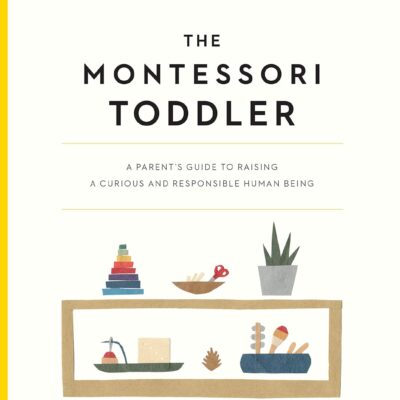
Simone Davies is the author of The Montessori Toddler and co-author of The MontessoriBaby, comprehensive guides to raising toddlers and infants in a Montessori way. The books are based on her 15+ years’ experience working as an AMI Montessori teacher in Sydney and in Amsterdam. She also has a popular blog, Instagram, and podcast “The Montessori Notebook”.She is also mother to two young adults.Simone currently runs parent-childMontessori classes in Amsterdam at her school, Jacaranda Tree Montessori, and is working on another book with Junnifa Uzodike, The Montessori Child for children from 3-12 years.

With hundreds of practical ideas for every aspect of living with a toddler, here are five principles for feeding your child’s natural curiosity, from “Trust in the child” to “Fostering a sense of wonder.” Step-by step ways to cultivate daily routines with ease, like brushing teeth, toilet-training, and dealing with siblings

10 Ways to Prepare for Summer

Get Kids Moving

Why Physical Play Must Be Part of the Formula When Kids Head Back to School

By Preston Blackburn

What began abruptly as a stay-at-home mandate two springs ago settled in for significantly longer than any of us expected. Fortunately, with vaccines, we are trending back toward normalcy. One of the brightest spots we are seeing is children returning to their classrooms in person.

As we get ready for a school year in the classroom rather than virtual, many educators are considering how to make up for suspected learning losses that may have occurred during a year of virtual school (Pearson, 2021). From an adult perspective, the first reaction might be to buckle down and power through as much curriculum content as possible to bridge any gaps in acquired knowledge. But is this the right answer? I would argue emphatically, no.

Play is the way kids wring out their brains. The brain is like a sponge. Once it is full, it cannot continue to absorb until it has been wrung out. As adults, we instinctively take breaks when we are working. We grab a coffee, head to the water cooler, or take a peek at social media. These breaks give the brain time to wring itself out.

Play is the way kids wring out their brains. Play is a time for resetting and relaxing their focus, so that their brains are more alert when it is time to go back to the desk. Students’ play was already being restricted before the pandemic. Reports found 44 percent of school administrators had already reduced recess and PE time to increase academics, despite studies proving that more time in recess leads to bigger gains in the classroom (Reilly, 2017). Coming back to school post-shutdown, we must remember to include play-based breaks. It is play that helps kids build strengths and motor patterns needed for classroom success, and it is play that helps kids develop social skills needed for lifetime success.

How Play Leads to Physical Skills and Strength, Leading to Classroom Success

Kids need strength in their arms, legs, necks, and core to sit at a desk, hold and move a pencil, or keep their bodies still so they can pay attention. Children build strength in play when they run, climb, and swing.

Kids need to know where their bodies end and begin, so they can transfer that information to the page as they learn to write. How much space does a letter, or a sentence take up? What direction are they moving their pencil when they write? Children learn these skills in play when they hide under the bed in a game of hide and seek or shimmy through a fence to explore what lies beyond.

Kids need to master rhythm so they can internalize patterns, which help them understand the rhythm of language, the sequence of writing, the patterns of math, the order of logic and reasoning. They develop rhythm in play while jumping, throwing, and skipping.

In addition, children’s aerobic activity releases chemicals in their brains that enhance cognition, behavior, and memory; thereby, having a direct impact on their learning trajectory. Kids get aerobic in big physical play.

These skills and strengths can only be built in movement. And children move best when they are engaged in big physical play. While some children were able to get outside and engage in big, body play during virtual schooling, many did not, spending more time on screens than ever before. As we look to bridge the academic development gap, we need to also bridge the physical development gap that grew for some of our most vulnerable students.

And we know that recess works. Consider Finland, a country known for scoring in the top levels of international academic exams. Finnish children get 15 minutes of outdoor recess in every hour of classroom time. Outdoor play allows them to explore with their bodies and gives their brains that crucial reset, helping them achieve academic success. Here in the U.S., Eagle Mountain Elementary School in Fort Worth, Texas decided to apply this theory by tripling their recess time to 60 minutes every day. Teachers worried that they would not be able to maintain their academic schedule, but by winter break, every single class was ahead of the academic schedule despite 40 fewer minutes of class time each day.

How Play Develops Social and Emotional Skills

There are the crucial social and emotional skills that can only be developed in play. When humans engage in self-directed, unstructured play, we learn how to socialize, collaborate, and read body language. We learn assertiveness, boundary setting, sharing, and restraint.

Imagine a playground filled with children engaged in play. The first thing you might notice is the sound. It is usually joyous and loud. Evolution and biology designed us to enjoy this kind of big, body, physical play. It builds key physical strengths and skills, like those listed above. It also helps children build lifetime social skills.

It might look like this: One child initiates a play idea, maybe a new idea or the continuation of a previous game. Another friend may join and suggest a modification, sending the play in a new direction. Over and over, new ideas and new alternatives surface as the play evolves. Inevitably, conflict will arise and possibly one player will become aggressive. When this happens, the other player may pull back, giving signs of displeasure with this sort of play. Or a player may have his idea dismissed and take exception, or there may not be enough equipment or material to continue the play as planned. Whatever the challenge, the players have a choice: Find a solution or the play will come to an end.

Play is the way kids wring out their brains.

How can this kind of play be woven into a child’s day?

These exchanges demonstrate the power of unstructured play. Children want the play to continue. They take ownership of the play. They are in charge of the game, they make the rules, and they have a vested interest in continuing the game. Out of this fundamental ownership grows a wealth of learning and development. And, for many children, this sort of interactive, conflict-resolving play was missing from their days during the pandemic shutdown. Many children missed out on a year of the give-and-take of listening to the ideas of peers, of sharing scarce materials, of finding a way to make the game work. The social and emotional learning that comes from this play is just as essential—maybe even more essential—as any academic skills missing from their repertoire.

How can this kind of play be woven into a child’s day? Through both structured and unstructured play. Structured play is adult-directed and designed, while children direct unstructured play. Children need both. Finding time for play in the school day is crucial for making a dent in any learning losses from the past year.

To start with, children should have unstructured play at recess every single day, for at least 30 minutes, but the more the better. There is really no excuse for eliminating this break in the day. Removing recess only makes the school day more challenging for everyone, putting stumbling blocks in front of learning.

Structured play is also crucial to children’s development. It takes place in PE but can move beyond the gym and into any learning environment with a little creativity and planning. Using play and movement in teaching helps kids secure neural connections in their brains, anchoring new knowledge. Whether it is adding physical movement to a memorization task or doing pushups to answer math problems, movement in learning helps children retain what they have learned. Believe it or not, something as simple as spelling practice can be active, sweaty, and fun. An example game can be seen above (Spelling Frenzy Relay).

Children can do these games at home, as well, with siblings or on their own.

There are many ways to add physical movement to academics. Do long division with sidewalk chalk and make it a dance. Use action words to practice rhyming. Hop down a giant number line. When students move, they learn.

All of us want children to be successful in all aspects of life. We want them to be strong students, with strong bodies, and strong friendships. These crucial skills suffered during virtual learning. We cannot further jeopardize students’ physical, social, and emotional development in the quest for checking off boxes on an academic curriculum. Play-based skills make us better people from the classroom to the boardroom. These are not skills that can be learned from an app, a computer, or flashcards. These skills are only developed in play—play that must be in every school day. •

Spelling Frenzy Relay

Work on spelling, practice teamwork, and get aerobic

Set-Up: Children are divided into teams of 2–4 children each. Each team has a set of three-letter words with one letter missing from each one (e.g., H _ T, _ I E, S E _). Scattered on the floor are cards with letters that could complete the words. The first team member finds a letter to complete one word, runs to the opposite side of the room around a cone or chair, comes back to complete the word, and tags the next teammate. Play continues until the team’s words are complete.

Change the Game:

» Instead of running, try jumping jacks, skipping, hopping, bear crawling

» Use longer words

» Make it a math game by using math facts


REFERENCES

Pearson, C. 2021. 1/11/21. “Experts Predict What School Will Look Like Next Fall.” Huffington Post retrieved from https://www.huffpost.com/entry/expertspredict-what-school-will-look-like-nextfall_l_5ffc916cc5b66f3f79601ffe

Reilly, K. 10/23/17. “Is Recess Important for Kids or a Waste of Time? Here’s What Research Says.” Time. Retrieved from https://time.com/4982061/ recess-benefits-research-debate/

Wong, A. 11/15/16. “Why Kids Need Recess.” The Atlantic


Preston Blackburn created Pop, Hop& Rock™ in 2000, when her children were preschoolers. What started as an exercise program has evolved into one that focuses on creating opportunities for children to hone fundamental motor skills, which allows them to develop physical literacy and foundational strengths, proven to help them find success socially, emotionally, behaviorally,and cognitively in the classroom and beyond.www.pophopandrock.com

Reprinted with permission from Community Playthings: www.communityplaythings.com