


A Montessori School Is…
To continue reading, you will need to choose a subscription plan.

Beyond Bribes, Rewards, and Punishments

A Montessori Approach to Clean…
Beyond Rewards, Bribes, & Punishment
A Montessori Approach to Building Intrinsic Motivation
42 ways that the Montessori approach builds intrinsic discipline in our children.
by Simone Davies
In my last article on a Montessori approach to discipline, I mentioned that we don’t use rewards, bribes, or punishment in a Montessori classroom. And there is not a teacher at the front telling everyone what they need to do. Yet, if you observe in a Montessori classroom, there is a gentle hum of conversation and movement and a lot of concentrated children who are motivated to work.
So, not surprisingly, I received many questions about a Montessori approach to building intrinsic motivation in the child. Intrinsic motivation is doing something because you have the inner drive to do it, not because of some external reason like a reward or threat.
I love a good list so here are 42 ways that the Montessori approach builds intrinsic discipline in our children.
Note: It’s a holistic approach where each part is intrinsically linked. So, while it may seem overwhelming to do all these things, rest assured they also naturally build on one another.
42 Ways to Build Intrinsic Motivation
1. Build an environment where they can have success; knowing where they can find things and having things at their level.
2. Create opportunities for them to build independence – they see themselves as capable.
3. Cultivate opportunities to work together, cooperate and care for others – they see their input matters; a 0-3 child is observing and beginning their social development in their family. With a care giver, and/or nursery; the 3-6 child is part of their family and their class; and the 6-12 child wants to work and be a part of a group.
4. Value process over product; there is more learning in the doing than in the result.
5. Use encouragement rather than praise. When they hear, “You worked hard to get your shirt on all by yourself ” rather than “good job,” they learn to look to themselves to understand what worked, rather than looking to us for praise.
6. Give them freedom to work on things they are interested in – rather than what the teacher/adult tells them – or a timeline.
7. Provide safe limits. Offer security and show that someone cares about them.
8. Allow them the freedom to choose what, where, and with whom they’d like to work.
9. Provide a clear rhythm to their day so that they know what to expect.
10. Help them learn respect for themselves, each other, and the environment – they feel truly accepted and learn to accept others.
11. Encourage those agreements are made together – they feel like a valued member of the community.
12. Let them know that it’s a safe place to practice boundaries – we can support them with words if needed, “I’d like to work by myself right now. It will be available soon.”
13. Honor who they are; each member is unique and valued – builds their sense of self.
14. Help them learn to look after themselves, others, and the environment – it’s empowering to be able to do this for themselves.
15. Show trust in them – by removing external rewards and punishments.
16. Help them to make amends when needed – they know that when they get it wrong, they will take responsibility and learn from the experience.
17. Value curiosity – learning is about finding out rather than memorizing facts
18. Allow them to have choices – they have ‘agency’ in their days
19. Provide honest, instructive feedback – we see what’s going well and how they can do better; give them gentle guidance to keep improving.
20. Offer different ways to learn; we all learn in different ways and on different days; the materials appeal to kinesthetic, visual, and aural learners, and they can choose how they’d like to present their work, from a booklet to a survey to a poster etc.
21. Be their guide – not their boss or servant
22. Help children build ‘scaffold skills’ – where each activity builds on the next to allow mastery.
23. Support them to develop their own routines/ rhythms, such as taking an activity to a table or mat and returning it when it’s done.
24. Help children develop their thinking skills – they are learning to learn through hands-on learning and making discoveries for themselves; they help younger children and consolidate their own learning; they reflect on what they have learned.
25. Keep it real; children are not learning just for the sake of learning. They are learning how it applies in the real world giving meaning to their work.
26. The absence of tests or punishments allows a natural love of learning, while maintaining their creativity and interest in learning
27. Model intrinsic motivation ourselves as adults; our actions are more powerful than our words.
28. Provide control-of-error activities, which will allow children to discover their errors and try again.
29. Offer challenges at the appropriate level. Children do not feel unmotivated, because they know that they can do hard things, and they do not want to give up.
30. Encourage service in the community. This allows children to see and appreciate the impact of their work.
31. Children can have a healthy relationship with failure: the guide and classmates are supportive; children are able to stay with something until they master it and are ready to move onto the next activity; and they learn to ask for help if needed.
32. Remove competition for sticker charts or praise; children do not need rewards from others. Help them look to themselves instead of someone else.
33. Allow time to help children build skills, e.g., planning skills, learning to dress themselves, how to make a report, etc.
34. Children are in charge of their own learning: they learn uniquely, have their unique interests; and are on their own unique timeline.
35. Adults can trust the Montessori process, without forcing their own agenda.
36. Help children support themselves as they become members of their society.
37. Be patient; learning happens at its own pace and isn’t forced.
38. Plant seeds of curiosity, enough to get them interested, and not too much to allow them to discover the rest for themselves.
39. Encourage the possibility for big work and big ideas that looks at the interdisciplinary nature of the universe.
40. Allow space for all voices; we want everyone in our community to feel valued, accepted, and safe.
41. Avoid criticism or correction; instead, observe where children are in their process, and offer another opportunity to teach it again.
42. Learn from others. We can see others learning and be inspired to learn that too.
It’s never too late to start applying these principles. We can even scaffold the skills with a child in Upper Elementary (9-12 years), first helping them plan, then letting them take over more and more steps themselves. •
Simone Davies is the author of The Montessori Toddler and co-author of The MontessoriBaby, comprehensive guides to raising toddlers and infants in a Montessori way. The books are based on her 15+ years’ experience working as an AMI Montessori teacher in Sydney and in Amsterdam. She also has a popular blog, Instagram, and podcast “The Montessori Notebook”.She is also mother to two young adults.Simone currently runs parent-childMontessori classes in Amsterdam at her school, Jacaranda Tree Montessori, and is working on another book with Junnifa Uzodike, The Montessori Child for children from 3-12 years.
With hundreds of practical ideas for every aspect of living with a toddler, here are five principles for feeding your child’s natural curiosity, from “Trust in the child” to “Fostering a sense of wonder.” Step-by step ways to cultivate daily routines with ease, like brushing teeth, toilet-training, and dealing with siblings

The Dump Truck Story
The Dump Truck Story
What happens when we normalize ‘disaster’ thinking and accept the mess
by Alicia Diaz-David
When my son was two years old, he scribbled on his dump truck with a brown marker and announced that he would wash it right there in the middle of our living room floor. My first reaction was to gasp when I noticed the brown scribbles. My second reaction was to see where his plan of action would take him.
So, I watched as he used the foaming soap dispenser to lather his hands and then rub the foam on the dump truck that was still on the living room floor. And I watched as he headed to the bathroom to fill his large bath-time cup with water to rinse off the foamy soap.
And that’s when I jumped in. Not stopping him but offering him another line of thinking by asking what would happen if he poured the water on the truck right there where it was. Thankfully, he responded that it would spill. I suggested we bring the dump truck outside to our front steps, where a giant water spill would not matter as much.
And the rest happened as you might imagine. My son happily poured water over the soapy brown marker and watched as it splashed on the cement pavers, instead of the living room floor. He went back inside the house to get a towel, which he smoothed over the water droplets on his beloved dump truck. And he smiled proudly at all that he had done.
If you are familiar with the principles of Montessori and the practice of following the child, this story may seem reasonable enough. It may seem as nothing more than a toddler exploring and experimenting with his dump truck and a mom observing and conscientiously guiding the learning moment that would unfold. However, when I submitted this story for a recent publication, it was changed. The edited version included the words, “This is going to be a disaster,” and I admit it stopped me in my tracks when I read it.
Not only was I impacted by the fact that a piece of original writing would be so altered, but also by the idea that our current thinking about children exploring and experimenting is so readily equated to things turning into a disaster.
The truth is, there is a great deal of learning in the so-called disaster. The mindful parent recognizes the learning potential when a child is following her own reasoning. The prepared adult is ever-present, jumping in to help only with the hard parts. That is the true meaning of Montessori parenting, as I’ve read in countless books, learned in Montessori training, and experienced personally with my own children at home.
So, I write today to challenge this thinking and normalize what we would otherwise consider a ‘disaster.’ When we let our children explore their ideas, when we observe this process, we realize that we are truly being given the gift of watching a genius at play.
Our job as adults is not to limit or edit this experience but to let it unfold and only redirect it when necessary. What I learned from my two-year-old son that day—what I witnessed—was a young toddler exhibiting complex executive-function skills, a little boy filled with resolute determination, a confident multi-cultural child ready and willing to solve problems in the world.
I hope that in the future, we don’t edit stories like this. These are moments to cherish for what they are … the awakening of life itself. •
Alicia Diaz-David is a parent and educator with over 15 years’ experience in education. She has followed the Montessori approach at home since her children were born and is a certified Montessori guide for ages 3-6. She is also the founder of TeachLearnMontessori.org, which is dedicated to helping parents better understand the Montessori philosophy and simplify the approach. You can learn more about supporting children’s growth and development using Montessori via the real-life stories she shares on Instagram @MontessoriwithAlicia or on her blog at TeachLearnMontessori.org.

I think my child is ready to move up to the next class… a year early!
Over the years, it’s quite common for parents to come to us to say that, since their child is so advanced academically, they worry that the class they are in now is not sufficiently challenging. It is not unusual for parents to ask the school to move them up a year early next term.
There’s no one response that schools offer, but I think there are a few things to consider.
Typically, parental fear of their child being disadvantaged by being the most advanced in a Montessori classroom is based on a misperception.
Unlike traditional schools, where the pace of education is based upon the norm of the class, the Montessori curriculum follows an international model rather than what is commonly taught in American schools. In general, Montessori programs are more sophisticated and individualized in many ways.
In the United States, in the first three grades (kindergarten through second grade), it is fairly common to teach children number recognition and simple mathematical operations with one or two-digit quantities. Math can be very abstract, and some children memorize answers but may or may not understand what they’re doing.
Likewise, with reading, many children are asked to read from simplistic texts or workbooks that have more to do with spelling and vocabulary than with really giving them a love of the written word, no less a desire to express themselves in writing.
While there is a real concern about math education in the United States, many students are not culturally literate in history, geography, economics, science, civics, and our cultural heritage found in the arts and literature.
Like most schools that follow European tradition, Montessori places a huge emphasis on what some people call the ‘cultural subjects.’ These topics include, science; technology; history; geography; international studies; the foundations of industry and trade; architecture; engineering; and so much more. Montessori’s breadth of curriculum tends to produce young people who have far more knowledge of their country’s history, government, and heritage than most Americans.
So, we have three basic issues. The first is that in Montessori, children don’t learn at a preestablished pace. They are not only able to choose the things that most interest them but to learn in ways that they find most appealing. Children are different. Some learn best by listening to someone else talk; others learn by observing, and many need to directly experience to understand and remember. There are so many variations in the way children learn, and it’s challenging to know what’s right for an individual child.
The second issue is that no teacher can work with each child every moment of the day. That’s the beauty of Montessori’s prepared learning environment. It allows children to find meaningful work without having to depend on a teacher telling them what to do throughout the day.
Another consideration is that most of us learn best not by simply receiving a lesson; repeated experiences along with the opportunity to help (or teach) other children solidifies the skill or concept. The best teacher of the typical student is usually not the adult with a master’s degree in education; rather, it is often other students who have a grasp of the material and are willing to share their understanding with a fellow student.
The third point is that a child who remains in a Montessori multi-age class is surrounded by other students (younger and older) who have their own gifts and talents to share. They stimulate each other. The beauty of the Montessori experience is that the class is a community, not simply a group of children who are focused on the lesson that the teacher happens to be giving. This ongoing set of relationships builds a sense of safety and security for most children, both with their peers and with the adults in their lives. As parents, we need to understand how incredibly valuable that is.
So, the trade-off to having a child move up a year early is not so much that the child will get lessons that they couldn’t get in the younger class, as much as that they would be moving up into a class, where the age range is going to be three or four years beyond their current level.
Every child is different and there are times when moving a child up early actually is worth considering. In my experience, I never followed a hard and fast rule. We always try to explore with the family why they feel this is a good idea? Here are some points parents and educators should consider:
• Is it accurate that the current class really can’t meet the child’s intellectual and academic needs?
• Do the parents feel a strong urge to push their child ahead more quickly? If so, why? What do they hope to gain? What are the pros and cons?
• Or is it fear that their child will miss opportunities that they would have at the next level?
These are all legitimate questions, but we must weigh them against the advantage of stable, continuing relationships. Having been one of those students, who was moved up a year early at one point along my journey, I found it difficult to be a year younger than the youngest child in the classroom. So, if you ever come to the conclusion that, perhaps, your child might do well to move up, try to really think it through with the school and weigh the pros and the cons.

Montessori is based on the idea that each child follows her own pace and that education is a journey, not a race.
Montessori classes are not only about academics. The focus is social and emotional, as well. While a five-year-old may be reading like a six-year-old, this same child may socially and emotionally be better suited to remaining in a class with familiar children. Being among the oldest and most advanced creates the possibility of becoming a leader. Don’t undervalue how wonderful that experience can be.
Montessori is based on the idea that each child follows her own pace and that education is a journey, not a race.
Other than saving a year’s tuition if your child attends a private Montessori school, there are few (if any) benefits for a child who finishes high school early. Beginning university younger than the other students in their class may again present same social, emotional, and academic challenges, depending on the student.
Appreciating Montessori’s ability to meet children at their intellectual level is one of the greatest gifts of Montessori education. I always recommend that parents follow their hearts, but I do advise every parent to be thoughtful and careful before leaping to a decision.
Try to find the best path for your child, and always remember that it’s important to ask them what they really want to do. Listen carefully to their reasoning. Sometimes the reasoning makes perfect sense; sometimes it doesn’t make any sense at all. Weigh your conclusions and follow your parental instincts. That’s all any of us can do. •

An Online Montessori School for Teens
In the fall of 2020, the leadership of the Center for Guided Montessori Studies asked the question, “What would an authentic Montessori middle school look like if it were online?” This question was especially pertinent at the time, because we were all adjusting to “forced” online learning resulting from the COVID pandemic. The question that we asked ourselves was, “Can we build an adolescent Montessori program and community online?”
That winter, we decided to plan for a soft launch of what became the Bridgemont International School. We began with just one class of seventh- and eighth-grade students, all living within the time zones of the continental United States, led by certified and experienced Montessori Adolescent Guides.
Our plan is to add one grade a year, extending through high school over the next four years. We also plan to open additional cohorts in North America and other parts of the world as interest grows. As we have from the start, our goal is not to grow quickly, but rather with slow, careful steps to ensure that we establish programs that are excellent and sustainable.
The first question that we reexamined was, “What makes a Montessori adolescent (middle and high school) program authentically Montessori?” Even though we have been involved with Montessori programs at this level for years, there is (at this point) no one model for adolescent programs. Dr. Montessori died before she was able to define the “model” of what a secondary program looks like. Rather, there are a series of lectures and discussions that other Montessori educators have interpreted, leading to vastly different models of Secondary education.
Many are familiar with the farm-school model of Montessori Adolescent Education (Erdkinder), while others may be familiar with the curricular outlines of other Montessori Secondary training programs. While there are many different models, there are key components of Montessori for the student in the third plane.
Curriculum: Students need to learn! They should be culturally literate and develop the academic skills they will need if they decide to pursue post-secondary education. Even within this component, there are different definitions of what that means. I would suggest that students need to know basic information. What makes Montessori distinct at this level is the balance between helping students through the challenges of adolescence, while covering an excellent course of study. For us, a particular focus is helping teens to discover that what they learn in school is real, relevant, and interesting. We want to encourage their interests, help them to see the big picture, and think critically about what they study and how it relates to their own lives.
The core of our academic program is the Montessori educational syllabus, which consists of ‘integrated academic components’ in three overarching areas: self-expression; emotional development; and preparation for adult life.
Within these areas, Bridgemont offers rigorous coursework in a variety of academic subjects, experiential learning, and in-the-field experiences; a range of seminars and collaborative learning projects; training in organization and personal responsibility.
Even though our curriculum is highly integrated, courses have titles that are familiar to colleges and other schools including math, language arts, sciences, humanities, Spanish, health, arts, and electives.
Here is an example of a simple 7th- and 8thgrade science experiment that we did recently.
Is “earth-friendly” laundry detergent actually safe for the environment?
For this experiment, we planted radish seeds in potting soil. In Dish #1, we watered the seeds with a mixture of water and regular detergent. In Dish #2, we watered the seeds with a mixture of water and earth-friendly detergent. In Dish #3, we simply used regular tap water.
After 10 days, only one dish had germinated seeds. Can you guess which one???
The dish that used regular tap water was able to grow radish seeds. The other two dishes? Nothing.
In Dish #1, the regular detergent solution left a heavy film over the soil and seeds.
In Dish #2, the earth-friendly detergent solution did not leave as heavy a film; however, no seeds germinated.
Conclusion: “Earth-friendly” may not be all it is advertised to be; however, it certainly is “friendlier” in appearance.
Valorization: This is such a wonderful term that Dr. Montessori gave us. It is the key challenge of adolescence: the formation of a clear sense of identity, a moral compass, and feeling validated and valued for their contribution as an individual. As children transition from childhood through the teenage years, and then into the adult world, they need to feel a sense of responsibility and worth that leads them to confidence and independence. This can be accomplished in many ways; however, it is probably the single most important component of Montessori at this level.
Community: Community is, directly and indirectly, related to curriculum and valorization. Part of the work of adolescents is to discover their own strengths, style, and role in the community. This is done through deliberate and unexpected avenues. A most basic statement is that adolescents desire to be part of a community.
So, back to the question at hand; how does one create this from an online platform?
How can we deliver a rich curriculum that is more than mere memorization, create opportunities for students to feel valued and value in their work, and create a sense of community, when most of them have never actually met in person?
The students at Bridgemont spend approximately four hours a day in real-time engagement in a variety of activities, including (but not limited to) direct instruction, Socratic dialogue, independent and small-group work with peers, presentations, guest lecturers, working out, doing art, and the occasional Harry-Potter-themed “butter beer” parties.
So, can Montessori at this level be done from an online platform? YES!
A prepared environment at the Secondary level is much more about experiences rather than the materials and physical environments of the Early Childhood and Elementary levels. Can the Montessori guides create opportunities for authentic interaction, sharing, and developing a real sense of caring about one another? Can this be done while also helping students become culturally literate and explore their open passions? Again, YES!
Online learning gives students the space to comfortably participate and voice their opinions, which can ultimately help build confidence and positively reinforce their self-esteem.
At the half-year point, the discussion among the students and Montessori guides turned to gratitude. To our delight, what the students were most grateful for was the sense of community, greater than they had felt in their brick-and-mortar schools. What was our greatest concern, had become our greatest strength.
Community, in the case of the Bridgemont students, guides, and administrators, means kind, empathetic, interested young adults that are not just saying that they care, but honestly care about each other and are interested in the world in which they exist. While doing so, they are also being held to a high level of academic expectations that support each student’s progress and independence.
SOME ADDITIONAL INFORMATION:
Is Bridgemont accredited?
As Bridgemont International School is licensed in the state of Florida, it adheres to the graduation requirements of the State of Florida. (We teach the same courses; however, they are taught very differently.) The school plans to pursue accreditation by the International Montessori Council (IMC) and Cognia.
How does Bridgmeont address service learning, Erdkinder, etc.?
At Bridgemont, we recognize the importance of the “Montessori experience.” We intend to include each of these experiences; however, they will be different in that the students will have more responsibility in designing their experiences with the support of our Montessori guides. Rather than being provided with experiences, students will be actively involved in the design of the experiences that satisfy their requirements in their own communities.
Is it all online?
A goal for the near future is to have two live in-person experiences a year. The school year would start with a whole-school orientation, which would change from year to year and is meant to be a team-building and orientation program. The second experience is meant to be student-designed and will look different from year to year. This will be budgeted, designed, planned, and based on student feedback and student work. (COVID-19 has made this difficult, but it is a goal for the 2022-2023 school year, if possible).
How are time zones addressed?
Our courses and schedules are deliberately designed to meet the needs of students in the continental United States. With WIN (What I Need) hours scheduled on both sides of the “Core” curriculum, students from all parts of the United States can work together at times that are convenient and in line with best practices in adolescent psychology.
As the school grows, there will be timezone-specific cohorts. These will be times that are more specific to time zones and regions; however, there will be shared times with all available time zones to include students from other countries, continents, etc.
In summary, Bridgemont International School is an authentic Montessori School, where students from all over the United States and around the world have the opportunity to become what they are meant to be and have the fortitude, confidence, and support to go after it. •
If you are interested in learning more, please visit our website at www.bridgemontschool.com.

Robin Howe, Ed.D. is a Montessori kid, a Montessori certified teacher (at all levels except infants), and a Senior Consultant for the Montessori Foundation.

Raising Helpers
by Theresa of Montessoriinreallife.com
One of the most wonderful things about toddlers is how they so inherently want to help. They are eager to be involved, be near us, and participate in our day-to-day activities. What we deem “chores,” toddlers see as what they are: meaningful contributions to our family or community.
After toddlerhood, we often notice a shift. Children seem less intrinsically motivated to help and view helping more as a chore. This is a natural part of development: they are more independent and focused on their own work and play. They are discovering who they are and where their own interests lie, which is a beautiful thing. It also doesn’t mean it’s the end of helping!
How do we continue to foster this motivation and raise helpers beyond the toddler years? Here are a few tips that I’ve been keeping in mind in our own home lately. These can be incorporated in toddlerhood and well beyond!

Help Our Children
Our children learn how to help through us helping them. When we respond to their requests for help, they are more likely to do so in return. Helping doesn’t mean doing a task for them, but rather offering just enough help to get them through a tough spot.
Model It
Not only should we think about how we are offering help to our children, but how can we offer help to our partner, a friend, or our community? The more our children see us being helpers, the more likely they will want to be a helper too.
Talk About It
“In our family, we help each other.” This is a phrase that we repeat often at home. The more we say and hear this, the more ingrained it becomes and the more natural it feels to be a helper in the family. Importantly, this phrase is said in a gentle way, not as a command.
Make It Part Of The Routine
When we make helping a part of our daily rhythm, it becomes natural. In our family, certain tasks are the kids’ responsibility every day: putting shoes and coats away, setting the table, feeding the dog, wiping up spills, tidying toys, etc. These tasks aren’t rewarded but rather just part of the routine.
Don’t Force It
Inviting doesn’t guarantee our children will help. Even when these tasks are part of the daily (or weekly) routine, everyone has off days. We can offer grace and let it go. Often, the next day, or at a different time, they are ready to help again.
Offer Opportunities
Sometimes we move so quickly through our own chores, we forget that we could involve our children. As much as possible, I try to do chores in front of the children so that they have the opportunity to join in and help. Often, what we consider mundane tasks are satisfying for our children. Having cleaning tools that are appropriately sized for our children makes them feel especially capable.
Accept It As Is
When our children do help, we may find that they’re ‘help’ doesn’t lead to the outcome we desire. The dishes might not be as clean, or the laundry might not be folded in a neat stack. When this happens, we can thank them for helping and appreciate the effort that went into it. Rather than correct them at the moment, we can model again another time, and try to be patient, as every skill takes time.
How can your child help today? •

Theresa is a mom to two, a former Montessori guide, and the founder of the blog Montessori in Real Life(www.montessoriinreallife.com). Prior to momming and blogging, she went to graduate school for developmental psychology and earned her Montessori infant/toddler guide certification. Since transitioning from teaching to motherhood, Theresa found a new passion sharing her love of Montessori with parents,while continuing to implement the Montessori philosophy in her own home.

Leading With Emotional Intelligence
On Cue Everyone, “Consider EQ before IQ”
by Dane Peters
from Montessori Leadership November 2021
“I knew I was a relatively smart guy, with an average or a little bit above average IQ, but I knew I had something going for me in my ability to connect with people, read situations, listen well, empathize, manage my impulses, and have pretty good follow-through. And I think I did well academically because I could do all those things.” 1
1 This quote is from Dr. Mitchel Adler, a keynote speaker, whom I met in Chicago at a conference; I also had the opportunity to interview him for an article, “Emotional Intelligence and Montessori Principles, Values, and Perspectives: An Interview with Mitchel Adler, PsyD.”
I love the quote above because it is an intelligence snapshot that speaks directly to the difference between EQ (Emotional Quotient) and IQ (Intelligence Quotient). Peters, Dane L., “Emotional Intelligence and Montessori Principles, Values, and Perspectives: An Interview with Mitchel Adler, PsyD,” Montessori Life, Winter 2015-16 2 Lillard, Angeline Stoll, Montessori: The Science Behind the Genius, Oxford University Press, 2005, p. 199
As we explore emotional intelligence in our Montessori world, it is important to reflect on the role ‘modeling’ plays, especially as it pertains to leadership, whether it applies to children in the three-year cycle, or a head of school modeling for faculty, staff, parents, and trustees. “Children also can learn about social behavior in Montessori classrooms by observing how others behave in natural, non-scripted situations. Whereas in traditional classrooms, children learn how to sit still and listen to the teacher, in Montessori, they can learn how to interact with each other. The oldest children in the classroom can serve as examples to the younger ones.” 2
I also want to highlight the importance of grace and courtesy in relationships and leadership. Back in 2016, I wrote “Lead With Grace & Courtesy,” published in Montessori Leadership. 3
I have found that grace, courtesy, and role modeling are critical to EQ coming before IQ.sIn my talks as a consultant to schools, I often refer to the history of intelligence quotients—both EQ and IQ.
In a recent International Montessori Council Webcast, “Leading with Emotional Intelligence,” I talked about the history of intelligence. Let me do a brief summary, so that we can better understand the evolution of the two. Do keep in mind that Emotional Intelligence (EI) is interchangeable with Emotional Quotient (EQ).
1949 – One of the earliest methods of measuring intelligence was through the use of the WISC (Wechsler Intelligence Scale for Children) that was developed by David Wechsler. The test is an individually administered intelligence test for children between the ages of 6 and 16. It was the test to assess how ‘smart’ a child was beyond school assessments and gave an IQ score in the range of 69 and below (Extremely Low) to 130 and above (Very Superior). H1980s – Howard Gardner introduced the idea that people have multiple intelligences beyond the WISC IQ standards as noted below. In 1983 he presented the groundwork for thinking beyond IQ with his popular book Frames of Mind.
- logical-mathematical
- inguistic-verbal
- spatial-visual
- body-kinesthetic
- existential
- musical
- interpersonal
- intrapersonal, and
- naturalistic intelligence
As a side note, while I was head of a Brooklyn Heights Montessori School, he joined the faculty for lunch, shared his wisdom with us, and was so well received.
1990 – Peter Salovey and John D. Mayer coined the term “personal intelligence”; it eventually became “emotional intelligence,” describing it as “a form of social intelligence that involves the ability to monitor one’s own and others’ feelings and emotions, to discriminate among them, and to use this information to guide one’s thinking and action.” Mayer’s book, Personal Intelligence – The Power of Personality and How It Shapes Our Lives became the springboard for the one who brought EI to the forefront of the study of intelligences.
1995 – Daniel Goleman was the loud speaker for EI / EQ when he authored the internationally best-selling book Emotional Intelligence, which spent more than one-and-a-half years on The New York Times best seller list. On the cover of the book’s 10th anniversary edition, it states: “Why it can matter more than IQ.”
2007 – Stanford professor, Carol Dweck, clarified measured intelligence in her revolutionary book Mindset: The New Psychology of Success. She helped us understand that individual intelligence can have a “fixed” or “growth” mindset. She helped us understand that intelligence does not have to remain stationary — or fixed — throughout life; in fact, intelligence can grow throughout life.
When I saw her at a conference, I was taken by her thoughtful and clear understanding of intelligences. She asked the question, “Are we raising our children for now or the future?” Watch her excellent YouTube video, Developing a Growth Mindset with Carol Dweck for an uplifting, enlightening view into her important work.
Considering Emotional Intelligence 2.0 4
Let us now look at EQ through this popular diagram from Goleman’s book that represents the four core emotional intelligence skills:
SELF AWARENESS
SELF MANAGEMENT
SOCIAL AWARENESS
RELATIONSHIP MANAGEMENT
To dive deeper into these skills, make it a point to read the book. My recommendation comes from an EQ perspective. I know how busy educators are these days with school, family, and personal life; the book is short, to the point, and an easy read that is most helpful in understanding EQ and the advantages that it has over IQ. Do give it a try, if you haven’t already. In the meantime, here are a few EQ considerations to think about: oConsider John Bariso’s 13 signs of high emotional intelligence 5
3 Peters, Dane L., “Lead With Grace & Courtesy,” Montessori Leadership, International Montessori Council, Volume 18, Issue 3, 2016
4 Bradberry, Travis & Greaves, Travis, Emotional Intelligence 2.0, TalentSmart, 2009
5 Bariso, Justin, “13 signs you are highly emotionally intelligent,” FLIPBOARD – Business Insider, March 1, 2018
Considering EMPATHY
Empathy and compassion are important parts of emotional intelligence. Donna Orem, NAIS (President of the National Association of Independent Schools) stated in her NAIS article “The Power of Empathy in Leadership and Governance” Recently, I read The Empathy Factor, and one line from the book encapsulated the key learning for me: ‘The main reason organizations that try to manage change fail is their tendency to treat human systems as though they were mechanical processes. We are all human. When we work from a place of understanding, we thrive, and our work prospers. 6
According to psychologist Mary Ainsworth, quoted in Angeline Lillard’s book Montessori: The Science Behind the Genius, “A second feature necessary to accurate interpretation, according to Ainsworth, is empathy. Adults who lack empathy, she said, would have detached, intellectual relations with babies instead of warm, sensitive ones.” 7
Considering HUMOR
In an excellent NYTimes article “Laughter May Be Effective Medicine for These Trying Times,” Dr. Miller said, ‘Having a good sense of humor is an excellent way to relieve stress and anxiety and bring back a sense of normalcy during these turbulent times.’ 8
Author Daniel Pink highly recommends the recently released book Humor, Seriously: Why Humor is a Secret Weapon in Business and Life 9
When you open the cover and read the inside flap, it states,“Top executives are in on the secret: 98 percent prefer employees with a sense of humor, and 84 percent believe that these employees do better work.” Also, the book is particularly thorough on talking about humor and its relationship to EI. Here is one example: “Having a sense of humor—both the ability to generate humor and to appreciate it—has repeatedly been found to correlate with measures of intelligence.” In the end, ask yourself, “How do I feel about the importance of humor in my school?” As a quick, recent example of considering humor in the hiring process, a staff appointment to NYSAIS (New York State Association of Independent Schools) was announced in a February 8, 2021 letter written by Mark Lauria, Executive Director, about the new hire, “Of course, a strong interest in building ‘community’ and a good sense of humor were also important!”
6 Orem, Donna, “The Power of Empathy in Leadership and Governance,” March 21, 2016
7 Lillard, Angeline Stoll, Montessori The Science Behind the Genius, Oxford University Press, 2005, p. 262
8 Richard Schiffman, “Laughter May Be Effective Medicine for These Trying Times,” New York Times, October 2, 2020
9 Jennifer Aaker & Naomi Bagdonas, Humor, Seriously: Why Humor is a Secret Weapon in Business and Life, Random House, 2021
Considering TRUST
Rolling into trust . . . Humor, Seriously states “Laughter triggers the release of oxytocin, often referred to as the “trust hormone” because of the way it prompts our brain to create emotional bonds.” 9 Emotional Intelligence 2.0 is clear about trust: “Trust is something that takes time to build, can be lost in seconds, and may be our most important and most difficult objective in managing our relationships.” The book then goes on to detail how trust is built?
1. Open communication
2. Willingness to share
3. Consistency in words, actions, and behavior over time
4. Reliability in following through on the agreements of the relationship
Considerations on why EQ comes before IQ
1) “When I compared star performers with average ones in senior leadership positions, nearly 90 percent of the difference in their profiles was attributable to emotional intelligence factors rather than cognitive abilities.” 10
2) Probably the most important aspect of having and using emotional intelligence is that in a school community, we are modeling these characteristics for the children and our colleagues on a daily basis. I believe it is the best way to teach: be a good role model.
In closing, the big reason why I believe we should take the cue “Consider EQ before IQ” is that the opening quote of this article could have come from me . . . except the part when Mitchel says, “And I think I did well academically because I could do all those things.” I was not a good student, but I loved to connect with people. I can remember being called into the Dean of Students’ office in the beginning of the spring semester of my freshman year of college. She said, “Dane, we have got to do something, your GPA (Grade Point Average) is at 1.48 out of 4.00. If you don’t bring it up, we will not be able to allow you to return next semester.” The fact that I was class president and playing two sports did not matter. I gulped and said that I would get on it right away, and I did—at least enough so that I was able to return and graduate three years later. Finally, a pertinent confession that, for me, validates EQ before IQ; it is clearly spelled out in an article I wrote in 2009, “930: A Secret Whose Time Has Come”. 11
9 Jennifer Aaker & Naomi Bagdonas, Humor, Seriously: Why Humor is a Secret Weapon in Business and Life, Random House, 2021
10 Harvard Business Review Guide to Emotional Intelligence, Harvard Business Review Press, 2017
11 Peters, Dane L., “930: A Secret Whose Time Has Come,” AMS Newsletter, Sept. 2009

Dane L. Peters Right after college, Dane Peters served as a Captain in the U. S. Marine Corps, and 40 years later, he retired as head of Brooklyn Heights Montessori School (BHMS), a toddler through eighth-grade school in Brooklyn, New York. Prior to heading BHMS for eleven years, he served as head of Mooreland Hill School in Connecticut for eleven years. He recently completed his service as the administrator for the New York State Association of Independent School’s (NYSAIS) Experienced Leaders Advising Schools program. He is currently teaching and serves on the Advisory Committee for the American Montessori Society’s (AMS) Emerging Leaders Fellowship program. Dane has written over 100 articles that have appeared in 30 different publications. His first book, Independent by Design, was published in 2014. His second book, Design for Independence, Inspiration, and Innovation: The New York State Association of Independent Schools at 70, was published in 2017. You can read many of his articles on his blog (www.danesedblog.blogspot.com).

So What Is Special Education?
To continue reading, you will need to choose a subscription plan.
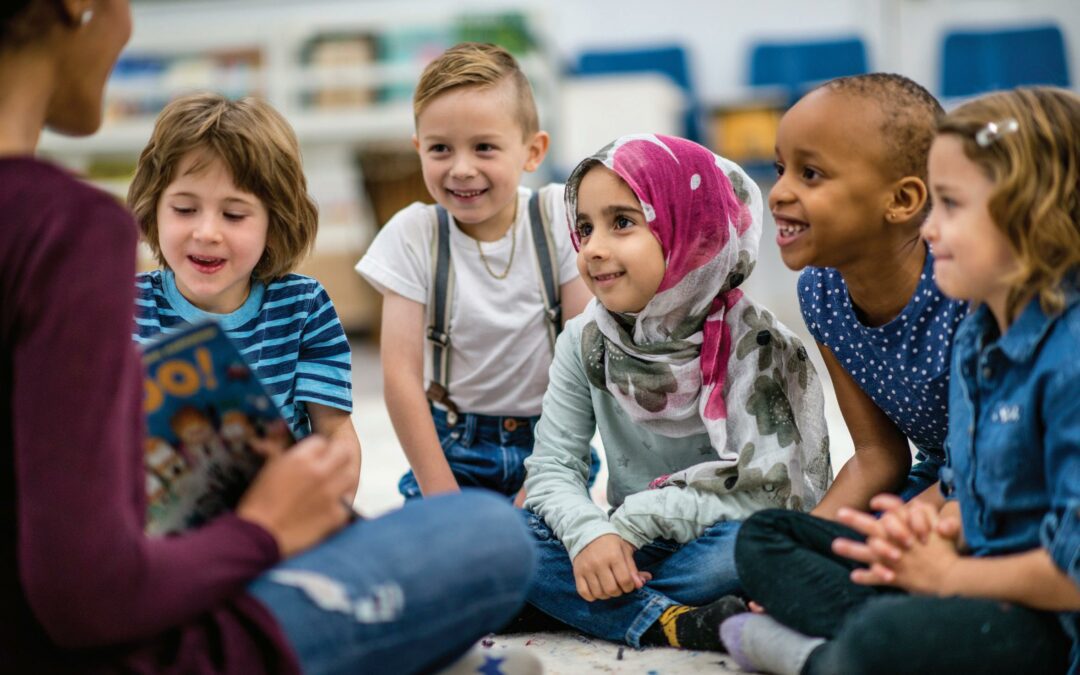
Storytelling and Executive Functioning
All classroom teachers have had experiences with children who have difficulty in school; often, it’s unclear why. We might try a number of things and still find frustration. Often, the students clearly want to do well and evince great potential, but their difficulties or challenges aren’t attributable to any sort of obvious learning disability or special need.
In these elusive cases, it is important to consider that there may be impediments to executive functioning, the set of key skills that we use every day in our daily lives, our learning, our work, and in any sort of performance.
We also regularly work with young people who seem to “get it.” They are attentive, seem to follow our lessons, and appear to understand essential concepts embedded in our lessons. In these cases, it is important to consider that these students may have greater capability in the key areas of executive functioning.
Executive functioning is key to our ability to navigate the world.
Simply stated, executive functioning is a set of essential mental skills that we employ at all ages, from early childhood through adulthood. Three of these functions, possibly the most important, are: working memory; cognitive flexibility; and inhibition control.
Working memory refers to our everyday memory, our use of it, and our ability to access it. Cognitive flexibility is adaptable, manageable, and responsive thinking. Inhibition control refers to the willpower that one manifests over one’s own actions, such as restraint, self-control, and discretion.
I cannot overstate how important these three skills are. They underlie most successful behaviors in school and, indeed, our entire professional adult life. Executive functions make possible a large number of intellectual and psychological achievements, including: advanced thinking, or mentally playing with ideas; careful planning, or taking time before acting or performing; flexibility, or meeting unexpected or unanticipated challenges; perseverance, or resisting temptation and developing stick-to-itiveness and maintaining focus.
The good news is that these skills or abilities can be nurtured, developed, and refined, so that even if one or more of them is at a less-than-ideal level, they can be improved and maintained. In short, they can be taught in our classrooms in a way that promotes their growth and utility. How? We can do this by using, quite possibly, the most ancient teaching technique: storytelling.
Storytelling has a unique relationship to each of these skills: it directly addresses and encourages working memory, cognitive flexibility, and inhibition control. Let’s look at each one and see how storytelling can benefit and support its growth.
Whenever we need to remember something important, such as our list for the supermarket, where we parked our car, a friend’s phone number, or a set of instructions for any task, we rely on working memory. Working memory is simply the ability to hold information in one’s mind over a brief period of time and being able to apply that information to various scenarios.
Most neuroscientists agree that there is some limitation to the capacity for working memory, although that limitation (and whether it can be adjusted) is up for debate.
Of course, memories do get lost or diluted over time, but there are some ways to slow or even stop that process.
One way to improve working memory is what researchers call maintenance rehearsal, or simply repeating information mentally without regard to its significance or meaning. An example might be going over and over in one’s mind the exact items on a grocery list in the hope that nothing will be forgotten. This method may be used productively, though with limited utility, in school settings: memorizing arithmetic fact tables; conjugating verbs; or drilling spelling lists and foreign language vocabulary.
A second approach is what researchers call elaborative rehearsal: recognizing some significance or meaning about certain information, then associating it with other information. Mnemonic devices fall into this category, as do any associations or relationships that can be established among and between various ideas, facts, or procedures. An interesting note is that researchers believe that elaborative rehearsal can help move information from working memory into long-term memory. This makes any experience that creates associations especially valuable for learners. Storytelling offers particular and substantial opportunities for elaborative rehearsal. First of all, stories often relate immediate impressions or bits of information to larger pictures which can, in turn, be applied to actual life situations. For example, who can forget the image of the grumbling fox stomping off, muttering “Sour Grapes!” in Aesop’s fable The Fox and the Grapes? Who can avoid applying the story’s implicit insights to everyday situations?
Stories create an image repertoire that is accessible through working memory and can be applied to situations both familiar and unanticipated. After hearing the story of the Four Strange Brothers from The Deep Well of Time, children have come to me years later still characterizing the four arithmetic operations as brothers and using the images in that story as mental hooks which have been translated into long-term memory.
One of the most important characteristics of classroom storytelling is repetition, which aids listeners in not only following the story but developing and utilizing the working memory to learn the story themselves. The repetition sets up what amounts to a series of mental guideposts that children can (and do!) follow in re-telling the story.

There are two forms of repetition that are common in storytelling: pattern repetition and word or phrase repetition.
Pattern repetition is the reiteration of specific behaviors, situations, or ways of communicating or acting. Regularly repeated patterns frequent the plots of many stories and folktales the world over. Well known examples are The Little Red Hen or Stone Soup. Another example is in the descriptions of each character in The Four Strange Brothers. The repeated patterns in these stories and others like them provide a well-defined structural framework for working memory.
One of the most common pattern repetitions in traditional storytelling is the “rule of three.” This refers to a pattern in which there are three characters or three situations—the first two somehow fail, but the third is successful, however unlikely it may seem. The Three Little Pigs, Goldilocks, and the Three Bears, and The Fool of The World (a Russian folktale) all employ the rule of three. Another example is my story Measuring the Farm, in The Deep Well of Time.
Becoming familiar with the rule of three encourages the listener to make predictions based on the unfolding three-part storyline. This involves working memory on several levels. Memory usage is encouraged by the three-part structure, and it is also rewarded when that structure is revealed to be a unifying plot element, as had been anticipated. This involves the listener in making predictions, creating a hypothesis of what will unfold. “Minds exist to predict what will happen next. They mine the present for clues they refine with help from the past…to anticipate the immediate future.” (Boyd, page 134).
The second form of repetition used in stories is direct word or phrase repetition. This refers to a specific pattern of words literally and exactly repeated. In the opening moments of a story, these words or phrases become immediately recognizable to the listeners. The children may even chant along, “Run, run as fast as you can! You can’t catch me, I’m the gingerbread man!”
In The Deep Well of Time, an example of specific word patterning occurs in The Four Strange Brothers. Recalling these specific passages can sometimes be enhanced by being written in a rhythmic or poetic format.
The gift of the memorable is one of the key benefits of storytelling that I introduced in The Deep Well of Time. The gift of the memorable refers to the presentation of stories or lessons, or even components of them—like striking images, characters, or incidents—in such a way as to facilitate children’s recall, even many years later. This concept exemplifies an important way that more constricted short-term working memory moves into more stable, long-term memory. By using stories, teachers can consciously and intentionally create memorable moments in their classrooms. These moments may well be recorded in a child’s memory for years to come.
Orally told stories are rich with images, characters, and plot devices, as well as patterns. These all have the capacity to stand out and find a special place in children’s memories. These memories are of a specific kind called episodic memories. Episodic memory records particular events that a child experiences. It can be linked to a specific place or time that essentially ‘grounds’ the incident or image.
These episodic memories are not always related to actual events in the child’s life: they are just as often based on events, places, people, or times that are experienced vicariously—through stories. This is how we may remember the evil queen in Snow White reciting “Mirror, mirror on the wall…,” the Mad Hatter’s tea party from Alice’s Adventures in Wonderland, or Cinderella’s glass slipper. These story-based images are recorded in episodic memory.1

For children to follow a story and then later discuss and comment on its content and meaning is oral comprehension, an important precursor to any form of reading or literary comprehension. Oral comprehension clearly requires working memory. Listening to stories, discussing them, and using them as bases for comprehension exercises also develops episodic working memory.
In the same way, when children use those orally told stories as launching pads to make up their own stories, orally and in writing, working memory is required. There may be no other activity in the classroom which has so many applications to working memory as stories and all that goes with them: storytelling; story absorption; acting out stories; retelling stories; and writing story-based compositions.
Cognitive Flexibility
The second major pillar of executive functioning is cognitive flexibility: the ability to switch between thinking about two different concepts or to think about multiple concepts simultaneously. It includes: mentally rearranging; reevaluating, and integrating a variety of ideas and images, many of them new or unusual, as well as sometimes challenging preconceived notions. The term also applies to our ability to consider or adopt alternative approaches, solutions, or courses of action.
One of the essential characteristics of cognitive flexibility is the ability to think in images, archetypes, representations, and metaphors – “out of the box” thinking. This flexibility allows us to hold in our minds an external “reality” like everyday life, while we simultaneously immerse ourselves in metaphorical worlds of fiction, fantasy, or make-believe
In the stories in The Deep Well of Time, geometric shapes get together to plan clubs based on their characteristics; numbers conspire to form groups; and triangles try to fit into rooms that just seem too small. In other stories, nouns and verbs have active discussions, cats tell tales, elves make materials, and strange images from dreams become reality. Metaphorical thinking, which is innately flexible, is at the heart of storytelling. The very essence of meta-phorical thinking is the manipulation of images and ideas, changing established rules of existence, and putting ideas, images, people, thoughts, animals, or supernatural beings into situations, which are unusual, impossible, or unheard of in the ‘real’ world. This is clearly thinking about multiple concepts simultaneously.
Story listeners and story participants develop the ability to appreciate these situations and use this sort of thinking in a variety of situations. Doing so keeps us fresh, or at least keeps our thinking fresh. This is essential, not only in young people but in adults as well. Magnusson and Brim (2014) draw attention to the fact that “Cognitive flexibility declines with age and often results in an inability to adapt to new situations and environments.”
I believe that this effect of age can be diminished, at least somewhat, by active story participation. Storytelling, story listening, participation, and story creation all demand and utilize cognitive flexibility. Just as all physical exercise maintains and increases fitness, ongoing exercise of metaphorical thinking and applied imagination can maintain and strengthen cognitive flexibility and “cognitive fitness.”
More, listeners to stories react emotionally as well as cognitively to the story. This dual response demands key components of cognitive flexibility: imagination, visualization, interpretation, personification, and identification. It means putting one’s imaginative self into the story and leaving one’s real, earthbound, strictly logical self behind. It may mean accepting what seems to be impossible and then examining the consequences.
Thinking only in straightforward patterns and within highly structured and rigid organization is simply not possible while being immersed in stories. Stories take us to a higher place. In support of this idea, I wrote in The Deep Well of Time (p.22) that,
As soon as words like “once upon a time” are uttered … children enter into what poet Samuel Taylor Coleridge called the “willing suspension of disbelief” (Coleridge, 1817, p. 174). This stimulates the motivation of a story listener to accept and enter into the world of a fictional or fantastical tale as if it were literally true, even while he or she fundamentally understands that it is not. Children in the elementary years relish this distinction, just as we adults do when we enjoy novels, theatre, and film.
Inhibition Control
The third of the three critical components of executive functioning is inhibitory (or inhibition) control, sometimes also called response inhibition. Inhibition control is the ability to put off gratification, to not require immediacy in response, or to avoid acting impulsively. It means not getting what one wants immediately but being able to wait patiently. Inhibition control suggests planning, forethought, and anticipation of responses or repercussions.
Inhibitory control involves being able to control one’s attention, behavior, thoughts, and/or emotions to override a strong internal predisposition or external lure; instead, to do what’s more appropriate or needed. Without inhibitory control, we would be at the mercy of impulses, old habits of thought or action (conditioned responses), and/ or stimuli in the environment that pull us this way or that. (Diamond, 2013, ¶ 1).
Inhibitory control is essential in social situations and is at the core of many traditional manners lessons, not to mention the “Grace and Courtesy” element of the Montessori classroom. It is an essential component of self-regulation in any setting; it prevents us from making fools of ourselves!
Problems with inhibition are seen at three levels (Brenitz, 2020): motor, attentional, and behavioral.
Attentional control issues appear as distractibility or difficulty paying attention. For example, during a lesson or while at work, a child is easily distracted by a sound outside, another child in the classroom, or even some innocuous object.
Poor control in motor behavior often manifests in overactive or uncontrolled movement. For example, certain children may not be able to control their movements during a presentation or lesson. In that case, a child may fidget, get up and wander around, or even roll about on the floor.
Behavioral control issues present as impulsive behavior that cannot be inhibited. It might include shouting, hitting, or bumping into another child.
One of the first things that story listeners need to master is control of their bodies, voices, and minds. They quickly learn not to shout out comments or questions in the midst of a story or to jump up and make physical gestures. Story appreciation means controlling one’s impulses for questions and responses until the story has been concluded. Discussion of the story not only requires cognitive flexibility but also develops inhibition control; one must avoid immediate and thoughtless responses to others that can damage or destroy the discussion process.
When I tell stories as a visitor, teaching artist, or artist-in-residence, I always explain to my young audience that I have two rules, and two rules only. First, they are to stay quiet. No questions, no hands up, no whispering. However, I do assure them that if they have questions, I will certainly address those questions immediately after the story.
The second rule is: Keep your hands and your bodies to yourselves. This means no touching, poking, or high-fiving.
Essentially, I am asking them to develop and exhibit inhibitory control. This kind of inhibition makes it possible for them to stay quiet and focused when a story is being told, even though they may want to say or do something.
Amazingly, these rules work. In classes that I have led, for toddlers through teens, the listeners almost invariably practice inhibition control. The only groups with whom I sometimes have problems are adult learners, but they, too, eventually practice control.
The reason my rules work is that stories are intrinsically rewarding. They are, by their very nature, so positive and engaging that students and other listeners want very much to hear what comes next and how it all turns out. They don’t want to be shut out of the remainder of the story because of an untoward word, action, or behavior. As a result, they learn, quite successfully, higher degrees of self-control. This also translates into a sort of shared group expectation of controlled behavior.
When these three elements (working memory, cognitive flexibility, and inhibition control) are established, and in place, they are not limited to the storytelling and story listening context. In fact, once these skills are learned and mastered through stories and storytelling, they can be transferred to many other areas and contexts within the classroom and the school. They simply become habits of mind, regular, reinforcing tendencies that produce consistent, beneficial results.
This constitutes a strong argument for emphasizing storytelling in every area of the curriculum and throughout the school. It can be foundational in the development and support of executive functioning.
There are, of course, many other excellent reasons, discussed here and in many other articles, for stories to be told in schools of every sort and at every age level. However, every one of those other benefits is enhanced by working memory, cognitive flexibility, and inhibition control. One of the wonders of storytelling is that it successfully develops and enhances these skills, intrinsically and joyfully rewarding the listener, the entire student population, and the storyteller as well.
1 Thank you to Ashley Darcy, Montessori teacher educator, for suggestions and valuable ideas on repetition and working memory. (Personal communication, November 21, 2020).
References
Boyd, B. (2009). On the origin of stories: Evolution, cognition, and fiction. Cambridge, MA: Harvard University Press
Brenitz, S. (2020). Inhibition: Cognitive ability making up part of our executive functions. Retrieved from: https://www.cognifit.com/ science/cognitive-skills/inhibition
Carroll, L. (1869). Alice’s adventures in wonderland. Boston: Lee and Shepard.
Coleridge, S. T. (1817, reprinted 1834). Biographia literaria. New York: Leavitt, Lord & Co.
Diamond, A. (2013). Executive functions. Annual Review of Psychology Vol. 64: 135-168 (Volume publication date January 2013). First published online as a Review in Advance on September 27, 2012. Retrieved from: https://doi.org/10.1146 annurev-psych-113011-143750
Dorer, M. (2016). The deep well of time:The transformative power of storytelling in the classroom. Santa Rosa, CA: Parent Child Press.
Magnusson, K.R. & Brim, B.L. (2014). “The aging brain.” In Reference module in biomedical sciences. Retrieved from: https:// www.sciencedirect.com/topics/ neuroscience/cognitive-flexibility
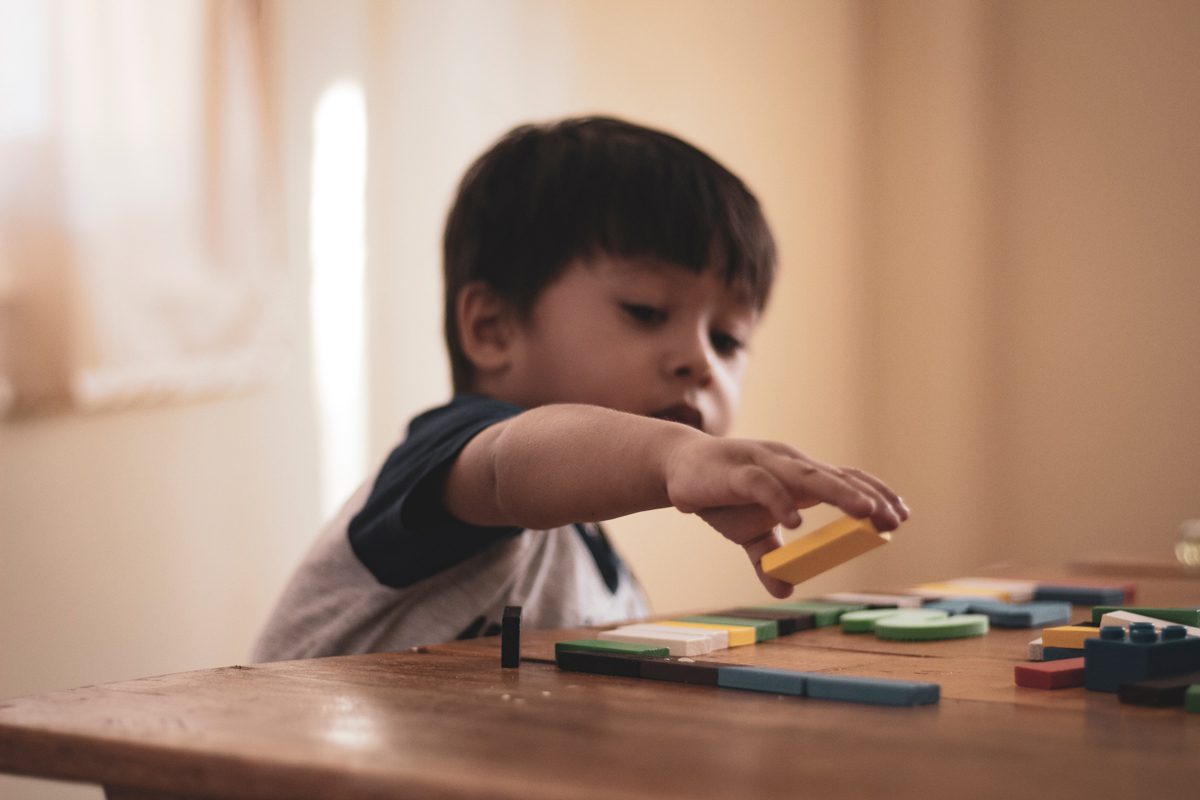
Encouraging Your Child’s Independence
To continue reading, you will need to choose a subscription plan.
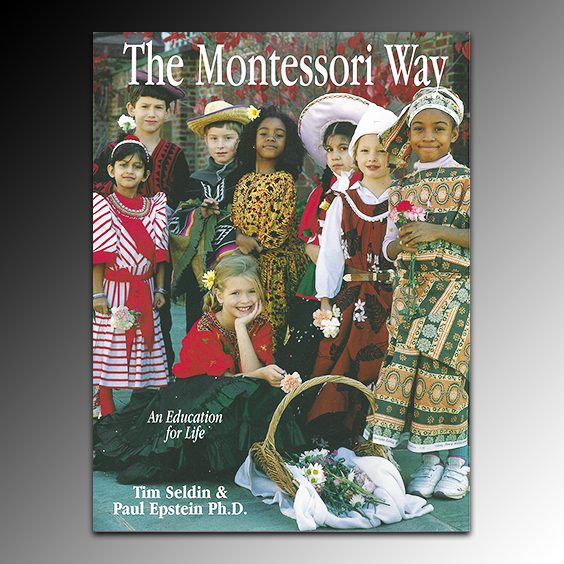
Montessori Infant Toddler Programs
This PDF file is an excerpt from our book, the Montessori Way, by Paul Epstein and Tim Seldin, Copyright 2003
There is an ironic prejudice about education found in almost every country: the older the students are that one teaches, the higher the pay and respect for the teacher. We take it for granted that a professor in a graduate school is a more prestigious position than that of a high school teacher, which is, in turn, considered a more sophisticated position than teaching elementary and, of course, both are far more respectable than that of a nursery-school teacher. And no one in his or her right mind would want to teach infants and toddlers, right? Yet research clearly shows that the most important period in a human being’s educational and emotional development are not the years of high school and college but rather the first six years of life. Human beings are a magical combination of at least three factors: our genetic inheritance, our biological development, and our experiences.
To read more: Download File

Montessori: Planting the Seeds of Learning
To continue reading, you will need to choose a subscription plan.

Encouraging Kindness and Empathy
To continue reading, you will need to choose a subscription plan.
Building a School Culture of Peace and Transformation
To continue reading, you will need to choose a subscription plan.

7 Practices to Develop Character

from Tomorrow’s Child – The Montessori Family Magazine – September/October 2021
Centering strong character traits in your family through modeling, experiences, and conversations is the foundation of developing strength of character. Practicing character is a daily decision that needs to be made, time and time again. Practice brings permanence if it is purposeful and deliberate.
What follows are seven practices in helping children start to develop strong character.
Practicing Integrity
• Model integrity. Live your values. Do your actions and words reflect your family values?
• Articulate your family values so they become a natural way of thinking and behaving.
• Develop a moral vocabulary. Children need to understand words, such as honesty, trust, fairness, integrity, etc. Teach children behaviors that embody these words.
• Acknowledge children when they are demonstrating integrity, not rewarding them but acknowledging them by telling them how much you value their behavior.
• Discuss and give examples of the effects your child’s actions have on themselves and on others.
• Respond to children’s behavior with calmness and consistency. Be open to listening to your child’s reasoning for an action before instinctually admonishing and correcting, then remind them of the expectations and decide on a natural consequence that is consistent and clearly understood.
Practicing Kindness
• Model kindness. Children learn how to relate with others by observing the adults around them and how they treat other people. Show them what it means to be kind and name the action as kindness.
Try to always speak kindly to your children, especially when you are tired, frustrated, or angry.
• Share stories of kindness, whether personal stories, stories in books, stories on the news, etc. Stories are a wonderful way of building an understanding of kindness.
• Assess the teasing in your household. Is it demeaning, provoking, or humiliating?
Remember, children learn how to play and interact with peers by their own experiences at home.
• Discuss how their behavior affects those around them, whether it is positive or negative.
• Give your children opportunities to serve others. Show them that holding a door open for someone, smiling and saying hello, and thanking the cashier, are all demonstrations of kindness.
• Expect kindness when your child speaks to you. When your child speaks to you rudely, simply state how you would like to be talked to. Do not get into an exchange with them, just simply state your preferred specifics of communication. Be consistent.
Do not let poor tone or attitude slide.
Practicing Positivity
• Model being positive. Take the time to monitor how you present your life experience to your children. Do they hear you regularly speaking positively or negatively?
Try to point out the good side of events and experiences.
• Address failure as an opportunity for growth. Help your children self-evaluate situations. Ask the questions: What went well and what would you change if you could? Encourage your child to develop a plan of action to effect change the next time around.
• Challenge your children when they are personalizing (“It was all my fault”) globalizing (“I always make mistakes”), or catastrophizing (“I will never do anything right”). You do not have to contradict your children’s explanation, but encourage them to come up with positive outcomes to the situation.
• Encourage children to set their own goals and think through how they plan on achieving them. This process gives them agency and a sense of competence that often leads to success. Encourage them to focus on the best possible outcomes and, as such, they will align their thoughts in that way and work toward achieving the outcome they want.
Practicing Gratitude
• Model gratitude. Make it a habit to notice and verbalize the things for which you are grateful.
• Ask your children questions to help them start to notice things that deserve gratitude: What have you noticed today that you were given that you are grateful for? and, Are there things in your life that you are grateful for that aren’t gifts or material things?
• Create space for conversations regarding how they feel when they receive something (including non-material things).
Help them associate positive feelings with someone else’s actions. As often as possible, highlight the idea that people and events can give us good feelings.
• Teach gratitude through action. Ask your children if there is a way that they would like to show how they feel about a gift, an event, or a person. Children can use their special talent or interest, for example, and make up a song and/or paint a picture to express their gratitude.
Practicing Flexibility
• Model flexibility. Tell children when and how you are being flexible as things come up throughout the day, whether as part of a minor or major event. Explain how you are being flexible and, when appropriate, involve children in the new plan. the routine at home every once in a while, helping them become accustomed to managing change.
• Change the rules to board games; start out with small changes, so they can see how they can adjust. Then, make more changes.
• Give positive reinforcement when your children demonstrate flexibility and change their course of action.
• Teach your child strategies to take when a change occurs. Teach them to stop and breathe, state the problem, consider at least three possible solutions, then select one to try.
Practicing Effort
• Model effort. Show your willingness to take risks and try new things, even when they are hard.
• Acknowledge effort, bravery, risk-taking, open-mindedness, and keeping a positive outlook.
• Teach children to monitor their effort.
Help them reflect on whether they gave their best in an activity.
• Help children recognize and celebrate their effort by asking them, What was something you did today where you felt proud of how hard you tried?
• Make it easy to work hard by preparing the environment with the tools they need to succeed with a task.
• Help your children work through challenges by modeling self-talk. Children can learn how to persist if they talk out the problem, coupled with positive self-talk.
• Show your children the progress they have made. Remind them of where they started and how far they have come.
Practicing Accountability
• Model personal accountability. Demonstrate accountability by apologizing and making amends when necessary. You will show your children you are responsible for the consequences of your actions.
• It is important that your children know exactly what is expected of them and the consequences of not meeting expectations.
They also need to know what is non-negotiable and what is open for discussion and mutual agreement.
• Allow your children to be responsible for their actions. Even a three-year-old can clean up a spill; spilling is normal, but cleaning up the spill is also normal.
• Parents should not point fingers or make children feel defensive about behavior.
They should acknowledge when a child owns up to a mistake, and help them come up with a solution on how to make amends; and do something differently next time.
• Give children age-appropriate choices and chores.
• Encourage children to participate in decision-making to develop accountability.
The road to strong character is paved with practice. It is a journey, and it is going to have ups and downs. The term practicing is not inadvertent. Have patience and remember what your ultimate goal is for your child.
Cassi Mackey, M.Ed. is passionate about helping families create sacred spaces where love, joy, and honest connections are nurtured. Cassi has witnessed the transformational power when families engage in Montessori philosophy as an imputable practice. It is a promise of more meaningful relationships, greater depth of experience, and a broader, more compassionate view of oneself and the world. Cassi has lived, learned, and taught the Montessori pedagogy for the last 30 years as a Montessori 9-12 teacher, a school principal, and a consultant. She consults with (and provides advice to) Montessori communities and families that are intent on providing safe harbors for children. Contact Cassi via email at: cassimackey11@gmail.com.

Five day a week attendance
To continue reading, you will need to choose a subscription plan.
Peacemaking Circles
To continue reading, you will need to choose a subscription plan.
Featured
-
 The Montessori Way, Revised and Expanded: An Education for Life; A Comprehensive Guide for Parents and Teachers
$25.00
The Montessori Way, Revised and Expanded: An Education for Life; A Comprehensive Guide for Parents and Teachers
$25.00
-
The Montessori Child: A Parent's Guide to Raising Capable Children with Creative Minds and Compassionate Hearts (The Parents' Guide to Montessori)
$20.00
-
The Montessori Toddler: A Parent's Guide to Raising a Curious and Responsible Human Being (The Parents' Guide to Montessori)
$20.00
-
Montessori in Action: Building Resilient Montessori Schools 1st Edition
$29.95
-
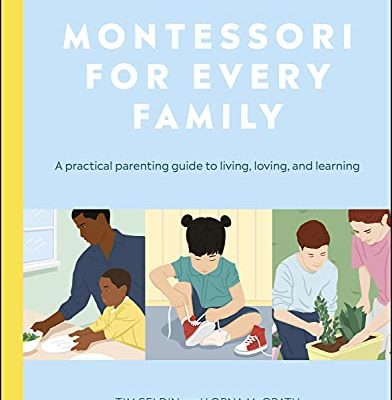
Bulk Order, 30 Copies of Montessori for Every Family: A Practical Parenting Guide To Living, Loving, And Learning
Original price was: $600.00.$510.00Current price is: $510.00.



Products
-
The Montessori Way, Revised and Expanded: An Education for Life; A Comprehensive Guide for Parents and Teachers
$25.00
-
The Montessori Child: A Parent's Guide to Raising Capable Children with Creative Minds and Compassionate Hearts (The Parents' Guide to Montessori)
$20.00
-
The Montessori Toddler: A Parent's Guide to Raising a Curious and Responsible Human Being (The Parents' Guide to Montessori)
$20.00
-
Montessori in Action: Building Resilient Montessori Schools 1st Edition
$29.95
-
Bulk Order, 30 Copies of Montessori for Every Family: A Practical Parenting Guide To Living, Loving, And Learning
Original price was: $600.00.$510.00Current price is: $510.00.