To access this page, you will need to log in or become a member.
NUTRITION, EXERCISE & HEALTH EFFECTS IN NEUROSCIENCE & LEARNING NUTRITION, EXERCISE, & HEALTH Part One

NUTRITION, EXERCISE & HEALTH EFFECTS IN NEUROSCIENCE & LEARNING NUTRITION, EXERCISE, & HEALTH Part One

by Nicole Allsop, Registered Dietitian and Montessori Educator

In the classroom, many experiences are shared by children, families, and teachers. Success depends on many factors, with health and well-being playing major roles. The more one delves into this, the clearer it becomes how impactful these factors are and how crucial it is to include them in observation categories. Early detection would make significant differences, and the benefits would be far-reaching. Understanding the connection would allow families to collaborate more effectively, benefiting everyone involved. Research-based evidence provides the foundation for demonstrating the strong relationship between health and learning, as well as the consequences of neglecting it. This article draws on scientific evidence to support health education.

Diseases, ailments, high levels of stress, and sleep deprivation (both in terms of hours and quality) have negative consequences that show up in the classroom in various ways: irritability, loss of focus, lack of concentration, low productivity, and absenteeism, to name a few. Many lifestyle or non-communicable diseases, which can often be minimized or eradicated, affect our ability to function optimally and manage life’s stressors.

From a professional perspective, it would be remiss to focus solely on neuroscience and learning without considering other factors that ultimately affect the brain and have a negative domino effect on learning. Poor nutrition, lack of exercise, and weakened health status adversely affect brain function, leading to an inability to learn effectively. Therefore, this article discusses neuroscience alongside other health issues, including neuro disorders, mood disorders, non-communicable diseases, stress, and sleep deprivation. These affect not only children but also the adults in their environment, who serve as role models in both direct and indirect learning. As Julia Volkman notes, “Our brains physically adapt as we strive to be like the people around us.”

Teachers are part of the child’s environment and learning process, so they must take the time to care for themselves, preparing both physically and mentally to serve children in a healthy way and set a good example. As Dr. Maria Montessori wrote, “Now the adult himself is part of the child’s environment” (The Secret of Childhood). A teacher in poor health will create a ripple effect on a child’s learning. How can one think clearly, or manage a frustrated child or parent, when one is ill? When internally distracted or sick, how can one concentrate, be observant, or fully present? A teacher’s absenteeism, mood changes, dehydration, or weakened immune system can negatively impact their interactions with students. In turn, frustrated moments affect a student’s learning as they try to cope with how they are feeling.

Children observe and often mimic the behaviors of adults around them. As Montessori said, “The child reproduces in himself, as by a form of psychic mimesis, the characteristics of the people in his environment.” It is vital to understand lifestyle diseases and the habits responsible for them. Young children, lacking the maturity to fully identify or express their feelings or underlying problems, are not in control of these factors. A poor or skipped breakfast or dehydration, will leave children irritable, unfocused, or misbehaving—not because they are inherently disruptive, but because their brain and body are not adequately nourished.

A common sign of dehydration is a headache, and no one can focus with a headache. According to Adan in Cognitive Performance and Dehydration, “being dehydrated by just 2 percent impairs performance in tasks that require attention, psychomotor skills, and immediate memory, as well as one’s subjective state.” Furthermore, research by Popkin et al. notes that “physical performance decrements in athletes have been observed with as little as 2 percent dehydration. Under mild dehydration, individuals engaging in rigorous physical activity experience reduced endurance, increased fatigue, altered thermoregulation, reduced motivation, and increased perceived effort.” Rehydration reverses these deficits and reduces oxidative stress induced by exercise and dehydration (Popkin, Barry M., et al., 2010).

These factors should not be overlooked and should be added to our checklist of concerns. Waiting to feel thirsty is a bad habit; thirst means the body is already dehydrated to some degree. Thirst equals dehydration. Throughout the day, we can become so engrossed in activities that we forget to drink water. This can also happen during a child’s work cycle, so it’s important to allow frequent water breaks and make conscious efforts to build hydration into the classroom routine. The table shows the adequate daily fluid intake in milliliters.

Water Requirements In Relation To Energy Recommendations

water requirements

AI for total fluids derived from dietary reference intake for water, potassium, sodium, chloride, and sulfate. Ratios for water intake based on the AI for water in liters/day calculated using EER for each range of physical activity. EER adapted from the Institue of Medicine Dietary Reference Intakes Macronutrients Report, 2002.

The Role of Nutrition and Hydration

Many parents know the importance of breakfast, but it’s easy to overlook just how vital it is to your child’s school day. Skipping breakfast or eating sugary, processed foods can leave children feeling tired, irritable, and unable to concentrate. They may “misbehave” simply because their brains aren’t getting the nutrients they need.

Dehydration can also cause problems. Just a small amount of dehydration—about 2 percent—can lead to headaches and make it hard to focus. Research shows that dehydration affects children’s attention span, memory, and even their ability to complete simple tasks. To avoid this, encourage your child to drink water regularly throughout the day, not just when they feel thirsty. Once you feel thirsty, you’re already somewhat dehydrated. So, building regular water breaks into your child’s routine can make a big difference in their ability to stay focused and calm during the school day.

Practical Tips for Parents

• Start the day with a healthy breakfast. A balanced meal with protein, whole grains, and healthy fats will give your child lasting energy.

• Encourage regular water intake. Send children to school with a water bottle and remind them to drink regularly.

• Promote physical activity. Regular exercise not only keeps children fit but also helps them concentrate better in school.

• Ensure adequate sleep. A consistent sleep routine is vital for brain function and emotional regulation.

• Model healthy habits. Children are always watching, so if you prioritize your own health, they’re more likely to follow suit.

Healthy children are better learners. Small changes in your child’s daily habits can significantly impact their ability to focus, stay calm, and thrive in school.

Look for Part 2 in the next issue. 

Reference

Adan, A. “Cognitive Performance and Dehydration.” Journal of the American College of Nutrition, U.S. National Library of Medicine, pubmed.ncbi.nlm.nih. gov/22855911/.

Montessori, Maria – Discovery of the Child, The Secret of Childhood, The Absorbent Mind, and The London Lectures 1949.

Popkin, Barry M., et al. “Water, Hydration, and Health.” Nutrition Reviews, U.S. National Library of Medicine, August 2010, www.ncbi.nlm.nih.gov/pmc/ articles/PMC2908954/.

Volkman, Julia. “Stuff by Julia.” Maitri Learning, www.maitrilearning.com/pages/learning-center.

“Brain Development.” ZERO TO THREE, www.zerotothree.org/espanol/brain-development.

Nicole Allsop is a registered dietitian nutritionist, exercise professional, and Montessori educator. She is part of the NewGate community, and has a keen interest in building habits for a lifetime of wellness in families. She has authored books that can be purchased on The Montessori Library website: www.montessorilibrary.com

Book Reviews – December  2024

Book Reviews – December 2024

book review

Cover If I were a bear

IF I Were A Bear

Written by Shelley Gill
Illustrated by Erik Brooks

This is an interesting little board book. All the different types of bears look very friendly, almost as if they could be your pet. The content is written in rhyme, based on some facts about them. It is probably enjoyable for children 2-4 years old.

A Salmon for Simon

Written by Betty Waterton
Illustrated by Ann Blades

This story is set in a little sea town on the western shore of Canada. It’s about a young boy who finds himself in an uncomfortable position, where he has to choose between his desire to catch a salmon or to save the life of this amazing animal. The illustrations are gorgeous and the text is smooth, engaging, and full of interesting things about the salmon and the sea life. Children 5 to 8 years old will enjoy the story and would love to engage in thinking and talking about why Simon decided to help the salmon back to the sea.

Backyard Birding for Kids: A Field Guide & Activities

Written & Illustrated by Fran Lee

This is a great little paperback book for grownups and children to read and do activities together. It includes all different environments: urban; suburban; rural; sea shores; mountains; prairies; warm; temperate; or cold. There’s lots of good information for children about birds and their habitats, as well as activities that children can do to attract birds, to understand birds, and to appreciate and support bird life.

With the help of adults, children from 5-9 years old could become engaged in learning about these wonderful animals.

Meeting Natives with Lewis and Clark

Written by Barbara Fifer

I can remember as a late elementary/ early middle school child being fascinated by Native Americans: their lives, homes, food, music, beliefs, etc. This book reminds me of the kinds of books I devoured back then. Barbara Fifer seems to have done her homework on this one. The photos and illustrations are documented. Quotations are from the Journals of the Lewis and Clark Expedition.

She introduces each tribe of native Americans as Lewis and Clark traveled for three long years across what is now the USA. I would recommend this book as a resource for Upper Elementary as well as Middle School classrooms as Book they study our country’s history. I would also encourage parents and caregivers to add this book to their home library. It can be purchased online.

Teaching Montessori Science: 9 Practical Strategies to Engage Children in Hands-on STEAM Activities

Written by Jackie Grundberg

Wow! What an amazing tool for teachers, parents, and caregivers alike. The author has put together a combination of learning experiences designed with adults and elementary children in mind for school or home. The book is well illustrated, the content is backed up by current research, and the principles are Montessori-based. There couldn’t be a better combination.

Even if you only read the first chapter (which I am not suggesting), “The Benefits of Hands-on, Interactive Science Lessons,” you will gain a better understanding of the purpose of the book and will already have multiple examples of (and instructions for) science activities to do with children. However, I would not recommend that because you will be missing out on all the rest of the other great lessons in this book. You will definitely want to add this book to your teachers’ resources at schools or in your home resource center for homeschoolers.

You can purchase this book at www. backpacksciences.com or other online bookstores.

The Camping Trip

Written by Jennifer K. Mann

Ernestine was so lucky to be invited to go on her first-ever camping trip with her Aunt Jackie and cousin Samantha. Her dad helped get all the things on Aunt Jackie’s list. They even made trail mix granola together.

As they drove out of the city, Ernestine hoped her dad wouldn’t miss her too much. They had lots of adventures with swimming, hiking, sleeping in a tent, food — nothing was like what she was used to at home. The illustrations are terrific — sort of like pages from a comic book. Turns out, Ernestine loved her trip even though she was a bit reticent at first. When she arrived home her dad gave her a big hug. She thinks that he missed her. It ends with her and her dad walking away and Ernestine asking him, “Have you ever tried s’mores?”

Wonderful book about trying new things even though they may be different from what we’re used to and having a great time! I suggest that children 5-9 years old would love this book.

We would love to publish reviews of your favorite books. Send book reviews to Lorna at: lornamcgrath@montessori.org

Book Reviews – December  2024

Book Reviews – December 2024

book review

Cover If I were a bear

IF I Were A Bear

Written by Shelley Gill
Illustrated by Erik Brooks

This is an interesting little board book. All the different types of bears look very friendly, almost as if they could be your pet. The content is written in rhyme, based on some facts about them. It is probably enjoyable for children 2-4 years old.

A Salmon for Simon

Written by Betty Waterton
Illustrated by Ann Blades

This story is set in a little sea town on the western shore of Canada. It’s about a young boy who finds himself in an uncomfortable position, where he has to choose between his desire to catch a salmon or to save the life of this amazing animal. The illustrations are gorgeous and the text is smooth, engaging, and full of interesting things about the salmon and the sea life. Children 5 to 8 years old will enjoy the story and would love to engage in thinking and talking about why Simon decided to help the salmon back to the sea.

Backyard Birding for Kids: A Field Guide & Activities

Written & Illustrated by Fran Lee

This is a great little paperback book for grownups and children to read and do activities together. It includes all different environments: urban; suburban; rural; sea shores; mountains; prairies; warm; temperate; or cold. There’s lots of good information for children about birds and their habitats, as well as activities that children can do to attract birds, to understand birds, and to appreciate and support bird life.

With the help of adults, children from 5-9 years old could become engaged in learning about these wonderful animals.

Meeting Natives with Lewis and Clark

Written by Barbara Fifer

I can remember as a late elementary/ early middle school child being fascinated by Native Americans: their lives, homes, food, music, beliefs, etc. This book reminds me of the kinds of books I devoured back then. Barbara Fifer seems to have done her homework on this one. The photos and illustrations are documented. Quotations are from the Journals of the Lewis and Clark Expedition.

She introduces each tribe of native Americans as Lewis and Clark traveled for three long years across what is now the USA. I would recommend this book as a resource for Upper Elementary as well as Middle School classrooms as Book they study our country’s history. I would also encourage parents and caregivers to add this book to their home library. It can be purchased online.

Teaching Montessori Science: 9 Practical Strategies to Engage Children in Hands-on STEAM Activities

Written by Jackie Grundberg

Wow! What an amazing tool for teachers, parents, and caregivers alike. The author has put together a combination of learning experiences designed with adults and elementary children in mind for school or home. The book is well illustrated, the content is backed up by current research, and the principles are Montessori-based. There couldn’t be a better combination.

Even if you only read the first chapter (which I am not suggesting), “The Benefits of Hands-on, Interactive Science Lessons,” you will gain a better understanding of the purpose of the book and will already have multiple examples of (and instructions for) science activities to do with children. However, I would not recommend that because you will be missing out on all the rest of the other great lessons in this book. You will definitely want to add this book to your teachers’ resources at schools or in your home resource center for homeschoolers.

You can purchase this book at www. backpacksciences.com or other online bookstores.
The Camping Trip

Written by Jennifer K. Mann

Ernestine was so lucky to be invited to go on her first-ever camping trip with her Aunt Jackie and cousin Samantha. Her dad helped get all the things on Aunt Jackie’s list. They even made trail mix granola together.

As they drove out of the city, Ernestine hoped her dad wouldn’t miss her too much. They had lots of adventures with swimming, hiking, sleeping in a tent, food — nothing was like what she was used to at home. The illustrations are terrific — sort of like pages from a comic book. Turns out, Ernestine loved her trip even though she was a bit reticent at first. When she arrived home her dad gave her a big hug. She thinks that he missed her. It ends with her and her dad walking away and Ernestine asking him, “Have you ever tried s’mores?”

Wonderful book about trying new things even though they may be different from what we’re used to and having a great time! I suggest that children 5-9 years old would love this book.

We would love to publish reviews of your favorite books. Send book reviews to Lorna at: lornamcgrath@montessori.org

The Hidden Power of Practical Life Skills in Montessori

The Hidden Power of Practical Life Skills in Montessori

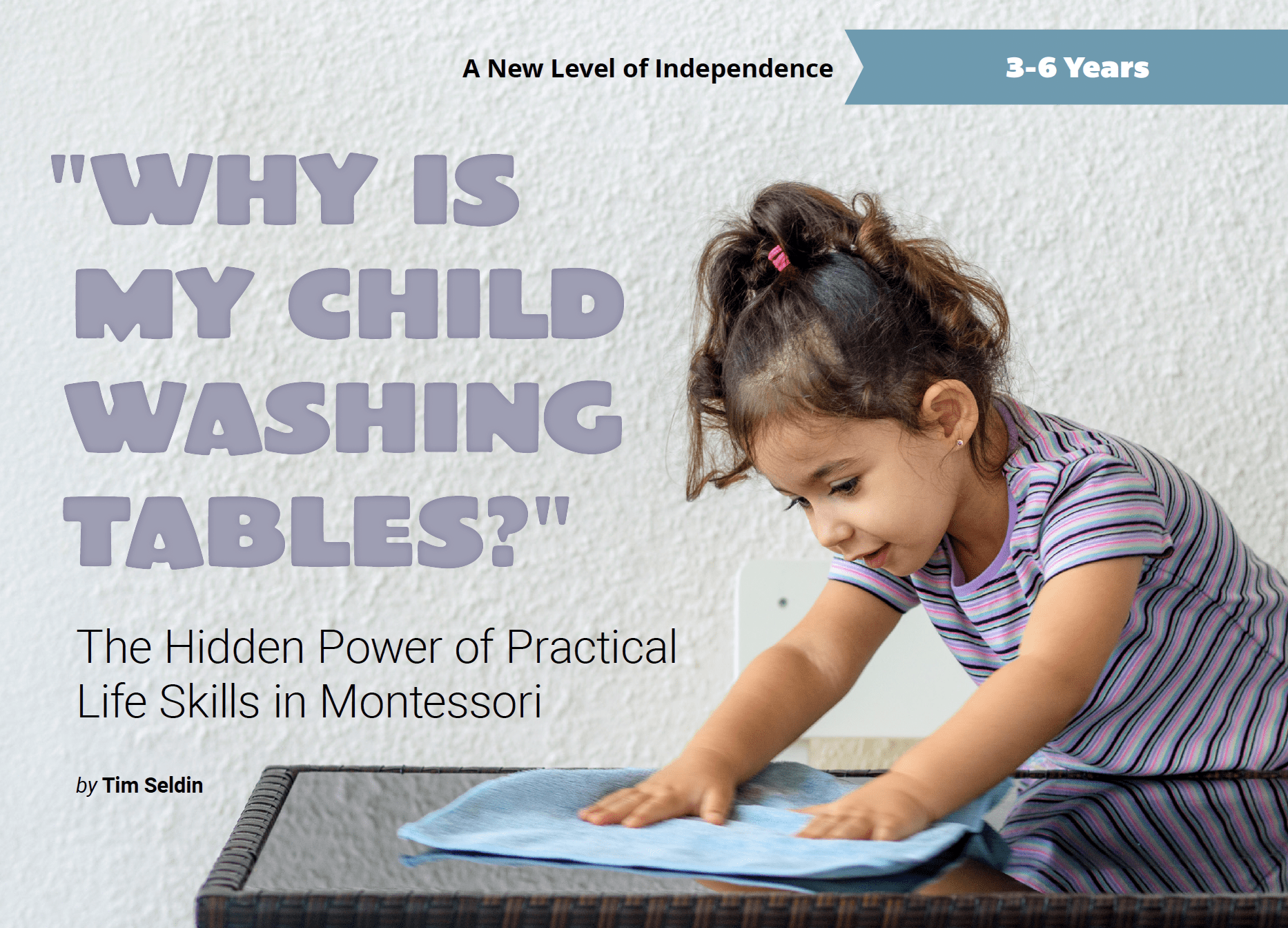
washing tables

The Hidden Power of Practical Life Skills in Montessori

by Tim Seldin

“All activities connected with caring for oneself and the environment—like getting dressed, preparing food, setting the table, wiping floors, clearing dishes—these are tasks that adults often avoid. Yet, for children between one and four, these jobs are a source of joy, and they eagerly rise to the invitation to participate.” — Dr. Silvana Montanaro

“I love Montessori! I get to make snacks and serve them to my friends. It’s like being a real waiter.” — Phillip, age 5

This photograph from a century ago shows a young Montessori child ladling soup for her classmates at lunchtime. It’s easy to imagine her parents asking the same question many do today: “What does this have to do with learning to read or write?” In Montessori, Practical Life activities—such as washing tables, pouring water, polishing, sweeping, and dusting—are not just chores; they are foundational learning experiences.


Through these hands-on tasks, children develop an inner sense of order, focus, and independence. By caring for their environment, meeting their own needs, and helping others, Montessori students learn more than just skills—they learn how to learn.

Here’s a glimpse into a Montessori day that captures this philosophy:

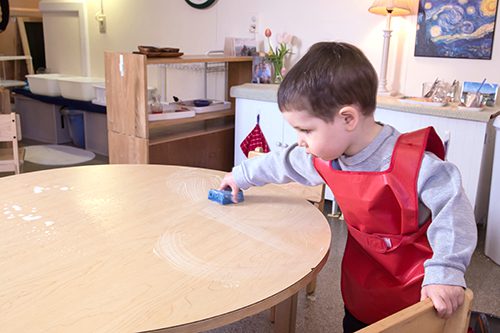
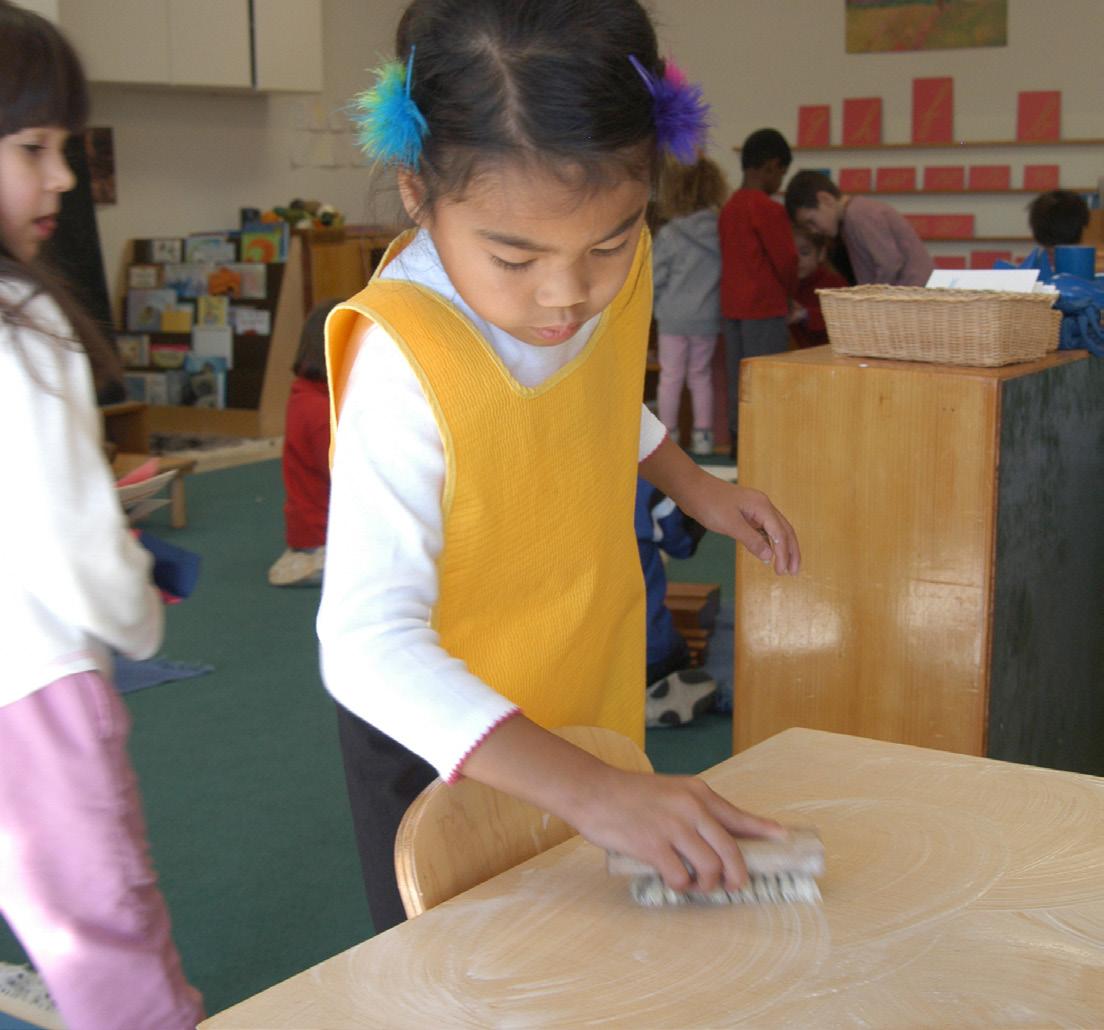
It’s 10 o’clock, and Amani is hungry. She heads over to the snack table and prepares celery sticks with peanut butter, pouring herself apple juice from a pitcher made for small hands. When she finishes, Amani carefully wipes her placemat. This inspires her to clean, so she gathers a small bucket, sponge, brush, towel, and soap, and she starts methodically washing a table.


As she scrubs, she’s absorbed by the patterns of the soap suds. When she’s done, she tidies up, leaving the table somewhat clean—but that’s not the point. What Amani is truly learning is patience, independence, and the ability to concentrate on a sequence of steps.


Another child, Meredith, sees that the windows need to be cleaned. She gathers the window-washing kit and begins to spray a nontoxic solution on the glass. She uses a small squeegee and wipes it with a clean cloth. When done, she moves on, choosing activities that interest her.

In a Montessori classroom, children are genuinely responsible for their space. When hungry, they prepare snacks; when spills happen, they clean up. They practice self-care and community care—each action cultivating confidence and independence.

A Foundation Beyond Skills

Montessori isn’t just about teaching children to count or read; it’s about shaping the people they will become. We focus on developing self-discovery, resilience, and a joyful pursuit of knowledge. This isn’t merely an academic education but an education of the heart and mind. In this setting, children learn with patience, curiosity, and a sense of personal responsibility.

Montessori’s classroom for children between three and six years old is called a Children’s House—a true community of young children. Dr. Maria Montessori’s vision was not to create a more advanced kindergarten but an empowering environment where children are respected as individuals. Here, they develop social and emotional connections, form lasting friendships, and take pride in their shared responsibility for the space and each other.

As children thrive in this nurturing community, they begin to believe in themselves. In this atmosphere, they maintain their natural curiosity and willingness to explore. They learn that mistakes are not failures but stepping stones to growth. With this foundation, they grow to view learning as a journey rather than a destination.


Growing up this way

As a child, I attended the Barrie School in Washington, D.C. Barrie was founded by my mother in 1932. Later,

I returned to teach and eventually served as headmaster for 22 years.

As a child, I remember arriving at school on frosty mornings, stopping by the kitchen for a piece of toast or some cereal, and helping myself with a bit of guidance from older students. As we grew, so did our contributions to the school.

Barrie was a community of several hundred children ranging in age from two to eighteen. Our food was made in the school kitchen, and older students volunteered to help with preparation. I spent mornings peeling potatoes and stirring stew alongside our cook, Edith, and friends.

After meals, we carried dishes back to the kitchen, washed them by hand, swept sidewalks, watered gardens, fed animals, and tutored younger students.

These daily acts connected us with everyone on campus— from bus drivers to teachers. They taught us the importance of community, and to this day, I still enjoy washing dishes.

The Lifelong Value of Practical Life Skills

“In the special environment prepared for the child, they express an inner need: ‘Help me to do it by myself!’

In Montessori, the classroom itself is a “children’s house,” where children play an active role in caring for the space. They prepare snacks, clean tables, sweep floors, and organize shelves. Through these activities, they learn much more than basic tasks; they develop self-respect, resilience, and a love for learning.


Confidence grows when children feel capable and independent. Montessori classrooms are designed to foster this growth. Here, children’s actions say, “Help me learn to do it for myself!” By encouraging them to be self-sufficient and organized, we set the stage for a lifetime of strong work habits and a sense of responsibility.

Independence does not magically appear as children grow; it must be nurtured. In Montessori, children start young, learning to tie their shoes or pour their own milk. Small successes like these lead to a sense of confidence and pride.


As they mature, Montessori students learn Practical Life skills that prepare them for daily living, like cooking, sewing, managing money, gardening, and even simple home repairs. However, perhaps the most essential skill is learning how to work and play with others kindly. Kindness and respect are daily practices in the Montessori classroom, where children learn to be thoughtful and responsible toward their community. They learn to treat themselves and others with dignity.

Montessori schools aim to be close-knit communities where people learn together in an atmosphere of warmth, respect, and cooperation. Teachers are mentors and guides, helping children grow in understanding and compassion for each other’s unique backgrounds and interests.

Montessori Practical Life activities are the heart of Montessori education. They teach children to be confident, responsible, and independent human beings who find joy in learning and meaningful work. 

Tim Seldin is President of the Montessori Foundation and Chair of the International Montessori Council. His more than 40 years of experience in Montessori education includes 22 years as Headmaster of the Barrie School in Silver Spring, Maryland, his alma mater from toddler through high school graduation. Tim was Co-Founder and Director of the Institute for Advanced Montessori Studies and the Center for Guided Montessori Studies. He earned a B.A. in History and Philosophy from Georgetown University, an M.Ed. in Educational Administration and Supervision from The American University, and his Montessori certification from the American Montessori Society.

Tim is the author of several books on Montessori Education, including How to Raise An Amazing Child, Montessori 101, The World in the Palm of Her Hand. and Montessori for Every Family, co-authored with Lorna McGrath. Look for The Montessori Way, coming out in May, 2025.


Dear Cathie Growing Global Citizens

Dear Cathie Growing Global Citizens

Growing Global Citizens

DEAR CATHIE—

AS FAIRLY NEW PARENTS, WE ARE WATCHING OUR CHILDREN BEGIN TO DEVELOP INTO WHO THEY WILL BE, AND WE REALIZE THAT WE SHOULD ALSO BE PURPOSEFUL IN MOLDING THEM INTO THE KIND OF PEOPLE WE WANT THEM TO BECOME. WE ARE LOOKING FOR IDEAS AS TO HOW TO DO THAT! WHERE DO WE START AND WHAT SHOULD WE FOCUS ON? CAN YOU OFFER ANY INSIGHT ON THIS SUBJECT?

— PROACTIVE PARENTS

Dear Parents,

We applaud you for being proactive in considering your child’s development from the macro point of view. Raising children is one of the most difficult, challenging and important things you will ever do. One way to accomplish that task is to let your children share in your activities as you go through your daily life. Let your child see and understand your values through your actions.

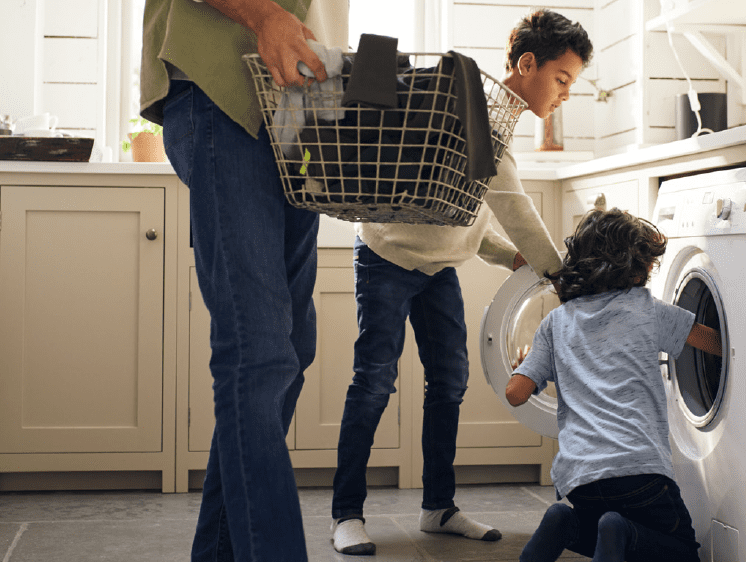
As your young children see you living purposefully in the moment, you can invite them to share the joys of those daily experiences to the best of their abilities based on their age. Let’s use laundry as an example. A two-year-old can pull the laundry out of the dryer and put it in the laundry basket so it can be carried to the sofa to be folded. However, a three-year-old can match the socks into pairs, while a fouryear-old can actually fold the pants in half and sort them into piles for the different members of the family. Everyone is contributing to the work of being in a family while moving on the path towards ultimate self-reliance.

A common worry is children having expectations or feelings of entitlement. One way to minimize this in your family is to regularly cook with your children. Make the creation of a meal a family affair! Invite all members of the family to help you plan meals. Include your children in the purchasing of food, preparing food and cleaning up the kitchen after the meal. Perhaps your child can help put away the groceries, cut the vegetables, clean the crumbs, wash the dishes or put away the leftovers. This helps your child feel like a contributing member of the family, rather than just having the food appear upon the table magically! It is also a way to spend regular quality time together!

Include your children in your philanthropic work or doing for others in your community in whatever form that takes. Make a point to think past yourself and discuss this thinking openly and frequently with your children. Choose a family charity (or even a few charities) and work to make them a part of your family’s culture. This could start as small as giving home-made cookies to your neighbors or your child’s teacher or the school bus driver to choosing a way to help others at holiday time. It could also be service based, checking on an elderly neighbor or shoveling the driveway for somebody who is ill or disabled.

Be sure your child is involved in all aspects of these projects even though it can be more complicated and time consuming. This will help children to begin thinking outside their own bubble. If your family has little to give, you can include your children in recycling used toys to an organization for children in need, instilling the value of compassion.

As children develop, your goal for them is for them to learn to take their responsibilities seriously and grow into global citizens who will work to make the world a better place. Parents begin this effort when their children are very young with the intent to mold their children with lifelong values, where children see and participate in family activities with their parents. Your children are aware of everything you say and do. Why not use your daily chores and activities as a basis for their in-home education with you. What a wonderful opportunity and awesome experience. Enjoy this limited and special time together.

Cathie 

Cathie Perolman has been involved in Montessori education for over 40 years. Cathie has worked in the classroom as a 3-6 assistant; a classroom teacher; a level leader; a teacher trainer; and a college professor. She currently spends her time mentoring teachers, conducting workshops for teachers and administrators; and writing for her blog and for magazines. She also serves as a consultant for schools and as a school validator for the Montessori Schools of Maryland. Cathie is the creator of the Color Coded Sound Games and the Rainbow Reading System as well as other reading and cosmic printable materials to enhance classrooms. Find them at cathieperolman.com.

A POSITIVE APPROACH TO DISCIPLINE

A POSITIVE APPROACH TO DISCIPLINE

A POSITIVE APPROACH TO DISCIPLINE

Many parents believe that the word discipline means to punish. In reality, it means to teach.

Testing your limits

Every child will test the rules to some degree. In fact, most acts of testing parents are a normal part of a child’s process of growing up. When children test adults, it is often their way of expressing feelings that they don’t understand, and from our responses, they gradually learn how to handle their emotions appropriately. By testing the limits, they learn that we really care about certain ground rules of grace and courtesy in our relationships. In acting out, they are taking their first tentative steps towards independence, attempting to demonstrate that we don’t control them completely.

unruly children


Family ground rules

Some families have far too many rules when all that is needed are some basic guidelines that underpin what we expect and hope from all members of the human race. There is no need to be creative and think up something to govern every aspect of your children’s lives. Agree on your family’s ground rules and get them written down and displayed so that both parents and caregivers can refer to them. Teach your child how to do the right thing rather than focusing on their mistakes. In the Montessori-inspired home, there are usually just a few basic rules.

• Treat everyone with respect.

• If you use something, put it back correctly when you are finished.

• If you break or spill something, clean it up.

• Tell the truth, and don’t be afraid to admit when you make a mistake.

You should be absolutely clear in your mind about your family’s ground rules. Explain them positively rather than as prohibitions. Instead of saying, “Don’t do that!” the rules should tell your child what to do. Teach them how to follow them as if you were teaching any lesson in everyday life skills. Model the same behaviors that you are trying to encourage in your child. Consciously try to catch your child doing something right and reinforce and acknowledge even the small steps they are taking in the right direction. Don’t wait until they have mastered a new skill; encourage them along the way.

When your child breaks a ground rule, you can do several things other than scold, threaten, or punish.

You can redirect them by suggesting a more appropriate choice. You can remind them of the ground rule and politely (but firmly) ask them to stop. If the situation is not emotionally charged (that is, if you are not personally aggravated), you can re-teach the basic lesson about how to handle such situations.

Be consistent. If you find that you cannot bring yourself to reinforce a rule, again and again, it should not be a ground rule. A few good rules are much better than dozens that are often ignored.

Teaching tidiness

Show your child how to put their toys away after they have finished playing with them.

Reducing Power Struggles

Sooner or later, every child will stubbornly say, “No, I don’t want to!” This is the power struggle that starts in the toddler years and often continues throughout childhood and adolescence. Many people call the toddler stage the “terrible twos,” but it doesn’t have to be—not with two-year-olds or with older children.

Power struggles start in situations where parents and children are determined to get their own way, and neither party is willing to back down. Underneath, each feels frustrated and threatened. Parents feel that their children are directly challenging their authority. Children in situations such as this are usually feeling powerless. They are attempting to assert their autonomy and establish more of a balance of power in their relationship with their parents.

Don’t punish, teach.

Threats and punishments are not good tools for getting children to behave. When children are angry or asserting their independence, they often misbehave and don’t care if they are punished.

Those children who do respond to threats and are shaken by punishments are anxious to please us and win back our love. Arguably, these children will respond just as well to other forms of discipline. While punishments tend to produce immediate results, they are rarely long-lasting.

Explaining ground rules positively

Teach your child how to handle certain situations rather than scold or punish them.

Strategies for minimizing power struggles

Here are some strategies to help reduce the number of power struggles and the use of the word “No!” you and your children can get most, if not all, of what you are after.

Power struggles can be minimized by giving your child meaningful levels of independence and responsibility in everyday life. This makes her feel powerful and grown up.

Reserve “no” for really important issues, such as an activity that might harm your child, others, or one that causes damage.


Give your children choices. Whenever you can, look for ways to let your children choose between two equally acceptable alternatives. “Would you like to have water or milk with your dinner?”

Teach your child to politely say “no”: “Mom, I really do not feel like doing that now.”

Teach your child to do things correctly and emphasize the positive rather than using anger. Above all else, try never to ask your child unanswerable questions, such as, “How many times do I have to tell you?” to which the response would be, “I don’t know, Dad! How many times do you have to tell me?”

Teaching Lessons In Grace And Courtesy At Home

Practicing games that teach good manners can help your child learn how to behave well in any company. Here are some more ideas for lessons in grace and courtesy:

Keep in mind Robert Heinlein’s golden rule of family life: “Kindness and courtesy are even more important between husbands and wives and parents and children than between total strangers.”

Don’t simply give in; look for ways that might allow you to back down gracefully. Often, through compromise, both

• Saying “please” and “thank you.”

• Using a kind tone when speaking to your child: no whining or yelling.


• Asking for a turn or if you can play too.

• Introducing yourself.

• Opening and closing doors.

• Coughing and sneezing in a way that protects others.

• Giving people compliments and encouragement.

• Allowing others to pass in front of you or to go first.


• Saying “excuse me” if you bump into someone.

• Responding politely when someone calls you or says your name.

• Walking around areas where other children are working or playing on the floor and not stepping over them.

• Learning how to wait.

• Not interrupting other people when they are talking.

• Answering the telephone politely.

Good Manners

In Montessori schools, the “lessons in grace and courtesy” (exercises that set a tone of respect and kindness) are taught alongside the more conventional subjects in the curriculum.

We show our children how to shake hands, greet a friend, and say goodbye. We demonstrate how to politely interrupt someone who is busy and how to tell someone, “no, thank you.” We teach children how to speak indoors and how to play nicely. We show them how to offer a sincere apology and how to resolve conflicts peacefully. We help children develop body control through balance and coordination lessons, which foster grace and courtesy.

We teach children grace, which is how to move thoughtfully. This allows them to navigate spaces without bumping into others or dropping items and to enter a room with awareness and composure.

As parents, we can teach our children socially appropriate behavior using similar Montessori strategies.

Simple Lessons

The first step is to explain a situation and demonstrate the right way to handle it. Then, have your child practice with you. Children enjoy these lessons if they are kept short, and if they are not embarrassed by making a mistake.

For example, if your children tend to yell at the top of their lungs inside the house, you need to show them how to keep the noise to a level that does not disturb other people. As it is happening, politely ask your child to speak softly. Then, choose a moment when neither of you is upset to give them a lesson on the right way to speak indoors.

Speak in simple language. You might say: “I want to talk to you about indoor voices. When we are outdoors, it’s so big, and sometimes we need to shout so we can hear each other. When we are outdoors, it doesn’t hurt our ears when someone talks loudly, so we can use our outdoor voices. But when we are indoors, it hurts our ears if we talk too loudly. When we are indoors, we need to use our indoor voices.”

Now, show your child what you mean. Talk very loudly and ask, “Was I using my indoor voice or my outdoor voice?” Talk normally. “What do you think? Was I using my indoor or my outdoor voice?”

You can teach all sorts of lessons this way, everything from saying “please” and “thank you” to closing doors quietly. Some families have the “manner of the week.” They introduce a new courtesy rule each week and practice it over meals and around the house.

Role Models

To teach children good manners, they need to see that their parents follow them consistently as well. The example that we set through our behavior is more powerful than anything we say. Children absorb everything they see us do, especially when they are very young, and soon, they begin to talk and act just like us. We are their role models.

Bearing in mind that your child will be influenced profoundly by the people around them, engage them in a discussion about the behavior of the children and adults with whom they spend their time—grandparents, cousins, family friends, playmates, etc. It is not your place to judge your extended family or other people’s families and how they behave, nor is this something you can control or avoid. Instead, be curious and ask questions that help your child navigate these differences.

Often, parents worry about the “negative influence” of others and seek to protect their children from these experiences. Still, exposure to different behaviors, value systems, cultures, and parenting styles can be seen as opportunities for your child to practice grace and courtesy, inclusion, tolerance, and your family values in different contexts.

Learning Kindness, Courtesy, and Manners in Practice

Children learn by example, but they can also be shown how to behave in a caring way through role play. Present these short exercises in calm moments rather than using them to point out a mistake.

Meet and greet: Teach your child the correct way to welcome visitors into their home.

Table manners: Show your child how to pull a chair out and put it back and how to sit down on it correctly.

Careful carrying: Teach your child how to bring something to you, carrying it using both hands and then to set it down correctly.

Care and compassion: Encourage your child to show concern for a friend who is upset.

Coordination and control: Have your child practice walking carefully along a line and watching where they are going to improve balance and coordination.

Saying goodbye: Your child starts to learn friendship skills when they are shown how to offer warm greetings and goodbyes. 

This article is an excerpt from How to Raise an Amazing Child the Montessori Way (2nd Edition) by Tim Seldin, published by DK Press.

Scan to order your copy now!


Pines Montessori School – We touch the now

Pines Montessori School – We touch the now

pines montessori

Education is often thought of as touching the future. The future is that place that is always outside of our grasp—a day or two or a decade away.

We touch the now.

The child, the parent, the educator, the community member, the international friend … we want to intentionally embrace the human in front of us now.

With this in the front of our minds, we believe that we can contribute significantly to a better world. This is our mission. Our mission is the now.

Our now is installing a child’s operating system. It is the core of who they are now and how they will proceed and process their future world. They are creating their default system to be full of warmth, wonder, abundance, and opportunity.

It is only during childhood that we can make this happen.

Choosing what is right in the present moment will create a better world.

Being open to taste something new and savor the pleasure of a new ritual and culture in the now opens pathways for the future.

Learning to mentor and give back now prepares us for new opportunities.

Learning to be mentored pushes us forward.

We are Pines Montessori School, an IMC-accredited family community of children 6 weeks to 15 years of age. With over 50 faculty members, 21 Montessori credentialed teachers (whose average tenure is 12 years), 260 children and over 500 fun, faithful, and brave Montessori parents. We have served Kingwood, Texas, and our surrounding community for 47 years.

This year we planted native Texas wildflowers in front of our school. These gorgeous flowers bloomed into many different varieties that grew in the community, complementing each other without ever losing their individuality. They live in the now. They are with us for a season and will leave us, but they will reseed us for years and generations to come. The work of Dr. Montessori and the work of Pines and the work of your school is no different.

As we move into our fifth decade we are building our very first new construction: a two-story, lower and upper elementary building now. We are Pines Montessori School! 

From Montessori to Traditional How Elementary Montessori Prepares Children for Life’s Next Steps

From Montessori to Traditional How Elementary Montessori Prepares Children for Life’s Next Steps

from montessori to traditional
by Joyce St.Giermaine

It’s a sunny morning at Oakwood Montessori School, and inside the brightly lit classrooms, a quiet buzz fills the air. In one corner, Maya (a fourth-grader) is constructing a model of a Roman arch, while Jacob (a fifth-grader) is busy calculating irregular shapes’ areas with Montessori geometry materials. Both are focused and seem to be motivated by inner curiosity.

Maya and Jacob have been in Montessori since they were toddlers, and most days are filled with moments of discovery. Today, for Maya, it’s exploring history through building this scale model of a Roman arch that holds together without mortar. For Jacob, it’s the satisfying moment when a challenging math problem clicks into place. They are, however, quietly developing something more enduring: self-reliance, critical thinking, and resilience; these are characteristics that will serve them well when they eventually shift to more traditional middle or high schools.

The elementary Montessori learning environment is clearly different from the traditional classrooms students may experience later. The area feels more like a studio or workshop than a typical classroom. Students move around and choose their activities, working alone or with a few others. This is a hallmark of the Montessori approach. It allows students like Maya and Jacob to explore their interests while still meeting set learning goals.

Claire, the Upper Elementary Montessori guide, observed, “They’re not just working because they have to. They’re engaged in work that they choose, which develops a much deeper connection to knowing.”

Jacob enjoys challenging math problems. He says that he has been spending as much time as he can on geometry for weeks. “He’s able to dive deep into subjects that interest him,” Claire describes. “And he’s establishing the discipline to keep going even when things get difficult.”

Maya’s experience with hands-on learning is typical in Montessori education. Through tasks like constructing a Roman aqueduct, she’s not simply discovering ancient civilizations; she’s learning more about engineering, team effort, and the value of water systems in society. She may not recognize it, but the flexibility to explore principles in such an experiential way is laying the groundwork for how she’ll approach finding out for the rest of her life.

What’s not obvious to the casual observer is that both Maya and Jacob are likewise sharpening skills that will reduce their ultimate shift to more conventional school settings. They are finding out how to handle their time, set objectives, and evaluate their progress with increasing self-reliance and very little assistance from trainers.

Navigating Freedom and Responsibility

In Montessori, children like Maya and Jacob have a substantial quantity of autonomy. Each day, they choose the work on which they want to concentrate, stabilizing their interests with the academic requirements. Although this technique might seem disorganized, it promotes a strong sense of obligation and self-motivation.

families invest an evening in the class for the students to share their work and projects.”

This capability to self-manage makes Montessori students especially well-prepared for the next steps in their education. In a traditional middle or high school, where deadlines are strict and schedules are set, this self-discipline will help them thrive.

Tanya, Maya’s mom, is confident that Maya will be ready for life after Montessori. “She currently has the skills to manage her work effectively. She has ownership of her education.”

Montessori Elementary education is not just about letting children explore; it’s about preparing them for the realities of the world beyond.

As they progress through the program, students like Maya and Jacob develop essential skills that will serve them well in conventional schools: critical thinking; problem-solving, and social intelligence. These abilities are not just for educational success but for life beyond academics, helping them navigate the complexities of the modern world.

Jacob’s mom, Laura, states, “He’s discovered how to plan his day. It’s not like he’s simply doing whatever he desires. Jacob knows what he needs to accomplish, and he has to figure out how to make it happen. Yes, he has a weekly work plan, but he also keeps a journal of what he’s done and puts together portfolios of his finest work. Like the majority of kids, Jacob doesn’t constantly tell us about what he’s performed in school unless it is something very amazing. However, he has so much to say at conference time or when

In Montessori classrooms, children of different ages interact, fostering a collaborative environment where older trainees coach more youthful ones. This mixed-age grouping helps children like Maya and Jacob establish social maturity and leadership abilities. It’s an experience that’s hard to replicate in standard schools but one that offers Montessori trainees an edge when it pertains to browsing new social environments.

“It’s incredible to observe how they handle group work,” their Montessori instructor, Claire, says. “They’re not simply trying to get things done rapidly; they’re focused on finding out together. That collaboration constructs a lot of emotional intelligence.”

Jacob, who will probably transition to a standard middle school after sixth grade, is currently revealing indications of being ready for the modification. His self-confidence in handling his time and overcoming problems without fear of failure will be crucial as he moves into a more traditional environment.

Montessori Graduates in High School

Many Montessori parents question how their children will adapt from the Montessori approach to a more structured standard class setting. The experiences of former Montessori students, who efficiently transitioned from Montessori to conventional high schools, demonstrate the value of Montessori education in equipping trainees for the needs of standard academic environments.

Sophie, who is now a junior at a competitive private high school, recalls how her Montessori background offered her an unanticipated advantage when she started ninth grade. “At first, I fretted about all the tests and deadlines,” she states. “But honestly, it wasn’t as hard as I thought it would be. I was currently used to handling my own time.”

Sophie gained valuable time management abilities in Montessori, which enabled her to organize her everyday jobs and schoolwork separately. This capability served her well when she started high school, as she adapted to the more strenuous schedule without feeling overwhelmed.

Unlike many of her brand-new schoolmates, Sophie felt confident in staying up to date with her work, attributing her success to the skills she obtained in Montessori.

Sophie’s mother, Jen, who initially stressed over the shift to high school, now feels the strong foundation Montessori offered. She appreciates Sophie’s resilience, capability to express concerns, and desire to take risks in her educational journey.

Daniel, a sophomore at a public high school, tells a comparable story. “In Montessori, you’re taught to think for yourself, not simply follow guidelines,” he stated. “That actually assisted me when I got to high school. I wasn’t scared to speak out in class or deal with jobs.”

Throughout his time at Montessori, Daniel participated in all sorts of creative activities that improved his ability to think critically and resolve problems. These qualities served him well in his new school’s more structured environment. “I believe Montessori made me more positive,” he says. “It taught me how to figure things out on my own, which is something I see some of my friends fight with.”

His mom, Lisa, concurs. “He’s not just going through the movements,” she says. “Montessori gave him the tools to really engage with what he’s learning, which’s carried over into high school.”

The Long-Term Impact of Montessori

Maya and Jacob’s years in elementary Montessori are setting them up for success. They are learning to think deeply, work independently, solve problems, and make friends.

For graduates like Sophie and Daniel, the shift to traditional schools has been less of a hurdle and more of an opportunity to apply the skills they’ve spent years developing.

As Sophie prepares for college, she’s optimistic that her Montessori background will continue to serve her well. “I don’t just remember stuff for tests,” she says. “I know how to study and learn. That’s what Montessori offered me.”

For parents like Jen and Lisa, the question of whether Montessori prepares children for traditional schools is clear. “Montessori isn’t just preparing them for the next grade,” Lisa states. “It’s not just about getting them ready for the next level. It’s about providing the abilities and values they require to be successful in life.”

The same can be said for Maya, Jacob, Sophie, and Daniel. Whether they are building Roman aqueducts, computing the area of an intricate shape, or tackling the difficulties of high school, Montessori has actually provided a structure that goes far beyond academics — it’s provided the ability to navigate whatever comes next. 

Joyce St. Giermaine is the Executive Director of the Montessori Foundation. Her background includes a lifetime of work in association management, law, banking, and institutional advancement. A lifelong learner, she is an accomplished photographer, editor, and graphic designer. Joyce is a former Montessori parent and grandparent.

A Global Campus

A Global Campus

A Global Campus
by Collin Carpino, NewGate Class of 2024

What do Africa, the Cayman Islands, Florida, Georgia, Maine, Prince Edward Island, Spain, Virginia, and Wisconsin have in common? Well, for me, this is the community that makes up my high school. I am a recent Montessori graduate from the Global Campus of NewGate School, the Lab School of the Montessori Foundation. In this environment, I spent my weekdays with teachers and classmates spanning the globe, each bringing his or her unique viewpoints to hands-on, collaborative projects, research, and community discussions. When I tell people I went to high school online, I am often met with an unenthusiastic response, although I feel quite enthusiastic about this untraditional path.

NewGate Global is a real-time, online campus branch of NewGate School in Sarasota, Florida. Although NewGate has been around for 40 years, the Global campus emerged during the COVID-19 pandemic, when many schools were forced to close their doors and go virtual. Many families that desired a Montessori experience for their adolescent children found the program to be a vibrant eLearning community.

Each Global school day starts with an opening meeting in which all students (ages 12-18) are present, along with at least two teachers. It is a time to acknowledge everyone, say good morning, and sometimes even celebrate birthdays. We also talk about our daily phenology* recordings in which we go outside to a special place and observe how the environment changes within each season. On Mondays, we always share highlights from the weekend. On Tuesdays, a country is spotlighted, and then on Wednesdays, that country’s culture and traditions are discussed. Thursdays are our student-facilitated Council meetings in which questions and concerns are proposed to the community; future events are mentioned; our World Walking project is updated; our Global Journal is discussed; and we always close with personal gratitude. Council is a time to strengthen our community. Sometimes, we meet with the in-person Sarasota campus to discuss a book or film. On Fridays, we share special interests.

Traditional Montessori Secondary classes are typically divided into three cycles. We have two: Grades 7-9 and Grades 10-12. Students meet throughout the week with their assigned cycle for literature and composition, the humanities, the sciences, mathematics, and Spanish classes. Occasionally, a student from Cycle 1 may need to be in a mathematics class in Cycle 2 because he/she needs a more advanced class. Our students study mathematics from pre-algebra through calculus. We are also held accountable each week for time spent in creativity, action, and service (CAS) via an ongoing portfolio project that continues from year to year, and students are involved each year in a weeklong internship, which is then brought back to the community and shared. Opportunities and events on the brick-and-mortar Sarasota (FL) campus are always extended to the Global campus, such as Drama Immersion Week, during which students are responsible for all aspects of the production of a well-known play and participation in the annual Through Women’s Eyes Film Festival in Sarasota.

Every aspect of NewGate Global is interactive, engaging, fun, and collaborative. Students are encouraged to eat lunch together one day a week and to attend CAS Art after school on Thursdays for an teacher-hosted interactive art experience. As a Montessori student, I never once dreaded going to class. Some of my favorite activities included building model bridges, a to-scale model of the Parthenon, a solar-powered oven, an insulated house, and homemade bread. I have loved reading and studying Ishmael by Daniel Quinn; Siddhartha by Hermann Hesse; and The Pearl by John Steinbeck. We look very closely at historical events. Some of my favorites: Lewis Hine’s artwork of the Progressive Era; the Dust Bowl of the 1930s; the Cold War; and Global Politics. In environmental science, I especially enjoyed the many projects created throughout the year in which we looked at the natural world and our footprint on it.

The most unexpected aspect of NewGate Global is the strong sense of community that is easily observed throughout the school day and in special events, such as the Global Showcase (held in winter and spring). In the past, students have shared their interests outside of the classroom, which have included: dance; athletics; theater; playing instruments; singing; photography; artwork; flying a plane; ocean conservation; sewing historically accurate clothing; needlework; green projects; poetry; and writing. One recent graduate even shared his experience as an American Ninja Warrior finalist, and another shared his sculptures on display for Carnival Cruise Line. The focus of these events is not to have a winner but to have a variety show that highlights talents and interests of our community.

At the end of the 2023 school year, the NewGate Global community met in person for the first time in Sarasota. It was our first global gathering, and it was both amazing as well as surprising to see each other in real life. The only downside to the event was that it was just too short. At the end of this last school year, we had our second global gathering on Prince Edward Island (PEI) at the Canadian Centre for Climate Change and Adaptation. We participated in a research project with the University of PEI and celebrated collaborative efforts to become a Peace Certified School through the Mattie Stepanek Foundation.

To learn more about the NewGate Global experience, visit Newgate.edu or contact teamglobal@newgate.edu. 

*Phenology is the study of phenomena or happenings and is applied to the recording and study of the dates of recurrent natural events.

Collin Carpino is currently enjoying his first year of college. Prior to this, he attended New Gate’s Global Campus online program for high school and for part of his eighth grade year and enjoyed in-person Montessori school from the second grade. He lives with his family in Georgia and Florida. Collin enjoys guitar, dystopian fiction, working out at the gym, swimming, volunteer work, and his dog and two cats.

Recommended & DIY Projects With Children: Yarn Mache

Recommended & DIY Projects With Children: Yarn Mache

Yarn Mache

It’s always fun to be creative together, get your hands (and lots of other stuff) messy, repurpose found articles, and experience the joy of giving! That’s what this project is all about. You and your child can make colorful bowls from yarn scraps to give during the holiday season. Try the following steps and see how easy it is.

Materials:

• cornstarch paste

• yarn scraps

• plastic wrap, and

• a bowl to use as a form

Making the paste:

• 1/4 cup cornstarch

• 1/4 cup of cold water

• 1 cup hot water

• A small saucepan

Directions:


3. Dip the yarn in the paste. Layer the saturated yarn over the frame until completely covered.


4. Allow to dry for several days. When hardened, gently remove from the frame.


1. Mix the starch with cold water in a small saucepan to make a smooth paste. Add hot water, stirring constantly, cook until it thickens. Remove from heat. Cool before using. (How much adult help and supervision with this part depends on the child’s age and experience.)

2. Cover the outside of the bowl frame with plastic wrap.


Drum roll, please! Ta Da! Now your child has something they have made to give to someone special, who will most likely cherish it. 

Lorna McGrath, is Director of IMC School Accreditation, Program Director of the Montessori Family Alliance, and Senior Consultant of The Montessori Foundation. Lorna has 41 years of experience in the field of education, teaching children from 18 months through 6 years old and from 12 through 18 years old in both public schools and independent Montessori schools. Lorna is a Montessori teacher educator, conference presenter, and school consultant.

Unlocking the Potential: Building Faculty and Family School Partnerships to Enhance the Student Learning Experience

Unlocking the Potential: Building Faculty and Family School Partnerships to Enhance the Student Learning Experience

Wit and Wisdom: A Family Chat:  Making Time and Space for Unstructured Play

Wit and Wisdom: A Family Chat: Making Time and Space for Unstructured Play

Navigating Your Toddler’s First Days at a Montessori School

Navigating Your Toddler’s First Days at a Montessori School

A GUIDE FOR PARENTS OF TODDLERS

As a parent, the transition from home to school can be a whirlwind of emotions. Excitement mingles with anxiety, and there’s a mix of anticipation and uncertainty about how your child will fare in this new environment. But fear not; you’re not alone in this journey. Whether it’s tears of joy or trepidation, the experiences you’re going through are valid, and there’s support available to help ease the transition for both you and your child.

Based on a webinar hosted by Kathy Leitch, the Executive Director of the International Montessori Council (IMC), we want to share some insights and tips to make this transition smoother for everyone involved.

Do you have an infant or toddler at home who is getting ready to enter a Montessori program? Then this article is for you!

The Prepared Environment and How to Prepare Yourself

In Montessori, we often talk about the prepared environment, which is more than just the physical environment. The prepared environment also includes our personal environment and our attitude. Montessori training even includes a whole section on the Spiritual Preparation of the Teacher. While you don’t need to do that, it may help to do some introspection. The confidence parents display to children before they enter the classroom will help them prepare for what their experience will be.

Rest assured that parents often have mixed feelings about bringing their little one to school for the first time. We may be excited to give them an opportunity to meet other children and to have both educational stimulation and some socialization. The flip side of excitement is anxiety

about how they will adapt to the changes in their routines and environments. Will they separate easily? Will there be tears? We may even be concerned about shedding a tear ourselves. What will we do if that happens?

DO YOU HAVE AN INFANT OR TODDLER AT HOME WHO IS GETTING READY TO ENTER A MONTESSORI PROGRAM? THEN THIS ARTICLE IS FOR YOU!

Maybe you feel a little celebratory, thinking that you’ve made it to a particular milestone, or you’ve been on a waiting list at a Montessori school, and you finally have an opportunity to have your child join. Wherever you are in this range (or if you’re feeling all these at once), we are here to tell you that all feelings are valid, and it is only natural and healthy to feel them! One of the main things to remember is that the teachers and the school leaders have been through this before. They are there to support you and to help you and your child through this transition.

Start Building Your School Partnership

Speaking of learning about your school’s policies, you might want to learn about the protocols in advance. For example:

• How will your child be greeted?

• Where is the appropriate drop-off area?

• Are you expected to stay with your child, or is this the time that you will be leaving your child?

Get to know the protocols at your school because they may vary from others.

Attend Your Parent Orientation Meeting

A cornerstone of Montessori is the deep sense of community that is built within a classroom and how much a Montessori guide knows your child and your family. Communication in the first three years in a Montessori program is probably the single most important thing a school and a family can do. The parent orientation meeting is the perfect opportunity to ask all your questions and learn more about the daily schedule. It is also where you can share a bit about your daily logistics and find some middle ground.

Parents can comfortably ask questions, and teachers can begin to understand and know each child’s needs and what they are trying to communicate, especially in our pre-verbal children. If you are a two-parent family, have both parents attend and take notes, because you’ll hear part of it and your partner might hear part of it, and total retention of information is important.


TIP: If your toddler is going to be bringing a lunchbox to school, think about the entire process: Do they know how to open their lunchbox independently? How much support do they need? Are there containers inside that they can practice with at home prior to starting school? This will make them feel comfortable and familiar with the routines in the school day.


Expect Schedule Changes

You may also experience some regressions when the child first starts; the transition does not always go smoothly. At first, a child may be thrilled. Everything’s fine, and then, two weeks later, it hits them: “Oh my gosh, did you mean I have to do this every day?” So, we want to be aware that it doesn’t mean something bad happened. It doesn’t mean that they can’t come back to school. Stay calm, support them, keep that confidence, communicate with your child’s teacher that you’re getting some resistance, and they can help support you in that part of the transition. Usually within a week, two weeks, a month, most children will be having the best time of their lives and don’t want to go home at the end of the day. So, just try and stick it out and stay positive.

Be aware about changes that may occur during those first six weeks before things start to settle. Your child’s appetite might dramatically change during the first days at school. Children may suddenly eat three times as much, or they may eat almost nothing because they’re talking all through lunch with their new best friends. Nap times might change as well. While these are all changes, don’t panic. It will stabilize over time.

Some schools create several extra steps to ease families into the process. If you can, take advantage of those that work best for your family. Some of our favorites are:

Home Visits

A home visit is a way for your child and the teacher to begin to build trust and understanding at home, where your child feels comfortable and safe. The home visit will also help the teacher understand what the child is communicating, whether they’re hungry, or they need to move. We really get to learn what their cues are and how responsive we can be. Home visits allow children to meet their teachers in the comfort and familiarity of home with their parents. Home visits start the process of building trust and understanding between your child and the teacher. Home visits help make the transition from home to school easier for your child, the teacher, and you.

Moving to a new environment may be confusing, nonetheless. The younger the child is, the more confusing it might be for them. However, if the school and the home can stick to almost the same routines, children will have some consistency, and that will help them feel more comfortable. Bear in mind that life is full of change; children will learn to adjust. Routines will change, weekends will be different, grandparents might visit, and consistency helps to smooth the way.

Phase-In Programs

Phasing into a new program often helps children to gradually adjust to their new environment. Phase-in visits generally consist of starting with maybe just an hour visit with the parent present. If it’s a new school year, you might have a few new students come together at a time with their parent to visit for about an hour.

They will get familiar with the environment and with the teacher and other caregivers. Subsequently, the teacher would periodically increase the amount of time they come to school each day. They might come for a half day and, if possible, the parent would leave for a short period of time. This starts conveying the message to the child that, yes, my parent will come back for me.

The main goal for this is to build the trust that these adults are okay, the environment is safe, and your parent will come back to get you. A phase-in process can take anywhere from about three days up to two weeks for some children. Sometimes, even if the school doesn’t provide this, certain children will insist on it. Some can’t make it through the whole day. If this is the case, teachers may call their parents to set up a phase-in program, even if it’s not a school-wide policy.

Some children are ready to go and they’re the first ones in the door trying new things; whereas, some kids want to sit at the door and watch for a week, and that’s valid.

Meet the Teacher and the Classroom

We love it when parents have the opportunity to observe the classroom environment, and we encourage you to pay special attention especially in these infant and toddler environments. Watch closely to see how the teacher responds to different needs or how they read the cues of these youngest students. Your child’s Montessori teacher will most likely give you signs to watch for and will help guide you so you know what to expect.


Sometimes, the teacher will suggest that the family bring a small stand-up frame containing a family picture with them to the teacher and parent meeting. This is an opportunity for the family and the child to talk about the picture. Then they find a special place for the picture on a counter or cabinet. Sometimes the child will just hold their picture. Holding the picture comforts, them; they are reassured that this is their family and that they are coming back for them. Children often go back to their family photo midyear and share it with their friends. The connection evolves as their language develops. It is not unusual for a teacher to overhear a child telling a story about their sibling, parent, guardian, grandparent, or whoever happens to be in the picture.

The Parent Handbook

The Parent Handbook is another source of information. Schools generally know the most frequently asked questions and seek to answer these in the handbook. The more familiar you are with the Parent Handbook, the more comfortable you’re going to be with the process of what’s happening.

Communicating with Your Child’s Teacher

Find out what your school’s protocols are for contacting your teacher. Maybe there’s a time after school when they can take/make phone calls. Perhaps you can email or use a particular communication system that your school has; if so, you will want to understand this process so that you feel comfortable.

Your school may have something like: Bright Wheel, Masori, Compass, Transform, or Transparent Classroom. These are wonderful ways to communicate daily, and your school will probably use one of these methods. Generally, the parents must accept an invitation to have access to the communication portal, so watch for that from your school. If your school doesn’t have a formal communication method, don’t hesitate to make a few suggestions. Generally, the younger the child, the more communication you will receive. Communication will usually include informing you about how your child did during the day and what their schedule looked like that day (e.g., if they slept well or if they had any times when they were out of sorts).


Dismissal and arrival are not the times to ask questions; those are sacred interactions. When a parent is giving us their child for the day, we want to make that interaction as positive and as focused on the child as we possibly can. We always call that the “reunification time,” the time that parent and child are coming back together. To have adult conversations during those times really takes the child out of the process. We want to help support them.


Parent Ambassadors

It is great when you can ask for help from seasoned parents, who are eager to take new parents under their wings. This is always valuable, because schools are not just about the community of children; they are about the community of families as well. Often these interactions spark lifelong friendships. A benefit would be the possibility of getting a different parent perspective (not a different policy or procedure answer) but an alternative viewpoint. Perhaps it’s a parent in their child’s classroom who’s been there a little longer or has a child in the next level.

In Conclusion

You’re taking a step into a big new world, and it’s okay to have mixed feelings about that: be excited and scared and know that the people next to you with their kids coming in, feel the same way. We will all learn together. The teachers will learn about your children, and you will learn about the school. It becomes a new community every year; it’s a wonderful thing. There may be bumps along the road, but there’s a reason Montessori teachers do it for 20, 30, 40 years. It’s because every year it becomes something bigger than just one person. It becomes a whole supportive community, and that is what makes it rather magical. 

Maly Peña, born and raised in Mexico, embarked on a diverse educational journey that began in Montessori and international schools. She earned her bachelor’s degree in sociology and her master’s in political science from the University of Fribourg in Switzerland. With a career focused on parent-school relations and fundraising, Maly has lived internationally in Europe, Asia, and USA for most of her adult life. Now, she enjoys a vibrant life in Mexico City with her husband and their dog, Queso, delighting in the city’s rich culture, hiking trails, and culinary delights.


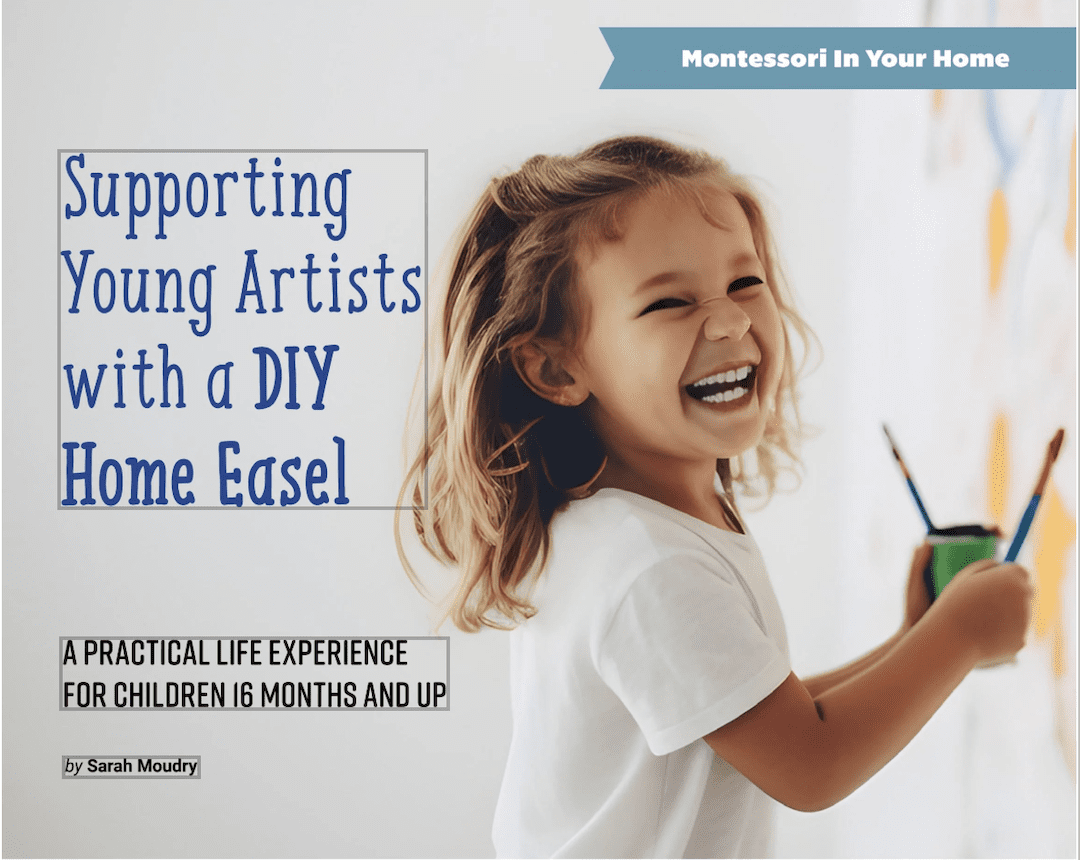
Supporting Young Artists with a DIY Home Easel

Supporting Young Artists with a DIY Home Easel

young artist

A Practical Life Experience for Children 16 months and up

by Sarah Moudry

Materials you will need

• Towel bar

• Towel bar brackets

• 18” roll of paper meant for paint

• Contact paper (to protect the wall)

• Vinyl floor mat

• Wall clips

• Magnetic wall strip

• Magnetic container

• Paint cups

• Paint, brushes, chalk, crayons

• Child- and adult-sized aprons

Children love to paint and draw. Are you thinking of adding a painting easel in your home? Or are you frustrated with the amount of space an easel takes up in your house? Many of the easels designed for children are bright, garish in color, plastic, and oversized. Who wants that as a centerpiece in your family space?

Today, we want to share a sturdy, space-saving alternative to an art easel in your home. Children love to paint and draw. Giving them a large surface to do so allows for strength building, provides practice for arm and hand control, and is an open-ended creative exercise they will enjoy. Consider this new install we did at @thestudiojune for a possible art area in your home.

Designing the space

1. Place contact paper on the wall to protect the wall

2. Decide on the proper height of the paper for your child’s height

3. Attach the towel bar at the top of this space

4. Attach the magnetic wall strip at the bottom of this space

5. Slide the paper roll onto the towel bar.

6. Thread the paper behind the magnetic wall strip and out the bottom

7. Attach the wall clips to the wall, where your child can reach and you would like their painting to dry

8. Attach the magnetic container to the magnetic wall strip

9. Prepare the paint in the cups

Sharing the Lesson

1. As with all Practical Life activities, show your child the tools you will need, what they are called, and how to hold them.

2. Remind your child that you will show them how to do the activity, and then they will have a turn.

3. Put on your aprons.

4. Choose a piece of paper.

5. Show your child how to clip the paper to the easel; this will depend on the type of clip and easel you have.

6. Open the paint container and place the lid in the tray of the easel.

7. Hold the paintbrush with a pencil grip.

8. Dip your brush in the paint.

9. Use the tip of the brush to make a stroke on the paper.

10. Look at your child and pause.

11. Dip the brush back in the paint.

12. Use a different edge of the brush to make a new stroke on the paper.

13. Repeat dipping the brush in the paint and holding the brush at a new angle to make a new mark.

14. Place the brush in the tray.

15. Close the container of paint.

16. Invite your child to have a turn.

17. Remove the paper and show your child where you can place it to dry.

18. Invite your child to choose a new piece of paper.

19. Invite your child to adhere the paper to the easel and assist if needed.

20. Invite your child to put their paper in a place to dry.

21. Invite your child to repeat as long as they are interested.

22. When they are finished, help them to remove their apron and put it away.

Sarah Moudry (@sarahmoudry) is an education innovator whose work is focused on creating education environments and experiences that inspire growth and joy. Her work is rooted in Montessori philosophy and paired with her extensive experience as a designer.

Recently, her projects included the founding of StudioJune (@thestudiojune), a Montessori parent and child education center, and Family Friendly Home (@familyfriendlyhome), an interior design company that creates inspirational home and school interiors.

Sarah is the author of books and online courses that help parents, childcare professionals, and grandparents to incorporate Montessori practice into their lives. She has an MEd in Montessori education, a BS in environment and design; AMI Montessori certification for birth to six years; and is an Associate Member of American Society of Interior Designers.

How to Deliver a Powerful, Yet Meaningful, Apology to your Teenage Child

How to Deliver a Powerful, Yet Meaningful, Apology to your Teenage Child

Apology to your Teenage Child

Editor’s note: Montessori education is all about modeling the behavior we expect our children to learn. As they grow, we might not teach them how to wait for their turn to speak, but we might very well enforce their empathy, social skills and model the way we want them to think and reflect when something happens and they arrive late.

These suggestions can be applied with friends and family members. Children often want an explanation for your behavior. In this case, make a very short explanation. Children often want to be reassured that you aren’t angry with them and that you still love them.

Being more interested in their feelings than your own feelings is the key to a successful, powerful, and meaningful apology.

It is virtually impossible not to find yourself in this position. We hope that using these guidelines will help restore and enhance your relationship rather than create even more distance.

Don’t gaslight (making the other person question their reality).

“You must have heard me wrong. I said one-ish.” Comments like these put the responsibility for your actions on someone else.

Don’t put the blame on them.

“You should have called me if you were worried.”

Don’t make excuses for your behavior.

“My last appointment ran over time.” They are not interested in your excuses at this moment!

Don’t talk about how you feel.

“I am so embarrassed. I am usually on time.” Again, they are not interested in your feelings at this moment!

Don’t over apologize. “I am REALLY sorry. This was so inconsiderate of me.” This can be misconstrued as being more concerned about making sure they are not angry with you than you are about their feelings.

Don’t make false promises. “I promise I’ll never be late again.” It is impossible to make this promise in the future, and it doesn’t alleviate the other person’s negative feelings.

Do take responsibility for your actions.

“You are right. I am REALLY late!”

Do validate their feelings.

“You have a right to be irritated with me.”

Do admit you were wrong.

“I didn’t watch my time effectively.”

Do empathize with how they might be feeling. “It must have been irritating to wait this long.”

Do sincerely apologize once, while making good eye contact with them.

Do make amends for your behavior.

“How about I buy your lunch for inconveniencing you?”

Kathryn Kvols is the president of APEC, a worldwide parent-training network that teaches her life-changing course, “Redirecting Children’ Behavior.” The course teaches skill-building strategies to families. They emphasize teamwork, creating win-win situations and effectively avoiding power struggles using kind-but-firm methods promoted by Dr. Alfred Adler and Dr. Rudolf Dreikurs.

Kathryn has a bachelor of science degree in psychology and social work with a minor in education from Concordia College in Minnesota. Kathryn and her husband, Brian Harper, reside in Gainesville, Florida and have a blended family of five children: Brianna, Tyler, Chloe, Emily, and Amy. Visit her website at www.apecparenting.com for more information.