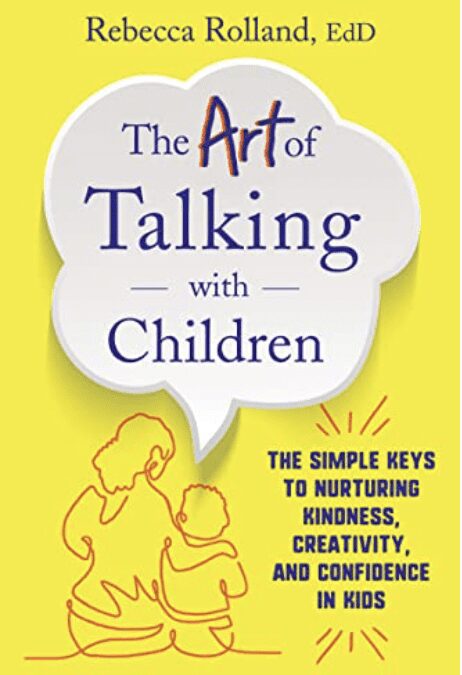
THE ART OF TALKING WITH CHILDREN: THE SIMPLE KEYS TO NURTURING KINDNESS, CREATIVITY, AND CONFIDENCE IN KIDS
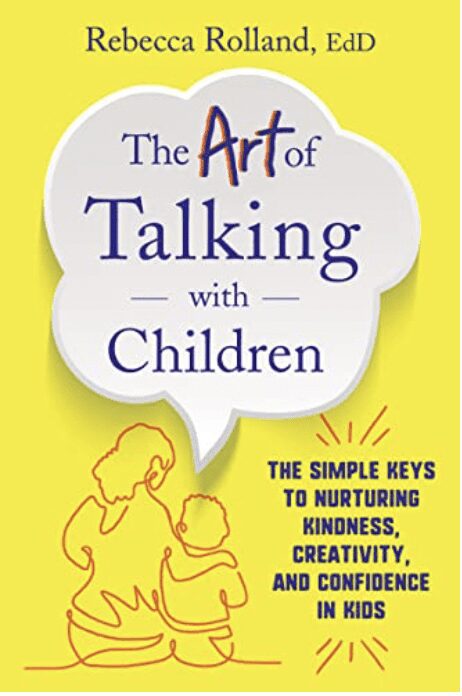
Written by Rebecca Roland
Conversations can help provide learning opportunities, including developing essential listening skills and increasing vocabulary. Often, what we think of as a conversation with the children around us is more a session of us, as the adult, either asking for information or providing information,. We do not always get to the why of the information. When we get to hear a child’s “why,” it feels like being given a gem. This book can help us as adults learn skills that allow us to get to that why more often.
Rebecca Rolland is an oral-language specialist, a Harvard faculty member, and a parent and brings all those roles to this book. Each chapter explains why one would want to have different types of conversations with children and adolescents, provides evidence for the science, and shares anecdotes from her family and students. The combination helps make this a book you can apply to your life, even in the first chapter. She explains how you can help develop empathy, confidence, creativity, and social skills through conversations.
I would recommend this book for parents of young children through teens as well as teachers and all school personnel. It can be read all at once, one chapter at a time with practice before reading the next, or in the order needed based on family circumstances. It is certainly a book you will go back to again and again to develop and refine conversational skills that may help in talking with adults as well as talking with children.
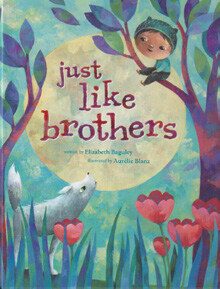
Just Like Brothers
Written by Elizabeth Baguley
Illustrated by Aurélie Blanz
This is a charming book with gorgeous illustrations and interesting descriptive and rhyming verses. The story is about how sometimes groups teach their children to guard themselves against other groups without knowing, interacting, or understanding. They fear and sometimes hate each other when in fact, they might be able to live like brothers.
The author uses a human child and a wolf cub as the characters that are influenced by their mothers’ warnings about the other. Although it can be a metaphor for developing care and kindness for each other, in reality, the adults in these species can be dangerous when confronted with each other. What happens to our childhood innocence when we grow in fear and protection? Maybe this is really a book for adults, not children.
I would recommend this book for elementary-age children because, to me, it is more than just a storybook. It is a conversation about figuring out the difference between real danger and simply lack of understanding.
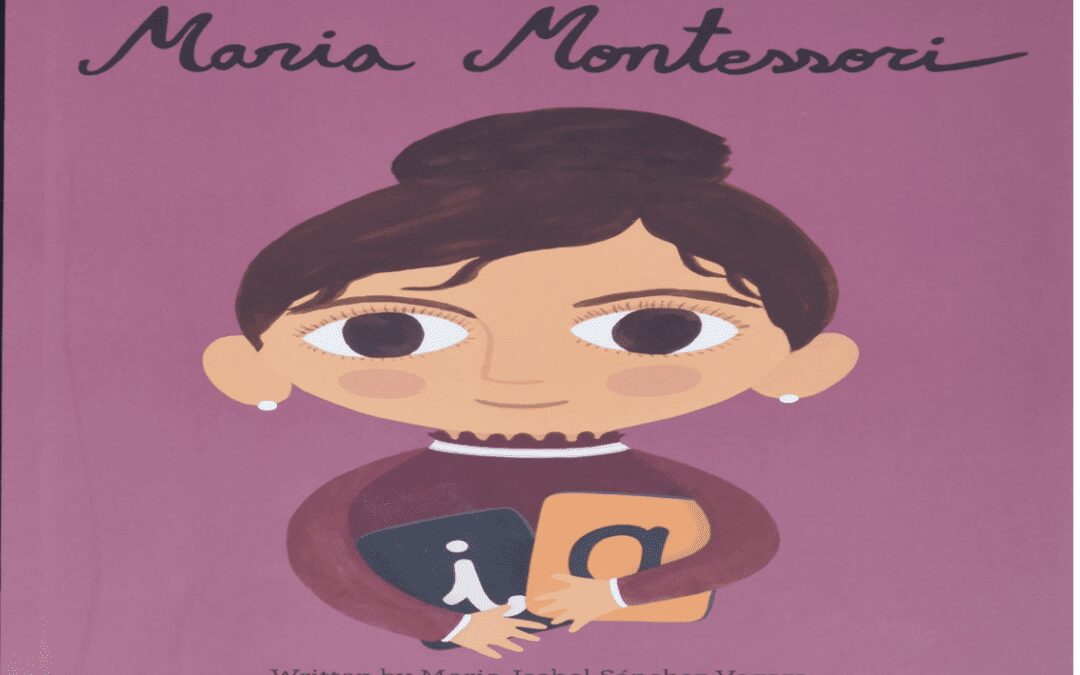
Maria Montessori Biographies for Children, a Series of Reviews
Note: A while ago, I was wondering: Why aren’t there books for children about Maria Montessori’s life and work? So, I began to do some research. It turns out that there are quite a variety of books from which to choose. There are paperbacks, hard covers, cartoon-ish, realistic, factual, factual-ish, etc. I am going to review four of them and you will probably be able to find even more.
Each of these books has its own value for children. Some contain more accurate information than others; some have more of a story than others; and some are illustrated more realistically. All books about Maria Montessori will help children to understand what she did to change the way children are educated. By providing more information about Montessori, readers gain a better understanding of why the Method works so well for so many children and how the core value of respect leads to a more peaceful world.
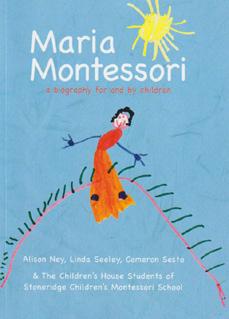
Maria Montessori: A Biography for and by Children
Written by Ney, Seeley, Sesto, & Children’s House students from Stoneridge Children’s Montessori School
This is a paperback book. The teachers/guides wrote the content, and the children illustrated the pages. It seems like it was a wonderful project for the Stoneridge school. This little paperback is full of information about Maria Montessori’s life and work. It includes a timeline and a couple of activities for children. It was published ten years ago so, unfortunately, the website that is mentioned is no longer available.

The Life of Maria Montessori
Written by Jane Kent
Illustrated by Isabel Muñoz
This is a hardcover version of Montessori’s life with quite realistic illustrations. This book is written in the first person as an autobiography. The content brings out Montessori’s determination, intelligence, and forward thinking more than other books. This book is a much more thorough account of all that she achieved during her lifetime. At the end of the book there is a four-page timeline for children to review and some questions to help children remember some of the details of the story.

Maria Montessori and Her Quiet Revolution
Written by Nancy Bach
Illustrated by Leo Lätti
This is also a paperback edition. I like the style of the illustrations regarding how the characters look in modern times (2013) and during Montessori’s time. I also appreciate how the modern Montessori classroom teacher is sharing the story of Maria Montessori’s life. However, I do question some of the information in this book. I also noticed that the classroom looks more like a traditional classroom. I did not see any Montessori materials and the children were sitting one in front of the other rather than in a circle or other shape as is usual for a Montessori school. The book does include some additional information about Maria Montessori’s life and a short quiz.

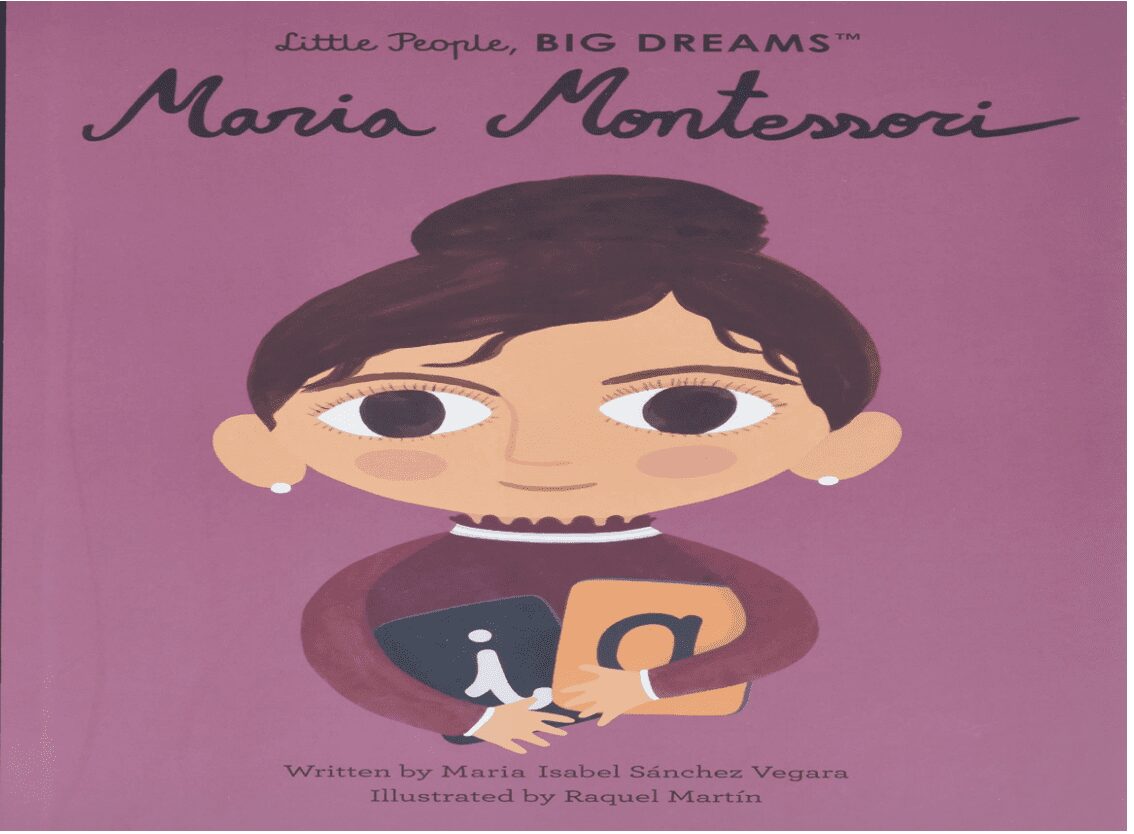
Little People, BIG DREAMS™ Maria Montessori
Written by Maria Isabel Sánchez Vegara
Illustrated by Raquel Martín
This one is a hardcover edition with quite accurate text and illustrations that used soft colors and characteristic images of the times in which Montessori lived and worked. The book includes a brief history and timeline with actual photographs of Maria Montessori.
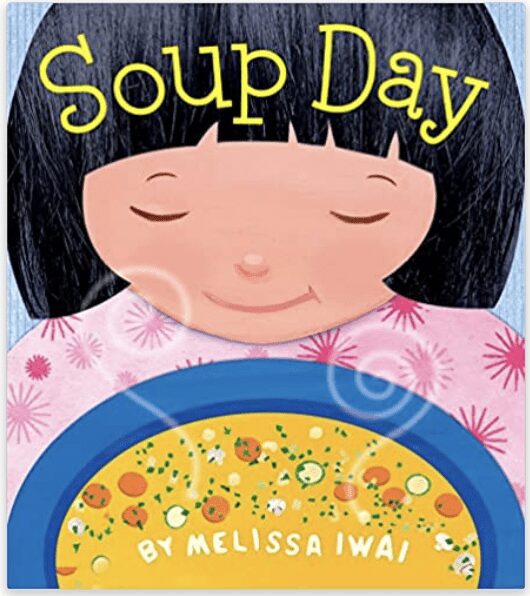
Soup Day
Soup Day
Written by Melissa Iwai
Melissa Iwai is fast becoming one of my favorite authors! She writes and illustrates engaging books about preparing food with the family. Some of the many attributes of her books are:
• they have sturdy, hard-to-ruin pages, which is important when the recipe is included, and the book will be used as you prepare the food;
• the illustrations are realistic;
• they offer ideas for spending time together while the meal cooks;
• they include the process for getting the ingredients, whether it be from planting seeds to harvesting foods or going to the grocery store to find and gather them to take home;
• the illustrations show the steps to preparing the food;
• the parent allows the child to choose certain ingredients, such as which kind of pasta to use;
• the author includes using the senses of taste, sight, and hearing as the food is being cooked; and
• clean-up is part of the process.
Can you see why I love this book and others that she has written?
I recommend it for children two years old through lower elementary. It can be purchased from most book suppliers.
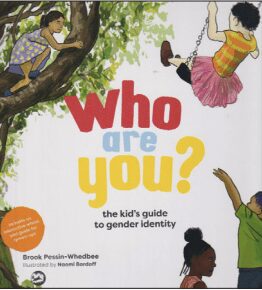
Who Are You? A Kid’s Guide to Gender Identity
Written by Brook Pessin-Whedbee
Illustrated by Naomi Bradoff
The author has included suggestions about how to use this book. She also includes resources and activities to help parents and caregivers define gender and to learn more about the topic.
Brook suggests that this book may or may not be the first introduction to gender discussions that you have with your child. I have learned that gender identification may be different than the sex assigned to a person at birth. It is more than the physical body. It includes what a person likes to do, how they like to dress, and how they express themselves. I love the way the book ends in bold letters:
There are lots of ways to be a boy. There are lots of ways to be a girl. There are lots of ways to be a kid.
This book allows adults and children to think about the question in the title, Who are you? It can be purchased from most book suppliers. Suggested for children four years old through the elementary years.
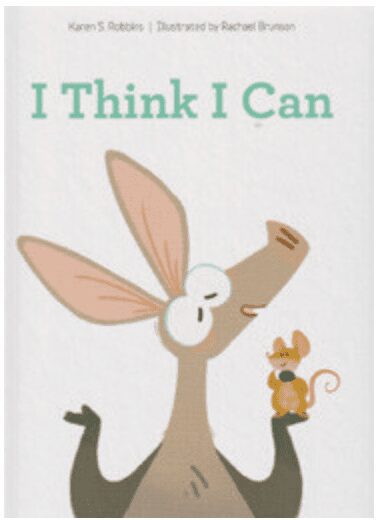
I Think I Can
Written by Karen S. Robbins
Illustrated by Rachael Brunson
Well, I read this book several times, and I think this could be an introduction to reading together (an adult and a child) The aardvark shows confidence in its abilities and potential, and the mouse is delighted.
There are two characters – the aardvark, played by an adult, and the mouse by a child. The aardvark’s words are printed in blue, and the child’s in black. Many of the child’s words are the same as the aardvark’s and the child just repeats them, often only changing the nouns. It ends with a song that they sing together to the tune of “Row, Row, Row Your Boat.” The illustrations are simple, clear, and fun.
This book could introduce reading together as just fun for young children and adults. It can be purchased at amazon.com.
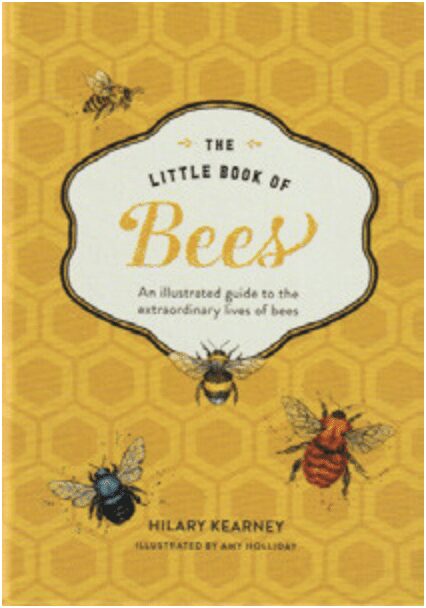
The Little Book of Bees

Written by Hilary Kearney
Illustrated by Amy Holliday
I had the pleasure not long ago of visiting a botanical garden known for its orchids and generously filled with many other kinds of flowering plants, etc. Whenever I go to places like that, I always visit their gift shop and purchase a book or two for the school, my grandson, or others who are near and dear to me. As usual, I found this wonderful book.
This Little Book of Bees is huge! It is full of very informative content and gorgeous illustrations! You and your child will probably learn so much more than you ever knew about bees. The story of bees is fascinating. Maybe you and your child will be inspired to learn even more about bees and maybe even inspired to do some things – small or large – to help bees in your backyard, your local community, or around the world to survive and thrive.
I highly recommend this book as an addition to your home or school library. Children from four to twelve years old will be intrigued by the wonder of bees! It can be purchased at botanical gardens, nature preserves, bookstores, and from Amazon.
The Honeybee

The Honeybee
Written by Kristen Hall and Isabelle Arsenault
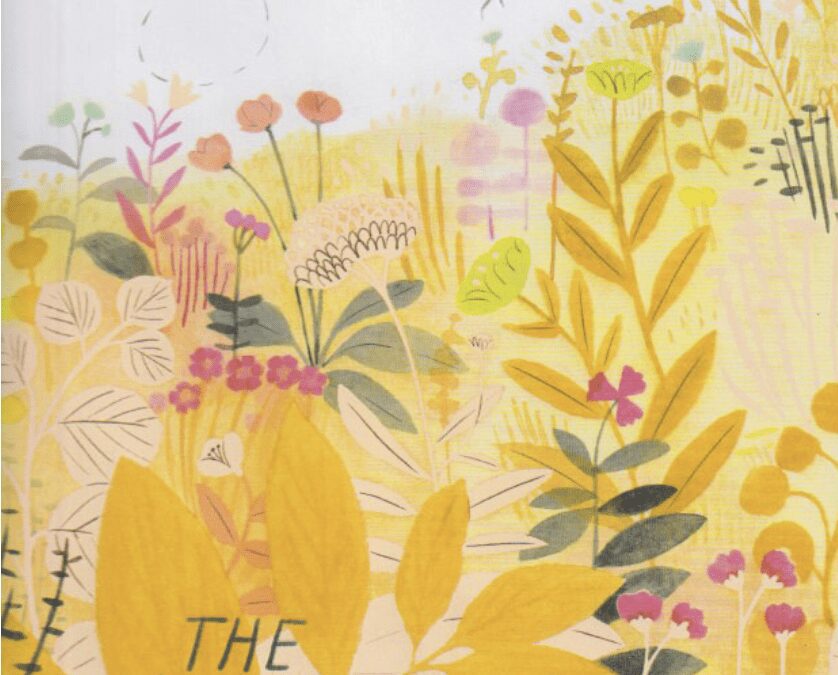
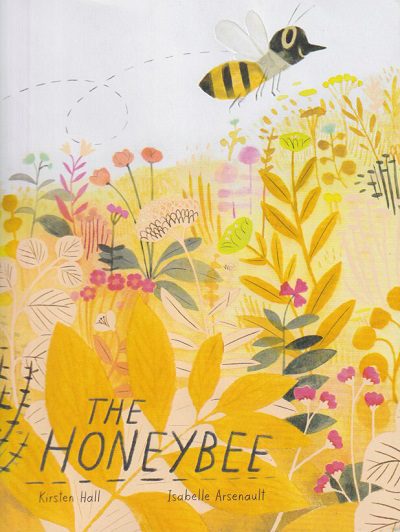
This is a beautifully illustrated and written book about the life cycle of the honeybee. It is quite colorful, and the illustrations are soft and fairly realistic. The author and illustrator take you from summer, when flowers are in full bloom everywhere; to fall and the work to be done in the hive; to winter, when everything slows down; then spring, when the world awakens, and the honeybees start collecting the pollen and the nectar again. Much of the text is rhyming, and young children will love the gentle flow of the words. I had fun reading this out loud and using my voice to highlight certain words and sounds. You can, too. I think it’s important to let your child know that honeybees are not aggressive. They only sting if they (or their hive) are disturbed. They have a lot of work to do so they don’t have much time for us humans! This is a book that is appropriate for 3–6-year-olds.
Animals Reviewed
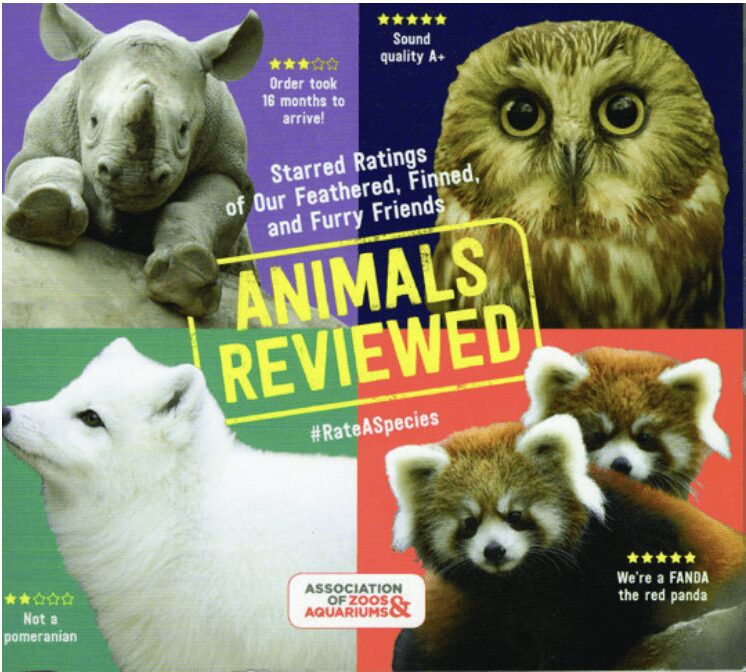
Elementary and middle school children, along with their parents and teachers, will love this book. It is a hilarious review of wild animals from around the world! Each animal is rated in a humorous way that tells the reader a little something about the creature. Animals Reviewed also includes the common name for the animal, its scientific name, and a zoo or aquarium where it can be found. This information is great because some of these animals may tickle a child’s curiosity and may motivate them to do more in-depth research about the animal. They may even be able to go see the animal in person if a zoo or aquarium nearby has one in residence. Enjoy!
The Montessori Potential
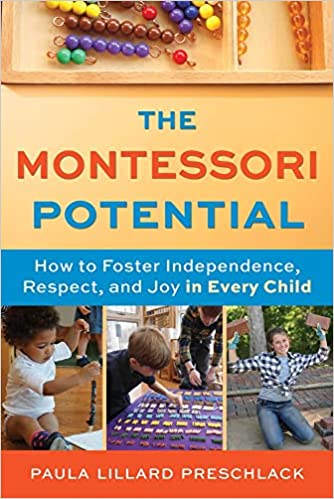
It is rare that I have ever found a Montessori book that was effectively written for both Montessori professionals and parents. Paula Preschlack has done it brilliantly! She starts with a section that appeals to both groups and is meant to inform them without lecturing or patronizing either one. The case studies that she uses in this section and throughout the book are exactly what is needed to demonstrate her points. She captures the readers’ attention seamlessly as she moves from one group to the other.
During my many years of working with parents and teachers, I have always started conversations with an exercise to get them thinking, “Imagine your child/ren at 18 years old, just finished High School and ready to go out into the world. They might choose to travel for a while, go on to some higher education, start a business, etc. What do you hope children will have gotten from their years in school?” They have always answered with character traits like confidence, ability to collaborate, love of learning, etc. Paula Preschlack paints a beautiful picture of the characteristics that children develop from their Montessori experience. She emphasizes the deliberate combination of soft and hard skills that an authentic Montessori experience provides.
Learning should be an ongoing, ever-changing experience that meets a young person’s needs at home and school. Ms. Preschlack brings understanding to the needs of children in different planes of development and the role of parents and teachers in creating environments suited to meet children’s needs. Her descriptions bring hope and trust in “The Montessori Potential” to make a better world through our children. This is a book that everyone should read.
Hatching the Cosmic Egg
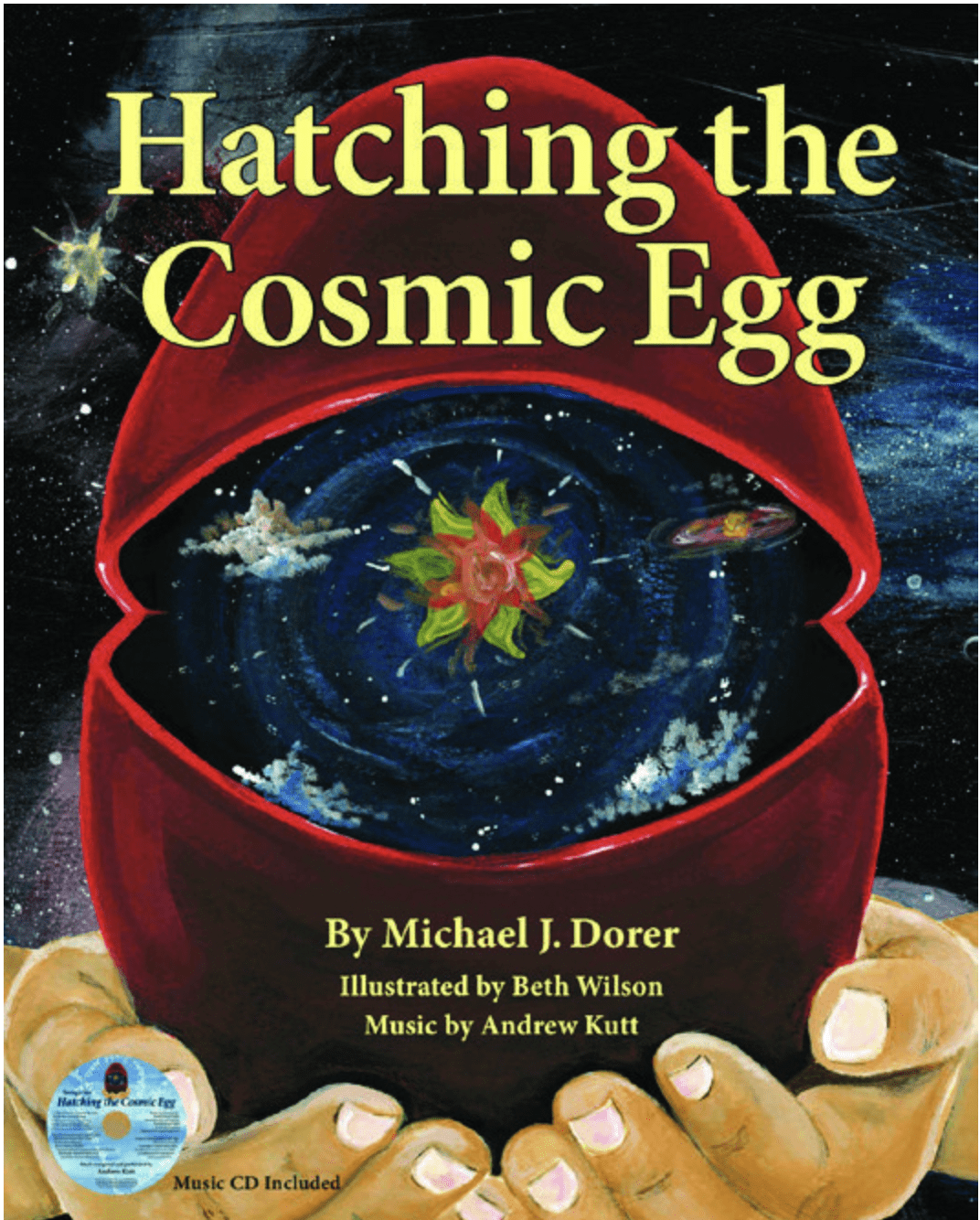
Hatching the Cosmic Egg
Written by Michael Dorer, Illustrated by Beth Wilson, and Music by Andrew Kutt
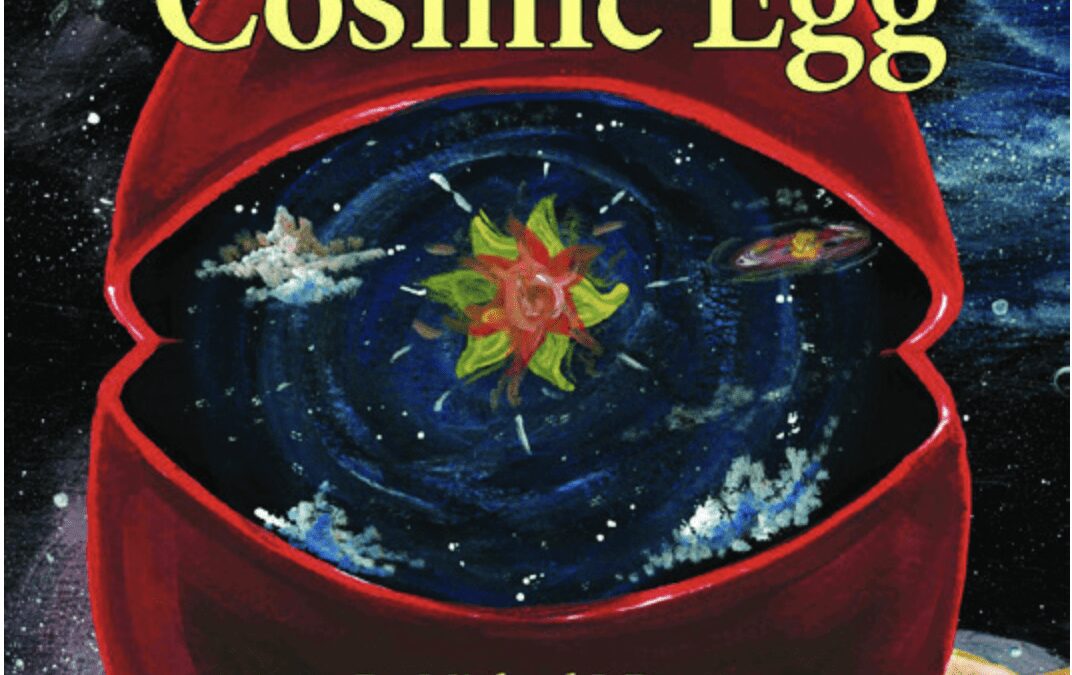
Michael Dorer, a well-known Montessori educator, author, and conference presenter, has now written his first children’s book and it’s ‘wonder-full.’ Hatching the Cosmic Egg opens with a request for the reader to “think of the very biggest thing you can.” I’m already intrigued and excited, and I think elementary children will be, too!
On each of the next few pages is a gorgeous, two-page, colorful drawing of very large earthly things that children might imagine, and the author asking; Is it a great, gray elephant? Next two-page spread: A tall, snowy mountain? And so on. Then he begins to ask about more stellar images like the sun and the stars. This is so cool because the book brings the child’s mind to bigger and bigger images leading up to: It’s the UNIVERSE!
Now the story begins! This book encourages and entices children to think big about the universe, about themselves, and their part in the universe. Dorer, being the great storyteller that he is, seamlessly incorporates concepts from the great lessons and brings the readers to an awesome affirmation that they are connected to and part of everything in the universe.
Beth Wilson’s illustrations are perfect for the story, both in style and simplicity. They add to the wonder of this book. And, there’s more. With each book comes a CD with music and song by Andrew Kutt that enhances the story for readers in a totally different genre. This book needs to be in every home and classroom!
Books We Love!
Our Table
To continue reading, you will need to choose a subscription plan.
Redirecting children’s behavior
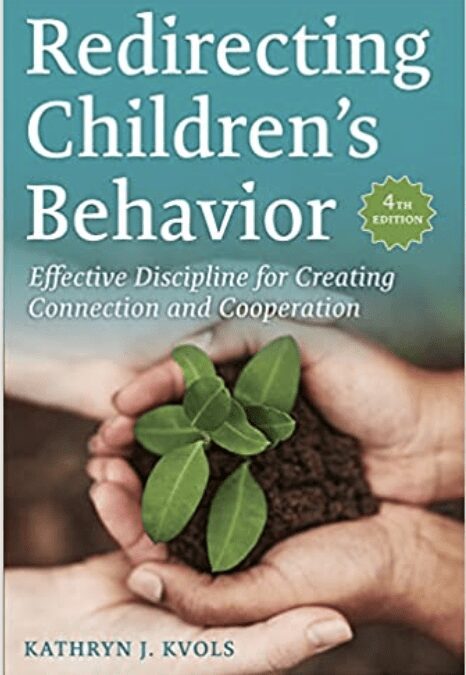
Redirecting Children’s Behavior: Effective Discipline for Creating Connection and Cooperation
Written by Kathryn J. Kvols
In early 1990, when our children were three and six years old, I met Kathryn Kvols. I was an experienced and skilled primary teacher in a Montessori classroom. I did exceedingly well at school with other people’s children. I listened to each child patiently and respectfully. I was kind, firm, and consistent. I cultivated a cooperative classroom community.
And yet, something disturbing happened when my children and I got into our car to go home. Suddenly, I became a very different person and did not treat my own children with the same respect and kindness I gave the children in my class. I was consistently in power struggles with my oldest child, and because that took up so much of my parenting time, my youngest became an attention-seeking child. My husband had no clue what to do with the children or me!
Without a doubt, we were struggling in our family life when I met Kathryn Kvols – a woman with a book, practices to cultivate connection and cooperation, and a belief in the goodness of humans.
I gladly took her course. I learned that the same principles I used in the classroom with other children also applied to my own children at home. What a novel idea! This woman, her book, and her practices transformed our home life.
I tell you this story because I am so excited that the 4th edition of Redirecting Children’s Behavior has been released this year. It has a new, more interesting look. The print and layout design is more inviting. It is loaded with real-life stories that illustrate the practices she espouses. Most important are the family-life-changing principles that she lays out in detail for her readers. They include cultivating growth mindsets within each family member, recognizing and managing emotions effectively, setting and keeping clear expectations, developing skills that eliminate the need to punish or reward, resolving conflicts peacefully, and so much more.
This book will help you align your family life with the principles and practices used in your child’s, grandchild’s, niece’s, or nephew’s Montessori classroom. It is a must-read for families.
BOOK REVIEWS: TC Nov 2022

Just Like Brothers
Written by Elizabeth Baguley
Illustrated by Aurélie Blanz
This is a charming book with gorgeous illustrations and interesting descriptive and rhyming verses. The story is about how sometimes groups teach their children to guard themselves against other groups without knowing, interacting, or understanding. They fear and sometimes hate each other when in fact, they might be able to live like brothers.
The author uses a human child and a wolf cub as the characters that are influenced by their mothers’ warnings about the other. Although it can be a metaphor for developing care and kindness for each other, in reality, the adults in these species can be dangerous when confronted with each other. What happens to our childhood innocence when we grow in fear and protection? Maybe this is really a book for adults, not children.
I would recommend this book for elementary-age children because, to me, it is more than just a storybook. It is a conversation about figuring out the difference between real danger and simply lack of understanding.

Be Who You Were Meant To Be
Written by Lauren Grabois Fischer
Illustrated by Devin Hunt
This children’s book encourages children to feel their own feelings, think their own thoughts, self-reflect, know themselves, be courageous, and accept others for who they are. The overall belief is that humans inherently know who they were meant to be when left unjudged and unconditionally loved. Within this book, the story is written in English and then repeated in Spanish – two books in one. The illustrations are colorful and fun. They depict children from many backgrounds.
At the end of the book, there are several pages with notes to parents, caregivers, and teachers with discussion questions and activities. This book would be appealing to three- to eight year-old children. It can be purchased at amazon.com and other book outlets.

Everyone Feels…
Written by Dr. Daniela Owen
Illustrated by Gülce Baycik
This series is written by an author who we have heard from before. Dr. Owen also wrote a series called Right Now. Some of you may remember and have read those books. Everyone Feels is a new series that can help children identify feelings, such as anger, sadness, and anxiety and give them strategies to cope with them in appropriate, healthy ways. Strategies include deep breathing, changing their thoughts, physical exercise, etc. In the past, children were taught to “stuff” certain feelings and pretend they didn’t exist. Fortunately for all of us, we now know that “stuffing” only leads to eventual explosions that can negatively impact the person with the feeling and others around them.
This series is very helpful for young children as they learn how to self-regulate and express themselves in ways that keep them emotionally safe and healthy. It would be a good addition to any home or school library for children three to ten years old. The books can be purchased online or at a local bookstore.

I Think I Can
Written by Karen S. Robbins
Illustrated by Rachael Brunson
Well, I read this book several times, and I think this could be an introduction to reading together (an adult and a child) The aardvark shows confidence in its abilities and potential, and the mouse is delighted.
There are two characters – the aardvark, played by an adult, and the mouse by a child. The aardvark’s words are printed in blue, and the child’s in black. Many of the child’s words are the same as the aardvark’s and the child just repeats them, often only changing the nouns. It ends with a song that they sing together to the tune of “Row, Row, Row Your Boat.” The illustrations are simple, clear, and fun.
This book could introduce reading together as just fun for young children and adults. It can be purchased at amazon.com.

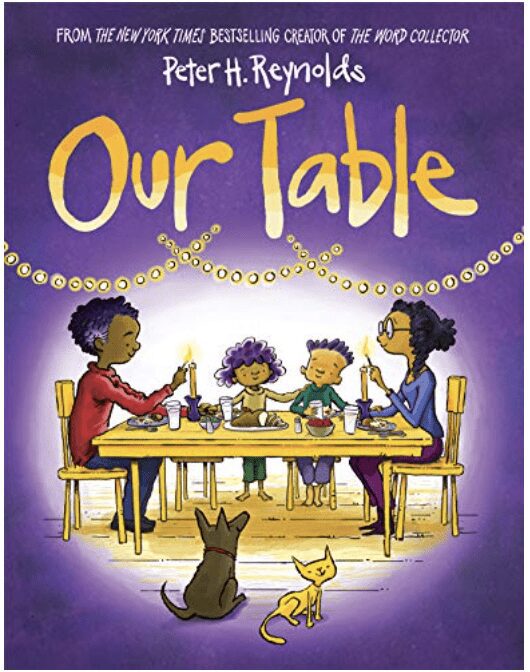
Our Table
Written by Peter Reynolds
Violet’s family has become distracted by technology and no longer comes together at their table. The table actually shrinks and disappears, with only Violet noticing. Violet asks the members of her family, one by one and, utilizing the technology they enjoy, to help her build a new table. The whole family remembers the power of coming together to share at the family table.
This story, beautifully illustrated by Peter Reynolds and using color to help enhance the story, is a great one for the holidays. It is a wonderful reminder of the power and joy of spending time together IRL (in real life).
I would recommend this book to all families. Young elementary-age children will enjoy the details in the illustrations, and everyone will enjoy the message. The book is available at all major book retailers, and autographed copies can be ordered from www.thedotcentral.com.

The Little Book of Bees
Written by Hilary Kearney
Illustrated by Amy Holliday
I had the pleasure not long ago of visiting a botanical garden known for its orchids, and generously filled with many other kinds of flowering plants, etc. Whenever I go to places like that, I always visit their gift shop and purchase a book or two for the school, my grandson, or others who are near and dear to me. As usual, I found this wonderful book.
This Little Book of Bees is huge! It is full of very informative content and gorgeous illustrations! You and your child will probably learn so much more than you ever knew about bees. The story of bees is fascinating. Maybe you and your child will be inspired to learn even more about bees and maybe even inspired to do some things – small or large – to help bees in your backyard, your local community, or around the world to survive and thrive.
I highly recommend this book as an addition to your home or school library. Children from four to twelve years old will be intrigued by the wonder of bees! It can be purchased at botanical gardens, nature preserves, bookstores, and from Amazon.

Redirecting Children’s Behavior Effective Discipline for Creating Connection and Cooperation
Written by Kathryn J. Kvols
In early 1990, when our children were three and six years old, I met Kathryn Kvols. I was an experienced and skilled primary teacher in a Montessori classroom. I did exceedingly well at school with other people’s children. I listened to each child patiently and respectfully. I was kind, firm, and consistent. I cultivated a cooperative classroom community.
And yet, something disturbing happened when my children and I got into our car to go home. Suddenly, I became a very different person and did not treat my own children with the same respect and kindness I gave the children in my class. I was consistently in power struggles with my oldest child, and because that took up so much of my parenting time, my youngest became an attentionseeking child. My husband had no clue what to do with the children or me!
Without a doubt, we were struggling in our family life when I met Kathryn Kvols – a woman with a book, practices to cultivate connection and cooperation, and a belief in the goodness of humans.
I gladly took her course. I learned that the same principles I used in the classroom with other children also applied to my own children at home. What a novel idea! This woman, her book, and her practices transformed our home life.
I tell you this story because I am so excited that the 4th edition of Redirecting Children’s Behavior has been released this year. It has a new, more interesting look. The print and layout design are more inviting. It is loaded with real-life stories that illustrate the practices she espouses. Most important are the family-life-changing principles that she lays out in detail for her readers. They include cultivating growth mindsets within each family member, recognizing and managing emotions effectively, setting and keeping
clear expectations, developing skills that eliminate the need to punish or reward, resolving conflicts peacefully, and so much more.
This book will help you align your family life with the principles and practices used in your child’s, grandchild’s, niece’s, or nephew’s Montessori classroom. It is a must-read for families.

Tales of a Traveling Nurse: Is This My Home?
Written by Sheri Sturniolo
Illustrated by Shay Larby
Children at the elementary level will probably enjoy this book as they look at a career that is new to them, as it was for me: Tales of a Traveling Nurse. They will be able to follow her stops in several different states in the United States as she travels in her work as a pediatric nurse and, as she says, “an explorer.” The illustrations are full of color and images of the many experiences that she describes. The author uses rhyming to add interest to the text. This book comes in paperback, hardcover, and board book versions, as well as on Kindle. It can be purchased at amazon.com and other bookstores.
Book Review by Lorna McGrath
Reviewed by Lorna McGrath

Here and There
Written by Tamara Ellis Smith Illustrated by Evelyn Daviddi
Ivan’s parents split up and are living in separate houses. Ivan didn’t like that he had to go here and there. He didn’t think he could be happy and himself with his parents apart. It took a little time and some adjustment for Ivan to realize that love and happiness could be shared; that love and happiness could be both here and there. It’s important for children to know that families can change and be structured in different ways. Time helps. Love helps. And some things will be held in common here and there.

The Honeybee
Written by Kristen Hall and Isabelle Arsenault
This is a beautifully illustrated and written book about the life cycle of the honeybee. It is quite colorful, and the illustrations
are soft and fairly realistic. The author and illustrator take you from summer, when flowers are in full bloom everywhere; to fall and the work to be done in the hive; to winter, when everything slows down; then spring, when the world awakens, and the honeybees start collecting the pollen and the nectar again. Much of the text is rhyming, and young children will love the gentle flow of the words. I had fun reading this out loud and using my voice to highlight certain words and sounds. You can, too. I think it’s important to let your child know that honeybees are not aggressive. They only sting if they (or their hive) are disturbed. They have a lot of work to do so they don’t have much time for us humans! This is a book that is appropriate for 3–6-year-olds.

Amazing Bees
Written by Sue Unstead
I just discovered that DK Publishers has a reading series. As always, this book is beautifully illustrated with photos of real honeybees, flowers, honeycombs, and all the other things that are part of a honey bee’s life. Amazing Bees is a Level 2 reader. The print is nice and big with just the right amount of information for an emerging reader. I am in love with this book and am now ordering a couple of books from each of the levels to see how they progress. I trust that I will be just as pleased with other books in this reading series. This is a great addition to a home or school library. You can purchase books in this series from amazon.com and probably other booksellers as well.

The Potential in Every Child
Written by Gavin McCormack Illustrated by Iris Villarrubia
Parents will find this book to be a quick and easy reference for everyday living practices with their child. Gavin McCormack has boiled down one-hundred ideas that are in alignment with Montessori philosophy for parents. The ideas are mainly for elementary-age children, and some are for children in the early childhood stage. Then some ideas can be used with children from early childhood through the elementary years and beyond. A few examples are: “Give your child the responsibility to take care of their things.” “Spend one night per week walking and talking. Look at the moon and discuss big-picture ideas.” “Do not replace things that get broken. Learn the value of money and repair things together.”
On each page, the author writes the main idea and then explains the value of practicing it with your child, the family, or the larger community outside your family. Each idea has a two-page spread with an illustration on one page and the idea and value on the other. The illustrations are in color and in a style similar to what a child might draw.
Parents may appreciate the brevity of the content in this book, as life can get so full and time is precious. It can be found on most online booksellers.

Big and Small
Written by Britta Teckentrup
This is a little board book for your infant or toddler. There is one quite realistic, colorful picture and one word on each page. Pages that are opposite each other in the book are opposite sizes. As you read this book together, your child will increase their vocabulary as you identify the picture images and begin to get some sense that there is a difference in the sizes of things. This is a difficult concept for a little one to really understand from a two-dimensional picture. However, you can put together an activity using objects that show the same concept in a three-dimensional way. For example: a big ball and a small ball; a big spoon and a small spoon; a big stuffed animal and a small stuffed animal; etc. Have fun reading this with your child!

Think Circles!
Written by Karen S. Robbins
I was pleasantly surprised when I opened this book for young children. I was expecting a book that has too much to sort out on a page, is visually distracting for young children, and could easily be torn or damaged by accident.
The author of Think Circles! isolates each illustration on the pages to answer the hint. For example: On page 1, the hint is “Bouncing Circle” and the question is “What can it be?” On the opposite page, there is a hidden object with just one opening to view part of the pictured answer with the word, “Think.” Adults get to have fun with this, too, as they read the words to the child and maybe, if needed, add another hint to play along with “thinking” about what the hidden object might be. I love that she invites the child to “think.”
Ms. Robbins also adds in another level of difficulty by adding objects to each page. So, on page 1, there is just one hidden object. On page 2 there are two hidden objects. On page 3 there are three objects, and so on to 10. On each page, there are the corresponding openings, so that children can count the openings and then count the objects when they open the flap to see the answer.
As a teacher, I would present one concept at a time. I would either introduce the book as a problem-solving lesson or as a counting lesson but not both at the same time. Both concepts are higher-level thinking. Either could be presented first. I would probably introduce the “thinking” concept first just because I like it.
The pages are quite sturdy, so that young children can use these books without accidentally damaging the books, assuming the adult has given the child a lesson on carefully turning/opening pages in a book. That’s important since we want children to be successful as they use books and other activities. The illustrations are colorful, attractive, and quite realistic.
There are two other books in this series – Think Triangles! and Think Squares! These books would be enjoyed by children 3-6 years old.

Think Farm Animals Think Zoo Animals
Written by Karen Robbins Illustrated by Rachael Brunson
Karen Robbins has written two sturdy books for two- to four-year-old’s about animals: Think Farm Animals and Think Zoo Animals. The pages can be easily turned, and the flaps easily opened by young hands. The illustrations are colorful, visually pleasing, and realistic.
Each book is set up similarly with a hint and a question on the left page and an opening that allows the child to see part of the animal on the right page.
For example: In the Farm Animals book on the left page, it reads, “I have a swishy tail and say ‘Moo!’ What can I be?” And on the right page, an opening shows a white and black tail with the word “Think” written below. I love that!
Remember children at this young age are still developing impulse control. The adult can help them with that in a fun way by saying something like, “Hmmmm. I’m ‘thinking’ about animals on a farm. Do we know a song about that? ‘With a moo-moo here and a moo-moo there.’ What could it be?” All the while holding the flap closed as the adult and child “think” together. You could even say to the child, “Let’s keep the flap closed so that we can ‘think’ for a minute.”
Lovely books for young children. I wish there were more!

The Art of Talking with Children: The Simple Keys to Nurturing Kindness, Creativity, and Confidence in Kids
Written by Rebecca Roland
Conversations can help provide learning opportunities, including developing essential listening skills and increasing vocabulary. Often, what we think of as a conversation with the children around us is more a session of us, as the adult, either asking for information or providing information,. We do not always get to the why of the information. When we get to hear a child’s “why,” it feels like being given a gem. This book can help us as adults learn skills that allow us to get to that why more often.
Rebecca Rolland is an oral-language specialist, a Harvard faculty member, and a parent and brings all those roles to this book. Each chapter explains why one would want to have different types of conversations with children and adolescents, provides evidence for the science, and shares anecdotes from her family and students. The combination helps make this a book you can apply to your life, even in the first chapter. She explains how you can help develop empathy, confidence, creativity, and social skills through conversations.
I would recommend this book for parents of young children through teens as well as teachers and all school personnel. It can be read all at once, one chapter at a time with practice before reading the next, or in the order needed based on family circumstances. It is certainly a book you will go back to again and again to develop and refine conversational skills that may help in talking with adults as well as talking with children.
Reviewed by Cheryl Allen
Book Review – Island of the Blue Dolphins

Island of the Blue Dolphins
By Scott O’Dell
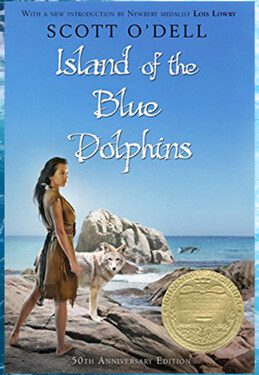
The Island of the Blue Dolphins is a historical fiction novel, based on a true story about a girl named Karana, who was stuck living in isolation for 18 years. In the story, Karana lives on an island with her family, and the rest of the Ghalas-at people. They all live in peace until the Aleut people arrive and take their resources, and all the Ghalas-at people are forced to leave the island. They accidentally leave Karana behind, where she is to fend for herself.
The progression of this story’s plot was unlike many stories I’ve read before. It started as a simple story about a girl’s family and tribe life on San Nicolas Island and moved into a story about how a girl lived in isolation for so many years. Along with the progression of the plot came character development. Karana knew how to live her life with what she had, but this came into play when she was stranded.
I think that the Island of the Blue Dolphins is a great book because it portrays a way of life. It gives a new aspect to the reader about different lifestyles people have all around the world. Another reason I enjoyed this book was because of the plot twists; just when you thought something came to an end, it opened with a new beginning; it made this book all the more interesting to read and kept the reader hooked.
I would best recommend this book for ages 12+, and the reason for that is that the book has some themes, such as isolation and extreme perseverance. In the story, Karana goes through so much that I couldn’t imagine someone under 12 understanding. Another reason that I recommend this book to a 12+ audience is because of the style of writing. The way the book was worded might be hard for a younger audience to understand the concept.
Overall, I enjoyed the book and recommend it to anyone who likes to read true stories. This book will keep you reading. Between Karana’s adventures and how she keeps herself company, you won’t want to put the book down!
Reviewed by Danica Kovacevic, 8th grade, NewGate School, Sarasota, Florida
Featured
-
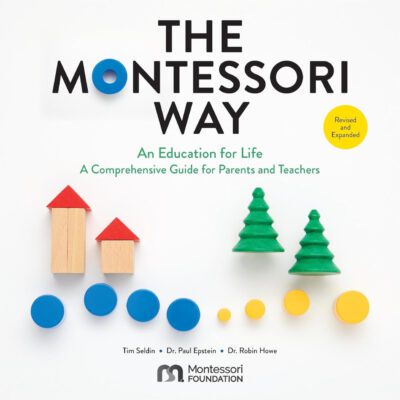
 The Montessori Way, Revised and Expanded: An Education for Life; A Comprehensive Guide for Parents and Teachers
$25.00
The Montessori Way, Revised and Expanded: An Education for Life; A Comprehensive Guide for Parents and Teachers
$25.00
-
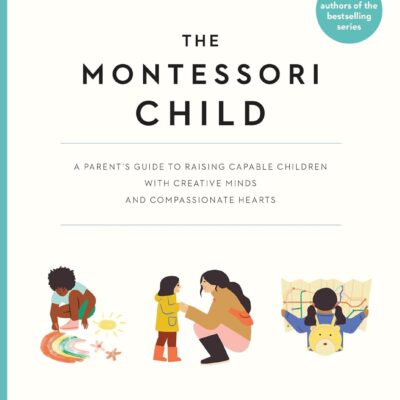
The Montessori Child: A Parent's Guide to Raising Capable Children with Creative Minds and Compassionate Hearts (The Parents' Guide to Montessori)
$20.00
-
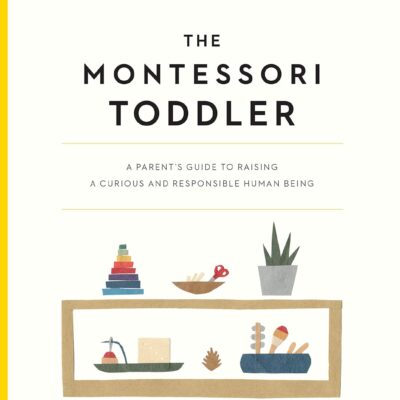
The Montessori Toddler: A Parent's Guide to Raising a Curious and Responsible Human Being (The Parents' Guide to Montessori)
$20.00
-
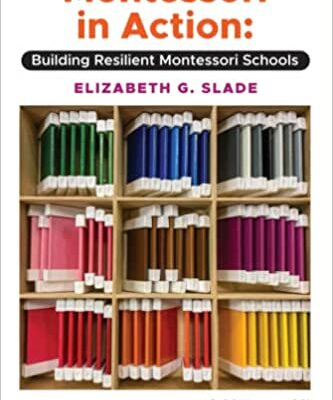
Montessori in Action: Building Resilient Montessori Schools 1st Edition
$29.95
-
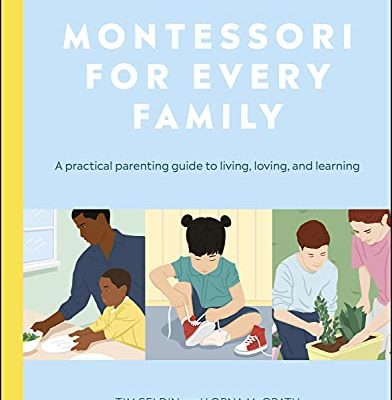
Bulk Order, 30 Copies of Montessori for Every Family: A Practical Parenting Guide To Living, Loving, And Learning
Original price was: $600.00.$510.00Current price is: $510.00.
Products
-
The Montessori Way, Revised and Expanded: An Education for Life; A Comprehensive Guide for Parents and Teachers
$25.00
-
The Montessori Child: A Parent's Guide to Raising Capable Children with Creative Minds and Compassionate Hearts (The Parents' Guide to Montessori)
$20.00
-
The Montessori Toddler: A Parent's Guide to Raising a Curious and Responsible Human Being (The Parents' Guide to Montessori)
$20.00
-
Montessori in Action: Building Resilient Montessori Schools 1st Edition
$29.95
-
Bulk Order, 30 Copies of Montessori for Every Family: A Practical Parenting Guide To Living, Loving, And Learning
Original price was: $600.00.$510.00Current price is: $510.00.