Neuromyths: Debunking False Ideas About the Brain Book review

Neuromyths: Debunking False Ideas About the Brain Book review

Pizza Day book cover

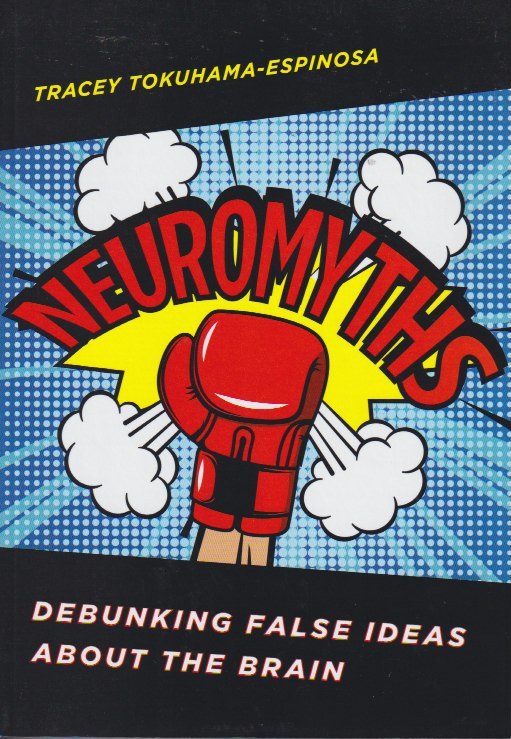
Neuromyths: Debunking False Ideas About the Brain

Written by Tracey Tokuhama-Espinosa

Have you ever explained behavior using information you have known for so long that it must be true? As parents and teachers, we may aim to learn about brain development and what is happening as our child grows, and we may share some information that is not correct. In this book, Tracey Takuhama-Espinosa leads us through some of the myths we may have learned about the brain and brain development and gives us updated information we can use on the same topics.

This book is easy to read. For each myth, she explains the myth, where the myth comes from, and what we know now. We are not all neuroscientists, and she explains what is known now with that in mind. At the end of each section is ‘Why This is Good News for Teaching.’ In most cases, the information contained in these short sections can be applied to a class or a home.

Although we do not all have time to become a neuroscientist, reading this book can help us apply updated neuroscience information in our interactions with the brains we come in contact with regularly, including our own! Did you know that you have not missed your window for learning another language? Or that the idea of multitasking is more than one myth?

The last chapter gives us steps to recognize neuromyths (you will start to hear them everywhere) and avoid applying misinformation to the brains nearest and dearest to us. The short reminders are ways for us to practice applying the growing neuroscience information to our own lives and our family or students.

I recommend this book for all adults that have a brain and interact with others with brains.

Grammar Tells a Story Book review

Grammar Tells a Story Book review

Pizza Day book cover
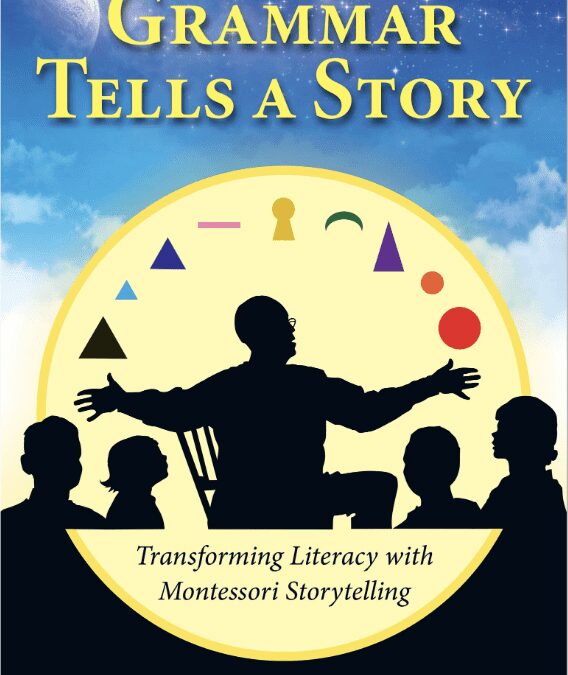
Grammar Tells a Story: Transforming Literacy with Montessori Storytelling

Written by Michael J. Dorer

Montessori grammar lessons formally begin in the 3-6 program. As they move through Elementary Montessori education, grammar lessons usually have at least one complete shelf. Sometimes that shelf stays dustier than it should. For many Montessori guides and parents, formal grammar instruction was not a part of our own education. In his book, Michael Dorer describes that it was presented to him as a threat. It is no wonder many adults have the desire to avoid grammar and are amazed at how excited children are to work with grammar.

In Grammar Tells a Story Michael Dorer has helped many parents and teachers by presenting the organization of the grammar work with explanations in the first section of the book and following this up with more details before each story. If you are teaching at home or want to understand the work your child demonstrates to you, this material is very helpful. For those who feel grammar could be used as a threat, or just don’t understand why we need to learn about it, he has explained it so kindly and with humor.

The stories themselves are entertaining. They are not meant to be read directly from the book, but to be made your own. Change the names and gender as it works for your group. Practice a few times and suddenly you can share stories that further develop grammar skills and often get a laugh. Stories are a fun and memorable way to strengthen learning and connection. When you add grammar information to the stories, you are developing all sorts of areas of literacy.

This book is great for any classroom and for those at home who feel grammar is a bit scary. The book is available through Montessori Services and other booksellers.

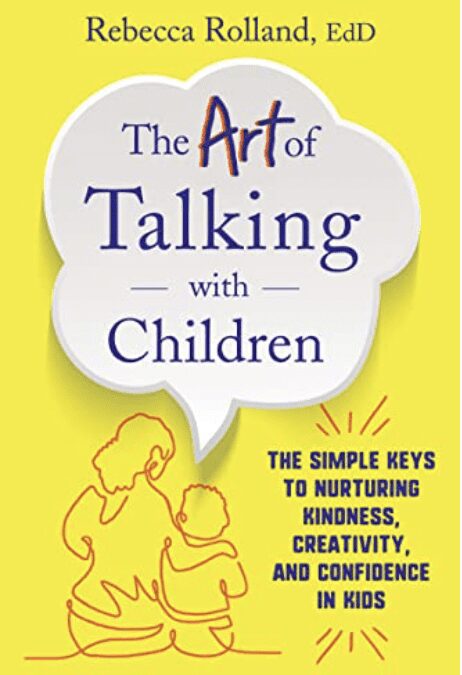
THE ART OF TALKING WITH CHILDREN: THE SIMPLE KEYS TO NURTURING KINDNESS, CREATIVITY, AND CONFIDENCE IN KIDS

THE ART OF TALKING WITH CHILDREN: THE SIMPLE KEYS TO NURTURING KINDNESS, CREATIVITY, AND CONFIDENCE IN KIDS

cover of The Art of Talking to Children

Written by Rebecca Roland

Conversations can help provide learning opportunities, including developing essential listening skills and increasing vocabulary. Often, what we think of as a conversation with the children around us is more a session of us, as the adult, either asking for information or providing information,. We do not always get to the why of the information. When we get to hear a child’s “why,” it feels like being given a gem. This book can help us as adults learn skills that allow us to get to that why more often.

Rebecca Rolland is an oral-language specialist, a Harvard faculty member, and a parent and brings all those roles to this book. Each chapter explains why one would want to have different types of conversations with children and adolescents, provides evidence for the science, and shares anecdotes from her family and students. The combination helps make this a book you can apply to your life, even in the first chapter. She explains how you can help develop empathy, confidence, creativity, and social skills through conversations.

I would recommend this book for parents of young children through teens as well as teachers and all school personnel. It can be read all at once, one chapter at a time with practice before reading the next, or in the order needed based on family circumstances. It is certainly a book you will go back to again and again to develop and refine conversational skills that may help in talking with adults as well as talking with children.


30 Reasons Parents Stay with Montessori

30 Reasons Parents Stay with Montessori

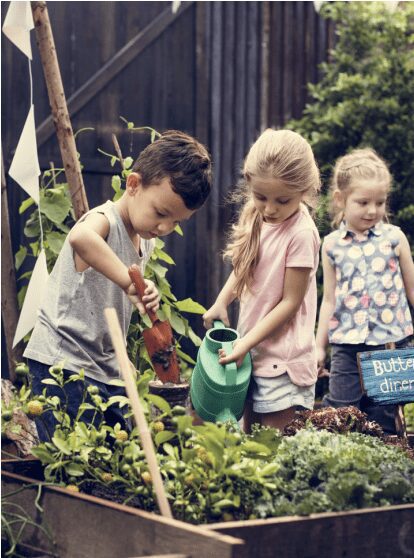
three children gardening
Gifts for an Eight-Year-Old

Gifts for an Eight-Year-Old

by Cheryl Allen

Here are some Montessori aligned girts for eight year olds, although the age is flexible. Look for what is appropriate for the child and family you are buying the gift for.

These products are aligned with the Montessori philosophy. When you buy through our links, we may earn a commission.

Magnetic Folding Chess and Checkers Set

This is a great age to learn to play chess and checkers. A magnetic board and pieces make it easier to return to the game after a break.

http://shrsl.com/3lw1a

magnetic folding chess set

A Book

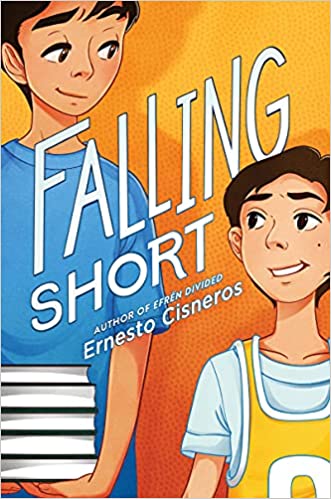
A book is often the right answer for a special gift. This book, Falling Short, is about friendship, setting goals, and accepting yourself. You may also find a childhood favorite of your own to give as a gift.

http://shrsl.com/3lw2p

Falling Short book cover

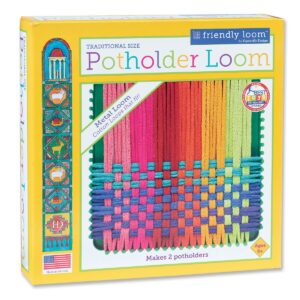
Potholder Loom and Cotton Loops

This metal loom will last through making many potholders. You can include another bags of loops to make more potholders.

http://shrsl.com/3lw37

Get an extra bag of cotton loops to make more potholders.

http://shrsl.com/3lw3g 

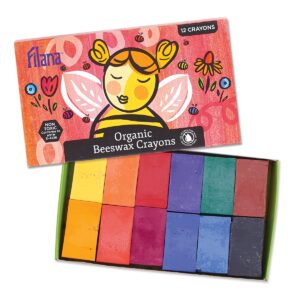
Beautiful Beeswax Crayons

This rectangular shape makes doing rubbings and drawing thin lines easy.  

http://shrsl.com/3eq46

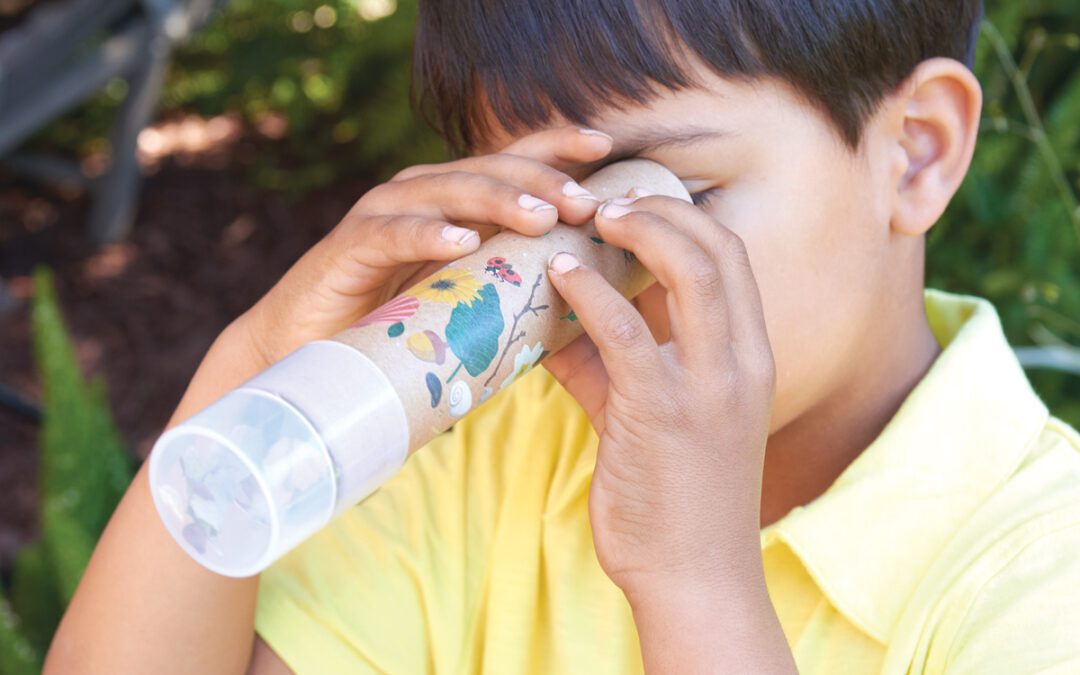
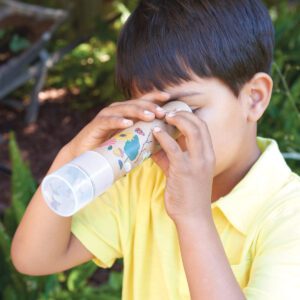
Nature Kaleidoscope

Place small items in the specially designed cup of this kaleidoscope and view the art you create.

http://shrsl.com/3eq3u

child using a kaleidoscope

Dough for Playing and Sculpting

Get six different colors of natural, plant-based dough for various projects.

http://shrsl.com/3lw46 

All Natural Dough jars

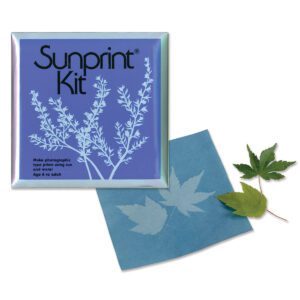
Sunprint Kit

Arrange objects on this specially treated paper, set it in the sun, rinse, and you have a piece of art.

http://shrsl.com/3eq2z

sunprint kit

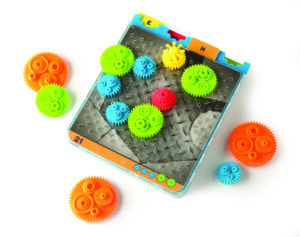
Crankity

The cards with this kit move from easy to extra-hard, and you can create your own gear series. 

http://shrsl.com/3lw4f

leaf and flower press

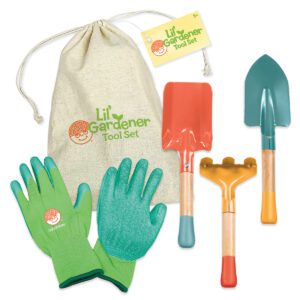
Lil’ Gardener Tool Kit

This kit includes child-sized gloves and three hand tools perfect for turning soil and digging holes.

https://shrsl.com/3eq2k

Combine them with Kids’ Garden Cards to provide ideas and projects around the garden.

http://shrsl.com/3lw4u 

little garden kit


Cheryl Allen is the Director of Parent Education for the Montessori Family Alliance and is also a parenting educator and a Montessori consultant with the Montessori Foundation. After some time as a traditional secondary teacher, she worked in Montessori classrooms, earning certifications from both AMS (3-6 and 6-9) and IMC (6-12). She is a teacher educator, workshop presenter, and member of IMC accreditation teams.

50 Ways to Celebrate Summer Learning

50 Ways to Celebrate Summer Learning

50 Ways to Celebrate Summer Learning

by Cheryl Allen

Summer is a time of more daylight, warmer temperatures, and more time outdoors. We may think that, for children who are out of school in the summer, it is not a time of learning. Yet, it can be an incredible time of learning. Here are fifty ways to help your child learn and grow while not in school.

Explore

1. Let your child plan an activity for the day or some activities for the summer. They can use maps, stick to a budget, and do the research.

2. Go on a searching hike, in nature or an urban setting; look for objects in the shapes of the letters in your name, or in sets of your favorite number, or particular colors.

3. Learn about the plants and animals that are near you. What are those birds by your home? What are the names of the plants you see every day?

4. Walk at your child’s pace. Notice the smells of different plants, admire the bugs, follow your child’s lead.

5. Play board games.

6. Learn card or magic tricks.

7. Learn jokes and present a comedy show.

8. Play unplugged games, such as Hangman, your own version of Pictionary, I Spy, or other paper-and-pencil games.

9. Think of free or inexpensive ways you could help neighbors and act on them.

10. Create a scavenger hunt and follow the clues.

11. Try out new playgrounds nearby.

12. Go to a grocery store you do not usually go to, especially if it has a focus on an ethnicity different than your usual cooking.

13. Allow time for daydreaming.

14. Try outdoor science experiments.

15. Plan a dream vacation.

16. Find some art to admire, outside or in a museum. Discuss what each person likes about it.

17. Explore distances and make a map. How far are you from family members, favorite types of animals, friends, or any other thing that can be mapped?

Communicate

18. Make time for reading every day, or nearly every day.

19. Visit the library and allow your child to make choices of reading material on their own.

20. Encourage your child to tell a friend or a family member about a book they read; retelling helps develop understanding.

21. Write letters to friends and family.

22. Address the envelope for that letter. Writing the address correctly on an envelope takes practice.

23. Keep a summer journal or a travel journal. Write in it regularly and include printed photos, pressed flowers, or leaves, ticket stubs, maps, or any reasonably flat items that remind them of the events written about.

24. Have your child create lists for things to do, grocery lists, books read or books to read, movies to watch, anything that can be listed.

25. Write a letter to their future self and store it or use a site that will email you in a certain amount of time.

26. Create a kindness list; how many acts of kindness can be performed this summer?

27. Count cars, bikes, dogs, flowers, anything you see regularly in your travels.

28. Find letters of the alphabet or make up a silly sentence using letters or words on items in the grocery store. Only one word or letter per item!

Create

29. Build a design of your child’s own creation or follow the directions from a set, with Legos™, blocks, or other building materials.

30. Learn to build card houses.

31. Plan and build a birdhouse.

32. Make your own playdough and sculpt with it.

33. Water down paint, place paper outside, and use squirt guns filled with the watery paint for a creation.

34. Set up objects outside and trace their shadows onto paper.

35. Put on a show–write it, practice it, design costumes and props, and perform for others. Record the show to share it with family that cannot attend in person.

36. Use chalk to draw outside, then use water and a scrub brush to erase it.

37. Plan dinner for a night and help make it.

38. Make a salad. Make dressing to go with it for an extra skill-building opportunity.

39. Grow vegetables and harvest them for dinner.

40. Find a recipe and cook with a new-to-you food.

41. Shuck corn, peel potatoes, wash, and spin lettuce dry, participate in cooking preparation.

42. For older children, set a cooking challenge to use ingredients and make a meal.

43. Sketch or paint flowers at your home or a nearby location.

44. Draw self-portraits directly on the mirror using window markers.

45. Clean the mirror after drawing on it.

46. Wash windows (an adult may need to wash the top).

47. Water the garden or potted plants.

48. Organize an area of your home together, especially one that your child uses regularly.

49. Explore with cash, count coins, save for an item, buy something with cash and check the change received.

50. Make leaf or bark rubbings and label them with the type of tree or bush they came from. •

Cheryl Allen is the Associate Coordinator of the Montessori Family Alliance and is also a parenting educator and a Montessori consultant with the Montessori Foundation. Cheryl attended Montessori school as a child. After some time as a traditional Secondary teacher, she worked in Montessori classrooms, 3-6, 6-9, and 9-12, earning certifications from both AMS (3-6 and 6-9) and IMC (6-12). She is a teacher educator, workshop presenter, and member of IMC accreditation teams. Cheryl’s two children attended Montessori from age two through high school graduation.

Developing a Global Understanding

Developing a Global Understanding

Montessori is an education centered around peace. How do we help students spend a lifetime, not only accepting and sharing peace, but also feeling secure in the idea that, what is ‘different’ from them and their understanding is interesting and exciting rather than weird or wrong? Communities that are different from their own community can be found next door, a few streets over, or countries or continents away. Finding comfort with even a few of the noticeable differences can help us take notice of these differences as an exciting opportunity. It is said that travel is the best education, and as we have the ability to bring the world to our children through what is offered in the classroom and our homes.

Dr. Cindy Acker stated, in a September 1, 2021 Montessori Foundation Town Hall: “A diverse population isn’t where we want to go, it’s a starting point maybe, but where we want to get to is an inclusive environment, where everybody feels that they have a place, and their place is no less than or no more than someone else’s place. Tim Seldin (President of the Montessori Foundation) often talks about a circle of equals, and we want children to have that lens about each other and the communities that they will encounter when they leave us. That’s the legacy that we will leave for them.” How do we, especially if our community is not as diverse as we would like, help offer this lens of a circle of equals?

Within both the Montessori classroom and the home, the sensorial area and cultural studies provide many opportunities to introduce these communities’ children to what they may encounter when they leave Montessori. Sensorial, the development of the senses, focuses on comparisons of size, color, texture, weight, taste, smell, and sound. If you enter a new environment, or even think about a new environment, these concepts are how you would explain and experience it. With some research and thought, sensorial items from around the globe can be shared in class or in the home, with no special Montessori materials needed.

Sharing food is a window into a different culture. Before traveling some place that she felt would bombard her senses with different experiences, my mother would search for a restaurant serving food from the area she was planning to visit. For her, this let her have a bit of what she would be experiencing in her travels; she was developing her senses to prepare herself for a new community. Searching out different types of restaurants can help your child try different foods, utensils, and decor. Cooking with recipes from different communities gives a chance to experience even more deeply. Take the time to smell the spices used and compare them with spices you use with greater regularity. How is the dish traditionally served? What fruits and vegetables are local to the community that are included in the recipe? What utensils are used to eat the dish when it is served in the community?

Comparing textiles from a particular region can support sensorial understanding of an area different from the one you are currently living in. Fabric matching with different types of materials, colors, or patterns of fabric can familiarize the eye to particular styles. Stories of how the fabric is made, or was made, can also provide connection and understanding of communities in a variety of areas. Different fabrics are used in a variety of ways; some may be used as head coverings; there are fabrics that are typically used for clothing (even different fabrics for bottoms and tops); and there are fabrics used around the house as table or furniture coverings. Exploring fabric from a variety of continents or countries can lead to further discussion and understanding of the natural resources of the area, temperatures in the area, stories told in textiles, and clothing styles.

Color comparison is an important part of sensorial work at school and at home. Making the effort to add colored pencils, crayons, and paint that allows students to draw humans with a variety of skin colors offers a way to represent all students in the class, family members, and their current and future communities. Gathering art materials that make creating different skin tones easy for children is one of the simplest ways to encourage the creation of a variety of communities by your young artist. Packages of world skin-toned colored pencils, crayons, and paint are available by several companies.

Music and musical instruments invite discrimination of sound and allows inquiry into the different materials and shapes used for the instrument’s native to a region. Creating a playlist of regional folk or contemporary music lets you hear the language(s) spoken in that area, as well as hearing a variety of instruments. Children could try to learn songs, play along on an instrument, listen for a particular instrument, or simply enjoy music that they have not heard before. Exploring simple instruments, such as styles of drums and handheld instruments, allows children to try to recreate the music they hear and examine the materials and shapes of the instruments.

The large Puzzle Maps seen in most Montessori classrooms, along with the Land and Water Forms are part of the sensorial area; geography is learned by shape, size, comparison, and connection before it is learned by name. Connecting the names of countries to continents and location on the globe helps provide a ‘hook’ for specific information learned later. Knowing that a country is very far north, or very close to the equator, helps organize why certain food items are specialties there, or why specific styles of clothing are worn. Exploring types of trees or flowers through pictures (or even sanded pieces of wood) can offer insight into different parts of the world. Looking at the shapes of leaves on native trees can provide insight to similarities and differences in biomes. Exploring geography and science sensorially helps us understand the differences in natural elements in various regions of the world; it can help us appreciate the positives of these differences, without judgment or comparison.

Using the lens of the Fundamental Needs of Humans to learn about societies allows students, and adults, to see that all civilizations need to meet the same needs and use their available resources to do so. One can easily envision that a community in a rainforest and a community in the desert would meet the same common needs of clothing and transportation in different ways. In the previously mentioned Montessori Foundation Town Hall, Dr. Cindy Acker said, “…the lens we want to hold is one of unifying, one of destigmatizing, one of inclusivity, not just diversity.” Bringing different communities of the world to our sensorial and cultural studies, at school and at home, gives us a tool to find and use the lens of global understanding.

We have the ability to bring the world to our children through what is offered in the classroom and our homes.

This article is an outcome of a Montessori Foundation Town Hall gathering and is built, with great thanks, on the work done by Dr. Cindy Acker and Sarah Levalley for that Town Hall. Their preparation and clear explanation, as always, allow the rest of us to build upon that knowledge, use it in our lives and classrooms, and to share the ideas and knowledge with others.

Cheryl Allen is the Associate Coordinator of the Montessori Foundation Family Network and is also a parenting educator and a Montessori consultant with the Montessori Foundation. Cheryl attended Montessori school as a child. After some time as a traditional Secondary teacher, she worked in Montessori classrooms, 3-6, 6-9, and 9-12, earning certifications from both AMS (3-6 and 6-9) and IMC (6-12). She is a teacher educator, workshop presenter, and member of IMC accreditation teams. Cheryl’s two children attended Montessori from age two through high school graduation.