To access this page, you will need to log in or become a member.
Raising a Child to Love Literature

Raising a Child to Love Literature
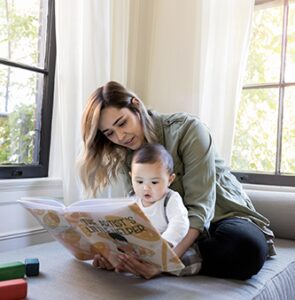
Parents often wonder and worry about how to encourage children to read and how to raise a child to love literature. How can you inspire your preschooler, school-aged child, or teen to love the written word?

It begins with adult modeling, sharing literature at all stages of your child’s life, and consistently providing books and magazines in your home. Show your child your genuine enjoyment of books, magazines, newspapers, and all things written!

Let’s start with the youngest children: toddlers and preschoolers.

Flood your home with books. You can buy them, ask for them as gifts from grandparents or relatives, or make regular trips to your local library.

Read these books often and try to respond with genuine enthusiasm when your toddler asks you to read the same book over and over, a positive step, as this leads to predictability, comfort, and a true mastery of the story sequence.

Start early with magazine subscriptions: The Babybug (6 months to 3 years) magazine is a great place to start and Hello magazine (0 to 2 years) from the makers of Highlights is for infants and toddlers as well.

Be sure that books are available for them to explore as readily as other toys and set out on low shelves. Children will be more inclined to choose books and magazines when they are as available and attractive as other toys and activities.

One of the best traditions is to start purchasing a quality hardback book for your child at every milestone, birthday, and winter holiday. Write an inscription in these books with a date and message so that they are notably special.

These are the books that will be read over and over again and loved thoroughly.

As children move into their preschool years, they are ready for different types of literature. Young children love stories that show others like themselves and that talk about their world. These books help preschoolers to feel secure and comfortable in the world they see.

But literature can also help preschoolers enter worlds slightly bigger and more divergent from their own. The stories should be getting a bit longer (and the subject matter more varied) as your child matures and is ready to explore.

I recommend looking for literature that embraces subjects that your child is interested in now, but also look for books that stretch your child’s imagination to discover new worlds and new experiences. There are many lists of appropriate Adult/child book clubs have sprung up in many towns. They encourage the experience and love of shared reading. preschool books online.

School-aged children enjoy not only singlesitting books but also chapter books and book series.

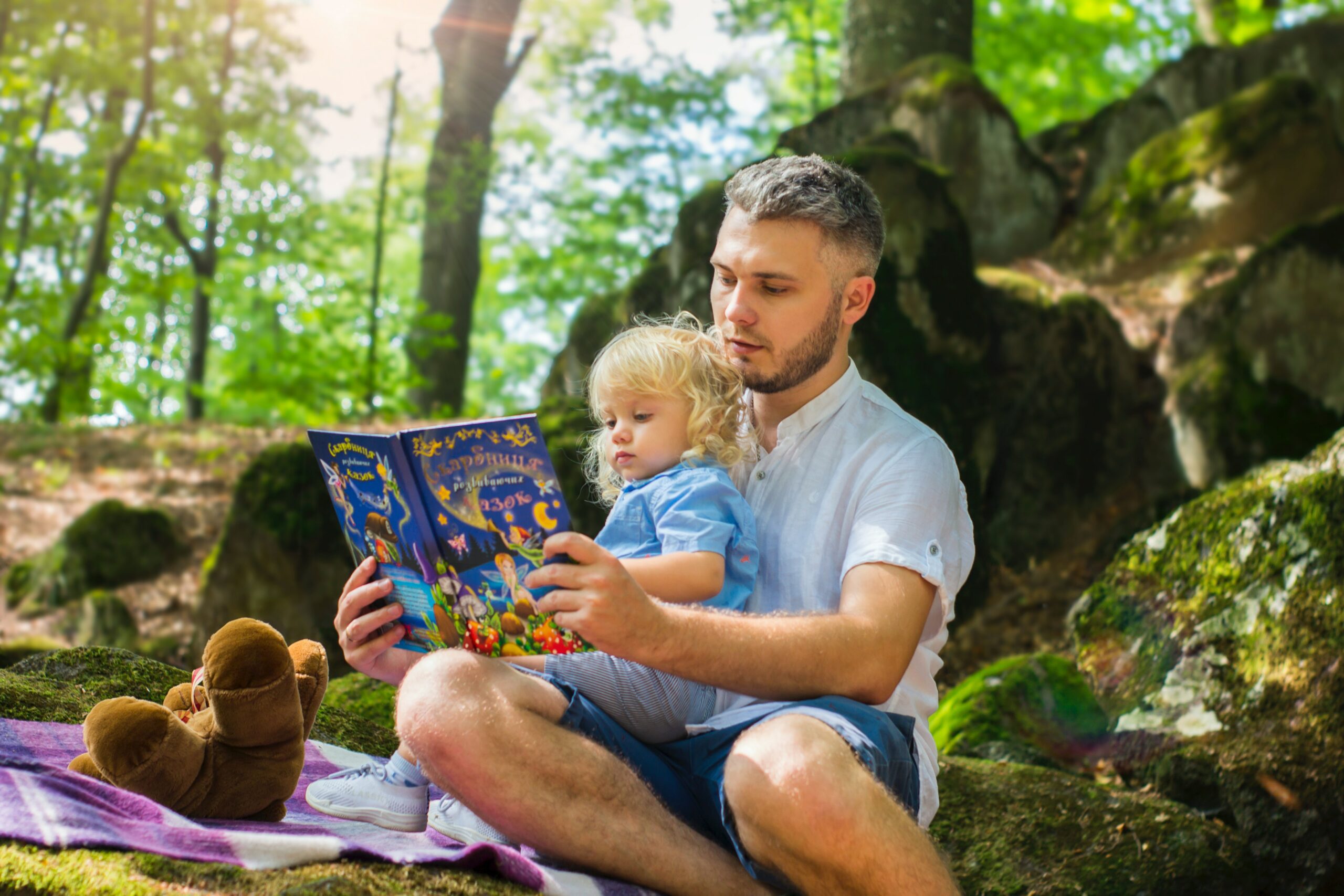
I suggest you continue to read aloud to your child at bedtime, even as your child becomes a more proficient reader. Reading aloud not only lets your children hear the cadence and speed of proficient reading, it lets them share a book with you and have the opportunity to discuss the happenings in the book as well. This can allow you to explore sensitive subject matter together, as well as a great story.

Adult/child book clubs have sprung up in many towns. They encourage the experience and love of shared reading.

In my view, it is best to continue the tradition of giving your child a carefully chosen hardcover book as a gift. It is so important for your child to build his or her own personal library with books they will read over and over for years.

Regular trips to the library remain important, although your child will naturally become more independent in selecting books during these years. By watching what is selected, you will get to know your child’s interests better, offering you ways to initiate conversation or other book suggestions. This is also a time to think back on the books or book series that were special to you and suggest them as well.

By the teen years, encourage your young adult to enjoy literature in whatever form brings enjoyment: graphic novels, books, magazine articles. Online and audiobooks can engage one in an interesting story. Non-fiction books about cooking, automobile repair, or outdoor sports also resonate with many teens.

As a parent, I believe our job is to encourage the exploration of any subject that can enhance interest in reading.

Teens also enjoy reading about themselves and their real-life challenges, so many will gravitate toward content that explores these issues.

As a teen, they are probably reading content online, and it may be harder to ascertain their area of interest. You might want to introduce them to others who read online, so they can have discussions there.

Goodreads.com lets kids discuss what they are reading with others, which can often be more interesting to do than discussing them with parents. There are even many chatbased story platforms like Hooked or Wattpad’s Tap app, that combine reading and storytelling for teens.

A continued family discussion about this topic is still important.

Modeling reading for your teens and talking about what you are reading is also very important. This can stimulate conversation with your teen that can lead to hearing them express their own views on topics.

Teens will read books as part of their classes in school and, if you have not read them, you might want to read the books to give you another basis for discussion.

Here are a few more suggestions:

• Continue to reach into your own memory and recommend books that were your favorites.

• Many young adult books (YA) span age groups and can be read and enjoyed by both parents and teens.

• Don’t be afraid to leave books and magazines around your home in enticing places for your teen to pick up!

• Books that are written as a series can be a good way to encourage a teen to keep on reading.

• After your teen has seen a movie, find the book that it was based upon and bring it home. Discuss whether the movie or the book was better.

As with all things “teen,” make every effort to keep the lines of communication open. Your local library may offer classes or programs for teens that can get them inside the library to explore an interest and, at the same, time renew their awareness of what is offered in the library.

Be aware that school requires a significant amount of required reading, which can limit the time that they can spend on recreational reading during the school year. Teens may read more for pleasure during school vacation breaks or in the summer when they may have more free time.

Reading can be encouraged as an enjoyable individual and family experience when it is modeled by parents, shared within families, and openly enjoyed. •

REFERENCE:

The Babybug magazine: shop.cricketmedia. com/babybug-magazine-special-offer.html

Hello magazine: shop.highlights.com/hello-magazine.html

Cathie Perolman is a reading specialist, elementary educator, author, consultant, and creator of educational materials for primary and elementary students. Check out her new downloadable materials on her website: cathieperolman.com.

For more than three decades, she has dedicated her energies to improving reading for all youngsters. She is the author of Practical Special Needs for the Montessori Method: A Handbook for 3-6 Teachers and Homeschoolers published by the Montessori Foundation (available through montessori. org.) She is a regular contributor to Tomorrow’s Child and Montessori Leadership magazines.

Cathie Perolman holds a BS in Early Childhood Education and a MEd in Elementary Education with a concentration in reading. She is credentialed as a Montessori teacher. She is married and has two adult children and two adorable granddaughters. Cathie lives in Ellicott City, Maryland with her husband.

Book Review – Island of the Blue Dolphins

Book Review – Island of the Blue Dolphins

Island of the Blue Dolphins

By Scott O’Dell

The Island of the Blue Dolphins is a historical fiction novel, based on a true story about a girl named Karana, who was stuck living in isolation for 18 years. In the story, Karana lives on an island with her family, and the rest of the Ghalas-at people. They all live in peace until the Aleut people arrive and take their resources, and all the Ghalas-at people are forced to leave the island. They accidentally leave Karana behind, where she is to fend for herself.
The progression of this story’s plot was unlike many stories I’ve read before. It started as a simple story about a girl’s family and tribe life on San Nicolas Island and moved into a story about how a girl lived in isolation for so many years. Along with the progression of the plot came character development. Karana knew how to live her life with what she had, but this came into play when she was stranded.

I think that the Island of the Blue Dolphins is a great book because it portrays a way of life. It gives a new aspect to the reader about different lifestyles people have all around the world. Another reason I enjoyed this book was because of the plot twists; just when you thought something came to an end, it opened with a new beginning; it made this book all the more interesting to read and kept the reader hooked.

I would best recommend this book for ages 12+, and the reason for that is that the book has some themes, such as isolation and extreme perseverance. In the story, Karana goes through so much that I couldn’t imagine someone under 12 understanding. Another reason that I recommend this book to a 12+ audience is because of the style of writing. The way the book was worded might be hard for a younger audience to understand the concept.

Overall, I enjoyed the book and recommend it to anyone who likes to read true stories. This book will keep you reading. Between Karana’s adventures and how she keeps herself company, you won’t want to put the book down!

Reviewed by Danica Kovacevic, 8th grade, NewGate School, Sarasota, Florida

Book Review – Flower Garden

Book Review – Flower Garden

Flower Garden

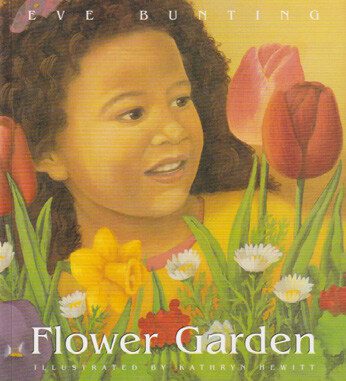
Written by Eve Bunting Illustrated by Kathryn Hewitt

Another book by Eve Bunting! This talented woman has written many books for children from two years old to teenagers, in all different settings, and in varied real-life situations. She doesn’t try to hide the truth or to tip toe around uncomfortable topics. Her stories have heart and sometimes raw emotion. The illustrations in her books are usually quite realistic and enhance her words beautifully. Her books raise her readers’ social consciousness – sometimes subtly and sometimes flat out!

Flower Garden is the story of a dad and his daughter putting together a beautiful surprise for his wife and her mother’s birthday. It’s set in a city where they live several stories up in an apartment building. They ride public transportation to and from the grocery store, where they buy plants, a window box, and cake and ice cream.

Mom isn’t home, so they can quickly plant the flowers in the window box before she arrives. She is surprised and happy when she gets home!

In this book the words rhyme. Young children love rhyming! In this book, the reader may not be aware that they are learning about people of different races, or they may recognize themselves in the characters. It is a beautiful book that young children will enjoy over and over again at home or in school.

Reviewed by Lorna McGrath

Book Review – Hold This!

Book Review – Hold This!

Hold This!

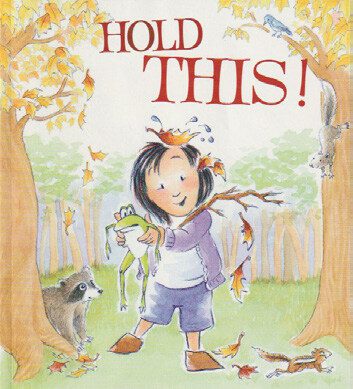
As a dad and his young daughter, Mika, take a walk through the woods, Mika finds so many treasures that she wants to keep and take home. She finds a stick and a frog and some water and leaves and a sparkling stone and more. Mika wants her dad to put these items in his backpack or pockets, but he reminds her several times that she is a “big girl” and can carry her own treasures. At the end, Mika asks once more, “I know I’m a big girl, but…will you hold this?” as she reaches her hand up to him.

Written by Carolyn Cory Scoppettone Illustrated by Priscilla Alpaugh

Children love to collect things in nature. We often encourage them to leave them there or to carry the treasures themselves. Really, the very best part of a walk-in nature is the time spent together. Children two to six years old will enjoy this book.

Reviewed by Lorna McGrath

Book Review – The Vegetarian Cookbook: More Than 50 Recipes for Young Cooks

Book Review – The Vegetarian Cookbook: More Than 50 Recipes for Young Cooks

The Vegetarian Cookbook: More than 50 Recipes for Young Cooks

Written by DK publishers

My son and his family are vegetarians. I wondered if there were any vegetarian cookbooks for children. So I went searching and, lo and behold, there were quite a few!

I found one that looked good to me (on the internet), it was the right age grouping for my grandson, and the description seemed like it was laid out in a way that was easy to use and simple enough for a young child. I bought it. Well, much to my chagrin, this book was not child friendly or, in my case, adult friendly. All the measurements were in grams, the photos showing the steps were too small (about 16 on an 8×10 page), and the photos had no instructions. At any rate it was totally unsuitable for me (master’s degree in Home ‘Ec’ and a Montessori 3-6 credentialed teacher) or for my grandson (5 years old, loves to eat and cook, and goes to a Montessori school). What a disappointment!

Today, I looked again and found a beautiful book by DK publishers with beautiful photos, an introductory section with kitchen rules, equipment, and healthy eating with food groups. Once the child is prepared, we get into the recipes that include breakfasts, snacks, lunches, drinks, entrées, and sweets. There are easy-to-follow steps with one photo and brief written instructions for each step. Everything looks delicious, as DK is masterful with their photographic illustrations. I can’t wait to cook with my grandson next time he comes over. The recipes would work for 4–8-year-olds and their parents or some other adults who love to eat and cook! It can be found on amazon.com

Book Review – Fly Away Home

Book Review – Fly Away Home

Fly Away Home

Written by Eve Bunting Illustrated by Ronald Himler

This is a book for elementary and even middle-school children. Andrew and his dad are homeless. They live in the airport. They must never be noticed, or airport security will throw them out onto the streets. Andrew’s dad works on the weekends as a janitor. It’s a lonely and sad life. Andrew sometimes gets angry about his mother dying and losing their apartment. He knows they must save their money to get a new apartment to live in. He saw a bird that flew into the terminal and couldn’t get out until one day it saw a door open and flew off. The bird gave Andrew hope.

Fly Away Home should be talked about with a parent or teacher, as homelessness is a problem in many places that hasn’t been solved. It is also often thought of as a situation that just drunks or mentally-ill people experience. Andrew and his father were not. They were just ordinary people who had fallen on hard times.

The book could be a catalyst for social consciousness and justice, for community service, or for action for change in our communities and countries.

Favorite summer Reads for 2022

Favorite summer Reads for 2022

Favorite SummerReads for 2022

by Lorna McGrath

One of the many things that teachers do in the first few days of school is to ask children to talk about, write about, or in some way describe their summer activities. You remember that, right?

For some of us that was easy and fun because, maybe, we like to write (especially about ourselves) or we did a lot of things and went to a lot of places. But for others, this project might feel more challenging or even discouraging because they experienced everyday life at home, and it may not seem to be so exciting or alluring.

“Summer Journals” or diaries can be an opportunity to help your child see that all things are exciting, fun, and new in their own way. An appreciation if you will. Try talking with your child each night about their day and record it in a way that is appropriate for your child’s age and abilities. So, writing, drawing pictures, recording them telling their stories, and other creative ways all count!

These are some questions for you to use:

1. What was the silliest thing that happened today?

2. What was the worst thing that happened today?

3. What was the best thing that happened today?

I found these three questions can really get your child talking. You may need to help them get started by sharing your silliest, worst, or best. Remember once they open up, let them be the storyteller!

I also suggest that reading counts as part of your child’s summer adventures! Here are a few of my favorite books.

Make Music! by Norma Jean Hayes, Ann Sayre Wiseman, & John Langstaff

This is a wonderful resource with a wealth of projects for elementary-age children that have to do with creating music together. It’s fun, it’s broken down into categories from beginners to advanced music makers, and the illustrations are photos of real children in action and having a blast! Appropriate for ages 6-12.

Apple in the Middle by Dawn Quigley

Your 11–15-year-old will be captivated by Apple’s discoveries about herself, and her heritage as she spends the summer with her grandparents and others from her mother’s side of the family. She goes to a different place, experiences a culture that she knew very little about, and develops a new perspective about life. Appropriate for ages 11-15.

Our Peaceful Classroom by Aline D. Wolf

Lest we forget, this book will bring back memories of friends and activities from school days and may help with the transition for your young child back into the classroom and school life as the summer winds down. Appropriate for ages 3-6.

It’s a Book by Lane Smith

This is a hilarious book for older children. It cleverly and in a fun way depicts how in modern times, we are so attached to technology that we don’t know about or recognize a book in printed form. Love this one! Appropriate for ages 12-17.

Beach Walk by Backpack Explorers Series, Storey Publishing

This is a sturdy, somewhat water-resistant book that you can bring along on your trip to the beach. It includes a magnifying glass, which children really love to use when discovering new plants and animals by the water. There are lots of fun activities for you and your children to do together! Appropriate for ages 4- 10.

How to Find an Elephant by Kate Banks

There is an elephant (or part of one) on every page of this book, but you’ve got to really look! The words and illustrations entice the reader in a fantastic adventure, full of imagination and for hunting what otherwise might be obvious. Appropriate for ages 4-10.

10 Ways to Prepare for Summer

10 Ways to Prepare for Summer

10 Ways to Prepare for Summer

by Cheryl Allen & Lorna McGrath

1. Maintain a routine–getting up at a similar time each day, eating at regular times, keeping enough routine to keep your child comfortable. This is important for all ages. It gives them a sense of stability. It is especially important in early childhood, as these children are especially sensitive to order and consistency.

2. Keep up your family meeting schedule. Remember that family meetings provide opportunities for everyone to have a voice, be a leader, and take part in shaping the summer. If you have visitors, invite them to join your meeting.

3. Create and discuss family expectations for behavior at home, out on the town, and when traveling. These are great topics for family meetings as you prepare for summer.

4. Find out what each family member is hoping for from the summer and see if you can meet each family member’s goal. This is another topic for a family meeting. Remember to break down preparation topics into manageable pieces so that you don’t feel as if everything has to be covered in one meeting.

5. If possible, schedule only one or two activities or camps in the summer to provide consistency. Also, if these activities or camps can be chosen with your family values about respectful interactions among participants and adults in mind, the experience will probably be more enjoyable and productive for your child.

6. Let your child know about plans for the day and what may be required ahead of time so your child can plan. Even though you will share with each other at your family meetings what’s up for the week, it is important to look at each day in more detail as the day begins.

7. Allow for relaxation time each day, especially if you are traveling or have visitors. As always, we suggest that consciously planning for downtime is as important as planning for activities.

8. Encourage time for practical life activities–gardening, cooking, and cleaning. Practical life activities bring us back to our family community, interacting together, doing meaningful work, and learning to use math and science in our everyday lives.

9. If you don’t already have this, develop a quieting space for each family member. Creating “quieting spaces” for each family member involves multiple family meetings, so start planning them now. As school comes to an end, consider quieting spaces for summer travels.

10. Plan your schedule so that you’re home in time to prepare for the new school year. We always think that summer will last forever, but before we know it, it’s time to go back to school. It’s helpful to the whole family to get back into a home routine at least a week before school starts. •

Cheryl Allen is the Associate Coordinator of the MontessoriFamily Alliance and is also a parenting educator and a Montessori consultant with the MontessoriFoundation. Cheryl attended Montessori school as a child. After some time as a traditional Secondary teacher, she worked in Montessori classrooms, 3-6, 6-9, and 9-12, earning certifications from both AMS (3-6and 6-9) and IMC (6-12). She is a teacher educator, workshop presenter, and member of IMC accreditation teams. Cheryl’s two children attended Montessori from age two through high school graduation.

Lorna McGrath, MEd, is Director of IMC School Accreditation, Program Director of the MontessoriFamily Alliance, and Senior Consultant of The Montessori Foundation. Lorna has 41 years of experience in the field of education, teaching children from 18 months through 6 years old and from 12 through 18 years old in both public schools and independent Montessori schools. Lorna is a Montessori teacher educator, conference presenter, and school consultant. She can be reached at lornamcgrath@montessori.org

A Montessori Approach to Clean-Up Time

A Montessori Approach to Clean-Up Time

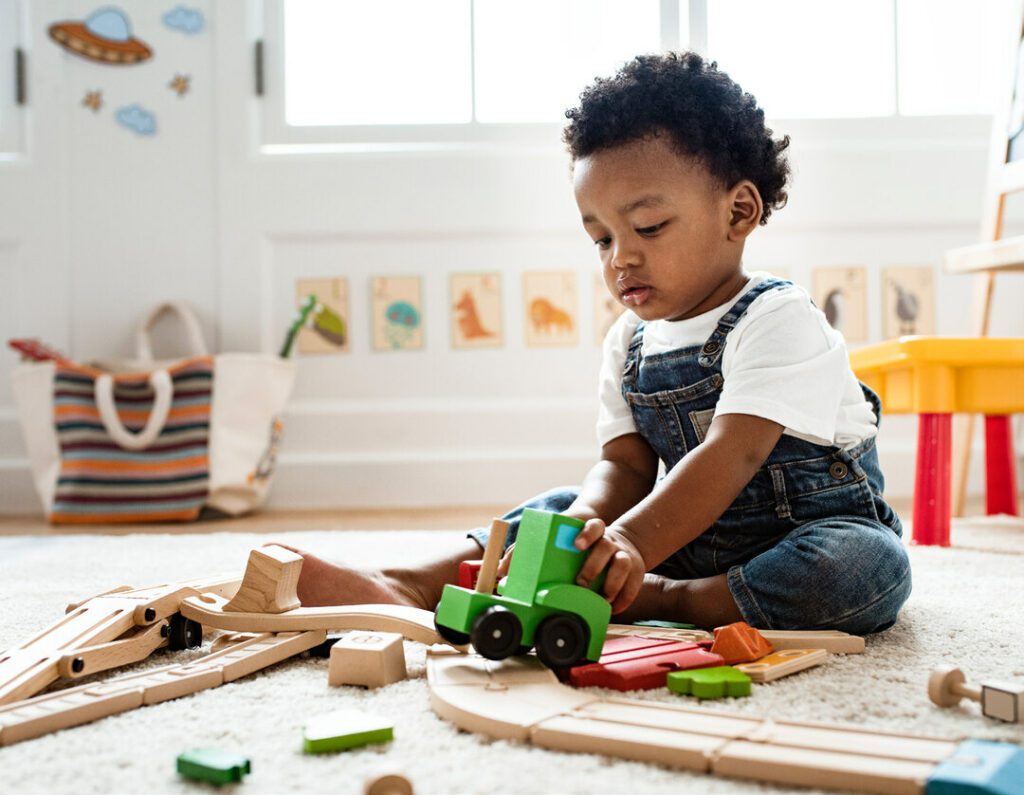
child and wooden train set

A Montessori Approach to Clean-Up Time

by Carine Robin

We know that Montessori is all about order.

We know that children have a sense of order. The Montessori classroom is an orderly environment where every activity has its place.

Montessori teachers encourage children to use one activity at a time and to tidy up each activity after they have finished with it.

As parents, we expect that the Montessori philosophy will help our children to be tidy! In my experience as a teacher, it’s easier for children to tidy up in the classroom. The Montessori school is designed for children and leads naturally to order. There are clear rules and expectations, and children are more willing to clean up after themselves in the classroom.

What if I tell you that, despite being a Montessori teacher, my children’s bedrooms are not orderly? They don’t tidy up spontaneously. There are several reasons for that, and I have learned over the years what helps children to tidy up and to stay organized.

Three reasons why children don’t tidy up?

1. You might have heard of the sense of order? This is one of the ‘’sensitive periods’ observed by Maria Montessori. It is now described more as a tendency that all human beings must make sense of their environment. It’s not so much about “tidying up after themselves” or keeping their bedroom clean” as about routine, rhythm, and knowing what comes next.

They will express that sense of order about what matters for them. For example: sorting their little people; being obsessed about their collection of pebbles; sleeping with their special teddy is all about that sense of order!

“It seems to him, at this stage, a particularly vital matter that everything in his environment should be kept in its accustomed place; and that the actions of the day should be carried out in their accustomed routine.” – E.M. Standing, Maria Montessori: Her Life and Work, p. 123

Sense of order doesn’t equal being tidy!

2. Are you a tidy person? I’m very honest on this blog and on my social media about the fact that I am not a naturally tidy person. I used to have lots of clutter in my life.

I did a big work on myself to understand my hoarding tendencies and to learn to be more organized. So, if like 50 percent of the parents I work with, you tend to be “messy and disorganized,” you cannot expect that your children will be able to tidy up spontaneously. Children need role models. The more you clean and tidy in front of them, the more they will see it as being part of the routine.

3. They don’t see you cleaning and tidying! I have said it already but even the tidiest parent tends to “clean” when the children are not around. Have you ever sent your co-parent to the park with the children, to allow you to do a good clean-up session?

Do you tend to do everything when they nap? Or do you tend to tidy up all their toys at the end of the day when they are in bed? Stop now and do as much as you can in front of them. Montessori is about teaching life skills and independence, so taking care of the environment is something that I would advise you to focus on. Teach your child to fold the laundry, to do the dishes, empty the dishwasher, setting up the table, and cleaning the windows!

How to help children to tidy up?

• Work on yourself: if you are not naturally tidy, start with you! Do a big decluttering session, and try to understand why it’s hard for you to be orderly. Seek support if needed. Your children will thank you!

• Equally, if you are a very tidy person, lower your expectations; having a spotless house when we have children is just not possible. Review your definition of what is a tidy home.

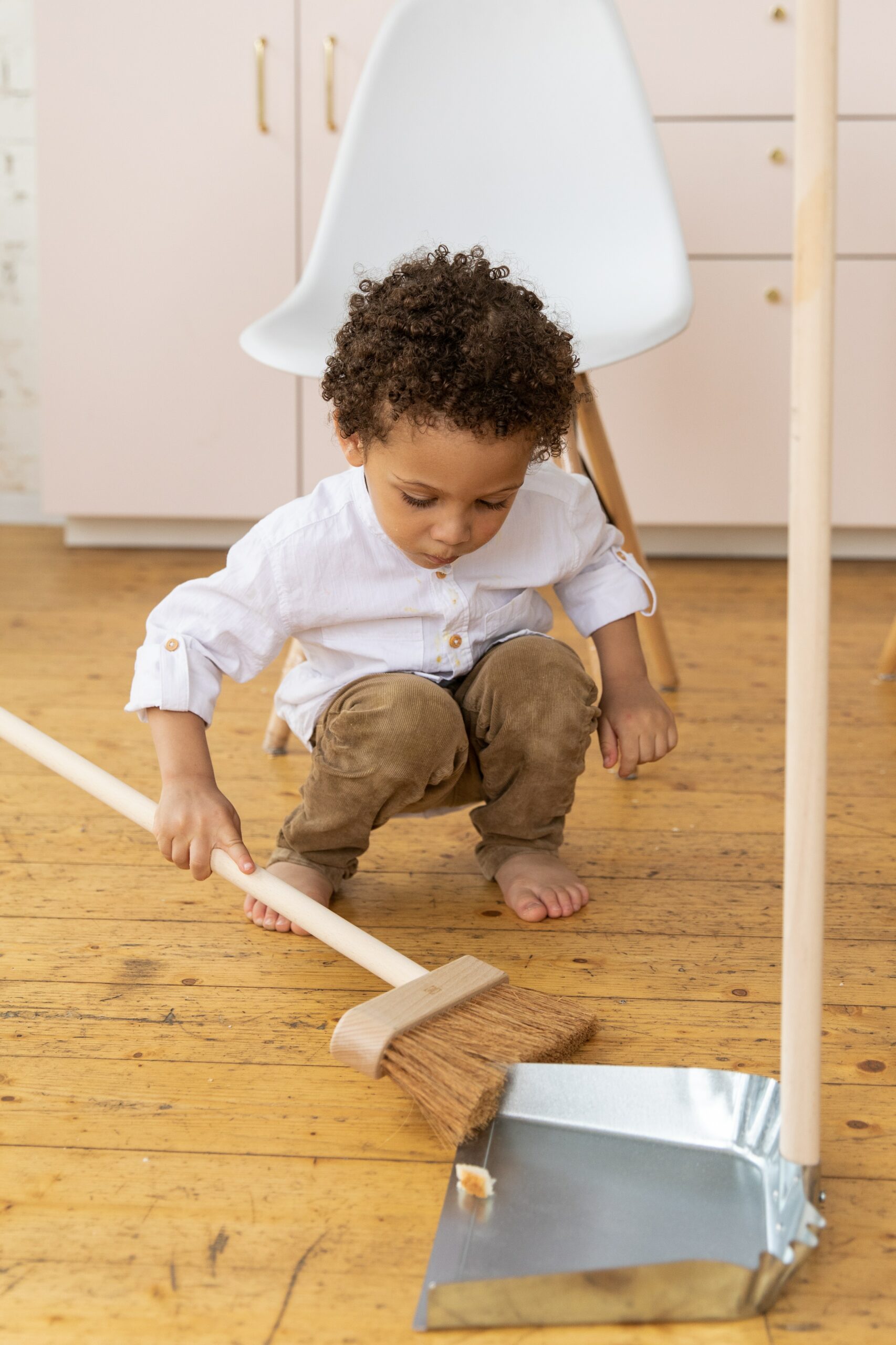
• Be a role model: clean in front of your children. Even if you have a cleaner, try to do a task with them as a way to teach them. Involve them in the cleaning tasks: young toddlers, generally, love to clean! Give them child-size tools and don’t expect a brilliant result. Let them enjoy the process.

• Have fewer activities and toys available. The less there is to tidy, the easier it will be. Halve the amount of Legos™, blocks, train parts… Those sets tend to be difficult to tidy, and children get discouraged and stop cleaning up after themselves if they are overwhelmed by the task.

• Have a place for everything. Make sure you know the spot for each toy/activity. At the beginning of your Montessori journey, you might still move things around but try to limit a big overhaul, as it disturbs their sense of order and will prevent them from putting back what they have used.

• Make it playful: have a tidy-up song! or a silly dance. Have the animals go back to their basket, making sounds. Find what works for your child.

• Wait for when they are ready. When children are in a flow, playing intensely, it’s hard to know when it’s time to tidy up. It might be dinner time, but they might not be ready to stop playing. Wait for the moment they naturally seem to move onto a new activity to encourage them to put the previous one back on the shelf.

• Help them! It’s a skill, don’t expect them to do it consistently even if they have done it a few times. Like us, they are allowed cheat days.

What about older children?

Children in the second plane of development are messier than younger children. They are less interested in organizing the environment. They are less interested in practical life. They tend to spread out when they explore a topic. It’s because it’s an age when they make connections between concepts.

Their play area and toys might be in their bedroom. Their bedroom is their private area, and you might be less around when they play. Children in the second plane have access to toys that have small parts (Legos™ beads, …).

You can still rotate toys for that age group. You can have a rule that the Legos™ are stored in the living room, or the crafts are only accessible at the dining table. I recommend that you limit what they have access to in their bedroom. Make it part of the daily routine to tidy up for half an hour before dinner.

The bottom line: Mess is part of life but being tidier, as a family, will help everyone.

Having said that, let’s close with this quote: “Excuse the mess, the children are making memories!” •

Carine Robin has a master’s degree in psychology, specializing in child psychology. She worked for various social services in her home country of Belgium, before moving to Ireland in 2006.

It was there that she started working in a nursery and discovered Montessori education. After having her first child, her passion for the philosophy grew. She qualified as a Montessori teacher and managed a Montessori preschool.

Carine has been running Montessori-based parents and toddler groups and coaching families for 9 years. She now also runs an online group for over 20,000 parents, sharing her knowledge and passion with people from around the world.

In 2018, Carine realized families needed more support and launched her popular online parenting courses and monthly subscription boxes, full of personally designed Montessori materials.

Carine has also trained with Sarah Ockwell-Smith in BabyCalm and Toddler Calm, with Dr. Laura Markham on Peaceful Parenting, and most recently, at the prestigious Maria Montessori school in London, as an AMI Elementary and 0-3 assistant. She writes on a popular blog “the Montessori Family”. www.themontessorifamily.com Instagram: @montessorifamilyuk

Beyond Bribes, Rewards, and Punishments

Beyond Bribes, Rewards, and Punishments


story from: Tomorrow's Child Magazine May 2022
A Montessori Approach to Clean…

Beyond Rewards, Bribes, & Punishment

A Montessori Approach to Building Intrinsic Motivation

42 ways that the Montessori approach builds intrinsic discipline in our children.

by Simone Davies

In my last article on a Montessori approach to discipline, I mentioned that we don’t use rewards, bribes, or punishment in a Montessori classroom. And there is not a teacher at the front telling everyone what they need to do. Yet, if you observe in a Montessori classroom, there is a gentle hum of conversation and movement and a lot of concentrated children who are motivated to work.

So, not surprisingly, I received many questions about a Montessori approach to building intrinsic motivation in the child. Intrinsic motivation is doing something because you have the inner drive to do it, not because of some external reason like a reward or threat.

I love a good list so here are 42 ways that the Montessori approach builds intrinsic discipline in our children.

Note: It’s a holistic approach where each part is intrinsically linked. So, while it may seem overwhelming to do all these things, rest assured they also naturally build on one another.

42 Ways to Build Intrinsic Motivation

1. Build an environment where they can have success; knowing where they can find things and having things at their level.

2. Create opportunities for them to build independence – they see themselves as capable.

3. Cultivate opportunities to work together, cooperate and care for others – they see their input matters; a 0-3 child is observing and beginning their social development in their family. With a care giver, and/or nursery; the 3-6 child is part of their family and their class; and the 6-12 child wants to work and be a part of a group.

4. Value process over product; there is more learning in the doing than in the result.

5. Use encouragement rather than praise. When they hear, “You worked hard to get your shirt on all by yourself ” rather than “good job,” they learn to look to themselves to understand what worked, rather than looking to us for praise.

6. Give them freedom to work on things they are interested in – rather than what the teacher/adult tells them – or a timeline.

7. Provide safe limits. Offer security and show that someone cares about them.

8. Allow them the freedom to choose what, where, and with whom they’d like to work.

9. Provide a clear rhythm to their day so that they know what to expect.

10. Help them learn respect for themselves, each other, and the environment – they feel truly accepted and learn to accept others.

11. Encourage those agreements are made together – they feel like a valued member of the community.

12. Let them know that it’s a safe place to practice boundaries – we can support them with words if needed, “I’d like to work by myself right now. It will be available soon.”

13. Honor who they are; each member is unique and valued – builds their sense of self.

14. Help them learn to look after themselves, others, and the environment – it’s empowering to be able to do this for themselves.

15. Show trust in them – by removing external rewards and punishments.

16. Help them to make amends when needed – they know that when they get it wrong, they will take responsibility and learn from the experience.

17. Value curiosity – learning is about finding out rather than memorizing facts

18. Allow them to have choices – they have ‘agency’ in their days

19. Provide honest, instructive feedback – we see what’s going well and how they can do better; give them gentle guidance to keep improving.

20. Offer different ways to learn; we all learn in different ways and on different days; the materials appeal to kinesthetic, visual, and aural learners, and they can choose how they’d like to present their work, from a booklet to a survey to a poster etc.

21. Be their guide – not their boss or servant

22. Help children build ‘scaffold skills’ – where each activity builds on the next to allow mastery.

23. Support them to develop their own routines/ rhythms, such as taking an activity to a table or mat and returning it when it’s done.

24. Help children develop their thinking skills – they are learning to learn through hands-on learning and making discoveries for themselves; they help younger children and consolidate their own learning; they reflect on what they have learned.

25. Keep it real; children are not learning just for the sake of learning. They are learning how it applies in the real world giving meaning to their work.

26. The absence of tests or punishments allows a natural love of learning, while maintaining their creativity and interest in learning

27. Model intrinsic motivation ourselves as adults; our actions are more powerful than our words.

28. Provide control-of-error activities, which will allow children to discover their errors and try again.

29. Offer challenges at the appropriate level. Children do not feel unmotivated, because they know that they can do hard things, and they do not want to give up.

30. Encourage service in the community. This allows children to see and appreciate the impact of their work.

31. Children can have a healthy relationship with failure: the guide and classmates are supportive; children are able to stay with something until they master it and are ready to move onto the next activity; and they learn to ask for help if needed.

32. Remove competition for sticker charts or praise; children do not need rewards from others. Help them look to themselves instead of someone else.

33. Allow time to help children build skills, e.g., planning skills, learning to dress themselves, how to make a report, etc.

34. Children are in charge of their own learning: they learn uniquely, have their unique interests; and are on their own unique timeline.

35. Adults can trust the Montessori process, without forcing their own agenda.

36. Help children support themselves as they become members of their society.

37. Be patient; learning happens at its own pace and isn’t forced.

38. Plant seeds of curiosity, enough to get them interested, and not too much to allow them to discover the rest for themselves.

39. Encourage the possibility for big work and big ideas that looks at the interdisciplinary nature of the universe.

40. Allow space for all voices; we want everyone in our community to feel valued, accepted, and safe.

41. Avoid criticism or correction; instead, observe where children are in their process, and offer another opportunity to teach it again.

42. Learn from others. We can see others learning and be inspired to learn that too.

It’s never too late to start applying these principles. We can even scaffold the skills with a child in Upper Elementary (9-12 years), first helping them plan, then letting them take over more and more steps themselves. •

Simone Davies is the author of The Montessori Toddler and co-author of The MontessoriBaby, comprehensive guides to raising toddlers and infants in a Montessori way. The books are based on her 15+ years’ experience working as an AMI Montessori teacher in Sydney and in Amsterdam. She also has a popular blog, Instagram, and podcast “The Montessori Notebook”.She is also mother to two young adults.Simone currently runs parent-childMontessori classes in Amsterdam at her school, Jacaranda Tree Montessori, and is working on another book with Junnifa Uzodike, The Montessori Child for children from 3-12 years.

With hundreds of practical ideas for every aspect of living with a toddler, here are five principles for feeding your child’s natural curiosity, from “Trust in the child” to “Fostering a sense of wonder.” Step-by step ways to cultivate daily routines with ease, like brushing teeth, toilet-training, and dealing with siblings

The Dump Truck Story

The Dump Truck Story

The Dump Truck Story

What happens when we normalize ‘disaster’ thinking and accept the mess

by Alicia Diaz-David

When my son was two years old, he scribbled on his dump truck with a brown marker and announced that he would wash it right there in the middle of our living room floor. My first reaction was to gasp when I noticed the brown scribbles. My second reaction was to see where his plan of action would take him.

So, I watched as he used the foaming soap dispenser to lather his hands and then rub the foam on the dump truck that was still on the living room floor. And I watched as he headed to the bathroom to fill his large bath-time cup with water to rinse off the foamy soap.

And that’s when I jumped in. Not stopping him but offering him another line of thinking by asking what would happen if he poured the water on the truck right there where it was. Thankfully, he responded that it would spill. I suggested we bring the dump truck outside to our front steps, where a giant water spill would not matter as much.

And the rest happened as you might imagine. My son happily poured water over the soapy brown marker and watched as it splashed on the cement pavers, instead of the living room floor. He went back inside the house to get a towel, which he smoothed over the water droplets on his beloved dump truck. And he smiled proudly at all that he had done.

If you are familiar with the principles of Montessori and the practice of following the child, this story may seem reasonable enough. It may seem as nothing more than a toddler exploring and experimenting with his dump truck and a mom observing and conscientiously guiding the learning moment that would unfold. However, when I submitted this story for a recent publication, it was changed. The edited version included the words, “This is going to be a disaster,” and I admit it stopped me in my tracks when I read it.

Not only was I impacted by the fact that a piece of original writing would be so altered, but also by the idea that our current thinking about children exploring and experimenting is so readily equated to things turning into a disaster.

The truth is, there is a great deal of learning in the so-called disaster. The mindful parent recognizes the learning potential when a child is following her own reasoning. The prepared adult is ever-present, jumping in to help only with the hard parts. That is the true meaning of Montessori parenting, as I’ve read in countless books, learned in Montessori training, and experienced personally with my own children at home.

So, I write today to challenge this thinking and normalize what we would otherwise consider a ‘disaster.’ When we let our children explore their ideas, when we observe this process, we realize that we are truly being given the gift of watching a genius at play.

Our job as adults is not to limit or edit this experience but to let it unfold and only redirect it when necessary. What I learned from my two-year-old son that day—what I witnessed—was a young toddler exhibiting complex executive-function skills, a little boy filled with resolute determination, a confident multi-cultural child ready and willing to solve problems in the world.

I hope that in the future, we don’t edit stories like this. These are moments to cherish for what they are … the awakening of life itself. •

Alicia Diaz-David is a parent and educator with over 15 years’ experience in education. She has followed the Montessori approach at home since her children were born and is a certified Montessori guide for ages 3-6. She is also the founder of TeachLearnMontessori.org, which is dedicated to helping parents better understand the Montessori philosophy and simplify the approach. You can learn more about supporting children’s growth and development using Montessori via the real-life stories she shares on Instagram @MontessoriwithAlicia or on her blog at TeachLearnMontessori.org.

Rising Innovators in Class

Rising Innovators in Class

RISING INNOVATORS IN CLASS

by Gillett Cole

As part of our microeconomics course, we partnered with Marc Seldin and Mark Tough to include a pilot of their college-level learning program called “Rising Innovators,“ for adolescents. Rising Innovators is an experiential course, providing students with an introductory blend of the hard and soft skills needed to begin their journey towards creating a new small business. The program included seven weeks of discussion, lecture, and the presentation of case studies, culminating in a team-based activity, focused on the creation of a business idea that was presented by teams at the final pitch competition, like “Shark Tank.” One of the judges on our panel coined it “Guppy Tank”.

The competition took place on Wednesday, February 23. There were six teams. The teams varied from a team of one to a team of five. The panel consisted of seven judges with a variety of experiences. Two of the judges were seniors in NewGate’s I.B. business program. One judge was a senior at the University of Tampa, and the other three judges had vast experiences owning and running successful small businesses.

The judges were handed a rubric to help score each team’s performance. Each team was evaluated on three components: a pitch deck (colored slides that discussed their big idea, target market, and market analysis); a one-sheet synopsis that captured their pitch deck’s main points (something they could leave behind for potential investors), and lastly, each team was evaluated on their overall presentation (style points, eye contact, and team coordination). After each pitch, the team was peppered with thoughtful (sometimes tough) questions by the judges. Team members had to quickly think on their feet, and some realized that they don’t have all the answers. They realized that when you don’t know the answer to something, sometimes the best response is, “That’s a great question; let me get back to you on that.” Most importantly, the question-and-answer session provided an amazing opportunity for the students to hear direct and honest feedback from the judges — valuable, honest feedback from adults who were not their teachers. As well, the judges were able to weave in bits of wisdom and common sense by providing constructive criticism for each team.

All six teams performed well. Their big ideas were truly innovative and varied. Some of the ideas were ways in which we could innovate the recycling of plastic grocery bags (building a hydro-powered generator that collects rainwater to power a home) and a shoe that grows with your feet. The students were well-poised and genuinely seemed excited to present their work. The winning team walked away with a cash prize and high-fives.

What lessons did the students receive from this course? By reading various case studies, the students realized that everyday folks, from young to old, were able to turn a big idea into a dream by taking initiative and working hard. They realized most ideas in our marketplace are not inventions, but rather, innovations. The idea that they can take something that is already out there and make it better, instead of trying to come up with something totally new was quite appealing to them. In this fashion, the task seemed more attainable. They began to understand that entrepreneurship requires a positive mental attitude, initiative, hard work, and followthrough — qualities we try to instill in our students at a young age. The students also realized that a fancy, well-designed pitch deck and one sheet are subordinate to their ability to tell a good story and maintain good eye contact with their audience. In fact, the most consistent feedback from the judges was whether or not the presenters made good eye contact. Students learned a valuable lesson — reading from a script does not earn you style points in public speaking. An important lesson for all. •

Gillett Cole is an AMI trained Montessori Guide who has been teaching for 13 years. He is currently teaching language arts, mathematics, and microeconomics to middle school students at the NewGate school in Sarasota, Florida. He and his family recently moved to Sarasota in August of 2021 from St. Paul, Minnesota. Gillett has two daughters, who both went to Montessori schools, and are now in college. Gillett loves the outdoors, swimming, sailing, and a good book.

50 Ways to Celebrate Summer Learning

50 Ways to Celebrate Summer Learning

50 Ways to Celebrate Summer Learning

by Cheryl Allen

Summer is a time of more daylight, warmer temperatures, and more time outdoors. We may think that, for children who are out of school in the summer, it is not a time of learning. Yet, it can be an incredible time of learning. Here are fifty ways to help your child learn and grow while not in school.

Explore

1. Let your child plan an activity for the day or some activities for the summer. They can use maps, stick to a budget, and do the research.

2. Go on a searching hike, in nature or an urban setting; look for objects in the shapes of the letters in your name, or in sets of your favorite number, or particular colors.

3. Learn about the plants and animals that are near you. What are those birds by your home? What are the names of the plants you see every day?

4. Walk at your child’s pace. Notice the smells of different plants, admire the bugs, follow your child’s lead.

5. Play board games.

6. Learn card or magic tricks.

7. Learn jokes and present a comedy show.

8. Play unplugged games, such as Hangman, your own version of Pictionary, I Spy, or other paper-and-pencil games.

9. Think of free or inexpensive ways you could help neighbors and act on them.

10. Create a scavenger hunt and follow the clues.

11. Try out new playgrounds nearby.

12. Go to a grocery store you do not usually go to, especially if it has a focus on an ethnicity different than your usual cooking.

13. Allow time for daydreaming.

14. Try outdoor science experiments.

15. Plan a dream vacation.

16. Find some art to admire, outside or in a museum. Discuss what each person likes about it.

17. Explore distances and make a map. How far are you from family members, favorite types of animals, friends, or any other thing that can be mapped?

Communicate

18. Make time for reading every day, or nearly every day.

19. Visit the library and allow your child to make choices of reading material on their own.

20. Encourage your child to tell a friend or a family member about a book they read; retelling helps develop understanding.

21. Write letters to friends and family.

22. Address the envelope for that letter. Writing the address correctly on an envelope takes practice.

23. Keep a summer journal or a travel journal. Write in it regularly and include printed photos, pressed flowers, or leaves, ticket stubs, maps, or any reasonably flat items that remind them of the events written about.

24. Have your child create lists for things to do, grocery lists, books read or books to read, movies to watch, anything that can be listed.

25. Write a letter to their future self and store it or use a site that will email you in a certain amount of time.

26. Create a kindness list; how many acts of kindness can be performed this summer?

27. Count cars, bikes, dogs, flowers, anything you see regularly in your travels.

28. Find letters of the alphabet or make up a silly sentence using letters or words on items in the grocery store. Only one word or letter per item!

Create

29. Build a design of your child’s own creation or follow the directions from a set, with Legos™, blocks, or other building materials.

30. Learn to build card houses.

31. Plan and build a birdhouse.

32. Make your own playdough and sculpt with it.

33. Water down paint, place paper outside, and use squirt guns filled with the watery paint for a creation.

34. Set up objects outside and trace their shadows onto paper.

35. Put on a show–write it, practice it, design costumes and props, and perform for others. Record the show to share it with family that cannot attend in person.

36. Use chalk to draw outside, then use water and a scrub brush to erase it.

37. Plan dinner for a night and help make it.

38. Make a salad. Make dressing to go with it for an extra skill-building opportunity.

39. Grow vegetables and harvest them for dinner.

40. Find a recipe and cook with a new-to-you food.

41. Shuck corn, peel potatoes, wash, and spin lettuce dry, participate in cooking preparation.

42. For older children, set a cooking challenge to use ingredients and make a meal.

43. Sketch or paint flowers at your home or a nearby location.

44. Draw self-portraits directly on the mirror using window markers.

45. Clean the mirror after drawing on it.

46. Wash windows (an adult may need to wash the top).

47. Water the garden or potted plants.

48. Organize an area of your home together, especially one that your child uses regularly.

49. Explore with cash, count coins, save for an item, buy something with cash and check the change received.

50. Make leaf or bark rubbings and label them with the type of tree or bush they came from. •

Cheryl Allen is the Associate Coordinator of the Montessori Family Alliance and is also a parenting educator and a Montessori consultant with the Montessori Foundation. Cheryl attended Montessori school as a child. After some time as a traditional Secondary teacher, she worked in Montessori classrooms, 3-6, 6-9, and 9-12, earning certifications from both AMS (3-6 and 6-9) and IMC (6-12). She is a teacher educator, workshop presenter, and member of IMC accreditation teams. Cheryl’s two children attended Montessori from age two through high school graduation.

The Power of Hands-on Learning

The Power of Hands-on Learning

The Power of Hands-on Learning

by Mary Ellen Maunz

“What the hand does, the mind remembers.” – Dr. Maria Montessori

If a child is able to use their hands to discover, their discoveries become more meaningful to them. The concepts they learn are much more rooted than any rote memorization could be, because in using their hands, they experience their learning. They are an active participant.

Active Education

If you picture a traditional classroom, you would likely see a teacher standing at the front of the room near a black- or whiteboard, speaking to children who are lined up in desks, memorizing facts, or attentively looking at and listening to their instructor.

In recent years, concepts such as “table groups” and “flexible seating,” where children can sit in small groups, or choose where they sit, have allowed for some redesign throughout the classroom.

In addition to the arrangement of the environment itself, many teachers and administrators have also looked to hands-on or non-traditional classroom experiences like “project-based learning,” “design thinking,” “the maker movement,” and “the flipped classroom,” for ways to engage children in their learning.

These shifts in education are a reminder that schooling isn’t one-size-fits-all. Individual needs can be addressed when we take the time to step back, assess what we are doing, and make the decision to move forward with purpose. Need some guidance for change? Read on!

Making Changes

If you are unsure where to start, let me give you one powerful idea.

Start with the child’s hands. Sure. Easy. The child’s hands. What? Let me explain.

If you can make a change in learning, begin with just one simple step. Try this: begin by watching hands. Hands are smart. Really smart. Just like our heads. Often, however, this seems to be forgotten.

If you ever have the opportunity to observe someone learning a new skill, I would challenge you to watch their hands. It is through touching and manipulating that information is taken in through the hands and delivered to the brain.

Use Your Hands!

Adults seem to think that it is okay for younger children to work with their hands when they are learning. Think about it: sandboxes, water tables, Play-doh™! But somewhere along the way, these manipulatives got a bad rap for being “childish.” Why?

If you’ve ever seen someone participate in an activity they love, you’ve very likely seen them using their hands! You’ve likely witnessed someone building with tools, fixing up a vehicle, or playing an instrument. How about someone turning the page of a book, digging in the dirt while gardening, or making food?

Why should learning through math, science, history, or languages be any different? Utilize an abacus for addition, measure velocity when launching a marshmallow with a spoon, tea-dye a map, or handle pairs of objects that rhyme. Whether formal or informal education, using your hands helps!

In the Montessori Classroom

Dr. Maria Montessori was a scientist who spent time observing children. In doing so, she realized that children wanted real-world, hands-on application for learning. Not only did they want it, but they also experienced joy in using their hands.

Through experimentation and careful calculation, Montessori developed materials for children to use. These lessons intentionally foster self-discovery and serve learning goals. Over one hundred years later, the observations she made then still hold true. Regardless of subject matter, children enjoy, and benefit from, using their hands to learn.

In a Montessori classroom you will see hands-on learning EVERYWHERE! A child washing a table is learning care of their environment, while also preparing their hand muscles for similar movements in writing. Placing cubes on top of one another for the Pink Tower allows children to learn precision of movement, while also allowing their body to experience, physically, the difference in 1 cubic centimeter ten times over! Not only this, but it is also teaching the basics of the mathematics base ten system. Rarely is a lesson in a Montessori classroom taught for one purpose only, and usually, with time, the hands-on learning leads to multiple objectives.

A Personalized Journey

Learning is not a race with a finish line. It’s a constant stroll through a variety of experiences that all necessitate different paths and use different materials.

Whether Montessori is your muse, you want to improve learning for your students, or you just personally like to get your hands dirty, don’t wait! The world is waiting for you. Explore! Dig in! •

Mary Ellen Maunz is the Founder and Program Director of Age of Montessori. She has more than 50 years of experience inMontessori education for both teachers and parents. She collaborated for two decades with Dr. Elisabeth Caspari, student and personal friend of Maria Montessori. She is an international authority on Early Childhood and Elementary education and has lectured and taught students in seven countries on five continents. Internationally-renowned author and lecturer, Maunz is on a lifelong mission to help parents understand the underlying needs of the developing child. Find our blogs, webinars, professional development and MACTE certified teacher education courses at: ageofmontessori.org

50 Ways to Celebrate Summer Learning

Are We Really All Friends?

ARE WE REALLY ALL FRIENDS?

by Betsy Merena

In this article, we will discuss the appropriateness of the long-standing tradition of using the term “friends” as an all-encompassing definition of peer relationships in the early childhood classroom environment. Through a personal anecdote that spurred self-reflection and a pivot in my own teaching practices, we will discover informed alternatives that ease the pressure created by expectations of universal friendship.

“But what is a social life if not the solving of social problems, behaving properly, and pursing aims acceptable to all?”

Ubiquitous in almost all preschool classrooms across the country, both Montessori and mainstream, is the idea that we’re all friends. But are we really?

Receiving lessons in, and creating an environment rich in, Grace and Courtesy is a hallmark of a good Montessori education. But is universal friendship an equally essential ideal? As guides in the Montessori toddler and primary environments and beyond, we want pleasant interactions among our students. We want cooperative work and play efforts. We want classrooms full of children who enjoy being there and being together. And we guide, teach, and prepare the environment, with those goals in mind.

But do we need to enforce the idea that we’re all friends?

It wasn’t until I became the parent of a primary-aged Montessori student that I came face-to-face with the pitfalls of this concept. All my previous years of experience in the world of early childhood education were full of songs and encouragements, championing the same basic message: we’re all friends.

But what if that’s not true?

Here’s what happened to jumpstart this shift in my thinking. My daughter, four years old at the time and a second-year primary student, was having trouble with a boy in her class. As the toddlers’ guide in the same school, I had the benefit of hearing the teachers discuss various students and how to handle the challenging situations that crop up in any given year. Plus, we share a playground and recess time. So, I was able to observe my daughter and her class daily. I knew that this boy, new to the school, was having a harder time than most acclimating to the classroom environment and was targeting a few specific children with some of the worst of his behaviors. My daughter was one of them.

As parents, my husband and I fielded her frustrations and complaints at home with the standard responses: Talk to him and tell him “No.” Your friends should make you feel good pretty much all the time; if they’re not, and if they’re not respecting your body, then you don’t have to be friends with them.

It was at that point that my daughter broke down into crocodile-sized tears and said, “But my teacher says we’re all friends.”

It felt like the air was knocked from my lungs. In that moment, it felt like the entirety of my teaching career flashed before my eyes. How many times had I said those same exact words to my students? We’ve sung those words and sentiments at our morning circle countless times. Full of the best intentions, I’ve said them over and over to children who were struggling to get along.

But what if that phrase, that sentiment, is doing more harm than good?

What if it’s giving young children, and their developing social skills and social understandings, a skewed idea of what friendship is and what it means to exist in a cooperative environment with our peers?

As adults, we live and work in a society with each other. We navigate relationships of all kinds in many ways. But no one ever expects us to be friends with everyone with whom we regularly interact. Why do we ask that of children?

Instead of saying we’re all friends, let’s try, “We are a community” instead. In communities, people are expected to act with grace and courtesy toward each other, but they are not expected to be friends with everyone. We can set healthy boundaries and still be kind. We can recognize how other people make us feel and choose who we honor with the title of ‘friend’.

In a community, we can all work towards the same goals; we can share experiences. We can learn and grow together. We can do all these classroom basics without the pressure of being friends with every single person.

After I caught my breath, I looked my daughter in her tear-rimmed eyes and said, “You do not have to be friends with anyone who makes you feel this badly. You are classmates and part of the same community. You need to be kind to each other, but you do not have to be friends.”

The relief that realization had on my daughter was immediate and profound. And its magnitude hit me in the same way. Children, even young children, can be classmates without the pressure or expectation of being friends.

As guides, and as parents, we know that some children’s personalities are like oil and water. It is so much more empowering to say to them honestly, “You don’t have to be friends, but you must be respectful, kind, and courteous to each other.”

Perhaps then, as these children grow, they’ll have a healthier view of friendship. We can hope that they will have a more robust emotional and social tool kit for existing cooperatively with people who they just don’t click with well.

And, what a poignant lesson this could be for us as an American community right now. We might not all be friends, we might disagree, but we must be respectful, kind, and courteous to each other.

“The social rights of children must be recognized so that a world suited to their needs may be constructed for them.” – Maria Montessori

REFERENCES:

Montessori, M. (1967) The Absorbent Mind, p225

Montessori, M. (1966) The Secret of Childhood, p225

Betsy Merena is an AMS certified toddler guide at The Montessori School of Westminster inWestminster, Maryland with over a decade of teaching experience in early childhood classrooms. Along with her husband and daughter, now in her first year of lower elementary at the same school,Betsy loves to explore the world through travel and cooking. She also volunteers asa Girl Scout troop leader for her daughter’s troop and enjoys spending time camping.