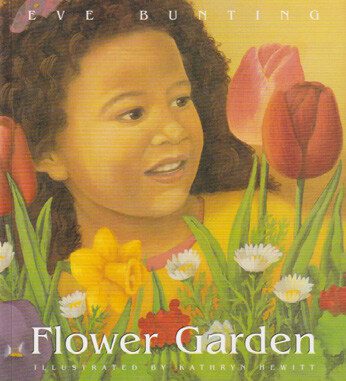
Written by Eve Bunting Illustrated by Kathryn Hewitt
Another book by Eve Bunting! This talented woman has written many books for children from two years old to teenagers, in all different settings, and in varied real-life situations. She doesn’t try to hide the truth or to tip toe around uncomfortable topics. Her stories have heart and sometimes raw emotion. The illustrations in her books are usually quite realistic and enhance her words beautifully. Her books raise her readers’ social consciousness – sometimes subtly and sometimes flat out!
Flower Garden is the story of a dad and his daughter putting together a beautiful surprise for his wife and her mother’s birthday. It’s set in a city where they live several stories up in an apartment building. They ride public transportation to and from the grocery store, where they buy plants, a window box, and cake and ice cream.
Mom isn’t home, so they can quickly plant the flowers in the window box before she arrives. She is surprised and happy when she gets home!
In this book the words rhyme. Young children love rhyming! In this book, the reader may not be aware that they are learning about people of different races, or they may recognize themselves in the characters. It is a beautiful book that young children will enjoy over and over again at home or in school.
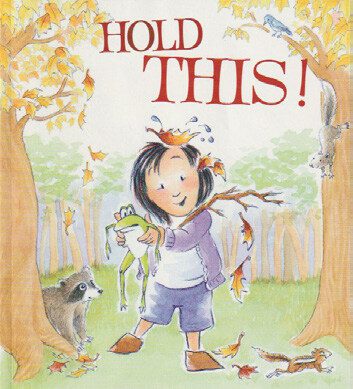
As a dad and his young daughter, Mika, take a walk through the woods, Mika finds so many treasures that she wants to keep and take home. She finds a stick and a frog and some water and leaves and a sparkling stone and more. Mika wants her dad to put these items in his backpack or pockets, but he reminds her several times that she is a “big girl” and can carry her own treasures. At the end, Mika asks once more, “I know I’m a big girl, but…will you hold this?” as she reaches her hand up to him.
Written by Carolyn Cory Scoppettone Illustrated by Priscilla Alpaugh
Children love to collect things in nature. We often encourage them to leave them there or to carry the treasures themselves. Really, the very best part of a walk-in nature is the time spent together. Children two to six years old will enjoy this book.
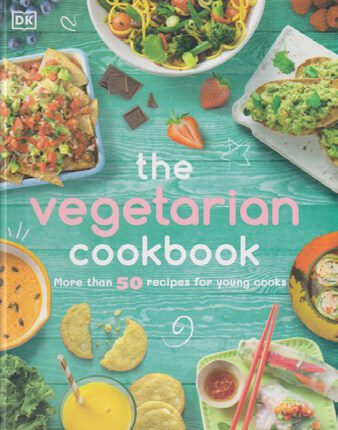
The Vegetarian Cookbook: More than 50 Recipes for Young Cooks
Written by DK publishers
My son and his family are vegetarians. I wondered if there were any vegetarian cookbooks for children. So I went searching and, lo and behold, there were quite a few!
I found one that looked good to me (on the internet), it was the right age grouping for my grandson, and the description seemed like it was laid out in a way that was easy to use and simple enough for a young child. I bought it. Well, much to my chagrin, this book was not child friendly or, in my case, adult friendly. All the measurements were in grams, the photos showing the steps were too small (about 16 on an 8×10 page), and the photos had no instructions. At any rate it was totally unsuitable for me (master’s degree in Home ‘Ec’ and a Montessori 3-6 credentialed teacher) or for my grandson (5 years old, loves to eat and cook, and goes to a Montessori school). What a disappointment!
Today, I looked again and found a beautiful book by DK publishers with beautiful photos, an introductory section with kitchen rules, equipment, and healthy eating with food groups. Once the child is prepared, we get into the recipes that include breakfasts, snacks, lunches, drinks, entrées, and sweets. There are easy-to-follow steps with one photo and brief written instructions for each step. Everything looks delicious, as DK is masterful with their photographic illustrations. I can’t wait to cook with my grandson next time he comes over. The recipes would work for 4–8-year-olds and their parents or some other adults who love to eat and cook! It can be found on amazon.com
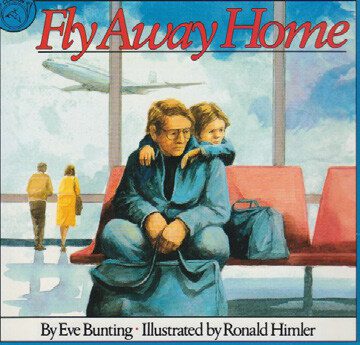
Written by Eve Bunting Illustrated by Ronald Himler
This is a book for elementary and even middle-school children. Andrew and his dad are homeless. They live in the airport. They must never be noticed, or airport security will throw them out onto the streets. Andrew’s dad works on the weekends as a janitor. It’s a lonely and sad life. Andrew sometimes gets angry about his mother dying and losing their apartment. He knows they must save their money to get a new apartment to live in. He saw a bird that flew into the terminal and couldn’t get out until one day it saw a door open and flew off. The bird gave Andrew hope.
Fly Away Home should be talked about with a parent or teacher, as homelessness is a problem in many places that hasn’t been solved. It is also often thought of as a situation that just drunks or mentally-ill people experience. Andrew and his father were not. They were just ordinary people who had fallen on hard times.
The book could be a catalyst for social consciousness and justice, for community service, or for action for change in our communities and countries.
One of the many things that teachers do in the first few days of school is to ask children to talk about, write about, or in some way describe their summer activities. You remember that, right?
For some of us that was easy and fun because, maybe, we like to write (especially about ourselves) or we did a lot of things and went to a lot of places. But for others, this project might feel more challenging or even discouraging because they experienced everyday life at home, and it may not seem to be so exciting or alluring.
“Summer Journals” or diaries can be an opportunity to help your child see that all things are exciting, fun, and new in their own way. An appreciation if you will. Try talking with your child each night about their day and record it in a way that is appropriate for your child’s age and abilities. So, writing, drawing pictures, recording them telling their stories, and other creative ways all count!
These are some questions for you to use:
1. What was the silliest thing that happened today?
2. What was the worst thing that happened today?
3. What was the best thing that happened today?
I found these three questions can really get your child talking. You may need to help them get started by sharing your silliest, worst, or best. Remember once they open up, let them be the storyteller!
I also suggest that reading counts as part of your child’s summer adventures! Here are a few of my favorite books.
Make Music! by Norma Jean Hayes, Ann Sayre Wiseman, & John Langstaff
This is a wonderful resource with a wealth of projects for elementary-age children that have to do with creating music together. It’s fun, it’s broken down into categories from beginners to advanced music makers, and the illustrations are photos of real children in action and having a blast! Appropriate for ages 6-12.
Apple in the Middle by Dawn Quigley
Your 11–15-year-old will be captivated by Apple’s discoveries about herself, and her heritage as she spends the summer with her grandparents and others from her mother’s side of the family. She goes to a different place, experiences a culture that she knew very little about, and develops a new perspective about life. Appropriate for ages 11-15.
Our Peaceful Classroom by Aline D. Wolf
Lest we forget, this book will bring back memories of friends and activities from school days and may help with the transition for your young child back into the classroom and school life as the summer winds down. Appropriate for ages 3-6.
It’s a Book by Lane Smith
This is a hilarious book for older children. It cleverly and in a fun way depicts how in modern times, we are so attached to technology that we don’t know about or recognize a book in printed form. Love this one! Appropriate for ages 12-17.
Beach Walk by Backpack Explorers Series, Storey Publishing
This is a sturdy, somewhat water-resistant book that you can bring along on your trip to the beach. It includes a magnifying glass, which children really love to use when discovering new plants and animals by the water. There are lots of fun activities for you and your children to do together! Appropriate for ages 4- 10.
How to Find an Elephant by Kate Banks
There is an elephant (or part of one) on every page of this book, but you’ve got to really look! The words and illustrations entice the reader in a fantastic adventure, full of imagination and for hunting what otherwise might be obvious. Appropriate for ages 4-10.
A Fast, Clear, and Fun Explanation of the Economics You Need for Success in Your Career, Business, and Investments
Written by Richard J. Maybury Edited by Jane A. Williams
From Bluestocking Press
There is an entire series of interesting books in the Uncle Eric collection. I particularly enjoyed sharing this clearly written, award-winning book about economics. In it, the author offers a clear and easily grasped explanation of the origin of money, investment cycles, inflation, market cycles, recessions, and much more.
As another reviewer put it, “Maybury’s forte is explaining economics in an interesting, logical, and easy-to-understand manner. This is no small achievement in economics pedagogy. Equally important, the economics in Whatever Happened to Penny Candy makes such good sense. When government’s economic policies make us say ‘uncle,’ let’s hope it’s ‘Uncle Eric,’ Maybury’s letter writer and alter ego.” – John G. Murphy, Ph.D., President,
National Schools Committee for Economic Education
“This book is must reading for children of all ages. Its presentation of some of the fundamentals of economics is lucid, accurate, and above all highly readable.”— Michael A. Walker, Executive Director, The Fraser Institute, British Columbia, Canada
Pyramid
Written & Illustrated by David Macaulay
From HMH Books for Young Readers
This is another series of excellent books published in the 1980s that is still available and should be in every school and family library. David Macaulay is an award-winning author and illustrator, whose books have sold millions of copies in the United States, alone, and his work has been translated into a dozen languages. Our children and I loved every one of his books. The series explored how famous buildings and structures were built, from the Pyramids to modern skyscrapers. The illustrations and detailed descriptions are fascinating to children (and adults) of all ages, but especially from seven to fourteen.
Our Vanishing Landscape
Written & Illustrated by Eric Sloan
From Dover Books on Americana
Eric Sloan is absolutely one of my favorite authors. Over his long career, he produced many compelling books that celebrate the traditions of early America and remind us that history is all around us, if we take time to look and understand. His work is a celebration of America. Eric Sloane was a prolific artist, which make his books come alive. This particular volume is just one of many. He wrote of the traditional life of the American farm and countryside. Just a few include Once Upon a Time: The Way America Was, Diary of an Early American Boy: Noah Blake 1805, The Seasons of America Past, The Cracker Barrel, The Little Red Schoolhouse, and many more. These books will not immediately grab the attention of the average young reader. I suggest that you get ahold of a few, and try to go through them together with a child of nine or older. Reading the Diary of an Early American Boy aloud together and looking at the pen and ink drawings may be a great beginning. Once you and your children realize how the evidence of the past surrounds us, you may see the place where you live and the places that you visit with new eyes. I love these books!
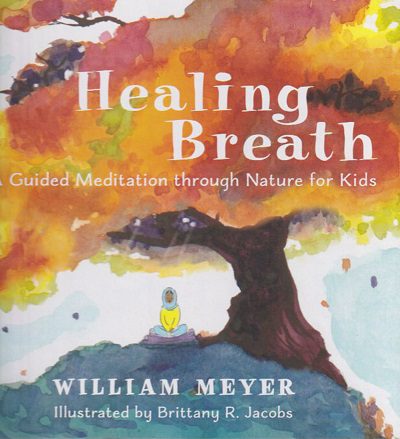
Healing Breath: A Guided Meditation through Nature for Kids
Written by William Meyer Illustrated by Brittany R. Jacobs
Mr. Meyer wrote this book to help children release anxiety in general and more specifically about the condition of the planet through meditation. The illustrations are colorful and calming and they bring the author’s words to life. I would suggest that this book be presented to children during the elementary years, as these are the years of great imagination. They will need to use their great imaginations to picture the ideas and places in the meditation. They will also need to have had enough life experiences to use as a basis for this imagining.
If I were going to present this meditation to students or to one of my own children, I would definitely start them off with a shorter meditation or with practicing the Silence Game that we often use in Montessori schools. Depending on their comfort and skill levels, I would read the book aloud with children or let them read it to me. Seeing the illustrations and hearing the words will help children imagine the scenes when they actually go to meditation, close their eyes, and visualize the scenes the author describes. I would also read the author’s words out loud, alone, before leading the meditation with children. Practicing this way will help me become familiar with the language, set my tone of voice, and determine the pace of reading.
This is a beautiful meditation and I think that elementary children will relax and enjoy this quieting practice.
Where Are You? A Child’s Book about Loss
Written by Laura Olivieri Illustrated by Kristin Elder
Where Are You? is written by a wife and mother of a three-year-old after her husband passed away. Her purpose in writing this book is to offer support for parents who may be struggling to answer their young child’s question about their missing parent. The author delicately describes how young children think and experience life and death in terms of ‘real’ things through their senses. After the child in this story experiences the loss of seeing, touching, and hearing his loved one, he begins to remember. He realizes that memories are held in the heart and that is where his parent is now. This book could be helpful for children ages three through eight years old, who are experiencing loss and searching for an answer to “where are you?”
Maria Montessori Speaks to Parents: A Selection of Articles
Written by Maria Montessori
Maria Montessori spent the vast majority of her professional life working with teachers, developing her innovative educational method. She devoted most of her energy to writing about the Method for teachers. However, she also spent some time during her courses and lectures to address parents. Within the pedagogical archives of Maria Montessori’s original work, several articles were found that have a style and content that was certainly written for parents. It is possible, and even likely, that these articles were written in 1931.
This book contains eleven short articles to help parents understand, in broad strokes, Montessori’s views on how children learn and the role that parents play in supporting their children’s development. It is an interesting collection of articles with clear and exact messages to parents. When I read each one, I had to put the book down and really contemplate her meaning and message. Maria Montessori’s style of writing is different from writers in the 21st century, but her message about children absolutely holds true today. This book is available through Amazon.
How to Change the World in 12 Easy Steps
Written by Peggy Porter Tierney Illustrated by Marie Letourneau
This delightful book was inspired by Eva Mozes Kor, a child survivor of Auschwitz. During her life, Eva encouraged children to make a positive difference in the world by doing everyday things that show kindness, acceptance, support, and care for the environment.
The author put ideas into simple terms on how we can all “be the change” we would like to see in our world; small things like tidying your room; giving your parents a hug and a kiss; picking up trash where you see it; inviting a new student to sit with you at lunch; getting an education; and being creative can make a huge difference. The illustrations are realistic, fun, and relatable.
At the end of the book, the author tells a brief story of Eva’s life after Auschwitz. You and your child (or students) can watch a documentary about Eva Mozes Kor by filmmaker Ted Green – Eva A-706. Great for children 4-8 years old. It can be purchased on amazon.com.
One Green Apple
Written by Eve Bunting Illustrated by Ted Lewin
Moving anywhere can be an adventure or a journey at any age but moving to a new country with unfamiliar customs and a language you don’t speak or understand can be very challenging for a child. In One Green Apple, Eve Bunting tells the story of a child from South Asia on her second day of school in the US, who goes on a class field trip to an apple orchard. Here, she learns the names of two new friends and adds her green apple to all the red apples to make a delicious cider. This is a story of acceptance, connection, and adjustment in new surroundings. The illustrations are realistic, sensitive, and beautifully done. I highly recommend this book for elementary age children.
A Warm Winter
Written by Feridun Oral
This is a story about friendship, sharing, and survival in a beautifully illustrated book that children will enjoy reading over and over for years to come. The author uses forest animals to tell the story of how a mouse struggles to provide the necessities of life for others in his family. Along the way, the mouse enlists the help of friends (a rabbit, a fox, and a bear) to move the fire starters to the mouse’s nest. This was quite an unlikely team to be sure, and maybe there’s a conversation to be had about that as you read the story. As luck would have it, a fierce winter snowstorm thwarted their efforts, and the very large bundle of twigs and pinecones came undone and scattered. They took shelter together until the blizzard passed. What do you think they decided to do with the twigs and pinecones that had scattered? When you read this book, you’ll find out how it turned out to be a warm winter after all. It will be most appealing to children from age four to seven.
Calling all teachers, parents, & children!
We would love to publish reviews of your favorite books. Send book reviews to Lorna at: lornamcgrath@montessori.org
Elementary and middle school children, along with their parents and teachers, will love this book. It is a hilarious review of wild animals from around the world! Each animal is rated in a humorous way that tells the reader a little something about the creatures. Animals Reviewed also includes the common name for the animal, its scientific name, and a zoo or aquarium where it can be found. This information is great because some of these animals may tickle a child’s curiosity and may motivate them to do more in-depth research about the animal. They may even be able to go see the animal in person if a zoo or aquarium nearby has one in residence. Enjoy!
”I declare after all there is no enjoyment like reading! How much sooner one tires of any thing than of a book! When I have a house of my own, I shall be miserable if I have not an excellent library.”
—JANE AUSTEN
Make Music!
by Norma Jean Haynes, Ann Sayre Wiseman, and John Langstaff
Another wonderful book for adventurous children and grown ups who want to have fun making music! The book is laid out in categories starting with Beginning Notes (pun intended I’m sure!); Household Things that Ring and Ping; Body Music; Percussion Beats and Rhythms; Breath Music: the Winds, The String Section; Instruments from the Workshop; and Creating Music. I’m excited just writing down the names of the sections and that’s not all. This book has beautiful photos of real children in action and having so much fun with music. Make Music is a great resource for an afterschool studio or for the vacation home or cabin, or at home on a school break, or ongoing project. The audience for the projects would probably be elementary-age children because of their skill and social levels; although, very clever teachers or parents could probably modify some of the projects for younger children as well.
Hatching the Cosmic Egg
Written by Michael Dorer Illustrated by Beth Wilson Music by Andrew Kutt
Michael Dorer, a well- known Montessori educator, author, and conference presenter, has now written his first children’s book and it’s ‘wonder-full.’ Hatching the Cosmic Egg opens with a request for the reader to “think of the very biggest thing you can.” I’m already intrigued and excited, and I think elementary children will be, too!
On each of the next few pages is a gorgeous, two-page, colorful drawing of very large earthly things that children might imagine and the author asking; Is it a great, gray elephant? Next two-page spread: A tall, snowy mountain? And so on. Then he begins to ask about more stellar images like the sun and the stars. This is so cool because the book brings the child’s mind to bigger and bigger images leading up to: It’s the UNIVERSE!
Now the story begins! This book encourages and entices children to think big about the universe, about themselves, and their part in the universe. Dorer, being the great storyteller that he is, seamlessly incorporates concepts from the great lessons and brings the readers to an awesome affirmation that they are connected to and part of everything in the universe.
Beth Wilson’s illustrations are perfect for the story, both in style and simplicity. They add to the wonder of this book. And, there’s more. With each book comes a CD with music and song by Andrew Kutt that enhances the story for readers in a totally different genre. This book needs to be in every home and classroom!
The Memory Box
Written by Joanna Rowland Illustrated by Thea Baker
Editor’s Note: I would like to personally thank Lorna for picking this book to review. My family suffered a great loss this year. It has had an enormous impact on all of us, especially my two grandsons (ages seven and eight). After reading this review, I immediately ordered this book on Amazon. This is such a difficult part or ‘adulting,’ but it is so needed to help children who struggle (often silently) to understand and find a way to celebrate and remember someone they loved so much.
The Memory Box is a very helpful book for children who have lost a loved one. It brings to light a variety of emotions from fear to sadness to happiness that children may experience as they go through the grief process and beyond. Sometimes, adults find it difficult to talk about feelings and death, especially if the person who has died is someone they loved as well. This book helps adults, as it tells a story about a child who is grieving, what feelings she experiences, and how she creates a “memory box.” The illustrations are lovely, almost whimsical, and yet realistic. At the end of the book there is a section to help adults support children through their loss. Children four years old through elementary and possibly the middle school years would benefit from The Memory Box.
Treasure Basket Explorations
Written by Laura Wilhelm Photos by Gryphon House and Shutterstock
Treasure basket exploration is a terrific idea for not-yet-mobile infants. The concept could be modified in some ways to better fit toddler’s through kindergartener’s strong sense of order. I struggled a little bit with this concept because I know from my own observations, as well as those of Maria Montessori and interactions with children in the early childhood years (birth-6 years old), that this period of time in a child’s development is crucial for preparing an environment that instills a very orderly way of thinking. At the infant and toddler stage of development, little ones are all about moving and exploring, so the baskets work well. There is a certain amount of order to it because the objects are contained within the basket. They come out of the basket and, when finished, return to the basket (sometimes by the infant or toddler—more often than not by the parent or teacher). The baskets are almost like introductory work for the primary level (3-6 years old), where the activities are contained in baskets or on trays but are designed to teach a skill rather than just allow for exploration.
I need to do more research about “heuristic learning” to truly understand what it is. As I read this book, it sounds like you put a bunch of stuff in a pile and the children get to “explore” it. For me it sounds a bit too unstructured for 3-6-year-olds, as they are really ready for order and imitation rather strictly exploration. Their activities always have some flexibility for exploration but also have a beginning, a middle, and end within each activity.
So, there are some very usable ideas for the infant-toddler years, and some ideas that can be modified for older children in Treasure Basket Exploration.
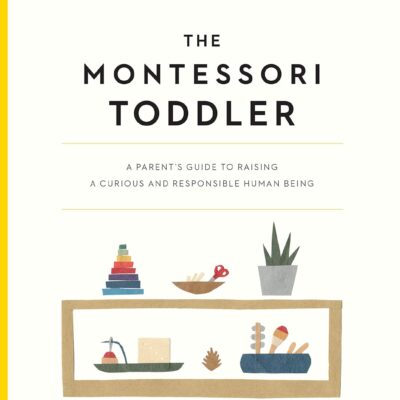
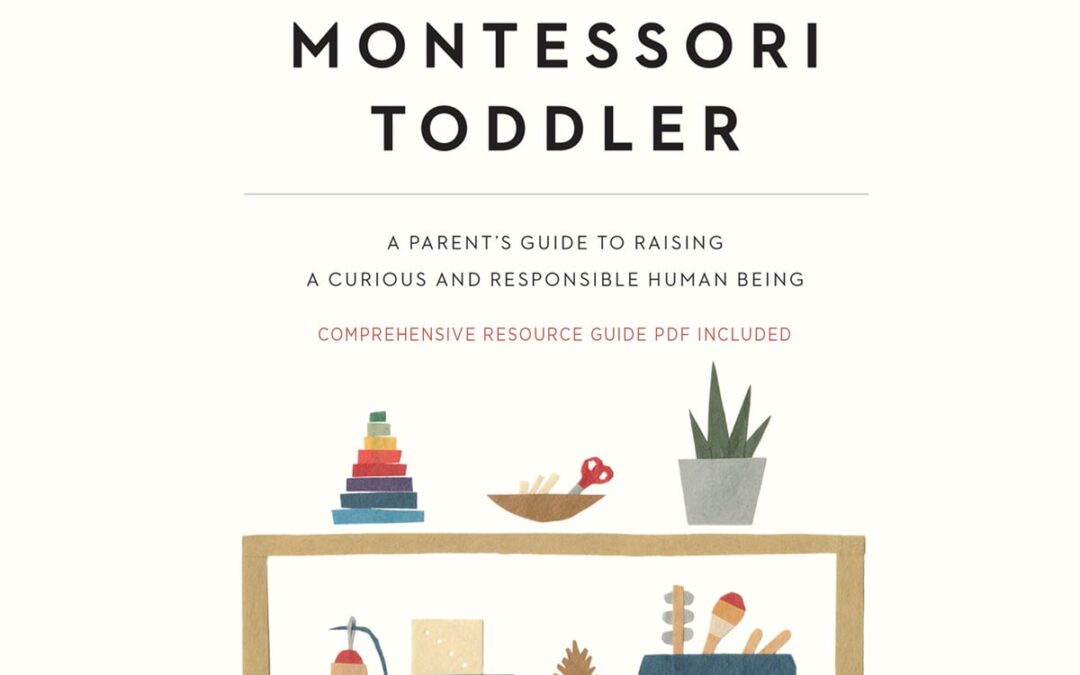
The Montessori Toddler: A Parent’s Guide to Raising a Curious and Responsible Being
Written by Simone Davies Illustrated by Hiyoko Imai
When I looked at the cover of this book I was intrigued. It was simple with a kind of unique illustration of a shelf with activities, and it was written for parents of toddlers—encouraging signs. Then I looked at the table of contents which was 3.33 pages long. Hmmm. Busy parents with small toddlers. Looks a little off-putting to me. So, I flipped through the book. I like photos and illustrations. There were very few photos and quite a few illustrations, but lots of words to read in this 248- page volume. Oh boy!
I made myself look more closely, and what I found was delightfully appealing. That huge table of contents I discovered was because the author listed each topic in each chapter, so it looked a lot more daunting than it truly is. Many of the topics listed are half a page to two pages at most. A parent can easily read a quick snippet and put the book down. They can also easily look up a specific topic that they are interested in because the topics are listed in such detail.
After looking more carefully, I really like the design. Simone Davies is very thorough. Her knowledge, understanding, and enjoyment of this age group is very apparent, and she shares it well with her audience. Often toddlers are misunderstood and so behave in ways that parents find difficult. Davies touches on some key points when thinking about toddlers. The first two chapters give parents valuable information about this stage in a child’s development and a brief introduction to Montessori. The rest of the book helps parents see their role as changing from a servant during infancy to a guide during toddlerhood and beyond. She brilliantly describes how to create a home environment that supports toddler success, both physically and emotionally, with furnishings and activities, as well as discipline.
The Montessori Toddler is a great resource for parents of infants, so that they can prepare for toddlerhood and for parents of toddlers who are already in the midst of toddlerhood.
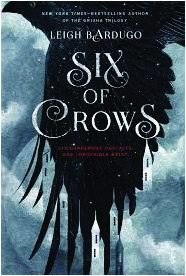
If you like complex characters, a thrilling story, and Victorianesque setting, then you will love Six of Crows by Leigh Bardugo. This book tells the story of a convict, a sharpshooter, a runaway, a spy, a heart render, and a thief who band together to pull off an impossible heist.
Six of Crows takes place in the Grishaverse, a world where certain people called Grisha have the power to manipulate the tides, the wind, or even the chemicals in your body. Every chapter in this book follows the story from a different character’s point of view. The narrative switches between Kaz Brekker, a criminal underworld mastermind; Jesper, a sharpshooter, who can’t walk away from a bet; Wylan, the runaway son of a rich merchant; Inej, a circus performer turned into a deadly assassin; Nina, a Grisha heartrender far from home; and Matthias, a Drüskelle, witch hunter, and a convict. All of them must put aside their differences to complete an impossible heist, not only to save the world but for the money.
The first half of this book takes place in the city of Ketterdam, a city based on Amsterdam, specifically in The Barrel, the part of town with all the gambling halls are where anyone will do anything for the right price. The Barrel is home to thieves, conartists, and, most importantly, gangs. It’s a place where everyone is trying to outsmart everyone else. The second half takes place in the faraway country of Fjerda, a cold unforgiving country filled with Drüskelle. Overall, I loved the setting; I just wish we could have explored The Barrel more. Kaz, also known as Dirtyhands, is a lieutenant in a gang called the Dregs. Inej is a kind, yet dangerous, Suli acrobat who, through a series of unfortunate events, finds herself an assassin. Jesper is a jittery and funny sharpshooter, who can’t walk away from a wager. Nina is decisive and independent. Matthias is cold and a good soldier. Wylan is the moral compass of the team.
Six of Crows is a must-read for anyone who enjoys thrilling, suspenseful, and magical books. With its complex characters, engaging, and intriguing setting, Six of Crows is not only a good book but a masterpiece.
Reviewed by Daniel Pellizzari,10th grade
Matched
by Ally Condie
In the book Matched, a girl named Cassia lives in a tightly controlled society where decisions are made for her. Officials decide, no one else. They decide whom you love, where you work, when you die, and more.
Ally Condie’s husband gave her the idea to write the book, Matched. She had a conversation with him about marriage in the fall of 2008. He asked, “What if someone wrote the perfect algorithm for lining people up, and the government used it to decide whom you married, when you married, etc.?” But some of Condie’s inspiration also came from general experiences, such as becoming a parent and falling in love.
The main characters in this book are Cassia Reyes and Bram Reyes, Bram and Cassia’s parents, Cassia’s grandfather (Xander), and Ky. My favorite character is Cassia’s grandfather (aka Samuel Reyes) because he’s so sweet and he understands Cassia. He’s kind and gentle to everybody, and he loves poetry. In this story, Samuel is always there for his family, as well.
I would like to experience what living in that society would be like. Cassia is so closely monitored all the time and isn’t free to do whatever she pleases—other people control everything Cassia does from the time that she eats to the time that she dies. It would be really interesting to see what that would be like.
Matched is definitely one of my favorite books. It’s very well written and interesting to read. The book has many unexpected twists, turns, and lies that make you need to keep reading. If I could change one thing about this book, I would change something that happens to Cassia’s grandfather. If you want to know what happens to him, you should read the book!
I highly recommend this book because it opens up your mind and makes you more grateful to know that you aren’t always being watched or monitored at all times. It’s so crazy to think how free we are compared to these people who live in a place where they’re just like everyone else—from clothes, to school, to work, and even to falling in love. If you’re the type of person who likes family, adventure, fantasy, and love, then I believe that this would be the perfect book for you!
Reviewed by Maya Stutzman,9th grade
Flowers for Algernon
by Daniel Keyes
Flowers for Algernon is highly acclaimed, having earned the Nebula Award for Science fiction and Hugo award for best novel and considered a classic by many. Written initially as a short story in 1959, it was later expanded into a novel in 1966. The book challenges the status quo of science fiction, focusing not on laser guns, but on the human mind. When it was released in 1959, it changed the very definition of science fiction. However, besides the science aspect of the book, it also has a more important message about humanity.
The story follows Charlie Gordon, a developmentally delayed man who wants more than anything to be smart. When two scientists choose him to be part of a science experiment meant to raise his IQ, his view of the world is completely changed. Now he has to deal with the difficulties that come with intelligence and the painful memories that begin to manifest in his head. I won’t say that this book will change your life, but it should definitely make you think. For me, Flowers for Algernon really pulled at my heartstrings and made me feel emotions that few books have been able to elicit.
Before I elaborate more on the story, I would like to mention that this book is not for kids any younger than secondary school age or those who are afraid to feel a little uncomfortable. The reason I say this is as Charlie remembers more and more of his past, the book takes a darker turn. There are also some slightly mature moments in the second half of the book.
Charlie’s character goes through multiple changes as his intelligence increases. He starts off as a man who has the mind of a kid, working at a bakery owned by a family friend. This is the only place he is able to work, and the owner acts as a father figure to him. He can’t remember anything and is constantly bullied by the other workers. Then, when he receives surgery that slowly increases his intelligence, his character completely changes. He becomes a hyperintelligent person who remembers everything and is able to learn twenty different languages, but now he realizes everything that has happened to him in his life. He now understands that he was previously living in the moment but not able to understand the moment. He had no control over his life, yet now he does, and he’s impossibly frustrated by this. People treat him completely differently and are scared of him. He’s mad at the world, at people, and at his circumstances. He only finds true companionship with the lab mouse, Algernon, that was the scientists original laboratory test subject.
A cool aspect of Flowers for Algernon is how the book itself is written. The story is told in the first person and is written in progress reports by Charlie. This gives the reader a new way to look into the protagonist’s mind, and I really enjoyed reading something that is written so uniquely.
One of the major reasons why I truly recommend this book is its great message. It shows that people who have mental disabilities are still people. We shouldn’t treat people differently just because they struggle with simpler tasks. If anything, we should support them and help them like we would any other person.
Reviewed by Micah Levine,10th grade
Between Shades of Gray
by Ruta Sepetys
“Have you ever wondered what a human life is worth? That morning, my brother’s was worth a pocket watch.”
Between Shades of Gray is a historical fiction novel written by Lithuanian-American writer, Ruta Sepetys. Sepetys’ heritage inspired the creation of Between Shades of Gray, her first novel. This chilling novel is centered around the soul-crushing events of the sovietinvasion within the country of Lithuania in 1941. During this time, soviet police took men, women, and children and dispersed them wherever they pleased, all while leaving the captives uninformed of their destination. The soviets would tear families apart, leaving them to question the fate of their loved ones. The soviets essentially forced the Lithuanians to live as slaves under extremely harsh, inhumane conditions, while having to comply with every order given to them; if they failed to comply, it could mean instant death.
Between Shades of Gray begins with backstory on Kostas Vilkas. Kostas is the husband of Elena and father to Lina and Jonas. Like many other able-bodied men, he was taken and separated from his wife and children. His wife, Elena, is an intelligent and caring woman. Elena can be seen taking on the role of the voice of reason, as well as being a source of positivity. Their daughter, Lina, is a young teenage girl with a passion for art, only 15, when she and her family were taken from their home. Lina’s younger brother, Jonas, was only ten years old when their family was taken. Although they do have their mother by their side the majority of the time, both Lina and Jonas are forced to grow up extremely quickly due to the hardships they face within their situation. However, when the children briefly reconnect with their father, bumping into him in a nearby train car, Kostas gives the children words of wisdom, telling them to stay strong and not to give up. This empowers Lina and Jonas, making them want to keep going despite all their struggles.
The family, minus the father, was forced aboard a train headed towards Siberia. Here, they meet many fellow Lithuanian captives; most memorably, they meet Andrius Arvydas.
Andrius is around the same age as Lina, and during the novel, they become love interests. The family also meets Mr. Stalas, Mrs. Grybas, Ona, and others. They all soon come to be familiar with Komorov, the commander. It seems as if Komorov is the embodiment of evil; he is the main antagonist. Along with the commander, the Lithuanians also get to know Nikolai Kretzsky. Kretzsky is another soldier who takes part in torturing and ordering the captives around. However, as time progresses, Elena strikes an odd friendship with Kretzsky and it’s revealed that he isn’t completely evil.
Between Shades of Gray demonstrates many important themes, including: morality, sacrifice, integrity, strength, and much more. I love watching the characters develop and grow throughout their story. Each character looks at what it was like to be a captive in the mid 1900s from different perspectives; and you are somewhat put into their shoes. I especially appreciate that, to create this novel, Septeys interviewed real survivors of this time. The fact that everything happening directly stems from those peoples’ truths gives the story life; it gives the story more real feelings and emotions. It shows a more historically accurate representation of their hardships. Their stories must be shared, and the way Septeys delivers their stories is beautiful. Septeys makes the story more personal, incorporating thoughts directly from the protagonists’ minds.
Septeys brings to light the crushing tragedy of the persecution of Stalin’s victims in such a way that is extremely powerful and full of raw emotions. This novel covers such a real and touching topic, I would direct the novel to a more mature audience. Anybody who enjoys more intimate, emotional novels will love this book. Be warned, Between Shades of Gray is a rollercoaster; you better make sure to buckle up.
Reviewed by Katherine Laub,9th grade
Ninth and tenth grade students at NewGate School are reading and writing like crazy! Writing reviews for real publications provides students with an authentic reason for writing. Do you have students or children who would like to send in reviews? For submission guidelines, contact: lornamcgrath@montessori.org.
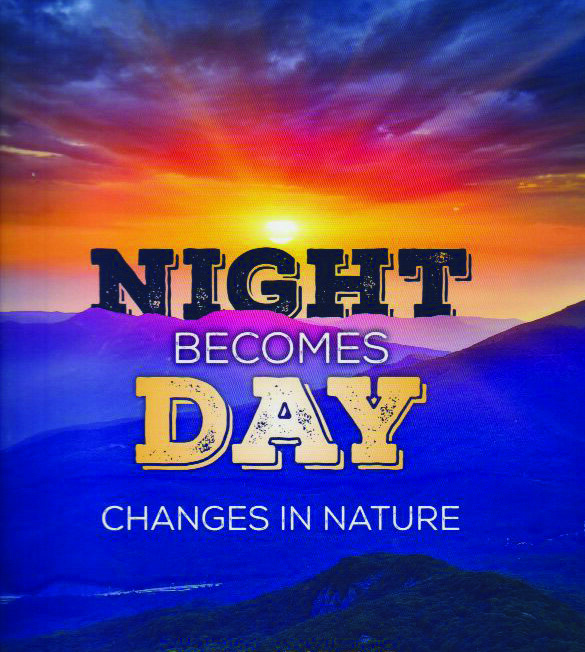
This is a truly gorgeous book for children! Cynthia’s words flow as you turn the pages, and she describes how the natural world is constantly transforming. The photographs superbly illustrate the transformations in nature. The message is about paying attention and to be in awe of all that is around us in the world and realizing how dynamic nature is. And watch for this – “What goes around, comes around.”
Cynthia includes three pages at the end of book for parents and teachers to share with children about different areas of science.
Beautifully written, beautifully illustrated, and a beautiful message for readers! Night Becomes Day would be a terrific addition to children’s (ages 3-8 years old) book collections at home, at school, or both.
Cynthia Argentine has been a guest on our Montessori Family Life Webinar Series. Join the Montessori Foundation Family Network at www.montessori.org to watch the broadcast, Science— An Open Door to Creativity: How
Science Connects Kids to Nature, Arts, Literature, and More with Cynthia Argentine. Visit her website www.cynthiaargentine.com to purchase this and other books she has written.
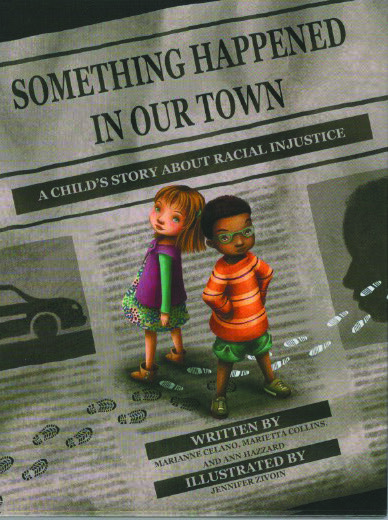
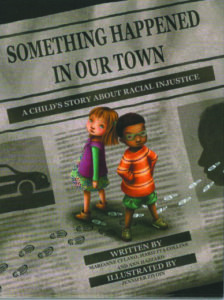
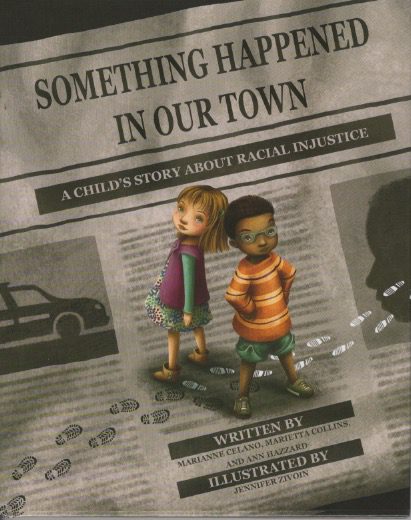
Something Happened in Our Town Written by Marianne Celano, Marietta Collins, Ann Hazzard Illustrated by Jennifer Zivoin This is a child’s story about racial injustice. I was trying to decide how old a child should be to either read the book themselves or to have it read to them. Honestly, I’m still not sure about the answer. What I do know is that parents know their own children best, and they know their values and beliefs.
As with many subjects, such as death, sexuality, injustice, or divorce, parents need to decide when and how to tackle sensitive or disturbing subjects. Most importantly, parents need to make it safe for their children to ask questions, answer truthfully, and answer age appropriately. We know that young children often hear about things that we wish they did not; from television, the internet, older siblings, or adults talking. We don’t want them to hear about violence, hate, pandemics, or injustice. But the truth is – they do.
Sometimes, we don’t answer because we don’t want them to lose their innocence or to worry about things that we think they can’t understand. In reality, it can be more upsetting to a child if their questions go unanswered, because we don’t know how to or are uncomfortable about answering them. The good news is that this book will help parents with the very difficult subject of racial injustice. It looks at a situation that involves a police shooting of a black man and how two families of different races explained the incident to their lower elementary-age children. These families were honest and emotional when answering their children. They also helped their children see that there are things they could do to make changes in how people treat each other. Both children put the lessons from their parents into practice at school the next day.
It reminded me of the famous quote from Mahatma Gandhi, “You must be the change you want to see in the world.” The illustrations are realistic. They depict a town/city and the children at home with their families and at their school. They do not show the shooting itself. The authors also included eight pages of “Notes to Parents and Caregivers” to help adults answer their children’s questions about racial injustice.
My grandson will be five years old in June. He and his family live in City Center, Philadelphia, PA. He’s bright, curious, and is very aware of things that happen in his city. This story could (and does) take place where he lives. I’m sending this book to him now that I’ve reviewed it for you.
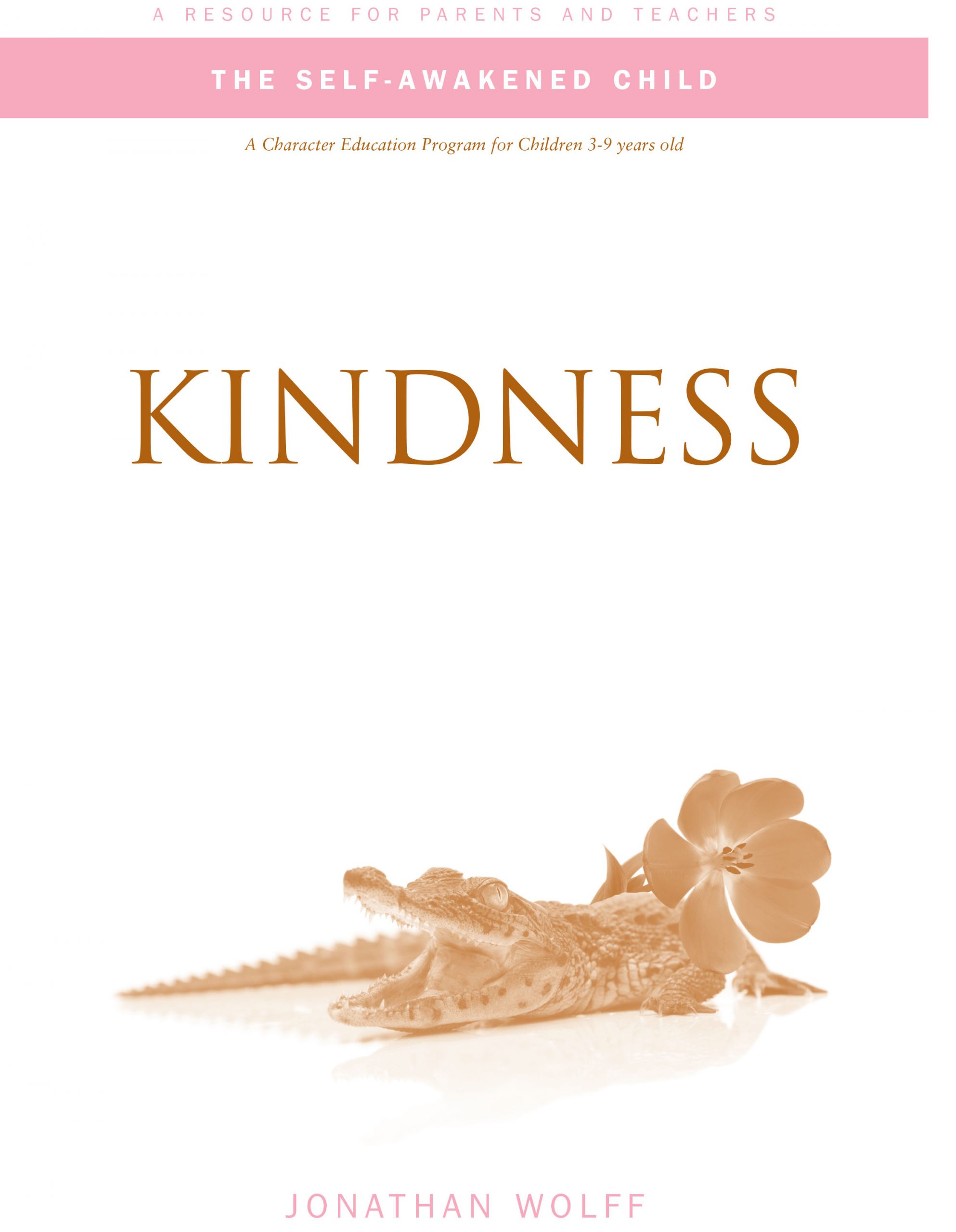
Kindness is one in a series of resource and activity books for parents and teachers of children ages three to nine years old. This series was inspired by and developed as an extension of “The Virtues Project.” The author, Jon Wolff, well-known in the Montessori community around the world, wondered how could parents and teachers explore virtues or universal qualities of character in fun, interactive, and imaginative ways with children.
The series that he put together is called The Self-Awakened Child and includes the following titles: Kindness, Assertiveness, Caring, Creativity, Courage, Forgiveness, Loyalty, Peace, Respect, Responsibility, Self-Discipline, Tolerance, Trust, and Unity. Each of these short books has a variety of exercises and role-plays to help children build character, develop problem-solving skills, and nurture strong, healthy relationships. The exercises are meant to be adjusted according to the setting as well as the age and understanding of the child or children who are participating.
Today, more than ever, children need support in recognizing that what they say and do can make a difference in their lives and the lives of others.As they internalize the characteristics from this series, children realize that they can make our world a more peaceful, sustainable, and united planet. The Self-Awakened Child series is a powerful guide for adults who wish to provide activities that support children in becoming “the change.” I recommend this series for use in schools and homes.
The Self-Awakened Child is available in the Montessori Foundation store at www.montessori.org.
Membership in The Montessori Family Alliance means direct access to Montessori experts and other friends and parents of Montessori. Now, you have a one-stop resource for all of your Montessori needs. Brought to you by The Montessori Foundation.











 ”I declare after all there is no enjoyment like reading! How much sooner one tires of any thing than of a book! When I have a house of my own, I shall be miserable if I have not an excellent library.”




 Kindness