
Maria Montessori Biographies for Children, a Series of Reviews
Note: A while ago, I was wondering: Why aren’t there books for children about Maria Montessori’s life and work? So, I began to do some research. It turns out that there are quite a variety of books from which to choose. There are paperbacks, hard covers, cartoon-ish, realistic, factual, factual-ish, etc. I am going to review four of them and you will probably be able to find even more.
Each of these books has its own value for children. Some contain more accurate information than others; some have more of a story than others; and some are illustrated more realistically. All books about Maria Montessori will help children to understand what she did to change the way children are educated. By providing more information about Montessori, readers gain a better understanding of why the Method works so well for so many children and how the core value of respect leads to a more peaceful world.
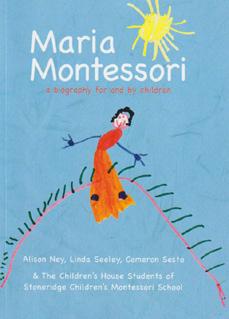
Maria Montessori: A Biography for and by Children
Written by Ney, Seeley, Sesto, & Children’s House students from Stoneridge Children’s Montessori School
This is a paperback book. The teachers/guides wrote the content, and the children illustrated the pages. It seems like it was a wonderful project for the Stoneridge school. This little paperback is full of information about Maria Montessori’s life and work. It includes a timeline and a couple of activities for children. It was published ten years ago so, unfortunately, the website that is mentioned is no longer available.

The Life of Maria Montessori
Written by Jane Kent
Illustrated by Isabel Muñoz
This is a hardcover version of Montessori’s life with quite realistic illustrations. This book is written in the first person as an autobiography. The content brings out Montessori’s determination, intelligence, and forward thinking more than other books. This book is a much more thorough account of all that she achieved during her lifetime. At the end of the book there is a four-page timeline for children to review and some questions to help children remember some of the details of the story.

Maria Montessori and Her Quiet Revolution
Written by Nancy Bach
Illustrated by Leo Lätti
This is also a paperback edition. I like the style of the illustrations regarding how the characters look in modern times (2013) and during Montessori’s time. I also appreciate how the modern Montessori classroom teacher is sharing the story of Maria Montessori’s life. However, I do question some of the information in this book. I also noticed that the classroom looks more like a traditional classroom. I did not see any Montessori materials and the children were sitting one in front of the other rather than in a circle or other shape as is usual for a Montessori school. The book does include some additional information about Maria Montessori’s life and a short quiz.

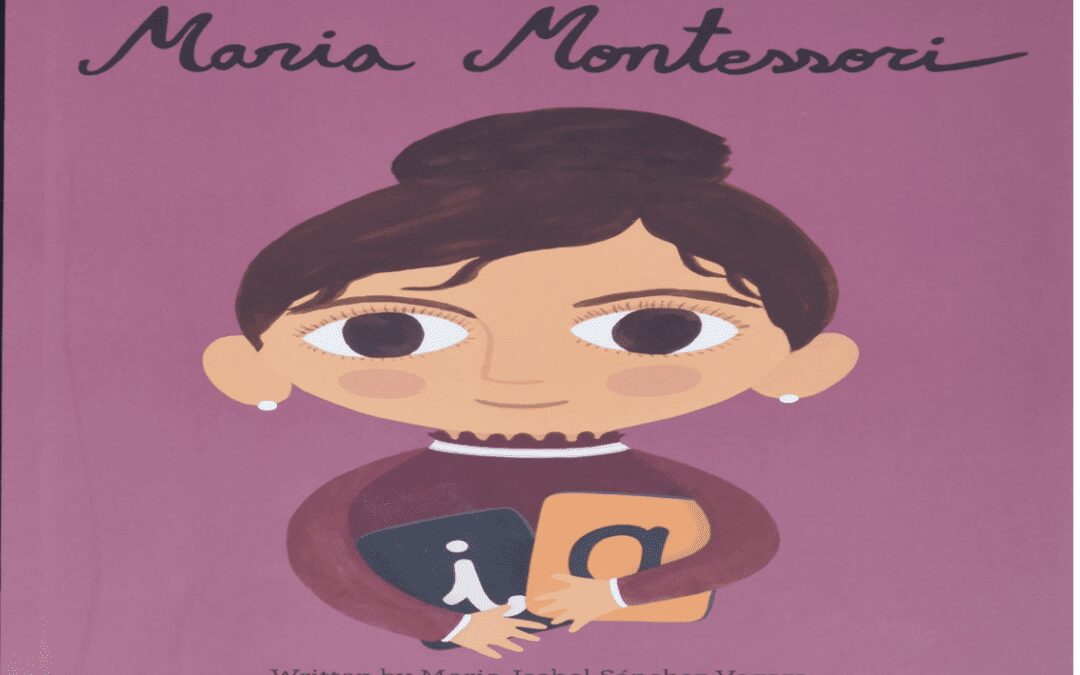
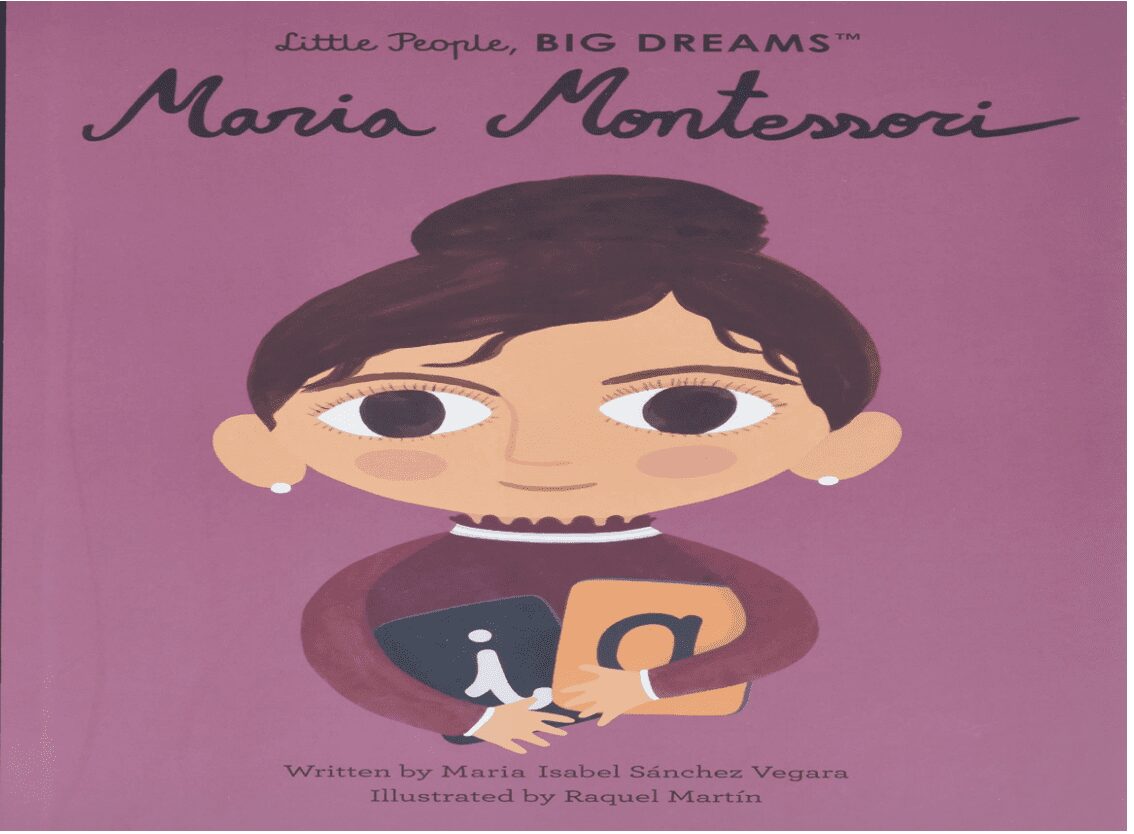
Little People, BIG DREAMS™ Maria Montessori
Written by Maria Isabel Sánchez Vegara
Illustrated by Raquel Martín
This one is a hardcover edition with quite accurate text and illustrations that used soft colors and characteristic images of the times in which Montessori lived and worked. The book includes a brief history and timeline with actual photographs of Maria Montessori.

Those Mysterious Montessori Materials: The Golden Beads
To continue reading, you will need to choose a subscription plan.

Attributes of Montessori Children
To continue reading, you will need to choose a subscription plan.

Soup Day
Soup Day
Written by Melissa Iwai
Melissa Iwai is fast becoming one of my favorite authors! She writes and illustrates engaging books about preparing food with the family. Some of the many attributes of her books are:
• they have sturdy, hard-to-ruin pages, which is important when the recipe is included, and the book will be used as you prepare the food;
• the illustrations are realistic;
• they offer ideas for spending time together while the meal cooks;
• they include the process for getting the ingredients, whether it be from planting seeds to harvesting foods or going to the grocery store to find and gather them to take home;
• the illustrations show the steps to preparing the food;
• the parent allows the child to choose certain ingredients, such as which kind of pasta to use;
• the author includes using the senses of taste, sight, and hearing as the food is being cooked; and
• clean-up is part of the process.
Can you see why I love this book and others that she has written?
I recommend it for children two years old through lower elementary. It can be purchased from most book suppliers.
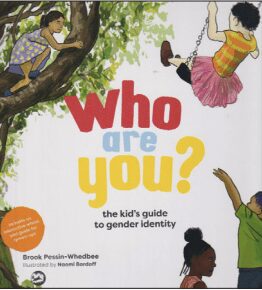
Who Are You? A Kid’s Guide to Gender Identity
Written by Brook Pessin-Whedbee
Illustrated by Naomi Bradoff
The author has included suggestions about how to use this book. She also includes resources and activities to help parents and caregivers define gender and to learn more about the topic.
Brook suggests that this book may or may not be the first introduction to gender discussions that you have with your child. I have learned that gender identification may be different than the sex assigned to a person at birth. It is more than the physical body. It includes what a person likes to do, how they like to dress, and how they express themselves. I love the way the book ends in bold letters:
There are lots of ways to be a boy. There are lots of ways to be a girl. There are lots of ways to be a kid.
This book allows adults and children to think about the question in the title, Who are you? It can be purchased from most book suppliers. Suggested for children four years old through the elementary years.

Finding Montessori
To continue reading, you will need to choose a subscription plan.
The Owl’s Nest
To continue reading, you will need to choose a subscription plan.
Staying the Course: The Importance of Montessori for the Kindergarten Year
To continue reading, you will need to choose a subscription plan.
Why Montessori Elementary?
Our kids are the most important people in our lives. Many of us strive for our children to have better lives than we had, even when we’ve led wonderful lives. Therefore, making a choice different from the norm can be challenging. Though Montessori education has been around for over one hundred years, most people don’t have a direct experience with it. Even those who pursue college degrees in education often hear no more than a basic explanation of Maria Montessori’s contributions to the field. When making such an important decision for your child, it helps to equip yourself with knowledge.
In the 116 years since the first Montessori school opened its doors, only a few changes have been made to the materials and approach. That is because it is rooted in core principles of child development. Montessori is based on an understanding of the human brain and the incredible capabilities of children. While traditional education has its buzzwords and seems to change its mind about the best way to teach every ten years or so, Montessori programs have remained consistent and effective. Why is this?
Maria Montessori was a scientist and physician before she was a teacher. She applied her knowledge of observation and psychology to her work with children. While observing the children in her care, Montessori developed theories about how they learn. She designed materials the children could use independently. She created a curriculum that followed the child’s natural development.
One of Montessori’s core ideas is “follow the child.” Many people unfamiliar with this philosophy misinterpret this to mean “allow the child to do whatever they want.” They may imagine a classroom where the children run amok, doing anything they please and ignoring the more challenging learning in favor of having fun.
In reality, “follow the child” means that we recognize the child as a fully capable human being and respect their ability to construct themselves.
This idea is supported by another of the key concepts: “freedom with responsibility.” Essentially, we teach children what so many adults still struggle with: “How do I do what needs to be done in a way that works for me?”
From an early age, we work to instill an understanding of balance, expectations, and self. With these components, a child can decide between working in the math or language areas, what work will be most appropriate, and how to engage with it to support their growth.
One child might opt for work in the math area because they’ve recently had a lesson on adding with the Stamp Game and want to practice it. Another child might be determined to memorize a series of sight words, so they invite a friend to quiz them. A third child might be in the library with a stack of books about snakes beside them, devouring one after the other. This sometimes leads parents to ask, “What if my child only wants to read nothing else but books about snakes?”
First, it must be said that this is a delightful “problem” to have. It is here that Montessori guides prove their worth.
A guide is trained to observe, just as Maria Montessori did. We watch the children and note trends, moments of discovery, and behaviors that indicate what type of guidance a child needs from us. In the example of a child who only wants to read, we ask ourselves questions, such as:
• How focused are the children on this task? Are they genuinely reading or using a book to look busy?
• Are they inviting others to read or be read to, or are they reading alone?
• Have they recently had a lesson that they are applying or a breakthrough in understanding?
• Are they avoiding other responsibilities? If so, why?
After observing and questioning, the guide will act accordingly. This might mean connecting the child’s interest in reading to an area they need to work in, conferencing with the child to give a mini-lesson on time management, or redirecting a child “looking busy” to a task with which they will genuinely engage. It could also mean that the child is left to read, trusting that they will move on when they’ve gotten what they need from it.
When choosing between a Montessori school and a traditional school, there are several key differences to keep in mind.
In a traditional school, all of the children of the same age learn the same content at the same time. They follow a schedule, such as working on math at 10 am; language at 11 am; and science or social studies at 1 pm. They follow this work schedule regardless of the child’s interests, needs, or internal urge to focus at length to reach a new understanding.
Imagine for a moment what this would look like as an adult. Let’s say that you’ve noticed your kitchen needs some work. You’ve gotten inspired from HGTV, have all the tools and materials you need, and even have time to work on it. Now imagine that you can only work on the kitchen project for half an hour daily. You’re told you must pay equal attention to the bathroom, the bedroom, and the living room. However, your bathroom is pristine; your living room is satisfactory; and you have no new ideas for your bedroom. You wind up with a demolished kitchen that you can’t stop thinking about, twiddling your thumbs in the bathroom, and bored or frustrated in the other two rooms. This isn’t how the real world works. Why should it be so for our children?
Let’s continue playing out the scenario. In the real world, does everyone need to remodel their kitchen at the same time? Not at all.
Does everyone need to regularly maintain their kitchen by cleaning, organizing, and stocking it? Absolutely.
In a Montessori classroom, students are expected to maintain growth in every area, but they may have a strong, specific focus on a particular subject. This will change as they do — as they satisfy their interest, learn what they want to learn, and become intrigued by something new.
If you’re interested in working on your kitchen, but your bathroom is ruined, you’d shift your priorities to that area. Children usually need support to understand when and how to do this, and the Montessori guide recognizes when this is the case and gives the child tools to notice it for themselves and take steps to address it. With an observant Montessori guide, parents don’t need to worry that their child will fall behind in one area because of their passion for another.
As adults, when we take on a big project like remodeling the kitchen, we can benefit from working with others and observing others (usually on YouTube) doing what we want. The elementary child is in a prime developmental stage to socialize and learn to work cooperatively with others. In a traditional setting, the child may be assigned to work in small groups or with a partner, or they may not. The child rarely has a choice in the matter.
In a Montessori classroom, they decide who to work with or if they want to work alone. They can watch others do the work or join lessons on topics of interest. They also have the freedom to decide when to work on the project, for how long, and in which way. Their responsibility is to do it; their freedom is how.
In a traditional school, children are sorted according to their age and are kept with others of the same age. There needs to be more mixing between grades. In a Montessori school, children are in multi-age classrooms of the same developmental stage. Consider for a moment: are the others you work with all the same age as you? Are all of your friends your age? The answer likely is no. You have groups based on other commonalities, such as: interest, experience, or location.
The Montessori multi-age classroom replicates real-world experiences and also creates a sibling dynamic. Even if your child is the eldest in your family, they will still experience what it feels like to be the youngest and middle child. Each child will know the struggle of being the newcomer, the comfort of being in the middle, and the confidence and leadership of being the eldest. They learn how to receive help and how to give it.
This also reduces and often eliminates competition and the stigma of learning differences. In a multi-age classroom, everyone is working on what they need, and it is less evident to the other children when someone is struggling. This greatly benefits all children, particularly those with learning differences, anxiety, or low confidence.
In traditional schools, the focus is almost exclusively on academic achievement. Since the days of “No Child Left Behind,” public schools have been bound by the scores their students produce on standardized tests. Those scores affect the school’s budget, the teacher’s evaluation, and the district’s reputation. Naturally, it follows that the school becomes singularly focused on improving those scores. They aren’t set up to educate and support your child — your entire child.
Your children may learn a lot in a traditional school. They may achieve high grades and hit specific academic targets. In a Montessori school, however, they’ll hit academic targets and have a say in how they do it. They’ll learn to read and how to manage their workload. They’ll memorize math facts and learn the basics of cooking, cleaning, and tending the garden. Their brain will grow, and their hearts and souls will, too. Which would you rather have for your child?

How to Have a Successful Parent-Teacher Conference

Every child deserves an environment conducive to learning, irrespective of their social status or learning difference. A quality environment exists only when there is effective collaboration with parents. Some parents may come to us with concerns regarding challenges they believe their child experiences. It is important for teachers to understand that these concerns are coming from a place of deep-rooted love, worry, and affection for their child. It is important to remember that, together, we are a team, and our goal is the best outcome for the child.
That being said, we will undoubtedly come across some ‘interesting’ situations during our school year. During such times, we need to remind ourselves to have an open mind and seek opportunities for learning. It is vital to make a conscious effort to check in with our reactions and find a time that is suitable for both parents and teachers to meet.
Parent-teacher conferences are a perfect way to work together for the betterment of children and set them up for success. This is the time to build stronger relations with each other. The first conference is always impactful and sets the tone for the rest of the school year.
At our school, the first parent-teacher conference is in October. You can find below some of the concerns and comments that were expressed during these conferences. Each conference is about 25 minutes long. Below, I have tried to compile the main points of our conversation. The children’s names have been changed for privacy reasons, but the concerns and scenarios are real.
Does Ziana still flip her letters? Is that normal? How can we help improve her penmanship?
Yes, it is a normal developmental process for preschoolers to reverse some of their letters and numbers. Children in their early childhood years are busy taking in information, and they are learning the correct orientation of letters and numbers. The letters and numbers most commonly observed to be reversed are b, d, p, q, and 2, 5, 9, 3. It is normal to see this reversal being carried on to Grade 1.
Some of the common reasons for reversals are directional confusion, lack of spatial-perceptual orientation, and, lagging visual discrimination skills. Many exercises from the Practical Life, Sensorial, and pre-Language shelves help children with visual perceptual skills, directionality, and orientation. As she continues working with these exercises we can certainly see improvement.
To improve penmanship, first, we need to make sure the child’s visual acuity is within the normal range. The next step is to observe how the child is holding the writing tool, and if she is seeing her own writing. We observed that Ziana is only partially seeing what she is writing, as her hand covers most of it.
We have shown her to keep her paper at a 45-degree angle. Ziana is practicing writing in this style, and we have already seen great improvement in her penmanship.
The teacher’s observation was that when Ying is building words with the Moveable Alphabet, she cannot process and discriminate between i and e sounds. She spells nit for net, rid for red. How can we, as parents, support her at home to improve her auditory discrimination skills?
Ying speaks Mandarin at home. When she started school last year she did not speak English. She has picked up a lot since, and by the end of the last school year, she was communicating in English. She had to pause and think for a word to complete a sentence. But since the beginning of this school year, Ying has been communicating confidently and fluently in English. She is also able to analyze and break down the sounds in a word and build phonetic words. We are extremely happy and proud to see her progress. Because of the Mandarin dialect, she stresses more on some vowels. We have advised parents to write down the vowels i and e and help Yin enunciate. We also asked parents to write three-letter words with i and e vowels and to have Yin stretch out the vowel as she blends and reads so that she is able to hear herself.
Language development in an early childhood classroom is a process of integration of senses. It is a step-by-step process that comes naturally to many children. When a child sounds out a word, the word is translated from the auditory message to the visual image of the letter system. Then she uses the motor system of the hand to build the words with the Moveable Alphabet or write them. It is a very complex process, and at any point, the child may mis-process resulting in incorrect spelling. Montessori Language exercises are designed specifically to provide this multi-sensory experience for children.
How to help the child be independent and intrinsically motivated to choose more challenging work?
Charlie seems to avoid challenging work and prefers to sit and observe his friends, unless prompted by a teacher. It is okay for children to observe in Montessori classrooms as they learn so much through observation. But since this is Charlie’s kindergarten year, we expect him to be choosing work that challenges him and take up leadership roles. After meeting with his parents, it has been noted that Charlie does a lot of worksheets at home and he is also enrolled in at least five extracurricular classes. Charlie is showing all the symptoms of work overload and fatigue. He is not motivated to do any work because of this exhaustion. We have advised his parents not to provide worksheets at home, as this is clearly confusing Charlie with some of the concrete work he is doing at school. We have also asked them to cut down some of the extracurricular activities.
How to help my son get over social anxiety? He comes home and says no one wants to play with him and the teachers are not helping him either. Help us understand the situation, please.
Before answering the question, here is a brief description of Adrian. Adrian is a 4 1/2 year-old boy. This is his very first experience in a school environment. Due to the pandemic, his parents opted to home-school him. His mom had expressed anxiety over Adrian removing his mask and eating lunch with his friends indoors and even requested if it was okay for him to sit outside the classroom to have lunch.
As a teacher, I sensed a noticeable amount of stress and anxiety in the mom. It is essential to acknowledge the parents’ feelings for their children. Once they understand that we are here for the children and want to provide a secure and safe environment for them, we start to gain their trust. Now, Adrian’s mom was open to suggestions.
We typically give 6 weeks for children to normalize and get accustomed to the new environment. During that period, Adrian preferred to sit next to teachers and talk while watching his friends play. We wanted Adrian to feel safe and trust the adults in charge of him and allowed him to be beside teachers. Once the 6 weeks period passed, we noticed Adrian still preferred to hang out with adults. Now it was time for us to encourage him to venture out and make friends. It was vital for us to see how he takes on this challenging task. While the adults were there to support him, it is an important life skill for him to master on his own. Even though at first it felt like no one was helping him, once he crossed the hurdle, he was able to make many friends and enjoy playground time. Today, Adrian is a happy boy who doesn’t shy away from making new friends.
My child wants to please all his friends and sometimes can take in some unpleasantries and smile through it, all the while hurting inside.
David is a sweet boy who has lots of energy to expend throughout the day. He was transferred from another class last year to our room. He made a smooth transition and has made lots of friends in his new environment. However, he has to be redirected throughout the day to make the right choices and use impulse control. Sometimes he can get himself involved in situations involving multiple children, where they tend to use his name upfront to get away from troubling situations (e.g., “David pushed me.”)
As a Positive Discipline Classroom Educator, I am extremely careful not to label children. I also understand why children tend to call out David’s name a lot due to his previous history of being labeled. I sat the boys down and talked to them about friendship, honesty, and integrity. While some are trying to seek attention (negatively) by placing their friend upfront for things he hasn’t done, it is vital for David to be emotionally strong and know that he doesn’t need to soak up everything his friends are pouring on him. He is made aware that he has a choice and it is up to him to exercise these choices. He is doing extremely well in the classroom’s structured environment. However, he needs reminders when he is with other groups to practice impulse control or in our very special words: “Listen to your peace light and let it shine brighter.”
When Emma is asked to redo work or make a challenging choice, she always insists that her mom wants her to do it that way. We want to know a little more about how you handle such situations at home.
while it is a beautiful sight to see Emma have a strong, secure attachment to her mom, we also want to ensure that she is not heading toward an insecure attachment or reflecting her mom’s emotions.
Emma is a diligent and hardworking student. She does her work very meticulously. However, when she is asked to redo work or re-write letters and follow the correct orientation, she is a bit hesitant.
It is important to introduce constructive criticism to children in their formative years. It is a means by which we learn from our mistakes and find strategies to determine ways to better ourselves. At the same time, it is also important for children to differentiate negative criticism from constructive criticism. With constructive criticism playing a vital role in childhood, it is important for children to learn to take positive feedback and deliver them graciously.
Emma has come a long way. She is open to correcting or redoing her work now at the same time confident enough to let us know if she wants to do it now or later. She knows that we give the freedom to choose between now and later as long as the work is taken care of independently.
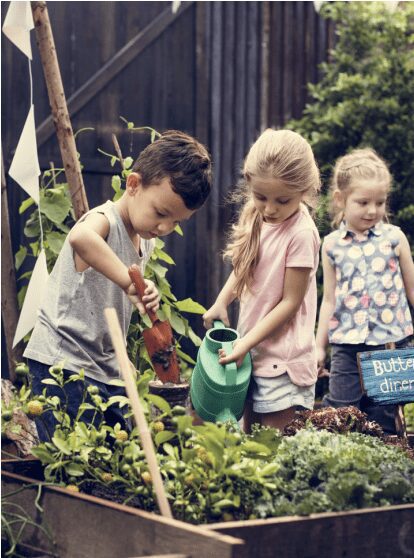
30 Reasons Parents Stay with Montessori

Reflections of Tomorrow’s Child: The Montessori Magazine
To continue reading, you will need to choose a subscription plan.

Creating Family-School Partnerships
To continue reading, you will need to choose a subscription plan.

How to Disagree with Your Teen in an Empowering Way
To continue reading, you will need to choose a subscription plan.

Reflections on Montessori & Whether it Prepares Children for the Real World
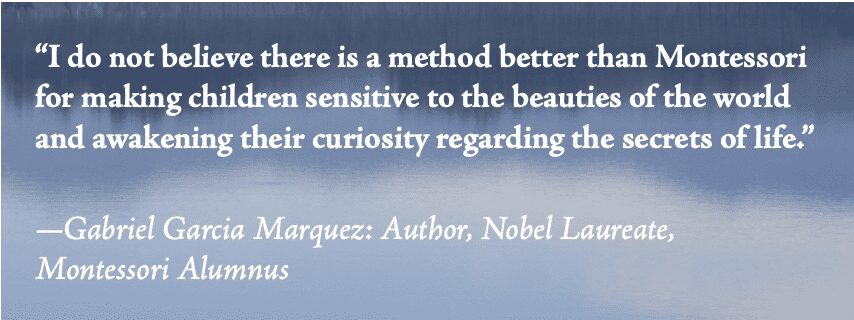

The Gift of Montessori
To continue reading, you will need to choose a subscription plan.
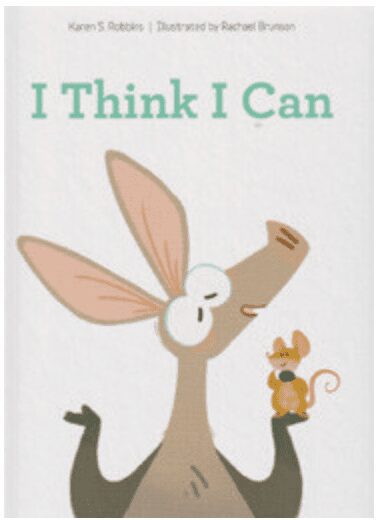
I Think I Can
Written by Karen S. Robbins
Illustrated by Rachael Brunson
Well, I read this book several times, and I think this could be an introduction to reading together (an adult and a child) The aardvark shows confidence in its abilities and potential, and the mouse is delighted.
There are two characters – the aardvark, played by an adult, and the mouse by a child. The aardvark’s words are printed in blue, and the child’s in black. Many of the child’s words are the same as the aardvark’s and the child just repeats them, often only changing the nouns. It ends with a song that they sing together to the tune of “Row, Row, Row Your Boat.” The illustrations are simple, clear, and fun.
This book could introduce reading together as just fun for young children and adults. It can be purchased at amazon.com.
Featured
-
 The Montessori Way, Revised and Expanded: An Education for Life; A Comprehensive Guide for Parents and Teachers
$25.00
The Montessori Way, Revised and Expanded: An Education for Life; A Comprehensive Guide for Parents and Teachers
$25.00
-
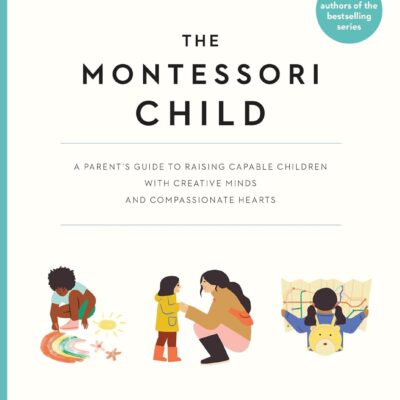
The Montessori Child: A Parent's Guide to Raising Capable Children with Creative Minds and Compassionate Hearts (The Parents' Guide to Montessori)
$20.00
-
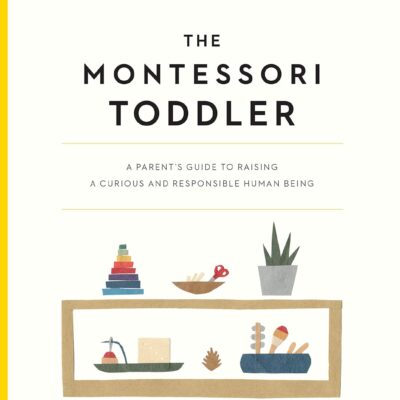
The Montessori Toddler: A Parent's Guide to Raising a Curious and Responsible Human Being (The Parents' Guide to Montessori)
$20.00
-
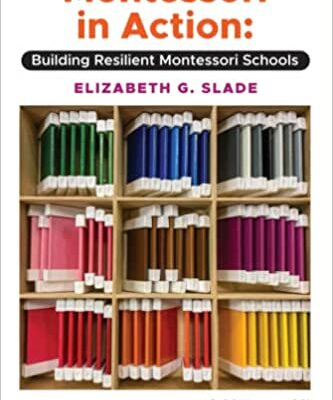
Montessori in Action: Building Resilient Montessori Schools 1st Edition
$29.95
-
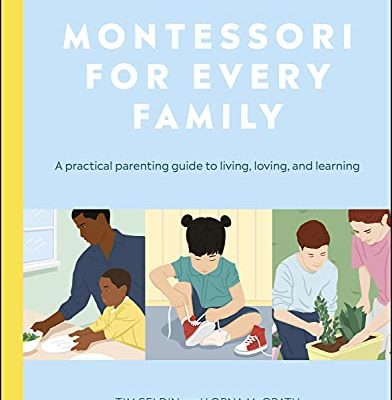
Bulk Order, 30 Copies of Montessori for Every Family: A Practical Parenting Guide To Living, Loving, And Learning
Original price was: $600.00.$510.00Current price is: $510.00.

Products
-
The Montessori Way, Revised and Expanded: An Education for Life; A Comprehensive Guide for Parents and Teachers
$25.00
-
The Montessori Child: A Parent's Guide to Raising Capable Children with Creative Minds and Compassionate Hearts (The Parents' Guide to Montessori)
$20.00
-
The Montessori Toddler: A Parent's Guide to Raising a Curious and Responsible Human Being (The Parents' Guide to Montessori)
$20.00
-
Montessori in Action: Building Resilient Montessori Schools 1st Edition
$29.95
-
Bulk Order, 30 Copies of Montessori for Every Family: A Practical Parenting Guide To Living, Loving, And Learning
Original price was: $600.00.$510.00Current price is: $510.00.