I remember climbing the mango tree that grew behind my building as a child. I lived in a large metropolitan city and would beg my grandma to let me play behind the building with my friend. With the slightest nod of her head, I would squeal with excitement and fly down the stairs to the fourth floor where my best friend lived. I would ring and knock until I could, once again, beg whoever answered to let her play with me. Again, with the slightest nod, we both arrived at the ground floor, barely touching a step on the way down.
I have the greatest memories of my childhood climbing that mango tree with just a salt shaker and my friend. We would sit and talk, play, and eat fresh mangos straight from the tree. Now, 30 years later, I can still recall and feel the pleasure of that time in the tree. I can still smell the sweet ripe fruit and recall unexplainable and seemingly unimportant details from those cherished experiences.
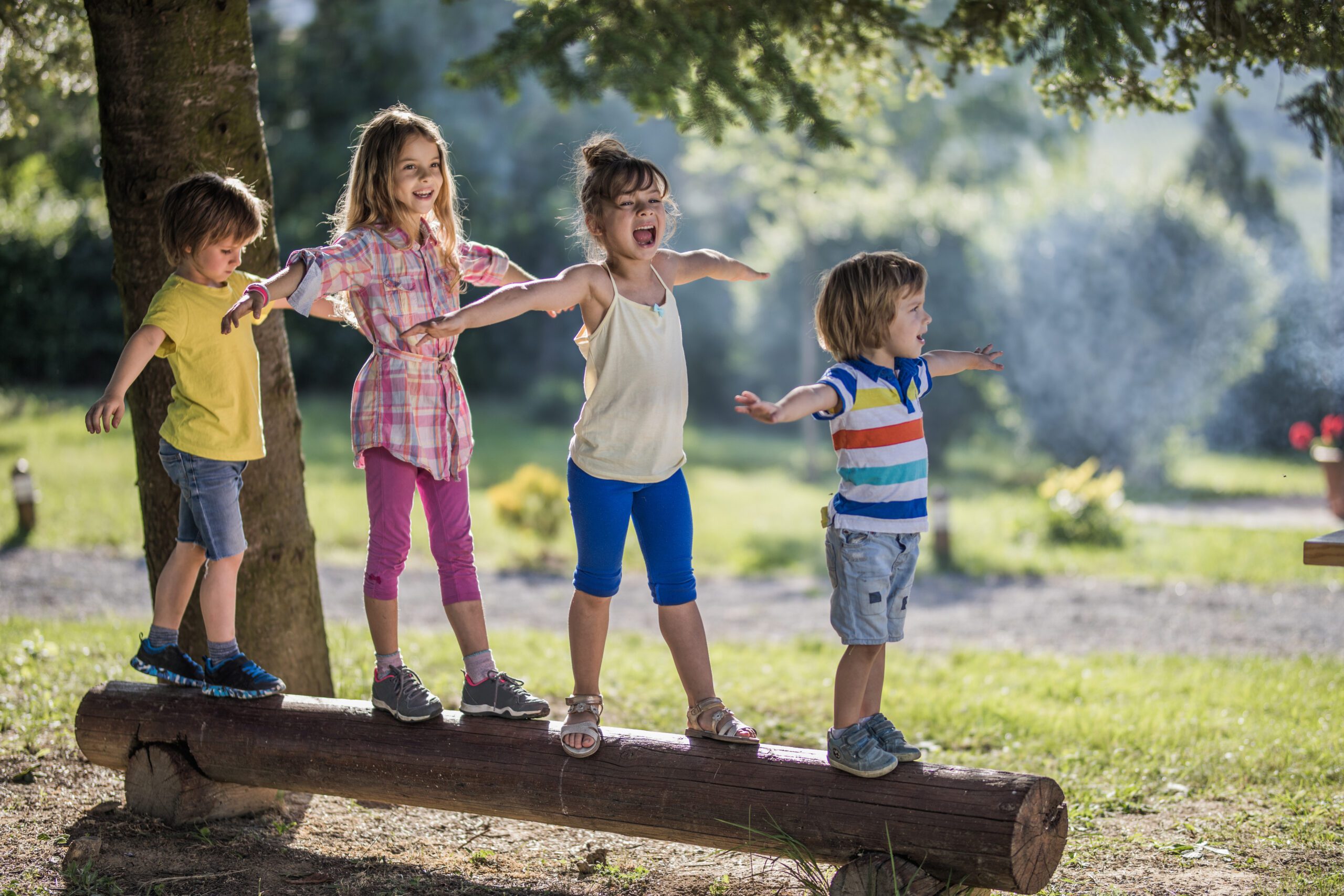
I know each of you has your own unique and special memories of playing as a child. You can recall an amazing time when you rode your bike on the street, rolled down a grassy hill, jumped into a pile of leaves, or built a sandcastle at the beach. I grew up in Caracas, Venezuela, and I spent countless hours and days playing with my friends in the street, climbing trees, and even walking every afternoon to the bakery with my grandma to buy bread for dinner. These memories are so precious to me, just as your unique childhood play experiences and memories are precious to you.
But we weren’t just playing, we were learning, and we were learning a lot!
There is something amazing about play. When you experience pleasure, you become more driven to repeat that activity. And the more we repeat it, the more opportunities we must master it. With mastery of anything, from the most basic skill to the most complex, we experience self-accomplishment and the pride and individual confidence that result from it. such as creativity, abstract thought, prosocial behavior, and expressive language”.
Playing is a critical part of our learning process. But play has to be fun. If something is not fun, it’s not play.
Let’s look at why play is so critical to learning and cognitive development. Play serves as a crucial mechanism that enables the brain to develop neurological systems that play a key role in cognitive awareness, improved learning, and physical, social, and emotional well-being. Gaskill and Perry (2014), in their article “The Neurobiological Power of Play,” said that “Developmental theorists generally have viewed play as an essential experiential element of social, emotional, physical, intellectual, and psychological development. The ‘somatosensory’ experiences in some play activities have been viewed as the neurological foundations for later advanced mental skills, such as creativity, abstract thought, prosocial behavior, and expressive language.”
Let’s dive just a bit deeper and investigate what is really happening in the brain when a child is playing. Bruce Perry is a psychiatrist and Founder of the Child Trauma Academy, and through his research, he explains how kids develop through play.
Human brains are super organized, so let’s imagine a staircase in your brain. Our brains start developing on the bottom stair and systematically progress up the staircase. The bottom stair is the BRAINSTEM, which is the basic building block of the brain.
According to Perry, the Brainstem establishes (body) state regulation and is responsible for controlling body temperature, blood pressure, heart rates, sleep, and fear.
To develop the Brainstem and this critical first stair, Perry recommends playing games, such as peekaboo and frequently introducing new and different tactile and taste sensations.
The second stair is the MIDBRAIN, this part of the brain is responsible for the regulation of movement (motor skills) and the sensory integration of our brain. Play that involves gross- and fine-motor skills and music is well suited to help develop the Midbrain.
The third step in the brain staircase is the LIMBIC. The Limbic area is all about our emotions. I know many of you are thinking, “Yes, EMOTIONS, tell me more!” It is the Limbic portion of the brain that processes emotions, such as tolerance, belonging, and empathy, as well as how we react to a situa- tion and regulate our feelings. It’s at this level of development that our brains start understanding and comprehending the complex dynamics of relationships and all those social-emotional skills that we need to live and function in society.
Once again, play is a critical component in the development of the brain’s Limbic system. Play that involves taking turns, sharing, winning, and losing will all work together to promote the development of this step in the brain staircase.
Our final level in the staircase is the CORTICAL area of the brain. As you might imagine, this is the most complex stage of development, where we see the child engaging in abstract thoughts, creativity, language, and morality. It’s at this stage that Perry notes that Cortical development is supported by playing complex games, humor, art, books, word games, etc.
So now we’ve reached the top of the brain staircase, and through play, our children have developed the ability to control their emotions and think in the abstract.
But what about executive functioning skills, and where do they come from?
Executive functioning is responsible for several skills that involve working memory, cognitive flexibility, and inhibitory control. Basically, these skills act like our own internal ‘boss’ and tell us what to do. The ‘boss’ should be able to help us pay attention, keep and recall information, organize, regulate our emotions and internal clock, and keep track of what we are doing.
The Center on the Developing Child at Harvard University says, “These skills are crucial for learning and development. They also enable positive behavior and allow us to make healthy choices for ourselves and our families.”
The important thing to remember is that we were not born with the ‘boss’; we must learn, practice, and develop these executive functioning skills throughout childhood.
These (executive function) boss’ skills live in the prefrontal cortex of the brain, and studies show that they begin to develop as early as age 3 and will normally continue to develop through the age of 21.
Perry and Baylor said in their research, “Curiosity, Pleasure, and Play: A Neurodevelopmental Perspective,” that “while enjoying their play, children can acquire a wide range of interpersonal/social skills, ranging from communication to cooperation. When children argue about who stepped ‘out of bounds’ and agree upon a ‘do-over,’ they are learning how to negotiate, compromise, and work together.”
All the play that we engage in as children, even as a toddler, contributes to the development of strong executive functioning skills— or a really good ‘boss.’
With play being so important for our children, what are we waiting for? Why are we so laser-focused on rigid academic regimes and structured activities? Have we forgotten how to play?
More play time could better serve the academic and social development of our precious tiny humans. Since we now know the importance of play, let’s ask ourselves, as parents and teachers: How can we use play to better promote and foster childhood development? How can we make things more fun? How can we add more play time to our schedule? How can we remember how to play?
As Montessori educators and parents, we know and recognize the importance of playing, but sometimes we forget that play is such a critical part of the learning process and developing effective executive functioning skills.
Maria Montessori said that “play is the work of the child,” and by giving the child the opportunity to play and explore, we help the brain to grow. “Only through freedom and environmental experience is it practically possible for human development to occur” (Montessori, 1967).
So, what have we learned, and what is our takeaway?
If play is so closely related to brain growth and development, and our prefrontal cortex (executive function) ‘boss’ skills are a result of all that playing, then we need to make sure our tiny humans are doing a lot more playing! It’s just that simple. Both in our education system and our own home, we need to implement and promote more playtime.
As Maria Montessori said, “Education is a natural process carried out by the child and is not acquired by listening to words but by experiences in the environment.” Let’s come together as parents and teachers and go out into the world to explore, be curious, and play more!
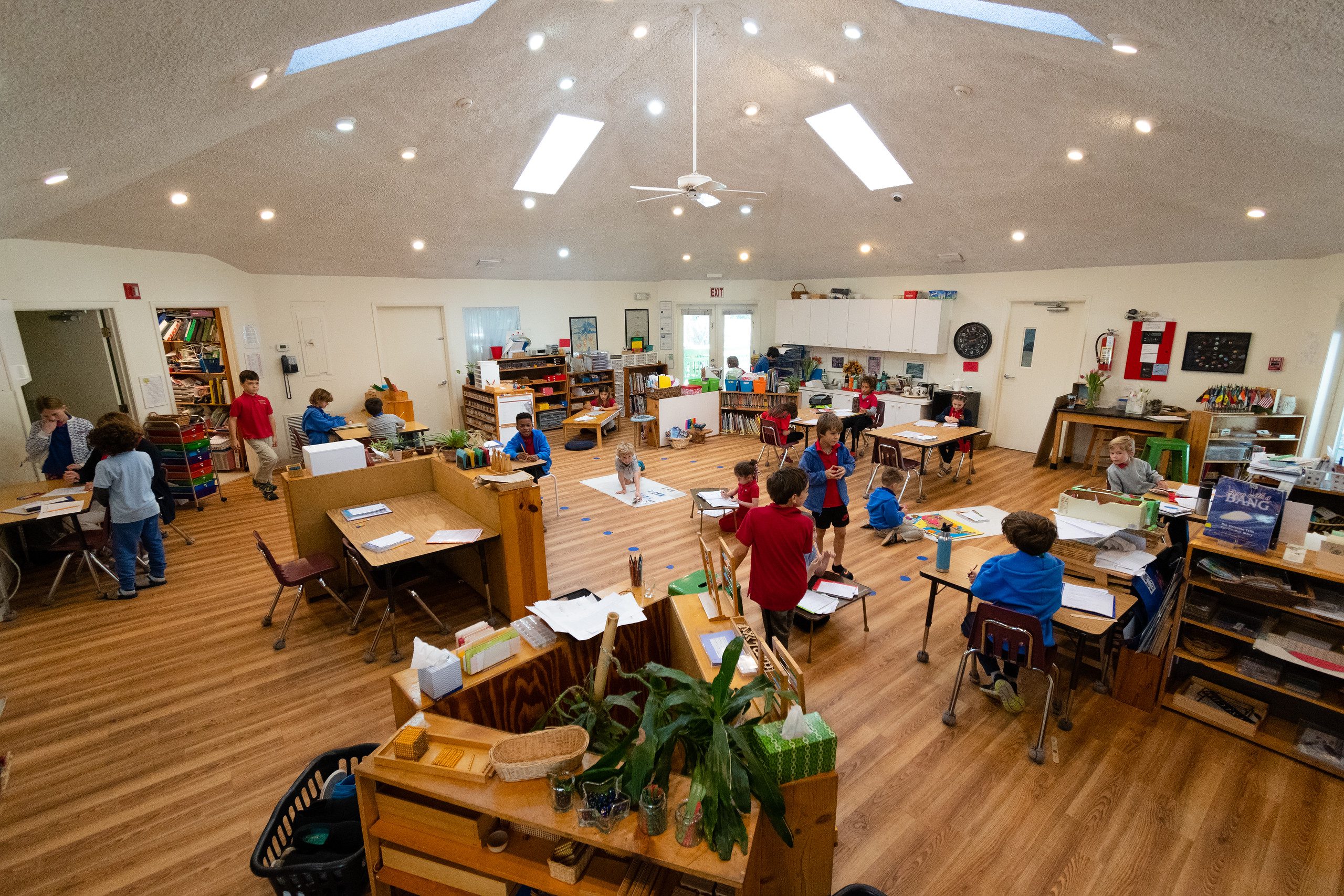
We know that children have a sense of order. The Montessori classroom is an orderly environment where every activity has its place.
Montessori teachers encourage children to use one activity at a time and to tidy up each activity after they have finished with it.
As parents, we expect that the Montessori philosophy will help our children to be tidy! In my experience as a teacher, it’s easier for children to tidy up in the classroom. The Montessori school is designed for children and leads naturally to order. There are clear rules and expectations, and children are more willing to clean up after themselves in the classroom.
What if I tell you that, despite being a Montessori teacher, my children’s bedrooms are not orderly? They don’t tidy up spontaneously. There are several reasons for that, and I have learned over the years what helps children to tidy up and to stay organized.
Three reasons why children don’t tidy up?
1. You might have heard of the sense of order? This is one of the ‘’sensitive periods’ observed by Maria Montessori. It is now described more as a tendency that all human beings must make sense of their environment. It’s not so much about “tidying up after themselves” or keeping their bedroom clean” as about routine, rhythm, and knowing what comes next.
They will express that sense of order about what matters for them. For example: sorting their little people; being obsessed about their collection of pebbles; sleeping with their special teddy is all about that sense of order!
“It seems to him, at this stage, a particularly vital matter that everything in his environment should be kept in its accustomed place; and that the actions of the day should be carried out in their accustomed routine.” – E.M. Standing, Maria Montessori: Her Life and Work, p. 123
Sense of order doesn’t equal being tidy!
2. Are you a tidy person? I’m very honest on this blog and on my social media about the fact that I am not a naturally tidy person. I used to have lots of clutter in my life.
I did a big work on myself to understand my hoarding tendencies and to learn to be more organized. So, if like 50 percent of the parents I work with, you tend to be “messy and disorganized,” you cannot expect that your children will be able to tidy up spontaneously. Children need role models. The more you clean and tidy in front of them, the more they will see it as being part of the routine.
3. They don’t see you cleaning and tidying! I have said it already but even the tidiest parent tends to “clean” when the children are not around. Have you ever sent your co-parent to the park with the children, to allow you to do a good clean-up session?
Do you tend to do everything when they nap? Or do you tend to tidy up all their toys at the end of the day when they are in bed? Stop now and do as much as you can in front of them. Montessori is about teaching life skills and independence, so taking care of the environment is something that I would advise you to focus on. Teach your child to fold the laundry, to do the dishes, empty the dishwasher, setting up the table, and cleaning the windows!
How to help children to tidy up?
• Work on yourself: if you are not naturally tidy, start with you! Do a big decluttering session, and try to understand why it’s hard for you to be orderly. Seek support if needed. Your children will thank you!
• Equally, if you are a very tidy person, lower your expectations; having a spotless house when we have children is just not possible. Review your definition of what is a tidy home.
• Be a role model: clean in front of your children. Even if you have a cleaner, try to do a task with them as a way to teach them. Involve them in the cleaning tasks: young toddlers, generally, love to clean! Give them child-size tools and don’t expect a brilliant result. Let them enjoy the process.
• Have fewer activities and toys available. The less there is to tidy, the easier it will be. Halve the amount of Legos™, blocks, train parts… Those sets tend to be difficult to tidy, and children get discouraged and stop cleaning up after themselves if they are overwhelmed by the task.
• Have a place for everything. Make sure you know the spot for each toy/activity. At the beginning of your Montessori journey, you might still move things around but try to limit a big overhaul, as it disturbs their sense of order and will prevent them from putting back what they have used.
• Make it playful: have a tidy-up song! or a silly dance. Have the animals go back to their basket, making sounds. Find what works for your child.
• Wait for when they are ready. When children are in a flow, playing intensely, it’s hard to know when it’s time to tidy up. It might be dinner time, but they might not be ready to stop playing. Wait for the moment they naturally seem to move onto a new activity to encourage them to put the previous one back on the shelf.
• Help them! It’s a skill, don’t expect them to do it consistently even if they have done it a few times. Like us, they are allowed cheat days.
What about older children?
Children in the second plane of development are messier than younger children. They are less interested in organizing the environment. They are less interested in practical life. They tend to spread out when they explore a topic. It’s because it’s an age when they make connections between concepts.
Their play area and toys might be in their bedroom. Their bedroom is their private area, and you might be less around when they play. Children in the second plane have access to toys that have small parts (Legos™ beads, …).
You can still rotate toys for that age group. You can have a rule that the Legos™ are stored in the living room, or the crafts are only accessible at the dining table. I recommend that you limit what they have access to in their bedroom. Make it part of the daily routine to tidy up for half an hour before dinner.
The bottom line: Mess is part of life but being tidier, as a family, will help everyone.
Having said that, let’s close with this quote: “Excuse the mess, the children are making memories!” •
Carine Robin has a master’s degree in psychology, specializing in child psychology. She worked for various social services in her home country of Belgium, before moving to Ireland in 2006.
It was there that she started working in a nursery and discovered Montessori education. After having her first child, her passion for the philosophy grew. She qualified as a Montessori teacher and managed a Montessori preschool.
Carine has been running Montessori-based parents and toddler groups and coaching families for 9 years. She now also runs an online group for over 20,000 parents, sharing her knowledge and passion with people from around the world.
In 2018, Carine realized families needed more support and launched her popular online parenting courses and monthly subscription boxes, full of personally designed Montessori materials.
Carine has also trained with Sarah Ockwell-Smith in BabyCalm and Toddler Calm, with Dr. Laura Markham on Peaceful Parenting, and most recently, at the prestigious Maria Montessori school in London, as an AMI Elementary and 0-3 assistant. She writes on a popular blog “the Montessori Family”. www.themontessorifamily.com Instagram: @montessorifamilyuk
Summer is a time of more daylight, warmer temperatures, and more time outdoors. We may think that, for children who are out of school in the summer, it is not a time of learning. Yet, it can be an incredible time of learning. Here are fifty ways to help your child learn and grow while not in school.
Explore
1. Let your child plan an activity for the day or some activities for the summer. They can use maps, stick to a budget, and do the research.
2. Go on a searching hike, in nature or an urban setting; look for objects in the shapes of the letters in your name, or in sets of your favorite number, or particular colors.
3. Learn about the plants and animals that are near you. What are those birds by your home? What are the names of the plants you see every day?
4. Walk at your child’s pace. Notice the smells of different plants, admire the bugs, follow your child’s lead.
5. Play board games.
6. Learn card or magic tricks.
7. Learn jokes and present a comedy show.
8. Play unplugged games, such as Hangman, your own version of Pictionary, I Spy, or other paper-and-pencil games.
9. Think of free or inexpensive ways you could help neighbors and act on them.
10. Create a scavenger hunt and follow the clues.
11. Try out new playgrounds nearby.
12. Go to a grocery store you do not usually go to, especially if it has a focus on an ethnicity different than your usual cooking.
13. Allow time for daydreaming.
14. Try outdoor science experiments.
15. Plan a dream vacation.
16. Find some art to admire, outside or in a museum. Discuss what each person likes about it.
17. Explore distances and make a map. How far are you from family members, favorite types of animals, friends, or any other thing that can be mapped?
Communicate
18. Make time for reading every day, or nearly every day.
19. Visit the library and allow your child to make choices of reading material on their own.
20. Encourage your child to tell a friend or a family member about a book they read; retelling helps develop understanding.
21. Write letters to friends and family.
22. Address the envelope for that letter. Writing the address correctly on an envelope takes practice.
23. Keep a summer journal or a travel journal. Write in it regularly and include printed photos, pressed flowers, or leaves, ticket stubs, maps, or any reasonably flat items that remind them of the events written about.
24. Have your child create lists for things to do, grocery lists, books read or books to read, movies to watch, anything that can be listed.
25. Write a letter to their future self and store it or use a site that will email you in a certain amount of time.
26. Create a kindness list; how many acts of kindness can be performed this summer?
27. Count cars, bikes, dogs, flowers, anything you see regularly in your travels.
28. Find letters of the alphabet or make up a silly sentence using letters or words on items in the grocery store. Only one word or letter per item!
Create
29. Build a design of your child’s own creation or follow the directions from a set, with Legos™, blocks, or other building materials.
30. Learn to build card houses.
31. Plan and build a birdhouse.
32. Make your own playdough and sculpt with it.
33. Water down paint, place paper outside, and use squirt guns filled with the watery paint for a creation.
34. Set up objects outside and trace their shadows onto paper.
35. Put on a show–write it, practice it, design costumes and props, and perform for others. Record the show to share it with family that cannot attend in person.
36. Use chalk to draw outside, then use water and a scrub brush to erase it.
37. Plan dinner for a night and help make it.
38. Make a salad. Make dressing to go with it for an extra skill-building opportunity.
39. Grow vegetables and harvest them for dinner.
40. Find a recipe and cook with a new-to-you food.
41. Shuck corn, peel potatoes, wash, and spin lettuce dry, participate in cooking preparation.
42. For older children, set a cooking challenge to use ingredients and make a meal.
43. Sketch or paint flowers at your home or a nearby location.
44. Draw self-portraits directly on the mirror using window markers.
45. Clean the mirror after drawing on it.
46. Wash windows (an adult may need to wash the top).
47. Water the garden or potted plants.
48. Organize an area of your home together, especially one that your child uses regularly.
49. Explore with cash, count coins, save for an item, buy something with cash and check the change received.
50. Make leaf or bark rubbings and label them with the type of tree or bush they came from. •
Cheryl Allen is the Associate Coordinator of the Montessori Family Alliance and is also a parenting educator and a Montessori consultant with the Montessori Foundation. Cheryl attended Montessori school as a child. After some time as a traditional Secondary teacher, she worked in Montessori classrooms, 3-6, 6-9, and 9-12, earning certifications from both AMS (3-6 and 6-9) and IMC (6-12). She is a teacher educator, workshop presenter, and member of IMC accreditation teams. Cheryl’s two children attended Montessori from age two through high school graduation.
“What the hand does, the mind remembers.” – Dr. Maria Montessori
If a child is able to use their hands to discover, their discoveries become more meaningful to them. The concepts they learn are much more rooted than any rote memorization could be, because in using their hands, they experience their learning. They are an active participant.
Active Education
If you picture a traditional classroom, you would likely see a teacher standing at the front of the room near a black- or whiteboard, speaking to children who are lined up in desks, memorizing facts, or attentively looking at and listening to their instructor.
In recent years, concepts such as “table groups” and “flexible seating,” where children can sit in small groups, or choose where they sit, have allowed for some redesign throughout the classroom.
In addition to the arrangement of the environment itself, many teachers and administrators have also looked to hands-on or non-traditional classroom experiences like “project-based learning,” “design thinking,” “the maker movement,” and “the flipped classroom,” for ways to engage children in their learning.
These shifts in education are a reminder that schooling isn’t one-size-fits-all. Individual needs can be addressed when we take the time to step back, assess what we are doing, and make the decision to move forward with purpose. Need some guidance for change? Read on!
Making Changes
If you are unsure where to start, let me give you one powerful idea.
Start with the child’s hands. Sure. Easy. The child’s hands. What? Let me explain.
If you can make a change in learning, begin with just one simple step. Try this: begin by watching hands. Hands are smart. Really smart. Just like our heads. Often, however, this seems to be forgotten.
If you ever have the opportunity to observe someone learning a new skill, I would challenge you to watch their hands. It is through touching and manipulating that information is taken in through the hands and delivered to the brain.
Use Your Hands!
Adults seem to think that it is okay for younger children to work with their hands when they are learning. Think about it: sandboxes, water tables, Play-doh™! But somewhere along the way, these manipulatives got a bad rap for being “childish.” Why?
If you’ve ever seen someone participate in an activity they love, you’ve very likely seen them using their hands! You’ve likely witnessed someone building with tools, fixing up a vehicle, or playing an instrument. How about someone turning the page of a book, digging in the dirt while gardening, or making food?
Why should learning through math, science, history, or languages be any different? Utilize an abacus for addition, measure velocity when launching a marshmallow with a spoon, tea-dye a map, or handle pairs of objects that rhyme. Whether formal or informal education, using your hands helps!
In the Montessori Classroom
Dr. Maria Montessori was a scientist who spent time observing children. In doing so, she realized that children wanted real-world, hands-on application for learning. Not only did they want it, but they also experienced joy in using their hands.
Through experimentation and careful calculation, Montessori developed materials for children to use. These lessons intentionally foster self-discovery and serve learning goals. Over one hundred years later, the observations she made then still hold true. Regardless of subject matter, children enjoy, and benefit from, using their hands to learn.
In a Montessori classroom you will see hands-on learning EVERYWHERE! A child washing a table is learning care of their environment, while also preparing their hand muscles for similar movements in writing. Placing cubes on top of one another for the Pink Tower allows children to learn precision of movement, while also allowing their body to experience, physically, the difference in 1 cubic centimeter ten times over! Not only this, but it is also teaching the basics of the mathematics base ten system. Rarely is a lesson in a Montessori classroom taught for one purpose only, and usually, with time, the hands-on learning leads to multiple objectives.
A Personalized Journey
Learning is not a race with a finish line. It’s a constant stroll through a variety of experiences that all necessitate different paths and use different materials.
Whether Montessori is your muse, you want to improve learning for your students, or you just personally like to get your hands dirty, don’t wait! The world is waiting for you. Explore! Dig in! •
Mary Ellen Maunz is the Founder and Program Director of Age of Montessori. She has more than 50 years of experience inMontessori education for both teachers and parents. She collaborated for two decades with Dr. Elisabeth Caspari, student and personal friend of Maria Montessori. She is an international authority on Early Childhood and Elementary education and has lectured and taught students in seven countries on five continents. Internationally-renowned author and lecturer, Maunz is on a lifelong mission to help parents understand the underlying needs of the developing child. Find our blogs, webinars, professional development and MACTE certified teacher education courses at: ageofmontessori.org
One of the most challenging parts of having children in school is making lunches. With some guidance, children can make their own lunch. It then becomes a win/win situation. You do not need to make lunch daily, your child gets to practice practical life skills, and your children are more likely to eat their lunches. As with all new skills, it may take more time initially, yet the work and time will benefit both of you for years to come.
How can a young child prepare their lunch each day? Preparation of the environment, the necessary tools, and a lesson will all be necessary.
Preparing the Environment:
• Make appropriate food for lunches available at child height. This may mean reserving space on a low cabinet and low shelf in the refrigerator for lunch materials. At our house, we used colored baskets in the cabinet and refrigerator to quickly designate which items were for lunches.
• If needed, divide the food into servings before lunches are made. Your child can help you do this after school or over the weekend. If five baby carrots are an appropriate serving for your child, make a few bags with five carrots in each.
• Make sure your child can open and close any containers used and manage their lunch box.
• Consider when lunch should be prepared. If your child has trouble getting out of the house in the morning, make lunch the night before and store it in the refrigerator if needed. If your child is usually ready early, the morning is a great time for this job.
The Necessary Tools:
• Have utensils your child can use to make lunch, such as: a knife for spreading and cutting; a cutting board; containers that your children can open and close; and lunch boxes that allow them to pack easily.
• A list of ideas in written or picture form may be helpful for your child.
• Decide what you expect for lunch. What constitutes a main meal? What is a snack? Do you have a guideline of how many fruits or vegetables need to be included?
A Lesson or a few lessons):
• Discuss the plan with your child.
• Show where the tools and materials for making lunch are.
• Talk about what should be included in lunch and why, i.e., you need energy for growth and your day; these foods are not allowed at school for allergy or other health reasons; these items do not transport well. Share the reason for the guidelines.
• Work with your child the first few times and discuss what you are doing and checking: e.g., “I don’t see any fruit in here. Would you like to add a fruit or another vegetable?”
• Show your child how to clean out their lunch box at home before just adding to it.
Follow Up:
• Peek inside the lunches that are going to school. Do they meet nutritional needs as you expect?
• Discuss options and ideas with your child before grocery shopping.
• If you have leftovers from dinner, ask if your child would like some for lunch and plan together how to make that work.
• Let your child’s teacher know that your family is making this change. Your child may be pleased and possibly even distracted by the lunch they made at first, so letting the teacher know means they can help with these changes.
Enjoy the small break this gives you and the independence it gives your child.
Cheryl Allen is the Associate Coordinator of the Montessori Family Alliance and is also a parenting educator and a Montessori consultant with the Montessori Foundation. Cheryl attended Montessori school as a child. After sometime as a traditional Secondary teacher, she worked in Montessori classrooms, 3-6, 6-9,and 9-12, earning certifications from both AMS (3-6 and 6-9) and IMC (6-12). She is a teacher educator, workshop presenter, and member of IMC accreditation teams. Cheryl’s two children attended Montessori from age two through high school graduation.
Every year in January, one of us will write an article about the importance of children who are turning five completing the three-year cycle of the Montessori Early Childhood program. We do this because this is a decision that is truly important for any child who has grown up, thus far, in a Montessori program.
We understand how tempting it is, for parents who have their children enrolled in a non-public Montessori school, to make the switch at Kindergarten to avoid another year of tuition. However, having invested in Montessori thus far, the long-term benefits of staying, at least through the third year, if not beyond, cannot be stressed often enough.
The third-year is critical in the Early Childhood Montessori program. This is the year when children’s earlier experiences are normally internalized and reinforced and when children begin to take the first steps of moving from very concrete learning to learning that is more abstract. When children leave Montessori for traditional Kindergarten, much of what they have been learning fades away because they have not yet made the passage to abstract understanding.
The advantages of using the local schools often seem obvious, while those for staying in Montessori are often not at all clear. When you can use the local schools for free, why would anyone want to invest thousands of dollars in another year’s tuition?
It’s a fair question, and it deserves a careful answer. Obviously, there is no one right answer for every child. Often the decision depends on where each family places its priorities and how strongly parents sense that one school or another more closely fits in with their hopes and dreams for their children.
Naturally, to some degree, the answer is also often connected to the question of family income as well; although, we are amazed at how often families with very modest means, but who place a high enough priority on their children’s education, will scrape together the tuition needed to keep them in Montessori.
Most five-year-olds have been waiting for the longest time to be one of the ‘big kids.’ The experience of playing the leadership role does wonders to reinforce the five-year-olds’s sense of autonomy and self-confidence.
So here are a few answers to some of the questions parents often ask about Montessori for the Kindergarten-age child.
In a nut shell, what would be the most important short-term disadvantage of sending my five-year-old to the local schools?
When a child transfers from Montessori to a new Kindergarten, she spends the first few months adjusting to a new class, a new teacher, and a whole new system with different expectations. This, along with the fact that most Kindergartens have a much lower set of expectations for five-year-olds than most Montessori programs, severely cuts into the learning that could occur during this crucial year of their lives.
As children begin their third year in Montessori, their understanding of the decimal system, place value, mathematical operations, and similar information is usually very sound. With reinforcement, as they grow older, these concepts become internalized and a permanent part of who they are. When they leave Montessori before they have had the time to internalize these early concrete experiences, their early learning often evaporates because it is neither reinforced nor commonly understood.
What would be the most important advantages of keeping my five-year-old in Montessori?
Montessori is an approach to working with children that is carefully based on what we’ve learned about children’s cognitive, neurological, and emotional development from more than one hundred years of research. Although sometimes misunderstood, the Montessori approach has been acclaimed as one of the most developmentally appropriate models by America’s top experts on early childhood and elementary education.
One important difference between what Montessori offers the five-year-old and what is offered by many of today’s Kindergarten programs has to do with how it helps the young child learn how to learn.
Educational research has increasingly shown that students in many schools don’t really understand most of what they are being taught. As Howard Gardner, leading educational psychologist and advocate of school reform, wrote: “Many schools have fallen into a pattern of giving kids exercises and drills that result in getting answers on tests that look like they understand.
Most students, from as young as those in Kindergarten to students in some of the finest colleges in America, do not understand what they’ve studied, in the most basic sense of the term. They lack the capacity to take knowledge learned in one setting and apply it appropriately in a different setting.”
Montessori is focused on teaching for understanding.
In an Early Childhood Montessori classroom, three- and four-year-olds receive the benefit of two years of sensorial preparation for academic skills by working with the concrete Montessori learning materials. This concrete sensorial experience gradually allows the child to form a mental picture of concepts, such as: How big is a thousand? How many hundreds make up a thousand? and What is really going on when we borrow or carry numbers in mathematical operations?
The value of the sensorial experiences that the younger children have had in Montessori has often been underestimated by parents and educators. Research is very clear that young children learn by observing and manipulating their environment, not through textbooks and workbook exercises. The Montessori materials give the child concrete sensorial impressions of abstract concepts, such as long division, that become the foundation for a lifetime of understanding.
But won’t my five-year-old spend her Kindergarten year taking care of younger children instead of doing her own work?
No, not at all! When older children work with younger students, they tend to learn more from the experience than their ‘students.’
Experiences that facilitate development of a child’s independence are often very limited in traditional schools.
Five-year-olds are normally the leaders and role models in the Primary Montessori classroom. They help to set the tone and serve as an example of appropriate behavior for the class. They often help younger children with their work, actually teaching lessons or correcting errors.
Most five-year-olds have been waiting for the longest time to be one of the ‘big kids.’ The experience of playing the leadership role does wonders to reinforce the five-year-olds’s sense of autonomy and self-confidence.
Five-year-olds are beginning to reflect upon the world. They pay closer attention, notice more details, ask more questions, and begin to explain the world in their own terms. The Kindergarten year is a time when the child begins to integrate everything she learned in the first few years.
Academic progress is not our ultimate goal. Our real hope is that they will feel good about themselves and enjoy learning. Mastering basic skills is a side goal.
The key concept is readiness. If a child is developmentally not ready to go on, he or she is neither left behind nor made to feel like a failure. Our goal is not ensuring that children develop at a predetermined rate, but to ensure that whatever they do, they do well and feel good about themselves as learners. •
One of the most wonderful things about toddlers is how they so inherently want to help. They are eager to be involved, be near us, and participate in our day-to-day activities. What we deem “chores,” toddlers see as what they are: meaningful contributions to our family or community.
After toddlerhood, we often notice a shift. Children seem less intrinsically motivated to help and view helping more as a chore. This is a natural part of development: they are more independent and focused on their own work and play. They are discovering who they are and where their own interests lie, which is a beautiful thing. It also doesn’t mean it’s the end of helping!
How do we continue to foster this motivation and raise helpers beyond the toddler years? Here are a few tips that I’ve been keeping in mind in our own home lately. These can be incorporated in toddlerhood and well beyond!
Help Our Children
Our children learn how to help through us helping them. When we respond to their requests for help, they are more likely to do so in return. Helping doesn’t mean doing a task for them, but rather offering just enough help to get them through a tough spot.
Model It
Not only should we think about how we are offering help to our children, but how can we offer help to our partner, a friend, or our community? The more our children see us being helpers, the more likely they will want to be a helper too.
Talk About It
“In our family, we help each other.” This is a phrase that we repeat often at home. The more we say and hear this, the more ingrained it becomes and the more natural it feels to be a helper in the family. Importantly, this phrase is said in a gentle way, not as a command.
Make It Part Of The Routine
When we make helping a part of our daily rhythm, it becomes natural. In our family, certain tasks are the kids’ responsibility every day: putting shoes and coats away, setting the table, feeding the dog, wiping up spills, tidying toys, etc. These tasks aren’t rewarded but rather just part of the routine.
Don’t Force It
Inviting doesn’t guarantee our children will help. Even when these tasks are part of the daily (or weekly) routine, everyone has off days. We can offer grace and let it go. Often, the next day, or at a different time, they are ready to help again.
Offer Opportunities
Sometimes we move so quickly through our own chores, we forget that we could involve our children. As much as possible, I try to do chores in front of the children so that they have the opportunity to join in and help. Often, what we consider mundane tasks are satisfying for our children. Having cleaning tools that are appropriately sized for our children makes them feel especially capable.
Accept It As Is
When our children do help, we may find that they’re ‘help’ doesn’t lead to the outcome we desire. The dishes might not be as clean, or the laundry might not be folded in a neat stack. When this happens, we can thank them for helping and appreciate the effort that went into it. Rather than correct them at the moment, we can model again another time, and try to be patient, as every skill takes time.
How can your child help today? •
Theresa is a mom to two, a former Montessori guide, and the founder of the blog Montessori in Real Life(www.montessoriinreallife.com). Prior to momming and blogging, she went to graduate school for developmental psychology and earned her Montessori infant/toddler guide certification. Since transitioning from teaching to motherhood, Theresa found a new passion sharing her love of Montessori with parents,while continuing to implement the Montessori philosophy in her own home.
An excerpt from Montessori For Every Family, published by DK Press, 2021
In most families, there are hobbies, interests, and activities that can be messy, need to be left in place to continue to work on later, or where special tools and supplies can be kept on hand and are easily found as needed. A messy space like this could be a spare room in your house, in the basement if you have one, or in your family garage.
It could be a craft and art studio for sculpting or making pottery or an area for woodworking with a workbench with tools arranged on shelves or hanging from a pegboard. It might be a room where you keep your paints and an easel, a photography or video studio with lighting and backdrops, or a space for tools to work on your cars or bicycles.
Keeping order in mind as you plan and organize the space is key to reducing frustration when you can’t find a tool you need or something you’ve just created gets knocked over. When there is clutter and disorder, accidents are more likely to happen and safety to be compromised. It also becomes more difficult to concentrate on the project at hand.
In a Montessori-inspired home, we want to think about what kind of space is needed for your interests or hobbies with all members of the family in mind. Your children are likely to want to be around you as much as possible, as well as needing a space where they can do the things that they prefer. So the idea is to think about the activities that your family members enjoy and consider which ones can be done in the same space.
Many families do not have a spare room, a basement, or even a garage that could be turned into a messy room. What are you to do then? Of course, everything depends on the ages and interests of your children, which may be very different from child to child, but the basic concepts remain the same. Our goal is to allow children to do activities that may be too messy to allow in their bedrooms, the kitchen, or the living room. When you live in a small apartment or home, you have to think outside of the box. You may make an exception to the general rule, and create a small area in the child’s bedroom where you lay down a protective heavy plastic covering on the floor and allow your child to paint, work with clay, glue models together, and other things using a washable covering to protect the surface of the kitchen table. The goal is to encourage children to feel that they can explore hobbies and interests while having your house (or backpack) become a mess.
Real-life story: When Jennie first went to school, she was fascinated with the art materials in her Montessori class. She loved to paint and draw with the beautiful beeswax crayons and colored pencils that were part of the classroom environment. When she would come home, she would often ask her mom if she could have an art studio. Jennie and her mom bought her a set of simple water paints and brushes, a small tabletop easel, and a stack of water-paint paper. They set up a little art studio with tile on the floor that could be easily cleaned if any paint spilled. Mom also bought some picture frames made from matte board so Jennie could hang her favorite paintings. As time went by, Jennie moved from water paints to charcoal and pastels and finally tempera and oil paints. but her interest in drawing and painting never faded away. Today, Jennie has grown up and has a career in science, but she still enjoys painting and loves going to art galleries.
Real-life story: I started noticing my son’s school backpack was full of what I considered trash. Broken rubber bands, the inner ring from a roll of tape, bits of string, etc… for and he just said that he needed them. Then, I started noticing items moving from the recycle bin to his bedroom. Egg cartons, milk jugs, cardboard boxes of all sizes…..it was looking like a recycling center in his room. I would ask him what they were. He kept saying he “needed” it all, so I walked out, took a deep breath, and went with it when what I really wanted to do was put it all back in the trash and have a clean house! Then, one day, he emerged from his room with a giant “smoothie shop” that served all types of smoothies (made out of cardboard and “trash”). This shop was so amazingly detailed and each bit of “trash” served a thought-out purpose. He used amazing grace and courtesy to take our orders and serve us smoothies. We all drank some delicious smoothies that day, and I silently thanked all of his Montessori teachers for teaching me to follow his interests… even when those interests looked like “trash!” —Tara, mother of John 9 years old
Lorna McGrath, M.Ed., is Director of IMC School Accreditation, Program Director of the Montessori Family Alliance, and Senior Consultant of The Montessori Foundation. Lorna has 41 years of experience in the field of education, teaching children from 18 months through 6 years old and from 12 through 18 years old in both public schools and independent Montessori schools. Lorna is a Montessori teacher educator, conference presenter, and school consultant. She can be reached at lornamcgrath@montessori.org.
Tim Seldin is President of the Montessori Foundation and Chair of the International Montessori Council. His more than40 years of experience in Montessori education includes 22years as Headmaster of the Barrie School in Silver Spring, Maryland, his alma mater from toddler through high school graduation. Tim was Co-Founder and Director of the Institute for Advanced Montessori Studies and the Center for Guided Montessori Studies. He earned a B.A. in History and Philosophy from Georgetown University, a M.Ed. in Educational Administration and Supervision from The American University, and his Montessori certification from the American Montessori Society. Tim Seldin is the author of several books on Montessori Education, including How to Raise An Amazing Child, The World in the Palm of Her Hand, and his new book, Montessori for Everyone, co-authored with Lorna McGrath.
Normalization is a term that Montessori teachers exhaust at the beginning of each school year.
“The children are normalizing.”
“Normalization is a delicate process.”
“We’re almost normalized.”
But what is normalization?
Dr. Montessori described normalization in this way: “And in these qualities of the child, she sees man as he ought to be: the worker who never tires, because what drives him on is perennial enthusiasm. She sees one who seeks out the greatest efforts because his constant aspiration is to make himself superior to difficulties; he is a person who really tries to help the weak, because in his heart there is the true charity which knows what is meant by respect for others, and that respect for a person’s spiritual efforts is the water that nourishes the roots of his soul. In the possession of these characteristics, she will recognize the true child, who is father of the true man.” (p. 257).
These are some of the faces of ‘normalization.’ The children are demonstrating independence, perseverance, repetition, and concentration to the exclusion of all the sights, sounds, sensations, and activity around them, because they have a greater task at hand. The children are constructing their own learning; they are shaping their own personalities; and they are building the adults that they are yet to become.
Anika places a large pink cube atop a small pink cube and the cubes fall. She removes the large cube and chooses another somewhat smaller cube. This cube also falls. She removes the small cube and replaces it with a larger cube. She places the smaller cube atop and, later, the smallest cube at the top of the tower. She sits back, observes her balanced tower, and her eyes sparkle as she smiles. one who seeks out the greatest efforts because his constant aspiration is to make himself superior to difficulties; he is a person who really tries to help the weak, because in his heart there is the true charity which knows what is meant by respect for others, and that respect for a person’s spiritual
To the onlooker, it appears that the children are cleaning, building, and working on skills. They appear to be manipulating letters, numbers, and tablets of color. They carry long red rods, stack pink cubes, and lug heavy brown pieces of wood to awaiting throw rugs. These observations are accurate; however, the process of normalization involves a great many skills, some that are visible and some that are less obvious. These children (and others like them) are learning, growing, and developing in a specially prepared environment that fosters the love of activity, concentration, self-discipline, and sociability. This process is facilitated by a sensitive adult, who has prepared the environment with order, consistency, warmth, and the removal of obstacles that could prevent this development.
Martin enters his classroom, says hello to a few friends, and walks directly to the shelf that contains the materials necessary for the parts of the tree puzzle. First he retrieves and unrolls his rug with attention to its position and smoothness. Then he gathers his puzzle and places it on the rug. He builds, disassembles and rebuilds his puzzle without fatigue, but with joyful energy.
Dr. Montessori’s discovery of the “secret of the child,” i.e., their hidden potential, had yet to be revealed and understood by adults. Dr. Montessori’s skills in observation and the circumstances that placed her in the company of children in need of a place to call their own (the slums of San Lorenzo, Rome) found a fertile place for the revelation to occur. She shared with her adult students at the second Indian Montessori training course, that the children came “undernourished, dirty, and uneducated.” “And these very small children, from three to six, did wonderful things. They had wonderful revelations. All these revelations of how to learn to write and to read by themselves at such a young age (and in the midst of joy) resulted in a transformation of their character.”
Liam is building the triangles with deep concentration. Somewhere in the room a tray falls, a child coughs, and an adult walks past. Outdoors a horn sounds and a truck rumbles past. Meanwhile, he continues the assembly of the triangles, the triangles that he has constructed many times before, without interruption.
Then and today, children enter Montessori settings with capabilities that suit them for the work and activity they will encounter. They bring bodies designed for purposeful movement, coordination, grace, and stamina. Their hands and senses serve them by allowing them to interact with and come to experience their environments. They are equipped with a mind that absorbs impressions from all around them; a mind that organizes, problem solves, adapts, remembers, is curious, is capable of long periods of attention and concentrates with little effort and without fatigue. When the body and the mind are satisfied, the true character of children is disclosed. They are peaceful, joyful, sociable, helpful, self-disciplined, satisfied, and their inquisitive and loving souls are made evident. ¢
Montessori, M. and Claremont, C. A. (2019). The Absorbent Mind. Montessori-Pierson Publishing Company.
Dorothy Harman is an AMS Early Childhood credentialed Montessori guide. She holds a BA in Early Childhood Education and a M. Ed in Curriculum and Instruction with an Emphasis in Creative Arts. Dorothy Harman serves as a Montessori consultant and Adjunct Lecturer at the University of Nebraska- Kearney. She serves as a Field Consultant for the Center for Guided Montessori Studies and was a 2018 recipient of an AMS Peace Seed Grant. She is the author of Intentional Connections: A Practical Guide to Parent Engagement in Early Childhood and Lower Elementary Classrooms, published through Parent Child Press.
“As well as being part of our history and a way of understanding other people’s experiences, art is also a form of personal expression, like poetry, song, dance, and telling stories. It is a form of human connection that can evoke feelings, thoughts, and hopefully appreciation and understanding. Montessori encourages families to expose children to as many forms of art as possible. Encouraging your child’s interest in art and giving them room to be creative provides them with experiences that will endure.” — Excerpt from Montessori for Every Family by Lorna McGrath & Tim Seldin
The new book, Montessori For Every Family: A practical parenting guide to living, loving, and learning, by Lorna McGrath and Tim Seldin, shares some ways to encourage an enjoyment of art and to set up a space to create. We have searched out materials to help you set up an inviting art space in your home.
A child-sized wooden table can be your art area for years. Look for a sturdy table and chairs that fit under the table. If you do not have space for a separate art table, consider a coffee table with storage nearby.
Pictures by different artists can be chosen by you or your child if you visit an art museum, or ordered from art.com. Also consider a piece of wood with clips attached and a variety of postcards for a changing display.
You may want a paper roll so you can create different sized pieces of paper.
The MÅLA
Paper roll holder with storage is a good choice. It is available from several vendors, including Amazon. Here is a link to one from IKEA: tinyurl.com/ mrxfc27e
MÅLA Apron
Keeping clothes neat during art exploration is difficult for some of us, so a smock can be a beneficial part of any art set up. tinyurl.com/2zzsetah
Stockmar Beeswax Crayons
Beeswax crayons allow for layering of colors and draw smoothly. They also last longer than traditional crayons. tinyurl.com/289usjem
Eco Finger Paint
Changing out art materials for different ages can help keep their interest up. Young children enjoy the opportunity to finger paint; this finger paint is made with food-grade materials, so you do not need to worry too much when painty fingers go into mouths. ecokidsusa.com/ eco-finger-paint/
Watercolor Pencils
Older children may like the many different ways to draw with watercolor pencils. tinyurl.com/2p9a6d5n
This all-natural, set of opaque watercolors has magnetic pots of color, so just a few can be used at a time. tinyurl.com/3ruhf9yu
Honeysticks
For younger children, who may even like to taste their paints, Honeysticks is a set made from food-grade ingredients. tinyurl.com/bdfjy9w9
Beeswax or Soft Dough
Younger children may find beeswax or soft dough easiest to use. Stockmar modeling beeswax warms up in your hands and smells delicious. tinyurl.com/mws8axc3
Include a container or two, to collect items for collage and sculpture making. Egg cartons, confetti, rubber bands, pom poms, whatever could be reused and is appropriate for their use, can go in the containers for building and creating. Be creative, and follow your child’s interests. Have fun with these ideas and supplies, and add your own art area in your home.
A little girl sits at the table with the Snap Dressing Frame. She has picked it up several times before today and quickly returned it to its stand after a short attempt. Today she picks it up and places it on the table. She tries the first snap; it doesn’t connect. She looks at the snap from the left side, then the right side. She tries again; it doesn’t connect. She looks at her teacher for help. The teacher demonstrates how to connect the snap then returns it to its unconnected state. The child moves onto the snap above and, as she pushes down, she hears it connect. She pauses, smiles. Then goes back to try the first one; it still doesn’t connect. She squeals in frustration. She takes a moment to look again and again; then she keeps trying. This continues for twenty minutes until she looks at the dressing frame and the three connected snaps. She sighs and smiles then exclaims, “I did it!” Her teacher says, “You did it!” The little girl continues to look at the completed work before quickly taking it apart again to repeat the lesson.
There is so much for us to learn from this toddler’s determination to work on mastering this lesson. She is showing us how we can develop a skill that will place us ahead of others in the working world: grit. Grit is what keeps us working with our children, even when it is hard, even when we think we aren’t getting the results we want, or the progress is slower than we hoped. No matter what, we keep thinking of new ideas to try and keep believing we will see results. We are displaying grit. How can you help your students, or your own children, develop grit?
1. EXPRESS FRUSTRATION
Let the child experience frustration. This is hard to do when we can see the solution to their problem is so easy for us to fix. As they try to fit puzzle pieces into a board, we can see they just need to turn it a little further, and we can feel so helpful if we just showed them how it fit by reaching over to place the piece. If we continue to solve the child’s frustrations, we are robbing them of the opportunity to feel greater success in working through the issue. We are also telling them that anytime they are frustrated, they should rely on an adult to solve the issue. We need our future leaders to learn how to problem solve and persist to solution by accepting frustration, then working through it.
2. THE RIGHT AMOUNT OF HELP
During the Dressing Frame story, the teacher did show that the snap can be connected and, thus, modeled the action for the child. The teacher also returned the snap to its original state so the child would continue to work from where she left off. Deciding exactly what help children need is critical to allowing them to persist with the challenge, but not discourage them by completing it on their behalf. It also helps children to learn when to ask for help.
If we continue to solve the child’s frustrations, we are robbing them of the opportunity to feel greater success in working through the issue.
3. ENCOURAGE REPETITION
Even if children don’t succeed with lessons, tomorrow might just be the day they will figure it out. Maria Montessori believed repetition was the key to mastering a skill. If an infant went to walk for the first time but fell after one step, and we said: “Looks like that’s not the activity for you,” they would likely feel discouraged from attempting it again. Our response is more likely to be supportive, helping them up and encouraging them to try again and again until they are walking with stability. This is how we should help our children attempt many lessons in different areas of the classroom or skills at home. There are times when a child masters a difficult skill and then finds joy from repeating the lesson over again, as it gets easier and easier each time. As new skills are developing, mistakes will be made. When mistakes are made, we must be matter of fact about them. As the book, The Montessori Toddler, says, “Mistakes are simply opportunities to learn… if they break or spill things, we can have things at the ready for them to help tidy it up…. We can model being friendly about mistakes by not taking ourselves too seriously when we make mistakes” (Davis, 2018, p.93).
4. CELEBRATE VICTORY
The child had picked up the Snap Dressing Frame several times on various days before and realized, through self-awareness, that this was not a task that would give her immediate success. There were other skills that needed to be built first. This shows great knowledge in knowing her own abilities and where she is ready to seek the next challenge. By allowing children to guide their own learning journeys through choice and freedom, they develop more than the academic skills. They build skills in planning, organization, order, and determination (or grit). The growth of these skills allows children to feel internal celebration when they complete activities on which they have been working. This grows confidence as children learn how to fail and keep persisting until they succeed. As the book, The Confidence Code, says, “failing fast allows for constant adjustment, testing, and then quick movement toward what will actually work” (Kay & Shipman, 2014, p. 140).
ADULT INTERVENTIONS THAT DISCOURAGE THE DEVELOPMENT OF GRIT: • Jumping in to help before you have assessed exactly how much help the child truly needs. Give only this amount of help. The joy within the child comes from persisting through a difficult task to reaching completion.
• Saying “good job” or “I like it when you_____”. These statements make the success about you and not about the internal development of the child.
• Moving the child away from a task because you think it looks too difficult prevents developing grit. Let them try; model it. Help them to determine what is too difficult. Don’t become frustrated or upset about mistakes made.
REFERENCES:
Davies, S. (2018) The Montessori Toddler. Amsterdam: Jacaranda Tree Publishing Kay, K. & Shipman, C. (2014). The Confidence Code. New York: HarperCollins
Rachel Buechler earned her BA in Education in 2009 before relocating to Charlotte, NC from England, UK. She joined Charlotte Montessori School in 2010and was the Lead Toddler Teacher for three years. During that time she earned her Infant/Toddler Montessori Certification. Ms. Buechler enjoys the individualization of the Montessori classroom foreach child and watching them follow their own unique interests as they learn and grow in the classroom.
What are we (as Montessori educators and parents) to do with this new reality?
What will Montessori be in an ever-changing future?
We now live in an ever-changing future, and our Montessori goals are necessary preparations for children who need to learn how to adapt. We’ve been citizens in this kind of future for some time, and I suggest this one is different from other changing futures, such as the agricultural revolution or the industrial revolution. This one is different because its magnitude is all at once. It is continuous, and it is global. We are all affected; the sheer speed of this ever-change can be instantaneous. ‘Viral’ was once a feared proclamation of a deadly outbreak of disease. Today ‘going viral’ is a popularity contest based on a number of ‘thumbs ups’ and ‘likes.’
Montessori Students /Digital Natives
When I began teaching in the mid-seventies, children lined up waiting for their turn with the Geometric Cabinet. It was so popular that I used to think about getting a second one for my classroom. I never did, because that would have violated the one-material rule: Have one set of the material to cause sharing and respect. There were other very popular materials, too, that children waited for their turn, more or less patiently.
For some time now, I’ve noticed a different interest from children who are growing up as Digital Natives. There are children who are no longer drawn to many of our treasured didactic materials. Very few young children today are drawn to the Touch Tablets and more. This is a serious turn of events. The materials provide a concrete representation of an idea, and the idea is understood through tactile and other sensory exploration. According to Montessori theory, repeated use of the materials leads children to understand the embedded idea and grow cognitively. The use of the materials also leads children to develop concentration, persistence, and self-discipline. And it’s not just the children. We are also seeing a different interest from parents who grew up as Digital Natives. They were born in the digital world, and they know no other. Digital Natives are digital learners. Digital learners come with an expectation for “what is learning” that is different from our own. They use digital technologies incessantly. And this is transforming human relationships in fundamental ways.
Digital learners live much of their lives through their devices and without distinguishing between the online and the offline. Instead of thinking of their digital identity and their real identity as separate, they are just one identity with representations in two, or three, or more different spaces, real and virtual. We used to teach children not to hit anyone. Today a ‘hit’ and a ‘like’ are synonymous. Now it is good to ‘hit.’ Digital Natives learn software and shareware ‘instantly.’ They are endlessly and relentlessly creative. They construct and express themselves in new social environments. They take (online) courses to learn how to better position themselves in the digital marketplace.
Design usurps memorization as the fundamental learning activity. As stated by Google CEO, Eric Schmidt, in The New Digital Age, digital learners “perceive information as malleable; it is something they can control and reshape in new and interesting ways. That might mean editing a profile … or encyclopedia entries on Wikipedia, making a movie or online video, or downloading a hot music track … Whether or not they realize it, they have come to have a degree of control over their cultural environment that is unprecedented.”
There is also growing fear among digital learners. There is incredible access to uncensored information: access to hate information, cyber bullying, addiction to violent games, online predators, and more. Unsupervised and unsafe Internet usage can lead to identity theft and even abduction. We are tasked to educate children in safety. We are tasked to give children the tools and skills to keep themselves out of harm’s way.
I have long been a proponent of including technology in our prepared environments. I admit now that I am very worried—not just for the children—but for the future of our Montessori pedagogy. I used to say our Montessori materials engage a child with all of her senses, and this is optimal for full-brain development and learning. Now, the children and their parents, who come to our schools, bring different expectations, understandings, and aspirations.
Here is what we are seeing from the digital learners at our school:
Many of our three-year-olds prefer working with others instead of choosing their own work or participating in parallel play. Why? Are they isolated from humans because at home and elsewhere they are using iPads or other digital devices? Is it because they are watching movies or TV on smart phones when immobilized in car seats or when they are at older siblings’ sports or other events?
Many children want an initial presentation at the shelf. That is, they are not willing to carry all of the materials to a table or rug on the floor. They even comment that, on their tablets, they can see some of what the activity will be about before deciding to do it.
A five-year-old declared he knew all about the 100 Board because he has that app on his tablet. When using the real 100 Board in the classroom, however, he could go no further than 30 because, he said, “The iPad always resets at the third row.” He had at home, in other words, the unpaid app version of the 100 Board.
Another five-year-old knew the Addition Strip Board because, he said, “I do that on my iPad.” The classroom guide observed that when he used the real classroom version, he computed sums by counting on his fingers. When she asked him if he did the same thing with his iPad, he said, “No. I just punch the square, and if it’s wrong, it goes away.
Until recently, I was comfortable with technology as a supplement to our catalogue of materials; a supplement and not a replacement. But now, in our ever-changing future, certain technological advancements are occurring, and we will soon face a real ‘game changer.’ In the language of technological innovation, I fear that we are about to become disrupted.
The Evolution of Education
Our pedagogy is based on Dr. Maria Montessori’s discoveries of the child, beginning in the late 1890s and continuing through 1952. Montessori discovered that when children are placed in an environment designed for how they naturally learn, children will experience a transformation from impulsive behaviors. They will concentrate. And when children concentrate, they next develop self-reliance and become self-disciplined. For this to occur, the design of the environment, the design of the materials, and our own preparation must enable a child’s choice and spontaneous activity.
The whole of our pedagogy is rooted in touch, in the work of the hands. With the coordination of the hands comes independence and the child’s triumphant cry of, “I can do it!” With the coordination of the hands comes the development of intelligence. In her book, The Montessori Method, Montessori wrote:
I teach the child how to touch, that is, the manner in which he should touch surfaces. For this it is necessary to take the finger of the child and to draw it very, very lightly over the surface… Often, after the introduction of such exercises, it is a common thing to have a child come to you, and, closing his eyes, touch with great delicacy the palm of your hand or the cloth of your dress, especially any silken or velvet trimmings.
To touch is to learn. This occurs throughout the world and throughout time. The Sandpaper Letters, for example, are used by children to develop a cognitive understanding of the phonetic sounds of the alphabet. The child traces the letter and voices its sound. The child develops further literacy by associating objects with each letter and sound. The textures, colors, sizes, and weights of the objects are designed to attract and hold the child’s attention. This is true for all of the materials we place in our prepared environments. The materials call children to explore, investigate, concentrate, and make discoveries. The objects seem to express, “Do you want to know? Come find out.”
During the 20th century, our Montessori heritage stood in marked contrast to what we still call ‘traditional education.’ I can speak only for myself; perhaps you enjoyed your schooling. What I remember most was the agony of boredom, the fear of a teacher’s ridicule, the embarrassment of being wrong when called on, and the shame of being laughed at by others. Traditional education is rooted in a factory model of education. Teachers act like top-down managers and dispense information and assignments to children in predefined units and grades. We were told which book to take out, and for how long, and who would answer the first question, then the second, and then time was up. And, ready or not, interested or not, we moved on at the direction of the teacher/manager.
Throughout the education-as-manufacturing process, a ‘one size fits all’ controls the procedure. Instead of individualized instruction, children are interchangeable products. As children progress from grade to grade, they become more assembled. The teacher/manager measures success and failure in terms of grades and promotions. The teacher/manager is measured in turn by student test scores. A finished product occurs at graduation. The parallels between the school house and the factory are clear: teachers are managers; school assignments prepare children for work place tasks; grades will become salaries.
Memorization is the primary basis for learning. We memorized teacher-dispensed content, facts, dates, and formulas. We memorized the information and gave it back. We were scored for an accuracy of recall, and then we forgot about it. Many of us did fairly well; however, some of us fell within a tolerance of the education/manufacturing process known as one or more ‘standard deviations.’
In a traditional 21st century classroom, students are praised for their ability to find correct answers to predetermined questions. Intellectual risk taking, creative thinking, and asking questions is often discouraged. The ability to get a good score on a test is valued more than the ability to get fully engaged in the learning process and pursue ideas that excite a student. (www.wordpress.bhmschools.org/integration)
We memorized because it was assumed that what we needed to know was all that which our parents and our grandparents needed to know. Our future, when we grew up, would, resemble their own. We were raised in an ever-similar future.
Throughout the education-as-manufacturing process, a ‘one size fits all’ controls the procedure. Instead of individualized instruction, children are interchangeable products.
This kind of pedagogy stands in sharp contrast with our Montessori pedagogy. Our legacy is that of the prepared environment and developmentally appropriate, multi-sensory, hands-on learning activities. Montessori teachers are guides, who help children engage in investigation and discovery. Our goals include fully developing each child’s potential and forming habits of lifelong learning. Learning to think is not the same as learning to memorize. Developing habits of persistence, taking on challenges, engaging with problems, and creatively designing solutions are not the same as learning to memorize.
We now live in an ever-changing future, and our Montessori goals are necessary preparations for children who need to learn how to adapt. We’ve been citizens in this kind of future for some time, and I suggest this one is different from other changing futures, such as the agricultural revolution or the industrial revolution. This one is different because its magnitude is all at once. It is continuous, and it is global. We are all affected; the sheer speed of this ever-change can be instantaneous. ‘Viral’ was once a feared proclamation of a deadly outbreak of disease. Today ‘going viral’ is a popularity contest based on the number of ‘thumbs ups’ and ‘likes.’
Most telling, we are also the producers of this global change. Not feudal lords, dukes, and kings. Not mad men. Not industrial giants and manufacturing companies. Our everchanging future is driven by technological innovation and planned economic disruption. It is driven by a global participation in the consumption of digital devices and by the incessant 24/7/365 use of those devices. We each access more digital power than all other generations combined. Our access to knowledge and information multiplies daily. More and more of us text, and instant message, and take pictures, and make videos, and use FaceTime. We like, tweet, post, blog, open source, and do a whole host of verbs that didn’t exist just a few years ago. We’re all participants in producing constant change.
That we do all of this social media may yet prove to democratize our entire planet. And, if we are truly clever, we may yet even save ourselves from, at least, one other ‘everchanging future.’ This one is the ever-massive environmental destabilization, including the destruction of drinkable water. Say what you will about real reality and virtual reality. The ever-changing future is really real.
So, what is Montessori in this ever-changing future? Will children touch tablets? Will parents, who grew up as Digital Natives, identify with and understand our didactic materials? Will they want these for their children?
Certainly we have contended with technology in our prepared environment for some while now. I still recall personal computers in my middle school classrooms in the early 1980s. A ‘new generation’ of software appeared in the 1990s, offering Montessori-like computer based learning. More recently, there are Montessori apps, lots of them. I have felt for many years that our heritage was secure. And parents were in agreement. I would ask, “Do you prefer your child push—with their mouse or finger—an image of a pink cube, or carry real cubes?” I would ask, “Do you prefer less sensory stimulation from computer screens and tablets, compared with all senses engaged?”
These questions are about to become irrelevant because this digital world with these kinds of apps is about to go away. The kinds of digital learning about to become possible will require us to ask, what will Montessori be in an ever-changing future?
Teaching Thinking
Digital learners throughout the world are expressing changed expectations for how, what, where, and when to learn. It is no longer about does the app mimic a Montessori didactic material? In the 21st-century digital classroom, the profile of learning has changed. Digital learners do not memorize. They expect to learn how to think, create, analyze, evaluate, and more. This is not the factory model of schooling, and we are no longer the only non-factory game in town. Digital learners in non-Montessori schools routinely connect and collaborate with one another in real and virtual time and space. They explore, investigate, collaborate, solve problems, and communicate. They expect to become lifelong learners. Digital learners expect teachers to provide differentiated, personalized instruction. They expect hands-on learning experiences. They expect to explore real-world issues using models and simulations.
These words should sound familiar. We’ve used these words and their synonyms to describe and promote our legacy since 1907. Now, throughout the world, educators are determined: The factory model of traditional education will give way to teaching thinking. In digital classrooms, teachers are no longer a main source of information; text books are no longer a main source of information. Learning is no longer at the discretion of the teacher as factory manager. Given the omnipresent Internet, learning is whenever, wherever, and forever. Twenty-first century students collect and create information anywhere and anytime. They Bing, Google, Ask, Yahoo, Amazon, text message, blog, podcast, flip board, YouTube, mp3, mp4, RSA, Wiki, Facebook, FaceTime, crowdsource, and tweet. Twenty-first century students collect and create information when they publish and evaluate work using Ning, OneNote, Wiki, Picasa, Shutterfly, Photoshop. They collaborate with SkyDrive, Dropbox, Facebook, Skype, and Twitter.
The 21st century teacher is an information architect who guides students to validate information, problem solve, and communicate information Twenty-first century goals for students include developing a questioning disposition, embracing change, and thinking like entrepreneurs. Technology is not used to entertain. Using technology, a 21st century teacher can offer flexible learning paths— individualized instruction with open-ended, higher-order questions. Using technology, a 21st century teacher can evaluate authentic applications of learned knowledge and skills. (http://bionicteaching.com) The digital classroom is likely to be flipped—you take your lessons at home, and then work with your teacher/guide at school.
Twenty-first century homework engages students in collaborating, creating, publishing, and more. At any given moment, a learning experience might include:
What are the effects of erosion on an average beach? How can we counteract this? Use any resource you wish.
You have $1,000 to donate towards hunger relief. To which organization in which country would you give? How could you assess the impact of your donation?
Make a model of one trillion.
Read the terms and conditions of YouTube and summarize the key ideas.
In an ever-changing future, children use technology to think and to make changes and design their future as engaged participants. They collaborate as authors, originators, inventors, creators. They are learning to plan, design, implement, and communicate. How will our didactic learning materials stand up to technology that enables simulations, modeling, systems thinking, and still more? We are oriented towards children developing coordination which, in turn, will enable them to concentrate, develop self-reliance, and become independent. Can we be so sure that these occur exclusively with only our didactic materials? Will parents, who are also Digital Natives, still choose Montessori? I cannot definitively answer this question. But these data are suggestive:
Sources: Laura Devaney (10/28/13)-eSchool News
A year ago, we decided not to permit Minecraft during our afterschool programs. Several parents protested—not their children!—and they came back loaded with evidence of the educational whole-child benefits of Minecraft. Their sources included faculty at MIT and elsewhere. Minecraft is a thinking tool.
Children can plan entire cities, study environmental issues, and learn a programming language. Research on the benefits of Minecraft documents that children develop spatial reasoning, construction skills, and habits of learning how to learn.
Do Digital Devices Belong in the Montessori Prepared Environment?
Montessori educators have debated for several decades whether or not digital devices belong in the prepared environment. Some are adamant and proclaim no. Some ask what Dr. Montessori would do. Some are concerned that excessive use of digital devices erodes the child’s brain. And there is still more that is about to occur.
“Five years from now,” states an announcement from IBM, we will be able to understand touch and smell through our digital devices. IBM. (Touch: 5 future technology innovations from IBM) This to me is the real game changer. Touch and smell through our devices. Our brains will not differentiate real from virtual; our brains will not care. Already people wear sensing digital devices to frame a scene with their fingers and then take a picture. Other devices project images we see onto any surface. We continue, in other words, to learn through touch, but digitally. This is not the distant future; we should expect a new generation of digital classroom experiences rather soon.
There is no reason for us to think either/or—either our didactic materials or technological devices. Many of us do, instead, think both/and, both materials and devices. Each is a tool for learning, for communicating, for solving problems, and more. The Pink Cubes are a tool that offers a possibility not presented in other tools. A digital device offers a possibility for thinking not found in other tools.
There is, presumably, more to life than being logged into a digital device. I sincerely believe that in the ever-changing future there will be device-free learning moments. I sincerely believe that these moments are necessary complements and will perhaps even prove to make possible a whole-child education, with or without our Montessori devices. For example, since this past summer, outdoor construction has occupied most of our first through sixth graders during recess time. Their constructions have had various names and purposes. They began as office buildings. Then they became forts, but early in the fall, it was generally agreed that forts were not in keeping with our Montessori peace education purposes. So, their constructions were renamed as houses and shops. Well, renamed sort of. Last fall, a student paper came out from our E2 program with the headline, “Fort Crown: Split Up in the Big Fort.” The article went on to state, “Bill and Tom split up with the hotel. The hotel members are fine, happy, and they rebuilt very well. Bill and Tom also built their pawn shop there.”
These are essential opportunities in which children engage and participate. They collaborate as authors, originators, inventors, creators. They think, plan, design, implement, and communicate. I do agree with Richard Louv’s Last Child in the Woods:
Nature—the sublime, the harsh, and the beautiful—offers something that the street or gated community or computer game cannot. Nature presents the young with something so much greater than they are; it offers an environment where they can easily contemplate infinity and eternity. A child can, on a rare clear night, see the stars and perceive the infinite from a rooftop… Immersion in the natural environment cuts to the chase, exposes the young directly and immediately to the very elements from which humans evolved: earth, water, air, and other living kin, large and small. Without that experience … “we forget our place; we forget that larger fabric on which our lives depend.”
The Role of Montessori Educators and Parents in the Ever-Changing Future
What role will Montessori educators and parents play in an ever-changing future? I propose the establishment of a Montessori task force charged with establishing a 21st Century Montessori Pedagogy. I suggest we begin to:
Develop 21st-century vision and purposes for schools;
Evaluate developmental/brain studies;
Define learning in the context of the ever-changing future;
Identify principles for real and digitally prepared environments and learning materials and experiences;
Research uses of digital and Montessori learning tools;
Analyze the current catalog of Montessori materials;
Propose Montessori digital learning tools; and
Implement a Montessori digital teacher education.
Not either/or. How will we incorporate our Montessori heritage and legacy with emerging digital-based learning possibilities? How should we prepare environments when the distinction between real and virtual is collapsed? Which historic didactic materials should we maintain when digital devices will enable us to experience a full sensory array? What new materials do we need now? How will we design our Montessori ever-changing future?
Facing risks is an unavoidable part of life for most adults. So, why do we choose to take risks? Is it for the sensational thrill of trying something new or the tenacious hope that new opportunities will present themselves? Sometimes, maybe, we choose to take a risk just to exhibit a show of confidence. Whatever the reason, the lessons we learn from taking a risk have the potential to lead us on a new path (Rolison 2013) (Zeilinger 2017).
Learning to assess a risk is an essential skill for living.
The ability for adults to take calculated risks has its roots in early childhood. Yet we are in an era of limiting risk taking by children. Most parents (and caregivers of young children) worry about children, wanting them to stay safe—so they resort to limiting the risks that children take. “We are a nation of pushy helicopter parents, . . . waiting below our children on the monkey bars in case they should slip” (Bilinco 2015). By keeping our children ‘safe,’ are we inadvertently preventing them from learning how to calculate risks on their own?
The benefits of taking safe risks.
It is important for children to learn how to take safe risks, i.e., “situations that a child can perceive and choose whether or not they want to participate” (Keeler 2020). Risks that are not safe, aka hazards, are “truly dangerous for a child: situations or objects that the child does not see, cannot make a logical choice about, and that have a definite chance of hurting them.” As Rusty Keeler reminds us in Adventures in Risky Play: What is your yes? Risk is good… Risk is a natural part of life. In fact, learning to assess risk and deciding if you want to take a risk are essential skills for living” (Keeler 2020).
Children engage in play that involves taking risks to experience positive emotions, including: fun, enjoyment, thrill, pride, and self-confidence (Sandseter 2011). In risky play, children “dose themselves with manageable quantities of fear and practice keeping their heads and behaving adaptively while experiencing that fear” (Gray 2014). When a child takes a risk and attempts something outside her comfort zone, she uses the higher-order thinking skills of application and synthesis—applying what she knows to new situations (Church 2020).
The ability to calculate and take risks supports children’s learning in many ways. Taking risks develops and enhances a child’s self-confidence and ability to manage and overcome fear. Risk-taking promotes the kind of play that involves children’s use of problem-solving skills, self-regulation, and reflection. I would consider what helped me succeed. If the experience did not end as I expected, I would try to figure out what failed.
The ability to calculate and take risks supports children’s learning in many ways.
In “The Role of Risk in Play and Learning,” Joan Almon notes, “play means taking risks . . . Children are constantly trying out new things and learning a great deal in the process.” This is most evident in the risk-taking that children engage in as they use their muscles and senses in physical activities. When children are encouraged to take safe risks, they learn to assess what they can do and match that with activities that have an element of risk.
Children think about how high they can climb, from what height they can jump, and so on. They might find that what they were attempting is not possible and use problem-solving skills to try an alternative. These children are developing and using resilience; they will determine what they need to do to succeed or decide to abandon the task. Through taking safe risks, children “acquire better motor control and learn what is dangerous and what isn’t” (Sandseter 2011). A preschooler encountering a pile of logs might investigate how secure the logs are on the ground and decide whether she can climb on the pile or not. She is learning how to manage risk and develop an understanding of safety (Knight 2011). Taking risks while building physical skills is an important component of development and learning for young children.
The Role of Teachers
Recognizing the general processes of children’s development and learning in all areas is vital. It is the parent’s and teacher’s responsibility to identify the safe risks vs hazards and to set clear and reasonable limitations so that children understand what they may and may not do in the play environment.
Taking risks while building physical skills is an important component of development and learning for young children.
Understanding Developmentally Appropriate Practice is Key
Understanding developmentally appropriate practice is key: recognizing the general processes of children’s development and learning in all areas. In addition, they must consider the strengths, interests, and limitations of each child and be aware of the social and cultural contexts in which each child lives (NAEYC 2020). They must also “up the ante” when they discern children are ready for bigger challenges.
The two examples below show the difference between what is appropriate for a toddler and what is appropriate for a preschool child.
Eighteen-month-old Darius is beginning to use depth perception in his play. Today he demonstrated how he scans for obstacles and moves based on that information. He has gained control of a variety of movements: stooping, going from sitting to standing, running, and jumping. Darius shows an understanding of what size openings are needed for his body to move through, and today he successfully crawled through the tunnel.
Toddlers develop their physical abilities by continuously stretching themselves. Darius has learned (probably through trial and error) what size opening he can fit through. As toddlers freely navigate their relatively safe and supervised environment, they begin to figure out what are reasonable risks to take.
Four-year-old Ximena enjoys balancing on one leg and on the balance beam. Today she walked the entire length of the balance beam and ended by jumping off and standing on one leg for a few seconds. She coordinates her movements when jumping, hopping, and running. Ximena has mastered several large muscle skills, and after her jumping-hopping running experience, she climbed the ladder and slid down the slide—several times.
Preschoolers are adept at responding to physical challenges when such experiences are promoted. They can reach great heights on the climber, dangle upside down, and move from rung to rung with increasing ease. They can climb trees, cycle at fast speeds, and engage in ‘play fighting’ without actually hitting each other. They can balance on a beam, set increasingly higher as children begin mastering balance. They can climb up the slide, rather than only using the steps. Preschoolers can figure out how to get across a shallow creek using rocks and logs. With adult supervision, they can also begin to take risks at the fine motor level, for example, slicing fruits with a sharp paring knife.
What is your risk tolerance?
As a parent and/or teacher, you will need to determine your own tolerance to risk. What type of risky behaviors are you willing to let children engage in? If you have low risk tolerance when it comes to children’s play, it would be helpful to review expectations for young children at various stages of development and think about what children would like to do to ‘up the ante’. Then, recognizing that children are stretching themselves, your primary role “is to enable the stretching process to be manageable and safe enough . . . to help [children] to take reasonable risks” (Almon 2013).
Finally, the role of the teacher is to help children be aware of their actions and encourage safe risk-taking. Here are some examples, adapted from NAEYC’s Developmentally Appropriate Practice:
• Encourage children to choose their own learning activities: “We have several activities set up in the outdoor area today. You can choose what you want to do first.”
• Acknowledge children’s activities:
“You’re building with a lot of loose parts today!”
• Encourage them with specific feedback:
“Wow, you are certainly climbing higher today than I’ve seen you climb before!”
• Ask open-ended questions: “If you want to cross the creek, what will you need to step on so you stay dry?”
• Pose problems and ask questions, providing just enough assistance so the child can attempt a task at a skill level just beyond what she can do on her own (scaffolding): “You’ve been somersaulting down this hill. How else can you get from the top to the bottom of the hill?”
Supporting children as they explore ways to take safe risks sets them on the path to becoming adults who develop the confidence that comes from assessing risks and determining a course of action they learn from taking risks and who explore the opportunities to which risk-taking can lead.
References
Almon, J. 2013. “The role of risk in play and learning.” Community Playthings. Online: http://www.communityplaythings. com/resources/articles/2013/ the-role-of-risk-in-play-and-learning.
Blincoe, K. 2015. “Risk is essential to childhood—as are scrapes, grazes, falls and panic”. The Guardian. Online: https://www. theguardian.com/commentisfree/2015/ oct/14/risk-essential-childhoodchildren-danger?fbclid=IwAR0CZE vfmAN0udIDxWrI9xQHfob4QYM DT_R4eDpdLBvUInIkQutU0LNCapc
Church, E.B. n.d. “When to challenge children.” Early Childhood Today. Online: https://www.scholastic.com/ teachers/articles/teaching-content/ when-challenge-children/.
Gray, P. 2014. “Risky play: Why children love it and need it”. Psychology Today. Online: https://www.psychologytoday. com/us/blog/freedom-learn/201404/ risky-play-why-children-love-it-and-need-it.
Keeler, Rusty. 2020. Adventures in Risky Play: What Is Your Yes? Lincoln NE: Exchange Press.
Knight, S., 2011. “Why adventure and why risk in the early years?” ChildLinks. 3. Online: https://www.researchgate.net/ publication/275039981_children’s_ risky_play_in_early_childhood_education_ and_care.
National Association for the Education of Young Children (NAEYC). 2020. Developmentally Appropriate Practice. Washington DC: NAEYC. Online: dap-statement_0.pdf (naeyc.org) Rolison, J.J., Y. Hanoch, S. Wood, & P. J. Liu. 2013. Risk-taking differences across the adult life span: a question of age and domain. Journals of Gerontology, Series B: Psychological Sciences and Social Sciences, 69(6), 870–880, doi:10.1093/ geronb/gbt081. Online: https:// academic.oup.com/psychsocgerontology/ article/69/6/870/545646.
Sandseter, E. 2011. “Children’s risky play in early childhood education and care”. ChildLinks. 3.
Zeilinger, J. 2017. “7 reasons why risk-taking leads to success”. The Huffington Post. Online: 08/13/2013 03:15 pm ET Updated Sep 25, 2017
Peter Pizzolongo is President of Early Education Consulting and former Vice-President of the Delaware AEYC Governing Board. He has held the positions of Training and Technical Assistance Coordinator of the National Center on Early Childhood Education, Teaching, and Learning (NCECDTL) at Zero to Three; Associate Executive Director for Professional Development at NAEYC; and Director of the Analytical Support and Technical Assistance Services Division of CSR, Incorporated—a social sciences research and management support firm. He has over 30 years of experience as an author; training and technical assistance provider; program evaluator; Head Start and childcare agency administrator; teacher; and human services program manager. Mr. Pizzolongo has authored or co-authored more than 30 publications, digital programs, and other resources. He has conducted training programs on numerous topics, including child development; early childhood education; developmentally appropriate practice, ethics; developmental assessments; health and mental health; nutrition; parenting; and program evaluation. Mr. Pizzolongo has been a member of the University of Delaware (UD) College of Education and Human Development Dean’s Advisory Council since September 2015. He received his B.A. in psychology in 1972 and his M.S. in human resources with a child development major in 1974, both from the University of Delaware and coursework in the use of technology in education programs from the University of Maryland.
Membership in The Montessori Family Alliance means direct access to Montessori experts and other friends and parents of Montessori. Now, you have a one-stop resource for all of your Montessori needs. Brought to you by The Montessori Foundation.

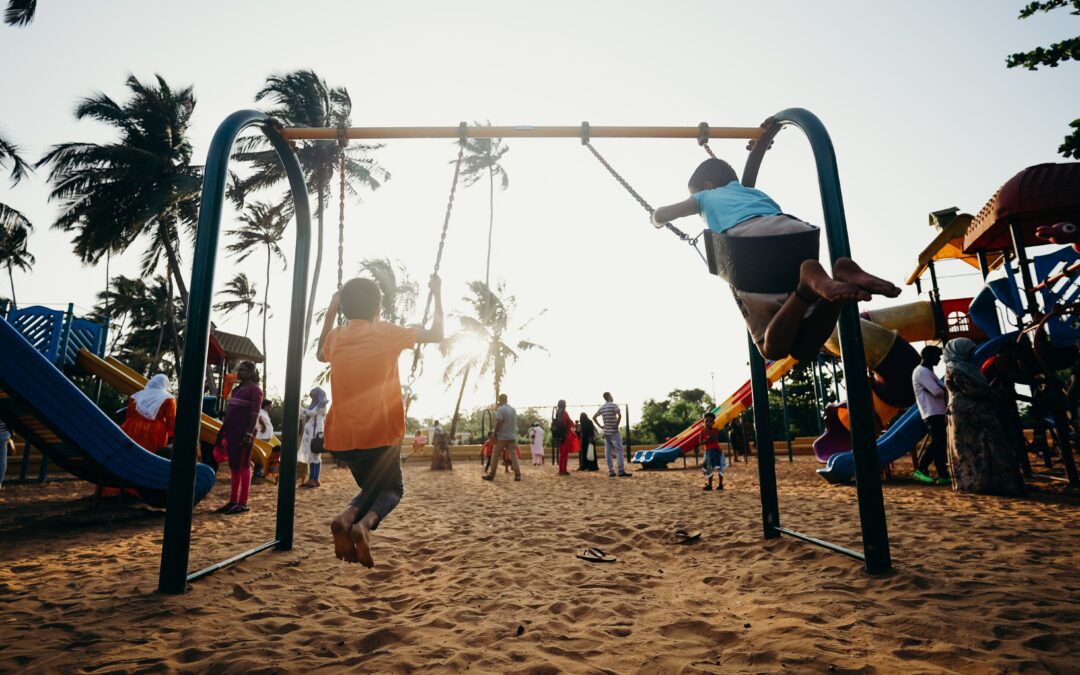
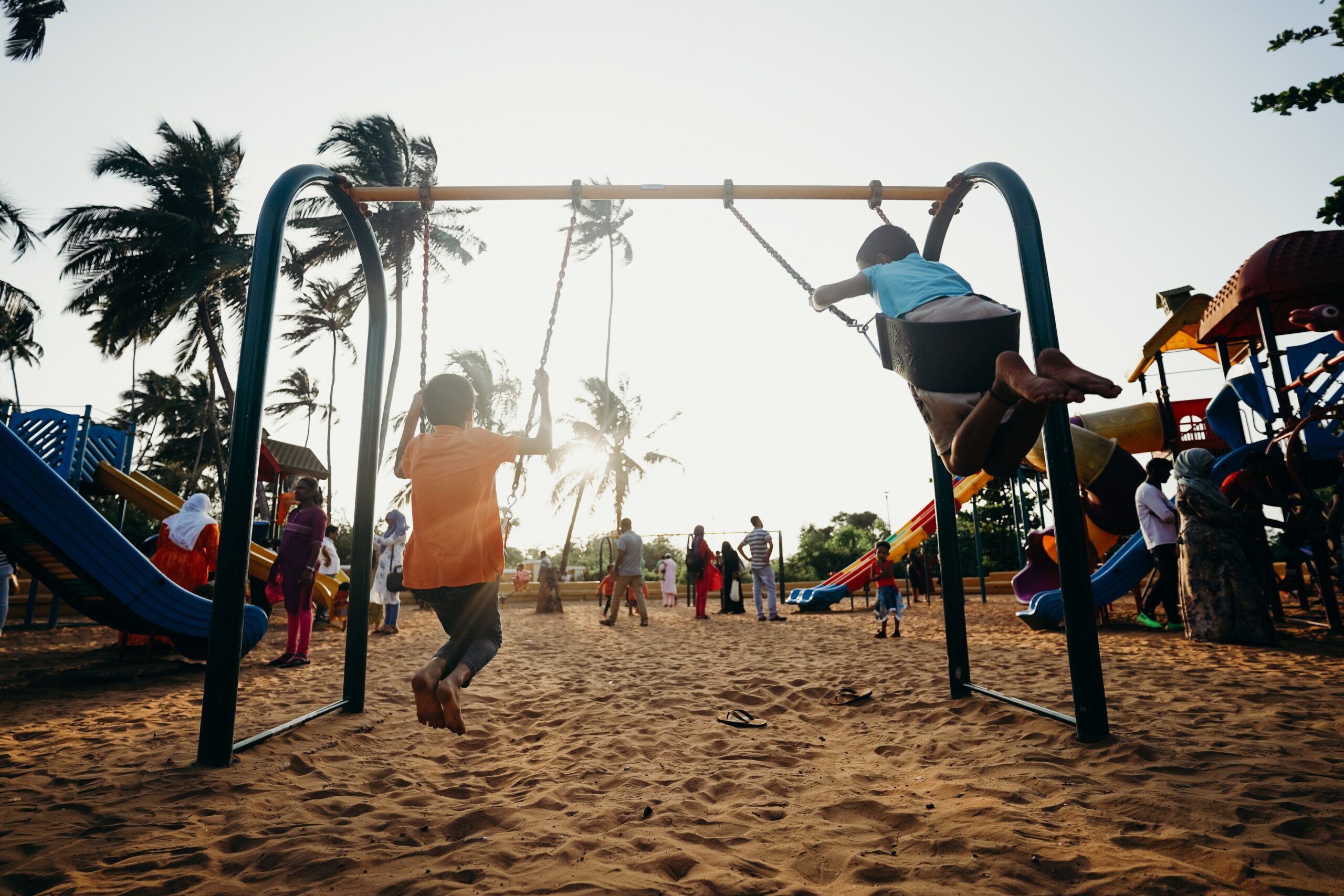

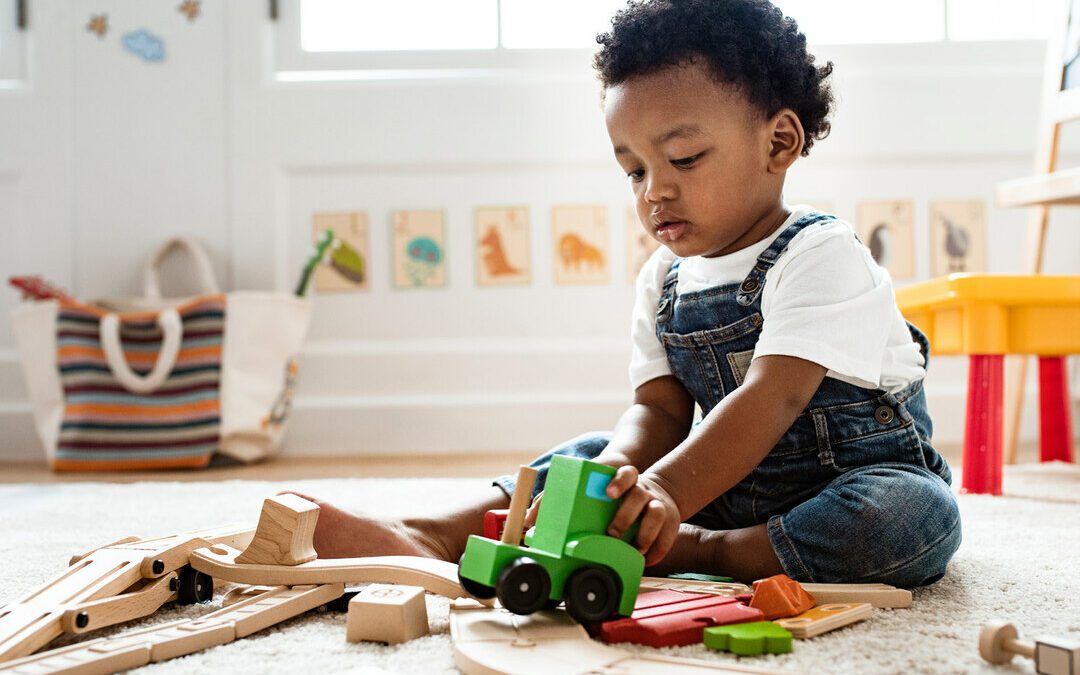
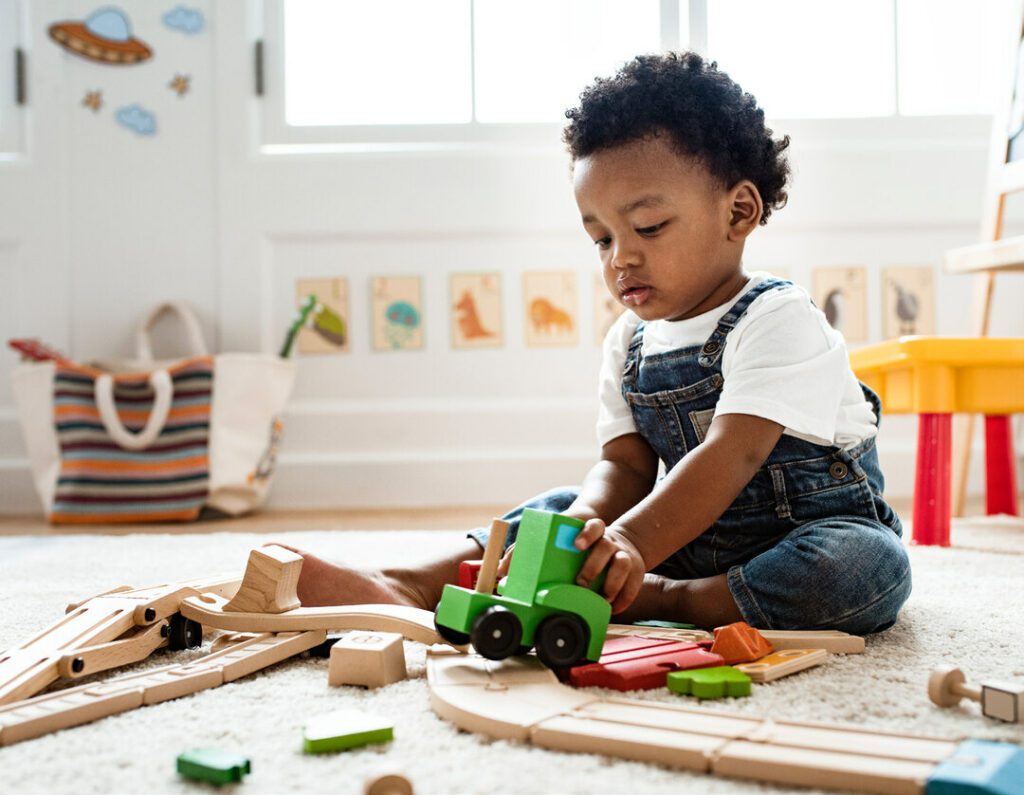

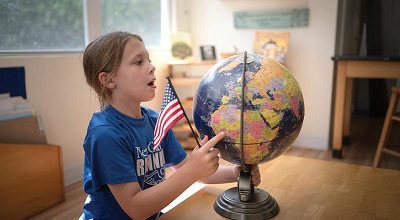
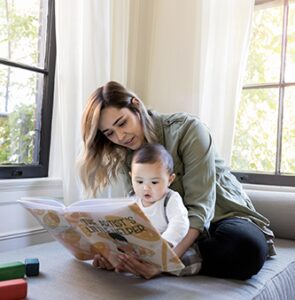


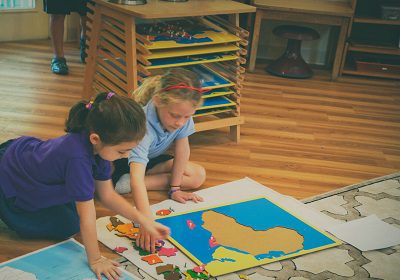


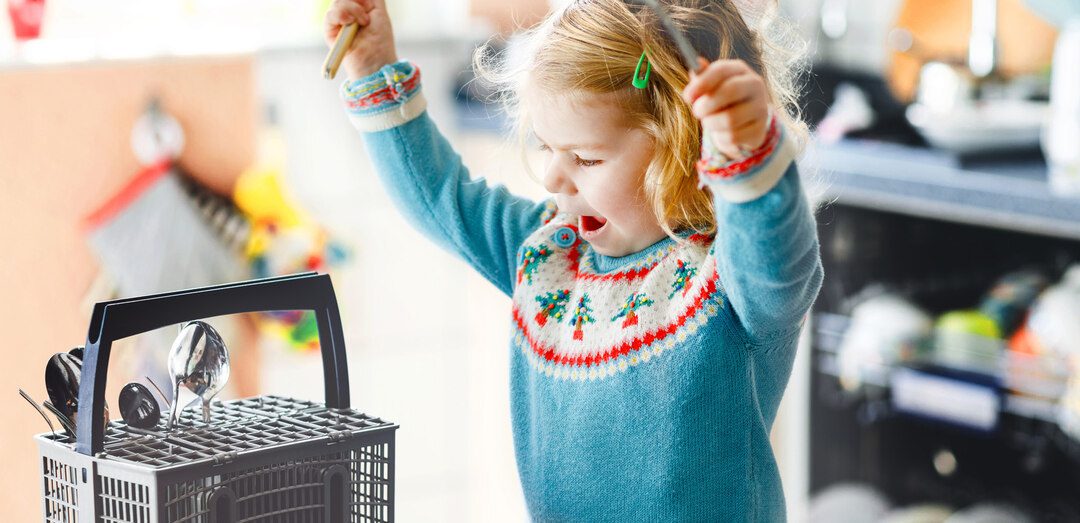


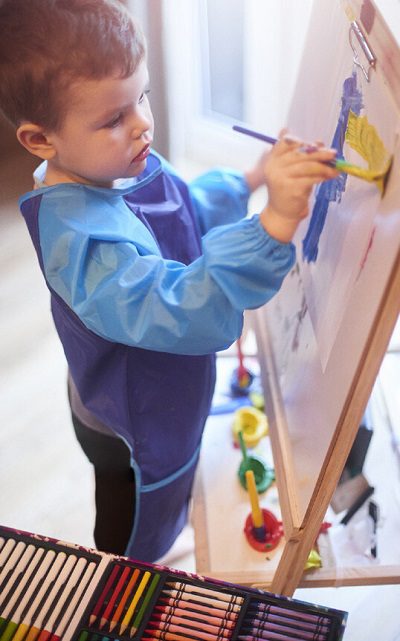

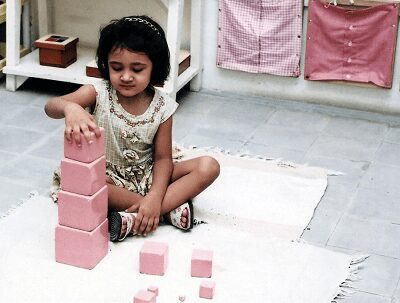
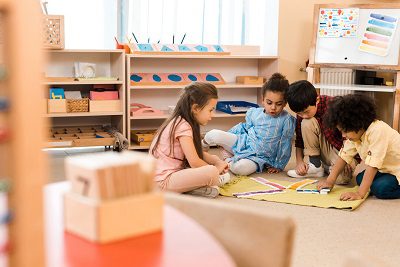


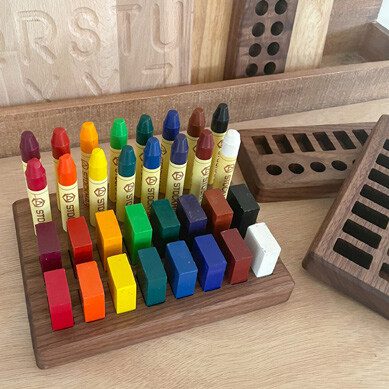


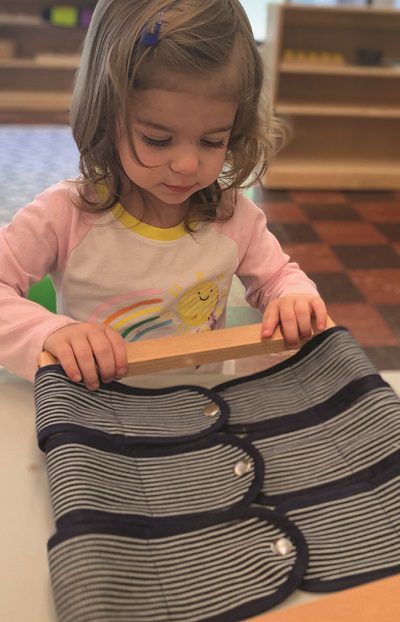
 A little girl sits at the table with the Snap Dressing Frame. She has picked it up several times before today and quickly returned it to its stand after a short attempt. Today she picks it up and places it on the table. She tries the first snap; it doesn’t connect. She looks at the snap from the left side, then the right side. She tries again; it doesn’t connect. She looks at her teacher for help. The teacher demonstrates how to connect the snap then returns it to its unconnected state. The child moves onto the snap above and, as she pushes down, she hears it connect. She pauses, smiles. Then goes back to try the first one; it still doesn’t connect. She squeals in frustration. She takes a moment to look again and again; then she keeps trying. This continues for twenty minutes until she looks at the dressing frame and the three connected snaps. She sighs and smiles then exclaims, “I did it!” Her teacher says, “You did it!” The little girl continues to look at the completed work before quickly taking it apart again to repeat the lesson.