

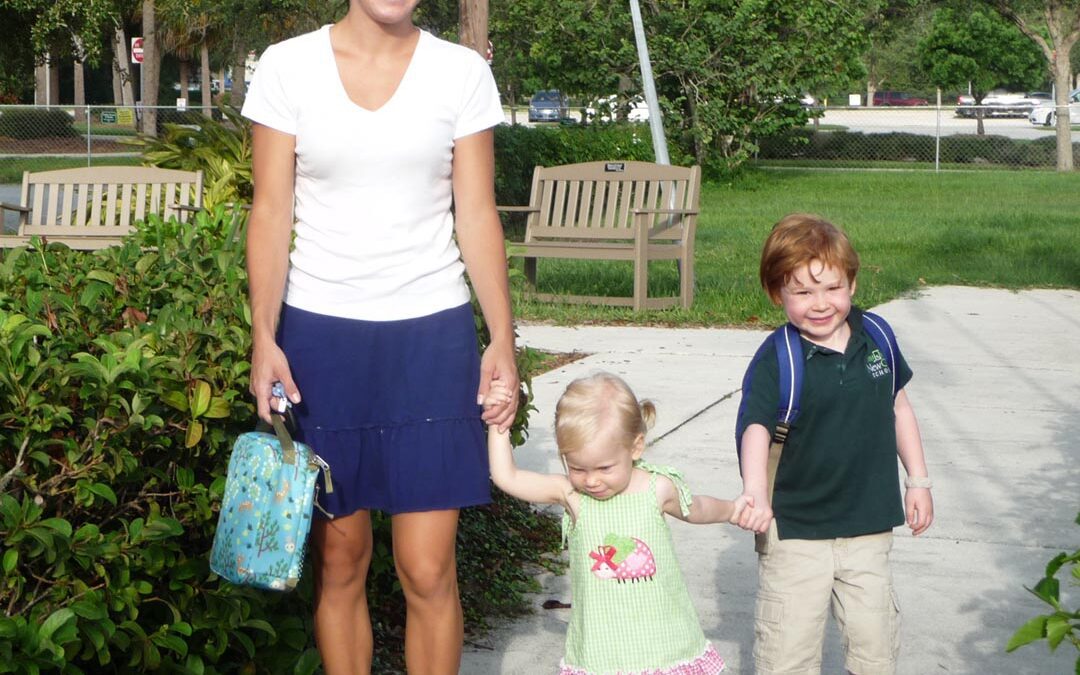
Helping Your Toddler Adjust to School
Is this your child’s first school experience – their first time away from home or from a primary caregiver? Or is it the transition from being at home with parents, grandparents, or a special aunt or uncle? Transitions are not easy for any of us and they can be especially difficult when you are somewhere between birth and two years old. Join us and one of our Montessori Toddler guides to learn ways to help ease separation anxiety for both you and your child with special guests Kathy Leitch and Kristi Antczak.

Health & Wellness: The New Rules of Peanut Allergies: What Concerned Parents Need to Know
by Libby Ryan and Nicole Harris Updated September 16, 2019 from Parents.com
New guidelines encourage us to introduce peanuts to all kids much earlier. Plus, the FDA recently supported development of a drug aimed at lessening the severity of allergic reactions from peanuts. Here’s what you need to know.
This article brings a new, exciting possibility for allergy sufferers but should not be taken lightly or without the help of qualified medical personnel.
Everything you think you know about peanut allergies might be about to change. In March 2019, the American Academy of Pediatrics (AAP) released new guidelines for introducing kids to peanuts in the hope of decreasing the prevalence of this widespread allergy.
The study says babies should be given peanuts early, in order to prevent allergic reactions. In fact, multiple reports in the past decades have shown the benefit of introducing peanuts to highrisk babies when they are between 4 to 6 months old (with proper medical supervision). Infants with less of a risk can start these foods at 6 months or older, following the pattern of the family’s normal diet.
Previously, kids in danger of developing an allergy were supposed to avoid any contact with peanuts for the first three years of their lives, according to Hugh Sampson, M.D., director of the Elliot and Roslyn Jaffe Food Allergy Institute at Mount Sinai and a Parents advisor.
The study says babies should be given peanuts early, in order to prevent allergic reactions.
Then, in 2008, the AAP said that babies should not be refrained from eating allergens like peanuts, milk, and eggs. Being introduced to these allergens wouldn’t prevent them from developing eczema, skin conditions, and food allergies, according to the report.
But the March 2019 guidelines state that high-risk children should have peanuts in their diet much sooner. In turn, the babies will (they hope) have less of a risk of developing allergies in the future.
So how can a parent know if their baby might be at high risk of developing a peanut allergy? Two main signs your little one could be ready for a peanut intervention are egg allergies or severe eczema, according to the National Institute of Allergy and
Infectious Diseases (NIAID). Talk to your pediatrician if your child has either or both conditions; your doctor can do an allergy test to find out the best timing for introducing peanuts.
Whole peanuts are a choking hazard for infants and small children, says Drew Bird, M.D., director of the Food Allergy Center at Children’s Health in Dallas. For your baby’s first bites, you can stir a small amount of peanut powder into a puree or spread a thin layer of peanut butter on toast.
The sticky consistency of thick peanut butter can also be hard for little mouths to handle, so Dr. Bird recommends two teaspoons of smooth peanut butter mixed with two teaspoons of warm water for babies just starting solids.
It’s also important to keep serving your child peanuts once they’ve been introduced. “Foods that are in the diet more frequently are less likely to cause problems down the road,” Dr. Bird explains. He also stresses that children who have already been diagnosed with a peanut allergy should continue to use the same caution around peanut products as always.
If your child does have an allergic reaction, symptoms may include swelling lips, coughing, vomiting, or rashes that look like mosquito bites around the mouth or other parts of the body, and they would begin almost immediately after eating. If your child has a reaction, call your doctor immediately. •
TOMORROW’S CHILD © • NOVEMBER 2019 • WWW.MONTESSORI.ORG

Neurodevelopmental Tools for the Classroom
To continue reading, you will need to choose a subscription plan.
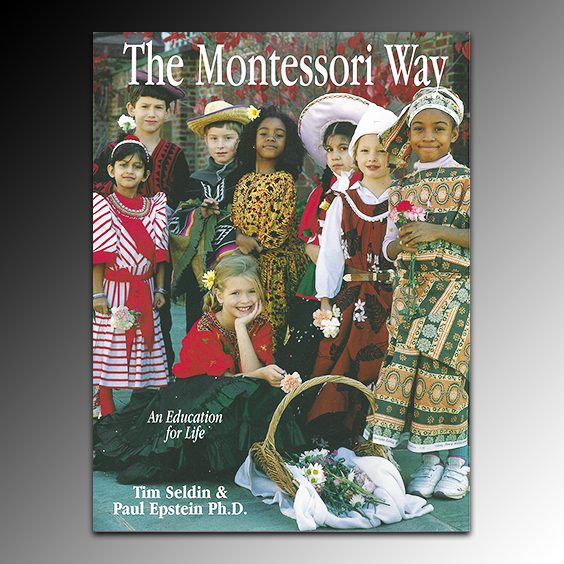
Montessori Infant Toddler Programs
This PDF file is an excerpt from our book, the Montessori Way, by Paul Epstein and Tim Seldin, Copyright 2003
There is an ironic prejudice about education found in almost every country: the older the students are that one teaches, the higher the pay and respect for the teacher. We take it for granted that a professor in a graduate school is a more prestigious position than that of a high school teacher, which is, in turn, considered a more sophisticated position than teaching elementary and, of course, both are far more respectable than that of a nursery-school teacher. And no one in his or her right mind would want to teach infants and toddlers, right? Yet research clearly shows that the most important period in a human being’s educational and emotional development are not the years of high school and college but rather the first six years of life. Human beings are a magical combination of at least three factors: our genetic inheritance, our biological development, and our experiences.
To read more: Download File
Montessori Curriculum Scope and Sequence
To continue reading, you will need to choose a subscription plan.

The Genius of Natural Childhood: Infants and Toddlers
To continue reading, you will need to choose a subscription plan.
Your Child’s First Experience from Home to School: Infants, Toddlers, and Three Year Olds
To continue reading, you will need to choose a subscription plan.
Being in the Outdoors with Infants and Toddlers’ with Alanea Williams
To continue reading, you will need to choose a subscription plan.
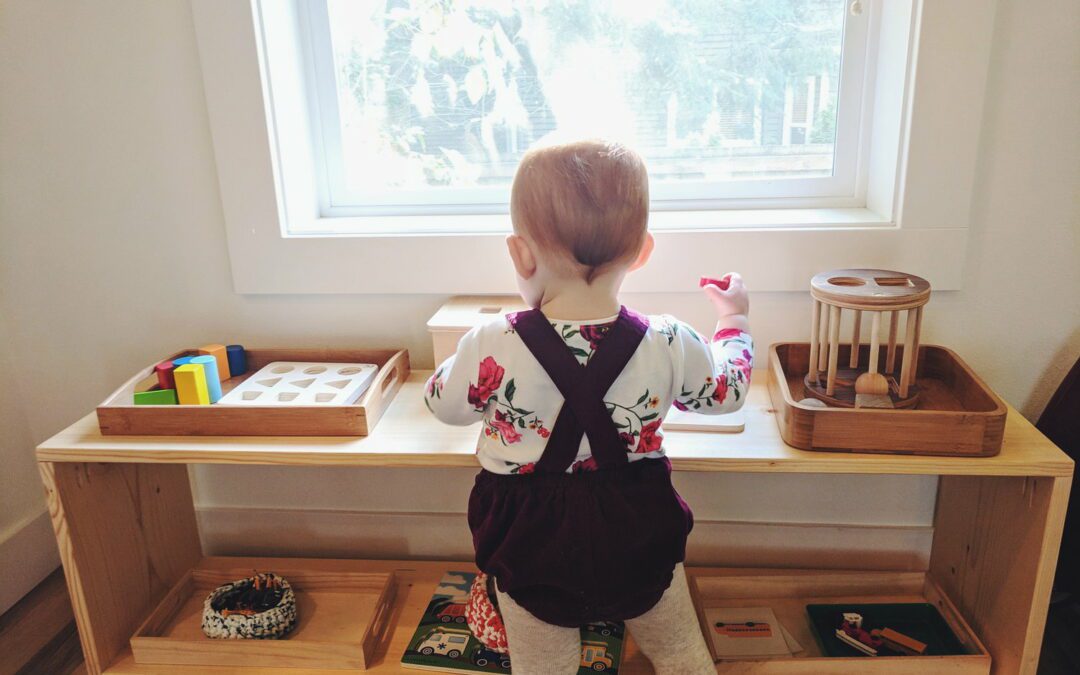
Creating Infant Toddler Environments at Home
To continue reading, you will need to choose a subscription plan.

Seeing the World Through Your Child’s Eyes
One of the keys to creating a calm and peaceful home is to learn how to see the world from your child’s perspective. Maria Montessori challenged us to ‘follow the child’. To do this, first we must have a sense of how your children think, feel, and react.
For example, take this child. He is looking up and you can tell that he is looking at someone or something really tall. He is probably looking up at an adult that he loves. Imagine how the world looks to him at two or three feet tall. It looks a lot different than it does to us. Let’s try to put ourselves into our children’s shoes and understand what it’s like to be so small. From this perspective adults seem to be giants. Because of their size and strength, they seem to be all powerful.
We invite you to do a little exercise. When your children are asleep, with your parenting partner, get down on the floor and use your smartphone to take a video of what the house looks like from your child’s height. This is particularly dramatic if your child is very young. You will notice how different the furniture, the stove and the kitchen cabinets look. It probably feels like living in a giant’s house? When children are small, they can feel overwhelmed, powerless, and without a voice.
As parents, you are not only taller and stronger than young children, you are the ones who meet their needs. You say yes or no. You pay attention or ignore them. As adults, we don’t always understand what our children are trying to tell us, and our children find ways to get our attention and communicate their desires by trial and error.
When they are young, children learn to recognize the needs of others as well as their own, to communicate with words, and gain skills that foster independence. In the beginning they don’t have words so they cry, smile, or coo. They don’t even truly recognize that they are separate beings from their primary caregivers.
When they are young, children learn to recognize the needs of others as well as their own, to communicate with words, and gain skills that foster independence. In the beginning they don’t have words so they cry, smile, or coo. They don’t even truly recognize that they are separate beings from their primary caregivers. As they grow, in addition to words, most young children communicate their needs with the adults in their lives through tears, smiles that make our hearts melt, tantrums, pouting, and other ways to make themselves heard. They begin to realize that they have their own unique voice. They are working to develop respectful communication, independence, and the ability to do things for themselves.
As children grow, during the elementary years, they become even better at communicating. They are increasingly interested in their peers and their relationships. They are all about rules and fairness. They want to make up their own rules and try them out. They are beginning to feel their own independence and autonomy. As parents we start to feel more comfortable and confident in their ability to make decisions and handle certain situations on their own or with a little help from adults.
Adolescence is the middle ground between childhood and the world of adults. Teenagers are neither children nor adults. One minute they are one, next the other. Their bodies are growing and changing rapidly overnight. They want to know what their place is in the world and how they can make a difference. They become interested in sexuality—their own and others. They want to try out different ideas to discover their values and beliefs which may or may not be the same as their parents.
Every child is unique. No matter what age they are, some children seem to easily accept their parent’s guidance while others seem to test everything their parents say or do. Throughout their childhood it is their parents’ job to lift them up, listen and try to understand, help them gain confidence, and find their own identity.

Toileting with Toddlers: The “hows” and “whens”
To continue reading, you will need to choose a subscription plan.

Montessori: The Science — Part 3: Movement Matters
Dr. Angeline Lillard presents Maria Montessori’s key insights about childhood education, the subsequent educational research that has validated her approach, and how these ideas are implemented in a modern Montessori classroom.
From Montessori: The Science Behind the Genius
For more information, visit: http://montessori-science.org

Montessori: — The Science Part 4: The Positive Impact of Choice
Dr. Angeline Lillard presents Maria Montessori’s key insights about childhood education, the subsequent educational research that has validated her approach, and how these ideas are implemented in a modern Montessori classroom.
From Montessori: The Science Behind the Genius
For more information, visit: http://montessori-science.org

Montessori: The Science — Part 7: Social Education is Effective
Dr. Angeline Lillard presents Maria Montessori’s key insights about childhood education, the subsequent educational research that has validated her approach, and how these ideas are implemented in a modern Montessori classroom.
From Montessori: The Science Behind the Genius
For more information, visit: http://montessori-science.org

Montessori: The Science — Part 9: Positive Adult Interaction
Dr. Angeline Lillard presents Maria Montessori’s key insights about childhood education, the subsequent educational research that has validated her approach, and how these ideas are implemented in a modern Montessori classroom.
From Montessori: The Science Behind the Genius
For more information, visit: http://montessori-science.org

Montessori: The Science — Part 10: Order in the Environment and Mind
Dr. Angeline Lillard presents Maria Montessori’s key insights about childhood education, the subsequent educational research that has validated her approach, and how these ideas are implemented in a modern Montessori classroom.
From Montessori: The Science Behind the Genius
For more information, visit: http://montessori-science.org

Dealing With Tantrums
I’m going to dive right in to discuss a very tricky area for parents and children alike: tantrums.
I hope you find this article useful so you can start applying Montessori principles in your home too.
Dealing with Tantrums
Tantrums are a pretty normal part of life with children from around one to five years old. Maybe they’ll start a little later than one year and will end earlier, but anything in this range is fairly normal. Your child is learning that things don’t always go their way. And, as parents, we are helping them learn how to deal with these emotions and to make amends.
It can be upsetting for a parent. It’s hard to realize that your child is actually asking for your help. They are overwhelmed by the situation and need your support to calm down. It’s not the time to take it personally.
How to Avoid Tantrums
It can be possible to avoid tantrums before your child loses control. Here are some ideas to ward off tantrums when you see the first signs of your child losing control.
1. Be prepared: take a small bag with some simple games and some favorite snacks if you expect your child to wait patiently in a doctor’s office or a cafe.
2. Label their feelings: “Boy, you really wish you could stay longer”; “You really wanted some orange juice right now!”
3. Redirect them: “I can’t let you hit your brother, but you can hit this drum/pillow.”
4. Get down to their level: “You sound frustrated. Can you tell me why?”
5. If they are struggling, ask them if they would like some help: give them just as much help as they need and then step back.
6. Give them a choice: “Would you like to put on your shoes or your scarf first?”
7. Establish routines: “… and after lunch, we’ll go to the toilet, read a book, and tuck in for a rest.”
8. Let them show their anger creatively, “Show me how angry you are. Here is some paper and a pencil. Wow. They are big circles. You are really mad!”
Triggers
Events can often escalate to a full-blown tantrum. Sometimes it’s from your child’s frustration; other times their anger or rage; sometimes because they want to be in control; their communication may still be limited; or because they are tired, hungry, or overstimulated. They can throw themselves on the floor, push us away, try to hit us, a sibling, another child, or even break something.
It can be useful to note things that cause tantrums in your child: over-scheduling can be common; a new baby; moving to a new house; or certain children may trigger them.
Sometimes the tantrum is even caused by us as we deliver the news that it is time to leave the park, or we serve some food they don’t like for dinner, or that we would like them to get dressed to leave the house.
It’s OK for your child to have a tantrum. You can acknowledge their displeasure at what is going on. You can help them to do the thing that they don’t like. However, when we back down and give in to them, you will find they shout even louder next time.
It’s difficult to be the parent and stay strong. But your hard work will pay off in the long term. They will learn that when you say no, you mean no; and when you say yes, you mean it too.
I like the advice from Positive Discipline for Preschoolers (by Nelsen EdD, Jane, Erwin M.A., Cheryl, et al. Jul 9, 2019). “If you say it, mean it; and if you mean it, follow through with kind and firm action.”
Action may be, for example, leaving the park with a sad toddler, acknowledging that they really wish they could stay longer.
Alternatives to Time Out: How to Help Your Child Calm Down
When your child is having a tantrum, some experts advise putting them into time out. I find this difficult as your child is asking for help to calm down, and you are removing your support and punishing them instead.
When we punish our children, they often get angry at us rather than being sorry for what they have done. Or they try to work out a way to get away with it next time without being caught.
Instead, I look for ways that I can support my child to calm down. I’m not saying that their behavior is OK, but when they are in the middle of the tantrum, it is not the time to teach them anything. They cannot hear you. They have lost control. So let’s help them calm down.
Some children will respond to a cuddle during a tantrum. You can rub their back, cuddle them, and sing to them as they go through all the range of emotions from anger, to intense frustration, to sadness, and sometimes regret. I once held my son for 40 minutes as he refused to get dressed. And I watched him go through all these emotions. In the end, he announced he was ready to get dressed. He told me he loved me. He wasn’t angry with me. He was grateful that I had just been there for him. I know sometimes you have to leave, but in this case, we just changed our plans.
Other children will push you away and don’t want to be touched. In this case, I make sure they are safe and cannot hurt themselves or others. I stand nearby and keep offering my help, “I’m here if you need some help to calm down. Or we can have a cuddle when you are ready.” After the tantrum, I like to offer a cuddle. “That was tough. And now you have calmed yourself down. Would you like a hug?”
If they are throwing toys at their sibling or trying to hit me, I would remove them so that everyone is safe. “I can’t let you hit me. My safety is important to me. Would you like to hit these pillows instead?” If your child is trying to hurt the baby, you can place yourself physically between them to keep the baby safe as you help your older child calm down.
For a child over three years old, you can set up a “calm place,” which they can use when they are upset. It may be a tent with some pillows and favorite things. It may be a corner with some trains. You can ask your child if she would like to go to her calm place.
This is different than ‘time out,’ as the older child is in control; she can come out when she feels calm. If she comes back still in a rage, I would gently tell her that she looks like she still needs to calm down and can come back when she is ready.
Making Amends
Maybe you are thinking that if I support my children while they calm down, I’m saying that their behavior is OK, and I’m encouraging them to get angry. When they are upset, indeed, my objective is to help them calm down.
Once they are calm, I then help them to make amends. If they drew on the walls, I would get them to help me clean up. If they broke their brother’s toy, they can help to fix it. I’ve asked the kids to help scrub their sheets when they used marker pens in bed and made a mess.
In this way, they learn to take responsibility when things go wrong. And when it’s over, it’s over. The good thing about young children is that they can move quickly from deep anger and sadness back to their happy selves. We need to move on too and not let this upset the whole day by referring back to it or keeping on about it. Once they have made amends, it’s OK for everyone to move on. •
TANTRUM FAQs
Shouldn’t we just ignore their tantrum?
I don’t like to ignore children when they are having a tantrum. They may not let me touch them, but I keep offering support and letting them know I am available when they need me. If you were super upset and your partner just left the room for you to get over it, you would likely find them unsupportive. We are showing our kids that, good or bad, we will be there for them.
What do I do if we are out in public when they have a tantrum?
There are basically two options:
First: Go home—if you find it difficult to have people watching you, it’s best to just leave. This may mean parking a full shopping cart and following the above ideas once you are home.
Second: Stay and support them—my preferred option is to hang in there and do what you would do even though you are out of the house. If you have more than one child with you, make sure they are safe. And then offer as much help as you can to help your child calm down. People watching will more likely think about what a lovely, patient parent you are, rather than what a horrible noise your child is making.
I find it difficult to stay calm myself. What can I do?
If your child has triggered you, it is indeed difficult to help them calm down.
• If your partner is available, it can be easiest to get them to step in instead.
• You may want to make sure the kids are safe and go to the bathroom to catch your breath.
• Find a mantra that you can repeat, “I breathe in calm, I breathe out anger.”
• Remember not to take it personally. Perhaps visualize putting on a bullet-proof suit that will resist everything (including words) that your child throws at you.
These tips should help you remain calm and give your child the support they need to regain control.
Learn from Simone Davies, an AMI Montessori teacher with15+ years’ experience working with 0-3-year olds, owner of Jacaranda TreeMontessori in Amsterdam since 2008, mother of two teenagers, and author of the book The Montessori Toddler. Visit her blog at themontessorinotebook.com
This article is from the November 2019 issue of Tomorrow’s Child magazine. Reprinted with the author’s permission.
Featured
-
 The Montessori Way, Revised and Expanded: An Education for Life; A Comprehensive Guide for Parents and Teachers
$25.00
The Montessori Way, Revised and Expanded: An Education for Life; A Comprehensive Guide for Parents and Teachers
$25.00
-
The Montessori Child: A Parent's Guide to Raising Capable Children with Creative Minds and Compassionate Hearts (The Parents' Guide to Montessori)
$20.00
-
The Montessori Toddler: A Parent's Guide to Raising a Curious and Responsible Human Being (The Parents' Guide to Montessori)
$20.00
-
Montessori in Action: Building Resilient Montessori Schools 1st Edition
$29.95
-
Bulk Order, 30 Copies of Montessori for Every Family: A Practical Parenting Guide To Living, Loving, And Learning
Original price was: $600.00.$510.00Current price is: $510.00.



Products
-
The Montessori Way, Revised and Expanded: An Education for Life; A Comprehensive Guide for Parents and Teachers
$25.00
-
The Montessori Child: A Parent's Guide to Raising Capable Children with Creative Minds and Compassionate Hearts (The Parents' Guide to Montessori)
$20.00
-
The Montessori Toddler: A Parent's Guide to Raising a Curious and Responsible Human Being (The Parents' Guide to Montessori)
$20.00
-
Montessori in Action: Building Resilient Montessori Schools 1st Edition
$29.95
-
Bulk Order, 30 Copies of Montessori for Every Family: A Practical Parenting Guide To Living, Loving, And Learning
Original price was: $600.00.$510.00Current price is: $510.00.