

Part 1: Embracing Challenge: A Path to a Joyful School for All

The Language We Use: Inclusion in the Montessori Classroom
Join us as we explore the trend called “Quiet Quitting”. By now most of you have heard of this phenomenon. According to a recent Gallup poll, quiet quitters make up at least 50% of the American workforce. Could it already be affecting your school community? How will you know?

Reflecting and Imagining

Parenting 101: How Giving A Simple Direction Can Create Clarity
Quite often with a 3-, 4- or 5-year-old, there’s a lot of grey areas when they’re testing boundaries and you’re not sure a break is necessary—maybe he’s touching the baby’s face and he’s looking at you and he’s got this look in his eye like he’s thinking, “Can I do this? How about this? Am I making you nervous? What can I do before you say something?”
Typically, parents give ambiguous information in these moments, like, “Be careful. Your baby brother is very delicate, so I need you to be gentle.”
What is more effective in these moments is to give a clear action direction, “I need you to come and stand next to me for a moment.” Then, if he’s not moving to follow your direction, count: “5…4…3…2…1…”. And if he hasn’t come to you by the end of the count, give him a break. If he does come to you, have him stay there for a moment and then either let him return or give him a direction to play somewhere else. This inserts a very clear map for him (and you) to follow in that moment. You’ve asked him for something specific, and you’ve given him a clear timeline. He’ll begin to take your direction in these moments, because he doesn’t want a break.
It’s important that the parents aren’t threatening to do a break (so it’s not—“I need you to come over to me, or I’m going to give you a break”) because we want him to generate this thought and self-prompt in this moment.
You say, “I need you to come and sit on the couch to play.” He ignores you and you say, “5…4…3…2…1….” Then if he’s
There’s no judgment in your tone with this; it’s easy, it’s fun, it’s playful—like your child. This speaks directly to the difference between punishments and consequences.
still not on the couch, and you say in a relaxed tone, “Oh, now I need you to take a break.” Now he looks up and says, “No, no, no! I’ll sit on the couch.” And you respond, “It’s no big deal. You take the break; then you can go to the couch. Right now, you have a short break.”
You follow this pattern because your goal is to have your child follow your directions when you give them. Once you have a break process in place, you can give all kinds of other prompts, because now he takes your words seriously. As you move forward, you ask him to do what you need, and if he doesn’t, you give him a break, or you count down and then give him a break. But you don’t always have to count down.
You might simply ask your child to do something and then pause quietly for five seconds and then give the break. You don’t have to do it the same way each time because you want to keep him on his toes, so he learns to hold an awareness of your needs. There’s no judgment in your tone with this; it’s easy, it’s fun, it’s playful—like your child. This speaks directly to the difference between punishments and consequences.
You can begin by giving a clear direction and then counting. A few days later, you shift to pausing quietly for 5 seconds, then giving the break. Inevitably, your child will say, “Wait! You didn’t count!” and you can tell him, “Well I’m not always going to count. I don’t want to work so hard. You know what happens after I give you a direction. I wait a few moments, and then you get a break. It’s no big deal; you take the break, and you come right back.” The tone of voice you use and the lack of moralizing is the difference between punishment and consequence. You’re shifting from judgment and anger, which implies his actions are either good or bad, to good-natured coaching with cause and effect.
There is often a misunderstanding that administering cause and effect without judgment is too soft, but it’s not; it’s actually more effective. When your child is very defiant you can give consequence after consequence after consequence and frustrate the heck out of him. But the more you frustrate him, the more your tone should be sweet and empathetic so that your children focuses on the consequence of their choices rather than your judgment of them. •
Joe Newman was born and adopted in1963. In 1970 he was diagnosed ADHD and medicated with Ritalin. Every where he went, the playground, the classroom, even at home, Joe heard one message loud and c ear: you’re broken; your brain doesn’t work; you don’t belong.” No surprises when, at eighteen, he dropped out of college, shaved his hair into a mohawk and took off to surf the coastlines of the Caribbean and Central America. It was out in the world, working scores of jobs and starting his own businesses, where Joe realized he was not actually broken. Away from the tethers of school and home, Joe realized the same qualities called disorders were also qualities of positivity and value. Aggression became passion, distractibility became broad understanding, and stubbornness became tenacity. Realizing there must be millions of children out there, just like him, with ferocious spirits but misunderstood, he threw himself into finding and reaching these children.
His book, Raising Lions, has developed a growing following not simply because it helps parents understand why their children behave the way they do, but because the tools and solutions actually work.
TOMORROW’S CHILD © • NOVEMBER 2019 • WWW.MONTESSORI.ORG

So What Is Special Education?
To continue reading, you will need to choose a subscription plan.
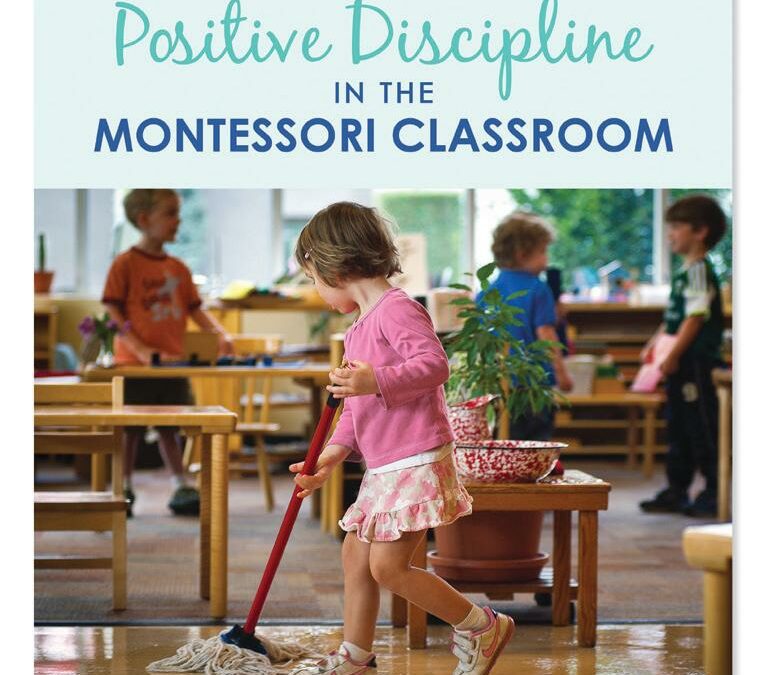
Why are Children so Different Today
by Jane Nelsen, EdD and Chip DeLorenzo, MEd
When working with Montessori teachers, we always start by asking them to list their current stressors. Inevitably, they share that children exhibit a high degree of disrespect, entitlement, and lack of self-regulation. Children don’t listen to adults. Teachers overwhelmingly agree that these behaviors are more frequent and blatant now than when they grew up or when they first started working with children. Teachers who’ve been in their profession for a while observe that schoolwide misbehavior seems more intense than in previous generations. They often ask: What happened to the good old days, when children respected adults? Where are all these behavioral issues coming from? Is it environmental? Is it parenting? Too much screen time?
The Culture Shift
Was there really such a thing as the good old days? We know that, since there have been children, there has been misbehavior; however, there have been some significant changes in society in the last fifty years that have impacted children. We believe that these changes provide an explanation for some of the differences that we are seeing in children’s behavior today; it can help us prepare the social-emotional environment in our classrooms to help compensate for outside factors beyond our control (e.g., video games, diet, materialism, entitlement, and child-centered homes where children decide what and where to eat, what to watch on TV, etc.). Fifty years ago, the world was rife with models of authoritarian leadership and submission. You could find examples at home, where dad’s word was final; in workplaces where the boss was the boss; and in schools where the teacher was considered a highly respected authority figure. In those good old days, there was cultural support for top-down (or vertical) leadership. Parents didn’t ‘advocate’ for their children. If a child was reprimanded at school or in his neighborhood, his parents were likely to take the adult’s word for what happened without much interest in what the child had to say. Neighbors could discipline each other’s children with the full blessing of the parents.
Through the rose-colored glasses of educators who grew up in an authoritarian culture, it may seem like authoritarian methods ‘worked,’ because children are remembered as being more compliant and obedient. On a tough day, compliant and obedient children might seem like water in the desert to a discouraged teacher. But what are the long-term results of demanding that children be compliant and obedient? Too often children become ‘approval junkies’ or ‘rebels without a cause, except when they need to prove, “You can’t make me!”
Montessori wrote, “No social problem is as universal as the oppression of the child.”1 And while it may have seemed easier to require children to comply in an authoritarian culture, the result was the oppression of the child’s spirit. Oppression was the very thing that human rights advocates have been fighting against for decades. It is oppression that Montessori felt was the root cause of war.
At the turn of the last century, educational and psychological pioneers, such as Maria Montessori and Alfred Adler, were writing and lecturing about a radical idea: equality even for children (including equal rights to dignity and respect). While this idea would not meet much resistance today, it was considered counterculture at the time.
Permissiveness
During the 1960s and 1970s, human rights movements gained momentum. The idea that all people were worthy of dignity and respect gained wider acceptance in western cultures; however, this was a messy and arduous process, especially for parents and educators.
The rules were being rewritten; yet, parents and teachers did not yet have cultural support and access to respectful discipline tools to replace the old authoritarian methods. As a result, like most countercultural movements, the pendulum swung the other way, and permissive parenting and teaching became more common. We are still reeling from this pendulum swing today.
Soon, alternative or experimental parenting models gained traction. Especially in the home, yelling was replaced with discussion, bargaining, and negotiating. Spankings were replaced with time-outs. Punishments were replaced with rewards. Children were given more freedom and more choices—but without limits or responsibility. The authoritarian top-down model of parenting and teaching was replaced with permissiveness.
The problem with permissiveness, though, is that it is still top-down. It’s just that the roles are reversed. In the permissive model, the child is on top and the adult is on the bottom. As Maria Montessori wrote, “To let the child do as he likes when he has not yet developed any powers of control is to betray the idea of freedom.”2
Indulgence
Children today are exposed to a myriad of stimuli that vie for their attention. Children have more things, more entertainment, more recreational experiences, more toys, more media, more ‘educational’ experiences that deliver information without true interaction, more activities, more everything. Children are the center of the universe. They often decide what kind of meals are prepared at home and where the family should go when eating out. On the other hand, they are often not taught many real-world skills. In our frenzy for progress, we have inadvertently stolen opportunities for true human connection, discovery, and exploration.
Fewer Opportunities for Real Responsibility
We do not need children the way that we did up to the early part of the twentieth century. Children, generally, are no longer needed to make the farm or the household run on a day-to-day basis or to bring income into the home.
(Chip) grew up in a farming community in upstate New York. It was not uncommon for some of my classmates to have been up since before daylight doing chores to help keep the family farm going. Most twelve-year-olds who lived on working farms had tractor licenses. They didn’t spend their weekends playing soccer, taking dance lessons, or having play-dates. Those of us who didn’t live on a farm had paper routes, mowed lawns, worked in small shops, and had responsibilities at home. It was real work. It was real responsibility.
Real responsibility gave young people the opportunity to develop some incredible life skills. They knew that they were needed and that they were capable. They had the opportunity to develop practical life skills and qualities, such as resilience, perseverance, self-discipline, responsibility, and a strong work ethic. Children were needed but not usually respected or treated as equal in value to adults.
( Jane) grew up in a city; however, children were still expected to do chores, including scrubbing toilets. Having homework was not an acceptable excuse. And my parents didn’t help with homework; that was considered my responsibility. There wasn’t any pressure to get good grades to get into a good college. Most girls got married right out of high school and were expected to be stay-at-home wives and mothers. Fortunately, a wise mentor advised me to take one college class a semester so I would have a degree by the time my children were grown. Eleven years and five children later, I received my BA.
As the movement to value children gained momentum, we provided them fewer opportunities to truly feel needed. Today, most children don’t make their own lunches for school, and many don’t have chores. In the name of love, they are given too much and required to do too little. They develop an attitude of entitlement. In an effort to give children ‘the best,’ adults have robbed them of the opportunity to develop strong characters and to experience the sense of belonging (unconditional love) and significance (capability and responsibility) that comes with making a meaningful contribution.
Many people are drawn to the concept of ‘positive discipline,’ because they are against punishment and authoritarian methods of discipline. However, some ‘positive discipline’ followers mistakenly perceive that the best way to avoid authoritarian methods is to simply provide love. This can lead to permissiveness, because these parents are kind (to provide love) but are not firm (which helps children experience significance through learning skills for responsibility and capability).
You can give children love, but they need to develop responsibility. When parents don’t understand the importance of helping children develop responsibility, children often fall into the trap of pampering, which often leads to development of an ‘entitlement’ mentality. When parents understand the difference between belonging and significance (along with the importance of balancing both), they can help children develop the characteristics and life skills they need for successful living.
The Montessori curriculum is designed for children to develop a sense of significance through responsibility and capability. As you will soon see, a sense of belonging is created through the basic ‘positive discipline’ concept of ‘connection before correction’ and the involvement in daily class meetings to give and receive compliments and to focus on solutions.

Fewer Siblings
Another dynamic to mention is that of family size and birth order. In addition to today’s busy lives, where children are given more and less is required of them, families are also having fewer children than at any other time in our recent history. Most families today have one or two children. Today it is not uncommon for a classroom to be populated with many only children. Recently, my (Chip’s) school had a classroom of twenty-two children, of which seventeen were only children and the rest younger siblings (no middle children). While the research on birth order is controversial, many teachers report noticeable anecdotal effects. With smaller families comes more adult help and intervention. There are fewer opportunities for children to develop responsibility and more opportunities for parents to do for children what they can do for themselves.
In today’s world, providing opportunities for children to contribute in meaningful ways and develop true responsibility takes intentionality. It’s hard work.
If you have ever had a small class size, you know how hard it can be to promote independence among the children and how intentional you need to be to do so. When I (Chip) was a young teacher, just learning the ropes, I thought I would prefer a smaller class size. It seemed more manageable in many ways (giving lessons, staying organized, managing behavior, etc.). However, it turned out to be a lot more work. While I was able to give the children more individualized attention, the more I gave them, the more they seemed to need, both socially and academically.
After a few years of experience, I was given a much larger class of thirty students. With more students, the children had to become more independent. Out of necessity I had to learn to trust the children, and as a result I found out how responsible, independent, and capable they could be. More importantly, they discovered their own capabilities. It was amazing to see them rise to the occasion, just as Montessori had said they would.

Other Factors
In addition to increased permissive parenting, fewer opportunities for true responsibility, and fewer siblings, we have other external factors that affect children’s behavior. Screen time now dominates the hours spent at home; children are over-scheduled; some children rarely see their parents because of busy work schedules; there are a variety of lifestyle choices and family structures; there are violent video games and cyberbullying.
The good news is, that while the modern factors that affect children are real and significant, misbehavior is not new. In The Secret of Childhood, a teacher writes to Montessori about her experience with “pampered children”:
An American teacher, Miss G., wrote to me as follows from Washington: “The children snatched the objects from each other’s hands. If I tried to show something to one of them, the others would drop what they had in their hands and gather noisily about me. When I finished explaining an object, they would all fight for it. The children showed no real interest in the various materials. They passed from one object to another without lingering over any of them. One child was so incapable of staying in one place that he could not remain seated long enough to run his hands over any of the objects given to him. In many instances movement of the children was aimless: they simply ran about the room heedless of the damage done. They ran into the table, upset chairs, and trampled upon the material provided for them. Sometimes they would begin to work in one spot, then run off, take another object, and abandon it for no reason whatsoever.” 3
Sound familiar? This is a wonderful reminder that we are not alone and that the good old days were not always easy. Today’s problems are not new problems, even if some behaviors are exacerbated by different factors. Maria Montessori, Alfred Adler, and Rudolf Dreikurs were brilliant thinkers. Their philosophies have survived and grown while many others have come and gone. And we have to admit that we are delighted that neuroscience now validates the effectiveness of these methods that have contributed so much to the world of happier parents, teachers, and children.
Excerpted from Positive Discipline in the Montessori Classroom: Preparing an Environment that Fosters Respect, Kindness & Responsibility. Originally
Jane Nelsen, EdD, is a California Licensed Marriage & Family Therapist and author or co-author of nearly 20 positive discipline books, including Positive Discipline Parenting Tools with her daughter, Mary, and her son, Brad; and numerous experiential training manuals for parents, teachers, couples, and businesses. She earned her doctorate in education from the University of San Francisco, but her formal training has been secondary to her hands-on training as the mother of seven, grandmother of twenty-two, and great-grandmother of eighteen. She now shares this wealth of knowledge and experience as a popular keynote speaker and workshop leader throughout the world. Learn more about Jane’s work at: www.positivediscipline.com
Chip DeLorenzo, MEd, is a school consultant and positive discipline trainer; he specializes in training staff and administration at schools worldwide in positive discipline methods and practices. Chip served as Head of School of the Damariscotta Montessori School, in Nobleboro, Maine, for twenty years. A veteran teacher and school administrator, he began his teaching career in 1995 after serving in the United States Air Force and working as a financial advisor. Chip is the father of four amazing Montessori children. Lean more about Chip’s work at: www.chipdelorenzo.com
3 Montessori, M. The Secret of Childhood (Delhi: Aakar Books, 2013), 143–144.
Book Review: Positive Discipline in the Montessori Classroom

I have been a Montessorian and educator for over forty years — as an assistant, a Primary and Lower Elementary head teacher, a school founder, a head of school, and a Montessori teacher educator. As I read Positive Discipline in the Montessori Classroom, I found myself revisiting all those roles, not to mention my personal roles as parent and grandparent. On every page of this book, I experienced flashes of insight — as well as flashbacks. I saw myself, as well as the teachers, assistants, and parents in my school, and the interns I’ve taught, in so many of the mistaken and misguided responses to children’s behavior over the years (as well as in some of the successful responses). If only we all had this book at the beginning of our Montessori journeys! I have no doubt that many of those mistakes would still have occurred, but the wisdom in this book would have helped me and others recognize and redirect ourselves, and, more importantly, helped us exit the shadows of self-doubt and uncertainty much more quickly.
I’ve used Jane Nelsen’s Positive Discipline books for years, both in my school and in my teacher education classes, but what Jane and Chip DeLorenzo have done with this book — bringing Positive Discipline and Montessori together — is groundbreaking. The authors draw fascinating historical connections between the work and philosophy of Alfred Adler and Rudolf Dreikurs (the forebears of Positive Discipline) and Maria Montessori. Now that Positive Discipline has been interpreted for and integrated into a Montessori context, it will be so much easier for educators to apply it.
Over the years, our classroom leadership and school training manuals have grown thicker and thicker as we have collected ever-growing research and resources on the social-emotional needs of children. This book easily replaces all these resources when it comes to the psychological, social, emotional, and spiritual aspects of preparing the environment. The authors have woven all this together in a way that exemplifies — and amplifies — Montessori’s thinking. This book will become a staple in teacher education, and will supplement, or even replace, a major part of schools’ training manuals.
Positive Discipline in the Montessori Classroom supports the very complex inner work of the transformation of the teacher. Moving from a position of controlling children to a position of observing, guiding and supporting children is challenging, even when one knows and believes it is the right thing to do. This book asks the questions and provides the evidence that will help us recognize our own barriers to change. Even more critically, it offers tools and practical advice for moving in a new direction. Every teacher faces moments when they have reacted badly or simply have no idea how to proceed in an effective, respectful way. In this book, they will find support, answers, and clear guidance. If I were still in the classroom, this book would probably be next to the bed for those sleepless nights when I was puzzling out what to do next with a child or a situation.
It begins with developing the skills of self-awareness, social awareness, and cultural awareness that allow one to resolve conflict with others. Positive Discipline in the Montessori Classroom beautifully addresses these skills, and as a result will become foundational for peace education segments of our teacher training, supplemented with the antibias and cultural awareness elements that we are confronting with fresh eyes at the moment.
This book asks the questions and provides the evidence that will help us recognize our own barriers to change.
I am grateful to Jane and Chip for writing this book, and for sharing their own personal stories. They also share many real-life experiences with children to which I think we can all relate. The authors detail appropriate and effective responses to situations by age level, so whether readers work with toddlers or adolescents (or anywhere in between), they will find rich, relevant material here. Questions for discussion at the end of each chapter spark thought, and can easily be converted into scenarios and reflections to make instructional use more active and engaging.
Reading Positive Discipline in the Montessori Classroom was a real pleasure. While I believe it’s essential to read the book cover to cover, to fully integrate the concepts into one’s practice, I envision readers will dog-ear many sections and return to them when new and challenging situations arise. Jane and Chip have given us a clear, contemporary, and practical roadmap for all Montessorians to follow, with dignity and respect for every child.

Mary Schneider is the director of the Montessori Education Institute of the Pacific NW in the Seattle area. She has been involved in Montessori teacher preparation since 1984 and served on the AMS teacher education committee from 2002 to 2017. She is also a former classroom teacher at the Early Childhood and Lower Elementary Levels, and the retired founder and Head of School of Woodinville Montessori School.
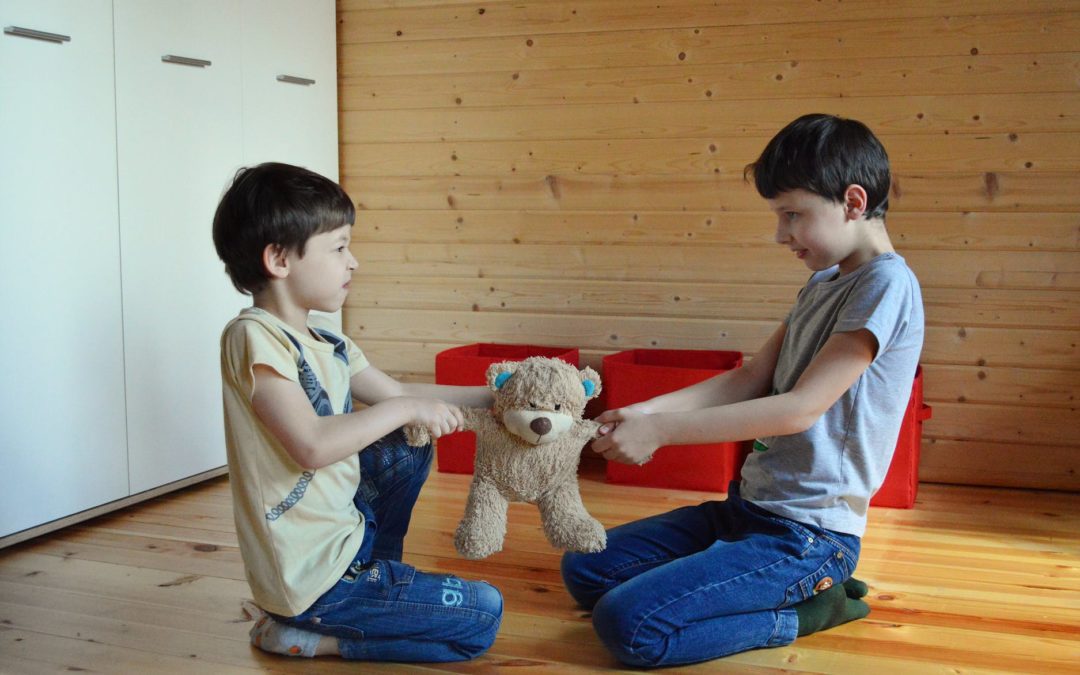
Staying Neutral: How To Manage Siblings Fighting
 You know the scene. Two children both want the same thing. Or one of them is hurting the other. Or they are complaining and nagging each other.
We can’t help ourselves, we come to the rescue. “Why don’t you go first, and then the other one can have a turn next?” “Why are you always picking on your brother?” “Why can’t you two just leave each other alone.”
When we step in like this, we actually make things worse. The children start to get irritated at us. They think that we take sides (usually in favor of the younger child), and the fighting can often escalate as the children are getting our attention, even if it is negative attention.
So what can we do instead?
We can be the mediator rather than judge and jury. A mediator listens to both sides but stays neutral.
“It looks like you were playing with that, and (to the other child) you’d really like a turn too.”
“You seem really upset. Will you each tell me what’s going on for you?”
Then, do nothing. PAUSE. See if the children can work it out. Perhaps remind them of a rule, “We share by taking turns. It will be available soon.” But stop yourself from solving the problem for them.
And what if there is a young baby? You’d be surprised at the solutions they come up with. I often give the example of Oliver and Emma both wanting to play with the same vehicle. Oliver would have been under two and Emma was just crawling. I stated something like, “Two kids and one vehicle. I wonder how you’ll solve the problem,” and then PAUSED. I proceeded to watch quietly as Oliver took the front wheels off the vehicle to give to Emma and they both played with half each. A far more creative solution than I would have come up with, and they solved the problem themselves.
And if they are hurting each other. We can still step in without blaming either of them. We can separate them – “you go to this side and you come to the other side” — and, once they are calm, they can solve the problem with us as a neutral mediator if needed.
Give it a try for a week and see how you go:
1. Be neutral;
2. Let them be heard; and
3. PAUSE to see if they can solve the problem themselves
You might enjoy visiting Simone’s blog at themontessorinotebook.com. We appreciate her granting permission to use this post. ¢
Simone Davies is the author of The Montessori Toddler and co-author of The Montessori Baby, comprehensive guides to raising toddlers and infants in a Montessori way. The books are based on her 15+ years’ experience working as an AMI Montessori teacher in Sydney and in Amsterdam. She also has a popular blog, instagram, and podcast The Montessori Notebook. She is also mother to two young adults. Simone currently runs parent-child Montessori classes in Amsterdam at her school Jacaranda Tree Montessori and is working on another book with Junnifa Uzodike, The Montessori Child for children from 3-12 years.
Finding Montessori helped her so much when raising her own children, and it’s now her passion to help other parents introduce these ideas in their homes too. She was looking to find a way to be with her kids that wasn’t about bossing, threatening, or bribing them. Or giving them free rein either. And she wanted them to have a positive experience of school, not just to pass tests, but to love learning.
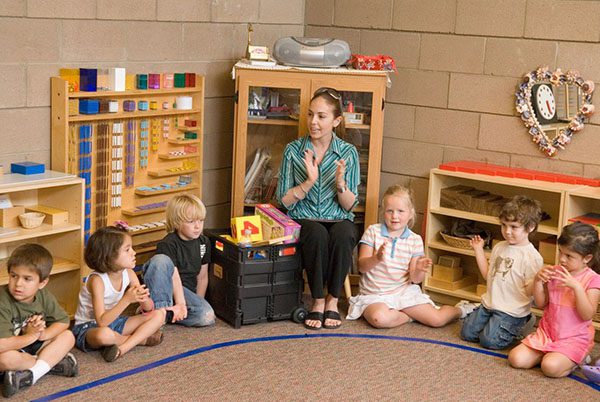
Peacemaking Circles
To continue reading, you will need to choose a subscription plan.

Montessori Leadership Forum: Children with Challenges in Montessori Classrooms: Part II

Computers: Are there New Secrets of Childhood?
To continue reading, you will need to choose a subscription plan.
Montessori Leadership Forum: Children with Challenges in Montessori Classrooms
Helping Children Who Learn Differently: The Shelton Way
To continue reading, you will need to choose a subscription plan.
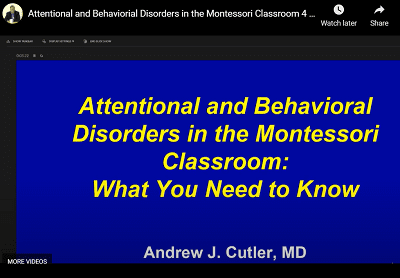
Attentional and Behavioral Disorders in the Montessori
To continue reading, you will need to choose a subscription plan.

Turn Challenging Behaviors into Positive Partnerships with Your Child
To continue reading, you will need to choose a subscription plan.

Dealing With Tantrums
I’m going to dive right in to discuss a very tricky area for parents and children alike: tantrums.
I hope you find this article useful so you can start applying Montessori principles in your home too.
Dealing with Tantrums
Tantrums are a pretty normal part of life with children from around one to five years old. Maybe they’ll start a little later than one year and will end earlier, but anything in this range is fairly normal. Your child is learning that things don’t always go their way. And, as parents, we are helping them learn how to deal with these emotions and to make amends.
It can be upsetting for a parent. It’s hard to realize that your child is actually asking for your help. They are overwhelmed by the situation and need your support to calm down. It’s not the time to take it personally.
How to Avoid Tantrums
It can be possible to avoid tantrums before your child loses control. Here are some ideas to ward off tantrums when you see the first signs of your child losing control.
1. Be prepared: take a small bag with some simple games and some favorite snacks if you expect your child to wait patiently in a doctor’s office or a cafe.
2. Label their feelings: “Boy, you really wish you could stay longer”; “You really wanted some orange juice right now!”
3. Redirect them: “I can’t let you hit your brother, but you can hit this drum/pillow.”
4. Get down to their level: “You sound frustrated. Can you tell me why?”
5. If they are struggling, ask them if they would like some help: give them just as much help as they need and then step back.
6. Give them a choice: “Would you like to put on your shoes or your scarf first?”
7. Establish routines: “… and after lunch, we’ll go to the toilet, read a book, and tuck in for a rest.”
8. Let them show their anger creatively, “Show me how angry you are. Here is some paper and a pencil. Wow. They are big circles. You are really mad!”
Triggers
Events can often escalate to a full-blown tantrum. Sometimes it’s from your child’s frustration; other times their anger or rage; sometimes because they want to be in control; their communication may still be limited; or because they are tired, hungry, or overstimulated. They can throw themselves on the floor, push us away, try to hit us, a sibling, another child, or even break something.
It can be useful to note things that cause tantrums in your child: over-scheduling can be common; a new baby; moving to a new house; or certain children may trigger them.
Sometimes the tantrum is even caused by us as we deliver the news that it is time to leave the park, or we serve some food they don’t like for dinner, or that we would like them to get dressed to leave the house.
It’s OK for your child to have a tantrum. You can acknowledge their displeasure at what is going on. You can help them to do the thing that they don’t like. However, when we back down and give in to them, you will find they shout even louder next time.
It’s difficult to be the parent and stay strong. But your hard work will pay off in the long term. They will learn that when you say no, you mean no; and when you say yes, you mean it too.
I like the advice from Positive Discipline for Preschoolers (by Nelsen EdD, Jane, Erwin M.A., Cheryl, et al. Jul 9, 2019). “If you say it, mean it; and if you mean it, follow through with kind and firm action.”
Action may be, for example, leaving the park with a sad toddler, acknowledging that they really wish they could stay longer.
Alternatives to Time Out: How to Help Your Child Calm Down
When your child is having a tantrum, some experts advise putting them into time out. I find this difficult as your child is asking for help to calm down, and you are removing your support and punishing them instead.
When we punish our children, they often get angry at us rather than being sorry for what they have done. Or they try to work out a way to get away with it next time without being caught.
Instead, I look for ways that I can support my child to calm down. I’m not saying that their behavior is OK, but when they are in the middle of the tantrum, it is not the time to teach them anything. They cannot hear you. They have lost control. So let’s help them calm down.
Some children will respond to a cuddle during a tantrum. You can rub their back, cuddle them, and sing to them as they go through all the range of emotions from anger, to intense frustration, to sadness, and sometimes regret. I once held my son for 40 minutes as he refused to get dressed. And I watched him go through all these emotions. In the end, he announced he was ready to get dressed. He told me he loved me. He wasn’t angry with me. He was grateful that I had just been there for him. I know sometimes you have to leave, but in this case, we just changed our plans.
Other children will push you away and don’t want to be touched. In this case, I make sure they are safe and cannot hurt themselves or others. I stand nearby and keep offering my help, “I’m here if you need some help to calm down. Or we can have a cuddle when you are ready.” After the tantrum, I like to offer a cuddle. “That was tough. And now you have calmed yourself down. Would you like a hug?”
If they are throwing toys at their sibling or trying to hit me, I would remove them so that everyone is safe. “I can’t let you hit me. My safety is important to me. Would you like to hit these pillows instead?” If your child is trying to hurt the baby, you can place yourself physically between them to keep the baby safe as you help your older child calm down.
For a child over three years old, you can set up a “calm place,” which they can use when they are upset. It may be a tent with some pillows and favorite things. It may be a corner with some trains. You can ask your child if she would like to go to her calm place.
This is different than ‘time out,’ as the older child is in control; she can come out when she feels calm. If she comes back still in a rage, I would gently tell her that she looks like she still needs to calm down and can come back when she is ready.
Making Amends
Maybe you are thinking that if I support my children while they calm down, I’m saying that their behavior is OK, and I’m encouraging them to get angry. When they are upset, indeed, my objective is to help them calm down.
Once they are calm, I then help them to make amends. If they drew on the walls, I would get them to help me clean up. If they broke their brother’s toy, they can help to fix it. I’ve asked the kids to help scrub their sheets when they used marker pens in bed and made a mess.
In this way, they learn to take responsibility when things go wrong. And when it’s over, it’s over. The good thing about young children is that they can move quickly from deep anger and sadness back to their happy selves. We need to move on too and not let this upset the whole day by referring back to it or keeping on about it. Once they have made amends, it’s OK for everyone to move on. •
TANTRUM FAQs
Shouldn’t we just ignore their tantrum?
I don’t like to ignore children when they are having a tantrum. They may not let me touch them, but I keep offering support and letting them know I am available when they need me. If you were super upset and your partner just left the room for you to get over it, you would likely find them unsupportive. We are showing our kids that, good or bad, we will be there for them.
What do I do if we are out in public when they have a tantrum?
There are basically two options:
First: Go home—if you find it difficult to have people watching you, it’s best to just leave. This may mean parking a full shopping cart and following the above ideas once you are home.
Second: Stay and support them—my preferred option is to hang in there and do what you would do even though you are out of the house. If you have more than one child with you, make sure they are safe. And then offer as much help as you can to help your child calm down. People watching will more likely think about what a lovely, patient parent you are, rather than what a horrible noise your child is making.
I find it difficult to stay calm myself. What can I do?
If your child has triggered you, it is indeed difficult to help them calm down.
• If your partner is available, it can be easiest to get them to step in instead.
• You may want to make sure the kids are safe and go to the bathroom to catch your breath.
• Find a mantra that you can repeat, “I breathe in calm, I breathe out anger.”
• Remember not to take it personally. Perhaps visualize putting on a bullet-proof suit that will resist everything (including words) that your child throws at you.
These tips should help you remain calm and give your child the support they need to regain control.
Learn from Simone Davies, an AMI Montessori teacher with15+ years’ experience working with 0-3-year olds, owner of Jacaranda TreeMontessori in Amsterdam since 2008, mother of two teenagers, and author of the book The Montessori Toddler. Visit her blog at themontessorinotebook.com
This article is from the November 2019 issue of Tomorrow’s Child magazine. Reprinted with the author’s permission.
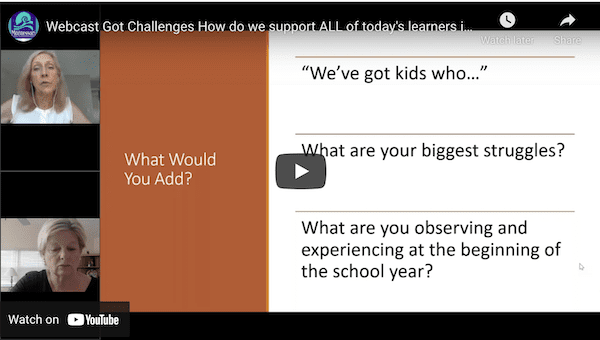
Webcast: Got Challenges? How Do We Support All Of Today’s Learners In Our Montessori Classrooms
To continue reading, you will need to choose a subscription plan.
Featured
-
 The Montessori Way, Revised and Expanded: An Education for Life; A Comprehensive Guide for Parents and Teachers
$25.00
The Montessori Way, Revised and Expanded: An Education for Life; A Comprehensive Guide for Parents and Teachers
$25.00
-
The Montessori Child: A Parent's Guide to Raising Capable Children with Creative Minds and Compassionate Hearts (The Parents' Guide to Montessori)
$20.00
-
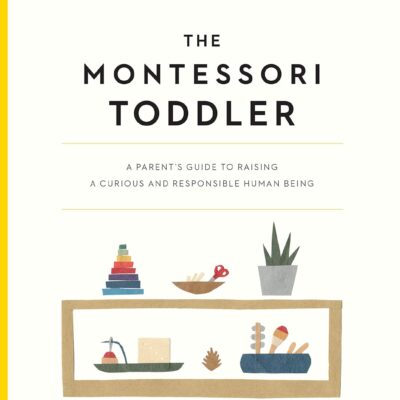
The Montessori Toddler: A Parent's Guide to Raising a Curious and Responsible Human Being (The Parents' Guide to Montessori)
$20.00
-
Montessori in Action: Building Resilient Montessori Schools 1st Edition
$29.95
-
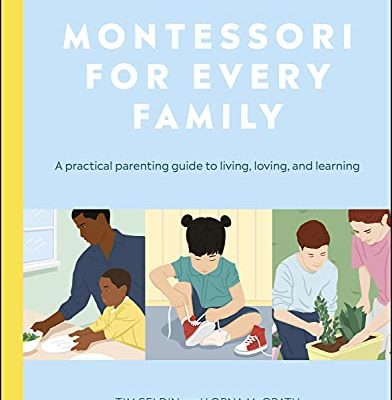
Bulk Order, 30 Copies of Montessori for Every Family: A Practical Parenting Guide To Living, Loving, And Learning
Original price was: $600.00.$510.00Current price is: $510.00.




Products
-
The Montessori Way, Revised and Expanded: An Education for Life; A Comprehensive Guide for Parents and Teachers
$25.00
-
The Montessori Child: A Parent's Guide to Raising Capable Children with Creative Minds and Compassionate Hearts (The Parents' Guide to Montessori)
$20.00
-
The Montessori Toddler: A Parent's Guide to Raising a Curious and Responsible Human Being (The Parents' Guide to Montessori)
$20.00
-
Montessori in Action: Building Resilient Montessori Schools 1st Edition
$29.95
-
Bulk Order, 30 Copies of Montessori for Every Family: A Practical Parenting Guide To Living, Loving, And Learning
Original price was: $600.00.$510.00Current price is: $510.00.