

Montessori, the Second Plane, and Imagination
To continue reading, you will need to choose a subscription plan.

Racing to Nowhere: The Gift of an Extra Year

I think my child is ready to move up to the next class… a year early!
Over the years, it’s quite common for parents to come to us to say that, since their child is so advanced academically, they worry that the class they are in now is not sufficiently challenging. It is not unusual for parents to ask the school to move them up a year early next term.
There’s no one response that schools offer, but I think there are a few things to consider.
Typically, parental fear of their child being disadvantaged by being the most advanced in a Montessori classroom is based on a misperception.
Unlike traditional schools, where the pace of education is based upon the norm of the class, the Montessori curriculum follows an international model rather than what is commonly taught in American schools. In general, Montessori programs are more sophisticated and individualized in many ways.
In the United States, in the first three grades (kindergarten through second grade), it is fairly common to teach children number recognition and simple mathematical operations with one or two-digit quantities. Math can be very abstract, and some children memorize answers but may or may not understand what they’re doing.
Likewise, with reading, many children are asked to read from simplistic texts or workbooks that have more to do with spelling and vocabulary than with really giving them a love of the written word, no less a desire to express themselves in writing.
While there is a real concern about math education in the United States, many students are not culturally literate in history, geography, economics, science, civics, and our cultural heritage found in the arts and literature.
Like most schools that follow European tradition, Montessori places a huge emphasis on what some people call the ‘cultural subjects.’ These topics include, science; technology; history; geography; international studies; the foundations of industry and trade; architecture; engineering; and so much more. Montessori’s breadth of curriculum tends to produce young people who have far more knowledge of their country’s history, government, and heritage than most Americans.
So, we have three basic issues. The first is that in Montessori, children don’t learn at a preestablished pace. They are not only able to choose the things that most interest them but to learn in ways that they find most appealing. Children are different. Some learn best by listening to someone else talk; others learn by observing, and many need to directly experience to understand and remember. There are so many variations in the way children learn, and it’s challenging to know what’s right for an individual child.
The second issue is that no teacher can work with each child every moment of the day. That’s the beauty of Montessori’s prepared learning environment. It allows children to find meaningful work without having to depend on a teacher telling them what to do throughout the day.
Another consideration is that most of us learn best not by simply receiving a lesson; repeated experiences along with the opportunity to help (or teach) other children solidifies the skill or concept. The best teacher of the typical student is usually not the adult with a master’s degree in education; rather, it is often other students who have a grasp of the material and are willing to share their understanding with a fellow student.
The third point is that a child who remains in a Montessori multi-age class is surrounded by other students (younger and older) who have their own gifts and talents to share. They stimulate each other. The beauty of the Montessori experience is that the class is a community, not simply a group of children who are focused on the lesson that the teacher happens to be giving. This ongoing set of relationships builds a sense of safety and security for most children, both with their peers and with the adults in their lives. As parents, we need to understand how incredibly valuable that is.
So, the trade-off to having a child move up a year early is not so much that the child will get lessons that they couldn’t get in the younger class, as much as that they would be moving up into a class, where the age range is going to be three or four years beyond their current level.
Every child is different and there are times when moving a child up early actually is worth considering. In my experience, I never followed a hard and fast rule. We always try to explore with the family why they feel this is a good idea? Here are some points parents and educators should consider:
• Is it accurate that the current class really can’t meet the child’s intellectual and academic needs?
• Do the parents feel a strong urge to push their child ahead more quickly? If so, why? What do they hope to gain? What are the pros and cons?
• Or is it fear that their child will miss opportunities that they would have at the next level?
These are all legitimate questions, but we must weigh them against the advantage of stable, continuing relationships. Having been one of those students, who was moved up a year early at one point along my journey, I found it difficult to be a year younger than the youngest child in the classroom. So, if you ever come to the conclusion that, perhaps, your child might do well to move up, try to really think it through with the school and weigh the pros and the cons.

Montessori is based on the idea that each child follows her own pace and that education is a journey, not a race.
Montessori classes are not only about academics. The focus is social and emotional, as well. While a five-year-old may be reading like a six-year-old, this same child may socially and emotionally be better suited to remaining in a class with familiar children. Being among the oldest and most advanced creates the possibility of becoming a leader. Don’t undervalue how wonderful that experience can be.
Montessori is based on the idea that each child follows her own pace and that education is a journey, not a race.
Other than saving a year’s tuition if your child attends a private Montessori school, there are few (if any) benefits for a child who finishes high school early. Beginning university younger than the other students in their class may again present same social, emotional, and academic challenges, depending on the student.
Appreciating Montessori’s ability to meet children at their intellectual level is one of the greatest gifts of Montessori education. I always recommend that parents follow their hearts, but I do advise every parent to be thoughtful and careful before leaping to a decision.
Try to find the best path for your child, and always remember that it’s important to ask them what they really want to do. Listen carefully to their reasoning. Sometimes the reasoning makes perfect sense; sometimes it doesn’t make any sense at all. Weigh your conclusions and follow your parental instincts. That’s all any of us can do. •

Montessori: The Science — Part 7: Social Education is Effective
Dr. Angeline Lillard presents Maria Montessori’s key insights about childhood education, the subsequent educational research that has validated her approach, and how these ideas are implemented in a modern Montessori classroom.
From Montessori: The Science Behind the Genius
For more information, visit: http://montessori-science.org
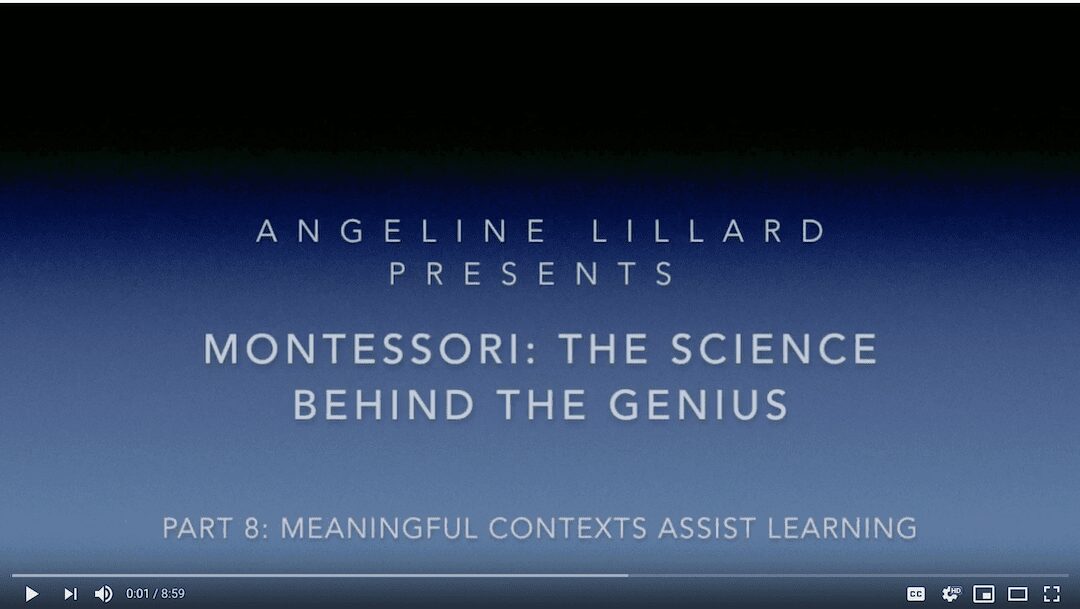
Montessori: The Science — Part 8: Meaningful Contexts Assist Learning
Dr. Angeline Lillard presents Maria Montessori’s key insights about childhood education, the subsequent educational research that has validated her approach, and how these ideas are implemented in a modern Montessori classroom.
From Montessori: The Science Behind the Genius
For more information, visit: http://montessori-science.org

Webcast: The Three most Common Enrollment Marketing Mistakes Made By Most Schools Today
To continue reading, you will need to choose a subscription plan.
Webcast Developing Social Emotional Skills with Diverse Learners
To continue reading, you will need to choose a subscription plan.
The Curve Of Work: First Year Primary
To continue reading, you will need to choose a subscription plan.
Book Review: Culturally Responsive Teaching The Brain
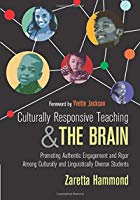
The book, Culturally Responsive Teaching and The Brain, written by Zaretta Hammond, examines the philosophy and implementation of culturally responsive teaching in the context of current research and knowledge of neuropsychology and its impact on student behavior and response.
The book seeks to connect current brain research and culturally responsive teaching with the question “what is needed to activate that wiring for optimal connectivity for students of color?” Understanding the classroom practices that can serve as triggers for engagement of various regions of the brain can help educators adapt their practices in a culturally relevant way that supports students of color.
The book explores this premise in three parts. Part One: Building Awareness and Knowledge; Part Two: Building Learning Partnerships; and Part Three: Building Intellective Capacity. Each section brings together the information of neuropsychology with a study of cultures with the goal of educating teachers to become culturally sensitive and responsive to their students. With practical, concrete examples of teaching strategies and self-reflections, Ms. Hammond leads the reader through the process of developing the skills and understanding needed to offer a culturally responsive classroom environment to all students.
As culturally responsive teaching is more a philosophy, or mindset, rather than a method, Part One: Building Awareness and Knowledge begins to explore the goal of guiding “dependent learners” to become independent thinkers, who are self-motivated and confident in their abilities. With the premise that educators can change the “habits of mind” of the dependent learner, Hammond explores the importance of relationship, creating a classroom that helps students reach their zone of proximal development with just the right challenges and the tools that teachers can use to implement culturally responsive teaching.
The Ready for Rigor Framework includes the components of Awareness, Learning Partnerships, Information Processing, and Community of Learners and Learning Environment. Educators must first understand the role that culture plays in learning and understand the sociopolitical and economic conditions that are the root of the inequities that contribute to the achievement gap for students in marginalized groups. Educators are encouraged to reflect on their own biases, values, and beliefs by looking at layers of culture from the surface to those cultural archetypes that can lead to an understanding of one’s implicit bias.
Increasing knowledge of the regions of the brain and the role each plays in one’s behavior becomes the backdrop for further understanding of those “triggers” that result in certain student behaviors that further reinforce their dependence as learners. practical advice that teachers can use in the classroom to avoid these triggers leads to Part Two: Building Learner Partnerships.
Building partnerships based on affirmations, mutual respect, and validation enables students to develop trust and a sense of safety to take risks in their learning. Starting with rapport, or connection, and developing an alliance leads to the cognitive insights and higher-order thinking skills of independent learners. Ms. Hammond encourages educators to reflect, observe, and collect data on their behaviors and mindset that contributes to a positive alliance with each student. This alliance means becoming a student’s ally by agreeing on a goal, setting high expectations, acknowledging ability, and providing feedback that gives specific information about successes and next steps. With increased motivation and an academic mindset, the student begins to believe in his ability and understand that it is sociopolitical impacts, rather than personal ability, that are the cause of inequity.
Part Three: Building Intellective Capacity provides many concrete teaching techniques to support students of color. Dr. Hammond discusses four components of learning: Ignite, capturing the student’s attention; Chunk, providing specific amounts of information in segments; Chew, giving opportunities to process that information in active ways; and Review, the projects to apply this new information and connect it to previous learning. The techniques shared are in the context of culturally responsive teaching and the brain science presented in parts one and two.
The final strategy for building intellective capacity is preparing a classroom environment for all students to feel a connection and sense of a community that is socially and intellectually safe.
This includes examining the visual look of the classroom, the routines, and rituals—but beyond that, ways to provide each student with meaningful learning in a community of peers.
Ms. Hammond reminds teachers that “embracing conscious incompetence” is an important aspect of growth and development. Being willing to reflect, change behavior, and try new techniques takes time and effort. The goal of equity for all students is worth the struggle.
This book provides a framework for thinking about and acting in a more culturally responsive manner. Developing the knowledge and understanding of the impact of culture on learning enriches our role as a teacher of children and adults. Valuing equity in education is a goal that, on the surface, is easily shared. The format of this book encourages a deeper look at that goal with knowledge, information, and specific tools and techniques for actual practice as a culturally sensitive and responsive educator.
Cultivating an attitude, a culturally responsive mindset, to view a school should be implemented in practice by leaders and teachers in a way that is specific to their school culture. Forming an alliance with each other, with our students and with their families, begins with respect, rapport, and engagement that is specific to each culture.
As Montessori educators, we need to create classrooms and schools that support all marginalized groups. The concepts and ideas presented in this work can be a starting point as we begin to explore a supportive framework for all diverse learners—cultural, racial, ethnic, and those who learn in a unique way. As we develop classrooms of inclusion for all students, we must become more aware of the impact of the relationship, learning techniques, and the classroom community on every student in our classrooms. ′
REFERENCES
Hammond, Z. (2015). Culturally responsive teaching and the brain.Thousand Oaks, CA: Corwin.
ML/ August 2019/ Pg 20

Montessori A Model For Inclusive Education?
To continue reading, you will need to choose a subscription plan.
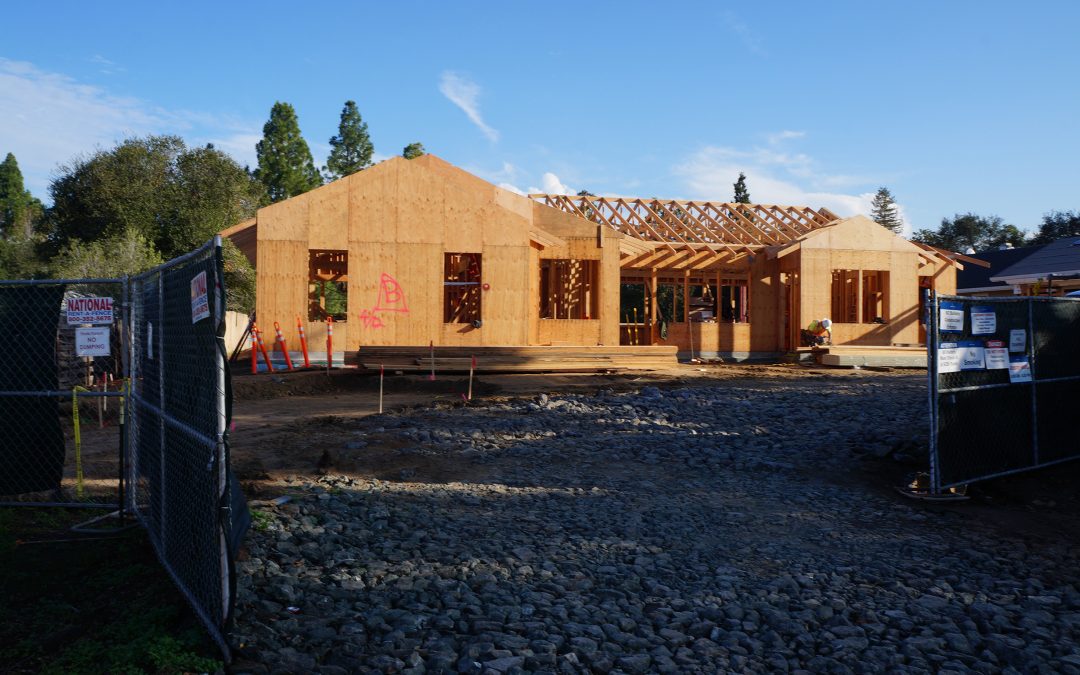
The Bowman Expansion Project
To continue reading, you will need to choose a subscription plan.

Montessori Teacher Supports For Children With Exceptionalities
To continue reading, you will need to choose a subscription plan.

Letter From The Executive Director
To continue reading, you will need to choose a subscription plan.
Montessori based Multi-Tier System of Support An overview with Christine Lowry, M.Ed
To continue reading, you will need to choose a subscription plan.
Webcast: Driven To Abstraction The Impact Of Imposing Academics On Toddlers
To continue reading, you will need to choose a subscription plan.
Webcast: Discovery Part 2
To continue reading, you will need to choose a subscription plan.
Webcast: Discovery Part 1
To continue reading, you will need to choose a subscription plan.
Featured
-
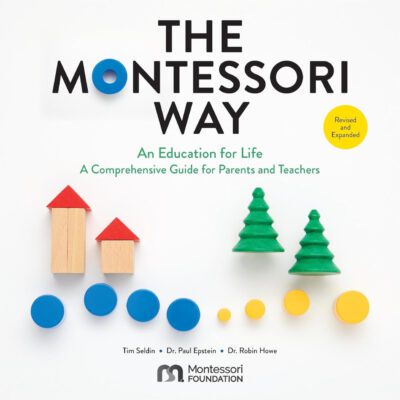
 The Montessori Way, Revised and Expanded: An Education for Life; A Comprehensive Guide for Parents and Teachers
$25.00
The Montessori Way, Revised and Expanded: An Education for Life; A Comprehensive Guide for Parents and Teachers
$25.00
-
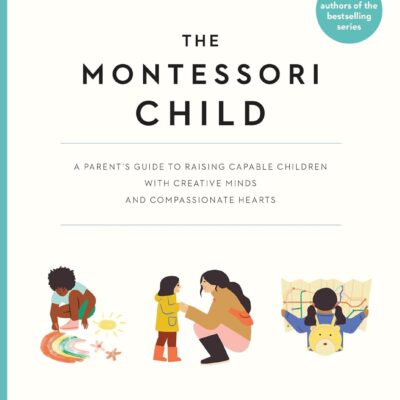
The Montessori Child: A Parent's Guide to Raising Capable Children with Creative Minds and Compassionate Hearts (The Parents' Guide to Montessori)
$20.00
-
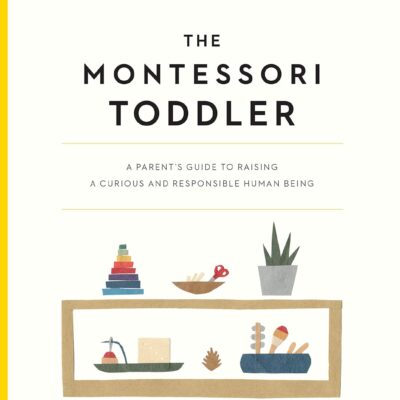
The Montessori Toddler: A Parent's Guide to Raising a Curious and Responsible Human Being (The Parents' Guide to Montessori)
$20.00
-
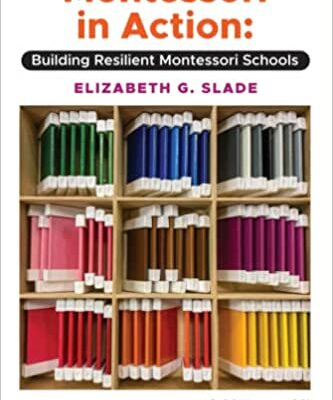
Montessori in Action: Building Resilient Montessori Schools 1st Edition
$29.95
-
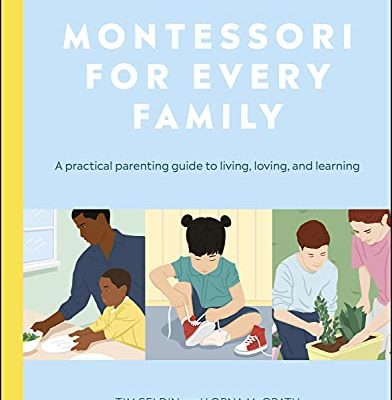
Bulk Order, 30 Copies of Montessori for Every Family: A Practical Parenting Guide To Living, Loving, And Learning
Original price was: $600.00.$510.00Current price is: $510.00.
Products
-
The Montessori Way, Revised and Expanded: An Education for Life; A Comprehensive Guide for Parents and Teachers
$25.00
-
The Montessori Child: A Parent's Guide to Raising Capable Children with Creative Minds and Compassionate Hearts (The Parents' Guide to Montessori)
$20.00
-
The Montessori Toddler: A Parent's Guide to Raising a Curious and Responsible Human Being (The Parents' Guide to Montessori)
$20.00
-
Montessori in Action: Building Resilient Montessori Schools 1st Edition
$29.95
-
Bulk Order, 30 Copies of Montessori for Every Family: A Practical Parenting Guide To Living, Loving, And Learning
Original price was: $600.00.$510.00Current price is: $510.00.