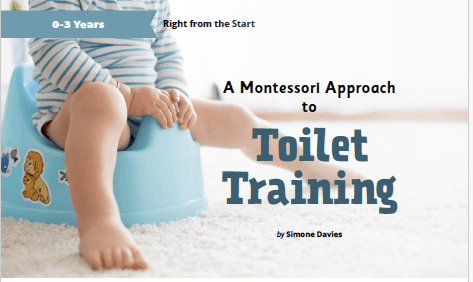
A Montessori Approach to Toilet Training

A Montessori Approach to Toilet Training

Toilet training
by Simone Davies

Is your child ready to use the potty or toilet?

With summer around the corner, I’m getting more questions in class about toilet training and if I have any Montessori tips. So today, here is the approach I prefer when your child is showing interest in using the toilet.

“Learning to use the toilet is a natural process that begins when your child’s desire to be grown up and his neurological development have reached the point where he can control his bladder and bowels. We don’t train children to use the toilet, we support them when they are ready.”

(How to Raise an Amazing Child: The Montessori way to bring up caring confident children, by Tim Seldin)

A Natural, Gradual Process

Using the toilet is a very natural and gradual process that develops at the child’s pace, rather than when the parent decides the child is going to be toilet trained.

We can begin very naturally when the child is young, talking with them about their bodily functions as we change their nappy. It is a normal process, and we can explain that everyone uses the toilet to get rid of the parts of food that our body does not need. It is also a good idea not to give them a negative feeling towards these bodily functions, for example, by making faces when changing their nappy.

A potty can be available from a young age so the child can sit on it and imitate others in the household, even before they have bladder and bowel control.

Children often begin to be interested in toilets around one year old. Around this age, the child develops the physical ability to control their bladder and bowel, but mostly they just want to flush the toilet or play with the water. The child can be redirected to a more appropriate place for playing with water, such as the bathroom sink.

Then, when the child becomes interested in dressing and undressing themselves, we can choose clothing that they can manage themselves, so that they can learn to pull their own trousers up and down. Elastic-waisted trousers can be very useful at this time! As disposable nappies are so good at keeping a child dry these days, it can also be nice for your child to wear underpants or training pants around the house as much as possible, so that the child feels the difference between wet and dry. They begin to learn that it feels nicer to be dry and begin to hold their bladder for longer periods.

After this very gradual preparation, and when the child is showing more interest in sitting on the toilet or potty, you can slowly teach them how to pull down their pants, sit on the toilet/potty, use toilet paper, pull up their pants, flush the toilet, and wash their hands.

Give Independence

Once children show interest in using the toilet/potty, the bathroom can be set up to give them as much independence as possible.

If using a potty, it is a good idea to keep it in the bathroom rather than moving it around the house. That way, your child can always find it. The bathroom is also a good place to have a pile of cloths for cleaning, a bucket for wet clothing, and a supply of clean underpants. The child can help by getting some dry underpants and putting any wet pants in the bucket. When a child is involved in the process, the child (not the adult) has ownership of the process.


The Adult’s Role

“There should be no pressure, no reward or punishment, no adult deciding when the child should learn to use the potty. The environment is prepared, and the child is free to explore and imitate in these natural developmental stages.” (Susan Stephenson, The Joyful Child)

It is best for the parent to support the child but not become emotionally involved. Here are some ideas to assist the child in the process of learning to use the toilet:

• Find ways to make the child feel confident. For example, provide a small stool for their feet when using the toilet.

• Incorporate toileting into the child’s routine. Offer the potty/toilet at times when the child normally pees, for example: upon waking; before going outside; after coming in from outside; after lunch/before nap; etc.

• Say, “It’s time to use the toilet” rather than “Do you want to go to the toilet?” (the answer will probably be no) or say, “I think you need to go to the toilet” (the adult becomes involved). As children become more aware of their bodies, they will be able to tell you, “No, I don’t need to go.” You can then say something like, “Of course, I know you will tell me if you need any help when you need to go.” You can also use an alarm clock set at regular intervals to remind them to go, “The clock says it’s time to use the toilet.”

• Never force a child to use the toilet or potty.

• Never scold or over-congratulate—going to the toilet is the most normal thing to do and we should keep it in its proper place, for example, avoid clapping and celebrating

• Do not interrupt children to use the toilet—for example, wait until they have finished their puzzle, etc. before offering the potty.


When they don’t make it in time…

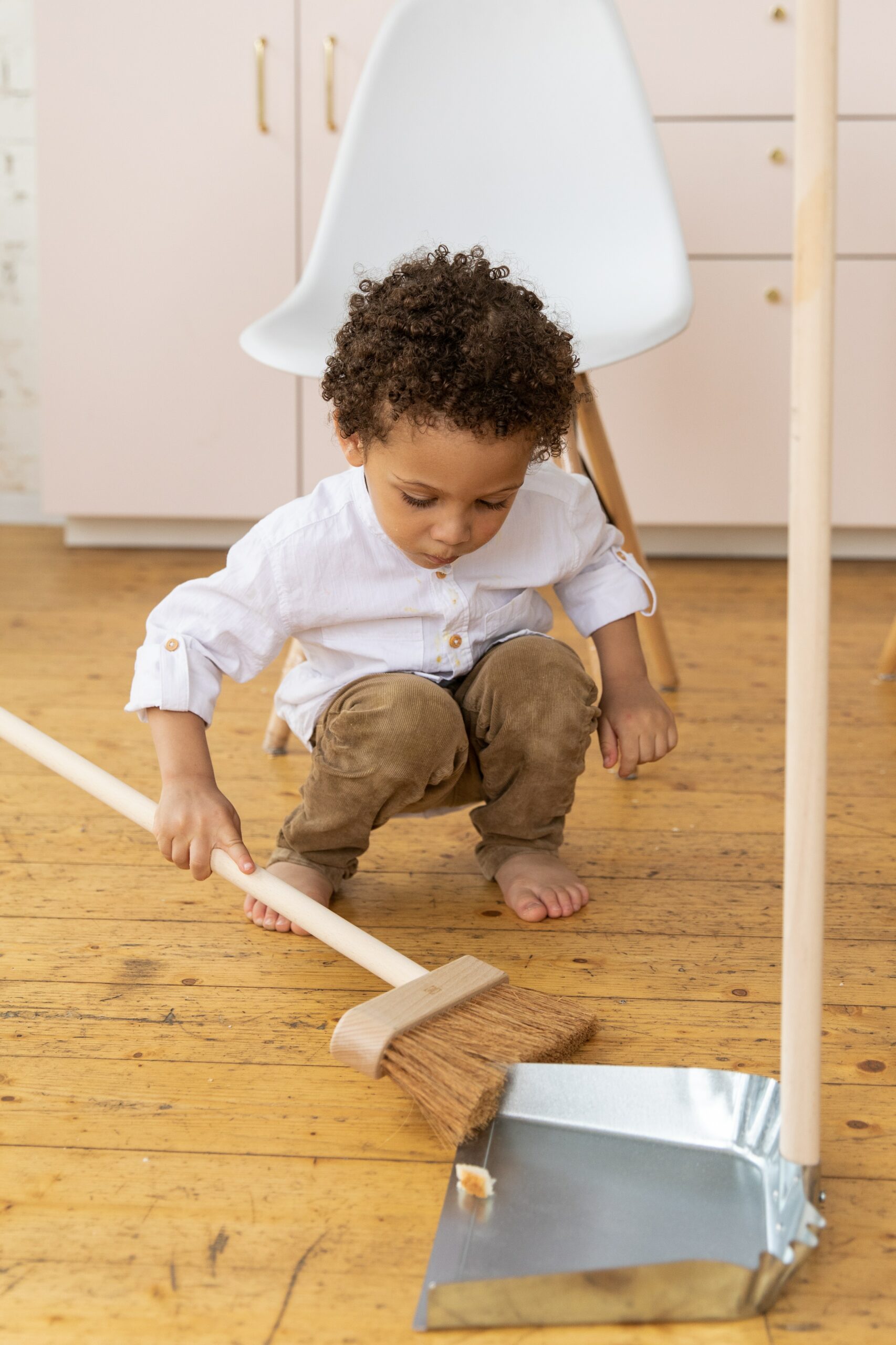
If a child becomes wet, stay calm and be reassuring. Do not make them feel ashamed. You may wish to say, “I see you are wet. Let’s go get some dry clothes.” Your child can get them from the supply in the bathroom and even help wipe the floor and wash their hands. Let them change at their own pace, and give help if they ask for it or if they are overwhelmed.

If they have wet clothes but they are playing with a toy, you can wipe up around them and wait until they are finished before suggesting you get some dry clothes.

Some issues can cause a setback to toileting, for example, the birth of a younger sibling, a divorce, or some other upheaval in daily life. These potential problems tend to resolve themselves if the adult does not make a big deal about it.

Really, the most important tip is to follow your own child.

Simone Davies is the best-selling author of The Montessori Toddler and co-author of The Montessori Baby and The Montessori Child, with over 600,000 copies sold worldwide and translated into more than 30 languages. With over 20 years of experience as an AMI-trained Montessori educator, both in the classroom and at home with her two children (now young adults), Simone is dedicated to bringing the authentic Montessori approach to families. She fosters respect and kindness in her work, helping families raise compassionate and responsible human beings. Since 2008, she has been running her own Montessori playgroup in Amsterdam, Jacaranda Tree Montessori, and continues to share her expertise globally through her popular Instagram, blog, podcast, and online courses.



10 Ways We Can Show Respect to Our Child

10 Ways We Can Show Respect to Our Child

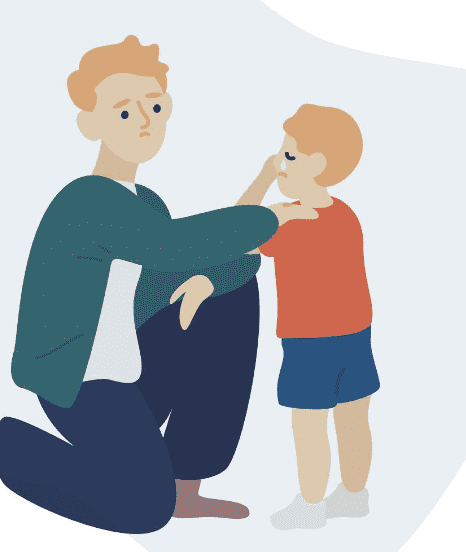
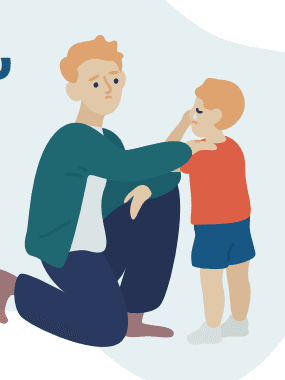
dad shows respect

by Simone Davies

One thing about the Montessori approach is how we show respect to the child. The most powerful way for us to teach our children how to respect others is for us to model it and for them to absorb it every day. Here are ten ways we can show respect to our child:

1. Soft hands—the way we handle them

2. Listen—stop and really listen to their words, their expressions, their face, and hands

3. Use kind words—even when setting a limit

4. Avoid baby talk—speak to them as we would to an adult

5. Let them know what we appreciate—give feedback: “You put all the blocks back in the basket ready for the next person!” (rather than empty praise such as “good job”)

6. Allow time (as much as possible)—for movement, for conversation, to walk at their pace

7. Include them in daily life – let them help contribute in family conversations and make (age-appropriate) choices

8. Find ways to work with them (“Can you help me carry this heavy box inside?”) rather than threaten, bribe, or punish them (“If you don’t come inside right now, I’ll…”)

9. Look them in the eye and accept them for who they are— we can teach skills, but it is not our job to change them

10. Let them see how capable they are—set things up for them to have success; provide hands-on learning opportunities that they can master by themselves

BONUS

Be a model of honesty to our child – even if it’s embarrassing at times, our vulnerability will show them that we trust them, and they will be honest with us and trust us. This can also mean apologizing when we get something wrong instead of blaming someone else. “I got it wrong. What I should have done is … What I should have said is…”

Does this mean children can do whatever they want?

This does not mean that the adult is not in charge. We will set a limit when needed. Not passive. Not aggressive. But in a respectfully assertive way.

• “I’m not going to let you keep hitting me. You need to sit down, and I’m going to calm down.”

• “I can’t let you hurt your friend. I’m going to sit here between you.”

• “That vase can break. I’m going to put it up here, and we can find something else to bang.”

————————————————————————————-

Simone Davies is the author of The Montessori Toddler and co-author of The Montessori Baby, comprehensive guides to raising toddlers and infants in a Montessori way. The books are based on her 15+ years’ experience working as an AMI Montessori teacher in Sydney and in Amsterdam. She also has a popular blog, instagram, and podcast The Montessori Notebook. She is also mother to two young adults. Simone currently runs parent-child Montessori classes in Amsterdam at her school Jacaranda Tree Montessori and is working on another book with Junnifa Uzodike, The Montessori Child for children from 3-12 years.

Finding Montessori helped her so much when raising her own children, and it’s now her passion to help other parents introduce these ideas intheir homes. She was looking to find a way to be with her kids that wasn’t about bossing, threatening, or bribing them. Or giving them free reineither. And she wanted them to have a positive experience of school, not just to pass tests, but to love learning.

Beyond Bribes, Rewards, and Punishments

Beyond Bribes, Rewards, and Punishments


story from: Tomorrow's Child Magazine May 2022
A Montessori Approach to Clean…

Beyond Rewards, Bribes, & Punishment

A Montessori Approach to Building Intrinsic Motivation

42 ways that the Montessori approach builds intrinsic discipline in our children.

by Simone Davies

In my last article on a Montessori approach to discipline, I mentioned that we don’t use rewards, bribes, or punishment in a Montessori classroom. And there is not a teacher at the front telling everyone what they need to do. Yet, if you observe in a Montessori classroom, there is a gentle hum of conversation and movement and a lot of concentrated children who are motivated to work.

So, not surprisingly, I received many questions about a Montessori approach to building intrinsic motivation in the child. Intrinsic motivation is doing something because you have the inner drive to do it, not because of some external reason like a reward or threat.

I love a good list so here are 42 ways that the Montessori approach builds intrinsic discipline in our children.

Note: It’s a holistic approach where each part is intrinsically linked. So, while it may seem overwhelming to do all these things, rest assured they also naturally build on one another.

42 Ways to Build Intrinsic Motivation

1. Build an environment where they can have success; knowing where they can find things and having things at their level.

2. Create opportunities for them to build independence – they see themselves as capable.

3. Cultivate opportunities to work together, cooperate and care for others – they see their input matters; a 0-3 child is observing and beginning their social development in their family. With a care giver, and/or nursery; the 3-6 child is part of their family and their class; and the 6-12 child wants to work and be a part of a group.

4. Value process over product; there is more learning in the doing than in the result.

5. Use encouragement rather than praise. When they hear, “You worked hard to get your shirt on all by yourself ” rather than “good job,” they learn to look to themselves to understand what worked, rather than looking to us for praise.

6. Give them freedom to work on things they are interested in – rather than what the teacher/adult tells them – or a timeline.

7. Provide safe limits. Offer security and show that someone cares about them.

8. Allow them the freedom to choose what, where, and with whom they’d like to work.

9. Provide a clear rhythm to their day so that they know what to expect.

10. Help them learn respect for themselves, each other, and the environment – they feel truly accepted and learn to accept others.

11. Encourage those agreements are made together – they feel like a valued member of the community.

12. Let them know that it’s a safe place to practice boundaries – we can support them with words if needed, “I’d like to work by myself right now. It will be available soon.”

13. Honor who they are; each member is unique and valued – builds their sense of self.

14. Help them learn to look after themselves, others, and the environment – it’s empowering to be able to do this for themselves.

15. Show trust in them – by removing external rewards and punishments.

16. Help them to make amends when needed – they know that when they get it wrong, they will take responsibility and learn from the experience.

17. Value curiosity – learning is about finding out rather than memorizing facts

18. Allow them to have choices – they have ‘agency’ in their days

19. Provide honest, instructive feedback – we see what’s going well and how they can do better; give them gentle guidance to keep improving.

20. Offer different ways to learn; we all learn in different ways and on different days; the materials appeal to kinesthetic, visual, and aural learners, and they can choose how they’d like to present their work, from a booklet to a survey to a poster etc.

21. Be their guide – not their boss or servant

22. Help children build ‘scaffold skills’ – where each activity builds on the next to allow mastery.

23. Support them to develop their own routines/ rhythms, such as taking an activity to a table or mat and returning it when it’s done.

24. Help children develop their thinking skills – they are learning to learn through hands-on learning and making discoveries for themselves; they help younger children and consolidate their own learning; they reflect on what they have learned.

25. Keep it real; children are not learning just for the sake of learning. They are learning how it applies in the real world giving meaning to their work.

26. The absence of tests or punishments allows a natural love of learning, while maintaining their creativity and interest in learning

27. Model intrinsic motivation ourselves as adults; our actions are more powerful than our words.

28. Provide control-of-error activities, which will allow children to discover their errors and try again.

29. Offer challenges at the appropriate level. Children do not feel unmotivated, because they know that they can do hard things, and they do not want to give up.

30. Encourage service in the community. This allows children to see and appreciate the impact of their work.

31. Children can have a healthy relationship with failure: the guide and classmates are supportive; children are able to stay with something until they master it and are ready to move onto the next activity; and they learn to ask for help if needed.

32. Remove competition for sticker charts or praise; children do not need rewards from others. Help them look to themselves instead of someone else.

33. Allow time to help children build skills, e.g., planning skills, learning to dress themselves, how to make a report, etc.

34. Children are in charge of their own learning: they learn uniquely, have their unique interests; and are on their own unique timeline.

35. Adults can trust the Montessori process, without forcing their own agenda.

36. Help children support themselves as they become members of their society.

37. Be patient; learning happens at its own pace and isn’t forced.

38. Plant seeds of curiosity, enough to get them interested, and not too much to allow them to discover the rest for themselves.

39. Encourage the possibility for big work and big ideas that looks at the interdisciplinary nature of the universe.

40. Allow space for all voices; we want everyone in our community to feel valued, accepted, and safe.

41. Avoid criticism or correction; instead, observe where children are in their process, and offer another opportunity to teach it again.

42. Learn from others. We can see others learning and be inspired to learn that too.

It’s never too late to start applying these principles. We can even scaffold the skills with a child in Upper Elementary (9-12 years), first helping them plan, then letting them take over more and more steps themselves. •

Simone Davies is the author of The Montessori Toddler and co-author of The MontessoriBaby, comprehensive guides to raising toddlers and infants in a Montessori way. The books are based on her 15+ years’ experience working as an AMI Montessori teacher in Sydney and in Amsterdam. She also has a popular blog, Instagram, and podcast “The Montessori Notebook”.She is also mother to two young adults.Simone currently runs parent-childMontessori classes in Amsterdam at her school, Jacaranda Tree Montessori, and is working on another book with Junnifa Uzodike, The Montessori Child for children from 3-12 years.

With hundreds of practical ideas for every aspect of living with a toddler, here are five principles for feeding your child’s natural curiosity, from “Trust in the child” to “Fostering a sense of wonder.” Step-by step ways to cultivate daily routines with ease, like brushing teeth, toilet-training, and dealing with siblings

Staying Neutral: How To Manage Siblings Fighting

Staying Neutral: How To Manage Siblings Fighting

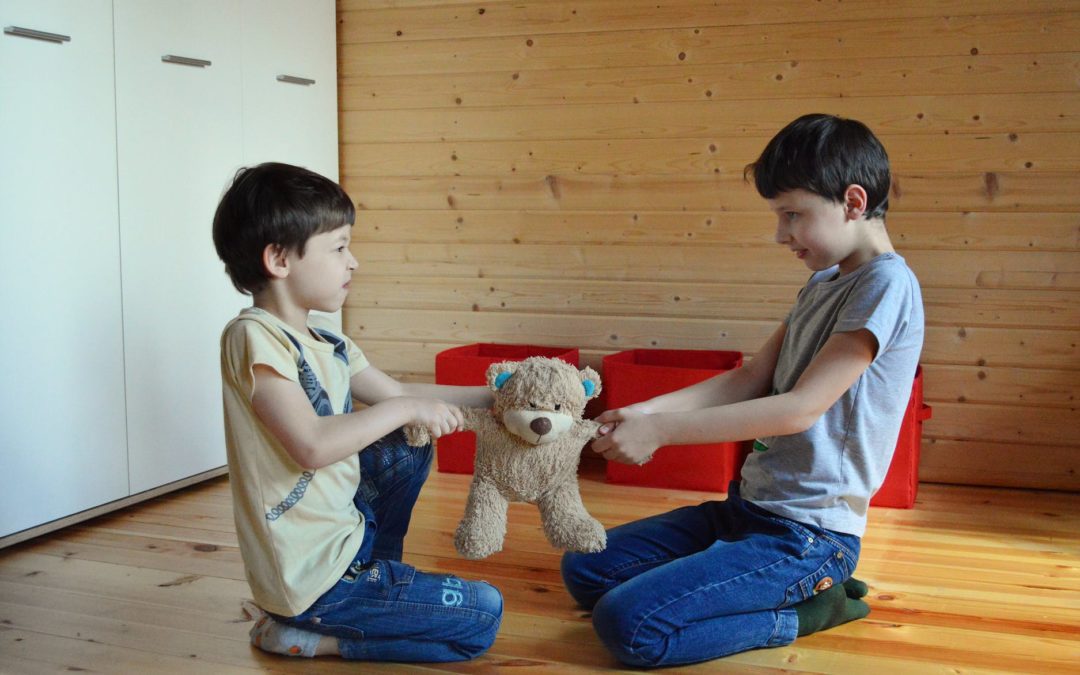
You know the scene. Two children both want the same thing. Or one of them is hurting the other. Or they are complaining and nagging each other.

We can’t help ourselves, we come to the rescue. “Why don’t you go first, and then the other one can have a turn next?” “Why are you always picking on your brother?” “Why can’t you two just leave each other alone.”

When we step in like this, we actually make things worse. The children start to get irritated at us. They think that we take sides (usually in favor of the younger child), and the fighting can often escalate as the children are getting our attention, even if it is negative attention.

So what can we do instead?

We can be the mediator rather than judge and jury. A mediator listens to both sides but stays neutral.

“It looks like you were playing with that, and (to the other child) you’d really like a turn too.”

“You seem really upset. Will you each tell me what’s going on for you?”

Then, do nothing. PAUSE. See if the children can work it out. Perhaps remind them of a rule, “We share by taking turns. It will be available soon.” But stop yourself from solving the problem for them.

And what if there is a young baby? You’d be surprised at the solutions they come up with. I often give the example of Oliver and Emma both wanting to play with the same vehicle. Oliver would have been under two and Emma was just crawling. I stated something like, “Two kids and one vehicle. I wonder how you’ll solve the problem,” and then PAUSED. I proceeded to watch quietly as Oliver took the front wheels off the vehicle to give to Emma and they both played with half each. A far more creative solution than I would have come up with, and they solved the problem themselves.

And if they are hurting each other. We can still step in without blaming either of them. We can separate them – “you go to this side and you come to the other side” — and, once they are calm, they can solve the problem with us as a neutral mediator if needed.

Give it a try for a week and see how you go:

1. Be neutral;

2. Let them be heard; and

3. PAUSE to see if they can solve the problem themselves

You might enjoy visiting Simone’s blog at themontessorinotebook.com. We appreciate her granting permission to use this post. ¢

Simone Davies is the author of The Montessori Toddler and co-author of The Montessori Baby, comprehensive guides to raising toddlers and infants in a Montessori way. The books are based on her 15+ years’ experience working as an AMI Montessori teacher in Sydney and in Amsterdam. She also has a popular blog, instagram, and podcast The Montessori Notebook. She is also mother to two young adults. Simone currently runs parent-child Montessori classes in Amsterdam at her school Jacaranda Tree Montessori and is working on another book with Junnifa Uzodike, The Montessori Child for children from 3-12 years.

Finding Montessori helped her so much when raising her own children, and it’s now her passion to help other parents introduce these ideas in their homes too. She was looking to find a way to be with her kids that wasn’t about bossing, threatening, or bribing them. Or giving them free rein either. And she wanted them to have a positive experience of school, not just to pass tests, but to love learning.

Dealing With Tantrums

Dealing With Tantrums

Tantrums

I’m going to dive right in to discuss a very tricky area for parents and children alike: tantrums.

I hope you find this article useful so you can start applying Montessori principles in your home too.

Dealing with Tantrums

Tantrums are a pretty normal part of life with children from around one to five years old. Maybe they’ll start a little later than one year and will end earlier, but anything in this range is fairly normal. Your child is learning that things don’t always go their way. And, as parents, we are helping them learn how to deal with these emotions and to make amends.

It can be upsetting for a parent. It’s hard to realize that your child is actually asking for your help. They are overwhelmed by the situation and need your support to calm down. It’s not the time to take it personally.

How to Avoid Tantrums

It can be possible to avoid tantrums before your child loses control. Here are some ideas to ward off tantrums when you see the first signs of your child losing control.

1. Be prepared: take a small bag with some simple games and some favorite snacks if you expect your child to wait patiently in a doctor’s office or a cafe.

2. Label their feelings: “Boy, you really wish you could stay longer”; “You really wanted some orange juice right now!”

3. Redirect them: “I can’t let you hit your brother, but you can hit this drum/pillow.”

4. Get down to their level: “You sound frustrated. Can you tell me why?”

5. If they are struggling, ask them if they would like some help: give them just as much help as they need and then step back.

6. Give them a choice: “Would you like to put on your shoes or your scarf first?”

7. Establish routines: “… and after lunch, we’ll go to the toilet, read a book, and tuck in for a rest.”

8. Let them show their anger creatively, “Show me how angry you are. Here is some paper and a pencil. Wow. They are big circles. You are really mad!”

Triggers

Events can often escalate to a full-blown tantrum. Sometimes it’s from your child’s frustration; other times their anger or rage; sometimes because they want to be in control; their communication may still be limited; or because they are tired, hungry, or overstimulated. They can throw themselves on the floor, push us away, try to hit us, a sibling, another child, or even break something.

It can be useful to note things that cause tantrums in your child: over-scheduling can be common; a new baby; moving to a new house; or certain children may trigger them.

Sometimes the tantrum is even caused by us as we deliver the news that it is time to leave the park, or we serve some food they don’t like for dinner, or that we would like them to get dressed to leave the house.

It’s OK for your child to have a tantrum. You can acknowledge their displeasure at what is going on. You can help them to do the thing that they don’t like. However, when we back down and give in to them, you will find they shout even louder next time.

It’s difficult to be the parent and stay strong. But your hard work will pay off in the long term. They will learn that when you say no, you mean no; and when you say yes, you mean it too.

I like the advice from Positive Discipline for Preschoolers (by Nelsen EdD, Jane, Erwin M.A., Cheryl, et al. Jul 9, 2019). “If you say it, mean it; and if you mean it, follow through with kind and firm action.”

Action may be, for example, leaving the park with a sad toddler, acknowledging that they really wish they could stay longer.

Alternatives to Time Out: How to Help Your Child Calm Down

When your child is having a tantrum, some experts advise putting them into time out. I find this difficult as your child is asking for help to calm down, and you are removing your support and punishing them instead.

When we punish our children, they often get angry at us rather than being sorry for what they have done. Or they try to work out a way to get away with it next time without being caught.

Instead, I look for ways that I can support my child to calm down. I’m not saying that their behavior is OK, but when they are in the middle of the tantrum, it is not the time to teach them anything. They cannot hear you. They have lost control. So let’s help them calm down.

Some children will respond to a cuddle during a tantrum. You can rub their back, cuddle them, and sing to them as they go through all the range of emotions from anger, to intense frustration, to sadness, and sometimes regret. I once held my son for 40 minutes as he refused to get dressed. And I watched him go through all these emotions. In the end, he announced he was ready to get dressed. He told me he loved me. He wasn’t angry with me. He was grateful that I had just been there for him. I know sometimes you have to leave, but in this case, we just changed our plans.

Other children will push you away and don’t want to be touched. In this case, I make sure they are safe and cannot hurt themselves or others. I stand nearby and keep offering my help, “I’m here if you need some help to calm down. Or we can have a cuddle when you are ready.” After the tantrum, I like to offer a cuddle. “That was tough. And now you have calmed yourself down. Would you like a hug?”

If they are throwing toys at their sibling or trying to hit me, I would remove them so that everyone is safe. “I can’t let you hit me. My safety is important to me. Would you like to hit these pillows instead?” If your child is trying to hurt the baby, you can place yourself physically between them to keep the baby safe as you help your older child calm down.

For a child over three years old, you can set up a “calm place,” which they can use when they are upset. It may be a tent with some pillows and favorite things. It may be a corner with some trains. You can ask your child if she would like to go to her calm place.

This is different than ‘time out,’ as the older child is in control; she can come out when she feels calm. If she comes back still in a rage, I would gently tell her that she looks like she still needs to calm down and can come back when she is ready.

Making Amends

Maybe you are thinking that if I support my children while they calm down, I’m saying that their behavior is OK, and I’m encouraging them to get angry. When they are upset, indeed, my objective is to help them calm down.

Once they are calm, I then help them to make amends. If they drew on the walls, I would get them to help me clean up. If they broke their brother’s toy, they can help to fix it. I’ve asked the kids to help scrub their sheets when they used marker pens in bed and made a mess.

In this way, they learn to take responsibility when things go wrong. And when it’s over, it’s over. The good thing about young children is that they can move quickly from deep anger and sadness back to their happy selves. We need to move on too and not let this upset the whole day by referring back to it or keeping on about it. Once they have made amends, it’s OK for everyone to move on. •

TANTRUM FAQs

Shouldn’t we just ignore their tantrum?

I don’t like to ignore children when they are having a tantrum. They may not let me touch them, but I keep offering support and letting them know I am available when they need me. If you were super upset and your partner just left the room for you to get over it, you would likely find them unsupportive. We are showing our kids that, good or bad, we will be there for them.

What do I do if we are out in public when they have a tantrum?

There are basically two options:

First: Go home—if you find it difficult to have people watching you, it’s best to just leave. This may mean parking a full shopping cart and following the above ideas once you are home.

Second: Stay and support them—my preferred option is to hang in there and do what you would do even though you are out of the house. If you have more than one child with you, make sure they are safe. And then offer as much help as you can to help your child calm down. People watching will more likely think about what a lovely, patient parent you are, rather than what a horrible noise your child is making.

I find it difficult to stay calm myself. What can I do?

If your child has triggered you, it is indeed difficult to help them calm down.

• If your partner is available, it can be easiest to get them to step in instead.

• You may want to make sure the kids are safe and go to the bathroom to catch your breath.

• Find a mantra that you can repeat, “I breathe in calm, I breathe out anger.”

• Remember not to take it personally. Perhaps visualize putting on a bullet-proof suit that will resist everything (including words) that your child throws at you.

These tips should help you remain calm and give your child the support they need to regain control.

Learn from Simone Davies, an AMI Montessori teacher with15+ years’ experience working with 0-3-year olds, owner of Jacaranda TreeMontessori in Amsterdam since 2008, mother of two teenagers, and author of the book The Montessori Toddler. Visit her blog at themontessorinotebook.com

This article is from the November 2019 issue of Tomorrow’s Child magazine. Reprinted with the author’s permission.