
To access this page, you will need to log in or become a member.
Embracing Change – Transitioning to a Traditional Middle School

Embracing Change – Transitioning to a Traditional Middle School

Note from the Director: This article includes so many tips for helping children and adolescents in the transition from one school to another. It is packed with practical ways to be of support to them whether they are changing schools or levels within schools. Much of the material applies to all ages, but you will need to determine what is age appropriate for your child or adolescent’s stage of development.

Change is a part of life. It is not always easy, but it speaks to the beautiful ebb and flow of our existence. When we trust the transitions, the changing seasons, and all the new roads we choose to take, we can fully celebrate our journey. The ability to gracefully embrace and receive change is a key to living a fulfilled, meaningful life and is a powerful part of our growth. If we can help our children embrace change, they will have the foundation to meet life with the resilience, optimism, fortitude, and joy that it demands.

Just as this age group is learning to cope with the emotional and physical turbulence of early adolescence, along comes the new challenge of transitioning from elementary to middle school; it also comes with new expectations, from academic to social. Changing schools from a Montessori school to a more traditional school or changing levels within a Montessori school is the perfect opportunity to teach about graceful transitions and embracing change.

All children manage change differently, but most Montessori students adapt to their new school environment fairly quickly, making new friends and experiencing success, within the definition of success understood in their new school. This phenomenon is possible because they have the advantage of growing up in Montessori. Montessori programs focus on helping children develop self-motivation, confidence, independence, problem-solving, and coping strategies for new situations, along with a strong sense of respect and responsibility. These skills, along with supportive parents and caregivers to help them embrace the change, will serve them well in any transition they make. What follows are suggestions to help make the school transition smoother for all.

Follow Montessori Principles In The Home

Following Montessori principles at home can be an impactful way of nurturing and maintaining skills and lessons that your tween learned from their experience in the Montessori school. Encouraging independence, love of learning, curiosity, self-motivation, and order are fundamental to the Montessori approach and, if nurtured, will continue to serve your tween as they make this transition.

Model A Positive Attitude About Change

Children are regularly learning how to be adaptable and flexible from their parents/caregivers. When children see you try new things, take risks, and handle change with grace, they are more likely to follow suit.

Talk to your child about change in a positive way. For example, you might say, “I am a bit nervous about starting a new job today, and it’s ok to be nervous. I am going to make myself feel better by listening to some good music. Even though I am nervous, I am also excited about meeting new people and making new friends.”

When your tweens are anxious, help them change the story they are telling themselves about what might happen. Encourage them to imagine all the great things that could happen instead of all the things that could go wrong. By changing the story and the images, anxiety can turn to excitement.

Acknowledge The Uncertainty And Loss

Acknowledging the fear and anxiety regarding the change that both you as a parent/caregiver and your tween is experiencing makes it much easier to talk about and embrace the change together. This is a good opportunity to explain the differences between Montessori and traditional schools, emphasizing the positives of both school systems.

While we want to be positive about the change, change also means that there will be a loss of friends, teachers, familiar routines, etc. Let your tween experience the sadness, and let them know they can speak to you about it or talk it over with friends that are experiencing the same thing.

Offer your tween a sense of agency by involving them in making choices… it can be as simple as letting them select a new backpack.

Practice Mindfulness

Practice mindfulness with your tween; it will help both of you to accept the present moment as it is, without judgment. This mindset can be useful when facing unexpected changes. After acknowledging your anxiety or fear and telling yourself that it’s ok to feel this way at this moment, carry on in a way that purposefully isn’t stuck in the negative mindset.

Show Empathy

Acknowledging your tween’s emotions will help them feel seen and heard. For example, a parent/caregiver could say, “I understand that moving schools is a big fear of yours. There will be new things that you are not used to; I can see how not knowing what to expect can cause anxiety.”

Rephrasing the tween’s emotions can help to increase their self-awareness and emotional intelligence, which will help them identify what they are feeling and can thereby talk about it.

Engage In Open Communication

Talking and listening are key to helping your tween manage change. It is a valuable opportunity for you to sit and talk with your tween about what they think about this upcoming change, what is making them hesitant or nervous about this new opportunity, and what you can do together to make the process easier.

Find The Root Of Anxiety And Fear

Ask questions to help guide your tween to what may be truly bothering them. For example, “What are you feeling right now?” or “What feels scary to you about this?” or “What is the thing you think about most regarding this change?”

Encourage An Open Mind Towards Change

Once you get a handle on what is causing them the most stress or fear, you can try to address it with your child ahead of time to help the change go smoothly. Start by asking them to reflect on what has helped them through other transitions they have had to make in their life and what they would add to that process to support this change. Change can feel overwhelming and scary to tweens because it often signals a loss of control. Offer your tween a sense of agency by involving them in making choices regarding this change, it can be as simple as letting them select a new backpack.

Maintain Routines Yet Add New Ones

If possible, maintain your family’s normal routines. It will provide a sense of normalcy and security for your tween, since they will be experiencing new routines at school. You may also want to consider creating new routines for them to associate with this new phase of their life.

For example, you may decide to have family game nights on Thursdays. Get your tween involved in deciding on a new addition to the family schedule. Connecting as a family provides comfort for tweens who are navigating change, and these new activities can help.

Be Patient

“It will take the time it takes” for your tween to adjust to a new school. Don’t assume either that they will have a hard time adjusting or that they will have an easy time adjusting.

Be patient and let your child know you are there for them. Reassure them that they are going to have a great school year, and, before they know it, they’ll no longer feel like the new kid.

PREPARE FOR LOGISTICAL, SOCIAL, AND ACADEMIC CHANGE

Researchers have found that tweens anticipating the move to middle school worry about these aspects of the change: the logistical, the social, and the academic.

 LOGISTICAL

  • Accompany your tween on a campus or new-environment tour and orientation. The better you understand the logistics of the school and the program, the more you can support your tween. Invite their friends who are also making the transition.
  • Ask for a copy of your tween’s schedule and mark the locations and times of their classes on the school map. Ask for the length of the break between classes. Walk the route between classes with them. Time it out with your tween, so they can see how long it takes to walk from class to class.
  • If you have an opportunity, sign your tween up for any summer programs that may be offered by the school for incoming students. Not only will your tween get to know the campus, but they also will have the opportunity to make some friends in a much more relaxed atmosphere.
  • Review the rules and requirements in the student handbook. Ask the school staff for any clarification or questions you may have before the beginning of school.
  • If the school has lockers, make sure they know how to open the lock. Or, buy your tween a lock with time to practice opening and closing it.
SOCIAL
  • Talk to your tweens often and openly about friendship. Equip them with the information and knowledge to make good friendship choices. Talk about how they should treat other people and how they should allow other people to treat them. Encourage them to stay away from gossip and drama. Help them learn how to navigate conflict and how to resolve disagreement. Remind them to be kind and inclusive.
  • Emphasize the importance of being who they are. Remind them that it is more important to be yourself than to fit in. Encourage them to spend time with people they like and with whom they are comfortable, but to also look for less obvious connections and be open. Talk about the importance of not compromising their values to gain friends.
  • Support your tween’s personal interests. Suggest your tween join sports teams, school clubs, or extracurricular activities.
  • Offer them opportunities to spend time with any new friends they have made.
  • If they are experiencing loneliness, you could arrange a get together with old friends.
  • Encourage your tweens to join conversations or activities. You can role play how to join without interrupting or how to add something interesting or relevant to the conversation in progress.
  • Let them see your own positive supportive joyful friendships.
  • Get to know the tweens that your tween spends time with, and, if possible, their parents or caregivers.
  • Discuss how their bodies are (or will be) changing and the importance of self-care and good hygiene.

ACADEMIC
  • Meet with your tween to discuss academic expectations in the new school and at a new level and how the family is going to support them.
  • If you have concerns about your child’s academic needs, meet with the middle school’s academic team in the spring (before they begin school) to discuss your concerns.
  • Reach out to the teachers to introduce yourself and offer any support. You can give teachers some information about your child regarding their strengths and where they experience challenges. This introduction is a good time to give teachers strategies that have been successful specifically for your child.
  • Find out if there is a homework hotline or if there is a tutor service.
  • Help your tween with their time management and organizational skills. Work together on a schedule that allows for study time, social time, chore time, etc. Show your tween how to organize binders, set up assignment calendars, and use an academic planner.
  • Receiving grades may be new for a Montessori student. Try not to react either way to the grades. Making sure your tween is happy and navigating the expectations of the new system is the most important factor in the first couple of months.
  • Stay connected to your tween’s schoolwork by lending support when needed. Know due dates for homework, projects, or other tasks. Periodically check to see if your tween is getting assignments done, yet continue to build independence.
  • This should not be a problem for a former Montessori student, but encourage your tween to be their own advocate by discussing problems and solutions with their teachers on their own. Of course, you will be ready to support them if need be.
  • If your tween is struggling, meet with the academic team sooner than later.
  • Model the behavior you want to encourage in your tween. Are you arriving at places on time? Are you keeping appointments? Do you use a calendar to keep your schedule?

As your child crosses this bridge on the path towards a new school experience, they don’t disappear, they transform, and you get to witness this marvelous show of becoming. Change will be their constant ally, leading them through unexplored places and presenting opportunities for growth and self-discovery. Their willingness to adapt and evolve will be essential in shaping who they become. If they learn to embrace the change, the challenges, the unpredictability, and the disconcertment, they will truly uncover the unlimited potential that lies within them.

Teach them how to embrace change, and watch them emerge… stronger, peaceful, and wiser.

Cassi Mackey, M.Ed. is passionate about helping communities create identity-safe spaces where people are encouraged to make changes to improve relationships. Cassi has witnessed the transformational power of communities that engage in…Courageous Conversation, Collaborative Coaching, and Diversity, Equity, Inclusion, Justice, and belonging practices. It is a promise of more meaningful relationships, greater depth of experience, and a broader, more compassionate view of oneself and the world. These practices are essential in order to serve our children and the future of humanity.

Cassi has been in the Montessori field for 30 years as a teacher and school leader. She is currently an American Montessori Society (AMS) School Accreditation Commissioner, Instructional Guide for CGMS Leadership Certification and a trainer for the AMI Administrator certification course. She is certified as an Association Montessori Internationale (AMI) School Administrator and has completed the AMS Anti-bias Anti-racist certification course. She consults with and provides advice to Montessori communities that are intent on generating positive and lasting change.
The Progression of Left to Right in Montessori Language Development

The Progression of Left to Right in Montessori Language Development

The Montessori Method, developed by Dr. Maria Montessori, is renowned for its child-centered approach to education. Within the Montessori classroom, language development plays a crucial role in nurturing a child’s ability to communicate effectively. While the Montessori Method itself is adaptable to various writing systems and cultural contexts, it often incorporates a left-to-right progression in language activities and materials. This article explores the reasons behind the left-to-right progression in Montessori language development, provides examples of materials used in the classroom, and highlights research insights on this topic.

The Importance of Left-to-Right Progression: The left-to-right progression is a convention followed in many languages for reading and writing. Introducing children to language and literacy skills in a manner that aligns with this convention can facilitate their understanding of written texts and prepare them for independent reading and writing. By incorporating left-to-right progression in language activities, Montessori educators create an environment that not only supports language development but also prepares children for successful literacy experiences beyond the classroom. The consistent use of this convention helps children build essential cognitive and linguistic skills, fostering their ability to read, write, and engage with written language effectively.

Examples of Materials and Activities in Montessori Language Development

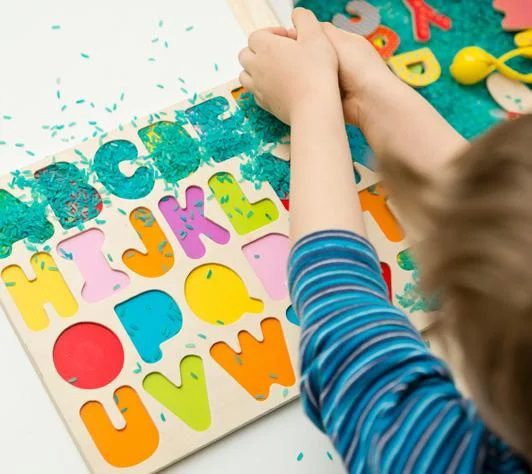
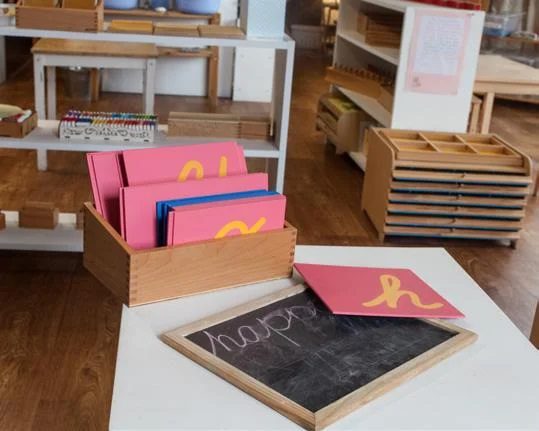
Sandpaper Letters: Sandpaper Letters are tactile materials with textured letters mounted on wooden boards. Children trace the shape of each letter with their fingers while simultaneously associating the sound with the symbol. These letters are typically arranged from left to right, reinforcing the directionality of writing.

Moveable Alphabet: The Moveable Alphabet is a set of individual letters, often made of wood or plastic, that children can manipulate to form words. Children choose letters and arrange them from left to right to represent the sounds they hear in words. This activity aligns with the left-to-right progression of writing in many languages.

Reading Books: Montessori classrooms include a variety of books at different reading levels. As children progress in their reading abilities, they are encouraged to read from left to right, following the conventional reading direction. Teachers provide guidance and support as children navigate the pages and sentences.

Research Insights: While specific research articles linking Montessori materials with left-to-right progression in language development are limited, studies have highlighted the effectiveness of the Montessori method in enhancing early literacy skills. Research by Lillard and Else-Quest (2006) found that children in Montessori programs showed higher levels of phonological awareness, letter recognition, and early reading skills compared to non-Montessori peers. Furthermore, studies by Rathunde and Csikszentmihalyi (2005) and Dohrmann et al. (2007) indicated that Montessori education fosters independent reading and writing skills, with children developing a sense of confidence and engagement in their language abilities. Introducing children to language and literacy skills in a manner that reflects this convention has several important benefits: alignment with reading and writing conventions; cognitive organization; structure preparation for independent reading; and writing consistency and familiarity.

Conclusion: While the Montessori Method itself is adaptable to different writing systems and languages, it often incorporates a left-to-right progression in language development activities and materials. The use of materials, such as Sandpaper Letters, Moveable Alphabets, and reading books, supports the natural progression of reading and writing skills in many cultures. While further research specifically linking Montessori materials to left-to-right progression is limited (as mentioned earlier in this article), existing studies demonstrate the effectiveness of the Montessori Method in promoting early literacy skills and independent language exploration in children.

Overall, the left-to-right progression in Montessori language development aligns with the conventions followed in many languages, providing children with a solid foundation for future reading and writing skills. By understanding and practicing this natural flow of language, children are equipped with the tools to navigate and comprehend the written world around them.

References

Lillard, A. S., & Else-Quest, N. (2006). Evaluating Montessori Education. Science, 313(5795), 1893-1894. Rathunde, K., & Csikszentmihalyi, M. (2005). Middle school students’ motivation and quality of experience: A comparison of Montessori and traditional school environments. American Journal of Education, 111(3), 341-371. Dohrmann, K. R., Nishida, T. K., Gartner, A., Lipsky, D. K., Grimm, K. J., & Bugental, D. B. (2007). High school outcomes for students in a public Montessori program. Journal of Research in Childhood Education, 22(2), 205-217.

Aradhna Dhawan is a certified Montessori Educator 3-6. Eager to expand her knowledge, refine her skills, and create a prepared environment that fosters independence, critical thinking, and a love for learning. Through this pursuit, Aradhnah is currently pursuing AMI Elementary Diploma 6-12 and AMI School Leadership Certificate.

Real Life Story: A Determined Mom

Real Life Story: A Determined Mom

by Becky Noble

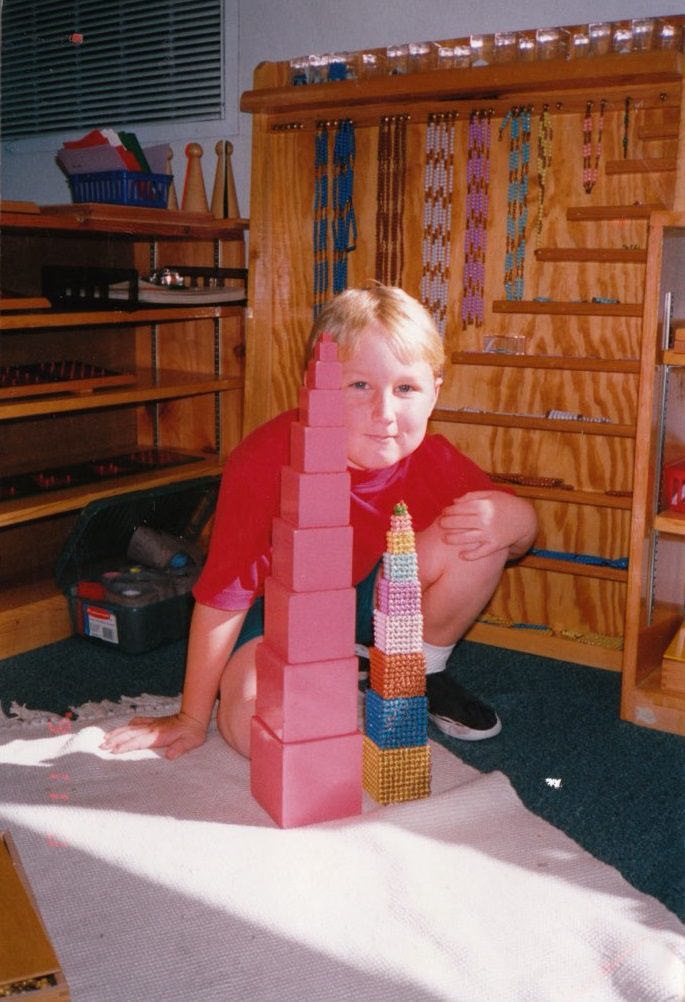
I have been a strong supporter of Montessori education since before Ben was born, having read several of Maria Montessori’s books and applied those methods when working with my employer’s young children.

When it was time for Ben’s dad and me to decide on a kindergarten for Ben, we considered a few options. Ben’s dad had been in public school throughout his education and felt that, if it was good enough for him, it was good enough for Ben. He was, however, willing to look at private schools as well. I recall visiting at least three schools, including the public elementary school closest to our home, a Christian School, and Countryside/NewGate Montessori.

Even though I expected lower standards at the public school, I was floored when the teacher told us that not every student was expected to know the whole alphabet by the end of the kindergarten year. Ben and his preschool classmates all knew the alphabet and had started reading by that time. Although the education level at the Christian School seemed to be up to my expectations, the classrooms were noisy and cluttered.

When we visited Countryside/NewGate, I knew that was where Ben would flourish. The quiet, orderly classrooms provided an ideal place for a young child to learn. I appreciated the respect with which each student was treated, and the way conflicts were resolved. I found the three-year age span in the classrooms to be an excellent way for a student to experience being a beginner, learning from the older students, and to work his/her way up to being a leader among the students, helping the younger ones. I was also happy to hear that each student could progress at his/ her own pace, not being held back to the level of the lowest common denominator.

Yes, there were some sacrifices made to have Ben attend Montessori school all the way through high school. Ben’s dad and I separated two months after Ben began Montessori school. I faced all the challenges that single parents face: reworking my schedule to accommodate Ben’s needs; trying to make ends meet; figuring out the financial aspect; etc. It was a very difficult time, but I was determined to provide Ben with what I considered to be his best educational opportunity. Looking back on it now, that was one of the most valuable things that I have gone through. I learned to be resourceful and to stand by my principles when it came to raising Ben.

Ben’s dad and I contributed to a portion of the tuition, but the bulk of it was on my shoulders. Even though it was a stretch to pay each month, I was not willing to lower my standards and deny Ben the opportunities he had at Countryside/New Gate School. The school helped with a generous contribution in the form of a scholarship. I believe paying at least a portion of the tuition gave me a bigger stake in my child’s education and I tended to be even more involved in it. When my new partner, Michael, came into our family full-time, he was active in projects and events at the school as he saw and supported the value of the education that Ben was getting. Ben graduated from NewGate School in 2005.

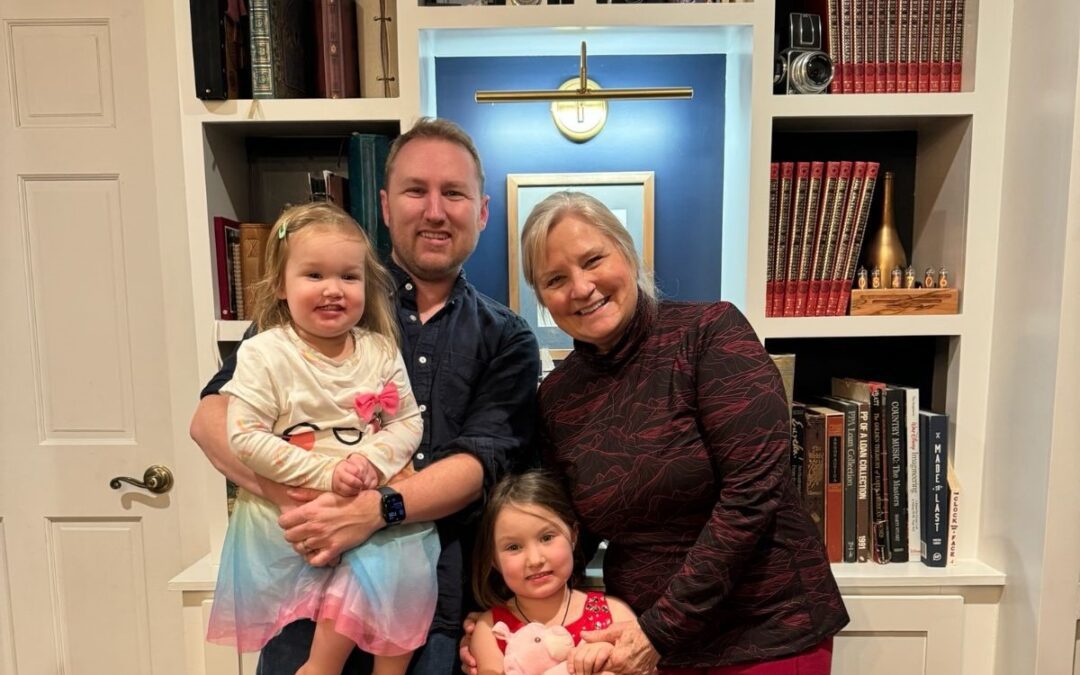
Now that Ben is grown, married, and the father of two beautiful girls, Michael and I support Ben and Kara’s choice to enroll Aurora and Felicity in a good Montessori school. I’m delighted that both girls are doing so well in that environment.

Becky Noble grew up in rural Pennsylvania, traveling around the country with her family every summer. For four years after graduation, she sailed the European coast and Caribbean, overseeing the galleys and teaching math and world history aboard the schooners of the Flint School. She transferred to their Sarasota, Florida office to help build ActionQuest travel adventure and Lifeworks community service programs that would eventually become Global Expeditions. She recently relocated to Franklin, Tennessee to be close to Ben and his family. When not spending time with her granddaughters, Becky now runs an online business and is a watercolor artist who enjoys sharing her knowledge with young people.

Making Montessori: Shoe Cleaning

Making Montessori: Shoe Cleaning

Purpose

  • Develop independence in care of self
  • Strengthening and refinement of movements of the hands

Age

  • 16 months and up

Young children enjoy learning to care for themselves and their environment. Dr. Montessori described these activities as Practical Life activities and you will find them in all Montessori classrooms from birth through high school.

When children learn to take care of themselves and their environment, they experience inner pride and confidence. This supports their need to do for themself independently and serves their intellectual, physical, and language development.

Learning to clean shoes is a fun activity for young children. As a parent, you can introduce this activity and keep it available to your child in a space that makes sense: near your entry; on a cleaning supply shelf; or even in your broom closet. Once you show your child how to use this activity, keep the set intact (don’t let the pieces migrate around the house), remind your child of the true purpose if they use the tools for other activities, and remove the activity if your child is not able to use it safely.

INSTRUCTION

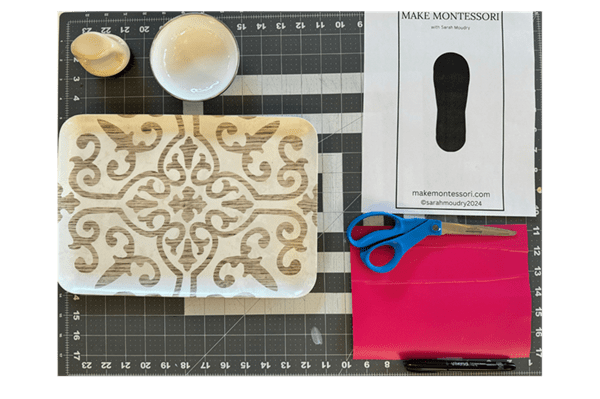
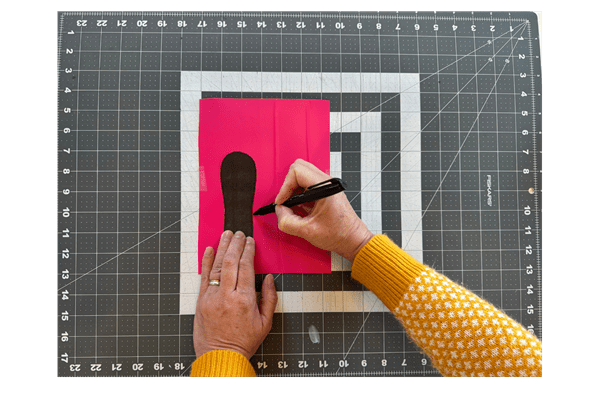
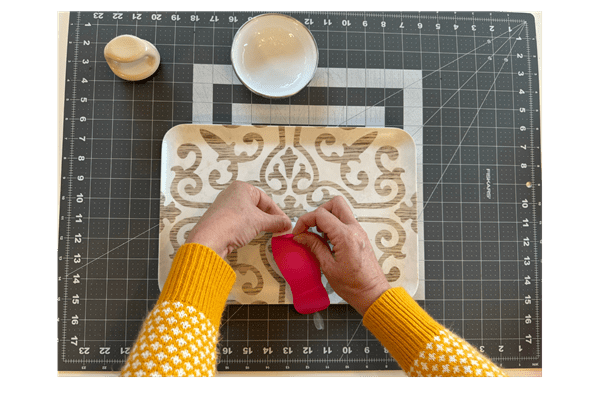
  1. Trace the shoe silhouette template on the adhesive vinyl with the marker.
  2. Cut out the Shoe silhouette and set aside.
  3. Wipe the tray surface with a clean dry towel.
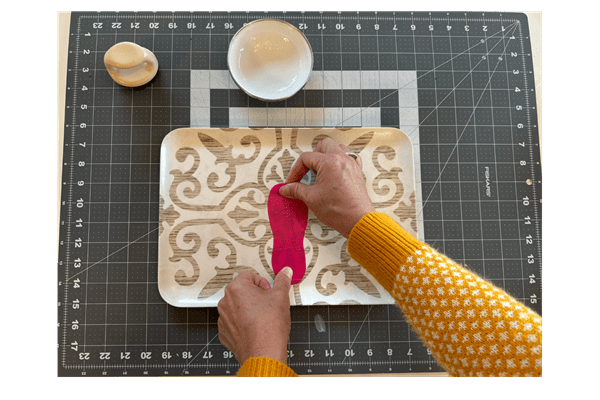
  4. Remove the backing of the cut shoe shape.
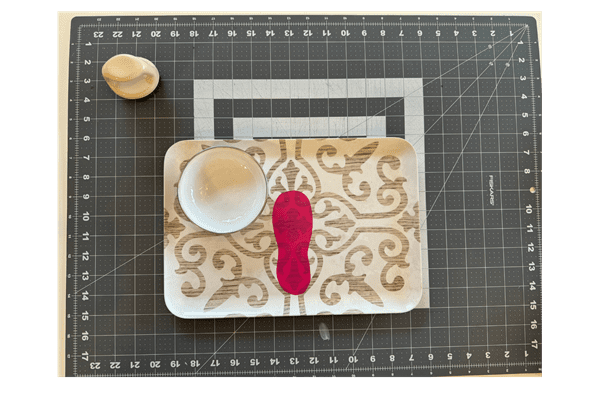
  5. Place the shoe shape in the center of the tray so that the length of the shoe shape is parallel with the handle sides of the tray.
  6. Press the shoe shape with your hands and smooth out any bubbles.
  7. Place the brush dish on the upper left side of the tray.
  8. Place the brush in the brush dish.
Lesson
  1. As with all Practical Life activities, show your child the tools you will need, what they are called, and how to hold them.
  2. Remind your child that you will show them how to do the activity and then they will have a turn.
  3. To clean shoes, place one shoe on the shoe shape and one shoe to the left of you on the floor.
  4. Place one hand in the shoe, and hold the brush with the other.
  5. Gently brush the shoe.
  6. Turn the shoe side to side so your child can see that you are looking for dirt.
  7. Place the brush back in the dish.
  8. Place the shoe next to the one on the floor.
  9. Pick up the other shoe and place it on the tray.
  10. Invite your child to have a turn!

When your child is done, they can see what other shoes are around the house to clean. This activity combined with the hunt of finding shoes can make this activity last a long time. Once your child understands the activity, you can say things like…”I think I remember a pair of brown shoes in your dad’s closet…” By doing this you are supporting your child’s awareness of their environment, need to engage socially and genuinely, as well as your child’s language development. Try using different adjectives to describe shoes they may find. Scan

Off to the Ballet

Off to the Ballet

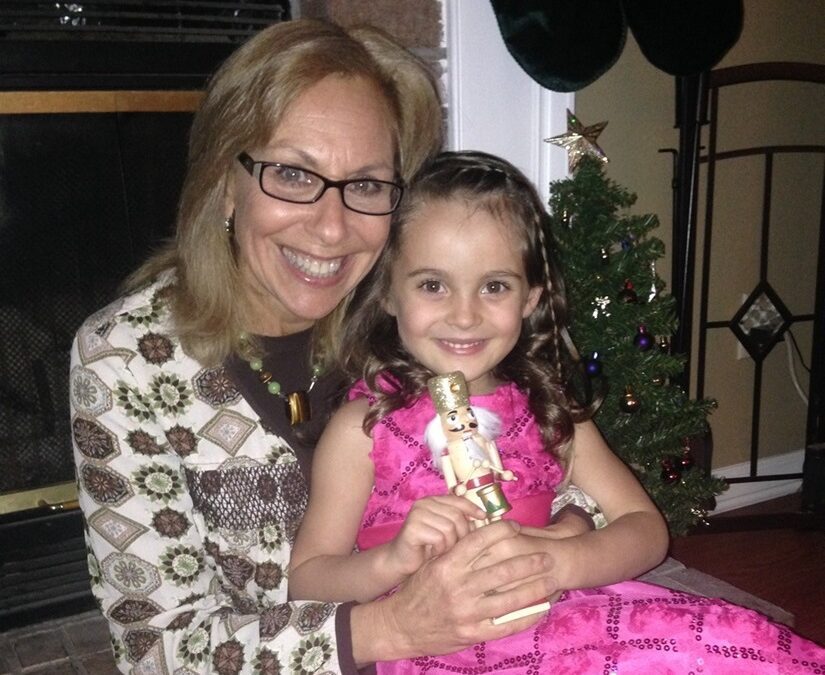
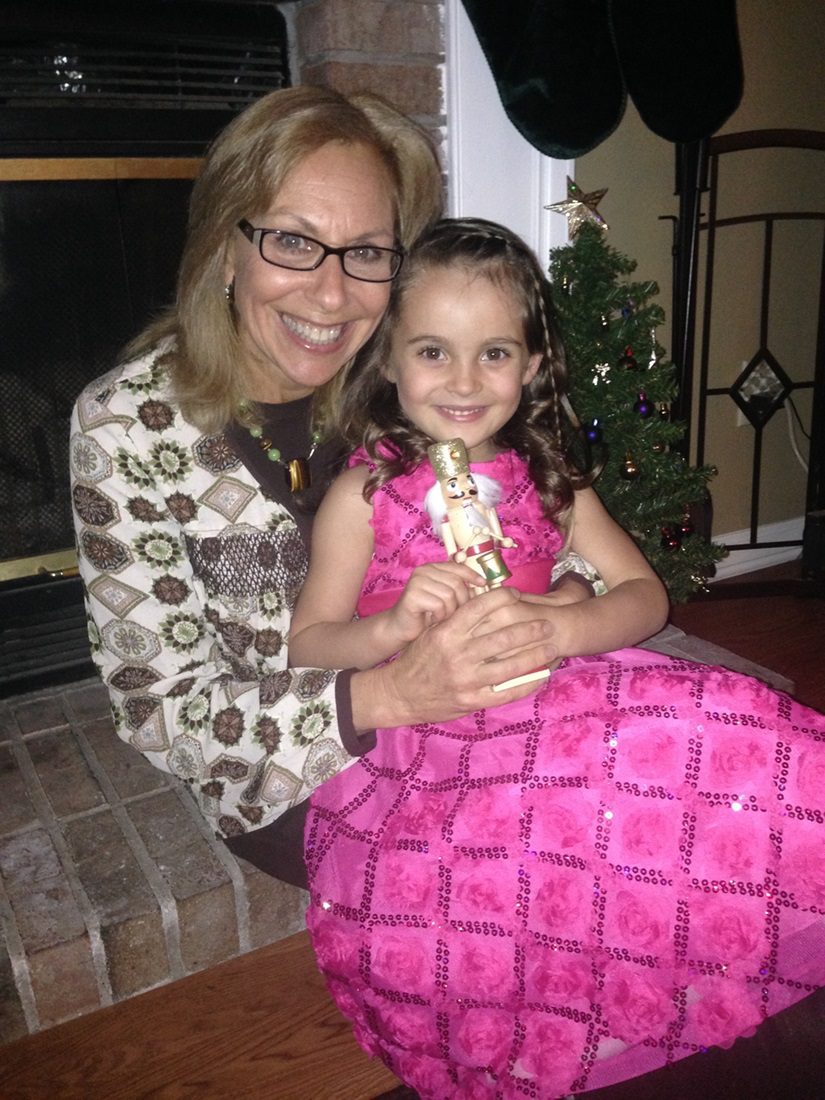
One of my fondest memories I’ve shared with my granddaughter, Blakely, was talking about the time we went to the ballet together when she was five years old. We had watched the Nutcracker numerous times before we finally actually went to see a live performance. I bought her a special dress to wear, we got all fancied up and ready, and off we went.

Everyone sitting around us looked at her in wonderment as she wore a very excited expression on her face. The music began and the ballet started to unfold. 

She leaned in next to me and said, “Grammie, that’s not how Clara should be doing that dance.” It seems that she had memorized the version we had watched, and I had neglected to let her know that every dance troop’s choreographer interprets the dance parts a little bit differently. She still enjoyed the show and every time I stole a glance over at her I could see total rapture on her face.

Her interests have long ago steered away from watching the Nutcracker. She is now almost fourteen and an avid soccer player. However, I just recently asked if she remembered that night. “Grammie,” she said, “how could I ever forget it.” I hope she shares a similar experience with her grandchildren if the time comes.

Creating lasting memories and sharing your passions with your grandchildren creates bonds that can’t be undone, so invest the time in them and with them. The payoff is huge and lasting.

Margot Garfield-Anderson is the retired Montessori Foundation Project Manager and International Montessori Council Membership Director. She continues to be involved in the organization as an IMC Board member and serves as a reader of documents for schools going through the IMC accreditation process. She still enjoys sharing her grandparenting experiences with Tomorrow’s Child subscribers. She also volunteers for many other nonprofits and organizations in Sarasota, Florida.

Highlighting Member Schools: Countryside/NewGate School Sarasota, FL

Highlighting Member Schools: Countryside/NewGate School Sarasota, FL

In the early 1980s Kitty Williams (now Bravo) and her former husband, Farmer Steve Williams, lived on 5 acres of land with their two young daughters in their small, old-Florida home on Ashton Road in Sarasota, FL. Farmer Steve dreamed of an organic farm, while Kitty dreamed of a Montessori school; both dreamed of making the world a better place. They established Countryside Montessori School, in January of 1984, on a side porch of their home, with just five children, and Steve farmed the land. During that winter and spring, the garage was remodeled, and they applied to the zoning department for permission to officially have a school on the property. In August of 1984, the garage classroom opened with about twenty children: ages 2 years 11 months to 6 years old. By the fall of 1985, the porch had been enclosed and a second Primary classroom was opened, bringing the total enrollment to about forty students.

By 1987, the school expanded to include an Elementary program with just a few first graders continuing from the Primary class. A Toddler classroom was established in a small building on the roadside that had been Farmer Steve’s produce store. Within a year, the Elementary class expanded to first through third grades with Primary moving to the small classroom that was once the produce store.

Countryside kept growing, and in 1989 they built a spacious classroom with natural light for the expanding Elementary class. Now the school had three Primary classes, one Lower Elementary class, and a group of very enthusiastic, committed parents.

During the 1990s, the dream kept growing and the Williams restructured the school as a non-profit with the hope that they could continue through the high school years. With the help of some parents, they acquired the portable buildings, which they remodeled to expand the Elementary program. By the fall of 1993, they had three Primary classrooms, two Lower Elementary classrooms, and one Upper Elementary classroom.

On the school’s 10th Anniversary, after a decade of growth and dreams, Kitty and Steve, along with a dedicated group of families and staff, began to partner with the Montessori Foundation and became the Foundation’s “lab school.” So many things were accomplished during the 90s. They changed the school’s name to NewGate School (gate being an acronym for “global awareness through education”). After changing the name to NewGate School, they purchased one hundred acres of land for future development of a second campus, and added a Toddler class, another Upper Elementary class, and a 7th & 8th Year class (Middle School) at Ashton.

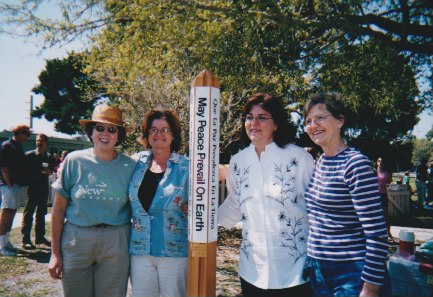
The dream wasn’t done yet! In the 2000s, NewGate opened its second campus on Clark Road and added the high school. In their 20th Anniversary year (2004) two beautiful things happened. First, a peace pole was erected in a lovely place in the center of the Ashton Road Campus in honor of Kitty’s work in Montessori for world peace. Second, NewGate had its first high school graduate! Big dreams were accomplished, and big challenges presented themselves. However, faith and determination did not wane and NewGate pushed forward with renewed assistance from the Montessori Foundation. When the Clark Road Campus closed, all students returned to the original campus on Ashton Road.

By the time the 30th Anniversary came around the school’s recovery was well underway, and in 2016, a new campus for the Secondary students was purchased in Lakewood Ranch. Now, in 2024, NewGate’s 40th Anniversary year, we have three campuses: the Ashton Road Campus; the Lakewood Ranch Campus; and the Global Campus (a virtual campus for Secondary students from around the US and the world). We serve children and adolescents from Toddlers through High School.

NewGate is proud to be the “lab school” of the Montessori Foundation (MF). Being the lab school of the Foundation means trying new ideas based on our tried-and-true Montessori principles. We have spent a lot of time developing models and systems for other schools to use as they grow and expand organizing new programs to enhance the already existing Montessori curriculum; creating a model for Montessori Secondary schools; sponsoring teacher training programs; and cultivating a community of respectful adults who mentor and guide children and adolescents by doing their best to live out the principles of peace.

Written by Lorna McGrath, NewGate Board member, with the help of Kitty Bravo, Founder of the School, and Lauren Speed, ‘long-time member of the NewGate faculty and adminstrative team.

Dear Cathie: Building Concentration and Focus

Dear Cathie: Building Concentration and Focus

DEAR CATHIE—

WE THINK IT IS TIME FOR OUR CHILD TO EXPERIENCE LEARNING OPPORTUNITIES IN ADDITION TO MONTESSORI SCHOOL. WE THINK HE IS READY FOR SOME EXTRACURRICULAR ACTIVITIES. WHILE WE KNOW THAT IT IS POSSIBLE TO BE OVERSCHEDULED, WE DO WANT OUR CHILD TO TAKE ADVANTAGE OF ALL THAT OUR AMAZING COMMUNITY HAS TO OFFER. HOW DO WE BALANCE THIS?

— A SERIOUS PARENT

Dear Parents,

You are right on target, and we applaud your conscientious approach to this complicated subject. The rule of thumb is to follow your child interests and seek to broaden their experiences until they are old enough to have found their passion. The purpose of extracurricular activities for young children is to try new things, develop new skills, and have opportunities to take direction from another adult besides parents and teachers at school.

We recommend that young children experience extracurriculars in small segments for the purpose of just trying them out. These are usually offered in areas such as sports, dance, drama, art, etc. Seek classes that are in short sections such as 8 weeks or a week-long summer program. The purpose of these of classes is to expose children to the activity or skill. These short introductions help parent and child determine interest, without overtaxing the child or family’s resources. These classes focus on the basics. It may be possible to engage your child in a summer camp that encompasses a number of different sports or types of dance at a single location. From there it is possible to decide where to focus your child and family’s resources in the years ahead.

Many towns have recreation sports leagues as well as travel leagues that require children to try out for a place on the team. However, your child may enjoy being a part of the experience at any level. Additionally, sometimes activities are offered as single day camps during days off from school. These may include computer skills, 3-D printing, cooking classes, etc. These one-day activities can help you widen a child’s awareness of the myriad of activities available to pursue.

As children mature, they begin to narrow their focus and gravitate toward some extracurricular activities more than others. Many begin to show an affinity for a particular activity such as scouting, a specific sport, a type of musical instrument, a dance class, etc. Now is the time to zone into one (or a few) of these areas and begin to focus your child’s after school time. You may eventually decide that private music or dance classes are for your child. Maybe your child is committed to soccer and is attending practice twice a week and playing a game once a week as well. Each of these comes with a time and financial commitment on your part, and that needs to be figured into the equation. Be sure to involve your child in the decision and not simply decide for them.

As you are making these decisions, remember to program in some free time for your child to have time outdoors to play, create, and spend unstructured time with friends. This is an important part of your child’s development as well. 

Cathie Perolman is a reading specialist, Elementary educator, author, consultant, and creator of educational materials. For over three decades, she has dedicated her energies to improving reading for all youngsters. She is the author of Practical Special Needs for the Montessori Method: A Handbook for 3-6 Teachers and Homeschoolers (available through montessori.org). 

She is a regular contributor to Tomorrow’s Child and Montessori Leadership magazines. Cathie holds a BS in Early Childhood Education and a MEd in Elementary Education, with a concentration in reading. She is credentialed as a Montessori teacher. Check out her new downloadable materials on her website cathieperolman.com.

Book Reviews by Lorna McGrath

Book Reviews by Lorna McGrath

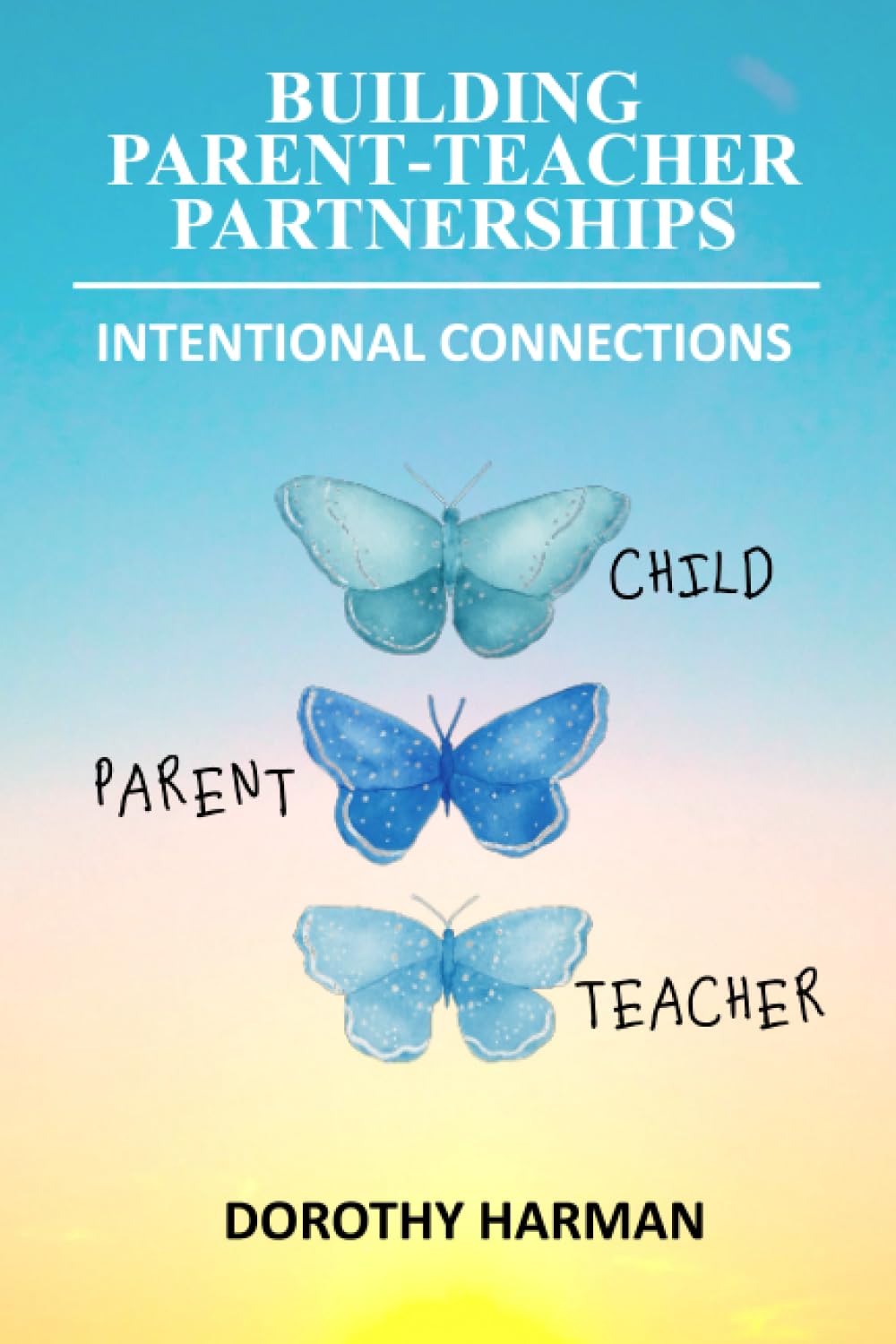
Intentional Connections: Building Parent Teacher Partnerships

Written by Dorothy Harman

Parents, this is a book to put at the top of your “must read” list! It’s so user friendly and packed with such important information for all of us: parents, teachers, caregivers, and extended family. When I was halfway through it, I couldn’t put it down. My grandson is in Montessori school, and I wanted to send a copy to his parents immediately!

Dorothy Harman has so much wisdom to share and inspiration to offer about parent-teacher relationships, keeping the child’s best interests as the common goal. She has created a book that has only 39 pages, and it is formatted in such a way that you can read whatever topic is of interest to you or is needed for your child. AND, there is a section within almost all the topics called “An Idea for Consideration,” where you can write notes. This section includes the idea, your reflections, your next steps, and discussion with the child’s teacher. It is such a great tool for gathering your thoughts.

You can purchase it through Montessori Services: www.montessoriservices.com/building-parent-teacher-partnerships

JUST A WORM

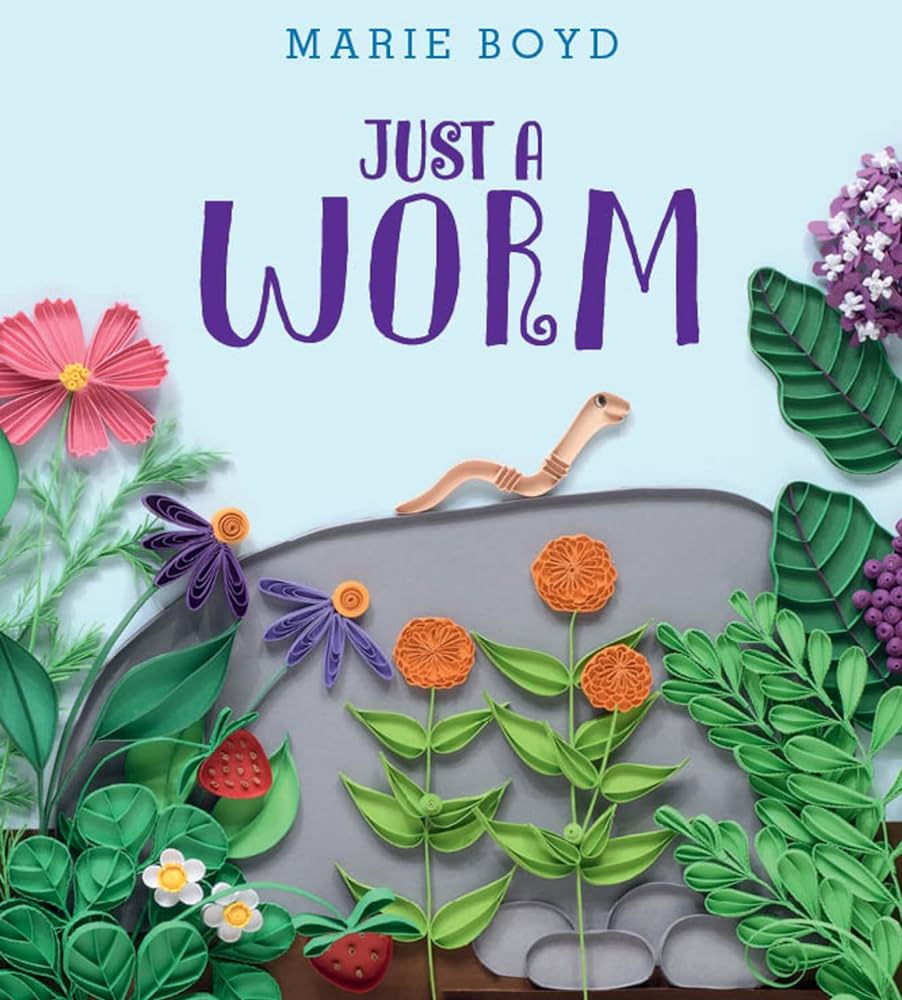
Written & illustrated by Marie Boyd

This book is illustrated using quill art techniques except for the worm (pen and ink) and the blue sky (digital). Its eye-catching colors and designs are quite beautiful. The author gives readers a lesson in quill art at the end of the book. The story itself is about the worm affirming that it is more than ‘just a worm.’ Along the way, the worm discovers how other garden insects contribute to the garden world. If you look closely, you’ll find the creature coming up on the next page. Although the story is wonderful for children from 3 to 7 years old, the quill art takes quite a bit of fine-motor control. It may be frustrating for children 3, 4, and possibly 5 years old, while 6 and above may really get into making quill art.

Evelyn Del Rey Is Moving Away

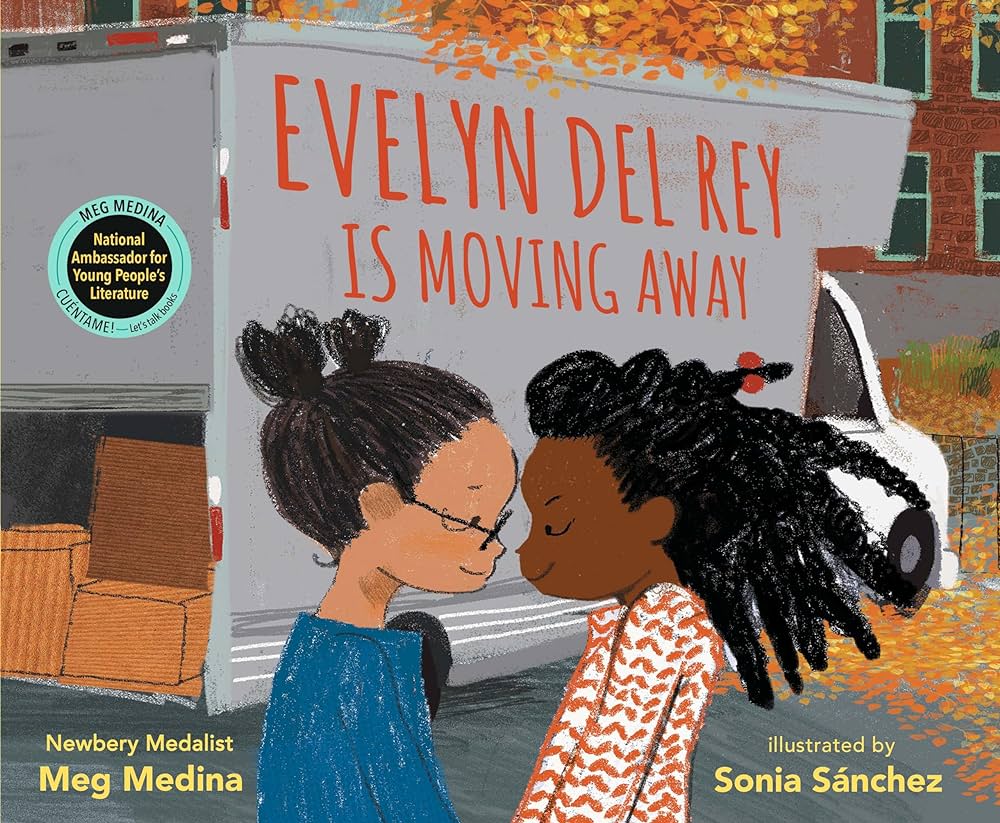
Written by Meg Medina
Illustrated by Sonia Sánchez

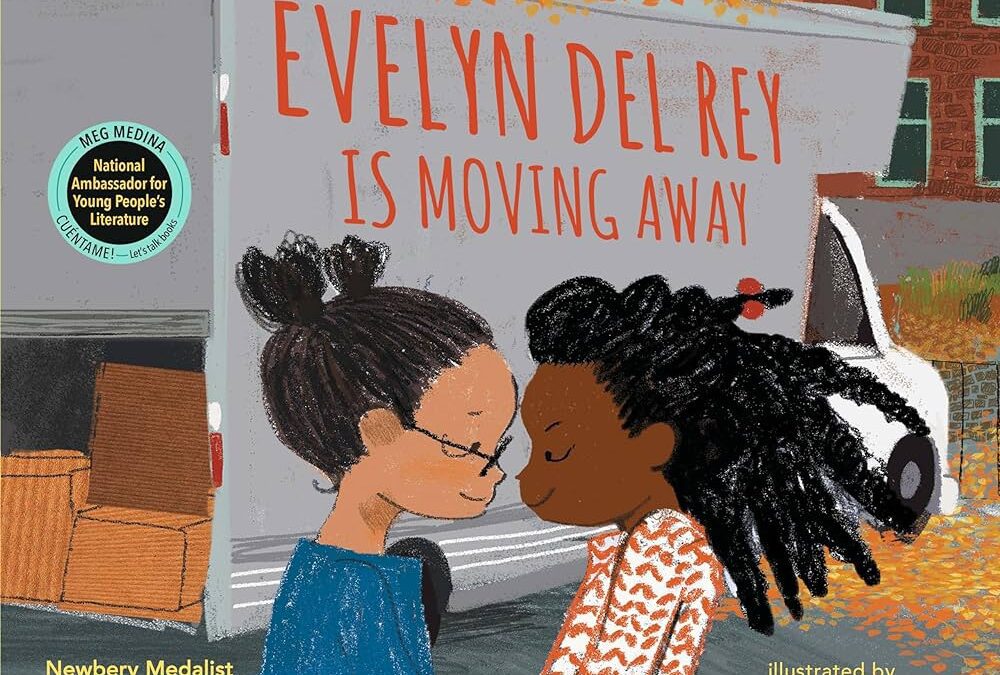
Touching. Meg Medina captures in a lovely way the feelings friends often have when they become physically distant from each other, as in a move to another town or city and the changes that occur in their relationship. The illustrations are vivid and quite realistic. They are reminiscent of Ezra Jack Keats’ style. The words come alive through these images. Jumpstart and Read for the Record are two organizations whose purposes are to help reduce the cycle of poverty through providing high quality books and reading. They have provided ideas for adults to enrich the reading experience with children through notes about how to interact with your young reader. Children 4 to 8 years old enjoy exploring the subject of friendships and how life circumstances can change relationships.

THE CIRCLES ALL AROUND US

Written by Brad Montague
Illustrated by Brad & Kristi Montague

This is a delightful story for children 3 to 7 years old, using ever enlarging circles to illustrate how we broaden our number and kinds of relationships among our human contacts and our world. It starts with a small child who draws a circle around himself that is only large enough for him. It shows the reader how small our scope is when we are infants. In fact, in infancy, humans really don’t know that there is anyone else except themselves. Gradually they begin to realize that there are others around them. And so, the circle becomes larger to include immediate family and primary caregivers. I’ll let you read this book to find out how far the author goes in expanding the circles. I will be a spoiler, though, and tell you the ending because it is so important. “…remember the first circle started with just the love you hold inside.”

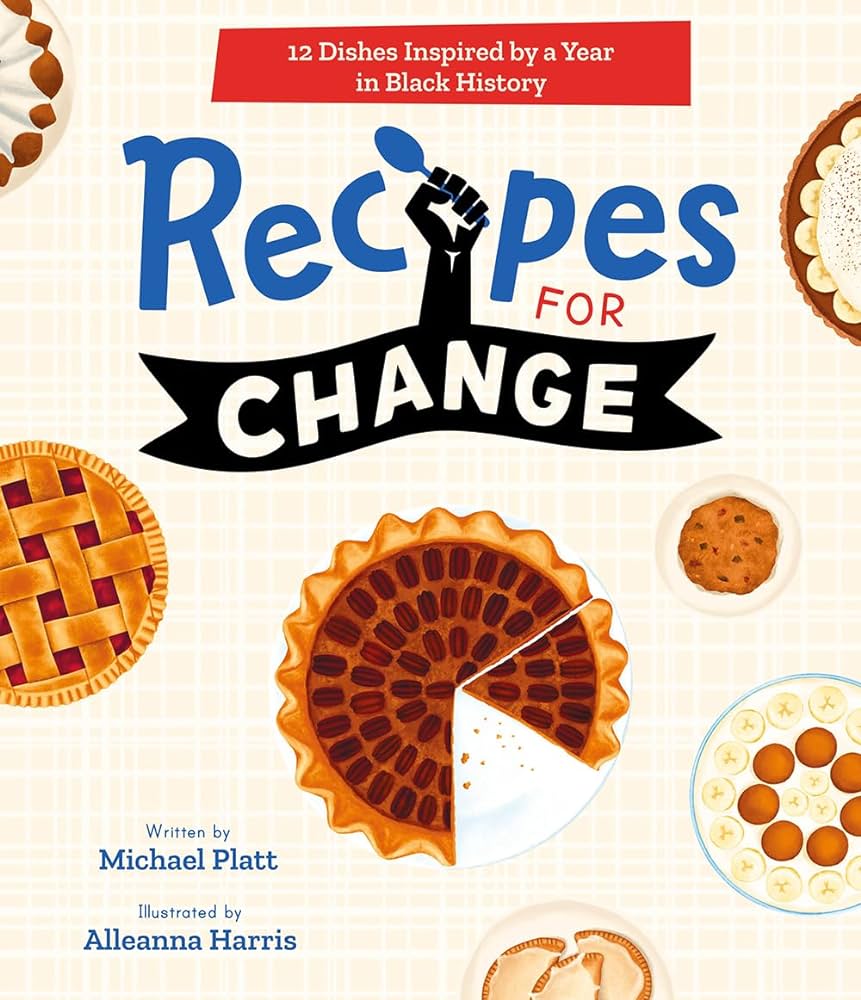
Recipes for Change

Written by Michael Platt
Illustrated by Alleanna Harris
Reviewed by Cheryl Allen

This book brings together so many interesting types of books. It is a cookbook, with stories from history and biographies. Each month of this book about Black history depicts an act of resistance and a recipe that is connected to the event. At the back of the book are short biographies of the leaders in the book.

Some of this information may be new to you, and some of it may present a slightly different angle of a piece of history. We may feel we know the leaders of the Montgomery Bus Boycott. In the December entry, you will learn about Georgia Gilmore and how she used her baking skills to help raise money for transportation for people who boycotted the bus system for more than a year. You can make her pound cake.

The recipes are easy to follow, and most need patience and possible adult guidance. While waiting for any of the recipes to be ready to eat, the stories can be read, and the detailed illustrations admired. In addition to the biographies in the back, there is a glossary and additional book suggestions.

This book is suggested for ages 8-12. It could be enjoyed by younger children, although they may need more assistance to make the recipes.

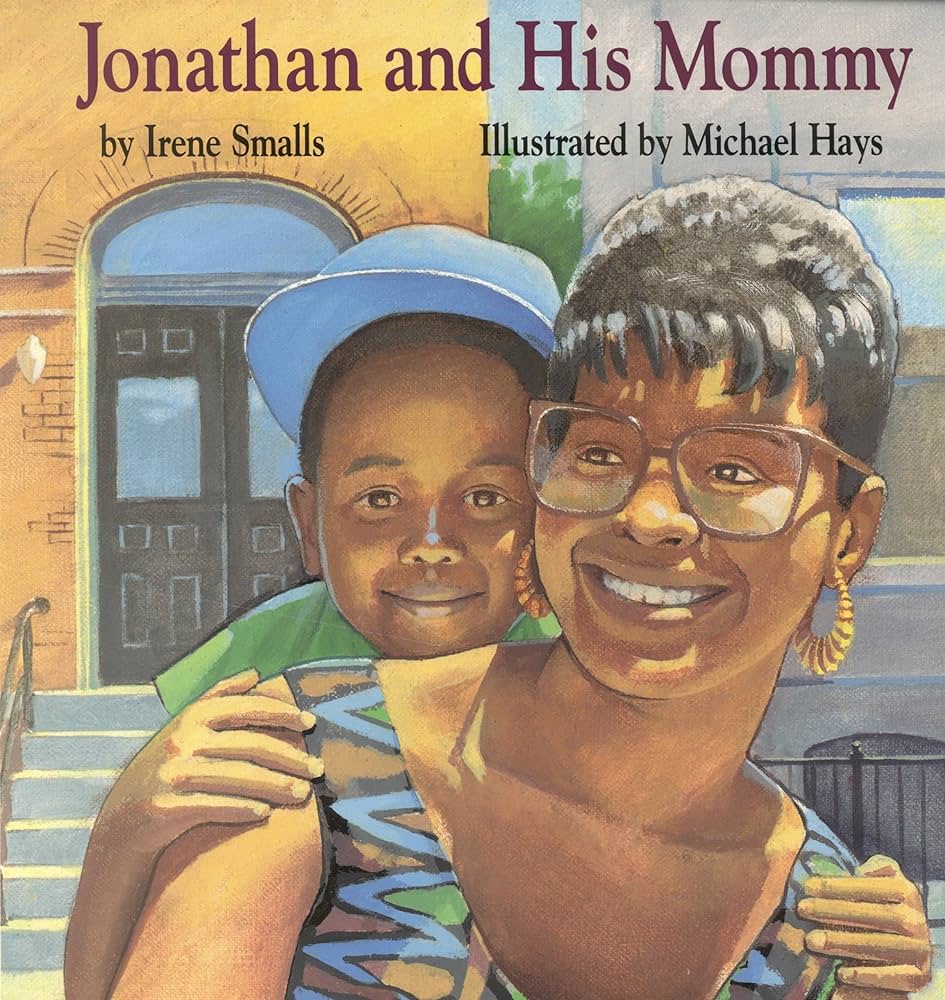
Jonathan and His Mommy

Written by Irene Smalls
Illustrated by Michael Hays

Jonathan loves to take walks with his mom. They enjoy each other’s company and find all kinds of fun ways to move and to use their voices as they go through their city neighborhood. This time I won’t spoil the surprises you’ll find as you read this charming book. Children 3 to 7 will find this an interesting story and may want to try out some of the moves that Jonathan and his mother make together.

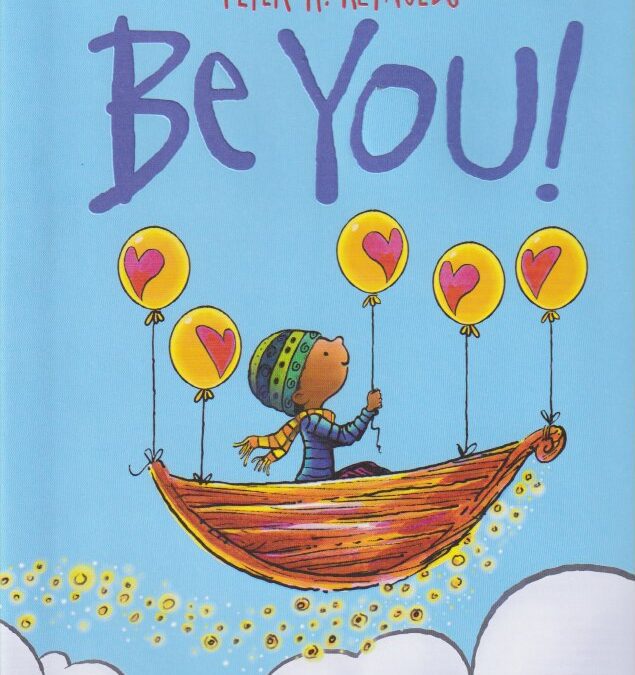
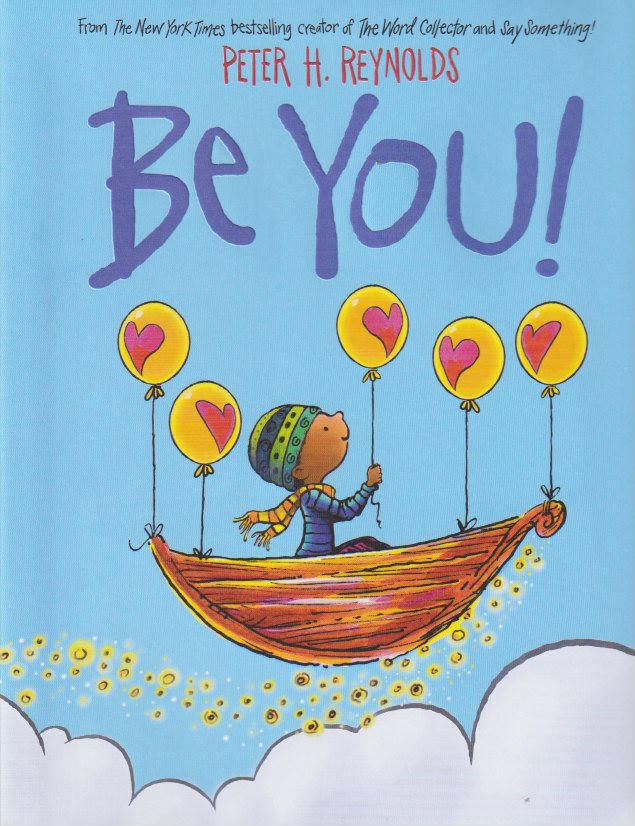
Book Review: Be You!

Book Review: Be You!

Written by Peter H. Reynolds

Peter H. Reynolds is a favorite children’s book writer who has started a social change agency called FableVision with his brother, Paul. Their idea was to help “create stories that matter, stories that move.” This book is full of words that describe different characteristics that lead humans to their own uniqueness. They are phrases that always start with “be.” What a wonderful verb. He uses phrases such as be ready, be kind, be okay with reaching out, be persistent, and many more. This is an enjoyable and inspiring book for people of all ages.

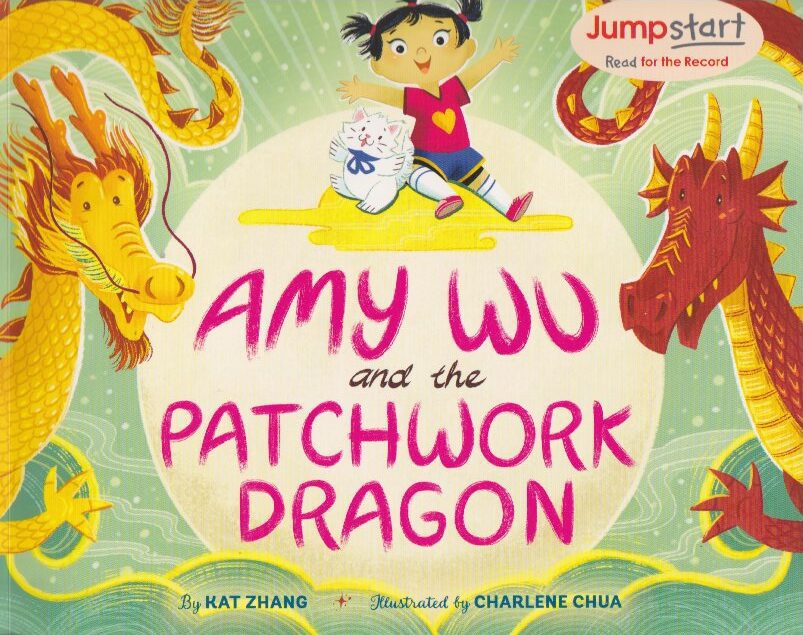
Book Review: Amy Wu and the Patchwork Dragon

Book Review: Amy Wu and the Patchwork Dragon

Written by Kat Zhang

Illustrated by Charlene Chua

This would be a great book for four- to 7-year-olds, especially when studying Asia. The story begins in an Early Childhood or Lower Elementary classroom when their teacher reads them a story about dragons and then asks them to make dragons of their own. Amy became frustrated because the dragons were not turning out as she wished they would. After school she and her friends went to her house and her grandmother read them a story about dragons. Gramma’s story triggered a memory of something up in the attic. Teachers will love this story for cultural studies, art projects, and developing reading skills. Parents will like it, too.

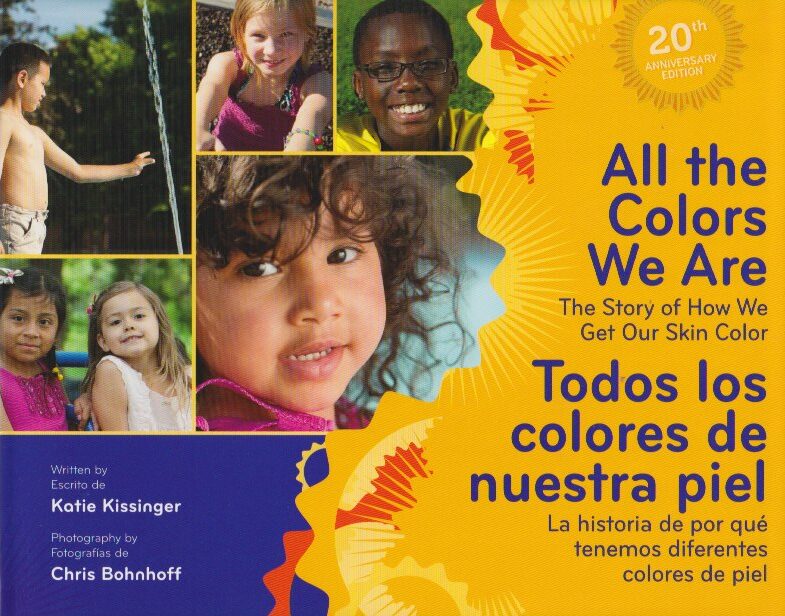
Book Review: All the Colors We Are: The Story of How We Got Our Skin Color

Book Review: All the Colors We Are: The Story of How We Got Our Skin Color

ALL THE COLORS WE ARE: THE STORY OF HOW WE GET OUR SKIN COLOR

TODOS LOS COLORES DE NUESTRA PIEL: LA HISTORIA DE POR QUÉ TENEMOS DIFERENTES COLORES DE PIEL

Written by Katie Kissinger

Photographed by Chris Bohnhoff

On every page of this book the text is in English and Spanish. What a joy! This book was written in a way that 4-year-olds to 8-year-olds will get something age-appropriate from it. For the 4-year-olds, they’ll learn something they may not have known about each other and for the 8-year-olds it may spark some interest in further research about biology or maybe genealogy. Oh… and the photographs are magnificent! The author has also included activities for children at the back of the book. Again, I think this book would be good for home or school.

Book Review: Once in a Full Moon

Book Review: Once in a Full Moon

Written by Carolinda Goodman

Illustrated by Mariia Luzina

Carolinda Goodman’s book is written as a poem. She describes in a rhythmic way all the full moons around the year. She gives the name of the moon and why it got that name. Mariia Luzina beautifully illustrates each moon and the earthly surroundings according to the name and season. The illustrations really enhance the poetry from the author. Wonderful for at home or school for children ages 4-8 years.

Book Review: The Six Stages of Parenthood

Book Review: The Six Stages of Parenthood

Written by Ellen Galinsky

Have you ever wondered if there are stages to parenthood like there are for childhood? The answer is, “Yes. There are.” Ellen Galinsky did an in-depth study of parents during different times from when their children were “imagined” to when their children were grown and leaving home.

My children are in their 30s and I now have a grandson who is seven years old. It was interesting to me to think about him when my daughter-in-law was pregnant, then in the first months after he was born, and on into the elementary years. As a grandparent I can see him differently than when my own children were growing and changing but there are many similarities to the parent stages. You are probably in the midst of a parenting stage or stages, depending on whether you have one or more children. This book may help you sort out and better understand your own feelings and thoughts as well as your parenting partner’s.