

Encourage the Outdoors with Exciting Equipment
by Cheryl Allen
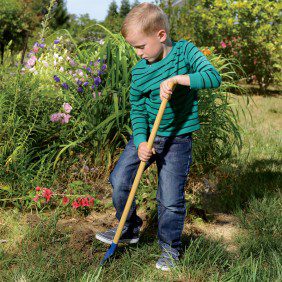
When summer comes, we often are able to spend more time outdoors. If you have the space for a garden, or even a single plant, inviting your child to grow items with you is a great way to encourage practical life at home. Time outside at your child’s pace and exploring their interests can be just a few minutes or, when there is time and interest, a few hours together. We have gathered some items to encourage exploration outside.
These products are aligned with the Montessori philosophy. When you buy through our links, we may earn a commission.
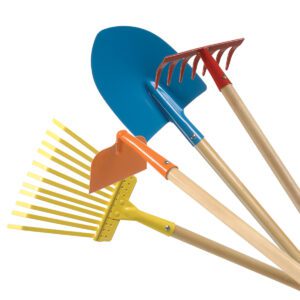
Primary Garden Tools
A set of tools for the youngest gardeners. The lighter weight and shorter handles make these tools easy for 3-5 years olds to use while gardening.
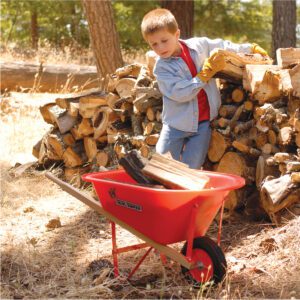
Lil’ True Temper Wheelbarrow
A child-sized wheelbarrow allows heavy work in the garden to involve the whole family.
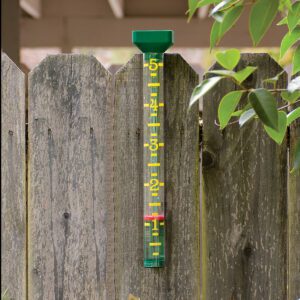
EZ Read Rain Gauge
How much has it rained? Keeping track of the rain on this easy-to-read gauge encourages exploration of measurement and record-keeping.
The Fruits We Eat and
The Vegetables We Eat
These books by Gail Gibbons share information about how fruits and vegetables grow, where they grow, and what we eat from the plants.

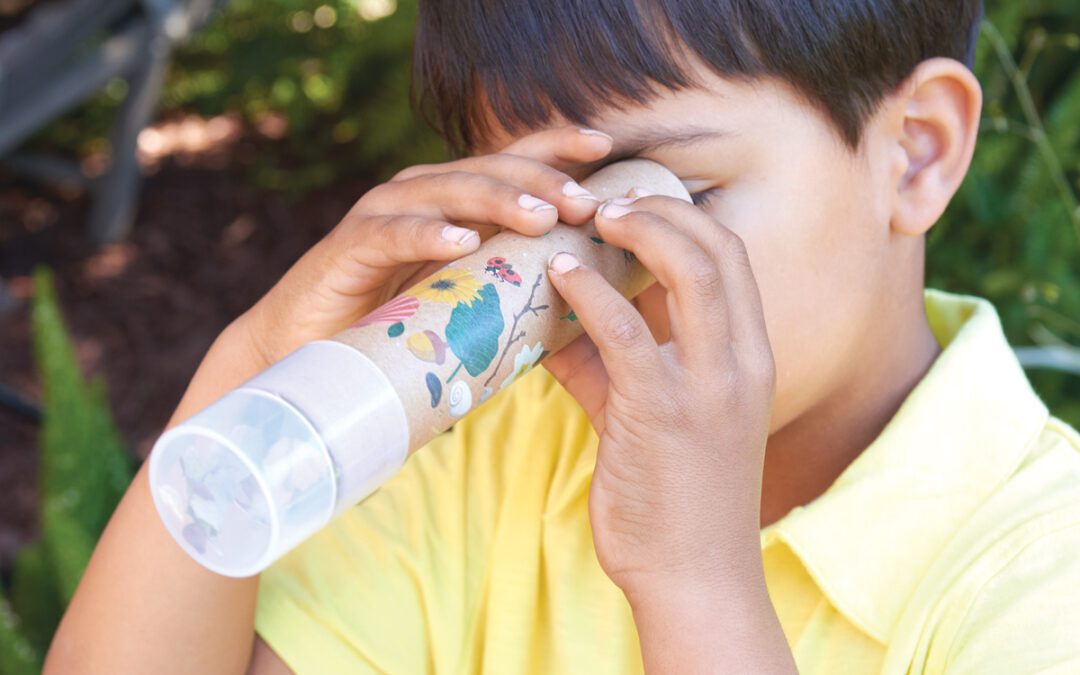
Nature Kaleidoscope
Place small items in the specially designed cup of this kaleidoscope and view the art you create.
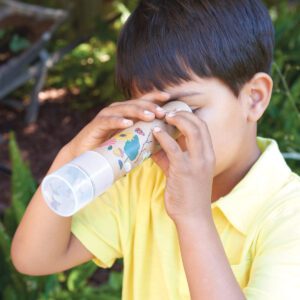
BugLoupe
Get a close-up look at bugs (or plants or rocks) without touching them. This magnifier is easy for even young children to use.
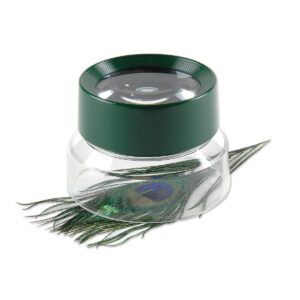
Sunprint Kit
Arrange objects on this specially treated paper, set it in the sun, rinse, and you have a piece of art.
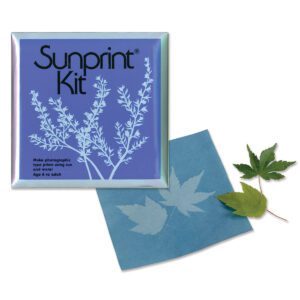
Leaf and Flower Press With Carrying Strap
This press can go on hikes with you to preserve pieces of nature you find along the way.
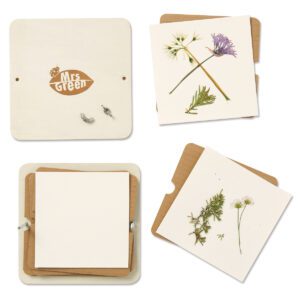
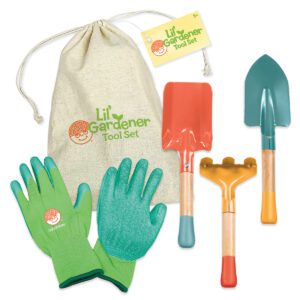
Lil’ Gardener Tool Kit
This kit includes child-sized gloves and three hand tools perfect for turning soil and digging holes.

Cheryl Allen is the Director of Parent Education for the Montessori Family Alliance and is also a parenting educator and a Montessori consultant with the Montessori Foundation. After some time as a traditional secondary teacher, she worked in Montessori classrooms, earning certifications from both AMS (3-6 and 6-9) and IMC (6-12). She is a teacher educator, workshop presenter, and member of IMC accreditation teams.
Raising a Child to Love Literature
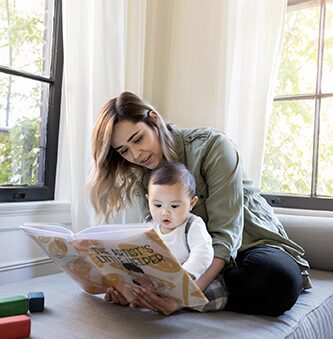
Parents often wonder and worry about how to encourage children to read and how to raise a child to love literature. How can you inspire your preschooler, school-aged child, or teen to love the written word?
It begins with adult modeling, sharing literature at all stages of your child’s life, and consistently providing books and magazines in your home. Show your child your genuine enjoyment of books, magazines, newspapers, and all things written!
Let’s start with the youngest children: toddlers and preschoolers.
Flood your home with books. You can buy them, ask for them as gifts from grandparents or relatives, or make regular trips to your local library.
Read these books often and try to respond with genuine enthusiasm when your toddler asks you to read the same book over and over, a positive step, as this leads to predictability, comfort, and a true mastery of the story sequence.
Start early with magazine subscriptions: The Babybug (6 months to 3 years) magazine is a great place to start and Hello magazine (0 to 2 years) from the makers of Highlights is for infants and toddlers as well.
Be sure that books are available for them to explore as readily as other toys and set out on low shelves. Children will be more inclined to choose books and magazines when they are as available and attractive as other toys and activities.
One of the best traditions is to start purchasing a quality hardback book for your child at every milestone, birthday, and winter holiday. Write an inscription in these books with a date and message so that they are notably special.
These are the books that will be read over and over again and loved thoroughly.
As children move into their preschool years, they are ready for different types of literature. Young children love stories that show others like themselves and that talk about their world. These books help preschoolers to feel secure and comfortable in the world they see.
But literature can also help preschoolers enter worlds slightly bigger and more divergent from their own. The stories should be getting a bit longer (and the subject matter more varied) as your child matures and is ready to explore.

I recommend looking for literature that embraces subjects that your child is interested in now, but also look for books that stretch your child’s imagination to discover new worlds and new experiences. There are many lists of appropriate Adult/child book clubs have sprung up in many towns. They encourage the experience and love of shared reading. preschool books online.
School-aged children enjoy not only singlesitting books but also chapter books and book series.
I suggest you continue to read aloud to your child at bedtime, even as your child becomes a more proficient reader. Reading aloud not only lets your children hear the cadence and speed of proficient reading, it lets them share a book with you and have the opportunity to discuss the happenings in the book as well. This can allow you to explore sensitive subject matter together, as well as a great story.
Adult/child book clubs have sprung up in many towns. They encourage the experience and love of shared reading.
In my view, it is best to continue the tradition of giving your child a carefully chosen hardcover book as a gift. It is so important for your child to build his or her own personal library with books they will read over and over for years.
Regular trips to the library remain important, although your child will naturally become more independent in selecting books during these years. By watching what is selected, you will get to know your child’s interests better, offering you ways to initiate conversation or other book suggestions. This is also a time to think back on the books or book series that were special to you and suggest them as well.
By the teen years, encourage your young adult to enjoy literature in whatever form brings enjoyment: graphic novels, books, magazine articles. Online and audiobooks can engage one in an interesting story. Non-fiction books about cooking, automobile repair, or outdoor sports also resonate with many teens.
As a parent, I believe our job is to encourage the exploration of any subject that can enhance interest in reading.
Teens also enjoy reading about themselves and their real-life challenges, so many will gravitate toward content that explores these issues.
As a teen, they are probably reading content online, and it may be harder to ascertain their area of interest. You might want to introduce them to others who read online, so they can have discussions there.
Goodreads.com lets kids discuss what they are reading with others, which can often be more interesting to do than discussing them with parents. There are even many chatbased story platforms like Hooked or Wattpad’s Tap app, that combine reading and storytelling for teens.
A continued family discussion about this topic is still important.
Modeling reading for your teens and talking about what you are reading is also very important. This can stimulate conversation with your teen that can lead to hearing them express their own views on topics.
Teens will read books as part of their classes in school and, if you have not read them, you might want to read the books to give you another basis for discussion.
Here are a few more suggestions:
• Continue to reach into your own memory and recommend books that were your favorites.
• Many young adult books (YA) span age groups and can be read and enjoyed by both parents and teens.
• Don’t be afraid to leave books and magazines around your home in enticing places for your teen to pick up!
• Books that are written as a series can be a good way to encourage a teen to keep on reading.
• After your teen has seen a movie, find the book that it was based upon and bring it home. Discuss whether the movie or the book was better.
As with all things “teen,” make every effort to keep the lines of communication open. Your local library may offer classes or programs for teens that can get them inside the library to explore an interest and, at the same, time renew their awareness of what is offered in the library.
Be aware that school requires a significant amount of required reading, which can limit the time that they can spend on recreational reading during the school year. Teens may read more for pleasure during school vacation breaks or in the summer when they may have more free time.
Reading can be encouraged as an enjoyable individual and family experience when it is modeled by parents, shared within families, and openly enjoyed. •
REFERENCE:
The Babybug magazine: shop.cricketmedia. com/babybug-magazine-special-offer.html
Hello magazine: shop.highlights.com/hello-magazine.html
Cathie Perolman is a reading specialist, elementary educator, author, consultant, and creator of educational materials for primary and elementary students. Check out her new downloadable materials on her website: cathieperolman.com.
For more than three decades, she has dedicated her energies to improving reading for all youngsters. She is the author of Practical Special Needs for the Montessori Method: A Handbook for 3-6 Teachers and Homeschoolers published by the Montessori Foundation (available through montessori. org.) She is a regular contributor to Tomorrow’s Child and Montessori Leadership magazines.
Cathie Perolman holds a BS in Early Childhood Education and a MEd in Elementary Education with a concentration in reading. She is credentialed as a Montessori teacher. She is married and has two adult children and two adorable granddaughters. Cathie lives in Ellicott City, Maryland with her husband.
50 Ways to Celebrate Summer Learning
50 Ways to Celebrate Summer Learning
by Cheryl Allen
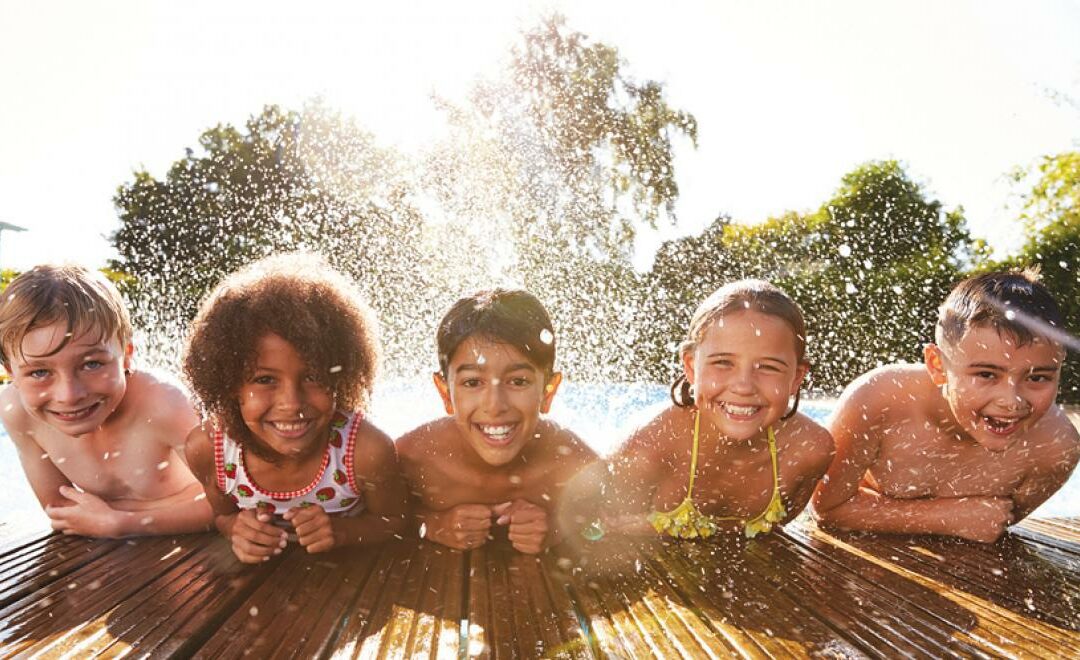
Summer is a time of more daylight, warmer temperatures, and more time outdoors. We may think that, for children who are out of school in the summer, it is not a time of learning. Yet, it can be an incredible time of learning. Here are fifty ways to help your child learn and grow while not in school.
Explore
1. Let your child plan an activity for the day or some activities for the summer. They can use maps, stick to a budget, and do the research.
2. Go on a searching hike, in nature or an urban setting; look for objects in the shapes of the letters in your name, or in sets of your favorite number, or particular colors.
3. Learn about the plants and animals that are near you. What are those birds by your home? What are the names of the plants you see every day?
4. Walk at your child’s pace. Notice the smells of different plants, admire the bugs, follow your child’s lead.
5. Play board games.
6. Learn card or magic tricks.
7. Learn jokes and present a comedy show.
8. Play unplugged games, such as Hangman, your own version of Pictionary, I Spy, or other paper-and-pencil games.
9. Think of free or inexpensive ways you could help neighbors and act on them.
10. Create a scavenger hunt and follow the clues.
11. Try out new playgrounds nearby.
12. Go to a grocery store you do not usually go to, especially if it has a focus on an ethnicity different than your usual cooking.
13. Allow time for daydreaming.
14. Try outdoor science experiments.
15. Plan a dream vacation.
16. Find some art to admire, outside or in a museum. Discuss what each person likes about it.
17. Explore distances and make a map. How far are you from family members, favorite types of animals, friends, or any other thing that can be mapped?
Communicate
18. Make time for reading every day, or nearly every day.
19. Visit the library and allow your child to make choices of reading material on their own.
20. Encourage your child to tell a friend or a family member about a book they read; retelling helps develop understanding.
21. Write letters to friends and family.
22. Address the envelope for that letter. Writing the address correctly on an envelope takes practice.
23. Keep a summer journal or a travel journal. Write in it regularly and include printed photos, pressed flowers, or leaves, ticket stubs, maps, or any reasonably flat items that remind them of the events written about.
24. Have your child create lists for things to do, grocery lists, books read or books to read, movies to watch, anything that can be listed.
25. Write a letter to their future self and store it or use a site that will email you in a certain amount of time.
26. Create a kindness list; how many acts of kindness can be performed this summer?
27. Count cars, bikes, dogs, flowers, anything you see regularly in your travels.
28. Find letters of the alphabet or make up a silly sentence using letters or words on items in the grocery store. Only one word or letter per item!
Create
29. Build a design of your child’s own creation or follow the directions from a set, with Legos™, blocks, or other building materials.
30. Learn to build card houses.
31. Plan and build a birdhouse.
32. Make your own playdough and sculpt with it.
33. Water down paint, place paper outside, and use squirt guns filled with the watery paint for a creation.
34. Set up objects outside and trace their shadows onto paper.
35. Put on a show–write it, practice it, design costumes and props, and perform for others. Record the show to share it with family that cannot attend in person.
36. Use chalk to draw outside, then use water and a scrub brush to erase it.
37. Plan dinner for a night and help make it.
38. Make a salad. Make dressing to go with it for an extra skill-building opportunity.
39. Grow vegetables and harvest them for dinner.
40. Find a recipe and cook with a new-to-you food.
41. Shuck corn, peel potatoes, wash, and spin lettuce dry, participate in cooking preparation.
42. For older children, set a cooking challenge to use ingredients and make a meal.
43. Sketch or paint flowers at your home or a nearby location.
44. Draw self-portraits directly on the mirror using window markers.
45. Clean the mirror after drawing on it.
46. Wash windows (an adult may need to wash the top).
47. Water the garden or potted plants.
48. Organize an area of your home together, especially one that your child uses regularly.
49. Explore with cash, count coins, save for an item, buy something with cash and check the change received.
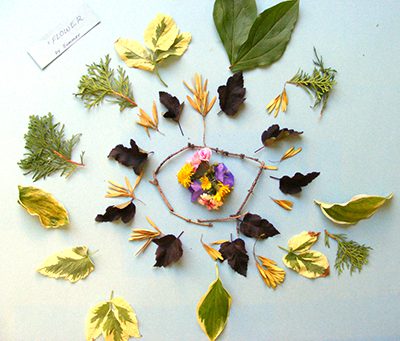
50. Make leaf or bark rubbings and label them with the type of tree or bush they came from. •
Cheryl Allen is the Associate Coordinator of the Montessori Family Alliance and is also a parenting educator and a Montessori consultant with the Montessori Foundation. Cheryl attended Montessori school as a child. After some time as a traditional Secondary teacher, she worked in Montessori classrooms, 3-6, 6-9, and 9-12, earning certifications from both AMS (3-6 and 6-9) and IMC (6-12). She is a teacher educator, workshop presenter, and member of IMC accreditation teams. Cheryl’s two children attended Montessori from age two through high school graduation.

Stewards of the Earth Preparing for Earth Day with Our Families
To continue reading, you will need to choose a subscription plan.
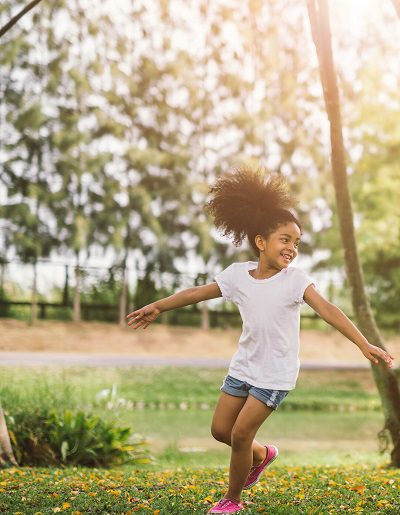
Get Kids Moving
Why Physical Play Must Be Part of the Formula When Kids Head Back to School
By Preston Blackburn

What began abruptly as a stay-at-home mandate two springs ago settled in for significantly longer than any of us expected. Fortunately, with vaccines, we are trending back toward normalcy. One of the brightest spots we are seeing is children returning to their classrooms in person.
As we get ready for a school year in the classroom rather than virtual, many educators are considering how to make up for suspected learning losses that may have occurred during a year of virtual school (Pearson, 2021). From an adult perspective, the first reaction might be to buckle down and power through as much curriculum content as possible to bridge any gaps in acquired knowledge. But is this the right answer? I would argue emphatically, no.
Play is the way kids wring out their brains. The brain is like a sponge. Once it is full, it cannot continue to absorb until it has been wrung out. As adults, we instinctively take breaks when we are working. We grab a coffee, head to the water cooler, or take a peek at social media. These breaks give the brain time to wring itself out.
Play is the way kids wring out their brains. Play is a time for resetting and relaxing their focus, so that their brains are more alert when it is time to go back to the desk. Students’ play was already being restricted before the pandemic. Reports found 44 percent of school administrators had already reduced recess and PE time to increase academics, despite studies proving that more time in recess leads to bigger gains in the classroom (Reilly, 2017). Coming back to school post-shutdown, we must remember to include play-based breaks. It is play that helps kids build strengths and motor patterns needed for classroom success, and it is play that helps kids develop social skills needed for lifetime success.
How Play Leads to Physical Skills and Strength, Leading to Classroom Success
Kids need strength in their arms, legs, necks, and core to sit at a desk, hold and move a pencil, or keep their bodies still so they can pay attention. Children build strength in play when they run, climb, and swing.
Kids need to know where their bodies end and begin, so they can transfer that information to the page as they learn to write. How much space does a letter, or a sentence take up? What direction are they moving their pencil when they write? Children learn these skills in play when they hide under the bed in a game of hide and seek or shimmy through a fence to explore what lies beyond.
Kids need to master rhythm so they can internalize patterns, which help them understand the rhythm of language, the sequence of writing, the patterns of math, the order of logic and reasoning. They develop rhythm in play while jumping, throwing, and skipping.
In addition, children’s aerobic activity releases chemicals in their brains that enhance cognition, behavior, and memory; thereby, having a direct impact on their learning trajectory. Kids get aerobic in big physical play.
These skills and strengths can only be built in movement. And children move best when they are engaged in big physical play. While some children were able to get outside and engage in big, body play during virtual schooling, many did not, spending more time on screens than ever before. As we look to bridge the academic development gap, we need to also bridge the physical development gap that grew for some of our most vulnerable students.
And we know that recess works. Consider Finland, a country known for scoring in the top levels of international academic exams. Finnish children get 15 minutes of outdoor recess in every hour of classroom time. Outdoor play allows them to explore with their bodies and gives their brains that crucial reset, helping them achieve academic success. Here in the U.S., Eagle Mountain Elementary School in Fort Worth, Texas decided to apply this theory by tripling their recess time to 60 minutes every day. Teachers worried that they would not be able to maintain their academic schedule, but by winter break, every single class was ahead of the academic schedule despite 40 fewer minutes of class time each day.
How Play Develops Social and Emotional Skills
There are the crucial social and emotional skills that can only be developed in play. When humans engage in self-directed, unstructured play, we learn how to socialize, collaborate, and read body language. We learn assertiveness, boundary setting, sharing, and restraint.
Imagine a playground filled with children engaged in play. The first thing you might notice is the sound. It is usually joyous and loud. Evolution and biology designed us to enjoy this kind of big, body, physical play. It builds key physical strengths and skills, like those listed above. It also helps children build lifetime social skills.
It might look like this: One child initiates a play idea, maybe a new idea or the continuation of a previous game. Another friend may join and suggest a modification, sending the play in a new direction. Over and over, new ideas and new alternatives surface as the play evolves. Inevitably, conflict will arise and possibly one player will become aggressive. When this happens, the other player may pull back, giving signs of displeasure with this sort of play. Or a player may have his idea dismissed and take exception, or there may not be enough equipment or material to continue the play as planned. Whatever the challenge, the players have a choice: Find a solution or the play will come to an end.
Play is the way kids wring out their brains.
How can this kind of play be woven into a child’s day?
These exchanges demonstrate the power of unstructured play. Children want the play to continue. They take ownership of the play. They are in charge of the game, they make the rules, and they have a vested interest in continuing the game. Out of this fundamental ownership grows a wealth of learning and development. And, for many children, this sort of interactive, conflict-resolving play was missing from their days during the pandemic shutdown. Many children missed out on a year of the give-and-take of listening to the ideas of peers, of sharing scarce materials, of finding a way to make the game work. The social and emotional learning that comes from this play is just as essential—maybe even more essential—as any academic skills missing from their repertoire.

How can this kind of play be woven into a child’s day? Through both structured and unstructured play. Structured play is adult-directed and designed, while children direct unstructured play. Children need both. Finding time for play in the school day is crucial for making a dent in any learning losses from the past year.
To start with, children should have unstructured play at recess every single day, for at least 30 minutes, but the more the better. There is really no excuse for eliminating this break in the day. Removing recess only makes the school day more challenging for everyone, putting stumbling blocks in front of learning.
Structured play is also crucial to children’s development. It takes place in PE but can move beyond the gym and into any learning environment with a little creativity and planning. Using play and movement in teaching helps kids secure neural connections in their brains, anchoring new knowledge. Whether it is adding physical movement to a memorization task or doing pushups to answer math problems, movement in learning helps children retain what they have learned. Believe it or not, something as simple as spelling practice can be active, sweaty, and fun. An example game can be seen above (Spelling Frenzy Relay).
Children can do these games at home, as well, with siblings or on their own.
There are many ways to add physical movement to academics. Do long division with sidewalk chalk and make it a dance. Use action words to practice rhyming. Hop down a giant number line. When students move, they learn.
All of us want children to be successful in all aspects of life. We want them to be strong students, with strong bodies, and strong friendships. These crucial skills suffered during virtual learning. We cannot further jeopardize students’ physical, social, and emotional development in the quest for checking off boxes on an academic curriculum. Play-based skills make us better people from the classroom to the boardroom. These are not skills that can be learned from an app, a computer, or flashcards. These skills are only developed in play—play that must be in every school day. •
Spelling Frenzy Relay
Work on spelling, practice teamwork, and get aerobic
Set-Up: Children are divided into teams of 2–4 children each. Each team has a set of three-letter words with one letter missing from each one (e.g., H _ T, _ I E, S E _). Scattered on the floor are cards with letters that could complete the words. The first team member finds a letter to complete one word, runs to the opposite side of the room around a cone or chair, comes back to complete the word, and tags the next teammate. Play continues until the team’s words are complete.
Change the Game:
» Instead of running, try jumping jacks, skipping, hopping, bear crawling
» Use longer words
» Make it a math game by using math facts
REFERENCES
Pearson, C. 2021. 1/11/21. “Experts Predict What School Will Look Like Next Fall.” Huffington Post retrieved from https://www.huffpost.com/entry/expertspredict-what-school-will-look-like-nextfall_l_5ffc916cc5b66f3f79601ffe
Reilly, K. 10/23/17. “Is Recess Important for Kids or a Waste of Time? Here’s What Research Says.” Time. Retrieved from https://time.com/4982061/ recess-benefits-research-debate/
Wong, A. 11/15/16. “Why Kids Need Recess.” The Atlantic

Preston Blackburn created Pop, Hop& Rock™ in 2000, when her children were preschoolers. What started as an exercise program has evolved into one that focuses on creating opportunities for children to hone fundamental motor skills, which allows them to develop physical literacy and foundational strengths, proven to help them find success socially, emotionally, behaviorally,and cognitively in the classroom and beyond.www.pophopandrock.com
Reprinted with permission from Community Playthings: www.communityplaythings.com

Environmental Science and Montessori
To continue reading, you will need to choose a subscription plan.

Weather Kids
To continue reading, you will need to choose a subscription plan.
Science for Everyday – Nature Walk
To continue reading, you will need to choose a subscription plan.

Science for Everyday — Thermometers
To continue reading, you will need to choose a subscription plan.
An Open Door to Creativity: How Science Connects Kids to Nature, Arts, Literature, and More
Do you often separate scientific topics from artistic or creative ones? Do you think of the study of science as different from the study of literature and art? Cynthia will guide us through a discussion of how scientific topics can relate to and inspire artistic and creative pursuits. She will include ideas for outdoor and indoor activities that bridge these connections, touching on observation, nature journaling, classification, and more. Cynthia will suggest creative writing activities and also recommend several exciting resource books.
Being in the Outdoors with Infants and Toddlers’ with Alanea Williams
To continue reading, you will need to choose a subscription plan.
Welcoming Spring and Getting Outdoors, Reconnecting with Nature After a Covid Winter
To continue reading, you will need to choose a subscription plan.

Harvard University’s Top 10 Home Energy Saving Tips
The Sustainable Community Leaders Program provides a unique opportunity for residents living in Harvard University Housing to have a direct and meaningful impact on the University’s greenhouse gas reduction goal and sustainability efforts. You don’t have to go to Harvard to implement these ten simple ways to help our planet (and your budget).
1. Swap CFLs for LEDs
Swaps out all incandescent and CFL bulbs for LEDs in table, desk, and floor lamps. They are 90 percent more efficient, contain no harmful gases, and can last up to 20 years!
2. Change laundry settings
Wait until you have a full load and then do your laundry on cold wash (BRIGHT COLOR SETTING). It not only extends the lifespan and vibrancy of clothing, it also saves 90 percent of the energy that would have been used to heat the water.
3. Clear vents
Have you ever felt that the temperature in your house doesn’t match your thermostat? Take a look around. You may be blocking your air registers! It may help to move some furniture and large items so the air can circulate more freely. This action may improve your heating and air conditioning system efficiency by 25 percent.
4. Unplug devices
Do a routine check to make sure chargers, adapters, and small appliances are all unplugged before you leave your home. Phantom energy is the electricity that electronics pull from the outlet while plugged in, even when the device is off. It can waste as much as 10 percent of your home’s energy.
5. Adjust temperature settings
Adjust your thermostat for when you are away from home versus when you are at home. Keep the fan setting to LOW. This creates a space for optimal comfort, health, and productivity.
6. Turn it off
Turn off EVERYTHING before heading out the door: lights; bathroom vents; computer; coffee maker; TV.
7. Make it easy
Plug in all your electronic equipment into a central power strip and then just hit the switch!
8. Manage power settings
Make sure your computer isn’t wasting any unnecessary energy. Set your power management settings to Energy Saver Mode and get rid of the screen saver. This cuts energy consumption and prolongs the computer’s
battery life!
9. Use your blinds and shades
Use daylight wisely, by keeping drapes open during the day to let in the warm rays or closed to keep out the sun if you are in a hot climate.
10. Take the stairs
Take the stairs instead of the elevator. Good for your health and a good way to save some kilowatts!
Retrieved from:
https://green.harvard.edu/tools-resources/green-tip/top-10-home-energy-saving-tips
Tomorrow’s Child/ November 2017/ Pg 27
Sustainability: 12 Ways to Live More Sustainably
Every day we make choices in our lives that affect the environment, the climate, and other species. Here’s how you can ‘choose wild’ and reduce your environmental footprint to leave more room for wild animals and plants.
1. Think twice when shopping. Before you buy something new, ask yourself if you really need it. If so, consider buying gently used and look for minimal packaging.
2. Boycott products that endanger wildlife. Avoid places that sell products from threatened species, such as sushi restaurants that sell bluefin tuna, and look for products made from sustainable materials that don’t endanger the habitat.
3. Take extinction off your plate. You have three chances a day to reduce your environmental footprint by eating less or no meat. Eating locally sourced fruits and vegetables also lowers the amount of fossil fuel used to transport food over long distances.
4. Pay attention to labels. Choose Fair Trade certified goods and buy organic food whenever possible. If you’re a coffee drinker, look for “shade-grown” coffee.
5. Make sure big purchases have big environmental benefits. Look for the Energy Star label on home appliances and look for more fuel-efficient car models.
6. Be water-wise. Skip the bottled water. Conserve water by taking shorter showers, fixing leaky toilets, and choosing low-flow or low-water appliances.
7. Ditch the plastic. Cut down on plastic waste by shopping with reusable bags, ditching one-time-use water bottles, and avoiding products made from, or packaged in, plastic.
8. Drive less, drive green. Walk, bike, carpool, or use public transportation whenever possible. Combine errands to make fewer trips and keep your car in shape with regular tune-ups and tire inflations.
9. Choose a smaller family. With more than 7 billion people in the world, we’re not leaving much room for wildlife. We need to talk about human rights, overconsumption, and choosing a better future for wildlife, the planet—and us.
10. Green your home. Improve your home’s energy efficiency with adequate insulation, energy-saving windows, and a programmable thermostat. Call your energy provider to see if it offers free energy audits and efficiency incentives or knows of a company that does.
11. Choose renewable energy. If your state allows you to pick your electricity supplier, use a Green-e certified company. Explore the options—and tax credits—for installing solar in your home.
12. Use your voice and your vote. Vote for candidates with strong environmental platforms and urge them to pass policies that protect the environment and wildlife. Sign and share action alerts, and talk to your friends about endangered species protection and the need to address human population growth and overconsumption.
Learn more:
www.biologicaldiversity.org/population_sustainability
Facebook: Facebook.com/PopulationSustainability
Twitter: @choosewild
Instagram: @CrowdedPlanet
Retrieved from http://www.biologicaldiversity.org/programs/population_and_sustainability/sustainability/pdfs/12WaysToLiveMoreSustainably_factsheet.pdf
Tomorrow’s Child/ November 2017/ Pg 26
Featured
-
 The Montessori Way, Revised and Expanded: An Education for Life; A Comprehensive Guide for Parents and Teachers
$25.00
The Montessori Way, Revised and Expanded: An Education for Life; A Comprehensive Guide for Parents and Teachers
$25.00
-
The Montessori Child: A Parent's Guide to Raising Capable Children with Creative Minds and Compassionate Hearts (The Parents' Guide to Montessori)
$20.00
-
The Montessori Toddler: A Parent's Guide to Raising a Curious and Responsible Human Being (The Parents' Guide to Montessori)
$20.00
-
Montessori in Action: Building Resilient Montessori Schools 1st Edition
$29.95
-
Bulk Order, 30 Copies of Montessori for Every Family: A Practical Parenting Guide To Living, Loving, And Learning
Original price was: $600.00.$510.00Current price is: $510.00.

Products
-
The Montessori Way, Revised and Expanded: An Education for Life; A Comprehensive Guide for Parents and Teachers
$25.00
-
The Montessori Child: A Parent's Guide to Raising Capable Children with Creative Minds and Compassionate Hearts (The Parents' Guide to Montessori)
$20.00
-
The Montessori Toddler: A Parent's Guide to Raising a Curious and Responsible Human Being (The Parents' Guide to Montessori)
$20.00
-
Montessori in Action: Building Resilient Montessori Schools 1st Edition
$29.95
-
Bulk Order, 30 Copies of Montessori for Every Family: A Practical Parenting Guide To Living, Loving, And Learning
Original price was: $600.00.$510.00Current price is: $510.00.