

Tomorrow’s Child Magazine September 2021

This issue of Tomorrow’s Child includes the text of a wonderful graduation speech (Practical Life for Grown-Ups) given at a Montessori high school commencement, an essay about encouraging children to make wise choices about risks, teaching older children grace and courtesy, what to look for in a great Montessori school, helping children as they learn to read, 10 things your child’s Montessori teacher wants you to know, and so much more.
Click here to see the complete issue as it appears in print.
Click here to read our mobile-friendly digital edition.

Tomorrow’s Child | Welcome | May 2021
To continue reading, you will need to choose a subscription plan.

Tomorrow’s Child – May 2021 Digital Issue
To continue reading, you will need to choose a subscription plan.

Why Schools Fundraise

Bake sales, special events, art auctions, annual funds, capital campaigns, endowments… It sometimes seems like the nonprofits in our lives are constantly asking us to give. Even if your children attend a local public or charter school, it’s likely that fundraising through the parents’ association goes on year after year. Why?
Philanthropy – literally
a “love of one’s fellow human beings.”
You may find this particularly galling if you send your children to a private school, and you are already paying a not inconsiderable tuition every year.
“So, tell me again why most schools ask parents to make donations of time, money, or something tangible like an old car or maybe some stocks when we’ve already paid our tuition or taxes?”
It’s a fair question. We are often asked why schools don’t simply make do with what they bring in from tuition or government funding? Or, in the case of private schools, why don’t they simply raise the price of tuition?
The answer is fairly straightforward. In many cases, unless the government offers funding that supports children’s tuition, most schools can’t set a tuition that’s high enough to cover all of the schools operating expenses, while also set money aside in reserve for emergencies and major capital investments.
Education is expensive, and most independent schools want to attract as diverse a community of learners as possible. This is why so many colleges and schools of all sorts create a financial-aid program, setting aside some of the funds that come in to provide scholarships or financial aid to families who, otherwise, could not afford to enroll their children.
Fundraising is an essential element for almost every public and private school. It’s a rare situation where government funding is adequate to cover all the programs that school parents might want for their children. As a result, parent-teacher associations have historically raised money year after year.
Non-public schools are independent of the government, leaving them dependent on tuition, gifts, and grants.
This is especially true when schools need to make a major purchase, such as a new facility, an expansion, or a major repair. These (often unexpected) expenses usually can’t be covered by most schools’ operating budgets.
So, in countries like the United States, where there has been a tradition of support for independent or faith-based non-public schools, families (along with extended family and friends) are asked to help the school accomplish important goals.
Fundraising is probably easiest to understand when the entire school community recognizes the need to buy a new building or expand what they have; however, it’s not always obvious why the same school would run a fundraising campaign every year.
The answer is fairly simple.
In much of the world, gifts made to non profit charitable organizations, such as a non profit school, may be deducted from corporate or personal income tax. This can have significant advantages to the donor. One member of a board would often propose that we should have school tuition set at $10 a year and ask everyone to make a “gift” of $10,000 to $20,000. At first glance, it sounds appealing, because a tax deduction means a true saving on taxes paid and may even lower the donor’s tax bracket. Many people prefer the ability to designate some of their tax dollars to a worthy cause of their own choosing.
However, gifts must be made voluntarily. If a nonprofit school required parents to make a donation in order to send their children to school, their “gift” is unlikely to be considered tax-deductible.
So, whether your children attend a private school or one that is publicly funded, you are likely to be asked to support their fundraising efforts. Montessori schools are no exception.
The relationship between fundraising and independent schools is complex.
Giving takes many forms. Whether a gift takes the form of a monetary contribution, a gift of stock, or the giving of one’s time and talent (usually not tax deductible), the act of giving is an important demonstration of
support and recognition for the ideals, philosophy, and goals we all share for our children.
Fundraising should not feel like arm twisting. It should be a kind invitation to join with other families, grandparents, faculty, and friends of the school to achieve a specific goal. Wise schools cultivate a culture of community, caring, and support. They encourage their stakeholders to consider their ties to the school and discover the many ways people share the gifts of time, talents, experience, wisdom and financial support with the enduring institution called the School.
Gifts to Montessori schools are an important source of revenue not only to accomplish
the school’s present goals but to provide the type of ongoing support that enables it to remain on the cutting edge and remain true to its mission.
Because of the support of faculty, families, and alumni, Montessori schools become strong and stable; and it is the responsibility of all who love a particular school to maintain this strength by responding generously when they are asked to give. ′

Tomorrow’s Child – March 2021 Digital Issue
To continue reading, you will need to choose a subscription plan.
Tomorrow’s Child – March 2021 Digital Issue
To continue reading, you will need to choose a subscription plan.

Tomorrow’s Child | January 2021
To continue reading, you will need to choose a subscription plan.
Tomorrow’s Child | October 2020
To continue reading, you will need to choose a subscription plan.

Helping Parents Help Themselves
The Montessori Foundation, in cooperation with a collaborative set up in mid-March, of this year, is striving to help parents figure out ways to deal with the new reality of Covid 19.
For many, you are working from home for the first time. How do you manage your time and energy when the children are home and they, too, are trying to do school work in a remote way you all never imagined would become the rule of the day? Not to mention that you may be competing with your children for internet access!
Jonathan Wolff, Montessori Foundation Senior Consultant, was the presenter at a parent zoom meeting. His topic was, “Sharing Words of Love, Empathy, and Encouragement with Children in Unsettling Times.” Along with Lorna McGrath (Director of the Montessori Family Alliance) and Christine Lowry (Special Education Specialist and another of the Foundation’s Senior Consultants), they shared an array of coping strategies.
For those who did not participate, we have a recap of the suggestions we hope you will find helpful.
1. Get in Touch with your own feelings. If you’ve ever flown on a plane, the famous line the crew gives to you when demonstrating the proper steps to using those oxygen masks should be popping into your head about now. Place your own mask on first, and then you can help others. It’s not being selfish, it’s being proactive. In a way, we are all grieving. We are grieving for the loss of the lives we aren’t getting to live right now and we are, perhaps, grieving for a loved one struck down by this virus. Some of us have lost jobs and income and we are grieving that loss. These are all real and valid feelings to acknowledge and should not be diminished or thought of as being selfish. Right now, you need to make sure that your physical, emotional, and spiritual needs are being met if even on a small level.
2. Check in with your children regarding their thoughts and feelings before you see any behavioral issues manifesting. By observing any changes in their behavior or attitudes, you can greatly aid in keeping them calm and feeling safe. Depending on the age of the child(ren), you might notice they have reverted to bed wetting or having accidents during the day, acting out, having nightmares, not eating, or generally being clingy. Try to manage this before you are in the ‘reacting’ phase of handling it.
3. Respond with empathy and no judgement before offering a solution. “How are you feeling about …?” “What do you think about the online learning you have to be doing now?” Probe them gently, but respect the boundary if they don’t feel like sharing when you are asking. Let them know you are there for them if and when they are ready.
The last thing you want an already anxious child to experience is a freaked-out mom or dad. That’s a lot for a child to process. Sometimes less is more with very young children.
4. Sharing your fears. You can be honest with your child; however, children have an uncanny ability to pick up on parental fears. The last thing you want an already anxious child to experience is a freaked-out mom or dad. That’s a lot for a child to process. Sometimes less is more with very young children. Regardless of children’s age or emotional maturity, children need to feel loved and reassured that you are going to keep them safe. You might explain that we are all in this together, and it’s OK that we feel this way.
5. What if you just end up losing it yourself in front of them? Jon recommends you “reboot” yourself as soon as you possibly can, assure them they are loved by you, and you are feeling better now. This is nothing they have done and you aren’t angry with them. One parent gave us a wonderful suggestion, and we’ve all decided to adopt it as well. Tell your child(ren) you need a TIME IN. Time out can really sound and be a negative if it’s not practiced in a very careful way; so when you say, “I need a time in to just give myself a few moments,” the children in your home will be more empathetic back to you.
6. Make certain that if you have a partner who shares the responsibility of the child(ren) that you speak with one voice. Discuss privately and before talking to the children, how you will handle certain situations. You need to provide a unified front when they might be trying to pit you against each other.
7. Do not be afraid to seek outside professional help, if you feel that you are all operating in crisis mode. With remote telemedical delivery available in many states, you may be able to get the counseling you and your partner need. It’s been speculated that the divorce rate in China has skyrocketed by spouses who could not get along during the weeks of isolation. Know that there will be pitfalls, highs and lows, patience wearing thinner as the period of stay in or stay-home-orders get longer than we might have been prepared to accept at the beginning of all of this.
8. PLEASE, limit the amount of media you view during the day when they could be listening in. While it’s important you keep yourselves well informed, it can really impact young children. Set periodic updates on your devices from trusted news sources if you can. Then watch after they are in bed for the night.
9. Limit online games that are based on ‘the zombie apocalypse’ or are very isolating. This will serve no good purpose. Involve the children in family time. Use this time to really connect with your children. It will make you all appreciate each other more and that’s a good outcome for all.
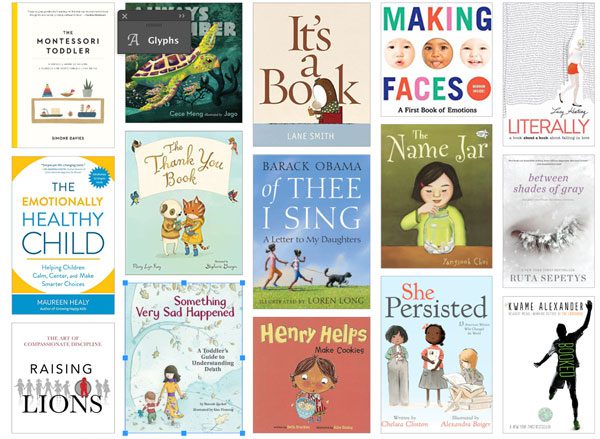
Favorite Books for All Ages
To continue reading, you will need to choose a subscription plan.

MEANINGFUL WORK: HOMESTYLE
To continue reading, you will need to choose a subscription plan.

Pandemic Strategies: Family Meetings
During the first weeks of the pandemic, The Montessori Foundation began to hold free zoom meetings for parents struggling with a variety of issues.Here is a short review of the Montessori Parent Gathering from April 4, 2020. The presenter was Lorna McGrath, Director of The Montessori Family Alliance.
- Family meetings fulfill many needs for parents, children and anyone else living under the same roof such as:
- showing commitment to the family unit by all;
- being a vehicle for problem-solving issues within the family;
- brain-storming ideas or solutions to issues impacting the family,
- giving everyone an equal voice;
- showing respect for everyone in the family;
- showing appreciation for everyone in the family; and
- creating a special time that is just for family.
Now, add in the stress of a pandemic, children being cooped up week after week, parents trying to figure out how to work at home and help their children do their homework and you have the perfect conditions for some tense scenes. In her Parenting Puzzle online course for parents, Lorna highly encourages weekly family meetings. Should you not already be doing this, try doing it now so you can help all through this period of time. By the time it’s over a routine will be in place and you will understand why you should keep it going for a long, long time.
Here are some suggestions as to how to institute and structure the meetings:
- discuss with your parenting partner first (make certain you are both clear as to why you are doing this);
- try to speak with a unified voice. There’s plenty of opportunity to express different points of view, but for the sake of establishing the idea of the meetings, it better that you are both coming from a common place; and decide who will run the first meeting.
For your first meeting:
- review the purpose;
- set aside a set time and day of week ahead of other things;
- have a very short agenda; and
- review the process of a facilitator.
The meetings themselves:
- should not be long (10 to 15 minutes);
- need to be a safe space for all;
- include all family members. Even a babe in arms can be held during the meeting. Baby’s create rhythms of their own and will grow up with the meeting being a normal part of family life.
Once you have the family gathered:
- take turns (you all get to decide how you want to structure that) being the facilitator. The facilitator keeps you on track with the agenda;
- everyone agrees to have his or her devices out of earshot;
- agree on a day and time when you stop adding items to the agenda. You may not get to all items, so if it can wait, move it to the next week. If it’s an emergency, you might have to figure out something that works for the situation; and
- when the meeting concludes, the facilitator gets to choose a short activity for all to do and all participate. (Lorna recommends not having meeting over meals so you keep the structure intact.)
Use this opportunity to really create a stronger family environment with your children. Not that we would wish this situation on anyone, but if you must be sequestered in place, we think this could create one of those silver lining moments for you and your family.
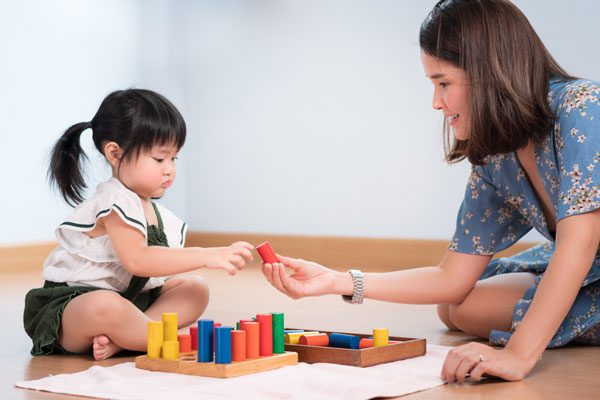
Strategies for Montessori Home Learning
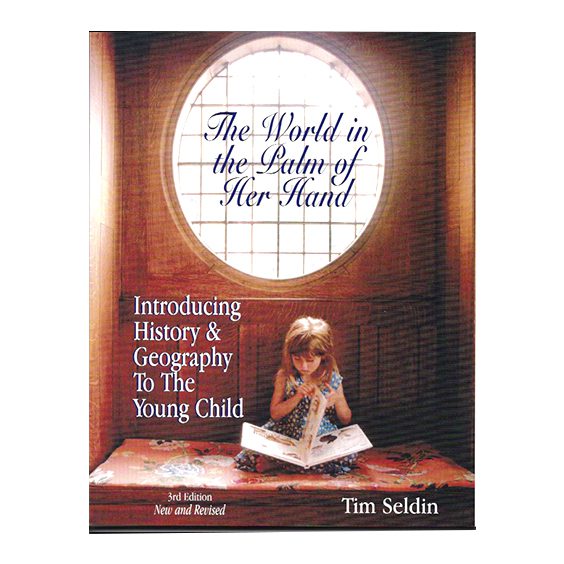
Review:
The World in the Palm of Her Hand
By Tim Seldin
click to purchase
For parents who want some actual scripting on working with their children at home, we recommend this book. I used it on many occasions with my four granddaughters and they enjoyed the activities immensely. You do not need to be in a classroom to have these kinds of conversations about the world in which they live. The book actually contains the introductory lessons for young learners in the areas of Geography and History but our intent is show you that it is possible to have great conversations with your Montessori child in a Montessori way (incidentally, that is the name of another amazing book!).
The carefully constructed lessons your child’s guide delivers is done in what they call the Three-Part Lesson format.
The carefully constructed lessons your child’s guide delivers is done in what they call the Three-Part Lesson format. I’m going to share from the book so you can see how you can do this as well. And again, we don’t expect you to become a Montessori guide nor have the specific materials in your home; our purpose is to help you understand some ways you can engage your children and just follow the format, so that the message is delivered in a verbal way that children are used to hearing from their guide.
LESSON: COLOR IDENTIFICATION:
For the youngest children, who are just learning to master their ability to identify colors.
 To illustrate how you could do this at home, you could use a variety of ways to demonstrate colors if you don’t have a set of color tiles: index cards (or color swatches for paint that you can get from hardware stores) already made up with first the primary colors of red, yellow and blue. When your children have mastered the primary colors, you can move on to secondary colors: green, purple and orange. You can always use real objects you have in the house, such as fruits and veggies of different colors. Keep it simple and keep it to just a few colors.
Have all your materials set up before you ‘invite’ the child to the work. You might say, “Would you like to do some work with colors right now?” Starting your sentence with “would you” makes it clearer that this isn’t some kind of test with consequences.
First Period
Name the color, “This is red.” Show the child the object.
“This is blue.” Show the child the object.
“This is yellow.” Show the child the object.
Remember to sound really enthusiastic.
Second period
This will help the child link the language and her own experience.
Say, “Would you show me the red (object)?”
“Would you show me the yellow?”
“Would you show me the blue?”
The second period actually does involve some deep learning, so you may need to go back to saying it the first way a few times. Try to sound positive as you restate the names of the colors while showing them each respectively.
Third period
Now you get to ask the child, while pointing to one of the objects, “Which one is red?” and so forth. If the child is unable to make the connection you may need to start at the beginning.
This is just a simple example, but might be useful in understanding that each child learns these skills at their own pace. Should you have an older child, you can use this delivery for more building vocabulary. Call objects by their correct names. For instance, if you are working on naming animals, call a cat a cat and not a kitty; a dog is a dog, and not a doggie. If the child is even older and you have, for instance, a German Shepherd, refer to the breed.
In the Montessori class, lessons are initiated in three ways:
- The teacher senses children’s readiness and invites them to join her/him for a lesson.
- Children become interested spontaneously and ask for a lesson.
- The teacher notices when children choose materials for which they have not yet been given a lesson and comes over to present the lesson.
Presenting the Fundamental Lesson: The fundamental lesson is the basic presentation given by Montessori teachers to introduce children to a new material or activity. If it is to have the enticing quality previously described, teachers must prepare themselves carefully.
- Teachers must be sure that they are completely familiar with the material and its correct use in order to prevent confusing children with their own uncertainty.
- The lesson must be simple and concise enough that the children will be certain to understand.
- The fundamental lesson usually includes only a few words of explanation followed by a demonstration of the typical cycle of work with this material.
- To avoid unnecessary distraction, spoken language is limited when presenting the lesson to younger children; nonverbal communication seems to lead to less confusion.
- Be sure that all the pieces are present for the lesson/material you are presenting. Nothing is more disruptive to the child’s interest and concentration than discovering that something is missing.
- Prepare your work area in advance, allowing for enough space.
- Remember the aims of the lesson.
- Make your presentation quietly dramatic, emphasizing the key points referred to in the lessons under the heading Points of Emphasis.
- When your lesson is finished, either put the materials away with the children’s help, or withdraw to let them work on their own, making sure that they return all the materials when they are done.
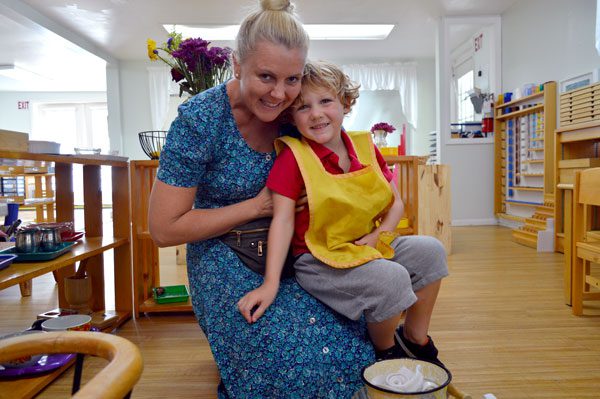
Table Washing: Why do Montessori Students Spend So Much Time Washing Tables?
To continue reading, you will need to choose a subscription plan.

The Coronavirus is a Stark Reminder We Are One Global Family
To continue reading, you will need to choose a subscription plan.

Help! Too Much Information: How Do I Know What to Trust?
To continue reading, you will need to choose a subscription plan.

Letter from the Editor, Joyce St. Giermaine: The Time of COVID
To continue reading, you will need to choose a subscription plan.
Featured
-
 The Montessori Way, Revised and Expanded: An Education for Life; A Comprehensive Guide for Parents and Teachers
$25.00
The Montessori Way, Revised and Expanded: An Education for Life; A Comprehensive Guide for Parents and Teachers
$25.00
-
The Montessori Child: A Parent's Guide to Raising Capable Children with Creative Minds and Compassionate Hearts (The Parents' Guide to Montessori)
$20.00
-
The Montessori Toddler: A Parent's Guide to Raising a Curious and Responsible Human Being (The Parents' Guide to Montessori)
$20.00
-
Montessori in Action: Building Resilient Montessori Schools 1st Edition
$29.95
-
Bulk Order, 30 Copies of Montessori for Every Family: A Practical Parenting Guide To Living, Loving, And Learning
Original price was: $600.00.$510.00Current price is: $510.00.



Products
-
The Montessori Way, Revised and Expanded: An Education for Life; A Comprehensive Guide for Parents and Teachers
$25.00
-
The Montessori Child: A Parent's Guide to Raising Capable Children with Creative Minds and Compassionate Hearts (The Parents' Guide to Montessori)
$20.00
-
The Montessori Toddler: A Parent's Guide to Raising a Curious and Responsible Human Being (The Parents' Guide to Montessori)
$20.00
-
Montessori in Action: Building Resilient Montessori Schools 1st Edition
$29.95
-
Bulk Order, 30 Copies of Montessori for Every Family: A Practical Parenting Guide To Living, Loving, And Learning
Original price was: $600.00.$510.00Current price is: $510.00.