Related Posts
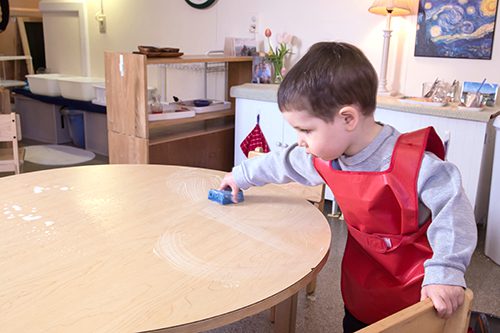
“All activities connected with caring for oneself and the environment—like getting dressed, preparing food, setting the table, wiping floors, clearing dishes—these are tasks that adults often avoid. Yet, for children between one and four, these jobs are a source of joy, and they eagerly rise to the invitation to participate.”
— Dr. Silvana Montanaro
“I love Montessori! I get to make snacks and serve them to my friends. It’s like being a real waiter.”
— Phillip, age 5
This photograph from a century ago shows a young Montessori child ladling soup for her classmates at lunchtime. It’s easy to imagine her parents asking the same question many do today: “What does this have to do with learning to read or write?” In Montessori, Practical Life activities—like washing tables, pouring water, polishing, sweeping, and dusting—are not just chores; they are foundational learning experiences.
Through these hands-on tasks, children develop an inner sense of order, focus, and independence. By caring for their environment, meeting their own needs, and helping others, Montessori students learn more than just skills—they learn how to learn.
Here’s a glimpse into a Montessori day that captures this philosophy:
It’s 10 o’clock, and Amani is hungry. She heads over to the snack table and prepares celery sticks with peanut butter, pouring herself apple juice from a pitcher made for small hands. When she finishes, Amani carefully wipes her placemat. This inspires her to clean, so she gathers a small bucket, sponge, brush, towel, and soap and starts washing a table methodically.
As she scrubs, she’s absorbed by the patterns of the soap suds. When she’s done, she tidies up, leaving the table somewhat clean—but that’s not the point. What Amani is truly learning is patience, independence, and the ability to concentrate on a sequence of steps.
Another child, Meredith, sees that the widows need to be cleaned. She gathers the window washing kit and begins to spray a nontoxic solution on the glass. She uses a small squeegee and wipes it with a clean cloth. When done, she moves on, choosing activities that interest her.
In a Montessori classroom, children are genuinely responsible for their space. When hungry, they prepare snacks; when spills happen, they clean up. They practice self-care and community care—each action cultivating confidence and independence.
A Foundation Beyond Skills
Montessori isn’t just about teaching children to count or read. It’s about shaping the people they will become. We focus on developing self-discovery, resilience, and a joyful pursuit of knowledge. This isn’t merely an academic education but an education of the heart and mind. In this setting, children learn with patience, curiosity, and a sense of personal responsibility.
Montessori’s classroom for children between three and six years old is called a Children’s House—a true community of young children. Dr. Maria Montessori’s vision was not to create a more advanced kindergarten but an empowering environment where children are respected as individuals. Here, they develop social and emotional connections, form lasting friendships, and take pride in their shared responsibility for the space and each other.
As children thrive in this nurturing community, they begin to believe in themselves. In this atmosphere, they maintain their natural curiosity and willingness to explore. They learn that mistakes are not failures but stepping stones to growth. With this foundation, they grow to view learning as a journey rather than a destination.
Growing up this way
As a child, I attended the Barrie School in Washington, D.C. Barrie was founded by my mother in 1932. Later, I returned to teach and eventually served as headmaster for 22 years.
As a child, I remember arriving at school on frosty mornings, stopping by the kitchen for a piece of toast or some cereal, and helping myself with a bit of guidance from older students. As we grew, so did our contributions to the school.
Barrie was a community of several hundred children ranging in age from two to eighteen. Our food was homemade in the school kitchen, and older students volunteered to help with preparation. I spent mornings peeling potatoes and stirring stew alongside our cook, Edith, and friends.
After meals, we carried dishes back to the kitchen, washed them by hand, swept sidewalks, watered gardens, fed animals, and tutored younger students.
These daily acts connected us with everyone on campus—from the bus drivers to teachers. They taught us the importance of community, and to this day, I still enjoy washing dishes.
The Lifelong Value of Practical Life Skills
“In the special environment prepared for the child, they express an inner need: ‘Help me to do it by myself!’ Their work will no longer weigh them down.” — Dr. Maria Montessori
In Montessori, the classroom itself is a “children’s house,” where children play an active role in caring for the space. They prepare snacks, clean tables, sweep floors, and organize shelves. Through these activities, they learn much more than basic tasks; they develop self-respect, resilience, and a love for learning.
Confidence grows when children feel capable and independent. Montessori classrooms are designed to foster this growth. Here, children’s actions say, “Help me learn to do it for myself!” By encouraging them to be self-sufficient and organized, we set the stage for a lifetime of strong work habits and a sense of responsibility.
Independence does not magically appear as children grow; it must be nurtured. In Montessori, children start young, learning to tie their shoes or pour their own milk. Small successes like these lead to a sense of confidence and pride.
As they mature, Montessori students learn Practical Life skills that prepare them for daily living, like cooking, sewing, managing money, gardening, and even simple home repairs. However, perhaps the most essential skill is learning how to work and play with others kindly. Kindness and respect are daily practices in the Montessori classroom, where children learn to be thoughtful and responsible toward their community. They learn to treat themselves and others with dignity.
Montessori schools aim to be close-knit communities where people learn together in an atmosphere of warmth, respect, and cooperation. Teachers are mentors and guides, helping children grow in understanding and compassion for each other’s unique backgrounds and interests.
Montessori Practical Life activities are the heart of Montessori education. They teach children to be confident, responsible, and independent human beings who find joy in learning and meaningful work.
Consultation and Resources
Leadership Development Workshops
Curriculum Design Consultation
Parent Education Seminars
Classroom Environment Optimization
Teacher Training Programs
Conflict Resolution Strategies
Community Engagement Initiatives
Resource Library Access
Montessori Materials Guidance
School Accreditation Support
Strategic Planning Sessions
Financial Management Advice
Marketing and Outreach Planning
Technology Integration in Montessori
Sustainability Practices in Schools
Insights and Advice for Montessori Parents
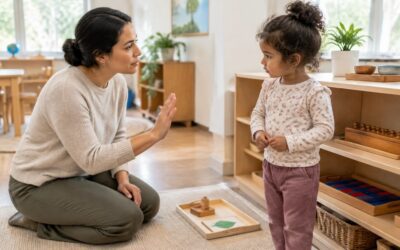
If Montessori Children Have Freedom, Who’s in Charge?
A Montessori guide calmly sets a clear limit while preserving the child’s dignity and freedom to choose purposeful work. Montessori classrooms give children a remarkable amount of freedom. Children move around the room. They choose their own work. They decide where to...
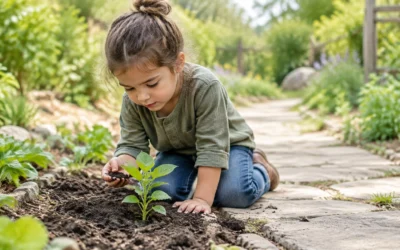
Montessori and Imagination: Setting the Record Straight
Real-world discovery gives children rich material for imagination. One of the most persistent myths about Montessori is that it does not believe in imagination. No pretending, no fairy tales, no fantasy, no make-believe, the story goes, as though Montessori classrooms...
Don’t Raise a Praise Junkie
Your child shows you a picture. We respond, “Good job!” Your child puts on a coat. “Good job!” Lunch, cleanup, a finished puzzle, a written word, the dog fed. “Good job! Good job! Good job!” We say it because we are proud, and we want our children to feel that....
Join Our Montessori Community
Discover the transformative power of Montessori education. Connect with us for a personalized consultation or subscribe to our newsletter for insightful resources that empower school leaders and parents alike.