Part 2: Have you wondered how to give Black History Month justice in your school? OR have you thrown something together about the same few African Americans?

Part 2: Have you wondered how to give Black History Month justice in your school? OR have you thrown something together about the same few African Americans?

Part 2: Have you wondered how to give Black History Month justice in your school? OR have you thrown something together about the same few African Americans?

Have you wondered how to give Black History Month justice in your school? OR have you thrown something together about the same few African Americans?

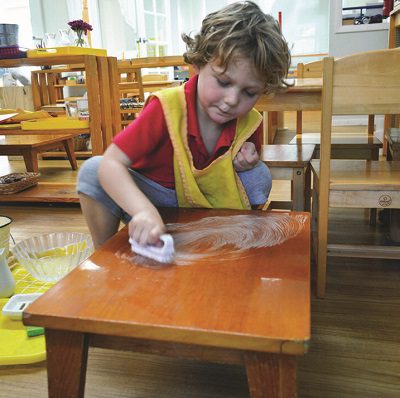
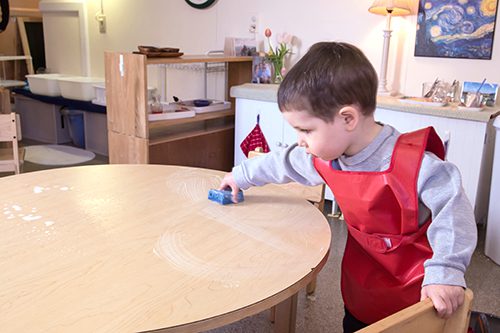
Why is my child washing tables all day? The value of the lessons in practical life

Why is my child washing tables all day? The value of the lessons in practical life


“All activities connected with caring for oneself and the environment—like getting dressed, preparing food, setting the table, wiping floors, clearing dishes—these are tasks that adults often avoid. Yet, for children between one and four, these jobs are a source of joy, and they eagerly rise to the invitation to participate.”

— Dr. Silvana Montanaro

“I love Montessori! I get to make snacks and serve them to my friends. It’s like being a real waiter.”
— Phillip, age 5

This photograph from a century ago shows a young Montessori child ladling soup for her classmates at lunchtime. It’s easy to imagine her parents asking the same question many do today: “What does this have to do with learning to read or write?” In Montessori, Practical Life activities—like washing tables, pouring water, polishing, sweeping, and dusting—are not just chores; they are foundational learning experiences.

Through these hands-on tasks, children develop an inner sense of order, focus, and independence. By caring for their environment, meeting their own needs, and helping others, Montessori students learn more than just skills—they learn how to learn.


Here’s a glimpse into a Montessori day that captures this philosophy:

It’s 10 o’clock, and Amani is hungry. She heads over to the snack table and prepares celery sticks with peanut butter, pouring herself apple juice from a pitcher made for small hands. When she finishes, Amani carefully wipes her placemat. This inspires her to clean, so she gathers a small bucket, sponge, brush, towel, and soap and starts washing a table methodically. 

As she scrubs, she’s absorbed by the patterns of the soap suds. When she’s done, she tidies up, leaving the table somewhat clean—but that’s not the point. What Amani is truly learning is patience, independence, and the ability to concentrate on a sequence of steps.

Another child, Meredith, sees that the widows need to be cleaned. She gathers the window washing kit and begins to spray a nontoxic solution on the glass. She uses a small squeegee and wipes it with a clean cloth. When done, she moves on, choosing activities that interest her. 

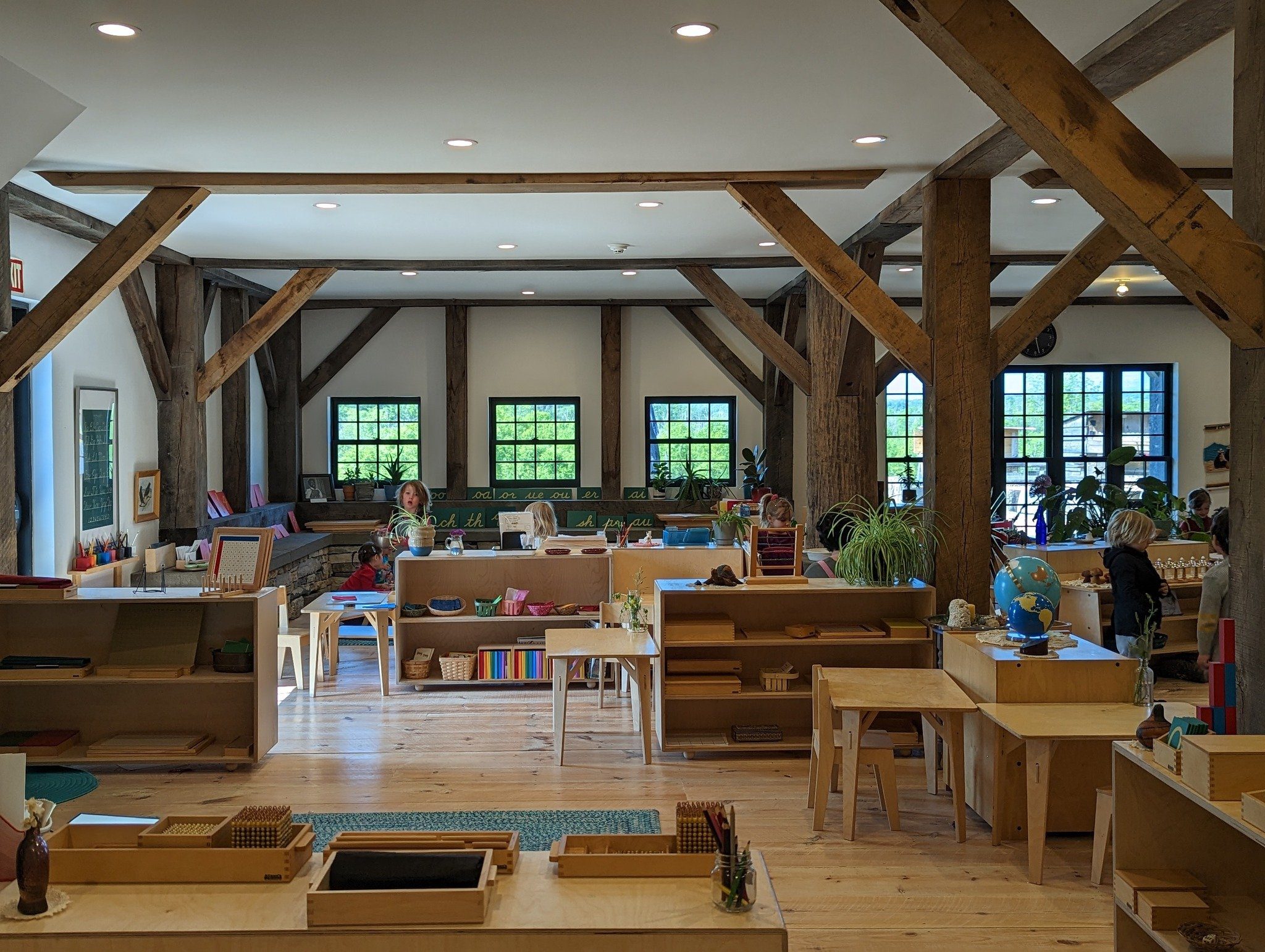
In a Montessori classroom, children are genuinely responsible for their space. When hungry, they prepare snacks; when spills happen, they clean up. They practice self-care and community care—each action cultivating confidence and independence.

A Foundation Beyond Skills

Montessori isn’t just about teaching children to count or read. It’s about shaping the people they will become. We focus on developing self-discovery, resilience, and a joyful pursuit of knowledge. This isn’t merely an academic education but an education of the heart and mind. In this setting, children learn with patience, curiosity, and a sense of personal responsibility.

Montessori’s classroom for children between three and six years old is called a Children’s House—a true community of young children. Dr. Maria Montessori’s vision was not to create a more advanced kindergarten but an empowering environment where children are respected as individuals. Here, they develop social and emotional connections, form lasting friendships, and take pride in their shared responsibility for the space and each other.

As children thrive in this nurturing community, they begin to believe in themselves. In this atmosphere, they maintain their natural curiosity and willingness to explore. They learn that mistakes are not failures but stepping stones to growth. With this foundation, they grow to view learning as a journey rather than a destination.

Growing up this way

As a child, I attended the Barrie School in Washington, D.C. Barrie was founded by my mother in 1932. Later, I returned to teach and eventually served as headmaster for 22 years. 

As a child, I remember arriving at school on frosty mornings, stopping by the kitchen for a piece of toast or some cereal, and helping myself with a bit of guidance from older students. As we grew, so did our contributions to the school.

Barrie was a community of several hundred children ranging in age from two to eighteen. Our food was homemade in the school kitchen, and older students volunteered to help with preparation. I spent mornings peeling potatoes and stirring stew alongside our cook, Edith, and friends.

After meals, we carried dishes back to the kitchen, washed them by hand, swept sidewalks, watered gardens, fed animals, and tutored younger students. 

These daily acts connected us with everyone on campus—from the bus drivers to teachers. They taught us the importance of community, and to this day, I still enjoy washing dishes.


The Lifelong Value of Practical Life Skills

“In the special environment prepared for the child, they express an inner need: ‘Help me to do it by myself!’ Their work will no longer weigh them down.” — Dr. Maria Montessori


In Montessori, the classroom itself is a “children’s house,” where children play an active role in caring for the space. They prepare snacks, clean tables, sweep floors, and organize shelves. Through these activities, they learn much more than basic tasks; they develop self-respect, resilience, and a love for learning.

Confidence grows when children feel capable and independent. Montessori classrooms are designed to foster this growth. Here, children’s actions say, “Help me learn to do it for myself!” By encouraging them to be self-sufficient and organized, we set the stage for a lifetime of strong work habits and a sense of responsibility.

Independence does not magically appear as children grow; it must be nurtured. In Montessori, children start young, learning to tie their shoes or pour their own milk. Small successes like these lead to a sense of confidence and pride.

As they mature, Montessori students learn Practical Life skills that prepare them for daily living, like cooking, sewing, managing money, gardening, and even simple home repairs. However, perhaps the most essential skill is learning how to work and play with others kindly. Kindness and respect are daily practices in the Montessori classroom, where children learn to be thoughtful and responsible toward their community. They learn to treat themselves and others with dignity.

Montessori schools aim to be close-knit communities where people learn together in an atmosphere of warmth, respect, and cooperation. Teachers are mentors and guides, helping children grow in understanding and compassion for each other’s unique backgrounds and interests.

Montessori Practical Life activities are the heart of Montessori education. They teach children to be confident, responsible, and independent human beings who find joy in learning and meaningful work.


 

Consultation and Resources

Leadership Development Workshops

Curriculum Design Consultation

Parent Education Seminars

Classroom Environment Optimization

Teacher Training Programs

Conflict Resolution Strategies

Community Engagement Initiatives

Resource Library Access

Montessori Materials Guidance

School Accreditation Support

Strategic Planning Sessions

Financial Management Advice

Marketing and Outreach Planning

Technology Integration in Montessori

Sustainability Practices in Schools

Insights and Advice for Montessori Parents

INSIDE Montessori: DOcumentary

INSIDE MONTESSORI: A DOCUMENTARY  INSIDE MONTESSORI (82:05) is a documentary film and library of short videos (chapter & focus videos and bonus videos) that reframe the national education conversation toward creating learning environments that allow children to...

Special MFA Members’ discount code for The Parenting Puzzle

Supporting the Development of Concentration

Concentration: What is it? n a LinkedIn post this past June, “Want Kids to Succeed?  Teach them Focus,” Daniel Goleman explains why concentrating is a precursor for both learning something new and developing self-control. We all know that success...

The Family-Friendly School

Reimagining the School of Tomorrow as a Place Where Children, Families, and Teachers Belong   A Snapshot What if we stopped thinking of schools mainly as places where children attend classes and began to imagine them as communities that help children and families...

The Art of Doing Nothing Together

Why unhurried family time matters in an overscheduled world Some of the best time together has no agenda. Snapshot Many families are so busy with lessons, sports, outings, and errands that ordinary time together has become scarce. Yet unhurried, unscheduled time is...

The Family Meeting: Giving Children a Voice in Family Life

How shared decisions teach responsibility, cooperation, and respect Snapshot A family meeting is a short, regular time when everyone sits down together to talk about the week ahead, share what is going well, raise concerns, and solve problems. It gives children a real...

The Courage to Try Something Difficult

Helping children face challenges without pressure, fear, or constant praise The moment before the first pedal: enough room to try, and someone nearby who trusts her to. Snapshot Every parent knows the moment when a child hits a wall and says, "I can't." We want to...

Made By Hand: Leaves, Candles, and Stars

One leaf at a time, with the wax kept safely in a water bath.   Three simple projects from the Waldorf school tradition to make together as the days grow short   SNAPSHOT Late autumn is a lovely time to make things by hand. These three projects use beeswax,...

Company’s Coming! Let the Children Help

From preparing a holiday feast to welcoming friends, children can become capable and valued hosts.   Snapshot When guests are on the way, most of us send the children off to play while the adults do the work. But getting ready for company is one of the richest...

Don’t Stop Reading Together Just Because Your Child Can Read

Snapshot When children learn to read on their own, many families quietly let go of reading aloud. That is a loss. Children can understand and enjoy stories far richer than the ones they can read by themselves, and a shared book gives parents and children something to...

Montessori High School: Preparing for Life, Not Just College

Why Montessori education through adolescence can offer young people academic challenge, independence, meaningful relationships, and the confidence to shape their own futures Snapshot Choosing a high school is one of the most important decisions you will make with your...

Montessori From the Very Beginning: The Wonder of the First Three Years

Understanding what infants and toddlers need to thrive, how parents can nurture independence at home, and the value of a Montessori environment in the earliest years The shoe story: It would take only a moment to help, but waiting gives this little girl the chance to...

Montessori Elementary: A Bigger, Richer World

Why families choose to continue Montessori beyond kindergarten, and what your child may gain from an education built around curiosity, confidence, independence, and understanding Around age 6, children begin asking bigger questions about how the world works and why....
Are You a Parent Ambassador?

Are You a Parent Ambassador?

  One of the greatest gifts you can give your child's school is helping other families feel that they belong. When a family first joins a Montessori school, there is a lot to learn. The classroom may look different from the schools the parents remember. Teachers...

read more
The School Lunch Problem

The School Lunch Problem

Making lunch part of family life rather than a daily emergency. School lunch can become one of those surprisingly exhausting parts of parenting. The surprisingly exhausting part of parenting can begin at 7:25 in the morning. You want something nutritious. Your child...

read more

Join Our Montessori Community

Discover the transformative power of Montessori education. Connect with us for a personalized consultation or subscribe to our newsletter for insightful resources that empower school leaders and parents alike.

Setting Tuition: FInding The Right Balance

Setting Tuition: FInding The Right Balance

Empowering Montessori Schools Through Strategic Tuition Planning

Unlock the Potential of Your School's Financial Future

Discover how strategic tuition planning can enhance your school’s sustainability and strengthen community trust. Learn to balance affordability with quality education.

The Importance of Strategic Tuition Planning

At this time of the year, many of us who lead private schools have just gone through the process of setting tuition for next year. The odds are that we simply took last year’s numbers and adjusted them by a factor representing our projected increased cost of operations and wages.

Strategic tuition planning is crucial for Montessori schools as it directly impacts financial sustainability and community relationships. By understanding the unique needs of families and aligning tuition with the school’s mission, leaders can ensure long-term success. This approach not only supports operational costs but also enhances educational quality, making it accessible to a diverse range of families.

Challenges in Tuition Setting

Setting the right tuition is a complex task for schools, balancing financial needs with community expectations.

Exclusivity Concerns

High tuition rates can inadvertently exclude families, reducing diversity and accessibility within the school community.

Budget Dependency

Tuition is often the primary source of income, making schools vulnerable to fluctuations in enrollment and economic conditions.

Emotional Impact

Unexpected tuition increases can lead to dissatisfaction and erode trust if not communicated effectively to families.

Common Questions About Tuition Planning

Explore answers to some of the most frequently asked questions regarding tuition planning and management for Montessori schools.

What factors should be considered when setting tuition?
When setting tuition, consider factors like market research, parent demographics, school value proposition, and operational costs. These elements ensure that tuition aligns with both financial goals and community expectations.
How can schools communicate tuition changes effectively?
Effective communication involves announcing changes well in advance, explaining the reasons behind them, and inviting feedback from families. Transparency and openness help maintain trust.
What are common mistakes in tuition setting?
Common mistakes include ignoring the socioeconomic makeup of families, setting tuition without data, and failing to communicate changes clearly. These errors can lead to dissatisfaction and enrollment issues.
How does tuition affect school branding?
Tuition reflects the perceived value of a school. A higher tuition can signal premium quality, while a lower tuition might attract a broader audience but could also imply lower quality. Balance is key.
What role does market research play in tuition planning?
Market research helps identify the financial capacity of families and compares the school’s offerings to competitors. It provides data-driven insights essential for informed tuition decisions.
How can discounts be used strategically?
Discounts, such as sibling or referral discounts, can attract and retain families while ensuring fairness. They should be part of a broader strategy to balance affordability and revenue.

Understanding Our Process

Step 1

Our consultation process begins with an initial assessment of your school’s unique needs and challenges.

Step 2

Next, we conduct thorough market research to gather data on parent demographics and competitive analysis.

Step 3

Finally, we provide tailored recommendations and strategies to optimize tuition planning and communication.

Common Mistakes in Tuition Setting

One of the most frequent errors in tuition setting is neglecting to consider the diverse demographics of the parent community. Schools must understand the financial backgrounds and expectations of their families to set a tuition that aligns with their needs. Additionally, failing to communicate changes effectively can lead to mistrust and dissatisfaction. Schools should ensure that any adjustments to tuition are clearly explained and justified to maintain transparency and trust.

Strategic Tuition Planning

Strategic tuition planning involves a comprehensive approach that balances financial sustainability with the school’s mission and values. Key considerations include understanding the market, defining the school’s value proposition, and using tuition as a marketing tool. Schools should conduct market research to assess the financial capacity of their parent body and compare their offerings to competitors. Defining a clear value proposition helps communicate the benefits and quality of the education provided, ensuring that tuition reflects the school’s worth.

The Role of Communication

Effective communication is crucial when introducing tuition changes. Schools should announce increases well in advance and provide clear reasons for the changes, such as rising operational costs or enhanced educational offerings. By inviting families to discuss concerns and providing a platform for feedback, schools can foster trust and mitigate resistance. Highlighting the value and benefits that tuition supports, through testimonials and success stories, helps reinforce the positive impact of the investment families make in their children’s education.

Key Takeaways for Strategic Tuition Planning

Essential Insights for Effective Tuition Management

Strategic tuition planning is crucial for aligning your school’s financial goals with its mission. Start by conducting thorough market research to understand your community’s demographics and financial capabilities. Clear communication is key; ensure families understand the reasons behind tuition changes to build trust. Flexibility in pricing, such as offering discounts or financial aid, can help balance affordability with revenue needs. By integrating these strategies, schools can maintain enrollment and ensure long-term sustainability.

Partner with Us for Strategic Tuition Success

Are you ready to optimize your school’s tuition strategy? Our team of senior Montessori school consultants and coaches is here to support you in developing a comprehensive plan that aligns with your school’s values and financial objectives. Please reach out to us today to schedule a consultation and explore how we can help in enhancing your tuition planning process. Together, we can ensure your school thrives while maintaining strong community relationships.