To access this page, you will need to log in or become a member.
There’s an App for That

There’s an App for That
woman with cat using computer


The home of everything Montessori is now only one click away.

Have you ever found yourself trying to schedule a doctor’s appointment and wondering when that field trip is scheduled so you don’t schedule them on the same day? Or trying to respond to a friend of a friend who wants to know, “What is Montessori anyway? Is it worth it?” You know that you can access both the school calendar, and an article you can share, but do you have time to gather all that information? What if there was one app for that?

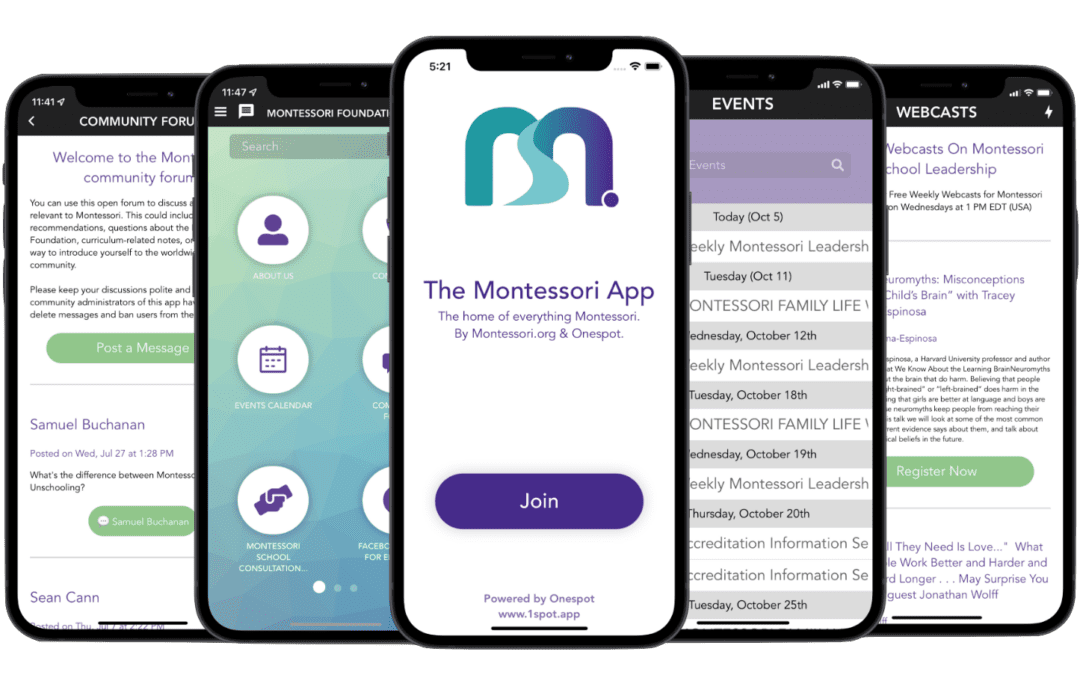
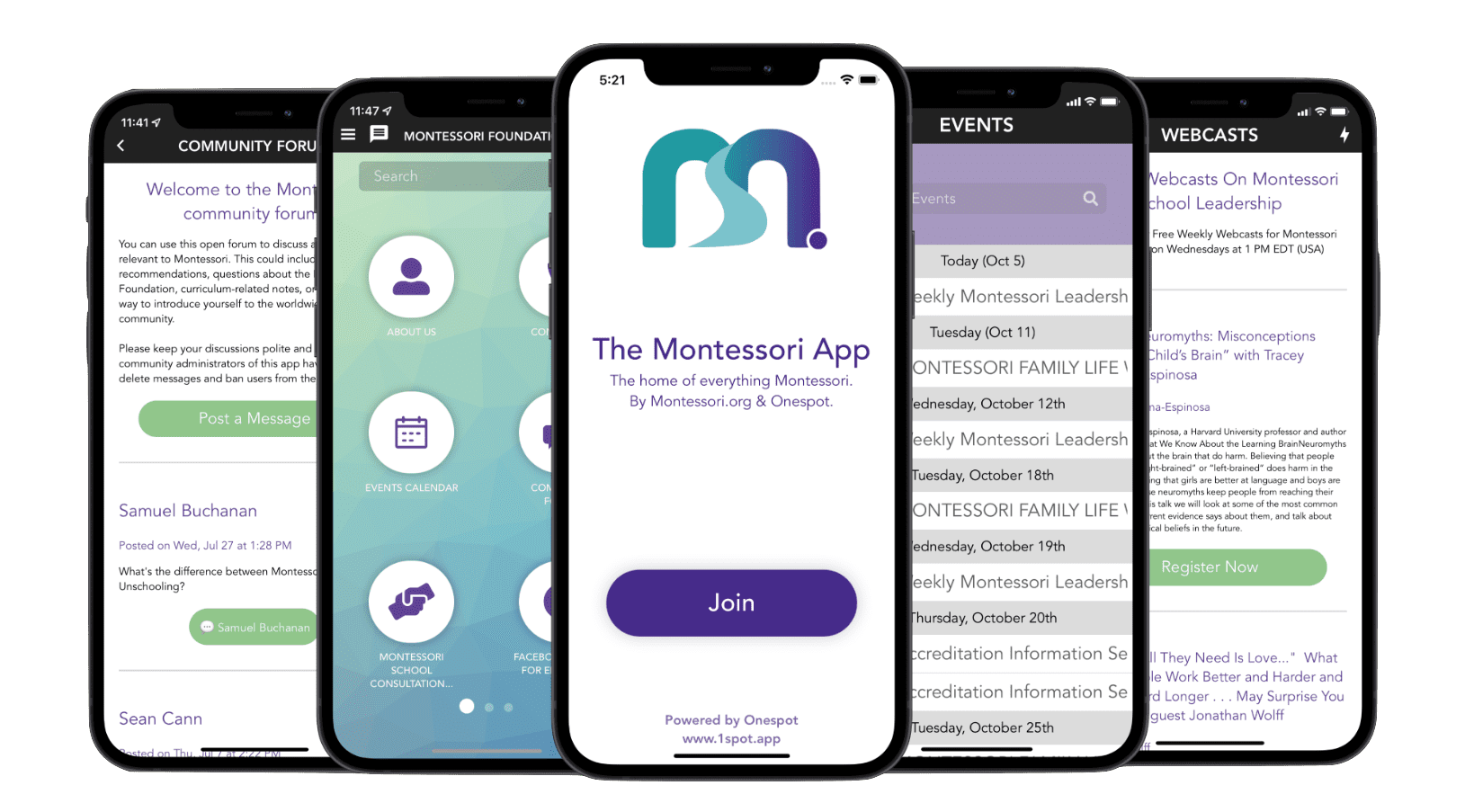
Montessori.org—home of the Montessori Foundation, the International Montessori Council, and the Montessori Family Alliance—officially released The Montessori App on the iOS and Android app stores. This new app organizes all Montessori.org resources into one central spot. In addition to Montessori.org resources, this partnership also allows any Montessori school to have its own school-specific app within The Montessori App, making it a true one-stop-shop for any Montessori school’s community. Anyone can install this new app for free by searching for montessori.org on the app store.

The Foundation’s new mobile app allows anyone in the Montessori community to easily access all of Montessori.org’s information in a user-friendly, personalized way. This new home for everything Montessori is helpful for parents, teachers, school administrators, and anyone else interested in learning more about what Montessori has to offer. Now anyone can join the app to discover upcoming events and webcasts, receive personalized messages about things happening in the Montessori community, and much more.

“It will be a very easy way for interested parents to put Montessori resources on their phone,” said Tim Seldin, founder and President of the Montessori Foundation and Chair of the IMC. “For no cost, they can get information about Montessori, they can check out Montessori schools, they can get many of their questions answered.” He emphasized that “amid the cacophony of noise about Montessori that’s out there,” one of the Montessori Foundation’s goals was to create a way to bring Montessori resources to parents through “something that they can use on a smartphone in those few minutes that the average parent has to sit still, without their child tugging on their shirt.”

The Montessori Foundation has been creating resources, starting with Tomorrow’s Child, the Montessori parenting magazine, for 30 years. In the last seven years, weekly webinars have been added and all are available on the website and on the app. If you have a question about cooking with your child, the lessons, or materials in the classroom, traveling with your child, or anything else pertaining to Montessori, you should be able to find an article or a webinar with ideas on the topic.

Building a mobile app wasn’t a new idea for Montessori.org. Seldin said that they had been very intrigued by the idea of having their own custom mobile app for montessori.org resources for some time. “The reason why we didn’t do it before — and we’ve really thought about this for a few years now — is the cost has been astronomical,” said Seldin. “I mean, we actually bought a do-it-yourself app maker, and it frankly never worked correctly. It was a giant pain in the neck.”

Seldin then met the founders of Onespot, a startup that empowers any school to have a custom, school-specific mobile app without needing to write a single line of code. Seldin said that when he started working with the Onespot founders, “We were able to get something up and running very quickly for the Montessori Foundation, the International Montessori Council, our Montessori Family Alliance, and our Montessori marketplace. That’s really complicated.” The Onespot platform was able to take that complicated system and make it simple.

The platform is like website builders, like Squarespace or Wix, but for mobile apps. Complex organizations (such as schools, businesses, non-profits, or even montessori. org) can use Onespot to make custom, easyto-use mobile apps. And because the platform was developed with scalable technology, the founders can keep the pricing incredibly af- fordable, while still providing top-notch customer service. “It was just obvious to me that they were on to something,” said Seldin.

As this is the first iOS and Android mobile app of its kind, The Montessori App is exciting for the whole Montessori community worldwide.

Montessori schools tend to use many online tools these days for communicating with parents about student progress or sharing other communications.

This new app brings everything together in one place, so parents don’t need to remember five or more different websites and download five or more different apps. This is the first app that deeply solves the community side of Montessori.

“It’s like a Montessori super app,” said Samuel Buchanan, one of Onespot’s founders. “It’s a new home for all Montessori resources, and Montessori schools around the world are starting to move in.”

One of those first schools to get their own custom app created within The Montessori App is the Montessori Children’s School in Key West, Florida. “I like it because it kind of ties us into a bigger picture, so people see it’s not just our little school down here; there’s a bigger entity out there,” said Amy O’Connor, the Executive Director of the school. She added that if parents “want to grow more with Montessori, there are all sorts of resources on montessori.org. I just think it gives more of a lift to substantiate what we’re doing here.”

Jessica Losardo, Director of Operations at the Montessori Children’s School, is also excited about the new app, saying that “should a parent consider Montessori, they can go to the Montessori Foundation’s website and actually research all the different schools to see how they compare to each other—what they’re doing similarly, what they’re doing differently—so that they get a very well-rounded idea of Montessori.”

Having their own app for their school within The Montessori App allows the Children’s School—as well as a growing number of other Montessori schools—to consolidate all their existing platforms and websites into one central spot on the device their community members use most: their phones.

According to a recent TechCrunch article, people around the world now spend an average of four to five hours per day using mobile apps, and that number continues to rise, accelerated by the COVID-19 pandemic.

Centralizing all their school-specific platforms has been tremendously helpful for the Children’s School. “I was starting to feel like we had a lot of places that we were asking parents to visit,” said O’Connor. “We use Montessori Compass, SchoolCues, and a program called Clockify for parents to document their volunteer hours. And it just seems like a lot of apps.”

And they’re not the only ones feeling overwhelmed by the growing number of different apps and platforms that a school community needs to keep track of. Seldin, who has worked with hundreds of Montessori schools over the years, echoed the same sentiment, saying that “parents find it very frustrating to remember how to access their child’s records or the school calendar, or you name it. Even though most schools provide answers on their websites, it’s not always easy to navigate on a smartphone.” He added, “As we end up with more and more online tools and more and more online ways of communicating, there’s really something to having one central place to collect it all.”

The Montessori Foundation launched The Montessori App to be exactly that—one spot for everything Montessori. And as Montessori schools around the world are continuing to join in with their own app inside The Montessori App, this unifying solution is spreading quickly to the whole Montessori community.

“All our work-related stuff is there. Or, for a parent, all their school-related stuff is right there”, said O’Connor. “I think it just makes life easier. And when it’s easier for the parents, or the staff, or whomever, then the school experiences more engagement.”

You can learn more about this collaboration between the Montessori Foundation & Onespot by downloading The Montessori App. See how your school can join the platform by visiting www.MontessoriMobileApps.com (www.seabirdapps.com/montessori-school)


Embracing the Future

Embracing the Future

woman with cat using computer

It is vital that educators prepare students not for the world we grew up in, nor even the world as it appears today; rather, we need to prepare for a world that does not yet exist and which we cannot possibly predict.


With that in mind, I’m sure I’m not the only one who has been thinking deeply about the long-term impacts of the emergence of several machine-learning platforms over the past few months. Especially recently, as news of one of the latest, ChatGPT, has gone “viral.”

At home, my software engineer (and digital native) husband has been exploring various machine learning platforms for several months as word has spread in his field about these latest developments. I observed as he used DALL-E, another digital platform, to generate uncanny, beautiful, and oddly specific images from written prompts. I listened as he shared his interactions with the conversational, entirely text based ChatGPT.

I admit, at first, I brushed off his conviction that these were the first signs of a pivotal moment in the history of humanity; but he’d planted the seed, and quickly, it grew.

Despite my open-minded stance and commitment as an educator, I was reticent. This kind of stuff is pretty far outside my knowledge base. To people like my husband, I’m considered a bit of a Luddite (aka technophobe), and I was sure that these things were too much for me to understand—too complicated for me to interact with meaningfully. Now, I don’t know about you, but the moment I could acknowledge that fear, I had to press pause and take a step back. I don’t want to fall into the trap of allowing unfamiliarity or uncertainty to create a barrier to entry when it comes to innovation.

It sounds like you’re trying to describe the digital divide that can occur between generations or groups that have varying levels of exposure and comfort with technology. Essentially, if one generation or group is slower to adapt to new technologies, they can become increasingly left behind as the world around them becomes more reliant on those technologies. This can lead to feelings of disconnection, confusion, and even frustration or anxiety for those who struggle to keep up with the pace of change. As technology continues to evolve and become more integrated into our daily lives, this divide can become even wider, making it even more challenging for those who are slow to adapt to catch up.

Well, that settles it. Now more than ever, it is vital for us, as Montessori parents and educators, to renew our commitment to lifelong learning and embracing innovation. For me, that means diving headfirst into a topic that scares me and trying to make sense of it all.

What even is ChatGPT?

To answer that question, I decided to go straight to the source and ask! Here’s what ChatGPT had to say about itself:

I am a computer program designed to understand natural language and generate responses that are relevant and helpful to people who ask me questions. Think of me as a digital assistant that you can ask anything, and I will try my best to provide you with the most accurate and informative answer based on my training and knowledge.

The question of how it works is a pretty big one, and somewhat mysterious even to the most informed, but after chatting with it (as well as doing my own research and listening to others more informed than myself), what I found helpful for my own understanding is this:

I was trained using a deep learning algorithm, specifically the transformer architecture. My training data consists of a large corpus of text from various sources, including books, articles, and websites. During training, I was presented with sequences of text and learned to predict the next word in the sequence based on the context provided by the previous words. This process was repeated millions of times over a period of several weeks, during which my neural network gradually became better at generating text that sounded natural and coherent. After training, I was fine-tuned on specific tasks and domains to improve my performance on those tasks.

Not sure where to begin?

Here’s a few ideas:

– Copy a document or article and ask ChatGPT to summarize the main idea for you (Want to get really fancy? Ask it to format the summary in bullet points.)

– Ask ChatGPT to rewrite a passage at a specific reading level.

– Share an assignment and learning goal with ChatGPT, and ask it to write.

It’s important to note that ChatGPT, the program that assisted me with this article, is not connected to the internet. The platform is accessible through OpenAI.com, the research organization responsible for its invention. It has access to the data it was trained on (which is vast) but otherwise is mainly limited to the context within each individual conversation it has. This makes it a different kind of tool than you may anticipate, and it should not be confused with its new cousin, the ChatGPTbased AI recently added to Microsoft’s search engine, Bing.com.

If you want to take a deeper look at ChatGPT’s language model, or any language model, I recommend “What is ChatGPT Doing and Why Does it Work?” by Stephen Wolfram.

ChatGPT as an Assistive Tool

So… what can it do? Plenty. Since its release in late November 2022, people have found countless applications for its assistive technologies. In the week that I’ve played with it, I’ve used it mostly as a sounding board for my ideas, to help me brainstorm solutions to problems, and even to outline this article (along with a few other topics of interest). It has helped me process information from complex texts, reformat notes, and adapt content for different age groups and targeted skills.

Of course, the nature of a tool like this is that there is some trial and error for each user to discover its strengths and weaknesses (and it does have weaknesses). ChatGPT can make mistakes! In its own words:

As an AI language model, I can make mistakes in understanding the context of the question, interpreting the intent of the question, and generating an accurate response. This can be due to limitations in my training data or biases in the language used in the question. For example, if a question contains a reference to a cultural event or phenomenon that I am not familiar with, I may not be able to provide a relevant response. Additionally, I may generate responses that are factually incorrect or inappropriate based on the context of the question.

I find myself thinking of the tool as an incredibly supportive friend—one who hears your ideas and will do what it can to help you further them. By letting it reduce my mental load (as one of my own supportive friends would put it), I have found new depths to my ideas that might otherwise never have had the chance to reach the surface. Let’s be honest: Doesn’t every teacher and parent wish there was just a little bit less on their plate? Maybe ChatGPT can help.

Playful Learning

Look, machine learning platforms like ChatGPT are only going to advance further. There’s no telling exactly how machine learning platforms like ChatGPT will influence our future, but we can rest assured that they will be deeply entwined in our children’s and student’s lives. Let’s not work against this, and let’s not fear working for this. Instead, let us work with these developments. To best support our students as the next generation of digital natives, we need to familiarize ourselves with each exciting innovation as it rolls out.

I urge you to consider this as part of your own spiritual preparation. If we agree that we must cultivate our commitment to ongoing personal growth and development, we must also model our commitment to lifelong learning and a willingness to embrace innovation. By showing our students that we are willing to explore new technologies and learn alongside them, we can inspire them to become lifelong learners and innovators themselves. We must be willing to take risks, make mistakes, and learn from our failures. This is how we can create a culture of innovation in our classrooms (and homes) and prepare our students for a future that is constantly evolving.

Maybe you’ll find use for ChatGPT as a planning tool, as a helpful processing partner, or as a tool for differentiated instruction. Maybe, like me, you’ll find a creative outlet. Maybe you’ll discover something entirely different! I’m not here to tell you exactly how to use ChatGPT, nor any other platform like it. I’m not suggesting you should use it in your classroom or home, have your child use it, or even that you must use it for prep work. If you are truly committed to lifelong learning, though, and want to embrace the innovation that Montessori is so renowned for inspiring, I recommend you take some time to just … play.

To check out ChatGPT for yourself, visit OpenAI.com/blog/ChatGPT

Want to hear a traditional English teacher’s take? Check out the New York Time’s Hard Fork podcast episode, “ChatGPT Transforms a Classroom and is ‘M3GAN’ Real?”

Our experience with ChatGPT

We gave ChatGPT a query,“Tell me about Montessori education,” and this is the answer we got:

Montessori education is an educational approach developed by Italian physician and educator Dr. Maria Montessori. It is based on the philosophy that children learn best when they are allowed to explore and discover things on their own in a carefully prepared environment. Montessori education emphasizes the development of the whole child, including their cognitive, social, emotional, and physical development.

In a Montessori classroom, children are encouraged to work independently and at their own pace, using specially designed materials and activities that are hands-on and interactive. The classroom is arranged into different areas, such as Practical Life, Sensorial, Language, Mathematics, and Cultural Studies. Each area is designed to help children develop specific skills and knowledge.

The role of the teacher in a Montessori classroom is to observe and guide children, rather than instructing or directing them. Teachers help children develop their own interests and strengths and encourage them to pursue their own learning goals. Montessori education is based on the belief that children are naturally curious and eager to learn, and that they learn best when they are given the freedom to explore and discover things on their own. It is designed to help children develop a lifelong love of learning and to prepare them for success in all areas of their lives.

Advice from Montessori Family Alliance Friends

Advice from Montessori Family Alliance Friends

women talking

Reaching out to a friend who has children a bit older than yours can be a very comfortable way to get advice about your own parenting. When you are a part of the Montessori Family Alliance, the people to reach out to have very helpful pieces of advice.

Christine Lowry

The Montessori Foundation

Being a parent is both the most challenging and rewarding thing we can do. My advice is to respect your child’s sense of dignity. Children (especially young children) have a remarkable sense of self-worth, self-direction for their own growth, a sense of their value as people, and being worthy of honor and respect.

I had a sense of its importance as a parent but didn’t have the right language for it until I partnered with parents in my school. We often underestimate our children’s rich emotional life; their natural attunement to us, to their environment, and to the world; their need to explore, do it themselves; and struggle until they get it without our help. Their ‘inner guide’ is the motivation for everything they do. Sometimes, they ‘push back,’ and we feel that they are challenging us. Perhaps, if we could take just a moment to reflect on our child’s intense sense of dignity, we could more easily let go of our need now and see their need in a different light.

Cathie Perolman

Montessori Teacher Educator

If I had the chance to enhance my family, I would have created more family traditions during our younger years. We would have started with a weekly family pizza dinner and game night. This could have started with very simple frozen pizza and evolved into family-made pizza as the children got older and could cook. The games could have started out very short and simple and grown into more challenging games as the children grew. Initially, we could have included just our nuclear family, embracing their friends and other family members when they were tweens or teens. Perhaps this prediction would have carried over into their own families.

Other traditions might have included special breakfasts that we all helped plan, cook, and enjoyed on holidays, days off from school, snow days, etc. Remember, it only takes doing something twice for it to become a beloved family tradition. This could also have been true for something special after school on the last day of the school year or the first morning the family wakes up on summer vacation. I had a friend who said that weeks, months, and years needed to have “punctuation in the book of life.” Looking forward to doing things together helps a family want to spend time together, which is so important.

David Rotberg

Guide at Pines Montessori, Houston, TX

My wife gave birth to a beautiful baby girl and, instantly, we were parents. As a new parent, a new part of me seemed to come alive; a part of me that I didn’t know even existed.

As a young parent, I began to feel that I needed to ‘know’ how to raise a child ‘the right way.’ I read countless books about raising girls. We tried so many things, and yet none of it felt natural because it wasn’t us. We were just doing exactly what the books told us to do.

We spoke with friends and mentors who had older children (or were empty nesters) and asked for their advice/wisdom. Well, fast forward three more children (all boys), and we discovered there was not that one book, that one class, or that one person with all the answers. We eventually found what worked best for our family and what felt right for us. In addition, I also felt a responsibility to help our children live as themselves as much as possible.

By trying to fabricate experiences, read books, and schedule playdates, I tried to force their development too much and redirect their personalities. It didn’t happen at any moment in my parenting, but just gradually, over time, I realized that I had to trust what my wife and I were doing. Our children would be exactly who they were meant to be, and, to an extent, their personalities were hard-wired. I felt that I could breathe more and just trust my children’s growth. It took about five or six years and a few children to learn that, but hey, who’s counting?

Allowing children to make their own decisions and helping them to accept the natural consequences, positive or negative, of their decisions is my best parenting advice. As parents, we support our children by modeling decision making and helping them weigh the possible outcomes. Sometimes, allowing children to fail is what allows them to grow.

Lorna McGrath

The Montessori Foundation

When your child seems to be struggling with something, it can become an ongoing struggle, weighing them down or weakening their self-confidence. Talk to them. Help them with their self-talk and assure them that everyone struggles with something. Most things can be overcome with practice, time, support from others, and determination.

Be empathetic without trying to make it all better. They must do that. Don’t pity them; instead, be confident when they are not. Show them your strength, patience, and willingness to receive help from others. Let them know, “You/we got this!”

Margot Garfield-Anderson

The Montessori Foundation (retired)

My best advice to parents and grandparents is not to spoil anyone with things; instead, be invested and present when you have time with them. Bring them to places to show them there’s a world out there. Expose them to all the arts; take them on nature walks and teach them how to fix something when it’s broken or how to put something together. My favorite is to get them into the kitchen to cook— anything that helps them unplug from those devices. Help them learn to be of service in their communities.

I try to do this with my four granddaughters as well. We do art projects, listen to musicals, watch old movies, play board games, and do puzzles. We knit or crotchet, we paper mâché, we go to museums and science centers; we are going on a cave exploration this summer. I try to create times they will want to replicate and look back upon with the fondest of memories.

Dr. Nora Faris

Montessori Guide, NewGate School

One of the most revelatory experiences for me as a mom and as a person new to Montessori was just how wonderful the notion of Practical Life could be. As a new mom coming to Montessori twenty years ago, I was amazed as I observed what the children in the Primary classrooms could do by themselves. Not only did James (my husband) and I enroll the children in a Montessori school as fast as they would let us, but we left determined to see what else they could do for themselves at home, which turns out to be a lot! Adopting the motto “If you can do it for yourself, you should” has truly helped our children develop into the confident, capable young adults they have become.

As we get the occasional texts from our college-aged kids that read, “Thanks for teaching me how to do my laundry and cook,” or “Thanks for teaching me how to do hard things,” we are grateful for the lessons learned as new parents. Letting go of perfection-oftask thinking to make way for independenthuman-in-development activities was the best decision we made as parents. And, once we understood that anything could be broken into smaller steps towards a larger goal, we created a home environment that allowed our children to become confident and selfsufficient. This worked for driving practice, talk practice, form-completion practice, and more. As James and I look towards retirement, we wonder what practical-life lessons lay in store for us, too. We are eager to learn and set practical-life goals for ourselves as well.

Tammy Willen

Head of School, Bay Montessori School (Lexington Park, MD)

Through my time as a parent and a Montessori educator, I’ve learned many things I wish I could have put into practice when my children were young. As a child, I was a Montessori student, and as an adult, I became a Montessori educator. Therefore, I was very knowledgeable of the “Montessori Method” and did my best to parent along a similar path. Now that my kids are teenagers and I have life experience and more training, I’ve learned a few things I wish I’d done when my kids were young.

Many parents think we know what’s best for our children. Although my heart was in the right place, I often forgot to listen to my child, both through their words and through their actions. Most parents think a three-year-old still needs a nap and a four-year-old needs to eat at each meal. We think a seven-year-old should know how to read, and a ten-year-old should know how to speak kindly to a friend. We often spend a great amount of time trying to control our child’s behaviors. What I encourage others to do is to observe, model, follow, and guide.

If I could go back to my children’s preschool years, I’d throw my expectations (and everyone else’s) out the window and watch my child show me their full potential. In schools, I hear many parents say, “He should be…” or “I wish she could…” or “When she does ….” My advice to parents is to eliminate should from your vocabulary and let your child blossom at their own unique pace.

Cheryl Allen

The Montessori Foundation

Family meetings, held regularly, give every person in the family a chance to be a part of decisions and solutions. Knowing that your topic of concern or interest will be addressed goes a long way in helping to develop confidence. Having a voice in the family can make connections stronger and allow the family to work together.

Renee Duchainey-Farkes

The Montessori Foundation

I would advise parents to be focused on a partnership with the school and the teachers, because we are all working for a common purpose: the child. Parents should attend as many school events as possible, even those that are not focused specifically on their child; it helps build school community.

Share expectations and goals for your child with the teacher and get affirmation that these are the right ones for your child. Learn from your child’s teacher.

Share your family’s culture, values, and parenting practices with your child’s teacher. Attend PTA meetings and get involved, if you can, to support the school to be the best place for children. Actively help teachers and the school to recruit volunteer parents to help. 

10 Benefits of Montessori

10 Benefits of Montessori

child sorting

If no one has asked you how Montessori will benefit your child, or will Montessori benefit your child, they have probably thought of it. In fact, you may have asked yourself the very same question. Why choose an education that is an alternative to traditional education?

Let’s examine ten reasons we may choose Montessori for our family.

1. Learning is child-centered and individualized. A similar curriculum to traditional schools is taught, often in a different order, and children move through the curriculum at their own pace. Teachers observe and guide students as needed to develop mastery, rather than following a timeline for learning set by others.

2. With the freedom and support to question deeply, they learn to think critically and act boldly, developing the ability to lead with respect and consideration.

3. By giving students a choice of activities, they develop their executive function skills, making choices on their own, learning to wait and take turns, and developing self-discipline and motivation.

4. The guided independent approach to learning allows Montessori students to become confident, enthusiastic self-learners. Teachers observe, monitor, and guide children to make good choices to progress their learning.

5. There is limited standardized testing, and it is most often used as a way to observe as well as a practical life skill. Children are motivated by and measured against their own achievements, not those of others.

6. Free from predefined times for activities, Montessori children delve into subjects that inspire them and are able to feel the intrinsic reward of seeing a task through to completion, without being cut off because that class has ended.

7. As students are active contributors to the classroom and the teacher their guide, there are more opportunities for cooperation and collaborative working among students of all ages.

8. Montessori focuses on the whole child, with social and emotional development equal to the academic curriculum. Learning to work with others, take turns, lead with respect, speak up, and consider needs outside their own prepares children to be global citizens.

9. The focus is on the key developmental stages of the child, with learning activities and materials designed to further develop key milestones. Neither introducing subjects or skills their brain and body are not prepared for, nor requiring them to stay with information and skills they have already mastered, allows children to reach their own full potential.

10. Montessori is hands-on learning with materials that enable self-correction and self-assessment. Auto-correcting materials (the largest cylinder does not fit in the smallest space) allow children to develop confidence in their own learning and become the developer of their own knowledge rather than go to an adult and drink from their fountain of knowledge.

30 Gifts for 30 Years of Tomorrow’s Child

30 Gifts for 30 Years of Tomorrow’s Child

wrapped gifts


1. Goodnight Moon by Margaret Wise Brown

2. The Mitten by Jan Brett

3. The Very Hungry Caterpillar by Eric Carle

4. Barnyard Dance by Sandra Boynton

5. Legos™

6. Wooden Blocks

7. If You Give a Moose a Muffin by Laura Numeroff

8. Alexander and the Terrible, Horrible, No Good, Very Bad Day by Judith Viorst

9. The Lorax by Dr. Seuss

10. Kitchen Science Lab for Kids books: Outdoor, Edible Kitchen, Garden, STEAM

11. Cooking Class: Global Feast

12. The Complete Cookbook for Young Chefs

13. Window Washing Activity

14. Beeswax crayons

15. Play-Doh™

16. Hula hoop

17. Hugg A Plant Earth

18. Uno + Playing Cards Holder

19. Potholder Loom Kit

20. Kids’ Garden Hand Tools

21. Egg Shaker

22. Jump Rope

23. Classic Rainbow Skwish

24. Wooden Bird Shaker

25. Bolt Block

26. Dynamo Dominoes

27. Playing Cards + Card Games for Kids

28. Tangram Puzzle

29. The Klutz Book of Paper Airplanes

30. MontiKids

And an extra copy of Montessori For Every Family!

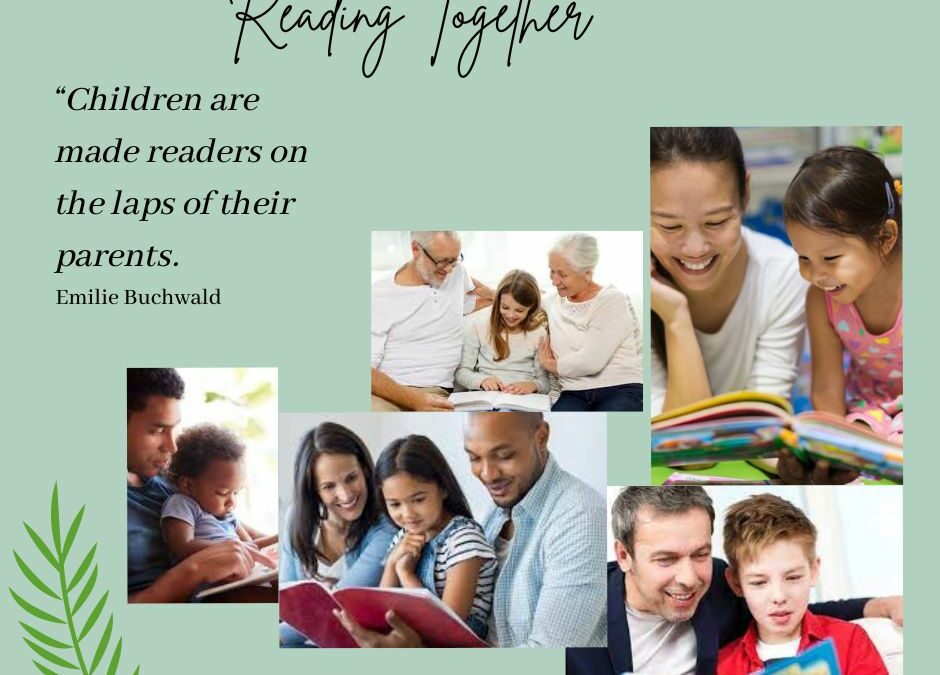
The Magic of Reading Together

The Magic of Reading Together

Physical Wellness: Part 3 – Physical Wellness: The Activities We Do with Nicolas Lepine

Physical Wellness: Part 2 – The Sleep We Need

Physical Wellness: Part 2 – The Sleep We Need

Benefits of Having a Book Study Group for Parents at Your School: fun, easy, and a great way to build community with Sherria VanSparrentak

Benefits of Having a Book Study Group for Parents at Your School: fun, easy, and a great way to build community with Sherria VanSparrentak

Practical Life for Older Students At Home and At School

Practical Life for Older Students At Home and At School

Whatever It Takes!  Keeping Your Children in Montessori through High School Graduation

Whatever It Takes! Keeping Your Children in Montessori through High School Graduation

Shared Celebrations – Large and Small: Embracing Traditions and Cultures

Shared Celebrations – Large and Small: Embracing Traditions and Cultures

Getting Friendly with Failure: Responding to Your Child When Things Don’t Work Out

Getting Friendly with Failure: Responding to Your Child When Things Don’t Work Out

How to Have a Successful Parent-Teacher Conference

How to Have a Successful Parent-Teacher Conference

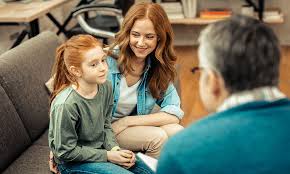
Every child deserves an environment conducive to learning, irrespective of their social status or learning difference. A quality environment exists only when there is effective collaboration with parents. Some parents may come to us with concerns regarding challenges they believe their child experiences. It is important for teachers to understand that these concerns are coming from a place of deep-rooted love, worry, and affection for their child. It is important to remember that, together, we are a team, and our goal is the best outcome for the child.

That being said, we will undoubtedly come across some ‘interesting’ situations during our school year. During such times, we need to remind ourselves to have an open mind and seek opportunities for learning. It is vital to make a conscious effort to check in with our reactions and find a time that is suitable for both parents and teachers to meet.

Parent-teacher conferences are a perfect way to work together for the betterment of children and set them up for success. This is the time to build stronger relations with each other. The first conference is always impactful and sets the tone for the rest of the school year.

At our school, the first parent-teacher conference is in October. You can find below some of the concerns and comments that were expressed during these conferences. Each conference is about 25 minutes long. Below, I have tried to compile the main points of our conversation. The children’s names have been changed for privacy reasons, but the concerns and scenarios are real.

Does Ziana still flip her letters? Is that normal? How can we help improve her penmanship?

Yes, it is a normal developmental process for preschoolers to reverse some of their letters and numbers. Children in their early childhood years are busy taking in information, and they are learning the correct orientation of letters and numbers. The letters and numbers most commonly observed to be reversed are b, d, p, q, and 2, 5, 9, 3. It is normal to see this reversal being carried on to Grade 1.

Some of the common reasons for reversals are directional confusion, lack of spatial-perceptual orientation, and, lagging visual discrimination skills. Many exercises from the Practical Life, Sensorial, and pre-Language shelves help children with visual perceptual skills, directionality, and orientation. As she continues working with these exercises we can certainly see improvement.

To improve penmanship, first, we need to make sure the child’s visual acuity is within the normal range. The next step is to observe how the child is holding the writing tool, and if she is seeing her own writing. We observed that Ziana is only partially seeing what she is writing, as her hand covers most of it.

We have shown her to keep her paper at a 45-degree angle. Ziana is practicing writing in this style, and we have already seen great improvement in her penmanship.

The teacher’s observation was that when Ying is building words with the Moveable Alphabet, she cannot process and discriminate between i and e sounds. She spells nit for net, rid for red. How can we, as parents, support her at home to improve her auditory discrimination skills?

Ying speaks Mandarin at home. When she started school last year she did not speak English. She has picked up a lot since, and by the end of the last school year, she was communicating in English. She had to pause and think for a word to complete a sentence. But since the beginning of this school year, Ying has been communicating confidently and fluently in English. She is also able to analyze and break down the sounds in a word and build phonetic words. We are extremely happy and proud to see her progress. Because of the Mandarin dialect, she stresses more on some vowels. We have advised parents to write down the vowels i and e and help Yin enunciate. We also asked parents to write three-letter words with i and e vowels and to have Yin stretch out the vowel as she blends and reads so that she is able to hear herself.

Language development in an early childhood classroom is a process of integration of senses. It is a step-by-step process that comes naturally to many children. When a child sounds out a word, the word is translated from the auditory message to the visual image of the letter system. Then she uses the motor system of the hand to build the words with the Moveable Alphabet or write them. It is a very complex process, and at any point, the child may mis-process resulting in incorrect spelling. Montessori Language exercises are designed specifically to provide this multi-sensory experience for children.

How to help the child be independent and intrinsically motivated to choose more challenging work?

Charlie seems to avoid challenging work and prefers to sit and observe his friends, unless prompted by a teacher. It is okay for children to observe in Montessori classrooms as they learn so much through observation. But since this is Charlie’s kindergarten year, we expect him to be choosing work that challenges him and take up leadership roles. After meeting with his parents, it has been noted that Charlie does a lot of worksheets at home and he is also enrolled in at least five extracurricular classes. Charlie is showing all the symptoms of work overload and fatigue. He is not motivated to do any work because of this exhaustion. We have advised his parents not to provide worksheets at home, as this is clearly confusing Charlie with some of the concrete work he is doing at school. We have also asked them to cut down some of the extracurricular activities.

How to help my son get over social anxiety? He comes home and says no one wants to play with him and the teachers are not helping him either. Help us understand the situation, please.

Before answering the question, here is a brief description of Adrian. Adrian is a 4 1/2 year-old boy. This is his very first experience in a school environment. Due to the pandemic, his parents opted to home-school him. His mom had expressed anxiety over Adrian removing his mask and eating lunch with his friends indoors and even requested if it was okay for him to sit outside the classroom to have lunch.

As a teacher, I sensed a noticeable amount of stress and anxiety in the mom. It is essential to acknowledge the parents’ feelings for their children. Once they understand that we are here for the children and want to provide a secure and safe environment for them, we start to gain their trust. Now, Adrian’s mom was open to suggestions.

We typically give 6 weeks for children to normalize and get accustomed to the new environment. During that period, Adrian preferred to sit next to teachers and talk while watching his friends play. We wanted Adrian to feel safe and trust the adults in charge of him and allowed him to be beside teachers. Once the 6 weeks period passed, we noticed Adrian still preferred to hang out with adults. Now it was time for us to encourage him to venture out and make friends. It was vital for us to see how he takes on this challenging task. While the adults were there to support him, it is an important life skill for him to master on his own. Even though at first it felt like no one was helping him, once he crossed the hurdle, he was able to make many friends and enjoy playground time. Today, Adrian is a happy boy who doesn’t shy away from making new friends.

My child wants to please all his friends and sometimes can take in some unpleasantries and smile through it, all the while hurting inside.

David is a sweet boy who has lots of energy to expend throughout the day. He was transferred from another class last year to our room. He made a smooth transition and has made lots of friends in his new environment. However, he has to be redirected throughout the day to make the right choices and use impulse control. Sometimes he can get himself involved in situations involving multiple children, where they tend to use his name upfront to get away from troubling situations (e.g., “David pushed me.”)

As a Positive Discipline Classroom Educator, I am extremely careful not to label children. I also understand why children tend to call out David’s name a lot due to his previous history of being labeled. I sat the boys down and talked to them about friendship, honesty, and integrity. While some are trying to seek attention (negatively) by placing their friend upfront for things he hasn’t done, it is vital for David to be emotionally strong and know that he doesn’t need to soak up everything his friends are pouring on him. He is made aware that he has a choice and it is up to him to exercise these choices. He is doing extremely well in the classroom’s structured environment. However, he needs reminders when he is with other groups to practice impulse control or in our very special words: “Listen to your peace light and let it shine brighter.”

When Emma is asked to redo work or make a challenging choice, she always insists that her mom wants her to do it that way. We want to know a little more about how you handle such situations at home.

while it is a beautiful sight to see Emma have a strong, secure attachment to her mom, we also want to ensure that she is not heading toward an insecure attachment or reflecting her mom’s emotions.

Emma is a diligent and hardworking student. She does her work very meticulously. However, when she is asked to redo work or re-write letters and follow the correct orientation, she is a bit hesitant.

It is important to introduce constructive criticism to children in their formative years. It is a means by which we learn from our mistakes and find strategies to determine ways to better ourselves. At the same time, it is also important for children to differentiate negative criticism from constructive criticism. With constructive criticism playing a vital role in childhood, it is important for children to learn to take positive feedback and deliver them graciously.

Emma has come a long way. She is open to correcting or redoing her work now at the same time confident enough to let us know if she wants to do it now or later. She knows that we give the freedom to choose between now and later as long as the work is taken care of independently. 

30 Reasons Parents Stay with Montessori

30 Reasons Parents Stay with Montessori

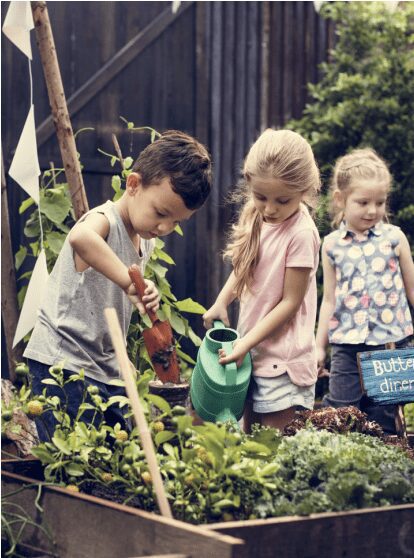
three children gardening