Montessori is Much More Than the Materials or the Name
To continue reading, you will need to choose a subscription plan.
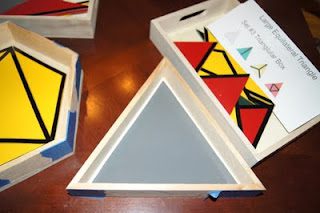
Sacred Geometry
It was Plato who said,
Geometry is the experience of the eternally existent. The study of the ‘One’ is among those that lead the mind on and turn it to the vision of reality.”
This is the basis of the sacred work of geometry. It is the study of the universe, the world we live within, and our interconnected relationship with it. It is called ‘sacred’ not because it adheres to a specific religious or spiritual ideology but, rather, because it offers the practitioner a way to appreciate the world with wonder and to explore life’s most fundamental questions. This is done through physical means, through the practice of geometry. Maria Montessori shared in this vision of geometry in speaking of, “the reciprocal relationship between man and the objects of the environment.”
It is this geometric exploration into the interconnectedness of the universe and themselves that truly speaks to the child. Children look upon the world to explore, discover, and reveal who they are: psychologically, emotionally, physically, and spiritually. This happens through their interactions with, and observations of, this relative, physical world. It is in this pursuit that sacred geometry entices the child. It offers the child a spiritual exploration through physical means, that guides and leads the child to the mystical wholeness they find within their own hearts and minds. In the child, Sacred Geometry fosters wonder, keen observation and a holistic understanding of the universe and the environment where they live.
It begins with the study of the ‘One,’ as Plato suggests. This is shown through the circle.
Children will find delight in using the compass to form all sorts and sizes of circles. The circle manifests as the image of oneness and is well represented in the art and architecture of the world’s great spiritual traditions, as in the “O of Giotto,” the Zen “Enso,” or in the stained glass of the famous Chartres Cathedral in Paris, France. Through the meditative practice of creating the circle, and reflecting on it, the image of wholeness is reflected back as the child’s own completeness.
The child then discovers how the ‘One’ becomes two. This is represented through creating an exact emanation of the original circle, formed on the circumference of the original. This precise emanation creates the birthplace of geometric shapes, the coming of duality and the construction of the world as we experience it.
This space, within the intersecting points of the two circumferences sharing the same radius is called the “Vesica Piscis,” or “Bladder of the Fish.” The “Vesica Piscis” holds the pure creative potentiality of the universe. It is at this point that children’s creative energy will flow freely and their minds are “turned to the vision of reality” as they discover the many shapes, images and artwork that arises within the “Vesica Piscis” and, ultimately, from the original circle or oneness.
They discover a line and its division, the constructive triangle, the manifest square, rectangle, and the many polygon constructions. Children’s sensitive periods for imagination are stimulated and come to life as they construct and observe each shape and experience the structures of the world. The child finds familiarity in these shapes through observing their environment and within themselves.
As children continue creating polygons within the original, with more and more sides through the bisection of the constructive triangles, they find something quite extraordinary: the many has returned to the “One.” How is this possible?
We experience it in geometry as the polygon slowly becomes the circle again, as more and more sides are added to it. The child might even say, “Look, it’s becoming the circle again!” But how does the “eternally existent” manifest in our own lives? This is the real question of Sacred Geometry and one for each of us to discover through our own practice, as the child does quite naturally through concentrated work. (Please note that this is a very brief introduction and overview of this topic and process, and is in no way meant to be taken as an exhaustive account.)
Each step along this geometric journey affords the child the opportunity to realize something about themselves and the environment in which they live. This ultimately manifests in beautiful artwork and mandalas that the children create from the spark in their heart/mind. Not just artwork on paper but the beautiful artwork of their being.
It is important that children are able to discover of their own accord and not be told what they might find or experience through this work. While this description is quite abstract, the child’s experience is real and actual and devoid of such unneeded intellectualizing. Any such explanation would only serve to diminish the child’s interest and wonder.
The study is also one that will take time and patience. No specific timeline should be set, it will come when it is ready. Some guidance on the process is all that is needed; a direction into the use of the compass and straight-edge and how to create the basic constructions is helpful. This is truly a journey of self-exploration and it is through the child’s self-discovery that Maria Montessori’s vision of peace in the world becomes a reality of humankind’s future.
Now, for the Montessori guide, the practice of Sacred Geometry leads us into our own inquiry. It offers us a medium for the internal work and preparation necessary to follow and guide the child with fresh eyes; within our classrooms and in the world. Working with the compass and straight-edge, we find a meditation on the building blocks of our life. Like the child, we begin with the circle and move step-by-step. We encounter our edges as we bump up against our own challenges. We must learn and practice patience and focus as we come to the work each time.
It gives us insight into the child’s challenges as well, as we realize our own limitations. Perhaps we notice our own insecurities in our ability to create the work as we would like. Or, we struggle with our desire for perfection, and with our comparisons to others. Ultimately, through practice, we come to see the shapes as complete as they are and realize that we, too, are complete as we are.
As we gaze upon these shapes and observe our world, we see that geometry is everywhere; it is this life itself and in and through each and every one of us. It is nature and the whole of the universe. Like the child, we discover things about ourselves that helps us appreciate our children and the wonder they experience in the world.
I encourage each and every one us to join in this exploration of the fascinating and awe-inspiring practice of Sacred Geometry. Learn and guide your children in how to utilize the geometer’s tools, the compass and straight-edge, to create inspiring geometric works, and take a personal journey of self-discovery, as we explore the structures and building blocks of the world in which we live.
Tomorrow’s Child / Sept 2016 / p 9
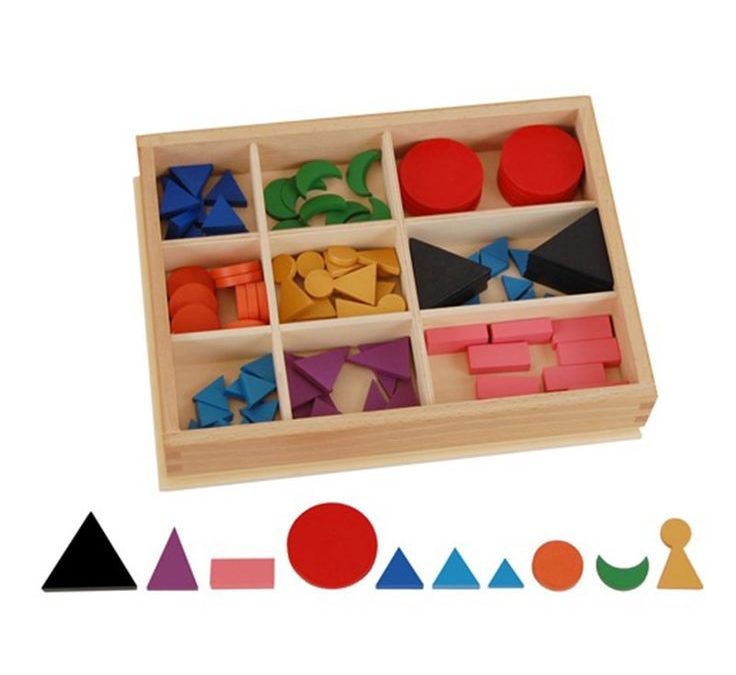
Webcast: Grammar – The Function of Words / Pt 2
To continue reading, you will need to choose a subscription plan.
Webcast: Grammar – The Function of Words / Pt 1
To continue reading, you will need to choose a subscription plan.

Authorized List of Montessori Materials – Dr. Michael Dorer
To continue reading, you will need to choose a subscription plan.

Webcast: What should be in a Montessori Primary classroom?
To continue reading, you will need to choose a subscription plan.
Webcast: The Pink Tower
To continue reading, you will need to choose a subscription plan.
Ten Essential Montessori Principles (Plus One!)
To continue reading, you will need to choose a subscription plan.
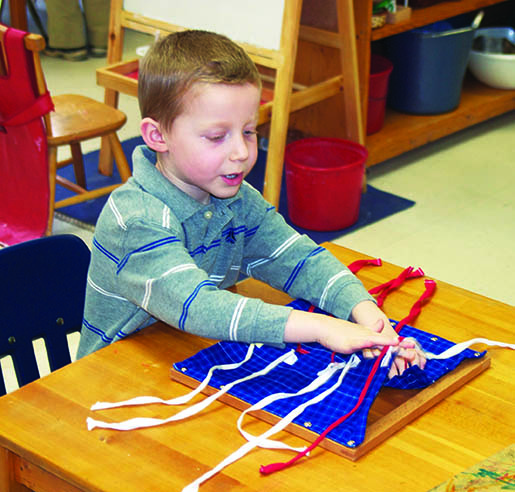
Webinar: A Montessori Morning
To continue reading, you will need to choose a subscription plan.
Webinar: The Role of the Montessori Materials
To continue reading, you will need to choose a subscription plan.
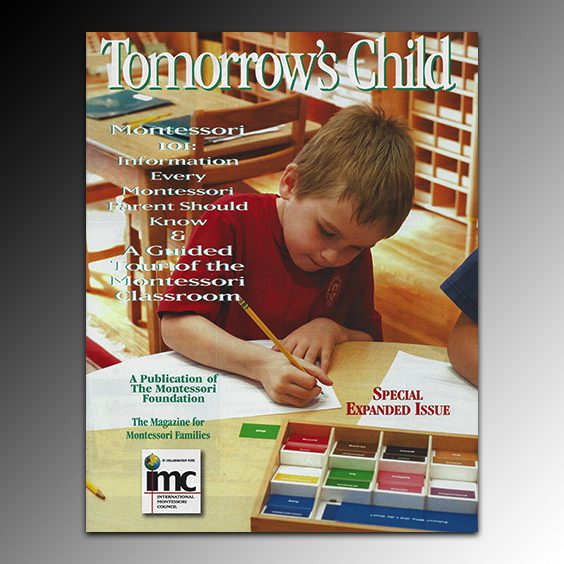
Montessori 101: A Guided Tour of the Montessori Classroom / Special Edition
To continue reading, you will need to choose a subscription plan.
Why Our Montessori Classrooms Are Computer Free
To continue reading, you will need to choose a subscription plan.
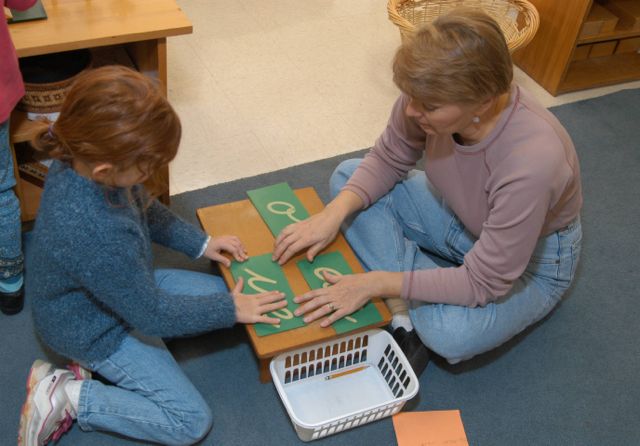
Webinar: Language II / Sandpaper Letters
To continue reading, you will need to choose a subscription plan.
Webinar: Language III / Moveable Alphabet
To continue reading, you will need to choose a subscription plan.
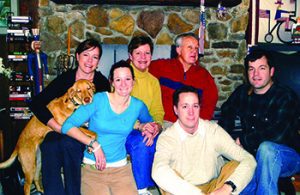
Montessori Helps Dad Recover / One Family’s Story
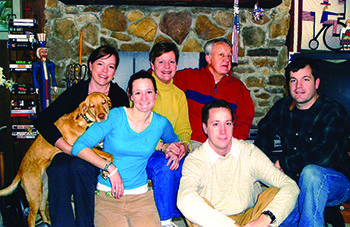
In November of 1974, young father and husband Herk Exline was just launching into a career in the family printing business, and the dreams of a parent of a blossoming ten-month-old daughter who was the “apple of his eye.” His wife, Kris, had just learned that they would be having a second child in June. Returning from a hunting trip at his family’s cottage in Canada with his best friend, their car was hit head on.
In an instant so many lives were changed forever. Herk’s friend was killed instantly, and Herk was in critical condition with a traumatic brain injury. He remained in a coma for months, finally returning to a hospital closer to home where daily visits became ‘normal’ life for Mom and baby. When Herk was able to go home, Kris was determined to find activities that would stimulate his memories, his speech, his ability to walk, and to sharpen his awareness of his surroundings.
When Cathy turned three and Paul eighteen months, Kris enrolled them at Solon Montessori School (Cleveland, OH), run by Mildred Gunewardena and her daughter Nelun Rajapakse. “Mrs.G” received her Montessori training directly from Maria Montessori, and Nelun with Mario Montessori. What angels these two women were for the young family! With their gentle demeanor and total respect for the child’s opinions, Mrs. G and Nelun encouraged a different approach to the traditional American parent/child relationship. Parents were encouraged to lead by example, not by authority. In turn, the children would have the freedom to discover for themselves the adults they would become.
One day Mrs. G met Herk and suggested that he meet with her after school. She believed that Montessori methods and materials could awaken his senses as they did with the young child. Days turned into weeks, and Herk was using sandpaper letters, sound cylinders, listening to poetry, beating rhythms with his hands, and so much more, stimulating not only his intellect but his physical deficits. Herk was learning to speak more clearly, repeating sounds, and matching pictures to appropriate words. He stretched out his arms holding onto longer and longer lengths of red rods. He worked with stacking the pink tower, learning sequencing.
Eventually Herk’s family grew to four children, and a commitment to the “Montessori Way” became the family’s way of life. Each child continued their Montessori schooling through eighth grade at Ruffing Montessori School. Herk was able to remain at home and to be a part of their daily activities. He and Kris credit the time spent as an adult in the Montessori classroom with adding to his return to daily living with senses and awareness more attuned to his surroundings.
Coming Together / Community Service
To continue reading, you will need to choose a subscription plan.
Bringing Montessori Home / The Town Game
To continue reading, you will need to choose a subscription plan.
Featured
-
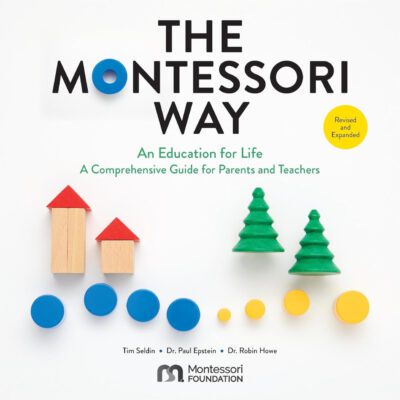
 The Montessori Way, Revised and Expanded: An Education for Life; A Comprehensive Guide for Parents and Teachers
$25.00
The Montessori Way, Revised and Expanded: An Education for Life; A Comprehensive Guide for Parents and Teachers
$25.00
-
The Montessori Child: A Parent's Guide to Raising Capable Children with Creative Minds and Compassionate Hearts (The Parents' Guide to Montessori)
$20.00
-
The Montessori Toddler: A Parent's Guide to Raising a Curious and Responsible Human Being (The Parents' Guide to Montessori)
$20.00
-
Montessori in Action: Building Resilient Montessori Schools 1st Edition
$29.95
-
Bulk Order, 30 Copies of Montessori for Every Family: A Practical Parenting Guide To Living, Loving, And Learning
Original price was: $600.00.$510.00Current price is: $510.00.