



Dear Cathie: Enough movement?

Dear Cathie: Enough movement?

when our children are loved
by Cathie Perolman

MY WIFE AND I HAVE BEEN CONSIDERING PRESCHOOLS FOR OUR ACTIVE THREE-YEAR-OLD. OUR CHILD LOVES TO BE “ON THE MOVE” AND IS HAPPIEST BEING BUSY. WE THOUGHT A MONTESSORI SCHOOL MIGHT BE A GOOD FIT FOR SUCH AN ACTIVE PERSONALITY. WE EXPECTED TO SEE A BIG OPEN SPACE WITH LOTS OF ROOM FOR THEM TO BE ACTIVE AND MOVE FREELY. BUT IT SEEMS TO BE THE SAME IN EVERY ROOM WE VISIT; THERE’S ONE BIG RUG SPACE, AND MOST OF THE ROOM IS DIVIDED INTO SMALLER SPACES.

CAN YOU EXPLAIN WHY AND CALM OUR FEARS THAT OUR ACTIVE CHILD WILL REALLY GET ENOUGH MOVEMENT DURING THE MORNING? — DAD

Dear Dad,

Thank you for your concerns. As the mom of a son who seemed a lot like yours as a young child, I can totally identify with your worries.

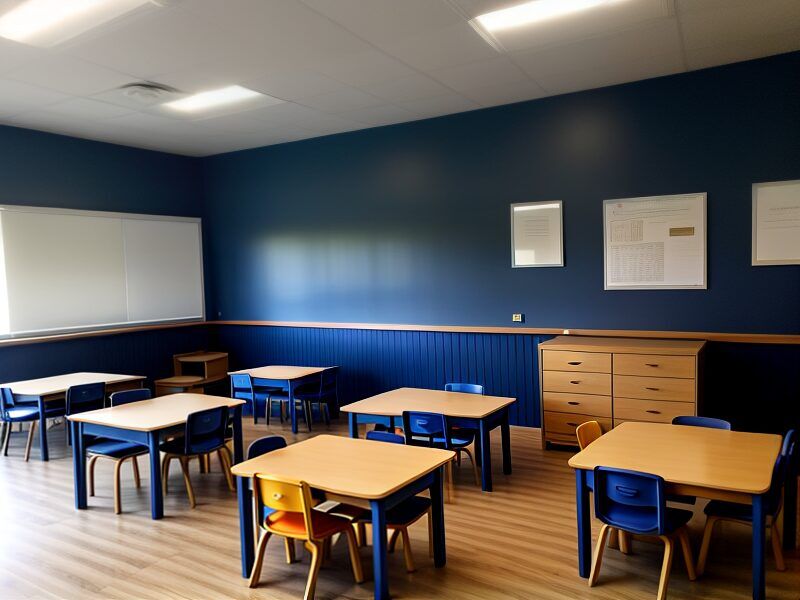
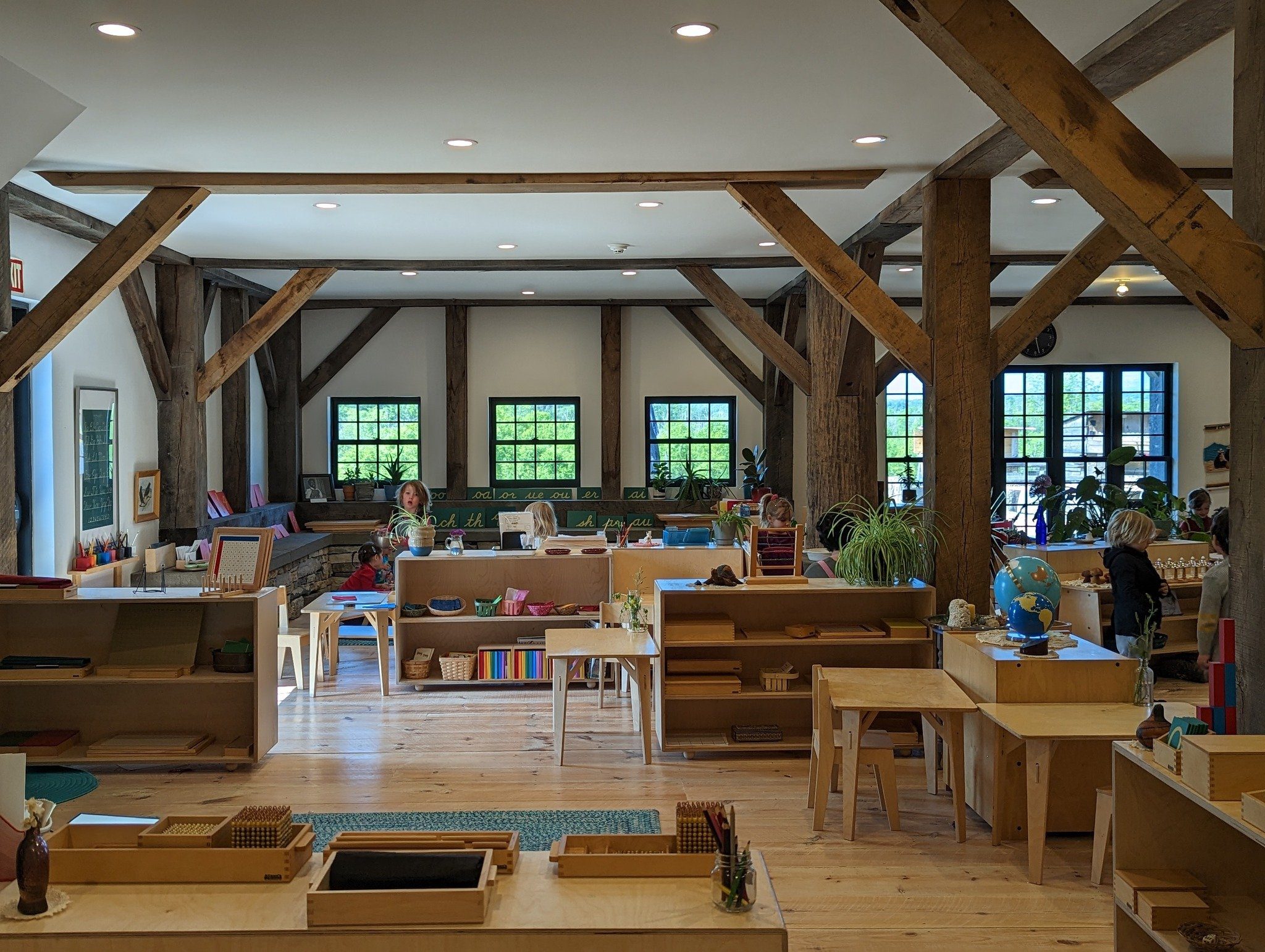
The Montessori classroom for 3-6-yearold children is designed to resemble a children’s house. It is scaled down in size to be a perfect fit for young children and is divided by area; think of it like rooms in a house. The shelves of materials or activities often divide the room helping the children to see where each area ends and begins. Inside each area is workspace where children can choose to put their work rugs if they so desire. Child-sized tables are also placed in some areas, so table work can be encouraged to happen in that space. There are areas for one child to work as well as group activities.

The big work rug that you noticed in each classroom serves as both a gathering space for the entire class when they have their ‘circle time” or “class meeting” and as a space to spread out and do larger rug works and partner activities. This rug is often filled with the happenings of many children during the morning, which creates opportunities for your young child to see, absorb, and aspire to these.

The Montessori philosophy seeks to “control the environment and not the child.” Running is not permitted in the classroom due to safety concerns, so we make the pathways in the classroom too narrow for running. Long stretches of space are obstructed with furniture, so they are not inviting areas in which to run. Children must walk carefully in order to not bump into anything. This helps them learn to move carefully within the classroom while still meeting their need for movement. The work rugs that are laid out on the floor create a sort of natural maze for the child to walk through. This creates a fun and sometimes challenging experience of careful walking in the classroom.

Classrooms have a line drawn or taped on the floor, and children are taught to walk on that line. First, they simply walk on that line. Later, they carry things that are of greater and greater difficulty. This is a very popular movement activity for young children.

Many of the activities in the classroom also require movement to do them. A child may build the Pink Tower (a set of 10 graduated cubes from 10cm – 1cm) across the room with the random cubes on one rug and the emerging tower in order on another rug across the room. This is an enticing activity for young children. They may collect objects of a single color from around the room and bring them to their rug. They may match the pictures of the children in their class to the real children. These types of works keep children moving all morning, and yes, their need for movement is satisfied in a Montessori classroom. Children also choose the amount of movement that is right for them. They have choices as to which activity they select, how long they work with it, and when they are finished. They might choose to have a “water break” or a snack break” in the middle of an activity or between activities.

Some classrooms have designated movement shelves with activities, such as yoga

Cathie cards, jumping circles that can be laid out, or other movement activities. Children may choose to turn over a timer and jog in a square to expend energy or lay out a walking path and move like an animal as they navigate the path.

The Montessori classroom provides natural opportunities for movement. The purpose of the classroom is to help the child refine their movements as they mature. It will assist your child in learning to develop greater self-control and purposeful movement as they grow their skill level. There are opportunities for gross-motor skills during circle time when the class plays group games as well as during free play outside each day. The balance of these myriads of movement-rich experiences will allow your child many opportunities for growth and development. 

Cathie Perolman has been involved in Montessori education for over 40 years. Cathie has worked in the classroom as a 3-6 assistant; a classroom teacher; a level leader; a teacher trainer; and a college professor. She currently spends her time mentoring teachers, conducting workshops for teachers and administrators; and writing for her blog and for magazines. She also serves as a consultant for schools and as a school validator for the Montessori Schools of Maryland. Cathie is the creator of the Color Coded Sound Games and the Rainbow Reading System as well as other reading and cosmic printable materials to enhance classrooms. Find them at cathieperolman.com.

 

Book Reviews

Book Reviews

when our children are loved

Our Blue Planet

Written by Leisa Stewrat-Sharpe
Illustrated by Emily Dove

This is incredibly rich in content, giving a brief synopsis of the underwater world: the creatures; their habits; their purpose; and their power. David Attenborough begins the journey with a thoughtful foreword and ends it with a challenge to all of the human race.

This is incredibly rich in content, giving a brief synopsis of the underwater world: the creatures; their habits; their purpose; and their power. David Attenborough begins the journey with a thoughtful foreword and ends it with a challenge to all of the human race.

It is a book to be read in sections so that the amazing information can be taken and expanded upon through

research. Children will be fascinated by all that goes on in earth’s deepest, darkest places. When we are amazed and in awe, we tend to be motivated to learn and to take action.

This book contains stories from BBC’s Blue Planet II

The book ends with some simple things that we can do to protect and preserve our planet.

The book ends with some simple things that we can do to protect and preserve our planet.

• Power Down: reduce energy use

• The Lungs of Our Planet: plant more trees

• Become a Sea-Life Spotter: gather valuable information for scientists

• Plastic Is Not Fantastic: don’t use single-use plastic

• Reduce, Reuse, Recycle: reduce plastic waste; repair to reuse clothing or donate it to a charity for others to reuse; recycle cardboard; compost vegetable or fruit peelings

• Reduce, Reuse, Recycle: reduce plastic waste; repair to reuse clothing or donate it to a charity for others to reuse; recycle cardboard; compost vegetable or fruit peelings

This is an amazing book that can be used with children of all ages with caring adult guidance and encouragement.

I was fortunate to travel the Columbia River in Washington State in late summer 2024. While on the cruise we learned a great deal about the Lewis and Clark expedition and Sacagawea. National Geographic Kids publishes many wonderful readers for children at different reading levels. I recommend any books in their reading series. This book is written for children who are fluent readers. It is set up with Grab a Book Book reviews by Lorna

I was fortunate to travel the Columbia River in Washington State in late summer 2024. While on the cruise we learned a great deal about the Lewis and Clark expedition and Sacagawea. National Geographic Kids publishes many wonderful readers for children at different reading levels. I recommend any books in their reading series. This book is written for children who are fluent readers. It is set up with Grab a Book Book reviews by Lorna

Sacagawea


by KitsonJazynka

I was fortunate to travel the Columbia River in Washington State in late summer 2024. While on the cruise we learned a great deal about the Lewis and Clark expedition and Sacagawea. National Geographic Kids publishes many wonderful readers for children at different reading levels. I recommend any books in their reading series. This book is written for children who are fluent readers. It is set up with interesting information and illustrations, as well as with vocabulary that may be new to some readers. The new words are defined after they are used in context and include a pronunciation guide. At the back of the book is a glossary, an index, and a quick quiz.


I learned interesting and factual information about Sacagawea’s life, her experiences on the journey, and her important contributions to the success of the Corps of Discovery. It is an engaging book for young readers in the elementary years.

Seaman’s Journal: On the Trail with Lewis and Clark & Illustrated by Patricia Reeder Eubank

As I took my first glances through the pages I thought, “Wow! Eye-catching illustrations!” They are colorful, realistic, and give readers almost as much information as the text.

Seaman was a Newfoundland dog, owned by Captain Meriwether Lewis. Seaman traveled with Captain Lewis

and the Corps of Discovery across what is now the United States. The author chose to write this book as if Seaman was writing.

The events in this story are based on Lewis’s journal. It is a captivating account of the 8,000-mile journey across America to the Pacific Ocean and back from a dog’s eye view! Children from 5 to 10 years old will not only enjoy it but will learn a great deal about this historic adventure.

Something, Someday

Written by Amanda Gorman, Presidential Inaugural Poet 2016
Illustrated by Christian Robinson

Amanda Gorman once again has written a poem for children that is full of determination, hope, and friendship. The essence of this piece is about how to make a difference in our world. According to her poem, the keys are to have a vision of how it might work, the need to keep working even in small increments, keep hope in your heart, and others will gather around as friends and helpers with the same vision. What I imagined as I read this

book is another project that I and others are working on, unrelated to cleaning up our world (recycling, repurposing, reusing), and I thought these same principles could be applied to many different ideas, projects, and plans. It’s so simple and yet profound.

The illustrations are reminiscent of Ezra Jack Keats’s work. Very nicely done, including diversity in ages, races, and physical abilities, and shown in an urban environment.

I would recommend this book for children ages 4-8 years old. I would also recommend that parents, caregivers, or classroom teachers read this book to a child or children. Then explore together what possibilities there are, or might be, in life for making sometimes seemingly impossible dreams into reality.

Emmy in the Key of Code

Written by Aime Lucida

“A definite book to teach you about code, life, and the essence of computer programming.”

I am 11 years old, and I love this book. I read it twice! It taught me about coding and how to handle life. Emmy in the Key of Code is a realistic fiction book about a twelve-year-old girl who needs to make music to save her life.

Emmy is a 6th grader and is the protagonist of the story. She faces lots of challenges that are outside her comfort zone. Emmy goes into a new school where she meets Abigail who helps Emmy find the way to make music with her new life of coding. Abigail is Emmy’s best friend and faces the challenge of making her own decisions while helping others. Ms. Delaney is Emmy’s computer teacher and teaches Java and binary code. In the book, Emmy’s first computer program was Hello World. Hello, World is the first code new programmers use to get the hang of coding with any computer language. Francis is the antagonist of Emmy and makes her feel like an outsider of coding; however, girls were the first computer scientists.

In this book, you get to meet Jeopardy, who is Emmy’s loved golden retriever. One of my favorite lines from the book is when Emmy made music with her computer coding: “Public, Static, Void, Main, String, Bracket, Bracket, Args!” which are the building blocks of Java coding.

What makes this book interesting to me is that Aimee Lucido balanced the antagonist’s moves and the protagonist’s moves. Lucido wrote this book uniquely by writing words in a whole

new way. For example, she scattered the words all over the page. Emmy in the Key of Code is a book I would read over and over again. A perfect book for people interested in coding.

Reviewed by Jayden Allsop, Trinidad, NewGate Global Campus, 7th grade.

Wildwood

Written by Colin Meloy

In Colin Meloy’s fantasy adventure novel Wildwood (the first book in a trilogy), the story follows two seventh graders on their journey through a magical forest to rescue a baby who has been kidnapped by crows. Along the way, they are caught in a deeper plot of an age-old conflict that, if left to play out, could lead to a disastrous ending for everyone involved.

Leading an ordinary life in Portland, Oregon, twelve-year-old Prue Mckeel lives with her parents and baby brother, Mac. She is a skilled artist who is intelligent, courageous, and a true warrior that has been warned of one

thing since she was young: Never venture into the Impassable Wilderness. One day in the park, she is looking after Mac, when suddenly a “murder” of crows swoops down and carries him into, you guessed it, the dreadful Impassable Wilderness. Determined to find her brother and bring him home, she braves the journey with her classmate Curtis Mehlberg, encountering fantastical animals and a civilization that has been hidden for years.

Wildwood is a coming-of-age tale full of magic, danger, suspense, and wonder. I would recommend this novel to anyone who enjoys a good fantasy book, but more specifically ages 10-13, as I feel they will be able to connect and relate much better with our two protagonists.

Some things I enjoyed about this book are the beautiful, detailed illustrations done by Carson Ellis that are sprinkled throughout the story. These especially help if you have trouble with visual imagery or simply want the author’s perspective about what is happening. Another thing I enjoyed is the writing style. It is clear and easy to understand, while still holding detail and depth. This is a bit of a longer book, spanning around 540 pages, but it is worth the read as it transports you into the exciting world of Wildwood.

I rate this book 5 stars.

Reviewed by Nadia Chance, grade 9, age 14, student of NewGate Global Campus

Part 2: Have you wondered how to give Black History Month justice in your school? OR have you thrown something together about the same few African Americans?

Part 2: Have you wondered how to give Black History Month justice in your school? OR have you thrown something together about the same few African Americans?

Part 2: Have you wondered how to give Black History Month justice in your school? OR have you thrown something together about the same few African Americans?

Have you wondered how to give Black History Month justice in your school? OR have you thrown something together about the same few African Americans?

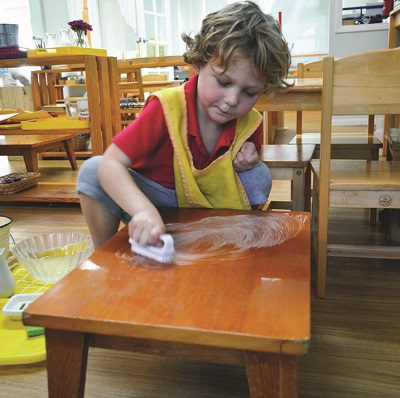
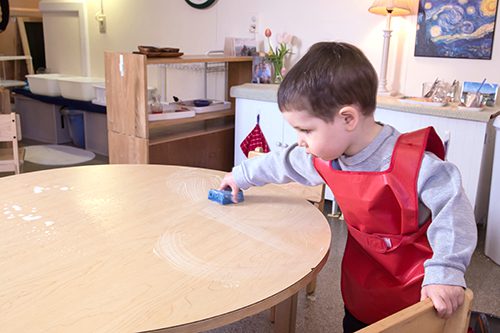
Why is my child washing tables all day? The value of the lessons in practical life

Why is my child washing tables all day? The value of the lessons in practical life


“All activities connected with caring for oneself and the environment—like getting dressed, preparing food, setting the table, wiping floors, clearing dishes—these are tasks that adults often avoid. Yet, for children between one and four, these jobs are a source of joy, and they eagerly rise to the invitation to participate.”

— Dr. Silvana Montanaro

“I love Montessori! I get to make snacks and serve them to my friends. It’s like being a real waiter.”
— Phillip, age 5

This photograph from a century ago shows a young Montessori child ladling soup for her classmates at lunchtime. It’s easy to imagine her parents asking the same question many do today: “What does this have to do with learning to read or write?” In Montessori, Practical Life activities—like washing tables, pouring water, polishing, sweeping, and dusting—are not just chores; they are foundational learning experiences.

Through these hands-on tasks, children develop an inner sense of order, focus, and independence. By caring for their environment, meeting their own needs, and helping others, Montessori students learn more than just skills—they learn how to learn.


Here’s a glimpse into a Montessori day that captures this philosophy:

It’s 10 o’clock, and Amani is hungry. She heads over to the snack table and prepares celery sticks with peanut butter, pouring herself apple juice from a pitcher made for small hands. When she finishes, Amani carefully wipes her placemat. This inspires her to clean, so she gathers a small bucket, sponge, brush, towel, and soap and starts washing a table methodically. 

As she scrubs, she’s absorbed by the patterns of the soap suds. When she’s done, she tidies up, leaving the table somewhat clean—but that’s not the point. What Amani is truly learning is patience, independence, and the ability to concentrate on a sequence of steps.

Another child, Meredith, sees that the widows need to be cleaned. She gathers the window washing kit and begins to spray a nontoxic solution on the glass. She uses a small squeegee and wipes it with a clean cloth. When done, she moves on, choosing activities that interest her. 

In a Montessori classroom, children are genuinely responsible for their space. When hungry, they prepare snacks; when spills happen, they clean up. They practice self-care and community care—each action cultivating confidence and independence.

A Foundation Beyond Skills

Montessori isn’t just about teaching children to count or read. It’s about shaping the people they will become. We focus on developing self-discovery, resilience, and a joyful pursuit of knowledge. This isn’t merely an academic education but an education of the heart and mind. In this setting, children learn with patience, curiosity, and a sense of personal responsibility.

Montessori’s classroom for children between three and six years old is called a Children’s House—a true community of young children. Dr. Maria Montessori’s vision was not to create a more advanced kindergarten but an empowering environment where children are respected as individuals. Here, they develop social and emotional connections, form lasting friendships, and take pride in their shared responsibility for the space and each other.

As children thrive in this nurturing community, they begin to believe in themselves. In this atmosphere, they maintain their natural curiosity and willingness to explore. They learn that mistakes are not failures but stepping stones to growth. With this foundation, they grow to view learning as a journey rather than a destination.

Growing up this way

As a child, I attended the Barrie School in Washington, D.C. Barrie was founded by my mother in 1932. Later, I returned to teach and eventually served as headmaster for 22 years. 

As a child, I remember arriving at school on frosty mornings, stopping by the kitchen for a piece of toast or some cereal, and helping myself with a bit of guidance from older students. As we grew, so did our contributions to the school.

Barrie was a community of several hundred children ranging in age from two to eighteen. Our food was homemade in the school kitchen, and older students volunteered to help with preparation. I spent mornings peeling potatoes and stirring stew alongside our cook, Edith, and friends.

After meals, we carried dishes back to the kitchen, washed them by hand, swept sidewalks, watered gardens, fed animals, and tutored younger students. 

These daily acts connected us with everyone on campus—from the bus drivers to teachers. They taught us the importance of community, and to this day, I still enjoy washing dishes.


The Lifelong Value of Practical Life Skills

“In the special environment prepared for the child, they express an inner need: ‘Help me to do it by myself!’ Their work will no longer weigh them down.” — Dr. Maria Montessori


In Montessori, the classroom itself is a “children’s house,” where children play an active role in caring for the space. They prepare snacks, clean tables, sweep floors, and organize shelves. Through these activities, they learn much more than basic tasks; they develop self-respect, resilience, and a love for learning.

Confidence grows when children feel capable and independent. Montessori classrooms are designed to foster this growth. Here, children’s actions say, “Help me learn to do it for myself!” By encouraging them to be self-sufficient and organized, we set the stage for a lifetime of strong work habits and a sense of responsibility.

Independence does not magically appear as children grow; it must be nurtured. In Montessori, children start young, learning to tie their shoes or pour their own milk. Small successes like these lead to a sense of confidence and pride.

As they mature, Montessori students learn Practical Life skills that prepare them for daily living, like cooking, sewing, managing money, gardening, and even simple home repairs. However, perhaps the most essential skill is learning how to work and play with others kindly. Kindness and respect are daily practices in the Montessori classroom, where children learn to be thoughtful and responsible toward their community. They learn to treat themselves and others with dignity.

Montessori schools aim to be close-knit communities where people learn together in an atmosphere of warmth, respect, and cooperation. Teachers are mentors and guides, helping children grow in understanding and compassion for each other’s unique backgrounds and interests.

Montessori Practical Life activities are the heart of Montessori education. They teach children to be confident, responsible, and independent human beings who find joy in learning and meaningful work.


Consultation and Resources

Leadership Development Workshops

Curriculum Design Consultation

Parent Education Seminars

Classroom Environment Optimization

Teacher Training Programs

Conflict Resolution Strategies

Community Engagement Initiatives

Resource Library Access

Montessori Materials Guidance

School Accreditation Support

Strategic Planning Sessions

Financial Management Advice

Marketing and Outreach Planning

Technology Integration in Montessori

Sustainability Practices in Schools

Insights and Advice for Montessori Parents

INSIDE Montessori: DOcumentary

INSIDE MONTESSORI: A DOCUMENTARY  INSIDE MONTESSORI (82:05) is a documentary film and library of short videos (chapter & focus videos and bonus videos) that reframe the national education conversation toward creating learning environments that allow children to...

Special MFA Members’ discount code for The Parenting Puzzle

Supporting the Development of Concentration

Concentration: What is it? n a LinkedIn post this past June, “Want Kids to Succeed?  Teach them Focus,” Daniel Goleman explains why concentrating is a precursor for both learning something new and developing self-control. We all know that success...

When a Family Wants to Be Released from an Enrollment Agreement

This article is not legal advice. It offers school leaders thought-provoking information based on experience, general knowledge of business contracts, and the practical realities of running an independent school. Contract law, consumer-protection law, court procedure,...

The observant guide: How Montessori Teachers Learn to See the Child—and Find the Time to Record What They See

It is nine-forty in the morning, and a six-year-old is sitting on the floor with the Golden Beads spread across a mat, not moving. Her hand rests on a stack of Ten Bars. A visitor glancing in might see a child who has stopped working. A teacher who has learned to...

Being Together With Your Child in Nature

Montessori education places great importance on caring for and preserving our natural resources and the planet, and there is no better place to begin than in your own family life. In a Montessori-inspired home, spending time outside together is one of the simplest and...

The Moment a Parent Begins Looking Elsewhere: A lesson for every Montessori school leader

A few weeks ago, I received a phone call from a mother whose identity — and whose school — will remain completely confidential. She wasn't angry. She wasn't demanding a tuition refund. She wasn't threatening legal action. She simply sounded tired. Over the next hour,...

Reclaiming Attention: Helping Children Focus in a World of Constant Stimuli

  Many parents notice this behavior even when a child is doing something small. Perhaps they're building with blocks. Maybe a story is being read aloud. Or they might be drawing or painting a picture on their own. For a couple of minutes or possibly longer, the...

The Children’s House – A Community of Connection and Self-Discovery

By Tim Seldin I recently read a thoughtful essay by my friend and colleague Tammy Oesting entitled What Have We Lost? In it, Tammy reflects on stories from the early Montessori movement and asks whether, somewhere along the way, we may have unintentionally left behind...

Easy and Affordable Ways for Parents to Solve Family Chaos and Stay Organized

Busy parents juggling work, school, and home life often aren't disorganized; they're overloaded by family organization challenges that multiply quietly. The core tension is simple: every day demands fast decisions, but childcare scheduling changes, family document...

Holding Two Truths: Montessori, Inclusion, and the Courage to Be Honest

A 1950s-era Hermes Rocket portable typewriter similar to the one that I wrote with every day from age 5 through university.    The Promise — and Limits — of Montessori Inclusion: Following Every Child Honestly   A recent video by Montessori educator...

Measuring Child development in the Early Years: Three Tools

Three Tools That Finally Match What Montessori Does I rarely advocate for specific products in print. I have been around long enough to be skeptical of anything that presents itself as the answer to a problem our schools have been navigating for decades. But...

The Early Childhood transition Playbook: Big changes without the burnout

Families navigating the early childhood years are juggling a stack of major life transitions all at once: a new baby, a new identity as parents, new care decisions, new housing needs, and new financial math. It can feel like you're sprinting through a season that's...
Beyond Diapers

Beyond Diapers

Beyond Diapers Few topics generate more anxiety for parents of toddlers than toileting. Is my child ready? Am I pushing too soon? Should we wait? Modern disposable diapers have made postponing the process easier than ever before. Montessori offers a different...

read more
Montessori’s Enduring Insights

Montessori’s Enduring Insights

All Ages   On January 6, 1907, Dr. Maria Montessori opened the first Casa dei Bambini—the Children’s House—in a poor tenement district of Rome. The children who entered that classroom were widely viewed as difficult, neglected, and incapable of learning. What...

read more

Join Our Montessori Community

Discover the transformative power of Montessori education. Connect with us for a personalized consultation or subscribe to our newsletter for insightful resources that empower school leaders and parents alike.

Setting Tuition: FInding The Right Balance

Setting Tuition: FInding The Right Balance

Empowering Montessori Schools Through Strategic Tuition Planning

Unlock the Potential of Your School's Financial Future

Discover how strategic tuition planning can enhance your school’s sustainability and strengthen community trust. Learn to balance affordability with quality education.

The Importance of Strategic Tuition Planning

At this time of the year, many of us who lead private schools have just gone through the process of setting tuition for next year. The odds are that we simply took last year’s numbers and adjusted them by a factor representing our projected increased cost of operations and wages.

Strategic tuition planning is crucial for Montessori schools as it directly impacts financial sustainability and community relationships. By understanding the unique needs of families and aligning tuition with the school’s mission, leaders can ensure long-term success. This approach not only supports operational costs but also enhances educational quality, making it accessible to a diverse range of families.

Challenges in Tuition Setting

Setting the right tuition is a complex task for schools, balancing financial needs with community expectations.

Exclusivity Concerns

High tuition rates can inadvertently exclude families, reducing diversity and accessibility within the school community.

Budget Dependency

Tuition is often the primary source of income, making schools vulnerable to fluctuations in enrollment and economic conditions.

Emotional Impact

Unexpected tuition increases can lead to dissatisfaction and erode trust if not communicated effectively to families.

Common Questions About Tuition Planning

Explore answers to some of the most frequently asked questions regarding tuition planning and management for Montessori schools.

What factors should be considered when setting tuition?
When setting tuition, consider factors like market research, parent demographics, school value proposition, and operational costs. These elements ensure that tuition aligns with both financial goals and community expectations.
How can schools communicate tuition changes effectively?
Effective communication involves announcing changes well in advance, explaining the reasons behind them, and inviting feedback from families. Transparency and openness help maintain trust.
What are common mistakes in tuition setting?
Common mistakes include ignoring the socioeconomic makeup of families, setting tuition without data, and failing to communicate changes clearly. These errors can lead to dissatisfaction and enrollment issues.
How does tuition affect school branding?
Tuition reflects the perceived value of a school. A higher tuition can signal premium quality, while a lower tuition might attract a broader audience but could also imply lower quality. Balance is key.
What role does market research play in tuition planning?
Market research helps identify the financial capacity of families and compares the school’s offerings to competitors. It provides data-driven insights essential for informed tuition decisions.
How can discounts be used strategically?
Discounts, such as sibling or referral discounts, can attract and retain families while ensuring fairness. They should be part of a broader strategy to balance affordability and revenue.

Understanding Our Process

Step 1

Our consultation process begins with an initial assessment of your school’s unique needs and challenges.

Step 2

Next, we conduct thorough market research to gather data on parent demographics and competitive analysis.

Step 3

Finally, we provide tailored recommendations and strategies to optimize tuition planning and communication.

Common Mistakes in Tuition Setting

One of the most frequent errors in tuition setting is neglecting to consider the diverse demographics of the parent community. Schools must understand the financial backgrounds and expectations of their families to set a tuition that aligns with their needs. Additionally, failing to communicate changes effectively can lead to mistrust and dissatisfaction. Schools should ensure that any adjustments to tuition are clearly explained and justified to maintain transparency and trust.

Strategic Tuition Planning

Strategic tuition planning involves a comprehensive approach that balances financial sustainability with the school’s mission and values. Key considerations include understanding the market, defining the school’s value proposition, and using tuition as a marketing tool. Schools should conduct market research to assess the financial capacity of their parent body and compare their offerings to competitors. Defining a clear value proposition helps communicate the benefits and quality of the education provided, ensuring that tuition reflects the school’s worth.

The Role of Communication

Effective communication is crucial when introducing tuition changes. Schools should announce increases well in advance and provide clear reasons for the changes, such as rising operational costs or enhanced educational offerings. By inviting families to discuss concerns and providing a platform for feedback, schools can foster trust and mitigate resistance. Highlighting the value and benefits that tuition supports, through testimonials and success stories, helps reinforce the positive impact of the investment families make in their children’s education.

Key Takeaways for Strategic Tuition Planning

Essential Insights for Effective Tuition Management

Strategic tuition planning is crucial for aligning your school’s financial goals with its mission. Start by conducting thorough market research to understand your community’s demographics and financial capabilities. Clear communication is key; ensure families understand the reasons behind tuition changes to build trust. Flexibility in pricing, such as offering discounts or financial aid, can help balance affordability with revenue needs. By integrating these strategies, schools can maintain enrollment and ensure long-term sustainability.

Partner with Us for Strategic Tuition Success

Are you ready to optimize your school’s tuition strategy? Our team of senior Montessori school consultants and coaches is here to support you in developing a comprehensive plan that aligns with your school’s values and financial objectives. Please reach out to us today to schedule a consultation and explore how we can help in enhancing your tuition planning process. Together, we can ensure your school thrives while maintaining strong community relationships.