
Thoughts on the New Year.
To continue reading, you will need to choose a subscription plan.

Letter from the Editor
It has been a long, challenging few months for many of us in the Americas and around the world. Along with an unusually active and violent hurricane season, earthquakes, wildfires, and flooding, we have watched in horror as gun violence, terrorism, and the threat of nuclear war have taken a very disturbing uptick.
In this issue, we have included some information on helping children cope with the aftermath of disasters, natural and human-made. We have also included some information on environmental sustainability because we all need to pay attention, even if it no longer seems to be a priority project for all leaders of the world.
The voices and efforts of Montessori parents, teachers, and students are more important now than ever. Without action, the words to victims and survivors, that they “are in our thoughts and prayers” are empty. This strung-together expression of condolence no longer provides comfort; instead, in my opinion, it has become an over-used excuse for the inability or unwillingness to take personal and governing responsibility.
What we do and say matters to the children in our lives.
Be their voice.
Peace,
Joyce St. Giermaine, Editor
PS: For those of us living in the US, should you want to know where to start, here’s a link to the people who represent you at the state and national level: https://www.usa.gov/elected-officials.
PPS: For many years, we’ve provided a free print subscription to every school in our database within the US and Canada. To help with saving some trees, we are discontinuing this practice and encourage those schools that wish to continue reading our magazine to consider ordering a membership.
Tomorrow’s Child/ November 2017
The Montessori Leaders Collaborative
The International Montessori Council was pleased to receive the following communiqué from the Montessori Leadership Collaborative. The IMC supports the aim of the collaborative to speak with one voice for Montessori, and will continue to publish any information available about the activities of the Collaborative. Communique The Montessori Leadership Collaborative group members convened in Washington […]
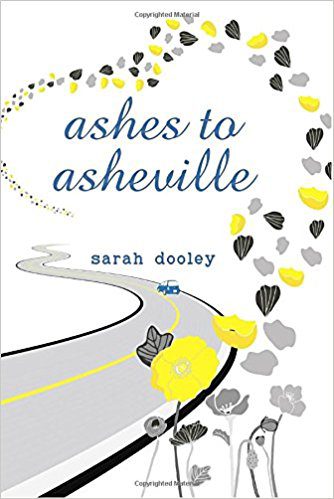
Book Review: Ashes to Asheville
To continue reading, you will need to choose a subscription plan.
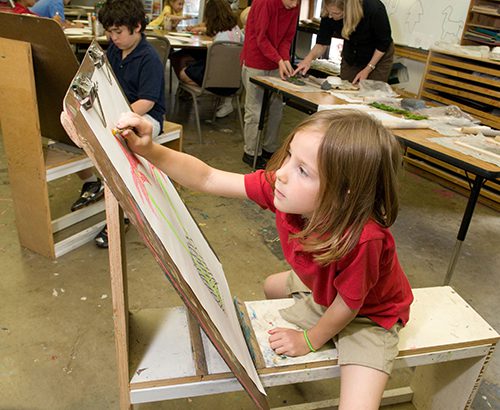
Parenting 101: Drowning in Artwork
To continue reading, you will need to choose a subscription plan.
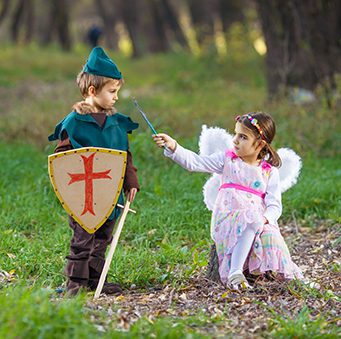
Grandparent’s Corner + Point / Counterpoint
To continue reading, you will need to choose a subscription plan.

‘Secrets’ about Montessori that Traditional Schools Don’t Want You to Know
To continue reading, you will need to choose a subscription plan.
Taking the Fear out of Montessori
To continue reading, you will need to choose a subscription plan.
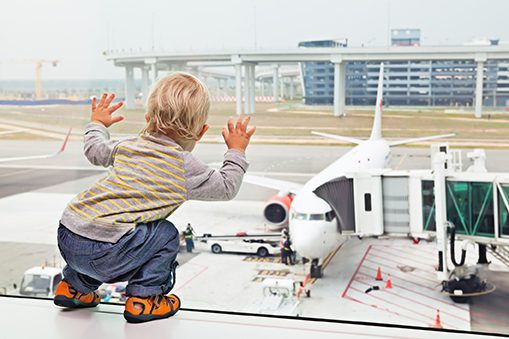
Traveling with Young Children
Yay! It’s time to visit friends and relatives for the holidays!
The thing is, though, that you’ve got young children, and a plane flight looms on the horizon. The only thing worse than sitting in front of a fussy child on a plane is the parent who is trying so hard not to have THAT child! No matter how well behaved your child might be in other situations, all bets are off when it comes to air travel.
While we all dread having THAT child, it’s worth remembering that most of your fellow passengers have probably had the same experience at some time in their life with their own children. Young children are excited and cranky and too tired to sleep. While there’s no sure-fire fix to eliminate the stress of plane travel with young children, there are some ways to make it easier.
Before we talk about fun, let’s remember some basic ‘housekeeping’ issues.
Bathroom/Diapers: Use the restroom facilities in the airport before boarding the plane. Even when your newly diaper-free child says a bathroom break is not necessary, now is the time to learn one of the basic life lessons: Never turn down a free lunch or a chance to go to the bathroom! If you have ever tried to change a messy diaper in an airplane bathroom or had to stand in line with a crying toddler grabbing his pants as you wait for someone to exit the lavatory, you know the importance of this step.
Wipes: Bring wipes of all kinds: diaper wipes, face wipes, hand wipes, disinfectant wipes (for the plane tray and basically everything your child is going to touch… or has touched), and glass wipes if you wear glasses, because they will probably get smeared with something.
Popping Ears: All children (and adults) feel pressure in their ears as the plane gains altitude. For children, it is more painful. If you’re traveling with a baby, now is the time for breast, bottle, or ‘binkie.’ Many adults chew gum for the same reason. For toddlers, this might be the time to treat them to a lollipop (sugar free preferably). Swallowing is the key!
Now that you’ve attained lift-off, here are some other suggestions that won’t break the bank or waste valuable carry-on space, plus you will find them useful for occupying children in restaurants while on vacation and when you return home.
PAPER & CRAYONS
Cut some small pieces of colorful paper and allow the children to make their own little book. Crayons are better than markers. You don’t need all 500 colors; a small pack of basics will do! Let children create a story about their trip or anything else that interests them. If they want to dictate a story to go along with pictures, be a scribe. If you are really organized, make all the pages of equal size, punch two holes along the sides of the paper and bring a strand of yarn to bind the ‘book’ when it is finished. Let your child ‘read’ the book to grandparents or friends upon arrival.
PLAY DOUGH™
Maybe you have never allowed your children to play with this stuff at home. If so, this will be an absolute revelation! (Silly Putty™ is another choice). There are plenty of great recipes online if you want to make your own, or just buy some small containers of Play Doh™. Small containers are really inexpensive (about $1 each). Allow your child to remove the dough, smell it, feel the texture, and dig in. You can show your child how to make snakes and bowls and all the dough art you made when you were a child. Just don’t let them eat it. It does smell delicious! When you are done, be sure to wipe down the tray for the next passenger.
BLOCKS
A small Lego™ set can occupy a young builder for … minutes? It’s also a good opportunity to teach or engage children in identifying the block colors. Tegu™ blocks are another fun possibility. Tegu’s Pocket Pouch includes 8 magnetic wooden blocks and is packaged in a felt pouch. Tegu has reinvented the wooden block, and, by safely embedding magnets into each piece, these blocks are “curiously
attractive” for both kids and adults. The pouch sells for about $25.
ETCH A SKETCH™
This old favorite is making a comeback in a small, portable model. The Pocket Etch a Sketch™ should not cost more than $10 and is pretty entertaining for busy hands.
STOCKING STUFFERS/ GRAB BAG
Little presents that can be doled out on an hourly basis give bored children something to look forward to and represent passage of time if done on an hourly basis. Wrap each ‘present’ to prolong the experience. Little inexpensive items are all you need.
STICKY NOTES
Buy a multi-colored pack of Post-It Notes™ and let your child decorate his tray, seat, window. Be sure to retrieve them upon landing so that they can be used later.
SNACKS
Be sure to bring an assortment of snacks. The Cheerio Play Book allows your child to combine snacking with reading. On every page, there are pictures that need to be completed by adding Cheerios™ to just the right places. Pages are recessed to help children successfully place their own dry cereal pieces within the scenes. The book costs about $8. Remember to bring a sandwich bag full of Cheerios™!
In addition to your child’s favorites, we’ve got some snack suggestions in the box on the next page.
PEZ™ DISPENSER
Yes, it is candy, but it is very small and might be something your children haven’t experienced. This product has been around since the 1920s and now apparently comes in many theme-oriented dispensers. Popping the top is actually more fun than eating the treat. Just watch your children to make sure they eat the candies properly. If you can’t find these items in your local stores, just go online!
TABLETS [Editor’s Note: This is not an endorsement of tablets, computer, or phones; however, when used sparingly at home, this is a great way to make a travel experience a whole lot easier!]
When all else fails, loading books and movies onto an iPad may be your best bet. Remember to bring kid-friendly earphones. The whole plane doesn’t necessarily want to hear the soundtrack from Frozen over and over and over. Kidz Gear™ has headphones in a variety of fun colors. The cost is about $20 and well worth it! Many wonderful children’s books are also available on Kindle™.
Healthy Travel Snacks
HIGH-FIBER/LOW-SUGAR GRANOLA BARS
Low-sugar, high-fiber granola bars are a great way to boost your kids’ nutrient intake. Plus, they’re a lot easier to eat than regular granola.
Yogurt with Toppings Crumble™ granola bars into a yogurt cup for a smooth and crunchy snack. Travel with pre-packaged, store-bought bars and yogurt cups to combine together while on the go or pack already-crumbled granola in a resealable plastic bag and portion yogurt in a travel-size container.
Granola trail mix makes a sweet and salty trail mix by breaking apart one or two granola bars into a bowl and combining with 1 tablespoon of raisins and 1/3 cup of small pretzels. Toss together and store in a re-sealable plastic bag.
HIGH-FIBER/LOW-SUGAR CEREAL
Think outside the box by taking a favorite breakfast food to the next level.
O-Cereal Necklaces String any “O”-shaped cereal onto a piece of yarn, 12 to 18 inches, depending on the size of your child’s head; tie the ends to make a necklace. This is a fun activity to do ahead of time, and kids will have a blast munching rings from their neck.
Sweet and Salty Trail Mixes Combine ½ cup of cereal with ¼ cup of yogurt-covered raisins and ¼ cup chopped walnuts. Mix well and store in an airtight container or a resealable plastic bag.
Cereal Truffles Mix together ½ cup almond butter (or any nut butter), ½ cup honey, ½ teaspoon cinnamon, 2 cups brown rice cereal (or Rice Krispies™), and ½ cup unsweetened coconut. Shape into 1-inch balls and roll in ¾ cup chopped sunflower seeds. Place the truffles on a baking sheet lined with wax paper and freeze until firm. Pop truffles into an airtight container and allow them to thaw while traveling.
ALMOND BUTTER (OR ANY NUT BUTTER)*
Nut butters are a super way to add protein to snack time, and you can make portability a breeze by purchasing the single-serving packages.
Ants on a Log Cut small sticks of celery (the log) and fill the indentations with almond butter. Place some raisins or dried cranberries (the ants) on top of the butter in a straight line. Store in an airtight container.
Kids always get a kick out of this classic snack and it’s a perfect fruit, veggie, and protein combo.
Almond Butter, Honey, and Banana Sandwich Spread some almond butter on two slices of whole-grain bread. Top with a few slices of banana and drizzle on honey. Cut the sandwiches in half, and store in a re-sealable plastic bag.
*Do not serve to children with nut allergies!
MINI PANCAKES OR WAFFLES
Frozen versions are the perfect size for little hands; they also make the best toasted ‘bread’ for small sandwiches.
PB&J Pancake ‘Sammies’ Defrost mini pancakes in the microwave. Spread half the pancakes with a layer of peanut butter (or favorite nut butter) and the other half with a layer of grape jelly (or another fruit jelly). Put the halves together and pack in resealable plastic bags.
WHOLE-WHEAT WRAPS
These handheld treats travel well and are filling and finger-friendly.
Cream Cheese and Jelly Pinwheels Spread a wrap with layers of cream cheese and your favorite jelly, roll up, and cut into one-inch pieces that look like pinwheels from the side. Pack inside an airtight container.
Spinach and Feta Quesadillas Melt some feta cheese and chopped spinach between two wraps in a pan heated with oil. Then cut into wedges. Store in an airtight container with a small cup of mild salsa for dipping.
STRING CHEESE
Fun to eat while keeping kids busy, a single serving provides 10 to 20 percent of the daily calcium recommended by the USDA.
Ham and Cheese Roll-Ups No bread is needed for this tasty alternative to a pig-in-a-blanket snack. Simply roll thinly sliced deli turkey or ham around a half or a full stick of string cheese. Securing with a toothpick would be dangerous for little ones; instead, store the roll-ups seam side down in an airtight container to keep fresh.
Cheesy Pizza Rolls Cut up a whole stick into little pieces and arrange them on a whole-wheat wrap. Cover the cheese with two tablespoons of marinara sauce. Roll up the wrap and microwave for 30 seconds until the cheese is slightly melted. For short trips, keep warm in a piece of aluminum foil or store in an airtight container.
FRESH FRUIT
Sweet fruit makes for a refreshing and healthy snack that’s full of fiber and vitamins.
Mini Fruit-and-Cheese Plate Peel and dice fruit (like apples and pears) into ½-inch chunks and serve along with cubes of your child’s favorite cheese and wedges of whole-wheat pita. Everything can be stored easily in airtight containers.
Frozen Banana Bonbons Cut banana into 1-inch rounds, dip in a favorite flavor of yogurt, and roll in crushed graham crackers. Place the slices in an airtight container and store it in the freezer until you’re ready to travel. These bonbons are best served on car trips because they defrost pretty quickly.
Minty Sweet Salad Cut watermelon, cantaloupe, and honeydew into 1-inch cubes (you should have 2 cups total). In a small bowl, whisk together the juice of 1 lime, 2 tablespoons honey, and ¼ cup finely chopped mint. Toss ½ cup of grapes into the melon mixture, pour over the dressing, and toss. Pack in an airtight container and put in the fridge to maintain freshness.
APPLESAUCE CUPS
Mashed, cooked apples give kids a serving of fruit while satisfying a craving for something sweet.
Apple Dip Pack individual snack cups alongside resealable bags filled with carrot sticks or baby carrots and celery sticks for easy dipping. Or, instead of cups, portion out applesauce into airtight containers.
Apple “Pie” Cups Crush pieces of graham crackers over a cup of applesauce to create a tasty and super healthy mock apple pie. For maximum crunch, store the crackers in an airtight container and then crumble pieces into a cup of applesauce before eating; otherwise, the crackers will get soggy.
FROZEN EDAMAME
Veggies aren’t always an easy sell, but edamame is a smart on-the-go munchie that’s packed with iron, omega-3 fatty acids, and protein.
Edamame Poppers Steam up a batch of frozen edamame in pods and store in an airtight container in the fridge for up to three days. Before you hit the road, sprinkle them with a touch of salt and watch the kids have a blast popping them from the shells right into their mouths.
Edamame Hummus In a food processor, puree 1 cup of frozen edamame (steamed and shelled) with 1 small clove of garlic, 2 tablespoons of olive oil, ¼ teaspoon salt, and juice of ½ lemon. Process until smooth and serve with cut veggies or pita chips. Store everything in an airtight container. Edamame hummus is full of fiber and a terrific alternative to high calorie packaged dips.
HUMMUS
Loaded with vitamin B6, folate, and iron, creamy hummus is no ordinary dip. Plus, its thick consistency means less chance of messy spills.
Super Dip Pack hummus inside a small airtight container along with some pita chips, baby carrots, red pepper slices, and celery sticks for dipping.
Pita Pocket Stuff small whole-wheat pitas with hummus and thinly sliced cucumbers (or another sliced vegetable) for a pocket sandwich packed with protein and fiber. Store in an airtight container or resealable plastic bag to keep fresh.
Tomorrow’s Child / November 2014 / p 37

Celebration of Life: Musya Meyer
To continue reading, you will need to choose a subscription plan.
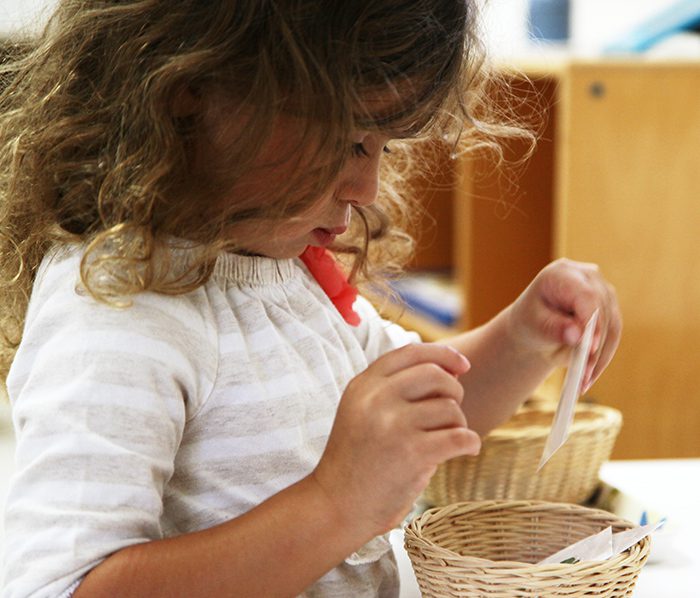
The Opposite of Play
We all know that play is good for children. But research shows that it is integral to the development of their brains and that human beings are, in fact, designed by nature, to flourish through play.
One Montessori myth is that Montessori students are not encouraged to ‘play’ and that they have an overly structured curriculum. In fact, if asked about her day at school, a Montessori four-year-old would proudly recount all the ‘works’ she accomplished: a little Type A personality in training! To compound this myth, early-childhood Montessori students do, in fact, spend a substantial amount of classroom time sweeping floors and washing tables, tasks that we, as adults, would describe as ‘work.’
A Montessori Children’s House is very different from typical preschool programs for young children. You will not find books about fantasy or fairy tales in Montessori classrooms. No dolls. No toy trucks. No make-believe stoves. No dress-up
corner. No garish bright colors.
Is Montessori too work oriented for young children?
Maybe it all comes down to a definition of play and work.
If you have ever observed a young child at play with his favorite toys, you can see that they are quite in tune with the world of fantasy and imagination. They do not need to be taught how to imagine that squirrels can talk or that a fairy princess can fly. They don’t need help with fantasy. When I recently interrupted my three-year-old grandson at play, he gave me an incredulous, frustrated look and responded, “I’m talking to Thomas!” Thomas being “Thomas the Train™.” He was, indeed, talking to a toy train.
Jackson was deeply engrossed in the very worthwhile work of play. He was honing his language skills and was role-playing dialogue, giving life to Thomas. He was practicing social interaction in a safe, non-judgmental environment of his own creation. I also watched him pick up my cell phone, hold it in place with his shoulder, so that he had both hands free to play, and begin to pretend he was talking to somebody about Thomas. He was in the zone and was at peace.
Disaster struck when his younger brother, Hudson, wandered into his ‘work’ zone and moved some train track. Jackson was clearly frustrated and upset that his carefully arranged work had suffered a mishap; however he wanted to continue his ‘work,’ so he asked Hudson to stop. “Hudson, stop!!!!!” Not surprising, Hudson didn’t stop, which caused Jackson to become angry, lashing out at his brother, first with words and then with a push, which ultimately resulted with both kids in tears and the imaginary Island of Sodor in total disarray.
I could have intervened, but I didn’t. Not because I didn’t care. In fact, it would have been in my short-term best interest to have at least tried to keep the peace and avoid the turmoil. But what would I have accomplished, and what would the children have learned from the experience?
We sat on the couch (me in the middle) and took a few minutes to calm down. With what I might refer to as “light intervention,” we returned to the disaster site and together restored the Island of Sodor. Playing and working together is not always easy. Even as adults, we need to feel our way through the complexities of working with others. Sometimes we need to compromise.
Play Is the Work of Childhood
Play is very much the ‘work’ of childhood. It is a time when they experiment with social etiquette and customs, their power over themselves and others, and what it means to be part of a community. One might look at play as practice for skills needed in the future.
In the animal world, play allows young animals to make sound judgments, a rehearsal in which life and death are not at stake. For children, playing with others allows them to learn the difference between friendly teasing and mean-spirited bullying. Research by John Byers (an animal behaviorist) has actually shown that the amount of play is correlated to the brain’s frontal cortex, which is important for the development of cognition. Byers speculates that “during play, the brain is making sense of itself through simulation and testing. Play activity is actually helping sculpt the brain.”
Dr. Stuart Brown, M.D., in his book Play: How it Shapes the Brain, Opens the Imagination, and Invigorates the Soul, describes becoming interested in play after studying a range of people from all walks of life (from murderers to scientists, socialites, artists, etc.). He studied their ‘play histories’ and how the role of play in childhood and adulthood affected their lives.
In studying murderers, he found that the absence of play in childhood was as important as any other factor in predicting their path of crime. He also found that the potential for anti-social behavior in abused, at-risk children was diminished through play.
In today’s culture, with our extreme worry over bullying and self-esteem, we have created a culture of over-protection that was not present thirty years ago. Rough and tumble play actually does have a place in childhood, as it does in nature. Watch two dogs play, gnashing teeth and body slamming with great gusto. While there is a lot of noise and it looks like somebody is going to get killed, all it usually takes is for one dog (or child) to express discomfort. At that point, the ‘play’ stops and the dog (or child) that was too rough recognizes that the play has stopped because it was too much for the other participant.
If it is really ‘play’ and not aggression, the child or dog will make amends to the wounded player and will encourage the resumption of play in some way. If it’s canine play, the stronger dog will bow and wag his tail or roll on his back to show that he can be submissive. If it’s a child, you might see one child offer a toy or hand to the ‘wounded’ child to encourage the play to continue. It’s not about winning. It’s about play.
Child’s Play Isn’t Just for Children
Dr. Brown describes the properties of play as having the following characteristics:
- Apparently purposeless(done for its own sake)
- Voluntary
- Inherent attraction
- Freedom from time
- Diminished consciousness of self
- Improvisational potential
- Continuation desire
Play provides us freedom from time and self-consciousness. We are fully in the moment, and outside thoughts are diminished. Play is its own reward.
Most of us can think of an instance where we have completely lost track of time, so deeply engrossed in whatever we were doing. It might have been a time when we were skiing, painting, gardening, baking cookies with our children, writing, or even finding a solution to a problem at work. Yes, at times, even work can meet the definition of play.
When a Montessori child is at ‘work’ in her classroom, a deliberate effort is made to allow her the time and space to delve deeply into her ‘work.’ Children are taught to speak and move quietly in order to respect each other’s workspace. Sometimes a Montessori child’s work will spill over into their home life as well. One time, I found that my four-year-old son had dumped our spare change jar onto the carpet and was busy polishing all the coins with a damp wash rag. When he finished, he put them all back into the jar and then started all over again. Work or play? I’m pretty sure it was play disguised as work.
The beauty of Montessori’s prepared environment is that it is filled with beautiful materials that encourage children to touch and discover their secrets. There are real child-sized tools that allow them to work with water, dig dirt in a garden, and clean their environment. If they were using toys instead of tools to do these actions, we’d all call it ‘play,’ In Montessori, we call it ‘work.’ Is there really a difference?
In the elementary years and beyond, Montessori students are encouraged to find a subject that interests them and to dig in with ‘big’ work, thematic work that transcends any one part of the curriculum. Is it work? Yes, but it may very well meet the ‘play test’ as well.
Family Play
Just as we model other aspects of behavior for our children, we need to model play. That’s a hard task for many of us. How many of us can go an hour without checking our
cell phone? When we are on vacation, are we really giving complete attention to our family, or are we worried about what’s going on at the office? How often do we do something as a family that is just pure fun?
Adults need play as much as children, but for different reasons. Children need play to help generate their rapidly developing brains. Adult brains have developed, so it is easy to push play aside on a short-term basis, giving priority to responsibilities and work demands; however, when play is denied too long, our mood darkens, our creativity disappears, we develop a sense of hopelessness, and lose our ability to sustain a feeling of well-being.
Dr. Brown uses the analogy of the oxygen masks in airplanes that deploy when there is a sudden loss of breathable air. The flight attendants’ pre-take-off speech always tells us that, when traveling with a child, in the event of an emergency, secure our own life-support first and then tend to the needs of the child. These are good words of advice, applicable to so many situations. “In order to help our children, we have to recover our memories of how we once played by retracing our own early play footprints. When we do that and create a playful household, everything from education to chores will go better.”
For every family, the definition of play is different. While one family may love to hike, another family may get the same pleasure from an afternoon in a bookstore. All of us need to find something that we love to do and give ourselves (and others) the permission to lose ourselves in the bliss of that activity. It restores our spirit and gives us the energy to do other very real work that, while worthy, may not give us as much pleasure as we might wish.
The Opposite of Play
In the opinion of Dr. Brown, the opposite of play is not work; it’s depression. Now that’s food for thought.
I highly recommend Dr. Brown’s book Play: How it Shapes the Brain, Opens the Imagination, and Invigorates the Soul. It is published by Avery and it is available through Amazon. You can even buy it for Kindle™.
Tomorrow’s Child //November 2014 / p 10
Letter from the Editor: Holding out for a Hero
To continue reading, you will need to choose a subscription plan.
How to Explain the 2016 Election to Our Children (and Ourselves)
To continue reading, you will need to choose a subscription plan.
The Montessori Foundation’s BIG Work
To continue reading, you will need to choose a subscription plan.
Talking to Kids and Teens about Social Media & Sexting
To continue reading, you will need to choose a subscription plan.
Birthday Parties: Is Bigger Really Better?

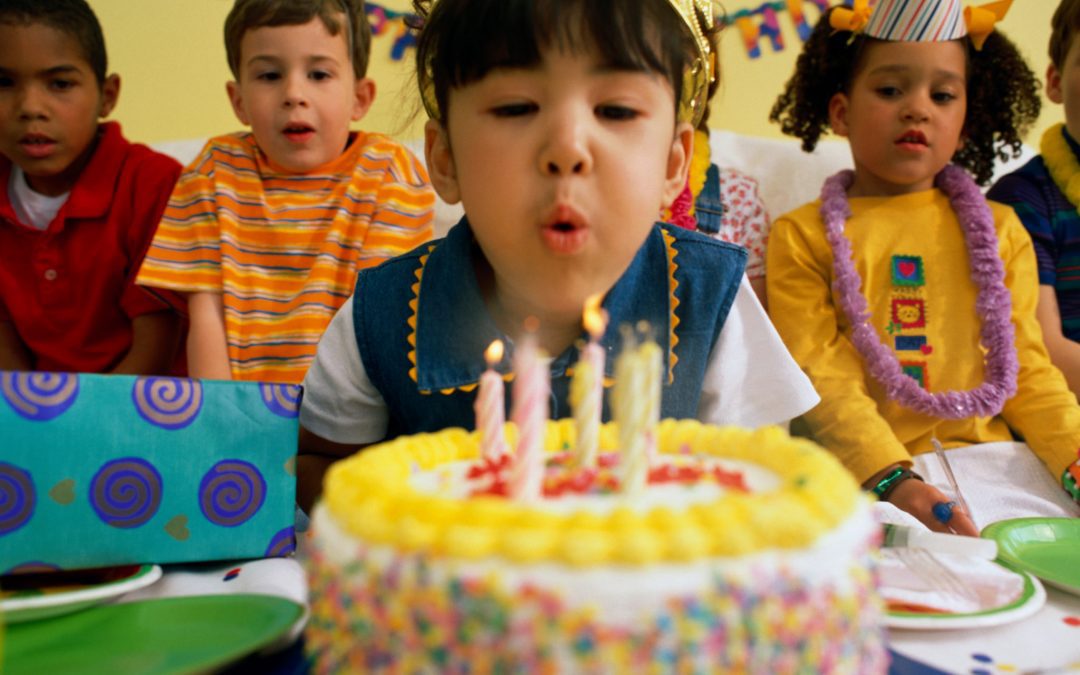
Montessori educators consistently remind us that the 3-6 year-old child thrives on routine and order. They interact well with one or two children at a time but can become overwhelmed by large groups and unfamiliar settings. I would like to apply this wisdom to how parents plan children’s birthday parties.
Many of us in this generation of parents have lost sight of what a birthday party is all about. A party with balloons, cake, ice cream and presents is just about all the excitement a young child needs. Add a few friends, and you’ve created their ultimate experience. I think some of us have fooled ourselves into thinking that children need a large-scale event for a birthday party to be a success. We also get caught up in the social politics: If little Janey is inviting the entire class to her birthday party, we must do the same.
By moving to the large-scale, theme-location birthday party, our society has turned an intimate celebration into an event. When 18-20 children attend a birthday party, the preschool-aged child may not even have a relationship with some of the guests, much less the opportunity to interact with them at the party. As a result, children become the passive audience at a performance called a birthday party, rather than participants in an event that is truly their own. It’s as if we have bought into the myth that our children need a constant outside source of entertainment, because just being together isn’t good enough anymore.
The majority of today’s large birthday parties are similar in structure. The child’s entire preschool/playgroup/kindergarten class is invited. It is held in a public location: museum, bowling, alley, zoo, swimming pool, playscape, etc. Most parents drop their children off and leave. Party hosts spend between $15 and $20 dollars per child. Likewise, guests spend a similar amount on a gift. The total dollars spent on a party with 20 guests can run as high as $600 – $800. It becomes a very large production for a very small child.
These types of parties work for today’s parents because they are easy – certainly, you pay a price, but you write one check and you get the whole package. You don’t have to clean your house, provide entertainment, or deal with the mess left behind. And then there’s the idea that if we provide a compelling activity for the birthday guests, we will not have to come up with something on our own. But I think we’re missing out when we commercialize a party. We have put our child into a cookie-cutter mold, rather than designing an experience that creates a family tradition and reflects the child’s unique personality.
There is something so memorable about a party you have held at home. It is intimate, personal, and reflects the personality of the birthday child. It’s a chance to involve your child in the actual planning of the party, and together, to create an experience that leaves you feeling warm inside. I know it’s a hassle, but I would argue it’s an investment worth making. And if you really don’t want to have it at home, take four or five children to the museum, the zoo, the park. But keep it small and simple; give the children time to play and interact in an unstructured setting. My advice:
- Try having a birthday party in your home.
- Don’t feel like you need to invite the entire class.
- Try the “child’s-age-plus-one” guideline suggested by many parenting books. You’ll find that children invite their close friends. If you wouldn’t invite someone to a play date with your child, don’t invite them to a birthday party.
- For children under six, set the party time for two or two-and-a-half hours, as you would a play date.
- A small group of children will be happy doing a few special activities along with simply enjoying the home’s regular indoor and outdoor toys.
- Try creating a “prepared environment” in your home – two or three simple activities that guests can choose to do in small numbers, with little or no guidance from adults.
- If you do have a party in a larger venue:
- Invite at least three parents to stay at the party and offer assistance with logistics. Taking 18 children through a zoo or museum requires at least four adults, plus one to do clean-up or emergency bathroom duty. Likewise, sporting events, such as bowling and swimming, require supervision, if not actual assistance.
- Do not open gifts at the party. This activity, while exciting for the birthday child, soon becomes overwhelming. At a party with a large number of preschool guests, it can easily turn into 30 minutes of chaos, during which the more rambunctious children are running around at loose ends. (If you have a small party, opening gifts is much more “do-able,” and it allows the giver a chance to see their gift appreciated.)
- Challenge yourself to toss “classroom politics” out the window and limit the guest list to ten children or fewer.
A birthday party is one of the touchstones of childhood. It is a family holiday, shared with friends. The birthday gift we all want to give our children is the memory of being surrounded by people who love them — with a little cake and ice cream on the side.
Isn’t Montessori Elitist?

Isn’t Montessori elitist?
Montessori is an educational philosophy and approach that can be found in all sorts of settings, from the most humble to large, well equipped campuses. In general, Montessori schools consciously strive to create and maintain a diverse student body, welcoming families of every ethnic background and religion, and using scholarships and financial aid to keep their school accessible to deserving families. Montessori is also found in the public sector as magnet public-school programs, Head start centers, and as charter schools.
No. Dr. Montessori simply observed that competition is an ineffective tool to motivate children to learn and work hard in school.
Traditionally, schools challenge students to compete with each other for grades, class rankings, and special awards. For example, tests are graded on a curve developed from the performance of the students in that class. Students are constantly measured against their classmates, rather than considered for their individual progress.
In Montessori schools, students learn to collaborate with each other rather than mindlessly compete. Students discover their own innate abilities and develop a strong sense of independence, self-confidence, and self-discipline. In an atmosphere in which children learn at their own pace and compete only against themselves, they learn not to be afraid of making mistakes. They quickly find that few things in life come easily, and they can try again without fear of embarrassment.
Dr. Montessori argued that for an education to profoundly touch children’s hearts and minds, they must learn because they are curious and interested, not simply to earn the highest grade in the class. Montessori children compete with each other every day, both in class and on the playground. Dr. Montessori, herself an extraordinary student and a very high achiever, was never opposed to competition in principle. Her objection was to using competition to create an artificial motivation to get students to achieve. Montessori schools allow competition to evolve naturally among children, without adult interference unless the children begin to show poor sportsmanship. The key is the children’s voluntary decision to compete, rather than having it imposed on them by the school.
Is it true that Montessori children never play?
All children play. They explore new things playfully. They watch something of interest with a fresh, open mind. They enjoy the company of treasured adults and other children. They make up stories. They dream. They imagine. This impression stems from parents who don’t know what to make of the incredible concentration, order, and self-discipline that we commonly see among Montessori children. Montessori students also tend to take the things they do in school seriously. It is common for them to respond that “this is my work,” when adults ask what they are playing with. They work hard and expect their parents to treat them and their work with respect. But it is joyful, playful, and anything but drudgery.
All children play. They explore new things playfully. They watch something of interest with a fresh, open mind. They enjoy the company of treasured adults and other children. They make up stories. They dream. They imagine.
Is Montessori opposed to fantasy and creativity?
You will not generally find play kitchens, dress-up corners, or dolls in a Montessori class for children under age six, because children are using real tools and doing real things, instead of pretending. However, imagination and creativity are important aspects of a Montessori child’s experience.
Montessori classrooms incorporate art, music, dance, and creative drama throughout the curriculum. Imagination plays a central role as children explore how the natural world works, visualize other cultures and ancient civilizations, and search for creative solutions to real-life problems.
In Montessori schools, the arts are normally integrated into the rest of the curriculum. They are modes of exploring and expanding lessons that have been introduced in science, history,geography, language arts, and mathematics.
Art and music history and appreciation are woven throughout the history and geography curricula. Traditional folk arts are used to extend the curriculum as well. Students participate in music, dance, and creative movement with teachers and specialists. Students’ dramatic productions make other times and cultures come alive.
What if a child doesn’t feel like working?
While Montessori students are allowed considerable latitude to pursue topics that interest them, this freedom is not absolute. Within every society, there are cultural norms; expectations for what a student should know and be able to do by a certain age. Experienced Montessori teachers are conscious of these standards and provide as much structure and support as is necessary to ensure that students live up to them. If, for some reason, it appears that a child simply needs time and support until he or she is developmentally ready to catch up, Montessori teachers provide it non-judgmentally.
Is Montessori opposed to homework, tests, and grades?
Many parents have heard that Montessori schools do not believe in homework, grades, and tests. This is really a misunderstanding of Montessori’s insights.
Homework
Most Montessori schools do not assign homework at all below the elementary level. When it is assigned to older children, it rarely involves page after page of busywork; instead, it involves meaningful, interesting assignments that expand on the topics that the children are pursuing in class. Many assignments invite parents and children to work together.
Homework should never become a battleground between adult and child. One of our goals as parents and teachers should be to help the children learn how to get organized, budget time, and follow through until the work is completed. Ideally, home challenges will give parents and children a pleasant opportunity to work together on projects that give both parent and child a sense of accomplishment. They are intended to enrich and extend the curriculum.
Homework doesn’t need to be boring! Montessori challenges children to think, explore, and pursue tangible projects that give them a sense of satisfaction. Homework is intended to afford students the opportunity to practice and reinforce skills introduced in the classroom.
Moreover, there is a certain degree of self-discipline that can be developed within the growing child through the process of completing assignments independently.
Many elementary Montessori classes send home packets of At-Home Chal-lenges for each age group in the class. The children have an entire week to complete them. When the week is over, teachers will normally sit down with the children to review what worked, what they enjoyed, and what they found difficult or unappealing.
Depending on the child’s level, assignments usually involve some reading, research, writing, and something tangible to accomplish. They may be organized into three groups: 1) Things to be experienced, such as reading a book, visiting the museum, or going to see a play; 2) Things to learn, stated in terms of skills and knowledge, such as See if you can learn how to solve these problems well enough that you can teach the skill to a younger student; and 3) Things to be submitted, such as a play, essay, story, experiment, or model.
When possible, teachers will build in opportunities for children to choose among several alternative assignments. Sometimes, teachers will prepare individually negotiated weekly assignments with each student.
Tests
Montessori children usually don’t think of our assessment techniques as tests so much as challenges. Early childhood Montessori teachers observe their children at work or ask them to teach a lesson to another child to confirm their knowledge and skill.
Most elementary Montessori teachers will give their students informal,
individual oral exams or have the children demonstrate what they have learned by either teaching a lesson to another child or by giving a formal presentation. The children also take and prepare their own written tests to administer to their friends. Students are working toward mastery, rather than being graded using a standard letter grade scheme.
Standardized Tests
Very few Montessori schools test children younger than the first or second grade; however, most regularly give elementary students quizzes on the concepts and skills that they have been studying. Many schools ask their older students to take annual standardized tests.
While Montessori students tend to score very well, Montessori educators frequently argue that standardized testing is inaccurate, misleading, and stressful for children. The ultimate problem with standardized tests is that they have often been misused, misunderstood, and misinterpreted in other schools. Tests can be fairly useful when seen as a simple feedback loop, giving both parents and school a general sense of how students are progressing.
Although standardized tests may not offer a terribly accurate measure of a child’s basic skills and knowledge, in our culture, test-taking skills are just another practical life lesson that children need to master.
Reporting Student Progress
Because Montessori believes in individually paced academic progress, and encourages children to explore their interests rather than simply complete work assigned by their teachers, we don’t assign grades or rank students within each class according to their achievement.
At the elementary level, students will often prepare a monthly self-evaluation of the previous month’s school work. When completed, they will meet with the teachers, who will review it and add their comments and observations.
In many Montessori schools, children compile a collection of their work that is pulled together in a portfolio of the year’s work.
Most schools schedule family conferences two or three times a year to review their children’s portfolios and self-evaluations and go through the teachers’ assessment of their children’s progress.
Typically, once or twice a year, Montessori teachers will prepare a written narrative evaluation of the students’ work, social development, and mastery of fundamental skills.
What about children with special needs?
Every child has areas of special gifts, a unique learning style, and some areas that can be considered challenges. Each child is unique. Montessori is designed to allow for differences. It allows students to learn at their own pace, and is quite flexible in adapting for different learning styles. In many cases, children with mild physical handicaps or learning disabilities may do very well in a Montessori classroom setting. On the other hand, some children do much better in smaller, more structured classrooms. Each situation has to be carefully evaluated individually to ensure that the program can successfully meet a given child’s needs and learning style.
Is Montessori right for my child?
 Most Montessori educators would agree that Montessori is a good fit for most children — but it may not be the right match for their parents.
- Everything depends on what your family believes to be true about your children and important in their education.
- Do you believe that children should be treated with dignity and respect and be encouraged to be independent, self-confident, and self-disciplined?
- Do you believe that the best way to discipline is by being consistent, modeling the correct behavior, and by consciously teaching children how to do things correctly?
- Do you believe that education should be enchanting, intriguing, and delightful, rather than traditionally structured and highly competitive?
- If so, Montessori may be right for you.
 Most Montessori educators would agree that Montessori is a good fit for most children — but it may not be the right match for their parents.
But aren’t there some children who just won’t do well in Montessori?
The answer is both yes and no. Montessori schools are often successful with children, who would challenge any school, including the highly distractible and impulsive ones, for whom parents typically have the most concern. The reason why should be obvious: Montessori is designed to be flexible, adapting the program to meet the needs of each given child. It also allows children to move about, socialize independently (rather than work as part of a group), and progress at their own pace.
This doesn’t mean, though, that every class and every Montessori teacher can meet the needs of every child. This is especially true if a child is violent, destructive, or excessively disturbing of the peace and order of the classroom. Each decision has to be made on a case-by-case basis.
Why is there so much variation among Montessori schools?
Many people assume that all Montessori schools are essentially the same. In reality, Montessori schools can differ dramatically, in size, facilities, programs, and emotional climate. They share a common philosophy and basic approach, but there may be tremendous variation among schools that use the name Montessori. There are more than four thousand Montessori schools in North America, but every one is unique. Even within the same school, each class may look and feel quite different from the others, reflecting the interests and personalities of the teachers; however, certain characteristics will be found in all classes that are honestly following the Montessori approach.
Dr. Montessori was a brilliant student of child development, and the approach that has evolved out of her research has stood the test for more than one hundred years in Montessori schools around the world. The Montessori approach has three great qualities: the model is replicable; it can be adapted successfully into all sorts of new situations; and it is sustainable. (Montessori programs don’t tend to self-destruct after a few years, as do many other educational reforms.) However, the only ‘pure’ Montessori educator was Dr. Maria Montessori herself. The rest of us interpret and filter her ideas through our personalities and experience.m
Tomorrow’s Child/Sept 2010/p12
Featured
-
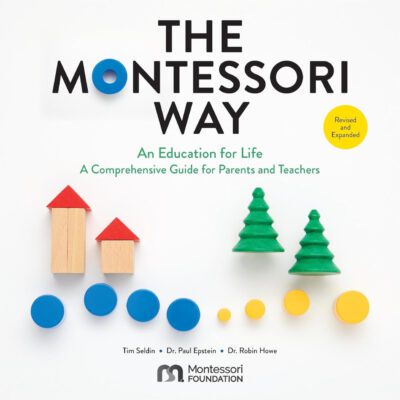
The Montessori Way, Revised and Expanded: An Education for Life; A Comprehensive Guide for Parents and Teachers
$25.00
-
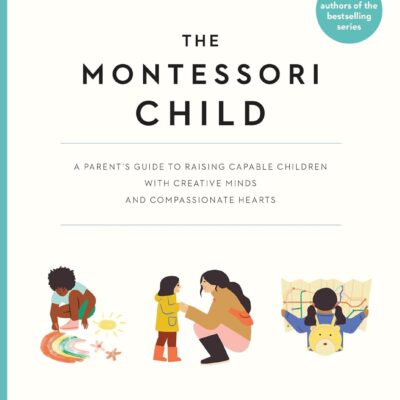
The Montessori Child: A Parent's Guide to Raising Capable Children with Creative Minds and Compassionate Hearts (The Parents' Guide to Montessori)
$20.00
-
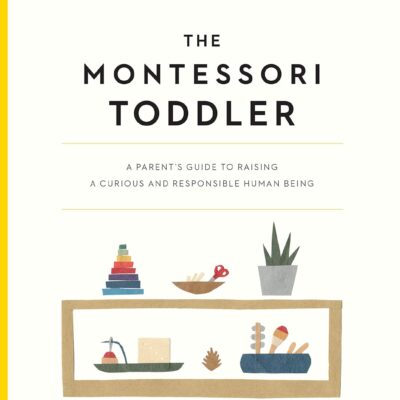
The Montessori Toddler: A Parent's Guide to Raising a Curious and Responsible Human Being (The Parents' Guide to Montessori)
$20.00
-
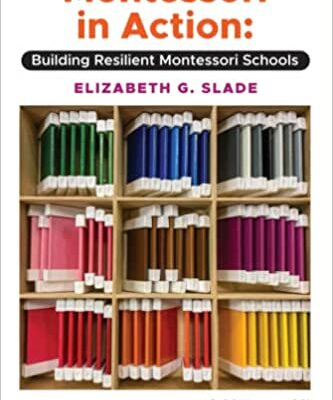
Montessori in Action: Building Resilient Montessori Schools 1st Edition
$29.95
-
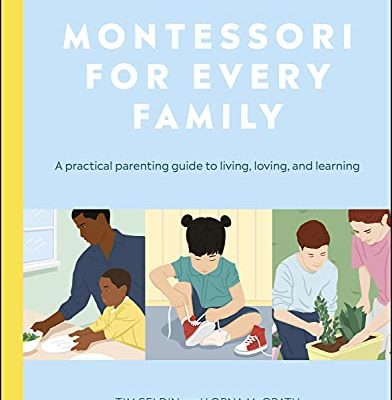
Bulk Order, 30 Copies of Montessori for Every Family: A Practical Parenting Guide To Living, Loving, And Learning
Original price was: $600.00.$510.00Current price is: $510.00.

Products
-
The Montessori Way, Revised and Expanded: An Education for Life; A Comprehensive Guide for Parents and Teachers
$25.00
-
The Montessori Child: A Parent's Guide to Raising Capable Children with Creative Minds and Compassionate Hearts (The Parents' Guide to Montessori)
$20.00
-
The Montessori Toddler: A Parent's Guide to Raising a Curious and Responsible Human Being (The Parents' Guide to Montessori)
$20.00
-
Montessori in Action: Building Resilient Montessori Schools 1st Edition
$29.95
-
Bulk Order, 30 Copies of Montessori for Every Family: A Practical Parenting Guide To Living, Loving, And Learning
Original price was: $600.00.$510.00Current price is: $510.00.