Words of Praise

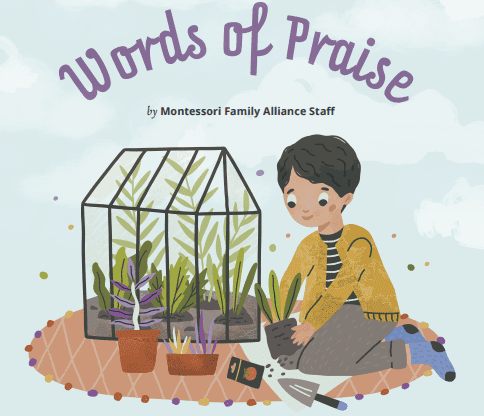
Words of Praise

by Montessori Family Alliance Staff

We want our children to grow up to know their own worth and be confident. Praise seems the natural path to get there, yet you hear Montessorians say that you should not give general praise. We focus on the word praise when the focus should be on the word general. We all want to know what to say instead of “good job” or “way to go.” Here are twenty statement starters and one guideline to help you. They may not feel comfortable at first, so practice. Say them out loud, practice with your children, with your loved ones, and with friends and co-workers.

First the guideline: Observe what is happening and pause to think about it or even ask questions about it. Here are twenty ways to share your observations that help build confidence:

  1. I noticed you show your kindness when you…
  2. You showed so much creativity in…
  3. I could see the hard work you have put into…
  4. You really showed curiosity with…
  5. Your problem-solving skills were on display when you…
  6. Your perspective on ___ is interesting because…
  7. You really showed enthusiasm when…
  8. I noticed how caring you were when you…
  9. I appreciated your honesty when you…
  10. I would like your opinion on ___ because I value your opinion.
  11. You showed such bravery when you…
  12. Your courage in tackling ___ inspires me.
  13. You worked so hard doing ___.
  14. Thank you for your patience with ___.
  15. You are making a difference by ___.
  16. I noticed you making others feel included when you ___.
  17. Your imagination really shines when you…
  18. Your determination with ___ is remarkable.
  19. Your ability to forgive really showed when…
  20. Your positive energy really affected…
Navigating Your Child’s Montessori Journey

Navigating Your Child’s Montessori Journey

From Daily Activities to Creating a Conducive Environment at Home

by Montessori Staff Writers

As a parent, one of the most common questions you might ask your child after school is, “So, what did you do at school today?” Often, you might be met with replies like, “Nothing” or vague responses about daily activities, such as playing with clay or spooning beans. Rest assured, your child is engaged in various developmental activities at school, even if they don’t explicitly share them.

Young children, in particular, might have difficulty articulating their day-to-day school activities. The wealth of activities and the unique names of Montessori materials, such as the Trinomial Cube or the Addition Strip Board, can all be overwhelming to remember and express.

Moreover, the Montessori learning experience is predominantly hands-on, involving manipulative materials that promote critical thinking, creativity, and problem-solving. Thus, your child might not bring home many papers or projects depicting their work, but that doesn’t mean they’re not learning and progressing.

Engaging with Your Child’s Montessori Experience

Ask specific questions: Instead of a generic inquiry, ask specific questions, such as: Did you do a counting lesson today? or Did you work with colors or build a tower?

Visit the classroom: Occasionally, you can take your child into the classroom at dismissal so they can show you their favorite activities. Be mindful, however, of the teachers’ end-of-day responsibilities.

Classroom observation: Set up a time to observe your child in class to get a firsthand understanding of their learning environment.

Teacher interaction: Connect with your child’s teacher for insights into your child’s progress. You can have informal discussions or schedule formal parent-teacher conferences.

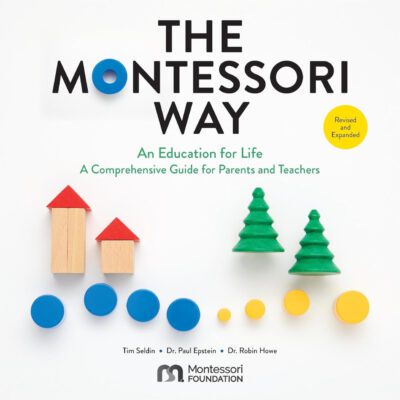
Montessori literature: Reading a book about Montessori education (or Maria Montessori) can help you understand the teaching methodology and align your expectations.

Participate in school events: Attend school meetings and workshops to stay connected with the school community.

Play school at home: Children often mirror their school activities during play, giving you a glimpse into their learning experiences.

Patience is key: With time, your child’s growth and learning will become more evident.

Supporting Your Child’s Montessori Experience at Home

Witnessing the independence and responsibility of children in a Montessori environment might prompt you to wonder, “How can I foster these qualities at home?” While home should be a more relaxed space, you can apply certain Montessori principles to create an enabling environment for your child at home. Here are some suggestions:

Encourage independence: Provide stable stools to help your child reach items of personal use. Arrange clothes on low racks and organize everyday dishes and nutritious food items within their reach.

Household chores: Involve your child in tasks like laundry, unloading the dishwasher, and cleaning up their messes. Even simple tasks help foster a sense of responsibility.

Organized play: Arrange toys, art supplies, and books on reachable shelves, and rotate these items to maintain their interest. Organize like items together in an attractive manner.

Personal space: Provide a space for your child’s activities in every room. Create a self-quieting corner for them to retreat to when they need to calm down.

Room redecoration: Older children can be invited to help redecorate their rooms, fostering a sense of ownership and decision-making.

Monitor screen time: Limit TV and computer time, promoting more engaging and creative activities.

Reading: Irrespective of their age, reading to your child is an enriching experience.

Emotional communication: Talk about feelings with your child, promoting emotional intelligence.

Use natural consequences: Rather than imposing punishment, allow natural consequences to teach your child about the effects of their actions on themselves and others.

Creating an environment that mirrors the Montessori principles at home can reinforce your child’s learning and growth. This supportive atmosphere, coupled with understanding and patience, will ensure your child cherishes their Montessori journey while developing essential life skills. 

Helping Your Toddler Adjust to School

Helping Your Toddler Adjust to School

Is this your child’s first school experience – their first time away from home or from a primary caregiver? Or is it the transition from being at home with parents, grandparents, or a special aunt or uncle? Transitions are not easy for any of us and they can be especially difficult when you are somewhere between birth and two years old. Join us and one of our Montessori Toddler guides to learn ways to help ease separation anxiety for both you and your child with special guests Kathy Leitch and Kristi Antczak.

10 Benefits of Montessori

10 Benefits of Montessori

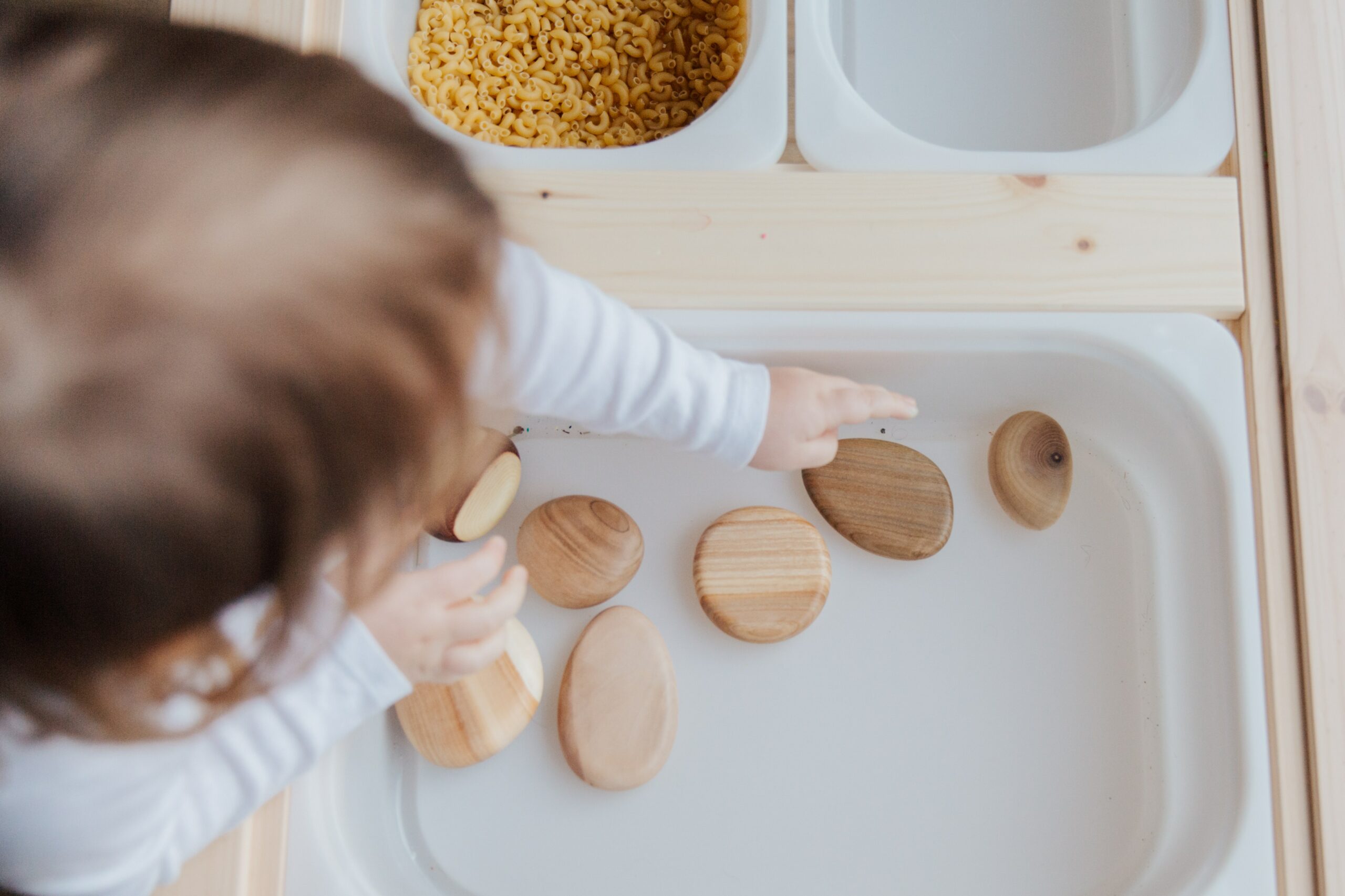
child sorting

If no one has asked you how Montessori will benefit your child, or will Montessori benefit your child, they have probably thought of it. In fact, you may have asked yourself the very same question. Why choose an education that is an alternative to traditional education?

Let’s examine ten reasons we may choose Montessori for our family.

1. Learning is child-centered and individualized. A similar curriculum to traditional schools is taught, often in a different order, and children move through the curriculum at their own pace. Teachers observe and guide students as needed to develop mastery, rather than following a timeline for learning set by others.

2. With the freedom and support to question deeply, they learn to think critically and act boldly, developing the ability to lead with respect and consideration.

3. By giving students a choice of activities, they develop their executive function skills, making choices on their own, learning to wait and take turns, and developing self-discipline and motivation.

4. The guided independent approach to learning allows Montessori students to become confident, enthusiastic self-learners. Teachers observe, monitor, and guide children to make good choices to progress their learning.

5. There is limited standardized testing, and it is most often used as a way to observe as well as a practical life skill. Children are motivated by and measured against their own achievements, not those of others.

6. Free from predefined times for activities, Montessori children delve into subjects that inspire them and are able to feel the intrinsic reward of seeing a task through to completion, without being cut off because that class has ended.

7. As students are active contributors to the classroom and the teacher their guide, there are more opportunities for cooperation and collaborative working among students of all ages.

8. Montessori focuses on the whole child, with social and emotional development equal to the academic curriculum. Learning to work with others, take turns, lead with respect, speak up, and consider needs outside their own prepares children to be global citizens.

9. The focus is on the key developmental stages of the child, with learning activities and materials designed to further develop key milestones. Neither introducing subjects or skills their brain and body are not prepared for, nor requiring them to stay with information and skills they have already mastered, allows children to reach their own full potential.

10. Montessori is hands-on learning with materials that enable self-correction and self-assessment. Auto-correcting materials (the largest cylinder does not fit in the smallest space) allow children to develop confidence in their own learning and become the developer of their own knowledge rather than go to an adult and drink from their fountain of knowledge.

CLASSIFIED ADS – TC September 2022

CLASSIFIED ADS – TC September 2022

Montessori schools are clearly on the grow. Here is just a sampling of schools that are looking for guides and leaders for the next school year. For a complete listing (and it changes day to day), go to www.montessori.org/classified-ads/

If your school has a position to fill, we’re here for you, all summer long. IMC members get one free advertisement, and that is just another great reason to join the International Montessori Council. Visit www.montessori.org/the-international-montessori-council-imc/ to find out about IMC membership.

For everybody else, a classified ad costs $2 per word ($50 minimum). To place a classified ad in this publication, and/or online contact, Don Dinsmore at dondinsmore@montessori.com

ADMINISTRATOR (CLEMMONS, NC)

Winston-Salem

Montessori

School (WSM) seeks the services of seasoned and successful candidates with excellent communication, organization, and interpersonal skills who are willing to partner and collaborate with a dedicated team of educational professionals to provide a nurturing authentic Montessori program for students. Experience leading Montessori schools or divisions is preferred, as is a credential from a MACTE-approved AMI or AMS teacher education program.

WSM is located on a beautiful 8-acre campus in Clemmons, NC, and serves 250 students 18 months to 15 years of age. We offer competitive compensation and an exceptional workplace environment committed to collaboration, community, and professional growth.

Interested candidates should send a resume, references, and a letter of interest to HOSsearch@wsmontessori.org. or frankbrainard@wsmontessori.org

MIDDLE SCHOOL TEACHER (7TH & 8TH GRADES) (TUCSON, AZ)

Middle school qualified teachers are invited to apply for positions commencing Aug. 15, 2022 for the 2022-2023 school year and beyond. The preferred candidate will have a Montessori Elementary or Middle school credential, will show initiative and creativity in the Montessori classroom, will be a flexible team member, and will have previous experience.

Benefits include health insurance, retirement plan, and paid personal and professional days. Salary based on education and experience. To apply, submit resume and letter of intent to: Siri Atma Khalsa, siriatma. khalsa@khalsaschools.org, 520- 529-3611

INFANT TEACHER (LEXINGTON PARK, MD)

Bay Montessori School was founded in 1994 and is a member AMS and IMC school offering a comprehensive Montessori program for children ages six weeks to 6th grade.

Located on 13 acres in Lexington Park, Maryland, our campus includes well-equipped classrooms, library, a pool, art studio, a STEM lab, and age-appropriate play-grounds.

We are currently seeking an Infant Teacher to work with children ages six weeks to 14 months. This teacher will work with other teachers to prepare and maintain the environment in which the Montessori approach to education is implemented. The are directly responsible for the care and maintenance of classroom materials, maintaining an orderly environment, and keeping it clean and in like-new condition as directed.

LEAD EARLY CHILDHOOD GUIDE/INTERN(NORTH CHARLESTON, SC)

Montessori Learning Collective, in sunny, North Charleston, SC is seeking a Lead Guide/Intern for Early Childhood (2.5-6) community. AMS, AMI or MACTE training, Interns welcome.

• Positive, Professional, Energetic, Organized, Collaborative, Communicative, Independent

• Master Level Educator mentoring, Outdoor Education

• Authentic Montessori

• Salary commensurate with experience and education (AMS/AMI

• National Average)+Health Care/ Benefits

• Covid Vaccination/Health and Wellness Protocols Required

• Full-Time Position/ 10 months/ 2022-2023

Email Director Resume: Bianca@Montessorilearningcollective.com

LOWER ELEMENTARY GUIDE (HOUSTON, TX)

St. Catherine’s Montessori | Job Purpose: To guide the children in their growth toward independence and self-discipline in a nurturing, loving way by modeling respect and creating a culture of peace. The expectation is to demonstrate an attitude of service and contribute to a cooperative atmosphere within the whole school community by living a Christ-like spirit.

Please contact: Lina Delgado ldelgado@stcathmont.org

LEAD LOWER ELEMENTARY GUIDE (CLEVELAND, OH)

Cleveland Montessori is seeking a full-time Lower Elementary guide for the 2022-2023 school year. The position provides an opportunity to mentor and co-teach with a newly trained guide.

Experience at the lower elementary level is preferred. The qualified candidate will be collaborative, flexible, and eager to work within an authentic, established Montessori classroom.

LEAD PRIMARY GUIDE (CLEVELAND, OH)

Cleveland Montessori invites you to join our team! The school is seeking a full-time Primary Guide to lead a new primary classroom (10-12 students) for the 2022-23 school year. The ideal candidate will be Montessori certified through a MACTE accredited training program.

PRIMARY GUIDE/TEACHER (KEY WEST, FL)

Come teach and play in paradise.

The Montessori Children’s School of Key West, located in beautiful Old Town Key West, provides a complete and authentic Montessori environment that fosters a love of learning in our children by adhering to Maria Montessori’s teaching methods. Founded in 1972, our school is Key West’s oldest Montessori program and has earned its reputation as the island’s premier

Montessori school, educating children from 18 months through 6th grade. Our Montessori-certified educators and support staff uphold our mission of guiding children to become self-directed, cooperative, and responsible individuals of the community while building solid foundations in humanitarianism, intellectual growth, and peace.

Member school AMS & IMC

Salary: $52,000 for the school year August-May

Benefits: Health insurance, matching 401K, housing assistance, employee tuition discount

Send resume to amy@montessorikeywest.com

PRIMARY LEAD (CHATTANOOGA, TN)

East Lake Montessori is located in beautiful Chattanooga, Tennessee (Gig city!). Our faith-based, parttime program offers schedules from 2, 3, or 5 days a week to our students (2 yrs- Kindergarten) 8:30- 1:00 daily.

We are seeking a trained primary teacher with Montessori certification. Spanish skills are ideal but are not required. Daily schedule: 7:30 am-2:30 pm based on our county school calendar.

Salary is commensurate with experience. ($17-$20 per hour) To apply, please email your resume to Executive Director, Jenny Varner, at execdirector@eastlakemontessori.org.

PRIMARY LEAD (FRANKLIN, TN)

Our Montessori preschool is located just outside of Nashville in the highly desired heart of Franklin, TN, where the city meets the country. Our location is close to many city amenities as well as rolling green hospitality and good eats. Open since 2011, CSM strives to be a warm, welcoming community in which children and adults alike find friendship and support. We are committed to providing a superior Montessori education for children ages 18 months through kindergarten.

Need a classified ad?

Write your ad and send it to dondinsmore@montessori.org. He will return a quote and it will go online as soon as payment is received.

How can I get involved with my child’s school?

How can I get involved with my child’s school?

There are some things that even money can’t buy, and one of the most valuable contributions that families make to a school is the gift of their time and expertise. Parents, grandparents, and friends of the school are often found helping in the office, assisting in the classrooms, serving as field-trip drivers, offering a special class, planning the next special event, coaching, or serving on parents’ associations or school committees.

Parents play a crucial role in Montessori. Our schools are communities of parents and educators (many of whom will also have children enrolled at the school). Our ideas and input often help to shape the school. Montessori schools are normally very responsive to suggestions and concerns.

Most Montessori schools encourage families to participate in the broader life of the school through social and educational activities. Although many parents spend considerable amounts of time as volunteers, except for parent cooperative schools, there is normally no expectation for a set-time commitment.

Parents and grandparents, who give of their time and talent, share with their children special memories of experiences and friendships that endure well beyond their graduation.

A few ways in which you might be able to help your school:

• Volunteer a few hours a week to help in the office

• Lend your time and support to our fundraising efforts

• Help out in the library

• Volunteer to be an Ambassador Family to parents new to the school

• Serve on one of the school’s committees

• Help put together the school newsletter

• Help the teachers organize field trips or special lessons

• Join in at open houses to meet prospective families

• Help organize special events

• Volunteer your time to help the school prepare major mailings

• Teach a special course

• Help students work in the garden

• Share your talents and special interests, such as a musical instrument that you play, a second language that you speak, a craft that you enjoy, or a field that you’ve studied

• Volunteer your time to coach a team or after-school club

• Serve as a class parent

• Help to organize a reunion for former students and their families

Like all schools, Montessori schools blossom when parents are generous with the gift of time, talent, and expertise.

Messy Spaces for Art and Hobbies

Messy Spaces for Art and Hobbies

by Tim Seldin and Lorna McGrath

An excerpt from Montessori For Every Family, published by DK Press, 2021

In most families, there are hobbies, interests, and activities that can be messy, need to be left in place to continue to work on later, or where special tools and supplies can be kept on hand and are easily found as needed. A messy space like this could be a spare room in your house, in the basement if you have one, or in your family garage.

It could be a craft and art studio for sculpting or making pottery or an area for woodworking with a workbench with tools arranged on shelves or hanging from a pegboard. It might be a room where you keep your paints and an easel, a photography or video studio with lighting and backdrops, or a space for tools to work on your cars or bicycles.

Keeping order in mind as you plan and organize the space is key to reducing frustration when you can’t find a tool you need or something you’ve just created gets knocked over. When there is clutter and disorder, accidents are more likely to happen and safety to be compromised. It also becomes more difficult to concentrate on the project at hand.

In a Montessori-inspired home, we want to think about what kind of space is needed for your interests or hobbies with all members of the family in mind. Your children are likely to want to be around you as much as possible, as well as needing a space where they can do the things that they prefer. So the idea is to think about the activities that your family members enjoy and consider which ones can be done in the same space.

Many families do not have a spare room, a basement, or even a garage that could be turned into a messy room. What are you to do then? Of course, everything depends on the ages and interests of your children, which may be very different from child to child, but the basic concepts remain the same. Our goal is to allow children to do activities that may be too messy to allow in their bedrooms, the kitchen, or the living room. When you live in a small apartment or home, you have to think outside of the box. You may make an exception to the general rule, and create a small area in the child’s bedroom where you lay down a protective heavy plastic covering on the floor and allow your child to paint, work with clay, glue models together, and other things using a washable covering to protect the surface of the kitchen table. The goal is to encourage children to feel that they can explore hobbies and interests while having your house (or backpack) become a mess.

Real-life story: When Jennie first went to school, she was fascinated with the art materials in her Montessori class. She loved to paint and draw with the beautiful beeswax crayons and colored pencils that were part of the classroom environment. When she would come home, she would often ask her mom if she could have an art studio. Jennie and her mom bought her a set of simple water paints and brushes, a small tabletop easel, and a stack of water-paint paper. They set up a little art studio with tile on the floor that could be easily cleaned if any paint spilled. Mom also bought some picture frames made from matte board so Jennie could hang her favorite paintings. As time went by, Jennie moved from water paints to charcoal and pastels and finally tempera and oil paints. but her interest in drawing and painting never faded away. Today, Jennie has grown up and has a career in science, but she still enjoys painting and loves going to art galleries.

Real-life story: I started noticing my son’s school backpack was full of what I considered trash. Broken rubber bands, the inner ring from a roll of tape, bits of string, etc… for and he just said that he needed them. Then, I started noticing items moving from the recycle bin to his bedroom. Egg cartons, milk jugs, cardboard boxes of all sizes…..it was looking like a recycling center in his room. I would ask him what they were. He kept saying he “needed” it all, so I walked out, took a deep breath, and went with it when what I really wanted to do was put it all back in the trash and have a clean house! Then, one day, he emerged from his room with a giant “smoothie shop” that served all types of smoothies (made out of cardboard and “trash”). This shop was so amazingly detailed and each bit of “trash” served a thought-out purpose. He used amazing grace and courtesy to take our orders and serve us smoothies. We all drank some delicious smoothies that day, and I silently thanked all of his Montessori teachers for teaching me to follow his interests… even when those interests looked like “trash!” —Tara, mother of John 9 years old


Lorna McGrath, M.Ed., is Director of IMC School Accreditation, Program Director of the Montessori Family Alliance, and Senior Consultant of The Montessori Foundation. Lorna has 41 years of experience in the field of education, teaching children from 18 months through 6 years old and from 12 through 18 years old in both public schools and independent Montessori schools. Lorna is a Montessori teacher educator, conference presenter, and school consultant. She can be reached at lornamcgrath@montessori.org.

Tim Seldin is President of the Montessori Foundation and Chair of the International Montessori Council. His more than40 years of experience in Montessori education includes 22years as Headmaster of the Barrie School in Silver Spring, Maryland, his alma mater from toddler through high school graduation. Tim was Co-Founder and Director of the Institute for Advanced Montessori Studies and the Center for Guided Montessori Studies. He earned a B.A. in History and Philosophy from Georgetown University, a M.Ed. in Educational Administration and Supervision from The American University, and his Montessori certification from the American Montessori Society. Tim Seldin is the author of several books on Montessori Education, including How to Raise An Amazing Child, The World in the Palm of Her Hand, and his new book, Montessori for Everyone, co-authored with Lorna McGrath.

J1 Visa Program – Schools in USA

This may be of interest to Montessori schools in the USA The J1 Visa program allows US schools to sponsor visiting teachers to teach at their schools for a number of years. Many Montessori schools use, have used, or have considered participating in the J1 program to find a well-qualified Montessori teacher from outside the […]

Celebrations of the Sun

Celebrations of the Sun

by Matt Levin

In our classroom last year, we took notice of the approach of Hannukah, D’wali, Kwanzaa, Christmas, and Solstice, all holidays of lights in the darkness. For twenty years, our school’s had an enrichment of diverse ethnic backgrounds, and even when, back then, we sang mostly Christmas and Hannukah songs we strove for a balance, with “Winter Wonderland” and “Jingle Bells,” the secular songs. We all met as a school, students, parents and friends and teachers in one extended classroom. We sat on the floor around a big centerpiece of pine boughs. Everyone sang along, families sat together, a school of about sixty children then.

And even then, and ever since, we’ve held celebrations of the shortest day and the longest night of the year – Solstice Celebrations.

This year, from 6:30 to 8:00 p.m., the last night of school before the holidays’ break, we’ll all gather, staff, children and families, at a place outside of school. The past couple of years we’ve been able to get a ballroom in an arts center, where we set up risers, and decorate with pine boughs, (electric) candles, and strings of little white ‘tree-lights,’ and set up a couple hundred folding chairs (part of the ballroom rental). Our music teachers have guitars and keyboards, and the some of us may have shakers, or, well, jingle bells.

Classmates sit together, although parents are told that if their child wants to sit with the family that’s ok; (ah, but no getting up and down/back and forth, please).

Our student population these days is about 120 children, in four children’s house classrooms, and two elementary rooms, one for children 6-9 years old, one for those 9-12.

In recent years, we’ve had more of a performance per se; this year we’re returning to more the ‘community sing’ feeling we began with, when we were a school of sixty. This year– we have a song list of many not-very-seasonal but well known songs (we have the most enthusiastic chorus of John Denver’s “Country Roads” I’ve ever heard), some tangentially seasonal (one very nice song manages to mention Christmas from a Hanukkah perspective), and a song or two in Spanish.
The play list is structured so that:

Everybody sings an opening song, then the younger children sing a couple, the older children sing a couple, everybody sings together, then the younger, then the older, then everybody…. the idea is to create a song order so that the younger children can sing or stand every couple of songs or so, to help them remain settled and focused. To this end, we also do a lot of American Sign language. It’s a long time to be sitting.

We have practiced sitting in large groups every Wednesday since school began, in all-school gatherings and in Children’s House Group-sings, but this is different: after school—after dark!—in a Big New Place.

Families are asked to arrive about 15 minutes before we begin. Grown-ups find seats and teachers escort the children to their classmates. Our Head of School will welcome everyone, and we’ll begin; sing-a-long lyrics are printed on your programs.

We’ll close with that new old-traditional Montessori School of Northampton holiday hymn, “Country Roads,” just ’cause the Children’s House kids belt it out and what better way to end than with a rousing happy song, eh? Our Head of School will thank everyone for coming, wish them happy holidays, and ask parents to come forward and claim their kids when their classroom is called. We dismiss the children, youngest first, singing , ‘If you are in/ Classroom One, get up as quietly as the sun’ to “When the Saints Go Marchin’ In”.

Staff stay behind and clean up, and everyone is home by 8:30. When things go right. And happy holidays to all and to all, Good Night.

Submitted by Matt Levin – Montessori School of Northampton