

Summer Slides to Summer Strides Looking Through a Montessori Lens at Summer
To continue reading, you will need to choose a subscription plan.

Life Choices that Support Childrens’ Success
To continue reading, you will need to choose a subscription plan.

Tips for Handling Your Child’s ‘No’s’ Gracefully
To continue reading, you will need to choose a subscription plan.
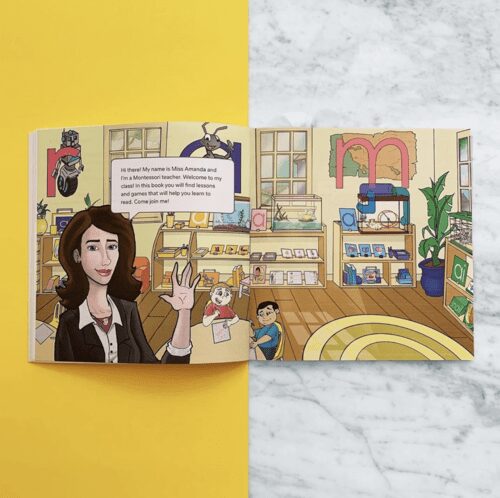
The Path to Reading for 3 6 Year Olds, Montessori Style
To continue reading, you will need to choose a subscription plan.

Montessori Town Hall Meeting, April 28th, 2021
To continue reading, you will need to choose a subscription plan.

Montessori or Montessori-ish, How to Choose an Authentic Montessori School
To continue reading, you will need to choose a subscription plan.

Part 2 – Navigating the Deep Sea of Social Media with Our Children: The Montessori Way
To continue reading, you will need to choose a subscription plan.
A Montessori inspired Home, Life Based on Montessori Principles 1
To continue reading, you will need to choose a subscription plan.
“Bless Them, Change Me – Impact of Attitudes on Relationships” with Dorothy Harman
To continue reading, you will need to choose a subscription plan.
The Seasons of Childhood Understanding Your Child’s Growth and Learning
To continue reading, you will need to choose a subscription plan.
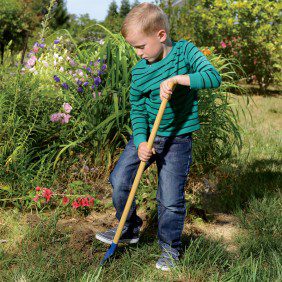
Welcoming Spring and Getting Outdoors, Reconnecting with Nature After a Covid Winter
To continue reading, you will need to choose a subscription plan.
Part 2: All We Need Is Love, Balancing Accountability with Empathy, Respect and Love
To continue reading, you will need to choose a subscription plan.
Part 1: Navigating the Deep Sea of Social Media with Our Children, The Montessori Way
To continue reading, you will need to choose a subscription plan.
Optimizing Your Parent Teacher Conference Experience!
To continue reading, you will need to choose a subscription plan.
Forgive for Good: A Prescription for Family Health and Life Success
Description: In his groundbreaking book, Forgive for Good, Dr. Luskin reminds us that, “Forgiveness is the feeling of peace that emerges as you take your hurt less personally, take responsibility for how you feel, and become a hero instead of a victim in the story you tell.” Join Dr. Luskin and the Montessori Family Alliance panel for a discussion about how forgiveness, when modeled by parents and teachers, exemplified in storytelling, and expressed routinely in family interactions can help children learn this healing quality of character.

Parenting toward Antiracism | Montessori Family Life Webinar
Dr. Valaida Wise was recently a guest on the Montessori Family Life Webinar series when she shared some of her ideas about how to raise children to be anti-racist. I will summarize a small part of that webinar here. If you would like to view the entire broadcast or any of our hundreds of weekly broadcasts, you can join the Montessori Family Alliance at montessori.org/mfa.
Or if you are already a member, you can view the webinar by clicking here.
So many parents and teachers believe in this myth of racial innocence. They don’t want to burden their children with this rather adult idea of racism. They believe that children are born kind and innocent to race and that they don’t need this information. So they would rather raise them to be what we call ‘color blind.’ Many researchers would submit that, actually, the worst conversation to have with a child is no conversation at all about race. What is known is that, in reality, young children (as early as three months old) understand bias and difference based on research by Dr. Karen Wynn, Director of the Infant Cognition Center, and Dr. Bloomington, both at Yale University.
“Children become
like the things they love.”
–Dr. Maria Montessori
What researchers are thinking now is that humans may be born with this kind of bias. We have a bias towards something that looks scary or different. Research shows that these biases are not just ‘learned’ behaviors. They are actually inbred, instinctual behaviors that worked for our protection at one point. Left unchecked, without a parent’s guidance, the child cannot help but develop a bias.
Children see bias as early as 3-6 months old. So let’s scan forward. What happens in a family if the parent says, “Well, I don’t want to talk about race because my child is too young?” or “I want them to remain innocent from all of this.” Then the child will be raised in a color-blind mindset and, as research bears out, the child is less likely to point out or understand when discrimination happens.
This could happen very subtly. Let’s say you’re at a playground with your child. You see another child point to a child of color and you hear the pointing child say, “That child looks dirty. Why is that child dirty? Does it come off?” The parent of the pointing child cringes, turns, and walks away, shushing the child. The child’s interpretation is that this is not a good topic; they should not talk about this.
To conclude this summary of just a small segment of Dr. Wise’s broadcast, let’s remember that when we allow our biases (or our embarrassment) in situations stop us from guiding our children toward antiracism (especially the youngest children), they absorb it right away. Children are mirrors. They mirror us. It’s so very important that we check ourselves to see what our children are sensing in our attitudes, in our language, and in our thinking because they are taking it all in.
Part 1: All We Need Is Love Giving and Receiving Love
To continue reading, you will need to choose a subscription plan.
Featured
-
 Montessori Family Alliance School Group Membership (Print & Digital 2026 1/2 year pricing)
Original price was: $30.00.$15.00Current price is: $15.00.
Montessori Family Alliance School Group Membership (Print & Digital 2026 1/2 year pricing)
Original price was: $30.00.$15.00Current price is: $15.00.
-
The Montessori Way, Revised and Expanded: An Education for Life; A Comprehensive Guide for Parents and Teachers
$25.00
-
The Montessori Child: A Parent's Guide to Raising Capable Children with Creative Minds and Compassionate Hearts (The Parents' Guide to Montessori)
$20.00
-
The Montessori Toddler: A Parent's Guide to Raising a Curious and Responsible Human Being (The Parents' Guide to Montessori)
$20.00
-
Montessori in Action: Building Resilient Montessori Schools 1st Edition
$29.95