
Tomorrow’s Child | Welcome | January – February 2026
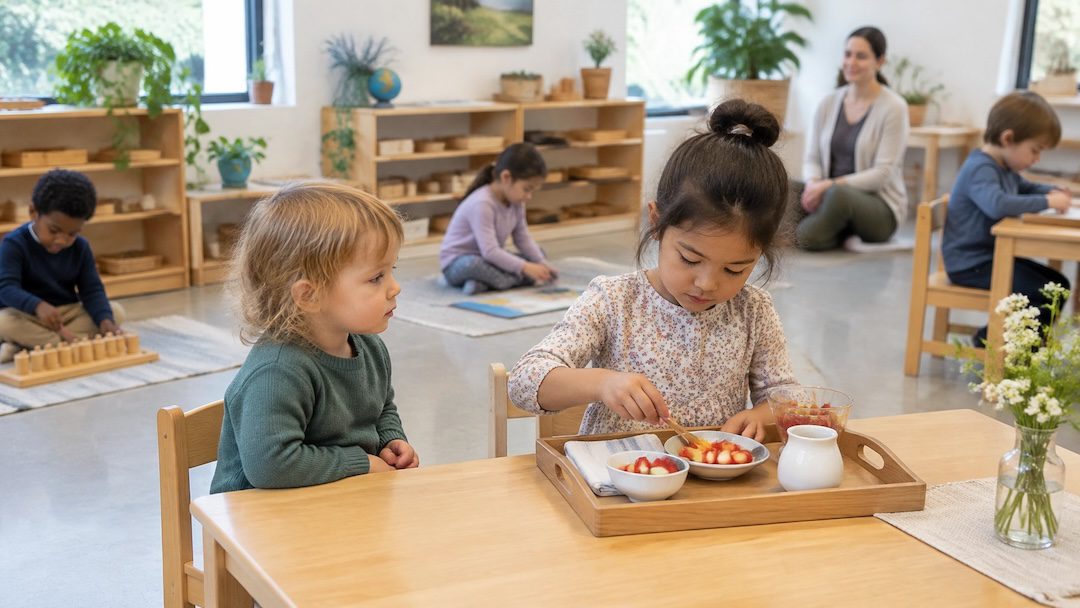
On January 6, 1907, Dr. Maria Montessori opened the first Casa dei Bambini—the Children’s House—in a poor tenement district of Rome. The children who entered that classroom were widely viewed as difficult, neglected, and incapable of learning. What Montessori observed there changed not only her career but the course of education itself.
When these children were given order, beauty, meaningful work, and freedom within clear limits, something remarkable happened. They became calmer, more focused, more independent, and more socially connected. Not because anyone trained them to behave differently, but because the obstacles blocking their natural development were removed.
That first classroom matters today not as a historical milestone, but because its purpose remains unchanged: creating the conditions that allow children to become fully themselves.
What Montessori Meant by
“Normalization”
Few Montessori terms are as important—or as misunderstood—as normalization.
Normalization does not mean conformity or compliance. It does not mean suppressing personality or producing unusually obedient children. Montessori used the term to describe something closer to psychological health: a child who can concentrate deeply, act independently, regulate their own behavior, and engage constructively with others.
Montessori observed that many behaviors adults assume are simply “how children are”—restlessness, short attention spans, defiance, withdrawal, or constant dependence—often emerge when children’s developmental needs are not being met. These behaviors are adaptations, not character traits.
When children experience constant interruption, a lack of meaningful work, chaotic or overly controlled environments, or excessive help paired with minimal responsibility, they adjust in ways that may appear to be temperament but are in fact signals of unmet needs.
When conditions are right, a different picture emerges. The normalized child shows sustained concentration, growing confidence, internal self-discipline, a love of order and purposeful activity, and genuine concern for others. Montessori observed this pattern repeatedly, across cultures and circumstances.
Why This Matters More than Ever
Montessori made these discoveries over a century ago, yet they feel strikingly relevant today. Many of the pressures that disrupt healthy development have intensified.
Modern childhood often includes constant stimulation, frequent interruptions, adult-paced schedules, limited opportunities for deep focus, and heavy screen exposure. Children are often given many choices but little meaningful responsibility, and adults—out of love—may step in too quickly, unintentionally undermining developing independence.
Even in caring homes, children can be pulled away from their natural developmental rhythm. When they cannot concentrate deeply, act independently, or contribute meaningfully, their behavior often reflects that imbalance. What we see as difficult behavior is often a message, not a flaw.
The Environment Is Key
Montessori’s approach began with observation, not theory. If children’s struggles were rooted in their environment, then changing the environment could support their return to balance.
The prepared environment supports normalization through a few essential elements.
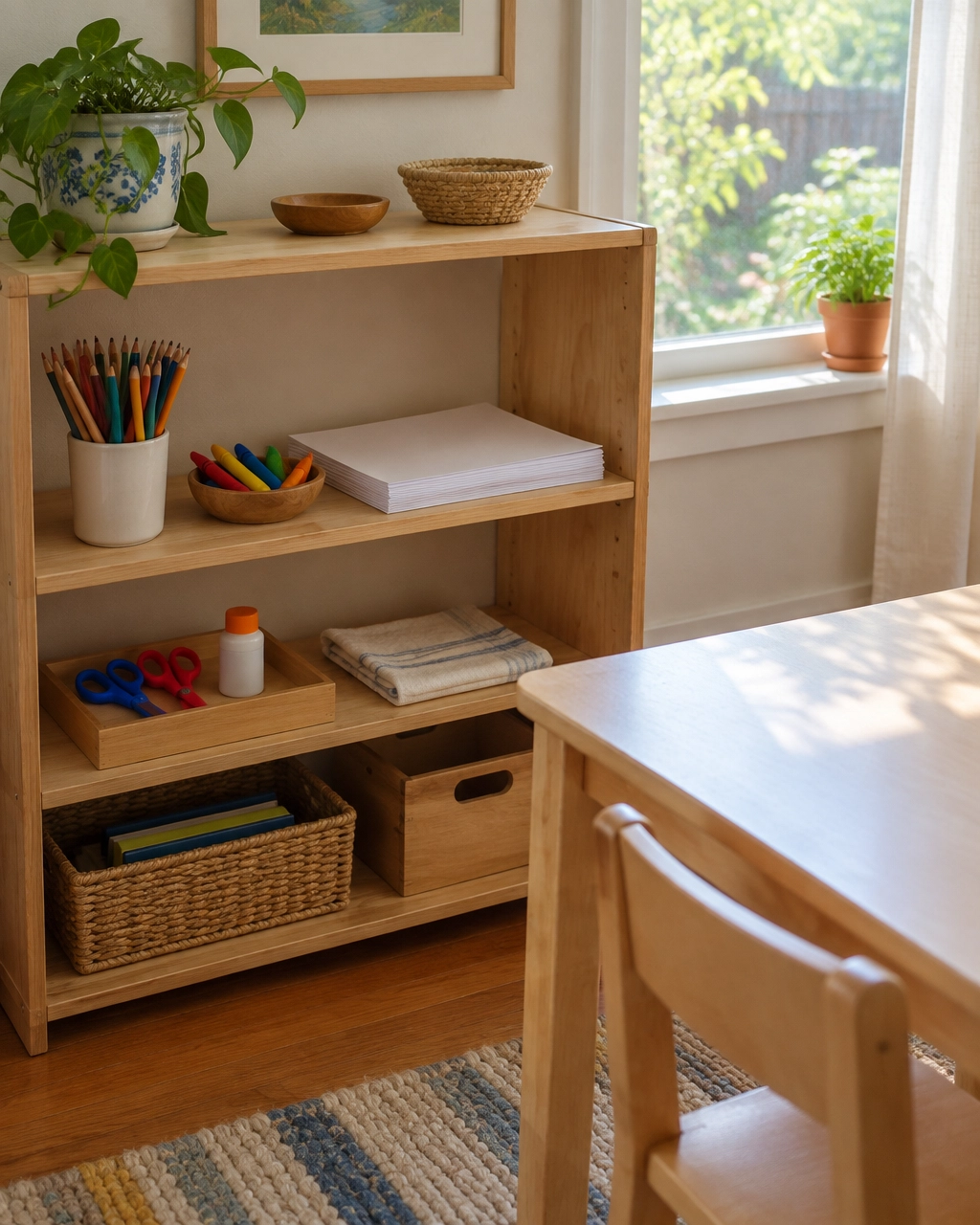
Order and predictability help children orient themselves without constant adult direction. Meaningful work—real activities with purpose—focuses attention in a way entertainment never can. Freedom within clear, consistent limits allows self-regulation to develop. Beauty and simplicity calm rather than overstimulate. Respectful adults support independence rather than fostering dependence.
When children are given uninterrupted time to engage in purposeful work, concentration appears. With concentration comes calmer behavior, patience, self-control, and kindness. Montessori’s great insight was that discipline and social harmony need not be imposed; they emerge naturally when children are properly supported.
What This Means for Parents
January 6 reminds us that Montessori was never primarily about academic acceleration or achievement. From the beginning, it was about helping children reconnect with their natural developmental path.
That matters deeply today, as many families grapple with attention challenges, anxiety, impulsivity, and
social disconnection. Montessori’s promise re mains simple and profound: when we protect
what children genuinely need—order, meaningful work, freedom with limits, respect, and uninterrupted time—children tend to find their way back to themselves.
Normalization is not about perfection. Children will still have hard days, strong emotions, and moments of struggle. But this lens helps parents respond with clarity and compassion, understanding behavior as information rather than identity.
Living This Legacy at Home
Honoring Montessori’s legacy does not require dramatic changes. Often, it means small, intentional shifts.
Protect time for your child to work without rushing. Reduce interruptions when they are deeply engaged. Allow greater independence before intervening to help. Invite children into real household work, not as chores
0-6 Years | Early Childhood
to endure but as meaningful contributions. When behavior becomes difficult, look first at sleep, transitions, stimulation, and opportunities for responsibility before assuming a character problem.
These simple choices align home life more closely with children’s developmental needs.
Your Child’s Guide As Partner
If you are unsure what your child needs at present, your Montessori guide is an invaluable resource. Guides observe children over time within a carefully prepared
community and can interpret behavior through a developmental lens, distinguishing between typical challenges and signs of unmet needs.
Their goal is the same as Montessori’s in that first Children’s House: to help each child remain connected to their natural capacities for concentration, confidence, and joyful engagement.
This is Montessori’s enduring gift—not a method alone, but a vision of childhood rooted in trust, respect, and the belief that children flourish when we create the conditions they truly need.
Your 13-year-old looks at you and says, “That rule doesn’t make sense.” They point out an inconsistency in something you just said. Or they challenge a school policy as unfair.
If you’re raising a Montessori adolescent, this probably feels familiar, annoying, and exhausting. The child who once accepted rules without much pushback now interrogates decisions, questions authority, and presses for explanations. It may even feel personal. And it’s natural to wonder: Is this healthy? Or have we raised someone who can’t accept authority at all?
Montessori’s answer is clear: This questioning isn’t a problem. It’s a sign of healthy development.
What’s Changing in Adolescence
Dr. Montessori described adolescence as a second major transformation, comparable to Early Childhood. Adolescents are reorganizing themselves cognitively, emotionally, and socially. One of the most significant shifts can be recognized when children are no longer satisfied with what is. They urgently need to understand why things are the way they are—and whether they should be.
Authority based solely on position (“because I’m the parent”), habit (“that’s how we’ve always done it”), or convenience (“because I said so”) no longer feels legitimate. These children are not trying to be difficult. They’re building their own internal framework for judgment, deciding what is fair, reasonable, and deserving of respect.
This is not rebellion for its own sake. It’s the emergence of moral and intellectual independence.
Important Developmental Work
When adolescents challenge rules or decisions, they’re doing important developmental work:
A child who never questions authority hasn’t developed independence. They’ve learned compliance. Montessori’s goal has never been obedience; it’s discernment.
How Montessori Supports This Development
Montessori Adolescent programs deliberately place students in situations that require them to analyze systems: economic, social, political, environmental, and ethical.
Adolescents may run small businesses, study social movements, participate in community governance, or grapple with real-world environmental challenges. These experiences help them understand why rules exist, how systems function, and when change is justified.
This doesn’t mean “anything goes.” Clear boundaries, accountability, and expectations remain essential. What changes is how authority is exercised. Instead of “follow this rule because I’m the adult,” the message becomes: “Here’s why this expectation exists. What do you think would happen without it?”
The goal isn’t blind obedience; instead it’s internalized standards.
Questioning vs. Disrespect
Parents often struggle to distinguish between healthy questioning and disrespect.
Healthy questioning sounds like curiosity, thoughtful disagreement, or frustration paired with engagement.
Disrespect shows up as contempt, personal attacks, refusal to listen, or deliberate rule-breaking after discussion.
The distinction matters. Questioning should be met with explanation and dialogue. Disrespect should be addressed calmly and clearly, with boundaries and consequences.
Many families find it helpful to say explicitly: “I want you to question things that don’t make sense. That’s important. But questioning must be done respectfully.”
This is not rebellion for its own sake. It’s the emergence of moral and intellectual independence.
Why This Feels Especially Intense with
Montessori Adolescents
Montessori adolescents often question more persistently and articulately than their peers because they’ve been practicing these skills for years. They’re accustomed to being taken seriously, to reasoning rather than complying, and to expressing their thinking clearly.
That means parents often get the unpolished version of these emerging capacities. It can be impressive—and maddening—simultaneously.
How to Respond
When your adolescent challenges a rule, try to:
Not every challenge requires a full debate. Sometimes it’s enough to say, “I hear your disagreement. We can talk more later. For now, this is the expectation.”
Preparing for a Complex World
Adolescents allowed to question thoughtfully—while held to standards of respect—tend to emerge with strong internal values, the ability to disagree without destroying relationships, and respect for authority that’s earned rather than imposed. These capacities are essential for adult life. They don’t appear suddenly at 18. They develop through practice in adolescence—messy, inconvenient practice.
Supporting this stage asks parents to shift from control to mentorship, from issuing directives to explaining reasoning. It doesn’t mean abandoning boundaries. It means recognizing that the tools that worked at age seven no longer serve at thirteen.
And on the days when it feels like too much, it’s okay to pause, set limits, and say, “That’s a good question. Let’s come back to it.”
Your adolescent’s questioning isn’t a failure of Montessori education. It’s evidence that it’s working. You’re raising someone who will think critically, challenge unjust systems, and act from internal conviction rather than fear of punishment.
That is demanding work—for them and for you. But it’s work worth doing.
Tim Seldin is President of the Montessori Foundation. His more than 40 years of experience in Montessori education includes 22 years as Headmaster of the Barrie School in Silver Spring, Maryland, his alma mater, from toddler through high school graduation. Tim was Co-Founder and Director of the Institute for Advanced Montessori Studies and the Center for Guided Montessori Studies. He earned a B.A. in History and Philosophy from Georgetown University, an M.Ed. in Educational Administration and Supervision from The American University, and his Montessori certification from the American Montessori Society.
Tim is the author of several books on Montessori Education, including The Montessori Way, How to Raise an Amazing Child, The World in the Palm of Her Hand, and Montessori for Every Family,
One of the first questions many parents ask about Montessori is whether mixed-age classrooms are used. Children ages three to six learn together, sharing the same space, materials, and daily rhythms. Parents naturally wonder: Will younger children be overwhelmed? Will older children be held back? How does this actually work socially?
These are reasonable questions, especially for those of us
who grew up in traditional, same-age classrooms. Montessori, however, is grounded in a different understanding of how children develop—not only academically but also socially and morally. The mixed-age classroom is not simply an instructional choice. It is a carefully designed social environment intended to help children learn to live with others.
A Classroom that Reflects Real Life
Outside of school, children are rarely grouped strictly by age. Families include siblings of different ages. Neighborhoods and communities are naturally mixed. Montessori classrooms intentionally mirror this reality.
Within a three-year age span, children experience themselves in different roles. One year, they are new and learning; later, they become confident helpers and leaders. No child is always the youngest or always the most capable.
This balance reduces unhealthy comparison and allows confidence and humility to grow side by side.
Leadership Grows Naturally
In a mixed-age Montessori classroom, leadership is not assigned by adults. It emerges from competence. Older children help younger ones because they can—and because they remember what it felt like to struggle.
You might see a five-year-old patiently showing a younger child how to roll a rug, or a four-year-old helping a threeyear-old complete a puzzle. These moments are not staged. They occur because children feel ownership of their environment and a sense of responsibility for one another.
This kind of leadership builds empathy. Younger children learn that asking for help is safe. Older children learn that knowledge carries responsibility. Both age groups come to see learning as something shared rather than competitive.
Conflict as a Learning Opportunity
When children of different ages share a space for several years, conflict is inevitable—and valuable. Montessori does not try to eliminate conflict.
Instead, guides help children work through it respectfully.
Montessori classrooms do not rely on reward charts, public praise, or artificial incentives to encourage good behavior. Instead, values are embedded in daily life.
A younger child may want a material that someone else is using. They learn to wait, ask, or choose something else. The older child learns to finish their work thoughtfully and return materials so others may use them. Over time, children learn that their choices affect the community.
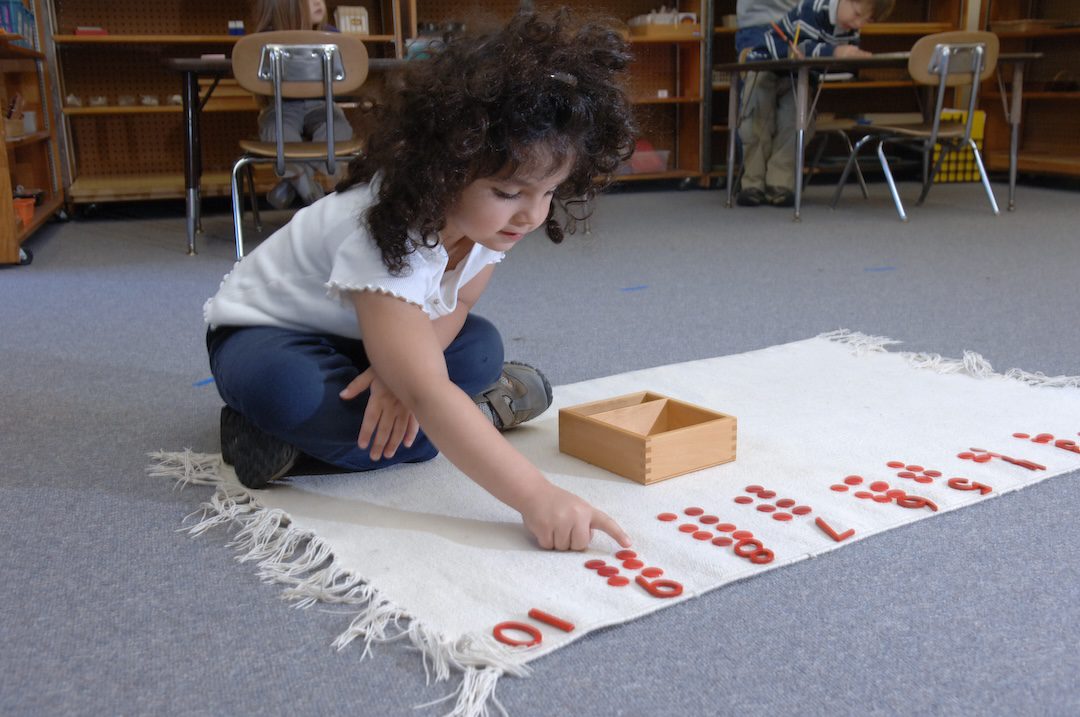
These everyday moments are how moral reasoning develops. Children are not lectured about fairness or kindness. They experience what cooperation feels like—and what happens when it breaks down.
How Character Is Built
Montessori classrooms do not rely on reward charts, public praise, or artificial incentives to encourage good behavior. Instead, values are embedded in daily life.
Children wait because the community matters.
They care for materials because other children depend
on them.
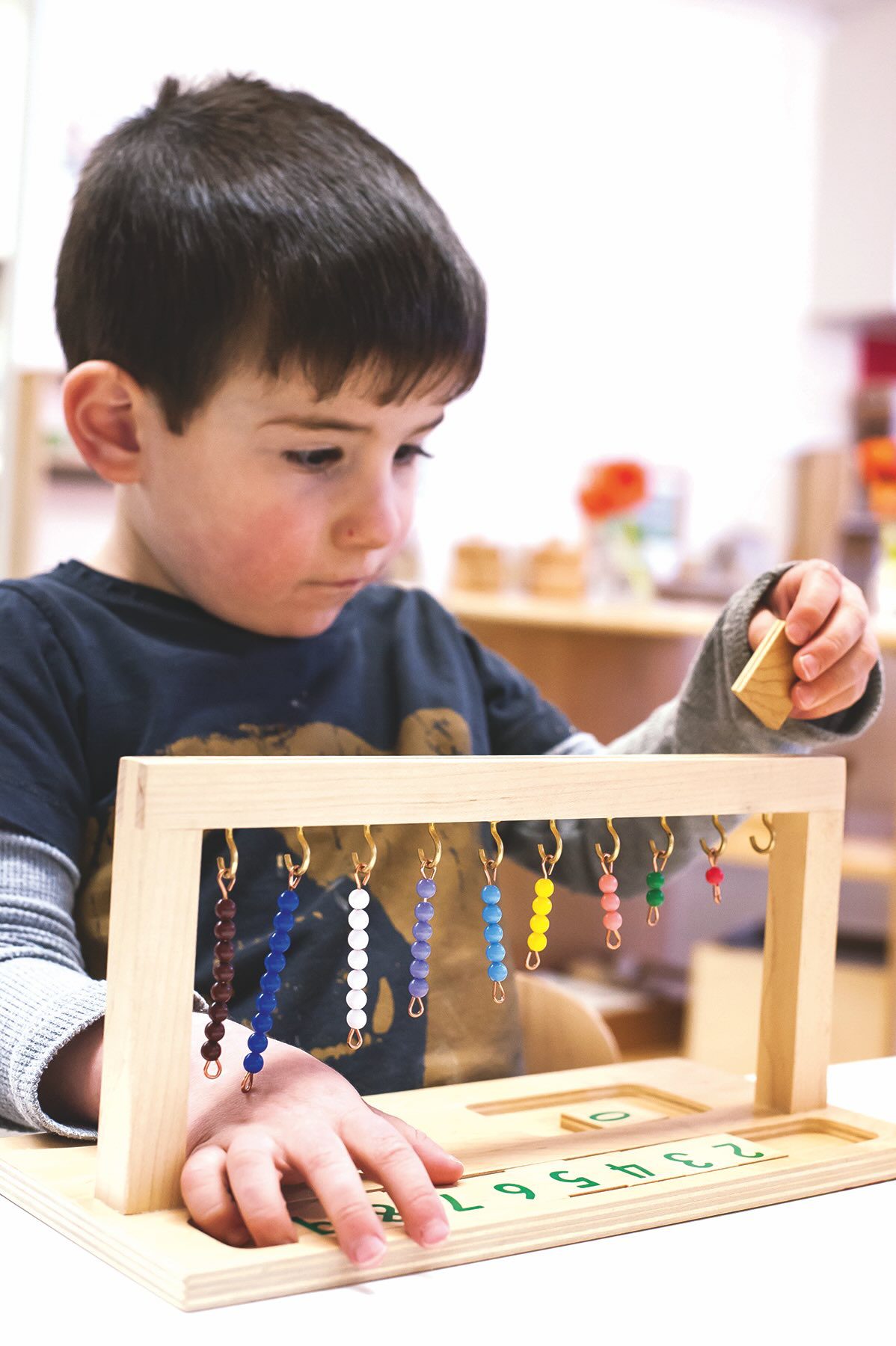
They speak respectfully because relationships endure.
They help because they belong together.
Over time, external guidance becomes internal understanding. Children begin to act considerately, not to please adults but because it feels right.
What Parents Often See—and Miss
From the outside, Montessori classrooms usually appear calm and simple. Children work independently or in small groups without constant adult direction. What may not be immediately visible is the complex social learning taking place beneath the surface.
When an older child patiently teaches a younger one, they are learning responsibility and self-control. When younger children watch attentively, they are developing trust in their own future growth.
Parents sometimes worry that younger children will struggle or older children will be bored. More often, younger children feel inspired, and older children feel purposeful. Each child matters—not only for what they receive but also for what they contribute.
Partnering with Your Child’s Montessori Guide
If you are curious about how your own child is navigating the mixed-age environment, your Montessori guide is your best resource. Guides observe social development over extended periods and can provide insights that may not be apparent at home.
They see the shy child beginning to speak up, the impatient child learning to wait, the confident child learning gentleness.
In a mixed-age Montessori classroom, children are learning far more than academics. They are learning how to live with others—and how to act with integrity when no one is watching. That, ultimately, is education at its deepest level.
By Tim Seldin
From time to time, I come across an organization whose work aligns so closely with what we value in Montessori education that it deserves thoughtful attention. Chancey & Bruce is one of those organizations.
For nearly fifty years, Chancey & Bruce has focused on a single, deceptively simple question: Is a child developmentally ready for kindergarten?
At first glance, some Montessori educators may feel cautious about that language. Montessori is not about pushing children prematurely toward academic benchmarks. We respect developmental timing. We trust sensitive periods. We know that growth unfolds naturally when the environment is prepared thoughtfully.
But what impressed me about Chancey & Bruce is that their work is not about rushing children forward. It is about understanding whether foundational developmental structures are in place.
What They Assess — The Nine Foundational Pathways
Chancey & Bruce evaluates children across nine clearly defined developmental pathways. These are not academic drills. They are neurological and developmental foundations:
• Fine motor
• Gross motor
• Visual memory
• Visual discrimination
• Auditory memory
• Auditory discrimination
• Receptive language
• Expressive language
• Comprehension
• Social-emotional development
(Several of these domains naturally work together, but each is observed and evaluated with intention.)
For Montessori educators, these pathways should feel familiar. They mirror what we observe every day in our classrooms.
Fine motor and gross motor development are visible in Practical Life and Sensorial work.
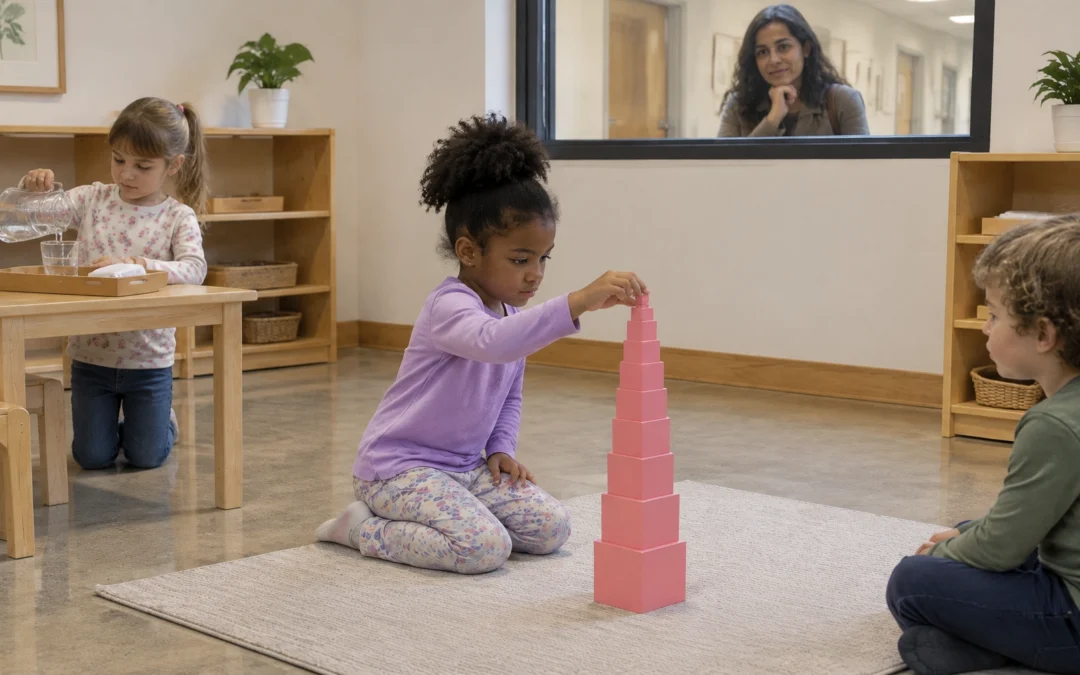
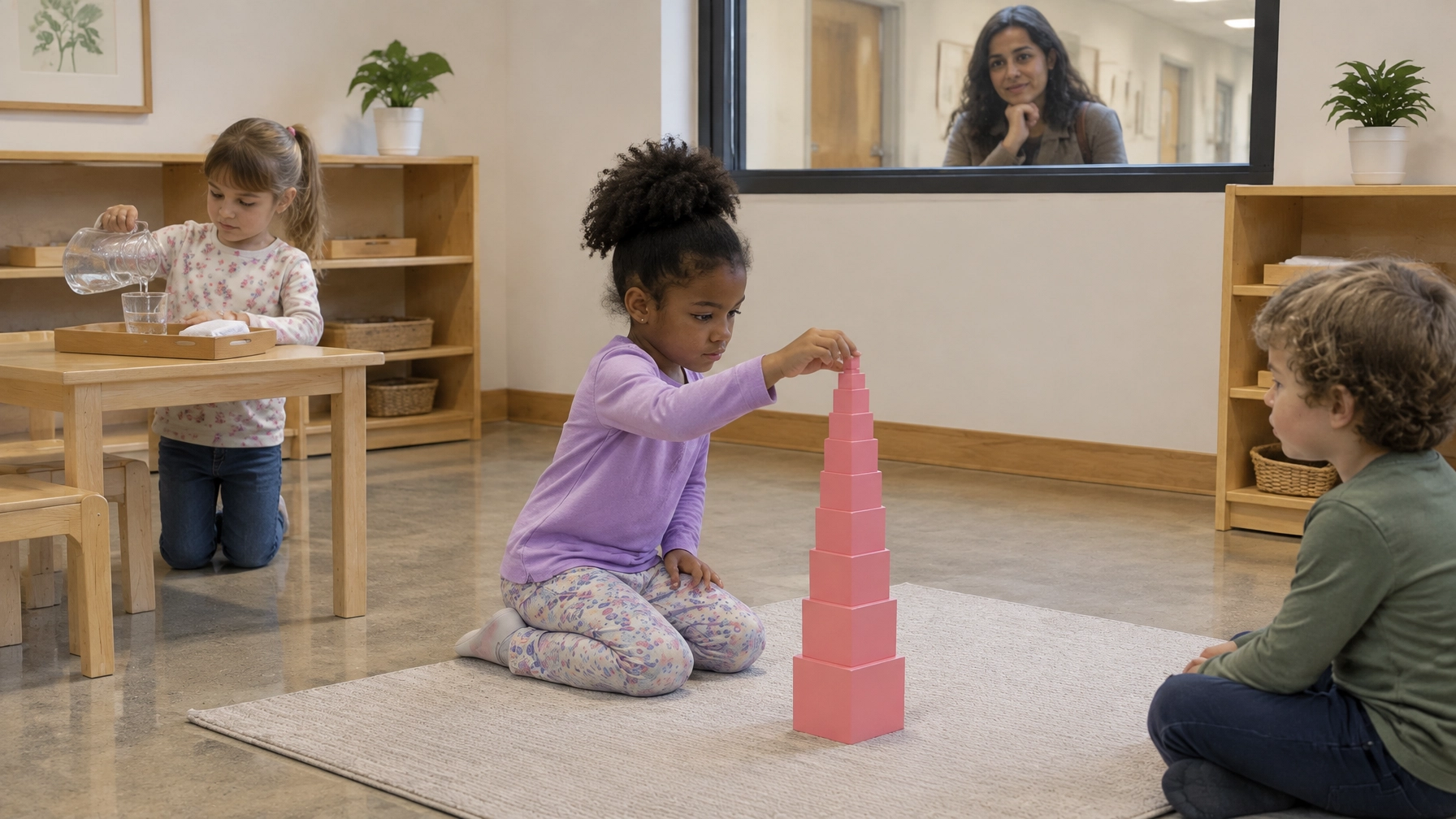
Visual discrimination and visual memory are refined through materials like the Pink Tower, Knobbed Cylinders, and Geometry Cabinet.
Auditory discrimination and auditory memory are strengthened through sound games and early phonemic awareness activities.
Receptive and expressive language are cultivated in rich oral language environments.
Comprehension develops as children make meaning of stories, directions, and experiences.
Social-emotional growth unfolds through Grace and Courtesy, conflict resolution, and multi-age community life.
In other words, Chancey & Bruce is not measuring something foreign to Montessori. They are looking carefully at the very capacities that allow a child to flourish in a Montessori classroom.
How the Assessment Works
The assessment is conducted one-on-one by a trained screener and lasts approximately 20–30 minutes. It is adaptive, meaning it responds to the child’s performance in real time.
Importantly, it is not designed to push a child as far as possible academically. Its purpose is not to prove that a five-year-old can do six-year-old work. Its purpose is to determine whether developmental alignment exists between chronological age and foundational readiness.
That distinction is critical.
This is not about labeling children advanced or behind. It is about identifying whether the neurological and developmental groundwork is sufficiently integrated for the next stage.
Three Perspectives, One Clearer Picture
Another strength of the Chancey & Bruce model is that it gathers information from three perspectives:
• Parent input
• Teacher input
• Live screener observation
As Montessori educators, we value observation deeply. But we also know that children behave differently in different environments.
A child may demonstrate strong skills in a quiet one-on-one setting but struggle with group dynamics. Another may shine socially but reveal gaps in auditory memory that affect early literacy.
By triangulating these three viewpoints, the resulting developmental profile becomes more reliable and more useful.
Why Montessori Schools Should Care
There are several reasons Montessori schools may find this valuable.
Admissions clarity
When evaluating incoming students, this type of developmental profile can provide insight beyond surface academic skills.
Supporting “the gift of time”
We have all faced moments when we sensed a child might benefit from an additional year before kindergarten. Having structured developmental data can help ground that conversation with parents in shared understanding.
Parent communication
Families increasingly ask for clarity. They want to understand how their child is doing in concrete terms. A thoughtful developmental profile can complement our narrative reports and observational records.
Strategic positioning
Public programs are expanding downward in age across many states. Families compare options. Being able to articulate, with specificity, how Montessori nurtures fine motor integration, auditory discrimination, language development, and social maturity strengthens our message.
Recommendations, Not Labels
The assessment does not diagnose. It does not label children with disorders. It does not attempt to replace professional evaluation when warranted.
Instead, it provides individualized recommendations. These suggestions often align naturally with Montessori materials and practices — Practical Life exercises for fine motor precision, sound games for auditory discrimination, language-rich conversations for expressive growth, Grace and Courtesy for social-emotional development.
In that sense, this is not a replacement for Montessori observation. It is a complementary lens.
A Legacy of Experience
Chancey & Bruce has refined its assessment over nearly five decades. Thousands of children are evaluated each year. Reports are reviewed with human oversight. This is not a trendy short-term product. It reflects sustained commitment to developmental science.
Montessori herself was a scientist. She measured carefully, always in service of understanding the child more deeply. I believe she would recognize in this approach an effort to honor developmental truth rather than rush children toward superficial benchmarks.
Closing Thoughts
Montessori schools need not fear thoughtful assessment when it respects the whole child and aligns with developmental science.
Chancey & Bruce is examining the very capacities we work to cultivate: coordination, discrimination, language integration, comprehension, and social maturity.
Used wisely, this kind of developmental profile can support admissions, guide parent conversations, and strengthen our ability to advocate for children.
As always, the most important work remains in the classroom — in the quiet, careful observation of each child. But tools that illuminate what we already value deserve our thoughtful consideration.
And I look forward to seeing the assessment in action.
Montessori school leadership is often discussed in terms of vision, values, and philosophy. But day-to-day reality unfolds in far more complicated terrain—at the intersection of people, money, morale, and mission, where every decision feels consequential and often personal.
Today’s Montessori leaders navigate an especially fragile landscape. Teachers are challenging to find, and support staff are stretched thin. Burnout is real, and the fear that a valued teacher might leave—seeking higher pay, less stress, or relief from constant pressure—can lead to difficult decisions. Leaders must balance staff retention efforts with maintaining high standards to ensure school stability and quality.
Courageous leadership doesn’t ignore these realities. But it also doesn’t allow fear to dictate the school’s future quietly. Instead, it works through influence, systems, and sustained attention to the people who make the school work.
Montessori as a System of Systems
Montessori education itself can be understood as a system of systems—ways of organizing time, space, materials, curriculum, and human relationships that work together to support children’s development. While there can be legitimate disagreement about how to implement or organize these systems, schools work best when there is a common understanding about how we do things here.
This doesn’t mean imposing rigid uniformity or stifling professional judgment. It means developing carefully crafted agreements about the fundamentals:
When these agreements are clear, stress and resentment decrease. People know what’s expected. They can focus on their work rather than navigating constant uncertainty or dealing with conflicting work.
The key is that these agreements shouldn’t simply be imposed by leadership. They need to be developed thoughtfully, with input from those who will live by them, and then memorialized in writing as part of an organizational blueprint—a master plan or manual of how things work at our school. This living document serves as a reference point for everyone and a crucial tool for onboarding new community members.
The school can’t reinvent itself every time someone new joins. But neither can it ignore the need to help newcomers understand and embrace these shared agreements.
Courage in a Time of Scarcity
Staffing scarcity defines modern Montessori leadership. Experienced teachers are in short supply. Assistants and support staff are harder than ever to recruit and retain. Leaders know that replacing a teacher isn’t a simple transaction—it can take months, sometimes years. The disruption to children, families, and morale can be profound.
As a result, many leaders hesitate to:
The tendency to hesitate is understandable, but when fear of losing staff becomes the primary driver of decisions, the hidden costs accumulate. Standards erode. Resentment builds quietly among other staff. Strong teachers carry the emotional and practical load for those who are disengaged. Over time, morale suffers anyway.
Courageous leadership doesn’t mean ignoring scarcity. It means leading through it, rather than around it—by building systems and relationships that help people grow, feel supported, and work effectively together. And it means being thoughtful about who joins the community in the first place.
Taking Time to Find the Right Fit
One of the most important ways leaders protect their schools is by resisting the pressure to rush. When there’s an opening—whether for a teacher, assistant, specialist, or administrator—the temptation to fill it quickly can be overwhelming. When enrollment is soft, the pressure to accept any family willing to pay tuition is intense.
But courageous leadership means taking time in both hiring and admissions to find people who will be happy at the school and become great members of the community.
Before making an offer of employment or admission, both parties need time to get to know each other. Prospective families need to understand what they’re agreeing to—not just the philosophy in the abstract, but the practical realities of how the school operates. Prospective staff members need to understand not only their role, but the social norms and expectations of the community they’re joining.
Not every family will care deeply about understanding Montessori education—some are just trying to solve a childcare problem. But they still need a certain level of understanding right from the start. It’s far easier to establish shared expectations at the beginning than to try to change someone once they’re already part of the school.
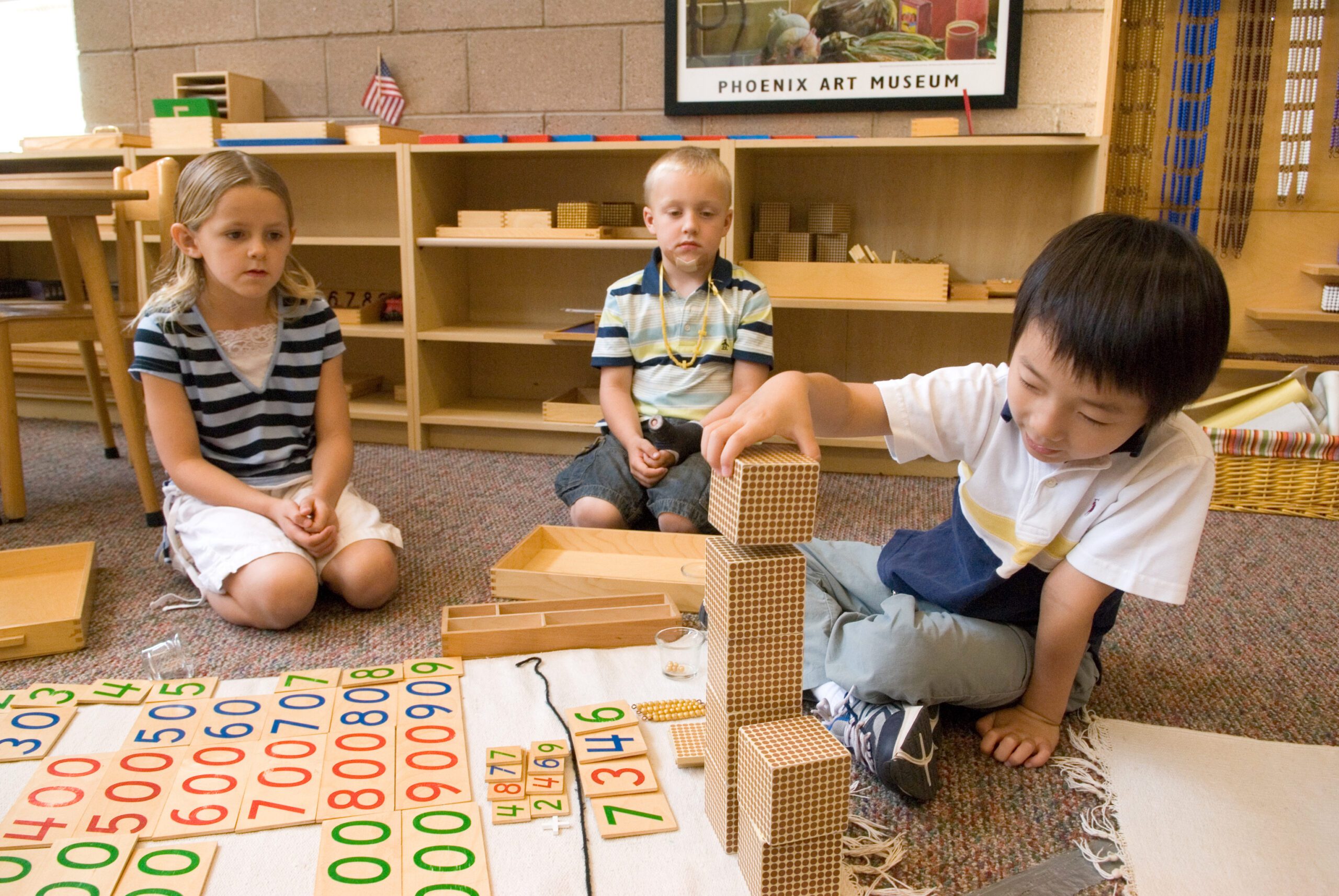
The same is true for staff. Taking time to find the right fit can build confidence that the school is making thoughtful decisions, leading to greater stability and coherence.
Leading Through Influence, Not Just Authority
Decades ago, Peter Drucker highlighted how managers make things happen through influence, which can inspire Montessori leaders to foster trust and responsibility rather than relying solely on authority.
Time and presence matter. Leaders who regularly spend time in classrooms signal that they care about what’s happening and who’s doing the work. Teachers notice when leaders show up—not to evaluate, but to understand, support, and stay connected to the daily reality of the classroom.
Coaching and support build capacity. Providing teachers with thoughtful, ongoing coaching—not just annual observations—helps them develop their practice and feel genuinely supported. This is especially important for support staff and specialists who may not have Montessori training. Rather than leaving them to feel inadequate or guilty about what they don’t know, leaders can create pathways for learning and growth.
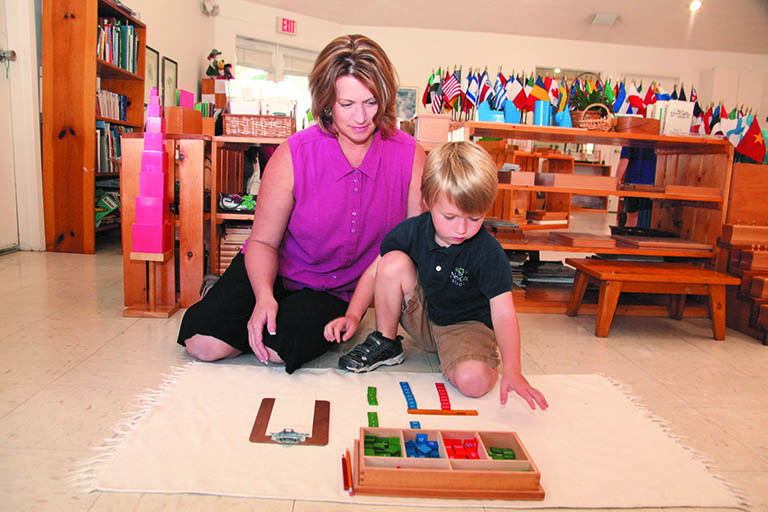
Systems create space for collaboration. Organizing regular meeting time, planning structured opportunities for reflection and team-building, and creating traditions that bring people together all help build the connective tissue of a healthy school. Beginning-of-year team building and end-of-year reflection aren’t luxuries—they’re how shared understanding develops and how those foundational agreements get refined and renewed.
Communication shapes culture. Leaders influence their schools by how they communicate with all stakeholders—teachers, assistants, parents, students, boards, and partners. Effective communication doesn’t overwhelm people with information, nor does it leave them guessing. It’s clear about expectations, transparent about challenges, and consistent in tone and frequency.
Onboarding sets the foundation. Careful onboarding of new staff and families establishes expectations, builds relationships, and helps people understand not only their roles but also how their work connects to the school’s larger purpose and the carefully developed agreements about how we do things here. Poor onboarding leaves people adrift; thoughtful onboarding creates belonging.
These aren’t add-ons to leadership. They’re how leadership actually happens—through sustained attention to people, structures, and relationships.
Making Everyone Feel Seen, Heard, and Valued
One of the most important goals of Montessori leadership is ensuring that every member of the community. feels seen, heard, and valued.
Parents may feel they’re not good enough or not part of the crowd because of race, religion, gender, wealth, level of education, or some other factor. Leaders must actively work to counteract this through how they communicate, how they welcome families, and how they create opportunities for connection that honor different circumstances and comfort levels.
Not every parent has the same time availability or interest. Some will eagerly engage with every aspect of school life; others are simply trying to solve a problem and get through the day. The goal isn’t to force everyone into the same mold, but to ensure everyone has access to the information and support they need, and that no one feels excluded or diminished.
The same principle applies to staff. Everyone—from the newest assistant to the art teacher, from office staff to administrators, from veteran guides to brand-new teachers—needs to feel that they matter. Support staff and specialists, who often feel invisible because they’re not Montessori-trained classroom teachers, especially need deliberate inclusion in the school’s mission and community.
Helping everyone feel that they are part of the fabric of the school requires ongoing effort. It’s not something you do once during onboarding and then forget. It means continually creating opportunities for connection, recognition, and meaningful participation. It means paying attention to who speaks and who doesn’t, who feels comfortable and who seems hesitant, who gets recognized and who gets overlooked.
Working With Resistance When the Stakes Feel High
Resistance to change intensifies when leaders feel they cannot afford to lose people. A teacher who says, “I’ve been doing this for thirty years,” or “This is not how I was trained,” may feel untouchable—not because their practice is beyond question, but because the leader fears the consequences of conflict.
Here, courage takes a relational form. It asks leaders to engage resistance thoughtfully rather than avoid it. To separate respect for experience from unquestioned authority. To create space for dialogue while maintaining clarity about expectations.
This is where influence-based leadership and those shared agreements become essential. Rather than issuing mandates, effective leaders:
Montessori schools don’t thrive because everyone agrees. They thrive when leaders create the conditions for honest dialogue, mutual support, and shared commitment to children.
Morale, Stress, and the Adult Prepared Environment
Teacher morale isn’t only a function of workload or compensation, though both matter deeply. It’s also shaped by clarity, consistency, and trust. In schools where expectations are ambiguous, decisions feel arbitrary, or leaders appear hesitant, stress increases—even when leaders believe they’re being protective.
Carefully crafted agreements about ‘how we do things’ are very helpful. When people understand the systems and trust that they will be implemented consistently, they can relax into their work. When standards shift depending on who’s asking or what day it is, everyone operates in a state of low-grade anxiety.
Adults, like children, need a prepared environment. They need:
Support staff and specialists—who often feel invisible because they’re not Montessori teachers—especially need to feel included in the school’s mission and supported in their work with children. When leaders create systems that honor all adults in the building, morale strengthens across the entire community.
Ironically, when leaders avoid difficult conversations out of fear of harming morale, morale often declines anyway. Staff sense uncertainty. Strong teachers feel unsupported. The emotional load shifts sideways rather than disappearing.
Courageous leadership recognizes that structure is a form of care—and that investing time in people’s growth and connection is not a luxury but a necessity.
Financial Courage in a Fragile Staffing Market
The fear of losing teachers also shapes financial decisions. Leaders know compensation matters, but they also know tuition has limits. Parents may resist increases. Markets vary. Not every school can simply “charge more.”
This is where courage becomes strategic and creative rather than simplistic—and where communication becomes critical.
When a school is underfunded, leaders must explore multiple avenues simultaneously:
Financial courage isn’t about pretending constraints don’t exist. It’s about refusing to accept chronic scarcity as inevitable—and being willing to have honest, ongoing conversations with all stakeholders about sustainability.
Leading With Others, Not Alone
For many Montessori leaders, these decisions are complicated by governance structures—boards, owners, or partners who may not fully understand Montessori education or the daily realities of staffing and morale.
Again, courage isn’t confrontation for its own sake. It’s persistence, education, and conversation. Building consensus over time and staying engaged even when progress is slow.
This requires the same influence-based approach that works with faculty:
It means resisting the temptation to disengage when alignment feels difficult, and instead finding ways to bring people along.
Leadership as Steady Presence
At its heart, Montessori leadership isn’t about eliminating anxiety—your own or others’. It’s about becoming a steady presence within it.
Leaders can’t promise teachers that nothing will change or that stress will disappear. What they can offer is honesty, clarity, and a commitment to building a school worthy of people’s energy and talent.
School leaders support this through:
Yes, leadership can feel like herding cats. But it’s also the work of pathfinding—helping an organization move, step by step, toward sustainability, coherence, and trust.
When Montessori leaders lead with courage in this fuller sense—acknowledging scarcity, caring for morale, building systems that support people, trying to confirm that prospective employees and families will be a good fit, creating shared agreements about how things work, and still making principled decisions—they create schools where great teachers are more likely to stay, not less.
Not because leadership avoided difficulty, but because it faced it with integrity—and built the structures, relationships, and shared understandings that help everyone do their best work.
Montessori school leadership is often discussed in terms of vision, values, and philosophy. But day-to-day reality unfolds in far more complicated terrain—at the intersection of people, money, morale, and mission, where every decision feels consequential and often personal.
Today’s Montessori leaders navigate an especially fragile landscape. Teachers are challenging to find, and support staff are stretched thin. Burnout is real, and the fear that a valued teacher might leave—seeking higher pay, less stress, or relief from constant pressure—can lead to difficult decisions. Leaders must balance staff retention efforts with maintaining high standards to ensure school stability and quality.
Courageous leadership doesn’t ignore these realities. But it also doesn’t allow fear to dictate the school’s future quietly. Instead, it works through influence, systems, and sustained attention to the people who make the school work.
Montessori as a System of Systems
Montessori education itself can be understood as a system of systems—ways of organizing time, space, materials, curriculum, and human relationships that work together to support children’s development. While there can be legitimate disagreement about how to implement or organize these systems, schools work best when there is a common understanding about how we do things here.
This doesn’t mean imposing rigid uniformity or stifling professional judgment. It means developing carefully crafted agreements about the fundamentals:
When these agreements are clear, stress and resentment decrease. People know what’s expected. They can focus on their work rather than navigating constant uncertainty or dealing with conflicting work.
The key is that these agreements shouldn’t simply be imposed by leadership. They need to be developed thoughtfully, with input from those who will live by them, and then memorialized in writing as part of an organizational blueprint—a master plan or manual of how things work at our school. This living document serves as a reference point for everyone and a crucial tool for onboarding new community members.
The school can’t reinvent itself every time someone new joins. But neither can it ignore the need to help newcomers understand and embrace these shared agreements.
Courage in a Time of Scarcity
Staffing scarcity defines modern Montessori leadership. Experienced teachers are in short supply. Assistants and support staff are harder than ever to recruit and retain. Leaders know that replacing a teacher isn’t a simple transaction—it can take months, sometimes years. The disruption to children, families, and morale can be profound.
As a result, many leaders hesitate to:
The tendency to hesitate is understandable, but when fear of losing staff becomes the primary driver of decisions, the hidden costs accumulate. Standards erode. Resentment builds quietly among other staff. Strong teachers carry the emotional and practical load for those who are disengaged. Over time, morale suffers anyway.
Courageous leadership doesn’t mean ignoring scarcity. It means leading through it, rather than around it—by building systems and relationships that help people grow, feel supported, and work effectively together. And it means being thoughtful about who joins the community in the first place.
Taking Time to Find the Right Fit
One of the most important ways leaders protect their schools is by resisting the pressure to rush. When there’s an opening—whether for a teacher, assistant, specialist, or administrator—the temptation to fill it quickly can be overwhelming. When enrollment is soft, the pressure to accept any family willing to pay tuition is intense.
But courageous leadership means taking time in both hiring and admissions to find people who will be happy at the school and become great members of the community.
Before making an offer of employment or admission, both parties need time to get to know each other. Prospective families need to understand what they’re agreeing to—not just the philosophy in the abstract, but the practical realities of how the school operates. Prospective staff members need to understand not only their role, but the social norms and expectations of the community they’re joining.
Not every family will care deeply about understanding Montessori education—some are just trying to solve a childcare problem. But they still need a certain level of understanding right from the start. It’s far easier to establish shared expectations at the beginning than to try to change someone once they’re already part of the school.
The same is true for staff. Taking time to find the right fit can build confidence that the school is making thoughtful decisions, leading to greater stability and coherence.
Leading Through Influence, Not Just Authority
Decades ago, Peter Drucker highlighted how managers make things happen through influence, which can inspire Montessori leaders to foster trust and responsibility rather than relying solely on authority.
Time and presence matter. Leaders who regularly spend time in classrooms signal that they care about what’s happening and who’s doing the work. Teachers notice when leaders show up—not to evaluate, but to understand, support, and stay connected to the daily reality of the classroom.
Coaching and support build capacity. Providing teachers with thoughtful, ongoing coaching—not just annual observations—helps them develop their practice and feel genuinely supported. This is especially important for support staff and specialists who may not have Montessori training. Rather than leaving them to feel inadequate or guilty about what they don’t know, leaders can create pathways for learning and growth.
Systems create space for collaboration. Organizing regular meeting time, planning structured opportunities for reflection and team-building, and creating traditions that bring people together all help build the connective tissue of a healthy school. Beginning-of-year team building and end-of-year reflection aren’t luxuries—they’re how shared understanding develops and how those foundational agreements get refined and renewed.
Communication shapes culture. Leaders influence their schools by how they communicate with all stakeholders—teachers, assistants, parents, students, boards, and partners. Effective communication doesn’t overwhelm people with information, nor does it leave them guessing. It’s clear about expectations, transparent about challenges, and consistent in tone and frequency.
Onboarding sets the foundation. Careful onboarding of new staff and families establishes expectations, builds relationships, and helps people understand not only their roles but also how their work connects to the school’s larger purpose and the carefully developed agreements about how we do things here. Poor onboarding leaves people adrift; thoughtful onboarding creates belonging.
These aren’t add-ons to leadership. They’re how leadership actually happens—through sustained attention to people, structures, and relationships.
Making Everyone Feel Seen, Heard, and Valued
One of the most important goals of Montessori leadership is ensuring that every member of the community. feels seen, heard, and valued.
Parents may feel they’re not good enough or not part of the crowd because of race, religion, gender, wealth, level of education, or some other factor. Leaders must actively work to counteract this through how they communicate, how they welcome families, and how they create opportunities for connection that honor different circumstances and comfort levels.
Not every parent has the same time availability or interest. Some will eagerly engage with every aspect of school life; others are simply trying to solve a problem and get through the day. The goal isn’t to force everyone into the same mold, but to ensure everyone has access to the information and support they need, and that no one feels excluded or diminished.
The same principle applies to staff. Everyone—from the newest assistant to the art teacher, from office staff to administrators, from veteran guides to brand-new teachers—needs to feel that they matter. Support staff and specialists, who often feel invisible because they’re not Montessori-trained classroom teachers, especially need deliberate inclusion in the school’s mission and community.
Helping everyone feel that they are part of the fabric of the school requires ongoing effort. It’s not something you do once during onboarding and then forget. It means continually creating opportunities for connection, recognition, and meaningful participation. It means paying attention to who speaks and who doesn’t, who feels comfortable and who seems hesitant, who gets recognized and who gets overlooked.
Working With Resistance When the Stakes Feel High
Resistance to change intensifies when leaders feel they cannot afford to lose people. A teacher who says, “I’ve been doing this for thirty years,” or “This is not how I was trained,” may feel untouchable—not because their practice is beyond question, but because the leader fears the consequences of conflict.
Here, courage takes a relational form. It asks leaders to engage resistance thoughtfully rather than avoid it. To separate respect for experience from unquestioned authority. To create space for dialogue while maintaining clarity about expectations.
This is where influence-based leadership and those shared agreements become essential. Rather than issuing mandates, effective leaders:
Montessori schools don’t thrive because everyone agrees. They thrive when leaders create the conditions for honest dialogue, mutual support, and shared commitment to children.
Morale, Stress, and the Adult Prepared Environment
Teacher morale isn’t only a function of workload or compensation, though both matter deeply. It’s also shaped by clarity, consistency, and trust. In schools where expectations are ambiguous, decisions feel arbitrary, or leaders appear hesitant, stress increases—even when leaders believe they’re being protective.
Carefully crafted agreements about ‘how we do things’ are very helpful. When people understand the systems and trust that they will be implemented consistently, they can relax into their work. When standards shift depending on who’s asking or what day it is, everyone operates in a state of low-grade anxiety.
Adults, like children, need a prepared environment. They need:
Support staff and specialists—who often feel invisible because they’re not Montessori teachers—especially need to feel included in the school’s mission and supported in their work with children. When leaders create systems that honor all adults in the building, morale strengthens across the entire community.
Ironically, when leaders avoid difficult conversations out of fear of harming morale, morale often declines anyway. Staff sense uncertainty. Strong teachers feel unsupported. The emotional load shifts sideways rather than disappearing.
Courageous leadership recognizes that structure is a form of care—and that investing time in people’s growth and connection is not a luxury but a necessity.
Financial Courage in a Fragile Staffing Market
The fear of losing teachers also shapes financial decisions. Leaders know compensation matters, but they also know tuition has limits. Parents may resist increases. Markets vary. Not every school can simply “charge more.”
This is where courage becomes strategic and creative rather than simplistic—and where communication becomes critical.
When a school is underfunded, leaders must explore multiple avenues simultaneously:
Financial courage isn’t about pretending constraints don’t exist. It’s about refusing to accept chronic scarcity as inevitable—and being willing to have honest, ongoing conversations with all stakeholders about sustainability.
Leading With Others, Not Alone
For many Montessori leaders, these decisions are complicated by governance structures—boards, owners, or partners who may not fully understand Montessori education or the daily realities of staffing and morale.
Again, courage isn’t confrontation for its own sake. It’s persistence, education, and conversation. Building consensus over time and staying engaged even when progress is slow.
This requires the same influence-based approach that works with faculty:
It means resisting the temptation to disengage when alignment feels difficult, and instead finding ways to bring people along.
Leadership as Steady Presence
At its heart, Montessori leadership isn’t about eliminating anxiety—your own or others’. It’s about becoming a steady presence within it.
Leaders can’t promise teachers that nothing will change or that stress will disappear. What they can offer is honesty, clarity, and a commitment to building a school worthy of people’s energy and talent.
School leaders support this through:
Yes, leadership can feel like herding cats. But it’s also the work of pathfinding—helping an organization move, step by step, toward sustainability, coherence, and trust.
When Montessori leaders lead with courage in this fuller sense—acknowledging scarcity, caring for morale, building systems that support people, trying to confirm that prospective employees and families will be a good fit, creating shared agreements about how things work, and still making principled decisions—they create schools where great teachers are more likely to stay, not less.
Not because leadership avoided difficulty, but because it faced it with integrity—and built the structures, relationships, and shared understandings that help everyone do their best work.
One of the most emotionally complex tasks in founding or leading a private Montessori school is setting tuition. It is also one of the most consequential.
I have watched otherwise thoughtful, capable school founders lose sleep over tuition decisions. They worry about affordability. They worry about being perceived as elitist. They worry about turning families away. And sometimes, they worry that charging what the school truly needs will somehow betray the very values that drew them to Montessori in the first place.
These concerns are understandable—and they are also dangerous if left unexamined.
A private Montessori school does not become more humane by undercharging. It becomes fragile. And fragility is not a virtue when children, families, and staff are depending on you for continuity, stability, and trust.
Before addressing tuition strategy for private schools, it is important to acknowledge the broader Montessori landscape.
Public Montessori programs—whether charter schools, magnet programs, or district-operated schools—serve tens of thousands of children and families across the country. These schools demonstrate that Montessori education can thrive within public systems, offering high-quality programs at no direct cost to families. They are an essential part of the Montessori community and expand access in ways that private tuition-based schools cannot.
Additionally, many states now offer scholarship or voucher programs that help families afford private school tuition. These programs—sometimes called Education Savings Accounts (ESAs), tax credit scholarships, or school choice programs—can significantly reduce the financial burden on families and make private Montessori education accessible to a broader range of students.
Both public Montessori schools and state scholarship programs represent important pathways toward greater educational equity.
However, if you are founding or leading a private, tuition-dependent Montessori school, your financial reality is different. You do not receive per-pupil public funding. You cannot rely on state budgets to cover operating costs. While state scholarships can help some families, they do not eliminate the need for a sound tuition strategy—they simply shift how some families pay.
This chapter is written for nonpublic school leaders who must set tuition to sustain quality, protect staff, and ensure the school’s long-term survival.
Every private school has a true cost per child, whether it acknowledges it or not. This is not an abstract number; it is the simple arithmetic of operating reality.
The true cost includes:
When we divide the total cost of operating the school by a conservative estimate of enrollment, we arrive at a per-child cost. That number is not a judgment about families. It is a reflection of what it takes to do the work well.
Tuition should be set with this number firmly in mind.
Charging less than the true cost does not make education more accessible. It merely shifts the burden elsewhere—onto underpaid staff, deferred maintenance, exhausted administrators, or a constant scramble for emergency funding.
In states with robust scholarship or voucher programs, many private school founders ask: “Should we set tuition based on the scholarship amount?”
The answer is almost always no.
State scholarships can be a meaningful tool for families, and schools should absolutely help families access these programs where available. But scholarship amounts are set by legislators, not by the true cost of operating your school. They can change with political winds, budget cycles, or program caps.
A responsible approach is to:
Schools that tie their entire tuition structure to scholarship amounts often find themselves either overpriced in the market or financially unsustainable when funding levels shift.
Sometimes founders are drawn to sliding-scale tuition, especially early on. It feels equitable. It feels compassionate. And in theory, it allows families of varying means to participate.
In practice, sliding scales create significant challenges.
First, they require intrusive financial verification. To administer a sliding scale responsibly, you must review confidential tax documents and financial records. Most schools are not equipped to do this ethically or consistently, which is why third-party services are often required.
Second, sliding scales compress margins. Once a school publishes a range of tuition, it must carefully limit the percentage of families at the lower end of the scale. Otherwise, revenue will not cover expenses.
Third, they introduce ongoing tension. Families compare notes—staff field questions they should never have to answer. The school becomes a negotiator rather than a steward.
For these reasons, most healthy private Montessori schools set a single tuition and then offer needs-based financial aid within a clearly defined budget.
Financial aid is not an afterthought. It is not a favor. And it is not income.
Financial aid is a discount against tuition, and it must be planned before tuition is finalized—not after families begin asking.
A responsible approach is to:
This approach allows the school to say “yes” where it genuinely can—and “not now” where it cannot—without destabilizing the whole enterprise.
Most schools use independent services, such as TADS or similar platforms, to confidentially and consistently review financial need. This protects families’ dignity and removes school staff from the role of financial gatekeeper.
In states with scholarship programs, schools can layer financial aid on top of state support, helping families who may still have a gap between the scholarship amount and full tuition.
There is a persistent myth in education that an “ideal family” should not be defined by income. While values and motivation are central, this belief ignores a practical reality: families must be able to afford the school—whether through tuition payment, state scholarships, financial aid, or some combination—or at least meet a clearly defined minimum commitment.
Defining your ideal family includes:
This is not exclusion. It is honesty.
Marketing to families who cannot realistically enroll—even with all available support—creates frustration for them and for you. A clear definition allows your outreach, admissions process, and financial planning to work in harmony.
And for families who cannot afford private school tuition, even with scholarships and aid, public Montessori programs may offer an excellent alternative. Referring families to quality public options is not a failure—it is an act of service to the broader Montessori community.
Tuition decisions carry emotional weight because they sit at the intersection of values and money. Founders often feel pressure from friends, board members, or even staff to “make exceptions,” especially in the early years.
Clarity is kinder than flexibility without boundaries.
When tuition policies are clear, consistent, and aligned with the school’s financial reality, families trust the process—even when the answer is no. When policies shift unpredictably, trust erodes.
Your responsibility is not to say yes to everyone. It is to build a school that will still be there in five, ten, and twenty years—serving the families who can realistically participate while honoring the work of public Montessori educators who serve different communities through different models.
Tuition as a Signal of Stability
Families are perceptive. Tuition communicates more than price; it signals seriousness, stability, and confidence.
Schools that undercharge often experience:
Schools that charge appropriately—and explain why— are better positioned to build long-term relationships with families who understand the value of their choices.
Tuition is not a technical calculation. It is a leadership decision.
In following posts, we will turn to how tuition strategy connects to enrollment management, admissions practices, and the systems that allow families to commit with confidence—clear agreements, predictable payment processes, and a shared understanding of mutual responsibility.
A school that understands its true cost, charges accordingly, supports families with integrity, and recognizes its place within the broader Montessori landscape lays the foundation not just for survival, but for trust, stability, and genuine educational excellence.
Dr. Maria Montessori’s research led her to a revolutionary conclusion: intelligence is not rare among human beings but manifests naturally through the spontaneous curiosity present in children from birth. She observed that when children grow up in intellectually and artistically alive environments—spaces that are warm and encouraging—they spontaneously ask questions, investigate, create, and explore new ideas. Children, especially in their early years, possess a remarkable capacity to absorb information, concepts, and skills from their surroundings and peers through what might be described as educational osmosis.
Montessori argued that learning can and should be a relaxed, comfortable, natural process. The key lies in understanding the hidden nature of the child at each developmental stage and designing environments—both at home and school—where children begin to fulfill their innate human potential.
As a school founder, you must understand that Montessori education extends far beyond teaching basic skills and information. While cultural literacy matters, children must also learn to trust their own ability to think and solve problems independently. Montessori encourages students to conduct their own research, analyze their findings, and reach their own conclusions. The goal is to cultivate independent thinkers who actively engage in the learning process.
Rather than providing students with correct answers, Montessori teachers ask the right questions and guide students to discover answers themselves. Learning becomes its own reward, with each success fueling the desire to learn even more.
Montessori recognized that students learn in different ways and at different rates at every age level. Many children learn far more effectively through direct hands-on experience than from textbooks or lectures. However, all students respond to careful coaching with ample time to practice and apply new skills and knowledge. Like all of us, children learn through trial, error, and discovery.
Critically, Montessori students learn not to fear mistakes. They quickly discover that few things in life come easily, and they develop the confidence to try again without embarrassment. This resilience forms a cornerstone of lifelong learning.
The Montessori curriculum is organized as an inclined spiral plane of integrated studies rather than the traditional model that compartmentalizes learning into separate subjects, with topics addressed only once at a given grade level. Lessons are introduced simply and concretely in the early years, then reintroduced multiple times over subsequent years with increasing abstraction and complexity.
The Montessori course of study employs an integrated thematic approach that connects disciplines into unified studies of the physical universe, the natural world, and human experience. Literature, the arts, history, social issues, civics, economics, science, and technology all complement one another seamlessly.
This integrated approach represents one of Montessori’s greatest strengths. Consider how elementary students might study Africa: they examine physical geography, climate, ecology, and natural resources, exploring how people have adapted to their environment through food, shelter, transportation, clothing, family life, and traditional cultures. They read African folktales, study great African civilizations, research endangered species, create African masks and traditional instruments, make African block-print t-shirts, learn Swahili phrases, study African dance in music classes, and prepare traditional meals from various African cultures. Guest speakers, performers, and community members help bring studies alive through their memories, talents, and personal experiences.
Success in school directly correlates with the degree to which children believe they are capable and independent human beings. Even very young children essentially ask, “Help me learn to do it for myself!”
As we enable students to develop meaningful independence and self-discipline, we establish patterns for lifelong good work habits and responsibility. Montessori students are taught to take pride in their work.
Independence must be learned rather than simply emerging with age. In Montessori classrooms, even small children learn to tie their own shoes and pour their own milk. Initially, shoelaces become knotted, and milk spills on the floor. However, with practice, skills are mastered, and young children beam with pride. Experiencing success at an early age builds a self-image as capable, leading children to approach subsequent tasks with confidence.
As they mature, Montessori students master everyday living skills ranging from cleaning, cooking, and sewing to first aid and balancing checkbooks. They plan parties, learn to decorate rooms, arrange flowers, garden, and perform simple household repairs. The Montessori curriculum deliberately builds numerous opportunities for students to gain hands-on practical experience.
Learning to work and play together peacefully and caringly within a community may be the most critical life skill Montessori teaches. Everyday kindness and courtesy are vital practical-life competencies. Students come to understand and accept their responsibilities to others. They learn to handle new situations they will face as they become increasingly independent, developing clear values and a social conscience.
Montessori consciously teaches everyday ethics and interpersonal skills from the beginning. Even the youngest child receives treatment with dignity and respect. Montessori schools function as close-knit communities where people live and learn together in environments of warmth, safety, kindness, and mutual respect. Teachers become mentors and friends. Students learn to value the diverse backgrounds and interests of their classmates.
Parents play a vital role in fostering community within Montessori schools. Through their volunteer service and participation in social events and celebrations, students get to know their friends’ families and develop a sense of belonging to an extended community. A common goal is leading each student to explore, understand, and grow into full and active membership in the adult world.
The process of learning to read should be as painless and straightforward as learning to speak. Montessori begins by placing the youngest students in multi-age classes where older students already read. All children want to “do what the big kids can do,” and when intriguing work that engages older students involves reading, it naturally motivates younger children.
Montessori teaches basic skills phonetically, encouraging children to compose their own stories using the movable alphabet. Reading skills develop so smoothly in Montessori that students often exhibit a sudden “explosion into reading,” leaving children and families beaming with pride.
Typically, children quickly jump from reading and writing single words to sentences and stories. At this point, a systematic study of the English language begins: vocabulary, spelling rules, and linguistics. We teach very young children—as young as first grade—the functions of grammar and sentence structure just as they first learn to put words together to express themselves. This timing allows them to master these vital skills during a developmental period when they find them delightful rather than burdensome. Before long, they learn to write naturally and well.
During elementary years, Montessori increasingly focuses on developing research and composition skills. Students write daily, learning to organize increasingly complex ideas and information into well-written stories, poems, reports, plays, and student publications.
Most importantly, the key to our language arts curriculum is the quality of material children read. Instead of insipid basal readers, even very young students encounter first-rate children’s books and fascinating works on science, history, geography, and the arts. In an increasing number of Montessori schools, students begin the Junior Great Books program in kindergarten, with literary studies continuing every year thereafter.
Students who learn mathematics by rote often lack a fundamental understanding or the ability to apply their skills in everyday life. Learning is much easier when students work with concrete materials that graphically illustrate what happens in mathematical processes.
Montessori students use hands-on learning materials to make abstract concepts concrete. They can literally see and explore what is happening. This approach to teaching mathematics, grounded in Dr. Montessori’s research, provides a clear, logical strategy to help students understand and build sound foundations in mathematics and geometry.
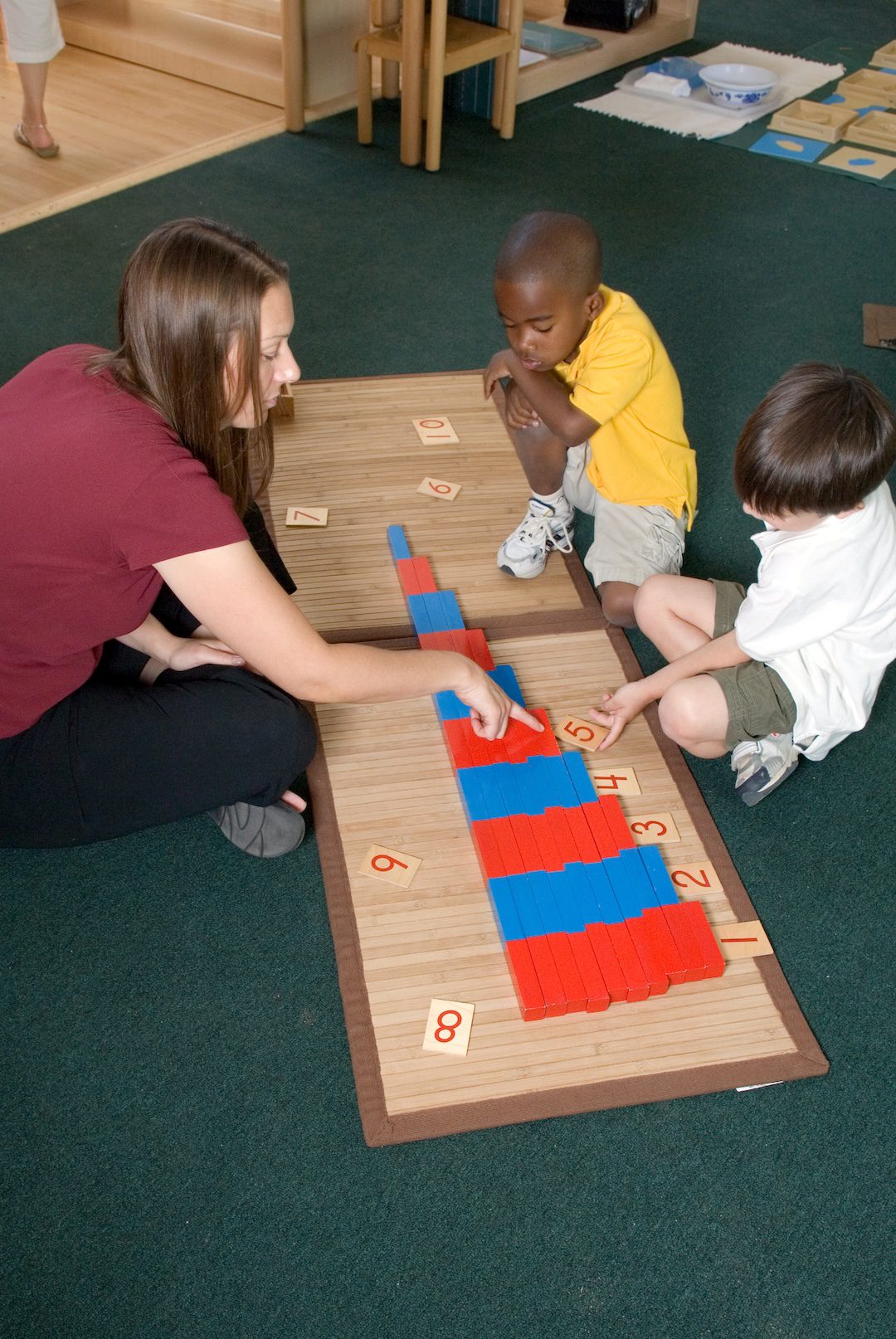
Consider how Montessori presents basic concepts of the decimal system to young children. Units are represented by single one-centimeter beads, tens by a unit of ten beads strung together, hundreds by squares made of ten ten-bars, and thousands by cubes made of ten hundred-squares.
Using these concrete materials, even very young children can build and work with large numbers. “Please bring me three thousand, five hundred, six tens, and one unit.” Children thus internalize clear images of how mathematical processes work.
From this foundation, all mathematical operations—such as adding quantities in the thousands—become clear and concrete, allowing children to internalize a clear understanding of how processes work.
The Montessori math curriculum draws from the European tradition of “Unified Math,” which leading American educators have only recently embraced. Unified Math introduces elementary students to the fundamentals of algebra, geometry, logic, and statistics, alongside arithmetic. This integrated study spans years, weaving together subjects that traditional schools typically ignore until the secondary grades.
In measurement operations, geometry provides the framework for performing calculations. In operations involving numbers, algebra provides systems of more abstract symbols through which more complex relationships can be understood. Calculations of area and volume, squares and square roots, exemplify situations where algebra, arithmetic, and geometry all intersect. For Montessori students, arithmetic, algebra, and plane and solid geometry have never been arbitrarily separated. Four- and five-year-old Montessori children can name geometric forms most adults wouldn’t recognize.
Elementary Montessori students continue to gain hands-on experience by applying mathematics to wide-ranging projects, activities, and challenges—graphing daily temperatures and computing monthly averages, or adjusting recipe quantities for larger groups. Because children love outdoor work, teachers prepare tasks using the school grounds whenever possible. Using simple geometry, children determine tree heights or measure building dimensions. They prepare scale drawings, calculate area and volume, construct three-dimensional geometric models, and build scale models of historical devices and structures.
Computers are key tools for teaching mathematics. Students use them to memorize basic math facts and to engage in simulations and problem-solving, competing against computers or making reasonable predictions in engaging role-playing scenarios. Students work with spreadsheets, graphs, and logical analysis.
Montessori mathematics includes careful study of practical mathematical applications in everyday life—measurement, handling finances, making economic comparisons, gathering data, and conducting statistical analyses.
We are all members of the human family. Our roots lie in the distant past, and history reflects our shared heritage. Without a strong sense of history, we cannot know who we are as individuals today. The goal is developing global perspectives, making the study of history and world cultures cornerstone elements of the Montessori curriculum.
With this goal in mind, Montessori teaches history and world cultures starting as early as age three. Youngest students work with specially designed maps and begin learning names of continents and countries. Physical geography begins in first grade with studies of Earth’s formation, emergence of oceans and atmosphere, and evolution of life. Students learn about rivers, lakes, deserts, mountain ranges, and natural resources.
Elementary students begin studying world cultures in greater depth: customs, housing, diet, government, industry, arts, history, and dress. They learn to treasure the richness of their own cultural heritage and those of their friends.
Elementary students study human emergence during old and new stone ages, development of first civilizations, and universal needs common to all humanity. For older elementary students, focus shifts respectively to early humans, ancient civilizations, and early American history.
Montessori strives to present living history at every level through direct hands-on experience. Students build models of ancient tools and structures, prepare manuscripts, make ceremonial masks, and recreate artifacts of everyday life from historical eras. Experiences like these make it far easier for Montessori children to appreciate history as taught through books.
International studies continue at every age level in Montessori education. The curriculum integrates art, music, dance, cooking, geography, literature, and science. Children learn to prepare and enjoy dishes from around the world. They learn traditional folksongs and dances in music and explore traditional folk crafts in art. In language arts, they read traditional folktales and research and prepare reports about countries they are studying. Units often culminate in marvelous international holidays and festivals that serve as school year highlights.
Practical economics forms another important curriculum element. Young students learn to use money and calculate change. Older students compute weekly meal costs for their class, plan weekly budgets, maintain checkbooks, organize and run holiday gift shops, sell produce they have grown, and create and sell cookbooks. Students learn to recognize the value of a dollar—how long it takes to earn and what it can buy.
Citizenship weaves throughout the elementary curriculum. Students study workings of local, state, and federal governments and begin following current events. During election years, they meet candidates, discuss current issues, and sometimes volunteer in campaigns for local candidates of their choice.
While Montessori schools are communities somewhat apart from the outside world—spaces where children first develop their unique talents—they are also consciously connected to local, national, and global communities. The goal is leading each student to explore, understand, and grow into full and active membership in the adult world.
Field trips often form integral parts of Montessori programs. Students take various trips over the years to planetariums, art galleries, zoos, museums, and many other destinations.
As part of international studies programs, most Montessori schools introduce second languages to even their youngest children. The primary goal in foreign language programs is developing conversational skills alongside deepening appreciation for the culture of the second language.
Science is an integral curriculum element representing, among other things, a way of life—a clear-thinking approach to gathering information and solving problems.
The scope of Montessori elementary science curriculum includes sound introductions to botany, zoology, chemistry, physics, geology, and astronomy. The program is designed to cultivate students’ curiosity and determination to discover truth for themselves. They learn to observe patiently, analyze, and work through each problem. Students engage in field trips and hands-on experiments, typically responding enthusiastically to processes of careful measurement, data gathering, specimen classification, and hypothesis development to predict experiment outcomes.
Montessori does not separate science from the big picture of our world’s formation. Students consider universe formation, planet Earth’s development, delicate relations between living things and their physical environment, and balance within the web of life. These great lessons integrate astronomy, earth sciences, and biology with history and geography.
One goal of the Montessori approach to science is cultivating children’s fascination with the universe and helping them develop lifelong interests in observing nature and discovering more about the world they inhabit. Children are encouraged to observe, analyze, measure, classify, experiment, and predict—all with eager curiosity and wonder.
In Montessori, science lessons incorporate balanced hands-on approaches. With encouragement and solid foundations, even very young children are ready and eager to investigate their world, wonder at the interdependence of living things, and explore how the physical universe works and how it all may have come to be. For example, in many Montessori schools, children in early elementary grades explore basic atomic theory and processes by which heavier elements are fused from hydrogen in stars. Others study advanced biological concepts, including systems by which scientists classify plants and animals. Some elementary classes build scale models of the solar system stretching half a mile.
In Montessori schools, the arts are normally integrated into the rest of the curriculum. They serve as modes of exploring and expanding lessons introduced in science, history, geography, language arts, and mathematics.
For example, students might make replicas of Grecian vases, study calligraphy and decorative writing, sculpt dinosaurs for science, create dioramas for history, construct geometric designs and solids for mathematics, and express their feelings about musical compositions through painting.
Art and music history and appreciation are woven throughout history and geography curricula. Traditional folk arts extend the curriculum as well. Students participate in singing, dance, and creative movement with teachers and music specialists. Plays and dramatizations make other times and cultures come alive.
Montessori schools invest significantly in helping children develop control of their fine and gross motor movements. For young children, programs typically include dance, balance and coordination exercises, loosely structured cardiovascular exercise, and vigorous free play typical on any playground.
With elementary and older students, the ideal Montessori health, physical education, and athletics program differs markedly from traditional “gym” models. It challenges each student and adult in the school community to develop personal programs of lifelong exercise, recreation, and health management.
Many schools have limited space and facilities, but where funds and facilities are available for older students, the ideal Montessori gym offers variety in facilities and programs, potentially including rooms with stationary bikes and other child-appropriate exercise equipment, indoor tracks, basketball courts, rooms for aerobic dance, and perhaps even indoor pools and tennis courts. Ideally, these fitness centers would not be reserved for children alone—school families would be able to use facilities after hours, on weekends, and during school hours when it doesn’t interfere with student programs.
One important element in the Montessori approach to health and fitness is helping children understand and appreciate how our bodies work and the care and feeding of healthy human bodies. Students typically study diet and nutrition, hygiene, first aid, response to illness and injury, stress management, and peacefulness and mindfulness in daily lives.
Daily exercise is an important element of lifelong personal health programs, but instead of one program for all, students are typically helped to explore many different alternatives. Students commonly learn and practice daily stretching and exercises for balance and flexibility. Some programs introduce students to yoga, tai chi, chi gong, or aerobic dance. Children learn that cardiovascular exercise can come from vigorous walking, jogging, biking, rowing, aerobic dance, calisthenics, using stationary exercise equipment, actively playing field sports like soccer, or from wide ranges of other enjoyable activities such as swimming, golf, or tennis. With older students, the goal is exposing students to many different possibilities, encouraging them to develop basic everyday skills and helping them develop personal programs of daily exercise.
As you establish your Montessori school, understand that the integrated curriculum represents not merely an educational philosophy but a comprehensive approach to human development. Your success depends on implementing this curriculum with fidelity while adapting to your specific community context.
Invest in comprehensive teacher training that ensures your staff understands not just individual curriculum areas but how they interconnect. Purchase authentic Montessori materials that support hands-on learning across all subject areas. Design your physical environment to accommodate the wide-ranging activities this curriculum requires—from science experiments to art projects to practical life activities.
Most importantly, resist pressures to compartmentalize learning in ways that appeal to parents familiar with traditional education models but undermine Montessori’s integrated approach. When you maintain curriculum integrity, the results speak for themselves: children who think independently, work collaboratively, and approach learning with genuine curiosity and confidence.