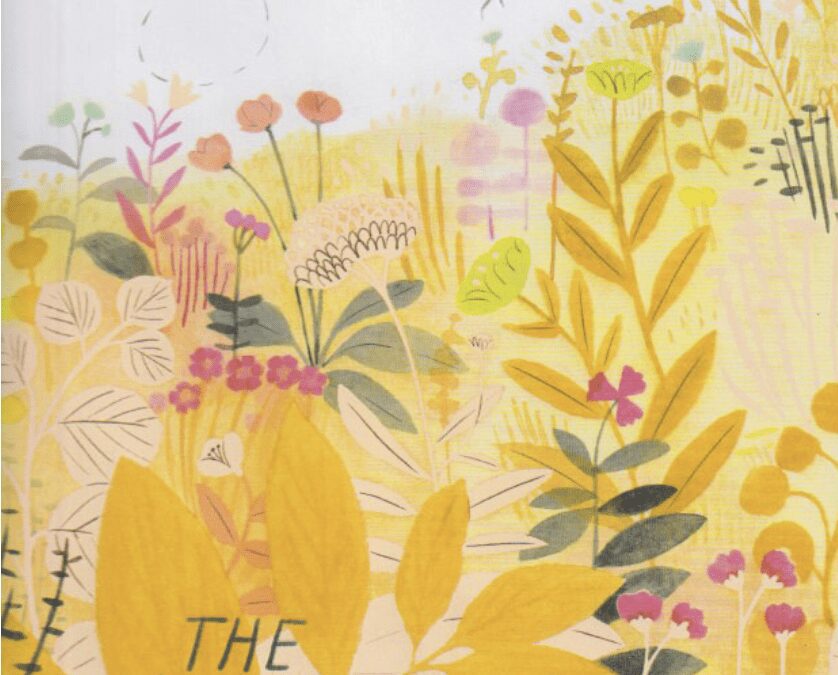
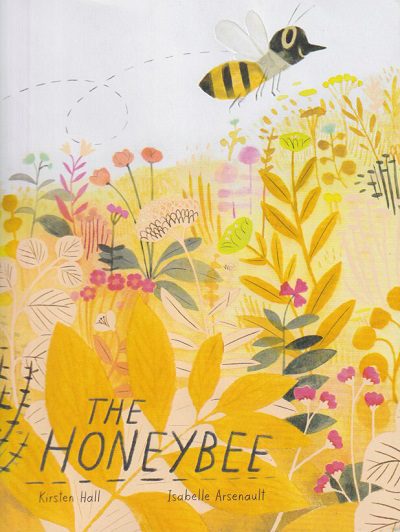
This is a beautifully illustrated and written book about the life cycle of the honeybee. It is quite colorful, and the illustrations are soft and fairly realistic. The author and illustrator take you from summer, when flowers are in full bloom everywhere; to fall and the work to be done in the hive; to winter, when everything slows down; then spring, when the world awakens, and the honeybees start collecting the pollen and the nectar again. Much of the text is rhyming, and young children will love the gentle flow of the words. I had fun reading this out loud and using my voice to highlight certain words and sounds. You can, too. I think it’s important to let your child know that honeybees are not aggressive. They only sting if they (or their hive) are disturbed. They have a lot of work to do so they don’t have much time for us humans! This is a book that is appropriate for 3–6-year-olds.
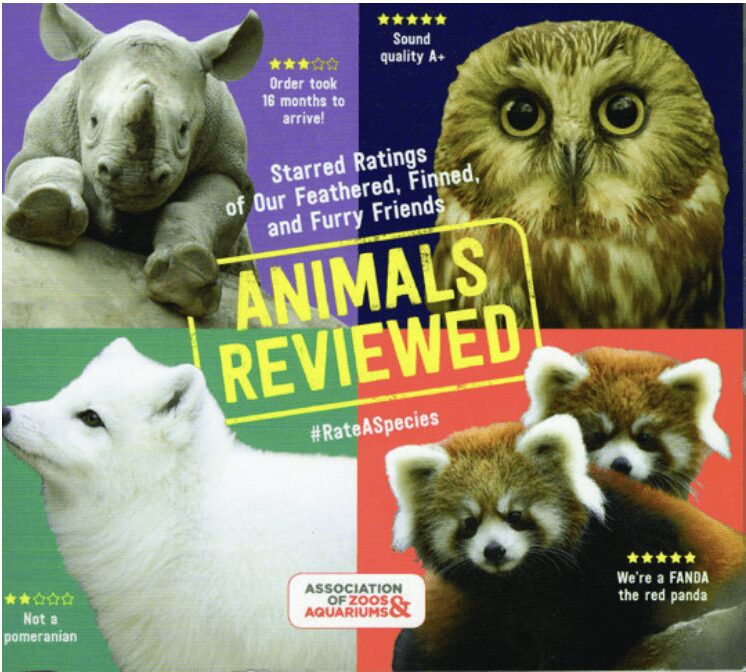
Elementary and middle school children, along with their parents and teachers, will love this book. It is a hilarious review of wild animals from around the world! Each animal is rated in a humorous way that tells the reader a little something about the creature. Animals Reviewed also includes the common name for the animal, its scientific name, and a zoo or aquarium where it can be found. This information is great because some of these animals may tickle a child’s curiosity and may motivate them to do more in-depth research about the animal. They may even be able to go see the animal in person if a zoo or aquarium nearby has one in residence. Enjoy!
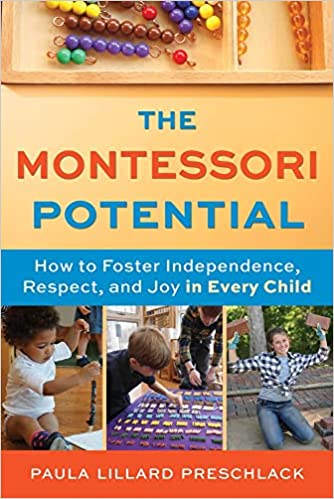
It is rare that I have ever found a Montessori book that was effectively written for both Montessori professionals and parents. Paula Preschlack has done it brilliantly! She starts with a section that appeals to both groups and is meant to inform them without lecturing or patronizing either one. The case studies that she uses in this section and throughout the book are exactly what is needed to demonstrate her points. She captures the readers’ attention seamlessly as she moves from one group to the other.
During my many years of working with parents and teachers, I have always started conversations with an exercise to get them thinking, “Imagine your child/ren at 18 years old, just finished High School and ready to go out into the world. They might choose to travel for a while, go on to some higher education, start a business, etc. What do you hope children will have gotten from their years in school?” They have always answered with character traits like confidence, ability to collaborate, love of learning, etc. Paula Preschlack paints a beautiful picture of the characteristics that children develop from their Montessori experience. She emphasizes the deliberate combination of soft and hard skills that an authentic Montessori experience provides.
Learning should be an ongoing, ever-changing experience that meets a young person’s needs at home and school. Ms. Preschlack brings understanding to the needs of children in different planes of development and the role of parents and teachers in creating environments suited to meet children’s needs. Her descriptions bring hope and trust in “The Montessori Potential” to make a better world through our children. This is a book that everyone should read.
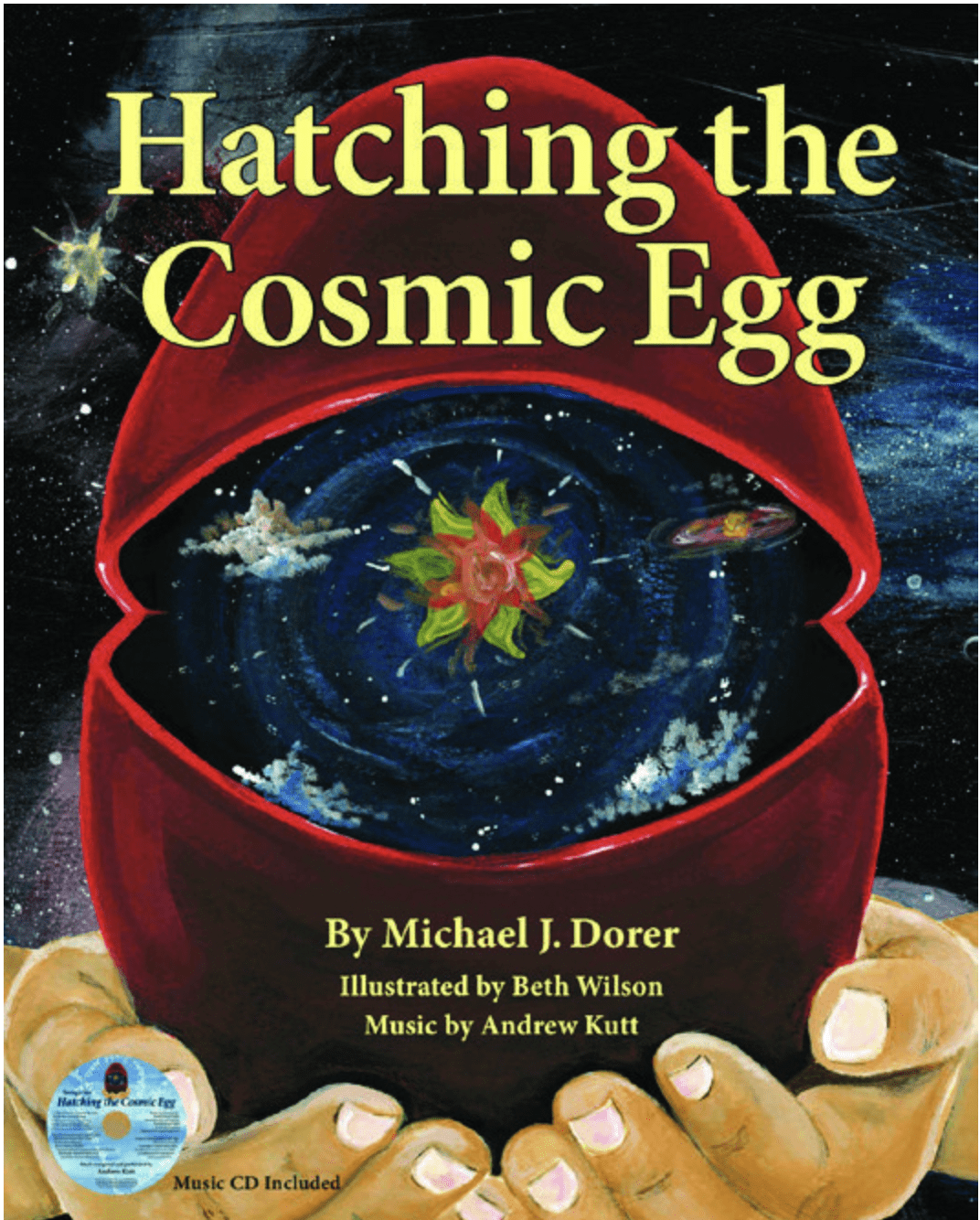
Written by Michael Dorer, Illustrated by Beth Wilson, and Music by Andrew Kutt
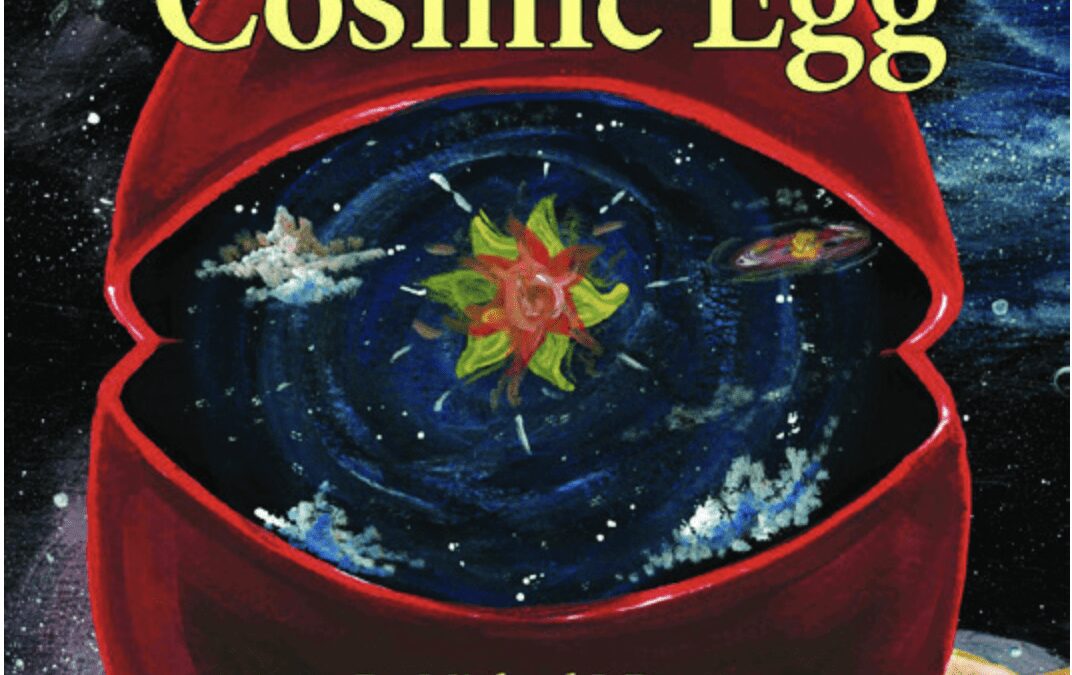
Michael Dorer, a well-known Montessori educator, author, and conference presenter, has now written his first children’s book and it’s ‘wonder-full.’ Hatching the Cosmic Egg opens with a request for the reader to “think of the very biggest thing you can.” I’m already intrigued and excited, and I think elementary children will be, too!
On each of the next few pages is a gorgeous, two-page, colorful drawing of very large earthly things that children might imagine, and the author asking; Is it a great, gray elephant? Next two-page spread: A tall, snowy mountain? And so on. Then he begins to ask about more stellar images like the sun and the stars. This is so cool because the book brings the child’s mind to bigger and bigger images leading up to: It’s the UNIVERSE!
Now the story begins! This book encourages and entices children to think big about the universe, about themselves, and their part in the universe. Dorer, being the great storyteller that he is, seamlessly incorporates concepts from the great lessons and brings the readers to an awesome affirmation that they are connected to and part of everything in the universe.
Beth Wilson’s illustrations are perfect for the story, both in style and simplicity. They add to the wonder of this book. And, there’s more. With each book comes a CD with music and song by Andrew Kutt that enhances the story for readers in a totally different genre. This book needs to be in every home and classroom!
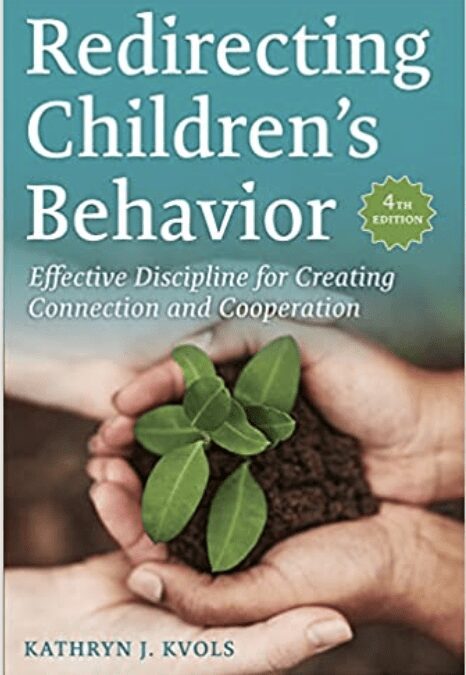
Redirecting Children’s Behavior: Effective Discipline for Creating Connection and Cooperation
Written by Kathryn J. Kvols
In early 1990, when our children were three and six years old, I met Kathryn Kvols. I was an experienced and skilled primary teacher in a Montessori classroom. I did exceedingly well at school with other people’s children. I listened to each child patiently and respectfully. I was kind, firm, and consistent. I cultivated a cooperative classroom community.
And yet, something disturbing happened when my children and I got into our car to go home. Suddenly, I became a very different person and did not treat my own children with the same respect and kindness I gave the children in my class. I was consistently in power struggles with my oldest child, and because that took up so much of my parenting time, my youngest became an attention-seeking child. My husband had no clue what to do with the children or me!
Without a doubt, we were struggling in our family life when I met Kathryn Kvols – a woman with a book, practices to cultivate connection and cooperation, and a belief in the goodness of humans.
I gladly took her course. I learned that the same principles I used in the classroom with other children also applied to my own children at home. What a novel idea! This woman, her book, and her practices transformed our home life.
I tell you this story because I am so excited that the 4th edition of Redirecting Children’s Behavior has been released this year. It has a new, more interesting look. The print and layout design is more inviting. It is loaded with real-life stories that illustrate the practices she espouses. Most important are the family-life-changing principles that she lays out in detail for her readers. They include cultivating growth mindsets within each family member, recognizing and managing emotions effectively, setting and keeping clear expectations, developing skills that eliminate the need to punish or reward, resolving conflicts peacefully, and so much more.
This book will help you align your family life with the principles and practices used in your child’s, grandchild’s, niece’s, or nephew’s Montessori classroom. It is a must-read for families.
This is a charming book with gorgeous illustrations and interesting descriptive and rhyming verses. The story is about how sometimes groups teach their children to guard themselves against other groups without knowing, interacting, or understanding. They fear and sometimes hate each other when in fact, they might be able to live like brothers.
The author uses a human child and a wolf cub as the characters that are influenced by their mothers’ warnings about the other. Although it can be a metaphor for developing care and kindness for each other, in reality, the adults in these species can be dangerous when confronted with each other. What happens to our childhood innocence when we grow in fear and protection? Maybe this is really a book for adults, not children.
I would recommend this book for elementary-age children because, to me, it is more than just a storybook. It is a conversation about figuring out the difference between real danger and simply lack of understanding.
Be Who You Were Meant To Be
Written by Lauren Grabois Fischer
Illustrated by Devin Hunt
This children’s book encourages children to feel their own feelings, think their own thoughts, self-reflect, know themselves, be courageous, and accept others for who they are. The overall belief is that humans inherently know who they were meant to be when left unjudged and unconditionally loved. Within this book, the story is written in English and then repeated in Spanish – two books in one. The illustrations are colorful and fun. They depict children from many backgrounds.
At the end of the book, there are several pages with notes to parents, caregivers, and teachers with discussion questions and activities. This book would be appealing to three- to eight year-old children. It can be purchased at amazon.com and other book outlets.
Everyone Feels…
Written by Dr. Daniela Owen
Illustrated by Gülce Baycik
This series is written by an author who we have heard from before. Dr. Owen also wrote a series called Right Now. Some of you may remember and have read those books. Everyone Feels is a new series that can help children identify feelings, such as anger, sadness, and anxiety and give them strategies to cope with them in appropriate, healthy ways. Strategies include deep breathing, changing their thoughts, physical exercise, etc. In the past, children were taught to “stuff” certain feelings and pretend they didn’t exist. Fortunately for all of us, we now know that “stuffing” only leads to eventual explosions that can negatively impact the person with the feeling and others around them.
This series is very helpful for young children as they learn how to self-regulate and express themselves in ways that keep them emotionally safe and healthy. It would be a good addition to any home or school library for children three to ten years old. The books can be purchased online or at a local bookstore.
I Think I Can
Written by Karen S. Robbins
Illustrated by Rachael Brunson
Well, I read this book several times, and I think this could be an introduction to reading together (an adult and a child) The aardvark shows confidence in its abilities and potential, and the mouse is delighted.
There are two characters – the aardvark, played by an adult, and the mouse by a child. The aardvark’s words are printed in blue, and the child’s in black. Many of the child’s words are the same as the aardvark’s and the child just repeats them, often only changing the nouns. It ends with a song that they sing together to the tune of “Row, Row, Row Your Boat.” The illustrations are simple, clear, and fun.
This book could introduce reading together as just fun for young children and adults. It can be purchased at amazon.com.
Our Table
Written by Peter Reynolds
Violet’s family has become distracted by technology and no longer comes together at their table. The table actually shrinks and disappears, with only Violet noticing. Violet asks the members of her family, one by one and, utilizing the technology they enjoy, to help her build a new table. The whole family remembers the power of coming together to share at the family table.
This story, beautifully illustrated by Peter Reynolds and using color to help enhance the story, is a great one for the holidays. It is a wonderful reminder of the power and joy of spending time together IRL (in real life).
I would recommend this book to all families. Young elementary-age children will enjoy the details in the illustrations, and everyone will enjoy the message. The book is available at all major book retailers, and autographed copies can be ordered from www.thedotcentral.com.
The Little Book of Bees
Written by Hilary Kearney
Illustrated by Amy Holliday
I had the pleasure not long ago of visiting a botanical garden known for its orchids, and generously filled with many other kinds of flowering plants, etc. Whenever I go to places like that, I always visit their gift shop and purchase a book or two for the school, my grandson, or others who are near and dear to me. As usual, I found this wonderful book.
This Little Book of Bees is huge! It is full of very informative content and gorgeous illustrations! You and your child will probably learn so much more than you ever knew about bees. The story of bees is fascinating. Maybe you and your child will be inspired to learn even more about bees and maybe even inspired to do some things – small or large – to help bees in your backyard, your local community, or around the world to survive and thrive.
I highly recommend this book as an addition to your home or school library. Children from four to twelve years old will be intrigued by the wonder of bees! It can be purchased at botanical gardens, nature preserves, bookstores, and from Amazon.
Redirecting Children’s Behavior Effective Discipline for Creating Connection and Cooperation
Written by Kathryn J. Kvols
In early 1990, when our children were three and six years old, I met Kathryn Kvols. I was an experienced and skilled primary teacher in a Montessori classroom. I did exceedingly well at school with other people’s children. I listened to each child patiently and respectfully. I was kind, firm, and consistent. I cultivated a cooperative classroom community.
And yet, something disturbing happened when my children and I got into our car to go home. Suddenly, I became a very different person and did not treat my own children with the same respect and kindness I gave the children in my class. I was consistently in power struggles with my oldest child, and because that took up so much of my parenting time, my youngest became an attentionseeking child. My husband had no clue what to do with the children or me!
Without a doubt, we were struggling in our family life when I met Kathryn Kvols – a woman with a book, practices to cultivate connection and cooperation, and a belief in the goodness of humans.
I gladly took her course. I learned that the same principles I used in the classroom with other children also applied to my own children at home. What a novel idea! This woman, her book, and her practices transformed our home life.
I tell you this story because I am so excited that the 4th edition of Redirecting Children’s Behavior has been released this year. It has a new, more interesting look. The print and layout design are more inviting. It is loaded with real-life stories that illustrate the practices she espouses. Most important are the family-life-changing principles that she lays out in detail for her readers. They include cultivating growth mindsets within each family member, recognizing and managing emotions effectively, setting and keeping
clear expectations, developing skills that eliminate the need to punish or reward, resolving conflicts peacefully, and so much more.
This book will help you align your family life with the principles and practices used in your child’s, grandchild’s, niece’s, or nephew’s Montessori classroom. It is a must-read for families.
Tales of a Traveling Nurse: Is This My Home?
Written by Sheri Sturniolo
Illustrated by Shay Larby
Children at the elementary level will probably enjoy this book as they look at a career that is new to them, as it was for me: Tales of a Traveling Nurse. They will be able to follow her stops in several different states in the United States as she travels in her work as a pediatric nurse and, as she says, “an explorer.” The illustrations are full of color and images of the many experiences that she describes. The author uses rhyming to add interest to the text. This book comes in paperback, hardcover, and board book versions, as well as on Kindle. It can be purchased at amazon.com and other bookstores.
Written by Tamara Ellis Smith Illustrated by Evelyn Daviddi
Ivan’s parents split up and are living in separate houses. Ivan didn’t like that he had to go here and there. He didn’t think he could be happy and himself with his parents apart. It took a little time and some adjustment for Ivan to realize that love and happiness could be shared; that love and happiness could be both here and there. It’s important for children to know that families can change and be structured in different ways. Time helps. Love helps. And some things will be held in common here and there.
The Honeybee
Written by Kristen Hall and Isabelle Arsenault
This is a beautifully illustrated and written book about the life cycle of the honeybee. It is quite colorful, and the illustrations
are soft and fairly realistic. The author and illustrator take you from summer, when flowers are in full bloom everywhere; to fall and the work to be done in the hive; to winter, when everything slows down; then spring, when the world awakens, and the honeybees start collecting the pollen and the nectar again. Much of the text is rhyming, and young children will love the gentle flow of the words. I had fun reading this out loud and using my voice to highlight certain words and sounds. You can, too. I think it’s important to let your child know that honeybees are not aggressive. They only sting if they (or their hive) are disturbed. They have a lot of work to do so they don’t have much time for us humans! This is a book that is appropriate for 3–6-year-olds.
Amazing Bees
Written by Sue Unstead
I just discovered that DK Publishers has a reading series. As always, this book is beautifully illustrated with photos of real honeybees, flowers, honeycombs, and all the other things that are part of a honey bee’s life. Amazing Bees is a Level 2 reader. The print is nice and big with just the right amount of information for an emerging reader. I am in love with this book and am now ordering a couple of books from each of the levels to see how they progress. I trust that I will be just as pleased with other books in this reading series. This is a great addition to a home or school library. You can purchase books in this series from amazon.com and probably other booksellers as well.
The Potential in Every Child
Written by Gavin McCormack Illustrated by Iris Villarrubia
Parents will find this book to be a quick and easy reference for everyday living practices with their child. Gavin McCormack has boiled down one-hundred ideas that are in alignment with Montessori philosophy for parents. The ideas are mainly for elementary-age children, and some are for children in the early childhood stage. Then some ideas can be used with children from early childhood through the elementary years and beyond. A few examples are: “Give your child the responsibility to take care of their things.” “Spend one night per week walking and talking. Look at the moon and discuss big-picture ideas.” “Do not replace things that get broken. Learn the value of money and repair things together.”
On each page, the author writes the main idea and then explains the value of practicing it with your child, the family, or the larger community outside your family. Each idea has a two-page spread with an illustration on one page and the idea and value on the other. The illustrations are in color and in a style similar to what a child might draw.
Parents may appreciate the brevity of the content in this book, as life can get so full and time is precious. It can be found on most online booksellers.
Big and Small
Written by Britta Teckentrup
This is a little board book for your infant or toddler. There is one quite realistic, colorful picture and one word on each page. Pages that are opposite each other in the book are opposite sizes. As you read this book together, your child will increase their vocabulary as you identify the picture images and begin to get some sense that there is a difference in the sizes of things. This is a difficult concept for a little one to really understand from a two-dimensional picture. However, you can put together an activity using objects that show the same concept in a three-dimensional way. For example: a big ball and a small ball; a big spoon and a small spoon; a big stuffed animal and a small stuffed animal; etc. Have fun reading this with your child!
Think Circles!
Written by Karen S. Robbins
I was pleasantly surprised when I opened this book for young children. I was expecting a book that has too much to sort out on a page, is visually distracting for young children, and could easily be torn or damaged by accident.
The author of Think Circles! isolates each illustration on the pages to answer the hint. For example: On page 1, the hint is “Bouncing Circle” and the question is “What can it be?” On the opposite page, there is a hidden object with just one opening to view part of the pictured answer with the word, “Think.” Adults get to have fun with this, too, as they read the words to the child and maybe, if needed, add another hint to play along with “thinking” about what the hidden object might be. I love that she invites the child to “think.”
Ms. Robbins also adds in another level of difficulty by adding objects to each page. So, on page 1, there is just one hidden object. On page 2 there are two hidden objects. On page 3 there are three objects, and so on to 10. On each page, there are the corresponding openings, so that children can count the openings and then count the objects when they open the flap to see the answer.
As a teacher, I would present one concept at a time. I would either introduce the book as a problem-solving lesson or as a counting lesson but not both at the same time. Both concepts are higher-level thinking. Either could be presented first. I would probably introduce the “thinking” concept first just because I like it.
The pages are quite sturdy, so that young children can use these books without accidentally damaging the books, assuming the adult has given the child a lesson on carefully turning/opening pages in a book. That’s important since we want children to be successful as they use books and other activities. The illustrations are colorful, attractive, and quite realistic.
There are two other books in this series – Think Triangles! and Think Squares! These books would be enjoyed by children 3-6 years old.
Think Farm Animals Think Zoo Animals
Written by Karen Robbins Illustrated by Rachael Brunson
Karen Robbins has written two sturdy books for two- to four-year-old’s about animals: Think Farm Animals and Think Zoo Animals. The pages can be easily turned, and the flaps easily opened by young hands. The illustrations are colorful, visually pleasing, and realistic.
Each book is set up similarly with a hint and a question on the left page and an opening that allows the child to see part of the animal on the right page.
For example: In the Farm Animals book on the left page, it reads, “I have a swishy tail and say ‘Moo!’ What can I be?” And on the right page, an opening shows a white and black tail with the word “Think” written below. I love that!
Remember children at this young age are still developing impulse control. The adult can help them with that in a fun way by saying something like, “Hmmmm. I’m ‘thinking’ about animals on a farm. Do we know a song about that? ‘With a moo-moo here and a moo-moo there.’ What could it be?” All the while holding the flap closed as the adult and child “think” together. You could even say to the child, “Let’s keep the flap closed so that we can ‘think’ for a minute.”
Lovely books for young children. I wish there were more!
The Art of Talking with Children: The Simple Keys to Nurturing Kindness, Creativity, and Confidence in Kids
Written by Rebecca Roland
Conversations can help provide learning opportunities, including developing essential listening skills and increasing vocabulary. Often, what we think of as a conversation with the children around us is more a session of us, as the adult, either asking for information or providing information,. We do not always get to the why of the information. When we get to hear a child’s “why,” it feels like being given a gem. This book can help us as adults learn skills that allow us to get to that why more often.
Rebecca Rolland is an oral-language specialist, a Harvard faculty member, and a parent and brings all those roles to this book. Each chapter explains why one would want to have different types of conversations with children and adolescents, provides evidence for the science, and shares anecdotes from her family and students. The combination helps make this a book you can apply to your life, even in the first chapter. She explains how you can help develop empathy, confidence, creativity, and social skills through conversations.
I would recommend this book for parents of young children through teens as well as teachers and all school personnel. It can be read all at once, one chapter at a time with practice before reading the next, or in the order needed based on family circumstances. It is certainly a book you will go back to again and again to develop and refine conversational skills that may help in talking with adults as well as talking with children.
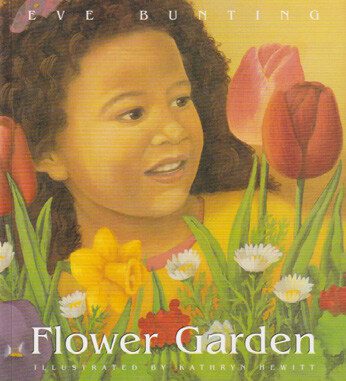
Written by Eve Bunting Illustrated by Kathryn Hewitt
Another book by Eve Bunting! This talented woman has written many books for children from two years old to teenagers, in all different settings, and in varied real-life situations. She doesn’t try to hide the truth or to tip toe around uncomfortable topics. Her stories have heart and sometimes raw emotion. The illustrations in her books are usually quite realistic and enhance her words beautifully. Her books raise her readers’ social consciousness – sometimes subtly and sometimes flat out!
Flower Garden is the story of a dad and his daughter putting together a beautiful surprise for his wife and her mother’s birthday. It’s set in a city where they live several stories up in an apartment building. They ride public transportation to and from the grocery store, where they buy plants, a window box, and cake and ice cream.
Mom isn’t home, so they can quickly plant the flowers in the window box before she arrives. She is surprised and happy when she gets home!
In this book the words rhyme. Young children love rhyming! In this book, the reader may not be aware that they are learning about people of different races, or they may recognize themselves in the characters. It is a beautiful book that young children will enjoy over and over again at home or in school.
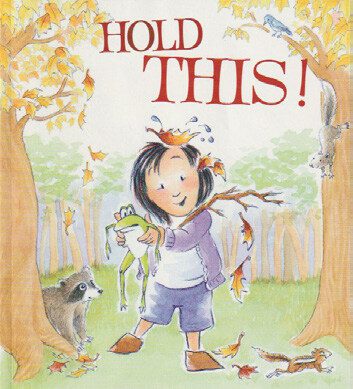
As a dad and his young daughter, Mika, take a walk through the woods, Mika finds so many treasures that she wants to keep and take home. She finds a stick and a frog and some water and leaves and a sparkling stone and more. Mika wants her dad to put these items in his backpack or pockets, but he reminds her several times that she is a “big girl” and can carry her own treasures. At the end, Mika asks once more, “I know I’m a big girl, but…will you hold this?” as she reaches her hand up to him.
Written by Carolyn Cory Scoppettone Illustrated by Priscilla Alpaugh
Children love to collect things in nature. We often encourage them to leave them there or to carry the treasures themselves. Really, the very best part of a walk-in nature is the time spent together. Children two to six years old will enjoy this book.
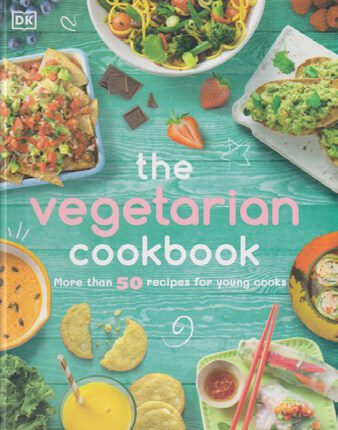
The Vegetarian Cookbook: More than 50 Recipes for Young Cooks
Written by DK publishers
My son and his family are vegetarians. I wondered if there were any vegetarian cookbooks for children. So I went searching and, lo and behold, there were quite a few!
I found one that looked good to me (on the internet), it was the right age grouping for my grandson, and the description seemed like it was laid out in a way that was easy to use and simple enough for a young child. I bought it. Well, much to my chagrin, this book was not child friendly or, in my case, adult friendly. All the measurements were in grams, the photos showing the steps were too small (about 16 on an 8×10 page), and the photos had no instructions. At any rate it was totally unsuitable for me (master’s degree in Home ‘Ec’ and a Montessori 3-6 credentialed teacher) or for my grandson (5 years old, loves to eat and cook, and goes to a Montessori school). What a disappointment!
Today, I looked again and found a beautiful book by DK publishers with beautiful photos, an introductory section with kitchen rules, equipment, and healthy eating with food groups. Once the child is prepared, we get into the recipes that include breakfasts, snacks, lunches, drinks, entrées, and sweets. There are easy-to-follow steps with one photo and brief written instructions for each step. Everything looks delicious, as DK is masterful with their photographic illustrations. I can’t wait to cook with my grandson next time he comes over. The recipes would work for 4–8-year-olds and their parents or some other adults who love to eat and cook! It can be found on amazon.com
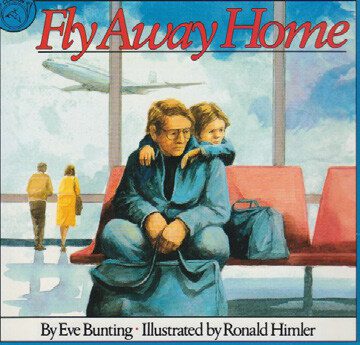
Written by Eve Bunting Illustrated by Ronald Himler
This is a book for elementary and even middle-school children. Andrew and his dad are homeless. They live in the airport. They must never be noticed, or airport security will throw them out onto the streets. Andrew’s dad works on the weekends as a janitor. It’s a lonely and sad life. Andrew sometimes gets angry about his mother dying and losing their apartment. He knows they must save their money to get a new apartment to live in. He saw a bird that flew into the terminal and couldn’t get out until one day it saw a door open and flew off. The bird gave Andrew hope.
Fly Away Home should be talked about with a parent or teacher, as homelessness is a problem in many places that hasn’t been solved. It is also often thought of as a situation that just drunks or mentally-ill people experience. Andrew and his father were not. They were just ordinary people who had fallen on hard times.
The book could be a catalyst for social consciousness and justice, for community service, or for action for change in our communities and countries.
One of the many things that teachers do in the first few days of school is to ask children to talk about, write about, or in some way describe their summer activities. You remember that, right?
For some of us that was easy and fun because, maybe, we like to write (especially about ourselves) or we did a lot of things and went to a lot of places. But for others, this project might feel more challenging or even discouraging because they experienced everyday life at home, and it may not seem to be so exciting or alluring.
“Summer Journals” or diaries can be an opportunity to help your child see that all things are exciting, fun, and new in their own way. An appreciation if you will. Try talking with your child each night about their day and record it in a way that is appropriate for your child’s age and abilities. So, writing, drawing pictures, recording them telling their stories, and other creative ways all count!
These are some questions for you to use:
1. What was the silliest thing that happened today?
2. What was the worst thing that happened today?
3. What was the best thing that happened today?
I found these three questions can really get your child talking. You may need to help them get started by sharing your silliest, worst, or best. Remember once they open up, let them be the storyteller!
I also suggest that reading counts as part of your child’s summer adventures! Here are a few of my favorite books.
Make Music! by Norma Jean Hayes, Ann Sayre Wiseman, & John Langstaff
This is a wonderful resource with a wealth of projects for elementary-age children that have to do with creating music together. It’s fun, it’s broken down into categories from beginners to advanced music makers, and the illustrations are photos of real children in action and having a blast! Appropriate for ages 6-12.
Apple in the Middle by Dawn Quigley
Your 11–15-year-old will be captivated by Apple’s discoveries about herself, and her heritage as she spends the summer with her grandparents and others from her mother’s side of the family. She goes to a different place, experiences a culture that she knew very little about, and develops a new perspective about life. Appropriate for ages 11-15.
Our Peaceful Classroom by Aline D. Wolf
Lest we forget, this book will bring back memories of friends and activities from school days and may help with the transition for your young child back into the classroom and school life as the summer winds down. Appropriate for ages 3-6.
It’s a Book by Lane Smith
This is a hilarious book for older children. It cleverly and in a fun way depicts how in modern times, we are so attached to technology that we don’t know about or recognize a book in printed form. Love this one! Appropriate for ages 12-17.
Beach Walk by Backpack Explorers Series, Storey Publishing
This is a sturdy, somewhat water-resistant book that you can bring along on your trip to the beach. It includes a magnifying glass, which children really love to use when discovering new plants and animals by the water. There are lots of fun activities for you and your children to do together! Appropriate for ages 4- 10.
How to Find an Elephant by Kate Banks
There is an elephant (or part of one) on every page of this book, but you’ve got to really look! The words and illustrations entice the reader in a fantastic adventure, full of imagination and for hunting what otherwise might be obvious. Appropriate for ages 4-10.
Membership in The Montessori Family Alliance means direct access to Montessori experts and other friends and parents of Montessori. Now, you have a one-stop resource for all of your Montessori needs. Brought to you by The Montessori Foundation.