
Montessori Curriculum Theory Workshop
To continue reading, you will need to choose a subscription plan.
Cosmic Education Resource Page
Begun by Sharon Caldwell
NOTE TO THE READER: This page is a work in progress. I will continue to update it as I find more resources and information. Please email me at sharoncaldwell@montessori.org with suggestions and requests. Please also check out the Cosmic Education section in Links. Most of my favorite links are there and may not be duplicated in this article.
We must be careful not to fix the details of the Great Lessons so that they become so precisely accurate that they become mere catalogs of facts. The need to remain stories of inspiration. We as teachers need to be clear that these Lessons must set the children’s hearts and minds on fire. This is our first priority. As the children break off from the Great Lessons to do research, there they will find the facts. – Robyn – Montessori-L discussion Group
Theory of Cosmic Education:
The AMI elementary trainers are unanimous in saying that we should present all the Great Stories within the first 2 – 6 weeks of the school year and that there should be no follow-up work assigned. – John Snyder, Austin Montessori School. (in an email to Montessori-L discussion list).
If the children are not doing spontaneous follow-up work it means they aren’t inspired – the teacher must then work out why her lessons are not exciting the children. It is also OK if some children do not do follow-up work. They are hearing the stories and also hearing discussions that lead from them as the teacher continues to unpack the stories as the year progresses. The stories are not meant to “teach” factual knowledge but rather to evoke a sense of wonder and a deep appreciation of the interconnectedness of everything. They are intended to spark an understanding of the Cosmic Task of Man.
Cuevas, Eduardo J. G. Liberty: Spiritual Freedom and Moral Responsibility. 25th International Montessori Congress Papers.
Duffy, M & D. Cosmic Education in the Elementary Classroom, Parent Child Press, 2002.
Grazzini, Baiba Krumins, “The Role of the Disciplines for Cosmic Education”, Communications 2006/1, 64 – 74.
Hayes, Mary Montessori’s View of Cosmic Education, 25th International Montessori Congress Papers.
Hilson, Patricia. Laying the Foundations for Cosmic Education in the Child 3 – 6 Years.
Montessori, Maria. To Educate the Human Potential. – Especially important is the first essay: “The Six Year Old Confronted with the Cosmic Plan.”
ORIGIN OF THE UNIVERSE
Some Great Books to inspire extensions from First Great Lesson:
Wikipedia History of Earth is a good place to start looking for info.
The Authors, How To Create a Flawless Universe in Just Eight Days, Godfather Publications, No Location, 597b.
– Yes, this is a real book – but written with tongue firmly locked in cheek. 6 – 12s really enjoy it.
STORY OF LIFE
PHOTOSYNTHESIS
www.naturedetectives.org.uk – Why leaves change colour. Good explanation of photosynthesis.
For a more detailed explanation of photosynthesis
CLASSIFICATION OF LIVING THINGS
Parallel to the story of life you begin to explore Classifications/Taxonomy. Depending on the background of your students you can start off with simple “Who am I?” activities to extend exposure to the natural world – either using objects (shells, etc.) or model animals (must be realistic) or picture cards. With children who are reading, you can use “First Stories” which combine short descriptive paragraphs with names and pictures of plants and animals.
Bang, Molly and Chisholm, Penny. Living Sunlight: How Plants Bring the Earth to Life. Blue Sky Press. 2009. [Recommended by Priscilla Spears.]
THE STORY OF HUMANS
www.handprint.com – This is one of my favorite teacher resource sites, although older children enjoy it too. I love it especially because it highlights the hand-brain connection so integral to Dr. Montessori’s thinking.
Human Migration:
THE STORY OF WRITING
A simple version of the story with nice clear graphics that can be hand-drawn on a whiteboard while telling the story: http://www.moteaco.com/albums/greatlessons/story4.html
For more detailed lesson plans see Miss Barbara: www.missbarbara.net/thehistoryofwriting.html
Simple, uncluttered printable timeline: http://www.moteaco.com/albums/writing.html
Human History Timelines:
Christ as the center of human history – see www.montessoriforeveryone.com for a free download timeline. The instructions include some interesting information on dating. NOTE: This is a resource developed by Montessori educators of that faith. The same strategies can be used in many other ways
Using Internet Resources in a Montessori Classroom
To continue reading, you will need to choose a subscription plan.
Bibliography: Writing & Reading in the Montessori Classroom
October 2013
Please note that this bibliography is an eclectic collection of resources that I have found useful in understanding the Montessori approach to writing and reading.
Workbooks – Is there a place for them in Authentic Montessori
To continue reading, you will need to choose a subscription plan.
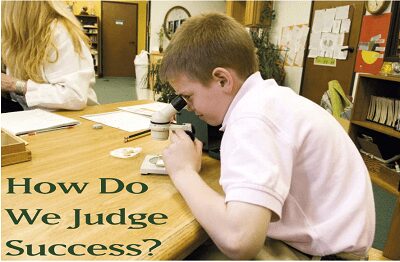
How Do We Judge Success?
It seems to me that independent, scientific proof of the success of the Montessori approach will do a lot of good for Montessori Schools — but it carries inherent dangers as well. When we judge whether something is effective or successful, we need to consider that definition of success in the context of our goals. […]
Inclusion means adapting the environment to meet the needs
To continue reading, you will need to choose a subscription plan.
Free Chosen Activity means Freely Chosen All the Time
To continue reading, you will need to choose a subscription plan.
The Outdoor Environment
To continue reading, you will need to choose a subscription plan.
Montessori Education in a Time of Physical Distancing: Is the Use of Digital Technology Appropriate in the Context of Montessori Philosophy?
Maria Montessori, in an address in 1936 entitled “For Peace,” (2007) discussed how the technologies of her day had brought humankind together and had created a single “great nation” (pp. 24-26):
By becoming a single nation, we have finally realized the unconscious spiritual and religious aspiration of the human soul, and this we can proclaim to every corner of the earth. ‘Humanity as an organism’ has been born; the super-construction that has absorbed all man’s efforts from the beginning of history has now been completed. We are living this reality. We have proof of it in the almost miraculous powers that today are enabling man to rise above his natural condition. Man now flies higher and more confidently through the heavens than the eagle; he has mastered the invisible secrets of the energy of the universe; he can look up into the skies and the infinite; his voice can cross the world’s seas; he can hear the echoes of all the world’s music; he now possesses the secret powers of transforming matter. In a word, contemporary man has citizenship in the great nation of humanity.
While we contemplate how our physical interconnectedness and the technology that made that possible, we have also spread one of the most frightening challenges we have ever known. We also know that only our interconnectedness and our shared technology can help us to survive. We cannot simply submit to technological solutions, however, without heeding the wisdom of history, without also looking to the needs of our humanity. It seems that this global crisis is bringing out both the worst and the best in people. Kindness and true altruism are shining out in the most unexpected places. Compassion abounds, even as the hackers who undermine our trust (along with spreaders of false news) try to dominate our world. Human needs and tendencies, at the core of the Montessori approach to what makes us human, are the defining features of the great nation of humanity. Any true education of the children of humanity depends on a full recognition of what makes us human.
So, while we grapple with the questions of how to deal with the unknown; how to work from home while trying to educate our children; how to keep our schools going when we cannot possibly adhere to fundamental tenets that distinguish Montessori education from conventional schooling; when parents cannot pay their fees because they have lost their jobs; when we don’t know if we will be able to return to our physical environments; and, all the while, trying to keep our own lives together, perhaps we should pause … because we do have time to pause … and ask some important questions: questions we have been able to ignore or gloss over in the past, because we knew that we could trust in our prepared environments. Why change something that works well as it is? All of a sudden, we are faced with a situation that demands that we operate in an environment that we have avoided and even renounced: a digital environment that seems to be the antithesis of our concrete, prepared environment.
The attitude of Montessori schools and Montessori guides towards technology in the classrooms has traditionally been an area of disagreement and mixed messages. While many Montessori environments eschew “technology” (in reality this is taken to mean digital devices and media), others tolerate limited use. A small group of schools have embraced digital technology and incorporated it into their programs. This might include issuing children iPads™ with which to assign and track work or allowing computers in the classroom. The use to which the devices are put can vary from resources that differ little from print material: tightly controlled usage (such as typing tutor software, off-line encyclopedias, etc) to varying degrees of free access to the internet and various applications, such as word processing and presentation software. The message from the Montessori community to the general public has, however, been largely united on limiting the use of digital devices, media, and television viewing.
School closures due to COVID-19 have prompted a drastic revision of this policy, and schools are challenged to not only justify the use of digital technology to continue functioning but also to find ways that do not conflict with basic Montessori principles or undermine the pedagogical approaches that differentiate Montessori education from everything else that is available on the internet.
As with any material or method introduced into the conventional Montessori environment, it is best to begin with asking whether Montessori herself has any guidelines on the matter. Recently, AMI published a short article written by Maria Montessori herself on the issue of what she called “mechanical aids.” The context was somewhat different from ours. It appears that Montessori was introducing an article by another unnamed author, who was advocating the use of film and other aids as support for children in India. Probably written during her stay in India (1940–1947), it was suggested that the use of such supports would both facilitate the preparation of teachers and make “culture” more accessible to more children (Montessori, 2015, pp. 235-238). Further, insight into Montessori’s view of the use of technology can be gleaned from an earlier piece where she considered the use of film within her system, quoting extensively from Carl Renner (Renner, 1932, pp. 235-238).
In the interests of clarity, it is probably best to begin with some etymology:
Technology is as old as the world, at least one inhabited by human beings, certainly when we lean towards the definition of the word when it was originally used; the Oxford Dictionary gives as its etymology from Greek tekhnologia ‘systematic treatment’, from tekhnè, ‘art, craft’ + logia’, dating back to the 17th century.
Montessori certainly understood technology in this light. She was fascinated by technology and the way in which human beings have used technology to meet needs. Some animals use tools, e.g., apes use sticks to dig in termite mounds. But of all the animals, only humans utilize technology. Technology requires the use of the hand and of the brain. The very earliest tools of stone and bone are evidence of technology. It could be claimed that it was the use of technology that saved humankind from extinction 70,000 years ago. Technology is a feature of human culture and an integral component of what Maria Montessori called supranature. Technology and culture place humans above nature. Technology has always been a part of Montessori education to the extent that the Montessori materials are, in and of themselves, technological artifacts.
For the purposes of this article we understand technology in this sense. When referring specifically to computers, iPads, mobile phones and their related media we refer to “digital technology.”
A reading of the two brief articles make it very clear that Montessori did not discount the use of technology in her classrooms. What we cannot say without reservation is that she saw a place for digital technology in the education of young children (or even older children and adolescents), as this was not something she knew about. She supported the use of media that allowed the children to access knowledge beyond that which was presented in the classroom in print, which was presented directly by the adult in the room, and this would necessitate the presence of mechanical aids: machines that the children would be shown how to use and to which they would have free access. It also included means to access experts outside the classroom, such as radio broadcasts.
The opponents of the use of digital technology are able to cite research that point to its pitfalls and dangers. While the benefits have long been recognized by educators looking for ways to reach children beyond the classroom, Montessorians have generally avoided the exploration of the internet as a means to help children access information or, indeed, to give children independence from the guidance of the teacher. Now we find ourselves in a situation where students are at home, physically distanced from both the prepared adult and the prepared environment. In order to support children in a way that is in line with Montessori philosophy and Montessori’s educational aims, we should first examine Montessori’s own views and explore how those are applicable in our current context.
Although Some Observations on Technology was written for a different time and context, the ideas that Montessori expresses could have been typed on a Facebook™ post this morning, only to refer to digital as opposed to mechanical aids: “to promote the acquisition of culture by means of mechanical aids is most opportune at the present moment, when we can almost speak of an emergency.”
This article explores how, in this current emergency, we can remain true to Montessori’s intentions, while maintaining physical distance. It is also concerned with how what we learn now can impact, and even transform, education as distancing requirements are eased.
Montessori reminds us that many children going into elementary classes from Montessori preschools can already read and write and “possess many cultural notions;”
When, therefore, our children enter what is commonly called the elementary school, where compulsory education comes into force, the intelligence requires a much vaster culture than is ordinarily given in those schools.
In the early stages of the development of the program for the second plane of development, Montessori was acutely aware of the needs of the 6–12 year-old child for access to an expanded field of knowledge. Conventionally trained teachers were, in Montessori’s view, ill prepared to meet the needs of the child. Even teachers with subject specializations lack the general breadth of knowledge across disciplines to fully support a child in the second plane:
As with any material or method introduced into the conventional Montessori environment, it is best to begin with asking whether Montessori herself has any guidelines on the matter.
This awareness of the needs of the child and the limitations of the teacher, coupled with her passion for research and a fascination and admiration for technological development, opened to her the possibility of using various means for putting a vast array of content available to the child. The “mechanical aids” to which she refers are those which were commonly available in her day: gramophone records, lantern slides, film and wireless, She includes these in the aids that could be used in the service of the second plane child. Television was only beginning to find its way into the average household, and the personal computer was a long way off. The internet as a replacement for “wireless” (radio) was not even yet in the realm of fiction. Today’s equivalents would be audio recordings and video, which are available on the internet. Much excellent quality material is freely available, as is a plethora of material of dubious quality and provenance. Just as Montessori argued for the use of the technology of her day so, too, we could support the use of digital technologies with certain reservations:
There is no doubt that the schools applying my method, where the cultural development of the children is highly intensified, not on account of any pressure exercised by the teacher, but as a natural consequence of the opportunities given to their individual and social spontaneous activities, will have to avail themselves of these new aids.
Maria Montessori was able to envisage the potential of “material, discourses and visual representations … prepared by fascinating speakers and persons of a culture superior to that of the ordinary teacher.” Montessori foresaw many benefits accruing from this approach: firstly, that fewer teachers would be required and secondly, that materials could prepare for a “higher universal culture.” The preparation of materials would require a team of specialists to prepare and present materials.
If our approach is merely to find experts to prepare online content, or to prepare such resources ourselves, then we are late-comers to a party initiated and perfected by others. Kahn Academy was an earlier pioneer in the field, which offers excellent materials for free on the internet for different levels of learning on a myriad of topics. Many students know and use Kahn Academy already, including students in some Montessori schools. The website offers materials and tutorials for various subjects aimed at children from age four through to AP level. With over a decade of experience (and continuous improvement), this is a valuable resource for learning—particularly those subject areas where “mastery” learning is regarded as particularly valuable. There are many other resources, including YouTube™ channels, which offer sequential lessons of a high standard.
What would differentiate a lesson given by a Montessori trained guide, making it more effective than those offered by online teachers with at least a decade’s head start and accumulated experience in a medium to which we are mostly newcomers? How would we justify creating new materials and justifying their use in place of twelve years of accumulated content? What will make what we have to offer quintessentially Montessori? Do we have to reinvent the wheel to support Montessori students? Maria Montessori gives some direct guidance.
Referring to Renner (1932), Maria Montessori discussed “educational films” of her day, lamenting that they seemed confined to “the world of nature and the world of machines” and looked forward to a time when films dealing with “social and historical problems and the essential problems of culture” would be available. While she envisaged a place for varied visual and audio materials in her scheme of education, she regarded the quality as insufficient to meet the needs of children.
However, I don’t believe there is satisfaction of the real interest created by these films and their success. I believe instead that the little interest they offer to the viewer is due to their fragmented, incoherent character that rather makes them an entertainment show than a truly educational film. Film series coherently connected in a way to create a complete course covering a specific subject, would create a much livelier interest and would have, from an educational standpoint, a more rewarding result.
This deficit in coverage of disciplines has since been remedied, and digital resources offer both expert tuition and visually appealing experiences that cover all the disciplines.
Even well-constructed recent materials may reflect the shortfalls Montessori identified in the films of her day. The brief citation mentioned above, points to two areas that need to be considered. The first issue is that they do not satisfy “the real interest” that they provoke. Put another way—the films can and do create interest, but they do not satisfy the need of the child. They are entertaining rather than educational. This is because they lack the structure, or the inter-relatedness of the curriculum which she envisaged. Some resources, such as The Big History Project are structured in a way that matches the structure of the Montessori elementary curriculum, with many overlapping themes. The way the material is presented conforms to much of what Montessori hoped for in the presentation of the materials. Despite the high quality, logical structure, and interesting content, The Big History Project, and other similar programs, do not constitute Cosmic Education.
A reading of the two brief articles makes it very clear that Montessori did not discount the use of technology in her classrooms.
To properly unpack the thoughtful and planned design of curriculum and methodology that typifies the Montessori approach it is necessary to consider certain philosophical tenets of Montessori—that is the very nature of the educative proposition that is Cosmic Education, and the role of the child as the agent of his or her own education. It requires that we shift our orientation as regards discipline content (which can arguably be more effectively transferred by digital rather than print media) from content for its own sake (i.e., the child as recipient) towards content being the fuel for the child’s self-construction.
To make digital materials useful to children, it is necessary to look at what we know about the development of the child. In Cinema Educativo, Montessori discusses how verbal explanations might be suitable for adults, but that young children require a more concrete experience. She commented that films give “significant advantages.” Because teachers can produce films themselves, these could be geared to the needs of children.
What is needed, in Montessori’s view, is “a guide of a kind of syllabus directing their distribution” (Montessori, 2015, p. 5). The “syllabus” to which she refers had not yet been fully developed, but its guiding principles were already being incorporated in her lectures and eventually became known as the Cosmic Curriculum implemented in Montessori prepared environments for the second plane.
It is clear that Maria Montessori did not oppose the use of film (or in our modern terminology—video) as a means to deliver content to children. She proposed the development of centers for the production of such materials. If the appropriate technology were used, the production of Montessori-compliant media, potentially, has a far greater reach, and could truly transform the way education is understood in the post-COVID world:
These centers would gradually become the means to unify the cultural development of the children all over the world … They would be institutions in the world of the child comparable to the institutes of scientific research in the world of the adult and, as the latter, they would be not only of national, but of universal advantage (Montessori, 2015, p. 6).
There is, however, a critical aspect that requires further deliberation. This relates to how these materials are to be used by the children. I have already alluded to the centrality of the agency of the child as opposed to the centrality of content. Montessori ends her brief introduction:
I would like to point out that these mechanical aids are insufficient to bring about the totality of education. Children to do not learn and do not develop their character by merely listening and looking on.
The technological aids are “only partial aids.” She concludes:
The child learns by means of his own activity and if given an opportunity to learn actively he develops his character and personality too. The child perfects himself even more by means of his hand than by means of the senses. He can develop himself and the personal talents of his nature when given the opportunity and guidance to produce and to discover by himself. Modern methods of education, in fact, are not only visual, but above all active. (Montessori, 2015, p. 7).
A goal of Montessori education is that children are prepared to fully participate in their time and place. There is no doubt, just a few short months into the global crisis that our world is going to change, and that to function in this world one will have to be comfortable with new technology. Adaptability is human trait that has ensured our survival umpteen times in the past and will be key in the coming months and years. Montessori commented on schools that based their learning solely on mechanical devices, and compared these to schools that had a strictly academic focus:
Wherever possible mechanical contrivances are introduced for every detail of practical life, so that our children may be fitted to take part in a civilization which is entirely based on machines.
In their adoption of this part of our method, some modern schools, especially in the United States, have gone too far, so that children in this intellectual stage of growth are made to occupy themselves solely with these machines, devised as they are for developing intelligence. In such schools freedom too has entered with the machines, children being allowed to choose their work, which is good so far as it goes. But whatever cannot be learned in this way is barred out, as insignificant and negligible: mathematics and other abstract subjects are considered as beyond the child’s comprehension by free and spontaneous activity. These schools based on practical work are opposed to the so-called ‘old-fashioned’ schools where mainly abstract subjects are taught and facts memorized; but we oppose both alike (Montessori, 1989, p. 8).
It is clear that Maria Montessori had no aversion to the use of technological aids, that she envisaged the use of visual and audio technology to enrich the child’s experience of knowledge content. She insisted, however, the visual and audio materials must be structured to meet the developmental needs of the children for whom they are intended. Furthermore, adults prepared in the Montessori approach were the best people to plan and prepare such materials. These materials would be part of “the totality of education” that requires that all aspects of Montessori pedagogy are understood and applied.
This article has not touched on many critical components of the Prepared Environment and the role of the adult, including the place of the concrete materials and the potential use of the digital environment to facilitate social interaction while maintaining physical distance, and how to meet the needs of “Going Out” when going out is no longer safe (or indeed even in a post-COVID world, where the rich opportunities available in first-world cities are not accessible to children). We need to remember that our children may know this technology better than we do, but in many cases (such as the impoverished townships of South Africa), children do not have full access to the digital world, just as they do not have access to a truly educative concrete one. How do we deal with this? How do we understand the real child outside of our carefully prepared rooms? There is work that has been done on this. Looking at how children learn when given free access to digital technology (See for example the work of Sugata Mitra – https://www.ted.com/speakers/sugata_mitra) there is immense potential to reach children hitherto denied such access, but Montessori would require that we utilize Montessori methodologies to extend such experiences into a total education. Using digital technology to simply transmit teacher-talk and digitized worksheets and text books is not Montessori education. We are required to observe children and respond to what they reveal to us. How do we observe children in a digital environment?
As Montessori taught us—global human interconnectedness is immense and just possibly we have the provocation necessary to fully explore the potential of our digital technology to fully realize Cosmic Education and transform how the world sees education. If we want to get the right answers we have to start asking the right questions.
Sources:
Montessori, M. (1932). Cinema Educativo. Rivista Bimestrale Dell’Opera, pp. 235-238.
Montessori, M. (1989). To educate the human potential, ABC: CLIO
Montessori, M. (1989). Education and peace, ABC: CLIO
Montessori, M., Pierson (2007). Address European Congress for Peace in Brussels 1936
Montessori Education in a Time of Physical Distancing
To continue reading, you will need to choose a subscription plan.
Discipline Alternatives: For The Montessori Classroom & Home
“The undisciplined child enters into discipline by working in the company of others; not being told he is naughty … Discipline is, therefore, primarily a learning experience and less a punitive experience if appropriately dealt with.” —Maria Montessori
Teachers spend years learning to create an atmosphere in Montessori classrooms that embody the wisdom of Dr. Montessori while fostering the spiritual awakening in their students and themselves. Administrators try, via parent education and engagement, to explain the developmental stages of children so that expectations are realistic for all. Montessori parents are a special group of people who want a very holistic education for their children. However, none of us is immune to needing some reminding of how to talk and treat people we encounter regardless of their place in this world. We are all in this together. By practicing and modeling these skills we can all benefit and change the world.
Many parents and teachers, and some Montessori Directresses make use of ‘time out’ as a means of compelling children to behave in a certain way. Sometimes, the child is required to sit on a specific chair. Sometimes this is called a ‘thinking chair,’ and the child is instructed to think about what he has done. There are many variations on this theme, and the strategy has many names. Ultimately, they all boil down to the same thing.
According to Montessori, a child who is unruly or disruptive should be taken aside by the Directress, away from the disruption of his peers. The adult will stay with the child, quietly re-assuring him, until he is ready to return to his work. This has been interpreted by some as an endorsement of the ‘time-out chair.’
Although removal from the activity of other children can help an over-excited or distraught child to calm down, it is very difficult to use the chair in a non-punitive way. Maria Montessori is quite clear in her writings that punishments have no place in a Montessori environment.
In the early years of its use, the ‘time-out chair’ was seen as a positive step in disciplining young children, as opposed to scolding or complete isolation, or in the absolutely unacceptable (but not absolutely obsolete) practice of spanking children. The technique was regarded as an aid in helping children to learn independence and self-control. Children could take part in group or individual activities as long as they obeyed the house rules. Any infraction would mean removal from activities and peers and, for a specified time, sitting in a designated place some distance away from the center of activities.
The adult then gave the child the opportunity to determine when he felt he could rejoin the group as a cooperative member or asked the child (after whatever time interval seemed appropriate) if he could now cooperate with the rules and be readmitted to the group. The problems associated with a time-out system are essentially those that arise from any method of punishment. Children may well behave in the required way, but they conform in order to avoid being sent to the chair, whether or not they have internalized the rules. It is a simple example of operant conditioning.
Time-out and other punishments are not appropriate in a Montessori environment because they focus on behavior rather than internal development. Punishments reinforce what Maria Montessori called “obedience of the wrong kind.”
Punishments don’t work because they neither help to develop the willpower associated with real choice nor do they help to teach alternative, more acceptable behaviors. Any authoritarian approach discourages creative problem-solving, the development of appropriate conflict-resolution techniques, and the growth of an internal locus of control.
In many ways, isolation from the group can be even more negative than physical punishment, as it engenders feelings of rejection in the child, which can have serious implications for children with already diminished self-esteem. These ideas are supported by Peter Haiman, who argues effectively against the use of time-out in the home. His arguments apply equally to the classroom.
Most importantly, as Ann Clewett points out, “The very existence of the chair causes anxiety in some children.”
The use of star charts and black marks (or any other version of the debit/credit system) has the same result. These systems, just by being evident in the environment, can trigger a stress response in some children, which often results in the very behavior they are designed to deter. Frequent use of these systems only serves to reinforce the child’s negative self-concept by repeatedly humiliating the transgressor in front of his peers.
Clewett’s alternatives to the time-out chair are very similar to those proposed by Dr. Montessori:
“Rather than removing the child from the learning situation when she makes mistakes, we should stop the inappropriate behavior and send her back into the situation to practice the new behavior. Once a child knows that we are helping her find new ways of accomplishing what she wants to, she will begin to think out more acceptable ways herself.”
Until she grasps the concept of alternate ways, she will revert to old habits. Intervention to prevent aggression and suggestions of acceptable alternatives must be made for a number of weeks before children begin to use the alternatives consistently themselves.
The important point in Clewett’s argument is that the adult helps the child “find new ways of accomplishing what she wants to…” Instead of trying to change the child’s behavior, we help the child choose different strategies. By avoiding the use of punishment (and, for that matter, rewards) we shift the emphasis from control to cooperation, from conflict
to collaboration.
A child who might resist control comes to see the adult as an ally, someone to turn to when help is needed. The absence of punishments and rewards is critical to the development of self-discipline.
References
Britton, J. L. . “Montessori Explained,” Child Education (July 1984)
Clewett, Ann. “Guidance and disciple: Teaching Young Children Appropriate Behavior,” Young Children (May 1988)
Haiman, Peter. “The Case Against Time Out,” www.naturalchild.org/guest/peter_haiman.html
Sharon Caldwell is a Montessori consultant in South Africa. She is also a member of the staff of the Montessori Foundation.
Tomorrow’s Child/ Jan 19 / pg 10
Webcast: Democratic Principles in Montessori Schools
To continue reading, you will need to choose a subscription plan.
Some Thoughts on Staff Interactions
t The Montessori Foundation, we regularly receive queries regarding policies for relationships between staff and parents. Many school heads express concerns over issues ranging from staff being “friends” with parents on Facebook, to babysitting for school families, to … in some cases, actual romantic involvements. The issues span those which are merely internal or personal […]
Evaluating & Reporting on Student Progress in a Montessori School
“Here is the essential principle of education: to teach details is to bring confusion; to establish the relationship between things is to bring knowledge.”— Maria Montessori, Childhood to Adolescence he Montessori curriculum is carefully structured and sequenced, and teachers maintain careful records of each child’s progress. Because Montessori Schools do not compare students against arbitrary […]
Understanding Curriculum: Why It Is Important To Have an Understanding of Curriculum Theory in the Montessori Context
There is widespread confusion about the meaning of the word “curriculum.”
One’s approach to curriculum reflects one’s perceptions, values, and knowledge. A curriculum approach reflects a holistic position or a meta-orientation, encompassing curriculum’s foundations (a person’s philosophy, view of history, view of psychology and learning theory, and view of social issues), curriculum domains (common, important knowledge within the field), and curricular theory and practice. An approach expresses a viewpoint about curriculum’s development and design; the role of the learner, teacher, and curriculum specialist in planning curriculum; the curriculum’s goals; and the important issues that need to be examined.
A curriculum approach reflects our views of schools and society. By understanding one’s curriculum approach, and that of one’s school or school district, it is possible to conclude whether one’s professional view conflicts with the formal organizational view. (Ornstein & Hunkins, 2009, p. 2)
In the education community at large (that is outside of Montessori), there is widespread agreement among theorists that there is a direct link between individual perceptions, values, and knowledge of each person and the way in which they interpret and implement any curriculum. Studies have highlighted that the behaviors of teachers often contradict their expressed beliefs. Incompatible values and aims are seen as the source for conflicts in education, especially as there is a “failure to recognize conflicting conceptions of curriculum” and to examine “conceptual underpinnings.”(Eisner & Vallance, 1974, pp. 1–2)
While it would seem that an approach such as Montessori would be sufficiently clearly defined to preclude the differing ideological frameworks found in conventional schooling, this is not the case. Differences in the implementation of various aspects of Montessori have been highlighted in a number of studies. For example, Carolyn Daoust (2004) identified different “clusters of practice.” Daungvan Bunnag (2000) identified significant differences in practice even within a single school. Angeline Lillard (2011, 2012) has focused on different opinions amongst Montessori teachers regarding the materials that should be present in the classroom and has highlighted the distinction between what she calls “classic” and “supplemented” implementation practices.
The varying interpretations are evident from the first attempts to apply Dr. Montessori’s work after the success of the San Lorenzo experiments. To use Rita Kramer’s words: “Montessori’s followers had a way of finding in her philosophy whatever it was they were looking for.” (Kramer, 1988, p. 352) Popular arguments have been put forward aligning Montessori with philosophies as disparate at those of Ayn Rand and Paulo Freire. Attempts have been made to integrate Montessori with approaches including the International Baccalaureate, constructivism in its Piagetian and Vygotskian incarnations, including the Reggio Emilia approach and Waldorf. Montessori education briefly held attraction for Mussolini’s Fascists on one hand and the anarchist followers of the Modern School movement on the other. Clearly, it is easy to misconstrue Maria Montessori’s meaning.
Sometimes, this variety is actively celebrated. Referring to Montessori implementation in the Netherlands, one writer describes the diversity of Montessori as “wonderful for the teacher” as it “gives a lot opportunity for the children.” He continues:
“A teacher who has a great interest in Cosmic Education has children working with water and stones or with the faces of the moon. A teacher who has a strong emphasis on fantasy play will have a classroom with children playing in corners, where they practice their free play. When these teachers come together and talk about the Montessori vision, we can see that the second teacher changes her prepared environment and, for example, adds words in the corner, so that the children are stimulated to read. So, within the range of similarity of the Montessori school, we still see that every school is different.(Hendriksen, 2010, p. 21)
Others identify the differences as a major impediment to research into the efficacy of Montessori education. Angeline Lillard’s most recent study focused on the varying results obtained from schools that offer “classic” and “adapted” versions of Montessori. She refers to “variations in Montessori implementation fidelity,” which may impact outcomes. (Lillard, 2012) While the variations may be attributable to different training programs through which teachers are certified, it may be that this trend in Montessori implementation is a result of a more widespread tendency, identified in conventional education and in the application of other alternative approaches. Discussing the distortions found in the implementation of Open Education, Barth (1975, pp. 58–59) suggests that: “… educators who are quick to assimilate new ideas into their cognitive and operations framework, often distort the ideas of practices from the original conception without recognizing either the distortion or the assumptions violated by the distortion. This seems to happen partly because the educator has taken on the verbal abstraction of a new idea without going through a concomitant personal reorientation of attitude and behavior. Vocabulary and rhetoric are easily changed, while practices, people, and institutions often remain little affected.
Teacher beliefs “endure, unaltered, unless deliberately challenged.” (Jensen, 2004, p. 48) These beliefs are often formed early in childhood and are reinforced by prevalent societal beliefs in what Jerome Bruner (1996) called “folk pedagogy.” The great variation in the way in which Montessori principles are interpreted and applied suggests that conflicting belief systems could be in play in Montessori, just as they hamper reform of conventional education. These differences could originate from the different curriculum ideologies that individual teachers bring to their practice of Montessori.
Generally, educators tend not to be consciously and strongly aligned to any particular approach, selecting different approaches to suit situations. (Ornstein & Hunkins, 2009, p. 2) This view is supported by Michael Schiro (2008, p. 2), who points out that “the existence of (the differing ideologies) causes difficulty for newcomers to the field, who are usually unaware of them and as a result often have difficulty determining how to philosophically orient themselves, as subscribers to different ideologies pressure them for their allegiance.” While Montessori teachers actively choose to be certified in the Montessori approach and, by implication, identify with at least some of the basic tenets of Montessori, it is unlikely that they are immune to the ideological positions that would have been formed during their own schooling. It is also reasonable to expect that they would be subjected to the same types of ideological pressures that Schiro identifies for conventional educators.
Teachers may also adopt conflicting ideologies when working with students of different ages. For example, teachers who adopt a developmental approach when working at preschool level may shift to a more rigid, academic approach when engaging with older students. Teachers are likely to shift their ideological orientations over time, especially when changing their roles, for example from teacher to school head (Schiro, 2008, pp. 197–211). Again, it is reasonable to suppose that Montessori teachers are similarly influenced.
On one hand, this might suggest a richness and depth in terms of curriculum application, but, in reality, it poses a complex challenge to schools trying to achieve consistency across classes and which are being called to ever-greater levels of accountability by the public at large.
I do not presume to argue which of the varied ideologies of curriculum may be most appropriate, nor to prescribe to schools which ideology to adopt but, rather, hope to create an awareness of the major trends and provide some guidance for schools and individual teachers to assist in identifying which aspects of their interpretation may be impacting on their implementation of the “Montessori curriculum” in an individual school.
“Controversy in educational discourse most often reflects a basic conflict in priorities concerning form and content of curriculum and the goals toward which schools should strive; the intensity of the conflict and the apparent difficulty in resolving it can most often be traced to a failure to recognize conflicting conceptions of curriculum.” (Eisner & Vallance, 1974, pp. 1–2)
The goal is, thus, to achieve some measure of clarity in what is essentially a very muddy pond.
The concept of curriculum
The concept of curriculum has developed significantly over time. The word “curriculum” is drawn from the Latin word originally meaning “a running,” “a race,” “a course,” “race-course,” or a “career.” During the Roman period, it was also used, somewhat obliquely, to refer to content of a literary work (curricula mentis). Teachers in the middle ages were concerned largely with what was to be transmitted and, to a lesser extent, the order in which that was to happen, with very little, if any, formal attention being given to the method of instruction. By the 17th century, the word “curriculum” was being used to apply specifically to the length of a course. By this time, there was already debate over what content was important, but the word “curriculum” was used to signify the container, the period of study, rather than the contents of a course.
The understanding of the word evolved, influenced to some extent by Itard and Seguin (the educators whose work had a formative influence on the educational thinking of Maria Montessori) to incorporate ideas regarding methodology as well as content. (Egan, 1978) Maria Montessori used the words “curriculum” and “syllabus” virtually interchangeably in some of her books. (More accurately, the Italian words she used were translated this way.) In recent years, curriculum theorists have defined “curriculum” to extend to cover much more than the simple content.
Curriculum studies have yielded insights into how people conceive of curriculum and how these understandings impact on classroom practice. It may be that many schools and training institutions, because they do not fully explore this topic, fit Montessori into their own pre-existing curriculum ideologies. Individual teachers may not fully understand, or may understand and deliberately reject, the paradigm adopted by the school. Through not embracing the ideology of the school, teachers may deliberately or inadvertently subvert the school’s goals through the application of methodologies more coherent with their own dominant ideologies.
Although she does not often use the word explicitly, Dr. Montessori had some very definite ideas about curriculum. It certainly was not about lesson plans – not even that set of lessons we now call “Cosmic Curriculum.” Unfortunately, her view is not comprehensively or concisely represented in her published works, and her intentions can only be gleaned from careful analysis of the totality of her work.
Most Montessorians have a sense of what she intended. Almost all Montessori schools have acknowledged the promotion of peace as being central to their curricula, support the ideas of freedom and autonomy to some extent, and promote community and respect as fundamental principles. Schools refer to “Cosmic Education” in respect of the 6 – 12 age groups. By the same token, many schools tend to default to an understanding of curriculum that seems at odds with transformative goals when it comes to areas related to academic learning, adopting the language of either highly academic or standards-based outcomes oriented ideologies.
Impact of the Standards Movement
The growth in influence of the standards movement around the world, which has been accompanied by stronger centralized control of curriculum and high-stakes testing, has resulted in a shift in the language of curriculum texts, as well as in the popular understanding of learning. This has, amongst other things, resulted in the notion that curriculum is something that is “delivered.” Bailey (Bailey, 2010, p. 28) points out that “without philosophical critique, this shifting language goes undetected, as does its impoverishing impact upon educational practice.” This language is already prevalent in Montessori discourse.
We cannot ignore the demands of public accountability and it is not surprising when Montessorians bow to pressure to align the “Montessori curriculum” with state curricula or core standards. According to a number or sources on curriculum theory, in most countries state curricula are designed independently of epistemological or methodological discourse. (Joseph, 2000) Thus, we find the very deliberate and coherent Montessori curriculum being adapted to align with curricula which may have been designed with very different aims in mind.
Furthermore, Montessorians are being called upon to show that our approach is successful. We have to justify our methodology. It seems that the existence of Montessori depends on, to some extent or another, adopting the language of the standards movement. Whether or not it is possible to do this without undermining the integrity of the Montessori program remains to be seen. The real danger is that, given the dominance of a particular lexicon, the ability to even conceive of conflicting paradigms of education may be lost, and we may end up adapting the Montessori curriculum to such an extent that it no longer contains any distinguishing features. Thus, it is essential to critically evaluate what are the features that define the Montessori curriculum and distinguish it from other views of curriculum. Kelly makes a strong argument for conceptual analysis, with the goal of reaching “a proper matching of theory and practice”:
“Concepts such as ‘aims,’ ‘objectives,’ ‘processes,’ ‘approaches,’ ‘standards,’ ‘ability,’ ‘progression,’ ‘continuity,’ ‘coherence,’ ‘evaluation,’ ‘appraisal,’ ‘accountability,’ and even ‘subjects’ or individually named subjects are far from being non-problematic in their meanings just as they are equally far, … from being value free. (Kelly, 2009, p. 29)
A Montessori Curriculum
For some, curriculum is simply the content to be covered. In Montessori this is sometimes seen to be analogous with the albums Montessori teachers produce during training, or even the range of materials on the shelf. For others, it is somewhat more complex — a “scope and sequence.” What these approaches do not overtly acknowledge is that, in the classroom, the individual educator implements the curriculum in accordance with a particular vision and understanding of what learning is, what should be learned, and how it should be learned. What makes these waters very difficult to navigate is that the individual in the classroom, or even the school as a whole, may have a very poorly defined notion of what their curriculum really is.
The danger lies in the lack of awareness that approaches to curriculum are never value neutral. They are the result of ideological stances regarding “education, society, knowledge and, indeed, humanity itself.” (Kelly, 2009, p. 89)
Defining Curriculum
There are multiple definitions of what constitutes curriculum. A starting point is this definition proposed by John Kerr:
“All the learning which is planned and guided by the school, whether it is carried on in groups or individually, inside or outside the school. (Cited by Kelly, 2009, p. 12)
This definition has clear limitations; it refers only to the explicitly planned learning and is integrally linked to the concept of school as an institution. Vic Kelly (2009, p. 7) points out that understanding curriculum only in terms of teaching and learning presents serious challenges if one wants to move past “the most simplistic levels for teaching of a largely unsophisticated and usually unproblematic kind.” On one hand, “curriculum” can simply mean the “subjects taught in schools”; on the other, it can be understood to include the “full range of experiences that individuals require for full participation in society.” (Ornstein & Hunkins, 2009, p. 1) Ultimately, the way an individual (or an individual institution) defines the word reflects the approach that will be adopted. That this applies within Montessori, as well, is evident from the numerous documents that define “the” Montessori curriculum or align it to one or another state or national framework.
Montessori education is highly sophisticated and complex and, thus, requires an understanding of curriculum that surpasses the simplistic and unchallenging. A simplistic definition of curriculum as a program of studies “fails to take into account the educational and moral dimensions of the school curriculum.” (Kelly, 2009, p. 7)
From this perspective it is essential that anyone working to define or implement the “Montessori curriculum” undertake a deep exploration of the various ideologies that impact on curriculum and analyze their own beliefs to understand the impact these may be having on practice.
References
Bailey, R. (Ed.). (2010). The Philosophy of Education: An Introduction. London: Continuum.
Barth, R. S. (1975). Open education: Assumptions about children, learning and knowledge. In M. Golby, J. Greenwald, & R. West (Eds.), Curriculum Design. London: Croom Helm /Open University Press.
Bruner, J. (1996). The Culture of Education. Cambridge, Massachusetts: Harvard University Press.
Bunnag, D. (2000). Classroom Adaptation: A Case Study of a Montessori School. In Proceedings of the Lilian Katz Symposium. Presented at the Early Childhood and Parenting (ECAP) Collaborative. Issues in Early Childhood Education: Curriculum, Teacher Education, & Dissemination of Information. Retrieved from http://ceep.crc.uiuc.edu/%5C/pubs/katzsym/bunnag.pdf
Daoust, C. J. (2004). An Examination Of Implementation Practices In Montessori Early Childhood Education. University of California, Berkeley, Berkeley, CA.
Egan, K. (1978). What Is Curriculum? Curriculum Inquiry, 65–72. Retrieved from http://www.jstor.org/stable/10.2307/1179791
Eisner, E. W., & Vallance, E. (Eds.). (1974). Conflicting Conceptions Of Curriculum. Berkely, CA: McCutchan Publishing.
Hendriksen, J. L. (2010). Montessori Education In The Netherlands – An Individual Colour To A Universal Method. Montessori Europe, (1/2), 22 – 25. Retrieved from https://www.montessori-europe.com/more-newsletter
Jensen, M. (2004). Development Of The Early Childhood Curricular Beliefs Inventory: An Inventory To To Identify Preservice Teachers’ Early Childhood Curricular Orientation. Retrieved from Electronic Theses, Treatises and Dissertations. Paper 3530.
Joseph, P. (2000). Conceptualizing curriculum. In P. Joseph, S. Bravmann, M. Windschitl, E. Mikel, & N. Green (Eds.), Cultures of curriculum (pp. 1 – 14). Mahwah, NJ, USA:: Lawrence Erlbaum.
Kelly, A. V. (2009). The Curriculum: Theory And Practice (6th ed.). Los Angeles: Sage.
Kramer, R. (1988). Maria Montessori: A biography. Reading, Massachusetts: Addison-Wesley.
Lillard, A. S. (2011). What Belongs in a Montessori Primary Classroom? Results from a Survey of AMI and AMS Teacher Trainers. Montessori Life: A Publication of the American Montessori Society, 23(3), 18–32. Retrieved from http://www.montessori-science.org/Lillard_montessori_primary_classroom_survey_AMI_AMS_teacher_trainers.pdf
Lillard, A. S. (2012). Preschool Children’s Development In Classic Montessori, Supplemented Montessori, And Conventional Programs. Journal of School Psychology, 50(3), 379–401. doi:10.1016/j.jsp.2012.01.001
Ornstein, A. C., & Hunkins, F. P. (2009). Curriculum: Foundations, Principles, And Issues (5th ed.). Boston: Pearson.
Schiro, M. (2008). Curriculum Theory: Conflicting Visions And Enduring Concerns. Thousand Oaks, California: Sage.
Montessori Leadership / 2013 / p 10