by Tim Seldin | Uncategorized
Lisa Wagoner
The Montessori School of Winston-Salem, NC
In a previous issue of Tomorrow’s Child (Back to School/ 2002), I had written about our school’s decision to implement an All Day Montessori program at the 3-6 level this year. Our school year began in August, and in a few short months, we have already seen several positive outcomes.
Our class sizes are 22-24 children in the morning, and after lunch, about 15-17 children remain in the classroom. The main benefit of the new schedule and program is that there is little to no transition for most of the children who stay after noon. We offer Before and After School care for those families who need it; otherwise, our class time is from 8:30 a.m. until 3:00 p.m. (some children leave at noon).
The children enjoy lunch in their classroom, along with their teachers. Lunch was at best a hurried affair last year; now the meal has become an enjoyable experience. We use cloth tablecloths, relax, and enjoy each other’s company. Previously, we would have to have the majority of the children ready to go to their resting or napping location by 12:30 p.m. Lunchtime was geared towards being ready by that time, so it was not necessarily leisurely or relaxing.
Now, instead of leaving after lunch, the children help get their nap mats ready and prepare for 30 minutes of rest. The older children usually read at this time, while the younger children look at books, sketch, write or work with a quiet activity. We found a company that produced nap mats with sheet and pillow attached, and it is 100% machine washable. They look like mini sleeping bags and the children find them very cozy for resting. On average 2-5 children fall asleep during rest time. After thirty minutes, the children get up, put their things away and begin an afternoon work cycle.
Our building is very calm during the afternoons now. The four and five year-olds who remember going into another room to rest or nap are happy to stay in their classroom with their teacher and as a result, they have been quite productive. The children are happy to stay together and are eager for lessons, which has stimulated the five year-olds to pursue the larger academic works. The 5s now have an admiring audience when they complete the 45 Layout or a Language work with the moveable alphabet. In previous years, we would have the 5s alone in the classroom for the 1-2:50 p.m. time period, which wasn’t necessarily a realistic model for their educational life after
their time in our classroom—with the All Day program, they are now learning to organize their time, their academics and socializing.
Are there drawbacks to this program? Yes, at first, it was a tremendous amount of physical labor for the teachers. However, as the year progresses, the children do more of the work in getting their mats out, helping clean up, putting their things away, etc. The children are more interested in maintaining their classroom environment, and often offer to sweep, dust shelves and wash tables.
The children in the classroom have learned to be respectful of their sleeping classmates and I have seen children remind each other not to disturb their friends as they work nearby. We have witnessed some wonderful nurturing from the older children towards the younger and vice-versa—the classrooms are true communities. The parents also like having their children remain with their teachers all day, instead of just the mornings.
At first, some of the teachers had reservations about the five year-olds being distracted from their academic work. While this does occur from time to time, the children are also eager to work together. The 4s are eager to pursue some of the more academic works in the room, which in turn inspires the 5s to work with the more advanced Math and Language lessons.
So far, the response to the program has been good. Both families and staff have had positive experiences. Some of the classroom afternoon activities have included yoga, simple cooking projects and crafts, in addition to the works in the classroom. The beauty of the All Day program has been how the concept aids in the development of the whole child—not just the academic aspect. Our classrooms are communities with children learning so much from each other, from the environment, and from being together for the majority of the day. What a gift these children are receiving—the true benefits of a Montessori education!
(Please note: The final article in this series will focus on looking back over the school year—the highlights, what we learned from having this program, and whether any changes need to be made for the next school year).
Plans for 2003-2004
(Evolving into an All Day
Montessori Program)
By Lisa Wagoner
The Montessori School
of Winston-Salem, North Carolina
Plans are already in place for next year’s program at our school. In previous issues of Tomorrow’s Child, I have written about our program as we evolved into an All Day Montessori program. There were transitions to be made, as well as adjustments and changes, but we look forward to the coming school year.
The teachers and administrative staff reviewed the program we have in place and suggested improvements. The first change is the name—All Day will now be known as Children’s House. What an amazingly simple yet profound change and so true to the nature of the program! The children help care for each other, themselves and their classroom, in addition to working with the classroom materials. We experienced this previously, but we have definitely felt an enhancement, due to the lack of physical transitions for the children and the happiness they feel in staying in the same room for most of the day.
The other improvement was to have all three and four-year-old nappers go to a separate napping room to rest. There were several reasons for this decision. We discovered that the three year olds who stay after noon have had so much to assimilate—new classroom, new teachers, larger class size and higher expectations of independence. In addition, some children have been so excited by being with their friends that they don’t rest as fully as they should, which can lead to a difficult afternoon and evening for them. As a way to help them with their transition to a Primary classroom, and respecting their need for rest, we have decided to improve our program by having all nappers eat lunch and rest together in a large room available in our building (known as our multi-purpose room). Once the children wake up, they will have Montessori works available to them so that they can continue working on what they have learned in the mornings. As the children mature and no longer need a nap, they will rejoin their classmates and stay in the classroom after noon.
The children who remain in their classroom after noon will be the four-year-olds who no longer require a nap and the five and six- year-olds. They will still have a thirty-minute rest period, during which time they can rest their bodies by relaxing, reading, sketching or writing.
Change can be difficult but it can also be viewed as an exciting adventure. It has certainly been a year of growth and change for us as we implemented a new program to meet the needs of our families. Thank you for joining us on this journey—much has been learned and we look forward to improving and refining our program as the families’ and staffs’ needs evolve. The ultimate recipient of the positive results we have seen are the children in our school—our afternoons are calm, productive periods and the children have formed closer bonds with each other and felt a stronger sense of ownership of their environment. It is our hope that other schools look into this type of program as a beneficial way of furthering Maria Montessori’s vision—may the spirit of Casa de Bambini find its way into all of our programs and continue the type of education she pioneered.

by Tim Seldin | Communication, Early Adolescence (12-15), Free Reads, Infant-Toddler (0 to 3), Kindergarten, Later Adolescence (15-18), Lower Elementary (6-9), Maria Montessori, Mixed Ages, Montessori Charter Schools, Montessori Education, Montessori Family Life, Montessori Middle School, Montessori Parenting, Montessori Secondary / High School, Montessori students, Montessori Teachers, Primary (3-6), Tomorrow's Child, Tomorrow's Child Online Issue, Upper Elementary (9-12), Young Adolescent, Young Adults
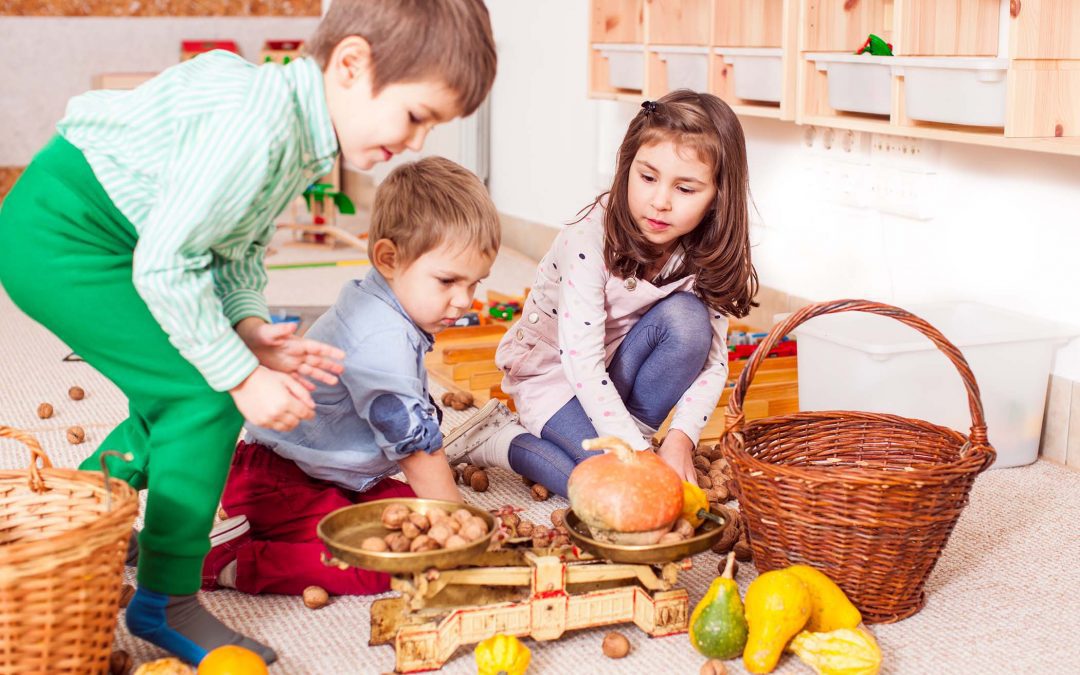
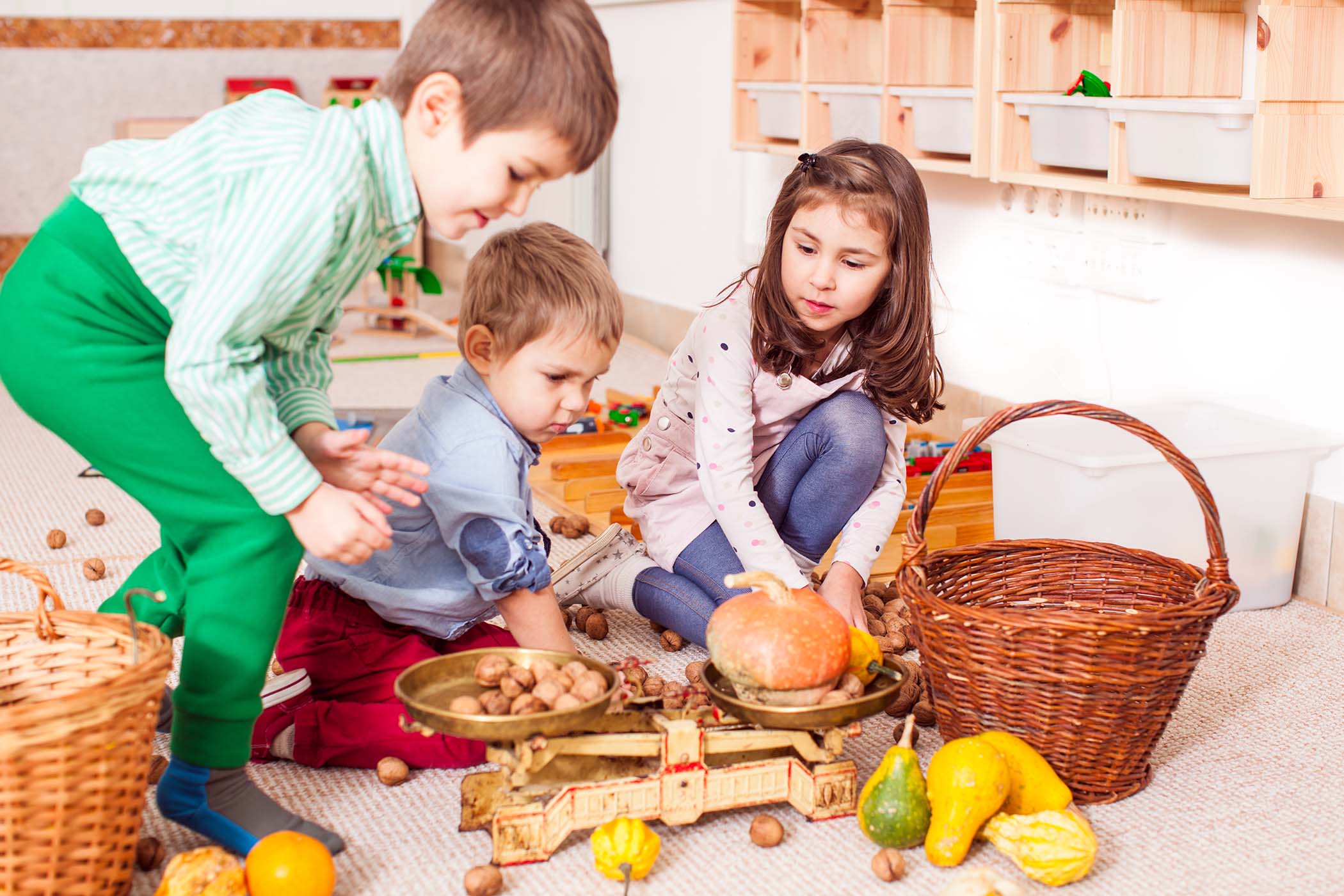
Children in kindergarten playing and exploring the concept of balance using weights
When we try to define what our children really “get” from Montessori, we need to expand our vision to include more than just the basics. Of course they learn to read, do four-digit mathematics, recognize geometric shapes, and identify the parts of a plant and a mollusk. They also learn how to be a contributing member of a community.
A Montessori school is more than a classroom. It is a society in a microcosm, and the skills and lessons they learn in this environment extend well beyond the traditional definition of academic success. They are life lessons that were very much needed at the time when Dr. Montessori developed her teaching methodology, and they are life lessons that remain relevant to our children today.
“The basic nature of our society and the family itself have changed radically, and only an equally radical change in education will suffice.”—John Dewey, School, and Society, 1899
In her book, The Schoolhome: Rethinking Schools for Changing Families (Harvard University Press, 1992, revised 2009), Dr. Judith Rowland Martin writes that she was not very impressed when she first encountered Montessori education. She understood that Montessori schools placed children in multi-age classrooms and used manipulative learning materials, which may have been very unusual during Montessori’s lifetime, but have since been incorporated into most early childhood and many elementary classrooms, thanks to the Open Classroom movement of the 1960s. However, Dr. Martin’s understanding of the value of the Montessori approach became dearer when she came across a statement in Dorothy Canfield Fisher’s book, A Montessori Mother (first published in 1912), in which Fisher disagrees with the universal interpretation given to Montessori’s “Casa dei Bambini” or “Children’s House.”
In A Montessori Mother, Fisher wrote, The phrase, ‘Casa dei Bambini,’ is being translated everywhere nowadays by English-speaking people as “The Children’s House,” whereas its real meaning, both linguistic and spiritual, is “The Children’s Home (or Children’s Community, ed.).” Fisher insisted upon this rendering, which she felt offered a much more accurate and complete insight into the character of the Montessori classroom.
Dr. Martin recognized that “This misreading of the Italian word ‘Casa’ as ‘house’ has effectively cut off two generations of American educators from a new and intriguing vision of what school can and should be. Read ‘casa’ as ‘house’ and your attention is drawn to the child-sized furniture, the Montessori materials, the exercises in practical life, the principle of self-education. But if you read ‘casa’ as ‘home,’ you begin to perceive a moral and social dimension that transforms your understanding of Montessori’s idea of a school.
Once I realized that she thought of school on the model of a home, the elements of her system took on a different configuration. Where before I had seen small children manipulating concrete learning materials, I now recognized a domestic scene with its own special form of social life and education.”
Martin realized that what Montessori had established was not simply a more attractive classroom in which children would be taught to read and write. The Casa dei Bambini represented a social and emotional environment where children would be respected and empowered as individual human beings.
It was an extended family, a community in which children truly belonged and really took care of one another. Montessori described this process of emotional growth as “valorization of the personality,” a strong sense of self-respect and personal identity. Within this safe and empowering community, the young child learned, at the deepest possible level, to believe in herself. In an atmosphere of independence within the community and personal empowerment, she never lost her sense of curiosity and innate ability to learn and discover. Confident in herself, she opened up to the world around her and found that mistakes were not something to be feared, but rather an endless opportunity to learn from experience.
This special relationship that is so common among Montessori children and their teachers and schools is very different from, and much more dramatic than, the experience most children have in school.
Frances Merenda, a 1990 graduate of The Barrie School in Silver Spring, Maryland put it this way:
“I started in Montessori at age two. I’m a product of the entire system. I did well, but still many people wondered if I had been prepared for college and whether I could ‘make it’ in a ‘real’ school? The skepticism was so disconcerting that I never bothered to step back and see what 15 years of trust, respect, teaching, and learning had done for me. When I went off to Northwestern University, I left my support system and community behind and entered a world that was much colder and uncaring.
At first, I deeply missed that sense of belonging. I didn’t realize that Barrie had not only given me a second family, but had also taught me how to build new friendships, support systems, and community wherever I go. I now use my years of experience in community building to cultivate secure relationships with people I have come to know. Barrie did more for me than just prepare me academically for college. It prepared me for anything to which I chose to apply myself.”
To understand how this evolved, it’s helpful to understand the world in which Montessori lived at the time she developed her educational approach.
Montessori was a professor of medicine, specializing in psychiatry. At that time, there was no such thing as Freud’s “talking cure.”
There were basically two approaches to the treatment of disturbed individuals.
The most common and familiar treatment was to confine people who acted strangely to insane asylums.
The second, and almost forgotten, approach was the “Moral Education” movement that spread across Europe and North America during the 1700 and 1800s.
These therapeutic communities were villages set off in the country where chronically despondent or nonviolently dysfunctional individuals lived in group settings with caring individuals.
The fundamental principle of the Moral Education movement was respect and kindness. Instead of treating their patients as prisoners, the staff acted on the belief that within each human being there is a core of goodness and a “sound mind.” The community lived and worked together as an extended family and developed a sense of belonging that is dearly reminiscent of what we see in our children’s classrooms today.
These communities were much like an Israeli Kibbutz, self-sufficient farming communities in which each individual was encouraged to become more independent while contributing to the overall operation of the village. Patients lived in small homes with a couple who served as their mentors. Surviving reports suggest that a great bond developed among those who lived and worked together. The movement recorded success rates that were far more effective than traditional approaches; returning their clients to their home communities as productive, happy citizens after an average stay of eleven months. A sense of close personal community and positive human relationships was proven successful as a means to help bring these disturbed people back to reality.
Montessori was well aware of this movement through her medical research into innovative strategies for treating the intellectually disabled. She used this same model with tremendous success in her own work with mentally disabled and autistic children in Rome and later hypothesized that even more dramatic results might be achieved with “normal” children. Her first “Children’s Community” was made up of 60 inner-city children from dysfunctional families.
In her book, The Montessori Method, Montessori describes the transformation that took place during the first few months of operation, as the children evolved into a “family.” The children had a sense of becoming the owners of their school. They were encouraged to rearrange the furniture, prepare and serve the daily meals, wash the pots and dishes, help the younger children bathe and change their clothes, sweep, clean, and work in the class garden. Through their day-to-day involvement in their classroom community, Montessori saw these children develop a sense of maturity and connectedness that helped them realize a much higher level of their potential as human beings.
While times have changed, the need to feel connected is still as strong as ever. In fact, for today’s children, it is probably even more critical.
Whether it’s an inner-city child or a child from an affluent suburb, the sense of community has all but disappeared from our children’s lives. Families regularly move from house to house, and from town to town. Grandparents usually live in other cities or other states. Both parents work out of necessity, and when they are at home, they are very, very busy. The over-programmed, hurried child has become the norm for this generation.
Many children have the sense that they do not belong to anything or anybody, which is why peer friendships, which give a sense
of belonging, are especially important to children today.
Along with whatever else Montessori gives our children, it definitely gives them the message that they belong-—that their school is like a second family.
Children will normally grow up to be productive, happy and confident individuals if given the right emotional environment. It seems clear that our attitudes about people, the ability to overcome our egocentric tendencies, our willingness to share, to compromise, to resolve conflicts non-violently, and our ability to discover an underlying sense of self-worth are not qualities that human beings develop spontaneously, but rather through years of experience with caring people who convince us that we belong and give us the opportunity to practice and master these skills of everyday living. As in all things, we learn by doing.
One of the greatest strengths in the approach that Montessori developed is the three-year age grouping that you will find in every Montessori school.
By consciously bringing children together in a group that is large enough to allow for two-thirds of the children to return every year, the school environment promotes continuity and the development of a very different level of relationship between children and their peers, as well as children and their teachers. For teachers, this relationship presents itself as a commitment that they make to stay with the children in their class for a prolonged period, rather than jumping from job to job or from classroom to administration. Montessori teachers do more than present curriculum. The secret of any great teacher is helping students open their minds and hearts so they are ready to learn; where motivation is not focused solely on good grades, but a fundamental love of learning.
As parents know their own children’s learning styles and temperaments, teachers, too, develop this sense of each child’s uniqueness by establishing a relationship over a period of years with the child and her parents. Montessori schools give our children not only the sense of belonging to a family but also of how to live with other human beings. By creating a bond of parents, teachers, and children, Montessori sought to build a community where individuals could learn to be empowered, where children could learn to be a part of families, where they could learn to care for younger children, learn from older people, trust one another, and find ways to be appropriately assertive rather than aggressive. To reduce these principles to the most simplistic form, Montessori proposed that we could foster peace by healing the wounds of the human heart and producing a child that is more secure. She envisioned her movement as potentially leading to a reconstruction of society.
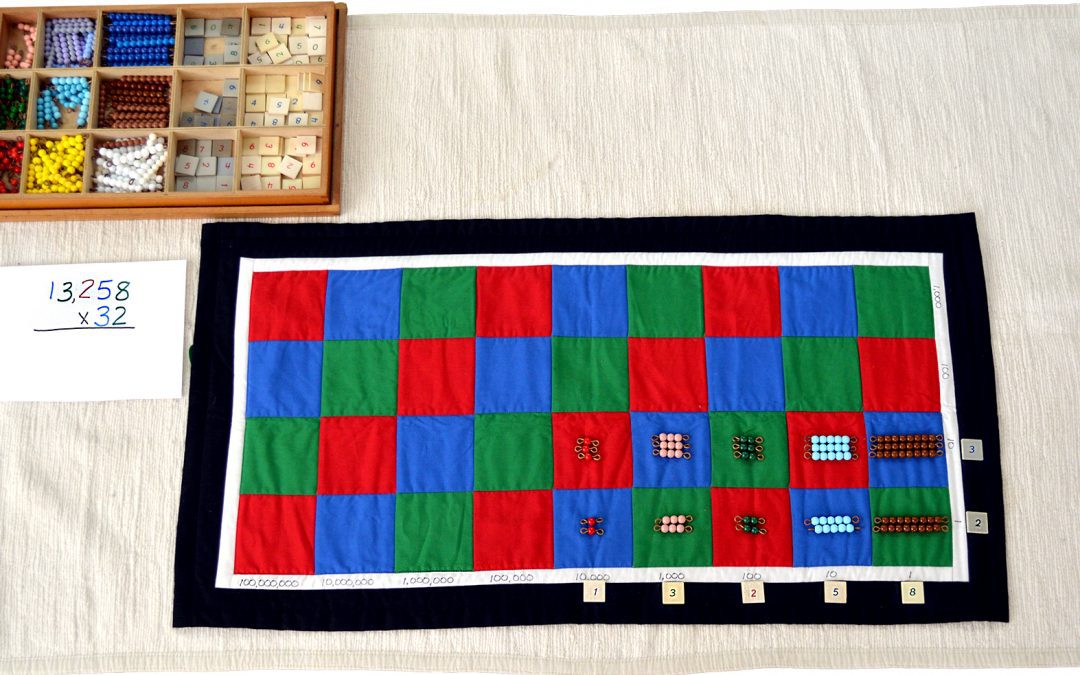
Montessori schools are different, but it isn’t just because of the materials that are used in the classrooms. Look beyond the pink towers and golden beads, and you’ll discover that a classroom is a place where children really want to be—because it feels a lot like home.
Tomorrow’s Child/ September 2018/ pg 23