To access this page, you will need to log in or become a member.
Who Owns It?

Who Owns It?

Who owns it

Using Story to Teach Grammar – The Montessori Way

An Introduction to Who Owns It?

Is that yours? No, that is his! Give me my book! You are reading your book. Who ate Gary’s dinner? That was Gary’s food.

All these sentences show ownership. Someone in each sentence owns something. The way that we say that someone owns something in English is called a possessive.

The simplest way to approach possessives is to recognize that, in English, they appear as three different parts of speech: nouns, adjectives, and pronouns.

The possessive noun is a noun that modifies another noun by showing ownership. The possessive noun acts like an adjective by modifying the noun, but it still has its origin as a noun and, thus, it is classified here as a special type of noun.

The second sort of possessive word is the possessive adjective. Possessive adjectives are, first, adjectives, meaning that they must modify a noun. To modify nouns, the possessive adjective precedes the noun, as in her ball, his book, my dinner, or your pen. It is important in identifying the possessive adjective to verify that it is modifying a noun. The use and classification of possessive adjectives is commonly very confused, especially on the Internet.

The third form of possessive word is the possessive pronoun. Possessive pronouns are, first, pronouns. That means that they are standing in for a noun, not modifying the noun. In this case, they are standing in or substituting for a possessive noun.

Examples of possessive pronouns are mine, yours, his, hers, its, ours, and theirs. A possessive pronoun would be used in a sentence like, “Those gloves are hers,” or, “That shirt is mine.”

It is important to note that possessive pronouns do not have an apostrophe. This is particularly confused with the words it’s and its. It’s with an apostrophe is a contraction. Its without an apostrophe is a possessive pronoun.

I hope that this story of Pixel and her missing green catnip ball can help to sort out the characteristics of the possessive words and the differences that each type manifests. They are quite fascinating. I hope you enjoy this story that, as I say at the beginning, was originally told to me by a cat.

Dr. Michael Dorer was trained internationally, and has taught students from age 2 to 14. He has been involved in Montessori education for over 45 years, including two decades of educating adults to be Montessorians.

Michael holds multiple degrees including Doctor of Education (Ed.D.)from Argosy University. After 25 years as Director of Montessori Education at St. Catherine University, he went on in 2012 to found a graduate level Montessori program at Westminster College in Salt Lake City, Utah called “The Institute for Montessori Innovation”. Currently he writes, lectures, consults, oversees artistic residencies, delivers key notes and workshops, and professional development.

Michael Dorer’s new book, Grammar Tells a Story: How we teach grammar in Montessori, is a book that combines over fifty stories for telling in Montessori classrooms along with vital information about the Montessori approach to grammar and language arts, storytelling, and basic Montessori theory and philosophy.

It is planned that Grammar Tells a Story will be released in the fall of 2022. It is being published by Parent Child Press of Santa Rosa,CA. For preorders, contact them at (877) 975-3003 or at www.montessoriservices.com/parent-child-press


Who owns it?

by Michael Dorer

Here’s a story that I once heard told by a cat. Not in your time and not in my time, but in a time when animals could talk, and words could speak out loud.

Once upon a time, in that far away time, there was a lovely orange tabby cat called Pixel, who so very much enjoyed playing with a small ball stuffed with catnip.

Every day she would play with that catnip ball, batting it about with her paws and enjoying herself tremendously.

One day as she batted the ball about, it so happened that it slipped into the tiny space between the words of a sentence.

The pretty tabby scratched at it and clawed, but she could not get to the ball, no matter how many times she tried. Finally, poor Pixel was so frustrated that she simply lay down and glared at the ball, where it was stuck between those words. Only the tip of her tail twitched angrily.

Just at that moment, one of the words in the sentence that had captured the ball stepped quietly into the room.

It was an adjective, beautifully attired in a smart suit all royal blue.

“I can help you, Pixel,” the adjective said, “just tell me please, who is it that owns that fragrant ball?”

Now Pixel had always been a cat of very few words and being frustrated now she could only manage to mew, “Me, me, me.”

At that, the adjective spoke once again in a charming tone. “I can only help you if you will show me that you own it with the proper words. You must say it in a way that uses me.”

Pixel fixed the adjective with a feline glare but thought carefully and deeply. Then she said, “I think I know what it is that you require me to say. ‘It is my ball.’”

“Correct,” cried the elated adjective. “You used me, an adjective, in fact a possessive adjective, to show that you own the ball. Anyone who can use the possessive adjective correctly deserves help. I will get the ball for you now.”

But just then a forbidding and imperious presence emerged from the sentence that was still holding the ball in a tight grip. “Stop,” he shouted. “I am a noun, and I demand that you hear me.”

“Pixel, I can certainly retrieve that ball for you if you will only tell me whose ball it is, but you must use your own name. After all, I am a noun, and I require that you use me.”

Although the adjective was fuming and in a royal blue funk, the high and mighty noun prevailed and, once again, Pixel had to think.

After lengthy and deep thought Pixel hit upon what she believed to be the correct answer.

“I have it,” she meowed. “How is this, ‘That is Pixel’s ball.’”

“Excellent,” shouted the delighted noun. “You used me, a noun, in fact a possessive noun. That is so much finer than a mere possessive adjective,” he announced with a quick dismissive glance at the still angry adjective. “Anyone who can use a possessive noun correctly deserves my help I will get the ball for you.”

However, before the noun could move at all, there was a flash of purple from the sentence that was still holding Pixel’s ball. Out stepped a tall, proud character, eager to displace the noun.

“Stop,” he called out, as he shoved the noun aside. “I am a pronoun, and you really must hear me now.”

By now, both the adjective and the noun were indignant, but the pronoun spoke above them all, making Pixel pay attention.

The pronoun fixed Pixel with a penetrating gaze. “Pixel,” said the pronoun, “I will retrieve that ball for you if you can only tell me who’s ball it is. But you must use me, the pronoun, in your speech.”

For the third time, Pixel had to ponder deeply. Twice, she had already shown that she owned the ball, once with the adjective, and once with the noun. Now, what could this pronoun require?

Finally, the answer came to mind.

“I have it,” she mewed. “The ball is hers.”

“Outstanding,” exclaimed the pronoun. “You used me, a pronoun, in fact the possessive pronoun. That is clearly the superior way to express yourself. Anyone who can use a possessive pronoun properly deserves help. I’ll retrieve the ball.”

But before the pronoun could move, both the noun and adjective began to object vociferously and strenuously.

“Oh no you don’t,” someone said.

“Hands off,” said the other.“That is her ball,” called the adjective.

“I know, it is Pixel’s ball,” argued the noun.

“That ball is hers,” responded the pronoun.

And so, the argument continued, each of them insisting that they could best show ownership.

Pixel finally saw that any one of the three ways would work. She could show that she owned the ball with an adjective, a noun, or a pronoun, any one of them.

“But why,” she wondered, “must I choose? They all work.”

As the noun, adjective, and pronoun kept wrangling, poor Pixel began to despair. It seemed that with these three she would never get her beloved catnip ball back.

Just then a bright red verb stepped out from the sentence gripping the ball tightly.

“Take it,” said the verb and rolled the ball right to Pixel who was thrilled.

“Now play,” commanded the verb. Those three may argue forever. Each one is right and yet none will admit it.” With a dismissive glance, the verb then bounded back into the sentence.

Pixel once again had the catnip ball, which she enjoyed so much

As for the adjective, the noun, and the pronoun, I think they are still arguing, so we still must choose which of these three ways we want to use to show who owns something. Any of these three ways is workable, it is up to us to decide which will fit best in our sentence and in our thoughts.

And that’s the last I have heard of Pixel and the argument between the adjective, the noun, and the pronoun. Such things do happen, you know. So, the story is told, and here it ends. •

Adult Well-being Through Montessori Education

Adult Well-being Through Montessori Education

adult well-being

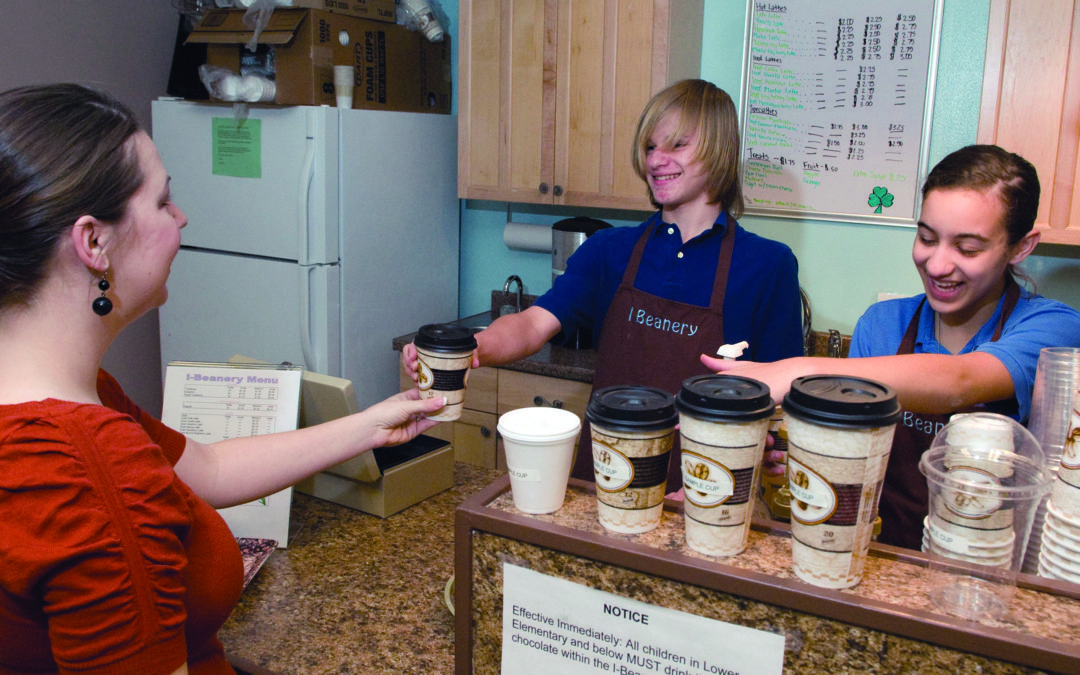
When many of us enroll our children in a Montessori school, we are asked to share our goals for our child’s future. Many read something like this, “I want my child to be a happy, self-supporting, life-long learner.” Although the word may not often be used in writing these goals, what is really being hoped for is well-being. According to Dictionary. com, well-being is, “A good or satisfactory condition of existence; a state characterized by health, happiness, and prosperity.”

A recent study, “An Association Between Montessori Education in Childhood and Adult Well- Being”, concludes that at least two years of good quality Montessori education increases adult wellbeing (Lillard AS, Meyer MJ, Vasc D, and Fukuda E, 2021).


The authors focused on four factors: general well-being; engagement; social trust; and self-confidence. Attendance at a Montessori school seems to have a ripple effect for many former Montessori students, as they found that “the more years one attended Montessori, the higher one’s well-being as an adult.”

The authors felt that three features of Montessori education would affect general well-being are self-determination, meaningful activities, and social stability.

Choice of Work: Choosing their own work, the ability to opt-out of, or delay, planned lessons, and limited performance evaluations encourage students to oversee their own education, to be self-determined, to decide for themselves. Adults who feel self-determination are more likely to seek challenges and be engaged in their chosen activity. As adults, we may describe this as having balance, having our dream job, or work that really means something. In the Montessori classroom, we frequently see children choose work that offers some challenge for them, whether that is carrying a tray with a bowl of water doing long division with the racks and tubes, or writing poetry. Students will often push themselves to an area just beyond their comfort level when they are ready for that growth and are welcome to make that move in their own time.

Meaningful Activities in the Montessori Classroom: Folding a cloth leads to folding classroom laundry; a group outing requires adding and dividing to figure out the cost; cutting fruits and vegetables is a part of fixing snack; and all these academic and life skills are applied within the classroom. As students grow, they may do research work that is personally meaningful to them and apply this to the information the class is learning together. In fact, in an earlier study, Montessori middle school students reported feeling more engaged than the control group (Lewis AD, Huebner ES, Malone PS, and Valois RF, 2011). As adults, we want to feel engaged in our family, job, and community, and part of the way we feel this engagement is through meaningful activities and connections. Meaningful activities can be linked to general well-being and engagement throughout life.


The Three-Year Class Cycle: Staying with the same teacher and having a limited change of students over a three-year cycle provides social stability and encourages students to collaborate with classmates. Many studies have shown that staying with the same teacher and some of the same classmates supports positive relationships, self-confidence, and academic growth. Managing friendships, different work styles, and opinions is an important part of any Montessori classroom and is done with understanding and guidance. Developing grace and courtesy skills, beyond manners to acceptance and understanding, can strengthen relationships and a sense of community inside the classroom and out. As adults, these social skills help us in our family, community, and our job. We don’t need to make our best friends at work (or even in our local community), but it is more enjoyable to have friendly relationships, and being accepting of different personalities helps in all relationships. Developing a sense of community, friendship, and a sense of social stability has been shown to lead to a sense of well-being.


Montessori classrooms offer free choice, which leads to self-determination, meaningful activities which encourage engagement, and the social stability of multi-year classrooms which leads to social trust. The general goal of a happy, self-supporting, lifelong learner, or an adult with a sense of well-being, can be started by attending a Montessori school. The median attendance of survey respondents was eight years in the recent Lillard study, and a longer attendance was correlated to a higher level of well-being. It has been said that the longer a child attends a Montessori program, the more people are positively affected over that person’s lifetime. Possibly that is true because, as this study demonstrated, attendance in a Montessori program positively affects adult well-being.


REFERENCES

Lewis, A. D., Huebner, E. S., Malone, P. S., and Valois, R. F. (2011). Life satisfaction and student engagement in adolescents. J. Youth Adolescense. 40, 249–262. doi: 10.1007/ s10964-010-9517-6

Lillard AS, Meyer MJ, Vasc D and Fukunda E (2021). An association between Montessori education in childhood and adult wellbeing. Frontiers in Psychology. 12:721943. Doi: 10.3389/fpsyg.2021.721943

Cheryl Allen was a classroom Montessori guide for 18 years and is now Director of Parent Education with the Montessori Family Alliance. As a child, Cheryl attended a Montessori school from age 2 through the 3rd grade. She earned her BA in History from Georgetown University and her Master’s in Teaching from Simmons College in Boston. Cheryl is an AMS-certified Early Childhood and Elementary Montessori teacher, holds IMC certification in advanced elementary Montessori education, and is currently pursuing a Topics of Human Behavior Graduate Certificate from Harvard university.

Benefits of Fine-Motor Skills Development

Benefits of Fine-Motor Skills Development

Fine motor

When your child becomes a toddler, you may suddenly begin hearing about fine-motor skill development. There are many ways to develop fine-motor skills, and they are often discussed as if writing is the ultimate outcome. Yet, getting through a day without using your fine-motor skills would be very difficult. We use fine-motor skills, those small movements we make with our hands, fingers, and arms to manage buttons, zippers, and tying when we get dressed, to feed ourselves, turn pages of books or magazines, and keyboard, text, and use the remote, all of that before we have written anything!

New research from Georgetown University (Cortes et al., 2022) demonstrates that fine-motor skill development at 42 months of age correlates to visuospatial deductive reasoning in adolescence. Visuospatial refers to being able to compare two- and three-dimensional objects and deductive reasoning; in this case, it refers to being able to pick which object or drawing from given choices should come next in the series. Although brain imaging continues to improve and those improvements continue to provide more detailed information, brain imaging has shown that motor skills, reasoning, and spatial cognition share common areas in the brain (Cona & Scarpazza, 2019). The ability to make inferences is connected to visuospatial deductive reasoning. For example: Kim ran home. When she got there, she had to stop to catch her breath and wipe perspiration from her face and neck. Did Kim run home quickly or run slowly?

In a Montessori 3-6 classroom, students develop their fine-motor skills through many different materials. The Practical Life area of the classroom develops a variety of fine-motor skills, from the Dressing Frames to pouring and scooping. The materials in the Sensorial area also actively utilize fine-motor skills, such as the pincer grip with the Cylinder Blocks and careful carrying of the cubes of the Pink Tower, Red Rods, and Brown Stairs. The Metal Insets, a language work which creates the movements that form all the letters of the alphabet, also develop fine-motor skills. Using pencils and cutting with scissors also develop fine-motor skills in the hand.

How can fine-motor skills be developed at home? Allowing your child to perform daily tasks, even though it takes longer, is important. Feeding themselves to the best of their ability, wiping down their eating area, and dressing themselves are all opportunities for fine-motor skill development.

Other work options you can create at home:

Art opportunities: lacing beads or pasta on string; drawing in shaving cream; all coloring and painting; playdough or other moldable mixtures.

Water opportunities: using a turkey baster to move water from one container to another (or from a small bucket to a garden); making bubbles with a whisk, a squirt of liquid soap, and some water.

Other opportunities: opening and closing small jars or other containers; pushing uncooked spaghetti through the holes of a colander; scooping uncooked rice or beans from one container to another.

Seventy-six years ago, Dr. Montessori was leading us to the same conclusion as today’s research, using different means of observation. She reminded us, “The hands help the development of the intellect. When a child can use his hands, he can have a quantity of

experiences in the environment through using them. To develop his consciousness, then his intellect, and then his will, he must have exercises and experiences.” (Montessori, 2012, page 130) •

RESOURCES

Cona G. & Scarpazza, C. (2019). Where is the “where” in the brain? A meta-analysis of neuroimaging studies on spatial cognition. Human Brain Mapping, 40(6), 1867-1886.

Cortes, R. A., Green, A. E., Barr, R. F., & Ryan, R. M. (2022, March 31). Fine-motor skills during early childhood predict visuospatial deductive reasoning in adolescence. Developmental Psychology. Advance online publication.

Montessori, M. (2012). The 1946 London Lectures. Montessori-Pierson Publishing Company.

Cheryl Allen was a classroom Montessori guide for 18years and is now Director ofParent Education with the Montessori Family Alliance. As a child, Cheryl attendeda Montessori school from age 2 through the3rd grade. She earned her BA in History fromGeorgetown University and her Master’s inTeaching from Simmons College in Boston.Cheryl is an AMS-certified Early Childhoodand Elementary Montessori teacher, holdsIMC certification in advanced ElementaryMontessori education, and is currentlypursuing a Topics of Human BehaviorGraduate Certificate from Harvard University.

Don’t Live in La-La land

Don’t Live in La-La land

Mom and child

Most of our fears as parents about protecting our children involve situations that rarely occur. Many of us, however, tend to spend a disproportionate amount of time worrying about circumstances that will never happen, or planning for perfectionism, either in ourselves or in our children. Our fears and our guilt hold us hostage in a land of fantasy, “La-La Land.” We need to create reasonable expectations for ourselves, our children, and our families.

By worrying about the wrong things, we do ourselves a disservice and create anxiety and risk aversion within our relationships. We need to think of ways that we can slow down and create routines to discover that less is more.

Expectations of time.

We all have just 24 hours in a day. For some of us, that 24 hours is full of work in and out of the home. Have a realistic view of what you can accomplish in a day and prioritize those activities that will make your family life slower and better. Perhaps that means your house will not be as pristine as you would like. Meals will be simple. Social and sports outings may be limited. Hire help if you can afford to, and delegate tasks to all family members. Take the time to train and teach your children to help with chores. Make sure you offer time for family and one-on-one activities that express love and caring.

Expectations with money.

As we look at reasonable expectations, we need to be realistic about our budget. Our children need to understand the difference between wants and needs. Some organizational experts say most families only use 25 percent of the toys, clothes, and other stuff in their homes. Get rid of the 75 percent that you don’t use. One of the tyrannical holds of La-La Land is thinking that we need all these odds and ends. Our possessions, in turn, take our time, our money and, too often, don’t add to our ability to express love and caring to our family members.

Our children need adults who love and care for them. They need adults who will teach them important life skills and give them moral guidance. Children need time alone to figure out who they are and who they can be.

We used to call this time without adults “play.” Play helps build resilience, social skills, leadership, and adaptability. Uninterrupted time alone, focused on self-selected activities, produces deep learning and problem-solving skills, as well as fosters a sense of well-being. Time spent on a self-paced agenda (versus an adult-created schedule) allows our children to think deeply and creatively construct their own person, as well as self-correct mistakes.

Every child is different and has unique needs. Every family is different, so one size could never fit all. Here is an example of one family’s changes.

Sylvia and Darren took a hard look at how they were choosing to spend their time and money and what those trade-offs meant to their personal well-being and their relationships with their children, Aiden (age 3) and Lily (age 4).

Sylvia and Darren looked at their costs for housing, transportation, childcare, extra lessons, restaurant outings, toys, and clothing and decided they could reduce their spending so that one of them could stay home or both could reduce their work hours, which seemed originally unthinkable to them during our current unstable economic time. Their visioning was long term and placed a priority on how to make life slower and better.

In their kitchen, Darren and Sylvia built activity shelves for Aiden and Lily to hold twenty projects, and put in a child-sized table.

With less money but more time, Sylvia and Darren were able to help their children learn valuable life skills of taking care of themselves, their home, and others. There was time to offer moral guidance, along with the time to let Aiden and Lily make their own mistakes instead of always trying to stay on schedule.

Sylvia and Darren found that their La-La Land of worry, guilt, and fear was replaced with understanding. •

Maren Schmidt, M. Ed. is anaward-winning teacher andauthor. She leverages her talentswriting newsletters, a blog, alongwith books. Since 2005, she has writtenthe Kids Talk Blog, and is the author of twobooks: Understanding Montessori: A Guide forParents and Building Cathedrals Not Walls.Montessori school communities enjoy herKids Talk Newsletters that are full of actionableadvice about children.

Maren is an elementary-trained Montessoriguide with AMI. She is the founder of aMontessori school, and her Montessori rolesinclude parent, teacher, and school administrator.Visit MarenSchmidt.com to sign up forher newsletters or read her Kids Talk Blog.

Dear Cathie: First Days at School: Morning Routines

Dear Cathie: First Days at School: Morning Routines

Child puring milk

First Days at School: Morning Routines

DEAR CATHIE— WE WILL BE ATTENDING OUR LOCAL MONTESSORI SCHOOL BEGINNING NEXT FALL, AND WE HAVE BEEN READING ABOUT THE SCHOOL AND THE MONTESSORI METHOD. THIS WILL BE OUR CHILD’S FIRST TIME TO BE SOMEPLACE OTHER THAN HOME ON A DAILY SCHEDULE. WE KNOW THAT TIME SCHEDULING IS NOT EASY FOR CHILDREN. WHAT CAN WE DO TO HELP MAKE THE MORNING ROUTINE WORK EFFICIENTLY AND YET NOT FEEL RUSHED? WE HAVE HEARD FROM OTHER PARENTS THAT THIS CAN BE QUITE STRESSFUL! — AN ALREADY STRESSED PARENT

Dear Parent,

This is an exciting time in your family’s life as you get ready for your child to start school. There are many things you can do to make the morning as smooth as possible, and they all begin with a calm, smooth, and predictable daily routine.

Consider which tasks you might do in the evening versus what you might need to do in the morning. Think about which time frame might be less hectic for you and your family. Consider things, such as picking out clothes; packing lunches; packing your child’s backpack; finding tomorrow’s footwear; etc.

Now think through the details of the tasks. Where will you take care of the morning bathroom business? Will you bathe in the morning or evening? If you take baths in the evening, will you eat breakfast in pajamas and then change into school clothes or get totally dressed for school and then eat breakfast? When will you pack the backpack? Perhaps you have the backpack ready and by the door in the morning, as well as the child’s shoes so you don’t need to look for these items as you are getting ready; if ready the evening before, all that is necessary is to add the child’s filled water bottle and lunchbox to the backpack and, viola, you are done. Let your child be aware of what

will be coming and make it more or less the same every day. We encourage children to be involved in all the process as much as they are able. When choosing clothes, choosing between two outfits works well. If picking out clothes is challenging, then perhaps that can be done after dinner the night before, so this is an already completed task in the morning. Let him help with packing his backpack, choosing what he will eat for lunch, etc. Keep the possibility of his helping at the forefront of your mind as you go through the process. (If he needs clean socks for school, can he get them from the drawer and put them in his backpack?)

When you return home in the evening is another time to work with your child to begin preparing for the next day. Let your child assist with unpacking his backpack and taking care of items that need to be dealt with, such as washing his water bottle; cleaning his lunch box; putting laundry where it belongs; etc. Adding these tasks to your afternoon routine ensures you will be aware of what your child needs for school the following day or other school notifications. It also encourages your child to become a partner in these responsibilities and encourages him to chat about his day. It is just one more way of keeping the lines of communication open.

Of course, school information comes out electronically, as well, these days, but this is still a good way to stay organized and involve your child.

As with all aspects of child rearing, flexibility is paramount as routines will naturally ebb and flow. Your family’s situation may change, or you may decide what you are doing is just not working! Parental workplace demands may cause a shift in routine, and children may assume some of the responsibilities as they mature.

Your best family routine will evolve with time. Make a conscious plan and carefully think through the division of your morning, afterschool, and evening tasks. Keep your routine as consistent as is reasonable and involve your child in as many aspects of the process as is developmentally appropriate. Build in a bit or extra time so your morning does not feel rushed! Good Luck! •

Here is an example of a family’s daily, school-year routine.

MORNING

• breakfast

• brush teeth

• get dressed

• fill water bottle

• pack lunch

• put on shoes

AFTER SCHOOL

• unpack backpack

• wash water bottle

• clean lunchbox

• put laundry where it belongs

• replace any clothing/bedding needed for the next day

EVENING

• pack backpack

• pick out clothes for tomorrow together

• bath time

• brush teeth

• read stories

• child goes to bed

Cathie Perolman is a reading specialist, elementary educator, author, consultant, and creator of educational materials for Primary and Elementary students. Checkout her new downloadable materials on her websitecathieperolman.com.

For more than three decades, she has dedicated her energies to improving reading for all youngsters. She is the author of Practical Special Needs for the Montessori Method: A Handbook for 3-6 Teachers and Homeschoolers published by the Montessori Foundation(available through montessori.org.) She is a regular contributor to Tomorrow’s Child and Montessori Leadership magazines.

Cathie Perolman holds a BS in Early Childhood Education and a MEd in Elementary Education with a concentration in reading. She is credentialed as a Montessori teacher. She is married and has two adult children and two adorable granddaughters. Cathie lives in Ellicott City, Maryland with her husband.

Book Review by Lorna McGrath

Book Review by Lorna McGrath

Reviewed by Lorna McGrath

Here and There

Written by Tamara Ellis Smith Illustrated by Evelyn Daviddi

Ivan’s parents split up and are living in separate houses. Ivan didn’t like that he had to go here and there. He didn’t think he could be happy and himself with his parents apart. It took a little time and some adjustment for Ivan to realize that love and happiness could be shared; that love and happiness could be both here and there. It’s important for children to know that families can change and be structured in different ways. Time helps. Love helps. And some things will be held in common here and there.

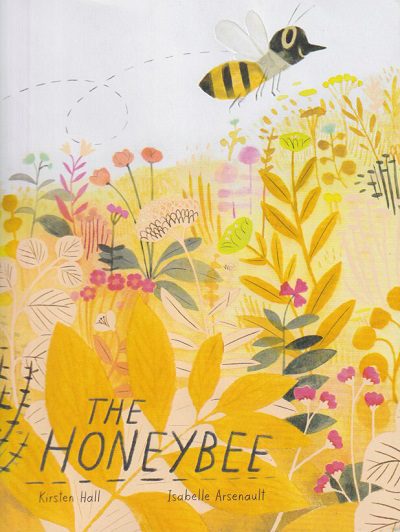
The Honeybee

Written by Kristen Hall and Isabelle Arsenault

This is a beautifully illustrated and written book about the life cycle of the honeybee. It is quite colorful, and the illustrations

are soft and fairly realistic. The author and illustrator take you from summer, when flowers are in full bloom everywhere; to fall and the work to be done in the hive; to winter, when everything slows down; then spring, when the world awakens, and the honeybees start collecting the pollen and the nectar again. Much of the text is rhyming, and young children will love the gentle flow of the words. I had fun reading this out loud and using my voice to highlight certain words and sounds. You can, too. I think it’s important to let your child know that honeybees are not aggressive. They only sting if they (or their hive) are disturbed. They have a lot of work to do so they don’t have much time for us humans! This is a book that is appropriate for 3–6-year-olds.

Amazing Bees

Written by Sue Unstead

I just discovered that DK Publishers has a reading series. As always, this book is beautifully illustrated with photos of real honeybees, flowers, honeycombs, and all the other things that are part of a honey bee’s life. Amazing Bees is a Level 2 reader. The print is nice and big with just the right amount of information for an emerging reader. I am in love with this book and am now ordering a couple of books from each of the levels to see how they progress. I trust that I will be just as pleased with other books in this reading series. This is a great addition to a home or school library. You can purchase books in this series from amazon.com and probably other booksellers as well.

The Potential in Every Child

Written by Gavin McCormack Illustrated by Iris Villarrubia

Parents will find this book to be a quick and easy reference for everyday living practices with their child. Gavin McCormack has boiled down one-hundred ideas that are in alignment with Montessori philosophy for parents. The ideas are mainly for elementary-age children, and some are for children in the early childhood stage. Then some ideas can be used with children from early childhood through the elementary years and beyond. A few examples are: “Give your child the responsibility to take care of their things.” “Spend one night per week walking and talking. Look at the moon and discuss big-picture ideas.” “Do not replace things that get broken. Learn the value of money and repair things together.”

On each page, the author writes the main idea and then explains the value of practicing it with your child, the family, or the larger community outside your family. Each idea has a two-page spread with an illustration on one page and the idea and value on the other. The illustrations are in color and in a style similar to what a child might draw.

Parents may appreciate the brevity of the content in this book, as life can get so full and time is precious. It can be found on most online booksellers.

Big and Small

Written by Britta Teckentrup

This is a little board book for your infant or toddler. There is one quite realistic, colorful picture and one word on each page. Pages that are opposite each other in the book are opposite sizes. As you read this book together, your child will increase their vocabulary as you identify the picture images and begin to get some sense that there is a difference in the sizes of things. This is a difficult concept for a little one to really understand from a two-dimensional picture. However, you can put together an activity using objects that show the same concept in a three-dimensional way. For example: a big ball and a small ball; a big spoon and a small spoon; a big stuffed animal and a small stuffed animal; etc. Have fun reading this with your child!

Think Circles!

Written by Karen S. Robbins

I was pleasantly surprised when I opened this book for young children. I was expecting a book that has too much to sort out on a page, is visually distracting for young children, and could easily be torn or damaged by accident.

The author of Think Circles! isolates each illustration on the pages to answer the hint. For example: On page 1, the hint is “Bouncing Circle” and the question is “What can it be?” On the opposite page, there is a hidden object with just one opening to view part of the pictured answer with the word, “Think.” Adults get to have fun with this, too, as they read the words to the child and maybe, if needed, add another hint to play along with “thinking” about what the hidden object might be. I love that she invites the child to “think.”

Ms. Robbins also adds in another level of difficulty by adding objects to each page. So, on page 1, there is just one hidden object. On page 2 there are two hidden objects. On page 3 there are three objects, and so on to 10. On each page, there are the corresponding openings, so that children can count the openings and then count the objects when they open the flap to see the answer.

As a teacher, I would present one concept at a time. I would either introduce the book as a problem-solving lesson or as a counting lesson but not both at the same time. Both concepts are higher-level thinking. Either could be presented first. I would probably introduce the “thinking” concept first just because I like it.

The pages are quite sturdy, so that young children can use these books without accidentally damaging the books, assuming the adult has given the child a lesson on carefully turning/opening pages in a book. That’s important since we want children to be successful as they use books and other activities. The illustrations are colorful, attractive, and quite realistic.

There are two other books in this series – Think Triangles! and Think Squares! These books would be enjoyed by children 3-6 years old.

Think Farm Animals Think Zoo Animals

Written by Karen Robbins Illustrated by Rachael Brunson

Karen Robbins has written two sturdy books for two- to four-year-old’s about animals: Think Farm Animals and Think Zoo Animals. The pages can be easily turned, and the flaps easily opened by young hands. The illustrations are colorful, visually pleasing, and realistic.

Each book is set up similarly with a hint and a question on the left page and an opening that allows the child to see part of the animal on the right page.

For example: In the Farm Animals book on the left page, it reads, “I have a swishy tail and say ‘Moo!’ What can I be?” And on the right page, an opening shows a white and black tail with the word “Think” written below. I love that!

Remember children at this young age are still developing impulse control. The adult can help them with that in a fun way by saying something like, “Hmmmm. I’m ‘thinking’ about animals on a farm. Do we know a song about that? ‘With a moo-moo here and a moo-moo there.’ What could it be?” All the while holding the flap closed as the adult and child “think” together. You could even say to the child, “Let’s keep the flap closed so that we can ‘think’ for a minute.”

Lovely books for young children. I wish there were more!

The Art of Talking with Children: The Simple Keys to Nurturing Kindness, Creativity, and Confidence in Kids

Written by Rebecca Roland

Conversations can help provide learning opportunities, including developing essential listening skills and increasing vocabulary. Often, what we think of as a conversation with the children around us is more a session of us, as the adult, either asking for information or providing information,. We do not always get to the why of the information. When we get to hear a child’s “why,” it feels like being given a gem. This book can help us as adults learn skills that allow us to get to that why more often.

Rebecca Rolland is an oral-language specialist, a Harvard faculty member, and a parent and brings all those roles to this book. Each chapter explains why one would want to have different types of conversations with children and adolescents, provides evidence for the science, and shares anecdotes from her family and students. The combination helps make this a book you can apply to your life, even in the first chapter. She explains how you can help develop empathy, confidence, creativity, and social skills through conversations.

I would recommend this book for parents of young children through teens as well as teachers and all school personnel. It can be read all at once, one chapter at a time with practice before reading the next, or in the order needed based on family circumstances. It is certainly a book you will go back to again and again to develop and refine conversational skills that may help in talking with adults as well as talking with children.

Reviewed by Cheryl Allen

What I love About Montessori

What I love About Montessori

What I love about Montessori

Witten by Aspen Seeley, Fifth Grade Student Five Oaks Academy Simpsonville, SC

Montessori teaching is all about hands-on;

checkerboards and microscopes all to learn upon.

Montessori demonstrates peace and how to be fair,

as well as kindness, friendship, respect, and tender loving care.

The classroom is our place to roam, it’s almost like our second home.

We learn to manage time and to be respectful,

and not to be unthankful, unkind, mean, or neglectful.

We have to thank Maria Montessori for all of the above;

and for thinking up the education that we students know and love.

CLASSIFIED ADS – TC September 2022

CLASSIFIED ADS – TC September 2022

Montessori schools are clearly on the grow. Here is just a sampling of schools that are looking for guides and leaders for the next school year. For a complete listing (and it changes day to day), go to www.montessori.org/classified-ads/

If your school has a position to fill, we’re here for you, all summer long. IMC members get one free advertisement, and that is just another great reason to join the International Montessori Council. Visit www.montessori.org/the-international-montessori-council-imc/ to find out about IMC membership.

For everybody else, a classified ad costs $2 per word ($50 minimum). To place a classified ad in this publication, and/or online contact, Don Dinsmore at dondinsmore@montessori.com

ADMINISTRATOR (CLEMMONS, NC)

Winston-Salem

Montessori

School (WSM) seeks the services of seasoned and successful candidates with excellent communication, organization, and interpersonal skills who are willing to partner and collaborate with a dedicated team of educational professionals to provide a nurturing authentic Montessori program for students. Experience leading Montessori schools or divisions is preferred, as is a credential from a MACTE-approved AMI or AMS teacher education program.

WSM is located on a beautiful 8-acre campus in Clemmons, NC, and serves 250 students 18 months to 15 years of age. We offer competitive compensation and an exceptional workplace environment committed to collaboration, community, and professional growth.

Interested candidates should send a resume, references, and a letter of interest to HOSsearch@wsmontessori.org. or frankbrainard@wsmontessori.org

MIDDLE SCHOOL TEACHER (7TH & 8TH GRADES) (TUCSON, AZ)

Middle school qualified teachers are invited to apply for positions commencing Aug. 15, 2022 for the 2022-2023 school year and beyond. The preferred candidate will have a Montessori Elementary or Middle school credential, will show initiative and creativity in the Montessori classroom, will be a flexible team member, and will have previous experience.

Benefits include health insurance, retirement plan, and paid personal and professional days. Salary based on education and experience. To apply, submit resume and letter of intent to: Siri Atma Khalsa, siriatma. khalsa@khalsaschools.org, 520- 529-3611

INFANT TEACHER (LEXINGTON PARK, MD)

Bay Montessori School was founded in 1994 and is a member AMS and IMC school offering a comprehensive Montessori program for children ages six weeks to 6th grade.

Located on 13 acres in Lexington Park, Maryland, our campus includes well-equipped classrooms, library, a pool, art studio, a STEM lab, and age-appropriate play-grounds.

We are currently seeking an Infant Teacher to work with children ages six weeks to 14 months. This teacher will work with other teachers to prepare and maintain the environment in which the Montessori approach to education is implemented. The are directly responsible for the care and maintenance of classroom materials, maintaining an orderly environment, and keeping it clean and in like-new condition as directed.

LEAD EARLY CHILDHOOD GUIDE/INTERN(NORTH CHARLESTON, SC)

Montessori Learning Collective, in sunny, North Charleston, SC is seeking a Lead Guide/Intern for Early Childhood (2.5-6) community. AMS, AMI or MACTE training, Interns welcome.

• Positive, Professional, Energetic, Organized, Collaborative, Communicative, Independent

• Master Level Educator mentoring, Outdoor Education

• Authentic Montessori

• Salary commensurate with experience and education (AMS/AMI

• National Average)+Health Care/ Benefits

• Covid Vaccination/Health and Wellness Protocols Required

• Full-Time Position/ 10 months/ 2022-2023

Email Director Resume: Bianca@Montessorilearningcollective.com

LOWER ELEMENTARY GUIDE (HOUSTON, TX)

St. Catherine’s Montessori | Job Purpose: To guide the children in their growth toward independence and self-discipline in a nurturing, loving way by modeling respect and creating a culture of peace. The expectation is to demonstrate an attitude of service and contribute to a cooperative atmosphere within the whole school community by living a Christ-like spirit.

Please contact: Lina Delgado ldelgado@stcathmont.org

LEAD LOWER ELEMENTARY GUIDE (CLEVELAND, OH)

Cleveland Montessori is seeking a full-time Lower Elementary guide for the 2022-2023 school year. The position provides an opportunity to mentor and co-teach with a newly trained guide.

Experience at the lower elementary level is preferred. The qualified candidate will be collaborative, flexible, and eager to work within an authentic, established Montessori classroom.

LEAD PRIMARY GUIDE (CLEVELAND, OH)

Cleveland Montessori invites you to join our team! The school is seeking a full-time Primary Guide to lead a new primary classroom (10-12 students) for the 2022-23 school year. The ideal candidate will be Montessori certified through a MACTE accredited training program.

PRIMARY GUIDE/TEACHER (KEY WEST, FL)

Come teach and play in paradise.

The Montessori Children’s School of Key West, located in beautiful Old Town Key West, provides a complete and authentic Montessori environment that fosters a love of learning in our children by adhering to Maria Montessori’s teaching methods. Founded in 1972, our school is Key West’s oldest Montessori program and has earned its reputation as the island’s premier

Montessori school, educating children from 18 months through 6th grade. Our Montessori-certified educators and support staff uphold our mission of guiding children to become self-directed, cooperative, and responsible individuals of the community while building solid foundations in humanitarianism, intellectual growth, and peace.

Member school AMS & IMC

Salary: $52,000 for the school year August-May

Benefits: Health insurance, matching 401K, housing assistance, employee tuition discount

Send resume to amy@montessorikeywest.com

PRIMARY LEAD (CHATTANOOGA, TN)

East Lake Montessori is located in beautiful Chattanooga, Tennessee (Gig city!). Our faith-based, parttime program offers schedules from 2, 3, or 5 days a week to our students (2 yrs- Kindergarten) 8:30- 1:00 daily.

We are seeking a trained primary teacher with Montessori certification. Spanish skills are ideal but are not required. Daily schedule: 7:30 am-2:30 pm based on our county school calendar.

Salary is commensurate with experience. ($17-$20 per hour) To apply, please email your resume to Executive Director, Jenny Varner, at execdirector@eastlakemontessori.org.

PRIMARY LEAD (FRANKLIN, TN)

Our Montessori preschool is located just outside of Nashville in the highly desired heart of Franklin, TN, where the city meets the country. Our location is close to many city amenities as well as rolling green hospitality and good eats. Open since 2011, CSM strives to be a warm, welcoming community in which children and adults alike find friendship and support. We are committed to providing a superior Montessori education for children ages 18 months through kindergarten.

Need a classified ad?

Write your ad and send it to dondinsmore@montessori.org. He will return a quote and it will go online as soon as payment is received.

Raising a Child to Love Literature

Raising a Child to Love Literature

Parents often wonder and worry about how to encourage children to read and how to raise a child to love literature. How can you inspire your preschooler, school-aged child, or teen to love the written word?

It begins with adult modeling, sharing literature at all stages of your child’s life, and consistently providing books and magazines in your home. Show your child your genuine enjoyment of books, magazines, newspapers, and all things written!

Let’s start with the youngest children: toddlers and preschoolers.

Flood your home with books. You can buy them, ask for them as gifts from grandparents or relatives, or make regular trips to your local library.

Read these books often and try to respond with genuine enthusiasm when your toddler asks you to read the same book over and over, a positive step, as this leads to predictability, comfort, and a true mastery of the story sequence.

Start early with magazine subscriptions: The Babybug (6 months to 3 years) magazine is a great place to start and Hello magazine (0 to 2 years) from the makers of Highlights is for infants and toddlers as well.

Be sure that books are available for them to explore as readily as other toys and set out on low shelves. Children will be more inclined to choose books and magazines when they are as available and attractive as other toys and activities.

One of the best traditions is to start purchasing a quality hardback book for your child at every milestone, birthday, and winter holiday. Write an inscription in these books with a date and message so that they are notably special.

These are the books that will be read over and over again and loved thoroughly.

As children move into their preschool years, they are ready for different types of literature. Young children love stories that show others like themselves and that talk about their world. These books help preschoolers to feel secure and comfortable in the world they see.

But literature can also help preschoolers enter worlds slightly bigger and more divergent from their own. The stories should be getting a bit longer (and the subject matter more varied) as your child matures and is ready to explore.

I recommend looking for literature that embraces subjects that your child is interested in now, but also look for books that stretch your child’s imagination to discover new worlds and new experiences. There are many lists of appropriate Adult/child book clubs have sprung up in many towns. They encourage the experience and love of shared reading. preschool books online.

School-aged children enjoy not only singlesitting books but also chapter books and book series.

I suggest you continue to read aloud to your child at bedtime, even as your child becomes a more proficient reader. Reading aloud not only lets your children hear the cadence and speed of proficient reading, it lets them share a book with you and have the opportunity to discuss the happenings in the book as well. This can allow you to explore sensitive subject matter together, as well as a great story.

Adult/child book clubs have sprung up in many towns. They encourage the experience and love of shared reading.

In my view, it is best to continue the tradition of giving your child a carefully chosen hardcover book as a gift. It is so important for your child to build his or her own personal library with books they will read over and over for years.

Regular trips to the library remain important, although your child will naturally become more independent in selecting books during these years. By watching what is selected, you will get to know your child’s interests better, offering you ways to initiate conversation or other book suggestions. This is also a time to think back on the books or book series that were special to you and suggest them as well.

By the teen years, encourage your young adult to enjoy literature in whatever form brings enjoyment: graphic novels, books, magazine articles. Online and audiobooks can engage one in an interesting story. Non-fiction books about cooking, automobile repair, or outdoor sports also resonate with many teens.

As a parent, I believe our job is to encourage the exploration of any subject that can enhance interest in reading.

Teens also enjoy reading about themselves and their real-life challenges, so many will gravitate toward content that explores these issues.

As a teen, they are probably reading content online, and it may be harder to ascertain their area of interest. You might want to introduce them to others who read online, so they can have discussions there.

Goodreads.com lets kids discuss what they are reading with others, which can often be more interesting to do than discussing them with parents. There are even many chatbased story platforms like Hooked or Wattpad’s Tap app, that combine reading and storytelling for teens.

A continued family discussion about this topic is still important.

Modeling reading for your teens and talking about what you are reading is also very important. This can stimulate conversation with your teen that can lead to hearing them express their own views on topics.

Teens will read books as part of their classes in school and, if you have not read them, you might want to read the books to give you another basis for discussion.

Here are a few more suggestions:

• Continue to reach into your own memory and recommend books that were your favorites.

• Many young adult books (YA) span age groups and can be read and enjoyed by both parents and teens.
• Don’t be afraid to leave books and magazines around your home in enticing places for your teen to pick up!
• Books that are written as a series can be a good way to encourage a teen to keep on reading.
• After your teen has seen a movie, find the book that it was based upon and bring it home. Discuss whether the movie or the book was better.
As with all things “teen,” make every effort to keep the lines of communication open. Your local library may offer classes or programs for teens that can get them inside the library to explore an interest and, at the same, time renew their awareness of what is offered in the library.

Be aware that school requires a significant amount of required reading, which can limit the time that they can spend on recreational reading during the school year. Teens may read more for pleasure during school vacation breaks or in the summer when they may have more free time.

Reading can be encouraged as an enjoyable individual and family experience when it is modeled by parents, shared within families, and openly enjoyed. •

REFERENCE:

The Babybug magazine: shop.cricketmedia. com/babybug-magazine-special-offer.html

Hello magazine: shop.highlights.com/hello-magazine.html

Cathie Perolman is a reading specialist, elementary educator, author, consultant, and creator of educational materials for primary and elementary students. Check out her new downloadable materials on her website: cathieperolman.com.

For more than three decades, she has dedicated her energies to improving reading for all youngsters. She is the author of Practical Special Needs for the Montessori Method: A Handbook for 3-6 Teachers and Homeschoolers published by the Montessori Foundation (available through montessori. org.) She is a regular contributor to Tomorrow’s Child and Montessori Leadership magazines.

Cathie Perolman holds a BS in Early Childhood Education and a MEd in Elementary Education with a concentration in reading. She is credentialed as a Montessori teacher. She is married and has two adult children and two adorable granddaughters. Cathie lives in Ellicott City, Maryland with her husband.

Book Review – Island of the Blue Dolphins

Book Review – Island of the Blue Dolphins

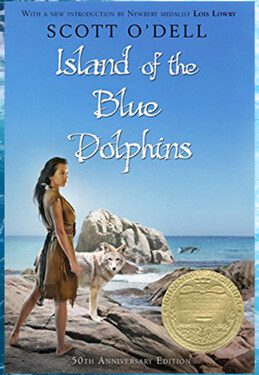
Island of the Blue Dolphins

By Scott O’Dell

The Island of the Blue Dolphins is a historical fiction novel, based on a true story about a girl named Karana, who was stuck living in isolation for 18 years. In the story, Karana lives on an island with her family, and the rest of the Ghalas-at people. They all live in peace until the Aleut people arrive and take their resources, and all the Ghalas-at people are forced to leave the island. They accidentally leave Karana behind, where she is to fend for herself.

The progression of this story’s plot was unlike many stories I’ve read before. It started as a simple story about a girl’s family and tribe life on San Nicolas Island and moved into a story about how a girl lived in isolation for so many years. Along with the progression of the plot came character development. Karana knew how to live her life with what she had, but this came into play when she was stranded.

I think that the Island of the Blue Dolphins is a great book because it portrays a way of life. It gives a new aspect to the reader about different lifestyles people have all around the world. Another reason I enjoyed this book was because of the plot twists; just when you thought something came to an end, it opened with a new beginning; it made this book all the more interesting to read and kept the reader hooked.

I would best recommend this book for ages 12+, and the reason for that is that the book has some themes, such as isolation and extreme perseverance. In the story, Karana goes through so much that I couldn’t imagine someone under 12 understanding. Another reason that I recommend this book to a 12+ audience is because of the style of writing. The way the book was worded might be hard for a younger audience to understand the concept.

Overall, I enjoyed the book and recommend it to anyone who likes to read true stories. This book will keep you reading. Between Karana’s adventures and how she keeps herself company, you won’t want to put the book down!

Reviewed by Danica Kovacevic, 8th grade, NewGate School, Sarasota, Florida

Book Review – Flower Garden

Book Review – Flower Garden

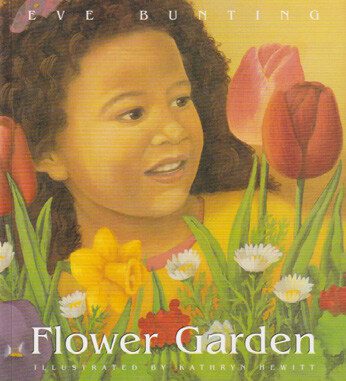
Flower Garden

Written by Eve Bunting Illustrated by Kathryn Hewitt

Another book by Eve Bunting! This talented woman has written many books for children from two years old to teenagers, in all different settings, and in varied real-life situations. She doesn’t try to hide the truth or to tip toe around uncomfortable topics. Her stories have heart and sometimes raw emotion. The illustrations in her books are usually quite realistic and enhance her words beautifully. Her books raise her readers’ social consciousness – sometimes subtly and sometimes flat out!

Flower Garden is the story of a dad and his daughter putting together a beautiful surprise for his wife and her mother’s birthday. It’s set in a city where they live several stories up in an apartment building. They ride public transportation to and from the grocery store, where they buy plants, a window box, and cake and ice cream.

Mom isn’t home, so they can quickly plant the flowers in the window box before she arrives. She is surprised and happy when she gets home!

In this book the words rhyme. Young children love rhyming! In this book, the reader may not be aware that they are learning about people of different races, or they may recognize themselves in the characters. It is a beautiful book that young children will enjoy over and over again at home or in school.

Reviewed by Lorna McGrath

Book Review – Hold This!

Book Review – Hold This!

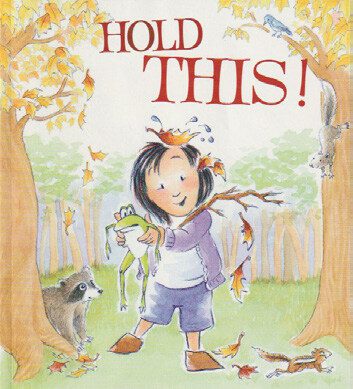
Hold This!

As a dad and his young daughter, Mika, take a walk through the woods, Mika finds so many treasures that she wants to keep and take home. She finds a stick and a frog and some water and leaves and a sparkling stone and more. Mika wants her dad to put these items in his backpack or pockets, but he reminds her several times that she is a “big girl” and can carry her own treasures. At the end, Mika asks once more, “I know I’m a big girl, but…will you hold this?” as she reaches her hand up to him.

Written by Carolyn Cory Scoppettone Illustrated by Priscilla Alpaugh

Children love to collect things in nature. We often encourage them to leave them there or to carry the treasures themselves. Really, the very best part of a walk-in nature is the time spent together. Children two to six years old will enjoy this book.

Reviewed by Lorna McGrath

Book Review – The Vegetarian Cookbook: More Than 50 Recipes for Young Cooks

Book Review – The Vegetarian Cookbook: More Than 50 Recipes for Young Cooks

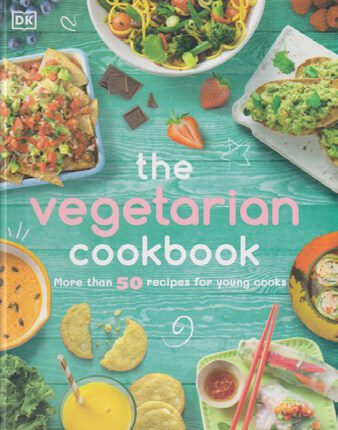
The Vegetarian Cookbook: More than 50 Recipes for Young Cooks

Written by DK publishers

My son and his family are vegetarians. I wondered if there were any vegetarian cookbooks for children. So I went searching and, lo and behold, there were quite a few!

I found one that looked good to me (on the internet), it was the right age grouping for my grandson, and the description seemed like it was laid out in a way that was easy to use and simple enough for a young child. I bought it. Well, much to my chagrin, this book was not child friendly or, in my case, adult friendly. All the measurements were in grams, the photos showing the steps were too small (about 16 on an 8×10 page), and the photos had no instructions. At any rate it was totally unsuitable for me (master’s degree in Home ‘Ec’ and a Montessori 3-6 credentialed teacher) or for my grandson (5 years old, loves to eat and cook, and goes to a Montessori school). What a disappointment!

Today, I looked again and found a beautiful book by DK publishers with beautiful photos, an introductory section with kitchen rules, equipment, and healthy eating with food groups. Once the child is prepared, we get into the recipes that include breakfasts, snacks, lunches, drinks, entrées, and sweets. There are easy-to-follow steps with one photo and brief written instructions for each step. Everything looks delicious, as DK is masterful with their photographic illustrations. I can’t wait to cook with my grandson next time he comes over. The recipes would work for 4–8-year-olds and their parents or some other adults who love to eat and cook! It can be found on amazon.com

Book Review – Fly Away Home

Book Review – Fly Away Home

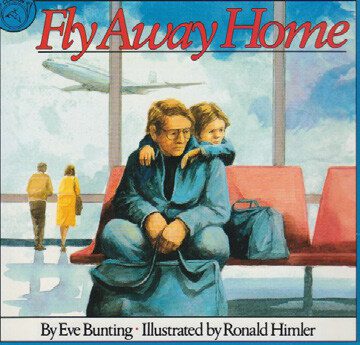
Fly Away Home

Written by Eve Bunting Illustrated by Ronald Himler

This is a book for elementary and even middle-school children. Andrew and his dad are homeless. They live in the airport. They must never be noticed, or airport security will throw them out onto the streets. Andrew’s dad works on the weekends as a janitor. It’s a lonely and sad life. Andrew sometimes gets angry about his mother dying and losing their apartment. He knows they must save their money to get a new apartment to live in. He saw a bird that flew into the terminal and couldn’t get out until one day it saw a door open and flew off. The bird gave Andrew hope.

Fly Away Home should be talked about with a parent or teacher, as homelessness is a problem in many places that hasn’t been solved. It is also often thought of as a situation that just drunks or mentally-ill people experience. Andrew and his father were not. They were just ordinary people who had fallen on hard times.

The book could be a catalyst for social consciousness and justice, for community service, or for action for change in our communities and countries.