
7 Practices to Develop Character
from Tomorrow’s Child – The Montessori Family Magazine – September/October 2021
Centering strong character traits in your family through modeling, experiences, and conversations is the foundation of developing strength of character. Practicing character is a daily decision that needs to be made, time and time again. Practice brings permanence if it is purposeful and deliberate.
What follows are seven practices in helping children start to develop strong character.
Practicing Integrity
• Model integrity. Live your values. Do your actions and words reflect your family values?
• Articulate your family values so they become a natural way of thinking and behaving.
• Develop a moral vocabulary. Children need to understand words, such as honesty, trust, fairness, integrity, etc. Teach children behaviors that embody these words.
• Acknowledge children when they are demonstrating integrity, not rewarding them but acknowledging them by telling them how much you value their behavior.
• Discuss and give examples of the effects your child’s actions have on themselves and on others.
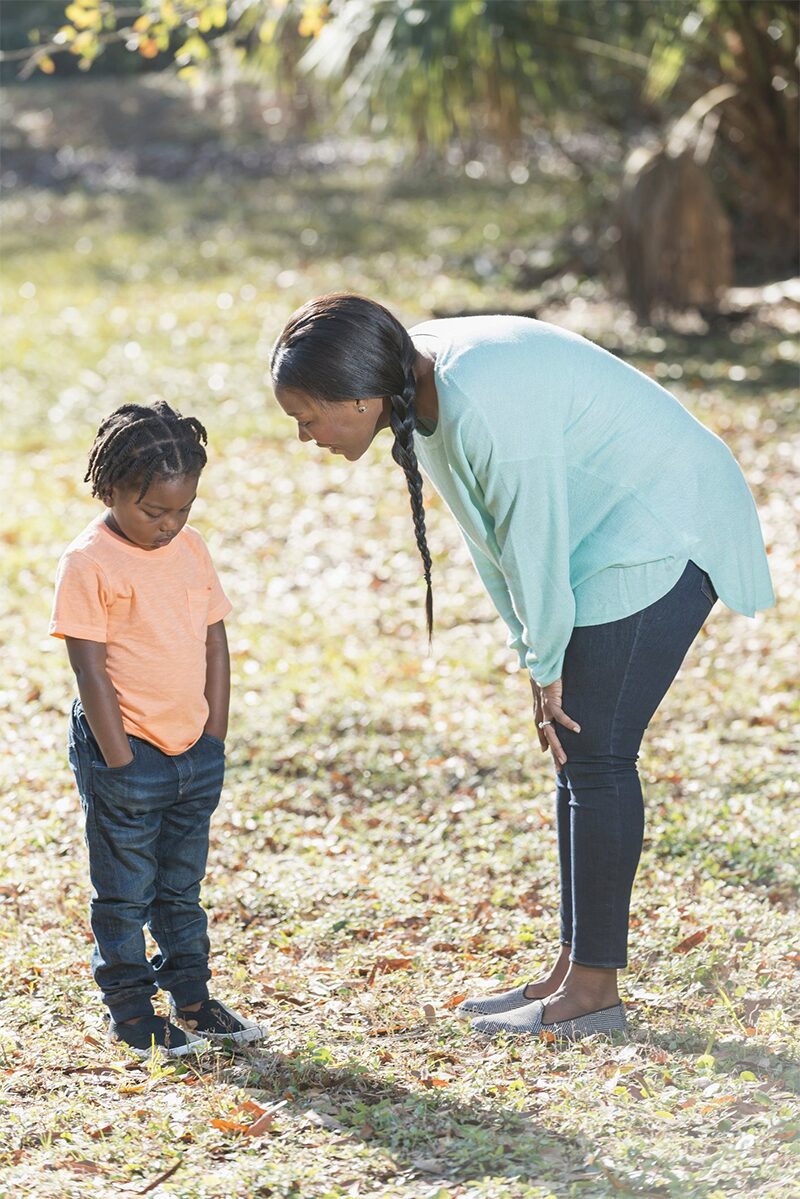
• Respond to children’s behavior with calmness and consistency. Be open to listening to your child’s reasoning for an action before instinctually admonishing and correcting, then remind them of the expectations and decide on a natural consequence that is consistent and clearly understood.
Practicing Kindness
• Model kindness. Children learn how to relate with others by observing the adults around them and how they treat other people. Show them what it means to be kind and name the action as kindness.
Try to always speak kindly to your children, especially when you are tired, frustrated, or angry.
• Share stories of kindness, whether personal stories, stories in books, stories on the news, etc. Stories are a wonderful way of building an understanding of kindness.
• Assess the teasing in your household. Is it demeaning, provoking, or humiliating?
Remember, children learn how to play and interact with peers by their own experiences at home.
• Discuss how their behavior affects those around them, whether it is positive or negative.
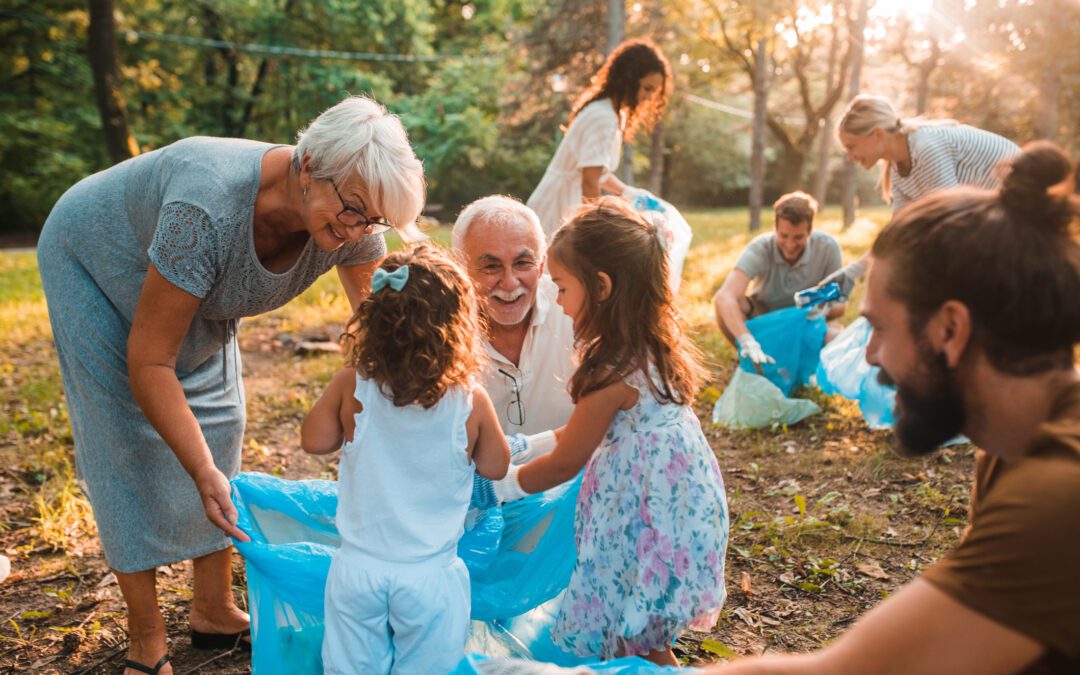
• Give your children opportunities to serve others. Show them that holding a door open for someone, smiling and saying hello, and thanking the cashier, are all demonstrations of kindness.
• Expect kindness when your child speaks to you. When your child speaks to you rudely, simply state how you would like to be talked to. Do not get into an exchange with them, just simply state your preferred specifics of communication. Be consistent.
Do not let poor tone or attitude slide.
Practicing Positivity
• Model being positive. Take the time to monitor how you present your life experience to your children. Do they hear you regularly speaking positively or negatively?
Try to point out the good side of events and experiences.
• Address failure as an opportunity for growth. Help your children self-evaluate situations. Ask the questions: What went well and what would you change if you could? Encourage your child to develop a plan of action to effect change the next time around.
• Challenge your children when they are personalizing (“It was all my fault”) globalizing (“I always make mistakes”), or catastrophizing (“I will never do anything right”). You do not have to contradict your children’s explanation, but encourage them to come up with positive outcomes to the situation.
• Encourage children to set their own goals and think through how they plan on achieving them. This process gives them agency and a sense of competence that often leads to success. Encourage them to focus on the best possible outcomes and, as such, they will align their thoughts in that way and work toward achieving the outcome they want.
Practicing Gratitude
• Model gratitude. Make it a habit to notice and verbalize the things for which you are grateful.
• Ask your children questions to help them start to notice things that deserve gratitude: What have you noticed today that you were given that you are grateful for? and, Are there things in your life that you are grateful for that aren’t gifts or material things?
• Create space for conversations regarding how they feel when they receive something (including non-material things).
Help them associate positive feelings with someone else’s actions. As often as possible, highlight the idea that people and events can give us good feelings.
• Teach gratitude through action. Ask your children if there is a way that they would like to show how they feel about a gift, an event, or a person. Children can use their special talent or interest, for example, and make up a song and/or paint a picture to express their gratitude.
Practicing Flexibility
• Model flexibility. Tell children when and how you are being flexible as things come up throughout the day, whether as part of a minor or major event. Explain how you are being flexible and, when appropriate, involve children in the new plan. the routine at home every once in a while, helping them become accustomed to managing change.
• Change the rules to board games; start out with small changes, so they can see how they can adjust. Then, make more changes.
• Give positive reinforcement when your children demonstrate flexibility and change their course of action.
• Teach your child strategies to take when a change occurs. Teach them to stop and breathe, state the problem, consider at least three possible solutions, then select one to try.
Practicing Effort
• Model effort. Show your willingness to take risks and try new things, even when they are hard.
• Acknowledge effort, bravery, risk-taking, open-mindedness, and keeping a positive outlook.
• Teach children to monitor their effort.
Help them reflect on whether they gave their best in an activity.
• Help children recognize and celebrate their effort by asking them, What was something you did today where you felt proud of how hard you tried?
• Make it easy to work hard by preparing the environment with the tools they need to succeed with a task.
• Help your children work through challenges by modeling self-talk. Children can learn how to persist if they talk out the problem, coupled with positive self-talk.
• Show your children the progress they have made. Remind them of where they started and how far they have come.
Practicing Accountability
• Model personal accountability. Demonstrate accountability by apologizing and making amends when necessary. You will show your children you are responsible for the consequences of your actions.
• It is important that your children know exactly what is expected of them and the consequences of not meeting expectations.
They also need to know what is non-negotiable and what is open for discussion and mutual agreement.
• Allow your children to be responsible for their actions. Even a three-year-old can clean up a spill; spilling is normal, but cleaning up the spill is also normal.
• Parents should not point fingers or make children feel defensive about behavior.
They should acknowledge when a child owns up to a mistake, and help them come up with a solution on how to make amends; and do something differently next time.
• Give children age-appropriate choices and chores.
• Encourage children to participate in decision-making to develop accountability.
The road to strong character is paved with practice. It is a journey, and it is going to have ups and downs. The term practicing is not inadvertent. Have patience and remember what your ultimate goal is for your child.
Cassi Mackey, M.Ed. is passionate about helping families create sacred spaces where love, joy, and honest connections are nurtured. Cassi has witnessed the transformational power when families engage in Montessori philosophy as an imputable practice. It is a promise of more meaningful relationships, greater depth of experience, and a broader, more compassionate view of oneself and the world. Cassi has lived, learned, and taught the Montessori pedagogy for the last 30 years as a Montessori 9-12 teacher, a school principal, and a consultant. She consults with (and provides advice to) Montessori communities and families that are intent on providing safe harbors for children. Contact Cassi via email at: cassimackey11@gmail.com.