

Webcast: IMC Moving Forward
To continue reading, you will need to choose a subscription plan.
Montessori and Advocacy: Next Steps
To continue reading, you will need to choose a subscription plan.
On The Road With Maria
To continue reading, you will need to choose a subscription plan.

Utilizing Parent Ambassadors to Expand Your School’s Admissions Staff

college girl on the street
Do you feel that you are always running out of time? Do you feel overwhelmed when you look at your lengthy to-do list?
Let’s face it, you only have so much time to accomplish everything on your list. From giving tours to answering parent questions on the phone to keeping your school’s Facebook page updated, life as an Admissions Director at a private school can be all-consuming and never-ending.
You need a team of parents to help you.
A group of select Parent Ambassadors can expand your efforts and exponentially increase your effectiveness. This is a core strategy that should be part of every Admissions Director’s marketing and enrollment plan.
There are five main roles that Parent Ambassadors can help you expand your enrollment and marketing effort:
1. Tour Guide: Some schools use Parent Ambassadors to give or assist with campus tours on a personalized visit or open house. This can be a great parent-to-parent connection. A satisfied “customer” will always do a better job selling your school from their own experience than a paid “salesperson.”
2. Personal Contact with Inquiries and Applicants: Your Parent Ambassadors can be utilized to make personal contacts with your prospective parents. This contact can be part of your follow-up sequence as a phone call, email, or hand-written note, depending on the parent, their preferred approach, and time available.
3. Outreach to Feeder Schools, Churches, and Community Events: It can be difficult to establish connections with feeder schools and churches, especially when you are attempting to reach the administrator or pastor. However, your Parent Ambassadors can help you in this effort. They can also help with your outreach by attending and representing your school at key community events or by inviting prospective families from their neighborhood to an in-home coffee and dessert meeting.
4. Online Reviews: It is important to have updated and positive reviews of your school on key school directory and review sites such as GreatSchools.com as well as on Google, Yelp, and Facebook. Your Parent Ambassadors can help you by writing positive reviews as well as recruiting other parents in your school to write additional reviews.
5. Brand Advocate: Your school’s reputation and word of mouth are critical to your marketing and enrollment success. Parent Ambassadors can help you in this effort by keeping their ears open to the word on the street and online. When something negative is said or published, they can jump in and defend your school as your brand advocate.
ML/September 2018/ pg 9
Strong BOT & HOS Partnerships= Successful Montessori Schools: (And yes, they are possible!)
The Board of Trustees (BOT) and Head of School (HOS) have multiple roles and responsibilities within each Montessori school. However, one element that is often underestimated is the power their well-defined relationship can bring to the ultimate success of their school. Think of them as co-captains of this beautiful ship called a Montessori school. The better the relationship they forge, the more successful they will be at steering the school in the right direction, through rough waters or calm, day in and day out, year after year.
As the Head of Bowman School in Palo Alto, CA, I am frequently asked to comment on and speak about this topic because our school has traditionally maintained a strong relationship between the HOS and BOT. For more than twenty years, we have committed the time, energy, and resources to build and strengthen this partnership, and I am convinced this is one of the key reasons our school has remained so successful. I understand how demanding daily schedules can be, but the importance of the HOS and BOT relationship is key to guiding the ultimate success of each Montessori HOS and school. It is my hope that the insights shared will encourage other Montessori schools to know that these strong partnerships are possible and well worth the investment.
To better understand the importance of the relationship between the BOT and the HOS, let’s first take a look at the roles of both. Once we understand these roles and how they interact with each other, it will be easier to evaluate how effective this relationship is in your school, in order to make it as successful as possible. After reading this article, you should be able to rate and review how well your school is doing on this topic and take necessary actions in areas that need improvement.
Generally, the BOT has three primary tasks:
Keeping in trust the mission and vision of the school. They must be skilled at strategic planning and thinking because they are responsible for defining and monitoring the short- and long-term goals of the school, as determined through a periodic strategic planning process. An ongoing practice of strategic thinking gives the Board the flexibility to react to unforeseen opportunities and circumstances that will have an impact on the school. In this task, they also need to set policy in accordance with the school’s mission and institutional goals.
Hiring, evaluating, nourishing, and supporting the HOS. The Board supports the Head in the day-to-day operation of the school but is not involved in management or administration. The Head, not Trustees, hires, supervises, and evaluates all faculty and staff.
Financial stability of the school. In order to ensure the financial stability of the school, Trustees are responsible for approving the yearly budget, including the setting of tuition. As Trustees, they also support and participate in fundraising efforts and encourage open and clear communication to advance the mission of the school.
They also welcome inquiries from parents regarding any of their areas of responsibility.
Now let’s take a look at the role of HOS. There are many responsibilities and each support the objective of keeping the mission and vision alive throughout every aspect of the school. After all, a powerful vision and mission are critical for inspiring children to love learning in an academically challenging and internationally aware program that promotes respect, responsibility, and independence. The role of the HOS typically involves the following:
Finance and Development. The HOS oversees the annual budget and day-to-day management of funds. Heads handle fundraising, such as capital campaigns, annual funds, and endowment for financial aid. The team they manage typically includes a CFO, Financial Manager, Development Director, and consultants.
Teacher Quality. The HOS is responsible for hiring the right people, developing staff talents, rewarding high-performing staff, and retaining excellence. They must “manage-out” low-performing staff and set clear goals that create a scalable and reliable process while establishing a framework for acknowledgements. These goals must then be set in stone so they trickle down to the entire organization.
Academic Program Goals. The HOS must maintain cross-program consistency throughout the classroom environment, teaching team, development of community, student norms, and Montessori goals.
Staff Goals. The HOS must mentor teaching teams, ensure environmental upkeep, develop the community, and foster goal orientation.
Accountability. This role represents the Montessori Method in the most authentic form. The HOS helps teachers take ownership of their day-to-day educational experience and long-term experiences. They must ensure that the school helps children learn and grow, and meets the promises that are made to parents, while respecting the individuality of each family and child.
School Aesthetics. The HOS realizes that every day is a tour day. This means they must continuously add beauty to the environments, both indoor and outdoor, when it comes to materials used, material display, storage, and décor.
Parent Education. The HOS is responsible for establishing a warm and welcoming community. They spearhead HOS roundtable events, review all parent education activities, and form a partnership between home and school.
Admissions and Matriculation. The HOS is responsible for admitting families to their school, as well as handling matriculation from various grades, special-needs or behavioral situations. This role typically involves managing a director of admissions.
Site Development. The HOS is always evaluating current facilities and will expand campuses as needed by adding new state-of-the-art buildings and outdoor facilities designed to better meet the school’s goals.
Communications. The HOS strives to keep every communication focused on the mission and vision of the school. They regularly communicate via email/mail/social media both quick and easy information or longer, detailed text. From daily emails to monthly newsletters to quarterly reports, the HOS is in charge of all internal and external communications. In addition, the HOS coordinates the school’s event calendar. This calendar and all communications must be updated regularly to ensure they are timely and accurate.
Events. The HOS handles many events throughout the school day, as well as late day and evening activities. These all must be scheduled, communicated, set-up, and taken down. The HOS must also coordinate special events such as those driven by (or for) the Parent Association and the school community.
Logistics. The HOS takes the big-picture ideas and organizes the details, taking into consideration the people, place, parking, food, etc. The school and its events must be a well-oiled machine that functions smoothly.
Facilities. This role involves monthly and annual maintenance checks, large and small repairs, and risk management, such as Red Cross training of staff and fire/earthquake/tornado/terrorist drills. This role also requires the HOS to manage shared space and adjust classes and activity locations as needed.
The Working Relationship Between HOS and BOT
Now that we’ve outlined the individual roles of the BOT and HOS, let’s take a look at how they should be working together. Again, this relationship is critical because it sets the stage for the entire organization.
There are some areas where the HOS and BOT have shared responsibility, such as authorizations, finance policies, enrollment, and employment terms. However, there are other areas where the Board has primary decision-making authority and simply takes advice from the HOS. This includes policies and strategies such as mission, survival, and leadership. And finally, there are also areas where the HOS has primary decision-making authority and only accepts advice from the BOT. These are typically operational activities, such as admissions, staffing, programs, and systems.
One area in which the HOS and BOT must also collaborate is the annual report. Don’t cringe! I realize annual reports can inspire feelings of dread, but working together, the HOS and BOT can create a document that is both a great reflection of success and a vision for the future. We create ours each year after the audit is complete and initial content is written by the BOT. The annual report typically contains the following sections:
θ State of the School from BOT
θ State of the School from HOS
θ Finance Report
θ Donor Report
θ Matriculation
θ Honoring Staff for experience
θ Photos, photos, photos
There are also many Board meetings in which the HOS and BOT must coordinate and participate. Some Board
meetings are open sessions that include a call to order, minutes, finance update, committee reports, and HOS report. Other meetings are closed sessions which may include additional HOS items, capital campaigns, confidential items, brainstorming and problem-solving. We have found that effective BOT meetings occur when we focus on creative thinking first and reporting updates last. While that seems counterintuitive, it allows for the excitement of our school and opportunities to take center stage while people’s minds are fresh and most engaged.
Annual Review of the BOT and HOS
It is critical to making sure the HOS and BOT are reviewed annually to ensure they are doing their jobs to the best of their abilities and working together successfully. The commitment to this annual review is vital and can follow a simple format that keeps the time manageable and the results beneficial. The HOS is typically evaluated according to SMART goals (specific, measurable, achievable, relevant, timely) and involves staff, parents, and the Board. In school’s with older students, they should be involved too. The review is written by the compensation committee and delivered to the HOS.
What should be reviewed?
Defining the roles of the BOT and HOS are the important first steps, but critical to ongoing success is the continual review of how everyone is doing. Just like writing resolutions at the beginning of the year, goals are great, but we have to follow-up on them to make sure they are successful. I recommend an annual review that measures each category based on the following:
Level I: a Common starting point
Level II: Progressive performance
Level III: Exemplary performance
The goal is to work towards a Level III outcome in each area. I’ve provided several key areas for review and have provided tools to determine your school’s performance in each one. By honestly rating your performance, you will know exactly what needs improvement and can make plans to affect this change.
First of all, the HOS should always have a written contract that defines the scope of his/her accountability and a performance evaluation process.
Level I: The HOS does not have a written contract.
Level II: The HOS has a written contract, but the contract is not specific about the scope of accountability and does not define a formal evaluation process.
Level III: The HOS’s contract clearly specifies the scope of his/her role and accountability relative to that of the Board Chair and Board and specifies an annual HOS evaluation process.
Rate your school on how well it writes clear annual goals for the HOS.
Level I: The Board’s expectations of the HOS are not clear.
Level II: The Board President and the HOS have informally discussed expectations, but they have not been codified in writing. Instead, much of their interaction involves fighting fires.
Level III: The school has an up-to-date and approved strategic plan. The Board president and HOS have codified specific annual goals for the HOS, consistent with that plan and have agreed upon more tactical goals. These goals form the basis for evaluating HOS performance.
There should be a process to support the HOS. How does your school compare?
Level I: There is no formal provision for HOS support.
Level II: The HOS is permitted to hire a personal “coach” at school expense to help counsel him/her on how to optimize key constituency relationships, e.g., with the Board President/Chair, the Board at large, parents, and staff, with the purpose of overcoming barriers to success.
Level III: The HOS is actively encouraged to hire a coach and, in addition, there is a Head support advisory committee comprised of community leaders who help the Head keep his/her ear to the ground and provide sage, unofficial counsel.
Evaluate whether the HOS and Board President/Chair have defined the details of the HOS annual evaluation process.
Level I: HOS evaluation is only done when there are crises and because of this, it tends to be biased to a negative view of performance.
Level II: There is an agreed requirement for regular HOS evaluation, but the evaluation has been put off due to “lack of time.”
Level III: There is an agreed annual HOS evaluation process; it is implemented thoroughly, discreetly, and in a positive tone; the HOS finds it helpful and reinforcing; the Board finds that it is helping improve HOS performance.
It is also important to make sure your school has an agreed upon process for evaluating the Board.
Level I: There is no formal process for the Board to evaluate its effectiveness.
Level II: There is a process for Trustee self-evaluation, although not for an overall evaluation of the Board’s effectiveness; the Board is not introspective about how to improve its own performance and tends to focus on criticizing the HOS and staff.
Level III: The Board follows a disciplined and regular process of evaluating its effectiveness, including the effectiveness of the Board President and that of individual Trustees; the results are used to enhance the quality and effectiveness and strategic focus of the Board and develop Board skills. As a result, being asked to join the Board is a coveted honor.
The relative roles and accountability of the staff and Board should be clear and understood by those same Board members and the school staff.
Level I: The Board becomes very involved in a number of key operational arenas to the discomfort of the staff and HOS.
Level II: The Board tries to focus on mission and policy-related issues, but individual members sometimes violate the spirit of this policy and disempower the staff and HOS. When this happens the Head and Board chair appropriately rebuke those members.
Level III: The Board President and HOS are aligned around the criticality of allowing the HOS and staff to direct operational issues and this is emphasized actively by both in Board meetings and during Board development sessions, HOS and staff feel empowered and accountable and are comfortable asking for counsel from the Board when necessary.
New Trustees to the Board need to undergo orientation so they are clear about the roles of the Board and staff upon joining. After all, how is someone supposed to do their job well when they are not sure what that job entails?
Level I: There is a great deal of confusion among Trustees and school staff about who is responsible for what, and no process for working through principles.
Level II: New Trustees, in their orientation process, are informed about the fact that the Board’s role is to stick to mission, strategy, and the Board’s fiduciary responsibilities, but when specific issues come up there is a lack of clarity and both Board and staff feel reticent to assert themselves to avoid hurting feelings; therefore, balls get dropped.
Level III: Upon joining the Board, members receive orientation and training regarding the relative roles of Board and staff. Additionally, both the Board President and HOS are direct with Board members who are venturing into staff turf when they are “out of line.” When there is a major need to clarify relative responsibilities, the Board and staff leadership convene and work through relative responsibilities in all key areas.
Evaluate how well the BOT and HOS communicate and if they communicate in a timely manner.
Level I: Scheduled meetings between the Board Chair and HOS are often postponed, resulting in ad-hoc get-togethers generally focused on the crisis of the moment.
Level II: The HOS and Board Chair meet every other week to review hot issues and to prepare for the monthly Board meetings; additionally, the HOS and Board Chair communicate consistently via email.
Level III: The Board Chair and HOS conduct a sacred weekly meeting, where all issues and problems are shared. They communicate frequently via phone calls and email to alert each other in a timely fashion about potential problems and ensure alignment of perspectives and actions. In public forums, the two are seen as aligned. The Board President goes out of his/her way to compliment the HOS when he/she sees something going right and looks for ways to make him/her successful.
The Board President and HOS should also collaborate to craft value-added Board meeting agendas and to orchestrate how they will conduct themselves before, during, and after the meetings to ensure desired outcomes.
Level I: Board agendas are developed in advance, but typically Board members overtake the planned agendas and raise ad-hoc concerns. The Board President and HOS are frequently on the defensive during these meetings and often appear not to be aligned. This causes significant interpersonal tension.
Level II: The Board President and HOS consult relative to Board agenda topics prior to Board meetings, but the specifics of the meeting agendas and content are largely up to the president. On occasion, the HOS is taken by surprise when new information is shared with the Board that he/she has not had a chance to review and discuss with the Board President beforehand; this causes tension in their relationship.
Level III: The Board President and HOS jointly develop Board meeting key agendas, work together to ensure Board committee chairs are effectively prepared, define value-added Board development activities, and actively strategize on their respective roles in ensuring that desired outcomes are achieved.
Conclusion
As you are well aware from your own experience, there are many roles and responsibilities of both the HOS and the BOT in a Montessori school. However, it is clearly defining those roles and then working together, that will help determine your school’s long-term success. If this relationship is not working well in your school, it is impossible to realize your school’s full potential, and it needs to be addressed quickly. Your desire to help impact the lives of your students is worth the time and effort to form a strong relationship that benefits the HOS, BOT, and your school community.
ML/ September 2018/ pg 4
An Education for Life: What Children Really Get Out of Montessori

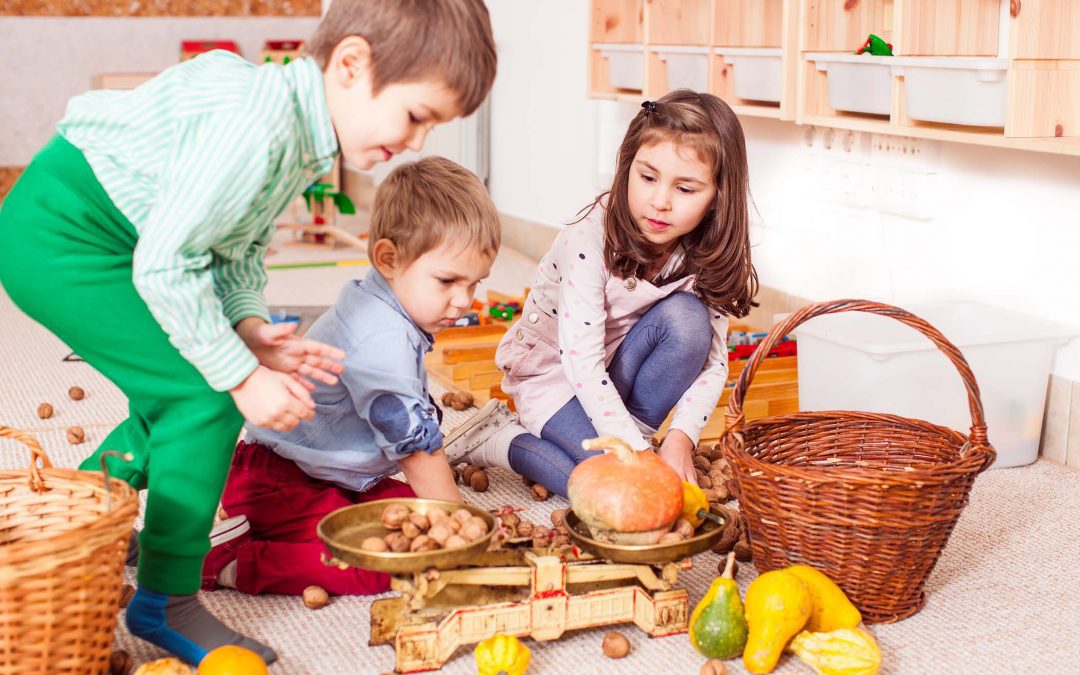
Children in kindergarten playing and exploring the concept of balance using weights
When we try to define what our children really “get” from Montessori, we need to expand our vision to include more than just the basics. Of course they learn to read, do four-digit mathematics, recognize geometric shapes, and identify the parts of a plant and a mollusk. They also learn how to be a contributing member of a community.
A Montessori school is more than a classroom. It is a society in a microcosm, and the skills and lessons they learn in this environment extend well beyond the traditional definition of academic success. They are life lessons that were very much needed at the time when Dr. Montessori developed her teaching methodology, and they are life lessons that remain relevant to our children today.
“The basic nature of our society and the family itself have changed radically, and only an equally radical change in education will suffice.”—John Dewey, School, and Society, 1899
In her book, The Schoolhome: Rethinking Schools for Changing Families (Harvard University Press, 1992, revised 2009), Dr. Judith Rowland Martin writes that she was not very impressed when she first encountered Montessori education. She understood that Montessori schools placed children in multi-age classrooms and used manipulative learning materials, which may have been very unusual during Montessori’s lifetime, but have since been incorporated into most early childhood and many elementary classrooms, thanks to the Open Classroom movement of the 1960s. However, Dr. Martin’s understanding of the value of the Montessori approach became dearer when she came across a statement in Dorothy Canfield Fisher’s book, A Montessori Mother (first published in 1912), in which Fisher disagrees with the universal interpretation given to Montessori’s “Casa dei Bambini” or “Children’s House.”
In A Montessori Mother, Fisher wrote, The phrase, ‘Casa dei Bambini,’ is being translated everywhere nowadays by English-speaking people as “The Children’s House,” whereas its real meaning, both linguistic and spiritual, is “The Children’s Home (or Children’s Community, ed.).” Fisher insisted upon this rendering, which she felt offered a much more accurate and complete insight into the character of the Montessori classroom.
Dr. Martin recognized that “This misreading of the Italian word ‘Casa’ as ‘house’ has effectively cut off two generations of American educators from a new and intriguing vision of what school can and should be. Read ‘casa’ as ‘house’ and your attention is drawn to the child-sized furniture, the Montessori materials, the exercises in practical life, the principle of self-education. But if you read ‘casa’ as ‘home,’ you begin to perceive a moral and social dimension that transforms your understanding of Montessori’s idea of a school.
Once I realized that she thought of school on the model of a home, the elements of her system took on a different configuration. Where before I had seen small children manipulating concrete learning materials, I now recognized a domestic scene with its own special form of social life and education.”
Martin realized that what Montessori had established was not simply a more attractive classroom in which children would be taught to read and write. The Casa dei Bambini represented a social and emotional environment where children would be respected and empowered as individual human beings.
It was an extended family, a community in which children truly belonged and really took care of one another. Montessori described this process of emotional growth as “valorization of the personality,” a strong sense of self-respect and personal identity. Within this safe and empowering community, the young child learned, at the deepest possible level, to believe in herself. In an atmosphere of independence within the community and personal empowerment, she never lost her sense of curiosity and innate ability to learn and discover. Confident in herself, she opened up to the world around her and found that mistakes were not something to be feared, but rather an endless opportunity to learn from experience.
This special relationship that is so common among Montessori children and their teachers and schools is very different from, and much more dramatic than, the experience most children have in school.
Frances Merenda, a 1990 graduate of The Barrie School in Silver Spring, Maryland put it this way:
“I started in Montessori at age two. I’m a product of the entire system. I did well, but still many people wondered if I had been prepared for college and whether I could ‘make it’ in a ‘real’ school? The skepticism was so disconcerting that I never bothered to step back and see what 15 years of trust, respect, teaching, and learning had done for me. When I went off to Northwestern University, I left my support system and community behind and entered a world that was much colder and uncaring.
At first, I deeply missed that sense of belonging. I didn’t realize that Barrie had not only given me a second family, but had also taught me how to build new friendships, support systems, and community wherever I go. I now use my years of experience in community building to cultivate secure relationships with people I have come to know. Barrie did more for me than just prepare me academically for college. It prepared me for anything to which I chose to apply myself.”
To understand how this evolved, it’s helpful to understand the world in which Montessori lived at the time she developed her educational approach.
Montessori was a professor of medicine, specializing in psychiatry. At that time, there was no such thing as Freud’s “talking cure.”
There were basically two approaches to the treatment of disturbed individuals.
The most common and familiar treatment was to confine people who acted strangely to insane asylums.
The second, and almost forgotten, approach was the “Moral Education” movement that spread across Europe and North America during the 1700 and 1800s.
These therapeutic communities were villages set off in the country where chronically despondent or nonviolently dysfunctional individuals lived in group settings with caring individuals.
The fundamental principle of the Moral Education movement was respect and kindness. Instead of treating their patients as prisoners, the staff acted on the belief that within each human being there is a core of goodness and a “sound mind.” The community lived and worked together as an extended family and developed a sense of belonging that is dearly reminiscent of what we see in our children’s classrooms today.
These communities were much like an Israeli Kibbutz, self-sufficient farming communities in which each individual was encouraged to become more independent while contributing to the overall operation of the village. Patients lived in small homes with a couple who served as their mentors. Surviving reports suggest that a great bond developed among those who lived and worked together. The movement recorded success rates that were far more effective than traditional approaches; returning their clients to their home communities as productive, happy citizens after an average stay of eleven months. A sense of close personal community and positive human relationships was proven successful as a means to help bring these disturbed people back to reality.
Montessori was well aware of this movement through her medical research into innovative strategies for treating the intellectually disabled. She used this same model with tremendous success in her own work with mentally disabled and autistic children in Rome and later hypothesized that even more dramatic results might be achieved with “normal” children. Her first “Children’s Community” was made up of 60 inner-city children from dysfunctional families.
In her book, The Montessori Method, Montessori describes the transformation that took place during the first few months of operation, as the children evolved into a “family.” The children had a sense of becoming the owners of their school. They were encouraged to rearrange the furniture, prepare and serve the daily meals, wash the pots and dishes, help the younger children bathe and change their clothes, sweep, clean, and work in the class garden. Through their day-to-day involvement in their classroom community, Montessori saw these children develop a sense of maturity and connectedness that helped them realize a much higher level of their potential as human beings.
While times have changed, the need to feel connected is still as strong as ever. In fact, for today’s children, it is probably even more critical.
Whether it’s an inner-city child or a child from an affluent suburb, the sense of community has all but disappeared from our children’s lives. Families regularly move from house to house, and from town to town. Grandparents usually live in other cities or other states. Both parents work out of necessity, and when they are at home, they are very, very busy. The over-programmed, hurried child has become the norm for this generation.
Many children have the sense that they do not belong to anything or anybody, which is why peer friendships, which give a sense
of belonging, are especially important to children today.
Along with whatever else Montessori gives our children, it definitely gives them the message that they belong-—that their school is like a second family.
Children will normally grow up to be productive, happy and confident individuals if given the right emotional environment. It seems clear that our attitudes about people, the ability to overcome our egocentric tendencies, our willingness to share, to compromise, to resolve conflicts non-violently, and our ability to discover an underlying sense of self-worth are not qualities that human beings develop spontaneously, but rather through years of experience with caring people who convince us that we belong and give us the opportunity to practice and master these skills of everyday living. As in all things, we learn by doing.
One of the greatest strengths in the approach that Montessori developed is the three-year age grouping that you will find in every Montessori school.
By consciously bringing children together in a group that is large enough to allow for two-thirds of the children to return every year, the school environment promotes continuity and the development of a very different level of relationship between children and their peers, as well as children and their teachers. For teachers, this relationship presents itself as a commitment that they make to stay with the children in their class for a prolonged period, rather than jumping from job to job or from classroom to administration. Montessori teachers do more than present curriculum. The secret of any great teacher is helping students open their minds and hearts so they are ready to learn; where motivation is not focused solely on good grades, but a fundamental love of learning.
As parents know their own children’s learning styles and temperaments, teachers, too, develop this sense of each child’s uniqueness by establishing a relationship over a period of years with the child and her parents. Montessori schools give our children not only the sense of belonging to a family but also of how to live with other human beings. By creating a bond of parents, teachers, and children, Montessori sought to build a community where individuals could learn to be empowered, where children could learn to be a part of families, where they could learn to care for younger children, learn from older people, trust one another, and find ways to be appropriately assertive rather than aggressive. To reduce these principles to the most simplistic form, Montessori proposed that we could foster peace by healing the wounds of the human heart and producing a child that is more secure. She envisioned her movement as potentially leading to a reconstruction of society.
Montessori schools are different, but it isn’t just because of the materials that are used in the classrooms. Look beyond the pink towers and golden beads, and you’ll discover that a classroom is a place where children really want to be—because it feels a lot like home.
Tomorrow’s Child/ September 2018/ pg 23
Montessori Schools Are Exceptionally Successful: So Why Aren’t There More Of them?
To continue reading, you will need to choose a subscription plan.
How to Address Challenging Behaviors in the Montessori Classroom
To continue reading, you will need to choose a subscription plan.
Webcast: What is Montessori Curriculum: Is There Such a Thing? Part 3
To continue reading, you will need to choose a subscription plan.
Webcast: Dispelling Misperceptions about Montessori and Attaining Common Ground with Public Schools
To continue reading, you will need to choose a subscription plan.
Webcast: What is Montessori Curriculum: Is There Such a Thing? Part 2
To continue reading, you will need to choose a subscription plan.

Webinar: The Great Lessons in the Elementary Years – Part I – Dr. Robin Howe
To continue reading, you will need to choose a subscription plan.
The Work of Education
To continue reading, you will need to choose a subscription plan.
Best-Practice Handbooks
Dr. Montessori’s legacy needs to be preserved in the face of rapid expansion and adaptation in a wide array of situations. We are concerned that Montessori could one day become “whatever anyone does in her name” and the value of the method for children will be lost. Montessori is both a set of practices and […]
Webcast: Effective Board and Admin Team Relationships / Part 1
To continue reading, you will need to choose a subscription plan.
Why Small Schools Work – Good Things Come in Small Packages
A hundred years ago most schools were very small in comparison with the large elementary schools and enormous middle and high schools that we find across America and in much of the rest of the world.
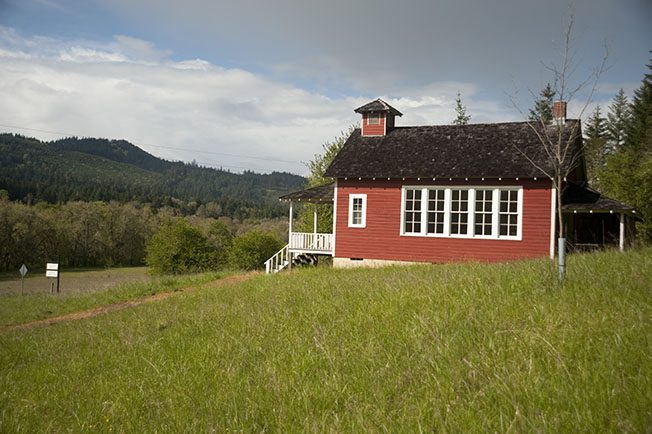
The one-room schoolhouse was the traditional American classroom model. Classes were multi-aged. Students learned from each other, especially the older students in the class, as well as from their teachers.
Junior and senior high schools were typically combined and commonly had enrollments of less than 400 students. With small enrollments, the choice of friends was limited. One benefit was that school friendships tended to grow strong and last for a lifetime.
Over the last hundred years, this tradition changed, and the one with which we are familiar became the norm. It is worth remembering how this came to be.
Before 1900, less than 10 percent of all students attended high school. Most began school at age six and left after the eighth grade. By 1910, the percentage attending high school had risen to 35 percent, but only 4 percent of American youth went on to college. In the past, high school was seen as preparation for college, and college was simply not seen as being needed for employment in most professions.
As the 20th century dawned, several social movements came together to transform the American educational system, and ultimately influence education throughout the world.
The first was the vigorous progressive drive to improve wages and working conditions in the increasingly urbanized and industrial economy of North America. One aspect was the campaign to discourage businesses and industries from employing children. The goal was both child protection and the elimination of this tremendous and inexpensive pool of labor. This laudable goal was accomplished by making child labor illegal and by requiring parents to send children to school.
The second great impetus to build even larger schools was the great wave of immigrants who came to the United States and Canada from Europe during the 1890s and early years of the twentieth century.
This was also a period of major growth in many industries, from mining to manufacturing, and the labor movement began to organize in response to low wages, long hours, and poor working conditions. This influx of immigrants and labor unrest led to a growing fear of socialism and foreign influences. As immigrant populations gathered in large cities and around industrial and mining communities, free (but compulsory) education was seen as the surest way to turn foreigners into loyal citizens. The public schools became the great ‘American Melting Pot’ and were idealized as a central part of the shared American experience. Whatever the positive outcomes of this trend, it also led to a movement from small independent local schools to large bureaucratic school systems.
As the economy began to shift, young teenagers who did not live on farms began to find it increasingly difficult to find a job, and social and economic pressure led many to stay in school longer.
At the same time, educational reformers saw the need to better prepare young people for the world of work, whether or not they had any interest in going on to college.
Thus, with both a growing population and a burgeoning number of young people between the age of 6 and 16 required to attend public schools, our cities began to find ways to house and educate a rapidly growing number of students.
Finally, to understand how schools grew from small neighborhood settings to modern shopping-mall-sized buildings that can house five hundred and more elementary students, and thousands of middle and high school students, under one roof, we have to remember that in the first half of the twentieth century most of North America was fascinated with industrial efficiency. Henry Ford popularized the idea of the assembly line, but many management experts contributed to the idea of standardization of parts, setting performance expectations, and laying out plans for making entire organizations more efficient.
Many good things came from this process, primarily greater output, technological innovation, and many more household goods and major purchases that have come to shape our lives. There is a direct line from the start of the modern industrial revolution to the cars that we drive, the modern kitchen, the entertainment industry, our cell phones, and the internet. The is also a direct connection between it and climate change, the pollution of our oceans, and the depersonalization of our society, which begins with our schools.
Whatever reasons explain (and perhaps once justified) the creation of large schools, today there is a strong case to reverse the trend.
From both studies and the experience of thousands of smaller public and nonpublic schools, we find that in these more personalized settings, students get a better education and feel more connected to the school community than in the large settings that many of us take for granted. This is true in inner cities and affluent suburban communities. It is true at every level, from elementary to high school. Major education reform groups, such as the Bill and Melinda Gates Foundation, have come to the same conclusion and invest vast sums into supporting the development of new small high school models.
As Jordan Hylden at Harvard University observed in 2004:
Students in small schools perform better academically, graduate at higher levels, are more likely to attend college, and earn higher salaries later on in life.
They participate more in extracurricular activities, have better rates of attendance, report greater positive attitudes towards learning, and are less likely to face school-related crime and violence.
Their teachers report greater job satisfaction and are more likely to feel as if they are succeeding in their work.
Their administrators and teachers are often more able to identify problems, respond innovatively and effectively, and adapt to change.
Their parents and relatives are more likely to become involved in the school.
Small schools are often characterized by personalized attention, curriculum integration and specialization, relational trust and respect, a student’s sense of belonging, a strong positive ethos, greater accountability, and a sense of communal mission.?
The point that I want to make is that bigger is not necessarily better, especially when it comes to designing schools. But large schools have become the norm.
Endless numbers of movies and television sitcoms showcase large public middle and high schools. Children take for granted that this is the way things are supposed to be. All through elementary school, many children long for the day when they can make the rite of passage and go to a big school. In affluent communities, the modern secondary level campus is shiny and new, and costs enough to keep property tax rates higher than ever.
Public education enjoys almost universal support from the American public. We take pride in our large schools. On the other hand, we hear conflicting messages from all sides, most commonly that our country’s students are falling further and further behind those of much of the rest of the world. We decry the state of schools today in America as a whole while reassuring each other that our local schools are among the best in the nation.
The seemly obvious solution is to spend still more money on our schools. There are inequities still to be found in American public education. Some districts have much greater resources, and some schools are grossly underfunded. But the evidence of the last several decades is that much of the money invested had led to modest outcomes in terms of overall student learning and the emotional climate within our schools. We have much more large modern buildings, Ipads, laptops, Smartboards, and educational technology that looks and sounds good but is not the direct link to deeper learning. Education is still centered around the direct relationship of children and adults who know how to facilitate their learning.
We hear snide jokes about the wasteful spending of the government, forgetting that the biggest spending arm of our government is typically right in our own community, where the public school system is often the largest employer in town and usually spends almost as much on centralized administration as on its classroom programs.
In recent years, technology is often seen as the answer, forgetting the wisdom of this old truth:
- Tell me about something and I may quickly forget.
- Show me and I may remember and understand.
- But lead me to do something on my own, to experience it firsthand, and I will almost certainly remember it for a lifetime.’
Children learn best by doing, and they learn best of all within a school setting in which they feel safe, respected, and emotionally connected to their teachers and fellow students.This is very difficult to do in a school system that is obsessed with state-mandated standards, constantly changing curriculum, high-stakes testing, and students who are trained to follow instructions rather than think deeply and become engaged in their education.
Smaller School Size Is Not Enough
There are obvious trade-offs with a smaller enrollment. With fewer students and teachers, it becomes difficult to offer as many extra-curricular programs and widely varying courses of study.
But how much is enough? Which is more important: a choice among thirty different social studies courses or a school in which you find your own voice, live and work within a strong supportive community, and, as a young person, feel that adults really listen and treat you with kindness, warmth, and respect?
Today, many charter and private schools are increasingly specialized, offering families a greater range of choice. Smaller schools that put children at the center, rather than the teachers’ lesson plans, tend to create far more humane, kind, and effective educational outcomes in the long run, not only in terms of what can be measured on test scores, but in terms of the quality of relationships, character, and ability to work together to get things done.
It is time to go back to the good old days when schools were small, and everyone knew your name.

Authorized List of Montessori Materials – Dr. Michael Dorer
To continue reading, you will need to choose a subscription plan.
Featured
-
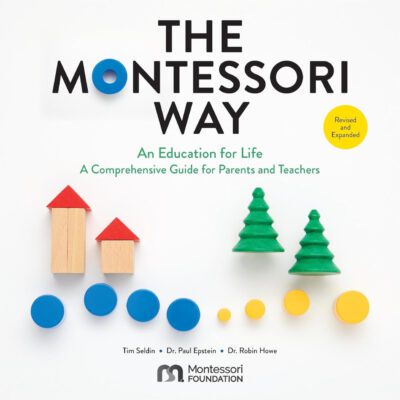
 The Montessori Way, Revised and Expanded: An Education for Life; A Comprehensive Guide for Parents and Teachers
$25.00
The Montessori Way, Revised and Expanded: An Education for Life; A Comprehensive Guide for Parents and Teachers
$25.00
-
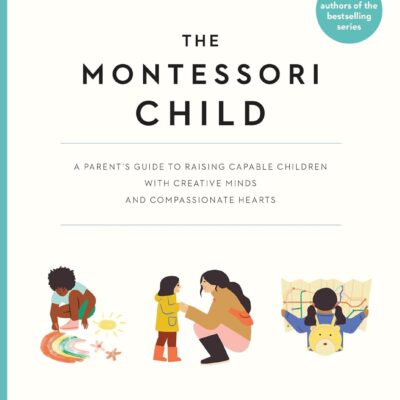
The Montessori Child: A Parent's Guide to Raising Capable Children with Creative Minds and Compassionate Hearts (The Parents' Guide to Montessori)
$20.00
-
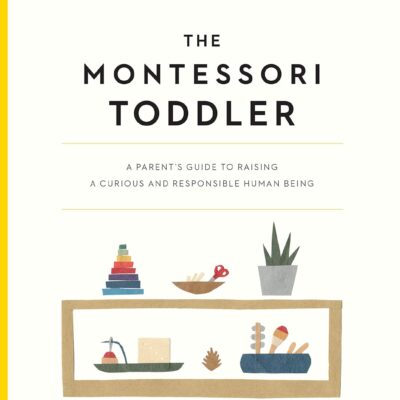
The Montessori Toddler: A Parent's Guide to Raising a Curious and Responsible Human Being (The Parents' Guide to Montessori)
$20.00
-
Montessori in Action: Building Resilient Montessori Schools 1st Edition
$29.95
-
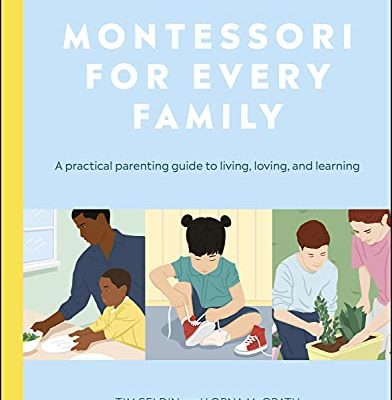
Bulk Order, 30 Copies of Montessori for Every Family: A Practical Parenting Guide To Living, Loving, And Learning
Original price was: $600.00.$510.00Current price is: $510.00.

Products
-
The Montessori Way, Revised and Expanded: An Education for Life; A Comprehensive Guide for Parents and Teachers
$25.00
-
The Montessori Child: A Parent's Guide to Raising Capable Children with Creative Minds and Compassionate Hearts (The Parents' Guide to Montessori)
$20.00
-
The Montessori Toddler: A Parent's Guide to Raising a Curious and Responsible Human Being (The Parents' Guide to Montessori)
$20.00
-
Montessori in Action: Building Resilient Montessori Schools 1st Edition
$29.95
-
Bulk Order, 30 Copies of Montessori for Every Family: A Practical Parenting Guide To Living, Loving, And Learning
Original price was: $600.00.$510.00Current price is: $510.00.