


Video Talk: Steve Hughes – Getting Education Reform Out of the Box
To continue reading, you will need to choose a subscription plan.

Webcast: Impressionistic Geography Part 1
To continue reading, you will need to choose a subscription plan.
Webcast: Impressionist Geography Part 3
To continue reading, you will need to choose a subscription plan.
Webcast: Montessori and Imagination – do they go together?
To continue reading, you will need to choose a subscription plan.
Webcast: Keeping Montessori Students for the Full Three-Year Cycle
To continue reading, you will need to choose a subscription plan.
What to do when enough is enough!
To continue reading, you will need to choose a subscription plan.
Webcast: Creating a Foundation of Normalization
To continue reading, you will need to choose a subscription plan.
A Year of Wonder: The Neuroscience of Empathy
To continue reading, you will need to choose a subscription plan.

The Montessori Paradox: Exploring The Elephant in the Montessori Classroom
To continue reading, you will need to choose a subscription plan.
Montessori Secondary Programs: Their Time Has Come
To continue reading, you will need to choose a subscription plan.
Montessori Teachers: How Do They Do It?
To continue reading, you will need to choose a subscription plan.
The Opposite of Play
We all know that play is good for children. But research shows that it is integral to the development of their brains and that human beings are, in fact, designed by nature, to flourish through play.
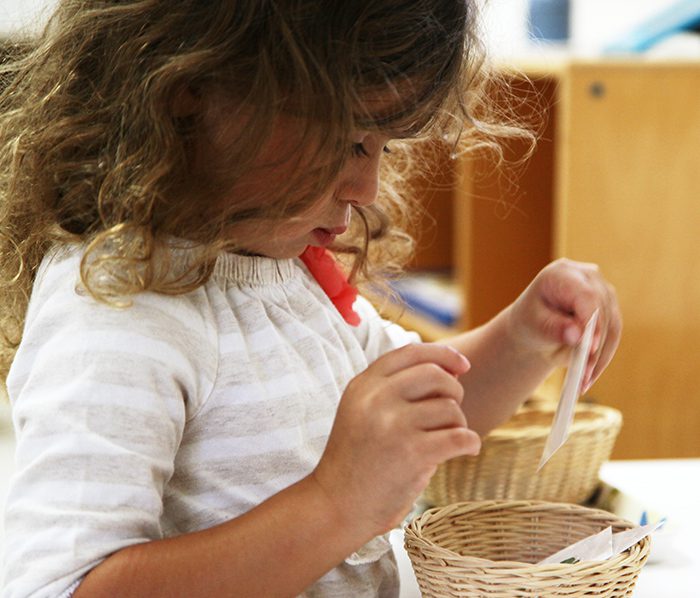
One Montessori myth is that Montessori students are not encouraged to ‘play’ and that they have an overly structured curriculum. In fact, if asked about her day at school, a Montessori four-year-old would proudly recount all the ‘works’ she accomplished: a little Type A personality in training! To compound this myth, early-childhood Montessori students do, in fact, spend a substantial amount of classroom time sweeping floors and washing tables, tasks that we, as adults, would describe as ‘work.’
A Montessori Children’s House is very different from typical preschool programs for young children. You will not find books about fantasy or fairy tales in Montessori classrooms. No dolls. No toy trucks. No make-believe stoves. No dress-up
corner. No garish bright colors.
Is Montessori too work oriented for young children?
Maybe it all comes down to a definition of play and work.
If you have ever observed a young child at play with his favorite toys, you can see that they are quite in tune with the world of fantasy and imagination. They do not need to be taught how to imagine that squirrels can talk or that a fairy princess can fly. They don’t need help with fantasy. When I recently interrupted my three-year-old grandson at play, he gave me an incredulous, frustrated look and responded, “I’m talking to Thomas!” Thomas being “Thomas the Train™.” He was, indeed, talking to a toy train.
Jackson was deeply engrossed in the very worthwhile work of play. He was honing his language skills and was role-playing dialogue, giving life to Thomas. He was practicing social interaction in a safe, non-judgmental environment of his own creation. I also watched him pick up my cell phone, hold it in place with his shoulder, so that he had both hands free to play, and begin to pretend he was talking to somebody about Thomas. He was in the zone and was at peace.
Disaster struck when his younger brother, Hudson, wandered into his ‘work’ zone and moved some train track. Jackson was clearly frustrated and upset that his carefully arranged work had suffered a mishap; however he wanted to continue his ‘work,’ so he asked Hudson to stop. “Hudson, stop!!!!!” Not surprising, Hudson didn’t stop, which caused Jackson to become angry, lashing out at his brother, first with words and then with a push, which ultimately resulted with both kids in tears and the imaginary Island of Sodor in total disarray.
I could have intervened, but I didn’t. Not because I didn’t care. In fact, it would have been in my short-term best interest to have at least tried to keep the peace and avoid the turmoil. But what would I have accomplished, and what would the children have learned from the experience?
We sat on the couch (me in the middle) and took a few minutes to calm down. With what I might refer to as “light intervention,” we returned to the disaster site and together restored the Island of Sodor. Playing and working together is not always easy. Even as adults, we need to feel our way through the complexities of working with others. Sometimes we need to compromise.
Play Is the Work of Childhood
Play is very much the ‘work’ of childhood. It is a time when they experiment with social etiquette and customs, their power over themselves and others, and what it means to be part of a community. One might look at play as practice for skills needed in the future.
In the animal world, play allows young animals to make sound judgments, a rehearsal in which life and death are not at stake. For children, playing with others allows them to learn the difference between friendly teasing and mean-spirited bullying. Research by John Byers (an animal behaviorist) has actually shown that the amount of play is correlated to the brain’s frontal cortex, which is important for the development of cognition. Byers speculates that “during play, the brain is making sense of itself through simulation and testing. Play activity is actually helping sculpt the brain.”
Dr. Stuart Brown, M.D., in his book Play: How it Shapes the Brain, Opens the Imagination, and Invigorates the Soul, describes becoming interested in play after studying a range of people from all walks of life (from murderers to scientists, socialites, artists, etc.). He studied their ‘play histories’ and how the role of play in childhood and adulthood affected their lives.
In studying murderers, he found that the absence of play in childhood was as important as any other factor in predicting their path of crime. He also found that the potential for anti-social behavior in abused, at-risk children was diminished through play.
In today’s culture, with our extreme worry over bullying and self-esteem, we have created a culture of over-protection that was not present thirty years ago. Rough and tumble play actually does have a place in childhood, as it does in nature. Watch two dogs play, gnashing teeth and body slamming with great gusto. While there is a lot of noise and it looks like somebody is going to get killed, all it usually takes is for one dog (or child) to express discomfort. At that point, the ‘play’ stops and the dog (or child) that was too rough recognizes that the play has stopped because it was too much for the other participant.
If it is really ‘play’ and not aggression, the child or dog will make amends to the wounded player and will encourage the resumption of play in some way. If it’s canine play, the stronger dog will bow and wag his tail or roll on his back to show that he can be submissive. If it’s a child, you might see one child offer a toy or hand to the ‘wounded’ child to encourage the play to continue. It’s not about winning. It’s about play.
Child’s Play Isn’t Just for Children
Dr. Brown describes the properties of play as having the following characteristics:
- Apparently purposeless(done for its own sake)
- Voluntary
- Inherent attraction
- Freedom from time
- Diminished consciousness of self
- Improvisational potential
- Continuation desire
Play provides us freedom from time and self-consciousness. We are fully in the moment, and outside thoughts are diminished. Play is its own reward.
Most of us can think of an instance where we have completely lost track of time, so deeply engrossed in whatever we were doing. It might have been a time when we were skiing, painting, gardening, baking cookies with our children, writing, or even finding a solution to a problem at work. Yes, at times, even work can meet the definition of play.
When a Montessori child is at ‘work’ in her classroom, a deliberate effort is made to allow her the time and space to delve deeply into her ‘work.’ Children are taught to speak and move quietly in order to respect each other’s workspace. Sometimes a Montessori child’s work will spill over into their home life as well. One time, I found that my four-year-old son had dumped our spare change jar onto the carpet and was busy polishing all the coins with a damp wash rag. When he finished, he put them all back into the jar and then started all over again. Work or play? I’m pretty sure it was play disguised as work.
The beauty of Montessori’s prepared environment is that it is filled with beautiful materials that encourage children to touch and discover their secrets. There are real child-sized tools that allow them to work with water, dig dirt in a garden, and clean their environment. If they were using toys instead of tools to do these actions, we’d all call it ‘play,’ In Montessori, we call it ‘work.’ Is there really a difference?
In the elementary years and beyond, Montessori students are encouraged to find a subject that interests them and to dig in with ‘big’ work, thematic work that transcends any one part of the curriculum. Is it work? Yes, but it may very well meet the ‘play test’ as well.
Family Play
Just as we model other aspects of behavior for our children, we need to model play. That’s a hard task for many of us. How many of us can go an hour without checking our
cell phone? When we are on vacation, are we really giving complete attention to our family, or are we worried about what’s going on at the office? How often do we do something as a family that is just pure fun?
Adults need play as much as children, but for different reasons. Children need play to help generate their rapidly developing brains. Adult brains have developed, so it is easy to push play aside on a short-term basis, giving priority to responsibilities and work demands; however, when play is denied too long, our mood darkens, our creativity disappears, we develop a sense of hopelessness, and lose our ability to sustain a feeling of well-being.
Dr. Brown uses the analogy of the oxygen masks in airplanes that deploy when there is a sudden loss of breathable air. The flight attendants’ pre-take-off speech always tells us that, when traveling with a child, in the event of an emergency, secure our own life-support first and then tend to the needs of the child. These are good words of advice, applicable to so many situations. “In order to help our children, we have to recover our memories of how we once played by retracing our own early play footprints. When we do that and create a playful household, everything from education to chores will go better.”
For every family, the definition of play is different. While one family may love to hike, another family may get the same pleasure from an afternoon in a bookstore. All of us need to find something that we love to do and give ourselves (and others) the permission to lose ourselves in the bliss of that activity. It restores our spirit and gives us the energy to do other very real work that, while worthy, may not give us as much pleasure as we might wish.
The Opposite of Play
In the opinion of Dr. Brown, the opposite of play is not work; it’s depression. Now that’s food for thought.
I highly recommend Dr. Brown’s book Play: How it Shapes the Brain, Opens the Imagination, and Invigorates the Soul. It is published by Avery and it is available through Amazon. You can even buy it for Kindle™.
Tomorrow’s Child //November 2014 / p 10
Why Continue in Montessori Elementary?
Having sent a child to Montessori for the first three years, by now you have probably got a young person who is very full of herself, very self-assured, independent, and who absolutely loves to go to school.
As your child approaches the end of her third year in the Children’s House, I know that you are giving careful thought as to whether or not to continue with Montessori. Having had the gift of this sort of education myself through high school, and having seen my five children blossom in Montessori at the elementary level and beyond, I want to encourage you to remember that an investment in a fine education pays the best dividends. In the elementary Montessori program at your school, your children will have the opportunity to learn absolutely amazing things!
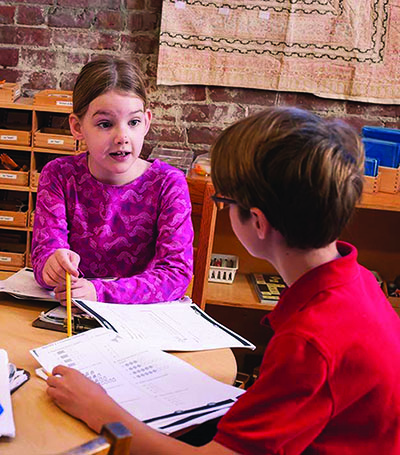
One of the things that you will see when you enter their new elementary classroom is joy, excitement, and enthusiasm. These are not children who are given workbooks and simplistic assignments to do over and over again. These will normally become deeply engaged in work that they will find interesting, meaningful, and often intriguing.
You will find that the elementary Montessori curriculum is highly enriched and challenging.
It is organized into three streams:
The first stream is the Mastery of Fundamental Skills and the acquisition of Basic, or Core, Knowledge. During the elementary years, Montessori students study all the basics found in a traditional curriculum, such as the memorization of math facts, spelling lessons, and the study of vocabulary, grammar, sentence analysis, creative and expository writing, and library research skills. But there is so much more to Montessori than the? Basics?
Elementary Montessori students explore the realm of mathematics, science and technology, the world of myth, great literature, history, world geography, civics, economics, anthropology, and the basic organization of human societies.
In this second stream of the Montessori curriculum are found what we call? Great Lessons? These are key areas of interconnected studies that are traditionally presented to all elementary Montessori students. They include the story of how the world came to be, the development of life on the Earth, the story of humankind, the development of our language and writing, and the development of mathematics and technology. They are intended to give children a cosmic perspective of the Earth and humanity’s place within the cosmos.
The third stream of the Montessori curriculum is Individually Chosen Research. As their proficiency in reading and composition grows, elementary Montessori students are encouraged to explore ever topic that captures their imagination.Students rarely use textbooks.They do a great deal of independent reading and library research.They gather information, assemble reports and portfolios and handmade books of their own, and teach what they have learned to their friends.Their oral presentations and written research reports grow in sophistication and complexity over the years.
At the elementary level, learning continues to be a hands-on experience, as students learn by trial, error, and discovery.
The old familiar Montessori materials continue to become more sophisticated. For example, in mathematics, the advanced elementary Montessori materials move on to more complex and abstract concepts in mathematics, such as long multiplication and division, operations with simple and decimal fractions, geometry, and pre-algebra.
The learning materials with which students work in the elementary program are so exciting, starting with the great lessons. For example, the Timeline of Life tells the story of the history of the Earth beginning with the Big Bang and the formation of the stars, leading down the geological eras of Earth’s history and the emergence of life over the millennia. These Great Lessons engage children and then send them off to do all kinds of research, which they are allowed to do on their own rate and their own pace. When students are excited about something and feel connected to it in their environment, that’s where real learning takes place, and that’s where Montessori shines.
Montessori helps children to be flexible, self-disciplined, independent learners and self-actualized adults. We all want our children to be able to master or learn anything they wish. I can figure it out, I can find the information, I can learn it, I can apply it. That is essentially what we strive to nurture in the elementary program.
Think about your Montessori child as she has grown thus far as he or she nears the end of the third year in the Children’s House or Casa as you call it in Canada. Now think ahead. What would you like to see your son or daughter be like at age 18?
If your dreams include a young man or young woman who truly loves school, thinks outside the box, thinks about others, then you’ve certainly done the right thing by giving your child the gift of a Montessori education. You’ve laid the right foundation.
Like me, like my family, and like so many million others like us, you’ve taken the first step. And now the question is what’s next?
I invite you to join us and let your child reap the benefits of continuing her Montessori education. The best is yet to come.
Webcast: Montessori Secondary Education / Pt 3
To continue reading, you will need to choose a subscription plan.
Webcast: Building a Harmonious School Community / Pt 1
To continue reading, you will need to choose a subscription plan.
Webinar: Montessori & Children with Learning Disabilities
To continue reading, you will need to choose a subscription plan.

101 Steps to Parenting The Montessori Way
To continue reading, you will need to choose a subscription plan.
Featured
-
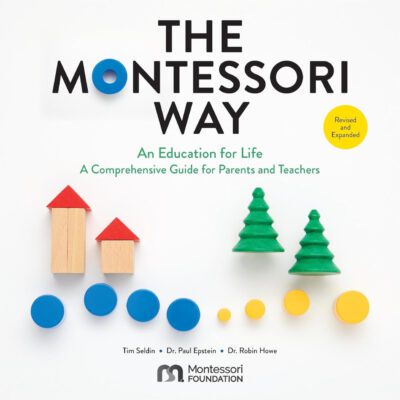
 The Montessori Way, Revised and Expanded: An Education for Life; A Comprehensive Guide for Parents and Teachers
$25.00
The Montessori Way, Revised and Expanded: An Education for Life; A Comprehensive Guide for Parents and Teachers
$25.00
-
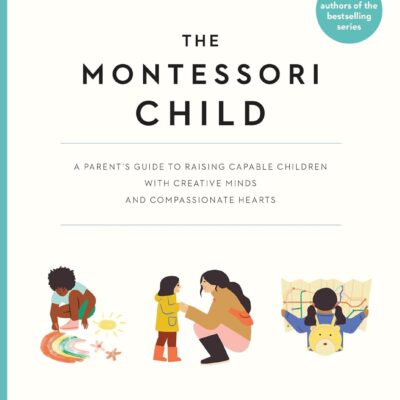
The Montessori Child: A Parent's Guide to Raising Capable Children with Creative Minds and Compassionate Hearts (The Parents' Guide to Montessori)
$20.00
-
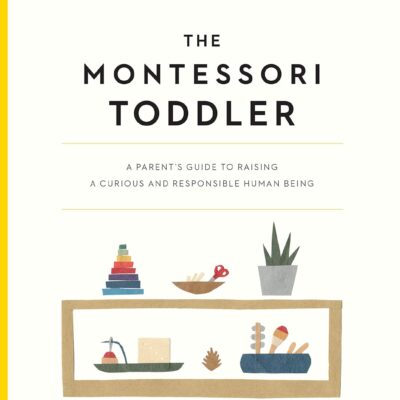
The Montessori Toddler: A Parent's Guide to Raising a Curious and Responsible Human Being (The Parents' Guide to Montessori)
$20.00
-
Montessori in Action: Building Resilient Montessori Schools 1st Edition
$29.95
-
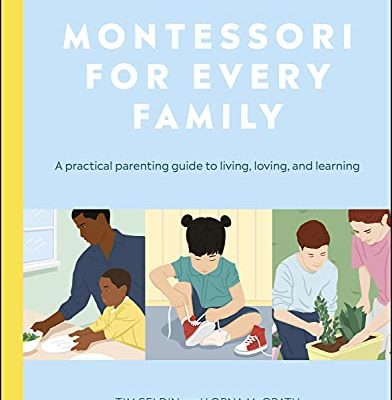
Bulk Order, 30 Copies of Montessori for Every Family: A Practical Parenting Guide To Living, Loving, And Learning
Original price was: $600.00.$510.00Current price is: $510.00.

Products
-
The Montessori Way, Revised and Expanded: An Education for Life; A Comprehensive Guide for Parents and Teachers
$25.00
-
The Montessori Child: A Parent's Guide to Raising Capable Children with Creative Minds and Compassionate Hearts (The Parents' Guide to Montessori)
$20.00
-
The Montessori Toddler: A Parent's Guide to Raising a Curious and Responsible Human Being (The Parents' Guide to Montessori)
$20.00
-
Montessori in Action: Building Resilient Montessori Schools 1st Edition
$29.95
-
Bulk Order, 30 Copies of Montessori for Every Family: A Practical Parenting Guide To Living, Loving, And Learning
Original price was: $600.00.$510.00Current price is: $510.00.