


Book Review: Miss You Like Crazy
To continue reading, you will need to choose a subscription plan.

Grandparent’s Corner: Grandparenting the Montessori Way
To continue reading, you will need to choose a subscription plan.
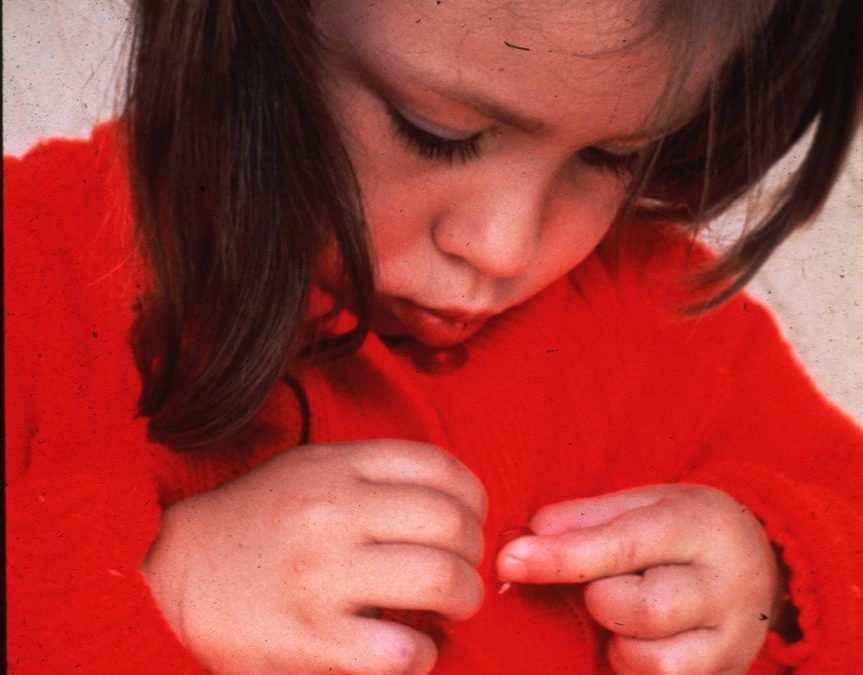
Montessori 101: What Teachers Wish Parents Knew
To continue reading, you will need to choose a subscription plan.

Montessori 101: Education… For Infants?
To continue reading, you will need to choose a subscription plan.

Understanding Your Child: Helping Her be the Best that She Can Be
To continue reading, you will need to choose a subscription plan.
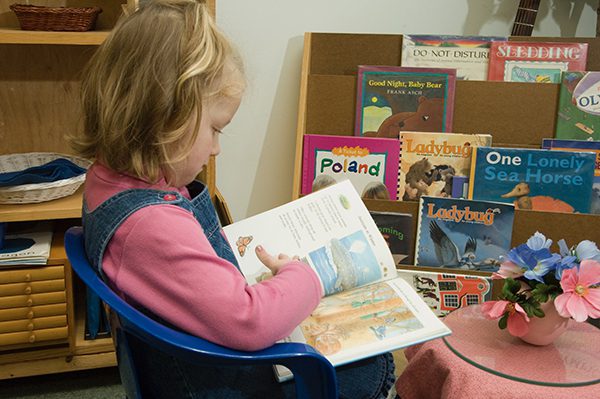
Dear Cathie: What to Look for in a Preschool?
To continue reading, you will need to choose a subscription plan.

Dear Cathie: Dealing With Challenging Behavior
To continue reading, you will need to choose a subscription plan.
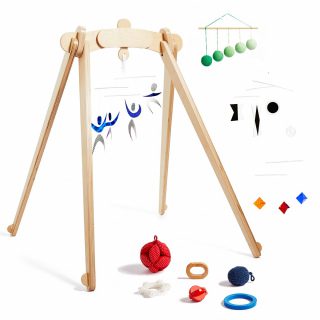
Montessori at Home from Birth to Three: Why and How?
Eighty-Five Percent Of The Brain Is Formed By Age Three
The core structure of the brain is formed in the first three years. By age three, the brain has established a pattern of processing information that will be used throughout life. As such, a child’s early experiences affect the quality of his brain architecture, forming the foundation upon which future development rests. Early experiences also have a greater impact on the developing brain because new experiences are stored in relation to previous ones. Because the architecture of the brain is formed between birth and three, children’s early experiences are ingrained at a deeper level and have lasting effects. Many children do not have access to good Montessori schools at this age. Enhancing the home environment with Montessori materials and guidance can help to fulfill and expand a child’s potential.
Environment Shapes Brain Development
While some say the only toy a baby needs is a cardboard box, numerous research studies show that children who grow up in more stimulating environments do better than those who have fewer opportunities to learn. Brain development is activity-dependent, so everything a child touches, tastes, sees, hears, and smells impacts the brain’s circuitry. The environment directly influences the structure of the brain. Exposing babies to a variety of age-appropriate stimuli, meeting their developmental needs, and providing just enough challenge to stretch their skills will lay the best foundation for the future.
Montessori Builds Better Brains
Motor development and cognitive development are fundamentally intertwined. It is for this reason that researchers emphasize the importance of learning through play and that Montessori activities always involve mind, body, and senses. Babies and toddlers learn most when presented with just the right amount of challenge, not so easy that they are bored and not so difficult that they are frustrated. The Montessori birth-to-three materials are thoughtfully designed and timed so that children are repeatedly entering this ideal zone for learning.
For example, at two weeks old, a baby cannot distinguish colors well but can detect light, movement, contrast, and patterns. The Montessori Munari is the ideal first mobile, having a contrasting black and white pattern that captures a baby’s attention, allowing him to distinguish its shapes, practice visual tracking, and build concentration.
The Munari is also designed according to a mathematical formula so that all its components are in proportion. This mathematical relationship appeals to a baby’s innate number sense. Research shows that the strength of an infant’s number sense predicts performance on math activities in preschool. Montessori recognized this sense and called it the “human tendency of the mathematical mind.” A professor at the Duke Institute of Brain Sciences calls it “the conceptual building block upon which mathematical ability is built.” We can support even the youngest baby’s mathematical potential by offering toys that appeal to this innate number sense.
As children get older, the Montessori materials continue to support physical and cognitive development. When a child plays with the Curved Dowel, she strengthens her wrist preparing her hand for writing, sports, and everyday tasks like dressing independently. As she holds the base of the dowel with one hand and uses the other hand to thread the ring, her arm crosses the midline of her body. Crossing the midline, the ability to move her hands and eyes together, across and to the other side of her body, is important for her development. It helps her integrate sensory feedback across brain hemispheres and enhances bilateral coordination (using the two sides of her body together). Crossing the midline is also a prerequisite for lateralization, or the process of one eye, hand, foot, and ear becoming dominant. Lateralization allows a child to function at her most efficient level.
Guiding Parents
Unfortunately, parents are left guessing how to create a stimulating environment during the formative years of birth to three. Monti KidsTM gives parents access to world-renowned Montessori materials along with simple guidance. We provide customers with recurring home deliveries of Montessori educational toys and an online curriculum for parents, tailored to their child’s stage of development.
Learn more at www.montikids.com
Tomorrow’s Child/Sept 2017
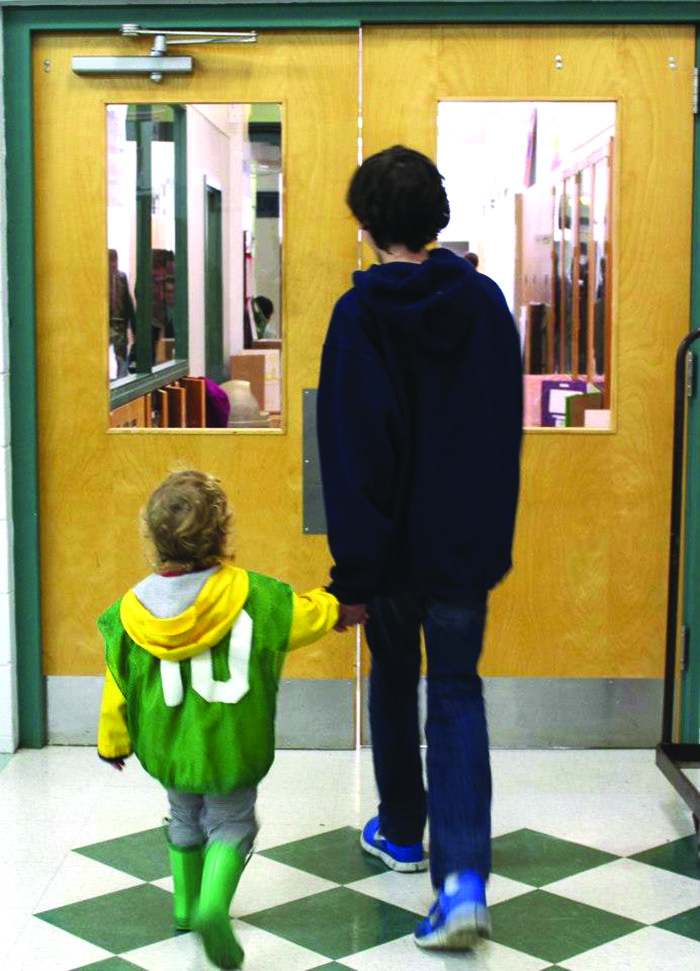
Montessori Journey: Our First Day
I remember clearly the crunch of the gravel under the tires as I pulled into the NewGate parking lot for the first time. Dylan was eighteen months old and I was in the middle of a divorce. We had never spent a day apart, and I was starting a new job. I didn’t know it then, but walking into Ms. Lauren’s classroom that day would unfurl a thread that would weave itself so indelibly into the tapestry of our lives that, nine years later, I’m still hearing the same gravel crunch under my tires every day.
It was rough leaving him. He reached for me from Ms. Lauren’s arms, his face smeared with tears. She was calm and authoritative, urging me to go. It will be better for him, she said. For the first time ever, I ignored his pleas. I put my faith in her and Montessori, and I left my crying child in her arms and walked away. It was hard, but it was probably the best decision I ever made for him.
I’m not going to lie, drop-off was tough for a while; we both had difficulty adjusting to being apart. I can’t tell you how many times during the day I had to suppress the urge to call the school to make sure he was alive. But day-by-day, soothed by Lauren’s calm authority, Dylan and I settled into this new routine and began to thrive in our new environments.
Before long, Dylan was dismissing me with a quick kiss and hug and disappearing into the fold of his classroom each morning. To this day, I am captivated by the sight of a smoothly running Montessori classroom—
everything so tiny and orderly—small children working with a focus most adults don’t often display.
I learned that, while from the outside a Montessori classroom may seem to lack the structure you’d expect to see in a traditional classroom, the structure of a Montessori classroom is in the planned environment. Each classroom is carefully crafted and structured so that the children can follow their interests and foster their own independence. I began to see my ‘helpless child’ become capable in ways previously unimaginable. In his classroom, he would prepare a snack for himself and his friends, then carefully wipe the table and dishes. He could select a lesson from among the dozens on the tiny shelves and then work quietly at it for long stretches of time.
Lauren taught me ways to be more Montessori at home. I put his cereal, snacks, and dishes in low cabinets at home, and watched, amazed, as he poured his own cereal the next morning. I organized his toys onto shelves so that he could see and reach everything. We had fewer meltdowns, we had more peace.
Montessori made its way into our home in other ways, too. For instance, Dylan started to tell me sternly, No, thank you! (in a tone remarkably similar to Ms. Lauren’s) anytime my suggestions or behavior deviated from what he found to be acceptable. “Dylan, stop jumping on the couch,” “No thank you, Mommy!” “Dylan, please put on your pajamas” “No thank you, Mommy!” Lauren laughed when I asked if she knew the origin of this charming new phrase. She did, of course, because it originated with her.
One day at drop-off, Lauren told me that Dylan had begun to express interest when other children used the toilet. She told me to send him to school with four clean pairs of underwear and shorts. By the end of the week, my child was completely out of diapers. It was a painless transition for us at home, I joke with my friends that this alone was worth the tuition that year.
Dylan and I walked into NewGate that first day alone and scared; we only had each other. By the end of the year, we had a community—a family. Some people send their children to school to receive an education, and that is enough for them. When I send my child to school, he’s receiving an education, but he’s also receiving love, support, and guidance. In fact, both of us are, and we are better people because of it.
Katrina Costedio is a graphic designer on the staff of the Montessori Foundation. She has a son, Dylan, who is an upper elementary student at NewGate school in Sarasota, Florida. She has been a Montessori parent for 9 years. Katrina received a BA in Liberal Arts from St. John’s College, Santa Fe, New Mexico.
Tomorrow’s Child/Sept 2016

How to Address Challenging Behaviors in the Montessori Classroom
To continue reading, you will need to choose a subscription plan.
Webinar: How to Teach Your Child a New Skill
To continue reading, you will need to choose a subscription plan.

Dear Cathie: Art In The Montessori Classroom
To continue reading, you will need to choose a subscription plan.

Dear Cathie: Allowing Children To Concentrate
To continue reading, you will need to choose a subscription plan.

Montessori 101: What Do All These Terms Really Mean?
To continue reading, you will need to choose a subscription plan.

Dear Cathie: Choosing Books For Your Child
To continue reading, you will need to choose a subscription plan.
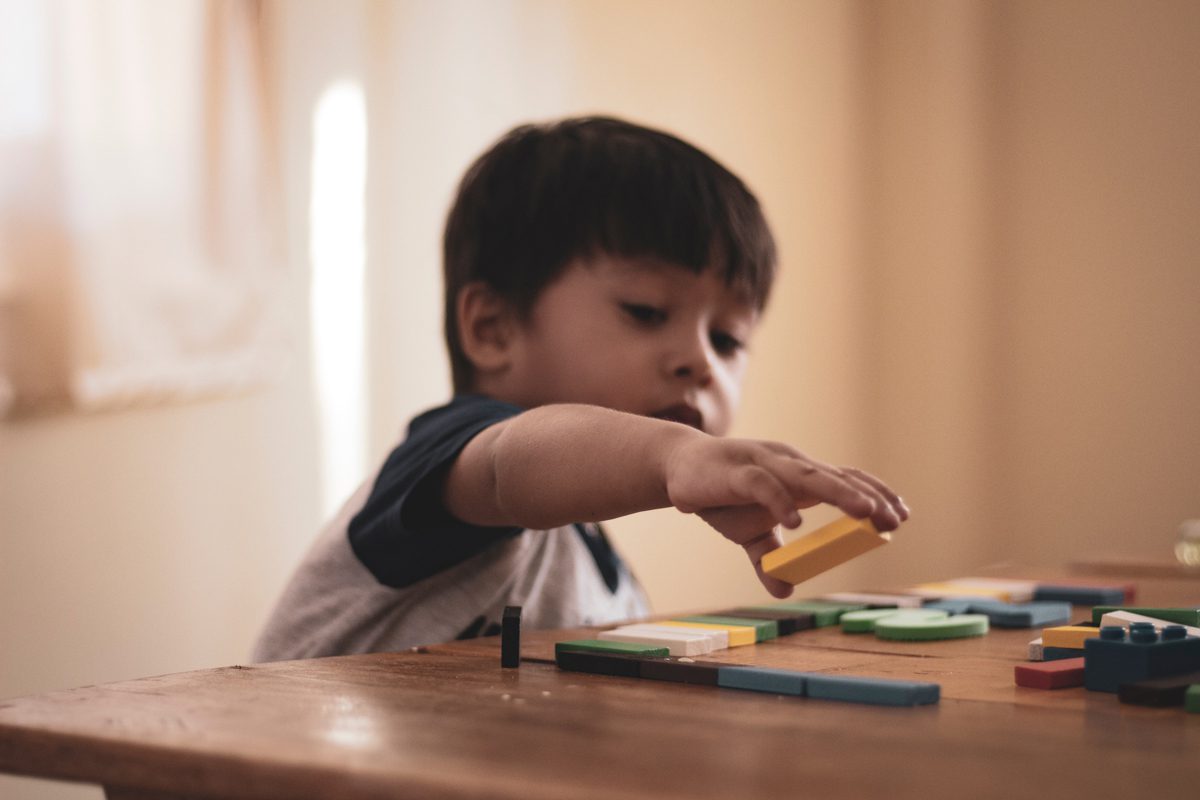
Montessori Grandparenting: Help Me, Gammie
To continue reading, you will need to choose a subscription plan.
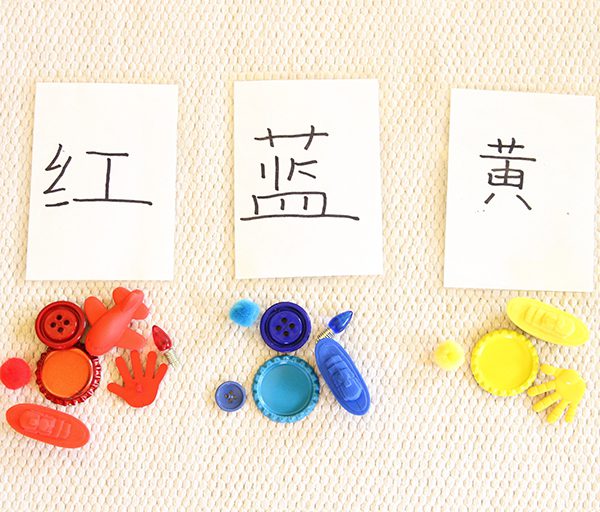
Language Immersion At Montessori Casa International
To continue reading, you will need to choose a subscription plan.
Featured
-
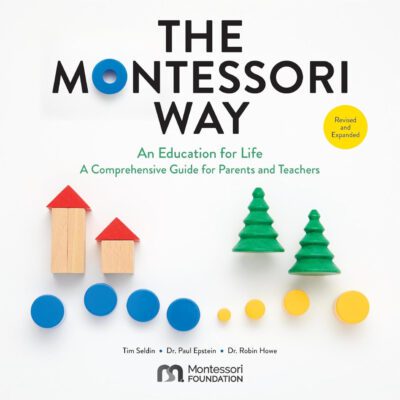
 The Montessori Way, Revised and Expanded: An Education for Life; A Comprehensive Guide for Parents and Teachers
$25.00
-
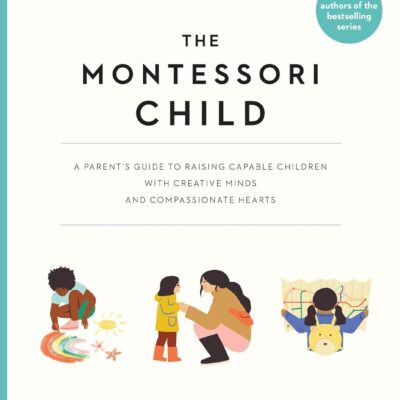
The Montessori Child: A Parent's Guide to Raising Capable Children with Creative Minds and Compassionate Hearts (The Parents' Guide to Montessori)
$20.00
-
The Montessori Toddler: A Parent's Guide to Raising a Curious and Responsible Human Being (The Parents' Guide to Montessori)
$20.00
-
Montessori in Action: Building Resilient Montessori Schools 1st Edition
$29.95
-
Bulk Order, 30 Copies of Montessori for Every Family: A Practical Parenting Guide To Living, Loving, And Learning
Original price was: $600.00.$510.00Current price is: $510.00.

Products
-
The Montessori Way, Revised and Expanded: An Education for Life; A Comprehensive Guide for Parents and Teachers
$25.00
-
The Montessori Child: A Parent's Guide to Raising Capable Children with Creative Minds and Compassionate Hearts (The Parents' Guide to Montessori)
$20.00
-
The Montessori Toddler: A Parent's Guide to Raising a Curious and Responsible Human Being (The Parents' Guide to Montessori)
$20.00
-
Montessori in Action: Building Resilient Montessori Schools 1st Edition
$29.95
-
Bulk Order, 30 Copies of Montessori for Every Family: A Practical Parenting Guide To Living, Loving, And Learning
Original price was: $600.00.$510.00Current price is: $510.00.