
Building Strategic Relationships
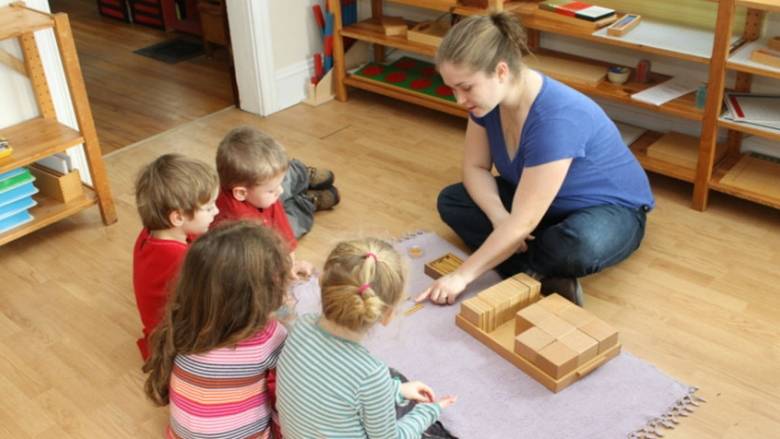 Creating a school community is about relationship building. Ensuring it is truly diversified— culturally, economically, academically—takes strategic relationships. Social Media can help along the way to engage globally, drive enrollment, collaborate with local recruiters and advocate to enrich your school. Your time as a leader of your school will help anchor your families and students to your community. We teach our students the importance of peer learning, trust, and collaboration. We must ensure that as administrators, school directors, parents, and teachers, we are leading by example how we take strides to position our school within our community at large.
This is the story of how we are building our relationships.
The Montessori School of Charlottetown is located on the East Coast of Canada, nestled on the beautiful beaches and red cliffs of Prince Edward Island. We only established ourselves in the 2016-2017 school year, with a one-year preparation and development time frame beforehand. Our approach to financial planning and health was uniquely different: We successfully secured the capital, real estate, and operational funding for a five-year growth plan from one key investor. This strategy has caught the attention of the international Montessori networks and our local business community both in education and childcare.
Securing this financial strength to launch was just the beginning of our relationship building.
As the first and only Montessori education option past Casa within our entire province, we have been very conscientious that our school—both physical site and staff—are often a family’s first impression of Montessori. The weight of this responsibility is not lost on our team. All of our public communications and social media platforms demonstrate how the entire community has the opportunity to benefit from our existence, that we are contributing across sectors, not just educational ones. We offer ties to the community. We create jobs. We give business to local suppliers. We help aerospace, medical, government and academic sectors recruit talent because we can serve the children of that talent. By placing ourselves in this way in the wider community dialogue, we create a shared sense of our existence, and a desire for more people to want us to succeed.
We made sure our doors are as open and welcoming as possible. Our programming is available to public school students on PD days as day registrations, as are our after-school, extra-curricular, and summer programs, adding diversification to our revenue streams and diversity to our student population. Our community room has been utilized by not-for-profit boards of directors for strategic planning weekends, newcomers for language tutoring, musical rehearsals, and additional children’s programmers. Our sound-proof studio is the new home for music instructors’ private lessons. His Honour, the Lieutenant Governor, Frank Lewis, recognized our impact during his greetings at our Official Dedication ceremony this past spring.
We believe we are contributing every effort possible to growing our mighty Island community, serving existing and new family clients: from participating in international school networks, promoting all things PEI from meeting and convention opportunities, to tourism, to settlement. Our school puts our own resources into being present internationally for shared learning. Our students participate in national projects bringing attention to PEI. When Islanders who have worked away, internationally and/or across Canada want to come home to raise their children in the safe, beautiful, family-focused culture we celebrate, they are used to living in areas where robust choices of Montessori education are available. We, therefore, have to ensure we are offering the best possible facility, staff, and experiences.
Once all the wheels are turning, how then were we going to share our story? To demonstrate our position? Through time and commitment to forge relationship one by one, in person. Our team is present at business sector networking events, mixers, socials, coffee shop meetings, presentations, golf tournaments, workshops, and so forth. It is yes, grassroots, word of mouth that works. Allowing people to ask their questions in a safe environment is paramount to building trust. All of this before they set foot in our school or before they see a classroom. Which is why we have found taking our teachers to such events is crucial to success—taking staff to locations where we know we already have an audience curious to ask and eager to listen.
Our efforts are noticed. This fall, we will be attending a 500+ person gala for The Greater Charlottetown Area Chamber of Commerce as Finalists in the President’s Awards of Excellence. We have been nominated in the category of “Emerging Business.” This recognition within our business sector helps to solidify our legitimacy and contributions.
We found our champions in the community.
The federal Ministry of Indigenous and Northern Affairs has approved our school to receive transfer payment of Aboriginal children living on reserve. As a result, three families commute together to give their children access to our school. Health PEI now has our school as a scheduled element of their community tours when recruiting medical professionals from abroad and across Canada. The PEI Business Women’s Association utilized our community room to host a monthly mixer, filling the school with first-time visitors. The PEI Newcomers Association staff attend our celebrations, knowing that, in 2016-2017, we enrolled students who have returned from the Yukon, British Colombia, and Ontario with International registrations, including representation from India, Turkey, Japan, and Vietnam. This fall, we welcome a family from the USA and two more from Ontario.
Social media is the amplifier to telling your stories. We have found success in selecting platforms and using each to their best advantage. Facebook™ allows us to post open-house events and pop up Information sessions. Paid advertising generates an enrollment inquiry for every $20 spent. Twitter™, as the quick and instant communication tool, is outreach—starting a dialogue with local and federal politicians, like-minded businesses, demonstrating our presence at community events, and reaching out to fellow Montessorians! Through both, we offer our families an added window into their children’s day by posting field trip reports and photos of beautiful work.
Humour also has its place! We have found that an Instagram™ account for one of our class pets, Mr. Green the hedgehog, allows us a freedom the other platforms do not. With Mr. Green, we can engage in a lighter, more comical voice, taking some of the wind out of the sails of presumptions of a being a ‘private’ school. Stunningly, the hedgehog even created some return on investment, by catching the attention of the local CBC station to provide web, television, and social media coverage of his existence at our school!
All focus comes back to our core students and Montessori families. They are our most important relationships. Our communications with our families are paramount to our school success—from expected monthly e-newsletters, and field trip updates, to the above and beyond individual texts, calls, and accommodations for the needs of the child. From logo bumper stickers to custom local t-shirts, we give our families a brand alignment to the lifestyle choice of what Montessori offers. Through our social media platforms, we provide our families the content to celebrate, connect, and share in the experiences of their children with resounding pride of being a
Montessori family.
Relationship building can build your school. We have found it is the key to ours.
About Wraychel Horne The school’s development is under the management of Wraychel Horne who has launched and overseen opportunities for 16,000 children and youth over a 17-year career. Wraychel is part of a three-generation commitment to Montessori educational approaches.
Wraychel holds a Masters of Arts degree from Wilfrid Laurier University and certification in Whole-School Management from the North American Montessori Teacher’s Association. She has overseen local, provincial, federal and international programs. Wraychel was selected to pilot youth programs and train colleagues in best practices for both the Ministry of Children and Youth Services and the Ministry of Training, Colleges and Universities while working in executive and consulting roles across Ontario.
She led the first paid co-operative program for youth outside of the Armed Services in Canada, and further expanded the program to run in its second year on Reserve for Aboriginal youth. Wraychel has previously partnered with a sister educational organization in Jamaica where she lobbied in person to double funding from federal ministers and senators for their 70,000 members and shared and learned best practices of programming, marketing, and instructor retention. Wraychel liaised with the High Commissioner of Canada to ensure colleagues and youth were able to enter Canada for exchanges without delay.
Wraychel is thrilled to be offering a Montessori education opportunity for Prince Edward Island where her family has five generations of history. She lives with her husband John, daughter June and two Nova Scotia Duck Tolling Retrievers. Connect directly at wraychel@montessoripei.com or @WraychelH on Twitter.
Follow the school’s adventures and stories: @MontessoriPEI | www.facebook.com/montessoripei | Check out what’s happening in our Upper Elementary class with Mr. Green the Hedgehog @mr.green_montessori_hedgehog
Everyone Can Teach Poetry
To continue reading, you will need to choose a subscription plan.

Saving Mother Earth: Addressing Climate Change In The Montessori Classroom
To continue reading, you will need to choose a subscription plan.
DEAR CATHIE: The Peace CurrIculum
To continue reading, you will need to choose a subscription plan.
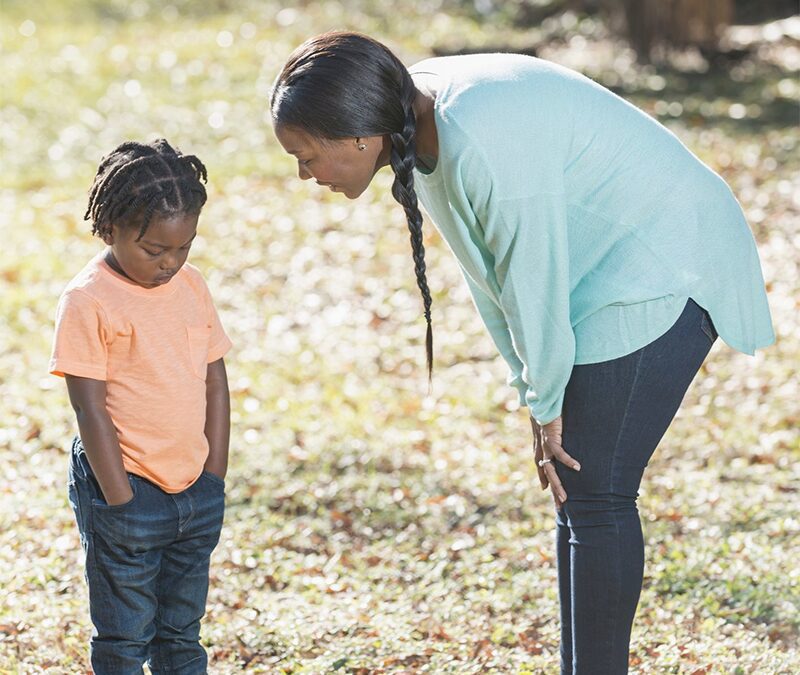
Setting Limits It’s Not too Late! The Hows & Whys to Setting Limits
What Are Limits?
Limits tell your family under what condition you are willing or unwilling to do something. They tell your family where you “draw the line.” They tell what you will or will not tolerate. Their purpose is to take care of you. Limits are not designed to control or manipulate someone else’s behavior. Here are three examples:
Example 1. A mother was playing basketball with her two teenage sons. The boys were getting competitive and soon the game wasn’t fun. Mother announced, “It is not fun for me when you two fight. When you are ready to make it fun again, come and get me. I’d love to play again.”
Example 2. Children need you to set limits so that they can recognize and respect other people’s limits. I was holding hands roller-skating with my daughter. She said in a very demanding tone of voice, “Skate faster!” This wasn’t the first time I had noticed that she was being demanded, so I said, “I am unwilling to have you talk like that to me. It makes me feel like not cooperating with you, and if you continue, I will skate by myself.”
Example 3. A daughter asked her mother to take her to the video store and rent a movie. Her daughter had already spent her allowance that week. Mom said, “I’d be willing to take you to the video store, but I am unwilling to rent a movie for you.” Limits give others important information about you to help them know what they can or cannot expect from you. They are about you, not about criticizing someone else’s behavior or about trying to make them act in a certain way.
Why Do Children Need Limits?
Children need you to set limits so that they can recognize and respect other people’s limits.
Limits provide a sense of security. When children don’t know your limits, they feel lost in an abyss. They feel confused and sometimes literally bounce around trying to find some.
Limits make children feel that we care about them. Children that are raised without limits often feel abandoned.
Children need limits to learn how to deal with conflict. What happens when someone tells me I have overstepped their limits? What happens when someone disrespects mine?
Children need limits to help them define themselves. Limits set by parents help children clarify their own limits because they have seen your model.
Limits help them to learn what is socially acceptable and what is not.
Children need to learn that if they go past a certain point, there will be consequences. Some of
them may be serious.
What Issues Need Limits?
You may want to set limits on the use of your belongings, TV watching, bedtime, your time, the use of profanity, mealtime, chores, care of pets. This is not a conclusive list. Make a list of your important issues.
How Do We Know When Our Limits Are Being Violated?
The best clue to determine whether or not your limits are being violated is by being in touch with your feelings.
If any of the following feelings sound familiar, you know that your limits are being dishonored or that you are not being clear about them:
I feel anger, resentment, imposed upon, smothered, taken advantage of, and/or abused.
I feel as if I am pulling more than my fair share of the weight.
I feel unappreciated.
I feel as if I am being divided between two people I love.
I feel taken for granted.
I feel like a taxi cab driver.
What about me?
Why Do We Have A Difficult Time Setting Limits?
Our ability to set and follow through with limit setting will be largely determined by how we were parented as a child. Setting limits may be difficult for you if you were in any of the following situations:
Not having any limits as a child, being unsupervised.
Being given messages, such as: Don’t make waves; Children are to be seen and not heard; You are being selfish.
If you were told it wasn’t “nice” to assert yourself.
If there was abuse in the home or at work that was mental, physical, emotional, sexual, drug or alcohol related.
If there was someone in your family that you had to give up your needs for because they were sick or disabled.
If self-sacrifice was modeled and expected of you.
If intimidation was used to motivate you.
If you don’t set limits because you don’t feel you deserve them.
If you feel guilty about your own actions such as, working too much or getting a divorce.
What We Do Instead Of Setting Limits?
Because we are afraid of creating conflict, we often choose one of the following behaviors rather than setting limits We are afraid the other person will get angry, leave us, or reject us. We may even feel that what we say or do will not make a difference anyway. Instead of directly setting limits, we sometimes indirectly handle these situations by:
Deny it (act or pretend as though it didn’t happen).
Ignore it and hope it’ll go away.
Talk yourself out of how you are feeling (I shouldn’t feel that way because of … ).
Make excuses for the other person’s behavior (he only said that because he was tired).
Ruminate about the issue (Going over and over the event in your mind, trying to make sense of it).
Blame someone else.
Blame yourself (if I had only done … he wouldn’t act this way).
Get even.
Hide behind righteousness (I’m above having those feelings).
Pretend that you don’t care.
Withhold your love or your communication.
What Can We Expect When We Start Setting Limits?
When you first start setting limits, you can expect that your children’s behavior will get worse. They will test you. They will try everything in their power to get you to go back to the way you used to be. So, make sure your seatbelt is fastened. You may be going for a ride!
Steps For Setting Limits
1. Honor your feelings. Remember, feelings are neither right nor wrong.
They just are.
2. Get clear about what you want. What you are and are not willing to do.
3. Present the information to your family member using an “I” statement. For example, “I am unwilling to wash clothes that are not in the hamper.” There should be no blame, shame, guilt, exaggerations, or complaining. Do this step as soon as possible to prevent an unnecessary build-up of resentment.
4. Be ready to ‘stick to your guns.’ Be consistent and follow through.
Tomorrow’s Child/ November 2017
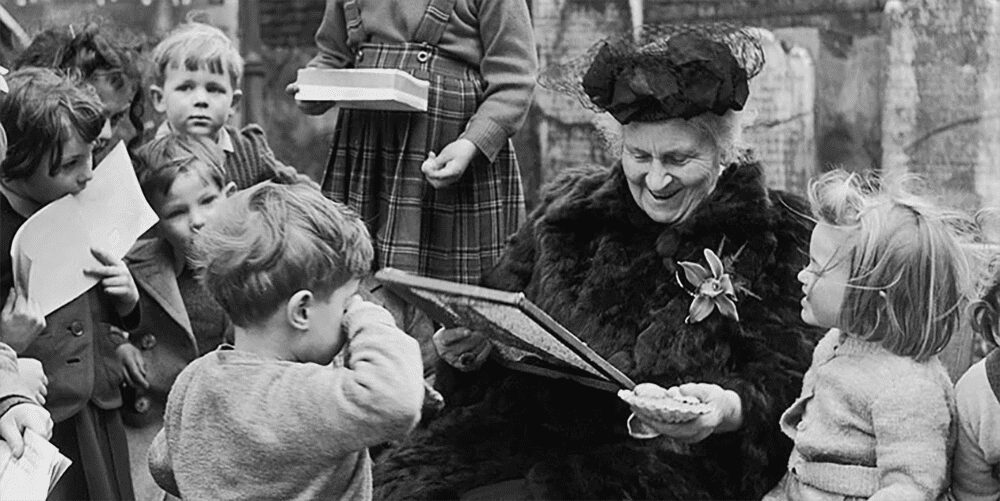
Montessori’s Gentle Approach To Discipline
Many parents believe that the word discipline means to punish. In reality, it means to teach.
In a Montessori-inspired home, parents are empathetic, caring, and respect children as real and separate human beings. However, children also need to develop a sense of empathy for others and must learn the rules of courteous everyday behavior.
To accomplish this, we need to help them develop a sense of self-respect with both compassion and respect for others. Since we cannot always be with them, we need to teach them to act with honor and integrity whether or not someone is watching. Since we can’t prepare them for every situation that they will face over the years, we need to teach them how to apply general rules of kind behavior to new situations.
Babies and Toddlers
Infants and toddlers don’t respond to discipline, rules, and punishments, but they do respond to unconditional love. They are not yet at a stage where they know right from wrong. They live in the moment, when they want something, they want it right now!
One secret to living happily with very young children is to go out of your way to attempt to understand what they are trying to communicate when they cry. Certainly, don’t take it personally! Even though, in the heat of the moment, it may feel as if your baby is being deliberately defiant, crying is one of the very few ways that young children can use to communicate. It can mean that they are hungry or that they need to be burped, they may be in an uncomfortable position, or they may need a diaper change.
Remember, babies are people too! They can become frightened. They may be bored or lonely. They may have had a bad dream. Watch and listen carefully. If you pay attention to your children, even when they are very young, ultimately, you will be able to determine what they are trying to tell you. Just as most parents learn to recognize the sound of their baby’s cry, we can learn to recognize the way they cry to communicate different emotions.
At this stage, their behavior is impulse-driven, with a limited ability to make the choice to follow ground rules. While you always want to model good behavior and explain why a given behavior is okay or not okay, don’t be surprised when your words go in one ear and out the other.
In a climate of love and respect, toddlers slowly develop the ability to understand our words and will begin consciously to respond to them. Eventually, they begin to imitate our actions when we model polite behavior and will begin to cooperate, in part, to make us happy. Most toddlers have good days when they are cooperative and angelic, and days when they seem to be testing us constantly.
We want to take our children beyond simple obedience, where they do what we ask in hope of a reward or to avoid something unpleasant. We want to help them to develop an internalized sense of right and wrong and courteous behavior. This requires that they eventually develop a social conscience and a sense of self-discipline. This develops slowly as children mature. For better or worse, all parents are moral educators. Our goal is to teach our children the values that we hold dear and teach them in such a way that our children live by them.
Children that achieve this goal develop a high level of self-respect. They also tend to find it much easier to establish strong friendships. They tend to respect the rights of others and are generally pleasant to be around.
Don’t Punish, Teach!
As children get older, do not take it for granted that they will automatically know how to handle a new situation. It’s always better to teach them the right way to act rather than to wait for them to misbehave and then scold, threaten, or punish. If your children do act inappropriately, stop their misbehavior calmly, but firmly, and show them how to handle the situation in a socially acceptable way.
Children have the same emotions as adults, but they don’t instinctively know how to express frustration and anger appropriately, nor do they automatically know how to solve conflicts. As parents, we have to teach our children how to get along with other people.
Montessori teachers call these the ‘Lessons in Grace and Courtesy.’ These lessons set a tone of respect and kindness. We teach our children how to shake hands, greet a friend, and say goodbye. We teach them how to ask politely to join other friends who are playing and how to respond if they are rejected.
We teach them how to interrupt someone who is busy and how to tell someone ‘no thank you’ politely. We teach them how to speak indoors, so their shouts don’t hurt our ears, and how to play without damaging anything or hurting someone. We show them how to offer a sincere apology and how to resolve conflicts peacefully.
To teach a lesson in grace and courtesy we explain a situation in simple terms and demonstrate the right way to handle it. Then we have our children practice with us, role-playing the sequence of events. Most children enjoy these lessons if they are kept short and sweet, and if they have not been embarrassed or threatened because they made a mistake.
For example, if your children tend to yell at the top of their lungs inside the house, you obviously need to give them a lesson in how to keep the indoor noise to a level that does not disturb other people.
First, as it is happening, instead of scolding, instruct them firmly, but politely, to please speak softly in the house.
Wait for a moment when the situation is not emotionally charged and neither you nor the children are upset about the behavior. Then, give them the lesson on the right way to speak indoors.
Rather than giving them a lecture, speak to them in very simple language and show them what you mean. For example, you might say:
“I want to talk to you about indoor voices. When we are outdoors, it’s so big, and sometimes we need to yell so we can hear each other when we’re far away. Outdoors, it does not hurt our ears when someone talks loudly, unless they do it right in our ear. That hurts! So outdoors, we can use our outdoor voices.
But when we are indoors, it hurts our ears and bothers the neighbors, too, if we talk too loudly. Indoors, we use our indoor voices.”
Now show them what you mean. Talk very loudly, and ask, “Was I using my indoor voice or my outdoor voice?” Talk normally. “What do you think? Was I using my indoor or my outdoor voice? Indoors, we use our indoor voices. Outdoors, we use our outdoor voices.”
You can teach all sorts of lessons this way, such as saying “please” and “thank you” or closing doors without slamming.
Practice with each other. Some families have the ‘manner of the week’. They introduce a new rule of everyday courtesy and practice it with one another over meals and around the house.
Other Children and Adults Are Role Models, Too
To teach your children good manners, they need to see that their parents, older siblings, and friends follow them consistently as well. The example that we set through our own behavior is more powerful than anything we say. Especially when they are very young, children are absorbing everything they see us do, and soon they begin to talk and act just like us. We are their role models.
Their brothers and sisters, grandparents, friends and playmates, babysitters, and preschool teachers play a similar and very powerful role as well. Knowing that your children will be influenced profoundly by the people around them, choose wisely the children and adults with whom your children will spend time.
Especially with children under age six, avoid loud, chaotic situations where large groups of children are over-stimulated and generally behave rudely, such as indoor children’s amusement parks with lots of expensive and noisy games and rides.
Choose your child’s play-dates thoughtfully. If your children spend time with a family that allows them to create havoc in their home, tearing up the living room, knocking over lamps, and shoving one another around in rough-and-tumble play, don’t be surprised when your children bring that behavior home with them. Pay attention to the way prospective play-date parents supervise their children. Do they ignore them or talk on the phone amidst chaos? It is not your place to judge other families, but it is your obligation to make good choices for your children.
Positive Discipline: Establishing a Climate of Love
Children are actually so sensitive and impressionable that we should monitor everything we say and do, for everything we say and do will be engraved in their memories forever.
Our children love us with a profound affection. When they go to bed, they want us to stay with them as they go to sleep. When we work in the kitchen, they often want to help. When we sit down to dinner, they want to join us. We may worry that we’ll spoil them if we listen to their pleas, but we shouldn’t. They only want us to pay attention to them. They want to be part of the group.
Children are extremely sensitive to the emotional climate within the family. They love us and basically want us to be pleased with them. This doesn’t mean that they will always behave.
Why Children Test Our Limits
Every child will test the rules to some degree. In fact, most acts of testing parents are a normal part of the child’s process of growing up.
When children test adults, it is often their way of expressing feelings that they don’t understand, and from our responses, they gradually learn how to handle their emotions appropriately. By testing the limits, they learn that we really care about certain ground rules of grace and courtesy in our relationship. In acting out, they are taking their first tentative steps toward independence, attempting to demonstrate that we don’t control them completely.
Agree on your family ground rules and get them written down, where both parents can refer to them. Teach your children how to do the right thing rather than focusing on their infractions.
Family Ground Rules
In the Montessori-inspired home, there are normally just a few basic ground rules:
Be kind and gentle.
Treat everyone with respect.
If you use something, put it back correctly when you are done.
If you break something, clean it up.
Tell the truth and don’t be afraid to admit when you make a mistake.
You should be absolutely clear in your mind about your family ground rules.
Explain your family ground rules positively, rather than as prohibitions. Instead of saying, “Don’t do that!” ground rules should tell children what should be done.
Teach your children how to follow the family ground rules as if you were teaching any lesson in everyday living skills and grace and courtesy.
Model the same behaviors that you are trying to encourage in your children.
Consciously try to catch your children doing something right—reinforce and acknowledge even small steps in the right direction. Don’t wait until they have mastered every new skill. Encourage them along the way.
When your child is breaking a ground rule, there are several things you can do other than scold, threaten, or punish.
You can redirect them by suggesting a more appropriate choice.
You can remind them of the ground rule and politely, but firmly, ask them to stop.
If the event is not emotionally charged, you can calmly re-teach the basic lesson about how to handle such situations.
Be consistent!
If you can’t bring yourself to reinforce a rule again and again, it shouldn’t be a ground rule at your house.
A few good rules are much better than dozens of rules that are often ignored.
Why We Don’t Use Threats or Punishments
Threats and punishments are not good tools to get children to behave. While they tend to produce immediate results, they are rarely long-lasting. They only work as long as the person being threatened cares. Many children who respond to threats and are shaken by punishments are anxious to please us and win back our love. On the other hand, when children are angry or are asserting their independence, they often act out and don’t care if they are punished. Punishment is simply not as effective as people tend to believe.
Teach children to do things correctly and emphasize the positive rather than using insults and anger. It’s not always easy. Above all else, try never to ask your children unanswerable questions, such as, “How many times do I have to tell you … ?” to which the appropriate response would be, “I don’t know, Dad! How many times do you have to tell me?” If you ask a silly question, you’re likely to get a silly answer.
Children can correct their own mistakes
Many parents and teachers believe that they can shape a child’s personality and future through strict discipline, but children carry within themselves the key to their own development. Their early attempts to express their individuality are hesitant and tentative. Our children think that adults are all-wise and all-powerful. They are easily overwhelmed by our best intentions. Our efforts to protect children from mistakes that seem so obvious from our perspective tend to frustrate children about the process of learning for themselves about life.
Our goal should be to help children become mature, independent, and responsible. Unfortunately, as parents, we sometimes tend to overprotect our children, not realizing that they can only learn about life through experience, just as we did.
We want to help our children learn to live in peace and harmony with themselves, with all people, and with the environment. We work to create a home in which our children can learn to function as independent, thinking people. To succeed, we need to treat them with respect as full and complete human beings, who happen to be in our care. Our children need to feel that it is okay to be themselves.
Children must feel our respect; it is not simply enough to say the words. If children believe that they are not living up to their parents’ expectations, that their parents are disappointed in the people that they are becoming, there is a very good chance that their lives will be emotionally scarred.
Cutting down on the word “no”
Sooner or later, every child will stubbornly say No, I don’t want to! This is the classic power struggle that starts in the toddler years and, in many cases, continues through adolescence. Many people call the toddler stage the ‘terrible twos,’ but they don’t have to be—not with two-year-olds nor with older children.
Power struggles start in situations where parents and children are each determined to get their own way and are not willing to back down. Underneath, each feels frustrated and threatened. Parents feel that their children are directly challenging their authority. Children, on the other hand, in situations like this, are feeling generally powerless and are attempting to assert their autonomy and establish more of a balance of power in their relationship.
Here are some strategies that may work for you to reduce the number of power struggles and the word No! in your relationships with your children.
Give your children choices. Children desperately long to feel powerful and resent feeling powerless. Whenever you can, look for ways to let your children make a choice between two equally acceptable alternatives. Would you like water or apple juice with dinner tonight?
Teach your children to say no politely. Mom, I really do not feel like doing
that now.
Remember that the secret is to speak to them firmly and kindly.
Remember Robert Heinlein’s golden rule of family life: “Kindness and courtesy are even more important between husbands and wives, and parents and children, than between total strangers.”
Look for ways that allow you to back down gracefully from a power struggle without simply giving in. Often, through compromise, both you and your children can get most, if not all, of what you want. “Mom, I have so much homework and an essay to write. Do I have to help with the dishes?” Mom responds, “Yes darling, we all have to help clean up, but working together, it will only take a few minutes. Would you like my help in planning the outline of your essay before you begin?”
Many power struggles seen in some homes are cut down to a minimum simply by teaching your children how to be more independent and giving them meaningful levels of independence and responsibility. This tends to make children feel powerful and grown-up.
Preventing some of the stress in children’s lives
Do not over-schedule your children
Many families try to do too much. Sometimes it is unavoidable, but think long and hard before you sign your child up for dance lessons, baby gym, or any other prescheduled classes for young children. Racing from one scheduled activity to another raises everyone’s stress level and sets the stage for temper tantrums. Allow enough time so that you will not have to race to meet a deadline.
Look for patterns in your children’s behavior
Often there are patterns in family life. If your child tends to have a tantrum when you go shopping, why not leave her with her other parent, a grandparent, or a babysitter?
Talk things through in advance
Children do best when they know their limits in advance. For example, if you are going to the store and your children want to buy a toy, tell them in advance what you will agree to and stick with it.
Resolving Conflicts
In Montessori classrooms, the Peace Table is a child-sized table, a plant, a bell, an artificial rose, and possibly a candle. Two children who are having a disagreement decide to retreat to the Peace Table to solve their problem. This can take place at home as well.
Sometimes, children may not remember, and the suggestion might come from the parent or an older brother or sister who, observing the disagreement, might bring them a peace rose (an artificial long-stemmed rose) with the suggestion that they solve their problem at the Peace Table.
Once arrived at the table, a certain procedure ensues. The one who feels wronged places her hand on the table, indicating that she wants to have her say uninterruptedly. The other hand she places on her heart, indicating that she speaks the truth. She then looks her classmate in the eye, speaks her name, and proceeds to explain how she feels, “Sarah, I felt very angry because…” and continues to state why she feels that way, e.g., “because you didn’t let me play with you!”
She then proceeds to state what she wants to see happen to resolve the conflict: “And I don’t want you to do that ever again if you want to be my friend!”
Now that she has stated her case and opened the door for further discussion, she withdraws her hand from the table and from her heart and gives the other child a chance to respond.
The second child proceeds that same way, placing her hands on table and heart, looking the first in the eye, and responds:
“Emily, I feel unhappy that you are angry. I did not mean to hurt your feelings.”
With that, she is finished and withdraws her hands. Now it is the first child’s turn to agree or disagree, in any case, to continue the dialogue until they reach some kind of agreement, even if that means that they disagree. At least they are talking, without yelling, screaming, and blaming. They want to solve the problem. When they have reached an agreement, they ring the bell to let the rest of the class or family know.
In case they cannot come to a positive conclusion, they may ask for a mediator. This may be an older sibling/classmate or a parent/teacher, who has to remain impartial and to listen well.
However, if the problem or conflict is too involved, then one of them may ask for a class or family council, where the entire class or family sit down in a circle, listens to first one, then the other person’s side of the story contributes what they can to it either as facts of what they have seen or heard, or as ethics, right and wrong, or in perspective to rules upon which all have agreed upon previously.
The core experience the children gain from these procedures is that it is necessary to resolve disturbances honestly and with goodwill to maintain an authentically harmonious and cooperative atmosphere. n
Tomorrow’s Child/ November 2017
Dear Cathie: What to Look for in a Preschool?
To continue reading, you will need to choose a subscription plan.
Montessori Teachers: How Do They Do It?
To continue reading, you will need to choose a subscription plan.
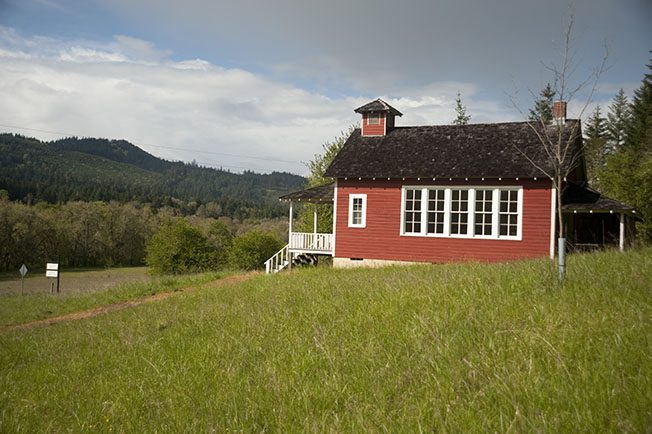
Why Small Schools Work – Good Things Come in Small Packages
A hundred years ago most schools were very small in comparison with the large elementary schools and enormous middle and high schools that we find across America and in much of the rest of the world.
The one-room schoolhouse was the traditional American classroom model. Classes were multi-aged. Students learned from each other, especially the older students in the class, as well as from their teachers.
Junior and senior high schools were typically combined and commonly had enrollments of less than 400 students. With small enrollments, the choice of friends was limited. One benefit was that school friendships tended to grow strong and last for a lifetime.
Over the last hundred years, this tradition changed, and the one with which we are familiar became the norm. It is worth remembering how this came to be.
Before 1900, less than 10 percent of all students attended high school. Most began school at age six and left after the eighth grade. By 1910, the percentage attending high school had risen to 35 percent, but only 4 percent of American youth went on to college. In the past, high school was seen as preparation for college, and college was simply not seen as being needed for employment in most professions.
As the 20th century dawned, several social movements came together to transform the American educational system, and ultimately influence education throughout the world.
The first was the vigorous progressive drive to improve wages and working conditions in the increasingly urbanized and industrial economy of North America. One aspect was the campaign to discourage businesses and industries from employing children. The goal was both child protection and the elimination of this tremendous and inexpensive pool of labor. This laudable goal was accomplished by making child labor illegal and by requiring parents to send children to school.
The second great impetus to build even larger schools was the great wave of immigrants who came to the United States and Canada from Europe during the 1890s and early years of the twentieth century.
This was also a period of major growth in many industries, from mining to manufacturing, and the labor movement began to organize in response to low wages, long hours, and poor working conditions. This influx of immigrants and labor unrest led to a growing fear of socialism and foreign influences. As immigrant populations gathered in large cities and around industrial and mining communities, free (but compulsory) education was seen as the surest way to turn foreigners into loyal citizens. The public schools became the great ‘American Melting Pot’ and were idealized as a central part of the shared American experience. Whatever the positive outcomes of this trend, it also led to a movement from small independent local schools to large bureaucratic school systems.
As the economy began to shift, young teenagers who did not live on farms began to find it increasingly difficult to find a job, and social and economic pressure led many to stay in school longer.
At the same time, educational reformers saw the need to better prepare young people for the world of work, whether or not they had any interest in going on to college.
Thus, with both a growing population and a burgeoning number of young people between the age of 6 and 16 required to attend public schools, our cities began to find ways to house and educate a rapidly growing number of students.
Finally, to understand how schools grew from small neighborhood settings to modern shopping-mall-sized buildings that can house five hundred and more elementary students, and thousands of middle and high school students, under one roof, we have to remember that in the first half of the twentieth century most of North America was fascinated with industrial efficiency. Henry Ford popularized the idea of the assembly line, but many management experts contributed to the idea of standardization of parts, setting performance expectations, and laying out plans for making entire organizations more efficient.
Many good things came from this process, primarily greater output, technological innovation, and many more household goods and major purchases that have come to shape our lives. There is a direct line from the start of the modern industrial revolution to the cars that we drive, the modern kitchen, the entertainment industry, our cell phones, and the internet. The is also a direct connection between it and climate change, the pollution of our oceans, and the depersonalization of our society, which begins with our schools.
Whatever reasons explain (and perhaps once justified) the creation of large schools, today there is a strong case to reverse the trend.
From both studies and the experience of thousands of smaller public and nonpublic schools, we find that in these more personalized settings, students get a better education and feel more connected to the school community than in the large settings that many of us take for granted. This is true in inner cities and affluent suburban communities. It is true at every level, from elementary to high school. Major education reform groups, such as the Bill and Melinda Gates Foundation, have come to the same conclusion and invest vast sums into supporting the development of new small high school models.
As Jordan Hylden at Harvard University observed in 2004:
Students in small schools perform better academically, graduate at higher levels, are more likely to attend college, and earn higher salaries later on in life.
They participate more in extracurricular activities, have better rates of attendance, report greater positive attitudes towards learning, and are less likely to face school-related crime and violence.
Their teachers report greater job satisfaction and are more likely to feel as if they are succeeding in their work.
Their administrators and teachers are often more able to identify problems, respond innovatively and effectively, and adapt to change.
Their parents and relatives are more likely to become involved in the school.
Small schools are often characterized by personalized attention, curriculum integration and specialization, relational trust and respect, a student’s sense of belonging, a strong positive ethos, greater accountability, and a sense of communal mission.?
The point that I want to make is that bigger is not necessarily better, especially when it comes to designing schools. But large schools have become the norm.
Endless numbers of movies and television sitcoms showcase large public middle and high schools. Children take for granted that this is the way things are supposed to be. All through elementary school, many children long for the day when they can make the rite of passage and go to a big school. In affluent communities, the modern secondary level campus is shiny and new, and costs enough to keep property tax rates higher than ever.
Public education enjoys almost universal support from the American public. We take pride in our large schools. On the other hand, we hear conflicting messages from all sides, most commonly that our country’s students are falling further and further behind those of much of the rest of the world. We decry the state of schools today in America as a whole while reassuring each other that our local schools are among the best in the nation.
The seemly obvious solution is to spend still more money on our schools. There are inequities still to be found in American public education. Some districts have much greater resources, and some schools are grossly underfunded. But the evidence of the last several decades is that much of the money invested had led to modest outcomes in terms of overall student learning and the emotional climate within our schools. We have much more large modern buildings, Ipads, laptops, Smartboards, and educational technology that looks and sounds good but is not the direct link to deeper learning. Education is still centered around the direct relationship of children and adults who know how to facilitate their learning.
We hear snide jokes about the wasteful spending of the government, forgetting that the biggest spending arm of our government is typically right in our own community, where the public school system is often the largest employer in town and usually spends almost as much on centralized administration as on its classroom programs.
In recent years, technology is often seen as the answer, forgetting the wisdom of this old truth:
- Tell me about something and I may quickly forget.
- Show me and I may remember and understand.
- But lead me to do something on my own, to experience it firsthand, and I will almost certainly remember it for a lifetime.’
Children learn best by doing, and they learn best of all within a school setting in which they feel safe, respected, and emotionally connected to their teachers and fellow students.This is very difficult to do in a school system that is obsessed with state-mandated standards, constantly changing curriculum, high-stakes testing, and students who are trained to follow instructions rather than think deeply and become engaged in their education.
Smaller School Size Is Not Enough
There are obvious trade-offs with a smaller enrollment. With fewer students and teachers, it becomes difficult to offer as many extra-curricular programs and widely varying courses of study.
But how much is enough? Which is more important: a choice among thirty different social studies courses or a school in which you find your own voice, live and work within a strong supportive community, and, as a young person, feel that adults really listen and treat you with kindness, warmth, and respect?
Today, many charter and private schools are increasingly specialized, offering families a greater range of choice. Smaller schools that put children at the center, rather than the teachers’ lesson plans, tend to create far more humane, kind, and effective educational outcomes in the long run, not only in terms of what can be measured on test scores, but in terms of the quality of relationships, character, and ability to work together to get things done.
It is time to go back to the good old days when schools were small, and everyone knew your name.
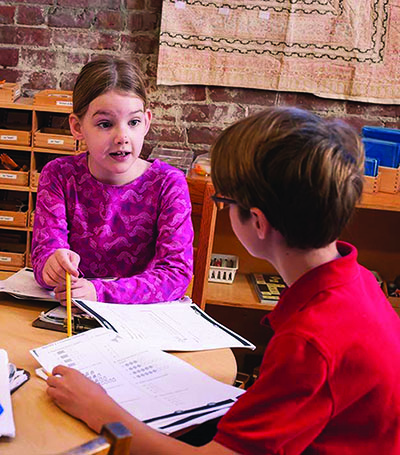
Why Continue in Montessori Elementary?
Having sent a child to Montessori for the first three years, by now you have probably got a young person who is very full of herself, very self-assured, independent, and who absolutely loves to go to school.
As your child approaches the end of her third year in the Children’s House, I know that you are giving careful thought as to whether or not to continue with Montessori. Having had the gift of this sort of education myself through high school, and having seen my five children blossom in Montessori at the elementary level and beyond, I want to encourage you to remember that an investment in a fine education pays the best dividends. In the elementary Montessori program at your school, your children will have the opportunity to learn absolutely amazing things!
One of the things that you will see when you enter their new elementary classroom is joy, excitement, and enthusiasm. These are not children who are given workbooks and simplistic assignments to do over and over again. These will normally become deeply engaged in work that they will find interesting, meaningful, and often intriguing.
You will find that the elementary Montessori curriculum is highly enriched and challenging.
It is organized into three streams:
The first stream is the Mastery of Fundamental Skills and the acquisition of Basic, or Core, Knowledge. During the elementary years, Montessori students study all the basics found in a traditional curriculum, such as the memorization of math facts, spelling lessons, and the study of vocabulary, grammar, sentence analysis, creative and expository writing, and library research skills. But there is so much more to Montessori than the? Basics?
Elementary Montessori students explore the realm of mathematics, science and technology, the world of myth, great literature, history, world geography, civics, economics, anthropology, and the basic organization of human societies.
In this second stream of the Montessori curriculum are found what we call? Great Lessons? These are key areas of interconnected studies that are traditionally presented to all elementary Montessori students. They include the story of how the world came to be, the development of life on the Earth, the story of humankind, the development of our language and writing, and the development of mathematics and technology. They are intended to give children a cosmic perspective of the Earth and humanity’s place within the cosmos.
The third stream of the Montessori curriculum is Individually Chosen Research. As their proficiency in reading and composition grows, elementary Montessori students are encouraged to explore ever topic that captures their imagination.Students rarely use textbooks.They do a great deal of independent reading and library research.They gather information, assemble reports and portfolios and handmade books of their own, and teach what they have learned to their friends.Their oral presentations and written research reports grow in sophistication and complexity over the years.
At the elementary level, learning continues to be a hands-on experience, as students learn by trial, error, and discovery.
The old familiar Montessori materials continue to become more sophisticated. For example, in mathematics, the advanced elementary Montessori materials move on to more complex and abstract concepts in mathematics, such as long multiplication and division, operations with simple and decimal fractions, geometry, and pre-algebra.
The learning materials with which students work in the elementary program are so exciting, starting with the great lessons. For example, the Timeline of Life tells the story of the history of the Earth beginning with the Big Bang and the formation of the stars, leading down the geological eras of Earth’s history and the emergence of life over the millennia. These Great Lessons engage children and then send them off to do all kinds of research, which they are allowed to do on their own rate and their own pace. When students are excited about something and feel connected to it in their environment, that’s where real learning takes place, and that’s where Montessori shines.
Montessori helps children to be flexible, self-disciplined, independent learners and self-actualized adults. We all want our children to be able to master or learn anything they wish. I can figure it out, I can find the information, I can learn it, I can apply it. That is essentially what we strive to nurture in the elementary program.
Think about your Montessori child as she has grown thus far as he or she nears the end of the third year in the Children’s House or Casa as you call it in Canada. Now think ahead. What would you like to see your son or daughter be like at age 18?
If your dreams include a young man or young woman who truly loves school, thinks outside the box, thinks about others, then you’ve certainly done the right thing by giving your child the gift of a Montessori education. You’ve laid the right foundation.
Like me, like my family, and like so many million others like us, you’ve taken the first step. And now the question is what’s next?
I invite you to join us and let your child reap the benefits of continuing her Montessori education. The best is yet to come.
Why Group Different Age Levels Together?
To continue reading, you will need to choose a subscription plan.
Staying the Course: The Importance of Montessori for the Kindergarten Year
To continue reading, you will need to choose a subscription plan.
Ten Essential Montessori Principles (Plus One!)
To continue reading, you will need to choose a subscription plan.
Featured
-
 Montessori Family Alliance School Group Membership (Print & Digital 2026 1/2 year pricing)
Original price was: $30.00.$15.00Current price is: $15.00.
Montessori Family Alliance School Group Membership (Print & Digital 2026 1/2 year pricing)
Original price was: $30.00.$15.00Current price is: $15.00.
-
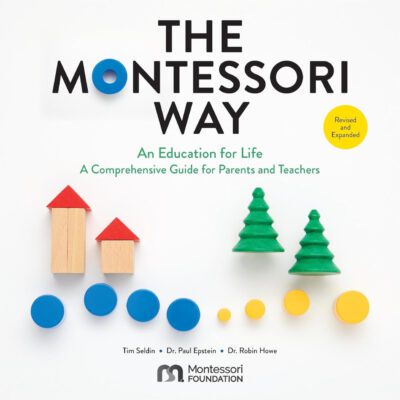
The Montessori Way, Revised and Expanded: An Education for Life; A Comprehensive Guide for Parents and Teachers
$25.00
-
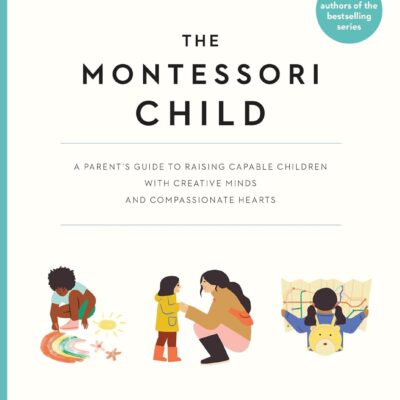
The Montessori Child: A Parent's Guide to Raising Capable Children with Creative Minds and Compassionate Hearts (The Parents' Guide to Montessori)
$20.00
-
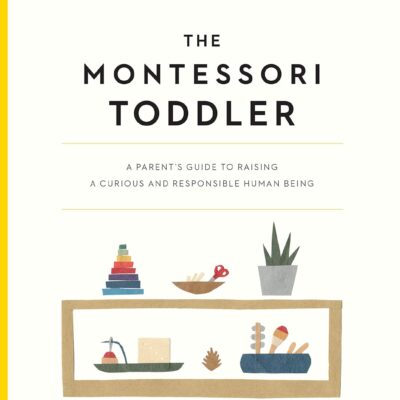
The Montessori Toddler: A Parent's Guide to Raising a Curious and Responsible Human Being (The Parents' Guide to Montessori)
$20.00
-
Montessori in Action: Building Resilient Montessori Schools 1st Edition
$29.95